



EFFENTORA 100 MCG Orally disintegrating tablet

Запит на рецепт онлайн
Лікар розгляне ваш випадок і визначить, чи є рецепт медично доцільним.

Поговоріть з лікарем про ці ліки
Обговоріть симптоми та можливі подальші кроки під час короткої онлайн-консультації.



Інструкція із застосування EFFENTORA
Зміст інструкції
Effentora 100 micrograms orodispersible tablets, 200 micrograms orodispersible tablets, 400 micrograms orodispersible tablets, 600 micrograms orodispersible tablets, 800 micrograms orodispersible tablets
Fentanil
Read this leaflet carefully before you start to take this medicine because it contains important information for you.
- Keep this leaflet. You may need to read it again.
- If you have any questions, ask your doctor or pharmacist.
- This medicine has been prescribed for you only. Do not pass it on to others, even if their symptoms are the same as yours, as it could be harmful.
- If you get any side effects, even those not listed in this leaflet, tell your doctor or pharmacist. See section 4.
Contents of this leaflet:
- 1. What Effentora is and what it is used for
- 2. What you need to know before you use Effentora
- 3. How to use Effentora
- 4. Possible side effects
- 5. How to store Effentora
- 6. Contents of the pack and other information
1. What is Effentora and what is it used for
The active ingredient of Effentora is fentanyl citrate. Effentora is a pain reliever known as an opioid,
which is used to treat severe episodic pain in adult patients with cancer who are already
receiving another opioid for persistent chronic pain (24 hours a day) due to cancer.
Episodic pain is a sudden, additional pain that occurs even after you have
taken your usual opioid pain relievers.
2. Cosa deve sapere prima di usare Effentora
NON usi Effentora:
- Se non fa giornalmente e regolarmente uso, da almeno una settimana, di un medicinale oppioide su prescrizione (per es. codeina, fentanil, idromorfone, morfina, ossicodone, petidina), per controllare il dolore persistente. Se non usa questi medicinali nondeveusare Effentora, perché questo potrebbe aumentare il rischio che la sua respirazione diventi pericolosamente lenta e/o superficiale, o perfino che si blocchi.
- Se è allergico al fentanil o ad uno qualsiasi degli altri componenti di questo medicinale (elencati al paragrafo 6).
- Se soffre di gravi problemi respiratori o di una broncopneumopatia ostruttiva severa.
- Se soffre di dolore di breve durata diverso da quello episodico intenso.
- Se sta prendendo un medicinale che contiene sodio oxibato.
Avvertenze e precauzioni
Durante il trattamento con Effentora, continui a usare l’antidolorifico oppioide che assume per il suo
dolore oncologico persistente (24 ore su 24).
Mentre sta assumendo Effentora non usi altre terapie a base di fentanil precedentemente prescritte per
il suo dolore episodico intenso. Se a casa ha ancora qualcuna di queste terapie, contatti il farmacista
per sapere come smaltirle.
Conservi questo medicinale in un luogo sicuro e protetto, inaccessibile ad altre persone (vedere il
paragrafo 5 Come conservare Effentoraper maggiori informazioni).
Informi il medico o il farmacista PRIMAdi usare Effentora se:
- Per l’altro oppioide che lei prende per il suo dolore persistente (che dura tutta la giornata) dovuto al cancro non si è ancora trovato il dosaggio definitivo.
- Se presenta qualche condizione che influisce sulla sua funzione respiratoria (quale asma, sibili, affanno).
- Se ha una ferita alla testa.
- Se ha una frequenza cardiaca eccezionalmente bassa o altri problemi cardiaci.
- Se ha qualche problema al fegato o ai reni, poiché questi organi influenzano il modo in cui il medicinale viene metabolizzato.
- Se ha una bassa quantità di liquidi nella circolazione o una bassa pressione arteriosa.
- Se ha più di 65 anni - potrebbe aver bisogno di una dose più bassa e ogni aumento della dose verrà controllato attentamente dal medico.
- Se ha problemi al cuore, in particolare un battito lento.
- Se usa benzodiazepine (vedere paragrafo 2 alla voce “Altri medicinali e Effentora”). L’uso di benzodiazepine può aumentare la probabilità che si manifestino effetti indesiderati gravi, inclusa la morte.
- Se usa antidepressivi o antipsicotici (inibitori selettivi della ricaptazione della serotonina [SSRI], inibitori della ricaptazione della serotonina norepinefrina [SNRI], inibitori delle monoaminossidasi (MAO); vedere paragrafo 2 alla voce “Non usi Effentora” e “Altri medicinali e Effentora”). L’uso di questi medicinali con Effentora può portare alla sindrome da serotonina,una malattia potenzialmente fatale(vedere paragrafo 2 alla voce“Altri medicinali e Effentora”).Se ha sviluppato in passato insufficienza surrenalica, una condizione in cui le ghiandole surrenali non producono abbastanza ormoni,o mancanza di ormoni sessuali (deficit di androgeni) con l’uso di oppioidi (vedere paragrafo 4 alla voce “Effetti indesiderati gravi”).
- Se ha mai abusato o ha avuto una dipendenza da oppioidi o da qualsiasi altro farmaco, alcol o droghe illegali.
- Se beve alcol; faccia riferimento al paragrafo Effentora con cibi, bevande e alcol.
Consulti il medico MENTREusa Effentora:
- Se manifesta dolore o aumentata sensibilità al dolore (iperalgesia), che non risponde a un aumento della dose del medicinale prescritto dal medico.
- Se manifesta una combinazione dei seguenti sintomi: nausea, vomito, anoressia, stanchezza, debolezza, capogiro e pressione arteriosa bassa. Nell’insieme, questi sintomi possono essere un segno di una condizione potenzialmente letale, chiamata insufficienza surrenalica, nella quale le ghiandole surrenali non producono una quantità sufficiente di ormoni.
- Disturbi della respirazione correlati al sonno: Effentora può causare disturbi della respirazione correlati al sonno, ad esempio apnea nel sonno (pause della respirazione durante il sonno) e ipossiemia correlata al sonno (bassi livelli di ossigeno nel sangue). I sintomi possono comprendere pause della respirazione durante il sonno, risvegli notturni causati da una mancanza di respiro, difficoltà a mantenere il sonno oppure eccessiva sonnolenza durante il giorno. Se lei o un’altra persona osserva questi sintomi, contatti il medico, che può considerare l’eventualità di una riduzione della dose.
Uso a lungo termine e tolleranza
Questo medicinale contiene fentanil, un medicinale oppioide. L’uso ripetuto di antidolorifici oppioidi
può rendere il medicinale meno efficace (ci si abitua ad esso, un fenomeno noto come tolleranza al
farmaco). È possibile anche diventare più sensibili al dolore durante l’uso di Effentora. Questo è noto
come iperalgesia. L’aumento della dose di Effentora può aiutare a ridurre ulteriormente il dolore per
un po’ di tempo, ma può anche essere dannoso. Se nota che il medicinale diventa meno efficace, si
rivolga al medico. Il medico deciderà se è meglio aumentare la dose o ridurre gradualmente l’uso di
Effentora.
Dipendenza e tossicodipendenza
L’uso ripetuto di Effentora può anche portare a dipendenza, abuso e tossicodipendenza, che possono
provocare un sovradosaggio potenzialmente fatale. Il rischio di questi effetti indesiderati può
aumentare con una dose più elevata e una durata d’uso prolungata. La dipendenza o la
tossicodipendenza può darle la sensazione di non avere più il controllo della quantità di medicinale
necessario o della frequenza con cui deve usarlo. Può avvertire la necessità di continuare a usare il
medicinale, anche se non aiuta ad alleviare il dolore.
Il rischio di sviluppare dipendenza o tossicodipendenza varia da persona a persona. Può avere un
rischio maggiore di diventare dipendente o tossicodipendente da Effentora se:
- lei o un suo familiare ha sofferto in passato di abuso o dipendenza da alcol, medicinali su prescrizione o sostanze illegali (“tossicodipendenza”);
- lei è un fumatore;
- lei ha avuto in passato problemi dell’umore (depressione, ansia o un disturbo della personalità) o è stato in trattamento da uno psichiatra per altre malattie mentali).
La comparsa di uno qualsiasi dei seguenti segni durante l’uso di Effentora può essere un segno di
dipendenza o tossicodipendenza.
- Ha la necessità di usare il medicinale per un periodo più lungo di quello indicato dal medico
- Ha la necessità di usare una dose superiore a quella raccomandata
- Usa il medicinale per ragioni diverse da quelle prescritte, ad esempio “per restare calmo” o “per favorire il sonno”
- Ha tentato più volte di interrompere o di controllare l’uso di questo medicinale, senza successo
- Quando interrompe il trattamento con il medicinale si sente male (ad es. nausea, vomito, diarrea, ansia, brividi, tremori e sudorazione) e quando riprende a usarlo si sente meglio (“effetti da astinenza”)
Se nota uno qualsiasi di questi segni, si rivolga al medico per discutere il miglior percorso terapeutico
per lei, compresi i casi in cui è opportuno interrompere il trattamento e come interromperlo in modo
sicuro.
Si rivolga URGENTEMENTEa un medico:
- Se manifesta sintomi quali difficoltà a respirare o capogiro, gonfiore della lingua, delle labbra o della gola mentre usa Effentora. Questi possono essere sintomi precoci di una reazione allergica grave (anafilassi, ipersensibilità; vedere paragrafo 4 alla voce “Effetti indesiderati gravi”).
Che cosa fare se qualcuno assume Effentora accidentalmente
Se pensa che qualcuno abbia assunto accidentalmente Effentora, chiami immediatamente un
medico.Cerchi di tenere sveglia la persona fino all'arrivo del soccorso medico.
In caso di assunzione accidentale di Effentora, si possono avere gli stessi effetti indesiderati descritti
nel paragrafo 3 "Se usa più Effentora di quanto deve”.
Bambini e adolescenti
Non somministri questo medicinale a bambini e adolescenti di età inferiore a 18 anni.
Altri medicinali e Effentora
Prima di iniziare ad usare Effentora informi il medico o il farmacista se sta assumendo, ha
recentemente assunto o potrebbe assumere qualcuno dei seguenti medicinali:
- L’uso concomitante di Effentora con medicinali sedativi come le benzodiazepine o farmaci correlati aumenta il rischio di sonnolenza, difficoltà a respirare (depressione respiratoria), coma e può essere potenzialmente fatale. Per questo, l’uso concomitante deve essere preso in considerazione soltanto quando altre opzioni terapeutiche non sono possibili.
In ogni caso, se il medico dovesse prescriverle Effentora insieme a medicinali sedativi, deve
limitare la dose e la durata del trattamento concomitante.
Informi il medico diqualsiasi medicinale sedativo che assume(come i sonniferi, gli ansiolitici,
alcuni medicinali usati per trattare le reazioni allergiche (antistaminici) o i tranquillanti) e si
attenga scrupolosamente alla dose raccomandata dal medico. Può essere utile chiedere ad amici o
parenti di prestare attenzione ai segni e sintomi sopra riportati. Si rivolga al medico se si
manifestano questi sintomi.
- Alcuni rilassanti muscolari - quali baclofen, diazepam (vedere anche paragrafo “Avvertenze e precauzioni”.
- Qualsiasi medicinale che potrebbe avere un effetto sul modo in cui il suo organismo trasforma Effentora, come ritonavir, nelfinavir, amprenavir, e fosamprenavir (medicinali utili nel controllo dell'infezione da HIV) o altri cosiddetti inibitori del CYP3A4 come ketoconazolo, itraconazolo, o fluconazolo (medicinali usati nel trattamento delle infezioni da funghi), troleandomicina, claritromicina, o eritromicina (medicinaliusati per il trattamento delle infezioni batteriche), aprepitant (medicinale usato nella nausea grave) e diltiazem e verapamil (medicinali usati per il trattamento dell’ipertensione o dell’insufficienza cardiaca)
- Medicinali chiamati inibitori delle monoamino ossidasi (MAO) (usati nelle depressioni gravi) assunti nelle ultime due settimane.
- Alcuni tipi di antidolorifici, chiamati agonisti/antagonisti parziali, ad es. buprenorfina, nalbufina e pentazocina (medicinali per il trattamento del dolore). Potrebbe presentare sintomi di sindrome da astinenza (nausea, vomito, diarrea, ansia, brividi, tremori e sudorazione) durante l’uso di questi medicinali.
- Alcuni antidolorifici per il dolore ai nervi (gabapentin e pregabalin).
- Il rischio di effetti indesiderati aumenta se sta assumendo medicinali come determinati antidepressivi o antipsicotici. Effentora può interagire con questi medicinali e possono comparire alterazioni dello stato mentale (per es. agitazione, allucinazioni, coma) e altri effetti, come una temperatura corporea superiore a 38°C, accelerazione del battito cardiaco, pressione sanguigna instabile e riflessi eccessivi, rigidità muscolare, mancanza di coordinazione e/o sintomi gastrointestinali (per es. nausea, vomito, diarrea). Il medico le dirà se Effentora è adatto a lei.
Informi il medico o il farmacista se sta assumendo, ha recentemente assunto o potrebbe assumere
qualsiasi altro medicinale.
Effentora con cibi, bevande e alcol
- Effentora può essere utilizzato prima o dopo, ma non durante i pasti. Prima di usare Effentora, può bere dell’acqua per inumidire la bocca, ma non deve mangiare o bere mentre lo sta prendendo.
- Durante l'uso di Effentora non deve bere succo di pompelmo, perché questo può influenzare il modo in cui il suo organismo trasforma il medicinale.
- Non beva alcol durante l'uso di Effentora. Questo potrebbe fare aumentare il rischio di effetti indesiderati gravi, compresa la morte.
Gravidanza e allattamento
Se è in corso una gravidanza, se sospetta o sta pianificando una gravidanza, o se sta allattando con
latte materno chieda consiglio al medico o al farmacista prima di usare questo medicinale.
Gravidanza
Effentora non deve essere usato durante la gravidanza, a meno che lei non ne abbia discusso con il
medico.
Se Effentora viene usato a lungo durante la gravidanza, esiste anche il rischio che il neonato presenti
sintomi da sospensione, che possono essere potenzialmente fatali se non vengono diagnosticati e
trattati dal medico.
Effentora non deve essere utilizzato durante il parto, in quanto il fentanil può causare depressione
respiratoria nel neonato.
Allattamento
Il fentanil può passare nel latte materno e può provocare effetti indesiderati nel neonato allattato al
seno. Non usi Effentora se sta allattando al seno.Non deve cominciare ad allattare fino ad almeno 5
giorni dopo l’ultima dose di Effentora.
Guida di veicoli e utilizzo di macchinari
Deve discutere con il medico se è prudente che lei guidi o utilizzi macchinari dopo aver assunto
Effentora. Non guidi e non utilizzi macchinari se: avverte sonnolenza o vertigini; ha offuscamento
della vista o vede doppio; oppure ha delle difficoltà a concentrarsi. E' importante che lei conosca le sue
reazioni verso Effentora prima di guidare o utilizzare macchinari.
Effentora contiene sodio
Effentora 100 microgrammi
Questo medicinale contiene 10 mg di sodio (componente principale del sale da cucina) per compressa
orosolubile. Questo equivale a 0,5% dell'assunzione massima giornaliera raccomandata con la dieta di
un adulto.
Effentora 200 microgrammi, Effentora 400 microgrammi, Effentora 600 microgrammi,
Effentora 800 microgrammi
Questo medicinale contiene 20 mg di sodio (componente principale del sale da cucina) per compressa
orosolubile. Questo equivale a1% dell'assunzione massima giornaliera raccomandata con la dieta di un
adulto.
3. How to use Effentora
Take this medicine following the doctor’s instructions exactly. If you have any doubts, consult your
doctor or pharmacist.
Before starting treatment and regularly during treatment, your doctor will discuss with you also
what you might expect from using Effentora, when and for how long it is necessary to use it, when
to contact your doctor and when you should stop treatment (see also section 2).
Dosage and frequency of administration
When you start using Effentora for the first time, your doctor will work with you to identify
the optimal dose to relieve your intense episodic pain. It is very important that you use Effentora
exactly following your doctor’s instructions. The initial dose is 100 micrograms. During the
determination of the right dosage for you, your doctor may instruct you to take more than one tablet
per episode. If your intense pain episode is not relieved after 30 minutes, at this point use
only 1 other Effentora tablet during the titration phase.
Once your doctor has established the right dose, in general use 1 tablet per episode of
intense pain. In subsequent therapy cycles, your need for pain relief therapy may vary. Higher dosages
may be necessary. If after 30 minutes your pain is not relieved, at that point
take another Effentora tablet only during the dosage readjustment phase.
Contact your doctor if your right dose of Effentora does not relieve your intense episodic pain. The
doctor will decide whether your dose needs to be changed.
Before treating another episode of intense pain with Effentora, wait at least 4 hours.
If you use Effentora more than four times a day, you must immediately inform your doctor, as
it may be necessary to change the treatment regimen. The doctor may change
the treatment for your persistent pain; once your persistent pain is controlled, the doctor
may need to modify the dose of Effentora. If the doctor suspects an
increase in pain sensitivity (hyperalgesia) related to Effentora, a reduction in the dose of Effentora may be considered (see section 2 under “Warnings and
precautions”). For more effective pain relief, inform your doctor about your pain and how
Effentora works for you, so that they can change the dosage, if necessary.
Do not change the dose of Effentora or any other pain reliever on your own initiative. Any
change in dosage must be prescribed and monitored by your doctor.
If you are unsure what the right dosage is or if you have any other questions about how to take this medicine,
contact your doctor.
Method of administration
Effentora orosoluble tablets are for oromucosal use (through the oral mucosa). When
you put a tablet in your mouth, it dissolves and the medicine is absorbed into the bloodstream
through the lining of your mouth. Taking the medicine in this way ensures that
it is absorbed quickly to relieve your intense episodic pain.
Taking the medicine
- Open the blister only when you are ready to use the tablet. The tablet should be used immediately after being removed from the blister.
- Separate one unit from the entire blister by tearing along the perforated line.
- Fold the unit along the indicated line.
- To remove the tablet, remove the foil on the back of the blister. DO NOT attempt to push the tablet through the foil, as this could damage it.
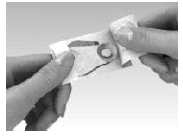
- Remove the tablet from the unit and place immediatelythe entire tablet near a molar tooth, between the gum and the cheek (as shown in the figure). Sometimes, your doctor may tell you to place the tablet under the tongue instead.
- Do not try to crush or break the tablet.
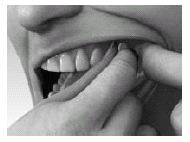
- Do not bite, suck, chew or swallow the tablet, as this will result in less pain relief than you get when the tablet is taken as directed.
- The tablet should be kept between the cheek and gum until it has completely dissolved, which will take between 14 and 25 minutes.
- You may feel a slight effervescence between your cheek and gum as the tablet dissolves.
- If irritation occurs, you can change the position of the tablet on the gum.
- After 30 minutes, if there are still some residues of the tablet in your mouth, these can be swallowed with a glass of water.
If you use more Effentora than you should
- The most common side effects are drowsiness, nausea or dizziness. If, before the tablet has completely dissolved, you begin to feel particularly strong instability or drowsiness, rinse your mouth with water and completely expel the tablet residues into a sink or toilet.
- A serious side effect of Effentora is slow and/or shallow breathing. This can occur if the dose of Effentora taken is too high or if you take an excessive amount of the medicine. In severe cases, taking too high a dose of Effentora can also lead to coma. If you feel dizzy, very drowsy, or experience slow or shallow breathing, you should seek immediate medical attention.
- An overdose can also cause a brain disorder known as toxic leukoencephalopathy.
If you forget to use Effentora
If the episode of pain exacerbation is still ongoing, you can take Effentora as
prescribed by your doctor. If the pain has already subsided, do not take Effentora until the next painful episode
.
If you stop treatment with Effentora
You should stop treatment with Effentora when you no longer experience intense episodic pain.
You should continue to take your usual opioid analgesic to treat persistent cancer pain, as directed by your doctor. When you stop taking Effentora, you may
experience withdrawal symptoms similar to the possible side effects of Effentora. If you experience withdrawal symptoms or are concerned about pain relief, contact your doctor. They will assess whether
medication will be needed to reduce or eliminate withdrawal symptoms.
If you have any doubts about using this medicine, consult your doctor or pharmacist.
4. Possible side effects
Like all medicines, this medicine can cause side effects, although not everybody gets them.
If you notice any of these side effects, contact your doctor.
Serious side effects
- The most serious side effects consist of shallow breathing, low blood pressure and shock. Like other fentanyl products, Effentora can causevery serious breathing problems that can lead to death.If you experience significant drowsiness and/or slow and/or shallow breathing, you, or someone assisting you,should immediately contact your doctor and request urgent medical assistance.
- Contact your doctor immediately if you experience a combination of the following symptoms
- Nausea, vomiting, loss of appetite, fatigue, weakness, dizziness and low blood pressure. If these symptoms occur together, they may be a sign of a potentially life-threatening condition called adrenal insufficiency, in which the adrenal glands do not produce enough hormones.
Other side effects
Very common:may affect more than 1 in 10 people
- feeling of dizziness, headache
- nausea, vomiting
- at the application site of the tablet: pain, ulcers, irritation, bleeding, numbness, loss of sensation, redness, swelling or blisters.
Common:may affect up to 1 in 10 people
- anxiety or confusion, depression, insomnia
- altered sense of taste, weight loss
- drowsiness, sedation, excessive tiredness, weakness, migraine, numbness, swelling of the arms or legs, drug withdrawal syndrome (may manifest with the appearance of
the following side effects: nausea, vomiting, diarrhea, anxiety, chills, tremor and sweating), falls,
chills
- constipation, stomatitis, dry mouth, diarrhea, heartburn, loss of appetite, stomach pain, stomach discomfort, indigestion, toothache, oral thrush
- itching, excessive sweating, rash
- shortness of breath, sore throat
- decreased white blood cells and red blood cells, increased or decreased blood pressure, rarely increased heart rate
- muscle pain, back pain
- fatigue
Uncommon:may affect up to 1 in 100 people
- throat irritation or pain,
- decreased platelets
- feeling of euphoria, nervousness, generally abnormal, agitation or slowing down; visual or auditory hallucinations, decreased level of consciousness, altered mental status, disorientation, lack of concentration, loss of balance, vertigo, difficulty expressing oneself, tinnitus, ear discomfort
- visual disturbances or blurring, redness of the eyes
- unusually slow heart rate, feeling of intense heat (hot flashes)
- severe shortness of breath, breathing problems during sleep
- one or more of the following disorders of the mouth: ulcers, loss of sensation, discomfort, altered color, disorders of the soft tissues, tongue disorders, pain blisters or ulcers on the tongue, gum pain, dry or cracked lips, dental disorders
- inflammation of the esophagus, paralysis of the intestine, gallbladder disorders
- cold sweats, facial swelling, generalized itching, hair loss, muscle contractions, muscle weakness, feeling unwell, chest discomfort, thirst, feeling cold or hot, difficulty urinating
- feeling unwell
- redness
Rare:may affect up to 1 in 1000 people
- thought disorders, movement disorders
- blisters in the mouth, dry lips, pus collection under the oral mucosa
- lack of testosterone, abnormal sensation in the eye, seeing flashes of light, brittle nails
- allergic reactions such as rash, redness, swelling of lips and face, urticaria
Not known:frequency cannot be estimated from available data
- loss of consciousness, cessation of breathing, seizure (convulsions)
- lack of sex hormones (androgenic deficiency)
- drug dependence (addiction) (see paragraph 2)
- drug abuse (see paragraph 2)
- drug tolerance (see paragraph 2)
- delirium (symptoms may include a combination of agitation, restlessness, disorientation, confusion, fear, visual or auditory hallucinations, sleep disturbances, nightmares)
- prolonged treatment with fentanyl during pregnancy can cause withdrawal symptoms in the newborn, which may have fatal consequences (see paragraph 2).
Reporting of side effects
If you get any side effects, even those not listed in this leaflet, tell your
doctor or pharmacist. You can also report side effects directly through the
national reporting system listed in Annex V. By reporting side effects you can
help provide more information on the safety of this medicine.
5. How to store Effentora
Keep this medicine in a safe and secure place, out of reach of other people. Accidental or intentional intake of this medicine by other people to whom it has not been prescribed can cause serious harm and be fatal.
The pain-relieving active ingredient contained in Effentora is very strong and could be life-threatening if accidentally taken by a child. This medicine must be kept out of the sight and reach of children.
- Do not use this medicine after the expiry date that is stated on the blister and packaging. The expiry date refers to the last day of that month.
- Store in the original packaging to protect the medicine from moisture.
- Do not dispose of any medicine in wastewater or household waste. Ask your pharmacist how to dispose of medicines you no longer use. This will help protect the environment.
6. Package contents and other information
What Effentora contains
The active ingredient is fentanyl. Each tablet contains:
- 100 micrograms of fentanyl (as citrate)
- 200 micrograms of fentanyl (as citrate)
- 400 micrograms of fentanyl (as citrate)
- 600 micrograms of fentanyl (as citrate)
- 800 micrograms of fentanyl (as citrate) The other ingredients are mannitol, sodium starch glycolate type A, sodium bicarbonate, sodium carbonate, citric acid, magnesium stearate.
Description of Effentora and package contents
The orodispersible tablets are round, with flat surfaces and a beveled edge, with the letter "C" imprinted on one side and the number "1" on the other side for Effentora 100 micrograms, "2" for Effentora 200 micrograms, "4" for Effentora 400 micrograms, "6" for Effentora 600 micrograms and "8" for Effentora 800 micrograms.
Each blister contains 4 orodispersible tablets, in a carton of 4 or 28 orodispersible tablets.
Not all pack sizes may be marketed.
Marketing Authorisation Holder
TEVA B.V.
Swensweg 5
2031 GA Haarlem
Netherlands
Manufacturer
Teva Pharmaceuticals Europe B.V.
Swensweg 5
2031 GA HAARLEM
Netherlands
Merckle GmbH
Ludwig-Merckle-Straße 3
89143 Blaubeuren
Germany
For further information on this medicine, contact the local representative of the Marketing Authorisation Holder or call the following telephone number:
België/Belgique/Belgien
Teva Pharma Belgium N.V./S.A./AG
Tel/Tél: +32 3 820 73 73
Lietuva
UAB Teva Baltics
Tel: +370 5 266 02 03
България
Тева Фарма ЕАД
Teл.: +359 2 489 95 85
Luxembourg/Luxemburg
Teva Pharma Belgium N.V./S.A./AG.
Tél: +32 3 820 73 73
Č eská republika
Teva Pharmaceuticals CR, s.r.o.
Tel: +420 251 007 111
Magyarország
Teva Gyógyszergyár Zrt.
Tel.: (+ 36) 1 288 6400
Danmark
Teva Denmark A/S
Tlf: +45 44 98 55 11
Malta
Teva Pharmaceuticals Ireland
L-Irlanda
Tel: +44 (0) 207 540 7117
Deutschland
TEVA GmbH
Tel: +49 731 402 08
Nederland
Teva Nederland B.V.
Tel: +31 (0) 800 0228 400
Eesti
UAB Teva Baltics Eesti filiaal
Tel: + 372 661 0801
Norge
Teva Norway AS
Tlf: +47 66 77 55 90
Ελλάδα
Specifar Α.Β.Ε.Ε.
Τηλ: +30 2118805000
Österreich
ratiopharm Arzneimittel Vertriebs-GmbH
Tel: +43 197007 0
España
Teva Pharma, S.L.U.
Tel: + 34 91 387 32 80
Polska
Teva Pharmaceuticals Polska Sp. z o.o.
Tel.: +48 22 345 93 00
France
Teva Santé
Tél: +33 1 55 91 78 00
Hrvatska
Pliva Hrvatska d.o.o
Tel: + 385 1 37 20 000
Portugal
Teva Pharma - Produtos Farmacêuticos, Lda.
Tel: +351 21 476 75 50
România
Teva Pharmaceuticals S.R.L.
Tel: +4021 230 65 24
Ireland
Teva Pharmaceuticals Ireland
Tel: +44 (0) 207 540 7117
Slovenija
Pliva Ljubljana d.o.o.
Tel: +386 1 58 90 390
Ísland
Teva Pharma Iceland ehf.
Sími: +354 5503300
Slovenská republika
TEVA Pharmaceuticals Slovakia s.r.o.
Tel: +421257267911
Italia
Teva Italia S.r.l.
Tel: +39 028917981
Suomi/Finland
Teva Finland Oy
Puh/Tel: +358 20 180 5900
Κύπρος
Specifar Α.Β.Ε.Ε.
Τηλ: +30 2118805000
Sverige
Teva Sweden AB
Tel: +46 (0)42 12 11 00
United Kingdom (Northern Ireland)
Teva Pharmaceuticals Ireland
Ireland
Tel: +44 (0) 207 540 7117
More detailed information on this medicine is available on the website of the European Medicines Agency: http://www.ema.europa.eu
Latvija
UAB Teva Baltics filiāle Latvijā
Tel: +371 67 323 666
ANNEX IV
SCIENTIFIC CONCLUSIONS AND JUSTIFICATION FOR THE VARIATION OF THE MARKETING AUTHORISATION(S)
Scientific conclusions
Considering the assessment of the Pharmacovigilance and Risk Assessment Committee (PRAC) of the Periodic Safety Update Report(s) (PSUR) for fentanyl (transmucosal route of administration), the PRAC’s scientific conclusions are as follows:
In light of reports in the literature, spontaneous reports and previous actions taken for other opioid medicines (e.g. fentanyl transdermal patches, injectable solution), the PRAC considers that further information regarding opioid use disorder (OUD) should be communicated to prescribers and patients. The PRAC concluded that the product information of medicines containing fentanyl (transmucosal route of administration) should be amended accordingly.
In light of reports in the literature, spontaneous reports and previous actions taken for other opioid medicines (e.g. fentanyl transdermal patches, injectable solution), the PRAC considers that further information regarding keeping it out of reach of children should be provided in the medicine information. The PRAC concluded that the product information of medicines containing fentanyl (transmucosal route of administration) should be amended accordingly.
In light of available data on toxic leukoencephalopathy in the context of overdose reported in the literature and emerging from spontaneous reports, including cases with at least a reasonable possibility of a causal relationship with fentanyl overdose, the PRAC rapporteur concluded that the product information of medicines containing fentanyl (transmucosal route of administration) should be amended accordingly.
Following examination of the PRAC recommendation, the CHMP agrees with the PRAC’s overall conclusions and the rationale underlying the recommendation.
Justification for the variation of the marketing authorisation(s)
Based on the scientific conclusions on fentanyl (transmucosal route of administration) the CHMP considers that the benefit-risk ratio of the medicine(s) containing fentanyl (transmucosal route of administration) remains unchanged, save for the proposed changes to the medicine information.
The CHMP recommends the variation of the marketing authorisation(s).

Не впевнені, чи підходить вам цей лікарський засіб?
Обговоріть симптоми та можливі варіанти лікування з лікарем онлайн.

Виникли питання під час прийому ліків?
Обговоріть свої симптоми та лікування з лікарем онлайн.
- Країна реєстрації
- Лікарська формаOrally disintegrating tablet, 100 MCG
- Код АТХN02AB03
- Діюча речовина
- Потрібен рецептТак
- Виробник
- Ця інформація надана лише для ознайомлення і не є медичною порадою. Рішення щодо лікування завжди приймає лікар.
- Альтернативи до EFFENTORAЛікарська форма: Sublingual tablet, 100 MCGДіюча речовина: фентанилВиробник: GRUNENTHAL ITALIA S.R.L.Потрібен рецептЛікарська форма: Orally disintegrating tablet, 200 MICROGRAMSДіюча речовина: фентанилВиробник: TEVA ITALIA S.R.L.Потрібен рецептЛікарська форма: Transdermal patch, 25MCG/ORAДіюча речовина: фентанилПотрібен рецепт
Аналоги EFFENTORA в інших країнах
Препарати з тією самою діючою речовиною, доступні в інших країнах.
Аналог EFFENTORA у Іспанія
Аналог EFFENTORA у Польща
Аналог EFFENTORA у Україна
Лікарі онлайн щодо EFFENTORA
Застосування, безпека та можливість призначення рецепта — за результатами медичної оцінки.









Отримайте рецепт на EFFENTORA онлайн
Заповніть форму за 2 хвилини
Розкажіть про симптоми, історію хвороби та потрібний препарат.
Оберіть лікаря або ми призначимо
Оберіть спеціаліста або ми підберемо найближчого доступного лікаря.
Лікар розглядає ваш випадок
Зазвичай протягом 30 хвилин. Може ставити уточнювальні запитання в чаті.
Отримайте в будь-якій аптеці
Електронний рецепт надсилається на вашу пошту — дійсний по всій Польщі.
Часті запитання
EFFENTORA потребує рецепта в Італія. Ви можете обговорити з лікарем онлайн, чи підходить цей лікарський засіб для вашої ситуації.
Діюча речовина у EFFENTORA — фентанил. Це допомагає визначити препарати з тим самим складом, але під іншими торговими назвами.
EFFENTORA виробляється компанією TEVA B.V.. Назва бренду та упаковка можуть відрізнятися залежно від дистрибʼютора.
Лікарі, зокрема Сімейні лікарі, Психіатри, Дерматологи, Кардіологи, Ендокринологи, Гастроентерологи, Пульмонологи, Нефрологи, Ревматологи, Гематологи, Інфекціоністи, Алергологи, Геріатри, Педіатри, Онкологи, можуть оцінити доцільність застосування EFFENTORA з урахуванням вашого стану та місцевих правил. Ви можете записатися на онлайн-консультацію, щоб обговорити симптоми та можливі подальші кроки.
Польща має добре розвинену систему охорони здоров'я у великих містах, таких як Варшава, Краків, Вроцлав і Гданськ. Аптеки широко доступні та працюють відповідно до чинного законодавства, забезпечуючи доступ до рецептурних препаратів.
Ви можете придбати EFFENTORA у Варшаві, Кракові, Вроцлаві або Гданську в будь-якій аптеці за наявності дійсного рецепта.
Щоб отримати рецепт, ви можете скористатися Oladoctor:
Інші препарати з тією самою діючою речовиною (фентанил) включають ABSTRAL, AKTIQ, ALJEDON. Вони можуть відрізнятися торговою назвою або формою випуску, але містять той самий терапевтичний компонент. Перед зміною або початком прийому нового препарату варто проконсультуватися з лікарем.
