



SPECTROCEF 1 G Injectable solution

Запит на рецепт онлайн
Лікар розгляне ваш випадок і визначить, чи є рецепт медично доцільним.

Поговоріть з лікарем про ці ліки
Обговоріть симптоми та можливі подальші кроки під час короткої онлайн-консультації.



Інструкція із застосування SPEKTROKEF
Зміст інструкції
- SPECTROCEF 1g/4ml powder and solvent for injectable solution for intramuscular use, 1g/4ml powder and solvent for injectable solution for intramuscular and
- SPECTROCEF 2g/10 ml powder and solvent for injectable solution for intravenous use, 2 g powder for intravenous infusion solution
- SPECTROCEF 1 g/4 ml powder and solvent for injectable solution for intramuscular and
- SPECTROCEF 1g/4 ml powder and solvent for injectable solution for intramuscular use, 1 g/4 ml powder and solvent for injectable solution for intramuscular and
- SPECTROCEF 2g/10 ml powder and solvent for injectable solution for intravenous use, 2 g powder for intravenous infusion solution
SPECTROCEF 1g/4ml powder and solvent for injectable solution for intramuscular use, 1g/4ml powder and solvent for injectable solution for intramuscular and
intravenous
SPECTROCEF 2g/10 ml powder and solvent for injectable solution for intravenous use, 2 g powder for intravenous infusion solution
Cefotaxime sodium
Equivalent medicinal product
Read this leaflet carefully before you use this medicine as it contains
important information for you.
- Keep this leaflet. You may need to read it again.
- If you have any questions, ask your doctor, pharmacist or nurse.
- This medicine has been prescribed for you only. Do not pass it on to others, even if their symptoms are the same as yours, as it may be harmful.
- If you get any side effects, even those not listed in this leaflet, tell your doctor, pharmacist or nurse. See section 4.
Contents of this leaflet:
- 1. What SPECTROCEF is and what it is used for
- 2. What you need to know before you use SPECTROCEF
- 3. How to use SPECTROCEF
- 4. Possible side effects
- 5. How to store SPECTROCEF
- 6. Contents of the pack and other information
1. What is SPECTROCEF and what is it used for
SPECTROCEF contains the active ingredient cefotaxime sodium, belonging to a group of
medicines called antibiotics (beta-lactam antibiotics or 3rd generation cephalosporins) which
are used for the treatment of infections caused by bacteria.
SPECTROCEF is indicated for the treatment of severe bacterial infections caused by certain bacteria
(called difficult Gram-negative bacteria) or by a mixture of bacteria of different types (mixed flora) with
presence of Gram-negative bacteria resistant to the most common antibiotics. In these cases it is also indicated
for debilitated people or with problems in their immune defenses (immunocompromised).
This medicine is also indicated for the prevention of infections caused by surgical
procedures.
2. What you need to know before using SPECTROCEF
Do not use SPECTROCEF
- if you are allergic to cefotaxime sodium, to other similar antibiotics (cephalosporins) or to any of the other ingredients of this medicine (listed in section 6);
- if you are taking antibiotics belonging to the same group as SPECTROCEF called penicillins, because allergic cross-reactions may occur (see section “Warnings and Precautions”);
- if you have developed a severe skin rash or skin exfoliation, rash with blisters and/or mouth ulcers after taking cefotaxime or other cephalosporins.
Do not use SPECTROCEF or inform your doctor if any of these conditions apply to you.
SPECTROCEF 1 g/4 ml powder and solvent for injectable solution for intramuscular use
contains a local anesthetic called lidocaine, therefore it should not be administered:
- in case of allergy to lidocaine or other similar anesthetics;
- in case of severe heart problems (heart block without pacemaker and severe heart failure);
- in case of administration in a vein (intravenous administration);
- in newborns under 30 months of age.
The use of SPECTROCEF is not recommended during pregnancy and breastfeeding (see section “Pregnancy and breastfeeding”).
Warnings and precautions
Talk to your doctor or pharmacist before using SPECTROCEF.
As with other similar medicines (antibiotics), the use of this medicine may promote the occurrence of other infections caused by bacteria to which SPECTROCEF is not effective (superinfections). If this should occur, consult your doctor who will indicate a suitable therapy.
Take special care with SPECTROCEF, as it maymanifest:
- allergic reactions. Before starting therapy with this medicine, your doctor will subject you to specific tests to make sure you are not allergic to cefotaxime, cephalosporins, penicillins or other medicines. Use this medicine with caution and inform your doctor if you have experienced allergic reactions in the past, especially to penicillins (beta-lactam antibiotics). If you notice the onset of an allergic reaction, stop treatment with this medicine and immediately inform your doctor, or go to the nearest hospital: the doctor, depending on your condition, will establish the appropriate therapy;
- blisters on the skin.Serious skin reactions, including Stevens-Johnson syndrome, toxic epidermal necrolysis, drug reaction with eosinophilia and systemic symptoms (DRESS), acute generalized exanthematous pustulosis (AGEP) have been reported in association with treatment with cefotaxime. Stop using cefotaxime and immediately consult your doctor if you experience any of the symptoms related to these serious skin reactions described in section 4;
- problems with the intestinecaused by a bacterium called Clostridium difficile. You may experience mild or severe diarrhea in case of inflammation of the intestine (pseudomembranous colitis). If you experience severe diarrhea or for a prolonged period of time, during treatment with SPECTROCEF, your doctor may subject you to specific tests (endoscopy or a histological examination) to confirm whether it is a disease caused by this bacterium. If you experience mild cases of colitis, stop treatment to allow the symptoms to disappear. If you experience moderate or severe colitis, consult your doctor who will indicate the appropriate therapy. If you are taking medicines that act on the intestine (inhibitors of peristalsis), SPECTROCEF should not be administered to you as they may promote the occurrence of diseases associated with Clostridium difficile; if you have suffered, even in the past, from intestinal diseases, in particular colitis, inform your doctor;
- irritationat the injection site following intravenous administration.
- blood disorders (leukopenia, neutropenia, bone marrow failure, pancytopenia,agranulocytosis, thrombocytopenia, hemolytic anemia), especially if you use the medicine for prolonged periods. Therefore, if you have been prescribed a treatment for 7-10 days or more, you should undergo blood tests. Stop treatment with SPECTROCEF if blood disorders occur as some problems disappear after discontinuation of
treatment;
- damage to the nervous system(neurotoxicity) especially if you have been prescribed high doses of this medicine, other antibiotics of the same class or if you suffer from kidney problems (renal insufficiency). Symptoms may include: loss of consciousness, abnormal movements and convulsions (encephalopathies). If you notice the onset of any of these symptoms, stop treatment and immediately consult your doctor.
This medicine, if administered rapidly into a vein through a tube (central venous catheter), can cause heart rhythm disturbances (arrhythmias), which can be life-threatening (see section “How to use SPECTROCEF”).
Use this medicine with caution and inform your doctor if you suffer from severe kidney problems (severe renal insufficiency). In this case, the doctor may decide to halve the maintenance dose based on your condition. Undergo checks to assess kidney function if you are taking medicines for the treatment of serious infections (aminoglycoside antibiotics), probenecid (medicine to lower uric acid levels in the blood), medicines harmful to the kidneys (nephrotoxic drugs), if you are elderly or if you suffer from kidney problems.
SPECTROCEF may not be effective (antibiotic resistance), especially towards some families of bacteria (Enterobacteriaceae and Pseudomonas), in people with impaired immune defenses (immunocompromised) or following the simultaneous use of similar medicines (antibiotics).
SPECTROCEF and laboratory tests
Inform your doctor that you are using this medicine before undergoing some tests because SPECTROCEF can interfere with some laboratory tests, such as: Coombs test, blood compatibility test, tests to measure sugar in the urine (Benedict, Fehling, "Clinitest" methods).
Other medicines and SPECTROCEF
Tell your doctor or pharmacist if you are taking, have recently taken or might take any other medicines.
SPECTROCEF must not be mixed in the same syringe with other medicines and in particular with medicines for the treatment of bacterial infections (antibiotics).
This medicine should be administered to you with caution if you are using one of the following medicines:
- aminoglycoside antibiotics, medicines for the treatment of bacterial infections or diuretics, medicines to facilitate the elimination of fluids such as furosemide. Consult your doctor because kidney function checks are necessary in this case.
- probenecid, a medicine used to reduce uric acid levels in the blood, because it may slow down the elimination of SPECTROCEF with urine.
Pregnancy, breastfeeding and fertility
If you are pregnant, suspect you are pregnant or are planning a pregnancy, or if you are breastfeeding, ask your doctor or pharmacist for advice before using this medicine.
Pregnancy
If you are pregnant, SPECTROCEF should only be used in cases of absolute necessity and under the direct supervision of your doctor.
Breastfeeding
If you are breastfeeding, consult your doctor, who will assess the need to stop breastfeeding or treatment with this medicine. Babies breastfed by mothers taking SPECTROCEF may experience diarrhea.
Driving and operating machinery
This medicine can cause dizziness and, if administered in high doses in people with kidney problems, can cause loss of consciousness, abnormal movements and convulsions. This can impair your ability to drive and operate machinery. If you experience these effects, avoid driving vehicles and operating machinery.
- Spectrocef 1 g/4 ml powder and solvent for injectable solution for intramuscular usecontains sodium(as cefotaxime sodium)
- Spectrocef 1 g/4 ml powder and solvent for injectable solution for intramuscular andintravenous use contains sodium(as cefotaxime sodium) This medicine contains 50.5 mg of sodium (the main component of table salt) per vial. This is equivalent to 2.5% of the maximum recommended daily intake with the diet of an adult.
- Spectrocef 2g/10 ml powder and solvent for injectable solution for intravenous use containssodium(as cefotaxime sodium)
- Spectrocef 2g powder for solution for intravenous infusion contains sodium(as cefotaxime sodium) This medicine contains 101 mg of sodium (the main component of table salt) per vial. This is equivalent to 5% of the maximum recommended daily intake with the diet of an adult.
3. How to use SPECTROCEF
Use this medicine following exactly the instructions of your doctor, nurse or pharmacist. If you have any doubts, ask your doctor, nurse or pharmacist.
The doctor will establish the necessary dose, the method of administration (intramuscular or intravenous) and the duration of treatment depending on the type of infection, your condition and your body weight.
This medicine will be administered to you intravenously (into a vein) by medical personnel following exactly the doctor's instructions.
Treatment is recommended continuously for at least 3 days after the fever has subsided.
The recommended dose for adults, for injections into the muscle or vein, is 2 grams per day divided into two administrations of 1 gram every 12 hours. This dose may be increased to 3-4 grams and, in very severe cases, up to 12 grams for intravenous administrations, reducing the interval between administrations to 8-6 hours.
Use in people with severe kidney problems
In case of severe renal insufficiency, you will be given lower doses.
Use in children
Children under 12 years of age
The recommended dose is 50 -100 mg/kg of body weight per day, to be divided into 2-4 injections.
If the child is in life-threatening danger or in very severe cases, the recommended dose is 200 mg/kg of body weight per day.
SPECTROCEF 1 g/4 ml powder and solvent for injectable solution for intramuscular use should not be administered to children under 12 years of age because it contains lidocaine.
Use in premature newborns
The recommended dose should not exceed 50 mg/kg of body weight per day, as the functionality of the kidneys is not yet fully developed.
Method of administration
Intramuscular route
How to open the solvent vial
To open, hold the vial vertically
ensuring that the colored point is
in the position indicated in the figure.
Push back the top of the vial
As shown in the figure.
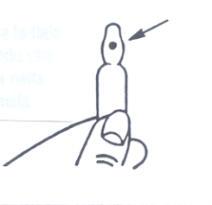
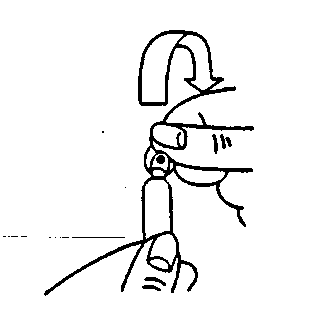
Then, draw the contents of the solvent vial into a syringe and pour it into the vial containing the powder. When the powder has completely dissolved, draw the contents of the vial into the syringe and proceed with the injection. The dissolved product is yellow in color.
Use the medicine immediately after mixing the powder from the vial with the contents of the corresponding solvent vial.
If you are a sensitive subject and feel pain after intramuscular injection, your doctor will advise you to use a solvent containing lidocaine (an anesthetic). This solution should only be used by the intramuscular route.
Intravenous route
The doctor will decide whether you need to take the antibiotic intravenously; in this case, Spectrocef will be administered to you by specialized healthcare personnel (see also “The following information is intended exclusively for healthcare professionals”).
The medicine will be administered to you slowly through a direct injection into a vein (3 - 5 minutes) or it will be administered by short (20 minutes) or continuous (50-60 minutes) infusion.
If you use more SPECTROCEF than you should
If you think you have been given too much of this medicine, immediately warn your doctor, nurse, pharmacist or go to the nearest hospital. The symptoms of an overdose may correspond to the undesirable effects (see section 4) and brain damage (encephalopathies) may occur.
If you forget to use SPECTROCEF
If you think you have not been given a dose, contact your doctor, nurse or pharmacist. A double dose should not be used to make up for the missed dose.
If you have any doubts about the use of this medicine, contact your doctor, nurse or pharmacist.
4. Possible side effects
Like all medicines, this medicine can cause side effects, although not everyone will experience them.
Stop taking cefotaxime and inform your doctor immediately if you observe any of the following symptoms:
- reddish, non-raised patches on the trunk, shaped like a target or circular, often with central blisters, skin exfoliation, ulcers of the mouth, throat, nose, genitals and eyes. These serious skin rashes may be preceded by fever and flu-like symptoms (Stevens-Johnson syndrome, toxic epidermal necrolysis);
- widespread rash, high body temperature and enlarged lymph nodes (DRESS syndrome or drug hypersensitivity syndrome).
- A widespread, red and scaly rash, with the formation of pustules under the skin and blisters accompanied by fever. Symptoms usually appear at the beginning of treatment (acute generalized exanthematous pustulosis).
Very common(may affect more than 1 in 10 people)
- pain at the injection site for intramuscular administration.
Uncommon(may affect up to 1 in 100 people)
- reduction in the number of white blood cells (leukopenia), increase in the number of eosinophils (eosinophilia), reduction in the number of platelets (thrombocytopenia);
- redness of the skin (rash), itching, hives, fever, increase in blood test values for liver (ALAT, ASAT, LDH, gamma-GT, alkaline phosphatase) and/or bilirubin, Jarisch-Herxheimer reaction (which manifests with fever, chills, headache, muscle pain and joint discomfort, skin irritation, decreased white blood cells, changes in blood tests affecting the liver, breathing difficulties);
- convulsions (see section “Warnings and Precautions”);
- diarrhea;
- decreased kidney function and increased creatinine, a substance that indicates kidney function, especially when this medicine has been prescribed together with other medicines for the treatment of infections caused by bacteria (aminoglycoside antibiotics);
- inflammatory reactions at the injection site, including inflammation of a vein with or without the formation of blood clots (thrombophlebitis/phlebitis).
Not known(frequency cannot be estimated from available data)
- infections caused by bacteria or fungi (superinfections, see section “Warnings and
Precautions”);
- reduction in the number of certain types of white blood cells (neutropenia, agranulocytosis), decrease in red blood cells (hemolytic anemia) (see section “Warnings and Precautions”);
- allergic reactions, including severe ones (anaphylactic reactions, anaphylactic shock), swelling due to fluid accumulation around the mouth and eyes (angioedema), constriction of the bronchi with difficulty breathing (bronchospasm);
- headache, dizziness;
- loss of consciousness and abnormal movements (encephalopathy) due to brain damage (neurotoxicity), especially if you have been prescribed high doses of this medicine, other antibiotics of the same class, or if you suffer from kidney problems (renal insufficiency). (see section “Warnings and Precautions”);
- irregular heartbeat (arrhythmias) following a rapid infusion in bolus through a tube inserted directly into a vein (central venous catheter);
- nausea, vomiting, abdominal pain, severe inflammation of the intestine (pseudomembranous colitis) (see section “Warnings and Precautions”);
- skin lesions, even severe ones such as: erythema multiforme (widespread redness), Stevens Johnson syndrome and toxic epidermal necrolysis (blisters, vesicles and bleeding on lips, eyes, mouth, nose and genitals) (see section “Warnings and Precautions”);
- liver problems (hepatitis) sometimes with yellowing of the skin and eyes (jaundice);
- kidney inflammation (interstitial nephritis);
- reactions affecting multiple organs (systemic reactions) to lidocaine (a local anesthetic) present in the solvent for intramuscular administration only;
- loss of appetite (anorexia), inflammation of the tongue (glossitis), heartburn (pyrosis gastrica);
- vaginal inflammation caused by a fungus (Candida vaginitis), agitation, confusion, decreased muscle strength (asthenia), night sweats.
Reporting of side effects
If you get any side effects, talk to your doctor or pharmacist. This includes any possible side effects not listed in this leaflet. You can also report side effects directly through the national reporting system at http://www.aifa.gov.it/content/segnalazioni-reazioni-avverse .
By reporting side effects you can help provide more information on the safety of
this medicine.
5. How to store SPECTROCEF
Keep this medicine out of the sight and reach of children.
Do not use this medicine after the expiry date which is stated on the packaging after “Expiry”. The
expiry date refers to the last day of that month.
Store protected from light and at a temperature below 25°C.
Do not dispose of any medicine in waste water or household waste. Ask your pharmacist how to
dispose of medicines you no longer use. This will help protect the environment.
6. Contents of the pack and other information
What SPECTROCEF contains
SPECTROCEF 1g/4 ml powder and solvent for solution for injection for intramuscular use
- One vial of powder contains 1.048 g of cefotaxime sodium corresponding to 1 g of cefotaxime.
- One vial of solvent contains 40 mg of lidocaine hydrochloride, the other component is water for injections.

Не впевнені, чи підходить вам цей лікарський засіб?
Обговоріть симптоми та можливі варіанти лікування з лікарем онлайн.
SPECTROCEF 1 g/4 ml powder and solvent for injectable solution for intramuscular and
intravenous
- One vial of powder contains 1.048 g of cefotaxime sodium corresponding to 1 g of cefotaxime.
- One solvent vial contains water for injection.
SPECTROCEF 2g/10 ml powder and solvent for injectable solution for intravenous use
- One vial of powder contains 2.096 g of cefotaxime sodium corresponding to 2g of cefotaxime.
- One solvent vial contains water for injection.
SPECTROCEF 2 g powder for intravenous infusion solution
- One vial of powder contains 2.096 g of cefotaxime sodium corresponding to 2 g of cefotaxime.
Description of the appearance of SPECTROCEF and contents of the pack
SPECTROCEF 1g/4ml powder and solvent for injectable solution for intramuscular useis presented
in a box containing one vial of 1 g powder and one 4 ml solvent vial.
SPECTROCEF 1g/4ml powder and solvent for injectable solution for intramuscular and
intravenousis presented in a box containing one vial of 1 g powder and one 4 ml solvent vial.
SPECTROCEF 2 g/10ml powder and solvent for injectable solution for intravenous useis presented
in a box containing one vial of 2 g powder and one 10 ml solvent vial.
SPECTROCEF 2 g powder for intravenous infusion solutionis presented in a box
containing one vial of 2 g powder.
Not all pack sizes may be marketed.
Marketing Authorisation Holder and Manufacturer
Epifarma S.r.l.
Via San Rocco, 6
85033 Episcopia (Potenza)
Manufacturers
Esseti Farmaceutici S.r.l.
Via Campobello, 15
00071 Pomezia – Roma
Laboratorio Farmaceutico CT S.r.l.
Via Dante Alighieri, 71
18038 SANREMO (IM)
------------------------------------------------------------------------------------------------------------------------
SPECTROCEF 1g/4 ml powder and solvent for injectable solution for intramuscular use, 1 g/4 ml powder and solvent for injectable solution for intramuscular and
intravenous

Виникли питання під час прийому ліків?
Обговоріть свої симптоми та лікування з лікарем онлайн.
SPECTROCEF 2g/10 ml powder and solvent for injectable solution for intravenous use, 2 g powder for intravenous infusion solution
Cefotaxima sodica
The following information is intended exclusively for doctors or healthcare professionals
CLINICAL INFORMATION
Dosage and administration
Regarding the intravenous administration of the lower doses, direct injection is used, to be performed in 3-5 minutes (if an intravenous infusion is already in progress, the tube can be clamped approximately 10 cm above the needle and the cefotaxima injected into the tube below the clamp). Slow infusion (3-5 minutes) may reduce the possibility of irritation at the injection site.
At higher doses, cefotaxima can be administered by short intravenous infusion (20 minutes) after dissolving 2 g in 40 ml of water for injections, isotonic saline solution or glucose solution, or by continuous intravenous infusion (50-60 minutes) after dissolving 2 g in 100 ml of solvent, plasma expanders.
When using the intravenous route, it is still advisable to start therapy by administering cefotaxima directly into the vein.
Particularly sensitive patients may complain of pain after intramuscular injection; for the treatment of these subjects, it is recommended to use, up to 2 times a day, a solvent containing lidocaine hydrochloride solution 1% (except for subjects hypersensitive to lidocaine). This solution should only be used intramuscularly and therefore intravenous administration must be absolutely avoided.
Method for opening the solvent vial
Opening solvent vial: Using a syringe, draw the contents of the solvent vial and pour it into the powder vial.
Once completely dissolved, draw the contents of the vial and proceed with the injection.
Overdose
Symptoms of overdose may largely correspond to the profile of undesirable effects. There is a risk of reversible encephalopathy in case of administration of high doses of beta-lactam antibiotics, including cefotaxima. In case of cefotaxima overdose, cefotaxima must be discontinued and supportive treatment must be started, including measures to accelerate elimination, and symptomatic treatment of undesirable effects (e.g. convulsions). There is no specific antidote. Cefotaxima serum levels can be reduced with hemodialysis or peritoneal dialysis.
Incompatibilities
It is recommended not to mix SPECTROCEF with sodium bicarbonate solutions, with antibiotics, especially aminoglycosides, and with other drugs.
Shelf life
The reconstituted product (dissolution of the vial contents with the contents of the corresponding solvent vial) can be stored in the refrigerator at +2/+8° for up to 24 hours.
The reconstituted solution from the beginning appears yellowish in color, which does not affect its efficacy and tolerability.
From a microbiological point of view, the reconstituted product should be used immediately. If it is not used immediately, the storage times in use and the conditions before use are the responsibility of the user. These storage times should not exceed the values above, provided that the opening, reconstitution and dilution have been carried out under controlled and validated aseptic conditions.
Special precautions for storage
Store at a temperature below 25° and protected from light.
WARNING: The product does not contain preservatives. After use, it must be discarded even if only partially used.
For further information, consult the Summary of Product Characteristics.
- Країна реєстрації
- Лікарська формаInjectable solution, 1G
- Код АТХJ01DD01
- Діюча речовина
- Потрібен рецептНі
- Виробник
- Ця інформація надана лише для ознайомлення і не є медичною порадою. Рішення щодо лікування завжди приймає лікар.
- Альтернативи до SPEKTROKEFЛікарська форма: Powder and solvent for injectable solution, 2G/10 MLДіюча речовина: ЦефотаксимПотрібен рецептЛікарська форма: Powder and solvent for injectable solution, 500 MG/2 MLДіюча речовина: ЦефотаксимВиробник: ABC FARMACEUTICI S.P.A.Потрібен рецептЛікарська форма: Powder and solvent for injectable solution, 1 G/4 MLДіюча речовина: ЦефотаксимВиробник: EG S.P.A.Потрібен рецепт
Аналоги SPEKTROKEF в інших країнах
Препарати з тією самою діючою речовиною, доступні в інших країнах.
Аналог SPEKTROKEF у Польща
Аналог SPEKTROKEF у Україна
Аналог SPEKTROKEF у Іспанія
Лікарі онлайн щодо SPEKTROKEF
Застосування, безпека та можливість призначення рецепта — за результатами медичної оцінки.









Отримайте рецепт на SPEKTROKEF онлайн
Заповніть форму за 2 хвилини
Розкажіть про симптоми, історію хвороби та потрібний препарат.
Оберіть лікаря або ми призначимо
Оберіть спеціаліста або ми підберемо найближчого доступного лікаря.
Лікар розглядає ваш випадок
Зазвичай протягом 30 хвилин. Може ставити уточнювальні запитання в чаті.
Отримайте в будь-якій аптеці
Електронний рецепт надсилається на вашу пошту — дійсний по всій Польщі.
Часті запитання
SPEKTROKEF не потребує рецепта в Італія. Ви можете обговорити з лікарем онлайн, чи підходить цей лікарський засіб для вашої ситуації.
Діюча речовина у SPEKTROKEF — Цефотаксим. Це допомагає визначити препарати з тим самим складом, але під іншими торговими назвами.
SPEKTROKEF виробляється компанією EPIFARMA S.R.L. Назва бренду та упаковка можуть відрізнятися залежно від дистрибʼютора.
Лікарі, зокрема Сімейні лікарі, Психіатри, Дерматологи, Кардіологи, Ендокринологи, Гастроентерологи, Пульмонологи, Нефрологи, Ревматологи, Гематологи, Інфекціоністи, Алергологи, Геріатри, Педіатри, Онкологи, можуть оцінити доцільність застосування SPEKTROKEF з урахуванням вашого стану та місцевих правил. Ви можете записатися на онлайн-консультацію, щоб обговорити симптоми та можливі подальші кроки.
Польща має добре розвинену систему охорони здоров'я у великих містах, таких як Варшава, Краків, Вроцлав і Гданськ. Аптеки широко доступні та працюють відповідно до чинного законодавства, забезпечуючи доступ до рецептурних препаратів.
Ви можете придбати SPEKTROKEF у Варшаві, Кракові, Вроцлаві або Гданську в будь-якій аптеці за наявності дійсного рецепта.
Щоб отримати рецепт, ви можете скористатися Oladoctor:
Інші препарати з тією самою діючою речовиною (Цефотаксим) включають BATIXIM, KEFOTAXIMA ABK, KEFOTAXIMA EG. Вони можуть відрізнятися торговою назвою або формою випуску, але містять той самий терапевтичний компонент. Перед зміною або початком прийому нового препарату варто проконсультуватися з лікарем.
