



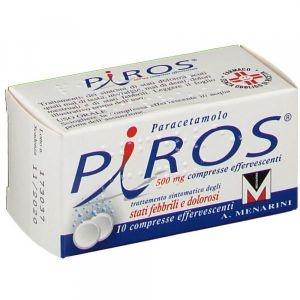
PIROS 500 mg Effervescent Tablet

Запит на рецепт онлайн
Лікар розгляне ваш випадок і визначить, чи є рецепт медично доцільним.

Поговоріть з лікарем про ці ліки
Обговоріть симптоми та можливі подальші кроки під час короткої онлайн-консультації.



Інструкція із застосування PIROS
Зміст інструкції
PIROS 500 mg effervescent tablets
Paracetamol
Read this leaflet carefully before taking this medicine as it contains important information for you.
Always take this medicine exactly as described in this leaflet or as your doctor or pharmacist has told you.
- Keep this leaflet. You may need to read it again.
- If you would like more information or advice, ask your pharmacist.
- If any side effects occur, including those not listed in this leaflet, tell your doctor or pharmacist. See section 4.
- See a doctor if you do not feel better or if your symptoms worsen after 3 days.
Contents of this leaflet:
- 1. What PIROS is and what it is used for
- 2. What you need to know before you take PIROS
- 3. How to take PIROS
- 4. Possible side effects
- 5. How to store PIROS
- 6. Contents of the pack and other information
1. What is PIROS and what is it for
PIROS contains the active ingredient paracetamol and is used as an antipyretic (antifebrile) and
analgesic (pain reliever).
PIROS is used in adults, adolescents and children weighing more than 13 kgfor the
treatment of symptoms of feverish states and for the symptomatic treatment of mild to
moderate pain.
Consult a doctor if you do not feel better or if you feel worse after 3 days of treatment.
2. What you need to know before taking PIROS
Do not take PIROS
- If you are allergic to paracetamol or propacetamol hydrochloride (a precursor of paracetamol) or to any of the other ingredients of this medicine (listed in section 6).
Warnings and precautions
Talk to your doctor or pharmacist before taking PIROS.
Use PIROS with caution:
- if you regularly consume alcohol. Alcohol consumption during therapy is not recommended
- if you suffer from anorexia (an eating disorder characterized by a lack or reduction of appetite)
- if you suffer from bulimia (an eating disorder in which a person ingests an excessive amount of food and then resorts to various methods to eliminate it to avoid gaining weight)
- if you suffer from cachexia (a condition characterized by extreme thinness, reduction of muscle mass and thinning of the skin due to chronic diseases)
- if you suffer from chronic malnutrition
- if you suffer from dehydration (severe loss of water/fluids from the body)
- if you suffer from hypovolemia (reduced blood volume circulating in the body)
- if you have glucose-6-phosphate dehydrogenase deficiency (a substance normally present in the human body, the deficiency of which can cause hemolytic anemia).
- if you suffer from hemolytic anemia (a blood disease due to the destruction of some blood cells, red blood cells).
- if you have mild to moderate hepatocellular insufficiency (reduced liver function) (including Gilbert's syndrome, a disease characterized by excessive production of bilirubin, a substance that causes a yellowish discoloration of the skin and eyes)
- if you suffer from severe liver problems.
- if you have acute hepatitis (liver inflammation).
- if you are undergoing concomitant treatment with drugs that stimulate liver enzymes (increase the way the liver works).
- if you suffer from renal insufficiency (reduced kidney function).
Paracetamol can cause severe skin reactions that can be fatal. The use of PIROS must
be stopped at the first appearance of skin rash or any other sign of
hypersensitivity/allergy.
Use of high doses and/or for prolonged periods
Paracetamol can determine hepatotoxic and nephrotoxic effects. High or prolonged doses of
paracetamol-based products can cause high-risk liver disease and alterations to the kidneys and blood, even severe. In these cases, the doctor will monitor
liver function, kidney function and blood composition through appropriate tests.
Prolonged use of analgesics (for a period longer than 3 months) in patients with chronic headache,
especially if repeated and frequent, can increase or worsen the headache. In
these cases, it is necessary to consult a doctor.
Children and adolescents
This medicine can be given to children weighing more than 13 kg and to
adolescents (see section 3 “How to use PIROS”).
.
Other medicines and PIROS
Tell your doctor or pharmacist if you are taking, have recently taken or might take
any other medicines, including those available without a prescription
In particular, tell your doctor or pharmacist if you are taking:
- other medicines that contain paracetamol, as if paracetamol is taken in high doses, serious side effects can occur
- coumarin anticoagulantsincluding warfarin (medicines that delay blood clotting); in this case the doctor will carry out more rigorous monitoring of INR values (time it takes for the blood to clot)
- flucloxacillin(antibiotic), due to a serious risk of alterations in blood and fluids (metabolic acidosis with high anion gap) which must be treated urgently and which may occur particularly in case of severe renal impairment, sepsis (when bacteria and their toxins circulate in the blood leading to organ damage), malnutrition, chronic alcoholism and if the maximum daily doses of paracetamol are used.
- medicines or substances that stimulate liver enzymes(increase the way the liver works), for example:
- rifampicin (an antibiotic)
- cimetidine (a medicine used in the treatment of stomach ulcers)
- antiepileptics such as glutethimide, phenobarbital, carbamazepine and phenytoin (medicines used to treat epilepsy). If treated with phenytoin, do not take high or prolonged doses of paracetamol.
The use of PIROS is not recommended if you are being treated with anti-inflammatory drugs.
The use of these medicines with PIROS requires extreme caution and must be carried out only under
strict medical supervision:
- probenecid, a medicine used for the treatment of hyperuricemia (high concentration of uric acid in the blood) and gout (inflammation of the joints due to the deposition of uric acid): in this case the doctor will advise you to reduce the doses of PIROS
- salicylamide(a pain reliever and fever reducer)
- chloramphenicol(an antibiotic): may increase the risk of possible side effects
- medicines that slow down gastric emptying, such as anticholinergics: these medicines delay the effect of PIROS
- zidovudine(a medicine for the treatment of HIV).
Interference with blood tests
If the person taking the medicine needs to undergo blood tests, keep in mind that the administration
of paracetamol can interfere with the determination of uricemia (the amount of uric acid in
the blood) and glycemia (the concentration of glucose in the blood).
PIROS with alcohol
Use PIROS with caution if you regularly consume alcohol, as there is a risk of intoxication
(see sections “Warnings and precautions” and “If you use more PIROS than you should”).
Alcohol consumption during therapy is not recommended.
Pregnancy and breastfeeding
If you are pregnant, suspect you are pregnant or are planning to become pregnant, or if you are breastfeeding
with breast milk, ask your doctor or pharmacist for advice before taking this medicine.
Pregnancy
If necessary, PIROS can be used during pregnancy. It is advisable to use the lowest possible dose
that reduces pain and/or fever and take it for the shortest possible time. Contact your doctor
if the pain and/or fever does not decrease or if you need to take the medicine more often.
Breastfeeding
Paracetamol passes in small amounts into breast milk. Skin rash has been reported
in breastfed babies. However, the administration of paracetamol is
considered compatible with breastfeeding. Paracetamol in breastfeeding women should still be used with caution.
Driving and using machines
PIROS does not impair the ability to drive vehicles and operate machinery.
PIROS contains sorbitol, sucrose and sodium.
This medicine contains 540 mg of sorbitol per dose. Sorbitol is a source of fructose. If
your doctor has told you that you (or your child) are intolerant to some sugars, or if you have a diagnosis of
hereditary fructose intolerance, a rare genetic disease in which patients cannot
transform fructose, talk to your doctor before you (or your child) take this medicine.
This medicine contains sucrose. If your doctor has diagnosed you with intolerance to some
sugars, contact him before taking this medicine.
This medicine contains 333 mg of sodium (the main component of table salt) per dose.
This is equivalent to 16.7% of the recommended maximum daily intake with the diet of
an adult.
Talk to your doctor or pharmacist if you need 1 or more doses a day for a prolonged
period, especially if you have been advised to follow a low-sodium diet.
3. How to take PIROS
Take this medicine following exactly what is reported in this leaflet or the instructions of your doctor or pharmacist. If you have doubts, consult your doctor or pharmacist.
To avoid the risk of overdose, check that other medicines taken (with or without a prescription) do not contain paracetamol.
Accidental taking of an excessive dose of paracetamol can cause serious liver damage and death (see section “If you use more PIROS than you should”).
Adults
The recommended dose is 1 tablet per administration, to be repeated if necessary, after an interval of at least 4 hours, without exceeding 6 tablets per day.
In case of more intense pain, two tablets can be taken at a time for a maximum of 3 times a day, always respecting an interval of at least 4 hours between administrations.
Elderly
In elderly subjects, the dosage must be carefully established by the doctor who will have to evaluate a possible reduction of the dosages indicated above.
Use in children and adolescents
For children, it is essential to respect the dose defined based on their body weight. In the scheme below, the correspondence between weight and age is only indicative, so take into consideration
| WEIGHT | APPROXIMATE AGE | DOSE | HOW MANY TIMES A DAY? | MAXIMUM DOSE or DAILY (in 24 hours) |
| 13-20 kg |
| Half tablet | To be repeated, if necessary, after an interval of at least 6 hours | c 3 half tablets for a children weighing less than 15 kg and 4 m half tablets for children weighing equal to or greater than 15 kg |
| 21-25 kg |
| Half tablet | To be repeated, if a necessary, after an interval of at least F 6 hours | r 5 half tablets per day for children weighing less than 25 kg and 6 half tablets per day for children weighing equal to or greater than 25 kg |
|
| 1 tablet | l e To be repeated, if d necessary, after an interval of at least 6 hours | 4 tablets |
| Over 40 kg | Over 12 years | 1 tablet n | a To be repeated, if necessary, after an interval of at least 4 hours | 6 tablets |
It is important to use PIROS at regular intervals to avoid fluctuations in pain and/or fever levels.
In children, the interval between administrations should preferably be at least 6 hours.
In adults and adolescents, the interval between administrations should be at least 4 hours.
Recommended maximum dosage
In adults and adolescents weighing more than 40 kg, the maximum dose is 3 g of paracetamol per day.
Patients with kidney disease
If the person taking the medicine suffers from kidney disease, the interval between administrations must be at least 8 hours. Do not exceed 3 g of paracetamol per day, corresponding to 6 tablets.
Patients with liver disease
If the person taking the medicine suffers from reduced liver function, the dose must be reduced or the interval between administrations prolonged.
The maximum dose should not exceed 4 tablets per day in case of: adult patients weighing less than 50 kg, liver disease, Gilbert's syndrome, chronic alcoholism, chronic malnutrition or dehydration.
Duration of treatment
Do not administer PIROS for more than 3 consecutive days without consulting your doctor.
Instructions for use
Oral use.
Take the medicine on a full stomach.
Dissolve the effervescent tablet in a glass of water, stirring with a teaspoon if necessary. Do not chew or swallow the tablet whole.
If you take more PIROS than you should
In case of accidental ingestion/taking of an excessive dose of PIROS, immediately warn your doctor or go to the nearest hospital.
Taking an excessive dose of paracetamol increases the risk of intoxication and can lead to death, especially if the person taking the medicine:
- suffers from liver diseases
- abuses alcohol
- suffers from chronic malnutrition
- is taking medicines or substances that stimulate liver enzymes (increase the way the liver works).
Symptoms
In case of accidental taking of very high doses of paracetamol, the symptoms that may occur within the first 24 hours include: nausea, vomiting, anorexia (lack or reduction of appetite), pallor, malaise, diaphoresis (profuse sweating) and abdominal pain.
Cases of acute pancreatitis have been reported.
Furthermore, taking an excessive dose of paracetamol can cause hepatocyte cytolysis (destruction of liver cells) which can evolve towards massive and irreversible necrosis and alterations to the kidney and blood, even serious, which manifest from 12 to 48 hours after taking it.
In case of ingestion of 7.5 g or more of paracetamol in adults and 140 mg per kg of body weight in children, serious liver damage may occur with consequent alteration of some blood test results (AST, ALT, lactic dehydrogenase, bilirubin, prothrombin), coma (deep unconsciousness) or death.
The symptoms of liver damage reach their maximum level after 3-4 days.
Treatment
The doctor, based on the nature and severity of the symptoms, will carry out the appropriate supportive therapy.
Emergency measures to be taken consist of early gastric emptying (gastric lavage) to eliminate the ingested product and possibly forced diuresis and hemodialysis.
As an antidote, substances conjugating such as N-acetylcysteine or cysteamine can be administered promptly intravenously (in the vein).
If you forget to take PIROS
Do not take a double dose to make up for the missed dose.
If you have any doubts about the use of this medicine, consult your doctor or pharmacist.
4. Possible side effects
Like all medicines, this medicine can cause side effects, although not everyone will experience them.
If the person taking the medicine experiences the following side effects, STOPtreatment
with this medicine and contact your doctor immediately:
- - skin reactionswhich may manifest as:
- urticaria (appearance of wheals on the skin accompanied by itching),
- skin rash,
- erythema (redness of the skin),
- erythema multiforme (skin inflammation, appearance of red spots on the skin with a “bull's-eye” appearance associated with itching),
- purpura (appearance of skin patches of various sizes with a purple color),
- Stevens-Johnson syndrome (a serious skin condition characterized by skin peeling),
- epidermal necrolysis (serious toxic skin reaction characterized by redness, blistering lesions with areas of detachment and skin death),
- acute generalized exanthematous pustulosis (eruption of hundreds of superficial pustules spread all over the body).
- allergic reactionswhich may manifest as:
- angioedema (swelling of hands, feet, ankles, face, lips, tongue and/or throat),
- edema (swelling) of the larynx,
- anaphylactic reaction (severe allergic reaction) including hypotension (lowering of blood pressure),
- hypersensitivity,
- anaphylactic shock (severe allergic reaction).
Furthermore, the following side effects may occur, for which sufficient data are not
available to establish the frequency:
o thrombocytopenia (decrease in the number of platelets in the blood),
o leukopenia/agranulocytosis/neutropenia (conditions characterized by a decrease in the
number of white blood cells and granulocytes in the blood),
o anemia (reduction of hemoglobin in the blood, a substance that carries oxygen in the
blood),
o diarrhea,
o abdominal pain,
o reactions to the stomach and intestines,
o alterations in liver function,
o hepatitis (inflammation of the liver),
o alteration of INR (value used to express the time it takes for blood to
coagulate),
o increased liver enzymes,
o headache, acute renal failure (reduction of kidney function),
o interstitial nephritis (serious inflammatory kidney disease),
o hematuria (presence of blood in the urine),
o anuria (cessation or reduction of urine production by the kidney).
o dizziness.
These side effects are generally transient.
Reporting of side effects
If you experience any side effects, including those not listed in this leaflet, please
consult your doctor or pharmacist. You can also report side effects directly through
the national reporting system at https://www.aifa.gov.it/content/segnalazioni-
reazioni-avverse . By reporting side effects, you can help provide more information
on the safety of this medicine.
5. How to store PIROS
Keep this medicine out of the sight and reach of children.
Do not use this medicine after the expiry date which is reported on the packaging. The expiry date refers to the last day of that month and the product in intact packaging,
correctly stored.
This medicine does not require any particular storage conditions.
Do not dispose of any medicine in wastewater or household waste. Ask your pharmacist how to
dispose of medicines that you no longer use. This will help protect the environment.
6. Contents of the pack and other information
What PIROS contains
1 effervescent tablet contains:
Active ingredient: Paracetamol 500 mg.
Other ingredients:Polyvinylpyrrolidone, sorbitol, sucrose monopalmitate, sodium saccharin,
sodium bicarbonate, anhydrous citric acid, orange flavour, (see section 2 “What you need to know
before taking PIROS”).
Description of the appearance of PIROS and contents of the pack
PIROS is presented in the form of effervescent tablets for oral use.
The pack contains 10 effervescent tablets.
Marketing Authorisation Holder
- A. Menarini Industrie Farmaceutiche Riunite s.r.l., via Sette Santi n. 3, Florence.
Manufacturer
E-Pharma Trento S.p.A.-Via Provina, 2-Ravina (TN).

Не впевнені, чи підходить вам цей лікарський засіб?
Обговоріть симптоми та можливі варіанти лікування з лікарем онлайн.

Виникли питання під час прийому ліків?
Обговоріть свої симптоми та лікування з лікарем онлайн.
- Країна реєстрації
- Лікарська формаEffervescent tablet, 500 MG
- Код АТХN02BE01
- Діюча речовина
- Потрібен рецептНі
- Виробник
- Ця інформація надана лише для ознайомлення і не є медичною порадою. Рішення щодо лікування завжди приймає лікар.
- Альтернативи до PIROSЛікарська форма: Effervescent granules, 300 MGДіюча речовина: ПарацетамолВиробник: ABIOGEN PHARMA S.P.A.Рецепт не потрібенЛікарська форма: Effervescent tablet, 500 MGДіюча речовина: ПарацетамолВиробник: UPSA SASРецепт не потрібенЛікарська форма: Effervescent tablet, 1000 MGДіюча речовина: ПарацетамолПотрібен рецепт
Аналоги PIROS в інших країнах
Препарати з тією самою діючою речовиною, доступні в інших країнах.
Аналог PIROS у Іспанія
Аналог PIROS у Польща
Аналог PIROS у Україна
Лікарі онлайн щодо PIROS
Застосування, безпека та можливість призначення рецепта — за результатами медичної оцінки.









Отримайте рецепт на PIROS онлайн
Заповніть форму за 2 хвилини
Розкажіть про симптоми, історію хвороби та потрібний препарат.
Оберіть лікаря або ми призначимо
Оберіть спеціаліста або ми підберемо найближчого доступного лікаря.
Лікар розглядає ваш випадок
Зазвичай протягом 30 хвилин. Може ставити уточнювальні запитання в чаті.
Отримайте в будь-якій аптеці
Електронний рецепт надсилається на вашу пошту — дійсний по всій Польщі.
Часті запитання
PIROS не потребує рецепта в Італія. Ви можете обговорити з лікарем онлайн, чи підходить цей лікарський засіб для вашої ситуації.
Діюча речовина у PIROS — Парацетамол. Це допомагає визначити препарати з тим самим складом, але під іншими торговими назвами.
PIROS виробляється компанією A. MENARINI INDUSTRIE FARMACEUTICHE RIUNITE S.R.L.. Назва бренду та упаковка можуть відрізнятися залежно від дистрибʼютора.
Лікарі, зокрема Сімейні лікарі, Психіатри, Дерматологи, Кардіологи, Ендокринологи, Гастроентерологи, Пульмонологи, Нефрологи, Ревматологи, Гематологи, Інфекціоністи, Алергологи, Геріатри, Педіатри, Онкологи, можуть оцінити доцільність застосування PIROS з урахуванням вашого стану та місцевих правил. Ви можете записатися на онлайн-консультацію, щоб обговорити симптоми та можливі подальші кроки.
Польща має добре розвинену систему охорони здоров'я у великих містах, таких як Варшава, Краків, Вроцлав і Гданськ. Аптеки широко доступні та працюють відповідно до чинного законодавства, забезпечуючи доступ до рецептурних препаратів.
Ви можете придбати PIROS у Варшаві, Кракові, Вроцлаві або Гданську в будь-якій аптеці за наявності дійсного рецепта.
Щоб отримати рецепт, ви можете скористатися Oladoctor:
Інші препарати з тією самою діючою речовиною (Парацетамол) включають AKETAMOL, EFFERALGAN, EFFERAMOL. Вони можуть відрізнятися торговою назвою або формою випуску, але містять той самий терапевтичний компонент. Перед зміною або початком прийому нового препарату варто проконсультуватися з лікарем.
