



OCTAGAM 5% Infusion solution

Запит на рецепт онлайн
Лікар розгляне ваш випадок і визначить, чи є рецепт медично доцільним.

Поговоріть з лікарем про ці ліки
Обговоріть симптоми та можливі подальші кроки під час короткої онлайн-консультації.



Інструкція із застосування OKTAGAM
Зміст інструкції
Octagam
50 mg/ml solution for infusion
Normal human immunoglobulin (IVIg)
Read this leaflet carefully before using this medicine as it contains
important information for you.
- Keep this leaflet. You may need to read it again.
- If you have any questions, ask your doctor or pharmacist.
- This medicine has been prescribed for you only. Do not pass it on to others, even if they have the same symptoms as you, as it may be harmful.
- If you get any side effects, even those not listed in this leaflet, tell your doctor or pharmacist. See section 4.
Contents of this leaflet:
- 1. What Octagam is and what it is used for
- 2. What you need to know before you use Octagam
- 3. How to use Octagam
- 4. Possible side effects
- 5. How to store Octagam
- 6. Contents of the pack and other information
1. What is Octagam and what is it used for
What is Octagam:
Octagam is a normal human immunoglobulin (IgG) solution (i.e. a solution of human antibodies) for intravenous administration (i.e. for infusion into a vein). Immunoglobulins are normal constituents of the human body and contribute to the immune defenses of our body. Octagam contains all IgG activities found in the normal population. Adequate doses of this medicine can correct abnormally reduced IgG levels, bringing them back into the normal range.
Octagam has a broad spectrum of antibodies active against various infectious agents.
What is Octagam used for:
Octagam is used as replacement therapy in children, adolescents (0-18 years) and adults in various groups of patients:
- Patients with congenital antibody deficiency (primary immunodeficiency syndromes such as agammaglobulinemia and congenital hypogammaglobulinemia, common variable immunodeficiency, severe combined immunodeficiencies)
- Patients with acquired antibody deficiency (secondary immunodeficiency) caused by specific diseases and/or treatments who manifest severe or recurrent infections
Octagam can be used for the treatment of adult, children and adolescents (0-18 years) susceptible who have been exposed to measles or are at risk of exposure to measles, and in whom active vaccination against measles is not indicated or is not recommended.
Octagam can also be used in the treatment of the following autoimmune diseases (immunomodulation):
- in patients with immune thrombocytopenia (ITP), a condition in which platelets are destroyed and their number is therefore reduced, and who have a high risk of bleeding or need to correct the platelet count before surgery.
- in patients with Kawasaki disease, a condition that leads to inflammation of various organs.
- in patients with Guillain Barré syndrome, a condition that leads to inflammation of certain parts of the nervous system.
- in patients with chronic inflammatory demyelinating polyradiculoneuropathy (CIDP), a disease that leads to chronic inflammation of peripheral parts of the nervous system causing muscle weakness and/or numbness mainly in the legs and arms.
- in patients with multifocal motor neuropathy (MMN), a disease characterized by slowly progressive asymmetrical weakness of the limbs without loss of sensation.
2. What you need to know before using Octagam
Do not use Octagam
- if you are allergic to human immunoglobulin or to any of the other ingredients of Octagam (listed in section 6).
- if you have a deficiency of immunoglobulin A (IgA deficiency) and have developed antibodies against IgA immunoglobulins Warnings and precautionsTalk to your doctor or pharmacist before using Octagam. It is strongly recommended to record, with each administration of Octagam, the name and lot number of the product to maintain traceability of the lot used. Some adverse reactions may occur more frequently:
- in case of high infusion rate
- when you receive Octagam for the first time or, in rare cases, when a long time has passed since the previous infusion
- when you have an untreated infection or underlying chronic inflammation If an adverse reaction occurs, the administration rate must be reduced or the infusion itself must be interrupted. The treatment required for the adverse event will depend on the nature and severity of the undesirable effect. Circumstances and conditions that increase the risk of developing adverse effects
- Very rarely, after the administration of Octagam, thromboembolic events such as heart attack, stroke and deep vein obstruction may occur, for example in the calves or in a blood vessel in the lungs. This type of event occurs more commonly, although very rarely, in patients with risk factors such as obesity, advanced age, high blood pressure, diabetes, previous events of the same type, prolonged periods
of immobilization and taking certain hormones (e.g. the pill
contraceptive). Ensure adequate fluid intake; furthermore Octagam must
be administered as slowly as possible,
- If you have had kidney problems in the past or if you have some risk factors such as diabetes, overweight or are over 65 years of age, Octagam should be administered as slowly as possible, as cases of acute renal failure have been reported, although very rarely, in patients who present these risk factors. Also inform your doctor if any of the above circumstances have occurred in the past.
- Patients with blood group A, B or AB, as well as patients suffering from some inflammatory diseases are at a higher risk of red blood cell destruction by the administered immunoglobulins (hemolysis). When may it be necessary to slow down or stop the infusion?
- Severe headaches and neck stiffness may rarely occur within a period of several hours to 2 days after treatment with Octagam.
- Allergic reactions are rare, but can induce anaphylactic shock, even in patients who had tolerated previous treatments. A sudden drop in blood pressure or shock may be consequences of an anaphylactic reaction.
- In very rare cases, acute lung injury associated with transfusion (TRALI) may occur after receiving immunoglobulins including Octagam. This will lead to an accumulation of fluid not related to cardiac causes in the air spaces of the lungs. You will recognize TRALI by the appearance of severe difficulty breathing, normal heart function and increased body temperature (fever). Usually, symptoms appear within 1-6 hours after the administration of treatment.
Immediately inform your doctor or healthcare professional if you notice these reactions during or after
the infusion of Octagam. They will decide whether to reduce the infusion rate or interrupt it completely,
or whether further action is necessary.
- Sometimes immunoglobulin solutions such as Octagam can cause a decrease in the number of white blood cells. Normally, this condition resolves spontaneously within 1-2 weeks.
Viral safety
When medicines are prepared from human blood or plasma, certain
measures are taken to prevent the risk of transmitting infections to patients. These measures include:
- careful selection of blood and plasma donors to ensure the exclusion of subjects at risk of carrying infectious diseases;
- examination of each donation and plasma pools to check for signs of viruses/infections;
- inclusion of procedures in the processing of blood or plasma that can inactivate or remove viruses. Despite these measures, when administering medicines prepared from human blood or plasma, it is not possible to completely exclude the possibility of transmitting an infection. This also applies to viruses of unknown or emerging nature or other types of infections. The measures taken are considered effective for enveloped viruses such as the human immunodeficiency virus (HIV), hepatitis B virus and hepatitis C virus.
The measures taken may have limited value against non-enveloped viruses, such as the hepatitis A virus and parvovirus B19.
Immunoglobulins have not been associated with hepatitis A or parvovirus B19 infections,
probably because the antibodies against these infections contained in the medicine are
protective.
Children and adolescents
There are no specific or additional warnings or precautions applicable to children and
adolescents.
Other medicines and Octagam
Tell your doctor or pharmacist if you are taking, have recently taken or may take
any other medicines, including those available without a prescription, or if you have been given
a vaccination in the last three months.
The infusion line can be flushed before and after the administration of Octagam with 0.9% saline solution or with a 5% dextrose solution.
Concomitant use of loop diuretics should be avoided.
Octagam may impair the effectiveness of vaccines with live attenuated viruses, such as measles, rubella,
mumps and varicella.
After taking this product, therefore, an interval of 3 months must be respected before
the administration of vaccines with live attenuated viruses. In the case of measles, this period of
reduced effectiveness may persist for up to 1 year.
Effects on blood tests
If you have blood tests after the administration of Octagam, inform the person performing the
collection or the doctor that you have been given a normal human immunoglobulin solution,
as this treatment may affect the test results.
Blood glucose tests
Some types of blood glucose monitoring systems (so-called glucometers) incorrectly interpret
the maltose contained in Octagam, mistaking it for glucose. This condition can
lead to falsely elevated blood glucose readings and, consequently, to inappropriate administration of insulin, which can cause hypoglycemia (i.e. low blood sugar levels) capable of endangering the patient's life.
In addition, cases of actual hypoglycemia may be overlooked if the hypoglycemic state
is masked by falsely elevated glucose readings.
Therefore, when administering Octagam or other products containing maltose, blood glucose levels
must be measured with test systems that use a specific method for
glucose. Systems based on the glucose-dehydrogenase-pyrroloquinoline quinone (GDH PQQ) method or the colorimetric glucose-oxidoreductase method should not be used.
You must carefully read the information on the product of the glucose test system, including that of the test strips, so as to determine whether the system is suitable
for use with parenteral products containing maltose. If in doubt, consult your doctor
to determine whether the glucose test system you are using is suitable for use
with parenteral products containing maltose.
Octagam with food, drinks and alcohol
No effects have been observed. During the use of Octagam, adequate
hydration should be provided before the infusion.
Pregnancy, breastfeeding and fertility
If you are pregnant, suspect you are pregnant or are planning to become pregnant, or if you are breastfeeding
with breast milk, ask your doctor or pharmacist for advice before using any medicine.
The safety of use of this medicine during pregnancy in humans has not been evaluated
in controlled clinical studies, so it should be administered only with extreme caution in pregnant and
breastfeeding women. Immunoglobulin-based products have been shown to
cross the placenta, increasing during the third trimester of pregnancy. Clinical experience with immunoglobulins suggests that no adverse effects on the course of
pregnancy or on the fetus and newborn are to be expected.
Immunoglobulins are excreted in breast milk. No adverse effects on
newborns/infants are expected.
Clinical experience with immunoglobulins suggests that no harmful effects on
fertility are to be expected.
Driving and operating machinery
Octagam does not alter or negligibly alters the ability to drive vehicles and operate machinery.
However, patients who experience adverse reactions during treatment should wait for
these to resolve before driving vehicles or operating machinery.
Octagam contains sodium
100 ml of this medicine contains 35 mg of sodium (the main component of table/cooking salt), equivalent to 1.75% of the recommended maximum daily intake of sodium with
the diet for an adult.
This should be taken into consideration by patients who are following a diet with controlled
sodium content.
3. How to use Octagam
It is your doctor’s responsibility to decide whether and in what dose Octagam should be administered to you. Octagam
is administered by healthcare professionals as an intravenous infusion (infusion into a vein). The
dose and dosage schedule depend on the indication and may need to be individualized for
each patient.
- If you have any doubts about the use of this medicine, ask your doctor or pharmacist.
Use in children and adolescents
The administration (intravenous) of Octagam in children and adolescents (age 0-18 years) is not
different from the administration in adults.
If you receive more Octagam than you should
An overdose is very unlikely to occur, because Octagam is generally administered
under medical supervision. However, if you should receive more Octagam than
you should, your blood may become too thick (hyperviscous) and this may increase the risk of
developing clots. This can happen especially in patients at risk, such as the elderly or
patients with heart or kidney disease. Make sure to maintain adequate hydration.
Inform your doctor if you have any known medical conditions.
If you forget to use Octagam
Contact your doctor to discuss how to proceed.
4. Possible side effects
Like all medicines, Octagam can cause side effects, although not everybody gets them.
If you experience any of the side effects listed below (all very rareand may
affect up to 1 infusion in 10,000) contact your doctor as soon as possible.
In some cases, your doctor may consider it necessary to stop treatment, reduce the dose or
discontinue treatment:
- Swelling of the face, tongue and tracheawhich can cause considerable difficulty breathing;
- Sudden allergic reactionwith shortness of breath, rash, wheezing and a drop in blood pressure;
- Strokewhich can cause weakness and/or loss of sensation on one side of the body;
- Heart attackcausing chest pain;
- Thrombuscausing pain and swelling in the limbs;
- Anemiacausing shortness of breath or paleness
- Pulmonary thromboembolismcausing chest pain and shortness of breath;
- Severe nephropathywhich can cause failure to excrete urine;
- A lung diseasecalled transfusion-related acute lung injury (TRALI) which causes difficulty breathing, bluish skin discoloration, fever, and a decrease in blood pressure;
- Severe headachein combination with any of the following symptoms: stiff neck, drowsiness, fever, sensitivity to light, nausea, vomiting (these may be signs of meningitis). If you experience any of the symptoms listed above, contact your doctor as soon as possible. The following side effects have also been reported:
Common side effects(may affect up to 1 infusion in 10):
- Hypersensitivity (allergic reaction)
- Headache
Uncommon side effects(may affect up to 1 infusion in 100):
- White blood cell deficiency
- Changes in heart rate
- Changes in blood pressure
- Vomiting
- Back pain
- Chest pain
- Chills
- Nausea
- Fever
- Feeling tired
- Skin reactions at the injection site
- Abnormal blood tests related to liver function
Other side effects that have not been observed in clinical trials, but have been reported,
are:
- Fluid overload
- Low sodium levels in the blood
- Feeling agitated, anxious, confused or nervous
- Migraine
- Speech disorders
- Loss of consciousness
- Dizziness
- Itchy skin
- Reduced sense of touch or sensitivity
- Sensitivity to light
- Involuntary muscle contractions
- Weakened vision
- Angina pectoris
- Palpitations
- Temporary bluish discoloration of the lips or other areas of the skin
- Circulatory collapse or shock
- Inflammation of the vein
- Pale skin
- Cough
- Breathing difficulties
- Pulmonary edema (fluid accumulation in the lungs)
- Bronchospasm (difficulty breathing or wheezing)
- Respiratory failure
- Lack of oxygen in the blood
- Diarrhea, abdominal pain
- Urticaria, itchy skin
- Skin redness
- Skin rash
- Skin peeling
- Skin inflammation
- Hair loss
- Joint or muscle pain
- Muscle weakness or stiffness
- Severe, painful muscle cramps
- Neck pain, leg or arm pain
- Kidney pain
- Skin swelling (edema)
- Facial flushing, increased sweating
- Chest discomfort
- Flu-like symptoms
- Feeling cold or hot or general malaise and weakness
- Drowsiness
- Burning sensation
- Incorrect blood glucose measurements
Reporting of side effects
If you get any side effects, even those not listed in this leaflet, tell your doctor or
pharmacist or nurse. You can also report side effects directly through the national reporting system at the website:
https://www.aifa.gov.it/content/segnalazioni-reazioni-avverse .
By reporting side effects you can help provide more information on the safety
of this medicine.
5. How to store Octagam
Keep this medicine out of the sight and reach of children.
Do not use Octagam after the expiry date which is stated on the label and the carton.
Store at a temperature below 25 C. Do not freeze.
Keep the vial in the outer packaging, in order to protect it from light.
After first opening, the medicine must be used immediately.
Do not use Octagam if you notice that the solution is cloudy, shows deposits or has assumed a strong
colouration.
Do not dispose of any medicine in waste water or household waste. Ask your pharmacist how to
dispose of medicines you no longer use. This will help protect the environment.
6. Contents of the pack and other information
What Octagam contains
- The active ingredient is normal human immunoglobulin (human antibodies), at a dosage of 50 mg/ml (of which at least 95% is immunoglobulin G).
- The other ingredients are maltose and water for injections. The components used in the packaging of Octagam are latex-free.
Description of the appearance of Octagam and contents of the pack
Octagam is an infusion solution and is available in vials (1g/20ml) and bottles (2.5g/50ml,
5g/100 ml, 10g/200ml, 25g/500ml).
Packs:
1 g in 20 ml
2.5 g in 50 ml
5 g in 100 ml
10 g in 200 ml
2 x 10 g in 2 x 200 ml
3 x 10 g in 3 x 200 ml
25 g in 500 ml
Not all pack sizes may be marketed.
The solution is clear or slightly opalescent, colourless or pale yellow.
Marketing Authorisation Holder
OCTAPHARMA Italy S.p.A.
Via Cisanello 145,
56124 Pisa
Italy
Manufacturer
Octapharma Pharmazeutika Produktionsges.m.b.H.
Oberlaaer Strasse 235, A-1100 Vienna, Austria
Octapharma S.A.S.
70-72 rue de Marèchal Foch, BP 33, F-67381 Lingolsheim, France
Octapharma AB
SE-112 75 Stockholm, Sweden
This medicinal product is authorised in the Member States of the European Economic Area and in the
United Kingdom (Northern Ireland) under the following names:
Belgium, Croatia, Cyprus, Czech Republic, Denmark, Estonia,
Finland, France, Hungary, Iceland, Latvia, Lithuania,
Luxembourg, Malta, Netherlands, Norway, Portugal,
Romania, Slovenia, Sweden, United Kingdom (Northern Ireland):
Octagam 50 mg/ml
Italy:
Austria, Bulgaria, Germany, Poland, Slovakia:
Octagam
Octagam 5%
Spain: Octagamocta 50 mg/ml
This leaflet was last approved on
The following information is intended for physicians or healthcare professionals only:
- The product must be brought to room or body temperature before use.
- The solution should be clear or slightly opalescent, colourless or pale yellow.
- Do not use solutions that are turbid or contain deposits.
- Any unused product or waste material should be disposed of in accordance with current regulations.
- This medicinal product must not be mixed with other medicinal products.
- The infusion line must be flushed before and after the administration of Octagam with 0.9% saline solution or with a 5% dextrose solution.

Не впевнені, чи підходить вам цей лікарський засіб?
Обговоріть симптоми та можливі варіанти лікування з лікарем онлайн.

Виникли питання під час прийому ліків?
Обговоріть свої симптоми та лікування з лікарем онлайн.
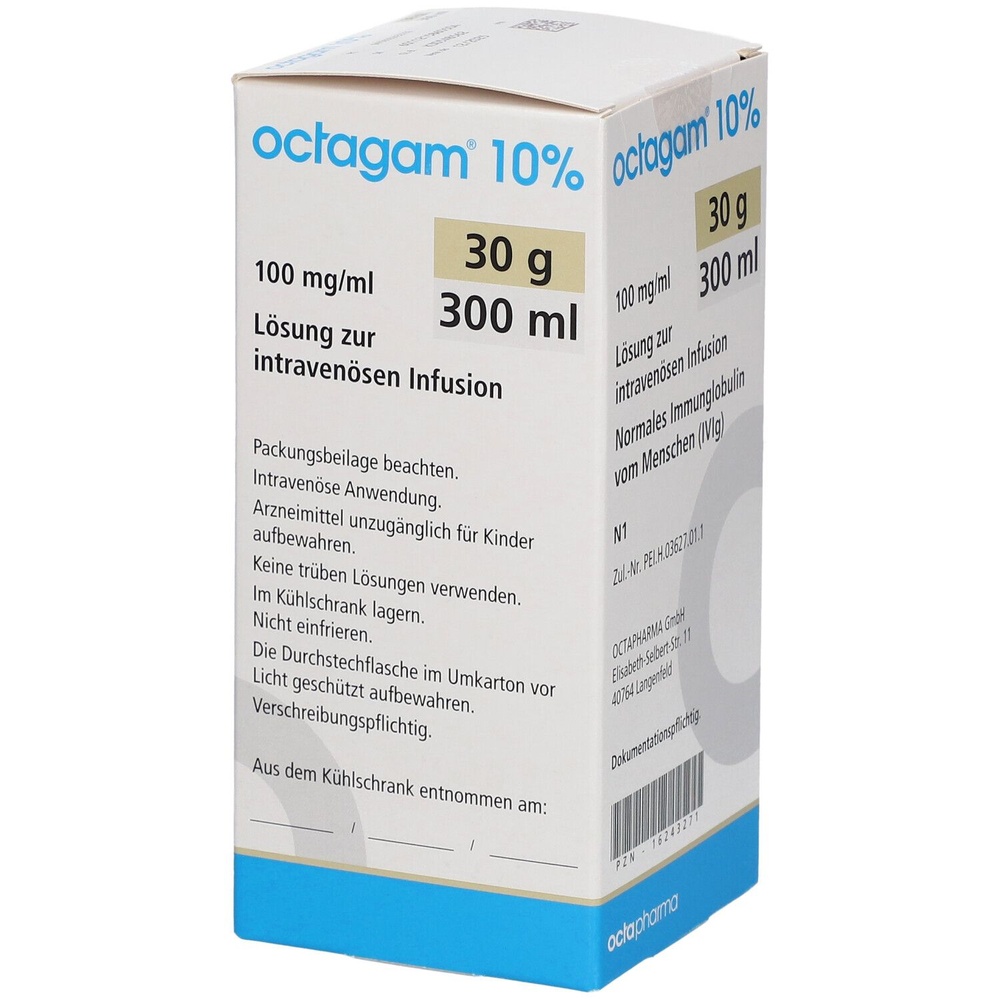
- Країна реєстрації
- Лікарська формаInfusion solution, 5%
- Код АТХJ06BA02
- Діюча речовина
- Потрібен рецептТак
- Виробник
- Ця інформація надана лише для ознайомлення і не є медичною порадою. Рішення щодо лікування завжди приймає лікар.
- Альтернативи до OKTAGAMЛікарська форма: Infusion solution, 100 mg/mlДіюча речовина: immunoglobulins, normal human, for intravascular adm.Виробник: TAKEDA MANUFACTURING AUSTRIA AGПотрібен рецептЛікарська форма: Infusion solution, 50 MG/MLДіюча речовина: immunoglobulins, normal human, for intravascular adm.Виробник: INSTITUTO GRIFOLS S.A.Потрібен рецептЛікарська форма: Powder and solvent for intravenous infusion solution, 50 MG/MLДіюча речовина: immunoglobulins, normal human, for intravascular adm.Виробник: BAXALTA INNOVATIONS GMBHПотрібен рецепт
Аналоги OKTAGAM в інших країнах
Препарати з тією самою діючою речовиною, доступні в інших країнах.
Аналог OKTAGAM у Іспанія
Аналог OKTAGAM у Польща
Аналог OKTAGAM у Україна
Лікарі онлайн щодо OKTAGAM
Застосування, безпека та можливість призначення рецепта — за результатами медичної оцінки.









Отримайте рецепт на OKTAGAM онлайн
Заповніть форму за 2 хвилини
Розкажіть про симптоми, історію хвороби та потрібний препарат.
Оберіть лікаря або ми призначимо
Оберіть спеціаліста або ми підберемо найближчого доступного лікаря.
Лікар розглядає ваш випадок
Зазвичай протягом 30 хвилин. Може ставити уточнювальні запитання в чаті.
Отримайте в будь-якій аптеці
Електронний рецепт надсилається на вашу пошту — дійсний по всій Польщі.
Часті запитання
OKTAGAM потребує рецепта в Італія. Ви можете обговорити з лікарем онлайн, чи підходить цей лікарський засіб для вашої ситуації.
Діюча речовина у OKTAGAM — immunoglobulins, normal human, for intravascular adm.. Це допомагає визначити препарати з тим самим складом, але під іншими торговими назвами.
OKTAGAM виробляється компанією OCTAPHARMA ITALY S.P.A.. Назва бренду та упаковка можуть відрізнятися залежно від дистрибʼютора.
Лікарі, зокрема Сімейні лікарі, Психіатри, Дерматологи, Кардіологи, Ендокринологи, Гастроентерологи, Пульмонологи, Нефрологи, Ревматологи, Гематологи, Інфекціоністи, Алергологи, Геріатри, Педіатри, Онкологи, можуть оцінити доцільність застосування OKTAGAM з урахуванням вашого стану та місцевих правил. Ви можете записатися на онлайн-консультацію, щоб обговорити симптоми та можливі подальші кроки.
Польща має добре розвинену систему охорони здоров'я у великих містах, таких як Варшава, Краків, Вроцлав і Гданськ. Аптеки широко доступні та працюють відповідно до чинного законодавства, забезпечуючи доступ до рецептурних препаратів.
Ви можете придбати OKTAGAM у Варшаві, Кракові, Вроцлаві або Гданську в будь-якій аптеці за наявності дійсного рецепта.
Щоб отримати рецепт, ви можете скористатися Oladoctor:
Інші препарати з тією самою діючою речовиною (immunoglobulins, normal human, for intravascular adm.) включають DEQSIGA, FLEBOGAMMA DIF, GAMMAGARD. Вони можуть відрізнятися торговою назвою або формою випуску, але містять той самий терапевтичний компонент. Перед зміною або початком прийому нового препарату варто проконсультуватися з лікарем.
