



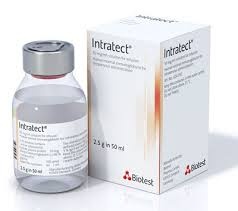
INTRATECT 50 G/L Infusion solution

Запит на рецепт онлайн
Лікар розгляне ваш випадок і визначить, чи є рецепт медично доцільним.

Поговоріть з лікарем про ці ліки
Обговоріть симптоми та можливі подальші кроки під час короткої онлайн-консультації.



Інструкція із застосування INTRATEKT
Зміст інструкції
Intratect 50 g/l solution for infusion
Normal human immunoglobulin (IgIV)
Read this leaflet carefully before using this medicine as it contains important
information for you.
- Keep this leaflet. You may need to read it again.
- If you have any questions, ask your doctor, pharmacist or nurse.
- If any side effects occur, including those not listed in this leaflet, tell your doctor, pharmacist or nurse. See section 4.
Contents of this leaflet:
- 1. What Intratect is and what it is used for
- 2. What you need to know before using Intratect
- 3. How to use Intratect
- 4. Possible side effects
- 5. How to store Intratect
- 6. Contents of the pack and other information
1. What is Intratect and what is it used for?
Intratect is a human blood extract containing antibodies (the body's own defense substances)
against diseases, and is available as an infusion solution. The solution is ready to be
administered into a vein (“infusion”).
Intratect contains normal human immunoglobulin (antibodies) derived from blood donated by a large
group of donors and is therefore likely to contain antibodies against the most common infectious diseases.
Appropriate doses of Intratect can restore normal levels of immunoglobulin G
(IgG) in the blood if these are low.
Intratect is used in adults, children and adolescents (0-18 years) who do not have sufficient antibodies
(replacement therapy) in cases of:
- patients who are born with an antibody deficiency (primary immunodeficiency syndromes, PID)
- acquired antibody deficiency (secondary immunodeficiency syndrome, SID) in patients who suffer from severe or recurrent infections and ineffective antimicrobial treatment with documented deficiency of specific antibodies or with low levels of IgG (< 4 g/l)
Intratect is also used in adults, children and adolescents (0-18 years) in the treatment of inflammatory
disorders (immunomodulation) such as:
- primary immune thrombocytopenia ( immune thrombocytopenia,ITP, where the patient has a reduced number of platelets), when the patient needs to undergo surgery in the near future or is at risk of bleeding
- Guillain-Barré syndrome (a disease that damages the nerves and can cause generalized paralysis)
- Kawasaki disease (in children causes inflammation in various organs with dilation of the heart arteries) in association with acetylsalicylic acid
- Chronic inflammatory demyelinating polyneuropathy (CIDP). This is a chronic disease characterized by inflammation of the peripheral nerves, which causes muscle weakness and/or numbness, especially in the legs and upper limbs.
- Multifocal motor neuropathy (MMN). It is a rare condition characterized by slow and progressive asymmetrical weakness of the limbs, without sensory loss.
2. What you need to know before using Intratect
Do not use Intratect
- if you are allergic to human immunoglobulin or any of the other ingredients of this medicine (listed in section 6).
- if you have an immunoglobulin A deficiency, especially if you have antibodies against immunoglobulin A in your blood, as this may cause anaphylaxis.
Warnings and precautions
Talk to your doctor, pharmacist or nurse before using Intratect if
- you have never used this medicine before or a long time (many weeks) has passed since you last received it (careful monitoring will be necessary during the infusion and for one hour after it has finished)
- you have recently received Intratect (in this case you will need to be observed during the infusion and for at least 20 minutes after the infusion)
- you have an active infection or underlying chronic inflammation
- you have had a reaction to other antibodies (in rare cases there may be a risk of an allergic reaction)
- you suffer from or have suffered from kidney disease
- you have been given medicines that can damage the kidneys (if kidney function worsens, it may be necessary to stop treatment with Intratect) The doctor will pay particular attention if you are overweight, elderly, suffer from diabetes or hypertension, have a poor blood volume (hypovolemia), increased blood density (hyperviscosity), are bedridden or immobile for a certain period of time (immobilization), or have problems with blood vessels (vascular diseases) or other risks of developing a thrombosis (blood clot).
Be careful - reactions
You will be closely monitored throughout the Intratect infusion period, in order to
ensure that no reactions develop (e.g. anaphylaxis). The doctor will ensure that the infusion rate of Intratect is appropriate for Your situation.
If you notice any of the following signs of a reaction, i.e. headache, flushing, chills, muscle pain, wheezing, rapid heartbeat, lower back pain, nausea, low blood pressure during
the infusion of Intratect, tell your doctor immediately. The infusion rate may be slowed down or
the entire infusion stopped altogether.
After the infusion of Intratect, a low concentration of white blood cells (neutropenia) may occur, which
resolves spontaneously within 7 - 14 days. If you are unsure about the symptoms, contact your doctor.
In very rare cases, lung injuries related to transfusion (TRALI) may occur after the administration of immunoglobulins.
This will lead to an accumulation of fluid, not related to the heart, in the
air spaces of the lungs (non-cardiogenic pulmonary edema). You will experience severe difficulty breathing
(respiratory distress), increased breathing rate (tachypnea), abnormally low levels of
oxygen in the blood (hypoxia) and increased body temperature (fever). Symptoms usually appear
within 1 - 6 hours of treatment. If such reactions occur during the infusion of Intratect, report it
immediately to your doctor, who will immediately stop the infusion.
Information on the transmission of infectious agents
Intratect is obtained from human plasma (the liquid part of blood). When medicines are made from
human blood or plasma, it is important to avoid the transmission of any infections to patients. The
blood donors are tested for viruses and infections. In addition, the manufacturers of these
medicines treat the blood or plasma in such a way as to inactivate or remove viruses. Despite these
precautions, however, when medicines derived from blood or plasma are administered, it is
impossible to completely exclude the possibility of transmission of infections.
The precautions taken are considered effective for enveloped viruses, such as those of human immunodeficiency (HIV), hepatitis B and hepatitis C.
The precautions taken may have limited value against non-enveloped viruses, such as the hepatitis A virus and parvovirus B19.
Immunoglobulins have not been associated with hepatitis A and parvovirus B19 infections, possibly because
the antibodies against these infections contained in the product are protective.
It is strongly recommended that the doctor records the name and batch number of the product each time
you are given a dose of Intratect. The batch number provides information about the specific starting material
of the medicine you receive. If necessary, it will then be possible to trace the starting material
used for you.
Other medicines and Intratect
Tell your doctor if you are taking, have recently taken or might take any other medicines.
Intratect can reduce the effectiveness of some vaccines such as those for:
- measles
- rubella
- mumps
- chickenpox You may need to wait up to 3 months before being vaccinated with some vaccines and also up to a year before being vaccinated against measles.
Avoid the concomitant use of loop diuretics with Intratect.
Effects on blood tests
Intratect can alter blood tests. If you have a blood test after receiving Intratect, you should
inform the person taking the blood sample or the doctor that you have been treated with Intratect.
Pregnancy and breastfeeding
If you are pregnant, suspect you may be pregnant, are planning to become pregnant or are breastfeeding,
ask your doctor for advice before taking this medicine.
The doctor will decide whether Intratect can be used during pregnancy and breastfeeding.
Driving and using machines
Intratect may slightly impair the ability to drive vehicles or use machines. Patients who
experience adverse reactions during treatment should wait for these to resolve before
driving vehicles or using machines.
3. How to use Intratect
Intratect is to be used for intravenous administration (infusion into a vein). It is administered by a
doctor or a nurse. The dose will depend on Your health conditions and Your body weight. The
doctor will decide the appropriate dose to administer to You.
At the beginning of the infusion Intratect will be administered slowly. The doctor may then gradually increase
the rate of the infusion.
The infusion rate and its frequency depend on the reason for which You receive Intratect.
The medicine must be brought to room temperature or body temperature before use.
Use in children and adolescents
The dosage in children and adolescents (0–18 years) is not different from that of adults, as for
each indication it depends on body weight and is adjusted based on the clinical outcome of the
conditions mentioned above.
For replacement therapy in patients with immune system deficiency (primary or
secondary immunodeficiency), the infusion is done every 3-4 weeks.
For the treatment of inflammatory disorders (immunomodulation) the infusion can be administered
as follows:
- Primary immune thrombocytopenia: for the treatment of an acute episode, an infusion is administered on day 1; this dose may be repeated once within 3 days. Alternatively, a lower dosage can be administered daily, for 2 - 5 days.
- Guillain-Barré syndrome: The infusion is administered for 5 days.
- Kawasaki disease: The infusion must be administered as a single dose in association with acetylsalicylic acid
- Chronic inflammatory demyelinating polyneuropathy and multifocal motor neuropathy: the effect of treatment must be evaluated after each administration cycle.
If you have been given more Intratect than you should
An overdose may cause fluid overload and increased blood density, especially
in children, the elderly, or patients with impaired kidney or heart function. Make sure to drink
adequate amounts of fluids to avoid dehydration and report any health problems to your doctor. If you think
you have received an excessive amount of Intratect, report it to your doctor, who will decide whether the infusion should
be stopped and alternative treatment administered.
If an infusion is not administered
Intratect will be administered to you in hospital by a doctor or a nurse, so it is unlikely that
an infusion will not be carried out. However, report to your doctor if you think you have missed an infusion. If you
have further questions about the use of this medicine, ask your doctor or nurse.
4. Possible side effects
Like all medicines, this medicine can cause side effects, although not everyone will experience them.
The frequencies outlined below have been calculated generally based on the number of patients treated, unless otherwise specified, e.g. for number of infusions.
If you notice the occurrence of any of the following effects, report it immediately to your doctor:
- skin rashes,
- itching,
- wheezing,
- difficulty breathing,
- swelling of the eyelids, face, lips, throat or tongue,
- extremely low blood pressure, with symptoms such as dizziness, confusion, fainting, rapid pulse This could be a serious allergic reaction (anaphylactic shock) or a reaction ofhypersensitivity.
The following side effects have been reported during clinical studies with Intratect 50 g/l:
Common(may occur with a maximum of 1 infusion out of 10):
- headache
- fever
Uncommon(may occur with a maximum of 1 infusion out of 100):
- mild increase in the destruction of red blood cells inside the blood vessels (hemolysis)
- changes in the sense of taste
- high blood pressure
- inflammation of a superficial vein
- discomfort (nausea)
- vomiting
- abdominal pain
- skin rash with raised spots
- chills
- hot flushes
- increased body temperature
- positive test for antibodies directed against red blood cells
The following side effects have been reported spontaneously with Intratect:
Not known (frequency cannot be estimated on the basis of available data)
- severe chest pain or chest tightness (angina pectoris)
- chills or tremors (rigidity)
- shock (anaphylactic), allergic reaction
- difficulty breathing (dyspnea)
- low blood pressure
- back pain
- decreased number of white blood cells (leukopenia)
Human immunoglobulin preparations can generally cause the following side effects
(in decreasing order of frequency):
- chills, headache, dizziness, fever, vomiting, allergic reactions, nausea, joint pain, low blood pressure and moderate back pain
- reduction in the number of red blood cells due to the breakdown of these cells in the blood vessels (reversible hemolytic reactions) and (rarely) hemolytic anemia requiring transfusion
- (rarely) sudden drop in blood pressure and, in isolated cases, anaphylactic shock
- (rarely) transient skin reactions (including cutaneous lupus erythematosus - frequency not known)
- (very rarely) thromboembolic reactions such as heart attack (myocardial infarction), stroke, blood clots in the blood vessels of the lung (pulmonary embolism), blood clots in a vein (deep vein thrombosis)
- cases of acute temporary inflammation of the protective membranes covering the brain and spinal cord (reversible aseptic meningitis)
- cases of blood test results indicating that kidney function is impaired and/or acute renal failure
- cases of acute lung injury related to transfusion (TRALI): see also section “Warnings and precautions”)
If side effects occur, the infusion will be slowed down or stopped completely.
Reporting of side effects
If you experience any side effects, including those not listed in this leaflet, tell your
doctor, pharmacist or nurse. You can also report side effects directly through
https://www.aifa.gov.it/content/segnalazioni-reazioni-avverse.
By reporting side effects you can help provide more information on the safety of
this medicine.
5. How to store Intratect
Keep this medicine out of the sight and reach of children.
Do not use this medicine after the expiry date which is stated on the label and the packaging after Exp.
Immediate use after first opening is recommended.
Do not store at a temperature above 25°C. Do not freeze.
Keep the vial in its carton to protect the medicine from light.
Do not use this medicine if the solution is cloudy or contains deposits.
Do not dispose of any medicine in wastewater or household waste. Ask your pharmacist how
to dispose of medicines you no longer use. This will help protect the environment.
6. Contents of the pack and other information
What Intratect contains
The active ingredient in Intratect is human immunoglobulin for intravenous administration.
Intratect contains 50 g/l of normal human immunoglobulin, of which at least 96% consists of
immunoglobulin G (IgG). The IgG subclass distribution is approximately 57% IgG1, 37% IgG2, 3%
IgG3 and 3% IgG4. The maximum content of immunoglobulin A (IgA) is 900 micrograms/ml.
The other components are: glycine and water for injections.
Description of Intratect and contents of the pack
Intratect is an infusion solution. The solution is clear or slightly opalescent (slightly
milky), colourless or pale yellow.
20 ml, 50 ml, 100 ml or 200 ml of solution in vials (type II glass) with a stopper (bromobutyl) and seal
(aluminium).
Each pack contains 1 vial with 20 ml, 50 ml, 100 ml or 200 ml of solution.
Each pack contains 3 vials with 200 ml of solution.
Not all pack sizes may be marketed.
Marketing authorisation holder and manufacturer
Biotest Pharma GmbH
Landsteinerstrasse 5
63303 Dreieich
Germany
Tel.: + 49 6103 801-0
Fax: + 49 6103 801-150
Email: [email protected]
For all information about this medicine, please contact the local representative of the Marketing
Authorisation Holder:
Biotest Italia srl
Via Leonardo da Vinci, 43
20090 Trezzano s/Naviglio (Milan)
Tel.: 02 4844291
Fax: 02 4450141
Email: [email protected]
PRODUCTION
Biotest AG, Landsteinerstrasse 5, D-63303 Dreieich, Germany
BATCH RELEASE
Biotest Pharma GmbH, Landsteinerstrasse 5, D-63303 Dreieich, Germany
PACKAGING
Biotest AG, Landsteinerstrasse 5, D-63303 Dreieich, Germany
--------------------------------------------------------------------------------------------------------------------
The following information is intended exclusively for healthcare professionals:
Special precautions
Infusion-related reaction
Certain adverse reactions (e.g. headache, flushing, chills, myalgia, wheezing, tachycardia,
lumbar pain, nausea, and hypotension) may be related to the infusion rate. Strictly observe the
recommended infusion rate. Patients must be closely monitored and carefully observed for any
symptoms during the infusion period.
In all patients, intravenous administration of IVIg requires:
- adequate hydration before starting the IVIg infusion
- monitoring of diuresis
- monitoring of serum creatinine levels
- avoiding the concomitant use of loop diuretics
Each time Intratect is administered to a patient, it is strongly recommended to record the name and
batch number of the product.
In case of shock, apply standard medical treatments for shock.
Aseptic Meningitis Syndrome ( Aseptic Meningitis Syndrome, AMS)
AMS has been reported in association with treatment with IVIg.
The syndrome usually begins several hours to two days after treatment with IVIg. Analysis of the
cerebrospinal fluid ( cerebrospinal fluid, CSF) is frequently positive, with pleocytosis up to several
thousand cells per mm , mostly of the granulocytic series, and elevated protein levels up to
several hundred mg/dl.
AMS may occur more frequently in association with IVIg treatment at high doses (2 g/kg).
Patients presenting with such signs and symptoms should undergo a thorough neurological
examination, including CSF studies, to exclude other causes of meningitis.
Suspension of IVIg treatment has led to remission of AMS within a few days without sequelae.
Hemolytic anemia
IVIg products may contain blood group antibodies that can act as hemolysins and
induce immunoglobulin adhesion to red blood cells (RBCs) in vivo, causing a positive direct
antiglobulin reaction (Coombs’ test) and, rarely, hemolysis. Hemolytic anemia may develop
following therapy with IVIg, due to increased RBC sequestration. Patients treated with IVIg
should be monitored for clinical signs and symptoms of hemolysis.
Dosage
The dose and dosage regimen depend on the indication.
The dose may need to be individualized for each patient, depending on the clinical response. The
weight-based dose may require adjustment in underweight or overweight patients.
The following dosages are suggested as a guide:
Replacement therapy in primary immunodeficiency syndromes:
The dosage regimen should achieve a minimum IgG level (measured before the next infusion)
of at least 6 g/l or be within the normal reference range for the patient’s age. Achieving equilibrium
(steady-state IgG levels) requires 3-6 months after initiation of therapy. The recommended initial dose is
0.4–0.8 g/kg, given as a single dose, followed by at least 0.2 g/kg administered every 3-4 weeks.
The dose required to achieve a minimum IgG level of 6 g/l is in the order of 0.2–0.8 g/kg/month.
The interval between doses, once equilibrium is reached, varies between 3 and 4 weeks.
Minimum IgG levels should be measured and determined in connection with the incidence of infection.
To reduce the rate of bacterial infection, it may be necessary to increase the dosage and aim for
higher minimum levels.
Replacement therapy in secondary immunodeficiencies
The recommended dose is 0.2–0.4 g/kg every 3-4 weeks.
Minimum IgG levels should be measured and determined in connection with the incidence of infection. The
dose should be adjusted as necessary to achieve optimal protection against infections and an increase
may be necessary in patients with persistent infection; a reduction in dose may be considered if the
patient remains infection-free.
Immunomodulation in:
Primary immune thrombocytopenia
There are two alternative treatment schedules:
- 0.8-1 g/kg administered on day 1; this dose may be repeated once within 3 days
- 0.4 g/kg administered daily for 2-5 days. Treatment may be repeated in case of relapse.
Guillain-Barré syndrome:
0.4 g/kg/day for 5 days (possible repetition of administration in case of relapse).
Kawasaki disease:
2.0 g/kg should be administered as a single dose. Patients should receive concomitant treatment
with acetylsalicylic acid.
Chronic inflammatory demyelinating polyneuropathy (CIDP)
Initial dose: 2 g/kg divided into 2–5 days
Maintenance doses: 1 g/kg divided into 1–2 days every 3 weeks.
The effect of treatment should be evaluated after each cycle; if no effect is observed after 6 months, the
treatment should be discontinued.
If the treatment is effective, long-term treatment is at the discretion of the physician, based on the
patient’s response and maintenance response. Dosage and administration intervals may need to be
adjusted according to the individual course of the disease.
Multifocal motor neuropathy (MMN)
Initial dose: 2 g/kg divided into 2-5 days.
Maintenance dose: 1 g/kg every 2–4 weeks or 2 g/kg every 4–8 weeks.
The effect of treatment should be evaluated after each cycle; if no effect is observed after 6 months,
treatment should be discontinued.
If the treatment is effective, long-term treatment is at the discretion of the physician, based on the
patient’s response and maintenance response. Dosage and administration intervals may need to be
adjusted according to the individual course of the disease.
The recommended dosage is summarized in the following table:
| Indication | Dose | or Frequency of infusions |
| Replacement therapy: | ||
| Primary immunodeficiency syndromes | Initial dose: 0.4-0.8 g/kg Maintenance dose: 0.2–0.8 g/kg | c a m every 3–4 weeks |
| Secondary immunodeficiencies (as defined in the indications section) | 0.2-0.4 g/kg | every 3–4 weeks |
| r Immunomodulation: | ||
| Primary immune thrombocytopenia | 0.8–1 g/kg or 0.4 g/kg/day | a on day 1, possibly to be repeated once F within 3 days for 2–5 days |
| Guillain Barré syndrome | 0.4 g/kg/day | for 5 days |
| Kawasaki disease | 2 g/kg | l as a single dose, together with acetyl salicylic acid |
| Chronic inflammatory demyelinating polyneuropathy (CIDP) | Initial dose: 2 g/kg | e divided into 2–5 days |
| Maintenance dose: 1 g/kg | every 3 weeks divided into 1–2 days | |
| Multifocal motor neuropathy (MMN) a t | n Initial dose: 2 g/kg a Maintenance dose: 1 g/kg or 2 g/kg | divided into 2–5 consecutive days every 2–4 weeks or every 4-8 weeks divided into 2– 5 days |
Paediatric population
The dosage in children and adolescents (0-18 years) is not different from that of adults, as for
each indication it depends on body weight and must be adjusted according to the clinical outcome of
the aforementioned conditions.
Route of administration
Intravenous use
Intratect must be infused intravenously at an initial rate of no more than 0.3 ml/kg/hour for
30 minutes. See ”Warnings and precautions”. If an adverse reaction occurs, reduce the infusion rate
or stop the infusion. If well tolerated, the infusion rate may be gradually increased to a maximum of
1.9 ml/kg/hour.
Incompatibilities
In the absence of compatibility studies, this medicine must not be mixed with other medicines or
with any other product containing IVIg.
Intratect 100 g/l solution for infusion
Normal human immunoglobulin (IgIV)
Read this leaflet carefully before you use this medicine, as it contains important
information for you.
- Keep this leaflet. You may need to read it again.
- If you have any questions, ask your doctor, pharmacist or nurse.
- If any side effects occur, including those not listed in this leaflet, ask your doctor, pharmacist or nurse. See section 4.
Contents of this leaflet:
- 7. What Intratect 100 g/l is and what it is used for
- 8. What you need to know before you use Intratect 100 g/l
- 9. How to use Intratect 100 g/l
- 10. Possible side effects
- 11. How to store Intratect 100 g/l
- 12. Contents of the pack and other information
1. What is Intratect 100 g/l and what is it used for
Intratect 100 g/l is a human blood extract containing antibodies (the body's own defense substances) against diseases, and is available as an infusion solution. The solution is ready to be administered into a vein (“infusion”).
Intratect 100 g/l contains normal human immunoglobulin (antibodies) obtained from blood donated by a large group of donors and is therefore likely to contain antibodies against the most common infectious diseases. Adequate doses of Intratect 100 g/l can restore normal blood levels of immunoglobulin G (IgG) if these are low.
Intratect 100 g/l is used in adults, children and adolescents (0-18 years) who do not have sufficient antibodies (replacement therapy) in cases of:
- patients born with antibody deficiency (primary immunodeficiency syndromes, PID)
- acquired antibody deficiency (secondary immunodeficiency syndrome, SID) in patients suffering from severe or recurrent infections and ineffective antimicrobial treatment with documented deficiency of specific antibodies or with low levels of IgG (< 4 g/l)
Intratect 100 g/l is also used in adults, children and adolescents (0-18 years) in the treatment of inflammatory disorders (immunomodulation) such as:
- primary immune thrombocytopenia (immune thrombocytopenia,ITP, where the patient has a reduced number of platelets), when the patient is about to undergo surgery in the near future or is at risk of bleeding
- Guillain-Barré syndrome (a disease that damages nerves and can cause generalized paralysis)
- Kawasaki disease (in children causes inflammation in various organs with dilation of the heart arteries) in association with acetylsalicylic acid
- Chronic inflammatory demyelinating polyneuropathy (CIDP). This is a chronic disease characterized by inflammation of the peripheral nerves, which causes muscle weakness and/or numbness especially in the legs and upper limbs.
- Multifocal motor neuropathy (MMN). It is a rare condition characterized by slow and progressive asymmetrical weakness of the limbs, without sensory loss.
2. What you need to know before using Intratect 100 g/l
Do not use Intratect 100 g/l
- if you are allergic to human immunoglobulin or to any of the other ingredients of this medicine (listed in Section 6).
- in case of immunoglobulin A deficiency, especially if you have antibodies against immunoglobulin A in your blood, as this may cause anaphylaxis
Warnings and precautions
Talk to your doctor, pharmacist or nurse before using Intratect 100 g/l if:
- You have never used this medicine before or a long time (many weeks) has passed since you last received it (careful monitoring will be necessary during the infusion and for one hour after it has finished)
- You have recently received Intratect 100 g/l (in this case you will need to be observed during the infusion and for at least 20 minutes afterwards)
- You have an active infection or underlying chronic inflammation
- You have had a reaction to other antibodies (in rare cases there may be a risk of an allergic reaction)
- You suffer from or have suffered from kidney disease
- You have been given medicines that can damage the kidneys (if kidney function worsens, it may be necessary to stop treatment with Intratect 100 g/l) The doctor will pay particular attention if you are overweight, elderly, suffer from diabetes or hypertension, have a poor blood volume (hypovolemia), increased blood density (hyperviscosity), are bedridden or immobile for a certain period of time (immobilization), or have problems with blood vessels (vascular diseases) or other risks of developing a thrombosis (blood clot).
Careful - reactions
You will be closely monitored throughout the Intratect 100 g/l infusion period, so
that it can be ensured that no reactions develop (e.g. anaphylaxis). The doctor will ensure that the rate of
infusion of Intratect 100 g/l is appropriate for your situation.
If you notice any of the following signs of a reaction, i.e. headache, flushing, chills, muscle pain,
wheezing, rapid heartbeat, lower back pain, nausea, low blood pressure during
the infusion of Intratect 100 g/l, tell your doctor immediately. The rate of infusion may be slowed down
or the entire infusion stopped altogether.
After the infusion of Intratect 100 g/l, a low concentration of white blood cells
(neutropenia) may occur, which resolves spontaneously within 7 - 14 days. If you are unsure about the symptoms, contact
your doctor.
In very rare cases, after the administration of immunoglobulins, acute transfusion-related lung injury (TRALI) may occur. This will lead to an accumulation of fluid, not related to the heart, in the
air spaces of the lungs (non-cardiogenic pulmonary edema). You will experience severe difficulty breathing
(respiratory distress), increased breathing rate (tachypnea), abnormally low levels of
oxygen in the blood (hypoxia) and increased body temperature (fever). Symptoms usually appear
within 1 - 6 hours of treatment. If such reactions occur during the infusion of Intratect 100 g/l, report it immediately to
your doctor, who will immediately stop the infusion.
Information on the transmission of infectious agents
Intratect 100 g/l is obtained from human plasma (the liquid part of blood). When medicines are
obtained from human blood or plasma, it is important to avoid the transmission of any infections to
patients. Blood donors are tested for viruses and infections. In addition, manufacturers
of these medicines treat blood or plasma in such a way as to inactivate or remove viruses. Despite
these precautions, however, when medicines derived from human blood or plasma are administered
the possibility of transmission of infections cannot be completely excluded.
The precautions taken are considered effective for enveloped viruses, such as those of human immunodeficiency
(HIV), hepatitis B and hepatitis C.
The precautions taken may have limited value against non-enveloped viruses, such as the hepatitis A virus and parvovirus B19.
Immunoglobulins have not been associated with hepatitis A and parvovirus B19 infections, possibly because
the antibodies against these infections contained in the product are protective.
It is strongly recommended that the doctor records the name and batch number of the product each time you
are given a dose of Intratect 100 g/l. The batch number contains information about the specific starting material of the medicine you receive. If necessary, it will then be possible to trace the starting material
used for you.
Other medicines and Intratect 100 g/l
Tell your doctor if you are taking, have recently taken or might take any other medicines.
Intratect 100 g/l may reduce the effectiveness of some vaccines such as those for:
- measles
- rubella
- mumps
- chickenpox You may need to wait up to 3 months before being vaccinated with some vaccines and up to a year before being vaccinated against measles. Avoid concomitant use of loop diuretics with Intratect 100 g/l.
Effects on blood tests
Intratect 100 g/l may alter blood tests. If you have a blood test after receiving Intratect 100 g/l,
you should inform the person taking the blood sample or the doctor that you have been treated with Intratect
100 g/l.
Pregnancy and breastfeeding
If you are pregnant, suspect you are pregnant or are planning to become pregnant, or if you are breastfeeding,
ask your doctor for advice before taking this medicine.
The doctor will decide whether Intratect 100 g/l can be used during pregnancy and breastfeeding.
Driving and using machines
Intratect 100 g/l may slightly impair your ability to drive vehicles or use machines. Patients who
experience adverse reactions during treatment should wait for these to resolve before
driving vehicles or using machines.
3. How to use Intratect 100 g/l
Intratect 100 g/l is to be used for intravenous administration (infusion into a vein). It is administered
by a doctor or a nurse. The dose will depend on your health condition and your body weight.
The doctor will decide the appropriate dose to administer to you.
At the beginning of the infusion, Intratect 100 g/l will be administered slowly. The doctor may then
gradually increase the infusion rate.
The infusion rate and its frequency depend on the reason why you are receiving Intratect 100 g/l.
The medicine must be brought to room temperature or body temperature before use.
Use in children and adolescents
The dosage in children and adolescents (0 - 18 years) is not different from that of adults, as for
each indication it depends on body weight and is adjusted based on the clinical outcome of the
conditions mentioned above.
For replacement therapy in patients with immune system deficiency (primary or
secondary immunodeficiency), the infusion is done every 3 - 4 weeks.
For the treatment of inflammatory disorders (immunomodulation) the infusion can be administered
as follows:
- Immune thrombocytopenia: for the treatment of an acute episode, an infusion is administered on day 1; this dose can be repeated once within 3 days. Alternatively, a lower dose can be administered daily, for 2 - 5 days.
- Guillain-Barré syndrome: The infusion is administered for 5 days.
- Kawasaki disease: The infusion must be administered as a single dose in association with acetylsalicylic acid.
- Chronic inflammatory demyelinating polyneuropathy and multifocal motor neuropathy: the effect of treatment must be evaluated after each administration cycle.
If you have been given too much Intratect 100 g/l
An overdose may cause fluid overload and increased blood density,
especially in children, the elderly, or patients with impaired renal or
cardiac function. Make sure to drink adequate fluids to avoid dehydration
and report any health problems to your doctor. If you think you have received an excessive amount of Intratect 100 g/l, report it to your doctor, who will decide whether the infusion should
be stopped and alternative treatment should be administered.
If an infusion is missed
Intratect 100 g/l will be administered to you in hospital by a doctor or a nurse,
so it is unlikely that an infusion will be missed. However, report to your doctor if
you think you have missed an infusion.
If you have any further questions about the use of this medicine, ask your doctor or nurse.
4. Possible side effects
Like all medicines, this medicine can cause side effects, although not everybody gets them.
The frequencies reported below have generally been calculated based on the number of patients treated,
except where otherwise specified, e.g. for number of infusions.
If you notice any of the following effects, tell your doctor immediately:
- skin rashes
- itching
- wheezing
- difficulty breathing
- swelling of the eyelids, face, lips, throat or tongue
- extremely low blood pressure with symptoms such as dizziness, confusion, fainting, rapid pulse This could be a serious allergic reaction (anaphylactic shock) or a reaction ofhypersensitivity.
The following side effects have been reported in clinical studies with Intratect 100 g/l:
Common(may affect up to 1 in 10 infusions):
- irregular heartbeat (palpitations)
- feeling unwell
- infusion-related reaction
- headache
- joint pain
- back pain
- bone pain
Uncommon(may affect up to 1 in 100 infusions):
- hypersensitivity
- fatigue
- chills
- hypothermia
- sensory disturbances
- muscle pain
- skin pain
- rash
- excessive blood flow to organs or tissues
- high blood pressure
- diarrhoea
- abdominal pain
The following side effects have been reported spontaneously with Intratect:
Not known (the frequency cannot be estimated from the available data)
- severe chest pain or chest tightness (angina pectoris)
- chills or tremors (rigidity)
- shock (anaphylactic), allergic reaction
- difficulty breathing (dyspnoea)
- low blood pressure
- back pain
- decreased number of white blood cells (leukopenia)
Preparations based on human immunoglobulins can generally cause the following side effects
(in decreasing order of frequency):
- chills, headache, dizziness, fever, vomiting, allergic reactions, nausea, joint pain, low blood pressure and moderate back pain
- reduction in the number of red blood cells due to breakdown of these cells in the blood vessels (reversible haemolytic reactions) and (rarely) haemolytic anaemia requiring transfusion
- (rarely) sudden drop in blood pressure and, in isolated cases, anaphylactic shock
- (rarely) transient skin reactions (including cutaneous lupus erythematosus - frequency not known)
- (very rarely) thromboembolic reactions such as heart attack (myocardial infarction), stroke, blood clots in the blood vessels of the lung (pulmonary embolism), blood clots in a vein (deep vein thrombosis)
- cases of acute temporary inflammation of the protective membranes covering the brain and spinal cord (reversible aseptic meningitis)
- cases of blood test results indicating that kidney function is impaired and/or acute renal failure
- cases of acute transfusion-related lung injury (TRALI): see also section “Warnings and precautions”
If side effects occur, the infusion will be slowed down or stopped completely.
Reporting of side effects
If you get any side effects, talk to your doctor, pharmacist or nurse. You can also report side effects directly through
https://www.aifa.gov.it/content/segnalazioni-reazioni-avverse.
By reporting side effects you can help provide more information on the safety of
this medicine.
5. How to store Intratect 100 g/l
Keep this medicine out of sight and reach of children.
Do not use this medicine after the expiry date which is stated on the label and the packaging after Exp.
Immediate use after first opening is recommended.
Do not store at a temperature above 25°C. Do not freeze. Keep the bottle in its packaging
to protect the medicine from light.
Do not use this medicine if the solution is cloudy or contains deposits.
Do not dispose of any medicine in wastewater or household waste. Ask your pharmacist how
to dispose of medicines you no longer use. This will help protect the environment.
6. Contents of the pack and other information
What Intratect 100 g/l contains
The active ingredient in Intratect 100 g/l is human immunoglobulin for intravenous administration.
Intratect 100 g/l contains 100 g/l of normal human immunoglobulin, of which at least 96% consists of
immunoglobulin G (IgG). The distribution of the IgG subclass is approximately 57% IgG1, 37% IgG2, 3%
IgG3 and 3% IgG4. The maximum content of immunoglobulin A (IgA) is 1800 micrograms/ml.
The other components are: glycine and water for injections.
Description of the appearance of Intratect 100 g/l and contents of the pack
Intratect 100 g/l is a solution for infusion. The solution is clear or slightly opalescent
(slightly milky), colourless or pale yellow.
10 ml, 25 ml, 50 ml, 100 ml or 200 ml of solution in vials (type II glass) with a stopper (bromobutyl) and
seal (aluminium).
Each pack contains 1 vial with 10 ml, 25 ml, 50 ml, 100 ml or 200 ml of solution.
Each pack contains 3 vials with 100 ml or 200 ml of solution.
Not all pack sizes may be marketed.
Marketing authorisation holder and manufacturer
Biotest Pharma GmbH
Landsteinerstrasse 5
63303 Dreieich
Germany
Tel.: + 49 6103 801-0
Fax: + 49 6103 801-150
Email: [email protected]
For all information about this medicine, please contact the local representative of the marketing
authorisation holder
Biotest Italia srl
Via Leonardo da Vinci, 43
20090 Trezzano s/ N (Milan)
Tel.: 02 4844291
Fax: 02 4450141
Email: [email protected]
PRODUCTION
Biotest AG, Landsteinerstrasse 5, D-63303 Dreieich, Germany
BATCH RELEASE
Biotest Pharma GmbH, Landsteinerstrasse 5, D-63303 Dreieich, Germany
PACKAGING
Biotest AG, Landsteinerstrasse 5, D-63303 Dreieich, Germany
--------------------------------------------------------------------------------------------------------------------
The following information is intended exclusively for healthcare professionals:
Special precautions
Infusion-related reaction
Certain adverse reactions (e.g. headache, flushing, chills, myalgia, wheezing, tachycardia,
lumbar pain, nausea, and hypotension) may be related to the infusion rate. Carefully observe the
recommended infusion rate. Patients must be closely monitored and carefully observed for any
symptoms during the infusion period.
In all patients, intravenous administration of IVIg requires:
- adequate hydration before starting the IVIg infusion
- monitoring of diuresis
- monitoring of serum creatinine levels
- avoiding the concomitant use of loop diuretics
Whenever Intratect 100 g/l is administered to a patient, it is strongly recommended to record the
product name and batch number.
In case of shock, apply standard medical treatments for shock.
Aseptic Meningitis Syndrome (Aseptic Meningitis Syndrome, AMS)
AMS has been reported in association with treatment with IVIg.
The syndrome usually begins a few hours to two days after treatment with IVIg. Analyses of the cerebrospinal fluid (cerebrospinal fluid, CSF) are frequently positive, with pleocytosis up to several
thousand cells per mm³, mostly of the granulocytic series, and elevated protein levels up to
several hundred mg/dl.
AMS may occur more frequently in association with treatment with IVIg at high doses (2 g/kg).
Patients presenting with such signs and symptoms should undergo a thorough neurological examination,
including CSF studies, to exclude other causes of meningitis.
Suspension of IgIV treatment has led to remission of AMS within a few days without sequelae.
Hemolytic anemia
IVIg products may contain blood group antibodies that can act as hemolysins and
induce immunoglobulin adhesion to red blood cells (RBCs) in vivo, causing a positive
direct antiglobulin reaction (Coombs' test) and, rarely, hemolysis. Hemolytic anemia may develop
following therapy with IVIg, due to increased RBC sequestration. Patients treated with IVIg
should be monitored for clinical signs and symptoms of hemolysis.
Dosage
The dose and dosage regimen depend on the indication.
It may be necessary to individualize the dose for each patient, depending on the clinical response. The
weight-based dose may require adjustment in underweight or overweight patients.
The following dosages are suggested as a guide:
Replacement therapy in primary immunodeficiency syndromes:
The dosage regimen should achieve a minimum IgG level (measured before the next infusion) of at least 6 g/l or
be within the normal reference range for the patient's age. Equilibrium (steady-state IgG levels) requires 3-6
months after initiation of therapy. The recommended initial dose is 0.4–0.8 g/kg, administered as a single
dose, followed by at least 0.2 g/kg administered every 3–4 weeks.
The dose required to achieve a minimum IgG level of 6 g/l is in the range of 0.2–0.8 g/kg/month.
The interval between doses, once equilibrium is reached, varies between 3 and 4 weeks.
Minimum IgG levels should be measured and determined in connection with the incidence of infection.
To reduce the rate of bacterial infection, it may be necessary to increase the dosage and aim for higher
minimum levels.
Replacement therapy in secondary immunodeficiencies
The recommended dose is 0.2–0.4 g/kg every 3–4 weeks.
Minimum IgG levels should be measured and determined in connection with the incidence of infection. The
dose should be adjusted as necessary to achieve optimal protection against infections and an increase may
be necessary in patients with persistent infection; a dose reduction may be considered if the patient remains
free from infections.
Immunomodulation in:
Primary immune thrombocytopenia
There are two alternative treatment schedules:
- 0.8-1 g/kg administered on day 1; this dose may be repeated once within 3 days
- 0.4 g/kg administered daily for 2-5 days. Treatment may be repeated in case of relapse. Guillain-Barré syndrome:0.4 g/kg/day for 5 days (possible repetition of administration in case of relapse).
Kawasaki disease:
2.0 g/kg should be administered as a single dose. Patients should receive concomitant treatment with
acetylsalicylic acid.
Chronic inflammatory demyelinating polyneuropathy (CIDP)
Initial dose: 2 g/kg divided into 2–5 consecutive days
Maintenance doses: 1 g/kg divided into 1-2 consecutive days every 3 weeks.
The effect of treatment should be evaluated after each cycle; if no effect is observed after 6 months, the
treatment should be discontinued.
If the treatment is effective, long-term treatment is at the physician's discretion, based on the
patient's response and maintenance response. The dosage and intervals of administration may need to be
adjusted according to the individual course of the disease.
Multifocal motor neuropathy (MMN)
Initial dose: 2 g/kg divided into 2–5 consecutive days.
Maintenance dose: 1 g/kg every 2–4 weeks or 2 g/kg every 4–8 weeks.
The effect of treatment should be evaluated after each cycle; if no effect is observed after 6 months, the
treatment should be discontinued.
If the treatment is effective, long-term treatment is at the physician's discretion, based on the
patient's response and maintenance response. The dosage and intervals of administration may need to be
adjusted according to the individual course of the disease. The recommended dosage is summarised in the following table:
| Indication | Dose | or Frequency of infusions |
| Replacement therapy: | ||
| Primary immunodeficiency syndromes | Initial dose: 0.4-0.8 g/kg Maintenance dose: 0.2-0.8 g/kg | c a m every 3-4 weeks |
| Secondary immunodeficiencies (as defined in the indications section) | 0.2-0.4 g/kg | every 3-4 weeks |
| r Immunomodulation: | ||
| Primary immune thrombocytopenia | 0.8-1 g/kg or 0.4 g/kg/day | a on day 1, possibly repeated once within 3 days F for 2-5 days |
| Guillain Barré syndrome | 0.4 g/kg/day | for 5 days |
| Kawasaki disease | 2 g/kg | l as a single dose, together with acetylsalicylic acid |
| Chronic inflammatory demyelinating polyneuropathy (CIDP) | Initial dose: 2 g/kg Maintenance dose: 1 g/kg | e divided into 2-5 consecutive days every 3 weeks divided into 1-2 days |
| Multifocal motor neuropathy (MMN) a | n Initial dose: a 2 g/kg i Maintenance dose: 1 g/kg or 2 g/kg | divided into 2-5 consecutive days every 2-4 weeks or every 4-8 weeks divided into 2-5 days |
Paediatric population
The dosage in children and adolescents (0-18 years) is not different from that of adults, as for each
indication it depends on body weight and must be adjusted based on the clinical outcome of the above
mentioned conditions.
Route of administration
Intravenous use
Intratect 100 g/l must be infused intravenously at an initial rate of no more than 0.3 ml/kg/hour for
30 minutes. See "Warnings and precautions". If an adverse reaction occurs, reduce the infusion rate or
discontinue the infusion. If well tolerated, the infusion rate may be gradually increased to a maximum of 1.9
ml/kg/hour.
Replacement therapy:
In patients who have tolerated the infusion well at a rate of 1.9 ml/kg/hour, the rate may be
gradually increased to 6 ml/kg/hour and, if the infusion is still well tolerated, the rate may be
further gradually increased to a maximum of 8 ml/kg/hour.
In general, the dosage and infusion rate should be adapted to the individual patient's needs.
Incompatibilities
In the absence of compatibility studies, this medicine should not be mixed with other medicines or
with any other product containing IVIg.

Не впевнені, чи підходить вам цей лікарський засіб?
Обговоріть симптоми та можливі варіанти лікування з лікарем онлайн.

Виникли питання під час прийому ліків?
Обговоріть свої симптоми та лікування з лікарем онлайн.
- Країна реєстрації
- Лікарська формаInfusion solution, 50 G/L
- Код АТХJ06BA02
- Діюча речовина
- Потрібен рецептТак
- Виробник
- Ця інформація надана лише для ознайомлення і не є медичною порадою. Рішення щодо лікування завжди приймає лікар.
- Альтернативи до INTRATEKTЛікарська форма: Infusion solution, 100 mg/mlДіюча речовина: immunoglobulins, normal human, for intravascular adm.Виробник: TAKEDA MANUFACTURING AUSTRIA AGПотрібен рецептЛікарська форма: Infusion solution, 50 MG/MLДіюча речовина: immunoglobulins, normal human, for intravascular adm.Виробник: INSTITUTO GRIFOLS S.A.Потрібен рецептЛікарська форма: Powder and solvent for intravenous infusion solution, 50 MG/MLДіюча речовина: immunoglobulins, normal human, for intravascular adm.Виробник: BAXALTA INNOVATIONS GMBHПотрібен рецепт
Аналоги INTRATEKT в інших країнах
Препарати з тією самою діючою речовиною, доступні в інших країнах.
Аналог INTRATEKT у Іспанія
Аналог INTRATEKT у Польща
Аналог INTRATEKT у Україна
Лікарі онлайн щодо INTRATEKT
Застосування, безпека та можливість призначення рецепта — за результатами медичної оцінки.









Отримайте рецепт на INTRATEKT онлайн
Заповніть форму за 2 хвилини
Розкажіть про симптоми, історію хвороби та потрібний препарат.
Оберіть лікаря або ми призначимо
Оберіть спеціаліста або ми підберемо найближчого доступного лікаря.
Лікар розглядає ваш випадок
Зазвичай протягом 30 хвилин. Може ставити уточнювальні запитання в чаті.
Отримайте в будь-якій аптеці
Електронний рецепт надсилається на вашу пошту — дійсний по всій Польщі.
Часті запитання
INTRATEKT потребує рецепта в Італія. Ви можете обговорити з лікарем онлайн, чи підходить цей лікарський засіб для вашої ситуації.
Діюча речовина у INTRATEKT — immunoglobulins, normal human, for intravascular adm.. Це допомагає визначити препарати з тим самим складом, але під іншими торговими назвами.
INTRATEKT виробляється компанією BIOTEST PHARMA GMBH. Назва бренду та упаковка можуть відрізнятися залежно від дистрибʼютора.
Лікарі, зокрема Сімейні лікарі, Психіатри, Дерматологи, Кардіологи, Ендокринологи, Гастроентерологи, Пульмонологи, Нефрологи, Ревматологи, Гематологи, Інфекціоністи, Алергологи, Геріатри, Педіатри, Онкологи, можуть оцінити доцільність застосування INTRATEKT з урахуванням вашого стану та місцевих правил. Ви можете записатися на онлайн-консультацію, щоб обговорити симптоми та можливі подальші кроки.
Польща має добре розвинену систему охорони здоров'я у великих містах, таких як Варшава, Краків, Вроцлав і Гданськ. Аптеки широко доступні та працюють відповідно до чинного законодавства, забезпечуючи доступ до рецептурних препаратів.
Ви можете придбати INTRATEKT у Варшаві, Кракові, Вроцлаві або Гданську в будь-якій аптеці за наявності дійсного рецепта.
Щоб отримати рецепт, ви можете скористатися Oladoctor:
Інші препарати з тією самою діючою речовиною (immunoglobulins, normal human, for intravascular adm.) включають DEQSIGA, FLEBOGAMMA DIF, GAMMAGARD. Вони можуть відрізнятися торговою назвою або формою випуску, але містять той самий терапевтичний компонент. Перед зміною або початком прийому нового препарату варто проконсультуватися з лікарем.
