



INHIXA 20 mg Injectable Solution

Запит на рецепт онлайн
Лікар розгляне ваш випадок і визначить, чи є рецепт медично доцільним.

Поговоріть з лікарем про ці ліки
Обговоріть симптоми та можливі подальші кроки під час короткої онлайн-консультації.



Інструкція із застосування INIXA
Зміст інструкції
- Inhixa 2 000 IU (20 mg)/0.2 ml injectable solution, 4 000 IU (40 mg)/0.4 ml injectable solution, 6 000 IU (60 mg)/0.6 ml injectable solution, 8 000 IU (80 mg)/0.8 ml injectable solution, 10 000 IU (100 mg)/1 ml injectable solution
- Inhixa 12 000 IU (120 mg)/0.8 ml injectable solution, 15 000 IU (150 mg)/1 ml injectable solution
- Inhixa 30 000 IU (300mg)/3ml injectable solution in multidose container, 50 000 IU (500 mg)/5ml injectable solution in multidose container, 100 000 IU (1000 mg)/10ml injectable solution in multidose container
Inhixa 2 000 IU (20 mg)/0.2 ml injectable solution, 4 000 IU (40 mg)/0.4 ml injectable solution, 6 000 IU (60 mg)/0.6 ml injectable solution, 8 000 IU (80 mg)/0.8 ml injectable solution, 10 000 IU (100 mg)/1 ml injectable solution
enoxaparin sodium
Read this leaflet carefully before you use this medicine as it contains important information for you.
- Keep this leaflet. You may need to read it again.
- If you have any questions, ask your doctor, pharmacist or nurse.
- This medicine has been prescribed for you only. Do not pass it on to others, even if their symptoms are the same as yours, as it could be harmful.
- If you get any side effects, even those not listed in this leaflet, tell your doctor, pharmacist or nurse. See section 4.
Contents of this leaflet
- 1. What Inhixa is and what it is used for
- 2. What you need to know before you use Inhixa
- 3. How to use Inhixa
- 4. Possible side effects
- 5. How to store Inhixa
- 6. Contents of the pack and other information
1. What is Inhixa and what is it used for
Inhixa contains an active substance called enoxaparin sodium, which is a low molecular weight heparin (LMWH).
Inhixa works in two ways:
- 1) It prevents the growth of existing blood clots. This helps the body to break them down and avoid causing damage.
- 2) It prevents the formation of blood clots.
Inhixa can be used for:
- Treating blood clots that are present
- Preventing the formation of blood clots in the following situations: o before and after a surgical intervention o in case of an acute illness that involves a period of reduced mobility o to prevent the formation of further clots if you have had a blood clot due to cancer. o in the presence of unstable angina (a condition in which not enough blood reaches the heart) or after a heart attack
- Preventing the formation of blood clots in the tubes of the dialysis machine (used by people with severe kidney problems).
2. What you need to know before you use Inhixa
Do not use Inhixa
- If you are allergic to enoxaparin sodium or any of the other ingredients of this medicine (listed in section 6). The signs of an allergic reaction include: skin rash, difficulty swallowing or breathing, swelling of the lips, face, throat or tongue.
- If you are allergic to heparin or other low molecular weight heparins such as for example nadroparin, tinzaparin or dalteparin.
- If you have had a reaction to heparin that caused a severe reduction in the number of cells responsible for blood clotting (platelets) (this reaction is called heparin-induced thrombocytopenia) in the last 100 days or if you have antibodies against enoxaparin in your blood.
- If you are bleeding heavily or if you have a condition with a high risk of bleeding (such as a stomach ulcer, recent brain or eye surgery), including recent hemorrhagic stroke.
- If you are using Inhixa to treat blood clots in the body and will undergo spinal or epidural anesthesia or a lumbar puncture within 24 hours.
Warnings and precautions
Inhixa must not be used interchangeablywith other medicines belonging to the
group of low molecular weight heparins. These medicines are in fact not identical to each other and do not
have the same activity or the same instructions for use.
Consult your doctor or pharmacist before using Inhixa if:
- you have ever had a reaction to heparin that caused a significant reduction in the number of platelets
- you are to undergo spinal or epidural anesthesia or lumbar puncture (see Surgery and anesthesia): respect the interval between the use of Inhixa and this procedure
- you have had a heart valve implanted
- you suffer from endocarditis (an infection of the inner lining of the heart)
- you have suffered from a stomach ulcer
- you have had a recent stroke
- you have high blood pressure
- you have diabetes or problems with the blood vessels in the eye caused by diabetes (so-called diabetic retinopathy)
- you have recently undergone eye or brain surgery
- you are elderly (over 65 years of age), especially if you are over 75 years old
- you have kidney problems
- you have liver problems
- you are underweight or overweight
- you have high levels of potassium in your blood (the values can be checked with a blood test)
- you are currently using medicines that can affect bleeding (see the following paragraph - Other medicines and Inhixa).
It is possible that you may need to have a blood testbefore starting to use this medicine and
regularly during its use, to check the level of cells responsible for blood clotting
(platelets) and the level of potassium in the blood.
Children and adolescents
The safety and efficacy of Inhixa have not been evaluated in children or adolescents.
Other medicines and Inhixa
Tell your doctor, pharmacist or nurse if you are taking or might take any other
medicine.
- Warfarin - another anticoagulant medicine used to thin the blood
- Acetylsalicylic acid (also known as aspirin or ASA), clopidogrel or other medicines used to prevent the formation of clots (see also paragraph 3, “Changing anticoagulant medicines”)
- Injectable dextran - used as a blood substitute
- Ibuprofen, diclofenac, ketorolac or other medicines known as non-steroidal anti-inflammatory agents used to treat pain and swelling in arthritis and other conditions
- Prednisolone, dexamethasone or other medicines used to treat asthma, rheumatoid arthritis and other conditions
- Medicines that increase the level of potassium in the blood such as potassium salts, diuretics and some medicines for heart problems.
Surgery and anesthesia
If you are to undergo a spinal puncture or surgery involving the use of epidural or spinal anesthetic,
tell your doctor that you are using Inhixa. See “Do not use Inhixa”. Also inform
your doctor in case of any problems with the spine or if you have undergone spinal surgery.
Pregnancy and breastfeeding
If you are pregnant, suspect you may be pregnant or are planning a pregnancy, ask your doctor
or pharmacist for advice before taking this medicine.
If you are pregnant and have a mechanical heart valve, you may be at greater risk of
developing blood clots. Your doctor will discuss this with you.
If you are breastfeeding or planning to breastfeed, ask your doctor
before taking this medicine.
Driving and using machines
Inhixa does not impair the ability to drive and operate machinery.
Traceability
It is important to track the batch number of Inhixa. Therefore, each time you take a new
pack of Inhixa, note the date and batch number (which is reported on the packaging after
Batch) and keep this information in a safe place.
Inhixacontains sodium
This medicine contains less than 1 mmol (23 mg) of sodium per dose, that is to say essentially “sodium-free”.
3. How to use Inhixa
Use this medicine following the instructions of your doctor or pharmacist exactly. If you have any doubts, consult your doctor or pharmacist.
Taking the medicine
- Inhixa is normally administered by a doctor or nurse, because it must be administered by an injection.
- When you are discharged, you may need to continue using Inhixa and administer it yourself (see the instructions on how to do so below).
- Inhixa is usually administered by subcutaneous injection (under the skin).
- Inhixa can be administered by injection into a vein (intravenous) after some types of heart attack or surgeries.
- Inhixa can be added to the outgoing tube from the body (arterial line) at the beginning of the dialysis session. Do not inject Inhixa into a muscle.
How much medicine will be administered to you
- The doctor will decide how much Inhixa to administer to you. The dose depends on the reason why it is being used.
- If you have kidney problems you may receive a lower amount of Inhixa.
- 1. Treatment of blood clots present in the blood
- The usual dose is 150 IU (1.5 mg) per kilogram of body weight per day or 100 IU (1 mg) per kilogram of body weight twice a day.
- The doctor will decide how long you will need to receive Inhixa.
- 2. Preventing the formation of blood clots in the following situations:
- Surgeries or periods of reduced mobility due to illness
- The dose depends on how likely it is to develop a clot. You will receive 2,000 IU (20 mg) or 4,000 IU (40 mg) of Inhixa per day.
- If surgery is planned, the first injection is usually administered 2 hours or 12 hours before the operation.
- In case of reduced mobility due to illness, 4,000 IU (40 mg) of Inhixa are normally administered per day.
- The doctor will decide how long you will need to receive Inhixa.
- After a heart attackInhixa can be used for two different types of heart attack, called STEMI (ST-segment elevation myocardial infarction) or non-STEMI (NSTEMI). The amount of Inhixa administered depends on age and the type of heart attack suffered.
NSTEMI type heart attack:
- The usual dose is 100 IU (1 mg) per kilogram of weight every 12 hours.
- The doctor will normally ask you to also take acetylsalicylic acid (aspirin).
- The doctor will decide how long you will need to receive Inhixa.
STEMI type heart attack if you are under 75 years of age:
- An initial dose of 3,000 IU (30 mg) of Inhixa administered as an injection into a vein.
- At the same time you will also receive Inhixa as a subcutaneous injection (subcutaneous injection). The usual dose is 100 IU (1 mg) per kilogram of body weight every 12 hours.
- The doctor will normally ask you to also take acetylsalicylic acid (aspirin).
- The doctor will decide how long you will need to receive Inhixa.
STEMI type heart attack if you are 75 years of age or older:
- The usual dose is 75 IU (0.75 mg) per kilogram of body weight every 12 hours.
- The maximum amount of Inhixa administered for the first two injections is 7,500 IU (75 mg).
- The doctor will decide how long you will need to receive Inhixa.
For patients undergoing an operation called percutaneous coronary intervention (PCI):
Depending on when Inhixa was administered last, the doctor may decide to
administer an additional dose of Inhixa before a PCI. The medicine will be injected into a vein.
- 3. Preventing the formation of blood clots in the tubes of the dialysis machine
- The usual dose is 100 IU (1 mg) per kilogram of body weight.
- Inhixa is added to the outgoing tube from the body (arterial line) at the beginning of the dialysis session. This amount is usually sufficient for a 4-hour session. However, the doctor may administer an additional dose of 50-100 IU (0.5-1 mg) per kilogram of body weight, if necessary.
How to give yourself an Inhixa injection with a pre-filled syringe without a needle protection device
If you are able to administer this medicine yourself, the doctor or nurse will show you
how to do it. Do not attempt to give the injection yourself if you have not been trained to do so. If you are unsure
what to do, consult your doctor or nurse immediately.
Before giving yourself an injection with Inhixa
- Check the expiry date of the medicine. Do not use it if the date has passed.
- Check that the syringe is not damaged and that the liquid inside is clear. If it is not, use another syringe.
- Do not use this medicine if you notice any change in its appearance.
- Make sure you know how much medicine you are about to inject.
- Check if the previous injection has caused redness, a change in skin color, swelling, leakage, or if it is still painful. If so, contact your doctor or nurse.
- Decide where to inject the medicine. Change the injection site each time from the right to the left side of the abdomen (belly). This medicine should be injected just below the skin on the abdomen, but not too close to the navel or any scar tissue (at least 5 cm away from these).
- The pre-filled syringe is for single use only.
Instructions on how to inject yourself with Inhixa
- 1)Wash your hands and the area where you will give the injection with soap and water. Dry them.
- 2)Sit or lie down in a comfortable position so you are relaxed. Make sure you can see the area where you will give the injection. Ideally on a reclining chair, a deck chair, or leaning on a bed with pillows.
- 3)Choose an area on the right or left side of the abdomen. This should be at least 5 cm away from the navel and towards the hips.
Remember:Do not inject within 5 cm of the navel or around existing scars or bruises.
Change the place where you give the injection from the left and right side of the abdomen, depending on the area in
which you gave the injection last time.
- 4)Remove the plastic blister containing the pre-filled syringe from the box. Open the blister and remove the pre-filled syringe.
- 5)Carefully remove the cap from the needle of the syringe. Dispose of the cap. The syringe is pre-filled and ready for use.
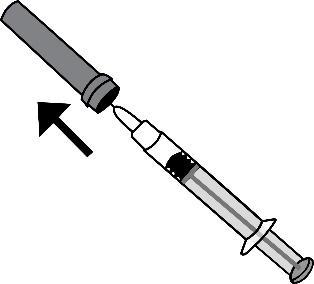
Donot press the plunger before giving the injection. Once the cap is removed, avoid letting
the needle touch anything. This is to ensure that the needle remains clean (sterile).
- 6)Hold the syringe in the hand you write with (like a pencil) and with the other hand gently pinch the clean area of the abdomen between your index finger and thumb to make a fold in the skin.
Make sure to keep the skin folded throughout the injection.
- 7)Hold the syringe so that the needle is pointing downwards (vertically at a 90º angle). Insert the full length of the needle into the skin fold.
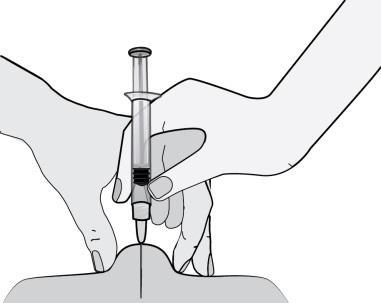
- 8)Press the plunger with your thumb. This will inject the medicine into the fatty tissue of the abdomen. Make sure to keep the skin folded throughout the injection.
- 9)Remove the needle by pulling it straight out.
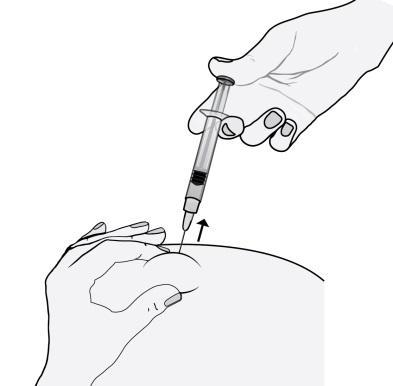
To minimize the possible occurrence of bruises, do not rub the spot where you have just
given the injection.
- 10)Dispose of the used syringe in a sharps container. Close the lid of the container tightly and place the container out of reach of children.
When the container is full, dispose of it according to the instructions of your doctor or pharmacist. Do not
put it in household waste.
How to give yourself an Inhixa injection with a pre-filled syringe equipped with a needle protection device
The pre-filled syringe may be equipped with a safety device for the needle that protects
against accidental needle puncture. If you are able to administer this medicine yourself, the
doctor or nurse will show you how to do it. Do not attempt to give the injection yourself if you have not
been trained to do so. If you are unsure what to do, consult your doctor or nurse immediately.
Before giving yourself an injection with Inhixa
- Check the expiry date of the medicine. Do not use it if the date has passed.
- Check that the syringe is not damaged and that the liquid inside is clear. If it is not, use another syringe.
- Do not use this medicine if you notice any change in its appearance.
- Make sure you know how much medicine you are about to inject.
- Check if the previous injection has caused redness, a change in skin color, swelling, leakage, or if it is still painful. If so, contact your doctor or nurse.
- Decide where to inject the medicine. Change the injection site each time from the right to the left side of the abdomen (belly). This medicine should be injected just below the skin on the abdomen, but not too close to the navel or any scar tissue (at least 5 cm away from these).
- The pre-filled syringe is for single use only.
Instructions on how to inject yourself with Inhixa
- 1)Wash your hands and the area where you will give the injection with soap and water. Dry them.
- 2)Sit or lie down in a comfortable position so you are relaxed. Make sure you can see the area where you will give the injection. Ideally on a reclining chair, a deck chair, or leaning on a bed with pillows.
- 3)Choose an area on the right or left side of the abdomen. This should be at least 5 cm away from the navel and towards the hips.
Remember:Do not inject within 5 cm of the navel or around existing scars or bruises.
Change the place where you give the injection from the left and right side of the abdomen, depending on the area in
which you gave the injection last time.
- 4)Remove the plastic blister containing the pre-filled syringe from the box. Open the blister and remove the pre-filled syringe.
- 5)Carefully remove the cap from the needle of the syringe. Dispose of the cap. The syringe is pre-filled and ready for use.
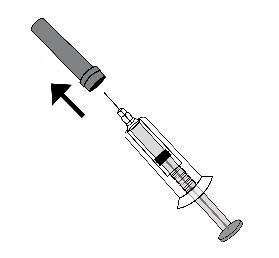
Donot press the plunger before giving the injection. Once the cap is removed, avoid letting
the needle touch anything. This is to ensure that the needle remains clean (sterile).
- 6)Hold the syringe in the hand you write with (like a pencil) and with the other hand gently pinch the clean area of the abdomen between your index finger and thumb to make a fold in the skin.
Make sure to keep the skin folded throughout the injection.
- 7)Hold the syringe so that the needle is pointing downwards (vertically at a 90º angle). Insert the full length of the needle into the skin fold.
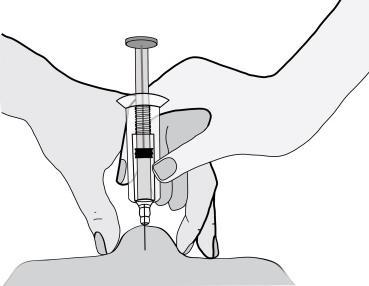
- 8)Press the plunger with your thumb. This will inject the medicine into the fatty tissue of the abdomen. Make sure to keep the skin folded throughout the injection.
- 9)Remove the needle by pulling it straight out. Do not release pressure on the plunger!
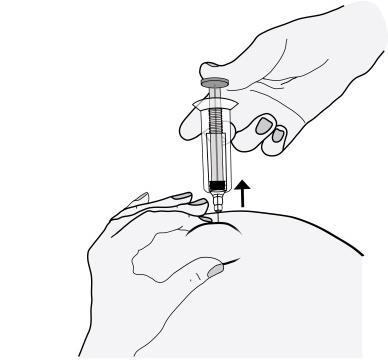
To minimize the possible occurrence of bruises, do not rub the spot where you have just
given the injection.
- 10)Press the plunger firmly. The needle protector, in the shape of a plastic cylinder, will automatically move over the needle, covering it completely.
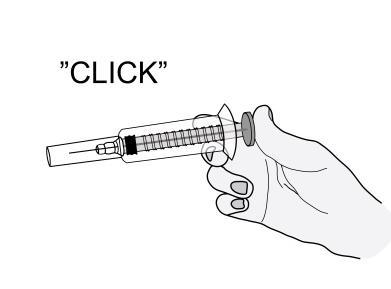
- 11)Dispose of the used syringe in a sharps container. Close the lid of the
container tightly and place the container out of reach of children.
When the container is full, dispose of it according to the instructions of your doctor or pharmacist. Do not
put it in household waste.
How to give yourself an Inhixa injection with a pre-filled syringe equipped with the UltraSafe Passive needle protection device.
The pre-filled syringe is equipped with an UltraSafe Passive needle protection device to
protect against accidental needle puncture. If you are able to administer this medicine yourself,
the doctor or nurse will show you how to do it. Do not attempt to give the injection yourself if
you have not been trained to do so. If you are unsure what to do, consult your doctor or nurse
immediately.
Before self-administering the injection with Inhixa
- Check the expiry date of the medicine. Do not use it if the date has passed.
- Check that the syringe is not damaged and that the liquid inside is clear. If it is not, use another syringe.
- Do not use this medicine if you notice any change in its appearance.
- Make sure you know how much medicine you are about to inject.
- Check if the previous injection has caused redness, a change in skin colour, swelling, leakage or if it is still painful. If so, contact your doctor or nurse.
- Decide where to inject the medicine. Change the injection site each time from the right to the left side of the abdomen (stomach). This medicine must be injected just under the skin on the abdomen, but not too close to the navel or any scar tissue (at least 5 cm away from these).
- The pre-filled syringe is for single use only.
Instructions on how to self-inject Inhixa
- 1)Wash your hands and the area where you will make the injection with soap and water. Dry them.
- 2)Sit or lie down in a comfortable position so you are relaxed. Make sure you can see the area where you will make the injection. Ideally, on a reclining chair, a deck chair, or leaning on a bed with pillows.
- 3)Choose an area on the right or left side of the abdomen. This should be at least 5 cm away from the navel and towards the hips.
Remember:Do not make the injection within 5 cm of the navel or around existing scars or bruises.
Change the place where you make the injection from the left and right side of the abdomen, depending on the area
where you made the injection last time.
- 4)Remove the plastic blister containing the pre-filled syringe from the box. Open the blister and remove the pre-filled syringe.
- 5)Carefully remove the needle cap from the syringe. Dispose of the cap. The syringe is pre-filled and ready for use.
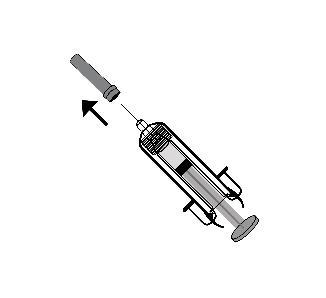
Donot press the plunger before making the injection. Once the cap is removed, avoid letting
the needle touch anything. This is to ensure that the needle remains clean (sterile).
- 6)Hold the syringe in the hand you write with (like a pencil) and with the other hand gently pinch the clean area of the abdomen between your index finger and thumb to make a fold in the skin.
Make sure to keep the skin folded throughout the duration of the injection.
- 7)Hold the syringe so that the needle is pointing downwards (vertically at a 90º angle). Insert the full length of the needle into the skin fold.
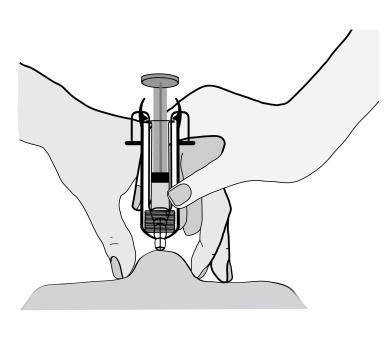
- 8)Press the plunger with your thumb. This will inject the medicine into the fatty tissue of the abdomen. Make sure to keep the skin folded throughout the duration of the injection.
- 9)Remove the needle by pulling it straight out. Do not release pressure on the plunger!
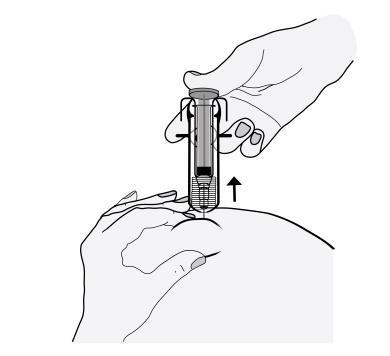
To minimize the possible occurrence of bruises, do not rub the spot where you have just
made the injection.
- 10)Hold the syringe barrel firmly with one hand (A). With the other hand, hold the base, “the wings” of the syringe (B), and pull the base until you hear a click (C). Now the used needle is completely protected.
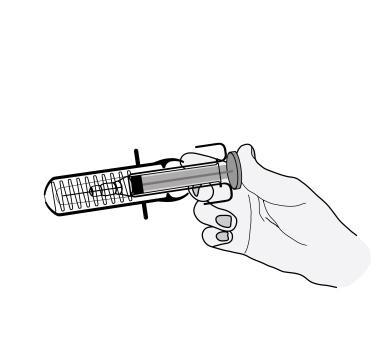
- 11)Dispose of the used syringe in a sharps container. Close the lid of the container tightly and place the container out of reach of children.
When the container is full, dispose of it according to the instructions of your doctor or pharmacist. Do
not put it in household waste.
Changing anticoagulant treatment
- Switching from Inhixa to anticoagulants called vitamin K antagonists (e.g. warfarin)
The doctor will ask you to have a blood test called INR and will tell you when to stop
therapy with Inhixa based on the results.
- Switching from anticoagulants called vitamin K antagonists (e.g. warfarin) to InhixaStop treatment with vitamin K antagonists. The doctor will ask you to have a blood test called INR and will tell you when to start therapy with Inhixa based on the results.
- Switching from Inhixa to treatment with direct oral anticoagulants (e.g. apixaban, dabigatran,edoxaban, rivaroxaban)Stop treatment with Inhixa. Start taking the direct oral anticoagulant 0-2 hours before the time you would have made the next Inhixa injection, then continue as usual.
- Switching from treatment with direct oral anticoagulants to InhixaStop treatment with the direct oral anticoagulant. Start treatment with Inhixa only 12 hours after the last dose of the direct oral anticoagulant.
If you use more Inhixa than you should
If you think you have used too much or too little Inhixa, inform your doctor, nurse or
pharmacist immediately, even if you do not have any signs of a problem. If a child accidentally injects or ingests
Inhixa, take them to the emergency room immediately.
If you forget to use Inhixa
If you forget to take a dose, take it as soon as you remember. Do not take a double dose on the
same day to make up for the missed dose. Keeping a diary helps you not to miss doses.
If you stop treatment with Inhixa
If you have any other doubts about the use of this medicine, ask your doctor, pharmacist or
nurse.
It is important that you continue to give yourself Inhixa injections until your doctor decides to stop them.
If you stop them, a blood clot may form, which could be very dangerous.
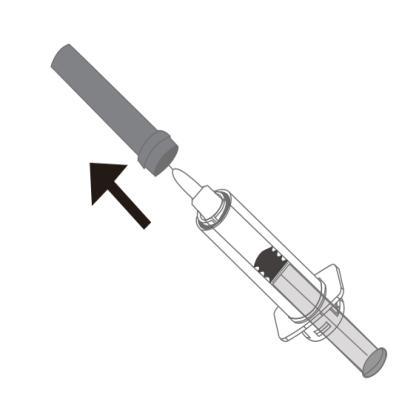
Donot press the plunger before making the injection. Once the cap is removed, avoid letting
the needle touch anything. This is to ensure that the needle remains clean (sterile).
- 6)Hold the syringe in the hand you write with (like a pencil) and with the other hand gently pinch the clean area of the abdomen between your index finger and thumb to make a fold in the skin
Make sure you are keeping the skin folded throughout the duration of the injection.
- 7)Hold the syringe so that the needle is pointing downwards (vertically at a 90º angle). Insert the full length of the needle into the skin fold
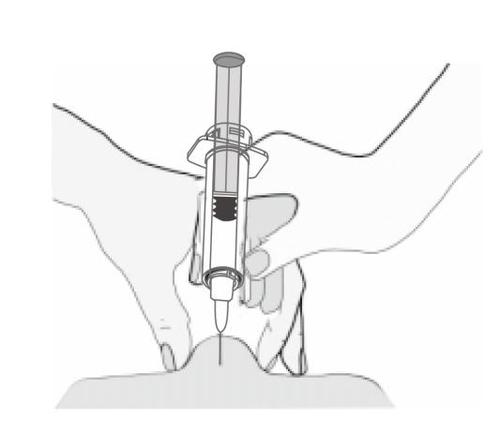
- 8)Press the plunger with your thumb. This will inject the medicine into the fatty tissue of the abdomen. Make sure to keep the skin folded throughout the duration of the injection
- 9)Remove the needle by pulling it straight out. Do not release pressure on the plunger!
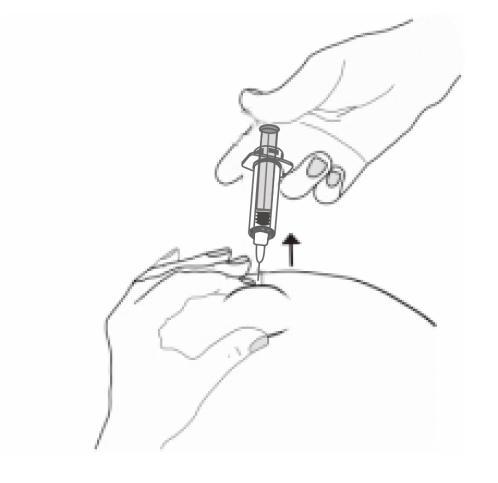
To minimize the possible occurrence of bruises, do not rub the spot where you have just
made the injection.
- 10)Firmly hold the syringe barrel with one hand (A). With the other hand, hold the base, “the wings” of the syringe (B), and pull the base until you hear a click (C). Now the used needle is completely protected.
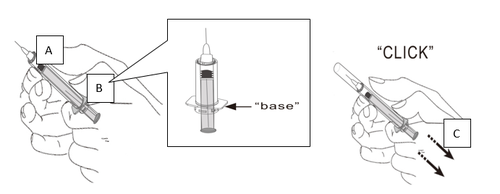
- 11)Dispose of the used syringe in a sharps container. Close the lid of the container tightly and place the container out of reach of children.
4. Possible side effects
Like all medicines, this medicine can cause side effects, although not everybody gets them.
Like other anticoagulant medicines (medicines to reduce blood clotting), Inhixa can
cause bleeding, which may be life-threatening. In some cases the bleeding
may not be obvious.
If you experience any bleeding of any kind that does not stop on its own, or if you experience signs of
excessive bleeding (excessive weakness, fatigue, paleness, dizziness, headache or unexplained swelling), consult your doctor immediately.
The doctor may decide to monitor you closely or change medicine.
Stop using Inhixa and contact your doctor or nurse immediately if you develop any
sign of a serious allergic reaction (such as difficulty breathing, swelling of the lips, mouth, throat or eyes).
Stop using enoxaparine and consult your doctor immediately if you notice any of the following
symptoms:
- A widespread red and scaly skin rash with bumps under the skin and blisters accompanied by fever. The symptoms usually appear at the beginning of treatment (acute generalized exanthematous pustulosis).
You must inform your doctor immediately
- If you experience signs of a blood vessel blockage by a clot, such as:
- cramps, redness, warmth or swelling of one leg - these are symptoms of deep vein thrombosis
- shortness of breath, chest pain, fainting or coughing up blood - these are symptoms of pulmonary embolism
- If you develop a painful rash of dark red spots under the skin that do not disappear when pressed. Your doctor may ask you to have a blood test to check your platelet count.
General list of possible side effects:
Very common (may affect more than 1 in 10 people)
- Bleeding.
- Increased liver enzymes.
Common (may affect up to 1 in 10 people)
- Bruising more easily than usual. This may be due to a blood problem, with a low number of platelets.
- Pink spots on the skin. These are more likely to appear in the area where Inhixa was injected.
- Rash (urticaria).
- Reddened, itchy skin.
- Bruising or pain at the injection site.
- Decreased number of red blood cells.
- High number of platelets in the blood.
- Headache.
Uncommon (may affect up to 1 in 100 people)
- Sudden severe headache. This may be a sign of bleeding in the brain.
- Stomach pain and swelling. You may have bleeding in the stomach.
- Large, irregular red patches on the skin with or without blisters.
- Skin irritation (local irritation).
- Yellowing of the skin or eyes and urine becoming darker. These may be signs of a liver problem.
Rare (may affect up to 1 in 1,000 people)
- Severe allergic reaction. Signs of an allergic reaction can include: rash, difficulty swallowing or breathing, swelling of the lips, face, throat or tongue.
- Increased potassium in the blood. More likely in people with kidney problems or diabetes. The doctor can check the values with a blood test.
- Increased number of white blood cells called eosinophils in the blood. The doctor can check the values with a blood test.
- Hair loss.
- Osteoporosis (a condition that makes bones more fragile) after prolonged use.
- Tingling, numbness and muscle weakness (especially in the lower body) if you have had a spinal puncture or a spinal anesthetic.
- Loss of bladder or bowel control (therefore unable to control when to go to the bathroom).
- Hard lump or nodule at the injection site.
Reporting of side effects
If you get any side effects, even those not listed in this leaflet, tell your
doctor or pharmacist. You can also report side effects directly through the national reporting system indicated in Annex V. By reporting side effects you can help provide more information on the safety of this medicine.
5. How to store Inhixa
Keep this medicine out of the sight and reach of children.
Do not use this medicine after the expiry date which is stated on the label and on the packaging. The
expiry date refers to the last day of that month.
Store at a temperature below 25°C. Do not freeze.
After dilution, the solution must be used within 8 hours.
Do not use this medicine if you notice any visible change in the appearance of the solution.
The pre-filled syringes are for single use only. Discard any unused medicine.
Do not dispose of any medicine in wastewater or household waste. Ask your pharmacist how to
dispose of medicines you no longer use. This will help protect the environment.
6. Contents of the pack and other information
What Inhixa contains
- The active substance is enoxaparin sodium. Each ml contains 10,000 IU (100 mg) of enoxaparin sodium .Each pre-filled syringe of 0.2 ml contains 2,000 IU (20 mg) of enoxaparin sodium. Each pre-filled syringe of 0.4 ml contains 4,000 IU (40 mg) of enoxaparin sodium. Each pre-filled syringe of 0.6 ml contains 6,000 IU (60 mg) of enoxaparin sodium. Each pre-filled syringe of 0.8 ml contains 8,000 IU (80 mg) of enoxaparin sodium. Each pre-filled syringe of 1 ml contains 10,000 IU (100 mg) of enoxaparin sodium.
- The other component is water for injections.
Description of the appearance of Inhixa and contents of the pack
Inhixa 2,000 IU (20 mg)/0.2 ml is 0.2 ml of solution in:
- a neutral glass syringe type I, clear and colourless, with a fixed needle and needle cover closed with a chlorobutyl rubber stopper and a blue polypropylene plunger. In addition, the syringes may be equipped with a needle protection device; or a manual needle protection device; or
- a neutral glass syringe type I, clear and colourless, with a fixed needle and needle cover closed with a chlorobutyl rubber stopper and a white polycarbonate plunger, equipped with an UltraSafe Passive needle protection device.
Packs of:
- 1, 2, 6, 10, 20 and 50 pre-filled syringes
- 2, 6, 10, 20, 50 and 90 pre-filled syringes with a needle protection device
- 6, 10 and 20 pre-filled syringes with a manual needle protection device
- 2 and 6 pre-filled syringes with an UltraSafe Passive needle protection device
Inhixa 4,000 IU (40 mg)/0.4 ml is 0.4 ml of solution in:
- a neutral glass syringe type I, clear and colourless, with a fixed needle and needle cover closed with a chlorobutyl rubber stopper and a yellow polypropylene plunger. In addition, the syringes may be equipped with a needle protection device; or a manual needle protection device; or
- a neutral glass syringe type I, clear and colourless, with a fixed needle and needle cover closed with a chlorobutyl rubber stopper and a white polycarbonate plunger, equipped with an UltraSafe Passive needle protection device.
Packs of:
- 2, 5, 6, 10, 20, 30 and 50 pre-filled syringes
- 2, 5, 6, 10, 20, 30, 50 and 90 pre-filled syringes with a needle protection device
- 2, 6, 10, 20 and 50 pre-filled syringes with a manual needle protection device
- 2 and 6 pre-filled syringes with an UltraSafe Passive needle protection device
Inhixa 6,000 IU (60 mg)/0.6 ml is 0.6 ml of solution in:
- a graduated glass syringe of neutral glass type I, clear and colourless, with a fixed needle and needle cover closed with a chlorobutyl rubber stopper and an orange polypropylene plunger. In addition, the syringes may be equipped with a needle protection device; or a manual needle protection device; or
- a graduated glass syringe of neutral glass type I, clear and colourless, with a fixed needle and needle cover closed with a chlorobutyl rubber stopper and a white polycarbonate plunger, equipped with an UltraSafe Passive needle protection device.
Packs of:
- 2, 6, 10, 12, 20, 24, 30 and 50 pre-filled syringes
- 2, 6, 10, 12, 20, 24, 30 and 50 pre-filled syringes with a needle protection device
- 6, 10, 12, 20, 24 and 50 pre-filled syringes with a manual needle protection device
- 2 and 10 pre-filled syringes with an UltraSafe Passive needle protection device
Inhixa 8,000 IU (80 mg)/0.8 ml is 0.8 ml of solution in:
- a graduated glass syringe of neutral glass type I, clear and colourless, with a fixed needle and needle cover closed with a chlorobutyl rubber stopper and a red polypropylene plunger. In addition, the syringes may be equipped with a needle protection device; or a manual needle protection device; or
- a graduated glass syringe of neutral glass type I, clear and colourless, with a fixed needle and needle cover closed with a chlorobutyl rubber stopper and a white polycarbonate plunger, equipped with an UltraSafe Passive needle protection device.
Packs of:
- 2, 6, 10, 12, 20, 24, 30 and 50 pre-filled syringes
- 2, 6, 10, 12, 20, 24, 30 and 50 pre-filled syringes with a needle protection device
- 6, 10, 12, 20, 24 and 50 pre-filled syringes with a manual needle protection device
- 2 and 10 pre-filled syringes with an UltraSafe Passive needle protection device
Inhixa 10,000 IU (100 mg)/1 ml is 1 ml of solution in:
- a graduated glass syringe of neutral glass type I, clear and colourless, with a fixed needle and needle cover closed with a chlorobutyl rubber stopper and a black polypropylene plunger. In addition, the syringes may be equipped with a needle protection device; or a manual needle protection device; or
- a graduated glass syringe of neutral glass type I, clear and colourless, with a fixed needle and needle cover closed with a chlorobutyl rubber stopper and a white polycarbonate plunger, equipped with an UltraSafe Passive needle protection device.
Packs of:
- 2, 6, 10, 12, 20, 24, 30, 50 and 90 pre-filled syringes
- 2, 6, 10, 12, 20, 24, 30 and 50 pre-filled syringes with a needle protection device
- 6, 10, 12, 20, 24 and 50 pre-filled syringes with a manual needle protection device
- 2 and 10 pre-filled syringes with an UltraSafe Passive needle protection device
Not all pack sizes may be marketed.
Marketing authorisation holder
Techdow Pharma Netherlands B.V.
Strawinskylaan 1143, Toren C-11
1077XX Amsterdam
Netherlands
Manufacturer
SciencePharma spółka z ograniczoną odpowiedzialnością
Chełmska 30/34
00-725 Warsaw
Poland
For further information on this medicine, contact the local representative of the marketing authorisation holder:
België/Belgique/Belgien
Techdow Pharma Netherlands B.V.
+31 (0)76 531 5388
Lietuva
Techdow Pharma Netherlands B.V.
+37125892152
България
Techdow Pharma Netherlands B.V.
+49 (0)30 220 13 6906
Luxembourg/Luxemburg
Techdow Pharma Netherlands B.V.
+49 (0)30 220 13 6906
Česká republika
Techdow Pharma Netherlands B.V.
+420255790502
Magyarország
Techdow Pharma Netherlands B.V.
+3618001930
Danmark
Techdow Pharma Netherlands B.V.
+4578774377
Malta
Mint Health Ltd.
+356 2755 9990
Deutschland
Mitvertrieb: Techdow Pharma Germany GmbH
Potsdamer Platz 1, 10785 Berlin
+49 (0)30 98 321 31 00
Nederland
Techdow Pharma Netherlands B.V.
+31208081112
Eesti
Techdow Pharma Netherlands B.V.
+37125892152
Norge
Techdow Pharma Netherlands B.V.
+4721569855
Ελλάδα
Techdow Pharma Netherlands B.V.
+49 (0)30 220 13 6906
Österreich
Techdow Pharma Netherlands B.V.
+43720230772
España
TECHDOW PHARMA SPAIN, S.L.
Tel: +34 91 123 21 16
Polska
Techdow Pharma Netherlands B.V.
+49 (0)30 220 13 6906
France
Viatris Santé
+33 4 37 25 75 00
Portugal
Laboratórios Atral, S.A.
+351308801067
Hrvatska
Techdow Pharma Netherlands B.V.
+385 17776255
Ireland
Techdow Pharma Netherlands B.V.
+31208081112
România
Techdow Pharma Netherlands B.V.
+49 (0)30 220 13 6906
Slovenija
Techdow Pharma Netherlands B.V.
+49 (0)30 220 13 6906
Ísland
Techdow Pharma Netherlands B.V.
+49 (0)30 220 13 6906
Slovenská republika
Techdow Pharma Netherlands B.V.
+421233331071
Italia
Techdow Pharma Italy S.R.L.
Tel: +39 0256569157
Suomi/Finland
Techdow Pharma Netherlands B.V.
+358942733040
Κύπρος
MA Pharmaceuticals Trading Ltd
+357 25 587112
Sverige
Techdow Pharma Netherlands B.V.
+46184445720
Latvija
Techdow Pharma Netherlands B.V.
+37125892152
United Kingdom (Northern Ireland)
Techdow Pharma Netherlands B.V.
+44 28 9279 2030
Other sources of information
More detailed information on this medicine is available on the website of the European Medicines Agency: http://www.ema.europa.eu .
Inhixa 12 000 IU (120 mg)/0.8 ml injectable solution, 15 000 IU (150 mg)/1 ml injectable solution
enoxaparin sodium
Read this leaflet carefully before you start to use this medicine as it contains important information for you.
- Keep this leaflet. You may need to read it again.
- If you have any questions, ask your doctor, pharmacist or nurse.
- This medicine has been prescribed for you only. Do not pass it on to others, even if they have the same symptoms as you, as it may be harmful.
- If you get any side effects, even those not listed in this leaflet, tell your doctor, pharmacist or nurse. See section 4.
Contents of this leaflet
- 1. What Inhixa is and what it is used for
- 2. What you need to know before you use Inhixa
- 3. How to use Inhixa
- 4. Possible side effects
- 5. How to store Inhixa
- 6. Contents of the pack and other information
1. What is Inhixa and what is it used for
Inhixa contains an active substance called enoxaparin sodium, which is a low molecular weight heparin (LMWH).
Inhixa works in two ways:
- 3) It prevents the growth of existing blood clots. This helps the body to break them down and avoid causing damage.
- 4) It prevents the formation of blood clots.
Inhixa can be used for:
- Treating blood clots that are present
- Preventing the formation of blood clots in the following situations: o before and after surgery o in case of an acute illness that involves a period of reduced mobility o to prevent the formation of further clots if you have had a blood clot due to cancer or in the presence of unstable angina (a condition in which not enough blood reaches the heart) or after a heart attack
- Preventing the formation of blood clots in the tubes of the dialysis machine (used by people with severe kidney problems).
2. What you need to know before you use Inhixa
Do not use Inhixa
- If you are allergic to enoxaparin sodium or any of the other ingredients of this medicine (listed in section 6). The signs of an allergic reaction include: skin rash, difficulty swallowing or breathing, swelling of the lips, face, throat or tongue.
- If you are allergic to heparin or other low molecular weight heparins, such as nadroparin, tinzaparin or dalteparin.
- If you have had a reaction to heparin that caused a severe reduction in the number of cells needed for blood clotting (platelets) (this reaction is called heparin-induced thrombocytopenia) in the last 100 days or if you have antibodies against enoxaparin in your blood.
- If you are bleeding heavily or if you have a condition with a high risk of bleeding (such as a stomach ulcer, recent brain or eye surgery), including recent hemorrhagic stroke.
- If you are using Inhixa to treat blood clots in the body and will undergo spinal or epidural anesthesia or a lumbar puncture within 24 hours.
Warnings and precautions
Inhixa must not be used interchangeablywith other medicines belonging to the
group of low molecular weight heparins. These medicines are, in fact, not identical to each other and do not
have the same activity or the same instructions for use.
Consult your doctor or pharmacist before using Inhixa if:
- you have ever had a reaction to heparin that caused a significant reduction in the number of platelets
- you are to undergo spinal or epidural anesthesia or lumbar puncture (see Surgery and anesthesia): respect the interval between the use of Inhixa and this procedure
- you have had a heart valve implanted
- you suffer from endocarditis (an infection of the inner lining of the heart)
- you suffer from a stomach ulcer
- you have had a recent stroke
- you have high blood pressure
- you have diabetes or problems with the blood vessels in the eye caused by diabetes (so-called diabetic retinopathy)
- you have recently undergone eye or brain surgery
- you are elderly (over 65 years of age), especially if you are over 75 years old
- you have kidney problems
- you have liver problems
- you are underweight or overweight
- you have high levels of potassium in your blood (the values can be checked with a blood test)
- you are currently using medicines that can affect bleeding (see the following section - Other medicines and Inhixa).
It may be necessary to have a blood testbefore starting to use this medicine and
regularly during its use, to check the level of cells needed for blood clotting
(platelets) and the level of potassium in the blood.
Use in children and adolescents
The safety and efficacy of Inhixa have not been evaluated in children or adolescents.
Other medicines and Inhixa
Tell your doctor or pharmacist if you are taking or might take any other medicines.
- Warfarin - other anticoagulant medicines used to thin the blood
- Acetylsalicylic acid (also known as Aspirin or ASA), clopidogrel or other medicines used to prevent blood clots from forming (see also section 3, “Changing anticoagulant medicines”)
- Injectable dextran - used as a blood substitute
- Ibuprofen, diclofenac, ketorolac or other medicines known as non-steroidal anti-inflammatory agents used to treat pain and swelling in arthritis and other conditions
- Prednisolone, dexamethasone or other medicines used to treat asthma, rheumatoid arthritis and other conditions
- Medicines that increase the level of potassium in the blood such as potassium salts, diuretics and some medicines for heart problems.
Surgery and anesthesia
If you are to undergo a spinal puncture or surgery involving the use of anesthetic
via epidural or spinal route, tell your doctor that you are using Inhixa. See “Do not use Inhixa”. Also inform
your doctor in case of any problems with the spine or if you have undergone spinal surgery.
Pregnancy and breastfeeding
If you are pregnant, suspect you are pregnant or are planning a pregnancy, ask your doctor or pharmacist for
advice before taking this medicine.
If you are pregnant and have a mechanical heart valve, you may be at greater risk of
developing blood clots. Your doctor will discuss this with you.
If you are breastfeeding or plan to breastfeed, ask your doctor for
advice before taking this medicine.
Driving and using machines
Inhixa does not impair the ability to drive and use machines.
Traceability
It is important to track the batch number of Inhixa. Therefore, each time you take a new
pack of Inhixa, note the date and batch number (which is reported on the packaging after
Batch) and keep this information in a safe place.
Inhixacontains sodium
This medicine contains less than 1 mmol (23 mg) of sodium per dose, i.e. essentially “sodium-free”.
3. How to use Inhixa
Use this medicine following the instructions of your doctor or pharmacist exactly. If you have
any doubts, consult your doctor or pharmacist.
Taking the medicine
- Inhixa is normally administered by a doctor or nurse, because it must be administered by injection.
- When you are discharged, you may need to continue using Inhixa and administer it yourself (see instructions on how to do so below).
- Inhixa is usually administered by subcutaneous injection.
- Inhixa can be administered by intravenous injection after some types of heart attack or surgeries.
- Inhixa can be added to the outgoing tube from the body (arterial line) at the beginning of the dialysis session. Do not inject Inhixa into a muscle.
How much medicine you will be given
- The doctor will decide how much Inhixa to give you. The dose depends on the reason why it is being used.
- If you have kidney problems, you may receive a lower amount of Inhixa.
- 1. Treatment of blood clots present in the blood
- The usual dose is 150 IU (1.5 mg) per kilogram of body weight per day or 100 IU (1 mg) per kilogram of body weight twice a day.
- The doctor will decide how long you will need to receive Inhixa.
- 2. Preventing the formation of blood clots in the following situations:
- Surgeries or periods of reduced mobility due to illness
- The dose depends on how likely it is to develop a clot. You will receive 2,000 IU (20 mg) or 4,000 IU (40 mg) of Inhixa per day.
- If surgery is planned, the first injection is usually given 2 hours or 12 hours before the operation.
- In case of reduced mobility due to illness, 4,000 IU (40 mg) of Inhixa is normally administered per day.
- The doctor will decide how long you will need to receive Inhixa.
- After a heart attackInhixa can be used for two different types of heart attack, called STEMI (ST-segment elevation myocardial infarction) or non-STEMI (NSTEMI). The amount of Inhixa administered depends on age and the type of heart attack.
NSTEMI type heart attack:
- The usual dose is 100 IU (1 mg) per kilogram of weight every 12 hours.
- The doctor will usually ask you to also take acetylsalicylic acid (aspirin).
- The doctor will decide how long you will need to receive Inhixa.
STEMI type heart attack if you are under 75 years of age:
- An initial dose of 3,000 IU (30 mg) of Inhixa administered as an injection into a vein.
- At the same time, you will also receive Inhixa as a subcutaneous injection. The usual dose is 100 IU (1 mg) per kilogram of body weight every 12 hours.
- The doctor will usually ask you to also take acetylsalicylic acid (aspirin).
- The doctor will decide how long you will need to receive Inhixa.
STEMI type heart attack if you are 75 years of age or older:
- The usual dose is 75 IU (0.75 mg) per kilogram of body weight every 12 hours.
- The maximum amount of Inhixa administered for the first two injections is 7,500 IU (75 mg).
- The doctor will decide how long you will need to receive Inhixa.
For patients undergoing an operation called percutaneous coronary intervention (PCI):
Depending on when Inhixa was last administered, the doctor may decide to
administer an additional dose of Inhixa before a PCI. The medicine will be injected into a vein.
- 3. Preventing the formation of clots in the tubes of the dialysis machine
- The usual dose is 100 IU (1 mg) per kilogram of body weight.
- Inhixa is added to the outgoing tube from the body (arterial line) at the beginning of the dialysis session. This amount is usually sufficient for a 4-hour session. However, the doctor may administer an additional dose of 50-100 IU (0.5-1 mg) per kilogram of body weight, if necessary.
How to give yourself an Inhixa injection with a pre-filled syringe without an needle protection device
If you are able to administer this medicine yourself, the doctor or nurse will show you
how to do it. Do not attempt to give the injection yourself if you have not been instructed to do so. If you are unsure about what
to do, consult your doctor or nurse immediately.
Before giving yourself an injection with Inhixa
- Check the expiry date of the medicine. Do not use it if the date has passed.
- Check that the syringe is not damaged and that the liquid inside is clear. If not, use another syringe.
- Do not use this medicine if you notice any changes in its appearance.
- Make sure you know how much medicine you are about to inject.
- Check if the previous injection caused redness, changes in skin color, swelling, leakage, or if it is still painful. If so, contact your doctor or nurse.
- Decide where to inject the medicine. Change the injection site each time from the right to the left side of the abdomen (belly). This medicine should be injected just below the skin on the abdomen, but not too close to the navel or any scar tissue (at least 5 cm away from these).
- The pre-filled syringe is for single use only.
Instructions on how to inject Inhixa
- 1)Wash your hands and the area where you will give the injection with soap and water. Dry them.
- 2)Sit or lie down in a comfortable position so you are relaxed. Make sure you can see the area where you will give the injection. Ideally, on a reclining chair, a deck chair, or leaning on a bed with pillows.
- 3)Choose an area on the right or left side of the abdomen. This should be at least 5 cm away from the navel and towards the hips.
Remember:Do not inject within 5 cm of the navel or around existing scars or bruises.
Change the place where you give the injection from the left and right side of the abdomen, depending on the area in
which you gave the injection last time.
- 4)Remove the plastic blister containing the pre-filled syringe from the box. Open the blister and remove the pre-filled syringe.
- 5)Carefully remove the cap from the needle of the syringe. Dispose of the cap. The syringe is pre-filled and ready for use.
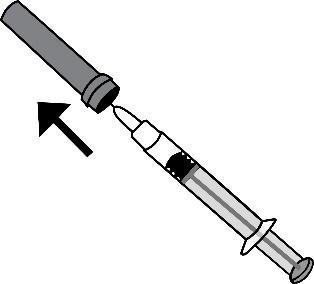
Donot press the plunger before injecting. Once the cap is removed, avoid letting the needle touch
anything. This is to ensure that the needle remains clean (sterile).
- 6)Hold the syringe in your writing hand (like a pencil) and with the other hand gently pinch the clean area of the abdomen between your index and thumb to make a fold in the skin.
Make sure you keep the skin folded throughout the injection.
- 7)Hold the syringe so that the needle is pointing downwards (vertically at a 90º angle). Insert the full length of the needle into the skin fold.
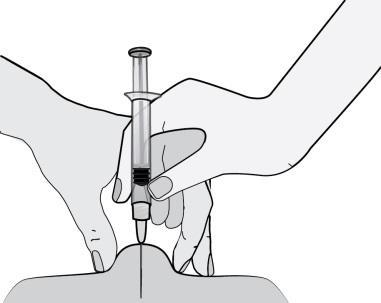
- 8)Press the plunger with your thumb. This will inject the medicine into the abdominal fat tissue. Make sure you keep the skin folded throughout the injection.
- 9)Remove the needle by pulling it straight out.
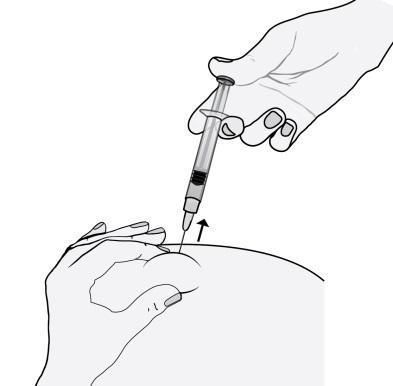
To minimize the possible occurrence of bruises, do not rub the area where you have just
given the injection.
- 10)Dispose of the used syringe in a sharps container. Close the lid of the container tightly and place the container out of reach of children.
When the container is full, dispose of it according to the instructions of your doctor or pharmacist. Do not
put it in household waste.
How to give yourself an Inhixa injection with a pre-filled syringe equipped with a needle protection device
The pre-filled syringe may be equipped with a safety device for the needle that protects
against accidental needle puncture. If you are able to administer this medicine yourself, the
doctor or nurse will show you how to do it. Do not attempt to give the injection yourself if you have not
been instructed to do so. If you are unsure about what to do, consult your doctor or nurse immediately.
Before giving yourself an injection with Inhixa
- Check the expiry date of the medicine. Do not use it if the date has passed.
- Check that the syringe is not damaged and that the liquid inside is clear. If not, use another syringe.
- Do not use this medicine if you notice any changes in its appearance.
- Make sure you know how much medicine you are about to inject.
- Check if the previous injection caused redness, changes in skin color, swelling, leakage, or if it is still painful. If so, contact your doctor or nurse.
- Decide where to inject the medicine. Change the injection site each time from the right to the left side of the abdomen (belly). This medicine should be injected just below the skin on the abdomen, but not too close to the navel or any scar tissue (at least 5 cm away from these).
- The pre-filled syringe is for single use only.
Instructions on how to inject Inhixa
- 1)Wash your hands and the area where you will give the injection with soap and water. Dry them.
- 2)Sit or lie down in a comfortable position so you are relaxed. Make sure you can see the area where you will give the injection. Ideally, on a reclining chair, a deck chair, or leaning on a bed with pillows.
- 3)Choose an area on the right or left side of the abdomen. This should be at least 5 cm away from the navel and towards the hips.
Remember:Do not inject within 5 cm of the navel or around existing scars or bruises.
Change the place where you give the injection from the left and right side of the abdomen, depending on the area in
which you gave the injection last time.
- 4)Remove the plastic blister containing the pre-filled syringe from the box. Open the blister and remove the pre-filled syringe.
- 5)Carefully remove the cap from the needle of the syringe. Dispose of the cap. The syringe is pre-filled and ready for use.
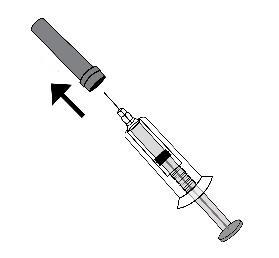
Donot press the plunger before injecting. Once the cap is removed, avoid letting
the needle touch anything. This is to ensure that the needle remains clean (sterile).
- 6)Hold the syringe in your writing hand (like a pencil) and with the other hand gently pinch the clean area of the abdomen between your index and thumb to make a fold in the skin.
Make sure you keep the skin folded throughout the injection.
- 7)Hold the syringe so that the needle is pointing downwards (vertically at a 90º angle). Insert the full length of the needle into the skin fold.
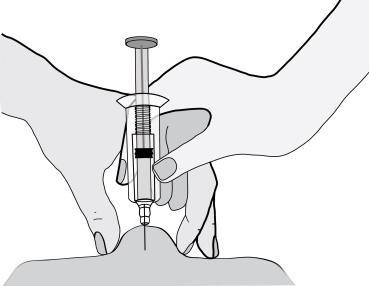
- 8)Press the plunger with your thumb. This will inject the medicine into the abdominal fat tissue. Make sure you keep the skin folded throughout the injection.
- 9)Remove the needle by pulling it straight out. Do not release pressure on the plunger!
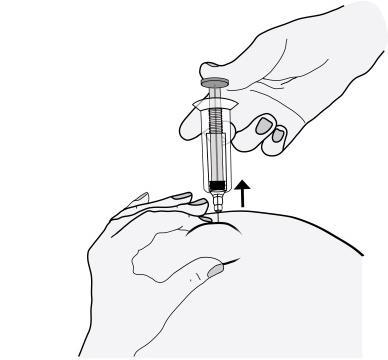
To minimize the possible occurrence of bruises, do not rub the area where you have just
given the injection.
- 10)Press the plunger firmly. The needle protection, in the shape of a plastic cylinder, will automatically move over the needle, completely covering it.
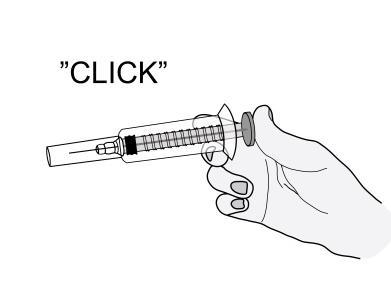
- 11)Dispose of the used syringe in a sharps container. Close the lid of the container tightly and place the container out of reach of children.
When the container is full, dispose of it according to the doctor's or pharmacist's instructions. Do not
put it in household waste.
Changing Anticoagulant Treatment
- Switching from Inhixa to anticoagulants called vitamin K antagonists (e.g. warfarin)Your doctor will ask you to have a blood test called INR and will tell you when to stop therapy with Inhixa based on the results.
- Switching from anticoagulants called vitamin K antagonists (e.g. warfarin) to InhixaStop treatment with vitamin K antagonists. Your doctor will ask you to have a blood test called INR and will tell you when to start therapy with Inhixa based on the results.
- Switching from Inhixa to treatment with direct oral anticoagulants (e.g. apixaban, dabigatran,edoxaban, rivaroxaban)Stop treatment with Inhixa. Start taking the direct oral anticoagulant 0-2 hours before the time you would have had the next Inhixa injection, then continue as normal.
- Switching from treatment with direct oral anticoagulants to InhixaStop treatment with the direct oral anticoagulant. Start treatment with Inhixa only 12 hours after the last dose of the direct oral anticoagulant.
If you use more Inhixa than you should
If you think you have used too much or too little Inhixa, inform your doctor, nurse or
pharmacist immediately, even if you do not have signs of a problem. If a child accidentally injects or ingests
Inhixa, take them immediately to the emergency room.
If you forget to use Inhixa
If you forget to take a dose, take it as soon as you remember. Do not take a double dose on the
same day to make up for the missed dose. Keeping a diary helps you not to miss doses.
If you stop treatment with Inhixa
If you have any further questions about using this medicine, ask your doctor, pharmacist or
nurse.
It is important that you continue to have the Inhixa injections until your doctor decides to
stop them. If you stop them, a blood clot may form, which could be very
dangerous.
4. Possible side effects
Like all medicines, this medicine can cause side effects, although not everyone will experience them.
Like other anticoagulant medicines (medicines to reduce blood clotting), Inhixa can
cause bleeding, which may be life-threatening. In some cases, the bleeding
may not be apparent.
If you experience any bleeding events of any kind that do not stop on their own or if you experience signs of
excessive bleeding (excessive weakness, fatigue, paleness, dizziness, headache or unexplained swelling), consult your doctor immediately.
The doctor may decide to monitor you closely or change your medicine.
Stop using Inhixa and contact your doctor or nurse immediately if you develop any
sign of a serious allergic reaction (such as difficulty breathing, swelling of the
lips, mouth, throat or eyes).
Stop using enoxaparine and consult your doctor immediately if you notice any of the
following symptoms:
- A widespread red and scaly skin rash with bumps under the skin and blisters accompanied by fever. The symptoms usually appear at the beginning of treatment (acute generalized exanthematous pustulosis).
You must inform your doctor immediately
- If you experience signs of a blood vessel blockage by a clot, such as:
- cramps, redness, warmth or swelling of one of the legs - these are symptoms of deep vein thrombosis
- shortness of breath, chest pain, fainting or coughing up blood - these are symptoms of pulmonary embolism
- If you experience a painful skin rash with dark red spots under the skin that do not disappear when pressed. Your doctor may ask you to have a blood test to check your platelet count.
General list of possible side effects
Very common (may affect more than 1 in 10 people)
- Bleeding.
- Increased liver enzymes.
Common (may affect up to 1 in 10 people)
- Bruising more easily than usual. This may be due to a blood problem, with a low number of platelets.
- Pink spots on the skin. These are more likely to appear in the area where Inhixa was injected.
- Rash (urticaria).
- Red, itchy skin.
- Bruising or pain at the injection site.
- Decrease in the number of some blood cells (red blood cells).
- High number of platelets in the blood.
- Headache.
Uncommon (may affect up to 1 in 100 people)
- Sudden severe headache. This could be a sign of bleeding in the brain.
- Pain and swelling in the stomach. You may have bleeding in the stomach.
- Large, irregularly shaped red patches on the skin with or without blisters.
- Skin irritation (local irritation).
- Yellowing of the skin or eyes and urine becoming darker. These could be signs of a liver problem.
Rare (may affect up to 1 in 1,000 people)
- Severe allergic reaction. The signs of an allergic reaction can include: rash, difficulty swallowing or breathing, swelling of the lips, face, throat or tongue.
- Increased potassium in the blood. More likely in people with kidney problems or with diabetes. The doctor can check the values with a blood test.
- Increased number of white blood cells called eosinophils in the blood. The doctor can check the values with a blood test.
- Hair loss.
- Osteoporosis (a condition that makes bones more fragile) after prolonged use.
- Numbness, tingling and muscle weakness (especially in the lower body) if you have had a spinal puncture or a spinal anesthetic.
- Loss of bladder or bowel control (therefore unable to control when to go to the bathroom).
- Hard lump or nodule at the injection site.
Reporting of side effects
If you get any side effects, even those not listed in this leaflet, tell your
doctor or pharmacist. You can also report side effects directly through the national reporting system detailed in Annex V. By reporting side effects you can help provide more information on the safety of this medicine.
5. How to store Inhixa
Keep this medicine out of the sight and reach of children.
Do not use this medicine after the expiry date which is stated on the label and on the packaging. The
expiry date refers to the last day of that month.
Store at a temperature below 25°C. Do not freeze.
After dilution, the solution must be used within 8 hours.
Do not use this medicine if you notice any visible change in the appearance of the solution.
The pre-filled syringes are for single use only. Discard any unused medicine.
Do not dispose of any medicine in wastewater or household waste. Ask your pharmacist how to
dispose of medicines you no longer use. This will help protect the environment.
6. Contents of the pack and other information
What Inhixa contains
- The active ingredient is enoxaparin sodium. Each ml contains 15,000 IU (150 mg) of enoxaparin sodium .Each pre-filled syringe of 0.8 ml contains 12,000 IU (120 mg) of enoxaparin sodium. Each pre-filled syringe of 1 ml contains 15,000 IU (150 mg) of enoxaparin sodium.
- The other component is water for injections.
Description of the appearance of Inhixa and contents of the pack
Inhixa 12,000 IU (120 mg)/0.8 ml is 0.8 ml of solution in:
- a type I clear and colourless neutral glass syringe, with a fixed needle and needle cover closed with a chlorobutyl rubber stopper and a violet polypropylene plunger. Furthermore, the syringes may be equipped with a needle protection device.
Packs of:
- 2, 10 and 30 pre-filled syringes
- 10 and 30 pre-filled syringes with a needle protection device
Inhixa 15,000 IU (150 mg)/1ml is 1 ml of solution in:
- a type I clear and colourless neutral glass syringe, with a fixed needle and needle cover closed with a chlorobutyl rubber stopper and a dark blue polypropylene plunger. Furthermore, the syringes may be equipped with a needle protection device.
Packs of:
- 2, 10 and 30 pre-filled syringes
- 10 and 30 pre-filled syringes with a needle protection device
Not all pack sizes may be marketed.
Marketing Authorisation Holder:
Techdow Pharma Netherlands B.V.
Strawinskylaan 1143, Toren C-11
1077XX Amsterdam
Netherlands
Manufacturer
SciencePharma spółka z ograniczoną odpowiedzialnością
Chełmska 30/34
00-725 Warsaw
Poland
For further information on this medicinal product, contact the local representative of the Marketing Authorisation Holder:
België/Belgique/Belgien
Techdow Pharma Netherlands B.V.
+31 (0)76 531 5388
Lietuva
Techdow Pharma Netherlands B.V.
+37125892152
България
Techdow Pharma Netherlands B.V.
+49 (0)30 220 13 6906
Luxembourg/Luxemburg
Techdow Pharma Netherlands B.V.
+49 (0)30 220 13 6906
Česká republika
Techdow Pharma Netherlands B.V.
+420255790502
Magyarország
Techdow Pharma Netherlands B.V.
+3618001930
Danmark
Techdow Pharma Netherlands B.V.
+4578774377
Malta
Mint Health Ltd.
+356 2755 9990
Deutschland
Mitvertrieb: Techdow Pharma Germany GmbH
Potsdamer Platz 1, 10785 Berlin
+49 (0)30 98 321 31 00
Nederland
Techdow Pharma Netherlands B.V.
+31208081112
Eesti
Techdow Pharma Netherlands B.V.
+37125892152
Norge
Techdow Pharma Netherlands B.V.
+4721569855
Ελλάδα
Techdow Pharma Netherlands B.V.
+49 (0)30 220 13 6906
Österreich
Techdow Pharma Netherlands B.V.
+43720230772
España
TECHDOW PHARMA SPAIN, S.L.
Tel: +34 91 123 21 16
Polska
Techdow Pharma Netherlands B.V.
+49 (0)30 220 13 6906
France
Viatris Santé
+33 4 37 25 75 00
Portugal
Laboratórios Atral, S.A.
+351308801067
Hrvatska
Techdow Pharma Netherlands B.V.
+385 17776255
Ireland
Techdow Pharma Netherlands B.V.
+31208081112
România
Techdow Pharma Netherlands B.V.
+49 (0)30 220 13 6906
Slovenija
Techdow Pharma Netherlands B.V.
+49 (0)30 220 13 6906
Ísland
Techdow Pharma Netherlands B.V.
+49 (0)30 220 13 6906
Slovenská republika
Techdow Pharma Netherlands B.V.
+421233331071
Italia
Techdow Pharma Italy S.R.L.
Tel: +39 0256569157
Suomi/Finland
Techdow Pharma Netherlands B.V.
+358942733040
Κύπρος
MA Pharmaceuticals Trading Ltd
+357 25 587112
Sverige
Techdow Pharma Netherlands B.V.
+46184445720
Latvija
Techdow Pharma Netherlands B.V.
+37125892152
United Kingdom (Northern Ireland)
Techdow Pharma Netherlands B.V.
+44 28 9279 2030
Other sources of information
More detailed information on this medicinal product is available on the website of the European Medicines Agency: http://www.ema.europa.eu .

Не впевнені, чи підходить вам цей лікарський засіб?
Обговоріть симптоми та можливі варіанти лікування з лікарем онлайн.
Inhixa 30 000 IU (300mg)/3ml injectable solution in multidose container, 50 000 IU (500 mg)/5ml injectable solution in multidose container, 100 000 IU (1000 mg)/10ml injectable solution in multidose container
enoxaparin sodium
Read this leaflet carefully before you use this medicine as it contains important information for you.
- Keep this leaflet. You may need to read it again.
- If you have any questions, ask your doctor, pharmacist or nurse.
- This medicine has been prescribed for you only. Do not pass it on to others, even if their symptoms are the same as yours, as it could be harmful.
- If you get any side effects, even those not listed in this leaflet, tell your doctor, pharmacist or nurse. See section 4.
Contents of this leaflet
- 1. What Inhixa is and what it is used for
- 2. What you need to know before you use Inhixa
- 3. How to use Inhixa
- 4. Possible side effects
- 5. How to store Inhixa
- 6. Contents of the pack and other information
1. What is Inhixa and what is it used for
Inhixa contains an active substance called enoxaparin sodium, which is a low molecular weight heparin (LMWH).
Inhixa works in two ways:
- 1) It prevents the growth of existing blood clots. This helps the body to break them down and avoid causing damage.
- 2) It prevents the formation of blood clots.
Inhixa can be used for:
- Treating blood clots
- Preventing the formation of blood clots in the following situations: o before and after surgery o in case of an acute illness that involves a period of reduced mobility o to prevent the formation of further clots if you have had a blood clot due to cancer or in the presence of unstable angina (a condition in which not enough blood reaches the heart) or after a heart attack
- Preventing the formation of blood clots in the tubes of the dialysis machine (used by people with severe kidney problems).
2. What you need to know before you use Inhixa
Do not use Inhixa
- if you are allergic to enoxaparin sodium or any of the other ingredients of this medicine (listed in section 6). The signs of an allergic reaction include: rash
skin, problems with swallowing or breathing, swelling of the lips, face, throat or
tongue
- if you are allergic to heparin or other low molecular weight heparins such as nadroparin, tinzaparin or dalteparin
- if you have had a reaction to heparin that caused a severe reduction in the number of cells needed for blood clotting (platelets) (this reaction is called heparin-induced thrombocytopenia) in the last 100 days or if you have antibodies against enoxaparin in your blood
- if you are bleeding heavily or if you have a condition with a high risk of bleeding (such as a stomach ulcer, recent surgery to the brain or eyes), including recent hemorrhagic stroke
- if you are using Inhixa to treat blood clots in the body and will undergo spinal or epidural anesthesia or a lumbar puncture within 24 hours
- if the patient is a premature newborn or a newborn up to 1 month old due to the risk of serious toxicity, including any respiratory abnormalities ("gasping syndrome").
Warnings and precautions
Inhixa must not be used interchangeablywith other medicines belonging to the
group of low molecular weight heparins. These medicines are, in fact, not identical to each other and do not
have the same activity or the same instructions for use.
Consult your doctor or pharmacist before using Inhixa if:
- you have ever had a reaction to heparin that caused a significant reduction in the number of platelets
- you are to undergo spinal or epidural anesthesia or lumbar puncture (see "Surgery and anesthesia"): respect the interval between the use of Inhixa and this procedure
- you have had a heart valve implanted
- you suffer from endocarditis (an infection of the inner lining of the heart)
- you suffer from a stomach ulcer
- you have had a recent stroke
- you have high blood pressure
- you have diabetes or problems with the blood vessels in the eye caused by diabetes (so-called diabetic retinopathy)
- you have recently undergone eye or brain surgery
- you are elderly (over 65 years of age), especially if you are over 75 years old
- you have kidney problems
- you have liver problems
- you are underweight or overweight
- you have high levels of potassium in your blood (the values can be checked with a blood test)
- you are currently using medicines that can affect bleeding (see the section below "Other medicines and Inhixa").
It may be necessary to have a blood testbefore starting to use this medicine and
regularly during its use, to check the level of cells needed for blood clotting
(platelets) and the level of potassium in the blood.
Children and adolescents
The safety and efficacy of Inhixa have not been evaluated in children or adolescents.
Other medicines and Inhixa
Tell your doctor or pharmacist if you are taking or may take any other medicines.
- Warfarin - other anticoagulant medicines used to thin the blood
- Acetylsalicylic acid (also known as aspirin or ASA), clopidogrel or other medicines used to prevent the formation of clots (see also section 3, "Changing anticoagulant medicines")
- Injectable dextran - used as a blood substitute
- Ibuprofen, diclofenac, ketorolac or other medicines known as non-steroidal anti-inflammatory agents used to treat pain and swelling in arthritis and other conditions
- Prednisolone, dexamethasone or other medicines used to treat asthma, rheumatoid arthritis and other conditions
- Medicines that increase the level of potassium in the blood such as potassium salts, diuretics and some medicines for heart problems.
Surgery and anesthesia
If you are to undergo a spinal puncture or surgery involving the use of anesthetic
via epidural or spinal route, tell your doctor that you are using Inhixa. See “Do not use Inhixa”. Also inform
your doctor in case of any problems with the spine or if you have undergone spinal surgery.
Pregnancy and breastfeeding
If you are pregnant, suspect you are pregnant or are planning to become pregnant, ask your doctor
or pharmacist for advice before using this medicine.
If you are pregnant and have a mechanical heart valve, you may be at greater risk of
developing blood clots. Your doctor will discuss this with you.
If you are breastfeeding or planning to breastfeed, ask your doctor
for advice before using this medicine.
Driving and using machines
Inhixa does not impair the ability to drive and use machines.
Traceability
It is important to trace the batch number of Inhixa. Therefore, each time you take a new
pack of Inhixa, note the date and batch number (which is reported on the packaging after
Batch) and keep this information in a safe place.
Inhixa contains sodium
This medicine contains less than 1 mmol (23 mg) of sodium per dose, within the recommended dosage
range, i.e. essentially “sodium-free”.
Inhixa contains benzyl alcohol
Inhixa contains benzyl alcohol (45 mg / 3 ml; 75 mg/5 ml; 150 mg/10 ml). Benzyl alcohol can
cause allergic reactions.
Benzyl alcohol has been associated with the risk of serious side effects, including breathing problems
(also known as "gasping syndrome") in young children.
Do not administer it to the newborn (up to 4 weeks of age) unless advised by
your doctor. Do not use for more than one week in young children (under 3 years of age) unless
advised by your doctor or pharmacist.
Ask your doctor or pharmacist if you have liver or kidney disease, or if you are pregnant or
breastfeeding. This is because large amounts of benzyl alcohol can accumulate in the body and
can cause side effects (known as "metabolic acidosis").
3. How to use Inhixa
Use this medicine following exactly the instructions of your doctor or pharmacist. If you have
any doubts, ask your doctor or pharmacist.
Administration of the medicine
- Inhixa is normally administered by the doctor or nurse, because it must be administered by an injection.
- When you are discharged, you may need to continue using Inhixa and administer it yourself.
- Inhixa is usually administered by subcutaneous injection (under the skin).
- Inhixa can be administered by injection into a vein (intravenous) after some types of heart attack or surgeries.
- Inhixa can be added to the outgoing tube from the body (arterial line) at the beginning of the dialysis session. Do not inject Inhixa into a muscle.
How much medicine you will be given
- The doctor will decide how much Inhixa to administer to you. The dose depends on the reason why it is being used.
- If you have kidney problems you may receive a lower amount of Inhixa.
- 1. Treatment of blood clots that are present
- The usual dose is 150 IU (1.5 mg) per kilogram of body weight per day or 100 IU (1 mg) per kilogram of body weight twice a day.
- The doctor will decide how long you will need to receive Inhixa.
- 2. Preventing the formation of blood clots in the following situations:
- Surgeries or periods of reduced mobility due to illness
- The dose depends on how likely it is to develop a clot. You will receive 2,000 IU (20 mg) or 4,000 IU (40 mg) of Inhixa per day.
- If surgery is planned, the first injection is usually given 2 hours or 12 hours before the operation.
- In case of reduced mobility due to illness, 4,000 IU (40 mg) of Inhixa is normally administered per day.
- The doctor will decide how long you will need to receive Inhixa.
- After a heart attackInhixa can be used for two different types of heart attack, called STEMI (ST-segment elevation myocardial infarction) or non-STEMI (NSTEMI). The amount of Inhixa administered depends on age and the type of heart attack suffered.
NSTEMI type heart attack:
- The usual dose is 100 IU (1 mg) per kilogram of weight every 12 hours.
- The doctor will normally ask you to also take acetylsalicylic acid (aspirin).
- The doctor will decide how long you will need to receive Inhixa.
STEMI type heart attack if you are less than 75 years of age:
- An initial dose of 3,000 IU (30 mg) of Inhixa administered as an injection into a vein.
- At the same time you will also receive Inhixa as a subcutaneous injection (under the skin). The usual dose is 100 IU (1 mg) per kilogram of body weight every 12 hours.
- The doctor will normally ask you to also take acetylsalicylic acid (aspirin).
- The doctor will decide how long you will need to receive Inhixa.
STEMI type heart attack if you are 75 years of age or older:
- The usual dose is 75 IU (0.75 mg) per kilogram of body weight every 12 hours.
- The maximum amount of Inhixa administered for the first two injections is 7,500 IU (75 mg).
- The doctor will decide how long you will need to receive Inhixa.
For patients undergoing a procedure called percutaneous coronary intervention (PCI):
Depending on when Inhixa was last administered, the doctor may decide to
administer an additional dose of Inhixa before a PCI. The medicine will be injected into a vein.
- 3. Preventing the formation of clots in the tubes of the dialysis machine
- The usual dose is 100 IU (1 mg) per kilogram of body weight.
- Inhixa is added to the outgoing tube from the body (arterial line) at the beginning of the dialysis session. This amount is usually sufficient for a 4-hour session. However, the doctor may administer an additional dose of 50-100 IU (0.5-1 mg) per kilogram of body weight, if necessary.
Changing anticoagulant treatment
Switching from Inhixa to anticoagulants called vitamin K antagonists (e.g. warfarin)
The doctor will ask you to have a blood test called INR and will tell you when to stop
therapy with Inhixa based on the results.
Switching from anticoagulants called vitamin K antagonists (e.g. warfarin) to Inhixa
Stop treatment with vitamin K anticoagulants. The doctor will ask you to have a blood
test called INR and will tell you when to start therapy with Inhixa based on the results.
Switching from Inhixa to direct oral anticoagulant treatment (e.g. apixaban, dabigatran,
edoxaban, rivaroxaban)
Stop treatment with Inhixa. Start taking the direct oral anticoagulant 0-2 hours before
the time the next Inhixa injection would have been given, then continue as usual.
Switching from direct oral anticoagulant treatment to Inhixa
Stop treatment with the direct oral anticoagulant. Start treatment with Inhixa only 12 hours
after the last dose of the direct oral anticoagulant.
If you use more Inhixa than you should
If you think you have used too much or too little Inhixa, inform your doctor, nurse or
pharmacist immediately, even if you do not have any signs of a problem. If a child accidentally injects or ingests
Inhixa, take them to the emergency room immediately.
If you forget to use Inhixa
If you forget to take a dose, take it as soon as you remember. Do not take a double dose on the
same day to make up for the missed dose. Keeping a diary helps you not miss doses.
If you stop treatment with Inhixa
If you have any further questions about the use of this medicine, ask your doctor, pharmacist or
nurse.
It is important that you continue to have the Inhixa injections until the doctor decides to stop them.
If you stop them, a blood clot may form, which could be very dangerous.
4. Possible side effects
Like all medicines, this medicine can cause side effects, although not everybody gets them.
Like other anticoagulant medicines (medicines to reduce blood clotting), Inhixa can
cause bleeding, which may be life-threatening. In some cases, the bleeding
may not be obvious.
If you experience any bleeding of any kind that does not stop on its own, or if you experience signs of
excessive bleeding (excessive weakness, fatigue, paleness, dizziness, headache or unexplained swelling), consult your doctor immediately.
The doctor may decide to monitor you closely or change your medicine.
Stop using Inhixa and contact your doctor or nurse immediately if you develop any
sign of a serious allergic reaction (such as difficulty breathing, swelling of the lips, mouth, throat or eyes).
Stop using enoxaparin and consult your doctor immediately if you notice any of the following
symptoms:
- A widespread red and scaly rash with bumps under the skin and blisters accompanied by fever. The symptoms usually appear at the beginning of treatment (acute generalized exanthematous pustulosis).
You must inform your doctor immediately
- if you experience signs of a blood vessel blockage by a clot, such as:
- cramps, redness, warmth or swelling of one of the legs - these are symptoms of deep vein thrombosis
- shortness of breath, chest pain, fainting or coughing up blood - these are symptoms of pulmonary embolism
- If you experience a painful rash with dark red spots under the skin that do not disappear when pressed. Your doctor may ask you to have a blood test to check your platelet count.
General list of possible side effects:
Very common (may affect more than 1 in 10 people)
- Bleeding.
- Increased liver enzymes.
Common (may affect up to 1 in 10 people)
- Bruising more easily than usual. This may be due to a blood problem, with a low number of platelets.
- Pink spots on the skin. These are more likely to appear in the area where Inhixa was injected.
- Rash (urticaria).
- Red, itchy skin.
- Bruising or pain at the injection site.
- Decreased number of some blood cells (red blood cells).
- High number of platelets in the blood.
- Headache.
Uncommon (may affect up to 1 in 100 people)
- Sudden severe headache. This may be a sign of bleeding in the brain.
- Pain and swelling in the stomach. You may have bleeding in the stomach.
- Large, irregularly shaped red marks on the skin with or without blisters.
- Skin irritation (local irritation).
- Yellowing of the skin or eyes and urine becoming darker. These may be signs of a liver problem.
Rare (may affect up to 1 in 1,000 people)
- Severe allergic reaction. The signs of an allergic reaction can include: rash, difficulty swallowing or breathing, swelling of the lips, face, throat or tongue.
- Increased potassium in the blood. More likely in people with kidney problems or with diabetes. The doctor can check the values with a blood test.
- Increased number of white blood cells called eosinophils in the blood. The doctor can check the values with a blood test.
- Hair loss.
- Osteoporosis (a condition that makes bones more fragile) after prolonged use.
- Tingling, numbness and muscle weakness (especially in the lower part of the body) if you have had a spinal puncture or a spinal anesthetic.
- Loss of bladder or bowel control (therefore unable to control when to go to the bathroom).
- Hard lump or nodule at the injection site.
Reporting of side effects
If you get any side effects, even those not listed in this leaflet, tell your
doctor or pharmacist. You can also report side effects directly through the national reporting system listed in Annex V. By reporting side effects you can help provide more information on the safety of this medicine.
5. How to store Inhixa
Keep this medicine out of the sight and reach of children.
Do not use this medicine after the expiry date which is stated on the label and the packaging. The
expiry date refers to the last day of that month.
Store at a temperature below 25°C. Do not freeze.
After first opening:
The chemical and physical stability during use has been demonstrated for 28 days at 25°C.
From a microbiological point of view, once opened, the medicine can be stored for a
maximum of 28 days below 25°C. Other storage times and conditions during use are
the responsibility of the user.
After dilution with sodium chloride 9 mg/ml (0.9%) solution for infusion or 5% glucose
injectable solution:
The chemical and physical stability during use has been demonstrated for 8 hours at 25°C.
From a microbiological point of view, unless the dilution method precludes the risk of
microbial contamination, the medicine must be used immediately. If not used
immediately, the storage times and conditions during use are the responsibility of the user.
Do not use this medicine if you notice any visible change in the appearance of the solution.
Discard any unused medicine.
Do not dispose of any medicine in wastewater or household waste. Ask your pharmacist how to
dispose of medicines you no longer use. This will help protect the environment.
6. Contents of the pack and other information
What Inhixa contains
- The active ingredient is enoxaparin sodium. Each ml contains 10,000 IU (100mg) of enoxaparin sodium. One vial (3.0 ml) contains 30,000 IU (300 mg) of enoxaparin sodium .One vial (5.0 ml) contains 50,000 IU (500 mg) of enoxaparin sodium .One vial (10.0 ml) contains 100,000 IU (1,000 mg) of enoxaparin sodium .
- The other ingredients are benzyl alcohol (see section 2) and water for injections.
Description of the appearance of Inhixa and contents of the pack
3 ml of solution in:
- type I clear and colorless glass vial, sealed with a rubber stopper and white aluminum-plastic cap in a cardboard box.
Pack sizes:
- 1 vial
5 ml of solution in:
- type I clear and colorless glass vial, sealed with a rubber stopper and white aluminum-plastic cap in a cardboard box. Pack sizes:
- 5 vials
10 ml of solution in:
- type I clear and colorless glass vial, sealed with a rubber stopper and white aluminum-plastic cap in a cardboard box.
Pack sizes:
- 1 vial,
- 5 vials
Not all pack sizes may be marketed.
Marketing Authorisation Holder:
Techdow Pharma Netherlands B.V.
Strawinskylaan 1143, Toren C-11
1077XX Amsterdam
Netherlands
Manufacturer
SciencePharma spółka z ograniczoną odpowiedzialnością
Chełmska 30/34
00-725 Warsaw
Poland
For further information on this medicinal product, contact the local representative of the marketing
authorisation holder:
België/Belgique/Belgien
Techdow Pharma Netherlands B.V.
+31 (0)76 531 5388
Lietuva
Techdow Pharma Netherlands B.V.
+37125892152
България
Techdow Pharma Netherlands B.V.
+49 (0)30 220 13 6906
Luxembourg/Luxemburg
Techdow Pharma Netherlands B.V.
+49 (0)30 220 13 6906
Česká republika
Techdow Pharma Netherlands B.V.
+420255790502
Magyarország
Techdow Pharma Netherlands B.V.
+3618001930
Danmark
Techdow Pharma Netherlands B.V.
+4578774377
Malta
Mint Health Ltd.
+356 2755 9990
Deutschland
Mitvertrieb: Techdow Pharma Germany GmbH
Potsdamer Platz 1, 10785 Berlin
+49 (0)30 98 321 31 00
Nederland
Techdow Pharma Netherlands B.V.
+31208081112
Eesti
Techdow Pharma Netherlands B.V.
+37125892152
Norge
Techdow Pharma Netherlands B.V.
+4721569855
Ελλάδα
Techdow Pharma Netherlands B.V.
+49 (0)30 220 13 6906
Österreich
Techdow Pharma Netherlands B.V.
+43720230772
España
TECHDOW PHARMA SPAIN, S.L.
Tel: +34 91 123 21 16
Polska
Techdow Pharma Netherlands B.V.
+49 (0)30 220 13 6906
France
Viatris Santé
+33 4 37 25 75 00
Portugal
Laboratórios Atral, S.A.
+351308801067
Hrvatska
Techdow Pharma Netherlands B.V.
+385 17776255
Ireland
Techdow Pharma Netherlands B.V.
+31208081112
România
Techdow Pharma Netherlands B.V.
+49 (0)30 220 13 6906
Slovenija
Techdow Pharma Netherlands B.V.
+49 (0)30 220 13 6906
Ísland
Techdow Pharma Netherlands B.V.
+49 (0)30 220 13 6906
Slovenská republika
Techdow Pharma Netherlands B.V.
+421233331071
Italia
Techdow Pharma Italy S.R.L.
Tel: +39 0256569157
Suomi/Finland
Techdow Pharma Netherlands B.V.
+358942733040
Κύπρος
MA Pharmaceuticals Trading Ltd
+357 25 587112
Sverige
Techdow Pharma Netherlands B.V.
+46184445720
Latvija
Techdow Pharma Netherlands B.V.
+37125892152
United Kingdom (Northern Ireland)
Techdow Pharma Netherlands B.V.
+44 28 9279 2030
Other sources of information
More detailed information on this medicinal product is available on the website of the European
Medicines Agency: http://www.ema.europa.eu .

Виникли питання під час прийому ліків?
Обговоріть свої симптоми та лікування з лікарем онлайн.
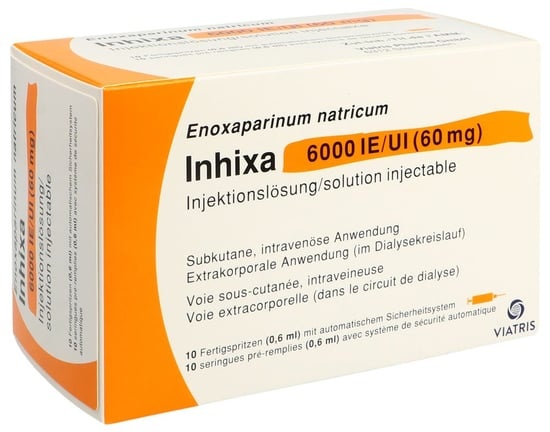
- Країна реєстрації
- Лікарська формаInjectable solution, 20 MG
- Код АТХB01AB05
- Діюча речовина
- Потрібен рецептТак
- Виробник
- Ця інформація надана лише для ознайомлення і не є медичною порадою. Рішення щодо лікування завжди приймає лікар.
- Альтернативи до INIXAЛікарська форма: Injectable solution, 6000 IU (60 MG)/0.6 MLДіюча речовина: enoxaparinВиробник: SANOFI S.R.L.Потрібен рецептЛікарська форма: Injectable solution, 10.000 IU (100 MG)/1.0 MLДіюча речовина: enoxaparinВиробник: SANOFI S.R.L.Рецепт не потрібенЛікарська форма: Injectable solution, 2000 U.I.Діюча речовина: enoxaparinВиробник: SANOFI S.R.L.Потрібен рецепт
Аналоги INIXA в інших країнах
Препарати з тією самою діючою речовиною, доступні в інших країнах.
Аналог INIXA у Іспанія
Аналог INIXA у Польща
Аналог INIXA у Україна
Лікарі онлайн щодо INIXA
Застосування, безпека та можливість призначення рецепта — за результатами медичної оцінки.









Отримайте рецепт на INIXA онлайн
Заповніть форму за 2 хвилини
Розкажіть про симптоми, історію хвороби та потрібний препарат.
Оберіть лікаря або ми призначимо
Оберіть спеціаліста або ми підберемо найближчого доступного лікаря.
Лікар розглядає ваш випадок
Зазвичай протягом 30 хвилин. Може ставити уточнювальні запитання в чаті.
Отримайте в будь-якій аптеці
Електронний рецепт надсилається на вашу пошту — дійсний по всій Польщі.
Часті запитання
INIXA потребує рецепта в Італія. Ви можете обговорити з лікарем онлайн, чи підходить цей лікарський засіб для вашої ситуації.
Діюча речовина у INIXA — enoxaparin. Це допомагає визначити препарати з тим самим складом, але під іншими торговими назвами.
INIXA виробляється компанією TECHDOW PHARMA NETHERLANDS B.V.. Назва бренду та упаковка можуть відрізнятися залежно від дистрибʼютора.
Лікарі, зокрема Сімейні лікарі, Психіатри, Дерматологи, Кардіологи, Ендокринологи, Гастроентерологи, Пульмонологи, Нефрологи, Ревматологи, Гематологи, Інфекціоністи, Алергологи, Геріатри, Педіатри, Онкологи, можуть оцінити доцільність застосування INIXA з урахуванням вашого стану та місцевих правил. Ви можете записатися на онлайн-консультацію, щоб обговорити симптоми та можливі подальші кроки.
Польща має добре розвинену систему охорони здоров'я у великих містах, таких як Варшава, Краків, Вроцлав і Гданськ. Аптеки широко доступні та працюють відповідно до чинного законодавства, забезпечуючи доступ до рецептурних препаратів.
Ви можете придбати INIXA у Варшаві, Кракові, Вроцлаві або Гданську в будь-якій аптеці за наявності дійсного рецепта.
Щоб отримати рецепт, ви можете скористатися Oladoctor:
Інші препарати з тією самою діючою речовиною (enoxaparin) включають KLEXANE T, KLEXANE T, KLEXANE. Вони можуть відрізнятися торговою назвою або формою випуску, але містять той самий терапевтичний компонент. Перед зміною або початком прийому нового препарату варто проконсультуватися з лікарем.
