



PHYSIONEAL 2,27 % Peritoneal dialysis solution

Запит на рецепт онлайн
Лікар розгляне ваш випадок і визначить, чи є рецепт медично доцільним.

Поговоріть з лікарем про ці ліки
Обговоріть симптоми та можливі подальші кроки під час короткої онлайн-консультації.



Інструкція із застосування PYSIONEAL
Зміст інструкції
PHYSIONEAL
“40 Glucose 1.36% w/v/13.6 mg/ml”, Peritoneal Dialysis Solution
“40 Glucose 2.27% w/v/22.7 mg/ml”, Peritoneal Dialysis Solution
“40 Glucose 3.86% w/v/38.6 mg/ml”, Peritoneal Dialysis Solution
Read this leaflet carefully before using this medicine as it contains important
information for you
Keep this leaflet. You may need to read it again.
If you have any questions, ask your doctor.
If you experience any side effects, tell your doctor. This includes any possible side
effect not listed in this leaflet. See section 4.
Contents of this leaflet:
- 1. What is PHYSIONEAL 40 and what it is used for
- 2. What you need to know before you use PHYSIONEAL 40
- 3. How to use PHYSIONEAL 40
- 4. Possible side effects
- 5. How to store PHYSIONEAL 40
- 6. Contents of the pack and other information
1. What is PHYSIONEAL 40 and what is it used for
PHYSIONEAL 40 is a peritoneal dialysis solution. The medicine removes water and waste products from the blood and corrects abnormal levels of various blood components. PHYSIONEAL 40 contains different concentrations of glucose (1.36%, 2.27% or 3.86%). The amount of water that can be removed from the blood is greater the higher the glucose concentration in the solution.
PHYSIONEAL 40 may be prescribed to you if you have:
temporary or permanent kidney failure;
severe fluid retention;
severe alterations of acidity or alkalinity (pH) or levels of salts in the blood;
in some cases of drug poisoning when other treatments are not available.
PHYSIONEAL 40 has an acidity (pH value) close to that of blood, so it may be particularly indicated if you experience discomfort or pain during infusion with other, more acidic peritoneal dialysis solutions.
2. What you need to know before using PHYSIONEAL 40
The product must be used for the first time under the supervision of a doctor.
DO NOT use PHYSIONEAL 40
- If you are allergic to the active ingredients or any of the other ingredients of this medicine (listed in section 6).
- If you have a surgically uncorrectable problem affecting the abdominal wall or cavity, or an uncorrectable problem that increases the risk of abdominal infections.
- If you have documented loss of peritoneal function due to significant peritoneal scarring.
Warnings and precautions
Contact your doctor before using PHYSIONEAL 40.
Pay particular attention:
if you have serious problems affecting the abdominal wall or cavity, e.g. a hernia or chronic infection or
an inflammatory condition affecting the intestine.
If you have had a graft in the aorta.
If you have severe breathing difficulties.
If you experience abdominal pain, an increase in body temperature, or if you notice turbidity or
particles in the drained fluid. These signals may be indicators of peritonitis (inflamed peritoneum) or infection and you should urgently contact the medical team. Note the lot number of the dialysis solution bags you were using and deliver them to the medical team together with the drained fluid bag. They will decide whether treatment should be discontinued
or whether corrective therapies should be adopted. For example, if you have an infection, the doctor may
perform some tests to find out which antibiotic is best for you. As long as the doctor does not discover
the type of infection present, they may administer an antibiotic effective for a wide number
of different bacteria. This is defined as a broad-spectrum antibiotic.
If you have a high concentration of lactate in your blood. You have a high risk of lactic acidosis if:
o you have very low blood pressure
o you have a blood infection
o you have acute kidney failure
o you have an inherited metabolic disorder
o you are taking metformin (medicine used to treat diabetes)
o you are taking medicines to treat HIV, particularly medicines called
NRTIs
If you have diabetes and use this solution, the level of medicines that regulate blood sugar concentration (e.g. insulin) will need to be evaluated regularly. The dosage of medicines
for diabetes will need to be adjusted, especially at the start of peritoneal dialysis treatment or
when this undergoes changes.
If you have an allergy to corn starch, which may lead to hypersensitivity reactions, including serious
allergic reactions called anaphylaxis. Immediately stop the infusion and drain the solution from the
peritoneal cavity.
If you have a high blood concentration of parathyroid hormone due to your kidney failure.
The low calcium concentration in PHYSIONEAL 40 may worsen hyperparathyroidism. The
doctor will monitor the blood concentration of parathyroid hormone.
You, possibly together with the doctor, must keep an accurate record of body weight and
fluid balance. The doctor will monitor blood parameters at regular intervals, in particular the
salts (e.g. bicarbonate, potassium, magnesium, calcium and phosphate), parathyroid hormone and lipids.
If you have a high concentration of bicarbonate in your blood.
Do not use a quantity of solution greater than that prescribed by your doctor. The
symptoms of overinfusion include abdominal distension, feeling of fullness and
shortness of breath.
The doctor will regularly evaluate the potassium concentration. If it should become too low,
they may administer potassium chloride to compensate.
An incorrect sequence of clamping or priming may cause air to be infused into the peritoneal cavity, which may cause abdominal pain and/or peritonitis.
If you have infused unmixed solution, immediately drain the solution and use a freshly
mixed solution.
Since a condition called encapsulating peritoneal sclerosis (EPS) is a rare known complication of peritoneal dialysis therapy, you, possibly together with the doctor, must be aware of
this possible complication. EPS causes:
o inflammation of the abdomen (belly)
o thickening of the intestine which may be associated with abdominal pain, abdominal distension or vomiting. EPS can be fatal.
Children
If you are under 18 years of age, the doctor will assess the risk versus benefit of using this
product.
Other medicines and PHYSIONEAL 40
- Tell your doctor if you are taking, have recently taken or might take any other medicines.
- If you are taking other medicines, your doctor may need to increase their dosage. This happens because peritoneal dialysis treatment increases the elimination of some medicines. Pay attention if you are taking medicines for the heart called cardiac glycosides (e.g. digoxin). You may: o need to take a potassium and calcium supplement or develop an irregular heartbeat (arrhythmia) o the doctor will monitor you carefully throughout treatment, particularly observing potassium levels.
Pregnancy and breastfeeding
If you are pregnant or breastfeeding, if you suspect or are planning a pregnancy, ask
your doctor for advice before using this medicine. The doctor will confirm whether this treatment is
suitable for you or not.
Driving and using machines
This treatment may cause weakness, blurred vision or dizziness. In these conditions, do not
drive or operate machinery.
3. How to use PHYSIONEAL 40
PHYSIONEAL 40 must be infused into the peritoneal cavity. The peritoneal cavity is the cavity
in the abdomen (belly) between the skin and the peritoneum. The peritoneum is the membrane around the internal organs,
such as the intestine and the liver.
Not for intravenous use.
Always use this medicine exactly as directed by the medical team specializing in
peritoneal dialysis. If you are unsure, ask your doctor.
Discard the bag if it is damaged.
How much and how often
The doctor will prescribe the most suitable glucose concentration and the number of bags you should
use each day.
Use in children and adolescents
If you are under 18 years of age, your doctor will carefully assess the prescription of this medicine.
If you stop treatment with PHYSIONEAL 40
Do not stop peritoneal dialysis without your doctor's consent. Stopping treatment may
have life-threatening consequences.
METHOD OF ADMINISTRATION
Before use,
Warm the bag to 37°C. To do this, use a heating plate specifically designed for
this purpose. Never immerse the product in water. Never use a microwave oven to heat the
solution.
Use aseptic technique throughout the solution administration, according to the instructions
received.
Before starting the exchange procedure, make sure your hands and the area where the exchange will be
performed are clean.
Before removing the outer protective bag, check the correctness of the solution type, the expiry date
and the quantity (volume). Lift the dialysis bag to check for leaks
(excess liquid in the outer protective bag). Do not use the bag if you detect leaks.
After removing the outer protective bag, check that the container shows no signs of
leakage by pressing firmly on the bag. Check that the break cone between the two chambers is not
broken. If the break cone is already open, discard the bag. Do not use the bag if you detect leaks.
Check that the solution is clear. Do not use the bag if the solution is cloudy or contains
particles.
Before starting the exchange, make sure all connections are secure.
Carefully mix the contents of the two chambers by breaking the break cone between the two chambers.
Wait until the upper chamber is completely emptied into the lower chamber.
Gently mix by pressing with both hands on the walls of the lower chamber.
Contact your doctor if you have any questions or concerns about this medicine or how to use it.
Use the bag only once. Discard any unused solution residue.
The solution must be infused within 24 hours of mixing.
After use, check that the drained liquid is not cloudy.
Compatibility with other medicines
The doctor may prescribe other injectable medicines to be added directly into the bag of
PHYSIONEAL 40. In this case, add the medicine through the medication site located in the
small chamber before breaking the break cone between the two chambers. Use the product immediately
after adding the medicine. If you are unsure, ask your doctor.
If you have used a number of PHYSIONEAL 40 bags greater than you shouldin 24 hours
If you take too much PHYSIONEAL 40, you may experience:
- abdominal distension
- feeling of fullness and/or
- shortness of breath Contact your doctor immediately. They will advise you on what to do. If you have further questions about the use of this product, ask your doctor.
4. Possible side effects
Like all medicines, this medicine can cause side effects, although not everybody gets them.
Contact your doctor or peritoneal dialysis centre immediately if any of the following effects occur:
Hypertension (blood pressure higher than normal),
Swelling of the ankles or legs, eye swelling, shortness of breath or chest pain (hypervolemia);
Abdominal pain;
Chills (tremors/flu-like symptoms), fever;
Inflamed peritoneum (peritonitis)
These are all serious side effects for which you may need urgent medical attention.
If you experience any side effect, contact your doctor or peritoneal dialysis centre. This includes any side
effect not listed in this leaflet.
Common (may affect up to 1 in 10 people):
Changes in some blood values
increased calcium (hypercalcemia)
decreased potassium (hypokalaemia) which can cause muscle weakness, muscle cramps or abnormal
heartbeat
increased bicarbonate concentration (alkalosis)
Weakness, fatigue
Fluid retention (edema)
Weight gain
Uncommon (may affect up to 1 in 100 people):
- Decreased fluid removal during dialysis;
- Feeling of fainting, dizziness or headache;
- Cloudy fluid drained from the peritoneum, stomach pain;
- Peritoneal bleeding, pus, swelling or pain around the catheter exit site, catheter blockage;
- Nausea, loss of appetite, indigestion, flatulence, thirst, dry mouth;
- Abdominal distension or inflammation, shoulder pain, abdominal hernia (groin swelling)
- Changes in some blood values
- lactic acidosis
- increased carbon dioxide concentration
- increased sugar (hyperglycemia)
- increased white blood cell count (eosinophilia)
- Difficulty sleeping
- Low blood pressure (hypotension)
- Cough
- Muscle or bone pain
- Swelling of the face or throat
- Skin rash Other side effects related to the peritoneal procedure:
- Infection around your catheter exit site, catheter blockage.
Reporting of side effects
If you get any side effects, tell your doctor. This includes any possible side effects not listed in this leaflet.
You can also report side effects directly through the national reporting system at https://www.aifa.gov.it/content/segnalazioni-
reazioni-avverse By reporting side effects you can help provide more information on the safety of this
medicine.
5. How to store PHYSIONEAL 40
Keep this medicine out of sight and reach of children.
Store in the original packaging.
Do not store at a temperature below 4 °C.
Do not use this medicine after the expiry date. The date is reported
on the package label and on the bag after the abbreviation Exp.and the symbol . The expiry date refers to the last day of that month.
Dispose of PHYSIONEAL 40 as indicated during Your training.
6. Package contents and other information
If you are unsure about something, ask your doctor.
What PHYSIONEAL 40 contains
The active ingredients in the mixed peritoneal dialysis solution are:
The excipients are water for injections and carbon dioxide.
The composition in mmol/l of the final solution after mixingis:
Description of the appearance of PHYSIONEAL 40 and package contents
- PHYSIONEAL 40 is a clear, colorless and sterile peritoneal dialysis solution.
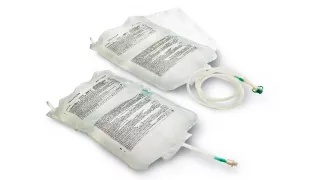
- PHYSIONEAL 40 is packaged in two-chamber PVC bags. The two chambers are separated by a permanent seal. You must only infuse PHYSIONEAL 40 when the solutions from the two chambers are completely mixed.
- Each bag is packaged in an outer wrapper and supplied in cardboard boxes.
Volume Number of units per box Product packaging Connector type
1.5 l 5/6 Single bag (APD) luer
1.5 l 5/6 Double bag (CAPD) luer
2.0 l 4/5 Single bag (APD) luer
2.0 l 4/5 Double bag (CAPD) luer
2.5 l 4/5 Single bag (APD) luer
2.5 l 4/5 Double bag (CAPD) luer
Not all pack sizes may be marketed.
For further information on this medicinal product, contact the local representative of the marketing authorization holder:
| 1.36% | 2.27% | m 3.86% | |
| Glucose monohydrate (g/l) | 15.0 | 25.0 | 42.5 |
| equivalent to anhydrous glucose (g/l) | 13.6 | 22.7 | 38.6 |
| Sodium chloride (g/l) | r 5.38 | ||
| Calcium chloride dihydrate (g/l) | a 0.184 | ||
| Magnesium chloride hexahydrate (g/l) | 0.051 | ||
| Sodium bicarbonate (g/l) | F 2.10 | ||
| Sodium S-Lactate solution (g/l) | 1.68 | ||
| 1.36% | d 2.27% | 3.86% | |
| Anhydrous glucose (mmol/l) | 75.5 | 126 | 214 |
| Sodium (mmol/l) | 132 | ||
| Calcium (mmol/l) | a 1.25 | ||
| Magnesium (mmol/l) | 0.25 | ||
| Chlorides (mmol/l) | n 95 | ||
| Bicarbonate (mmol/l) | 25 | ||
| Lactate (mmol/l) | a 15 | ||
Marketing authorization holder:
Vantive S.r.l.
Via del Serafico, 89 - 00142 Rome
Manufacturer:
Vantive Manufacturing Limited, Moneen Road – Castlebar – County Mayo, Ireland
or
Bieffe Medital SpA, Via Nuova Provinciale - 23034 Grosotto, Italy

Не впевнені, чи підходить вам цей лікарський засіб?
Обговоріть симптоми та можливі варіанти лікування з лікарем онлайн.

Виникли питання під час прийому ліків?
Обговоріть свої симптоми та лікування з лікарем онлайн.
- Країна реєстрації
- Лікарська формаPeritoneal dialysis solution, 2,27 %
- Потрібен рецептНі
- Виробник
- Ця інформація надана лише для ознайомлення і не є медичною порадою. Рішення щодо лікування завжди приймає лікар.
- Альтернативи до PYSIONEALЛікарська форма: Infusion solution, 5% (50G/L)Діюча речовина: АльбуминВиробник: BIOTEST PHARMA GMBHПотрібен рецептЛікарська форма: Infusion solution, 250 G/LДіюча речовина: АльбуминВиробник: KEDRION S.P.A.Потрібен рецептЛікарська форма: Infusion solution, 200 G/LДіюча речовина: АльбуминВиробник: CSL BEHRING S.P.A.Потрібен рецепт
Аналоги PYSIONEAL в інших країнах
Препарати з тією самою діючою речовиною, доступні в інших країнах.
Аналог PYSIONEAL у Польща
Аналог PYSIONEAL у Україна
Аналог PYSIONEAL у Іспанія
Лікарі онлайн щодо PYSIONEAL
Застосування, безпека та можливість призначення рецепта — за результатами медичної оцінки.









Отримайте рецепт на PYSIONEAL онлайн
Заповніть форму за 2 хвилини
Розкажіть про симптоми, історію хвороби та потрібний препарат.
Оберіть лікаря або ми призначимо
Оберіть спеціаліста або ми підберемо найближчого доступного лікаря.
Лікар розглядає ваш випадок
Зазвичай протягом 30 хвилин. Може ставити уточнювальні запитання в чаті.
Отримайте в будь-якій аптеці
Електронний рецепт надсилається на вашу пошту — дійсний по всій Польщі.
Часті запитання
PYSIONEAL не потребує рецепта в Італія. Ви можете обговорити з лікарем онлайн, чи підходить цей лікарський засіб для вашої ситуації.
PYSIONEAL виробляється компанією VANTIVE SRL. Назва бренду та упаковка можуть відрізнятися залежно від дистрибʼютора.
Лікарі, зокрема Сімейні лікарі, Психіатри, Дерматологи, Кардіологи, Ендокринологи, Гастроентерологи, Пульмонологи, Нефрологи, Ревматологи, Гематологи, Інфекціоністи, Алергологи, Геріатри, Педіатри, Онкологи, можуть оцінити доцільність застосування PYSIONEAL з урахуванням вашого стану та місцевих правил. Ви можете записатися на онлайн-консультацію, щоб обговорити симптоми та можливі подальші кроки.
Польща має добре розвинену систему охорони здоров'я у великих містах, таких як Варшава, Краків, Вроцлав і Гданськ. Аптеки широко доступні та працюють відповідно до чинного законодавства, забезпечуючи доступ до рецептурних препаратів.
Ви можете придбати PYSIONEAL у Варшаві, Кракові, Вроцлаві або Гданську в будь-якій аптеці за наявності дійсного рецепта.
Щоб отримати рецепт, ви можете скористатися Oladoctor:
Інші препарати з тією самою діючою речовиною () включають ALBIOMIN, ALBITAL, ALBUMEON. Вони можуть відрізнятися торговою назвою або формою випуску, але містять той самий терапевтичний компонент. Перед зміною або початком прийому нового препарату варто проконсультуватися з лікарем.
