



MYDRANE 0.2 MG/ML+3.1 MG/ML+10 MG/ML Roztwór do wstrzykiwań

Ocena recepty online
Lekarz przeanalizuje Twój przypadek i zdecyduje, czy wystawienie recepty jest medycznie uzasadnione.

Porozmawiaj z lekarzem o tym leku
Omów swoje objawy i opcje leczenia podczas szybkiej konsultacji online.



Jak stosować MYDRANE
Treść ulotki
MYDRANE 0.2 mg/ml + 3.1 mg/ml + 10 mg/ml injectable solution
tropicamide/phenylephrine hydrochloride/lidocaine hydrochloride
Read this leaflet carefully before you use this medicine as it contains important
information for you.
- Keep this leaflet. You may need to read it again.
- If you have any questions, ask your doctor or pharmacist.
- If any side effects occur, including those not listed in this leaflet, tell your doctor or pharmacist. See section 4.
Contents of this leaflet:
- 1. What MYDRANE is and what it is used for
- 2. What you need to know before you use MYDRANE
- 3. How MYDRANE is administered
- 4. Possible side effects
- 5. How to store MYDRANE
- 6. Contents of the pack and other information
1. What is MYDRANE and what is it used for
What is MYDRANE
This medicine is a solution that is injected into the eye.
It contains three active substances:
- tropicamide which belongs to a group of medicines (known as anticholinergics) that block the passage of impulses through particular nerves,
- phenylephrine (as phenylephrine hydrochloride) which belongs to a group of medicines (alpha-sympathomimetics) that mimic the effects of impulses transmitted through particular nerves,
- lidocaine (as lidocaine hydrochloride) which belongs to a class of medicines called amidic local anesthetics.
What is it used for
This medicine is used only in adults.
It is administered by the ophthalmic surgeon by injection into the eye at the beginning of cataract surgery (clouding of the lens), in order to widen the pupil of the eye (mydriasis) and to obtain
anesthesia in the eye during the surgical procedure.
2. What you need to know before using MYDRANE
Do not use MYDRANE:
- if you are allergic to tropicamide, phenylephrine hydrochloride and/or lidocaine hydrochloride or to any of the other ingredients of this medicine (listed in section 6),
- if you are allergic to amidic type anesthetics (articaine, bupivacaine, mepivacaine, prilocaine, ropivacaine),
- if you are allergic to atropine derivatives.
Warnings and precautions
MYDRANE is not recommended:
- in cataract surgery associated with another type of eye surgery (vitrectomy),
- if the anterior (anterior chamber) part of your eye is shallow,
- if you have a history of an acute increase in eye pressure (acute angle-closure glaucoma).
In particular, tell your doctor if you suffer from:
- high blood pressure (hypertension),
- thickening of the artery wall (atherosclerosis),
- heart disease and especially if it concerns the heart rate,
- a contraindication to drugs that increase blood pressure (pressor amines: epinephrine, norepinephrine, dopamine, dobutamine) in general,
- increased activity of the thyroid gland (hyperthyroidism),
- prostatic alterations,
- convulsions (epilepsy),
- any liver disease or kidney problems,
- breathing problems,
- loss of muscle function and weakness (myasthenia gravis).
Other medicines and MYDRANE
Tell your doctor or pharmacist if you are taking, have recently taken or might take any
other medicine.
Fertility, pregnancy and breastfeeding
This medicine should not be used:
- during pregnancy,
- during breastfeeding.
If you are pregnant, suspect you are pregnant or are planning to become pregnant, ask your
doctor or pharmacist for advice before using this medicine.
Effects on ability to drive and operate machinery
Mydrane has a moderate influence on the ability to drive and operate machinery. Therefore
do not drive and/or operate machinery until normal vision returns.
MYDRANE contains sodium
This medicine contains less than 1 mmol of sodium (23 mg) per dose, i.e. essentially
"sodium-free".
3. How MYDRANE is administered
This medicine can only be administered to you if you have already shown satisfactory pupil dilation with a topical mydriatic therapy at a preoperative assessment.
Dosage and method of administration
- The injection of MYDRANE is performed by the ophthalmic surgeon, under local anesthesia, at the beginning of cataract surgery.
- The recommended dose is 0.2 ml of solution, in a single injection. No additional dose should be injected, as no additive effect can be demonstrated and an increase in endothelial cell loss (cells of the layer lining the posterior surface of the cornea) has been observed.
- The same dose is used for both adults and the elderly.
If too much MYDRANE has been given, or too little:
The medicine is administered by an ophthalmic surgeon. It is unlikely that you will be given an
overdose. Overdosage may cause an increase in corneal endothelial cell loss (cells of a layer covering the posterior surface of the cornea).
If you have any doubts about the use of this medicine, ask your doctor or pharmacist or
nurse.
4. Possible side effects
Like all medicines, this medicine can cause side effects, although not everybody gets them.
More serious, well-known complications that can occur during and after cataract surgery:
Uncommon: may affect up to 1 in 100 people
- Injury to the posterior capsule of the lens (posterior capsule rupture),
- Thickening of the retina (cystoid macular edema). Please consult your doctor immediately in this case.
Other side effects:
Uncommon: may affect up to 1 in 100 people
- Headache,
- Corneal edema (keratitis), increased eye pressure, redness of the eye (ocular hyperemia),
- High blood pressure (hypertension).
Reporting of side effects
If you get any side effects, even those not listed in this leaflet, please tell your doctor or pharmacist. You can also report side effects directly
through the national reporting system at https://www.aifa.gov.it/content/segnalazioni-reazioni-avverse.
By reporting side effects you can help provide more information on the
safety of this medicine.
5. How to store MYDRANE
Keep this medicine out of sight and reach of children.
Do not use this medicine after the expiry date which is stated on the box, blister and
vial. The expiry date refers to the last day of that month.
This medicine does not require any special storage conditions.
For single use only. This medicine must be used immediately after the first
opening of the vial.
Do not dispose of any medicine in wastewater or household waste. Ask your pharmacist how to
dispose of medicines you no longer use. This will help protect the environment.
6. Package Contents and Other Information
What MYDRANE contains
- The active ingredients are tropicamide 0.04 mg, phenylephrine hydrochloride 0.62 mg and lidocaine hydrochloride 2 mg per each 0.2 ml dose, equivalent to 0.2 mg of tropicamide, 3.1 mg of phenylephrine hydrochloride and 10 mg of lidocaine hydrochloride per 1 ml.
- The other ingredients are: sodium chloride, disodium phosphate dodecahydrate, disodium phosphate dihydrate, disodium edetate and water for injections.
Description of MYDRANE and package contents
MYDRANE is a clear injectable solution, slightly yellowish-brown and practically free
of visible particles, supplied in a brown glass vial of 1 ml. Each sterile vial contains 0.6 ml
of injectable solution and is presented individually or together with a sterile filtering needle of 5
micrometers in a sealed paper/PVC blister.
Each box contains 1 or 20 or 100 sterile vials with sterile filtering needles of 5 micrometers
separately or in the same blister. The 5-micrometer filtering needles must only be used
to draw the contents of the vial. All components are exclusively for single use.
Not all pack sizes may be marketed.
Marketing Authorisation Holder and Manufacturer
Marketing Authorisation Holder
LABORATOIRES THEA
12, RUE LOUIS BLERIOT
63017 CLERMONT-FERRAND CEDEX 2
FRANCE
Manufacturer
DELPHARM TOURS
RUE PAUL LANGEVIN
37170 CHAMBRAY LES TOURS
FRANCE
or
LABORATOIRES THEA
12, RUE LOUIS BLERIOT
63017 CLERMONT-FERRAND CEDEX 2
FRANCE
This medicinal product is authorised in the Member States of the European Economic Area with the
following denominations:
Austria, Belgium, Bulgaria, Cyprus, Czech Republic, Germany, Denmark, Greece, Finland, France,
Croatia, Iceland, Italy, Luxembourg, Netherlands, Poland, Portugal, Romania, Sweden, Slovenia,
Slovak Republic, United Kingdom........................................................................................... Mydrane
Ireland, Spain...........................................................................................................................Fydrane
Norway .................................................................................................................................... Mydane
More detailed information on this medicinal product is available on the AIFA website
-----------------------------------------------------------------------------------------------------------------------------
The following information is intended exclusively for physicians or healthcare professionals:
Incompatibilities
No incompatibilities of the active ingredients with products commonly used in cataract surgery
have been reported in the literature or during clinical studies. For usual viscoelastic substances, this
has also been confirmed by the pharmaceutical interaction test.
Warning
Do not use if the blister is damaged or broken. Open only under aseptic conditions. The contents
of the blister are guaranteed to be sterile.
How to prepare and administer MYDRANE
Solution for single use in one eye only for intracameral use.
MYDRANE must be administered by intraocular injection into the anterior chamber
of the eye (intracameral injection), by an ophthalmologist, under the aseptic conditions
recommended for cataract surgery.
Before intracameral injection, the solution must be visually inspected and used only if it is clear,
slightly yellowish-brown and practically free of visible particles.
The recommended dose is 0.2 ml of MYDRANE; an additional dose should not be injected
as no significant additive effect has been demonstrated and as an increase in endothelial cell loss has been observed.
The product must be used immediately after opening the vial and must not
be used for the other eye or for any other patient.
Only for the kit presentation (blister containing a vial and a needle): attach the flag label of the blister to the patient's file.
To prepare MYDRANE for intracameral administration, follow these instructions: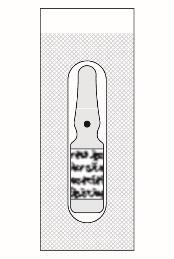 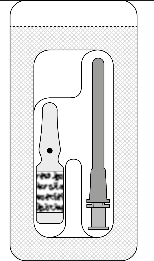 | |
or 5-µm filtering needle a i z n e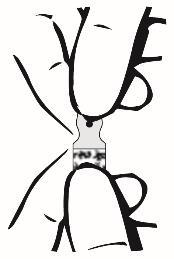 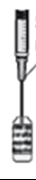 | o c a
|
g After use, dispose of any remaining solution appropriately. Do not store for later use.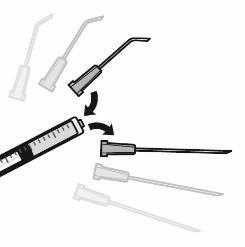 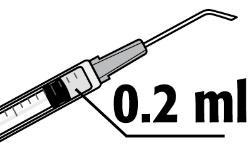 | |
Unused medicine or waste material derived from such medicine must be disposed of in
accordance with local regulations.

Nie jesteś pewien, czy ten lek jest odpowiedni dla ciebie?
Omów swoje objawy i leczenie z lekarzem online.

Zacząłeś przyjmować lek i masz pytania?
Omów swoje objawy i leczenie z lekarzem online.
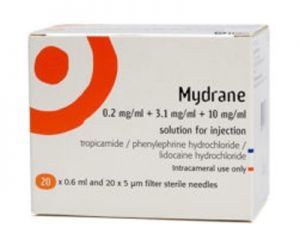
- Kraj rejestracji
- Postać farmaceutycznaInjectable solution, 0.2 MG/ML+3.1 MG/ML+10 MG/ML
- Kod ATCS01FA56
- Substancja czynna
- Wymaga receptyTak
- Producent
- Te treści mają charakter wyłącznie informacyjny i nie zastępują konsultacji lekarskiej.
- Zamienniki MYDRANEPostać farmaceutyczna: Ophthalmic insert, 0.28 MG/5.4 MGSubstancja czynna: tropicamide, combinationsProducent: LABORATOIRES THEAWymaga receptyPostać farmaceutyczna: Eye drops, solution, 100 MG/ML + 5 MG/MLSubstancja czynna: tropicamide, combinationsProducent: VISUFARMA S.P.A.Wymaga receptyPostać farmaceutyczna: Eye drops, solution, 1%Substancja czynna: atropineProducent: FARMIGEA S.P.A.Wymaga recepty
Odpowiedniki MYDRANE w innych krajach
Leki z tą samą substancją czynną dostępne w innych krajach.
Odpowiednik MYDRANE w Polska
Odpowiednik MYDRANE w Ukraina
Odpowiednik MYDRANE w Hiszpania
Lekarze online w sprawie MYDRANE
Omów stosowanie MYDRANE, bezpieczeństwo i ocenę zasadności recepty zgodnie z obowiązującymi przepisami.









Uzyskaj receptę na MYDRANE online
Wypełnij 2-minutowy formularz
Opisz swoje objawy, historię choroby i lek, o który prosisz.
Wybierz lekarza lub pozwól nam przydzielić
Wybierz specjalistę lub dopasujemy Cię do najbliższego dostępnego lekarza.
Lekarz analizuje Twój przypadek
Zazwyczaj w ciągu 30 minut. Może zadawać dodatkowe pytania przez czat.
Odbierz w dowolnej aptece
Recepta elektroniczna wysłana na Twój e-mail — ważna w całej Polsce.
Często zadawane pytania
MYDRANE wymaga recepty w Włochy. Możesz skonsultować się z lekarzem online, aby sprawdzić, czy ten lek może być odpowiedni w Twojej sytuacji.
Substancją czynną w MYDRANE jest tropicamide, combinations. Informacja ta pomaga rozpoznać leki o tym samym składzie, ale pod różnymi nazwami handlowymi.
MYDRANE jest produkowany przez LABORATOIRES THEA. Nazwy handlowe i opakowania mogą się różnić w zależności od dystrybutora.
Lekarze, tacy jak Lekarze rodzinni, Psychiatrzy, Dermatolodzy, Kardiolodzy, Endokrynolodzy, Gastroenterolodzy, Pulmonolodzy, Nefrolodzy, Reumatolodzy, Hematolodzy, Zakaźnicy, Alergolodzy, Geriatrzy, Pediatrzy, Onkolodzy, mogą ocenić, czy stosowanie MYDRANE jest odpowiednie w Twoim przypadku, w zależności od sytuacji klinicznej i lokalnych przepisów. Możesz umówić konsultację online, aby omówić objawy i możliwe dalsze kroki.
Polska posiada dobrze rozwiniętą infrastrukturę ochrony zdrowia w dużych miastach, takich jak Warszawa, Kraków, Wrocław i Gdańsk. Apteki są łatwo dostępne i działają zgodnie z obowiązującymi przepisami, zapewniając dostęp do leków na receptę.
Możesz kupić MYDRANE w Warszawie, Krakowie, Wrocławiu lub Gdańsku w każdej aptece, posiadając ważną receptę.
Aby uzyskać receptę, możesz skorzystać z Oladoctor:
Inne leki zawierające tę samą substancję czynną (tropicamide, combinations) to m.in. MYDRIASERT, VISUMIDRIATIK FENILEFRINA, ATROPINA FARMIJEA. Mogą one różnić się nazwą handlową lub postacią, ale zawierają ten sam składnik terapeutyczny. Przed zmianą lub rozpoczęciem nowego leku skonsultuj się z lekarzem.
