



LIPOFLEX 1250 ML Emulsja do infuzji dożylnej

Ocena recepty online
Lekarz przeanalizuje Twój przypadek i zdecyduje, czy wystawienie recepty jest medycznie uzasadnione.

Porozmawiaj z lekarzem o tym leku
Omów swoje objawy i opcje leczenia podczas szybkiej konsultacji online.



Jak stosować LIPOFLEX
Treść ulotki
- What is Lipoflex, AA 56 / G 144 and what is it used for
- What you need to know before using Lipoflex, AA 56 / G 144
- How to use Lipoflex, AA 56 / G 144
- Possible side effects
- How to store Lipoflex, AA 56 / G 144
- Package Contents and Other Information
- Possible side effects
- Contents of the pack and other information
- Possible side effects
- Package contents and other information
- What is Lipoflex, AA 56 / G 144 without electrolytes and what is it for
- What you need to know before using Lipoflex, AA 56 / G 144 without electrolytes
- How to use Lipoflex, AA 56 / G 144 without electrolytes
- Possible side effects
- How to store Lipoflex, AA 56 / G 144 without electrolytes
- Contents of the pack and other information
Lipoflex, AA 56 / G 144 emulsion for infusion
Read this leaflet carefully before you use this medicine as it contains important
information for you.
- Keep this leaflet. You may need to read it again.
- If you have any questions, ask your doctor, pharmacist or nurse.
- This medicine has been prescribed for you only. Do not pass it on to others, even if their symptoms are the same as yours, as it could be harmful.
- If you get any side effects, even those not listed in this leaflet, tell your doctor, pharmacist or nurse. See section 4.
Contents of this leaflet:
- 1. What Lipoflex, AA 56 / G 144 is and what it is used for
- 2. What you need to know before you use Lipoflex, AA 56 / G 144
- 3. How to use Lipoflex, AA 56 / G 144
- 4. Possible side effects
- 5. How to store Lipoflex, AA 56 / G 144
- 6. Contents of the pack and other information
1. What is Lipoflex, AA 56 / G 144 and what is it used for
Lipoflex, AA 56 / G 144 contains liquids and substances called amino acids, electrolytes and fatty acids, which are
essential for the body to grow or heal. It also contains calories in the form of carbohydrates and
fats.
Lipoflex, AA 56 / G 144 is administered when you are unable to feed yourself normally. This can
happen in many situations, for example after surgery, injuries or burns, or if you are unable to
absorb food in your stomach and intestines.
2. What you need to know before using Lipoflex, AA 56 / G 144
Do not use Lipoflex, AA 56 / G 144
- if you are allergic to any of the active ingredients, to eggs, peanuts, soy or to any of the other components of this medicine (listed in section 6).
- this medicine should not be administered to newborns, infants and children under two years of age.
In addition, do not use Lipoflex, AA 56 / G 144 if you suffer from any of the following conditions:
- potentially life-threatening disorders of blood circulation, such as those that may occur in the event of collapse or shock
- heart attack or stroke
- severe impairment of blood coagulation, risk of bleeding (severe coagulopathy, worsening haemorrhagic diathesis)
- blockage of blood vessels by blood clots or fat (embolism)
- severe liver failure
- impaired bile flow (intrahepatic cholestasis)
- severe kidney failure without renal replacement therapy
- imbalances in the salt content in the body
- fluid deficiency or excess water in the body
- water in the lungs (pulmonary edema)
- severe heart failure
- certain metabolic disorders, such as
- too many lipids (fats) in the blood
- congenital disorders of amino acid metabolism
- levels of sugar in the blood that are too high and require more than 6 units of insulin per hour to keep under control
- abnormalities of metabolism that may occur after surgery or injury
- coma of unknown origin
- insufficient oxygen supply to the tissues
- too high levels of acids in the blood.
Warnings and precautions
Consult your doctor, pharmacist or nurse before using Lipoflex, AA 56 / G 144.
Tell your doctor if:
- you have problems with your heart, liver or kidneys
- you suffer from certain metabolic disorders such as diabetes, abnormal fat levels in the blood and imbalances in fluid and salt content in the body or alterations in acid-base balance.
You will be carefully monitored for early signs of an allergic reaction (such as fever, chills, rash or shortness of breath) when you receive this medicine.
Further checks and tests, such as various tests performed on blood samples, will be used to verify that
the body uses the administered nutrients correctly.
The nursing staff may also take appropriate measures to ensure an adequate supply of fluids and electrolytes
to your needs. In addition to Lipoflex, AA 56 / G 144 you may receive other nutrients (food)
to fully cover your needs.
Children
This medicine should not be administered to newborns, infants and children under two years of age.
Other medicines and Lipoflex, AA 56 / G 144
Tell your doctor, pharmacist or nurse if you are taking, have recently taken or might take
any other medicine.
Lipoflex, AA 56 / G 144 can interact with other medicines. Tell your doctor, pharmacist or nurse if
you are taking or are being given any of the following medicines:
- insulin
- heparin
- medicines that prevent inappropriate blood clotting, such as warfarin or other coumarin derivatives
- medicines that promote urine flow (diuretics)
- medicines used to treat high blood pressure (ACE inhibitors)
- medicines used to treat high blood pressure or heart problems (angiotensin II receptor antagonists)
- medicines used in organ transplantation, such as cyclosporine and tacrolimus
- medicines used to treat inflammation (corticosteroids)
- hormonal preparations that affect fluid balance (adrenocorticotropic hormone or ACTH)
Pregnancy and breastfeeding
If you are pregnant, suspect you are pregnant or are planning a pregnancy, or if you are breastfeeding with breast milk
ask your doctor or pharmacist for advice before taking this medicine. If you are pregnant, you will
receive this medicine only if your doctor or pharmacist considers it essential for recovery. No
data are available regarding the use of Lipoflex, AA 56 / G 144 in pregnant women.
Breastfeeding is not recommended for women receiving parenteral nutrition.
Driving and operating machinery
This medicine is normally administered to immobilized patients, e.g. in hospital or clinic,
who therefore do not drive or operate machinery. In any case, the medicine has no effects on the ability to
drive vehicles or operate machinery.

Nie jesteś pewien, czy ten lek jest odpowiedni dla ciebie?
Omów swoje objawy i leczenie z lekarzem online.
3. How to use Lipoflex, AA 56 / G 144
This medicine is administered via intravenous infusion (drip), i.e. through a small tube
inserted directly into a vein. The medicine is administered exclusively into one of the large veins
(central veins).
The doctor or pharmacist will determine the amount of medicine you need and the duration of treatment with
this medicine.
Use in children
This medicine should not be administered to newborns, infants and children under two years of age.
If you use more Lipoflex, AA 56 / G 144 than you should
If you have received an excessive amount of this medicine, you may suffer from the so-called “overload
syndrome” with the following symptoms:
- excess fluid and electrolyte disturbances
- fluid in the lungs (pulmonary edema)
- loss of amino acids in the urine and disturbances in amino acid balance
- vomiting, nausea
- shivering
- high blood sugar levels
- glucose in the urine
- fluid deficit
- excessive blood concentration (hyperosmolarity)
- reduction or loss of consciousness due to extremely high blood sugar levels
- enlargement of the liver (hepatomegaly) with or without jaundice
- enlargement of the spleen (splenomegaly)
- fat deposition in internal organs
- alterations in liver function parameters
- low red blood cell count (anemia)
- reduction in white blood cell count (leukopenia)
- reduction in platelet count (thrombocytopenia)
- increase in immature red blood cells (reticulocytosis)
- breakdown of blood cells (hemolysis)
- bleeding or tendency to bleed
- blood clotting disorders (characterized by alterations in bleeding time, coagulation time, prothrombin time, etc.)
- fever
- high levels of fats in the blood
- loss of consciousness
If any of these symptoms occur, the infusion must be stopped immediately.
If you have any doubts about the use of this medicine, ask your doctor, pharmacist or nurse.
4. Possible side effects
Like all medicines, this medicine can cause side effects, although not everybody gets them.
manifest.
The following side effects may be serious. If any of the following side effects occur, tell your doctor immediately, who will stop giving you this
medicine:
Rare (may affect up to 1 in 1,000 people):
- allergic reactions, such as skin reactions, shortness of breath, swelling of the lips, mouth and throat, difficulty breathing
Other side effects include:
Uncommon (may affect up to 1 in 100 people):
- nausea, vomiting, loss of appetite
Rare (may affect up to 1 in 1,000 users):
- increased tendency of the blood to clot
- bluish discoloration of the skin
- shortness of breath
- headache
- hot flushes
- redness of the skin (erythema)
- sweating
- chills
- feeling of cold
- elevated body temperature
- drowsiness
- chest, back, bone or lower back pain
- decrease or increase in blood pressure
Very rare (may affect up to 1 in 10,000 people):
- excessive levels of fats or sugars in the blood
- high levels of acidic substances in the blood
- An excess of lipids can lead to a lipid overload syndrome; for more information see “If you use more Lipoflex, AA 56 / G 144 than you should” in section 3. Symptoms usually disappear with discontinuation of the infusion.
Not known (frequency cannot be estimated from available data):
- low white blood cell count (leukopenia)
- low platelet count (thrombocytopenia)
- impaired bile flow (cholestasis)
Reporting of side effects
If you get any side effects, talk to your doctor, pharmacist or nurse.
You can also report side effects directly through the national reporting system
at www.agenziafarmaco.gov.it/content/come-segnalare-una-sospetta-reazione-avversa ”. By reporting
side effects you can help provide more information on the safety of this medicine.

Zacząłeś przyjmować lek i masz pytania?
Omów swoje objawy i leczenie z lekarzem online.
5. How to store Lipoflex, AA 56 / G 144
Keep this medicine out of sight and reach of children.
Do not store at a temperature above 25 °C.
Do not freeze. If accidental freezing occurs, discard the bag.
Keep the bag in the protective packaging to protect the medicine from light.
Do not use this medicine after the expiry date which is stated on the label. The expiry date refers
to the last day of that month.
6. Package Contents and Other Information
What Lipoflex, AA 56 / G 144 contains
The active ingredients contained in the ready-to-use mixture are:
| from the upper compartment (glucose solution) | t in
| in 625 ml | in
| in 1,875 ml |
| I Glucose monohydrate equivalent to glucose | 158.4 g 144.0 g | 99.00 g 90.00 g | 198.0 g 180.0 g | 297.0 g 270.0 g |
| Dihydrate sodium phosphate | 2.496 g | 1.560 g | 3.120 g | 4.680 g |
| a Zinc acetate dihydrate | 7.024 mg | 4.390 mg | 8.780 mg | 13.17 mg |
| z from the intermediate compartment (lipid emulsion) | in
| in 625 ml | in
| in 1,875 ml |
| Refined soybean oil | 20.00 g | 12.50 g | 25.00 g | 37.50 g |
| n Medium chain triglycerides | 20.00 g | 12.50 g | 25.00 g | 37.50 g |
| g from the lower compartment (amino acid solution) | in
| in 625 ml | in
| in 1,875 ml |
| Isoleucine | 3.284 g | 2.053 g | 4.105 g | 6.158 g |
| A Leucine | 4.384 g | 2.740 g | 5.480 g | 8.220 g |
| Lysine hydrochloride equivalent to lysine | 3.980 g 3.186 g | 2.488 g 1.991 g | 4.975 g 3.982 g | 7.463 g 5.973 g |
| Methionine | 2.736 g | 1.710 g | 3.420 g | 5.130 g |
| Phenylalanine | 4.916 g | 3.073 g | 6.145 g | 9.218 g |
| Threonine | 2.540 g | 1.588 g | 3.175 g | 4.763 g |
| Tryptophan | 0.800 g | 0.500 g | 1.000 g | 1.500 g |
| Valine | 3.604 g | 2.253 g | 4.505 g | a 6.758 g |
| Arginine | 3.780 g | 2.363 g | 4.725 g | 7.088 g |
| Histidine hydrochloride monohydrate equivalent to histidine | 2.368 g 1.753 g | 1.480 g 1.095 g | 2.960 g 2.191 g | m 4.440 g 3.286 g |
| Alanine | 6.792 g | 4.245 g | 8.490 g | r 12.73 g |
| Aspartic acid | 2.100 g | 1.313 g | 2.625 g | a 3.938 g |
| Glutamic acid | 4.908 g | 3.068 g | 6.135 g | 9.203 g |
| Glycine | 2.312 g | 1.445 g | F 2.890 g | 4.335 g |
| Proline | 4.760 g | 2.975 g | 5.950 g | 8.925 g |
| Serine | 4.200 g | 2.625 g | 5.250 g | 7.875 g |
| Sodium hydroxide | 1.171 g | 0.732 g | l 1.464 g | 2.196 g |
| Sodium chloride | 0.378 g | 0.237 g | 0.473 g | 0.710 g |
| Sodium acetate trihydrate | 0.250 g | 0.157 g | e 0.313 g | 0.470 g |
| Potassium acetate | 3.689 g | 2.306 g | 4.611 g | 6.917 g |
| Magnesium acetate tetrahydrate | 0.910 g | d 0.569 g | 1.137 g | 1.706 g |
| Calcium chloride dihydrate | 0.623 g | 0.390 g | 0.779 g | 1.169 g |
| Electrolytes | in
| a in 625 ml | in
| in 1,875 ml |
| Sodium | 53.6 mmol | n 33.5 mmol | 67 mmol | 100.5 mmol |
| Potassium | 37.6 mmol | 23.5 mmol | 47 mmol | 70.5 mmol |
| Magnesium | a 4.2 mmol | 2.65 mmol | 5.3 mmol | 7.95 mmol |
| Calcium | i 4.2 mmol | 2.65 mmol | 5.3 mmol | 7.95 mmol |
| Zinc | l 0.03 mmol | 0.02 mmol | 0.04 mmol | 0.06 mmol |
| Chloride | 48 mmol | 30 mmol | 60 mmol | 90 mmol |
| Acetate | a 48 mmol | 30 mmol | 60 mmol | 90 mmol |
| Phosphate | t 16 mmol | 10 mmol | 20 mmol | 30 mmol |
| Amino acid content | 56.0 g | 35.0 g | 70.1 g | 105.1 g |
| Nitrogen content | 8 g | 5 g | 10 g | 15 g |
| a Carbohydrate content | 144 g | 90 g | 180 g | 270 g |
| Lipid content | 40 g | 25 g | 50 g | 75 g |
| z Energy supply in the form of lipids |
| 995 kJ (240 kcal) |
|
|
| n Energy supply in the form of carbohydrates |
|
|
|
|
| e Energy supply in the form of amino acids | 940 kJ (225 kcal) | 585 kJ (140 kcal) |
|
|
| g Non-protein energy supply |
|
|
|
|
| A Total energy supply |
|
|
|
|
The other components are citric acid monohydrate (to adjust the pH), egg lecithin, glycerol, sodium oleate,
all-rac-alpha-tocopherol and water for injections.
Description of the appearance of Lipoflex, AA 56 / G 144 and package contents
The ready-to-use product is an emulsion for infusion, i.e. it is administered through a tube inserted
into a vein.
Lipoflex, AA 56 / G 144 is supplied in flexible multi-compartment bags containing:
- 625 ml (250 ml of amino acid solution + 125 ml of lipid emulsion + 250 ml of glucose solution)
- 1,250 ml (500 ml of amino acid solution + 250 ml of lipid emulsion + 500 ml of glucose solution)
- 1,875 ml (750 ml of amino acid solution + 375 ml of lipid emulsion + 750 ml of glucose solution)
| Osmolality |
|
|
|
|
| Theoretical osmolarity |
|
|
| a
|
| pH | 5.0-6.0 | 5.0-6.0 | 5.0-6.0 | 5.0-6.0 |
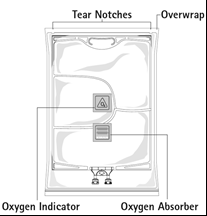
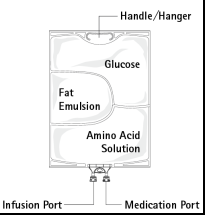
Figure A Figure B
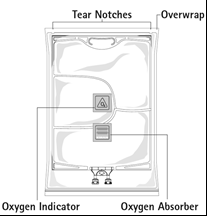
Figure A: the multi-compartment bag is wrapped in a protective wrapper. Between the bag and the wrapper there is an
oxygen absorber and an oxygen indicator; the oxygen absorber sachet is made of inert material and
contains iron hydroxide.
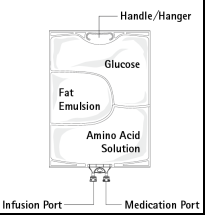
Figure B: the upper compartment contains a glucose solution, the intermediate compartment contains
a lipid emulsion and the lower compartment contains an amino acid solution.
The glucose and amino acid solutions are clear and colorless or straw-yellow in color. The emulsion
lipid is milky white in appearance.
The upper and intermediate compartments can be connected to the lower compartment by opening the
intermediate welds.
The different container sizes are packaged in boxes containing five bags.
Packages: 5 x 625 ml, 5 x 1,250 ml and 5 x 1,875 ml
Not all packs may be marketed.
Marketing authorization holder and manufacturer
- B. Braun Melsungen AG Carl-Braun-Str. 1 Postal address:34212 Melsungen, Germany 34209 Melsungen, Germany
Tel.: +49--5661-71-0
Fax: +49--5661-71-4567
This medicinal product is authorised in the Member States of the European Economic Area with the following
denominations:
Austria Nutriflex Lipid special B. Braun
Belgium Nutriflex Lipid special 56 g/l AA + 144 g/l G, emulsion for infusion
Denmark Lipoflex special
Finland Nutriflex Lipid 56/144/40
France LIPOFLEX LIPIDE G144/N8/E, emulsion for perfusion
Germany Nutriflex Lipid 56/144 special
Iceland Nutriflex Lipid 56/144 special
Italy Lipoflex, AA 56 / G 144
Luxembourg Nutriflex Lipid 56/144 special
Netherlands Nutriflex Lipid special, 56 g/l + 144 g/l emulsion for infusion
Norway Lipoflex special
Poland Lipoflex special
Spain Nutriflex Lipid 56/144 special Emulsión para perfusión
Sweden Nutriflex Lipid 56/144/40
United Kingdom Lipoflex special emulsion for infusion
______________________________________________________________________________
The following information is intended exclusively for physicians or healthcare professionals:
No special instructions for disposal.
Before use, parenteral nutrition products must be visually inspected for any damage, colour changes and emulsion instability.
Do not use damaged bags. The outer packaging, primary bag and weld between the compartments must be
intact. Use only if the amino acid and glucose solutions are clear and colourless to straw-yellow and if
the lipid emulsion is homogeneous and milky white in appearance. Do not use if the solutions contain
particles.
After mixing the three compartments, do not use if the emulsion shows colour changes or signs of
phase separation (oily droplets, oily layer). Immediately discontinue the infusion if
colour changes or signs of phase separation occur.
Before opening the outer packaging, check the colour of the oxygen indicator (see Figure A). Do not use if
the oxygen indicator is pink. Use only if the oxygen indicator is yellow.
Preparation of the emulsion by mixing
Strict adherence to aseptic procedures must be observed.
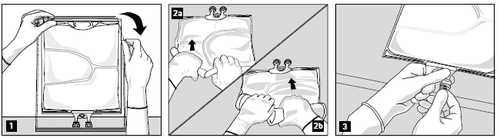
To open: tear the outer packaging starting from the designated incisions (Fig. 1). Remove the bag from the protective
packaging. Discard the outer packaging, oxygen indicator and oxygen absorber.
Visually inspect the primary bag for any leaks. Leaking bags must be
discarded, as sterility is not guaranteed in this case.
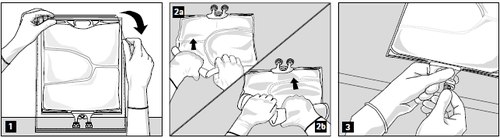
To open and gradually mix the compartments, roll the bag with both hands, pressing on the
weld separating the upper compartment (glucose) from the lower compartment (amino acids) (Fig. 2a). Continue
to press until the weld separating the intermediate compartment (lipids) from the lower compartment is opened (Fig. 2b).
After removing the aluminum closure (Fig. 3), compatible additives can be added through the
port intended for adding medication (Fig. 4).
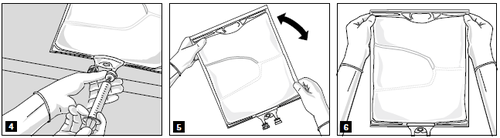
Carefully mix the contents of the bag (Fig. 5) and visually inspect the mixture (Fig. 6). No
signs of phase separation of the emulsion should be visible.
The mixture is a homogeneous oil-in-water emulsion, milky white in appearance.
Preparation of the infusion
The emulsion must always be brought to room temperature before infusion.
Remove the aluminum film (Fig. 7) from the infusion port and connect the infusion set (Fig. 8).
Use a non-vented infusion set or close the air vent if a vented set is used. Hang the
bag on an IV pole (Fig. 9) and perform the infusion according to standard techniques.
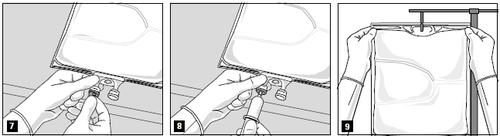
For single use only. The container and any unused residue must be discarded after use.
Do not reconnect partially used containers.
If filters are used, they must be permeable to lipids (pore size ≥1.2 µm).
Period of validity after removal of the protective packaging and mixing of the bag contents
The chemical and physicochemical stability in use of the mixture of amino acids, glucose and fats has been demonstrated for
7 days at 2-8°C and for 2 additional days at 25°C.
Period of validity after adding compatible additives
From a microbiological point of view, the product must be used immediately after the addition of additives.
If the product is not used immediately after the addition of additives, the user is responsible for the
timing and conditions of storage during use.
The emulsion must be used immediately after opening the container.
Lipoflex, AA 56 / G 144 should not be mixed with other medicinal products for which compatibility has not been
documented. Compatibility data for various additives (e.g. electrolytes, trace elements, vitamins) and the periods of
validity for these mixtures can be provided on request by the manufacturer.
Lipoflex, AA 56 / G 144 should not be administered simultaneously with a blood transfusion
in the same infusion set due to the risk of pseudoagglutination.
Duration of infusion of a single bag
The recommended infusion duration for a bag for parenteral nutrition is a maximum of 24 hours.
Lipoflex,AA32/G64 emulsion for infusion
Read this leaflet carefully before using this medicine as it contains important
information for you.
- Keep this leaflet. You may need to read it again.
- If you have any questions, ask your doctor, pharmacist or nurse.
- This medicine has been prescribed only for you. Do not pass it on to others, even if their symptoms are the same as yours, as it could be harmful.
- If you get any side effects, talk to your doctor, pharmacist or nurse. See section 4.
Contents of this leaflet:
- 1. What is Lipoflex, AA32/G64 and what is it used for
- 2. What you need to know before you use Lipoflex, AA32/G64
- 3. How to use Lipoflex, AA32/G64
- 4. Possible side effects
- 5. How to store Lipoflex, AA32/G64
- 6. Contents of the pack and other information
- 1.What is Lipoflex,AA32/G64 and what is it used for
Lipoflex, AA32/G64 contains fluids and substances called amino acids, electrolytes and fatty acids, which are
essential for the body to grow or heal. It also contains calories in the form of carbohydrates and
fats.
Lipoflex, AA32/G64 is given to you when you are unable to feed yourself normally. This can
happen in many situations, for example after surgery, injuries or burns, or if you are unable to
absorb food in your stomach and intestines.
- 2.What you need to know before you use Lipoflex,AA32/G64
Do not use Lipoflex,AA32/G64
- if you are allergic to any of the ingredients in this medicine, to eggs, peanuts, soybeans or any of the other components of this medicine (listed in section 6).
- This medicine must not be given to newborns, infants and children under two years of age.
Also, do not use Lipoflex, AA32/G64 if you suffer from any of the following conditions:
- potentially life-threatening disorders of blood circulation, such as those that can occur in collapse or shock
- heart attack or stroke
- severe impairment of blood coagulation, risk of bleeding (severe coagulopathy, worsening haemorrhagic diathesis)
- blockage of blood vessels by blood clots or fat (embolism)
- severe liver failure
- impaired bile flow (intrahepatic cholestasis)
- severe kidney failure without renal replacement therapy
- imbalances in the content of salts in the body
- fluid deficiency or excess water in the body
- water in the lungs (pulmonary edema)
- severe heart failure
- certain metabolic disorders, such as
- too many lipids (fats) in the blood
- congenital disorders of amino acid metabolism
- very high blood sugar levels requiring more than 6 units of insulin per hour to control
- abnormalities of metabolism that can occur after surgery or injury
- coma of unknown origin
- insufficient oxygen supply to the tissues
- very high levels of acids in the blood.
Warnings and precautions
Talk to your doctor, pharmacist or nurse before using Lipoflex, AA32/G64
Tell your doctor if:
- you have problems with your heart, liver or kidneys
- you suffer from certain metabolic disorders such as diabetes, abnormal fat levels in the blood and imbalances in fluid and salt content in the body or alterations in acid-base balance. You will be carefully monitored for early signs of an allergic reaction (such as fever, chills, rash or shortness of breath) when you receive this medicine.
Other checks and tests, such as various tests performed on blood samples, will be used to verify that
the body uses the nutrients supplied correctly.
The nursing staff may also take appropriate measures to ensure adequate fluid and electrolyte supply
to meet your needs. In addition to Lipoflex, AA32/G64 you may receive other nutrients (food) to
cover your entire needs.
Children
This medicine should not be given to newborns, infants and children under two years of age.
Other medicines and Lipoflex,AA32/G64
Tell your doctor, pharmacist or nurse if you are taking, have recently taken or might take
any other medicines.
Lipoflex, AA32/G64 can interact with other medicines. Tell your doctor, pharmacist or nurse if you are
taking or are given any of the following medicines:
- insulin
- heparin
- medicines that prevent inappropriate blood clotting, such as warfarin or other coumarin derivatives
- medicines that promote urine flow (diuretics)
- medicines used to treat high blood pressure (ACE inhibitors)
- medicines used to treat high blood pressure or heart problems (angiotensin II receptor antagonists)
- medicines used in organ transplantation, such as cyclosporine and tacrolimus
- medicines used to treat inflammation (corticosteroids)
- hormonal preparations that affect fluid balance (adrenocorticotropic hormone or ACTH)
Pregnancy and breastfeeding
If you are pregnant, suspect you are pregnant or are planning to become pregnant, or if you are breastfeeding,
ask your doctor or pharmacist for advice before taking this medicine. If you are pregnant, you will
receive this medicine only if your doctor or pharmacist considers it essential for recovery. There are
no data available on the use of Lipoflex, AA32/G64 in pregnant women.
Breastfeeding is not recommended for women receiving parenteral nutrition.
Driving and using machines
This medicine is normally given to immobilised patients, e.g. in hospital or clinic,
who therefore do not drive or use machines. In any case, the medicine has no effects on the ability to
drive vehicles or use machines.
- 3.How to use Lipoflex,AA32/G64 This medicine is given by intravenous infusion (drip), i.e. through a small tube inserted directly into a vein. The medicine can be given in one of the small veins (peripheral veins) or large veins (central veins).
Your doctor or pharmacist will determine the amount of medicine you need and the duration of treatment with
this medicine.
Use in children
This medicine should not be given to newborns, infants and children under two years of age.
If you use more Lipoflex,AA32/G64 than you should
If you have received an excessive amount of this medicine, you may suffer from the so-called “overload syndrome” with the following symptoms:
- excess fluid and electrolyte disturbances
- fluid in the lungs (pulmonary edema)
- loss of amino acids in the urine and disturbances of amino acid balance
- vomiting, nausea
- chills
- high blood sugar levels
- glucose in the urine
- fluid deficit
- excessive blood concentration (hyperosmolarity)
- reduction or loss of consciousness due to extremely high blood sugar levels
- enlargement of the liver (hepatomegaly) with or without jaundice
- enlargement of the spleen (splenomegaly)
- fat deposition in internal organs
- alterations in liver function parameters
- reductions in red blood cell count (anemia)
- reduction in white blood cell count (leukopenia)
- reduction in platelet count (thrombocytopenia)
- increase in immature red blood cells (reticulocytosis)
- rupture of blood cells (hemolysis)
- bleeding or tendency to bleed
- blood clotting disorders (characterized by alterations in bleeding time, coagulation time, prothrombin time, etc.)
- fever
- high levels of fats in the blood
- loss of consciousness
If any of these symptoms occur, the infusion must be stopped immediately.
If you have any doubts about the use of this medicine, ask your doctor or pharmacist.
4. Possible side effects
Like all medicines, this medicine can cause side effects, although not everybody gets them.
manifest.
The following side effects can be serious. If you experience any of the following side effects
inform your doctor immediately, who will stop administering this
medicine:
Rare (may affect up to 1 in 1,000 people):
- allergic reactions, such as skin reactions, shortness of breath, swelling of the lips, mouth and throat, difficulty breathing
Other side effects include:
Common (may affect up to 1 in 10 people):
- irritation or inflammation of the veins (phlebitis, thrombophlebitis)
Uncommon (may affect up to 1 in 100 people):
- nausea, vomiting, loss of appetite
Rare (may affect up to 1 in 1,000 people):
- increased tendency of the blood to clot
- bluish discoloration of the skin
- shortness of breath
- headache
- hot flushes
- redness of the skin (erythema)
- sweating
- shivering
- feeling cold
- elevated body temperature
- drowsiness
- pain in the chest, back, bones or lower back
- decrease or increase in blood pressure
Very rare (may affect up to 1 in 10,000 people):
- excessive levels of fats or sugars in the blood
- high levels of acidic substances in the blood
- An excess of lipids can lead to a lipid overload syndrome; for more information see “If you use more Lipoflex, AA32/G64 than you should” in section 3. Symptoms generally disappear with discontinuation of the infusion. Not known (frequency cannot be estimated from available data):
- decrease in the number of white blood cells (leukopenia)
- decrease in the number of platelets in the blood (thrombocytopenia)
- impaired bile flow (cholestasis)
Reporting of side effects
If you get any side effects, even those not listed in this leaflet, tell your
doctor, pharmacist or nurse.
You can also report side effects directly through the national reporting system
at www.agenziafarmaco.gov.it/content/come-segnalare-una-sospetta-reazione-avversa ”.
By reporting side effects you can help provide more information on the safety of this
medicine.
- 5.How to store Lipoflex,AA32/G64
Keep this medicine out of the sight and reach of children.
Do not store above 25 °C.
Do not freeze. If accidental freezing occurs, discard the bag.
Keep the bag in the protective packaging to protect the medicine from light.
Do not use this medicine after the expiry date which is stated on the label. The expiry date refers to
the last day of that month.
6. Contents of the pack and other information
What Lipoflex,AA32/G64 contains,
The active ingredients contained in the ready-to-use mixture are:
| a from the upper compartment i (glucose solution) | in
| in 1,250 ml | in 1,875 ml | in 2,500 ml |
| z Glucose monohydrate equivalent to glucose | 70.40 g 64.00 g | 88.00 g 80.00 g | 132.0 g | 176.0 g |
| 120.0 g | 160.0 g | |||
| Disodium hydrogen phosphate dihydrate | 0.936 g | 1.170 g | 1.755 g | 2.340 g |
| n Zinc acetate dihydrate | 5.280 mg | 6.600 mg | 9.900 mg | 13.20 mg |
| e from the intermediate compartment (lipid emulsion) | in
| in 1,250 ml | in 1,875 ml | in 2,500 ml |
| g Refined soybean oil | 20.00 g | 25.00 g | 37.50 g | 50.00 g |
| Medium chain triglycerides | 20.00 g | 25.00 g | 37.50 g | 50.00 g |
| from the lower compartment (amino acid solution) | in
| in 1,250 ml | in 1,875 ml | in 2,500 ml |
| Isoleucine | 1.872 g | 2.340 g | 3.510 g | 4.680 g |
| Leucine | 2.504 g | 3.130 g | 4.695 g | 6.260 g |
| Lysine hydrochloride equivalent to lysine | 2.272 g 1.818 g | 2.840 g 2.273 g | 4.260 g 3.410 g | c 5.680 g 4.546 g |
| Methionine | 1.568 g | 1.960 g | 2.940 g | a 3.920 g |
| Phenylalanine | 2.808 g | 3.510 g | 5.265 g | 7.020 g |
| Threonine | 1.456 g | 1.820 g | 2.730 g | m 3.640 g |
| Tryptophan | 0.456 g | 0.570 g | 0.855 g | 1.140 g |
| Valine | 2.080 g | 2.600 g | 3.900 g | 5.200 g |
| Arginine | 2.160 g | 2.700 g | 4.050 g | r 5.400 g |
| Histidine hydrochloride monohydrate equivalent to histidine | 1.352 g 1.000 g | 1.690 g 1.251 g | a 2.535 g 1.876 g | 3.380 g 2.502 g |
| Alanine | 3.880 g | 4.850 g | F 7.275 g | 9.700 g |
| Aspartic acid | 1.200 g | 1.500 g | 2.250 g | 3.000 g |
| Glutamic acid | 2.800 g | 3.500 g | 5.250 g | 7.000 g |
| Glycine | 1.320 g | 1.650 g | l 2.475 g | 3.300 g |
| Proline | 2.720 g | 3.400 g | 5.100 g | 6.800 g |
| Serine | 2.400 g | 3.000 g | e 4.500 g | 6.000 g |
| Sodium hydroxide | 0.640 g | 0.800 g | 1.200 g | 1.600 g |
| Sodium chloride | 0.865 g | d 1.081 g | 1.622 g | 2.162 g |
| Sodium acetate trihydrate | 0.435 g | 0.544 g | 0.816 g | 1.088 g |
| Potassium acetate | 2.354 g | 2.943 g | 4.415 g | 5.886 g |
| Magnesium acetate tetrahydrate | 0.515 g | a 0.644 g | 0.966 g | 1.288 g |
| Calcium chloride dihydrate | 0.353 g | 0.441 g | 0.662 g | 0.882 g |
| Electrolytes | i in
| a in 1,250 ml | in 1,875 ml | in 2,500 ml |
| Sodium | l 40 mmol | 50 mmol | 75 mmol | 100 mmol |
| Potassium | 24 mmol | 30 mmol | 45 mmol | 60 mmol |
| Magnesium | a 2.4 mmol | 3.0 mmol | 4.5 mmol | 6.0 mmol |
| Calcium | t 2.4 mmol | 3.0 mmol | 4.5 mmol | 6.0 mmol |
| Zinc | I 0.024 mm ol | 0.03 mmol | 0.045 mmol | 0.06 mmol |
| Chloride | 38 mmol | 48 mmol | 72 mmol | 96 mmol |
| a Acetate | 32 mmol | 40 mmol | 60 mmol | 80 mmol |
| Phosphate | 6.0 mmol | 7.5 mmol | 11.25 mmol | 15.0 mmol |
| z Amino acid content | 32 g | 40 g | 60 g | 80 g |
| Nitrogen content | 4.6 g | 5.7 g | 8.6 g | 11.4 g |
| n Carbohydrate content | 64 g | 80 g | 120 g | 160 g |
| Lipid content | 40 g | 50 g | 75 g | 100 g |
| g Energy supply in the form of lipids |
|
|
|
|
| Energy supply in the form of carbohydrates |
|
|
|
|
| A Energy supply in the form of amino acids | 535 kJ (130 kcal) | 670 kJ (160 kcal) |
|
|
| Non-protein energy supply |
|
|
|
|
| (635 kcal) | (795 kcal) | (1,195 kcal) | (1,590 kcal) | |
| Total energy supply |
|
|
| c
|
| Osmolality | 950 mOsm /kg | 950 mOsm/kg | 950 mOsm/kg | 950 mOsm/kg |
| Theoretical osmolarity | 840 mOsm /l | 840 mOsm/l | 840 mOsm/l | m 840 mOsm/l |
| pH | 5.0-6.0 | 5.0-6.0 | 5.0-6.0 | r 5.0-6.0 |
The other components are citric acid monohydrate (to adjust the pH), egg lecithin, glycerol, sodium oleate,
all-rac-alpha-tocopherol and water for injections.
Description of the appearance of Lipoflex,AA32/G64 and contents of the pack
The ready-to-use product is an emulsion for infusion, i.e. it is administered through a tube inserted
into a vein.
Lipoflex, AA32/G64 is supplied in flexible multi-compartment bags containing:
- 1,250 ml (500 ml of amino acid solution + 250 ml of lipid emulsion + 500 ml of glucose solution)
- 1,875 ml (750 ml of amino acid solution + 375 ml of lipid emulsion + 750 ml of glucose solution)
- 2,500 ml (1,000 ml of amino acid solution + 500 ml of lipid emulsion + 1,000 ml of glucose solution)
| Packaging |
Figure A Figure B
Figure A: the multi-compartment bag is wrapped in a protective packaging. Between the bag and the packaging there are an
oxygen absorber and an oxygen indicator; the oxygen absorber bag is made of inert material and
contains iron hydroxide.
Figure B: the upper compartment contains a glucose solution, the intermediate compartment contains
a lipid emulsion and the lower compartment contains an amino acid solution.
The glucose and amino acid solutions are clear and colorless or pale yellow in color. The emulsion
lipid is of a milky white appearance.
The upper and intermediate compartments can be connected to the lower compartment by opening the
intermediate seals.
The different sizes of the container are packaged in boxes containing five bags.
Packs: 5 x 1,250 ml, 5 x 1,875 ml and 5 x 2,500 ml
Not all pack sizes may be marketed.
Marketing authorisation holder and manufacturer
- B. Braun Melsungen AG Carl-Braun-Str. 1 Postal address:34212 Melsungen, Germany 34209 Melsungen, Germany Tel.: +49-(0)-5661-71-0 Fax: +49-(0)-5661-71-4567
This medicinal product is authorised in the Member States of the European Economic Area with the following
denominations:
Austria Nutriflex Lipid peri B. Braun
Belgium Nutriflex Lipid peri, 32 g/l AA + 64 g/l G , emulsion for infusion
Bulgaria Nutriflex Lipid 32/64 peri emulsion for infusion
Czech Republic Nutriflex Lipid peri 32/64,
Denmark Lipoflex peri
Finland Nutriflex Lipid 32/64/40 peripheral
France Lipoflex Lipide G64/N4,6/E, emulsion for perfusion
Germany Nutriflex Lipid 32/64 peri
Iceland Nutriflex Lipid 32/64 peri
Italy Lipoflex, AA32/G64 emulsion for infusion
Luxembourg Nutriflex Lipid 32/64 peri
Netherlands Nutriflex Lipid peri, 32 g/l + 64 g/l,
emulsion for infusion
Norway Lipoflex peri
Poland Lipoflex peri
Romania Lipoflex peri emulsion for perfusion
Slovakia Nutriflex Lipid Peri 32/64,
Spain Nutriflex Lipid 32/64 peri emulsion for perfusion
Sweden Nutriflex Lipid 32/64 peripheral
United Kingdom Lipoflex peri emulsion for infusion
______________________________________________________________________________
The following information is intended exclusively for physicians or healthcare professionals:
No special instructions for disposal.
Before use, parenteral nutrition products must be visually inspected for any damage, colour changes and emulsion instability.
Do not use damaged bags. The outer packaging, the primary bag and the seal between the compartments must be
intact. Use only if the amino acid and glucose solutions are clear and colourless to straw-yellow and if
the lipid emulsion is homogeneous and milky white in appearance. Do not use if the solutions contain
particles.
After mixing the three compartments, do not use if the emulsion shows colour changes or signs of
phase separation (oily droplets, oily layer). Immediately stop the infusion if there is a change in colour or
signs of phase separation.
Before opening the outer packaging, check the colour of the oxygen indicator (see Figure A). Do not use if
the oxygen indicator is pink. Use only if the oxygen indicator is yellow.
Preparation of the emulsion by mixing
Strict adherence to the rules of aseptic procedure must be observed.
To open: tear the outer packaging starting from the designated notches (Fig. 1). Remove the bag from the protective
outer packaging. Discard the outer packaging, the oxygen indicator and the oxygen absorber.
Visually inspect the primary bag for any leaks. Leaking bags must be
discarded, as sterility is not guaranteed in this case.
To open and gradually mix the compartments, roll the bag with both hands, pressing on the
seal separating the upper compartment (glucose) from the lower compartment (amino acids) (Fig. 2a). Continue
to press until the seal separating the intermediate compartment (lipids) from the lower compartment is opened (Fig. 2b).
After removing the aluminium closure (Fig. 3), compatible additives can be added through the
port intended for the addition of medicinal products (Fig. 4).
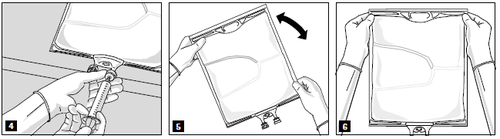
Carefully mix the contents of the bag (Fig. 5) and visually inspect the mixture (Fig. 6). No
signs of phase separation of the emulsion should be visible.
The mixture is a homogeneous oil-in-water emulsion, milky white in appearance.
Preparation of the infusion
The emulsion must always be brought to room temperature before infusion.
Remove the aluminium film (Fig. 7) from the infusion port and connect the infusion set (Fig. 8).
Use a non-vented infusion set or close the air vent if a vented set is used. Hang the
bag on an infusion stand (Fig. 9) and perform the infusion according to standard techniques.
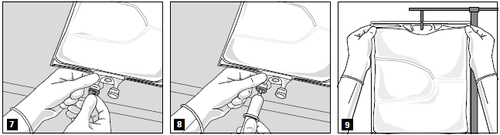
For single use only. The container and any unused residue must be discarded after use.
Do not reconnect a partially used container.
If filters are used, they must be lipid-permeable (pore size ≥1.2 µm).
Period of validity after removal of the protective outer packaging and mixing of the bag contents
The chemical and physicochemical stability in use of the mixture of amino acids, glucose and fats has been demonstrated for
7 days at 2-8°C and for 2 additional days at 25°C.
Period of validity after addition of compatible additives
From a microbiological point of view, the product must be used immediately after the addition of additives.
If the product is not used immediately after the addition of additives, the user is responsible for the
timing and conditions of storage during use.
The emulsion must be used immediately after opening the container.
Lipoflex, AA32 /G64 must not be mixed with other medicinal products for which compatibility has not been
documented. Compatibility data for various additives (e.g. electrolytes, trace elements, vitamins) and the validity periods for these mixtures can be provided on request by the manufacturer.
Lipoflex, AA32 / G64 must not be administered simultaneously with blood in the same infusion set due to the risk of pseudoagglutination.
Duration of infusion of a single bag
The recommended infusion duration for a bag for parenteral nutrition is a maximum of 24 hours.
Lipoflex,AA38/G120 emulsion for infusion
Read this leaflet carefully before you use this medicine because it contains important
information for you.
- Keep this leaflet. You may need to read it again.
- If you have any questions, ask your doctor, pharmacist or nurse.
- This medicine has been prescribed for you only. Do not pass it on to others, even if their symptoms are the same as yours, as it could be harmful.
- If you get any side effects, even those not listed in this leaflet, tell your doctor, pharmacist or nurse. See section 4.
Contents of this leaflet:
- 1. What is Lipoflex, AA38/G120 and what is it used for
- 2. What you need to know before you use Lipoflex, AA38/G120
- 3. How to use Lipoflex, AA38/G120
- 4. Possible side effects
- 5. How to store Lipoflex, AA38/G120
- 6. Contents of the pack and other information
- 1.What is Lipoflex,AA38/G120 and what is it used for
Lipoflex, AA38/G120 contains fluids and substances called amino acids, electrolytes and fatty acids, which are
essential for the body to grow or heal. It also contains calories in the form of carbohydrates and
fats.
Lipoflex, AA38/G120 is given to you when you are unable to feed yourself normally. Numerous
situations may require its use, for example during recovery from surgery, injuries or
burns or when you are unable to absorb food from your stomach or intestines.
- 2.What you need to know before you use Lipoflex,AA38/G120
Do not use Lipoflex,AA38/G120
- if you are allergic to any of the active ingredients, to eggs, peanuts, soya or any of the other ingredients of this medicine (listed in section 6).
- This medicine must not be given to newborn infants, infants and children under two years of age.
Also, do not use Lipoflex, AA38/G120 if you suffer from any of the following conditions:
- life-threatening circulatory problems, such as those that can occur when you are in a state of collapse or shock
- heart attack or stroke
- severe impairment of blood clotting, risk of bleeding (severe coagulopathy, worsening haemorrhagic diathesis)
- blockage of blood vessels by blood clots or fat (embolism)
- severe liver failure
- impaired bile flow (intrahepatic cholestasis)
- severe kidney failure without renal replacement therapy
- imbalances in the content of salts in the body
- lack of fluids or excess water in the body
- water in the lungs (pulmonary oedema)
- severe heart failure
- certain metabolic disorders, such as
- too many lipids (fats) in the blood
- congenital disorders of amino acid metabolism
- unusually high blood sugar levels that require more than 6 units of insulin per hour to keep under control
- abnormalities in metabolism that can occur after surgery or injury
- coma of unknown origin
- insufficient oxygen supply to the tissues
- abnormally high levels of acid in the blood.
Warnings and precautions
Talk to your doctor, pharmacist or nurse before you use Lipoflex, AA38/G120.
Tell your doctor if:
- you have problems with your heart, liver or kidneys
- you suffer from certain types of metabolic disorders such as diabetes, abnormal fat levels in the blood and imbalances in fluid and salt content in the body or alterations in acid-base balance. You will be carefully monitored to detect early signs of an allergic reaction (such as fever, chills, rash or difficulty breathing) when you receive this medicine.
Other checks and tests, such as various examinations performed on blood samples, will be carried out to verify that
your body is using the nutrients supplied correctly.
The nursing staff may also take measures to ensure that your fluid and electrolyte needs are met. In addition to Lipoflex, AA38/G120 you may receive other nutrients
(foods) to fully cover your needs.
Children
This medicine must not be given to newborn infants, infants and children under two years of age.
Other medicines and Lipoflex,AA38/G120
Tell your doctor, pharmacist or nurse if you are taking, have recently taken or might take
any other medicines.
Lipoflex, AA38/G120 can interact with other medicines. Tell your doctor, pharmacist or nurse if you are
taking or are given any of the following medicines:
- insulin
- heparin
- medicines that prevent unwanted blood clotting, such as warfarin or other coumarin derivatives
- medicines that promote urine flow (diuretics)
- medicines used to treat high blood pressure (ACE inhibitors)
- medicines used to treat high blood pressure or heart problems (angiotensin II receptor antagonists)
- medicines used in organ transplantation, such as cyclosporine and tacrolimus
- medicines used to treat inflammation (corticosteroids)
- hormonal preparations that affect fluid balance (adrenocorticotropic hormone or ACTH)
Pregnancy and breastfeeding
If you are pregnant, or suspect you may be pregnant, or are breastfeeding, ask your doctor or pharmacist for advice before taking this medicine. If you are pregnant, you will
receive this medicine only if your doctor or pharmacist considers it essential for recovery. There are
no data available on the use of Lipoflex, AA38/G120 in pregnant women.
Breastfeeding is not recommended for women receiving parenteral nutrition.
Driving and using machines
This medicine is normally given to immobilised patients, e.g. in hospital or clinic,
and this excludes the possibility of driving vehicles and operating machinery. In any case, the medicine has
no effects on the ability to drive vehicles or operate machinery.
- 3.How to use Lipoflex,AA38/G120 This medicine is administered by intravenous infusion (drip), i.e. through a small tube inserted directly into a vein. This medicine is administered exclusively into one of the large veins (central veins).
The doctor or pharmacist will determine the amount of medicine you need and the duration of treatment with
this medicine.
Use in children
This medicine must not be given to newborn infants, infants and children under two years of age.
If you use more Lipoflex,AA38/G120 than you should
If you have received an excessive amount of this medicine, you may suffer from the so-called "overload syndrome" with the following symptoms:
- excess fluid and electrolyte disturbances
- fluid in the lungs (pulmonary edema)
- loss of amino acids through the urine and disturbances of amino acid balance
- vomiting, nausea
- chills
- high blood sugar levels
- glucose in the urine
- fluid deficiency
- blood much more concentrated than normal (hyperosmolarity)
- reduction or loss of consciousness due to extremely high blood sugar levels
- enlargement of the liver (hepatomegaly) with or without jaundice
- enlargement of the spleen (splenomegaly)
- fat deposition in internal organs
- abnormal values of liver function tests
- reduction of red blood cell count in the blood (anemia)
- reduction of white blood cell count in the blood (leukopenia)
- reduction of platelet count in the blood (thrombocytopenia)
- increase of immature red blood cells (reticulocytosis)
- breakdown of blood cells (hemolysis)
- bleeding or tendency to bleed
- impairment of blood coagulation (characterized by alterations in bleeding time, coagulation time, prothrombin time, etc.)
- fever
- high levels of fats in the blood
- loss of consciousness
If any of these symptoms occur, the infusion must be stopped immediately.
If you have any doubts about the use of this medicine, ask your doctor, pharmacist or nurse.
4. Possible side effects
Like all medicines, this medicine can cause side effects, although not everybody gets them.
The following side effects may be serious. If you experience any of the following side effects, inform your doctor immediately, who will stop administering this medicine:
Rare (may affect up to 1 in 1,000 people):
- allergic reactions, such as skin reactions, shortness of breath, swelling of the lips, mouth and throat, difficulty breathing
Other side effects include:
Uncommon (may affect up to 1 in 100 people):
- nausea, vomiting, loss of appetite
Rare (may affect up to 1 in 1,000 people):
- increased tendency of the blood to clot
- bluish discoloration of the skin
- shortness of breath
- headache
- hot flushes
- redness of the skin (erythema)
- sweating
- shivering
- feeling of cold
- elevated body temperature
- drowsiness
- chest, back, bone or lower back pain
- decrease or increase in blood pressure
Very rare (may affect up to 1 in 10,000 people):
- unusually high levels of fats or sugars in the blood
- high levels of acidic substances in the blood
- an excess of lipids can lead to a lipid overload syndrome; for more information see “If you use more Lipoflex, AA38/G120 than you should” in section 3. Symptoms usually disappear when the infusion is stopped.
Not known (frequency cannot be estimated from the available data):
- decreased white blood cell count (leukopenia)
- decreased platelet count (thrombocytopenia)
- impaired bile flow (cholestasis)
Reporting of side effects
If you get any side effects, talk to your doctor, pharmacist or nurse, including any side effects not listed in this leaflet.
You can also report side effects directly through the national reporting system at www.agenziafarmaco.gov.it/content/come-segnalare-una-sospetta-reazione-avversa”. By reporting side effects you can help provide more information on the safety of this medicine.
- 5.How to store Lipoflex,AA38/G120
Keep this medicine out of the sight and reach of children.
Do not store above 25 °C.
Do not freeze. If accidental freezing occurs, discard the bag.
Keep the bag in the protective packaging to protect the medicine from light.
Do not use this medicine after the expiry date which is stated on the label. The expiry date refers to the last day of that month.
6. Package contents and other information
What Lipoflex,AA38/G120 contains,
The active ingredients contained in the ready-to-use mixture are:
| from the upper compartment (glucose solution) | l in 1,000 ml | in 1,250 ml | in 1,875 ml | in 2,500 ml |
| Monohydrate glucose equivalent to glucose | a 132.0 g 120.0 g | 165.0 g 150.0 g | 247.5 g 225.0 g | 330.0 g 300.0 g |
| Dihydrate disodium phosphate | t 1.872 g | 2.340 g | 3.510 g | 4.680 g |
| I Zinc acetate dihydrate | 5.264 mg | 6.580 mg | 9.870 mg | 13.16 mg |
| a from the intermediate compartment (lipid emulsion) | in 1,000 ml | in 1,250 ml | in 1,875 ml | in 2,500 ml |
| i Refined soybean oil | 20.00 g | 25.00 g | 37.50 g | 50.00 g |
| Medium chain triglycerides | 20.00 g | 25.00 g | 37.50 g | 50.00 g |
| from the lower compartment (amino acid solution) | in 1,000 ml | in 1,250 ml | in 1,875 ml | c in 2,500 ml |
| Isoleucine | 2.256 g | 2.820 g | 4.230 g | 5.640 g |
| Leucine | 3.008 g | 3.760 g | 5.640 g | a 7.520 g |
| Lysine hydrochloride equivalent to lysine | 2.728 g 2.184 g | 3.410 g 2.729 g | 5.115 g 4.094 g | 6.820 g 5.459 g |
| Methionine | 1.880 g | 2.350 g | 3.525 g | m 4.700 g |
| Phenylalanine | 3.368 g | 4.210 g | 6.315 g | 8.420 g |
| Threonine | 1.744 g | 2.180 g | r 3.270 g | 4.360 g |
| Tryptophan | 0.544 g | 0.680 g | a 1.020 g | 1.360 g |
| Valine | 2.496 g | 3.120 g | 4.680 g | 6.240 g |
| Arginine | 2.592 g | 3.240 g | F 4.860 g | 6.480 g |
| Histidine hydrochloride monohydrate equivalent to histidine | 1.624 g 1.202 g | 2.030 g 1.503 g | 3.045 g 2.255 g | 4.060 g 3.005 g |
| Alanine | 4.656 g | 5.820 g | l 8.730 g | 11.64 g |
| Aspartic acid | 1.440 g | 1.800 g | 2.700 g | 3.600 g |
| Glutamic acid | 3.368 g | e 4.210 g | 6.315 g | 8.420 g |
| Glycine | 1.584 g | 1.980 g | 2.970 g | 3.960 g |
| Proline | 3.264 g | d 4.080 g | 6.120 g | 8.160 g |
| Serine | 2.880 g | 3.600 g | 5.400 g | 7.200 g |
| Sodium hydroxide | 0.781 g | 0.976 g | 1.464 g | 1.952 g |
| Sodium chloride | 0.402 g | a 0.503 g | 0.755 g | 1.006 g |
| Sodium acetate trihydrate | 0.222 g | 0.277 g | 0.416 g | 0.554 g |
| Potassium acetate | n 2.747 g | 3.434 g | 5.151 g | 6.868 g |
| Magnesium acetate tetrahydrate | 0.686 g | 0.858 g | 1.287 g | 1.716 g |
| Calcium chloride dihydrate | a 0.470 g | 0.588 g | 0.882 g | 1.176 g |
| Electrolytes | in 1,000 ml | in 1,250 ml | in 1,875 ml | in 2,500 ml |
| Sodium | a 40 mmol | 50 mmol | 75 mmol | 100 mmol |
| Potassium | t 28 mmol | 35 mmol | 52.5 mmol | 70 mmol |
| Magnesium | 3.2 mmol | 4.0 mmol | 6.0 mmol | 8.0 mmol |
| I Calcium | 3.2 mmol | 4.0 mmol | 6.0 mmol | 8.0 mmol |
| Zinc | 0.024 mmol | 0.03 mmol | 0.045 mmol | 0.06 mmol |
| a Chloride | 36 mmol | 45 mmol | 67.5 mmol | 90 mmol |
| Acetate | 36 mmol | 45 mmol | 67.5 mmol | 90 mmol |
| i Phosphate | 12 mmol | 15 mmol | 22.5 mmol | 30 mmol |
| Amino acid content | 38 g | 48 g | 72 g | 96 g |
| n Nitrogen content | 5.4 g | 6.8 g | 10.2 g | 13.7 g |
| Carbohydrate content | 120 g | 150 g | 225 g | 300 g |
| e Lipid content | 40 g | 50 g | 75 g | 100 g |
| Energy supply in the form of lipids |
|
|
| c
|
| Energy supply in the form of carbohydrates |
|
|
| a
|
| Energy supply in the form of amino acids | 635 kJ (150 kcal) | 800 kJ (190 kcal) |
|
|
| Non-protein energy supply |
|
|
| m
|
| Total energy supply |
|
| r
|
|
| Osmolality |
|
| F
|
|
| Theoretical osmolarity |
|
|
|
|
| pH | 5.0-6.0 | 5.0-6.0 | 5.0-6.0 | 5.0-6.0 |
The other components are citric acid monohydrate (to adjust the pH), egg lecithin, glycerol, sodium oleate,
all-rac-alpha-tocopherol and water for injections.
Description of the appearance of Lipoflex,AA38/G120 and package contents
The ready-to-use product is an emulsion for infusion, i.e. it is administered through a tube inserted
into a vein.
Lipoflex, AA38/G120 is supplied in flexible multi-compartment bags containing:
- 1,250 ml (500 ml of amino acid solution + 250 ml of lipid emulsion + 500 ml of glucose solution)
- 1,875 ml (750 ml of amino acid solution + 375 ml of lipid emulsion + 750 ml of glucose solution)
- 2,500 ml (1,000 ml of amino acid solution + 500 ml of lipid emulsion + 1,000 ml of glucose solution)
| Packaging |
Figure A Figure B
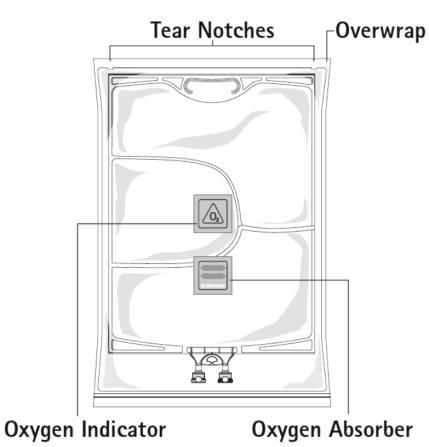
Figure A: the multi-compartment bag is wrapped in a protective packaging. Between the bag and the packaging there are an
oxygen absorber and an oxygen indicator; the oxygen absorber bag is made of inert material and
contains iron hydroxide.
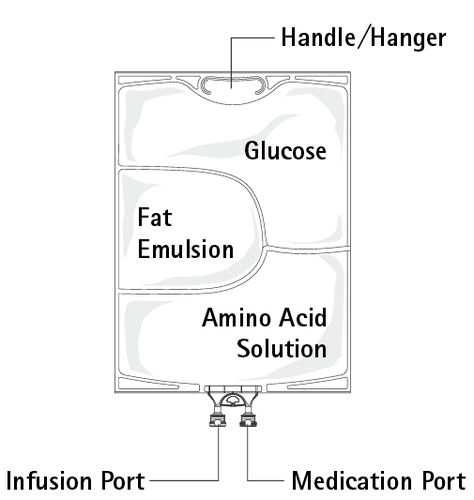
Figure B: the upper compartment contains a glucose solution, the intermediate compartment contains
a lipid emulsion and the lower compartment contains an amino acid solution.
The glucose and amino acid solutions are clear and colorless or straw-yellow in color. The emulsion
lipid is milky white in appearance.
The upper and intermediate compartments can be connected to the lower compartment by opening the
intermediate seals.
The different container sizes are packaged in boxes containing five bags.
Packages: 5 x 1,250 ml, 5 x 1,875 ml and 5 x 2,500 ml
Not all packages may be marketed.
Marketing authorisation holder and manufacturer
- B. Braun Melsungen AG Carl-Braun-Str. 1 Postal address:34212 Melsungen, Germany 34209 Melsungen, Germany Tel.: +49-(0)-5661-71-0 Fax: +49-(0)-5661-71-4567
This medicinal product is authorised in the Member States of the European Economic Area under the following
denominations:
Austria Nutriflex Lipid plus B. Braun
Belgium Nutriflex Lipid plus, 38 g/l AA + 120 g/l G, emulsion for infusion
Czech Republic Nutriflex Lipid plus 38/120
Denmark Lipoflex Plus
Finland Nutriflex Lipid 38/120/40
France LIPOFLEX LIPIDE G120/N5,4/E, emulsion for perfusion
Germany Nutriflex Lipid 38/120 plus
Iceland Nutriflex Lipid 38/120 plus
Italy Lipoflex, AA38/G120
Luxembourg Nutriflex Lipid 38/120 plus
Netherlands Nutriflex Lipid plus, 38 g/l + 120 g/l, emulsion for infusion
Norway Lipoflex plus
Poland Lipoflex plus
Romania Lipoflex plus emulsion for perfusion
Slovakia Nutriflex Lipid plus 38/120,
Spain Nutriflex Lipid 38/120 plus emulsion for perfusion
Sweden Nutriflex Lipid 38/120/40
United Kingdom Lipoflex plus emulsion for infusion
______________________________________________________________________________
The following information is intended exclusively for physicians or healthcare professionals:
No special instructions for disposal.
Before use, parenteral nutrition products must be visually inspected for any damage, colour changes and emulsion instability.
Do not use damaged bags. The wrapper, primary bag and weld between the compartments must be
intact. Use only if the amino acid and glucose solutions are clear and colourless to straw-yellow and if
the lipid emulsion is homogeneous and milky white in appearance. Do not use if the solutions contain
particles.
After mixing the three compartments, do not use if the emulsion shows colour changes or signs of
phase separation (oily droplets, oily layer). Immediately stop the infusion if there is a change in colour or
signs of phase separation.
Before opening the wrapper, check the colour of the oxygen indicator (see Figure A). Do not use if
the oxygen indicator is pink. Use only if the oxygen indicator is yellow.
Preparation of the emulsion by mixing
To open: tear the wrapper starting from the appropriate incisions (Fig. 1). Remove the bag from the protective
wrapper. Discard the wrapper, oxygen indicator and oxygen absorber.
Visually inspect the primary bag for any leaks. Leaking bags must be discarded, as sterility is not guaranteed.
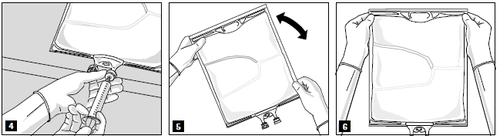
After removing the aluminum closure (Fig. 3), compatible additives can be added through the
port intended for adding medications (Fig. 4).
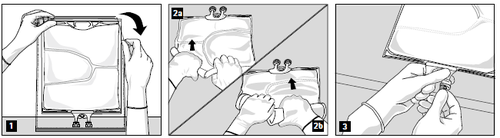
To open and gradually mix the compartments, roll the bag with both hands, pressing on the weld that separates the upper compartment (glucose) from the lower compartment (amino acids) (Fig. 2a). Continue
to press until the weld separating the intermediate compartment (lipids) from the lower compartment is opened (Fig. 2b).
Mix the contents of the bag carefully (Fig. 5) and inspect the mixture visually (Fig. 6). No
signs of phase separation of the emulsion should be visible.
The mixture is a homogeneous oil-in-water emulsion, milky white in appearance.
Preparation of the infusion
The emulsion must always be brought to room temperature before infusion.
Remove the aluminum foil (Fig. 7) from the infusion port and connect the infusion set (Fig. 8).
Use a non-vented infusion set or close the air vent if a vented set is used. Hang the
bag on an IV pole (Fig. 9) and administer the infusion according to standard techniques.
For single use only. The container and any unused residue must be discarded after use.
Do not reconnect a partially used container.
If filters are used, they must be permeable to lipids (pore size ≥1.2 µm).
Period of validity after removal of the protective wrapper and mixing of the bag contents
The chemical and physicochemical stability in use of the mixture of amino acids, glucose and fats has been demonstrated for
7 days at 2-8°C and for 2 additional days at 25°C.
Period of validity after addition of compatible additives
From a microbiological point of view, the product must be used immediately after the addition of additives.
If the product is not used immediately after the addition of additives, the user is responsible for the
timing and conditions of storage during use.
The emulsion must be used immediately after opening the container.
Lipoflex, AA38/G120 should not be mixed with other medicinal products for which compatibility has not been
documented. Compatibility data for various additives (e.g. electrolytes, trace elements, vitamins) and the validity periods for these mixtures can be provided on request by the manufacturer.
Lipoflex, AA38/G120 should not be administered simultaneously with blood in the same infusion set due to the risk of pseudoagglutination.
Duration of infusion of a single bag
The recommended infusion duration for a bag for parenteral nutrition is a maximum of 24 hours.
Lipoflex, AA 56 / G 144without electrolytes emulsion for infusion
Read this leaflet carefully before you use this medicine because it contains important
information for you.
- Keep this leaflet. You may need to read it again.
- If you have any questions, ask your doctor, pharmacist or nurse.
- This medicine has been prescribed for you only. Do not pass it on to others, even if their symptoms are the same as yours, as it could be harmful.
- If you get any side effects, talk to your doctor, pharmacist or nurse. See section 4.
Contents of this leaflet:
- 1. What is Lipoflex, AA 56 / G 144 without electrolytes and what it is used for
- 2. What you need to know before you use Lipoflex, AA 56 / G 144 without electrolytes
- 3. How to use Lipoflex, AA 56 / G 144 without electrolytes
- 4. Possible side effects
- 5. How to store Lipoflex, AA 56 / G 144 without electrolytes
- 6. Contents of the pack and other information
1. What is Lipoflex, AA 56 / G 144 without electrolytes and what is it for
Lipoflex, AA 56 / G 144 without electrolytes contains liquids and substances called amino acids and fatty acids, which
are essential for the body to grow or heal. It also contains calories in the form of carbohydrates and fats.
Lipoflex, AA 56 / G 144 without electrolytes is administered when you are unable to feed yourself
normally. This can happen in many situations, for example after surgery, injuries or
burns, or if you are unable to absorb food in your stomach and intestines.
2. What you need to know before using Lipoflex, AA 56 / G 144 without electrolytes
Do not use Lipoflex, AA 56 / G 144without electrolytes
- if you are allergic to any of the active ingredients, to eggs, peanuts, soy or to any of the other components of this medicine (listed in section 6).
- This medicine must not be administered to newborns, infants and children under two years of age.
In addition, do not use Lipoflex, AA 56 / G 144 without electrolytes if you suffer from any of the following conditions:
- potentially life-threatening disorders of blood circulation, such as those that may occur in case of collapse or shock
- heart attack or stroke
- severe impairment of blood coagulation, risk of bleeding (severe coagulopathy, worsening haemorrhagic diathesis)
- obstruction of blood vessels by blood clots or fat (embolism)
- severe liver failure
- impaired bile flow (intrahepatic cholestasis)
- severe kidney failure in the absence of renal replacement therapy
- imbalances in the salt content in the body
- fluid deficiency or excess water in the body
- water in the lungs (pulmonary edema)
- severe heart failure
- certain metabolic disorders, such as
- too many lipids (fats) in the blood
- congenital disorders of amino acid metabolism
- blood sugar levels that are too high and require more than 6 units of insulin per hour to keep under control
- metabolic abnormalities that may occur after surgery or injury
- coma of unknown origin
- insufficient oxygen supply to the tissues
- too high a level of acids in the blood.
Warnings and precautions
Consult your doctor, pharmacist or nurse before using Lipoflex, AA 56 / G 144 without electrolytes.
Tell your doctor if:
- you have problems with your heart, liver or kidneys
- you suffer from certain types of metabolic disorders such as diabetes, abnormal blood fat levels and imbalances in fluid and salt content in the body or alterations in acid-base balance.
You will be carefully monitored for early signs of an allergic reaction (such as fever, chills,
skin rash or shortness of breath) when receiving this medicine.
Further checks and tests, such as various tests performed on blood samples, will be carried out to ensure that your
body uses the administered nutrients correctly.
This medicine is an electrolyte-free solution. The healthcare professional will take measures to ensure an
adequate supply of fluids and electrolytes to your needs. In addition to this medicine you will receive other nutrients (food) to fully cover your needs.
Children
This medicine must not be administered to newborns, infants and children under two years of age.
Other medicines and Lipoflex, AA 56 / G 144without electrolytes
Tell your doctor, pharmacist or nurse if you are taking, have recently taken or might take
any other medicines.
Lipoflex, AA 56 / G 144 without electrolytes can interact with other medicines. Tell your doctor, pharmacist or
nurse if you are taking or are given any of the following medicines:
- insulin
- heparin
- medicines that prevent inappropriate blood clotting, such as warfarin or other coumarin derivatives
Pregnancy and breastfeeding
If you are pregnant, suspect you are pregnant or are planning to become pregnant, or if you are breastfeeding
ask your doctor or pharmacist for advice before taking this medicine. If you are pregnant, you will
receive this medicine only if your doctor or pharmacist considers it essential for your recovery. No
data are available regarding the use of Lipoflex, AA 56 / G 144 without electrolytes in pregnant women.
Breastfeeding is not recommended for women receiving parenteral nutrition.
Driving and using machines
This medicine is normally administered to immobilized patients, e.g. in hospital or
clinic, who therefore do not drive or operate machinery. In any case, the medicine has no effects
on the ability to drive vehicles or operate machinery.
Lipoflex, AA 56 / G 144 without electrolytes contains sodium
This medicine contains less than 1 mmol (23 mg) of sodium per multi-compartment bag, i.e. it is practically
“sodium-free”.
3. How to use Lipoflex, AA 56 / G 144 without electrolytes
This medicine is administered via intravenous infusion (drip), i.e. through a small tube
inserted directly into a vein. The medicine is administered exclusively into one of the large veins
(central veins).
The doctor or pharmacist will determine the amount of medicine you need and the duration of treatment with
this medicine.
Use in children
This medicine should not be administered to newborns, infants and children under two years of age.
If you use more Lipoflex, AA 56 / G 144 without electrolytes than you should
If you have received an excessive amount of this medicine, you may suffer from the so-called “overload
syndrome” with the following symptoms:
- excess fluid and electrolyte disturbances
- fluid in the lungs (pulmonary edema)
- loss of amino acids in the urine and disturbances in amino acid balance
- vomiting, nausea
- shivering
- high blood sugar levels
- glucose in the urine
- fluid deficit
- excessive blood concentration (hyperosmolarity)
- reduction or loss of consciousness due to extremely high blood sugar levels
- enlargement of the liver (hepatomegaly) with or without jaundice
- enlargement of the spleen (splenomegaly)
- fat deposition in internal organs
- alterations in liver function parameters
- reduction in the number of red blood cells in the blood (anemia)
- reduction in the number of white blood cells in the blood (leukopenia)
- low platelet count in the blood (thrombocytopenia)
- increase in immature red blood cells (reticulocytosis)
- breakdown of blood cells (hemolysis)
- bleeding or tendency to bleed
- blood clotting disorders (characterized by alterations in bleeding time, coagulation time, prothrombin time, etc.)
- fever
- high levels of fats in the blood
- loss of consciousness If any of these symptoms occur, the infusion must be stopped immediately.
If you have any questions about the use of this medicine, ask your doctor, pharmacist or nurse.
4. Possible side effects
Like all medicines, this medicine can cause side effects, although not everybody gets them.
manifest.
The following side effects may be serious. If you experience any of the following side effects,
inform your doctor immediately, who will stop administering this medicine:
Rare (may affect up to 1 in 1,000 people):
- allergic reactions, such as skin reactions, shortness of breath, swelling of the lips, mouth and throat, difficulty breathing
Other side effects include:
Uncommon (may affect up to 1 in 100 people):
- nausea, vomiting, loss of appetite
Rare (may affect up to 1 in 1,000 people):
- increased tendency of the blood to clot
- bluish discoloration of the skin
- shortness of breath
- headache
- hot flushes
- redness of the skin (erythema)
- sweating
- shivering
- feeling of cold
- elevated body temperature
- drowsiness
- chest, back, bone or lower back pain
- decrease or increase in blood pressure
Very rare (may affect up to 1 in 10,000 people):
- excessive levels of fats or sugars in the blood
- high levels of acidic substances in the blood
- an excess of lipids can lead to a lipid overload syndrome; for more information see “If you use more Lipoflex, AA 56 / G 144 without electrolytes than you should” in section 3. Symptoms usually disappear with discontinuation of the infusion.
Not known (frequency cannot be estimated from available data):
- decreased white blood cell count (leukopenia)
- decreased platelet count in the blood (thrombocytopenia)
- impaired bile flow (cholestasis)
Reporting of side effects
If you get any side effects, talk to your doctor, pharmacist or nurse.
You can also report side effects directly through the national reporting system
at www.agenziafarmaco.gov.it/content/come-segnalare-una-sospetta-reazione-avversa”. By reporting
side effects you can help provide more information on the safety of this medicine.
5. How to store Lipoflex, AA 56 / G 144 without electrolytes
Keep this medicine out of the sight and reach of children.
Do not store at a temperature above 25 °C.
Do not freeze. If accidental freezing occurs, discard the bag.
Keep the bag in the protective packaging to protect the medicine from light.
Do not use this medicine after the expiry date which is stated on the label. The expiry date refers
to the last day of that month.
6. Contents of the pack and other information
What Lipoflex, AA 56 / G 144 without electrolytes contains
The active ingredients contained in the ready-to-use mixture are:
| a from the upper compartment i (glucose solution) | in 1,000 ml | in 625 ml | in 1,250 ml | in 1,875 ml |
| z Glucose monohydrate equivalent to glucose | 158.4 g 144.0 g | 99.00 g 90.00 g | 198.0 g 180.0 g | 297.0 g 270.0 g |
| n from the intermediate compartment (lipid emulsion) | in 1,000 ml | in 625 ml | in 1,250 ml | in 1,875 ml |
| e Refined soybean oil | 20.00 g | 12.50 g | 25.00 g | 37.50 g |
| Medium chain triglycerides | 20.00 g | 12.50 g | 25.00 g | 37.50 g |
| from the lower compartment (amino acid solution) | in 1,000 ml | in 625 ml | in 1,250 ml | c in 1,875 ml |
| Isoleucine | 3.284 g | 2.053 g | 4.105 g | 6.158 g |
| Leucine | 4.384 g | 2.740 g | 5.480 g | a 8.220 g |
| Lysine monohydrate equivalent to lysine | 3.576 g 3.184 g | 2.235 g 1.990 g | 4.470 g 3.979 g | 6.705 g 5.969 g |
| Methionine | 2.736 g | 1.710 g | 3.420 g | m 5.130 g |
| Phenylalanine | 4.916 g | 3.073 g | 6.145 g | 9.218 g |
| Threonine | 2.540 g | 1.588 g | r 3.175 g | 4.763 g |
| Tryptophan | 0.800 g | 0.500 g | a 1.000 g | 1.500 g |
| Valine | 3.604 g | 2.253 g | 4.505 g | 6.758 g |
| Arginine | 3.780 g | 2.363 g | F 4.725 g | 7.088 g |
| Histidine | 1.752 g | 1.095 g | 2.190 g | 3.285 g |
| Alanine | 6.792 g | 4.245 g | 8.490 g | 12.73 g |
| Aspartic acid | 2.100 g | 1.313 g | l 2.625 g | 3.938 g |
| Glutamic acid | 4.908 g | 3.068 g | 6.135 g | 9.203 g |
| Glycine | 2.312 g | e 1.445 g | 2.890 g | 4.335 g |
| Proline | 4.760 g | 2.975 g | 5.950 g | 8.925 g |
| Serine | 4.200 g | d 2.625 g | 5.250 g | 7.875 g |
| in 1,000 ml | in 625 ml | in 1,250 ml | in 1,875 ml | |
| Amino acid content | 56.0 g | a 35.0 g | 70.1 g | 105.1 g |
| Nitrogen content | 8 g | 5 g | 10 g | 15 g |
| Carbohydrate content | n 144 g | 90 g | 180 g | 270 g |
| Lipid content | a 40 g | 25 g | 50 g | 75 g |
| Energy supply in the form of lipids | i l
| 995 kJ (240 kcal) |
|
|
| Energy supply in the form of carbohydrates | a
|
|
|
|
| Energy supply in the form of amino acids | t 940 kJ (225 kcal) | 585 kJ (140 kcal) |
|
|
| I Non-protein energy supply |
|
|
|
|
| a Total energy supply |
|
|
|
|
The other components are citric acid monohydrate (to adjust the pH), egg lecithin, glycerol, sodium oleate,
all-rac-alpha-tocopherol and water for injections.
Description of the appearance of Lipoflex, AA 56 / G 144without electrolytes and contents of the pack
| z Osmolality |
|
|
|
|
| n Theoretical osmolarity |
|
|
|
|
| e pH | 5.0-6.0 | 5.0-6.0 | 5.0-6.0 | 5.0-6.0 |
The ready-to-use product is an emulsion for infusion, i.e. it is administered through a tube inserted
into a vein.
Lipoflex, AA 56 / G 144 without electrolytes is supplied in flexible multi-compartment bags containing:
- 625 ml (250 ml of amino acid solution + 125 ml of lipid emulsion + 250 ml of glucose solution)
- 1,250 ml (500 ml of amino acid solution + 250 ml of lipid emulsion + 500 ml of glucose solution)
- 1,875 ml (750 ml of amino acid solution + 375 ml of lipid emulsion + 750 ml of glucose solution)
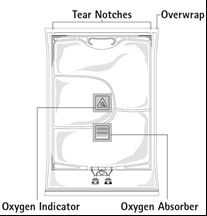
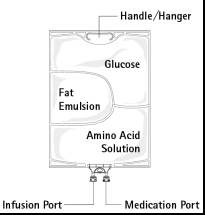
| Packaging |
Figure A Figure B
Figure A: the multi-compartment bag is wrapped in a protective wrapper. Between the bag and the wrapper are a
oxygen absorber and an oxygen indicator; the oxygen absorber bag is made of inert material and
contains iron hydroxide.
Figure B: the upper compartment contains a glucose solution, the intermediate compartment contains
a lipid emulsion and the lower compartment contains an amino acid solution.
The glucose and amino acid solutions are clear and colorless or pale yellow in color. The emulsion
lipid is milky white in appearance.
The upper and intermediate compartments can be connected to the lower compartment by opening the
intermediate seals.
The different sizes of the container are packaged in boxes containing five bags.
Packages: 5 x 625 ml, 5 x 1,250 ml and 5 x 1,875 ml
Not all packs may be marketed.
Marketing authorisation holder and manufacturer
- B. Braun Melsungen AG Carl-Braun-Str. 1 Postal address:34212 Melsungen, Germany 34209 Melsungen, Germany
Tel.: +49-(0)-5661-71-0
Fax: +49-(0)-5661-71-4567
This medicinal product is authorised in the Member States of the European Economic Area with the following
denominations:
Austria Nutriflex Lipid special ohne Elektrolyte B.Braun
Belgium Nutriflex Lipid special EF, 56 g/l AA + 144 g/l G, emulsion for infusion
France Lipoflex Lipide G144/N8, emulsion for perfusion
Germany Nutriflex Lipid 56/144 special ohne Elektrolyte
Italy Lipoflex, AA 56 / G 144 without electrolytes
Luxembourg Nutriflex Lipid 56/144 special ohne Elektrolyte
Netherlands Nutriflex Lipid pecial without electrolytes, 56 g/l + 144 g/l, emulsion for infusion
Spain Nutriflex Lipid 56/144 special without electrolytes emulsion for perfusion
United Kingdom Lipoflex special without electrolytes emulsion for infusion
______________________________________________________________________________
The following information is intended exclusively for physicians or healthcare professionals:
No special instructions for disposal.
Before use, parenteral nutrition products must be visually inspected for any damage, color changes and emulsion instability.
Do not use damaged bags. The wrapper, the primary bag and the weld between the compartments must be
intact. Use only if the amino acid and glucose solutions are clear and colorless to pale yellow and if
the lipid emulsion is homogeneous and milky white in appearance. Do not use if the solutions contain
particles.
After mixing the three compartments, do not use if the emulsion shows color changes or signs of
phase separation (oily droplets, oily layer). Immediately discontinue the infusion if
color changes or signs of phase separation occur.
Before opening the wrapper, check the color of the oxygen indicator (see Figure A). Do not use if
the oxygen indicator is pink. Use only if the oxygen indicator is yellow.
Preparation of the emulsion by mixing
Strict adherence to the rules for aseptic procedures is required.
To open: tear the wrapper starting from the appropriate incisions (Fig. 1). Remove the bag from the protective wrapper.
Discard the wrapper, oxygen indicator and oxygen absorber.
Visually inspect the primary bag for any leaks. Leaking bags must be
discarded, as sterility is not guaranteed in this case.
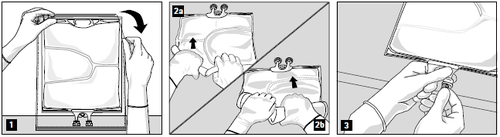
To open and gradually mix the compartments, roll the bag with both hands, pressing on the
weld separating the upper compartment (glucose) from the lower compartment (amino acids) (Fig. 2a). Then
continue to press to open the weld separating the intermediate compartment (lipids) from the compartment
lower (Fig. 2b).
After removing the aluminum closure (Fig. 3), compatible additives can be added through the
port for adding medications (Fig. 4).
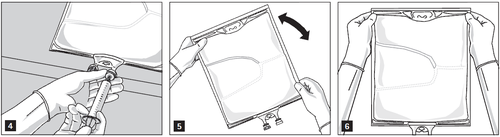
Carefully mix the contents of the bag (Fig. 5) and visually inspect the mixture (Fig. 6). No
signs of phase separation of the emulsion should be visible.
The mixture is a homogeneous oil-in-water emulsion, milky white in appearance.
Preparation of the infusion
The emulsion must always be brought to room temperature before infusion.
Remove the aluminum foil (Fig. 7) from the infusion port and connect the infusion set (Fig. 8).
Use a non-vented infusion set or close the air vent if a vented set is used. Hang the
bag on an infusion pole (Fig. 9) and perform the infusion according to standard techniques.
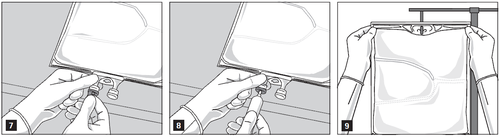
For single use only. The container and any unused residue must be discarded after use.
Do not reconnect a partially used container.
If filters are used, they must be permeable to lipids (pore size ≥1.2 µm).
Period of validity after removal of the protective wrapper and mixing of the bag contents
The chemical and physicochemical stability in use of the mixture of amino acids, glucose and fats has been demonstrated for
7 days at 2-8°C and for 2 additional days at 25°C.
Period of validity after addition of compatible additives
From a microbiological point of view, the product must be used immediately after the addition of additives.
If the product is not used immediately after the addition of additives, the user is responsible for the
timing and conditions of storage during use.
The emulsion must be used immediately after opening the container.
Lipoflex, AA 56 / G 144 without electrolytes must not be administered simultaneously with blood in the
same infusion set due to the risk of pseudoagglutination.
Duration of infusion of a single bag
The recommended infusion time for a bag for parenteral nutrition is a maximum of 24 hours.
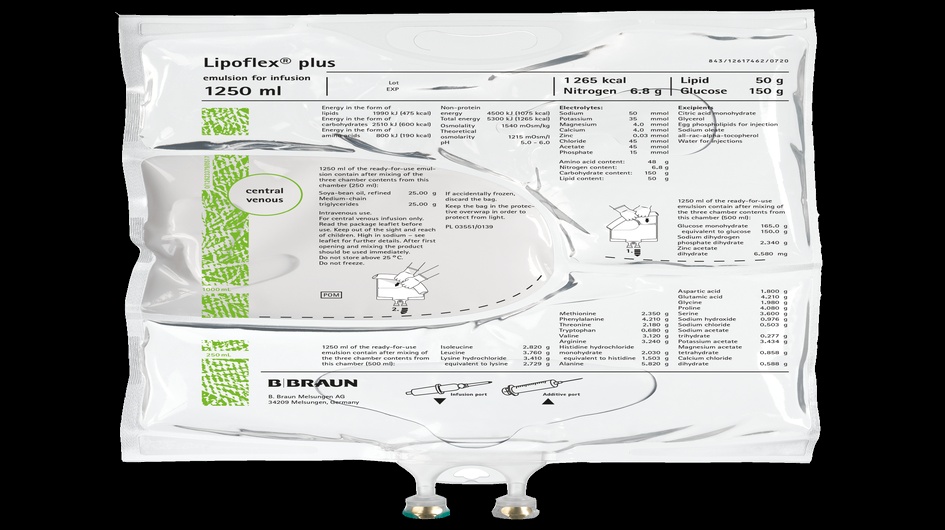
- Kraj rejestracji
- Postać farmaceutycznaEmulsion for intravenous infusion, 1250 ML
- Kod ATCB05BA10
- Substancja czynna
- Wymaga receptyTak
- Producent
- Te treści mają charakter wyłącznie informacyjny i nie zastępują konsultacji lekarskiej.
- Zamienniki LIPOFLEXPostać farmaceutyczna: Infusion solution, 10%Substancja czynna: combinationsProducent: B. BRAUN MELSUNGEN AGWymaga receptyPostać farmaceutyczna: Infusion solution, 1000 MLSubstancja czynna: combinationsProducent: B. BRAUN MELSUNGEN AGWymaga receptyPostać farmaceutyczna: Infusion solution, 1000 MLSubstancja czynna: combinationsProducent: BAXTER S.P.A.Wymaga recepty
Odpowiedniki LIPOFLEX w innych krajach
Leki z tą samą substancją czynną dostępne w innych krajach.
Odpowiednik LIPOFLEX w Hiszpania
Odpowiednik LIPOFLEX w Polska
Odpowiednik LIPOFLEX w Ukraina
Lekarze online w sprawie LIPOFLEX
Omów stosowanie LIPOFLEX, bezpieczeństwo i ocenę zasadności recepty zgodnie z obowiązującymi przepisami.









Uzyskaj receptę na LIPOFLEX online
Wypełnij 2-minutowy formularz
Opisz swoje objawy, historię choroby i lek, o który prosisz.
Wybierz lekarza lub pozwól nam przydzielić
Wybierz specjalistę lub dopasujemy Cię do najbliższego dostępnego lekarza.
Lekarz analizuje Twój przypadek
Zazwyczaj w ciągu 30 minut. Może zadawać dodatkowe pytania przez czat.
Odbierz w dowolnej aptece
Recepta elektroniczna wysłana na Twój e-mail — ważna w całej Polsce.
Często zadawane pytania
LIPOFLEX wymaga recepty w Włochy. Możesz skonsultować się z lekarzem online, aby sprawdzić, czy ten lek może być odpowiedni w Twojej sytuacji.
Substancją czynną w LIPOFLEX jest combinations. Informacja ta pomaga rozpoznać leki o tym samym składzie, ale pod różnymi nazwami handlowymi.
LIPOFLEX jest produkowany przez B. BRAUN MELSUNGEN AG. Nazwy handlowe i opakowania mogą się różnić w zależności od dystrybutora.
Lekarze, tacy jak Lekarze rodzinni, Psychiatrzy, Dermatolodzy, Kardiolodzy, Endokrynolodzy, Gastroenterolodzy, Pulmonolodzy, Nefrolodzy, Reumatolodzy, Hematolodzy, Zakaźnicy, Alergolodzy, Geriatrzy, Pediatrzy, Onkolodzy, mogą ocenić, czy stosowanie LIPOFLEX jest odpowiednie w Twoim przypadku, w zależności od sytuacji klinicznej i lokalnych przepisów. Możesz umówić konsultację online, aby omówić objawy i możliwe dalsze kroki.
Polska posiada dobrze rozwiniętą infrastrukturę ochrony zdrowia w dużych miastach, takich jak Warszawa, Kraków, Wrocław i Gdańsk. Apteki są łatwo dostępne i działają zgodnie z obowiązującymi przepisami, zapewniając dostęp do leków na receptę.
Możesz kupić LIPOFLEX w Warszawie, Krakowie, Wrocławiu lub Gdańsku w każdej aptece, posiadając ważną receptę.
Aby uzyskać receptę, możesz skorzystać z Oladoctor:
Inne leki zawierające tę samą substancję czynną (combinations) to m.in. AMIXAL, BASALFLEX, KLINIMIX. Mogą one różnić się nazwą handlową lub postacią, ale zawierają ten sam składnik terapeutyczny. Przed zmianą lub rozpoczęciem nowego leku skonsultuj się z lekarzem.
