



IBUPROFENE 400 mg Miękkie Kapsułki

Ocena recepty online
Lekarz przeanalizuje Twój przypadek i zdecyduje, czy wystawienie recepty jest medycznie uzasadnione.

Porozmawiaj z lekarzem o tym leku
Omów swoje objawy i opcje leczenia podczas szybkiej konsultacji online.



Jak stosować IBUPROFENE DR. MAX
Treść ulotki
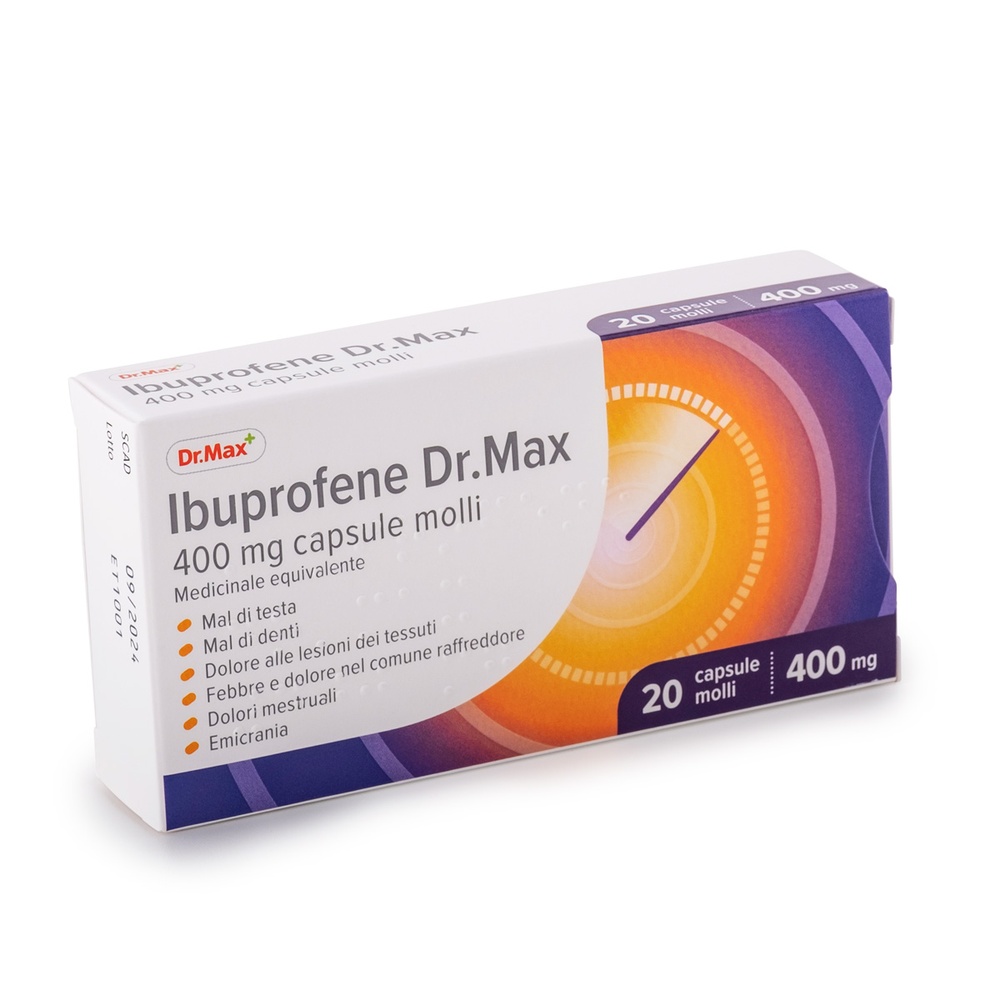
Ibuprofene Dr. Max
400 mg soft capsules
Ibuprofene
Read this leaflet carefully before taking this medicine as it contains important
information for you.
Always take this medicine exactly as described in this leaflet or as your doctor or pharmacist has told you.
- Keep this leaflet. You may need to read it again.
- If you would like more information or advice, ask your pharmacist.
- If any side effects occur, including those not listed in this leaflet, tell your doctor or pharmacist. See section 4.
- Adults: consult your doctor if you do not feel better or if your symptoms worsen after 4 days if you are suffering from pain, or after 3 days if you are suffering from fever and headache from migraine.
- Adolescents (12-18 years): consult your doctor if you do not feel better or if your symptoms worsen after 3 days.
Contents of this leaflet
- 1. What Ibuprofene Dr. Max is and what it is used for
- 2. What you need to know before taking Ibuprofene Dr. Max
- 3. How to take Ibuprofene Dr. Max
- 4. Possible side effects
- 5. How to store Ibuprofene Dr. Max
- 6. Contents of the pack and other information
1. What is Ibuprofene Dr. Max and what is it used for
Ibuprofene Dr. Max contains the active ingredient ibuprofen which belongs to a group of medicines known as
non-steroidal anti-inflammatory drugs (NSAIDs). NSAIDs provide relief by modifying the body's response
to pain and fever.
Ibuprofene Dr. Max is used for the symptomatic short-term treatment of mild to moderate pain, such as
headache, acute headache due to migraine with or without aura, toothache, pain from soft tissue injuries,
menstrual pain, fever and sore throat associated with the common cold.
In case of inflammatory and degenerative diseases of joints, spine and soft tissues of the musculoskeletal system accompanied by pain, redness, swelling and muscle stiffness and neuralgia (nerve pain), the
product can only be used after the doctor's recommendation.
For adults and adolescents with a body weight of 40 kg or more (from 12 years of age onwards).
2. What you need to know before taking Ibuprofene Dr. Max
Do not take Ibuprofene Dr. Max:
- if you are allergic to ibuprofen or to any of the other ingredients of this medicine (listed in section 6).
- if you have had an allergic reaction to acetylsalicylic acid or other NSAIDs such as asthma, difficulty breathing, swelling of the face, tongue or throat, hives, runny nose.
- if you have (or have had two or more episodes of) duodenal or stomach ulcers or stomach bleeding.
- if you have had a gastrointestinal perforation or gastrointestinal bleeding following the use of NSAIDs.
- if you suffer from cerebrovascular bleeding or other active bleeding.
- if you suffer from unclear disorders in the ability of blood formation.
- if you are severely dehydrated (due to vomiting, diarrhea or insufficient fluid intake).
- if you suffer from severe kidney, heart or liver failure.
- if you are in the last 3 months of pregnancy.
Warnings and precautions
Talk to your doctor or pharmacist before taking Ibuprofene Dr. Max:
- if you have recently undergone major surgery
- if you have or have suffered from asthma or allergic diseases because you may experience difficulty breathing
- if you suffer from or have fever, nasal polyps or chronic obstructive respiratory diseases, as there is an increased risk of allergic reactions. Allergic reactions can manifest as asthma attacks (so-called analgesic asthma), angioedema or urticaria
- if you have heart problems
- if you have gastrointestinal ulcers (see section “Do not take Ibuprofene Dr. Max”)
- if you have a history of gastrointestinal disease (such as ulcerative colitis, Crohn's disease)
- if you have systemic lupus erythematosus (SLE) or mixed connective tissue disease (a disease that affects the skin, joints and kidneys)
- if you have a hereditary disorder of blood formation (acute intermittent porphyria)
- if you have a blood clotting disorder
- if you are taking other NSAIDs. Concomitant use with NSAIDs, including specific cyclooxygenase-2 inhibitors, increases the risk of adverse reactions (see section “If you are taking other medicines” below) and should be avoided
- if you have chickenpox, it is advisable to avoid using Ibuprofene Dr. Max
- if you are elderly.
Start treatment with the lowest available dose if you have had gastrointestinal ulcers, are elderly or need
concomitant administration of low-dose acetylsalicylic acid or other medicines that may
increase the risk of gastrointestinal, (see “Other medicines and Ibuprofene Dr. Max”). The doctor may also
add a therapy with medicines that protect the gastrointestinal mucosa (e.g. misoprostol or
proton pump inhibitors). Tell your doctor if you experience any unusual symptoms in your stomach,
especially signs of bleeding such as vomiting blood or dark stools (see also section 4 “Possible
side effects”).
Patients with kidney or liver problems should consult a doctor before taking ibuprofen capsules.
Medicines such as Ibuprofene Dr. Max may be associated with a small increase in the risk of heart attack (myocardial infarction) or stroke. Any risk is more likely with high doses or prolonged treatment. Do not exceed the recommended dose or duration of treatment (see section 3).
If you have had heart problems such as heart failure, angina pectoris (chest pain), or if you have had a
heart attack, bypass surgery, peripheral vascular disease (poor blood circulation in the legs and feet
due to a limitation or blocked arteries) or if you have had any form of stroke (including mini-stroke or
transient ischemic attack “TIA”) or think you may be at risk of these conditions (for example if you have
high blood pressure, diabetes, high cholesterol, a family history of cardiovascular disease or are a smoker) you
should discuss your treatment with your doctor or pharmacist before taking this medicine.
Serious skin reactions have been reported in association with the treatment with Ibuprofene Dr. Max. You
should stop taking Ibuprofene Dr. Max and seek immediate medical attention if you develop
any type of rash, mucous membrane lesions, blisters or other signs of allergic reactions, these
may be the first signs of a serious allergic reaction. See section 4.
To minimize the risk of side effects, always use the lowest effective dose for the shortest
possible period. Elderly people are at greater risk of developing adverse effects.
In general, regular use of (various types of) pain relievers can lead to serious and long-lasting kidney problems. This
risk may be increased under physical exertion associated with salt loss and dehydration. Therefore, this must be
avoided.
Prolonged use of any type of pain reliever for headaches can worsen them. If this situation
occurs or is suspected, you should seek medical advice and treatment should be discontinued. The diagnosis
of medication-overuse headache (MOH) should be suspected in patients who have frequent or daily headaches despite (or because of) the regular use of headache medications.
NSAIDs can mask the symptoms of infection and fever.
Regular monitoring of liver values, kidney function and blood count is necessary with prolonged administration of Ibuprofene Dr. Max. The doctor may ask you to undergo these tests during
treatment.
Children and adolescents
In dehydrated children and adolescents there is a risk of kidney damage.
The use of Ibuprofene Dr. Max is not recommended in adolescents under 40 kg of body weight or in
children under 12 years of age.
Other medicines and Ibuprofene Dr. Max
Tell your doctor or pharmacist if you are taking, have recently taken or might take any other
medicines.
Ibuprofene Dr. Max can affect or be affected by other medicines, for example:
- anticoagulant medicines (against blood clotting) (e.g. acetylsalicylic acid, warfarin, ticlopidine)
- medicines for high blood pressure (ACE inhibitors e.g. captopril, beta-blockers e.g. atenolol, angiotensin II antagonists e.g. losartan).
Some other medicines can affect or be affected by treatment with Ibuprofene Dr. Max.
Therefore, always seek the advice of a doctor or pharmacist before using Ibuprofene Dr. Max with
other medicines.
In particular, tell your doctor or pharmacist if you are taking any of the following medicines:
- Acetylsalicylic acid, or other NSAIDs (anti-inflammatory and analgesic): this can increase the risk of gastrointestinal ulcers or gastrointestinal bleeding.
- Digoxin (for heart failure): as the effect of digoxin may be increased.
- Glucocorticoids (medicines containing cortisone or cortisone-like substances): this can increase the risk of gastrointestinal ulcers or gastrointestinal bleeding.
- Antiplatelet agents: this can increase the risk of bleeding.
- Phenytoin (for epilepsy): as the effect of phenytoin may be increased.
- Selective serotonin reuptake inhibitors (medicines used for depression): as these can increase the risk of gastrointestinal bleeding.
- Lithium (a medicine for manic-depressive illness and depression): as the effect of lithium may be increased.
- Probenecid and sulfinpyrazone (medicines for gout): as the excretion of ibuprofen may be delayed.
- Medicines for high blood pressure and diuretics: as ibuprofen can decrease the effects of these medicines and there may be a possible increase in the risk to the kidneys.
- Potassium-sparing diuretics: this can lead to hyperkalemia (high levels of potassium in the blood).
- Methotrexate (a medicine for cancer or rheumatism): as the effect of methotrexate may be increased.
- Tacrolimus and cyclosporine (immunosuppressant medicines): as kidney damage may occur.
- Zidovudine: (a medicine to treat HIV/AIDS): as the use of ibuprofen capsules may cause an increased risk of bleeding in a joint or bleeding leading to swelling in HIV-positive hemophiliacs.
- Sulfonylureas (antidiabetic medicines): interactions are possible.
- Quinolone antibiotics: as the risk of seizures may be increased.
- Mifepristone (a medicine prescribed to terminate pregnancy): as ibuprofen may reduce the effect of this medicine.
- Bisphosphonates (medicines prescribed to treat osteoporosis): as these may increase the risk of ulcer or gastrointestinal bleeding.
- Oxipentifylline (pentoxifylline) (medicine prescribed to increase blood flow to arms and legs): this can increase the risk of gastrointestinal bleeding.
- Baclofen, a muscle relaxant: as the toxicity of baclofen may be increased.
- Voriconazole or fluconazole (medicines prescribed for the treatment of fungal infections): as sensitivity to ibuprofen may be increased.
Concomitant use of Ibuprofene Dr. Max with products containing ginkgo biloba may increase the risk of
bleeding.
Acetylsalicylic acid at low doses
Do not take this medicine if you are taking acetylsalicylic acid at doses higher than 75 mg per day. If you are
being treated with low-dose acetylsalicylic acid (up to 75 mg per day) tell your doctor or pharmacist
before taking Ibuprofene Dr. Max.
Ibuprofen Dr. Max with alcohol
Alcohol consumption should be avoided while taking Ibuprofene Dr. Max as it can accentuate the
side effects.
Pregnancy, breastfeeding and fertility
If you are pregnant, suspect you may be pregnant or are planning a pregnancy, or if you are breastfeeding, ask
your doctor or pharmacist for advice before taking this medicine.
Pregnancy
Ibuprofene Dr. Max should not be taken in the last 3 months of pregnancy as it can cause serious disturbances
to the heart, lungs and kidneys of the unborn child. If used at the end of pregnancy, it can cause a tendency to
bleeding in both the mother and the baby and weaken the force of uterine contractions delaying
the onset of labor.
You should only use Ibuprofene Dr. Max in the first 6 months of pregnancy after consulting your doctor and only if
strictly necessary.
Breastfeeding
Ibuprofen passes into breast milk in very small amounts and it is usually not necessary to stop
breastfeeding during short-term treatments. However, if it is prescribed for a longer treatment,
early weaning should be considered.
Fertility
Ibuprofene Dr. Max belongs to a group of medicines (NSAIDs) that can impair female fertility.
This effect is reversible with discontinuation of the medicine. It is unlikely that Ibuprofene Dr. Max used
occasionally can affect your ability to become pregnant, however, tell your doctor before
taking this medicine if you have problems getting pregnant.
Driving and using machines
For short-term treatment and at normal doses this medicine does not impair or impairs negligibly the ability to drive vehicles and use machines. If you experience fatigue, dizziness,
drowsiness and visual disturbances do not drive and do not use machines. Alcohol consumption increases the risk of these
side effects.
Ibuprofene Dr. Max contains sorbitol
If your doctor has told you that you have an intolerance to certain sugars, contact your doctor before taking this
medicine.
3. How to take Ibuprofene Dr. Max
Take this medicine following exactly the instructions of your doctor or pharmacist. If you have doubts
consult your doctor or pharmacist.
The product is exclusively indicated for short-term use. You should take the lowest effective dose for the
shortest period of time necessary to relieve your symptoms.
Adults and adolescents weighing 40 kg or more (12 years of age and over)
The recommended dose is 400 mg (1 capsule), up to 3 times a day, as needed. Leave at least 6 hours between
doses of 400 mg (1 capsule). Do not take more than 1200 mg (3 capsules) within 24 hours.
For the treatment of headache due to migraine, the recommended dose is 1 capsule of 400 mg as a single
dose. If necessary, take a 400 mg (1 capsule) dose at intervals of 4-6 hours. Do not take more than 1200
mg (3 capsules) within 24 hours.
If, in adults, this medicine is needed for more than 3 days for headache due to migraine or
fever, or for more than 4 days for pain treatment, or if symptoms worsen, you should consult a doctor.
If, in adolescents (12 years and over), this medicine is needed for more than 3 days or if symptoms worsen
you should consult a doctor.
Use in children and adolescents
The use of Ibuprofene Dr. Max is not recommended in adolescents under 40 kg of body weight or in
children under 12 years of age.
Method of administration
Ibuprofene Dr. Max capsules must be swallowed whole with plenty of water. Do not chew the capsules.
Patients with a sensitive stomach should take ibuprofen during meals. Taking the capsules after
meals may delay the onset of relief from pain or fever. Do not exceed the recommended dose or take it more
frequently than recommended.
If you take more Ibuprofene Dr. Max than you should
If you have taken more Ibuprofene Dr. Max than you should, or if children have taken this medicine
accidentally, always contact a doctor or go to the nearest hospital emergency room for
an opinion on the risk and advice on what to do.
Symptoms may include nausea, stomach pain, vomiting (which may contain traces of blood), headache,
ringing in the ears, confusion and jerky eye movements. At high doses, drowsiness, chest pain, palpitations, loss of consciousness, seizures (mainly in children),
weakness and dizziness, blood in the urine, feeling cold in the body and breathing problems have been reported.
In severe poisoning, prolonged bleeding time, acute renal failure, liver damage and worsening of asthma in asthmatics can occur.
If you forget to take Ibuprofene Dr. Max
Simply refer to the instructions above on how to take the medicine and do not take
more than recommended.
Do not take a double dose to make up for a missed dose.
If you have any further questions about the use of this medicine, ask your doctor or pharmacist.
4. Possible side effects
Like all medicines, this medicine can cause side effects, although not everybody gets them.
Side effects can be minimised by taking the lowest dose for the shortest time necessary
to relieve the symptoms. Elderly people using this product have an increased risk of developing
problems associated with these side effects.
Medicines like Ibuprofene Dr. Max may be associated with a small increase in the risk of heart attack (“myocardial infarction”) or stroke.
Some of the side effects mentioned below are less frequent when the maximum daily dose is
1200 mg compared to high-dose therapy in patients suffering from rheumatism.
If you think you have any of the following serious side effects or symptoms, stop taking this
medicine and seek immediate medical attention:
- Stomach and intestinal ulcers, sometimes with bleeding and perforation, blood in vomit or black stools (common: may affect up to 1 in 10 people).
- Kidney disease with blood in the urine which may be associated with kidney failure (uncommon: may affect up to 1 in 100 people).
- Severe allergic reactions (very rare: may affect up to 1 in 10,000) such as:
- difficulty breathing or unexplained breathlessness
- dizziness or a faster heartbeat
- low blood pressure leading to shock
- swelling of the face, tongue or throat.
- Life-threatening skin reactions with severe blistering and bleeding of the lips, eyes, mouth, nose and genitals (Stevens-Johnson Syndrome) or severe skin reactions that start with red, painful areas, then large blisters and end with peeling of layers of skin. This is accompanied by fever and chills, muscle pain and a general feeling of being unwell (toxic epidermal necrolysis) (very rare: may affect up to 1 in 10,000).
- A widespread rash with redness and scales with nodules under the skin and blisters located mainly in the folds of the skin, on the trunk and upper limbs accompanied by fever at the beginning of treatment (acute generalised exanthematous pustulosis). See also section 2 (not known: frequency cannot be estimated from available data).
- A serious skin condition that can affect the mouth or other parts of the body with symptoms including: red spots, often itchy, similar to chickenpox rash, starting on the limbs and sometimes on the face and the rest of the body. The spots may become blisters or may progress to form raised red marks with a lighter centre. Affected individuals may have fever, sore throat, headache and/or diarrhoea (very rare: may affect up to 1 in 10,000).
- Severe skin peeling or shedding (very rare: may affect up to 1 person in
- 10,000).
- Inflammation of the pancreas with severe pain in the upper part of the stomach, often with nausea and vomiting (very rare: may affect up to 1 in 10,000).
- Nausea, vomiting, loss of appetite, general feeling of being unwell, fever, itching, yellowing of the skin and eyes, pale bowel movements, dark urine which can be signs of hepatitis or liver failure (very rare: may affect up to 1 in 10,000).
- Heart disease with shortness of breath and swelling of the feet or legs due to fluid accumulation (heart failure) (very rare: may affect up to 1 in 10,000).
- Aseptic meningitis (infection around the brain or spinal cord with symptoms including fever, nausea, vomiting, headache, stiff neck and extreme sensitivity to bright light and clouding of mental awareness and this is not fully responsive to the environment) (very rare: may affect up to 1 in 10,000).
- Heart attack (“myocardial infarction”, very rare: may affect up to 1 in 10,000) or stroke (not known: frequency cannot be estimated from available data).
- Severe kidney damage (papillary necrosis), particularly with long-term use (rare: may affect up to 1 in 1,000).
- Worsening of infections-related inflammation (e.g. development of a syndrome with bacteria eating the skin) particularly if you are using other NSAIDs (very rare: may affect up to 1 in
- 10,000).
- Problems in the production of blood cells - the first signs are: fever, sore throat, superficial ulcers in the mouth, flu-like symptoms, severe exhaustion, nosebleeds and skin bleeding (very rare: may affect up to 1 in 10,000).
- A severe skin reaction known as DRESS syndrome can occur. Symptoms of DRESS include: rash, fever, swollen lymph nodes and an increase in eosinophils (a type of white blood cell) (not known: frequency cannot be estimated from available data).
Other side effects:
Very common (may affect more than 1 in 10 people)
- Nausea, heartburn, wind (flatulence), diarrhoea, constipation, vomiting, abdominal pain
Common (may affect up to 1 in 10 people)
- Headache, drowsiness, dizziness, feeling dizzy, fatigue, restlessness, inability to sleep, irritability
- Hidden blood loss that can lead to a condition in which there is a reduction in the number of red blood cells (symptoms include fatigue, headache, shortness of breath when exercising, dizziness and paleness),
mouth ulcers and sores, inflammation of the colon (symptoms include diarrhoea, usually with blood and
mucus, stomach pain, fever), worsening of inflammatory bowel disease, inflammation of the
intestinal wall
Uncommon (may affect up to 1 in 100 people)
- Hives, itching, unusual bleeding or bruising under the skin, rash, asthma attacks (sometimes with low blood pressure)
- Blocked or runny nose, sneezing, pressure or pain in the face, difficulty breathing
- Inflammation of the stomach (symptoms include pain, nausea, vomiting, blood in vomit, blood in bowel movements)
- Increased sensitivity of the skin to the sun
- Fluid accumulation in the body tissues, especially in patients with high blood pressure or kidney problems
- Visual disturbances Rare (may affect up to 1 in 1,000)
- A disease that affects the skin, joints and kidneys (systemic lupus erythematosus)
- Depression, confusion, hallucinations, mental illness with strange or disturbing thoughts or moods
- Ringing, whistling, hissing, buzzing or other persistent sounds in the ears
- Increased uric acid in the blood, serum transaminases and alkaline phosphatase, decreased values of haemoglobin and haematocrit, inhibition of platelet aggregation, prolonged bleeding time, decreased serum calcium, increased uric acid in the serum, all observed in blood tests
- Loss of vision
Very rare (may affect up to 1 in 10,000)
- Fast or irregular heartbeat (palpitations)
- Fluid accumulation in the body tissues
- High blood pressure
- Inflammation of the feeding tube, narrowing of the intestine
- Unusual or thinning of hair
Reporting of side effects
If you get any side effects, even those not listed in this leaflet, tell your doctor
or pharmacist. You can also report side effects directly through the national reporting system via the website: http://www.aifa.gov.it/content/segnalazioni-reazioni-avverse.
By reporting side effects you can help provide more information on the safety of this
medicine.
5. How to store Ibuprofene Dr. Max
Keep this medicine out of the sight and reach of children.
Do not use this medicine after the expiry date which is stated on the package and on the blister after SCAD or EXP.
The expiry date refers to the last day of that month.
Do not store at a temperature above 30°C.
Do not dispose of any medicine in waste water or household waste. Ask your pharmacist how to dispose of medicines you no longer use. This will help protect the environment.
6. Contents of the pack and other information
What Ibuprofene Dr. Max contains
- The active ingredient is ibuprofen. Each capsule contains 400 mg of ibuprofen.
- The other ingredients are: macrogol 400 (E1521), sorbitan oleate (E494), povidone K-30, potassium hydroxide (E525). Capsule shell: gelatin (E441), macrogol 400 (E1521), sorbitol solution (E420), medium chain triglycerides. Printing on the capsule: isopropyl alcohol, opacode Black (S-1-17823) containing shellac, isopropyl alcohol, black iron oxide (E172), N-butanol, propylene glycol, ammonium hydroxide.
Description of the appearance of Ibuprofene Dr. Maxand contents of the pack
Oval, transparent soft gelatin capsules containing a clear to pale yellow viscous liquid,
with “400” printed in black ink on the capsule body, packaged in transparent PVC/aluminum blisters.
Dimensions: 15.25 x 10 mm.
Pack size: 10, 12, 20, 24, 30, 48 and 50 capsules.
Not all pack sizes may be marketed.
Marketing Authorisation Holder:
Dr. Max Pharma s.r.o.
Na Florenci 2116/15
Nové Město, 110 00 Prague 1
Czech Republic
Manufacturer:
Medis International a.s.
Výrobní závod Bolatice
Průmyslová 961/16, 747 23 Bolatice
Czech Republic
This medicinal product is authorised in the Member States of the European Economic Area with the following
names:
NL: Ibuprofen Dr. Max 400 mg caps, soft capsules
CZ: Ibuprofen Dr. Max
SK: Ibuprofen Dr. Max 400 mg soft capsules
PL: Ibuprofen Dr. Max
RO: Ibuprofen Dr. Max 400 mg soft capsules
IT: Ibuprofene Dr. Max

Nie jesteś pewien, czy ten lek jest odpowiedni dla ciebie?
Omów swoje objawy i leczenie z lekarzem online.

Zacząłeś przyjmować lek i masz pytania?
Omów swoje objawy i leczenie z lekarzem online.
- Kraj rejestracji
- Postać farmaceutycznaSoft capsule, 400 MG
- Kod ATCM01AE01
- Substancja czynna
- Wymaga receptyNie
- Producent
- Te treści mają charakter wyłącznie informacyjny i nie zastępują konsultacji lekarskiej.
- Zamienniki IBUPROFENE DR. MAXPostać farmaceutyczna: Film-coated tablet, 200 MGSubstancja czynna: ibuprofenProducent: AURORA LICENSING SRLBez receptyPostać farmaceutyczna: Oral suspension, 20 MG/MLSubstancja czynna: ibuprofenProducent: DICOFARM S.P.A.Bez receptyPostać farmaceutyczna: Coated tablet, 200 MGSubstancja czynna: ibuprofenBez recepty
Odpowiedniki IBUPROFENE DR. MAX w innych krajach
Leki z tą samą substancją czynną dostępne w innych krajach.
Odpowiednik IBUPROFENE DR. MAX w Hiszpania
Odpowiednik IBUPROFENE DR. MAX w Polska
Odpowiednik IBUPROFENE DR. MAX w Ukraina
Lekarze online w sprawie IBUPROFENE DR. MAX
Omów stosowanie IBUPROFENE DR. MAX, bezpieczeństwo i ocenę zasadności recepty zgodnie z obowiązującymi przepisami.









Uzyskaj receptę na IBUPROFENE DR. MAX online
Wypełnij 2-minutowy formularz
Opisz swoje objawy, historię choroby i lek, o który prosisz.
Wybierz lekarza lub pozwól nam przydzielić
Wybierz specjalistę lub dopasujemy Cię do najbliższego dostępnego lekarza.
Lekarz analizuje Twój przypadek
Zazwyczaj w ciągu 30 minut. Może zadawać dodatkowe pytania przez czat.
Odbierz w dowolnej aptece
Recepta elektroniczna wysłana na Twój e-mail — ważna w całej Polsce.
Często zadawane pytania
IBUPROFENE DR. MAX nie wymaga recepty w Włochy. Możesz skonsultować się z lekarzem online, aby sprawdzić, czy ten lek może być odpowiedni w Twojej sytuacji.
Substancją czynną w IBUPROFENE DR. MAX jest ibuprofen. Informacja ta pomaga rozpoznać leki o tym samym składzie, ale pod różnymi nazwami handlowymi.
IBUPROFENE DR. MAX jest produkowany przez DR. MAX PHARMA S.R.O.. Nazwy handlowe i opakowania mogą się różnić w zależności od dystrybutora.
Lekarze, tacy jak Lekarze rodzinni, Psychiatrzy, Dermatolodzy, Kardiolodzy, Endokrynolodzy, Gastroenterolodzy, Pulmonolodzy, Nefrolodzy, Reumatolodzy, Hematolodzy, Zakaźnicy, Alergolodzy, Geriatrzy, Pediatrzy, Onkolodzy, mogą ocenić, czy stosowanie IBUPROFENE DR. MAX jest odpowiednie w Twoim przypadku, w zależności od sytuacji klinicznej i lokalnych przepisów. Możesz umówić konsultację online, aby omówić objawy i możliwe dalsze kroki.
Polska posiada dobrze rozwiniętą infrastrukturę ochrony zdrowia w dużych miastach, takich jak Warszawa, Kraków, Wrocław i Gdańsk. Apteki są łatwo dostępne i działają zgodnie z obowiązującymi przepisami, zapewniając dostęp do leków na receptę.
Możesz kupić IBUPROFENE DR. MAX w Warszawie, Krakowie, Wrocławiu lub Gdańsku w każdej aptece, posiadając ważną receptę.
Aby uzyskać receptę, możesz skorzystać z Oladoctor:
Inne leki zawierające tę samą substancję czynną (ibuprofen) to m.in. ABIDOL, ALJIDRIN, ALGOFEN. Mogą one różnić się nazwą handlową lub postacią, ale zawierają ten sam składnik terapeutyczny. Przed zmianą lub rozpoczęciem nowego leku skonsultuj się z lekarzem.
