



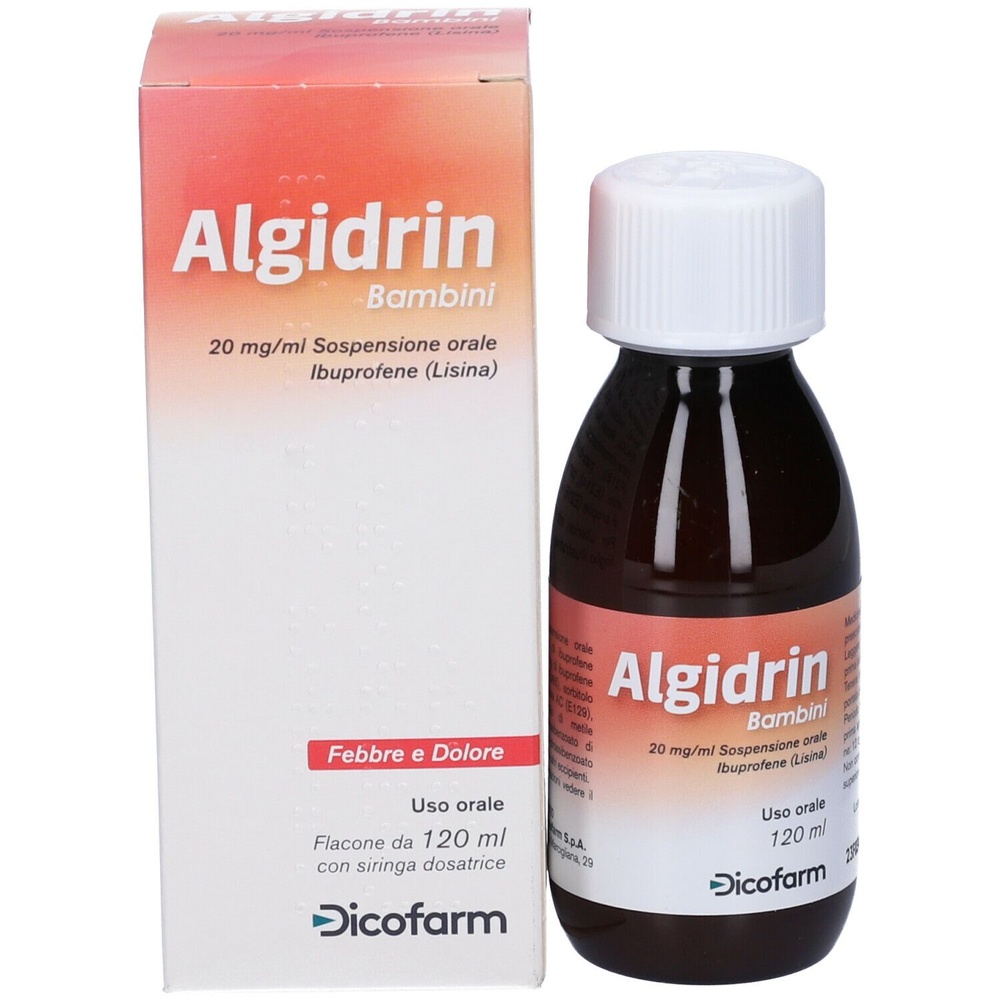
ALGIDRIN 20 mg /Ml Zawiesina Doustna

Ocena recepty online
Lekarz przeanalizuje Twój przypadek i zdecyduje, czy wystawienie recepty jest medycznie uzasadnione.

Porozmawiaj z lekarzem o tym leku
Omów swoje objawy i opcje leczenia podczas szybkiej konsultacji online.



Jak stosować ALJIDRIN
Treść ulotki
- Algidrin
- ALGIDRIN contains Allura Red AC (E-129) and may produce reactions
- ALGIDRIN contains maltitol (E-965). If your doctor has diagnosed you with an intolerance
Algidrin
20 mg/ml Oral Suspension, Children
Ibuprofen (Lysine)
Read this leaflet carefully before taking this medicine because
it contains important information for you.
Always use this medicine exactly as described in this leaflet or as your
doctor or pharmacist has told you.
- Keep this leaflet. You may need to read it again.
- If you want more information or advice, ask your pharmacist.
- If any side effects occur, including those not listed in this leaflet, tell your doctor or pharmacist. See section 4
- See a doctor if your symptoms do not improve or worsen after 3 days of treatment.
- 1. What ALGIDRIN is and what it is used for
- 2. What you need to know before you take ALGIDRIN
- 3. How to take ALGIDRIN
- 4. Possible side effects
- 5. How to store ALGIDRIN
- 6. Contents of the pack and other information
1. What is ALGIDRIN and what is it used for
ALGIDRINbelongs to the group of medicines known as non-steroidal anti-inflammatory drugs (NSAIDs). Ibuprofen, the active ingredient of this medicine, in a soluble salt form, ibuprofen (lysine), reduces fever and relieves pain and inflammation. It is indicated in children over 3 months of age for the symptomatic treatment of fever, mild or moderate pain.
2. What you need to know before taking ALGIDRIN
Do not take ALGIDRIN:
- if you are allergic (hypersensitive) to ibuprofen or to any other NSAID, acetylsalicylic acid or to any of the other ingredients of this medicine (listed in section 6). Allergic reactions indicating allergy are: skin rashes with itching, swelling of the face, lips or tongue, runny nose, shortness of breath and asthma.
- if you suffer from severe liver or kidney disease.
- if you have previously suffered from a stomach or duodenal ulcer or perforation of the gastrointestinal tract.
- if you vomit blood.
- if you have black stools or diarrhea with blood.
- if you suffer from bleeding or blood clotting disorders or are taking anticoagulants (medicines used to “thin” the blood). If it is necessary to take anticoagulant drugs at the same time, the doctor will perform a blood coagulation test.
- if you suffer from severe dehydration (caused by vomiting, diarrhea or insufficient fluid intake).
- if you suffer from severe heart failure.
- if you are in the third trimester of pregnancy.
Warnings and precautions
Talk to your doctor or pharmacist before taking this medicine.
- If you have edema (fluid retention).
- If you suffer from or have suffered from heart problems or have high blood pressure.
- If you suffer from asthma or any other respiratory disorder.
- The doctor may perform regular checks if you suffer from kidney or liver disease, are over 60 years old or need to take the medicine for a long period (from 1 to 2 weeks). The doctor will tell you the frequency of these checks.
- If you have had or develop an ulcer, bleeding or perforation in the stomach or duodenum, presenting with severe or persistent abdominal pain and/or black stools, or even without warning symptoms. This risk is greater at high doses and with prolonged treatment, in patients with a history of peptic ulcer and in elderly patients. In these cases, the doctor will consider association with drugs that protect the stomach.
- If you are also taking medicines that alter blood coagulation, such as oral anticoagulants or antiplatelet agents, such as acetylsalicylic acid. You should also mention the use of other medicines that could increase the risk of such bleeding, such as e.g. corticosteroids and selective serotonin reuptake inhibitors antidepressants.
- If you suffer from Crohn's disease (a chronic condition in which the immune system attacks the intestine, causing inflammation that usually produces diarrhea with blood) or ulcerative colitis, as drugs such as ibuprofen can exacerbate these diseases.
- If you are being treated with diuretics (medicines that help you urinate) because the doctor needs to monitor kidney function.
- If you suffer from systemic lupus erythematosus (a chronic disease that affects the immune system and can affect various vital organs, the nervous system, blood vessels, skin and joints), as there is an increased risk of aseptic meningitis (inflammation of the meninges which are membranes that protect the brain and spinal cord, not caused by bacteria).
- If you suffer from acute intermittent porphyria (a metabolic disease that affects the blood and can cause symptoms such as redness of the urine, blood in the urine or liver disease), to assess whether treatment with ibuprofen is appropriate.
- If you suffer from headaches after prolonged treatment, you should not take higher doses of this medicine.
- This medicine can cause allergic reactions.
- The doctor will perform more rigorous checks if you receive ibuprofen after undergoing major surgery.
- It is advisable not to take this medicine if you have chickenpox.
- Talk to your pharmacist or doctor if you have an infection - see the "Infections" section below. It is important to use the lowest dose that can relieve/control the pain and not to take this medicine for longer than necessary to control the symptoms.
Infections
ALGIDRIN can mask the signs of infections such as fever and pain. It is therefore possible
that ALGIDRIN may delay appropriate treatment of the infection, which may lead to
an increased risk of complications. This has been observed in pneumonia caused
by bacteria and skin infections related to chickenpox. If you take this
medicine while you have an infection and your infection symptoms persist or worsen,
consult a doctor immediately.
Cardiovascular precautions
Anti-inflammatory/analgesic drugs such as ibuprofen may be associated with a
small increased risk of heart attack or stroke, especially if used at
high doses. Do not exceed the recommended dose or duration of treatment.
You should report the treatment to your doctor or pharmacist before taking this medicine:
- if you have heart problems, including heart failure, angina (chest pain) or have had a heart attack, bypass surgery, peripheral artery disease (circulatory problems
in the legs or feet due to narrowing or blockage of the arteries) or any
other type of stroke (including ‘mini stroke’ or transient ischemic attack, TIA).
- if you have high blood pressure, diabetes, high cholesterol, a family history of heart disease or stroke, or if you are a smoker. This type of drug can also produce fluid retention, especially in patients who suffer from heart failure and/or high blood pressure (hypertension).
Skin reactions
Severe skin reactions have been reported in association with the treatment of
ALGIDRIN. You should stop taking ALGIDRIN and consult a doctor immediately if you develop skin rashes, mucous membrane lesions, blisters or other signs of
allergy as they may be the first signs of a very serious skin reaction. See
section 4.
Children and adolescents
This medicine should not be given to children under 3 months of age.
There is a risk of kidney damage in dehydrated children and adolescents.
Precautions during pregnancy and breastfeeding
Since the administration of medicines such as ibuprofen is associated with an increased
risk of congenital abnormalities/miscarriage, administration during the first and
second trimester of pregnancy is not recommended, except in strictly
necessary cases. In these cases, the dose and duration should be limited to the minimum possible.
Administration of this medicine is contraindicated during the third trimester.
Patients of childbearing potential should consider that drugs such as ibuprofen
are associated with a decrease in conception ability.
Other medicines and ALGIDRIN:
Tell your doctor or pharmacist if you are taking, have recently taken or might
take any other medicines.
ALGIDRIN can affect or be affected by other medicines. For example:
- Other non-steroidal anti-inflammatory drugs such as aspirin, as they may increase the risk of gastrointestinal ulcer or bleeding.
- Antiplatelet agents (which prevent the formation of thrombi or clots in blood vessels) such as ticlopidine.
- Anticoagulant drugs (e.g. to treat coagulation problems / prevent coagulation, such as acetylsalicylic acid, warfarin, ticlopidine).
- Cholestyramine (medicine used to reduce cholesterol levels in the blood).
- Selective serotonin reuptake inhibitors (used for depression).
- Lithium (used to treat depression). The doctor may adjust the dose of this medicine.
- Methotrexate (used to treat cancer and other inflammatory diseases). The doctor may adjust the dose of this medicine.
- Mifepristone (abortion inducer).
- Digoxin and cardiac glycosides (used for the treatment of heart failure).
- Hydantoins such as phenytoin (used for the treatment of epilepsy).
- Sulfonamides such as sulfamethoxazole and cotrimoxazole (used for the treatment of some bacterial infections).
- Corticosteroids such as cortisone and prednisolone (anti-inflammatory and immunosuppressant drugs)
- Diuretics (medicines used to increase urine elimination), as they may increase the risk of kidney toxicity.
- Pentoxifylline (for the treatment of intermittent claudication).
- Probenecid (used in patients with gout or together with penicillin for infections).
- Antibiotics of the quinolone group such as norfloxacin.
- Sulfinpyrazone (for gout).
- Sulfonylureas such as tolbutamide (for diabetes) as they can cause hypoglycemia.
- Tacrolimus or cyclosporine (used in organ transplantation to prevent rejection).
- Zidovudine (drug used to treat the AIDS virus).
- Drugs that lower high blood pressure (ACE inhibitors such as captopril, beta-blockers such as atenolol and angiotensin II receptor blockers such as losartan).
- Thrombolytics (drugs that dissolve blood clots)
- Aminoglycoside antibiotics such as neomycin
- Herbal extracts (from the ginkgo biloba tree).
- CYP2C9 inhibitors (responsible for the metabolism of numerous drugs in the liver), such as voriconazole and fluconazole (used for the treatment of fungal infections)
Other medicines can also affect or be affected by treatment with
ALGIDRIN. Therefore, it is necessary to consult your doctor or pharmacist before
taking ALGIDRIN with other medicines.
Taking ibuprofen can affect the following laboratory tests:
- Bleeding time (may be prolonged for 1 day after stopping treatment).
- Blood sugar levels (may be reduced).
- Creatinine clearance (may be reduced).
- Hematocrit and hemoglobin levels (may be reduced).
- Blood urea nitrogen concentrations and creatinine and potassium concentrations in the serum (may be increased).
- Liver function tests (increased transaminase levels). Tell your doctor if you are about to undergo clinical tests and if you are taking or have recently taken ibuprofen.
ALGIDRIN with food, drinks and alcohol
It is recommended to take this medicine with milk or food, or immediately after
eating, to reduce the possibility of stomach problems. Do not drink alcohol,
as it may increase the risk of adverse gastrointestinal reactions.
Pregnancy, breastfeeding and fertility
The use of this medicine is not recommended in women who are trying to
become pregnant. If you are pregnant, suspect or are planning a
pregnancy or if you are breastfeeding, ask your doctor or
pharmacist before taking this medicine. This drug should not be
taken during pregnancy, especially in the third trimester (see the section
Precautions during pregnancy and in women of childbearing potential).
Taking this medicine for long periods is not recommended during breastfeeding
as small amounts of ibuprofen can pass into breast milk.
Driving and operating machinery
If you experience dizziness, vertigo, visual disturbances or other symptoms while taking
this medicine, you should not drive or use dangerous machinery. If you take a
single dose of the drug or for a short period of time, you do not need to take
special precautions.
Ibuprofen can slow down reaction times, which must be taken into consideration
when performing activities that require greater attention, such as driving or using
machinery.
This is even more true in combination with alcohol.
ALGIDRIN contains Allura Red AC (E-129) and may produce reactions
allergic. It may cause asthma, especially in patients allergic to acetylsalicylic acid.

Nie jesteś pewien, czy ten lek jest odpowiedni dla ciebie?
Omów swoje objawy i leczenie z lekarzem online.
ALGIDRIN contains maltitol (E-965). If your doctor has diagnosed you with an intolerance
to certain sugars, contact them before taking this medicine.
This medicine contains 25 mg of sorbitol (E-420) per ml.Sorbitol is a source
of fructose. If your doctor has told you (or your child) that you are intolerant to certain sugars,
or if you have a diagnosis of hereditary fructose intolerance, a rare genetic condition for
which patients are unable to metabolize fructose, talk to your doctor before you (or your
child) take this medicine.
ALGIDRIN contains methylparaben (E-218), ethylparaben (E-214) and propylparaben (E-216).It may cause allergic
reactions (even delayed).
3. How to take ALGIDRIN
Take this medicine following exactly as stated in this leaflet or as instructed by your doctor or pharmacist. If you have doubts, consult your doctor or pharmacist.
You must take the lowest effective dose for the shortest duration necessary to relieve symptoms. In case of infection, consult a doctor immediately if symptoms (such as fever and pain) persist or worsen (see paragraph 2).
This medicine is an oral suspension for children over 3 months of age. It can be administered directly or diluted with water.
Children: the dose of ibuprofen to be administered depends on the child's age and weight.
In general, for children between 3 months and 12 years of age, the recommended daily dose is 20 to 30 mg of ibuprofen per kg of body weight, divided into three or four individual doses. The time between doses depends on how symptoms develop, but should not be less than 4 hours.
The use of this medicine is not recommended in children weighing less than 5 kg.
The following dosage scheme is recommended:
| i DOSAGE FOR CHILDREN | |||
| Age/weight | z Frequency | Dose | Maximum daily dose |
| n From 3 to 6 months From 5 to 7.6 kg approximately | 3 times a day | 50 mg (2.5 ml)/dose | 150 mg (7.5 ml) |
| e From 6 to 12 months From 7.7 to 9 kg approximately | From 3 to 4 times a day | 50 mg (2.5 ml)/dose | 150-200 mg (7.5-10 ml) |
| g From 1 to 3 years From 10 to 15 kg approximately | From 3 to 4 times a day | 100 mg (5 ml)/dose | 300-400 mg (15-20 ml) |
| A From 4 to 6 years From 16 to 20 kg approximately | From 3 to 4 times a day | 150 mg (7.5 ml)/dose | 450-600 mg (22.5-30 ml) |
| From 7 to 9 years From 21 to 29 kg approximately | From 3 to 4 times a day | 200 mg (10 ml)/dose | 600-800 mg (30-40 ml) |
| From 10 to 12 years From 30 to 40 kg approximately | From 3 to 4 times a day | 300 mg (15 ml)/dose | 900-1200 mg (45-60 ml) |
Adolescents (from 12 years of age):
the recommended dose is 10 - 20 ml (equivalent to 200-400 mg of ibuprofen) every 4-6 hours, if necessary, without exceeding a dose of 1200 mg of ibuprofen within a 24-hour period.
Patients with kidney and/or liver diseases:
if you suffer from kidney and/or liver diseases, your doctor may prescribe a lower dose than expected. In this case, take the exact dose that has been prescribed.
Consult your doctor if symptoms persist or worsen during the treatment period. If you think that the effect of this medicine is too strong or too weak, inform your doctor or pharmacist
Method of administration
The package contains a graduated syringe for oral use for accurate dosage.
- 1. Shake the bottle before use.
- 2. Remove the cap and insert the end of the syringe into the hole of the perforated cap.
- 3. Turn the bottle upside down, pull the syringe plunger until the liquid reaches the indication of the amount of ml to be administered. Put the bottle back in its original position and remove the syringe.
- 4. Administer directly with the syringe.
- 5. The syringe must be washed and dried well after each dose. In patients with stomach problems, the medicine must be administered during meals.
Adults: consult your doctor or pharmacist for other presentations of the medicine more suitable for use in adults.
If you take more ALGIDRIN than you should
If you have taken more ALGIDRIN than you should, or if a child has accidentally taken the medicine, always contact a doctor or the nearest hospital for an opinion on the risk and advice on the actions to be taken. Symptoms of overdose usually appear 4 to 6 hours after taking ibuprofen.
Symptoms of overdose may include nausea, stomach pain, vomiting (with possible streaks of blood), headache, ringing in the ears, confusion and involuntary eye movement and lack of muscle coordination. At high doses, drowsiness, chest pain, palpitations, loss of consciousness, convulsions (especially in children), weakness and dizziness, blood in the urine, feeling cold and breathing problems have been reported.
If you forget to take ALGIDRIN
Do not take a double dose to make up for the missed dose.
If you forget to take a dose, take it as soon as possible. However, if the time to take the next dose is very close, skip the missed dose and take the next dose at the usual scheduled time. If you have any further questions about using this medicine, ask your doctor or pharmacist.
4. Possible side effects
Like all medicines, this medicine can cause side effects, although not everyone gets them.
Side effects of this medicine are more common in people over 65 years of age.
The incidence of adverse effects caused is lower with short treatments and when the daily
dose is lower than the maximum recommended dose.
The frequencies indicated below refer to short-term use at daily doses
maximum up to 1200 mg of oral ibuprofen:
- Common adverse effects(may affect up to 1 in 10 people): gastrointestinal bleeding, especially in elderly patients. Nausea, vomiting, diarrhea, flatulence, dyspepsia (disorder of secretion or gastrointestinal motility), constipation, stomach acidity, abdominal pain, blood in the stool, vomiting with blood, headache, dizziness, feeling unstable and fatigue have also been observed.
- Uncommon adverse effects(may affect up to 1 in 100 people): onset of gastritis, duodenal ulcers, gastric ulcers, skin redness, itching or a prickling or needle sensation in the skin, urticaria, purpura (purple spots on the skin), skin reactions to light, hypersensitivity, paresthesia (sensation of numbness, tingling, etc. more frequently in the hands, feet, arms or legs), drowsiness, insomnia, anxiety, hearing disorders, visual disturbances, rhinitis (inflammation of the nasal mucosa), inflammation of the oral mucosa with the formation of mouth ulcers, gastrointestinal perforations, hepatitis (inflammation of the liver), liver dysfunction and jaundice (yellowing of the skin and eyes), asthma, bronchospasm and dyspnea (difficulty breathing). Tubulointerstitial nephritis (kidney disorder), nephrotic syndrome (characterized by protein in the urine and swelling of the body) and kidney failure (sudden loss of kidney function), acute renal failure and papillary necrosis (especially with prolonged use) associated with an increase in urea.
- Rare adverse effects (may affect up to 1 in 1,000): disorientation or confusion, depression, vertigo, tinnitus (ringing or sounds in the ear), hearing disturbances, reversible toxic amblyopia, liver injury, edema (swelling caused by fluid accumulation in the tissues), optic neuritis, anaphylactic reaction [in case of severe general hypersensitivity, signs may include swelling of the face, tongue and
larynx, dyspnea (shortness of breath), tachycardia, hypotension (anaphylaxis, angioedema
or severe shock)], aseptic meningitis (inflammation of the meninges, which are the membranes
that protect the brain and spinal cord, not caused by bacteria). In most
cases where aseptic meningitis induced by ibuprofen has been reported, patients
suffered from some form of autoimmune disease (such as systemic lupus erythematosus or
other collagen diseases), which represented a risk factor. The observed symptoms of
aseptic meningitis were stiff neck, headache, nausea, vomiting, fever and disorientation.
Other adverse effects are decreased platelets, decreased white blood cells (which may present
as frequent infections with fever, chills or sore throat), decreased red blood cells (may
present as difficulty breathing and pallor), neutropenia (decrease in neutrophils) and
agranulocytosis (large decrease in neutrophils), aplastic anemia (inability of the bone marrow
to produce different types of cells), hemolytic anemia (premature destruction of red blood cells).
Initial symptoms are: fever, sore throat, superficial mouth ulcers, flu-like symptoms,
extreme fatigue and nosebleeds and skin bleeding of unknown cause.
- Very rare adverse effects(may affect up to 1 in 10,000): pancreatitis, very severe blistering reactions including Stevens-Johnson syndrome (disseminated sores affecting the skin and two or more mucous membranes and violet-colored lesions, usually on the trunk) and toxic epidermal necrolysis (sores on the mucous membranes and painful lesions with necrosis and peeling of the skin), erythema multiforme (skin lesion). Severe skin and soft tissue infections and complications during chickenpox may appear exceptionally. Liver failure (severe liver dysfunction), heart failure, myocardial infarction, hypertension. Increased inflammation related to infection has been observed in coincidence with the use of NSAIDs. If you notice signs or worsening of infection while using ibuprofen, consult your doctor immediately.
- Frequency not known (cannot be estimated on the basis of the available data): exacerbation of colitis and Crohn's disease (chronic disease in which the immune system attacks the intestine, causing inflammation that generally produces diarrhea with blood). A severe skin reaction known as DRESS syndrome may occur. The symptoms of DRESS syndrome include: rash, fever, swollen lymph nodes, and increased eosinophils (a type of white blood cell). A red and scaly rash with bumps under the skin and blisters located mainly on the skin folds, trunk and upper limbs accompanied by fever at the beginning of treatment (acute generalized exanthematous pustulosis). Stop using ALGIDRIN if these symptoms develop and consult your doctor immediately. See also section 2. If you experience any of the following adverse effects, stop treatment and consult your doctor immediately:
- Allergic reactions such as rash, facial swelling, wheezing in the chest or shortness of breath.
- Vomiting containing blood or looking like coffee grounds.
- Blood in the stool or bloody diarrhea.
- Severe stomach pain
- Blisters or flaky skin over a large area.
- Severe or persistent headache.
- Yellowing of the skin (jaundice).
- Signs of severe hypersensitivity (allergy) (see above in this section).
- Swelling of the limbs or fluid accumulation in the arms and legs.
Reporting of side effects
If you get any side effects, even those not listed in this
leaflet, tell your doctor or pharmacist.
You can also report side effects directly through the national reporting system at:
https://www.aifa.gov.it/content/segnalazioni-reazioni-avverse.
By reporting side effects you can help provide more information on the
safety of this medicine.
5. How to store ALGIDRIN
Keep this medicine out of the sight and reach of children. Do not store at a
temperature above 30 ° C. After opening the package, use within 12
months. Do not use this medicine after the expiry date which is stated on the packaging
after "Exp". The expiry date refers to the last day of that month. Do not dispose of any
medicine in wastewater or household waste. Ask your pharmacist how to dispose of
medicines you no longer use. This will help protect the environment.
6. Contents of the pack and other information
What ALGIDRIN contains:
- The active ingredient is ibuprofen (lysine). Each ml of oral suspension contains 20 mg of ibuprofen (supplied by 34 mg of ibuprofen lysine).
- The other components are: purified water, microcrystalline cellulose, sodium carboxymethylcellulose, sorbitol (E-420), maltitol (E-965), beta-cyclodextrin, sodium saccharin, sucralose (E-955), forest fruit flavour, Allura Red AC (E-129), methyl parahydroxybenzoate (E-218), ethyl parahydroxybenzoate (E-214) and propyl parahydroxybenzoate (E-216).
Description of the appearance of ALGIDRIN and contents of the pack
ALGIDRIN is an oral suspension of red colour with forest fruit aroma and flavour.
The pack contains a bottle made of polyethylene terephthalate (PET) of 100 ml, 120 ml, 200
ml of amber colour, with a white polyethylene cap, equipped with a child-resistant mechanism and a translucent polyethylene plunger, with a graduated 5 ml syringe for oral dosage.
Not all pack sizes may be marketed.
Marketing Authorisation Holder and Manufacturer
Marketing Authorisation Holder
Dicofarm S.p.A. - Via del Casale della Marcigliana, 29 - 00138 Rome
Manufacturer
LABORATORIO DE APLICACIONES FARMACODINÁMICAS, S.A. (FARDI)
Calle Grassot, 16 - 08025 - Barcelona (Spain)
More detailed information on this medicine is available on the AIFA website:
https://farmaci.agenziafarmaco.gov.it/bancadatifarmaci/home

Zacząłeś przyjmować lek i masz pytania?
Omów swoje objawy i leczenie z lekarzem online.
- Kraj rejestracji
- Postać farmaceutycznaOral suspension, 20 MG/ML
- Kod ATCM01AE01
- Substancja czynna
- Wymaga receptyNie
- Producent
- Te treści mają charakter wyłącznie informacyjny i nie zastępują konsultacji lekarskiej.
- Zamienniki ALJIDRINPostać farmaceutyczna: Film-coated tablet, 200 MGSubstancja czynna: ibuprofenProducent: AURORA LICENSING SRLBez receptyPostać farmaceutyczna: Coated tablet, 200 MGSubstancja czynna: ibuprofenBez receptyPostać farmaceutyczna: Oral suspension, 100 MG/5 MLSubstancja czynna: ibuprofenBez recepty
Odpowiedniki ALJIDRIN w innych krajach
Leki z tą samą substancją czynną dostępne w innych krajach.
Odpowiednik ALJIDRIN w Hiszpania
Odpowiednik ALJIDRIN w Polska
Odpowiednik ALJIDRIN w Ukraina
Lekarze online w sprawie ALJIDRIN
Omów stosowanie ALJIDRIN, bezpieczeństwo i ocenę zasadności recepty zgodnie z obowiązującymi przepisami.









Uzyskaj receptę na ALJIDRIN online
Wypełnij 2-minutowy formularz
Opisz swoje objawy, historię choroby i lek, o który prosisz.
Wybierz lekarza lub pozwól nam przydzielić
Wybierz specjalistę lub dopasujemy Cię do najbliższego dostępnego lekarza.
Lekarz analizuje Twój przypadek
Zazwyczaj w ciągu 30 minut. Może zadawać dodatkowe pytania przez czat.
Odbierz w dowolnej aptece
Recepta elektroniczna wysłana na Twój e-mail — ważna w całej Polsce.
Często zadawane pytania
ALJIDRIN nie wymaga recepty w Włochy. Możesz skonsultować się z lekarzem online, aby sprawdzić, czy ten lek może być odpowiedni w Twojej sytuacji.
Substancją czynną w ALJIDRIN jest ibuprofen. Informacja ta pomaga rozpoznać leki o tym samym składzie, ale pod różnymi nazwami handlowymi.
ALJIDRIN jest produkowany przez DICOFARM S.P.A.. Nazwy handlowe i opakowania mogą się różnić w zależności od dystrybutora.
Lekarze, tacy jak Lekarze rodzinni, Psychiatrzy, Dermatolodzy, Kardiolodzy, Endokrynolodzy, Gastroenterolodzy, Pulmonolodzy, Nefrolodzy, Reumatolodzy, Hematolodzy, Zakaźnicy, Alergolodzy, Geriatrzy, Pediatrzy, Onkolodzy, mogą ocenić, czy stosowanie ALJIDRIN jest odpowiednie w Twoim przypadku, w zależności od sytuacji klinicznej i lokalnych przepisów. Możesz umówić konsultację online, aby omówić objawy i możliwe dalsze kroki.
Polska posiada dobrze rozwiniętą infrastrukturę ochrony zdrowia w dużych miastach, takich jak Warszawa, Kraków, Wrocław i Gdańsk. Apteki są łatwo dostępne i działają zgodnie z obowiązującymi przepisami, zapewniając dostęp do leków na receptę.
Możesz kupić ALJIDRIN w Warszawie, Krakowie, Wrocławiu lub Gdańsku w każdej aptece, posiadając ważną receptę.
Aby uzyskać receptę, możesz skorzystać z Oladoctor:
Inne leki zawierające tę samą substancję czynną (ibuprofen) to m.in. ABIDOL, ALGOFEN, ALGOPIRINA FEBBRE E DOLORE. Mogą one różnić się nazwą handlową lub postacią, ale zawierają ten sam składnik terapeutyczny. Przed zmianą lub rozpoczęciem nowego leku skonsultuj się z lekarzem.
