



FELDENE 20 mg Twarde Kapsułki

Ocena recepty online
Lekarz przeanalizuje Twój przypadek i zdecyduje, czy wystawienie recepty jest medycznie uzasadnione.

Porozmawiaj z lekarzem o tym leku
Omów swoje objawy i opcje leczenia podczas szybkiej konsultacji online.



Jak stosować FELDENE
Treść ulotki
- FELDENE 20 mg hard capsules, 20 mg soluble tablets
- FELDENE 20 mg suppositories
- FELDENE 20 mg/1 ml injectable solution for intramuscular use
FELDENE 20 mg hard capsules, 20 mg soluble tablets
Piroxicam
Read this leaflet carefully before taking this medicine as it contains
important information for you.
- Keep this leaflet. You may need to read it again.
- If you have any questions, ask your doctor or pharmacist.
- This medicine has been prescribed for you only. Do not pass it on to others, even if their symptoms are the same as yours, as it may be harmful.
- If you get any side effects, even those not listed in this leaflet, tell your doctor or pharmacist. See section 4.
Contents of this leaflet:
- 1. What Feldene is and what it is used for
- 2. What you need to know before you take Feldene
- 3. How to take Feldene
- 4. Possible side effects
- 5. How to store Feldene
- 6. Contents of the pack and other information
1. What is Feldene and what is it used for
Feldene contains the active ingredient piroxicam which belongs to a group of medicines called
non-steroidal anti-inflammatory drugs (NSAIDs).
Feldene is an anti-inflammatory and pain-relieving medicine, which is used in adultsfor
relieving symptomssuch as swelling, stiffness and pain in the joints caused by:
- osteoarthritis(a degenerative joint disease)
- rheumatoid arthritis(a chronic inflammatory joint disease)
- ankylosing spondylitis(spinal rheumatism) Feldene does not cure the cause of these diseases and will only give you relief from symptoms as long as you continue to take it. Your doctor will only prescribe Feldene when other non-steroidal anti-inflammatory drugs (NSAIDs) are no longer useful in relieving your symptoms. Your doctor may need to review you periodically and will tell you how often a check-up will be necessary during treatment with Feldene.
2. What you need to know before taking Feldene
Do not take Feldene
- if you are allergic to piroxicam or any of the other ingredients of this medicine (listed in section 6);
- if you have or have had in the past an ulcer, bleeding or perforation of the stomach or intestine;
- if you have had disorders of the stomach and/or intestine that predispose you to bleeding such as:
- ulcerative colitis and Crohn's disease (chronic inflammatory bowel diseases)
- stomach and/or intestinal cancer
- diverticulitis (inflammation/infection of pouches in the wall of the colon, a part of the intestine);
- if you suffer from inflammation of the stomach or intestine or have problems with digestion;
- if you have severe liver problems;
- if you have severe kidney problems;
- if you have severe or moderate heart problems;
- if you suffer from very high blood pressure;
- if you have severe blood disorders;
- if you are prone to bleeding frequently;
- if you are taking the following medicines (see section “Other medicines and Feldene”):
- other non-steroidal anti-inflammatory drugs (NSAIDs) at doses used to relieve pain, including acetylsalicylic acid and “cyclooxygenase-2 (COX-2) selective inhibitors” (a class of NSAIDs)
- anticoagulants (medicines used to thin the blood);
- if you have had a severe allergic reaction of any kind in the past caused by medicines, including severe skin reactions such as:
- erythema multiforme (skin disease characterized by bright red lesions on the skin)
- Stevens-Johnson syndrome (characterized by skin with red blisters, injured, bleeding or covered with a crust) and toxic epidermal necrolysis (characterized by blisters and peeling of the superficial layer of the skin);
- if you are or think you might be pregnant;
- if you are breastfeeding;
- if you are under 18 years of age;
- if you have had symptoms such as asthma, runny nose (rhinitis), nasal polyps, swelling, redness and itching of the face, tongue and throat (angioedema) or hives during treatment with acetylsalicylic acid or other NSAIDs.
Warnings and precautions
Talk to your doctor or pharmacist beforetaking Feldene.
Talk to your doctor if you think that any of the following conditions apply to you:
- suffer from or have suffered from high blood pressureor heart problemsor have a history of heart attackor strokeor think you may be at risk for these conditions (for example if you suffer from diabetes, high cholesterol or if you are a smoker);
- are being treated with medicinesthat interfere with platelet aggregation(such as acetylsalicylic acid) because Feldene may increase the effect of these medicines. Your doctor may subject you to blood tests;
- if you are being treated with drugs that may increase the risk of bleeding(such as corticosteroids or medicines called “selective serotonin reuptake inhibitors” or acetylsalicylic acid) (see “Other medicines and Feldene”). Your doctor may prescribe you a medicine to protect your stomach and intestines together with Feldene in this case;
- have reduced kidneyand liverfunction or are being treated with diuretics(medicines that increase urine production);
- suffer from reduced blood flow to the kidneys (renal hypoperfusion);
- have or have had in the past problemswith blood coagulation;
- are asthmatic, because this medicine may cause difficulty breathing, shock and allergic reactions;
- are diabetic. In this case, it is advisable to have frequent tests to check your blood sugar levels;
- have or suspect you have a reduced innate ability to metabolize certain medicines. Your doctor may decide to prescribe you a reduced dose of this medicine.
Duringtreatment with Feldene you may experience one of the following conditions (see
also section 4 “Possible side effects”):
- severe problems with the stomachand intestinessuch as bleeding, ulcer and perforation. Stoptaking Feldene immediately and contactyour doctor if you have stomach pain or if you experience any signs of bleeding in the stomach or intestine, such as
passing black or tarry stools or if you vomit blood; - heart attackand stroke. These events are seriousand can sometimes be fatal;
- eye problems. In case of prolonged treatments, periodic checks are recommended to assess eye function;
- yellowing/yellowish discoloration of the skin and the white of the eyes (jaundice) and inflammatoryliver lesions, even fatal. If you experience symptoms of liver problems, stoptaking Feldene immediately and see your doctor;
- skin rashes that can be fatal (Stevens-Johnson syndrome, toxic epidermal necrolysis). If you experience these symptoms, stoptaking Feldene immediately and never take this medicine again (see section “Do not take Feldene”).
If you develop a rash or skin symptoms, you should stop taking Feldene immediately, see a doctor immediately and tell them you are taking this medicine.
If you are elderly (over 70 years old)
If you are over 70 years of age, your doctor may prescribe you a medicine to protect your stomach and intestines together with Feldene, as you are at higher risk of side effects in the stomach and/or intestines.
You should not take this medicine if you are over 80 years old.
Other medicines and Feldene
Tell your doctor or pharmacist if you are taking, have recently taken or might take
any other medicines.
Do not takeFeldene together with the following medicines due to the increased risk of bleeding
in the stomach and intestines (see section “Do not take Feldene”):
- non-steroidal anti-inflammatory drugs(NSAIDs), including acetylsalicylic acid and “cyclooxygenase-2 (COX-2) selective inhibitors” (a class of NSAIDs), to relieve pain and/or reduce fever;
- anticoagulants(e.g. warfarin, coumarin derivatives, apixaban, dabigatran and rivaroxaban), medicines used to thin the blood.
The following medicines may affect the efficacy and toxicity of Feldene or Feldene may
affect the efficacy and toxicity of the following medicines:
- corticosteroids, medicines used to treat allergies and severe inflammation;
- selective serotonin reuptake inhibitors(SSRIs) and lithium, medicines for depression;
- antiplatelet agents(such as acetylsalicylic acid) used to prevent blood clots from forming;
- diuretics, ACE inhibitors, angiotensin II receptor antagonistsand beta-blockers, medicines used for high blood pressure and heart disease;
- methotrexate, a medicine used against tumors;
- quinolones, used to treat bacterial infections.
Feldene may reduce the effectiveness of intrauterine devices. It is recommended to use alternative contraceptive methods (e.g. condom) during treatment with this medicine to avoid
unwanted pregnancies.
Feldene with alcohol
Do not drinkalcohol during treatment with Feldene, as it may increase the risk of
serious problems with the stomach or intestines (see section “Warnings and precautions”).
Pregnancy, breastfeeding and fertility
If you are pregnant, suspect you are pregnant or are planning a pregnancy, or if you are breastfeeding with
breast milk, ask your doctor or pharmacist for advice before taking this medicine.
Do nottake Feldene if you are or think you might be pregnant or if you are breastfeeding (see
section “Do not take Feldene”).
NSAIDs can cause problems with the kidneys and heart of the fetus. NSAIDs may affect
the mother's and baby's tendency to bleed and delay or prolong labor. From the 20th week of pregnancy, NSAIDs can cause kidney problems in the fetus,
thus reducing the levels of amniotic fluid surrounding the baby (oligohydramnios) or causing
constriction of a blood vessel (ductus arteriosus) in the baby's heart.
Feldene may cause reversible infertility. Your doctor may advise you to stop
treatment with this medicine if you have difficulty conceiving or if you are undergoing
tests to assess your fertility.
Driving and operating machinery
Feldene may alter your state of alertness. If you experience dizziness or unusual fatigue, be
especially careful when driving or operating machinery.
Feldene contains lactose and sodium
Feldene contains lactose, a type of sugar. If you have been diagnosed with an intolerance to some
sugars, contact your doctor before taking this medicine.
This medicine contains less than 1 mmol (23 mg) of sodium per hard capsule/soluble tablet, i.e.
essentially “sodium-free”.
3. How to take Feldene
Take this medicine following exactly the instructions of your doctor or pharmacist. If you have any doubts, consult your doctor or pharmacist.
Swallow the hard capsules with a glass of water.
Dissolve the soluble tablets in a little water.
The maximum recommended dose is 20 mg per day (corresponding to 1 capsule or 1 soluble tablet).
If you are elderly, your doctor may prescribe a lower dose and reduce the duration of treatment.
Do not exceed or change the doses indicated by your doctor.
Your doctor may prescribe Feldene together with another medicine to protect the stomach and
intestines from possible side effects.
If you take more Feldene than you should
If you have accidentally taken an excessive dose of Feldene, inform your doctor immediately or go to the nearest hospital.
You may experience headache, vomiting, drowsiness, dizziness and fainting.
If you forget to take Feldene
Take the medicine as soon as you remember. If it is almost time to take the next dose, do not take the
dose you forgot, but take the next dose at the right time. Do not take a double dose to
compensate for a missed dose.
If you have any doubts about the use of this medicine, consult your doctor or pharmacist.
4. Possible side effects
Like all medicines, this medicine can cause side effects, although not everybody gets them.
STOPtreatment with Feldene immediately and contact your doctor if you experience:
- stomach painor signs of perforationand bleeding in the stomachor intestinesuch as passing black or tarry stools or vomiting blood;
- yellowing of the skin and the whites of the eyes (jaundice);
- liver inflammation;
- severe reduction in kidney function(renal failure);
- any sign of allergic reactionsuch as skin rash or swelling of the face, lips and throat which can cause difficulty breathing and swallowing; skin reactionscharacterized by blisters, redness or peeling of the skin, ulcers in any part of the body (for example skin, mouth, nose, throat, genitals), even severe (DRESS syndrome, Stevens-Johnson syndrome, toxic epidermal necrolysis).
Other side effects that you might experience are listed below:
Common effects:
- increased blood sugar levels (hyperglycemia)
- loss or decrease in appetite
- drowsiness
- dizziness
- headache
- ringing in the ears
- excessive sweating
- decrease in hemoglobin
- decrease in hematocrit
- abnormal body weight
- skin rash
- increased eosinophil count in the blood (a type of white blood cell)
- decrease in platelet count
- edema
- stomach ulcers
- diarrhea
- constipation
- vomiting
- digestive problems
- abdominal pain
- flatulence
- nausea
Uncommon effects:
- decrease in blood sugar levels (hypoglycemia)
- vision disturbances
- inflammation and ulcers in the mouth
Effects with unknown frequency(frequency cannot be estimated based on available data):
- female infertility
- disorders and inflammation of various parts of the kidney (renal tubules and glomeruli) resulting in protein in the urine, increased cholesterol levels in the blood and fluid retention
- swelling of ankles, legs and feet caused by fluid retention
- severe reduction in kidney function (renal failure)
- increased nitrogen levels in the blood
- blood in the urine, difficulty urinating
- changes in bladder function
- abnormal blood tests
- liver inflammation
- increased normal liver function values
- yellowing of the skin and the whites of the eyes (jaundice)
- heart problems that can also cause shortness of breath and fatigue
- stroke
- shock
- increased blood pressure
- heart attack (myocardial infarction)
- skin reactions characterized by blisters, redness or peeling of the skin, ulcers in any part of the body (for example skin, mouth, nose, throat, genitals), even severe (Stevens-Johnson syndrome, toxic epidermal necrolysis)
- any sign of allergic reaction such as skin rash or swelling of the face, lips and throat which can cause difficulty breathing and swallowing
- swelling, blisters or exfoliation of the skin
- appearance of small red spots that usually appear on the legs and buttocks but can also appear in other areas of the body (Schönlein-Henoch purpura)
- appearance of bruises
- skin sensitivity to light
- abnormal nail growth
- hair loss
- fixed drug eruption (can manifest as round or oval patches of redness and swelling of the skin), hives, itching
- stomach pain or signs of perforation and bleeding in the stomach or intestine such as passing black or tarry stools or vomiting blood;
- decrease in red blood cells, white blood cells and platelets
- anemia
- anemia, which can be severe (aplastic anemia, hemolytic anemia)
- depression
- irritability
- insomnia
- hearing loss
- nosebleeds
- pancreatitis
- gastritis
- dry mouth
- worsening of inflammatory bowel diseases (colitis and Crohn's disease)
- general feeling of being unwell
- fatigue
† All NSAIDs may be associated with an increased risk of cardiovascular adverse effects:
heart problems that can cause shortness of breath and fatigue (heart failure),
heart attack (myocardial infarction) and stroke.
Reporting of side effects
If you get any side effects, even those not listed in this leaflet, tell your
doctor or pharmacist. You can also report side effects directly through the national
reporting system at: www.aifa.gov.it/content/segnalazioni-reazioni-avverse .
By reporting side effects you can help provide more information on the safety of
this medicine.
5. How to store Feldene
Keep this medicine out of the sight and reach of children.
Do not use this medicine after the expiry date which is stated on the package and on the blister after
“Expiry”. The expiry date refers to the last day of that month.
This medicine does not require any particular storage conditions.
Do not dispose of any medicine in waste water or household waste. Ask your pharmacist how to
dispose of medicines you no longer use. This will help protect the environment.
6. Contents of the pack and other information
What Feldene contains
The active ingredient is piroxicam.
Feldene hard capsules
Each hard capsule contains 20 mg of piroxicam.
The other ingredients are: corn starch, lactose(see section 2 “Feldene contains lactose”),
magnesium stearate, sodium lauryl sulfate. The capsule components are :gelatin, titanium dioxide (E171).
Feldene soluble tablets
Each soluble tablet contains 20 mg of piroxicam.
The other ingredients are: lactose(see section 2 “Feldene contains lactose”), microcrystalline cellulose,
hydroxypropylcellulose, sodium stearyl fumarate.
Description of the appearance of Feldeneand contents of the pack
Feldene 20 mg hard capsules are available in PVC/aluminium blisters in packs of 30 capsules.
Feldene 20 mg soluble tablets are available in PVC/aluminium blisters in packs of 30 tablets
Not all pack sizes may be marketed.
Marketing Authorisation Holder
Pfizer Italia S.r.l.
Via Isonzo, 71
04100 Latina
Manufacturer
Feldene 20 mg hard capsules:
Fareva Amboise
Zone Industrielle – 29 route des Industries
37530 Pocé-sur-Cisse, France
Feldene 20 mg soluble tablets:
Haupt Pharma Latina S.r.l.
S.S. 156, Km 47,600 - Borgo San Michele
04100 Latina
FELDENE 20 mg suppositories
Piroxicam
Read this leaflet carefully before you start to use this medicine as it contains important
information for you.
- Keep this leaflet. You may need to read it again.
- If you have any questions, ask your doctor or pharmacist.
- This medicine has been prescribed for you only. Do not pass it on to others, even if they have the same symptoms as you, as it may be harmful.
- If you get any side effects, even those not listed in this leaflet, tell your doctor or pharmacist. See section 4.
Contents of this leaflet:
- 1. What Feldene is and what it is used for
- 2. What you need to know before you use Feldene
- 3. How to use Feldene
- 4. Possible side effects
- 5. How to store Feldene
- 6. Contents of the pack and other information
1. What is Feldene and what is it used for
Feldene contains the active ingredient piroxicam which belongs to a group of medicines called
non-steroidal anti-inflammatory drugs (NSAIDs).
Feldene is an anti-inflammatory and pain-relieving medicine, which is used in adultsfor
relieving symptomssuch as swelling, stiffness and joint pain caused by:
- osteoarthritis(a degenerative joint disease)
- rheumatoid arthritis(a chronic inflammatory joint disease)
- ankylosing spondylitis(spinal rheumatism) Feldene does not cure the cause of these diseases and will only give you relief from symptoms as long as you continue to take it. The doctor will prescribe Feldene only when other non-steroidal anti-inflammatory drugs (NSAIDs) will no longer be useful in relieving your symptoms. The doctor may need to review you periodically and will tell you how often a check-up will be necessary during treatment with Feldene.
2. Cosa deve sapere prima di usare Feldene
Non usi Feldene
- se è allergico al piroxicam o ad uno qualsiasi degli altri componenti di questo medicinale (elencati al paragrafo 6);
- se ha o ha avuto in passato un’ulcera, un sanguinamento o una perforazione allo stomaco o all’intestino;
- se ha avuto disturbi allo stomaco e/o all’intestino che la predispongono ad avere sanguinamenti come:
- colite ulcerosa e malattia di Crohn (malattie croniche infiammatorie dell’intestino)
- tumore allo stomaco e/o all’intestino
- diverticolite (infiammazione/infezione delle tasche della parete del colon, una parte dell’intestino);
- se soffre di infiammazioni allo stomaco o all’intestino o ha problemi di digestione;
- se ha gravi problemi al fegato;
- se ha gravi problemi ai reni;
- se ha problemi al cuore gravi o moderati;
- se soffre di pressione del sangue molto alta;
- sa ha gravi alterazioni del sangue;
- se ha predisposizione a sanguinare frequentemente;
- se sta assumendo i seguenti medicinali (vedere paragrafo “Altri medicinali e Feldene”):
- altri medicinali antiinfiammatori non steroidei (FANS) a dosi utilizzate per alleviare il dolore, compresi l’acido acetilsalicilico e gli “inibitori selettivi della cicloossigenasi-2 (COX-2)” (una classe di FANS)
- anticoagulanti (medicinali utilizzati per fluidificare il sangue)
- se in passato ha avuto una grave reazione allergica di qualsiasi tipo causata da medicinali, incluse gravi reazioni della pelle come:
- eritema multiforme (malattia della pelle caratterizzata da lesioni color rosso vivo sulla pelle)
- sindrome di Stevens-Johnson (caratterizzata da pelle con bolle rosse, lesionata, sanguinolenta o coperta da una crosta) ed epidermolisi necrotica (caratterizzata da bolle e desquamazione dello strato superficiale della pelle);
- se è o pensa di essere in gravidanza;
- se sta allattando al seno;
- se ha meno di 18 anni;
- se ha avuto sintomi quali asma, naso che cola (rinite), polipi nel naso, gonfiore, arrossamento e prurito del volto, della lingua e della gola (angioedema) od orticaria durante il trattamento con l’acido acetilsalicilico od altri FANS.
Avvertenze e precauzioni
Si rivolga al medico o al farmacista primadi usare Feldene.
Si rivolga al medico se pensa che una qualsiasi delle seguenti condizioni la riguardi:
- soffre o ha sofferto di pressione alta del sangueo problemialcuoreo ha precedenti di infartoo ictuso pensa di potere essere a rischio per queste condizioni (per esempio se soffre di diabete, colesterolo elevato o se è un fumatore);
- è in trattamento con medicinaliche ostacolano l’aggregazione delle piastrine(come l’acido acetilsalicilico) perché Feldene può aumentare l’effetto di questi medicinali. Il medico la potrà sottoporre a controlli del sangue;
- è in trattamento con farmaci che potrebbero aumentare il rischio di sanguinamento(come corticosteroidi o medicinali chiamati “inibitori selettivi del reuptake della serotonina” o acido acetilsalicilico) (vedere “Altri medicinali e Feldene”). Il medico in questo caso potrebbe prescriverle insieme a Feldene un medicinale per proteggere lo stomaco e l’intestino;
- ha una funzionalità dei renie del fegatoridotta o è in trattamento con diuretici(medicinali che aumentano la produzione di urina);
- soffre di ridotto flusso di sangue ai reni ( ipoperfusione renale);
- ha o ha avuto in passato problemidi coagulazione del sangue;
- è asmatico, perché questo medicinale può causare difficoltà a respirare, shock e reazioni allergiche;
- è diabetico. In questo caso è consigliabile effettuare frequenti esami per controllare il livello di zuccheri nel sangue;
- ha o sospetta di avere una ridotta capacità congenita di metabolizzare alcuni medicinali. Il medico potrebbe decidere di prescriverle una dose ridotta di questo medicinale.
Duranteil trattamento con Feldene lei potrebbe manifestare una delle seguenti condizioni (vedere
anche paragrafo 4 “Possibili effetti indesiderati”):
- gravi problemi allo stomacoe all’intestinocome sanguinamento, ulcera e perforazione. Interrompaimmediatamente l’assunzione di Feldene e contattiil medico se ha un dolore allo
stomaco o se presenta qualsiasi segno di sanguinamento allo stomaco o all’intestino, come
l’eliminazione di feci di colore nero o macchiate di sangue oppure se vomita del sangue;
- attacco cardiacoe ictus. Questi eventi sono gravie possono a volte provocare il decesso;
- problemi agli occhi. In caso di trattamenti prolungati si raccomanda di effettuare periodici controlli per valutare la funzione degli occhi;
- colorazione gialla/giallastra della pelle e della parte bianca degli occhi ( ittero) e lesioniinfiammatorie del fegato, anche fatali. Se manifesta sintomi di problemi al fegato, interrompaimmediatamente l’assunzione di Feldene e si rivolga al medico;
- eruzioni cutanee potenzialmente fatali (sindrome di Stevens-Johnson, necrolisi epidermica tossica). Se manifesta questi sintomi interrompaimmediatamente l’assunzione di Feldene e non assuma mai più questo medicinale (vedere paragrafo “Non usi Feldene”).
Se sviluppa un’eruzione cutanea o sintomi cutanei, deve interrompere immediatamente l’assunzione di
Feldene, rivolgersi immediatamente a un medico e informarlo che sta assumendo questo medicinale.
Se è anziano (più di 70 anni)
Se ha più di 70 anni di età il suo medico potrebbe prescriverle insieme a Feldene un medicinale per
proteggere lo stomaco e l’intestino, in quanto è più a rischio di avere effetti indesiderati allo stomaco
e/o all’intestino.
Non deve assumere questo medicinale se ha più di 80 anni.
Altri medicinali e Feldene
Informi il medico o il farmacista se sta assumendo, ha recentemente assunto o potrebbe assumere
qualsiasi altro medicinale.
Non usiFeldene insieme ai seguenti medicinali a causa dell’aumento del rischio di sanguinamenti allo
stomaco e all’intestino (vedere paragrafo “Non usi Feldene”):
- medicinali antiinfiammatori non steroidei(FANS), incluso l’acido acetilsalicilico e gli “inibitori selettivi della cicloossigenasi-2 (COX-2)” (una classe di FANS), per alleviare il dolore e/o abbassare la febbre;
- anticoagulanti(es. warfarin, derivati cumarinici, apixaban, dabigatran e rivaroxaban), medicinali utilizzati per fluidificare il sangue.
I seguenti medicinali possono influenzare l’efficacia e la tossicità di Feldene oppure Feldene può
influenzare l’efficacia e la tossicità dei seguenti medicinali:
- corticosteroidi, medicinali utilizzati per trattare le allergie e le gravi infiammazioni;
- inibitori selettivi del reuptake della serotonina(SSRI) e litio, medicinali contro la depressione;
- antiaggreganti piastrinici(come l’acido acetilsalicilico) utilizzati per prevenire la formazione di coaguli nel sangue;
- diuretici, ACE inibitori, antagonisti dell’angiotensina IIe beta-bloccanti, medicinali utilizzati in caso di pressione alta del sangue e malattie del cuore;
- metotressato, medicinale utilizzato contro i tumori;
- chinoloni, usati per trattare infezioni batteriche.
Feldene può ridurre l’efficacia dei dispositivi intrauterini. Si consiglia di adottare metodi
contraccettivi alternativi (es. preservativo) durante il trattamento con questo medicinale per evitare
gravidanze indesiderate.
Feldene con alcol
Non assumaalcol durante il trattamento con Feldene, poiché potrebbe aumentare il rischio che
insorgano gravi problemi allo stomaco o all’intestino (vedere paragrafo “Avvertenze e precauzioni”).
Gravidanza, allattamento e fertilità
Se è in corso una gravidanza, se sospetta o sta pianificando una gravidanza, o se sta allattando con
latte materno chieda consiglio al medico o al farmacista prima di usare questo medicinale.
Nondeve usare Feldene se è o pensa di essere in gravidanza o se sta allattando al seno (vedere
paragrafo “Non usi Feldene”).
I FANS possono causare problemi ai reni e al cuore del feto. I FANS potrebbero influire sulla
tendenza della madre e del bambino al sanguinamento e ritardare o prolungare più del previsto il
travaglio Dalla 20 settimana di gravidanza, i FANS possono causare problemi renali al feto,
riducendo così i livelli di liquido amniotico che circonda il bambino (oligoidramnios) o causare il
restringimento di un vaso sanguigno (dotto arterioso) nel cuore del bambino.
Feldene può causare infertilità reversibile. Il medico le potrebbe consigliare la sospensione del
trattamento con questo medicinale se lei ha difficoltà di concepimento o se si sta sottoponendo a degli
esami per valutare la sua fertilità.
Guida di veicoli e utilizzo di macchinari
Feldene può modificare lo stato di vigilanza. In caso di capogiri o di stanchezza insolita, faccia
particolare attenzione quando guida o utilizza macchinari.
3. How to use Feldene
Use this medicine following exactly the instructions of your doctor or pharmacist. If you have any
doubts, consult your doctor or pharmacist.
The maximum recommended dose is 20 mg per day (corresponding to 1 suppository).
If you are elderly, your doctor may prescribe a lower dose and reduce the duration of treatment.
Do not exceed or modify the doses indicated by your doctor.
Your doctor may prescribe Feldene together with another medicine to protect the stomach and
intestine from possible side effects.
If you use more Feldene than you should
If you have accidentally used an excessive dose of Feldene, immediately inform your doctor or
go to the nearest hospital.
You may experience headache, vomiting, drowsiness, dizziness and fainting.
If you forget to use Feldene
Use the medicine as soon as you remember. If it is almost time to take the next dose, do not take the
dose you forgot, but take the next dose at the right time. Do not take a double dose to
make up for the missed dose.
If you have any doubts about the use of this medicine, consult your doctor or pharmacist.
4. Possible side effects
Like all medicines, this medicine can cause side effects, although not everybody gets them.
STOPtreatment with Feldene immediately and contact your doctor if you experience:
- stomach painor signs of perforationand bleeding in the stomachor intestinesuch as passing black or tarry stools or vomiting blood;
- yellowing of the skin and the white of the eyes (jaundice);
- liver inflammation;
- severe reduction in kidney function(renal failure);
- any sign of allergic reactionsuch as skin rash or swelling of the face, lips and throat which can cause difficulty breathing and swallowing; skin reactionscharacterized by blisters, redness or peeling of the skin, ulcers in any part of the body (for example skin, mouth, nose, throat, genitals), even severe (DRESS syndrome, Stevens-Johnson syndrome, toxic epidermal necrolysis).
Other side effects that you might experience are listed below:
Common effects:
- increased blood sugar levels (hyperglycemia)
- loss or decrease in appetite
- drowsiness
- dizziness
- headache
- ringing in the ears
- excessive sweating
- decrease in hemoglobin
- decrease in hematocrit
- abnormal body weight
- skin rash
- increased eosinophil count in the blood (a type of white blood cell)
- decrease in platelet count
- edema
- stomach ulcers
- diarrhea
- constipation
- vomiting
- digestive problems
- abdominal pain
- flatulence
- nausea
Uncommon effects:
- decrease in blood sugar levels (hypoglycemia)
- vision disturbances
- inflammation and ulcers in the mouth
Effects with unknown frequency(frequency cannot be estimated based on available data):
- female infertility
- disorders and inflammation of various parts of the kidney (renal tubules and glomeruli) resulting in protein in the urine, increased cholesterol levels in the blood and fluid retention
- swelling of ankles, legs and feet caused by fluid retention
- severe reduction in kidney function (renal failure)
- increased nitrogen levels in the blood
- blood in the urine, difficulty urinating
- changes in bladder function
- abnormal blood tests
- liver inflammation
- increased normal liver function values
- yellowing of the skin and the white of the eyes (jaundice)
- heart problems that can also cause shortness of breath and fatigue
- stroke
- shock
- increased blood pressure
- heart attack (myocardial infarction)
- skin reactions characterized by blisters, redness or peeling of the skin, ulcers in any part of the body (for example skin, mouth, nose, throat, genitals), even severe (Stevens-Johnson syndrome, toxic epidermal necrolysis)
- any sign of allergic reaction such as skin rash or swelling of the face, lips and throat which can cause difficulty breathing and swallowing
- swelling, blisters or peeling of the skin
- appearance of small red spots that usually appear on the legs and buttocks but can also appear in other areas of the body (Schoenlein-Henoch purpura)
- appearance of bruises
- skin sensitivity to light
- abnormal nail growth
- hair loss fixed drug eruption (can manifest as round or oval patches of redness and swelling of the skin), hives (urticaria), itching
- stomach pain or signs of perforation and bleeding in the stomach or intestine such as passing black or tarry stools or vomiting blood
- decrease in red blood cells, white blood cells and platelets
- anemia
- anemia, which can be severe (aplastic anemia, hemolytic anemia)
- depression
- irritability
- insomnia
- deafness
- nosebleeds
- inflammation of the pancreas
- inflammation of the stomach
- dry mouth
- worsening of inflammatory bowel diseases (colitis and Crohn's disease)
- general feeling of being unwell
- fatigue
† All NSAIDs may be associated with an increased risk of cardiovascular adverse effects:
heart problems that can cause difficulty breathing and fatigue (heart failure),
heart attack (myocardial infarction) and stroke.
Reporting of side effects
If you get any side effects, talk to your doctor or pharmacist. This includes any possible side effects
not listed in this leaflet. You can also report side effects directly through the national reporting system
at: www.aifa.gov.it/content/segnalazioni-reazioni-avverse .
By reporting side effects you can help provide more information on the safety of
this medicine.
5. How to store Feldene
Keep this medicine out of the sight and reach of children.
Do not use this medicine after the expiry date which is stated on the package and on the blister after
“Expiry”. The expiry date refers to the last day of that month.
Do not store at a temperature above 25°C.
Do not dispose of any medicine in waste water or household waste. Ask your pharmacist how to
dispose of medicines you no longer use. This will help protect the environment.
6. Contents of the pack and other information
What Feldene contains
The active ingredient is piroxicam.
Each suppository contains 20 mg of piroxicam.
The other ingredients are: semi-synthetic glycerides, microcrystalline wax and propyl gallate.
Description of the appearance of Feldeneand contents of the pack
Feldene 20 mg suppositories is available in PVC/PE blisters in packs of 10 suppositories.
Marketing Authorisation Holder
Pfizer Italia S.r.l.
Via Isonzo, 71
04100 Latina
Manufacturer
Farmea
10, rue Bouché Thomas - ZAC Sud d’Orgemont
49007 Angers Cedex
France

Nie jesteś pewien, czy ten lek jest odpowiedni dla ciebie?
Omów swoje objawy i leczenie z lekarzem online.
FELDENE 20 mg/1 ml injectable solution for intramuscular use
Piroxicam
Read this leaflet carefully before using this medicine as it contains important
information for you.
- Keep this leaflet. You may need to read it again.
- If you have any questions, ask your doctor or pharmacist.
- This medicine has been prescribed for you only. Do not pass it on to others, even if they have the same symptoms as you, as it may be harmful.
- If you get any side effects, even those not listed in this leaflet, tell your doctor or pharmacist. See section 4.
Contents of this leaflet:
- 1. What Feldene is and what it is used for
- 2. What you need to know before you use Feldene
- 3. How to use Feldene
- 4. Possible side effects
- 5. How to store Feldene
- 6. Contents of the pack and other information
1. What Feldene is and what it is used for
Feldene contains the active substance piroxicam which belongs to a group of medicines called
non-steroidal anti-inflammatory drugs (NSAIDs).
Feldene is an anti-inflammatory and pain-relieving medicine, which is used in adultsfor
relieving symptomssuch as swelling, stiffness and pain in the joints caused by:
- osteoarthritis(a degenerative joint disease)
- rheumatoid arthritis(a chronic inflammatory joint disease)
- ankylosing spondylitis(spinal rheumatism) Feldene does not cure the cause of these diseases and will only give you relief from symptoms as long as you continue to take it. Your doctor may need to review you periodically and will tell you how often a check-up will be necessary during treatment with Feldene.
Your doctor will prescribe Feldene only when other non-steroidal anti-inflammatory drugs (NSAIDs)
are no longer useful in relieving your symptoms.
2. Cosa deve sapere prima di usare Feldene
Non usi Feldene
- se è allergico al piroxicam o ad uno qualsiasi degli altri componenti di questo medicinale (elencati al paragrafo 6);
- se ha o ha avuto in passato un’ulcera, un sanguinamento o una perforazione allo stomaco o all’intestino;
- se ha avuto disturbi allo stomaco e/o all’intestino che la predispongono ad avere sanguinamenti come:
- colite ulcerosa e malattia di Crohn (malattie croniche infiammatorie dell’intestino)
- tumore allo stomaco e/o all’intestino
- diverticolite (infiammazione/infezione delle tasche della parete del colon, una parte dell’intestino);
- se soffre di infiammazioni allo stomaco o all’intestino o ha problemi di digestione;
- se ha gravi problemi al fegato;
- se ha gravi problemi ai reni;
- se ha problemi al cuore gravi o moderati;
- se soffre di pressione del sangue molto alta;
- sa ha gravi alterazioni del sangue;
- se ha predisposizione a sanguinare frequentemente;
- se sta assumendo i seguenti medicinali (vedere paragrafo “Altri medicinali e Feldene”):
- altri medicinali antiinfiammatori non steroidei (FANS) a dosi utilizzate per alleviare il dolore, compresi l’acido acetilsalicilico e gli “inibitori selettivi della cicloossigenasi-2 (COX-2)” (una classe di FANS)
- anticoagulanti (medicinali utilizzati per fluidificare il sangue)
- se in passato ha avuto una grave reazione allergica di qualsiasi tipo causata da medicinali, incluse gravi reazioni della pelle come:
- eritema multiforme (malattia della pelle caratterizzata da lesioni color rosso vivo sulla pelle)
- sindrome di Stevens-Johnson (caratterizzata da pelle con bolle rosse, lesionata, sanguinolenta o coperta da una crosta) ed epidermolisi necrotica (caratterizzata da bolle e desquamazione dello strato superficiale della pelle);
- se è o pensa di essere in gravidanza;
- se sta allattando al seno;
- se ha meno di 18 anni. In particolare Feldene non deve essere somministrato ai bambini al di sotto dei 3 anni di età;
- se ha avuto sintomi quali asma, naso che cola (rinite), polipi nel naso, gonfiore, arrossamento e prurito del volto, della lingua e della gola (angioedema) od orticaria durante il trattamento con l’acido acetilsalicilico od altri FANS.
Avvertenze e precauzioni
Si rivolga al medico o al farmacista primadi usare Feldene.
Si rivolga al medico se pensa che una qualsiasi delle seguenti condizioni la riguardi:
- soffre o ha sofferto di pressione alta del sangueo problemialcuoreo ha precedenti di infartoo ictuso pensa di potere essere a rischio per queste condizioni (per esempio se soffre di diabete, colesterolo elevato o se è un fumatore);
- è in trattamento con medicinaliche ostacolano l’aggregazione delle piastrine(come l’acido acetilsalicilico) perché Feldene può aumentare l’effetto di questi medicinali. Il medico la potrà sottoporre a controlli del sangue;
- se è in trattamento con farmaci che potrebbero aumentare il rischio di sanguinamento(come corticosteroidi o medicinali chiamati “inibitori selettivi del reuptake della serotonina” o acido acetilsalicilico) (vedere “Altri medicinali e Feldene”). Il medico in questo caso potrebbe prescriverle insieme a Feldene un medicinale per proteggere lo stomaco e l’intestino;
- ha una funzionalità dei renie del fegatoridotta o è in trattamento con diuretici(medicinali che aumentano la produzione di urina);
- soffre di ridotto flusso di sangue ai reni ( ipoperfusione renale);
- ha o ha avuto in passato problemidi coagulazione delsangue;
- è asmatico, perché questo medicinale può causare difficoltà a respirare, shock e reazioni allergiche;
- è diabetico. In questo caso è consigliabile effettuare frequenti esami per controllare il livello di zuccheri nel sangue;
- ha o sospetta di avere una ridotta capacità congenita di metabolizzare alcuni medicinali. Il medico potrebbe decidere di prescriverle una dose ridotta di questo medicinale. Duranteil trattamento con Feldene lei potrebbe manifestare una delle seguenti condizioni (vedere anche paragrafo 4 “Possibili effetti indesiderati”):
- gravi problemi allo stomacoe all’intestinocome sanguinamento, ulcera e perforazione. Interrompaimmediatamente l’assunzione di Feldene e contattiil medico se ha un dolore allo stomaco o se presenta qualsiasi segno di sanguinamento allo stomaco o all’intestino, come l’eliminazione di feci di colore nero o macchiate di sangue oppure se vomita del sangue;
- attacco cardiacoe ictus. Questi eventi sono gravie possono a volte provocare il decesso;
- problemi agli occhi. In caso di trattamenti prolungati si raccomanda di effettuare periodici controlli per valutare la funzione degli occhi;
- colorazione gialla/giallastra della pelle e della parte bianca degli occhi ( ittero) e lesioniinfiammatorie del fegato, anche fatali. Se manifesta sintomi di problemi al fegato, interrompaimmediatamente l’assunzione di Feldene e si rivolga al medico;
- eruzioni cutanee potenzialmente fatali (sindrome di Stevens-Johnson, necrolisi epidermica tossica). Se manifesta questi sintomi interrompaimmediatamente l’assunzione di Feldene e non assuma mai più questo medicinale (vedere paragrafo “Non usi Feldene”). Se sviluppa un’eruzione cutanea o sintomi cutanei, deve interrompere immediatamente l’assunzione di Feldene, rivolgersi immediatamente a un medico e informarlo che sta assumendo questo medicinale.
Se è anziano (più di 70 anni)
Se ha più di 70 anni di età il suo medico potrebbe prescriverle insieme a Feldene un medicinale per
proteggere lo stomaco e l’intestino, in quanto è più a rischio di avere effetti indesiderati allo stomaco
e/o all’intestino.
Non deve assumere questo medicinale se ha più di 80 anni.
Bambini
Feldene non deve essere somministrato ai bambini.
Altri medicinali e Feldene
Informi il medico o il farmacista se sta assumendo, ha recentemente assunto o potrebbe assumere
qualsiasi altro medicinale.
Non usiFeldene insieme ai seguenti medicinali a causa dell’aumento del rischio di sanguinamenti allo
stomaco e all’intestino (vedere paragrafo “Non usi Feldene”):
- medicinali antiinfiammatori non steroidei(FANS), incluso l’acido acetilsalicilico e gli “inibitori selettivi della cicloossigenasi-2 (COX-2)” (una classe di FANS), per alleviare il dolore e/o abbassare la febbre;
- anticoagulanti(es. warfarin, derivati cumarinici, apixaban, dabigatran e rivaroxaban), medicinali utilizzati per fluidificare il sangue. I seguenti medicinali possono influenzare l’efficacia e la tossicità di Feldene oppure Feldene può influenzare l’efficacia e la tossicità dei seguenti medicinali:
- corticosteroidi, medicinali utilizzati per trattare le allergie e le gravi infiammazioni;
- inibitori selettivi del reuptake della serotonina(SSRI) e litio, medicinali contro la depressione;
- antiaggreganti piastrinici(come l’acido acetilsalicilico) utilizzati per prevenire la formazione di coaguli nel sangue;
- diuretici, ACE inibitori, antagonisti dell’angiotensina IIe beta-bloccanti, medicinali utilizzati in caso di pressione alta del sangue e malattie del cuore;
- metotressato, medicinale utilizzato contro i tumori;
- chinoloni, usati per trattare infezioni batteriche.
Feldene può ridurre l’efficacia dei dispositivi intrauterini. Si consiglia di adottare metodi
contraccettivi alternativi (es. preservativo) durante il trattamento con questo medicinale per evitare
gravidanze indesiderate.
Feldene con alcool
Non assumaalcool durante il trattamento con Feldene, poiché potrebbe aumentare il rischio che
insorgano gravi problemi allo stomaco o all’intestino (vedere paragrafo “Avvertenze e precauzioni”).
Gravidanza, allattamento e fertilità
Se è in corso una gravidanza, se sospetta o sta pianificando una gravidanza, o se sta allattando con
latte materno chieda consiglio al medico o al farmacista prima di usare questo medicinale.
Nondeve usare Feldene se è o pensa di essere in gravidanza o se sta allattando al seno (vedere
paragrafo “Non usi Feldene”).
I FANS possono causare problemi ai reni e al cuore del feto. I FANS potrebbero influire sulla
tendenza della madre e del bambino al sanguinamento e ritardare o prolungare più del previsto il
travaglio Dalla 20 settimana di gravidanza, i FANS possono causare problemi renali al feto,
riducendo così i livelli di liquido amniotico che circonda il bambino (oligoidramnios) o causare il
restringimento di un vaso sanguigno (dotto arterioso) nel cuore del bambino.
Feldene può causare infertilità reversibile. Il medico le potrebbe consigliare la sospensione del
trattamento con questo medicinale se lei ha difficoltà di concepimento o se si sta sottoponendo a degli
esami per valutare la sua fertilità.
Guida di veicoli e utilizzo di macchinari
Feldene può modificare lo stato di vigilanza. In caso di capogiri o di stanchezza insolita, faccia
particolare attenzione quando guida o utilizza macchinari.
Feldene contiene alcool benzilico, glicole propilenico, alcool (etanolo) e sodio:
- Questo medicinale contiene 20 mg di alcol benzilicoin ogni fiala da 1 ml. L’alcol benzilico può causare reazioni allergiche. L’alcol benzilico è stato associato al rischio di gravi effetti indesiderati inclusi problemi respiratori (sindrome da respiro agonico) nei bambini piccoli. Medicinali contenenti alcol benzilico non devono essere somministrati ai neonati (fino a 4 settimane di età) e non devono essere usati per più di una settimana nei bambini piccoli (meno di 3 anni di età) se non diversamente raccomandato dal medico. Assumere grandi quantità di Feldene può causare un accumulo di alcol benzilico nel corpo con conseguente aumento della quantità di acido nel sangue (chiamata “acidosi metabolica”). I pazienti con una patologia al fegato o ai reni e le pazienti in gravidanza o in allattamento devono prendere speciali precauzioni e consultare il proprio medico.
- Questo medicinale contiene 400 mg di glicole propilenicoin ogni fiala da 1 ml. Se il bambino ha meno di 4 settimane di età, parli con il medico o il farmacista prima di somministrare questo medicinale, in particolare se al bambino vengono somministrati altri medicinali che contengono il glicole propilenico o l’alcol.
- Questo medicinale contiene 100 ml di alcol (etanolo)in ogni fiala da 1ml. La quantità di alcol in ogni fiala da 1 ml è equivalente a meno di 3 ml di birra o a 1 ml di vino. La piccola quantità di alcol in questo medicinale non produrrà effetti evidenti.
- Questo medicinale contiene meno di 1 mmol (23 mg) di sodioper fiala, cioè è essenzialmente “senza sodio”.
Per chi svolge attività sportiva
L’uso di medicinali contenenti alcool etilico può determinare positività ai test antidoping in rapporto ai
limiti di concentrazione alcolemica indicata da alcune federazioni sportive.
3. How to use Feldene
Use this medicine following the instructions of your doctor or pharmacist exactly. If you have any
doubts, consult your doctor or pharmacist.
The maximum recommended dose is 20 mg per day.
If you are elderly, your doctor may prescribe a lower dose and reduce the duration of treatment.
Do not exceed or change the doses indicated by your doctor.
Your doctor may prescribe Feldene together with another medicine to protect the stomach and
intestine from possible side effects.
If you use more Feldene than you should
If you have accidentally used an excessive dose of Feldene, inform your doctor immediately or
go to the nearest hospital.
You may experience headache, vomiting, drowsiness, dizziness and fainting.
If you forget to use Feldene
Use the medicine as soon as you remember. If it is almost time to take the next dose, do not take the
dose you forgot, but take the next dose at the right time. Do not take a double dose to
make up for a missed dose.
If you have any doubts about the use of this medicine, consult your doctor or pharmacist.
4. Possible side effects
Like all medicines, this medicine can cause side effects, although not everybody gets them.
STOPtreatment with Feldene immediately and contact your doctor if you experience:
- stomach painor signs of perforationand bleeding in the stomachor intestinesuch as passing black or tarry stools or vomiting blood;
- yellowing of the skin and the whites of the eyes (jaundice);
- liver inflammation;
- severe reduction in kidney function(renal failure);
- any sign of allergic reactionsuch as skin rash or swelling of the face, lips and throat which can cause difficulty breathing and swallowing; skin reactionscharacterised by blisters, redness or peeling of the skin, ulcers in any part of the body (e.g. skin, mouth, nose, throat, genitals), even severe (DRESS syndrome, Stevens-Johnson syndrome, toxic epidermal necrolysis).
Other side effects that you might experience are listed below:
Common effects:
- increased blood sugar levels (hyperglycemia)
- loss or decrease in appetite
- drowsiness
- dizziness
- headache
- ringing in the ears
- excessive sweating
- decrease in hemoglobin
- decrease in hematocrit
- abnormal body weight
- skin rash
- increased blood eosinophil count (a type of white blood cell)
- decrease in platelet count
- edema
- stomach ulcers
- diarrhea
- constipation
- vomiting
- digestive problems
- abdominal pain
- flatulence
- nausea
Uncommon effects:
- decrease in blood sugar levels (hypoglycemia)
- vision disturbances
- inflammation and ulcers in the mouth
Effects with unknown frequency(frequency cannot be estimated based on available data):
- female infertility
- disorders and inflammation of various parts of the kidney (renal tubules and glomeruli) resulting in protein in the urine, increased cholesterol levels in the blood and fluid retention
- swelling of ankles, legs and feet caused by fluid retention
- severe reduction in kidney function (renal failure)
- increased nitrogen levels in the blood
- blood in the urine, difficulty urinating
- changes in bladder function
- abnormal blood test results
- liver inflammation
- increased normal liver function values
- yellowing of the skin and the whites of the eyes (jaundice)
- heart problems that can also cause shortness of breath and fatigue
- stroke
- shock
- increased blood pressure
- heart attack (myocardial infarction)
- skin reactions characterised by blisters, redness or peeling of the skin, ulcers in any part of the body (e.g. skin, mouth, nose, throat, genitals), even severe (Stevens-Johnson syndrome, toxic epidermal necrolysis)
- any sign of allergic reaction such as skin rash or swelling of the face, lips and throat which can cause difficulty breathing and swallowing
- swelling, blisters or exfoliation of the skin
- appearance of small red spots that usually appear on the legs and buttocks but can also appear in other areas of the body (Schönlein-Henoch purpura)
- appearance of bruises
- skin sensitivity to light
- abnormal nail growth
- hair loss
- fixed drug eruption (may manifest as round or oval patches of redness and swelling of the skin), hives, itching
- stomach pain or signs of perforation and bleeding in the stomach or intestine such as passing black or tarry stools or vomiting blood
- decrease in red blood cells, white blood cells and platelets
- anemia
- anemia, which can be severe (aplastic anemia, hemolytic anemia)
- depression
- irritability
- insomnia
- hearing loss
- nosebleeds
- pancreatitis
- gastritis
- dry mouth
- worsening of inflammatory bowel diseases (colitis and Crohn's disease)
- general feeling of being unwell
- reactions at the injection site such as pain, rash, abscess formation and cell death
- fatigue
All NSAIDs may be associated with an increased risk of adverse cardiovascular events: heart problems
that can cause difficulty breathing and fatigue (heart failure), heart attack (myocardial infarction) and
stroke.
Reporting of side effects
If you get any side effects, even those not listed in this leaflet, tell your doctor or pharmacist. You can
also report side effects directly through the national reporting system at: www.aifa.gov.it/content/segnalazioni-reazioni-avverse .
By reporting side effects you can help provide more information on the safety of
this medicine.
5. How to store Feldene
Keep this medicine out of the sight and reach of children.
Do not use this medicine after the expiry date which is stated on the package and on the vial after
“Expiry”. The expiry date refers to the last day of that month.
This medicine does not require any particular storage conditions.
Do not dispose of any medicine in wastewater or household waste. Ask your pharmacist how to
dispose of medicines you no longer use. This will help protect the environment.
6. Contents of the pack and other information
What Feldene contains
The active ingredient is piroxicam.
Each vial contains 20 mg of piroxicam.
The other ingredients are: monosodium phosphate, nicotinamide, propylene glycol (E1520),ethanol,
benzyl alcohol (E1519), sodium hydroxide(see section 2 “Feldene contains benzyl alcohol, propylene glycol, alcohol (ethanol) and sodium”), concentrated hydrochloric acid and water for injections.
Description of the appearance of Feldeneand contents of the pack
Feldene is available in packs containing 6 glass vials of 1 ml.
Marketing Authorisation Holder
Pfizer Italia S.r.l.
Via Isonzo, 71
04100 Latina
Manufacturer
Fareva Amboise
Zone Industrielle – 29 route des Industries
37530 Pocé-sur-Cisse
France

Zacząłeś przyjmować lek i masz pytania?
Omów swoje objawy i leczenie z lekarzem online.
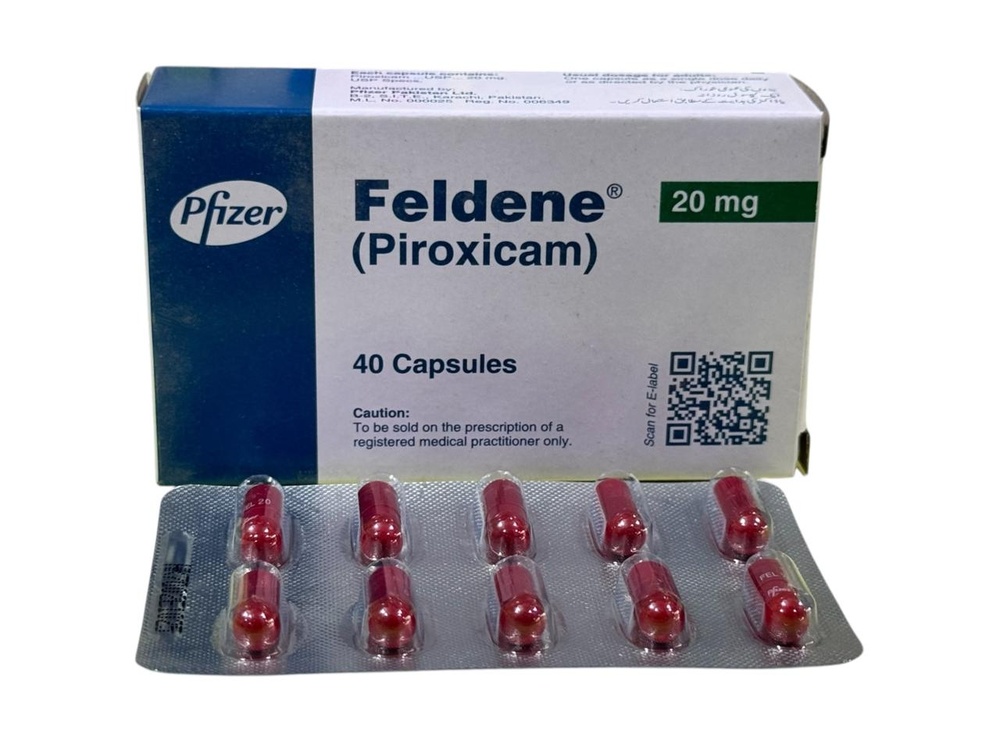
- Kraj rejestracji
- Postać farmaceutycznaHard capsule, 20 MG
- Kod ATCM01AC01
- Substancja czynna
- Wymaga receptyTak
- Producent
- Te treści mają charakter wyłącznie informacyjny i nie zastępują konsultacji lekarskiej.
- Zamienniki FELDENEPostać farmaceutyczna: Tablet, 20 MGSubstancja czynna: piroxicamProducent: PROMEDICA S.R.L.Wymaga receptyPostać farmaceutyczna: Sublingual tablet, 20MGSubstancja czynna: piroxicamProducent: PFIZER ITALIA S.R.L.Wymaga receptyPostać farmaceutyczna: Hard capsule, 20 MGSubstancja czynna: piroxicamProducent: DOC GENERICI SRLWymaga recepty
Odpowiedniki FELDENE w innych krajach
Leki z tą samą substancją czynną dostępne w innych krajach.
Odpowiednik FELDENE w Polska
Odpowiednik FELDENE w Ukraina
Odpowiednik FELDENE w Hiszpania
Lekarze online w sprawie FELDENE
Omów stosowanie FELDENE, bezpieczeństwo i ocenę zasadności recepty zgodnie z obowiązującymi przepisami.









Uzyskaj receptę na FELDENE online
Wypełnij 2-minutowy formularz
Opisz swoje objawy, historię choroby i lek, o który prosisz.
Wybierz lekarza lub pozwól nam przydzielić
Wybierz specjalistę lub dopasujemy Cię do najbliższego dostępnego lekarza.
Lekarz analizuje Twój przypadek
Zazwyczaj w ciągu 30 minut. Może zadawać dodatkowe pytania przez czat.
Odbierz w dowolnej aptece
Recepta elektroniczna wysłana na Twój e-mail — ważna w całej Polsce.
Często zadawane pytania
FELDENE wymaga recepty w Włochy. Możesz skonsultować się z lekarzem online, aby sprawdzić, czy ten lek może być odpowiedni w Twojej sytuacji.
Substancją czynną w FELDENE jest piroxicam. Informacja ta pomaga rozpoznać leki o tym samym składzie, ale pod różnymi nazwami handlowymi.
FELDENE jest produkowany przez PFIZER ITALIA S.R.L.. Nazwy handlowe i opakowania mogą się różnić w zależności od dystrybutora.
Lekarze, tacy jak Lekarze rodzinni, Psychiatrzy, Dermatolodzy, Kardiolodzy, Endokrynolodzy, Gastroenterolodzy, Pulmonolodzy, Nefrolodzy, Reumatolodzy, Hematolodzy, Zakaźnicy, Alergolodzy, Geriatrzy, Pediatrzy, Onkolodzy, mogą ocenić, czy stosowanie FELDENE jest odpowiednie w Twoim przypadku, w zależności od sytuacji klinicznej i lokalnych przepisów. Możesz umówić konsultację online, aby omówić objawy i możliwe dalsze kroki.
Polska posiada dobrze rozwiniętą infrastrukturę ochrony zdrowia w dużych miastach, takich jak Warszawa, Kraków, Wrocław i Gdańsk. Apteki są łatwo dostępne i działają zgodnie z obowiązującymi przepisami, zapewniając dostęp do leków na receptę.
Możesz kupić FELDENE w Warszawie, Krakowie, Wrocławiu lub Gdańsku w każdej aptece, posiadając ważną receptę.
Aby uzyskać receptę, możesz skorzystać z Oladoctor:
Inne leki zawierające tę samą substancję czynną (piroxicam) to m.in. BREXIN, FELDENE FAST, PIROXIKAM DOK JENERIKI. Mogą one różnić się nazwą handlową lub postacią, ale zawierają ten sam składnik terapeutyczny. Przed zmianą lub rozpoczęciem nowego leku skonsultuj się z lekarzem.
