



COMBOGESIC 10 mg /Ml + 3 Mg/Ml Roztwór Do Infuzji

Ocena recepty online
Lekarz przeanalizuje Twój przypadek i zdecyduje, czy wystawienie recepty jest medycznie uzasadnione.

Porozmawiaj z lekarzem o tym leku
Omów swoje objawy i opcje leczenia podczas szybkiej konsultacji online.



Jak stosować KOMBOJESIK
Treść ulotki
Combogesic 10 mg/ml + 3 mg/ml solution for infusion
paracetamol/ibuprofen
Read this leaflet carefully before you start to use this medicine as it contains important information for you.
- Keep this leaflet. You may need to read it again.
- If you have any questions, ask your doctor or pharmacist.
- This medicine has been prescribed for you only. Do not pass it on to others, even if their symptoms are the same as yours, as it could be harmful.
- If you get any side effects, even those not listed in this leaflet, tell your doctor or pharmacist. See section 4.
- Do not use this medicine for more than 2 days.
Contents of this leaflet
- 1. What Combogesic is and what it is used for
- 2. What you need to know before you use Combogesic
- 3. How to use Combogesic
- 4. Possible side effects
- 5. How to store Combogesic
- 6. Contents of the pack and other information
1. What is Combogesic and what is it used for
Combogesic contains the active ingredients paracetamol and ibuprofen. Ibuprofen belongs to a
group of medicines called non-steroidal anti-inflammatory drugs (or NSAIDs). Paracetamol
works differently from ibuprofen, but both substances work together to reduce
pain.
Combogesic is used in adults for the short-term symptomatic treatment of moderate
acute pain, when an intravenous route of administration is necessary and/or when other routes of
administration are not possible.
2. What you need to know before taking Combogesic
Do not take Combogesic:
- if you are allergic to the active ingredients, to other NSAIDs, or to any of the other ingredients of this medicine (listed in section 6);
- if you have severe heart failure, liver failure or kidney failure;
- if you regularly drink large amounts of alcohol;
- if you have asthma, urticaria or allergic-type reactions after taking acetylsalicylic acid or other NSAIDs;
- if you have a history of gastrointestinal bleeding or perforations related to previous therapies with NSAIDs;
- if you have an active or recurrent peptic ulcer (i.e. a stomach or duodenal ulcer), or bleeding (two or more distinct episodes of ulceration or bleeding proven);
- if you have a cerebral haemorrhage (cerebrovascular haemorrhage) or other active bleeding;
- if you have a blood coagulation disorder or an increased tendency to bleed;
- if you have severe dehydration (caused by vomiting, diarrhoea or insufficient fluid intake);
- during the last three months of pregnancy;
- if you are under 18 years of age.
Warnings and precautions
To avoid the risk of overdose,
- check that other medicines do not contain paracetamol,
- do not exceed the maximum recommended doses (see section 3).
Adverse effects can be minimized by using the lowest effective dose for the shortest duration necessary to control symptoms. Do not use Combogesic for more than 2 days.
Consult your doctor or nurse before taking Combogesic if:
- you are taking other medicines containing paracetamol, ibuprofen, or other anti-inflammatory (NSAID) painkillers (to avoid the risk of an overdose);
- you have heart problems, including heart failure, angina pectoris (chest pain), or if you have had a heart attack, bypass surgery, peripheral artery disease (poor circulation in the legs or feet due to narrowed or blocked arteries), or any type of stroke (including “mini-stroke” or transient ischaemic attack “TIA”);
- you have high blood pressure, diabetes, high cholesterol levels, a family history of heart disease or stroke, or if you are a smoker;
- you have liver disease, hepatitis, kidney disease or difficulty urinating;
- you currently have an infection; Combogesic may mask the symptoms or signs of an infection (fever, pain and swelling);
- you have previously had heartburn, indigestion, stomach ulcers or any other stomach problems;
- you have recently undergone or are planning to undergo surgery;
- you have an infection (see the entry “Infections” below);
- you have asthma;
- you are dehydrated or have diarrhoea;
- you have intestinal problems such as ulcerative colitis or Crohn's disease;
- you have an inherited or acquired genetic defect of certain enzymes that manifests with neurological complications or skin problems, or occasionally both, for example porphyria;
- you have an autoimmune disease such as Lupus erythematosus or other connective tissue disorders, as there may be an increased risk of aseptic meningitis (inflammation of the protective membrane surrounding the brain);
- you suffer from hay fever, nasal polyps or chronic obstructive respiratory disorders, as there may be an increased risk of allergic reactions;
- you are pregnant or wish to become pregnant (see the section Pregnancy, breastfeeding and fertility);
Cardiovascular risk
Anti-inflammatory/painkillers such as ibuprofen may be associated with a small
increased risk of heart attack or stroke, especially if used at high doses. Do not exceed
the recommended dose or duration of treatment.
Gastrointestinal symptoms
Serious gastrointestinal adverse effects (affecting the stomach and intestines) have been reported
with the use of NSAIDs, including ibuprofen. These can occur with or without warning symptoms. The risk of these adverse effects is higher in patients with a history of stomach or intestinal ulcers, especially if bleeding or
perforations were also involved. Elderly patients are at greater risk of gastrointestinal adverse effects. You must
tell your doctor about any episodes of gastrointestinal problems, and be careful about any
unusual abdominal symptoms, including nausea, vomiting, diarrhoea, constipation, indigestion, abdominal pain,
tarry stools or vomiting blood.
Elderly patients should first assess treatment with a doctor. Elderly patients are at
greater risk of adverse effects, especially bleeding and perforation in the digestive tract.
Skin reactions
Serious skin reactions have been reported in association with treatment with ibuprofen. You must
immediately inform your doctor or nurse if you develop any rash, mucous membrane lesions, blisters or other signs of allergy as these may be the first signs of
a very serious skin reaction. See section 4.
Infections
Combogesic can mask the signs of infections such as fever and pain. It is therefore possible that
Combogesic may delay appropriate treatment of the infection, which may lead to an increased
risk of complications. This has been observed in pneumonia caused by bacteria and skin infections
related to varicella. If you are given this medicine while you have an infection and
the symptoms of the infection persist or worsen, consult a doctor without delay.
Prolonged use of painkillers
If you use painkillers for a long time, this may cause headaches, which should not be treated
with other painkillers. If you think this is the case, talk to your doctor or pharmacist.
Vision problems
If you notice any vision problems after using Combogesic, stop using the medicine and
consult a doctor.
Children and adolescents
Combogesic should not be used in children and adolescents under 18 years of age.
Other medicines and Combogesic
Tell your doctor or nurse if you are taking, have recently taken or might take
any other medicines.
Always tell your doctor if you are taking other medicines containing paracetamol, ibuprofen or
other NSAID painkillers, including those that can be purchased without a prescription to avoid the
risk of overdose.
Combogesic can affect or be affected by other medicines. For example:
- acetylsalicylic acid, salicylates or other NSAID drugs (including COX-2 inhibitors such as celecoxib or etoricoxib);
- medicines for the treatment of heart problems (e.g. digoxin or beta-blockers);
- corticosteroids, such as prednisone and cortisone;
- medicines that are anticoagulants (thin the blood/prevent coagulation, for example acetylsalicylic acid, warfarin, ticlopidine);
- medicines that lower blood pressure (ACE inhibitors such as captopril, beta-blockers such as atenolol, angiotensin II receptor antagonists such as losartan);
- medicines for the treatment of epilepsy or seizures (e.g. phenytoin, phenobarbital, carbamazepine);
- medicines used in the treatment of mania (e.g. lithium);
- medicines used in the treatment of depression, such as SSRIs (selective serotonin reuptake inhibitors);
- probenecid, a medicine used to treat gout;
- diuretics, medicines used to increase urine production;
- methotrexate, a medicine used to treat arthritis and some types of cancer;
- tacrolimus or cyclosporine, immunosuppressant drugs used after an organ transplant;
- zidovudine, a medicine used to treat HIV (the virus that causes AIDS);
- sulfonylurea, a medicine used to treat diabetes;
- a type of antibiotics known as quinolone antibiotics (e.g. ciprofloxacin);
- a type of antibiotics known as aminoglycosides (e.g. gentamicin, streptomycin);
- chloramphenicol, an antibiotic used to treat eye and ear infections;
- antifungal medicines such as voriconazole or fluconazole;
- medicines used in the treatment of tuberculosis such as isoniazid and rifampicin;
- mifepristone, a medicine used for medical termination of pregnancy;
- some herbal remedies, such as ginkgo biloba (sometimes used for dementia), or St. John's wort (Hypericum, sometimes used for mild depression).
Even some other medicines can affect or be affected by treatment with
Combogesic. You should therefore always ask your doctor, nurse or pharmacist for advice before
taking any other medicine.
If you need to give a blood or urine sample for analysis, you should tell your doctor that you are taking
this medicine as it may interfere with the test results.
Combogesic with alcohol
Do not drink alcoholic beverages during treatment with this medicine. The combination of alcohol with
Combogesic may lead to liver damage.
Pregnancy, breastfeeding and fertility
If you are pregnant, suspect you are pregnant or are planning to become pregnant, or if you are breastfeeding with
breast milk, ask your doctor or pharmacist for advice before taking this medicine.
Pregnancy
This medicine should not be taken during the last 3 months of pregnancy. Taking
the medicine during the first six months of pregnancy should only be done if necessary and
under direct medical supervision.
Breastfeeding
Only small amounts of paracetamol and ibuprofen are excreted in breast milk. This
medicine can be used during breastfeeding if it is used at the recommended dose and for the shortest
possible time.
Fertility
May impair female fertility and is not recommended in women trying to conceive.
This effect is reversible with discontinuation of the medicine.
Driving and using machines
Adverse effects such as dizziness, drowsiness, fatigue and visual disturbances are possible after
taking NSAIDs. If these effects occur, patients should not drive or operate
machinery.
Combogesic contains sodium
This medicine contains 35 mg of sodium (the main component of table salt) per 100
ml. This is equivalent to 1.75% of the recommended maximum daily intake with the diet of an
adult.
3. How to use Combogesic
Combogesic will be administered to you by a healthcare professional via infusion into one of your veins.
The infusion must be administered in 15 minutes.
This medicine is for short-term use only, maximum 2 days.
The recommended dose is:
For adults weighing more than 50 kg: 1 vial every 6 hours, if necessary.
The maximum daily dose is four vials equivalent to 4000 mg (4 g) of paracetamol and
1200 mg of ibuprofen.
If you weigh 50 kg or less, if you are elderly or if you have liver or kidney problems:the doctor may decide to
reduce the dose or increase the time between doses due to the increased risk of side effects.
A higher dose than recommended does not increase pain relief, but can lead to serious
risks (see also the paragraph "If you take more Combogesic than you should"). The lowest effective
dose should be given for the shortest duration necessary to relieve symptoms. If you have an infection,
consult a doctor immediately if the symptoms (such as fever and pain) persist or worsen
(see paragraph 2).
If you take more Combogesic than you should
Contact a doctor or nurse immediatelyif you think you have accidentally received an
excessive amount of this medicine. Do so even if you feel well.This is because an excessive amount of paracetamol can cause serious delayed liver damage, which can be fatal. Even
if there are no signs of illness or poisoning, you may need urgent medical attention.
To avoid liver damage, it is essential to receive medical treatment as soon as possible. The shorter the
interval between taking the medication and starting treatment with the antidote (as few hours as possible), the greater the
likelihood that liver damage can be avoided.
Other symptoms may include nausea, stomach pain, vomiting (which may be streaked with blood),
headache, ringing in the ears, confusion and trembling eye movements. At high doses,
drowsiness, chest pain, palpitations, loss of consciousness, convulsions
(especially in children), weakness and dizziness, blood in the urine, feeling cold and
breathing problems have been reported.
4. Possible side effects
Like all medicines, this medicine can cause side effects, although not everyone will experience them.
Stop usingCombogesic and immediatelyinform your doctor or go to the nearest hospital emergency room if you experience any of the following side effects:
Uncommon:
- vomiting with blood or other material that looks like coffee grounds;
- bleeding from the rectum, black and tarry stools, bloody diarrhea;
- swelling of the face, lips or tongue that may cause difficulty swallowing and breathing.
Very rare:
- asthma, shortness of breath, wheezing;
- sudden or severe itching, skin reactions, hives;
- severe skin rash with blisters and bleeding on the lips, eyes, mouth, nose and genitals (Stevens-Johnson Syndrome). Very rare cases of severe skin reactions have been reported;
- worsening of existing severe skin infections (you may notice a rash, blisters and skin discoloration, fever, drowsiness, diarrhea and feeling unwell), or worsening of other infections including chickenpox, herpes or severe infections with destruction (necrosis) of the tissue under the skin and muscle, blisters and skin peeling;
- fever, general feeling of being unwell, nausea, stomach pain, headache and stiff neck (symptoms of aseptic meningitis, inflammation of the protective membrane surrounding the brain).
Not known (frequency cannot be estimated from available data):
- a severe skin reaction known as DRESS syndrome may occur. Symptoms of DRESS include: skin reactions, fever, swollen lymph nodes and increased eosinophils (a type of white blood cell).
- a widespread, red and scaly rash with bumps under the skin and blisters mainly located in skin folds, on the trunk and upper extremities, accompanied by fever at the beginning of treatment (acute generalized exanthematous pustulosis). See also section 2.
Additional side effects:
Common (may affect up to 1 in 10 people):
- nausea or vomiting;
- loss of appetite;
- heartburn or upper stomach pain;
- stomach cramps, gas, constipation or diarrhea, mild gastrointestinal bleeding;
- skin rash, itchy skin;
- headache;
- dizziness;
- feeling nervous;
- ringing or buzzing in the ears;
- unusual weight gain, swelling and fluid retention, swelling of the ankles and legs (edema).
Uncommon (may affect up to 1 in 100):
- decreased red blood cells, nosebleeds and heavier menstrual periods (menstrual bleeding);
- allergic reactions - skin reaction, fatigue, joint pain (e.g. serum sickness, lupus erythematosus, Henoch-Schönlein vasculitis, angioedema);
- enlargement of breast tissue in men; low blood sugar levels;
- insomnia;
- mood changes, such as depression, confusion, nervousness;
- eye problems such as blurred vision (reversible), red, painful eyes, itching;
- thickened mucus;
- severe pain or tension in the stomach; peptic/gastrointestinal ulcer;
- inflammation of the intestines and worsening of inflammation of the colon (colitis) and digestive tract (Crohn's disease) and complications of diverticula in the large intestine (perforation or fistula);
- inability to completely empty the bladder (urinary retention);
- abnormal laboratory test results (blood tests, liver and kidney enzymes).
Rare (may affect up to 1 in 1,000):
- tingling in the hands and feet;
- unusual dreams, visions (hallucinations);
- damage to kidney tissue (particularly with long-term use);
- high uric acid levels in the blood (hyperuricemia).
Very rare (may affect up to 1 in 10,000):
- low potassium levels - weakness, fatigue, muscle cramps (hypokalaemia);
- signs of anemia such as fatigue, headache, shortness of breath and pale skin;
- more frequent bleeding or bruising than usual, reddish or purplish spots on the skin;
- severe and persistent headache;
- feeling of spinning (vertigo);
- fast and irregular heartbeat, also called palpitations;
- increased blood pressure and possible heart problems;
- inflammation of the esophagus;
- yellowing of the skin and/or eyes, also called jaundice;
- liver damage (particularly with long-term use);
- hair loss;
- increased sweating;
- signs of frequent and worrying infections such as fever, severe chills, sore throat or mouth ulcers;
- nephrotoxicity in various forms, including interstitial nephritis, nephrotic syndrome, and acute and chronic renal failure.
Reporting of side effects
If you get any side effects, even those not listed in this leaflet, tell your doctor or pharmacist. You can also report side effects directly through the national reporting system at https://www.aifa.gov.it/content/segnalazioni-reazioni-avverse.
By reporting side effects you can help provide more information on the safety of this medicine.
5. How to store Combogesic
Keep this medicine out of the sight and reach of children and adolescents.
Store at a temperature below 25°C. Do not refrigerate or freeze. Store in the original
packaging to protect the medicine from light.
Do not use this medicine after the expiry date which is stated on the packaging and on the vial after
Exp. The expiry date refers to the last day of that month.
Do not use this medicine if you notice that the packaging is torn or shows signs of tampering. Do not
use this medicine if you notice any visible particles or discoloration.
This product is for single use only. The product must be used immediately after opening.
Any unused solution must be discarded.
Dispose of in accordance with local requirements.
6. Contents of the pack and other information
What Combogesic contains
The active ingredients are 10 mg/ml of paracetamol and 3 mg/ml of ibuprofen.
The other ingredients are cysteine hydrochloride monohydrate, disodium phosphate dihydrate, mannitol, hydrochloric
acid (for pH adjustment), sodium hydroxide (for pH adjustment) and water for
injections.
Description of the appearance of Combogesic and contents of the pack
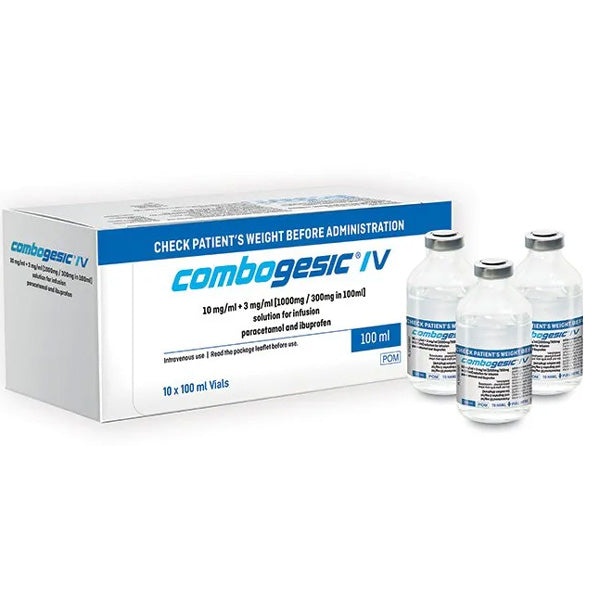
Combogesic is a clear and colourless solution for infusion, free from visible particles. It is supplied in
transparent glass vials of 100 ml, sealed with a grey bromobutyl rubber stopper and an
aluminium flip-off cap. It is available in a pack of 10 vials.
Marketing authorisation holder and manufacturer
Marketing authorisation holder:
EVER Valinject GmbH
Oberburgau 3
4866 Unterach am Attersee
Austria
Manufacturer:
S.M. Farmaceutici SRL
Zona Industriale
85050 Tito (PZ)
Italy
This medicinal product is authorised in the Member States of the European Economic Area with the
following denominations:
Sweden Paraibucomb
Germany Comboval 10 mg/ml + 3 mg/ml Infusionslösung
Austria Comboval 10 mg/ml + 3 mg/ml Infusionslösung
France Cetafen 10 mg/ml + 3 mg/ml per mL, solution for perfusion
The following information is intended exclusively for healthcare professionals:
Combogesic
Visually inspect Combogesic for the presence of any particulate matter and
discoloration before administration, when the solution and container permit. If
visible opaque particles, discoloration or other foreign matter are observed, the solution should
not be used.
In the absence of compatibility studies, this medicinal product should not be mixed with diluents. If
less than a full vial is required for a single dose, the correct amount should be infused and the
remaining solution discarded.
Combogesic must be used in a single patient on a single occasion. It does not contain antimicrobial
preservatives. Unused solution must be discarded.
Route of administration
Combogesic must be administered as a 15-minute intravenous infusion.
To remove the solution, use a 0.8 mm needle (21 gauge needle) and puncture the stopper vertically
at the specifically indicated point.
In patients weighing less than 50 kg for whom a full vial (100 ml) is not required, the correct amount must be
infused and the remaining solution must be discarded.
As with all infusion solutions presented in glass vials, it should be remembered that close
monitoring is necessary, especially at the end of the infusion, regardless of the route of
administration. This monitoring at the end of the perfusion applies particularly to
central venous infusion, in order to avoid air embolism.

Nie jesteś pewien, czy ten lek jest odpowiedni dla ciebie?
Omów swoje objawy i leczenie z lekarzem online.

Zacząłeś przyjmować lek i masz pytania?
Omów swoje objawy i leczenie z lekarzem online.
- Kraj rejestracji
- Postać farmaceutycznaInfusion solution, 10 MG/ML + 3 MG/ML
- Kod ATCN02BE51
- Substancja czynna
- Wymaga receptyTak
- Producent
- Te treści mają charakter wyłącznie informacyjny i nie zastępują konsultacji lekarskiej.
- Zamienniki KOMBOJESIKPostać farmaceutyczna: Tablet, 500 MG + 60 MGSubstancja czynna: paracetamol, combinations excl. psycholepticsProducent: KENVUE ITALIA S.P.A.Bez receptyPostać farmaceutyczna: Tablet, 300MG + 200MGSubstancja czynna: paracetamol, combinations excl. psycholepticsBez receptySubstancja czynna: paracetamol, combinations excl. psycholepticsProducent: TEOFARMA S.R.L.Bez recepty
Odpowiedniki KOMBOJESIK w innych krajach
Leki z tą samą substancją czynną dostępne w innych krajach.
Odpowiednik KOMBOJESIK w Hiszpania
Odpowiednik KOMBOJESIK w Polska
Odpowiednik KOMBOJESIK w Ukraina
Lekarze online w sprawie KOMBOJESIK
Omów stosowanie KOMBOJESIK, bezpieczeństwo i ocenę zasadności recepty zgodnie z obowiązującymi przepisami.









Uzyskaj receptę na KOMBOJESIK online
Wypełnij 2-minutowy formularz
Opisz swoje objawy, historię choroby i lek, o który prosisz.
Wybierz lekarza lub pozwól nam przydzielić
Wybierz specjalistę lub dopasujemy Cię do najbliższego dostępnego lekarza.
Lekarz analizuje Twój przypadek
Zazwyczaj w ciągu 30 minut. Może zadawać dodatkowe pytania przez czat.
Odbierz w dowolnej aptece
Recepta elektroniczna wysłana na Twój e-mail — ważna w całej Polsce.
Często zadawane pytania
KOMBOJESIK wymaga recepty w Włochy. Możesz skonsultować się z lekarzem online, aby sprawdzić, czy ten lek może być odpowiedni w Twojej sytuacji.
Substancją czynną w KOMBOJESIK jest paracetamol, combinations excl. psycholeptics. Informacja ta pomaga rozpoznać leki o tym samym składzie, ale pod różnymi nazwami handlowymi.
KOMBOJESIK jest produkowany przez EVER VALINJECT GMBH. Nazwy handlowe i opakowania mogą się różnić w zależności od dystrybutora.
Lekarze, tacy jak Lekarze rodzinni, Psychiatrzy, Dermatolodzy, Kardiolodzy, Endokrynolodzy, Gastroenterolodzy, Pulmonolodzy, Nefrolodzy, Reumatolodzy, Hematolodzy, Zakaźnicy, Alergolodzy, Geriatrzy, Pediatrzy, Onkolodzy, mogą ocenić, czy stosowanie KOMBOJESIK jest odpowiednie w Twoim przypadku, w zależności od sytuacji klinicznej i lokalnych przepisów. Możesz umówić konsultację online, aby omówić objawy i możliwe dalsze kroki.
Polska posiada dobrze rozwiniętą infrastrukturę ochrony zdrowia w dużych miastach, takich jak Warszawa, Kraków, Wrocław i Gdańsk. Apteki są łatwo dostępne i działają zgodnie z obowiązującymi przepisami, zapewniając dostęp do leków na receptę.
Możesz kupić KOMBOJESIK w Warszawie, Krakowie, Wrocławiu lub Gdańsku w każdej aptece, posiadając ważną receptę.
Aby uzyskać receptę, możesz skorzystać z Oladoctor:
Inne leki zawierające tę samą substancję czynną (paracetamol, combinations excl. psycholeptics) to m.in. AKTIGRIP JIORNO & NOTTE, ALGOPIRINA, ANTIREUMINA. Mogą one różnić się nazwą handlową lub postacią, ale zawierają ten sam składnik terapeutyczny. Przed zmianą lub rozpoczęciem nowego leku skonsultuj się z lekarzem.
