



ATAZANAVIR 150 mg Kapsułki Twarde

Ocena recepty online
Lekarz przeanalizuje Twój przypadek i zdecyduje, czy wystawienie recepty jest medycznie uzasadnione.

Porozmawiaj z lekarzem o tym leku
Omów swoje objawy i opcje leczenia podczas szybkiej konsultacji online.



Jak stosować ATATSANAVIR KRKA
Treść ulotki
Atazanavir Krka 150 mg hard capsules, 200 mg hard capsules, 300 mg hard capsules
atazanavir
Read this leaflet carefully before you start taking this medicine as it contains
important information for you.
- Keep this leaflet. You may need to read it again.
- If you have any questions, ask your doctor or pharmacist.
- This medicine has been prescribed for you only. Do not pass it on to others, even if their symptoms are the same as yours, as it could be harmful.
- If you get any side effects, even those not listed in this leaflet, tell your doctor or pharmacist. See section 4. Contents of this leaflet
- 1. What Atazanavir Krka is and what it is used for
- 2. What you need to know before you take Atazanavir Krka
- 3. How to take Atazanavir Krka
- 4. Possible side effects
- 5. How to store Atazanavir Krka
- 6. Contents of the pack and other information
1. What is Atazanavir Krka and what is it used for
Atazanavir Krka is an antiviral (or antiretroviral) medicine.It belongs to a group
called protease inhibitors. These medicines control the human immunodeficiency virus (HIV) infection by blocking a protein that HIV needs to replicate.
These medicines work by reducing the amount of HIV virus in the body, and this leads to a
strengthening of the immune system. In this way, Atazanavir Krka reduces the risk of developing
diseases associated with HIV infection.
Atazanavir Krka capsules can be used by both adults and children 6 years of age and older. Your doctor
has prescribed Atazanavir Krka because you are affected by the HIV virus that causes Acquired
Immunodeficiency Syndrome (AIDS). It is normally used in combination with other anti-HIV medicines. Your doctor will discuss with you which combination of these medicines with Atazanavir Krka is
best for you.
2. What you need to know before taking Atazanavir Krka
Do not take Atazanavir Krka
- if you are allergicto atazanavir or to any of the other ingredients of this medicine (listed in section 6).
- if you have moderate to severe liver problems. The doctor will assess the severity of the liver disorder before deciding if you can take Atazanavir Krka.
- if you are taking any of these medicines: see also Other medicines and Atazanavir Krka
- rifampicin (an antibiotic for the treatment of tuberculosis)
- astemizole or terfenadine (commonly used to treat allergy symptoms, these medicines may be available over the counter); cisapride (used to treat heartburn, sometimes called acid indigestion); pimozide (used to treat schizophrenia); quinidine or bepridil (used to correct heart rhythm); ergotamine, dihydroergotamine, ergonovine, methylergonovine (used to treat headaches); alfuzosin (used to treat enlarged prostate).
- quetiapine (used to treat schizophrenia, bipolar disorder and major depressive disorder); lurasidone (used to treat schizophrenia)
- medicines containing St John's Wort ( Hypericum perforatum, a herbal remedy)
- triazolam and oral midazolam (taken by mouth) (used to help you sleep and/or reduce anxiety)
- lomitapide, simvastatin and lovastatin (used to lower blood cholesterol levels).
- medicines that contain grazoprevir, including the fixed-dose combination of elbasvir/grazoprevir (used to treat chronic hepatitis C infection). Do not take sildenafil with Atazanavir Krka when sildenafil is used for the treatment of pulmonary arterial hypertension. Sildenafil is also used for the treatment of erectile dysfunction. Tell your doctor if you are using sildenafil for the treatment of erectile dysfunction. Talk to your doctor immediately if you are in any of these conditions. Warnings and precautionsAtazanavir Krka is not a cure for HIV infection.You may continue to develop infections or other diseases associated with HIV infection. Some people may require special attention before or during taking Atazanavir Krka. Ask your doctor or pharmacist before taking Atazanavir Krka and make sure your doctor knows:
- if you suffer from hepatitis B or C
- if you develop signs or symptoms of gallstones (pain in the upper right side of the stomach)
- if you suffer from haemophilia A or B
- if you are on haemodialysis Atazanavir Krka can affect kidney function. Kidney stones have been reported in patients taking atazanavir. If you develop signs or symptoms of kidney stones (flank pain, blood in the urine, pain when urinating), tell your doctor immediately. In some patients with advanced HIV infection (AIDS) and with a history of opportunistic infection, signs and symptoms of previous infections may occur shortly after starting anti-HIV treatment. These symptoms are believed to be due to an improvement in the body's immune response, which allows the body to fight infections that may have been present without clear symptoms. If you notice any symptoms of infection, please inform your doctor immediately. In addition to opportunistic infections, autoimmune disorders (a condition that occurs when the immune system attacks healthy tissue in the body) may also occur after you have started taking medicines to treat HIV infection. Autoimmune disorders can occur many months after starting treatment. If you notice any symptoms of infection or other symptoms such as muscle weakness, initial weakness in hands and feet that rises towards the torso, palpitations, tremor or hyperactivity, tell your doctor immediately for the necessary treatment. Some patients taking combination antiretroviral therapy may develop a bone disease called osteonecrosis (bone tissue death caused by a lack of blood supply to the bone). The duration of combination antiretroviral therapy, the use of corticosteroids, alcohol consumption, severe immunosuppression, a higher body mass index, among others, may be some of the numerous risk factors for the development of this disease. Signs of osteonecrosis are joint stiffness, discomfort and pain (especially in the hips, knees and shoulders) and difficulty moving. See your doctor if you notice the appearance of any of these symptoms.
In patients taking atazanavir, hyperbilirubinemia (an increase in the level of
bilirubin in the blood) has occurred. The signs may be a slight yellowing of the skin and eyes. See
your doctor if you notice the appearance of any of these symptoms.
Severe skin rash, including Stevens-Johnson syndrome, has been reported in patients taking atazanavir. If
you should develop a rash, tell your doctor immediately.
See your doctor if you notice a change in your heartbeat (changes in heart rhythm).
Children receiving Atazanavir Krka may need cardiac monitoring and this will be
established by the pediatrician.
Children
Do not give this medicine to childrenyounger than 3 months of age and weighing less than 5 kg. The use
of Atazanavir Krka in children under 3 months of age and weighing less than 5 kg has not been studied
due to the risk of serious complications.
Other medicines and Atazanavir Krka
Do not take Atazanavir Krka with some medicines.These medicines are listed in
the paragraph “Do not take Atazanavir Krka” at the beginning of Section 2.
There are other medicines that you cannot take with Atazanavir Krka. Tell your doctor if you
are taking, have recently taken or might take any other medicines. Especially, it is
important to mention the following:
- other medicines for the treatment of HIV infection (e.g. indinavir, nevirapine and efavirenz)
- sofosbuvir/velpatasvir/voxilaprevir (used to treat hepatitis C)
- sildenafil, vardenafil or tadalafil (used by men to treat impotence (erectile dysfunction))
- if you are taking oral contraceptives (“the pill”) with Atazanavir Krka to prevent pregnancy, be sure to take them exactly as directed by your doctor and do not miss any dose
- any medicine used to treat acid-related disorders (e.g.: antacids to be taken one hour before taking Atazanavir Krka or 2 hours after taking Atazanavir Krka, histamine receptor blockers such as famotidine and proton pump inhibitors such as omeprazole)
- medicines to lower blood pressure, decrease heart rate or correct heart rhythm (amiodarone, diltiazem, systemic lidocaine, verapamil)
- atorvastatin, pravastatin and fluvastatin (used to lower blood cholesterol levels)
- salmeterol (used to treat asthma)
- cyclosporine, tacrolimus and sirolimus (medicines to lower the activity of the immune system)
- some antibiotics (rifabutin, clarithromycin)
- ketoconazole, itraconazole and voriconazole (antifungals)
- apixaban, dabigatran, edoxaban, rivaroxaban and warfarin (anticoagulant, used to reduce blood clot formation)
- carbamazepine, phenytoin, phenobarbital, lamotrigine (antiepileptics)
- irinotecan (used in cancer treatment)
- sedatives (e.g.: injectable midazolam)
- buprenorphine (used to treat opioid dependence and pain). Some medicines may interact with ritonavir, a medicine that is taken with Atazanavir Krka. It is important that you tell your doctor if you are taking fluticasone or budesonide (administered by nasal or inhaled route for the treatment of allergic symptoms or asthma). Atazanavir Krka with food and drinkIt is important that you take Atazanavir Krka with food (a meal or a substantial snack) as this helps the absorption of the medicine.
Pregnancy and breastfeeding
If you are pregnant, suspect you may be pregnant or are planning a pregnancy, ask your doctor for
advice before taking this medicine.
Atazanavir, the active ingredient of Atazanavir Krka, is excreted in breast milk. Patients should not
breastfeed while taking Atazanavir Krka.
Breastfeeding is not recommendedfor HIV-positive women as HIV infection can be
transmitted to the baby through breast milk.
If you are breastfeeding or are thinking about breastfeeding you should talk toyour doctor as soon as possible.
Driving and operating machinery
If you feel dizzy or lightheaded, do not drive or operate machinery and contact your
doctor immediately.
Atazanavir Krka contains lactose monohydrate
If you have been diagnosed with intolerance to some sugars, contact your doctor before taking
this medicine.
3. How to take Atazanavir Krka
Take this medicine exactly as your doctor has told you. If you have any doubts, ask your doctor.
In this way, you can be sure that the medicine will be fully effective and will reduce the risk of
the virus developing resistance to treatment.
For adults, the recommended dose of Atazanavir Krka capsules is 300 mg once a day
with 100 mg of ritonavir, once a day, taken with food,in combination with other
anti-HIV medicines. Your doctor may adjust the dose of Atazanavir Krka based on your anti-
HIV therapy.
For children (from 6 years to ≤18 years of age), the pediatrician will determine the correct dose based on the child's weight.
The dose of Atazanavir Krka capsules in children is calculated based on body weight and
is taken once a day with food and 100 mg of ritonavir, as indicated below:
Other formulations of this medicine are available for pediatric patients who are at least 3
months old and weigh at least 5 kg (see the relevant Summary of Product Characteristics of the
alternative forms). It is suggested to switch from the other formulations to capsules as soon as patients
are able to swallow capsules regularly.
Take Atazanavir Krka capsules with food(a meal or a substantial snack). Swallow the
capsules whole.
Do not open the capsules.
If you take more Atazanavir Krka than you should
If you or your child takes too high a dose of Atazanavir Krka, you may experience
yellowing of the skin and/or eyes (jaundice) and irregular heartbeat (prolongation
of the QTc interval).
| Body weight I (kg) | t Atazanavir Krka dose once a day (mg) | Dose* of Ritonavir once a day (mg) |
| from 15 to less than 35 | 200 | 100 |
| at least 35 | 300 | 100 |
If you accidentally take more capsules of Atazanavir Krka than prescribed by your doctor, contact
your doctor or the nearest hospital immediately for advice.
If you forget to take Atazanavir Krka
If you forget to take a dose, take the missed dose as soon as possible with food and then take the next dose at the scheduled time. However, if the time for the next dose is near,
do not take the missed dose. Wait and take only the next dose at the scheduled time. Do not
take a double dose to make up for a missed dose.
If you stop taking Atazanavir Krka
Do not stop taking Atazanavir Krka before talking to your doctor.
If you have any questions about using this medicine, ask your doctor.
4. Possible side effects
Like all medicines, this medicine can cause side effects, although not everybody gets them.
When being treated for HIV infection it is not always easy to tell which side effects are caused by Atazanavir Krka, by other medicines you are taking or by the HIV infection itself. Tell your doctor if you notice anything unusual about your health.
During therapy for HIV you may experience an increase in weight and levels of lipids and glucose
in the blood. This is partly related to the restoration of health and lifestyle and, in the case of
blood lipids, sometimes to the HIV medicines themselves. Your doctor will check these
changes.
Tell your doctor immediately if you develop any of the following serious side effects:
- Reddening of the skin and itching have been reported, which can occasionally be severe. The reddening usually disappears within 2 weeks without any change to treatment with atazanavir. Severe reddening can develop in association with other symptoms that can be serious. Stop taking Atazanavir Krka and tell your doctor immediately if you develop severe reddening or reddening with flu-like symptoms, blisters, fever, sores in the mouth, muscle or joint pain, swelling of the face, eye inflammation causing redness (conjunctivitis), painful, warm or red lumps (nodules).
- Yellowing of the skin or the white of the eyes caused by high levels of bilirubin in the blood has been commonly reported. This side effect is usually not dangerous in adults and infants over 3 months of age; but it can be a symptom of a serious problem. Tell your doctor immediately if your skin or the white of your eyes become yellow.
- Changes in the way your heart beats (changes in heart rhythm) can occasionally occur. Tell your doctor immediately if you feel dizzy, lightheaded or suddenly faint. These may be symptoms of a serious heart problem.
- Liver problems can occur infrequently. Your doctor should perform blood tests before and during treatment with Atazanavir Krka. If you have liver problems, including infection with hepatitis B or C, you may experience a worsening of your liver problems. Tell your doctor immediately if you notice dark urine (tea-colored), itching, yellowing of the skin or the white of your eyes, pain around the stomach, pale stools or nausea.
- Gallstones occur infrequently in people taking atazanavir. Symptoms of gallstones can include pain in the upper right or middle of the stomach, nausea, vomiting, fever or yellowing of the skin or the white of the eyes.
- Atazanavir Krka can affect kidney function.
- Kidney stones occur infrequently in people taking Atazanavir Krka. Tell your doctor immediately if you notice symptoms of kidney stones including pain in your lower back or stomach, blood in your urine or pain when urinating. Other side effects reported for patients treated with atazanavir are the following:
Common (may affect up to 1 in 10 people)
- headache
- vomiting, diarrhoea, abdominal pain (stomach discomfort), nausea, dyspepsia (indigestion)
- fatigue (extreme tiredness) Uncommon (may affect up to 1 in 100 people)
- peripheral neuropathy (numbness, weakness, tingling or pain in the arms and legs)
- hypersensitivity (allergic reaction)
- asthenia (unusual tiredness or weakness)
- decreased weight, increased weight, anorexia (loss of appetite), increased appetite
- depression, anxiety, sleep disorders
- disorientation, amnesia (memory loss), dizziness, drowsiness, altered dream activity
- syncope (fainting), hypertension (high blood pressure)
- dyspnea (shortness of breath)
- pancreatitis (inflammation of the pancreas), gastritis (inflammation of the stomach), aphthous stomatitis (mouth ulcers and inflammation of the oral cavity), dysgeusia (altered taste), flatulence (gas), dry mouth, abdominal distension
- angioedema (severe swelling of the skin and other tissues, most frequently lips and eyes)
- alopecia (unusual hair loss or thinning), itching
- muscle atrophy (reduction of muscle mass), arthralgia (joint pain), myalgia (muscle pain)
- interstitial nephritis (kidney inflammation), hematuria (blood in the urine), proteinuria (excess protein in the urine), pollakiuria (increased frequency of urination)
- gynecomastia (breast enlargement in men)
- chest pain, malaise (feeling unwell), fever
- insomnia (difficulty sleeping) Rare (may affect up to 1 in 1000 people)
- abnormal gait (abnormal way of walking)
- edema (swelling)
- hepato-splenomegaly (enlargement of the liver and spleen)
- myopathy (muscle pain, muscle weakness from fatigue not caused by exercise)
- renal pain Reporting of side effectsIf you get any side effects, talk to your doctor or nurse. This includes any possible side effects not listed in this leaflet. You can also report side effects directly through the national reporting system listed in Annex V. By reporting side effects you can help provide more information on the safety of this medicine.
5. How to store Atanazavir Krka
Keep this medicine out of the sight and reach of children.
Do not use this medicine after the expiry date which is stated on the package and label after
EXP. The expiry date refers to the last day of that month.
Store at a temperature below 30 °C.
Keep the container tightly closed to protect the medicine from moisture.
The shelf life after first opening is 2 months, stored at a temperature below 25 °C.
Do not dispose of any medicine in wastewater or household waste. Ask your pharmacist how to
dispose of medicines you no longer use. This will help protect the environment.
6. Package contents and other information
What Atazanavir Krka contains
- The active substance is atazanavir. Atazanavir Krka 150 mg hard capsules Each capsule contains 150 mg of atazanavir (as sulfate). Atazanavir Krka 200 mg hard capsules Each capsule contains 200 mg of atazanavir (as sulfate). Atazanavir Krka 300 mg hard capsules Each capsule contains 300 mg of atazanavir (as sulfate).
- Other ingredients: Capsule content: lactose monohydrate, crospovidone (Type A) and magnesium stearate. See section 2 “Atazanavir Krka contains lactose monohydrate”. Capsule shell of Atazanavir Krka 150 mg hard capsules: Body: titanium dioxide (E171) and gelatin Cap: titanium dioxide (E171), yellow iron oxide (E172), red iron oxide (E172), gelatin and ink (shellac, black iron oxide (E172), potassium hydroxide) Capsule shell of Atazanavir Krka 200 mg hard capsules: Body: titanium dioxide (E171), yellow iron oxide (E172), red iron oxide (E172) and gelatin Cap: titanium dioxide (E171), yellow iron oxide (E172), red iron oxide (E172), gelatin and ink (shellac, black iron oxide (E172), potassium hydroxide) Capsule shell of Atazanavir Krka 300 mg hard capsules: Body: titanium dioxide (E171) and gelatin Cap: titanium dioxide (E171), yellow iron oxide (E172), red iron oxide (E172), black iron oxide (E172), gelatin and ink (shellac, titanium dioxide (E171), potassium hydroxide). Description of the appearance of Atazanavir Krka and package contentsAtazanavir Krka 150 mg hard capsules Hard gelatin capsule (capsule), size n. 1. The capsule body is white or almost white, the capsule cap is brown-orange. A150 is printed on the capsule cap in black. The capsule content is a powder from whitish-yellow to yellow-white. Atazanavir Krka 200 mg hard capsules Hard gelatin capsule (capsule), size n. 0. The body and cap of the capsule are brown-orange. A200 is printed on the capsule cap in black. The capsule content is a powder from whitish-yellow to yellow-white. Atazanavir Krka 300 mg hard capsules Hard gelatin capsule (capsule), size n. 00. The capsule body is white or almost white, the capsule cap is dark brown. A300 is printed on the capsule cap in white. The capsule content is a powder from whitish-yellow to yellow-white. Atazanavir Krka 150 mg and 200 mg hard capsules are available in HDPE containers containing 60 hard capsules; in a carton. Atazanavir Krka 300 mg hard capsules are available in containers containing 30 hard capsules or 90 (3x30) hard capsules; in a carton. Not all pack sizes may be marketed. Marketing Authorisation Holder
KRKA, d.d., Novo mesto, Šmarješka cesta 6, 8501 Novo mesto, Slovenia
Manufacturers
KRKA, d.d., Novo mesto, Šmarješka cesta 6, 8501 Novo mesto, Slovenia
TAD Pharma GmbH, Heinz-Lohmann-Straße 5, 27472 Cuxhaven, Germany
For further information on this medicinal product, contact the local representative of the Marketing Authorisation Holder:
België/Belgique/Belgien
KRKA Belgium, SA.
Tél/Tel: + 32 (0) 487 50 73 62
Lietuva
UAB KRKA Lietuva
Tel: + 370 5 236 27 40
България
КРКА България ЕООД
Teл.: + 359 (02) 962 34 50
Luxembourg/Luxemburg
KRKA Belgium, SA.
Tél/Tel: + 32 (0) 487 50 73 62 (BE)
Česká republika
KRKA ČR, s.r.o.
Tel: + 420 (0) 221 115 150
Magyarország
KRKA Magyarország Kereskedelmi Kft.
Tel.: + 36 (1) 355 8490
Danmark
KRKA Sverige AB
Tlf: + 46 (0)8 643 67 66 (SE)
Malta
- E. J. Busuttil Ltd. Tel: + 356 21 445 885 DeutschlandTAD Pharma GmbH Tel: + 49 (0) 4721 606-0 NederlandKRKA Belgium, SA. Tel: + 32 (0) 487 50 73 62 (BE) EestiKRKA, d.d., Novo mesto Eesti filiaal Tel: + 372 (0) 6 671 658 NorgeKRKA Sverige AB Tlf: + 46 (0)8 643 67 66 (SE) ΕλλάδαKRKA ΕΛΛΑΣ ΕΠΕ Τηλ: + 30 2100101613 ÖsterreichKRKA Pharma GmbH, Wien Tel: + 43 (0)1 66 24 300 EspañaKRKA Farmacéutica, S.L. Tel: + 34 911 61 03 80 PolskaKRKA-POLSKA Sp. z o.o. Tel.: + 48 (0)22 573 7500 FranceKRKA France Eurl Tél: + 33 (0)1 57 40 82 25 PortugalKRKA Farmacêutica, Sociedade Unipessoal Lda. Tel: + 351 (0)21 46 43 650 HrvatskaKRKA - FARMA d.o.o. Tel: + 385 1 6312 100 RomâniaKRKA Romania S.R.L., Bucharest Tel: + 4 021 310 66 05 IrelandKRKA Pharma Dublin, Ltd. Tel: + 353 1 413 3710 SlovenijaKRKA, d.d., Novo mesto Tel: + 386 (0) 1 47 51 100
Ísland
LYFIS ehf.
Sími: + 354 534 3500
Slovenská republika
KRKA Slovensko, s.r.o.
Tel: + 421 (0) 2 571 04 501
Italia
KRKA Farmaceutici Milano S.r.l.
Tel: + 39 02 3300 8841
Suomi/Finland
KRKA Finland Oy
Puh/Tel: + 358 20 754 5330
Κύπρος
KI.PA. (PHARMACAL) LIMITED
Τηλ: + 357 24 651 882
Sverige
KRKA Sverige AB
Tel: + 46 (0)8 643 67 66 (SE)
Latvija
KRKA Latvija SIA
Tel: + 371 6 733 86 10
United Kingdom (Northern Ireland)
KRKA Pharma Dublin, Ltd.
Tel: + 353 01 413 3710
Altre fonti d’informazioni
More detailed information on this medicinal product is available on the website of the European Medicines Agency, http://www.ema.europa.eu .

Nie jesteś pewien, czy ten lek jest odpowiedni dla ciebie?
Omów swoje objawy i leczenie z lekarzem online.

Zacząłeś przyjmować lek i masz pytania?
Omów swoje objawy i leczenie z lekarzem online.
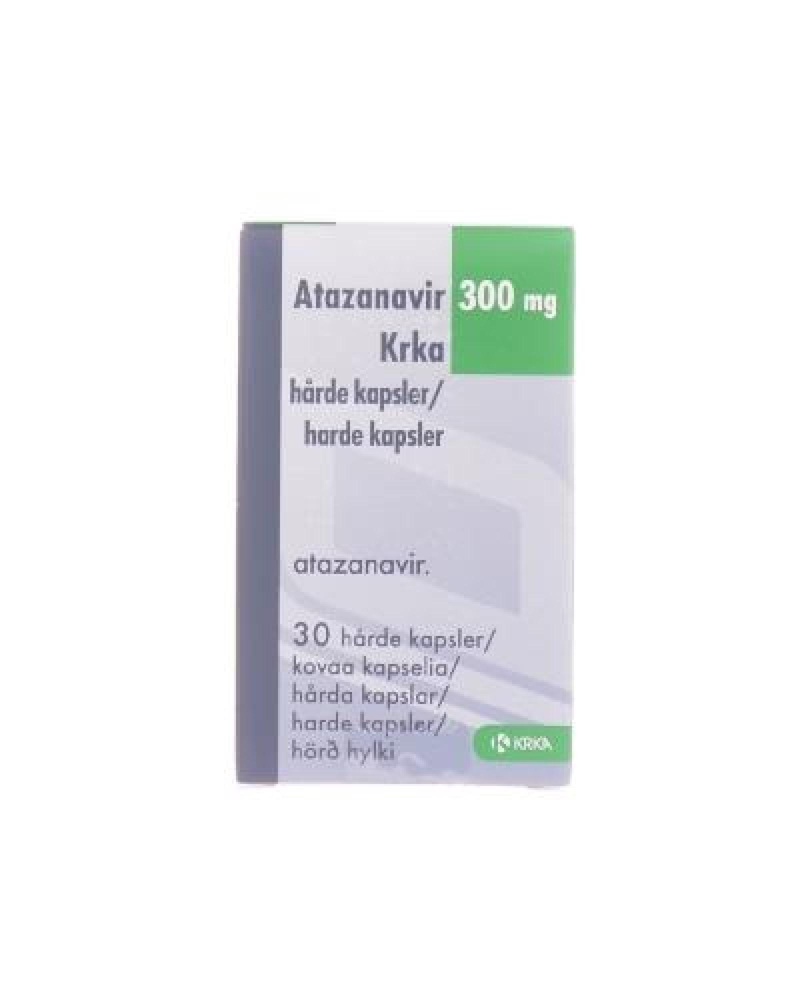
- Kraj rejestracji
- Postać farmaceutycznaHard capsule, 150 MG
- Kod ATCJ05AE08
- Substancja czynna
- Wymaga receptyTak
- Producent
- Te treści mają charakter wyłącznie informacyjny i nie zastępują konsultacji lekarskiej.
- Zamienniki ATATSANAVIR KRKAPostać farmaceutyczna: Hard capsule, 200 MGSubstancja czynna: atazanavirProducent: SANDOZ S.P.A.Wymaga receptyPostać farmaceutyczna: Hard capsule, 150 MGSubstancja czynna: atazanavirProducent: VIATRIS LIMITEDWymaga receptyPostać farmaceutyczna: Hard capsule, 100 MGSubstancja czynna: atazanavirProducent: BRISTOL-MYERS SQUIBB PHARMA EEIGWymaga recepty
Odpowiedniki ATATSANAVIR KRKA w innych krajach
Leki z tą samą substancją czynną dostępne w innych krajach.
Odpowiednik ATATSANAVIR KRKA w Hiszpania
Odpowiednik ATATSANAVIR KRKA w Polska
Odpowiednik ATATSANAVIR KRKA w Ukraina
Lekarze online w sprawie ATATSANAVIR KRKA
Omów stosowanie ATATSANAVIR KRKA, bezpieczeństwo i ocenę zasadności recepty zgodnie z obowiązującymi przepisami.









Uzyskaj receptę na ATATSANAVIR KRKA online
Wypełnij 2-minutowy formularz
Opisz swoje objawy, historię choroby i lek, o który prosisz.
Wybierz lekarza lub pozwól nam przydzielić
Wybierz specjalistę lub dopasujemy Cię do najbliższego dostępnego lekarza.
Lekarz analizuje Twój przypadek
Zazwyczaj w ciągu 30 minut. Może zadawać dodatkowe pytania przez czat.
Odbierz w dowolnej aptece
Recepta elektroniczna wysłana na Twój e-mail — ważna w całej Polsce.
Często zadawane pytania
ATATSANAVIR KRKA wymaga recepty w Włochy. Możesz skonsultować się z lekarzem online, aby sprawdzić, czy ten lek może być odpowiedni w Twojej sytuacji.
Substancją czynną w ATATSANAVIR KRKA jest atazanavir. Informacja ta pomaga rozpoznać leki o tym samym składzie, ale pod różnymi nazwami handlowymi.
ATATSANAVIR KRKA jest produkowany przez KRKA D.D. NOVO MESTO. Nazwy handlowe i opakowania mogą się różnić w zależności od dystrybutora.
Lekarze, tacy jak Lekarze rodzinni, Psychiatrzy, Dermatolodzy, Kardiolodzy, Endokrynolodzy, Gastroenterolodzy, Pulmonolodzy, Nefrolodzy, Reumatolodzy, Hematolodzy, Zakaźnicy, Alergolodzy, Geriatrzy, Pediatrzy, Onkolodzy, mogą ocenić, czy stosowanie ATATSANAVIR KRKA jest odpowiednie w Twoim przypadku, w zależności od sytuacji klinicznej i lokalnych przepisów. Możesz umówić konsultację online, aby omówić objawy i możliwe dalsze kroki.
Polska posiada dobrze rozwiniętą infrastrukturę ochrony zdrowia w dużych miastach, takich jak Warszawa, Kraków, Wrocław i Gdańsk. Apteki są łatwo dostępne i działają zgodnie z obowiązującymi przepisami, zapewniając dostęp do leków na receptę.
Możesz kupić ATATSANAVIR KRKA w Warszawie, Krakowie, Wrocławiu lub Gdańsku w każdej aptece, posiadając ważną receptę.
Aby uzyskać receptę, możesz skorzystać z Oladoctor:
Inne leki zawierające tę samą substancję czynną (atazanavir) to m.in. ATATSANAVIR SANDOTS, ATATSANAVIR VIATRIS, REYATATS. Mogą one różnić się nazwą handlową lub postacią, ale zawierają ten sam składnik terapeutyczny. Przed zmianą lub rozpoczęciem nowego leku skonsultuj się z lekarzem.
