



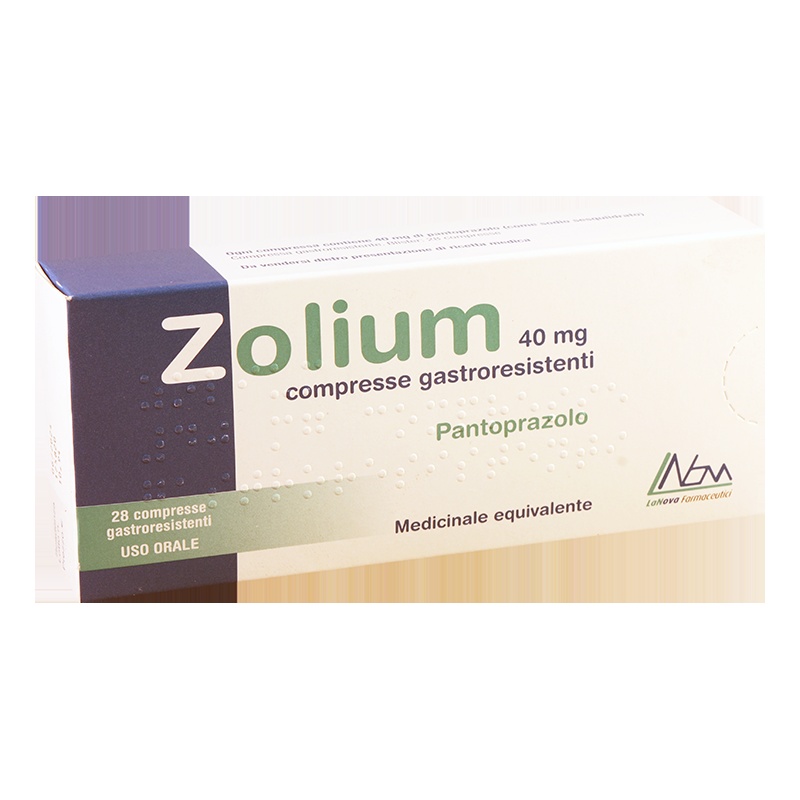
ZOLIUM 20 mg Enteric-Coated Tablet

Запит на рецепт онлайн
Лікар розгляне ваш випадок і визначить, чи є рецепт медично доцільним.

Поговоріть з лікарем про ці ліки
Обговоріть симптоми та можливі подальші кроки під час короткої онлайн-консультації.



Інструкція із застосування TSOLIUM
Зміст інструкції
ZOLIUM 20 mg gastro-resistant tablets
Generic medicine
Read this leaflet carefully before taking this medicine as it contains important information for you.
- Keep this leaflet. You may need to read it again.
- If you have any questions, ask your doctor, pharmacist or nurse.
- This medicine has been prescribed for you only. Do not pass it on to others, even if their symptoms are the same as yours, as it could be harmful.
- If you get any side effects, even those not listed in this leaflet, tell your doctor or pharmacist. See section 4.
Contents of this leaflet:
- 1. What ZOLIUM is and what it is used for
- 2. What you need to know before you take ZOLIUM
- 3. How to take ZOLIUM
- 4. Possible side effects
- 5. How to store ZOLIUM
- 6. Contents of the pack and other information
1. What ZOLIUM is and what it is used for
ZOLIUM is a selective “proton pump inhibitor”, a medicine that reduces the amount of acid produced in the stomach. It is used for the treatment of acid-related diseases of the stomach and intestine.
ZOLIUM is used for:
Adults and adolescents 12 years and older:
- Treatment of symptoms (e.g. heartburn, acid regurgitation, pain when swallowing) associated with gastroesophageal reflux disease caused by reflux of acid from the stomach.
- Long-term treatment of reflux esophagitis (inflammation of the esophagus accompanied by acid regurgitation from the stomach) and prevention of its recurrence.
Adults:
- Prevention of duodenal and stomach ulcers caused by non-steroidal anti-inflammatory drugs (NSAIDs, for example, ibuprofen) in patients at risk who require continuous treatment with NSAIDs.
2. What you need to know before taking ZOLIUM
Do not take ZOLIUM
- if you are allergic to pantoprazole or any of the other ingredients of this medicine (listed in section 6).
- if you are allergic to medicines containing other proton pump inhibitors.
Warnings and precautions
Talk to your doctor, pharmacist or nurse before taking ZOLIUM.
- If you have severe liver problems. Tell your doctor if you have had liver problems in the past. Your doctor will arrange for more frequent monitoring of your liver enzymes, especially if you are taking ZOLIUM for long-term therapy. If liver enzymes increase, treatment must be stopped.
- If you need continuous treatment with NSAIDs and are taking ZOLIUM because you have an increased risk of developing gastric and intestinal complications. Any increased risk will be assessed based on your personal risk factors such as age (65 years and over), a history of gastric or duodenal ulcers or gastrointestinal bleeding.
- If you have reduced body stores or risk factors for reduced vitamin B12 and are undergoing long-term treatment with pantoprazole. As with all agents that reduce acidity, pantoprazole can lead to reduced absorption of vitamin B12.
- If you are taking a medicine containing atazanavir (for the treatment of HIV infection) at the same time as pantoprazole, ask your doctor for specific advice.
- Taking a proton pump inhibitor such as ZOLIUM, especially for a period longer than one year, may slightly increase your risk of fracture of the hip, wrist or spine. Tell your doctor if you suffer from osteoporosis or if you are taking corticosteroids (which can increase the risk of osteoporosis). Tell your doctor immediatelyif you notice any of the following symptoms:
- unintentional weight loss
- recurrent vomiting
- difficulty swallowing
- presence of blood in vomit
- being pale and feeling weak (anemia)
- presence of blood in the stool
- severe and/or persistent diarrhea, as ZOLIUM has been associated with a modest increase in episodes of infectious diarrhea.
- fatigue, dizziness, involuntary muscle contractions, convulsions, dizziness and increased heart rate.
Your doctor may decide that you need to undergo some tests to rule out a malignant disease, as pantoprazole also relieves the symptoms of cancer and can cause a delay in diagnosis. If your symptoms persist despite treatment, further investigations should be considered.
If you take ZOLIUM for long-term treatment (more than 1 year), your doctor will probably subject you to regular monitoring. You should report any new or unusual symptom or circumstance whenever you see your doctor.
Other medicines and ZOLIUM
Tell your doctor or pharmacist if you are taking, have recently taken or might take any other medicines. This is particularly important if you are taking any of the following medicines:
- Medicines such as ketoconazole, itraconazole and posaconazole (used to treat fungal infections) or erlotinib (used for some types of cancer), as ZOLIUM may prevent these and other medicines from working properly.
- Warfarin and phenprocoumon, which affect blood clotting or thinning. You may need further checks.
- Atazanavir (used to treat HIV infection).
- Methotrexate (used for the treatment of rheumatoid arthritis, psoriasis and cancer) - if you are taking methotrexate, your doctor may temporarily suspend treatment with ZOLIUM.
Pregnancy and breastfeeding
There are no adequate data regarding the use of pantoprazole in pregnant women.
Excretion in human breast milk has been reported.
If you are pregnant, suspect or are planning a pregnancy, or if you are breastfeeding with breast milk, ask your doctor or pharmacist for advice before taking this medicine.
If you are pregnant, suspect or are planning a pregnancy, or if you are breastfeeding with breast milk, you should only use this medicine if your doctor considers the benefit to you greater than the potential risk to the fetus or infant.
Ask your doctor or pharmacist for advice before taking any medicine.
Driving and using machines
If you experience side effects such as dizziness or visual disturbances, you should not drive or use machinery.
3. How to take ZOLIUM
Take this medicine following the instructions of your doctor exactly. If you have any doubts, consult your
doctor or pharmacist.
When and how should you take ZOLIUM?
Take the tablets one hour before a meal, without chewing or crushing them, and swallow them whole with
a little water.
Unless otherwise informed by your doctor, the usual dose is:
Adults and adolescents 12 years and over:
For the treatment of symptoms associated with gastro-esophageal reflux disease (e.g. heartburn,
acid regurgitation, pain when swallowing).
The usual dose is 1 tablet a day. This dose usually provides relief within 2-4 weeks – at the
maximum after another 4 weeks. Your doctor will tell you how long to continue taking the
medicine. After that, any recurrence of symptoms can be controlled by taking one
tablet a day, as needed.
For the long-term treatment and prevention of recurrent reflux esophagitis
The usual dose is one tablet a day. If the disease returns, your doctor may double the
dose, in which case you can take ZOLIUM 40 mg tablets, one a day. After recovery, you
can reduce the dose back to one 20 mg tablet a day.
Adults:
Prevention of duodenal and gastric ulcers in patients who require continuous treatment with NSAIDs
The usual dose is 1 tablet a day.
Special patient groups
- If you suffer from severe liver problems, you should not take more than one 20 mg tablet a day.
- Children under 12 years of age. These tablets are not recommended for use in children under 12 years of age.
If you take more ZOLIUM than you should
Inform your doctor or pharmacist. No symptoms of overdose are known.
If you forget to take ZOLIUM
Do not take a double dose to make up for a missed dose. Take the normal dose
next time it is scheduled.
If you stop taking ZOLIUM
Do not stop treatment with these tablets without first consulting your doctor or
pharmacist.
If you have any further questions on the use of this medicine, ask your doctor or pharmacist.
4. Possible side effects
Like all medicines, this medicine can cause side effects, although not everybody gets them.
If you experience any of the following side effects, stop treatment with these
tablets and consult your doctor immediately, or contact the nearest hospital emergency room:
- Severe allergic reactions (rare; affects 1 in 10,000 users):swelling of the tongue and/or throat, difficulty swallowing, hives, difficulty breathing, allergic facial swelling (angioedema/Quincke's edema), severe dizziness with a very fast heartbeat and profuse sweating.
- Severe skin conditions (frequency not known):appearance of skin blisters and rapid deterioration of your general condition, erosion (including slight bleeding) of eyes, nose, mouth/lips or genitals (Stevens-Johnson syndrome, Lyell's syndrome, Multiforme erythema) and sensitivity to light.
- Other serious conditions (frequency not known):yellowing of the skin or whites of the eyes (serious damage to liver cells, jaundice) or fever, rash and painful kidney enlargement sometimes with pain when urinating and lower back pain (serious kidney inflammation). Other possible side effects are:
- Uncommon(affects 1 to 10 users out of 1,000) headache; dizziness; diarrhea; feeling of nausea, vomiting; abdominal distension and flatulence (gas); constipation; dry mouth; abdominal pain and feeling unwell; skin rashes, exanthema, eruption, itching; feeling of weakness, fatigue or general malaise; sleep disturbances; hip, wrist and spine fracture.
- Rare(affects 1 to 10 users out of 10,000) distortion or complete loss of the sense of taste; visual disturbances such as blurred vision; hives; joint pain; muscle pain; weight changes; increased body temperature; swelling of the extremities (peripheral edema); allergic reactions; depression; increased breast volume in men.
- Very rare(affects less than 1 in 10,000 users) disorientation.
- Not known(frequency cannot be estimated on the basis of available data) hallucinations, confusion (especially in patients with a history of these symptoms); paresthesia; decreased levels of sodium in the blood; Inflammation of the large intestine, causing persistent watery diarrhea. If you have been taking ZOLIUM for more than 3 months, your magnesium levels in the blood may drop. Low magnesium levels can manifest as fatigue, involuntary muscle contractions, disorientation, seizures, dizziness, slowed heart rate. If you develop any of these symptoms, inform your doctor immediately. Low magnesium levels can also lead to a decrease in potassium or calcium levels in the
blood. Your doctor may decide to perform regular blood tests to monitor your
magnesium levels. Muscle spasms as a result of electrolyte disturbances.
Side effects identified through blood tests:
- Uncommon(affects 1 to 10 users out of 1,000) an increase in liver enzymes.
- Rare(affects 1 to 10 users out of 10,000) an increase in bilirubin; increased fats in the blood; a sudden decrease in circulating granular white blood cells associated with high fever.
- Very rare(affects less than 1 in 10,000 users) a reduction in the number of platelets which may cause more bleeding or bruising than normal; a reduction in white blood cells which may lead to more frequent infections; concurrent abnormal reduction in the number of red blood cells, white blood cells, and platelets.
Reporting of side effects
If you get any side effects, even those not listed in this leaflet, tell your
doctor or pharmacist. You can also report side effects directly through
the national reporting system at https://www.aifa.gov.it/content/segnalazioni-
reazioni-avverse. By reporting side effects you can help provide more information
on the safety of this medicine.
5. How to store ZOLIUM
Keep this medicine out of the sight and reach of children.
Do not use this medicine after the expiry date which is stated on the label, the carton and the
blister after EXP. The expiry date refers to the last day of that month.
This medicine does not require any particular storage conditions.
Do not dispose of any medicine in wastewater or household waste. Ask your pharmacist how to
dispose of medicines you no longer use. This will help protect the environment.
6. Contents of the pack and other information
What ZOLIUM contains
- The active substance is pantoprazole. Each gastro-resistant tablet contains 20mg of pantoprazole (as pantoprazole sodium sesquihydrate).
- The other ingredients are: Tablet core: mannitol, anhydrous sodium carbonate, sodium starch glycolate (type A), basic butylated methacrylate copolymer (Eudragit E PO), calcium stearate. Coating: Opadry white OY-D-7233 (hypromellose, titanium dioxide E171, talc, macrogol 400, sodium lauryl sulfate). Enteric coating: Kollicoat MAE 30 DP, yellow (methacrylic acid - ethyl acrylate copolymer dispersion, propylene glycol, yellow iron oxide (E172), titanium dioxide E171, talc).
Description of the appearance of ZOLIUM and contents of the pack
Gastro-resistant tablet, light yellow in colour, elliptical in shape, biconvex.
Pack:
Blisters: 14 tablets.
Marketing Authorisation Holder
Lanova Farmaceutici S.r.l.
Via Conca d’Oro, 212
- 00141- Rome
Manufacturers
Actavis Ltd.
BLB016 Bulebel Industrial Estate
Zejtun ZTN 3000
Malta
Actavis ehf,
Reykjavíkurvegur 78
220 Hafnarfjörður
Iceland
Balkanpharma – Dupnitsa AD
3 Samokovsko Schosse Str.
Dupnitsa 2600
Bulgaria
This medicinal product is authorised in the Member States of the European Economic Area with the
following denominations:
Italy ZOLIUM
This leaflet was last updated on:
ZOLIUM 40mg gastro-resistant tablets
Generic medicine
Read this leaflet carefully before taking this medicine as it contains important information for you.
- Keep this leaflet. You may need to read it again.
- If you have any questions, ask your doctor, pharmacist or nurse.
- This medicine has been prescribed for you only. Do not pass it on to others, even if they have the same symptoms as you, as it may be harmful.
- If you get any side effects, even those not listed in this leaflet, tell your doctor or pharmacist. See section 4.
Contents of this leaflet:
- 1. What ZOLIUM is and what it is used for
- 2. What you need to know before you take ZOLIUM
- 3. How to take ZOLIUM
- 4. Possible side effects
- 5. How to store ZOLIUM
- 6. Contents of the pack and other information
1. What ZOLIUM is and what it is used for
ZOLIUM is a selective “proton pump inhibitor”, a medicine that reduces the amount of acid produced in the stomach. It is used for the treatment of acid-related diseases of the stomach and intestine.
ZOLIUM is used for:
Adults and adolescents 12 years and older:
- Reflux esophagitis. An inflammation of the esophagus (the tube connecting the throat to the stomach), accompanied by acid regurgitation.
Adults:
- An infection caused by a bacterium called Helicobacter pyloriin patients with duodenal ulcer and gastric ulcer in combination with two antibiotics (Eradication therapy). The purpose is to get rid of the bacteria in order to reduce the possibility of these ulcers returning.
- Stomach and duodenal ulcers.
- Zollinger-Ellison syndrome and other conditions in which too much acid is produced in the stomach.
2. What you need to know before taking ZOLIUM
Do not take ZOLIUM
- if you are allergic to pantoprazole or any of the other ingredients of this medicine (listed in section 6).
- if you are allergic to medicines containing other proton pump inhibitors.
Warnings and precautions
Talk to your doctor, pharmacist or nurse before taking ZOLIUM.
- If you have severe liver problems. Tell your doctor if you have had liver problems in the past. Your doctor will arrange for more frequent monitoring of your liver enzymes, especially if you are taking ZOLIUM for long-term therapy. If liver enzymes increase, treatment should be discontinued.
- If you have reduced body stores or risk factors for reduced vitamin B12 and are undergoing long-term treatment with pantoprazole. As with all agents that reduce acidity, pantoprazole can lead to reduced absorption of vitamin B12.
- If you are simultaneously taking a medicine containing atazanavir (for the treatment of HIV infection), ask your doctor for specific advice.
- Taking a proton pump inhibitor such as ZOLIUM, particularly for a period longer than a year, may slightly increase your risk of fracture of the hip, wrist or spine. Tell your doctor if you suffer from osteoporosis or if you are taking corticosteroids (which can increase the risk of osteoporosis).
Tell your doctor immediatelyif you notice any of the following symptoms:
- unintentional weight loss
- recurrent vomiting
- difficulty swallowing
- blood in your vomit
- you are pale and feel weak (anemia)
- blood in your stools
- severe and/or persistent diarrhea, as ZOLIUM has been associated with a modest increase in episodes of infectious diarrhea.
- fatigue, confusion, involuntary muscle contractions, convulsions, dizziness and increased heart rate.
Your doctor may decide that you need to undergo some tests to rule out a malignant disease, as pantoprazole also relieves the symptoms of cancer and can cause a delay in diagnosis. If your symptoms persist despite treatment, further investigations should be considered.
If you take ZOLIUM for long-term treatment (more than 1 year), your doctor will probably subject you to regular monitoring. You should report any new or unusual symptom or circumstance whenever you see your doctor.
Other medicines and ZOLIUM
Tell your doctor or pharmacist if you are taking, have recently taken or might take any other medicines. This is particularly important if you are taking any of the following medicines:
- Medicines such as ketoconazole, itraconazole and posaconazole (used to treat fungal infections) or erlotinib (used for some types of cancer), as ZOLIUM may prevent these and other medicines from working properly.
- Warfarin and phenprocoumon, which affect the thickening or thinning of the blood. You may need further checks.
- Atazanavir (used to treat HIV infection).
- Methotrexate (used for the treatment of rheumatoid arthritis, psoriasis and cancer) - if you are taking methotrexate, your doctor may temporarily suspend treatment with ZOLIUM.
Pregnancy and breastfeeding
There are no adequate data regarding the use of pantoprazole in pregnant women.
Excretion in human breast milk has been reported.
If you are pregnant, suspect you may be pregnant, or are planning to become pregnant, or if you are breastfeeding, ask your doctor or pharmacist for advice before taking this medicine.
If you are pregnant, suspect you may be pregnant, or are planning to become pregnant, or if you are breastfeeding, you should only use this medicine if your doctor considers the benefit to you greater than the potential risk to the fetus or infant.
Ask your doctor or pharmacist for advice before taking any medicine.
Driving and using machines
If you experience side effects such as dizziness or visual disturbances, you should not drive or use machines.
3. How to take ZOLIUM
Always take this medicine exactly as your doctor has told you. If you have any doubts, ask your
doctor or pharmacist.
When and how should you take ZOLIUM?
Take the tablets one hour before a meal, without chewing or crushing them, and swallow them whole with
a little water.
Unless otherwise informed by your doctor, the usual dose is:
Adults and adolescents 12 years and over:
For the treatment of reflux esophagitis
The usual dose is one tablet a day. Your doctor may tell you to increase the dose to 2
tablets a day. The treatment period for reflux esophagitis is usually between 4 and 8
weeks. Your doctor will tell you how long to take the medicine.
Adults:
For the treatment of an infection caused by a bacterium calledHelicobacter pyloriin
patients with duodenal ulcer and gastric ulcer in combination with two antibiotics (Eradication
Therapy).
One tablet twice a day, plus two antibiotic tablets, namely amoxicillin or
clarithromycin and metronidazole (or tinidazole), each to be taken twice a day with the
pantoprazole tablet. Take the first pantoprazole tablet in the morning, 1 hour before
breakfast and the second one hour before the evening meal. Follow your doctor's instructions and make sure of
weeks.
For the treatment of gastric and duodenal ulcers.
The usual dose is one tablet a day. After consulting your doctor, the dose may be
doubled.
Your doctor will tell you how long to take the medicine. The treatment period for gastric ulcers
is between 4 and 8 weeks. The period for the treatment of duodenal ulcers is typically between
2 and 4 weeks.
For the long-term treatment of Zollinger-Ellison syndrome and other conditions in
which too much acid is produced in the stomach.
The recommended starting dose is usually two tablets a day.
Take the two tablets 1 hour before a meal. Subsequently, your doctor may adjust the
dosage, depending on the amount of gastric acid produced. If more than two tablets are prescribed
a day, the tablets must be taken twice a day.
If your doctor prescribes a daily dose of more than four tablets a day, they will tell you
exactly when to stop taking the medicine.
Special groups of patients
- If you have kidney problems, moderate or severe liver problems, you should not take ZOLIUM for the eradication of Helicobacter pylori.
- If you suffer from severe liver problems, you should not take more than one 20 mg pantoprazole tablet a day (tablets containing 20 mg of pantoprazole are available for this purpose).
- Children under 12 years of age. These tablets are not recommended for use in children under 12 years of age.
If you take more ZOLIUM than you should
Consult your doctor or pharmacist. No symptoms of overdose are known.
If you forget to take ZOLIUM
Do not take a double dose to make up for a missed dose. Take the next usual dose at the scheduled time.
If you stop taking ZOLIUM
Do not stop treatment with these tablets without first consulting your doctor or
pharmacist.
If you have any doubts about the use of ZOLIUM, ask your doctor or pharmacist.
4. Possible side effects
Like all medicines, this medicine can cause side effects, although not everybody gets them.
If you experience any of the following side effects, stop treatment with these
tablets and consult your doctor immediately, or contact the nearest hospital emergency room:
- Severe allergic reactions (rare; affects 1 in 10,000 users):swelling of the tongue and/or throat, difficulty swallowing, hives, difficulty breathing, allergic facial swelling (angioedema/Quincke's edema), severe dizziness with a very fast heartbeat and profuse sweating.
- Severe skin conditions (frequency not known):appearance of skin blisters and rapid deterioration of your general condition, erosion (including mild bleeding) of eyes, nose, mouth/lips or genitals (Stevens-Johnson syndrome, Lyell's syndrome, Multiforme erythema) and sensitivity to light.
- Other serious conditions (frequency not known):yellowing of the skin or whites of the eyes (serious liver cell damage, jaundice) or fever, rash and painful enlargement of the kidneys with pain when urinating and lower back pain (serious kidney inflammation).
Other possible side effects are:
- Uncommon(affects 1 to 10 users out of 1,000) headache; dizziness; diarrhea; feeling of nausea, vomiting; abdominal distension and flatulence (gas); constipation; dry mouth; abdominal pain and feeling unwell; skin rashes, exanthema, eruption, itching; feeling of weakness, fatigue or general malaise; sleep disturbances; hip, wrist or spine fracture.
- Rare(affects 1 to 10 users out of 10,000) distortion or complete loss of taste; visual disturbances such as blurred vision; hives; joint pain; muscle pain; weight changes; increased body temperature; swelling of the extremities (peripheral edema); allergic reactions; depression; increased breast volume in men.
- Very rare(affects less than 1 in 10,000 users) disorientation.
- Not known(frequency cannot be defined based on available data) hallucinations, confusion (especially in patients with a history of these symptoms); paresthesia; decreased sodium levels in the blood; Inflammation of the large intestine, causing persistent watery diarrhea.
If you have been taking ZOLIUM for more than 3 months, it is possible that your magnesium levels in the blood
may decrease. Low magnesium levels can manifest as fatigue, involuntary muscle contractions, disorientation, convulsions, dizziness, slowed heart rate. If you develop
any of these symptoms, inform your doctor immediately. Low magnesium levels can
also lead to a decrease in potassium or calcium levels in the blood. Your doctor may decide
to perform regular blood tests to monitor your magnesium levels. Muscle spasms as
a result of electrolyte disorders
Side effects identified through blood tests:
- Uncommon(affects 1 to 10 users out of 1,000) An increase in liver enzymes.
- Rare(affects 1 to 10 users out of 10,000) An increase in bilirubin; increased fats in the blood; a sudden decrease in circulating granular white blood cells associated with high fever.
- Very rare(affects less than 1 in 10,000 users) a reduction in the number of platelets, which can cause more bleeding or bruising than normal; a reduction in white blood cells, which can lead to more frequent infections; concomitant abnormal reduction in the number of red blood cells and white blood cells, as well as platelets.
Reporting of side effects
If you get any side effects, even those not listed in this leaflet, tell your doctor, pharmacist or nurse. You can also report side effects
directly through the national reporting system at
https://www.aifa.gov.it/content/segnalazioni-reazioni-avverse. By reporting side effects you can help provide more information on the safety of this medicine.
5. How to store ZOLIUM
Keep this medicine out of the sight and reach of children.
Do not use this medicine after the expiry date that is stated on the packaging after Exp. The
expiry date refers to the last day of that month.
This medicine does not require any particular storage conditions.
Do not dispose of any medicine in wastewater or household waste. Ask your pharmacist how to
dispose of medicines you no longer use. This will help protect the environment.
6. Contents of the pack and other information
What ZOLIUM contains
- The active substance is pantoprazole. Each gastro-resistant tablet contains 40mg of pantoprazole (as pantoprazole sodium sesquihydrate).
- The other ingredients are: Tablet core: mannitol, anhydrous sodium carbonate, sodium starch glycolate (type A), basic butylated methacrylate copolymer (Eudragit E PO), calcium stearate. Coating: Opadry white OY-D-7233 (hypromellose, titanium dioxide E171, talc, macrogol 400, sodium lauryl sulfate). Enteric coating: Kollicoat MAE 30 DP, yellow (methacrylic acid - ethyl acrylate copolymer dispersion, propylene glycol, yellow iron oxide (E172), titanium dioxide E171, talc).
Description of the appearance of ZOLIUM and contents of the pack
Gastro-resistant tablet, dark yellow in colour, elliptical in shape, biconvex.
Pack:
Blisters: 14 tablets
Marketing Authorisation Holder
Lanova Farmaceutici S.r.l.
Via Conca d’Oro, 212
- 00141- Rome
Manufacturers
Actavis Ltd.
BLB016 Bulebel Industrial Estate
Zejtun ZTN 3000
Malta
Actavis ehf,
Reykjavíkurvegur 78
220 Hafnarfjörður
Iceland
Balkanpharma – Dupnitsa AD
3 Samokovsko Schosse Str.
Dupnitsa 2600
Bulgaria
This medicinal product is authorised in the Member States of the European Economic Area
under the following denominations:
Italy ZOLIUM
This leaflet was last updated on:

Не впевнені, чи підходить вам цей лікарський засіб?
Обговоріть симптоми та можливі варіанти лікування з лікарем онлайн.

Виникли питання під час прийому ліків?
Обговоріть свої симптоми та лікування з лікарем онлайн.
- Країна реєстрації
- Лікарська формаEnteric-coated tablet, 20 MG
- Код АТХA02BC02
- Діюча речовина
- Потрібен рецептТак
- Виробник
- Ця інформація надана лише для ознайомлення і не є медичною порадою. Рішення щодо лікування завжди приймає лікар.
- Альтернативи до TSOLIUMЛікарська форма: Enteric-coated tablet, 20 MGДіюча речовина: ПантопразолВиробник: TAKEDA GMBHРецепт не потрібенЛікарська форма: Enteric-coated tablet, 20 MGДіюча речовина: ПантопразолВиробник: RATIOPHARM GMBHРецепт не потрібенЛікарська форма: Enteric-coated tablet, 20 MGДіюча речовина: ПантопразолВиробник: HALEON ITALY S.R.L.Потрібен рецепт
Аналоги TSOLIUM в інших країнах
Препарати з тією самою діючою речовиною, доступні в інших країнах.
Аналог TSOLIUM у Іспанія
Аналог TSOLIUM у Польща
Аналог TSOLIUM у Україна
Лікарі онлайн щодо TSOLIUM
Застосування, безпека та можливість призначення рецепта — за результатами медичної оцінки.









Отримайте рецепт на TSOLIUM онлайн
Заповніть форму за 2 хвилини
Розкажіть про симптоми, історію хвороби та потрібний препарат.
Оберіть лікаря або ми призначимо
Оберіть спеціаліста або ми підберемо найближчого доступного лікаря.
Лікар розглядає ваш випадок
Зазвичай протягом 30 хвилин. Може ставити уточнювальні запитання в чаті.
Отримайте в будь-якій аптеці
Електронний рецепт надсилається на вашу пошту — дійсний по всій Польщі.
Часті запитання
TSOLIUM потребує рецепта в Італія. Ви можете обговорити з лікарем онлайн, чи підходить цей лікарський засіб для вашої ситуації.
Діюча речовина у TSOLIUM — Пантопразол. Це допомагає визначити препарати з тим самим складом, але під іншими торговими назвами.
TSOLIUM виробляється компанією LANOVA FARMACEUTICI S.R.L.. Назва бренду та упаковка можуть відрізнятися залежно від дистрибʼютора.
Лікарі, зокрема Сімейні лікарі, Психіатри, Дерматологи, Кардіологи, Ендокринологи, Гастроентерологи, Пульмонологи, Нефрологи, Ревматологи, Гематологи, Інфекціоністи, Алергологи, Геріатри, Педіатри, Онкологи, можуть оцінити доцільність застосування TSOLIUM з урахуванням вашого стану та місцевих правил. Ви можете записатися на онлайн-консультацію, щоб обговорити симптоми та можливі подальші кроки.
Польща має добре розвинену систему охорони здоров'я у великих містах, таких як Варшава, Краків, Вроцлав і Гданськ. Аптеки широко доступні та працюють відповідно до чинного законодавства, забезпечуючи доступ до рецептурних препаратів.
Ви можете придбати TSOLIUM у Варшаві, Кракові, Вроцлаві або Гданську в будь-якій аптеці за наявності дійсного рецепта.
Щоб отримати рецепт, ви можете скористатися Oladoctor:
Інші препарати з тією самою діючою речовиною (Пантопразол) включають KONTROLOK KONTROL, EUGASTROL REFLUSSO, GASTROLOK. Вони можуть відрізнятися торговою назвою або формою випуску, але містять той самий терапевтичний компонент. Перед зміною або початком прийому нового препарату варто проконсультуватися з лікарем.
