



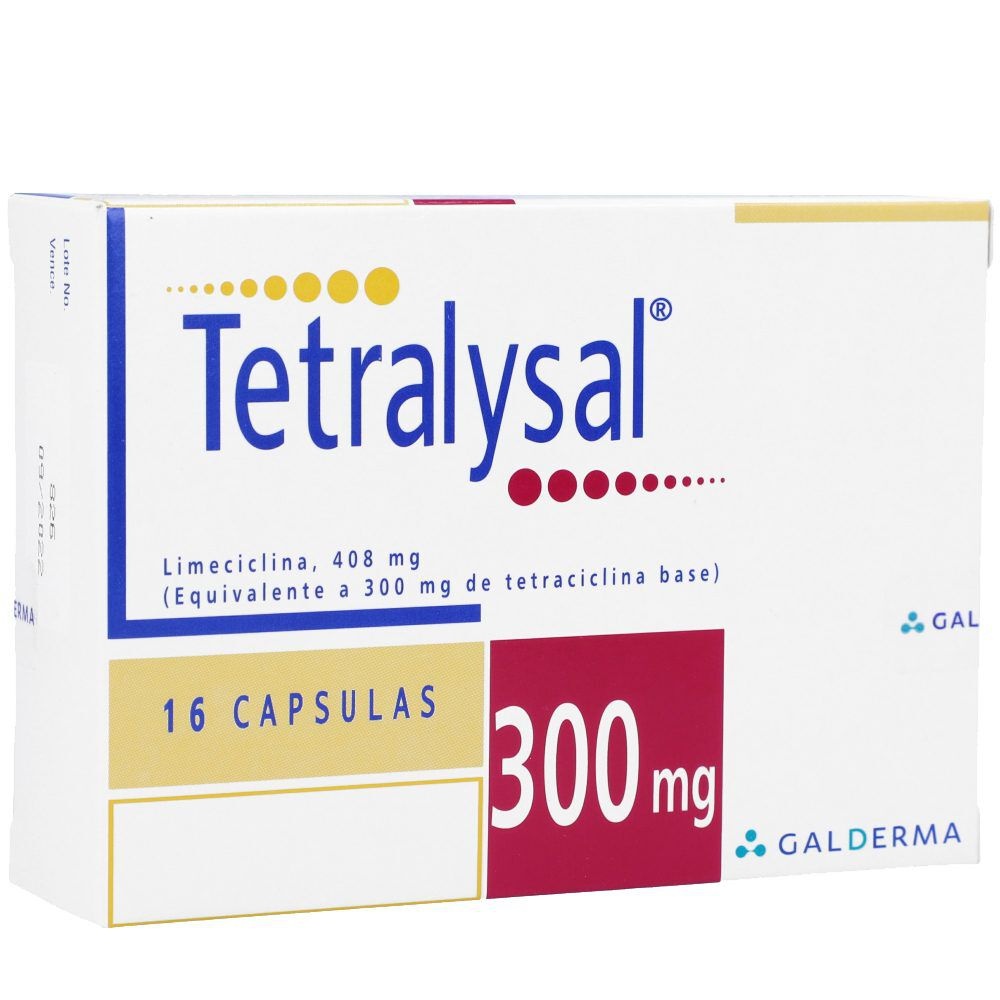
TETRALYSAL 300 mg Hard Capsule

Запит на рецепт онлайн
Лікар розгляне ваш випадок і визначить, чи є рецепт медично доцільним.

Поговоріть з лікарем про ці ліки
Обговоріть симптоми та можливі подальші кроки під час короткої онлайн-консультації.



Інструкція із застосування TETRALYSAL
Зміст інструкції
TETRALYSAL 150 mg hard capsules, 300 mg hard capsules
Limeciclina
Read this leaflet carefully before taking this medicine as it contains important information for you.
- Keep this leaflet. You may need to read it again.
- If you have any questions, ask your doctor or pharmacist.
- This medicine has been prescribed for you only. Do not pass it on to others, even if they have the same symptoms as you, as it may be harmful.
- If you get any side effects, even those not listed in this leaflet, tell your doctor or pharmacist. See section 4.
Contents of this leaflet:
- 1. What Tetralysal is and what it is used for
- 2. What you need to know before you take Tetralysal
- 3. How to take Tetralysal
- 4. Possible side effects
- 5. How to store Tetralysal
- 6. Contents of the pack and other information
1. What is Tetralysal and what is it used for?
Tetralysal belongs to a group of antibiotic drugs called tetracyclines.
The main use of Tetralysal is to treat moderate to severe acne. Acne appears as
inflammation of the skin that presents with papules (small raised skin lesions without pus),
pustules (small skin lesions that contain pus), blackheads and pimples.
2. What you need to know before you take Tetralysal
Do not take Tetralysal
- If you are allergic to tetracycline-L-methylene lysine (limecycline) or to any of the other ingredients of this medicine (listed in section 6);
- Tetralysal is contraindicated in children under 8 years of age due to the risk of permanent alterations in tooth colour and enamel.
- Tetralysal is contraindicated in treatment together with oral retinoids (vitamin A-based products taken by mouth)
- Tetralysal is contraindicated during pregnancy and breastfeeding (see section “Special warnings and precautions”)
Warnings and precautions
Talk to your doctor or pharmacist before taking Tetralysal.
As with other antibiotics, treatment with tetracyclines can cause secondary bacterial or fungal infections.
There is in particular the possibility of staphylococcal-resistant enterocolitis (inflammation
of the small intestine and colon due to bacteria that are resistant to the therapeutic action of the medicine).
If you are to undergo prolonged cycles of treatment with Tetralysal, your doctor will prescribe
periodic checks of blood composition and liver and kidney function.
In predisposed individuals, skin reactions may occur during treatment after exposure to
sunlight and tanning lamps. If redness of the skin (skin erythema) should appear, you must
immediately stop treatment.
If you suffer from kidney failure, tell your doctor before taking Tetralysal and carefully follow the
instructions you will be given.
Before taking Tetralysal, consult your doctor if you suffer from myasthenia gravis (a disease that weakens the
muscles).
Before taking Tetralysal, consult your doctor if you suffer from systemic lupus erythematosus.
Take the medicine with an adequate amount of water to avoid irritation and ulcers in the esophagus.
If you take more Tetralysal than you should (overdose), liver problems
(hepatotoxicity) may occur.
Do not take Tetralysal after the expiry date as this would involve a risk of kidney damage
(Pseudo-Fanconi syndrome).
Children
Tetralysal should not be used in children under 8 years of age due to the risk of permanent alterations
in tooth colour and enamel.
Other medicines and Tetralysal
Tell your doctor or pharmacist if you are taking, have recently taken or might take any
other medicines.
- Do not use Tetralysal together with vitamin A-based products taken by mouth due to the risk of increased pressure inside the skull.
- Do not take together with Tetralysal antacids containing aluminium, calcium or magnesium and products containing iron salts or didanosine or activated charcoal, colestyramine, bismuth chelates and sucralfate, because these products reduce the absorption of tetracyclines taken by mouth.
- Do not take together with Tetralysal medicinal products that increase stomach pH because they reduce the absorption of tetracyclines.
- Avoid use with penicillins (another type of antibiotic), for the possible interference between the two medicines.
- If you are being treated with anticoagulant medicines (medicines to prevent blood clots), tell your doctor because it may be necessary to adjust the dosage due to the possible reduction in activity caused by tetracyclines.
- Do not take together with Tetralysal medicines for epilepsy, including barbiturates for example phenobarbital, phenytoin and carbamazepine
- The use of methoxyflurane in combination with Tetralysal is not recommended because it can cause fatal kidney toxicity.
- Limecycline (the active ingredient contained in Tetralysal) can cause false positives in the determination of glucose in the urine.
- Tell your doctor if you are taking any treatment with lithium, this medicine may increase lithium levels.
Pregnancy, breastfeeding and fertility
If you are pregnant, suspect you may be pregnant, are planning to become pregnant, or are breastfeeding with
breast milk, ask your doctor or pharmacist for advice before using this medicine.
The use of tetracyclines during the period of tooth formation (second half of pregnancy) can
cause permanent yellow-brown discoloration of the baby's teeth, this occurs especially in case of
prolonged use, but has also been observed after short and repeated periods of treatment. For this reason
the use of Tetralysal is contraindicated during pregnancy or breastfeeding.
Fertility
No data are available on the effects on fertility.
3. How to take Tetralysal
Take this medicine following exactly the instructions of your doctor or pharmacist. If you have any doubts
consult your doctor or pharmacist.
The recommended dose for the treatment of acne is 300 mg/day for 12 weeks.
You must take the product with an adequate amount of water to avoid irritation and ulceration of the esophagus.
Use in children
Tetralysal should not be used in children under 8 years of age due to the risk of permanent alterations
of tooth color and enamel
If you take more Tetralysal than you should
If you have accidentally taken an excessive dose of Tetralysal, you should immediately notify your doctor or
go to the nearest hospital.
If you have any doubts about the use of this medicine, consult your doctor or pharmacist.
4. Possible side effects
Like all medicines, this medicine can cause side effects, although not everyone will experience them.
The following side effects are listed in order of frequency:
Common(may affect up to 1 in 10 people ):
- Headache
- Nausea
- Abdominal pain
- Diarrhea
Not known(frequency cannot be estimated from the available data):
- Enterocolitis (inflammation of the small intestine and colon)
- Glossitis (inflammation of the tongue)
- Visual disturbances*
- Neutropenia (decrease in neutrophils, a type of white blood cell)
- Thrombocytopenia (decrease in platelets)
- Vomiting
- Pain in the upper gastrointestinal tract (stomach)
- Fever
- Jaundice (yellowing of the skin)
- Hepatitis (inflammation of the liver)
- Hypersensitivity
- Urticaria
- Angioedema (swelling of eyelids, lips, tongue, genitals)
- Anaphylactic reaction (severe allergic reaction with rapid onset and potentially fatal)
- Increased transaminases (enzymes in the blood that indicate possible liver damage)
- Increased alkaline phosphatase (enzymes in the blood that indicate certain diseases)
- Increased bilirubin (substance contained in bile)
- Dizziness
- Increased intracranial pressure (increased pressure inside the skull)
- Erythematous rash (appearance of skin redness)
- Photosensitivity reactions during exposure to sunlight or tanning lamps
- Pruritus
- Stevens-Johnson syndrome (severe acute hypersensitivity reaction affecting the skin and mucous membranes)
- Depression
- Nightmares
*(the manifestation of clinical symptoms, including visual disturbances or headache, may be attributable to
increased intracranial pressure. If increased intracranial pressure is suspected during treatment with
limeciclina, administration should be discontinued).
In association with tetracyclines, benign intracranial hypertension has been reported with possible symptoms of headache,
vomiting, visual disturbances including blurred vision, scotoma (dark or flickering spots in the
visual field), diplopia (double vision) or permanent vision loss.
Furthermore
- If administered to children under 8 years of age, permanent changes in tooth color and enamel alterations may occur.
- Cases of hemolytic anemia (low hemoglobin concentration), eosinophilia (increase in specific blood cells) and other blood disorders have been reported;
- Cases of increased hyperazotemia (increased amount of nitrogen in the blood) of non-renal origin may occur due to the simultaneous use of diuretics (medicines used to increase urine secretion) and tetracyclines;
- You should discontinue treatment with Tetralysal if symptoms attributable to increased pressure inside the skull (e.g. vomiting) should appear.
- Isolated cases of anorexia (loss or reduction of appetite) and allergic vasculitis (inflammation of blood vessels) have been reported.
- Some cases of systemic lupus erythematosus and pancreatitis have been observed, generally attributable to therapy with tetracyclines.
Reporting of side effects
If you experience any side effects, including those not listed in this leaflet, please inform your
doctor or pharmacist. Side effects can also be reported directly through the national reporting system at https://www.aifa.gov.it/content/segnalazioni-reazioni-avverse .
Reporting side effects helps to provide more information on the safety of this
medicine.
5. How to store Tetralysal
Keep this medicine out of the sight and reach of children.
Do not use this medicine after the expiry date which is stated on the packaging. The expiry date refers to the last day of that month. The expiry date indicated refers to the product in
intact packaging, correctly stored.
Keep this medicine in its original packaging
Do not store at a temperature above 25°C.
Do not dispose of any medicine in wastewater or household waste. Ask your pharmacist how to dispose of
medicines you no longer use. This will help protect the environment
6. Contents of the pack and other information
What Tetralysal contains
Each 150 mg capsule contains:
The active ingredient is tetracycline-L-methylene lysine (limecycline) equivalent to 150 mg of tetracycline base.
The other ingredients are:
Magnesium stearate, levilite, gelatin, glyceryl monoleate.
Each 300 mg capsule contains:
The active ingredient is tetracycline-L-methylene lysine (limecycline) equivalent to 300 mg of tetracycline base.
The other ingredients are:
Magnesium stearate, hydrated colloidal silica.
Capsule shell components: gelatin, titanium dioxide (E171), quinoline yellow (E104), erythrosine
(E127), indigo carmine (E132).
Description of the appearance of Tetralysal and contents of the pack
150 mg hard capsules
Glass bottle containing 28 capsules.
300 mg hard capsules
Al/PE blister packs of 4 capsules.
Packs of 16 or 28 capsules.
Marketing Authorisation Holder
Galderma Italia S.p.A. - registered office Via dell’Annunciata 21 – Milan.
Manufacturer
150 mg hard capsules:
Pfizer Italia S.r.l. – Ascoli Piceno Plant – Località Marino del Tronto (AP).
300 mg hard capsules:
Sophartex S.A. Laboratoires – Vernouillet (France)
or
Laboratoires Galderma – Alby Sur-Cheran (France)

Не впевнені, чи підходить вам цей лікарський засіб?
Обговоріть симптоми та можливі варіанти лікування з лікарем онлайн.

Виникли питання під час прийому ліків?
Обговоріть свої симптоми та лікування з лікарем онлайн.
- Країна реєстрації
- Лікарська формаHard capsule, 300 MG
- Код АТХJ01AA04
- Діюча речовина
- Потрібен рецептТак
- Виробник
- Ця інформація надана лише для ознайомлення і не є медичною порадою. Рішення щодо лікування завжди приймає лікар.
- Альтернативи до TETRALYSALЛікарська форма: Hard capsule, 250 MGДіюча речовина: tetracyclineВиробник: SCHARPER S.P.A.Потрібен рецептЛікарська форма: Tablet, 100 MGДіюча речовина: ДоксициклинВиробник: PFIZER ITALIA S.R.L.Потрібен рецептЛікарська форма: Film-coated tablet, 100 MGДіюча речовина: ДоксициклинВиробник: F.I.R.M.A. S.P.A.Потрібен рецепт
Аналоги TETRALYSAL в інших країнах
Препарати з тією самою діючою речовиною, доступні в інших країнах.
Аналог TETRALYSAL у Польща
Аналог TETRALYSAL у Іспанія
Лікарі онлайн щодо TETRALYSAL
Застосування, безпека та можливість призначення рецепта — за результатами медичної оцінки.









Отримайте рецепт на TETRALYSAL онлайн
Заповніть форму за 2 хвилини
Розкажіть про симптоми, історію хвороби та потрібний препарат.
Оберіть лікаря або ми призначимо
Оберіть спеціаліста або ми підберемо найближчого доступного лікаря.
Лікар розглядає ваш випадок
Зазвичай протягом 30 хвилин. Може ставити уточнювальні запитання в чаті.
Отримайте в будь-якій аптеці
Електронний рецепт надсилається на вашу пошту — дійсний по всій Польщі.
Часті запитання
TETRALYSAL потребує рецепта в Італія. Ви можете обговорити з лікарем онлайн, чи підходить цей лікарський засіб для вашої ситуації.
Діюча речовина у TETRALYSAL — lymecycline. Це допомагає визначити препарати з тим самим складом, але під іншими торговими назвами.
TETRALYSAL виробляється компанією GALDERMA ITALIA S.P.A.. Назва бренду та упаковка можуть відрізнятися залежно від дистрибʼютора.
Лікарі, зокрема Сімейні лікарі, Психіатри, Дерматологи, Кардіологи, Ендокринологи, Гастроентерологи, Пульмонологи, Нефрологи, Ревматологи, Гематологи, Інфекціоністи, Алергологи, Геріатри, Педіатри, Онкологи, можуть оцінити доцільність застосування TETRALYSAL з урахуванням вашого стану та місцевих правил. Ви можете записатися на онлайн-консультацію, щоб обговорити симптоми та можливі подальші кроки.
Польща має добре розвинену систему охорони здоров'я у великих містах, таких як Варшава, Краків, Вроцлав і Гданськ. Аптеки широко доступні та працюють відповідно до чинного законодавства, забезпечуючи доступ до рецептурних препаратів.
Ви можете придбати TETRALYSAL у Варшаві, Кракові, Вроцлаві або Гданську в будь-якій аптеці за наявності дійсного рецепта.
Щоб отримати рецепт, ви можете скористатися Oladoctor:
Інші препарати з тією самою діючою речовиною (lymecycline) включають AMBRAMIKINA, BASSADO, DOXYNOR. Вони можуть відрізнятися торговою назвою або формою випуску, але містять той самий терапевтичний компонент. Перед зміною або початком прийому нового препарату варто проконсультуватися з лікарем.
