



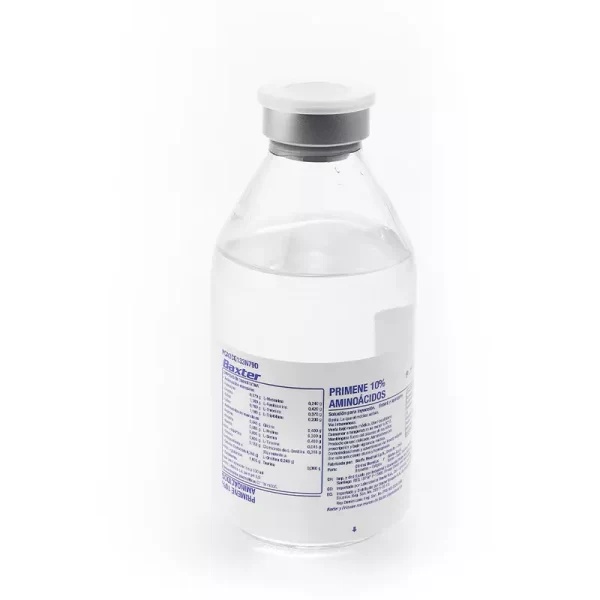
PRIMENE 10% Solution

Запит на рецепт онлайн
Лікар розгляне ваш випадок і визначить, чи є рецепт медично доцільним.

Поговоріть з лікарем про ці ліки
Обговоріть симптоми та можливі подальші кроки під час короткої онлайн-консультації.



Інструкція із застосування PRIMENE
Зміст інструкції
PRIMENE – 10% amino acid solution, solution for infusion
10% amino acid solution
Read this leaflet carefully before the child is administered this medicine
as it contains important information for you.
- Keep this leaflet. You may need to read it again.
- If you have any questions, ask your doctor or nurse.
- If any side effects occur, including those not listed in this leaflet, ask your doctor or nurse. See section 4.
Contents of this leaflet:
- 1. What PRIMENE is and what it is used for
- 2. What you need to know before PRIMENE is administered to the child
- 3. How PRIMENE will be administered to the child
- 4. Possible side effects
- 5. How to store PRIMENE
- 6. Contents of the pack and other information
1. What is PRIMENE and what is it used for
PRIMENE contains amino acids (substances used by the body for protein production).
PRIMENE is a solution for parenteral nutrition, meaning it is administered through a vein,
together with solutions rich in sugars and fats, in addition to salts, vitamins and trace elements, to meet the
nutritional needs.
PRIMENE is indicated in children, infants, term or premature newborns, with normal birth weight
or lower than normalwhen oral feeding or via a tube that reaches the
stomach (enteral nutrition) is impossible, insufficient or contraindicated.
Consult your doctor if the child does not feel better or if they feel worse.
2. What you need to know before PRIMENE is given to the child
PRIMENE will not be given to the child
- If he/she is allergic to one or more of the amino acids or to any of the other ingredients of this medicine (listed in section 6).
- If he/she suffers from a severe liver disease.
- If he/she has high levels of acids in the blood (states of acidosis).
- If he/she suffers from a hereditary disease that makes amino acid metabolism difficult.
Warnings and precautions
Consult your doctor or pharmacist before PRIMENE is given to the child.
Treatment with PRIMENE must be stopped immediately in case of:
- allergic reactions
- severe breathing difficulties
The doctor will subject him/her to frequent blood tests/checks, especially:
- If he/she suffers from a liver disease
- If he/she has low levels of albumin in the blood
- If he/she suffers from a kidney disease
- If he/she suffers from a heart disease
- If he/she suffers from a lung disease
- If his/her immune system is weakened
- If he/she suffers from high blood sugar levels (hyperglycemia)
- If he/she suffers from a disease that may predispose him/her to infections
- If he/she is malnourished
- If he/she has fever/chills
- If he/she has low levels of white blood cells in the blood (leukocytosis)
- If he/she has high levels of ammonia detectable from blood tests
- If he/she suffers from a lung condition called pulmonary edema. This occurs when fluid from blood vessels filters into the surrounding tissues in the lung, causing swelling
- If he/she has a weak heart (heart failure)
Children and adolescents
The doctor will subject the child to frequent blood tests to avoid undesirable effects that may
occur during prolonged treatments.
Other medicines and PRIMENE
Tell your doctor if the child is taking, has recently taken or might take or be given any other medicine.
To minimize the risk of any incompatibilities, other drugs should not be added to the solution.
3. How PRIMENE will be administered to the child
This medicine will be administered to the child always following the doctor's instructions exactly.
The dose will be established by the doctor based on their age, weight and state of health.
They will receive this medicine via injection into a vein.
If you have any doubts, consult the doctor.
If the child is given more PRIMENE than they should
Should high doses of PRIMENE be administered, the doctor will interrupt the treatment and establish
any necessary therapy, if deemed necessary
4. Possible side effects
Like all medicines, this medicine can cause side effects, although not everybody gets them.
If any of the following side effects occur during treatment with PRIMENE, the doctor
will stopthe infusion and initiate appropriate therapy:
effects related to the heart
- pulmonary insufficiency, an abnormality of the valve that normally prevents blood pumped from the heart to the lungs from returning into the right ventricle from which it exited. This side effect may manifest with fatigue, difficulty breathing (which occurs especially during physical activity), dizziness or fainting, heart rhythm disturbances,
sensation of feeling your heartbeat (palpitations), chest, leg and foot swelling
and bluish lips or nails.
allergic reactions
allergic reactions, even serious, which may manifest with
- swelling of the face and eyes
- skin rash
- fever
- chills
- effects related to the mouth, stomach and intestines
- skin rashes and other allergic manifestations
- low or high blood pressure
- joint and/or muscle pain
- redness of the skin with itching (urticaria)
- itching
- redness of the skin (erythema)
- headache
Other side effects have occurred in patients receiving parenteral nutrition, but their exact
frequency is unknown:
liver diseases (hepatic insufficiency, hepatic cirrhosis)
- increased connective tissue (the supporting tissue of the body) in the liver (hepatic fibrosis)
- bile stasis, a substance useful for digestive processes (cholestasis)
- fat accumulation in the liver (hepatic steatosis)
- abnormal liver values detectable from blood tests
- inflammation of the gallbladder, the organ that helps digestion
- formation of stones (calculi) in the gallbladder formation of particles in blood vessels
- increased levels of nitrogen and ammonia detectable from blood tests increased acids in the blood folate deficiency Effects that manifest at the site of administration: obstruction and inflammation of the vein (thrombophlebitis), vein irritation, skin death (necrosis) and blister formation, pain, redness, heat, swelling, hardening
Reporting of side effects
If the child experiences any side effect, including those not listed in this leaflet, please
consult your doctor. You can also report side effects directly through the national
reporting system at www.agenziafarmaco.gov.it/it/responsabili .
By reporting side effects you can help provide more information on the safety of
this medicine.
5. How to store PRIMENE
This medicine does not require any particular storage temperature. Do not freeze.
Keep this medicine out of sight and reach of children.
Do not use this medicine after the expiry date that is reported on the bag after SCAD. The expiry
date refers to the last day of that month.
Do not dispose of any medicine in wastewater or household waste. Ask your pharmacist how to eliminate the
medicines that you no longer use. This will help protect the environment.
6. Contents of the pack and other information
What PRIMENE contains
- The active ingredients per 1000 ml of 10% amino acid solution are:
L-Isoleucine g 6.70 L-Alanine g 8.00
L-Leucine g 10.00 Ac. L-Aspartic g 6.00
L-Valine g 7.60 L-Cysteine (E 920) g 1.89
L-Lysine g 11.00 Ac. L-Glutamic (E 620) g 10.00
(as Lysine monohydrate) g 12.35 Glycine g 4.00
L-Methionine g 2.40 L-Proline g 3.00
L-Phenylalanine g 4.20 L-Serine g 4.00
L-Threonine g 3.70 L-Tyrosine g 0.45
L-Tryptophan g 2.00 L-Ornithine HCl g 3.18
L-Arginine g 8.40 Taurine g 0.60
L-Histidine g 3.80
pH 5.0-6.5
Density 1.033 g/ml
Calories 400 (equivalent to 1680 KJ/l)
Total nitrogen: 15 g/l;
Amino acids: 100 g/l;
Chlorides: 19.0 mMol/l;
Osmolarity: 790 mOsm/l.
- The other components are Malic acid (E 296), Water for injections.
Description of the appearance of PRIMENE and contents of the pack
PRIMENE is presented as an infusion solution in vials of 100 ml and 250 ml.
It is available in packs of 20 vials of 100 ml and 10 vials of 250 ml of 10% amino acid solution.
Marketing authorisation holder and manufacturer
Baxter S.p.A.
Piazzale dell’Industria 20
00144 Rome
Manufacturer
BIEFFE MEDITAL S.p.A. – Via Nuova Provinciale - 23034 Grosotto (So)
---------------------------------------------------------------------------------------------------------------------------
The following information is intended exclusively for doctors or healthcare professionals:
PRECAUTIONS FOR USE
Allergic Reactions/Hypersensitivity Reactions
Anaphylactic/anaphylactoid reactions and other hypersensitivity infusion reactions have been reported
with amino acid solutions administered as components of parenteral nutrition. The infusion must be
immediately stopped if any sign or symptom of a reaction occurs.
Precipitates in patients receiving parenteral nutrition
Pulmonary vascular precipitates have been reported in patients receiving parenteral nutrition. In some cases there
have been fatal outcomes. Excessive addition of calcium and phosphate increases the risk of formation of
calcium phosphate precipitates. Precipitates have also been reported in the absence of phosphate salts in solution. Cases of precipitation at the distal filtration and suspected precipitate formation in
vivo have also been reported.
In addition to inspecting the solution, the infusion set and catheter should also be checked periodically for precipitate formation.
Infectious complications
Careful monitoring of symptoms and laboratory test results in case of fever/chills, leukocytosis,
technical complications with the access device and hyperglycemia can help to recognize infections early.
The occurrence of septic complications can be reduced by paying more attention to the placement and
maintenance of the catheter and to the preparation of the nutritional formulation using aseptic techniques.
Refeeding syndrome in patients receiving parenteral nutrition
Refeeding severely malnourished patients can lead to refeeding syndrome, which is characterized by
intracellular shift of potassium, phosphorus, and magnesium as the patient becomes anabolic.
Thiamine deficiency and fluid retention can develop. Careful monitoring and a slow increase in
nutrients avoid overfeeding and can prevent these complications.
Hypertonic solutions
Infusion of hypertonic solutions can cause vein irritation, vein damage and thrombosis when
administered in peripheral veins.
General checks
Monitoring should be adapted to the situation and the patient's clinical condition and should include
measurement of water and electrolyte balance, serum osmolarity, acid/base balance, blood glucose levels, blood ammonia levels, and liver and kidney function.
Metabolic effects
Metabolic complications can occur if the nutrient intake is not appropriate for the patient's needs or if
the metabolic capacity of a dietary component administered has not been carefully assessed. Adverse metabolic effects can occur from inadequate or excessive administration of nutrients or from the administration of a solution with inappropriate composition for a patient with
specific needs.
Liver function
Patients receiving parenteral nutrition may develop liver complications (including cholestasis, hepatic steatosis,
fibrosis, and cirrhosis, which can lead to liver failure, as well as cholecystitis and cholelithiasis) and
should therefore be monitored accordingly. The etiology of these disorders is thought to be due to multiple
factors and may differ depending on the patients.
Patients who develop abnormal laboratory parameters or other symptoms of hepatobiliary dysfunction should
be evaluated by a hepatologist so that they can identify possible factors that cause or contribute to them and, if necessary, prescribe appropriate therapy or prophylaxis.
Amino acid solutions should be used with caution in patients with pre-existing liver disease or
renal insufficiency.
Liver function parameters should be carefully monitored in these patients and they should also be monitored for possible symptoms of hyperammonemia.
Increased blood ammonia levels and hyperammonemia can develop in patients receiving amino acid solutions. In some patients this may indicate the presence of a congenital disorder of
amino acid metabolism or liver failure.
Blood ammonia should be measured frequently in neonates and children at least until 2 years of age to identify hyperammonemia.
Potential symptoms (e.g., lethargy, irritability, poor feeding, hyperventilation, chills, and convulsions) that
can lead to complications including developmental delay and mental disability can be difficult to identify in this age group. Depending on the extent and etiology, hyperammonemia
may require immediate intervention.
Renal effects
Elevated azotemia has been reported in patients receiving solutions containing amino acids,
particularly may occur in patients with renal insufficiency.
Use with caution in patients with renal insufficiency (e.g., uremia). Nitrogen tolerance may be
altered and the dosage may need to be modified. Fluid and electrolyte status should be
carefully monitored in these patients.
Additional precautions
- Reactions at the injection site have been reported with the use of parenteral nutrition. These include thrombophlebitis at the infusion site and vein irritation as well as severe reactions (e.g., necrosis and blisters) when associated with extravasation. Patients should be monitored accordingly.
- Severe water and electrolyte imbalances, severe fluid overload, and severe metabolic imbalances must be corrected before starting the infusion.
- Use with caution in patients with pulmonary edema or heart failure. Fluid status should be carefully monitored.
- Do not connect containers in series to avoid gas embolism due to possible residual air in the primary container.
The infusion of amino acid solutions for parenteral nutrition must be performed with great
care, while constantly monitoring blood glucose levels, proteinemia, liver and kidney function tests, electrolytes, serum osmolarity, blood ammonia level, pH, and CO content.
The use of amino acid solutions for parenteral nutrition must be supplemented with an adequate
amount of substrates physiologically used for the production of free energy to be used in protein synthesis reactions.
Glucose in an appropriate concentration can represent a suitable source of calories; however, hyperglycemia, glycosuria and hyperosmolar syndrome can occur with the simultaneous use of glucose solutions.
In addition, the suspension of treatment should be gradual to avoid effects related to insulin hypersecretion induced by the glycemic load.
The simultaneous use of electrolytic solutions must be evaluated and controlled with data relating to
serum levels of sodium, potassium and other electrolytes in order to avoid undesirable accumulation effects or dangerous interference with cardiac, renal, pulmonary or central nervous system function.
Amino acid solutions can worsen folic acid deficiency, which must be corrected by appropriate supplementation.
SPECIAL WARNINGS
Careful monitoring of the infusion, as well as the clinical and biological status of the child, is required.
Due to the osmolarity, Primene 10% should not be infused alone into a peripheral vein.
Use the vial only if the solution is perfectly clear, free of visible particles in suspension, and
if there is a vacuum.
INTERACTIONS
Do not use Primene to carry other drugs.
Do not mix with other solutions before verifying the compatibility of the final mixture ( for data
relating to the compatibility and stability of Primene with other solutions, contact the marketing authorisation holder).
DOSAGE, METHOD AND DURATION OF ADMINISTRATION:
Dosage
The start, duration and dosage (dose and rate of administration) of parenteral nutrition
depend on the following characteristics of the patient:
- age, weight and clinical condition,
- nitrogen requirement,
- ability to metabolize the components of Primene,
- nutritional supplement that can be provided by parenteral/enteral route. The flow rate must be adapted according to the dosage, the characteristics of the solution to be infused, the total volume in 24 hours and the duration of the infusion. The flow rate must be increased gradually during the first hour.
The dosage depends on the age, weight and protein catabolism of the child.
The usual range is as follows:
- 1.5 - 3.5 g of amino acids/kg/24 hours,
- 0.23- 0.53 g of nitrogen/kg/24 hours,
- 15 - 35 ml of Primene 10%/kg/24 hours.
Method of use
Primene 10% should be administered at an infusion rate of no more than 0.05 ml/kg/minute.
Recommended infusion rate:
- Newborns and infants: continuous infusion (for all 24 hours)
- Children: continuous infusion (for all 24 hours) or cyclic infusion (at least 12 hours out of 24).
Route of administration
Primene is to be used only intravenously.
Primene is not indicated for fluid or volume restoration.
Primene 10% alone must be administered into a central vein.
Primene 10% in co-administration or mixture must be administered depending on the osmolarity
of the infused solution, in a central or peripheral vein.
Highly hypertonic parenteral nutrition solutions (>900 mOsm/L) must be administered
through a central venous catheter with the tip located in a large central vein.
If deemed appropriate by healthcare personnel, parenteral nutrition solution may be
administered in a peripheral vein in patients of all ages if the osmolarity of the formulation is ≤ 900
mOsm/L.
Method of administration
Primene 10% is generally administered with an appropriate energy source for the child's needs, either in co-administration or as a mixture.
Primene 10% can be included in the composition of nutritional mixtures that combine carbohydrates, lipids, trace elements and vitamins when compatibility and stability are known ( for data relating to compatibility and stability of Primene with other solutions contact the Marketing Authorisation Holder).
When Primene is mixed with other substances, the following instructions must be followed:
Mix formulations containing Primene and trace elements (all types, including those formulations containing copper) according to procedures established by common hospital practice.
The use of a final filter is required during the administration of formulations containing Primene and trace elements (including copper, iron or zinc), for the removal of visible particles that have been observed in the infusion line for some formulations.
- 1- For 2-in-1 parenteral nutrition solutions (amino acids and carbohydrates), use a 0.22 micron filter to remove particulate matter. For 3-in-1 parenteral nutrition solutions (lipids, amino acids and carbohydrates), use a 1.2 micron filter to remove particulate matter, as the addition of lipids requires a larger filter.
- 2- Perform visual inspection to verify whether the solution has become opaque or precipitates have formed in the solution or filter both after mixing and before administration, and periodically during infusion.
- 3- If discoloration or precipitate formation is observed in the solution or filter before administration to the patient, the solution should not be used; if discoloration or precipitate formation is noticed after administration to the patient, blood tests for copper (or other trace elements) must be performed. Additives may be incompatible. Excessive addition of calcium and phosphate increases the risk of calcium phosphate precipitate formation (see section “Precautions for use”).
Visually inspect the container to verify the integrity of the vial.
Use the vial only if the solution is perfectly clear, free of visible particles in suspension, not discolored and if a vacuum is present.
Use aseptic conditions. Discard any unused amount of Primene and do not use it for subsequent administrations.
In case of additions to the container :
- Ensure the compatibility and stability of the resulting preparation (contact the Marketing Authorisation Holder).
- Use aseptic conditions. Prepare the injection site of the container appropriately.
- Puncture the stopper and the substances to be added with a syringe or a transfer/reconstitution set as described.
- Meticulously mix the contents of the container and the added substances.
- Inspect the container for any discoloration and the presence of particles.
- Confirm the integrity of the container. Use only if the container is not damaged and the solution is clear.
- Ensure that the storage requirements of the added substances are met.
Administration of the infusion solution:
Before use, the solution must be at room temperature.
Use aseptic conditions.
For single use only.
Confirm the integrity of the container. Use only if the container is not damaged and the solution is clear.
Do not reconnect partially used containers.
The use of a final filter is recommended during the administration of all parenteral nutrition solutions (see section “ Method of administration”).
Inspect the container for discoloration and the presence of particles.
Do not connect containers in series to avoid possible gas embolism due to residual air present in the primary container.
Primene should not be infused through the same tubes containing blood or blood components.
OVERDOSAGE:
In case of inappropriate administration (overdosage, and/or infusion rate too high compared to that recommended), hypervolemia, electrolyte imbalances, acidosis and/or azotemia may occur. In such situations, the infusion must be immediately stopped. If medically appropriate, further intervention may be indicated to prevent clinical complications.
There is no specific antidote for overdose. Emergency procedures should include appropriate corrective measures.
The same measures should be taken if hyperazotemia occurs: in this case, check renal function and review caloric and electrolyte intake.
In case of excessive administration, there is a possibility of metabolic acidosis and increased azotemia in the child with renal insufficiency.

Не впевнені, чи підходить вам цей лікарський засіб?
Обговоріть симптоми та можливі варіанти лікування з лікарем онлайн.

Виникли питання під час прийому ліків?
Обговоріть свої симптоми та лікування з лікарем онлайн.
- Країна реєстрації
- Лікарська формаSolution, 10%
- Код АТХB05BA01
- Діюча речовина
- Потрібен рецептТак
- Виробник
- Ця інформація надана лише для ознайомлення і не є медичною порадою. Рішення щодо лікування завжди приймає лікар.
- Альтернативи до PRIMENEЛікарська форма: Infusion solution, 500 MLДіюча речовина: аминокислотыВиробник: MONICO S.P.A.Потрібен рецептЛікарська форма: Infusion solution, 4 G/100 MLДіюча речовина: аминокислотыПотрібен рецептЛікарська форма: Infusion solution, 500 MLДіюча речовина: аминокислотыПотрібен рецепт
Аналоги PRIMENE в інших країнах
Препарати з тією самою діючою речовиною, доступні в інших країнах.
Аналог PRIMENE у Польща
Аналог PRIMENE у Україна
Аналог PRIMENE у Іспанія
Лікарі онлайн щодо PRIMENE
Застосування, безпека та можливість призначення рецепта — за результатами медичної оцінки.









Отримайте рецепт на PRIMENE онлайн
Заповніть форму за 2 хвилини
Розкажіть про симптоми, історію хвороби та потрібний препарат.
Оберіть лікаря або ми призначимо
Оберіть спеціаліста або ми підберемо найближчого доступного лікаря.
Лікар розглядає ваш випадок
Зазвичай протягом 30 хвилин. Може ставити уточнювальні запитання в чаті.
Отримайте в будь-якій аптеці
Електронний рецепт надсилається на вашу пошту — дійсний по всій Польщі.
Часті запитання
PRIMENE потребує рецепта в Італія. Ви можете обговорити з лікарем онлайн, чи підходить цей лікарський засіб для вашої ситуації.
Діюча речовина у PRIMENE — аминокислоты. Це допомагає визначити препарати з тим самим складом, але під іншими торговими назвами.
PRIMENE виробляється компанією BAXTER S.P.A.. Назва бренду та упаковка можуть відрізнятися залежно від дистрибʼютора.
Лікарі, зокрема Сімейні лікарі, Психіатри, Дерматологи, Кардіологи, Ендокринологи, Гастроентерологи, Пульмонологи, Нефрологи, Ревматологи, Гематологи, Інфекціоністи, Алергологи, Геріатри, Педіатри, Онкологи, можуть оцінити доцільність застосування PRIMENE з урахуванням вашого стану та місцевих правил. Ви можете записатися на онлайн-консультацію, щоб обговорити симптоми та можливі подальші кроки.
Польща має добре розвинену систему охорони здоров'я у великих містах, таких як Варшава, Краків, Вроцлав і Гданськ. Аптеки широко доступні та працюють відповідно до чинного законодавства, забезпечуючи доступ до рецептурних препаратів.
Ви можете придбати PRIMENE у Варшаві, Кракові, Вроцлаві або Гданську в будь-якій аптеці за наявності дійсного рецепта.
Щоб отримати рецепт, ви можете скористатися Oladoctor:
Інші препарати з тією самою діючою речовиною (аминокислоты) включають AMINOAKIDI A KATENA RAMIFIKATA MONIKO, AMINOAKIDI A KATENA RAMIFIKATA, AMINOAKIDI KR BIOINDUSTRIA L.I.M.. Вони можуть відрізнятися торговою назвою або формою випуску, але містять той самий терапевтичний компонент. Перед зміною або початком прийому нового препарату варто проконсультуватися з лікарем.
