



NIMVASTID 1.5 mg Hard capsules

Запит на рецепт онлайн
Лікар розгляне ваш випадок і визначить, чи є рецепт медично доцільним.

Поговоріть з лікарем про ці ліки
Обговоріть симптоми та можливі подальші кроки під час короткої онлайн-консультації.



Інструкція із застосування NIMVASTID
Зміст інструкції
- Nimvastid 1.5 mg hard capsules, 3 mg hard capsules, 4.5 mg hard capsules, 6 mg hard capsules
- Nimvastid 1.5 mg orodispersible tablets, 3 mg orodispersible tablets, 4.5 mg orodispersible tablets, 6 mg orodispersible tablets
Nimvastid 1.5 mg hard capsules, 3 mg hard capsules, 4.5 mg hard capsules, 6 mg hard capsules
rivastigmine
Read this leaflet carefully before you start to take this medicine as it contains important information for you.
- Keep this leaflet. You may need to read it again.
- If you have any questions, ask your doctor, pharmacist or nurse.
- This medicine has been prescribed for you only. Do not pass it on to others, even if their symptoms are the same as yours, as it could be harmful.
- If you get any side effects, even those not listed in this leaflet, tell your doctor, pharmacist or nurse. See section 4. Contents of this leaflet
- 1. What Nimvastid is and what it is used for
- 2. What you need to know before you take Nimvastid
- 3. How to take Nimvastid
- 4. Possible side effects
- 5. How to store Nimvastid
- 6. Contents of the pack and other information
1. What is Nimvastid and what is it used for
Nimvastid contains the active substance rivastigmine.
Rivastigmine belongs to a class of substances called cholinesterase inhibitors. In patients
with Alzheimer's dementia or dementia associated with Parkinson's disease, some brain cells
die, resulting in low levels of acetylcholine (a substance that allows nerve cells to
communicate with each other). Rivastigmine works by blocking the enzymes that break down acetylcholine:
acetylcholinesterase and butyrylcholinesterase. By blocking these enzymes, Nimvastid increases the levels of
acetylcholine in the brain, improving the symptoms of Alzheimer's disease or dementia associated
with Parkinson's disease.
Nimvastid is used for the treatment of adult patients with Alzheimer's dementia of mild
to moderate severity, a progressive disorder of the central nervous system that gradually affects
memory, learning ability and behavior. The hard capsules and orally disintegrating tablets
are also used for the treatment of dementia in adult patients with Parkinson's disease.
2. What you need to know before taking Nimvastid
Do not take Nimvastid
- if you are allergic to rivastigmine (the active ingredient of Nimvastid) or to any of the other ingredients of this medicine (listed in section 6).
- if when using the patch you have had a skin reaction that spread beyond the area where the patch was applied, if you have had a local reaction more intense (such as blisters, increased skin inflammation, swelling) that did not improve within 48 hours of removing the patch. If this is the case, tell your doctor and do not take Nimvastid.
Warnings and precautions
Talk to your doctor before taking Nimvastid:
- if you have or have ever had a heart condition such as irregular or slow heartbeat, prolonged QT interval, family history of prolonged QT interval, torsade de pointes, or have a low level of potassium or magnesium in the blood.
- if you have or have ever had an active stomach ulcer.
- if you have or have ever had difficulty urinating.
- if you have or have ever had seizures (convulsions).
- if you have or have ever had asthma or severe respiratory disorders.
- if you have or have ever had impaired kidney function.
- if you have or have ever had impaired liver function.
- if you suffer from tremors.
- if you weigh little.
- if you experience gastrointestinal disorders such as nausea, vomiting and diarrhea. If vomiting and diarrhea are persistent you may become dehydrated (excessive fluid loss). If you recognize yourself in any of these situations, your doctor may visit you more frequently during therapy with this medicine. If you have not taken Nimvastid for more than three days, consult your doctor before resuming treatment. Children and adolescentsThere is no indication for a specific use of Nimvastid in the pediatric population in the treatment of Alzheimer's disease. Other medicines and NimvastidTell your doctor or pharmacist if you are taking, have recently taken or might take any other medicines. Nimvastid must not be administered together with other medicines that have similar effects. Nimvastid can interfere with anticholinergic medicines (medicines used to relieve cramps or spasms in the stomach, for the treatment of Parkinson's disease or to prevent travel sickness). Nimvastid must not be administered simultaneously with metoclopramide (a medicine used to relieve or prevent nausea and vomiting). Taking the two medicines together can cause disorders such as stiffness of the limbs and tremor of the hands. If you are to undergo surgery and are being treated with Nimvastid, tell your doctor before being given anesthesia, as Nimvastid may increase the effects of some muscle relaxants during anesthesia. Caution is recommended when Nimvastid is taken together with beta-blockers (medicines such as atenolol, used for the treatment of hypertension, angina and other heart diseases). Taking the two medicines together can cause disorders such as slowing of the heartbeat (bradycardia) which can lead to fainting or loss of consciousness. Caution is recommended when Nimvastid is taken together with other medicines that can affect the heart rhythm or the electrical system of the heart (prolongation of the QT interval). Pregnancy, breastfeeding and fertilityIf you are pregnant, suspect you may be pregnant or are planning to become pregnant, or if you are breastfeeding, ask your doctor or pharmacist for advice before taking this medicine. If you are pregnant, the benefits of using Nimvastid must be weighed against the possible effects on the unborn child. Nimvastid should not be used during pregnancy unless strictly necessary.
You must not breastfeed during treatment with Nimvastid.
Driving and using machines
Your doctor will tell you if your condition allows you to drive and use machines with a certain degree of
safety. Nimvastid can cause dizziness and drowsiness, especially at the beginning of treatment or when
the dose is increased. If you feel dizzy or sleepy, do not drive, do not use machines and do not perform
any other activity that requires vigilance.
3. How to take Nimvastid
Take this medicine following exactly the instructions of your doctor. If you have any doubts
consult your doctor, pharmacist or nurse.
How to start treatment
Your doctor will tell you which dose of Nimvastid to take.
- Treatment generally starts with a low dose.
- Your doctor will slowly increase the dose based on your response to treatment.
- The highest dose that can be taken is 6.0 mg twice a day.
Your doctor will regularly check if the medicine is working. Your doctor will also monitor your
weight while you are taking this medicine.
If you have not taken Nimvastid for more than three days, consult your doctor before resuming treatment.
Taking the medicine
- Inform the person who is taking care of you that you are being treated with Nimvastid.
- To benefit from the treatment, take the medicine every day.
- Take Nimvastid twice a day, in the morning and in the evening, with food.
- Swallow the capsules whole with a drink.
- Do not open or break the capsules.
If you take more Nimvastid than you should
If you accidentally take more Nimvastid than you should, inform your doctor. You may need
medical care. Some people who have accidentally taken an excessive amount of Nimvastid have
experienced nausea, vomiting, diarrhea, high blood pressure and hallucinations. Slowing of the
heartbeat and fainting can also occur.
If you forget to take Nimvastid
If you discover that you have forgotten to take your dose of Nimvastid, wait and take the next dose
at the scheduled time. Do not take a double dose to make up for a missed dose.
If you have any doubts about the use of this medicine, ask your doctor or pharmacist.
4. Possible side effects
Like all medicines, this medicine can cause side effects, although not everybody gets them.
Side effects may be more frequent when you start taking the medicine or when
you increase the dose. Generally, side effects will gradually disappear as the
body gets used to the medicine.
Very common(may affect more than 1 in 10 people)
- Feeling dizzy
- Loss of appetite
- Stomach problems such as feeling nauseous, vomiting, diarrhoea
Common(may affect up to 1 in 10 people)
- Anxiety
- Sweating
- Headache
- Heartburn
- Weight loss
- Stomach pain
- Feeling restless
- Feeling tired or weak
- General feeling of being unwell
- Tremors or feeling confused
- Loss of appetite
- Nightmares
Uncommon(may affect up to 1 in 100 people)
- Depression
- Sleep disorders
- Fainting or accidental falls
- Changes in liver function
Rare(may affect up to 1 in 1,000 people)
- Chest pain
- Skin rash, itching
- Convulsions (seizures)
- Stomach or intestinal ulcer
Very rare(may affect up to 1 in 10,000 people)
- High blood pressure
- Urinary tract infection
- Seeing things that are not there (hallucinations)
- Heart rhythm disorders, such as a fast or slow heartbeat
- Bleeding from the intestine - this manifests with the presence of blood in the stool or vomit
- Inflammation of the pancreas - this manifests with severe pain in the upper part of the stomach, often accompanied by feeling nauseous or vomiting
- The signs of Parkinson's disease worsen or symptoms similar to it develop - such as muscle stiffness, difficulty performing movements Not known(frequency cannot be estimated from the available data)
- Severe vomiting that can lead to rupture of the tract connecting the mouth to the stomach (esophagus)
- Dehydration (excessive fluid loss)
- Liver disorders (yellowing of the skin and the whites of the eyes, abnormally dark discoloration of the urine or unexplained nausea, vomiting, fatigue and loss of appetite)
- Aggression, feeling restless
- Irregular heartbeat
Patients with dementia and Parkinson's disease
These patients experience some side effects more frequently. They also report some
additional side effects:
Very common(may affect more than 1 in 10 people)
- Tremors
- Fainting
- Accidental falls
Common(may affect up to 1 in 10 people)
- Anxiety
- Feeling restless
- Fast and slow heartbeat
- Sleep disorders
- Excessive salivation and dehydration
- Unusual slowing down of movements or movements that cannot be controlled
- The signs of Parkinson's disease worsen or symptoms similar to it develop - such as muscle stiffness, difficulty performing movements and muscle weakness Uncommon(may affect up to 1 in 100 people)
- Irregular heartbeat and poor control of movements
Other side effects observed with rivastigmine transdermal patches and that may
occur with hard capsules:
Common(may affect up to 1 in 10 people)
- Fever
- Severe confusion
- Urinary incontinence (inability to adequately retain urine)
Uncommon(may affect up to 1 in 100 people)
- Hyperactivity (high level of activity, restlessness)
Not known(frequency cannot be estimated from the available data)
- Allergic reactions at the patch application site, such as blisters or skin inflammation If any of these symptoms occur, contact your doctor as you may need medical attention. Reporting of side effectsIf you get any side effects, even those not listed in this leaflet, tell your doctor, pharmacist or nurse. You can also report side effects directly through the national reporting system listed in Annex V. By reporting side effects you can help provide more information on the safety of this medicine.
5. How to store Nimvastid
Keep this medicine out of the sight and reach of children.
Do not use this medicine after the expiry date which is stated on the pack after “Exp.”. The expiry
date refers to the last day of that month.
This medicine does not require any special storage conditions.
Do not dispose of any medicine in waste water or household waste. Ask your pharmacist how to
dispose of medicines you no longer use. This will help protect the environment.
6. Contents of the pack and other information
What Nimvastid contains
- The active ingredient is rivastigmine hydrogen tartrate. Each hard capsule contains rivastigmine hydrogen tartrate equivalent to 1.5 mg, 3 mg, 4.5 mg or 6 mg of rivastigmine.
- The excipients of Nimvastid 1.5 mg capsules are, in the capsule core, microcrystalline cellulose, hypromellose, anhydrous colloidal silica, magnesium stearate; in the capsule coating: titanium dioxide (E171), yellow iron oxide (E 172) and gelatin.
- The excipients of Nimvastid 3 mg, 4.5 mg and 6 mg are, in the capsule core, microcrystalline cellulose, hypromellose, anhydrous colloidal silica, magnesium stearate; in the capsule coating: titanium dioxide (E171), yellow iron oxide (E 172), red iron oxide (E 172) and gelatin. Description of the appearance of Nimvastid and contents of the packThe Nimvastid 1.5 mg hard capsules contain a white to off-white powder and have a yellow cap and a yellow body. The Nimvastid 3 mg hard capsules contain a white to off-white powder and have an orange cap and an orange body. The Nimvastid 4.5 mg hard capsules contain a white to off-white powder and have a reddish-brown cap and a reddish-brown body. The Nimvastid 6 mg hard capsules contain a white to off-white powder and have a reddish-brown cap and an orange body. They are packaged in blisters (PVC/PVDC, foil-Al) available in cartons with 14 (only for 1.5 mg), 28, 30, 56, 60 or 112 hard capsules. HDPE container: they are available in packs of 200 or 250 hard capsules. Not all pack sizes may be marketed. Marketing authorisation holder and manufacturerKRKA, d.d., Novo mesto, Šmarješka cesta 6, 8501 Novo mesto, Slovenia. For further information on this medicinal product, contact the local representative of the marketing authorisation holder: België/Belgique/BelgienKRKA Belgium, SA. Tél/Tel: + 32 (0) 487 50 73 62 LietuvaUAB KRKA Lietuva Tel: + 370 5 236 27 40 БългарияКРКА България ЕООД Teл.: + 359 (02) 962 34 50 Luxembourg/LuxemburgKRKA Belgium, SA. Tél/Tel: +32 (0) 487 50 73 62 (BE) Česká republikaKRKA ČR, s.r.o. Tel: + 420 (0) 221 115 150 MagyarországKRKA Magyarország Kereskedelmi Kft. Tel.: + 36 (1) 355 8490 DanmarkKRKA Sverige AB Tlf: + 46 (0)8 643 67 66 (SE) MaltaE.J. Busuttil Ltd. Tel: + 356 21 445 885 DeutschlandTAD Pharma GmbH Tel: + 49 (0) 4721 606-0 NederlandKRKA Belgium, SA. Tel: + 32 (0) 487 50 73 62 (BE)
Eesti
KRKA, d.d., Novo mesto Eesti filiaal
Tel: + 372 (0) 6 671 658
Norge
KRKA Sverige AB
Tlf: + 46 (0)8 643 67 66 (SE)
Ελλάδα
KRKA ΕΛΛΑΣ ΕΠΕ
Τηλ: + 30 2100101613
Österreich
KRKA Pharma GmbH, Wien
Tel: + 43 (0)1 66 24 300
España
KRKA Farmacéutica, S.L.
Tel: + 34 911 61 03 80
Polska
KRKA-POLSKA Sp. z o.o.
Tel.: + 48 (0)22 573 7500
France
KRKA France Eurl
Tél: + 33 (0)1 57 40 82 25
Portugal
KRKA Farmacêutica, Sociedade Unipessoal Lda.
Tel: + 351 (0)21 46 43 650
Hrvatska
KRKA - FARMA d.o.o.
Tel: + 385 1 6312 100
România
KRKA Romania S.R.L., Bucharest
Tel: + 4 021 310 66 05
Ireland
KRKA Pharma Dublin, Ltd.
Tel: + 353 1 413 3710
Slovenija
KRKA, d.d., Novo mesto
Tel: + 386 (0) 1 47 51 100
Ísland
LYFIS ehf.
Sími: + 354 534 3500
Slovenská republika
KRKA Slovensko, s.r.o.,
Tel: + 421 (0) 2 571 04 501
Italia
KRKA Farmaceutici Milano S.r.l.
Tel: + 39 02 3300 8841
Suomi/Finland
KRKA Finland Oy
Puh/Tel: +358 20 754 5330
Κύπρος
KI.PA. (PHARMACAL) LIMITED
Τηλ: + 357 24 651 882
Sverige
KRKA Sverige AB
Tel: + 46 (0)8 643 67 66 (SE)
Latvija
KRKA Latvija SIA
Tel: + 371 6 733 86 10
United Kingdom (Northern Ireland)
KRKA Pharma Dublin, Ltd.
Tel: + 353 1 413 3710
More detailed information on this medicinal product is available on the website of the European
Medicines Agency: http://www.ema.europa.eu
Nimvastid 1.5 mg orodispersible tablets, 3 mg orodispersible tablets, 4.5 mg orodispersible tablets, 6 mg orodispersible tablets
rivastigmine
Read this leaflet carefully before you start taking this medicine as it contains important information for you.
- Keep this leaflet. You may need to read it again.
- If you have any questions, ask your doctor, pharmacist or nurse.
- This medicine has been prescribed for you only. Do not pass it on to others, even if they have the same symptoms as you, as it may be harmful.
- If you get any side effects, even those not listed in this leaflet, tell your doctor, pharmacist or nurse. See section 4. Contents of this leaflet
- 1. What Nimvastid is and what it is used for
- 2. What you need to know before you take Nimvastid
- 3. How to take Nimvastid
- 4. Possible side effects
- 5. How to store Nimvastid
- 6. Contents of the pack and other information
7. What is Nimvastid and what is it used for
Nimvastid contains the active substance rivastigmine.
Rivastigmine belongs to a class of substances called cholinesterase inhibitors. In patients
with Alzheimer's dementia or dementia associated with Parkinson's disease, some brain cells
die, leading to low levels of acetylcholine (a substance that allows nerve cells to
communicate with each other). Rivastigmine works by blocking the enzymes that break down acetylcholine:
acetylcholinesterase and butyrylcholinesterase. By blocking these enzymes, Nimvastid increases the levels of
acetylcholine in the brain, improving the symptoms of Alzheimer's disease or dementia associated
with Parkinson's disease.
Nimvastid is used for the treatment of adult patients with Alzheimer's dementia of mild
to moderate severity, a progressive disorder of the central nervous system that gradually affects
memory, learning ability and behavior. The hard capsules and orally disintegrating tablets
are also used for the treatment of dementia in adult patients with Parkinson's disease.
2. What you need to know before taking Nimvastid
Do not take Nimvastid
- if you are allergic to rivastigmine (the active ingredient of Nimvastid) or to any of the other ingredients of this medicine (listed in section 6).
- if when using the patch you have had a skin reaction that spread beyond the area where the patch was applied, if you have had a more intense local reaction (such as blisters, increased skin inflammation, swelling) that did not improve within 48 hours of removing the patch. If this is the case, tell your doctor and do not take Nimvastid.
Warnings and precautions
Talk to your doctor before taking Nimvastid:
- if you have or have ever had a heart condition such as irregular or slow heartbeat, prolonged QT interval, a family history of prolonged QT interval, torsades de pointes, or have a low level of potassium or magnesium in your blood.
- if you have or have ever had an active stomach ulcer.
- if you have or have ever had difficulty urinating.
- if you have or have ever had seizures (convulsions).
- if you have or have ever had asthma or severe respiratory disorders.
- if you have or have ever had impaired kidney function.
- if you have or have ever had impaired liver function.
- if you suffer from tremors.
- if you weigh little.
- if you experience gastrointestinal disorders such as nausea, vomiting and diarrhoea. If vomiting and diarrhoea are persistent you may become dehydrated (excessive loss of fluids). If you recognize any of these situations, your doctor may visit you more frequently during therapy with this medicine. If you have not taken Nimvastid for more than three days, consult your doctor before resuming treatment. Children and adolescentsThere is no indication for a specific use of Nimvastid in the pediatric population in the treatment of Alzheimer's disease. Other medicines and NimvastidTell your doctor or pharmacist if you are taking, have recently taken or might take any other medicines. Nimvastid must not be administered together with other medicines that have similar effects. Nimvastid may interfere with anticholinergic medicines (medicines used to relieve stomach cramps or spasms, for the treatment of Parkinson's disease or to prevent travel sickness). Nimvastid must not be administered simultaneously with metoclopramide (a medicine used to relieve or prevent nausea and vomiting). Taking the two medicines together may cause disorders such as stiffness of the limbs and tremor of the hands. If you are to undergo surgery and are taking Nimvastid, tell your doctor before being given anesthesia, as Nimvastid may increase the effects of some muscle relaxants during anesthesia. Caution is recommended when Nimvastid is taken together with beta-blockers (medicines such as atenolol, used for the treatment of hypertension, angina and other heart diseases). Taking the two medicines together may cause disorders such as slowing of the heartbeat (bradycardia) which may lead to fainting or loss of consciousness. Caution is recommended when Nimvastid is taken together with other medicines that can affect the heart rhythm or the electrical system of the heart (prolongation of the QT interval). Pregnancy, breastfeeding and fertilityIf you are pregnant, suspect you may be pregnant or are planning a pregnancy, or if you are breastfeeding, ask your doctor or pharmacist for advice before taking this medicine. If you are pregnant, the benefits of using Nimvastid must be weighed against the possible effects on the unborn child. Nimvastid should not be used during pregnancy unless strictly necessary.
You must not breastfeed during treatment with Nimvastid.
Driving and using machines
Your doctor will tell you if your condition allows you to drive and use machines safely. Nimvastid can cause dizziness and drowsiness, especially at the beginning of treatment or when
the dose is increased. If you feel dizzy or sleepy, do not drive, do not use machines and do not perform
any other activity that requires vigilance.
Nimvastid contains sorbitol (E420)
Nimvastid 1.5 mg orodispersible tabletsThis medicine contains 0.00525 mg of sorbitol per
1.5 mg orodispersible tablet.
Nimvastid 3 mg orodispersible tablets:This medicine contains 0.0105 mg of sorbitol per
3 mg orodispersible tablet.
Nimvastid 4.5 mg orodispersible tablets:This medicine contains 0.0 mg of sorbitol per
4.5 mg orodispersible tablet.
Nimvastid 6 mg orodispersible tabletsThis medicine contains 0.0 mg of sorbitol per
6 mg orodispersible tablet.
3. How to take Nimvastid
Take this medicine following exactly the instructions of your doctor. If you have any doubts
consult your doctor, pharmacist or nurse.
How to start treatment
Your doctor will tell you which dose of Nimvastid to take.
- Treatment usually starts with a low dose.
- Your doctor will slowly increase the dose based on your response to treatment.
- The highest dose that can be taken is 6.0 mg twice a day.
Your doctor will regularly check if the medicine is working. Your doctor will also monitor your
weight while you are taking this medicine. If you have not taken Nimvastid for more than three days,
consult your doctor before resuming treatment.
Taking the medicine
- Inform the person who is taking care of you that you are being treated with Nimvastid.
- To benefit from the treatment, take the medicine every day.
- Take Nimvastid twice a day with food (in the morning and in the evening). The tablet should be taken on an empty stomach. The orally disintegrating tablets of Nimvastid are fragile. They should not be removed from the blister through the aluminum foil as this could damage them. Do not touch the tablets with wet hands as the tablets may break. To remove the tablet from the packaging:
- 1. Hold the blister strip by the edges and separate one blister pocket from the rest of the strip by gently tearing along the perforated separation line.
- 2. Pull the edge of the foil and remove it completely.
- 3. Push the tablet out into your hand.
- 4. Place the tablet on your tongue immediately after removing it from the packaging.
P $ j1
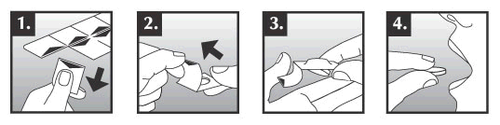
The tablet will dissolve directly in your mouth in a few seconds and can be swallowed without water.
Your mouth must be empty before placing the tablet on your tongue.
If you take more Nimvastid than you should
If you accidentally take more Nimvastid than you should, inform your doctor. You may need
medical care. Some people who have accidentally taken an excessive amount of Nimvastid have
experienced nausea, vomiting, diarrhea, high blood pressure and hallucinations. Slowing of the
heartbeat and fainting can also occur.
If you forget to take Nimvastid
If you discover that you have forgotten to take your dose of Nimvastid, wait and take the next dose
at the scheduled time. Do not take a double dose to make up for a missed dose. If you have any
doubts about the use of this medicine, ask your doctor or pharmacist.
4. Possible side effects
Like all medicines, this medicine can cause side effects, although not everybody gets them.
Side effects may be more frequent when you start taking the medicine or when
you increase the dose. Generally, side effects will gradually disappear as the
body gets used to the medicine.
Very common(may affect more than 1 in 10 people)
- Feeling of dizziness
- Loss of appetite
- Stomach discomfort such as feeling of nausea, vomiting, diarrhoea
Common(may affect up to 1 in 10 people)
- Anxiety
- Sweating
- Headache
- Heartburn
- Weight loss
- Stomach pain
- Feeling of agitation
- Feeling tired or weak
- General feeling of discomfort
- Tremors or feeling of confusion
- Loss of appetite
- Nightmares Uncommon(may affect up to 1 in 100 people)
- Depression
- Sleep disorders
- Fainting or accidental falls
- Changes in liver function
Rare(may affect up to 1 in 1,000 people)
- Chest pain
- Skin rash, itching
- Convulsions (seizures)
- Ulcer in the stomach or intestine
Very rare(may affect up to 1 in 10,000 people)
- High blood pressure
- Urinary tract infection
- Seeing things that are not there (hallucinations)
- Heart rhythm disorders, such as fast or slow heartbeat
- Bleeding from the intestine - manifests with the presence of blood in the stool or vomit
- Inflammation of the pancreas - manifests with severe pain in the upper part of the stomach, often accompanied by feeling of nausea or vomiting
- The signs of Parkinson's disease worsen or symptoms similar to it develop - such as muscle stiffness, difficulty performing movements Not known(frequency cannot be estimated based on the available data)
- Severe vomiting that can lead to rupture of the tract connecting the mouth to the stomach (esophagus)
- Dehydration (excessive fluid loss)
- Liver disorders (yellowing of the skin and the white of the eye, abnormally dark urine, unexplained nausea, vomiting, fatigue and loss of appetite)
- Aggression, feeling of restlessness
- Irregular heartbeat
Patients with dementia and Parkinson's disease
These patients more frequently experience some side effects. They also report some
additional side effects:
Very common(may affect more than 1 in 10 people)
- Tremors
- Fainting
- Accidental falls
Common(may affect up to 1 in 10 people)
- Anxiety
- Feeling of restlessness
- Fast and slow heartbeat
- Sleep disorders
- Excessive salivation and dehydration
- Unusual slowing of movements or movements that cannot be controlled
- The signs of Parkinson's disease worsen or symptoms similar to it develop - such as muscle stiffness, difficulty performing movements and muscle weakness Uncommon(may affect up to 1 in 100 people)
- Irregular heartbeat and poor control of movements
Other side effects observed with rivastigmine transdermal patches and that may
occur with orodispersible tablets:
Common(may affect up to 1 in 10 people)
- Fever
- Severe confusion
- Urinary incontinence (inability to adequately retain urine)
Uncommon(may affect up to 1 in 100 people)
- Hyperactivity (high level of activity, restlessness)
Not known(frequency cannot be estimated based on the available data)
- Allergic reactions at the patch application site, such as blisters or skin inflammation If any of these symptoms occur, contact your doctor as you may need medical attention. Reporting of side effectsIf you get any side effects, even those not listed in this leaflet, tell your doctor, pharmacist or nurse. You can also report side effects directly through the national reporting system listed in Annex V . By reporting side effects you can help provide more information on the safety of this medicine.
5. How to store Nimvastid
Keep this medicine out of sight and reach of children.
Do not use this medicine after the expiry date which is stated on the pack after “Exp.”. The expiry
date refers to the last day of that month.
This medicine does not require any special storage conditions.
Do not dispose of any medicine in waste water or household waste. Ask your pharmacist how to
dispose of medicines you no longer use. This will help protect the environment.
6. Package contents and other information
What Nimvastid contains
- The active ingredient is rivastigmine hydrogen tartrate. Each orodispersible tablet contains rivastigmine hydrogen tartrate equivalent to 1.5 mg, 3 mg, 4.5 mg or 6 mg of rivastigmine.
- The other ingredients are: mannitol, microcrystalline cellulose, hydroxypropylcellulose, Mint flavour (peppermint oil, corn maltodextrin), peppermint flavour (maltodextrin, gum arabic, sorbitol (E420), peppermint leaf oil, L-menthol), crospovidone, calcium silicate, magnesium stearate. See section 2 “Nimvastid contains sorbitol (E420)”. Description of the appearance of Nimvastid and package contentsThe orodispersible tablets are round and white. Packages containing (only for 1.5 mg), 28 x 1, 30 x 1, 56 x 1, 60 x 1, or 112 x 1 tablets in perforated single-dose blisters (OPA/Al/PVC film and PET/Al tear-off foil). Not all pack sizes may be marketed. Marketing authorisation holder and manufacturerKRKA, d.d., Novo mesto, Šmarješka cesta 6, 8501 Novo mesto, Slovenia. For further information on this medicinal product, contact the local representative of the marketing authorisation holder: België/Belgique/BelgienLietuva
KRKA Belgium, SA.
Tél/Tel: + 32 (0) 487 50 73 62
UAB KRKA Lietuva
Tel: + 370 5 236 27 40
България
КРКА България ЕООД
Teл.: + 359 (02) 962 34 50
Luxembourg/Luxemburg
KRKA Belgium, SA.
Tél/Tel: +32 (0) 487 50 73 62 (BE)
Česká republika
KRKA ČR, s.r.o.
Tel: + 420 (0) 221 115 150
Magyarország
KRKA Magyarország Kereskedelmi Kft.
Tel.: + 36 (1) 355 8490
Danmark
KRKA Sverige AB
Tlf: + 46 (0)8 643 67 66 (SE)
Malta
E.J. Busuttil Ltd.
Tel: +356 21 445 885
Deutschland
TAD Pharma GmbH
Tel: + 49 (0) 4721 606-0
Nederland
KRKA Belgium, SA.
Tel: +32 (0) 487 50 73 62 (BE)
Eesti
KRKA, d.d., Novo mesto Eesti filiaal
Tel: + 372 (0) 6 671 658
Norge
KRKA Sverige AB
Tlf: + 46 (0)8 643 67 66 (SE)
Ελλάδα
KRKA ΕΛΛΑΣ ΕΠΕ
Τηλ: + 30 2100101613
Österreich
KRKA Pharma GmbH, Wien
Tel: + 43 (0)1 66 24 300
España
KRKA Farmacéutica, S.L.
Tel: + 34 911 61 03 80
Polska
KRKA-POLSKA Sp. z o.o.
Tel.: + 48 (0)22 573 7500
France
KRKA France Eurl
Tél: + 33 (0)1 57 40 82 25
Portugal
KRKA Farmacêutica, Sociedade Unipessoal Lda.
Tel: + 351 (0)21 46 43 650
Hrvatska
KRKA - FARMA d.o.o.
Tel: + 385 1 6312 100
România
KRKA Romania S.R.L., Bucharest
Tel: + 4 021 310 66 05
Ireland
KRKA Pharma Dublin, Ltd.
Tel: + 353 1 413 3710
Slovenija
KRKA, d.d., Novo mesto
Tel: + 386 (0) 1 47 51 100
Ísland
LYFIS ehf.
Sími: + 354 534 3500
Slovenská republika
KRKA Slovensko, s.r.o.,
Tel: + 421 (0) 2 571 04 501
Italia
KRKA Farmaceutici Milano S.r.l.
Tel: + 39 02 3300 8841
Suomi/Finland
KRKA Finland Oy
Puh/Tel: +358 20 754 5330
Κύπρος
KI.PA. (PHARMACAL) LIMITED
Τηλ: + 357 24 651 882
Sverige
KRKA Sverige AB
Tel: + 46 (0)8 643 67 66 (SE)
Latvija
KRKA Latvija SIA
Tel: + 371 6 733 86 10
United Kingdom (Northern Ireland)
KRKA Pharma Dublin, Ltd.
Tel: + 353 1 413 3710
More detailed information on this medicinal product is available on the website of the European Medicines Agency: http://www.ema.europa.eu

Не впевнені, чи підходить вам цей лікарський засіб?
Обговоріть симптоми та можливі варіанти лікування з лікарем онлайн.

Виникли питання під час прийому ліків?
Обговоріть свої симптоми та лікування з лікарем онлайн.
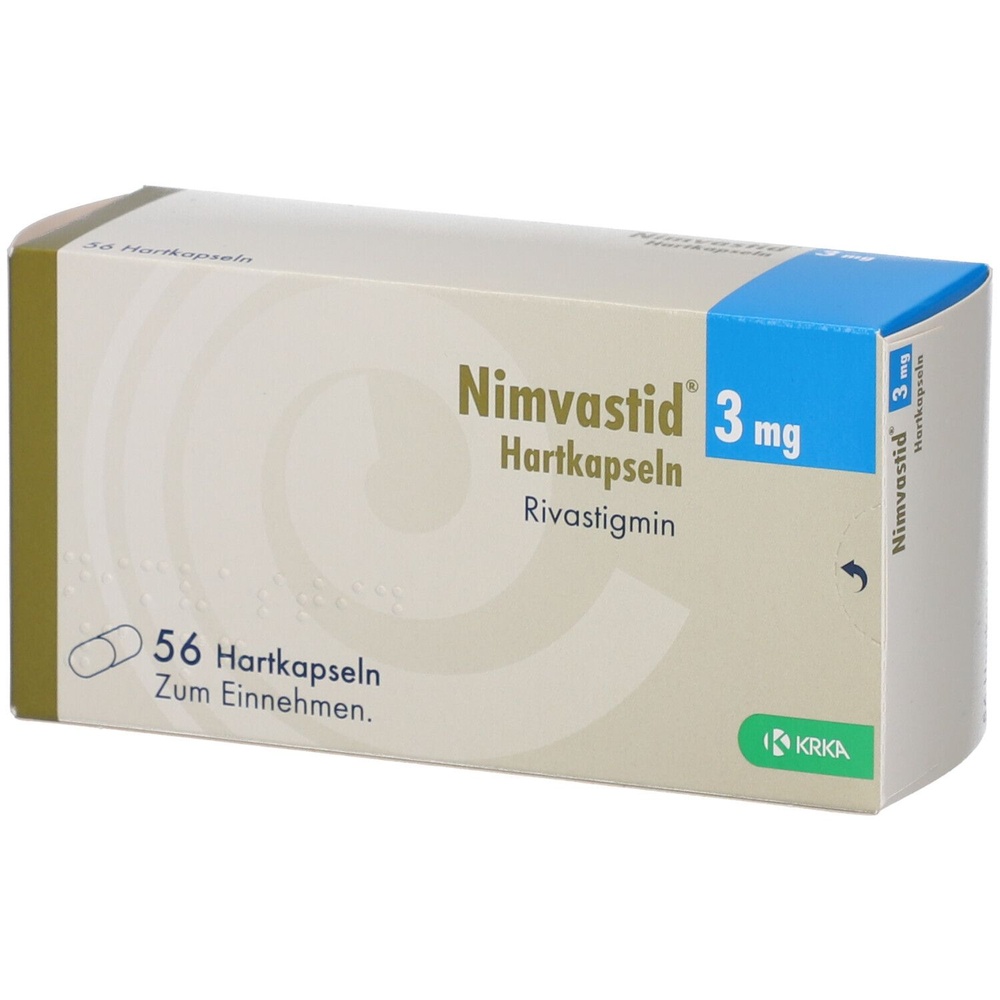
- Країна реєстрації
- Лікарська формаHard capsule, 1.5 MG
- Код АТХN06DA03
- Діюча речовина
- Потрібен рецептТак
- Виробник
- Ця інформація надана лише для ознайомлення і не є медичною порадою. Рішення щодо лікування завжди приймає лікар.
- Альтернативи до NIMVASTIDЛікарська форма: Transdermal patch, 4.6 MG/24 HДіюча речовина: РивастигминВиробник: NEURAXPHARM ITALY S.P.A.Потрібен рецептЛікарська форма: Hard capsule, 1.5 MGДіюча речовина: РивастигминВиробник: NOVARTIS EUROPHARM LIMITEDПотрібен рецептЛікарська форма: Hard capsule, 1.5 MGДіюча речовина: РивастигминВиробник: ALMIRALL S.A.Потрібен рецепт
Аналоги NIMVASTID в інших країнах
Препарати з тією самою діючою речовиною, доступні в інших країнах.
Аналог NIMVASTID у Іспанія
Аналог NIMVASTID у Польща
Аналог NIMVASTID у Україна
Лікарі онлайн щодо NIMVASTID
Застосування, безпека та можливість призначення рецепта — за результатами медичної оцінки.









Отримайте рецепт на NIMVASTID онлайн
Заповніть форму за 2 хвилини
Розкажіть про симптоми, історію хвороби та потрібний препарат.
Оберіть лікаря або ми призначимо
Оберіть спеціаліста або ми підберемо найближчого доступного лікаря.
Лікар розглядає ваш випадок
Зазвичай протягом 30 хвилин. Може ставити уточнювальні запитання в чаті.
Отримайте в будь-якій аптеці
Електронний рецепт надсилається на вашу пошту — дійсний по всій Польщі.
Часті запитання
NIMVASTID потребує рецепта в Італія. Ви можете обговорити з лікарем онлайн, чи підходить цей лікарський засіб для вашої ситуації.
Діюча речовина у NIMVASTID — Ривастигмин. Це допомагає визначити препарати з тим самим складом, але під іншими торговими назвами.
NIMVASTID виробляється компанією KRKA D.D. NOVO MESTO. Назва бренду та упаковка можуть відрізнятися залежно від дистрибʼютора.
Лікарі, зокрема Сімейні лікарі, Психіатри, Дерматологи, Кардіологи, Ендокринологи, Гастроентерологи, Пульмонологи, Нефрологи, Ревматологи, Гематологи, Інфекціоністи, Алергологи, Геріатри, Педіатри, Онкологи, можуть оцінити доцільність застосування NIMVASTID з урахуванням вашого стану та місцевих правил. Ви можете записатися на онлайн-консультацію, щоб обговорити симптоми та можливі подальші кроки.
Польща має добре розвинену систему охорони здоров'я у великих містах, таких як Варшава, Краків, Вроцлав і Гданськ. Аптеки широко доступні та працюють відповідно до чинного законодавства, забезпечуючи доступ до рецептурних препаратів.
Ви можете придбати NIMVASTID у Варшаві, Кракові, Вроцлаві або Гданську в будь-якій аптеці за наявності дійсного рецепта.
Щоб отримати рецепт, ви можете скористатися Oladoctor:
Інші препарати з тією самою діючою речовиною (Ривастигмин) включають DEMELORA, EXELON, PROMETAX. Вони можуть відрізнятися торговою назвою або формою випуску, але містять той самий терапевтичний компонент. Перед зміною або початком прийому нового препарату варто проконсультуватися з лікарем.
