



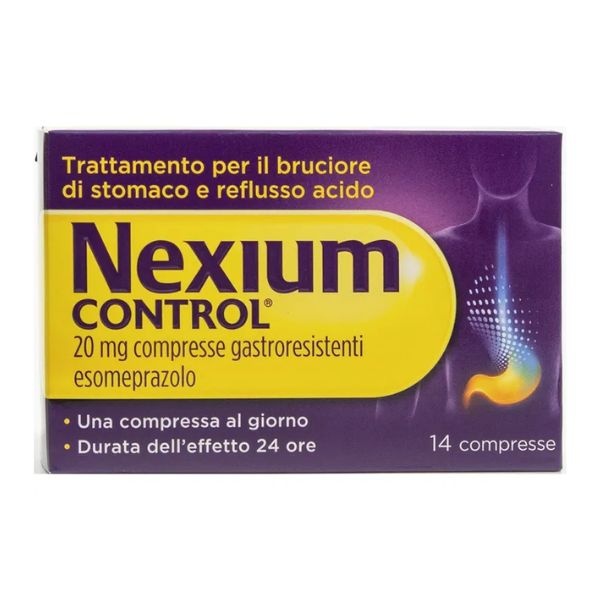
NEXIUM 20 mg Enteric-Coated Tablet

Запит на рецепт онлайн
Лікар розгляне ваш випадок і визначить, чи є рецепт медично доцільним.

Поговоріть з лікарем про ці ліки
Обговоріть симптоми та можливі подальші кроки під час короткої онлайн-консультації.



Інструкція із застосування NEXIUM KONTROL
Зміст інструкції
Nexium Control 20 mg gastro-resistant tablets
esomeprazole
Read this leaflet carefully before taking this medicine as it contains important information for you.
Always take this medicine exactly as described in this leaflet or as your pharmacist has told you.
- Keep this leaflet. You may need to read it again.
- If you would like more information or advice, ask your pharmacist.
- If any side effects occur, including those not listed in this leaflet, tell your doctor or pharmacist. See section 4.
- See a doctor if you do not feel better or if your symptoms worsen after 14 days.
Contents of this leaflet:
- 1. What Nexium Control is and what it is used for
- 2. What you need to know before you take Nexium Control
- 3. How to take Nexium Control
- 4. Possible side effects
- 5. How to store Nexium Control
- 6. Contents of the pack and other information
- Further useful information
1. What is Nexium Control and what is it used for
Nexium Control contains the active ingredient esomeprazole. It belongs to a group of medicines
called ‘proton pump inhibitors’. These work by reducing the amount of acid produced
by the stomach.
This medicine is used in adults for the short-term treatment of reflux symptoms
(for example, heartburn and acid regurgitation).
Reflux is the return of acid from the stomach into the esophagus (“food pipe”) which can become
inflamed and painful. This can cause symptoms such as a painful sensation in the chest that rises
towards the throat (heartburn) and an acidic taste in the mouth (acid regurgitation).
Nexium Control is not intended to provide immediate relief. It may be necessary to take
the tablets for 2-3 consecutive days before you start to feel better. Consult your doctor if you do not feel
better or if you feel worse after 14 days.
2. What you need to know before taking Nexium Control
Do not take Nexium Control
- If you are allergic to esomeprazole or any of the other ingredients of this medicine (listed in section 6).
- If you are allergic to medicines containing other proton pump inhibitors (e.g. pantoprazole, lansoprazole, rabeprazole or omeprazole).
- If you are taking a medicine containing nelfinavir (used to treat HIV infections).
- If you have ever had a severe skin reaction or peeling of the skin, skin rash with blisters and/or ulcers in the mouth after taking Nexium Control or other related medicines.
Do not take this medicine if you fall into any of the cases above. If in doubt,
consult your doctor or pharmacist before taking this medicine.
Warnings and precautions
Talk to your doctor before taking Nexium Control if:
- You have previously had a stomach ulcer or have undergone stomach surgery.
- You are undergoing continuous treatment for 4 or more weeks for reflux or heartburn.
- You have jaundice (yellowing of the skin and eyes) or serious liver problems.
- You have severe kidney problems.
- You are over 55 years old and have new or recently changed reflux symptoms or need to take indigestion or heartburn remedies daily without a prescription.
- You have ever had a skin reaction after treatment with a medicine similar to Nexium Control that reduces stomach acid. Severe skin reactions, including Stevens-Johnson syndrome, toxic epidermal necrolysis, drug reaction with eosinophilia and systemic symptoms (DRESS) have been reported in association with treatment with Nexium Control. Stop using Nexium Control and seek immediate medical advice if you notice any of the symptoms related to these severe skin reactions described in section 4.
- You are to undergo an endoscopy or urea breath test.
- You are to have a specific blood test (Chromogranin A).
See your doctor immediately before taking or after taking this medicine, if you notice
any of the following symptoms, which could be signs of a more serious illness.
- You are losing a lot of weight without reason.
- You have problems or pain swallowing.
- Pain appears in the stomach or signs of indigestion such as nausea, feeling of fullness, bloating, especially after eating food.
- You start vomiting food or blood, which may appear dark like coffee grounds in your vomit.
- Your stools are black (stools with blood spots).
- You have severe or persistent diarrhea; esomeprazole has been associated with a slight increase in the risk of infectious diarrhea.
- If you notice the appearance of a skin rash, especially in areas exposed to sunlight, consult your doctor as soon as possible, as you may need to stop therapy with Nexium Control. Also remember to report any other undesirable effects such as joint pain.
Seek urgent medical advice if you feel chest pain accompanied by dizziness
mental confusion, sweating, vertigo or pain in the shoulders and shortness of breath. This could be a
symptom of a serious heart problem.
If you fall into any of the cases above (or if you have any doubts), see your doctor immediately.
Children and adolescents
This medicine should not be used in children and adolescents under 18 years of age.
Other medicines and Nexium Control
Tell your doctor or pharmacist if you are taking, have recently taken or might take
any other medicines. This is because this medicine can affect the way some medicines work and some medicines can have an effect on it.
Do not take this medicine if you are also taking a medicine containing nelfinavir
(used for the treatment of HIV infection).
You must specifically inform your doctor or pharmacist if you are taking clopidogrel (used for
preventing blood clots).
Do not take this medicine with other medicines that limit the amount of acid produced
in the stomach such as proton pump inhibitors (e.g. pantoprazole, lansoprazole, rabeprazole or
omeprazole) or H2 antagonists (e.g. ranitidine or famotidine).
If necessary, you can take this medicine with antacids (e.g. magnesium aluminium, alginic acid,
sodium bicarbonate, aluminium hydroxide, magnesium carbonate or their combinations).
Tell your doctor or pharmacist if you are taking any of the following medicines:
- Ketoconazole and itraconazole (used for the treatment of fungal infections)
- Voriconazole (used for the treatment of fungal infections) and clarithromycin (used for the treatment of infections). Your doctor may adjust the dose of Nexium Control if you also have serious liver problems and are being treated for a long period of time.
- Erlotinib (used for the treatment of cancer)
- Methotrexate (used for the treatment of cancer and rheumatic diseases)
- Digoxin (used for heart problems)
- Atazanavir, saquinavir (used for the treatment of HIV infection)
- Citalopram, imipramine or clomipramine (used for the treatment of depression)
- Diazepam (used for the treatment of anxiety, muscle relaxation or in epilepsy)
- Phenytoin (used for the treatment of epilepsy)
- Medicines used to thin the blood, such as warfarin. Your doctor may need to monitor you when you start or stop taking Nexium Control
- Cilostazol (used for the treatment of intermittent claudication- a condition in which poor blood supply to the leg muscles causes pain and difficulty walking)
- Cisapride (used for indigestion and heartburn)
- Rifampicin (used for the treatment of tuberculosis)
- Tacrolimus (in case of organ transplant)
- St John's Wort (Hypericum perforatum) (used in the treatment of depression)
Pregnancy and breastfeeding
As a precaution, you should preferably avoid using Nexium Control during
pregnancy. You should not use this medicine during breastfeeding.
If you are pregnant, suspect or are planning a pregnancy, or if you are breastfeeding
ask your doctor or pharmacist before taking this medicine.
Driving and using machines
Nexium Control is unlikely to affect your ability to drive or operate machinery.
However, undesirable effects such as dizziness and vision disturbances are uncommon (see section 4).
If they occur, do not drive or operate machinery.
Nexium Control contains sucrose and sodium
Nexium Control contains sugar spheres, containing sucrose, a type of sugar. If your doctor has
told you that you have an intolerance to some sugars, consult him before taking the medicine.
Nexium Control contains less than 1 mmol (23 mg) of sodium per tablet, i.e. essentially ‘sodium-free’
3. How to take Nexium Control
Take this medicine following exactly the instructions in this leaflet or as directed by your doctor or pharmacist. If you have any doubts, ask your doctor or pharmacist.
How much to take
- The recommended dose is one tablet a day.
- Do not take more than this recommended dose of one tablet (20 mg) a day, even if you do not feel an immediate improvement.
- You may need to take the tablets for two or three consecutive days before the symptoms of reflux (for example, heartburn and acid regurgitation) improve.
- The duration of treatment is up to 14 days.
- When the symptoms of reflux have completely disappeared you should stop taking this medicine.
- If your reflux symptoms worsen or do not improve after taking this medicine for 14 consecutive days, you should consult your doctor.
If you frequently experience recurrent, persistent or long-lasting symptoms, even after treatment with this medicine, contact your doctor.
Taking the medicine
- You can take the tablet at any time of the day with food or on an empty stomach.
- Swallow the tablet whole with half a glass of water. Do not chew or crush the tablet. This is because the tablet contains coated granules, which protect the medicine from stomach acid. It is therefore important not to damage the granules.
Alternative method of taking the medicine
- Place the tablet in a glass of still (non-carbonated) water. Do not use any other liquid.
- Stir until the tablet dissolves (the mixture will not be clear) then drink the mixture immediately or within 30 minutes. Always stir the mixture just before drinking it.
- To make sure you have drunk all the medicine, rinse the glass thoroughly with half a glass of water and drink. Solid particles contain the medicine - do not chew or crush them.
If you take more Nexium Control than you should
If you take more Nexium Control than recommended, inform your doctor or pharmacist immediately.
Symptoms such as diarrhoea, stomach pain, constipation, feeling or state of unwellness and fatigue may occur.
If you forget to take Nexium Control
If you forget to take a dose, take it as soon as you remember on the same day. Do not take a double dose to make up for a forgotten dose.
If you have any questions about using this medicine, ask your doctor or pharmacist.
4. Possible side effects
Like all medicines, this medicine can cause side effects, although not everybody gets them.
If you notice any of the following serious side effects, stop taking Nexium Control and
contact your doctor immediately:
- Sudden wheezing, swelling of the lips, tongue and throat, skin rash, feeling faint or difficulty swallowing (severe allergic reaction, observed rarely).
- Reddening of the skin with blisters or peeling. Severe blisters and bleeding may also appear on the lips, eyes, mouth, nose and genitals. This may be ‘Stevens-Johnson syndrome’ or ‘toxic epidermal necrolysis’, observed very rarely.
- Yellowing of the skin, dark urine and fatigue, which may be symptoms of liver problems, observed rarely.
- Widespread rash, high temperature and swollen lymph nodes (DRESS syndrome or drug hypersensitivity syndrome), observed very rarely.
Contact your doctor as soon as possible if you experience any of the following signs of infection:
This medicine very rarely affects white blood cells, leading to immunodeficiency. If
you experience an infection with symptoms such as fever with severedeterioration of your general
condition or fever with symptoms of local infection such as sore throat, sore mouth or
difficulty urinating, you should consult your doctor as soon as possible so that a
lack of white blood cells (agranulocytosis) can be ruled out by performing a blood test. In this case it is
important that you inform your doctor about the medicine you are taking.
Other side effects include:
Common (may affect up to 1 in 10 people)
- Headache.
- Effects on the stomach or intestines: diarrhoea, stomach ache, constipation, wind (flatulence).
- Feeling unwell (nausea) or sickness (vomiting).
- Benign growths (polyps) in the stomach
Uncommon (may affect up to 1 in 100 people)
- Swelling of the feet and ankles.
- Disturbed sleep (insomnia), drowsiness.
- Dizziness, tingling sensation like “pins and needles”.
- Feeling of spinning (vertigo).
- Dry mouth.
- Increased liver enzymes shown in blood tests that check how the liver is working.
- Skin rash, hives (urticaria) and itchy skin.
Rare (may affect up to 1 in 1,000 people)
- Blood problems e.g. a reduced number of white blood cells or platelets. This can cause weakness, bruising or increased susceptibility to infections.
- Low levels of sodium in the blood. This can cause weakness, sickness (vomiting) and cramps.
- Feeling agitated, confused or depressed.
- Changes in taste.
- Vision problems such as blurred vision.
- Sudden feeling of wheezing or shortness of breath (bronchospasm).
- Inflammation inside the mouth.
- Infection called “candidiasis” which can affect the intestines and is caused by a fungus.
- Hair loss (alopecia).
- Skin rash on exposure to the sun.
- Joint pain (arthralgia) or muscle pain (myalgia).
- General feeling of being unwell and lack of strength.
- Increased sweating.
Very rare (may affect up to 1 in 10,000 people)
- Low number of red blood cells, white blood cells and platelets (a condition called pancytopenia).
- Aggression.
- Seeing, feeling or hearing things that are not there (hallucinations).
- Severe liver problems leading to liver failure and brain inflammation.
- Muscle weakness.
- Severe kidney problems.
- Enlargement of the breasts in men.
Not known (frequency cannot be estimated from the available data)
- Low levels of magnesium in the blood. This can cause fatigue, sickness (vomiting), involuntary muscle contractions, tremors and changes in heart rhythm (arrhythmia). If you have very low levels of magnesium, you may also experience low blood levels of calcium and/or potassium.
- Inflammation of the intestine (which can lead to diarrhoea).
- Erythema, possible joint pain.
Reporting of side effects
If you get any side effects, talk to your doctor or pharmacist. This includes any side effects not listed in this leaflet. You can also report side effects directly through
the national reporting system listed in Annex V. By reporting side effects you can help provide more information on the safety of this medicine.
5. How to store Nexium Control
Keep this medicine out of sight and reach of children.
Do not use this medicine after the expiry date which is stated on the package and blister after
SCAD/EXP. The expiry date refers to the last day of that month.
Do not store at a temperature above 30°C.
Keep this medicine in its original packaging to protect it from moisture.
Do not dispose of any medicine in wastewater or household waste. Ask your pharmacist how to
dispose of medicines you no longer use. This will help protect the environment.
6. Package contents and other information
What Nexium Control contains
- The active ingredient is esomeprazole. Each gastro-resistant tablet contains 20 mg of esomeprazole (as magnesium trihydrate).
- The other ingredients are: monostearate glycerol 40-55, hydroxypropylcellulose, hypromellose, red-brown iron oxide (E172), yellow iron oxide (E-172), magnesium stearate, ethyl acrylate-methacrylic acid copolymer (1:1) 30% dispersion, microcrystalline cellulose, synthetic paraffin, macrogol 6000, polysorbate 80, crospovidone (type A), sodium stearyl fumarate, sugar spheres (sucrose and corn starch), talc, titanium dioxide (E 171) and triethyl citrate (see section 2, “Nexium Control contains sucrose and sodium”).
Description of the appearance of Nexium Control and package contents
Nexium Control 20 mg gastro-resistant tablets are light pink, oblong, biconvex, 14
mm x 7 mm film-coated, with the inscription ‘20 mG’ on one side and A/EH on the other side.
Nexium Control is available in blister packs of 7, 14 and 28 gastro-resistant tablets.
Not all pack sizes may be marketed.
Marketing authorisation holder
GlaxoSmithKline Dungarvan Limited, Knockbrack, Dungarvan, Co. Waterford, Ireland
Manufacturer
Haleon Italy Manufacturing S.r.l., Via Nettunense, 90, 04011, Aprilia (LT), Italy.
More detailed information on this medicinal product is available on the website of the European
Medicines Agency: http://www.ema.europa.eu .
---------------------------------------------------------------------------------------------------------------------------
FURTHER USEFUL INFORMATION
What are the symptoms of heartburn?
The typical symptoms of reflux are a painful sensation in the chest that rises towards the throat (heartburn) and an acidic taste in the mouth (acid regurgitation).
Why do these symptoms occur?
Heartburn can be the result of a large meal, eating fatty foods, eating too quickly, or excessive alcohol consumption. You may also notice that
heartburn worsens when lying down. Overweight individuals and smokers are more
likely to suffer from heartburn.
What can you do to relieve the symptoms?
- Eat healthier foods, trying to avoid spicy or fatty foods and large meals shortly before bedtime.
- Avoid carbonated drinks, coffee, chocolate and alcohol.
- Eat slowly and reduce portion sizes.
- Try to lose weight.
- Quit smoking.
When should you ask for advice or help?
- You should urgently seek medical advice if you experience chest pain accompanied by dizziness, sweating, vertigo or pain in the shoulders and shortness of breath.
consult your doctor or pharmacist.
- If you suffer from the undesirable effects indicated in section 4 that require medical intervention.
Nexium Control 20 mg hard gastro-resistant capsules
esomeprazole
Read this leaflet carefully before you start to take this medicine as it contains important information for you.
Always take this medicine exactly as described in this leaflet or as your pharmacist has told you.
- Keep this leaflet. You may need to read it again.
- If you would like more information or advice, ask your pharmacist.
- If any side effects occur, including any not listed in this leaflet, tell your doctor or pharmacist. See section 4.
- Talk to your doctor if your symptoms do not improve or get worse after 14 days.
Contents of this leaflet:
- 1. What Nexium Control is and what it is used for
- 2. What you need to know before you take Nexium Control
- 3. How to take Nexium Control
- 4. Possible side effects
- 5. How to store Nexium Control
- 6. Contents of the pack and other information
- Further useful information
1. What is Nexium Control and what is it used for
Nexium Control contains the active ingredient esomeprazole. It belongs to a group of medicines
called ‘proton pump inhibitors’. These work by reducing the amount of acid produced
by the stomach.
This medicine is used in adults for the short-term treatment of reflux symptoms
(for example, heartburn and acid regurgitation).
Reflux is the return of acid from the stomach into the esophagus (“food pipe”) which can become
inflamed and painful. This can cause symptoms such as a painful sensation in the chest that rises
towards the throat (heartburn) and an acidic taste in the mouth (acid regurgitation).
Nexium Control is not intended to provide immediate relief. It may be necessary to take
the capsules for 2-3 consecutive days before feeling better. See your doctor if you do not feel
better or if you feel worse after 14 days.
2. What you need to know before taking Nexium Control
Do not take Nexium Control
- If you are allergic to esomeprazole or any of the other ingredients of this medicine (listed in section 6).
- If you are allergic to medicines containing other proton pump inhibitors (e.g. pantoprazole, lansoprazole, rabeprazole or omeprazole).
- If you are taking a medicine containing nelfinavir (used to treat HIV infections).
- If you have ever had a severe skin rash or peeling of the skin, rash with blisters and/or ulcers in the mouth after taking Nexium Control or other related medicines.
Do not take this medicine if you fall into any of the above cases. If in doubt,
consult your doctor or pharmacist before taking this medicine.
Warnings and precautions
Talk to your doctor before taking Nexium Control if:
- You have previously had a stomach ulcer or have undergone stomach surgery.
- You are continuously treated for 4 or more weeks for reflux or heartburn.
- You have jaundice (yellowing of the skin and eyes) or severe liver problems.
- You have severe kidney problems.
- You are over 55 years old and have new or recently changed reflux symptoms or need to take indigestion or heartburn remedies daily without a prescription.
- You have ever had a skin reaction after treatment with a medicine similar to Nexium Control that reduces stomach acid. Severe skin reactions, including Stevens-Johnson syndrome, toxic epidermal necrolysis, and drug reaction with eosinophilia and systemic symptoms (DRESS), have been reported in association with treatment with Nexium Control. Stop using Nexium Control and seek immediate medical advice if you notice any of the symptoms related to these severe skin reactions described in section 4.
- You are to undergo an endoscopy or a urea breath test.
- You are to have a specific blood test (Chromogranin A).
See your doctor immediately before taking or after taking this medicine if you notice
any of the following symptoms, which could be signs of a more serious illness.
- You are losing a lot of weight without reason.
- You have problems or pain swallowing.
- You experience stomach pain or signs of indigestion such as nausea, feeling of fullness, bloating, especially after eating.
- You start vomiting food or blood, which may appear dark like coffee grounds in your vomit.
- Your stools are black (stools with blood spots).
- You have severe or persistent diarrhea; esomeprazole has been associated with a slight increase in the risk of infectious diarrhea.
- If you notice the appearance of a skin rash, especially in areas exposed to sunlight, see a doctor as soon as possible, as you may need to stop treatment with Nexium Control. Also remember to report any other unwanted effects such as joint pain.
Seek urgent medical advice if you feel chest pain accompanied by dizziness
mental confusion, sweating, lightheadedness, or pain in your shoulders and shortness of breath. This could be a
symptom of a serious heart problem.
If you fall into any of the above cases (or if you have any doubts), see your doctor immediately.
Children and adolescents
This medicine should not be used in children and adolescents under 18 years of age.
Other medicines and Nexium Control
Tell your doctor or pharmacist if you are taking, have recently taken or might take
any other medicines. This is because this medicine can affect the way some medicines work and some medicines can have an effect on it.
Do not take this medicine if you are also taking a medicine containing nelfinavir
(used to treat HIV infection).
You must specifically inform your doctor or pharmacist if you are taking clopidogrel (used to
prevent blood clots).
Do not take this medicine with other medicines that limit the amount of acid produced
in the stomach such as proton pump inhibitors (e.g. pantoprazole, lansoprazole, rabeprazole or
omeprazole) or H2 antagonists (e.g. ranitidine or famotidine).
If necessary, you can take this medicine with antacids (e.g. magnesium aluminium, alginic acid,
sodium bicarbonate, aluminium hydroxide, magnesium carbonate or their combinations).
Tell your doctor or pharmacist if you are taking any of the following medicines:
- Ketoconazole and itraconazole (used to treat fungal infections).
- Voriconazole (used to treat fungal infections) and clarithromycin (used to treat infections). Your doctor may adjust the dose of Nexium Control if you also have severe liver problems and are being treated for a long time.
- Erlotinib (used to treat cancer).
- Methotrexate (used to treat cancer and rheumatic diseases).
- Digoxin (used for heart problems).
- Atazanavir, saquinavir (used to treat HIV infection).
- Citalopram, imipramine or clomipramine (used to treat depression).
- Diazepam (used to treat anxiety, muscle relaxation or epilepsy).
- Phenytoin (used to treat epilepsy).
- Medicines used to thin the blood, such as warfarin. Your doctor may need to monitor you when you start or stop treatment with Nexium Control.
- Cilostazol (used to treat intermittent claudication- a condition in which poor blood supply to the leg muscles causes pain and difficulty walking).
- Cisapride (used for indigestion and heartburn).
- Rifampicin (used to treat tuberculosis).
- Tacrolimus (in case of organ transplantation).
- St John's Wort (Hypericum perforatum) (used to treat depression).
Pregnancy and breastfeeding
As a precaution, you should preferably avoid using Nexium Control during
pregnancy. You should not use this medicine while breastfeeding.
If you are pregnant, suspect you may be pregnant, are planning to become pregnant, or are breastfeeding
ask your doctor or pharmacist for advice before taking this medicine.
Driving and using machines
Nexium Control is unlikely to affect your ability to drive or operate machinery.
However, unwanted effects such as dizziness and vision disturbances are uncommon (see section 4).
If they occur, do not drive or operate machinery.
Nexium Control contains sucrose, sodium and Allura Red AC (E129)
Nexium Control contains sugar spheres, containing sucrose, a type of sugar. If your doctor has
told you that you have an intolerance to some sugars, consult him before taking the medicine.
Nexium Control contains less than 1 mmol of sodium (23 mg) per capsule, i.e. essentially ‘sodium-free’.
Nexium Control contains the azo dye, Allura Red AC (E129), which may cause allergic
reactions.
3. How to take Nexium Control
Take this medicine following the instructions in this leaflet or as directed by your doctor or pharmacist. If you have any doubts, consult your doctor or pharmacist.
How much to take
- The recommended dose is one capsule a day.
- Do not take more than this recommended dose of one capsule (20 mg) a day, even if you do not feel an immediate improvement.
- You may need to take the capsules for two or three consecutive days before the symptoms of reflux (for example, heartburn and acid regurgitation) improve.
- The duration of treatment is up to 14 days.
- When the symptoms of reflux have completely disappeared, you should stop taking this medicine.
- If your reflux symptoms worsen or do not improve after taking this medicine for 14 consecutive days, you should consult your doctor.
If you frequently experience recurring, persistent or long-lasting symptoms, even after treatment with this medicine, contact your doctor.
Taking the medicine
- You can take the capsule at any time of the day with food or on an empty stomach.
- Swallow the capsule whole with half a glass of water. Do not chew, crush or open the capsule. This is because the capsule contains coated granules, which protect the medicine from stomach acid. It is therefore important not to damage the granules.
If you take more Nexium Control than you should
If you take more Nexium Control than recommended, inform your doctor or pharmacist immediately.
Symptoms such as diarrhoea, stomach pain, constipation, feeling or state of unwellness and fatigue may occur.
If you forget to take Nexium Control
If you forget to take a dose, take it as soon as you remember on the same day. Do not take a double dose to make up for a forgotten dose.
If you have any doubts about using this medicine, ask your doctor or pharmacist.
4. Possible side effects
Like all medicines, this medicine can cause side effects, although not everybody gets them.
If you notice any of the following serious side effects, stop taking Nexium Control and
contact your doctor immediately:
- Sudden wheezing, swelling of the lips, tongue and throat, skin rash, feeling faint or difficulty swallowing (severe allergic reaction, observed rarely).
- Reddening of the skin with blisters or peeling. Severe blisters and bleeding may also appear on the lips, eyes, mouth, nose and genitals. This
may be ‘Stevens-Johnson syndrome’ or ‘toxic epidermal necrolysis’, observed very
rarely.
- Yellowing of the skin, dark urine and fatigue, which may be symptoms of liver problems, observed rarely.
- Widespread rash, high temperature and swollen lymph nodes (DRESS syndrome or drug hypersensitivity syndrome), observed very rarely.
See your doctor as soon as possible if you experience any of the following signs of infection:
This medicine can very rarely affect white blood cells leading to immunodeficiency. If
you experience an infection with symptoms such as fever with severeworsening of general health
or fever with symptoms of local infection such as sore throat, sore mouth or
difficulty urinating, you should consult your doctor as soon as possible to rule out a
lack of white blood cells (agranulocytosis) by performing a blood test. In this case it is
important that you inform your doctor about the medicine you are taking.
Other side effects include:
Common (may affect up to 1 in 10 people)
- Headache.
- Effects on the stomach or intestines: diarrhea, stomach pain, constipation, gas (flatulence).
- Feeling unwell (nausea) or sick (vomiting).
- Benign growths (polyps) in the stomach.
Uncommon (may affect up to 1 in 100 people)
- Swelling of the feet and ankles.
- Disturbed sleep (insomnia), drowsiness.
- Dizziness, tingling sensation like “pins and needles”.
- Feeling of spinning (vertigo).
- Dry mouth.
- Increased liver enzymes shown in blood tests that check how the liver is working.
- Skin rash, hives (urticaria) and itchy skin.
Rare (may affect up to 1 in 1,000 people)
- Blood problems, for example, a reduced number of white blood cells or platelets. This can cause weakness, bruising or increased susceptibility to infections.
- Low levels of sodium in the blood. This can cause weakness, feeling unwell (vomiting) and cramps.
- Feeling agitated, confused or depressed.
- Changes in taste.
- Vision problems such as blurred vision.
- Sudden feeling of wheezing or shortness of breath (bronchospasm).
- Inflammation inside the mouth.
- Infection called “candidiasis” that can affect the intestines and is caused by a fungus.
- Hair loss (alopecia).
- Skin rash when exposed to the sun.
- Joint pain (arthralgia) or muscle pain (myalgia).
- General feeling of being unwell and lack of strength.
- Increased sweating.
Very rare (may affect up to 1 in 10,000 people)
- Low number of red blood cells, white blood cells, and platelets (a condition called pancytopenia).
- Aggression.
- Seeing, feeling or hearing things that are not there (hallucinations).
- Serious liver problems leading to liver failure and brain inflammation.
- Muscle weakness.
- Serious kidney problems.
- Enlargement of the breasts in men.
Not known (frequency cannot be estimated from the available data)
- Low levels of magnesium in the blood. This can cause fatigue, feeling unwell (vomiting), involuntary muscle contractions, tremors and changes in heart rhythm (arrhythmia). If you have very low levels of magnesium, you may also experience low blood levels of calcium and/or potassium.
- Inflammation of the intestines (which can lead to diarrhea).
- Erythema, possible joint pain.
Reporting of side effects
If you get any side effects, talk to your doctor or pharmacist. This includes any side effects not listed in this leaflet. You can also report side effects directly through
the national reporting system listed in Annex V. By reporting side effects you can help provide more information on the safety of this medicine.
5. How to store Nexium Control
Keep this medicine out of sight and reach of children.
Do not use this medicine after the expiry date which is stated on the package and bottle after
EXP. The expiry date refers to the last day of that month.
Do not store at a temperature above 30°C.
Keep this medicine in the original package to protect it from moisture.
Do not dispose of any medicine in wastewater or household waste. Ask your pharmacist how to
dispose of medicines you no longer use. This will help protect the environment.
6. Package contents and other information
What Nexium Control contains
- The active ingredient is esomeprazole. Each gastro-resistant hard capsule contains 20 mg of esomeprazole (as magnesium trihydrate).
- The other ingredients are monostearate glycerol 40-55, hydroxypropyl cellulose, hypromellose, magnesium stearate, acrylic acid - ethyl acrylate copolymer (1:1) dispersion 30%, polysorbate 80, sugar spheres (sucrose and corn starch), talc, triethyl citrate, carmine (E120), indigo carmine (E132), titanium dioxide (E171), yellow iron oxide (E172), erythrosine (E127), allura red AC (E129), povidone K-17, propylene glycol, shellac, sodium hydroxide and gelatin (see section 2, “Nexium Control contains sucrose, sodium and allura red AC (E129)”).
Description of the appearance of Nexium Control and package contents
Nexium Control 20 mg gastro-resistant hard capsules are capsules approximately 11 x 5 mm in size with a transparent body
and an amethyst-colored head with “NEXIUM 20 MG” printed in white. The capsule has
a yellow central band and contains yellow and purple enteric-coated pellet granules.
Nexium Control is available in high-density polyethylene (HDPE) bottles with a cap
with induction sealing and a child-resistant closure. The bottle also contains a sealed container
with desiccant silica gel.
Each pack contains 1 or 2 bottles, each with 14 gastro-resistant hard capsules.
Not all pack sizes may be marketed.
Marketing authorisation holder
GlaxoSmithKline Dungarvan Limited, Knockbrack, Dungarvan, Co. Waterford, Ireland
Manufacturer
Haleon Italy Manufacturing S.r.l., Via Nettunense, 90, 04011, Aprilia (LT), Italy.
More detailed information on this medicine is available on the website of the European Medicines
Agency: http://www.ema.europa.eu .
---------------------------------------------------------------------------------------------------------------------------
FURTHER USEFUL INFORMATION
What are the symptoms of heartburn?
The usual symptoms of reflux are a painful sensation in the chest that rises towards the throat (heartburn) and an acidic taste in the mouth (acid regurgitation).
Why do these symptoms occur?
Heartburn may be the result of overeating, consuming very
fatty foods, eating too quickly or excessive alcohol consumption. You may also notice that
heartburn worsens when you lie down. Overweight individuals and smokers are more
likely to suffer from heartburn.
What can you do to relieve the symptoms?
- Eat healthier foods, avoiding spicy or fatty foods and large meals shortly before bedtime.
- Avoid carbonated drinks, coffee, chocolate and alcohol.
- Eat slowly and reduce portion sizes.
- Try to lose weight.
- Quit smoking.
When should you ask for advice or help?
- You should urgently seek medical advice if you experience chest pain accompanied by dizziness, sweating, lightheadedness or pain in your shoulders and shortness of breath.
Consult your doctor or pharmacist.
- If you suffer from the undesirable effects indicated in section 4 that require medical attention.
ANNEX IV
SCIENTIFIC CONCLUSIONS AND JUSTIFICATION FOR THE VARIATION OF THE TERMS
of the marketing authorisation
Scientific conclusions
In light of the assessment by the Pharmacovigilance and Risk Assessment Committee
(PRAC) of the periodic safety update report(PSUR) for esomeprazole, the PRAC’s scientific conclusions are as follows:
Based on the data on Drug Reaction with Eosinophilia and Systemic Symptoms (DRESS)
available in the literature, spontaneous reports, including in some cases a close temporal association and improvement upon discontinuation (de-challenge), and considering a
plausible mechanism of action, the PRAC considers that a causal relationship between
esomeprazole and DRESS is at least a reasonable possibility. Other SCs different from DRESS
are already included in section 4.8 of the SmPC. Given their severity, these adverse effects
should be included in the warning proposed in section 4.4 of the SmPC and products containing
esomeprazole should be amended accordingly.
Having examined the PRAC recommendation, the Committee for Human Medicinal Products
(CHMP) agrees with the overall conclusions and the justification for the recommendation.
Justification for the variation of the terms of the marketing authorisation
Based on the scientific conclusions on esomeprazole, the CHMP considers that the benefit/risk of the medicinal productremains of medicinal productsunchanged, save for the proposed changes to the product information.
The CHMP recommends the variation of the terms of the marketing authorisation.

Не впевнені, чи підходить вам цей лікарський засіб?
Обговоріть симптоми та можливі варіанти лікування з лікарем онлайн.

Виникли питання під час прийому ліків?
Обговоріть свої симптоми та лікування з лікарем онлайн.
- Країна реєстрації
- Лікарська формаEnteric-coated tablet, 20 MG
- Код АТХA02BC05
- Діюча речовина
- Потрібен рецептНі
- Виробник
- Ця інформація надана лише для ознайомлення і не є медичною порадою. Рішення щодо лікування завжди приймає лікар.
- Альтернативи до NEXIUM KONTROLЛікарська форма: Enteric-coated tablet, 20 MGДіюча речовина: ЭзомепразолВиробник: S.F. GROUP S.R.L.Рецепт не потрібенЛікарська форма: Enteric-coated tablet, 20 MGДіюча речовина: ЭзомепразолВиробник: S.F. GROUP S.R.L.Потрібен рецептЛікарська форма: Enteric-coated hard capsule, 20 MGДіюча речовина: ЭзомепразолВиробник: AUROBINDO PHARMA (ITALIA) S.R.L.Рецепт не потрібен
Аналоги NEXIUM KONTROL в інших країнах
Препарати з тією самою діючою речовиною, доступні в інших країнах.
Аналог NEXIUM KONTROL у Іспанія
Аналог NEXIUM KONTROL у Польща
Аналог NEXIUM KONTROL у Україна
Лікарі онлайн щодо NEXIUM KONTROL
Застосування, безпека та можливість призначення рецепта — за результатами медичної оцінки.









Отримайте рецепт на NEXIUM KONTROL онлайн
Заповніть форму за 2 хвилини
Розкажіть про симптоми, історію хвороби та потрібний препарат.
Оберіть лікаря або ми призначимо
Оберіть спеціаліста або ми підберемо найближчого доступного лікаря.
Лікар розглядає ваш випадок
Зазвичай протягом 30 хвилин. Може ставити уточнювальні запитання в чаті.
Отримайте в будь-якій аптеці
Електронний рецепт надсилається на вашу пошту — дійсний по всій Польщі.
Часті запитання
NEXIUM KONTROL не потребує рецепта в Італія. Ви можете обговорити з лікарем онлайн, чи підходить цей лікарський засіб для вашої ситуації.
Діюча речовина у NEXIUM KONTROL — Эзомепразол. Це допомагає визначити препарати з тим самим складом, але під іншими торговими назвами.
NEXIUM KONTROL виробляється компанією HALEON IRELAND DUNGARVAN LIMITED. Назва бренду та упаковка можуть відрізнятися залежно від дистрибʼютора.
Лікарі, зокрема Сімейні лікарі, Психіатри, Дерматологи, Кардіологи, Ендокринологи, Гастроентерологи, Пульмонологи, Нефрологи, Ревматологи, Гематологи, Інфекціоністи, Алергологи, Геріатри, Педіатри, Онкологи, можуть оцінити доцільність застосування NEXIUM KONTROL з урахуванням вашого стану та місцевих правил. Ви можете записатися на онлайн-консультацію, щоб обговорити симптоми та можливі подальші кроки.
Польща має добре розвинену систему охорони здоров'я у великих містах, таких як Варшава, Краків, Вроцлав і Гданськ. Аптеки широко доступні та працюють відповідно до чинного законодавства, забезпечуючи доступ до рецептурних препаратів.
Ви можете придбати NEXIUM KONTROL у Варшаві, Кракові, Вроцлаві або Гданську в будь-якій аптеці за наявності дійсного рецепта.
Щоб отримати рецепт, ви можете скористатися Oladoctor:
Інші препарати з тією самою діючою речовиною (Эзомепразол) включають KOLLETSOES, ESODOR, ESOMEFLUX. Вони можуть відрізнятися торговою назвою або формою випуску, але містять той самий терапевтичний компонент. Перед зміною або початком прийому нового препарату варто проконсультуватися з лікарем.
