



MONOFLOXOFTA 0.3% Eye drops, solution

Запит на рецепт онлайн
Лікар розгляне ваш випадок і визначить, чи є рецепт медично доцільним.

Поговоріть з лікарем про ці ліки
Обговоріть симптоми та можливі подальші кроки під час короткої онлайн-консультації.



Інструкція із застосування MONOFLOXOFTA
Зміст інструкції
MONOFLOXOFTA 0.3% eye drops, solution
Ofloxacin
Read this leaflet carefully before you start using this medicine as it contains important
information for you.
- Keep this leaflet. You may need to read it again.
- If you have any questions, ask your doctor or pharmacist.
- This medicine has been prescribed for you only. Do not pass it on to others, even if their symptoms are the same as yours, as it may be harmful.
- If you get any side effects, even those not listed in this leaflet, tell your doctor or pharmacist. See section 4.
Contents of this leaflet:
- 1. What Monofloxofta is and what it is used for
- 2. What you need to know before you use Monofloxofta
- 3. How to use Monofloxofta
- 4. Possible side effects
- 5. How to store Monofloxofta
- 6. Contents of the pack and other information
1. What MONOFLOXOFTA is and what it is used for
Monofloxofta contains the active substance ofloxacin, which belongs to a class of medicines called
fluoroquinolone antibiotics.
This medicine is indicated for the treatment of external eye infections, in particular:
eyelid inflammations (blepharitis)
conjunctiva inflammations (conjunctivitis)
inflammations of the eyelid margins and conjunctiva (blepharoconjunctivitis)
inflammations of the cornea and conjunctiva (keratoconjunctivitis)
inflammations of the lacrimal sac (dacryocystitis)
cornea inflammations (keratitis)
dysfunction of the glands that produce eyelid sebum (meibomitis)
open corneal lesions (corneal ulcers) caused by bacterial infections
Furthermore, the medicine is indicated as prophylactic treatment after surgical procedures.
2. What you need to know before using MONOFLOXOFTA
Do not use Monofloxofta
- if you are allergic to ofloxacin, to other medicines of the same class (quinolones) or to any of the other components of this medicine (listed in section 6);
- if you are pregnant (see “Pregnancy and breastfeeding”).
Warnings and precautions
Consult your doctor or pharmacist before using Monofloxofta.
Monofloxofta is a medicine for the eyes for external use only: do not use for injections or intraocular use.
Swelling and rupture of tendons have occurred in people taking fluorochinolones orally or intravenously, particularly in elderly patients and those treated concurrently with corticosteroids.
Stop taking Monofloxofta if you start to experience pain or swelling of the tendons (tendinitis).
Take special care with Monofloxofta:
- If you have experienced sensitivity to medicines similar to Monofloxofta (quinolones) in the past or if you develop allergic reactions during treatment, as severe and rare
hypersensitivity reactions (anaphylactic/anaphylactoid) with fatal outcome, some following the
first dose, have been reported in patients who have taken quinolones systemically,
including ofloxacin (the active ingredient of Monofloxofta). Some reactions may be
accompanied by collapse of blood circulation, loss of consciousness, rapid swelling
of the skin and mucous membranes (angioedema), including swelling of the larynx, pharynx or
facial area, blockage of the airways, difficulty breathing, urticaria and itching.
In addition, a severe allergic skin reaction potentially fatal
(Stevens-Johnson syndrome) has been reported in patients who received ofloxacin (the active
ingredient of Monofloxofta) for local ocular administration, but no causal relationship with the
medicine has been demonstrated.
If you experience an allergic reaction following the use of Monofloxofta, stop the
administration of the medicine and contact your doctor immediately.
- If you suffer from a heart rhythm disorder called prolongation of the QT interval or if you are at risk for this condition, for example:
- if you are being treated with medicines known to prolong the QT interval, such as heart medicines (Class IA and III antiarrhythmics), medicines for depression (tricyclic antidepressants), macrolide antibiotics, medicines for mental disorders (antipsychotics) (see “Other medicines and Monofloxofta”);
- if you have an uncorrected electrolyte imbalance in the blood (for example, low levels of potassium or magnesium in the blood);
- if you have or have had heart problems, such as heart failure, myocardial infarction, slow heartbeat (bradycardia);
- if you are an elderly person or a woman, as you may be more sensitive to medicines that prolong the QT interval.
- If you need to use Monofloxofta for a long period, as prolonged use can cause excessive development of bacteria that are not sensitive to this medicine; if you do not notice an improvement after a reasonable period of time or if you notice a worsening of the infection, stop using the medicine and consult your doctor to establish alternative therapy.
- If you have a corneal disease, e.g. defects of the superficial layer or open lesions (ulcers) of the cornea, due to the risk of corneal perforation. This risk appears to be higher if you are elderly, if you have extensive ulcers or other eye conditions (e.g. severe dry eye), systemic inflammatory diseases (e.g. rheumatoid arthritis), or if you are applying other medicines to the eyes concurrently (steroids or non-steroidal anti-inflammatory drugs) (see “Other medicines and Monofloxofta”). Cases of corneal opacity (corneal precipitates) have been reported following treatment, but no causal relationship with the medicine has been demonstrated.
During the use of Monofloxofta:
Avoid exposure to sunlight or UV rays due to potential photosensitivity;
Consider the risk of the drops passing into the upper part of the throat (nasopharynx)
which may contribute to the occurrence and spread of bacterial resistance.
Do not use contact lenses, as their use is not recommended in patients being treated for eye
infections.
Children
Do not use Monofloxofta in children under 1 year of age as the efficacy and safety of the medicine in
this age group have not been established.
Other medicines and Monofloxofta
Tell your doctor or pharmacist if you are taking, have recently taken or might take any
other medicines.
In particular, tell your doctor if you are taking:
- medicines that can alter the heart rhythm (medicines known to prolong the QT interval) such as heart medicines (antiarrhythmicsof class IA and III), medicines for depression (tricyclic antidepressants), macrolide antibiotics, medicines for mental disorders (antipsychotics) (see “Warnings and precautions”);
- steroids or non-steroidal anti-inflammatory drugs applied to the eyes, for the risk of corneal perforation; this may occur if the cornea has a disease or lesion, such as defects of the superficial layer or open lesions (ulcers) (see “Warnings and precautions”).
Pregnancy and breastfeeding
If you are pregnant, suspect you may be pregnant, are planning to become pregnant, or are breastfeeding, ask your doctor or pharmacist for advice before using this medicine.
Do not use Monofloxofta during pregnancy (see “Do not use Monofloxofta”).
This medicine passes into breast milk, so you should discuss with your doctor whether to temporarily stop breastfeeding or therapy with Monofloxofta.
Driving and operating machinery
No studies have been conducted on the ability to drive vehicles and operate machinery. After
administration of the medicine, you may experience blurred vision or other temporary visual disturbances.
Do not drive vehicles or operate machinery unless your vision has returned to normal.
3. How to use MONOFLOXOFTA
Use this medicine following exactly the instructions of your doctor. If you have any doubts, consult your doctor or
pharmacist.
The recommended doseis 1-2 drops four to six times a day, or as prescribed by your doctor.
- Treatment of corneal inflammations ( keratitis) and open corneal lesions ( ulcerscorneal) caused by bacterial infections: in the first two days: 1-2 drops every 30 minutes, during the day; in the following week: 1-2 drops every hour initially, then gradually reduce the dose (1-2 drops four times a day) until the treatment is completed. Limit the treatment with Monofloxofta to the period necessary to achieve healing of your condition.
Instructions for use
- wash your hands thoroughly before administering the eye drops;
- separate a single-dose container from the strip;
- open the single-dose container by rotating the cap onto itself;
- apply 1-2 drops into the space between the eyelid and the white part of the eye (conjunctival sac).
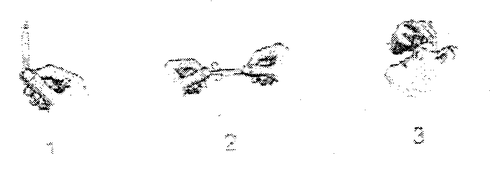
Caution: When administering the eye drops, make sure that the tip of the single-dose container does not touch
the eye or surrounding areas;
If you are using other eye drops concomitantly, administer the medicines with an interval of at least 15 minutes between
instillations.
If you use more MONOFLOXOFTA than you should
In case of ingestion/accidental intake of an excessive dose of Monofloxofta, immediately inform your
doctor or go to the nearest hospital .
If you administer an excessive amount of medicine into the eye, rinse the eye with water.
In case of overdose, symptoms should be treated and monitoring with ECG should be performed for the
possibility of heart rhythm disturbances (prolongation of the QT interval).
If you forget to use MONOFLOXOFTA
If, due to forgetfulness, a dose of this medicine is not administered, instill the dose as soon as possible. However, if it is almost time to instill the next dose, skip the forgotten dose
and resume the usual dosing schedule.
Do not use a double dose to compensate for forgetting the previous dose
If you stop using MONOFLOXOFTA
Do not interrupt the therapy with Monofloxofta without first consulting your doctor.
If you have any doubts about the use of this medicine, ask your doctor or pharmacist.
4. Possible side effects
Like all medicines, this medicine can cause side effects, although not everybody gets them.
Serious reactions after the use of Monofloxofta are rare and most symptoms are reversible.
Since a small amount of Monofloxofta can be absorbed into the body after administration
into the eye, other side effects may appear at the body level.
Common(may affect up to 1 in 10 people)
- eye irritation
- eye discomfort
Very rare(may affect up to 1 in 10,000 people)
Allergic reactions (hypersensitivity), including:
- rapid swelling of the skin and mucous membranes (angioedema)
- difficulty breathing (dyspnea)
- severe, rapidly appearing allergic reactions (anaphylactic reactions/shock)
- swelling (edema) of the tongue and throat
Frequency not known(the frequency cannot be estimated from the available data)
- heart rhythm disturbances (ventricular arrhythmia, torsade de pointes, QT prolongation on ECG), particularly in patients with known risk factors for QT prolongation (see “Warnings and precautions”)
- dizziness, nausea
- inflammation of the cornea (keratitis) or conjunctiva (conjunctivitis)
- blurred vision
- excessive sensitivity to light (photophobia)
- feeling of a foreign body in the eye
- increased tearing
- dry eye
- eye pain
- hypersensitivity in the eye area (including eye and/or eyelid itching)
- redness of the eye (ocular hyperemia)
- swelling around the eyes (including eyelid swelling)
- swelling of the eye (ocular edema) or around the eye (periorbital edema)
- facial swelling (facial edema)
Life-threatening, potentially dangerous skin rashes
(Stevens-Johnson syndrome, toxic epidermal necrolysis) have been reported with the use of Monofloxofta, which initially appear as reddish spots resembling a target or circular patches often with central blisters on the trunk.
Reporting of side effects
If you get any side effects, talk to your doctor or pharmacist. This includes any possible side effects not listed in this leaflet. You can also report side effects directly through the national reporting system at https://www.aifa.gov.it/content/segnalazioni-reazioni-avverse .
By reporting side effects you can help provide more information on the safety of this
medicine.
5. How to store MONOFLOXOFTA
Keep this medicine out of the sight and reach of children.
Store the medicine at a temperature not exceeding 25°C in the original packaging to protect the
medicine from light.
Do not use this medicine after the expiry date which is reported on the packaging after “Exp.”. The expiry date
refers to the last day of that month. The expiry date refers to the product in
intact packaging, correctly stored.
Use the medicine within 3 months after the first opening of the sachet; after this period, discard the
remaining medicine.
Use the eye drops immediately after opening the single-dose container; discard any remaining medicine.
Do not dispose of any medicine in wastewater or household waste. Ask your pharmacist how to dispose of the
medicines you no longer use. This will help protect the environment.
6. Contents of the pack and other information
What Monofloxofta contains
- The active substance is ofloxacin. 100 ml of solution contains 0.3 g of ofloxacin.
- The other components are: sodium chloride, water for injections, hydrochloric acid, sodium hydroxide (sufficient quantity to adjust the pH).
Description of the appearance of Monofloxofta and contents of the pack
Monofloxofta is presented as eye drops, solution. It does not contain preservatives.
Pack of 20 single-dose containers of 0.5 ml.
Marketing Authorisation Holder
Fidia Farmaceutici S.p.A., Via Ponte della Fabbrica 3/A, 35031 Abano Terme (PD)
Manufacturer
Pharma Stulln GmbH - Werksstraße 3, 92551 Stulln, Germany

Не впевнені, чи підходить вам цей лікарський засіб?
Обговоріть симптоми та можливі варіанти лікування з лікарем онлайн.

Виникли питання під час прийому ліків?
Обговоріть свої симптоми та лікування з лікарем онлайн.
- Країна реєстрації
- Лікарська формаEye drops, solution, 0.3%
- Код АТХS01AE01
- Діюча речовина
- Потрібен рецептТак
- Виробник
- Ця інформація надана лише для ознайомлення і не є медичною порадою. Рішення щодо лікування завжди приймає лікар.
- Альтернативи до MONOFLOXOFTAЛікарська форма: Eye drops, solution, 3 MG/MLДіюча речовина: ОфлоксацинВиробник: BIONATIVA S.P.A.Потрібен рецептЛікарська форма: Ointment, 0.3%Діюча речовина: ОфлоксацинВиробник: ABBVIE S.R.L.Потрібен рецептЛікарська форма: Eye drops, solution, 3 MG/MLДіюча речовина: ОфлоксацинВиробник: FARMIGEA S.P.A.Потрібен рецепт
Аналоги MONOFLOXOFTA в інших країнах
Препарати з тією самою діючою речовиною, доступні в інших країнах.
Аналог MONOFLOXOFTA у Польща
Аналог MONOFLOXOFTA у Україна
Аналог MONOFLOXOFTA у Іспанія
Лікарі онлайн щодо MONOFLOXOFTA
Застосування, безпека та можливість призначення рецепта — за результатами медичної оцінки.









Отримайте рецепт на MONOFLOXOFTA онлайн
Заповніть форму за 2 хвилини
Розкажіть про симптоми, історію хвороби та потрібний препарат.
Оберіть лікаря або ми призначимо
Оберіть спеціаліста або ми підберемо найближчого доступного лікаря.
Лікар розглядає ваш випадок
Зазвичай протягом 30 хвилин. Може ставити уточнювальні запитання в чаті.
Отримайте в будь-якій аптеці
Електронний рецепт надсилається на вашу пошту — дійсний по всій Польщі.
Часті запитання
MONOFLOXOFTA потребує рецепта в Італія. Ви можете обговорити з лікарем онлайн, чи підходить цей лікарський засіб для вашої ситуації.
Діюча речовина у MONOFLOXOFTA — Офлоксацин. Це допомагає визначити препарати з тим самим складом, але під іншими торговими назвами.
MONOFLOXOFTA виробляється компанією FIDIA FARMACEUTICI S.P.A.. Назва бренду та упаковка можуть відрізнятися залежно від дистрибʼютора.
Лікарі, зокрема Сімейні лікарі, Психіатри, Дерматологи, Кардіологи, Ендокринологи, Гастроентерологи, Пульмонологи, Нефрологи, Ревматологи, Гематологи, Інфекціоністи, Алергологи, Геріатри, Педіатри, Онкологи, можуть оцінити доцільність застосування MONOFLOXOFTA з урахуванням вашого стану та місцевих правил. Ви можете записатися на онлайн-консультацію, щоб обговорити симптоми та можливі подальші кроки.
Польща має добре розвинену систему охорони здоров'я у великих містах, таких як Варшава, Краків, Вроцлав і Гданськ. Аптеки широко доступні та працюють відповідно до чинного законодавства, забезпечуючи доступ до рецептурних препаратів.
Ви можете придбати MONOFLOXOFTA у Варшаві, Кракові, Вроцлаві або Гданську в будь-якій аптеці за наявності дійсного рецепта.
Щоб отримати рецепт, ви можете скористатися Oladoctor:
Інші препарати з тією самою діючою речовиною (Офлоксацин) включають DUNAFLOT, EXOKIN, FLOXIJEN. Вони можуть відрізнятися торговою назвою або формою випуску, але містять той самий терапевтичний компонент. Перед зміною або початком прийому нового препарату варто проконсультуватися з лікарем.
