



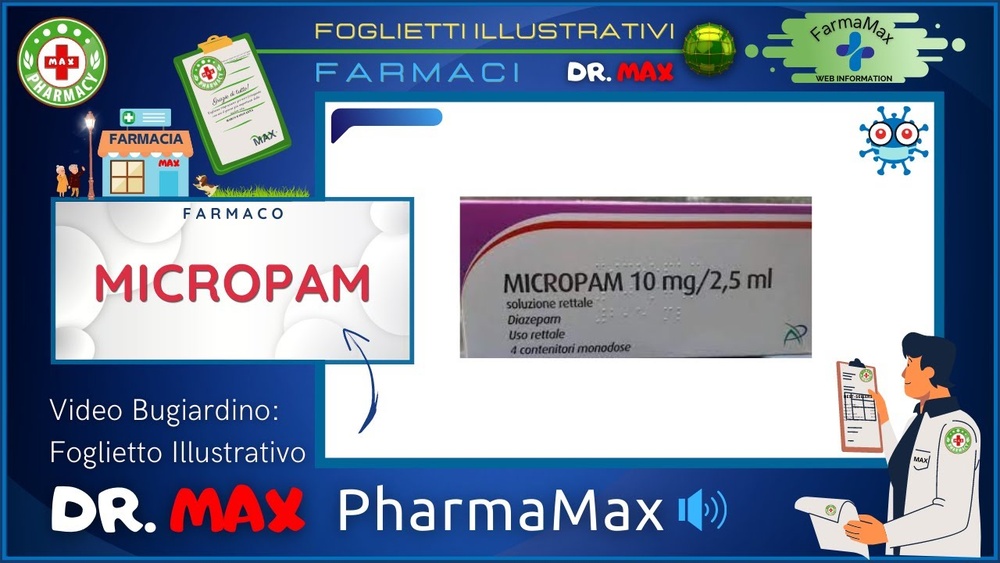
MICROPAM 5 mg /2.5 Ml Rectal Solution

Запит на рецепт онлайн
Лікар розгляне ваш випадок і визначить, чи є рецепт медично доцільним.

Поговоріть з лікарем про ці ліки
Обговоріть симптоми та можливі подальші кроки під час короткої онлайн-консультації.



Інструкція із застосування MIKROPAM
Зміст інструкції
MICROPAM 5 mg/2.5 ml rectal solution, 10 mg/2.5 ml rectal solution
Diazepam
Read this leaflet carefully before using this medicine as it contains important
information for you.
- Keep this leaflet. You may need to read it again.
- If you have any questions, ask your doctor or pharmacist.
- This medicine has been prescribed for you only. Do not pass it on to others, even if they have the same symptoms as you, as it may be harmful.
- If you get any side effects, even those not listed in this leaflet, tell your doctor or pharmacist. See section 4.
Contents of this leaflet:
- 1. What MICROPAM is and what it is used for
- 2. What you need to know before using MICROPAM
- 3. How to use MICROPAM
- 4. Possible side effects
- 5. How to store MICROPAM
- 6. Contents of the pack and other information
1. What is MICROPAM and what is it used for
MICROPAM contains the active ingredient diazepam which belongs to a group of medicines called
benzodiazepines.
This medicine is indicated:
- as an antiepileptic for the treatment of convulsions including febrile convulsions in children, characterized by a rapid and involuntary contraction of the muscles;
- as a sedative before examinations and exploratory treatments.
2. What you need to know before you use MICROPAM
Do not use MICROPAM
- if you are allergic to diazepam, to other similar medicines (benzodiazepines) or to any of the other ingredients of this medicine (listed in section 6);
- if you suffer from myasthenia gravis, a disease that causes muscle weakness and fatigue;
- if you have severe breathing problems (severe respiratory failure);
- if you have severe liver problems (severe hepatic failure);
- if you have breathing problems during sleep (sleep apnea syndrome);
- if you are pregnant or breastfeeding (See section “Pregnancy and breastfeeding”).
Warnings and precautions
Consult your doctor or pharmacist before using MICROPAM.
Avoid using this medicine if you have an alcohol or medicine dependence that depresses the central
nervous system, as concomitant use may increase the clinical effects of diazepam and may
increase the risk of serious breathing and heart problems (depression of respiratory and
cardiovascular function) (See section “Other medicines and MICROPAM”)
Use this medicine with caution and always under the control of your doctor in the following cases:
- if you are elderly or debilitated (see section 3 “How to use MICROPAM - Use in the elderly”). The doctor may decide to reduce the dose;
- if you are an elderly person, as you may be exposed to a greater risk of falls and hip fractures;
- if you have reduced blood flow to the brain (arteriosclerosis). The doctor may decide to modify the dose;
- if you have heart and lung problems (cardiorespiratory failure, chronic respiratory failure). The doctor may decide to reduce the dose;
- if you have previously abused alcohol or drugs;
- if you suffer from liver problems, particularly chronic liver disease. In this case the doctor will reduce the dose;
- if you suffer from kidney problems (renal failure).
- if you suffer from depression or anxiety associated with depression. Benzodiazepines should not be used alone to treat depression or anxiety associated with depression, as suicidal thoughts may occur in such patients.
This medicine is not indicated:
- if you suffer from liver problems (severe hepatic failure, acute or chronic, see section “Do not use MICROPAM”);
- as a first-line treatment for mental illnesses (psychotic illnesses).
The use of this medicine may cause a slight lowering of blood pressure or difficulty in
breathing (transient respiratory impairment). Therefore, it is recommended to have emergency measures available to support breathing and blood circulation.
Tolerance:Following repeated use of this medicine for several weeks, a
decrease in its effectiveness (tolerance) may occur. If after a few weeks you feel that the medicine is not
working as well as at the beginning of treatment, consult your doctor.
Dependence:When you take this medicine, there is a risk of dependence, i.e. the need to
continue to use the medicine. The risk increases with the dose and duration of treatment. It is greater
if you have previously abused drugs or alcohol. If you should develop a dependence, consult your doctor. You must
avoid abruptly stopping treatmentas the following symptoms may occur
Withdrawal:When you stop taking MICROPAM, you may experience withdrawal symptoms or a
syndrome consisting of a worsening of the symptoms that had induced the treatment
(see section “If you stop taking MICROPAM”). To minimize these symptoms, it is
recommended to gradually reduce the dose. Withdrawal effects can occur even if
your doctor tells you to replace this medicine with another of a similar type.
Abruptly stopping treatment can cause seizures or convulsions if:
- you have previously suffered from seizures or if you suffer from epilepsy;
- if you have previously abused alcohol or drugs
Amnesia: This medicine may cause you memory problems (anterograde amnesia - loss of
memory), especially if you use high doses of this medicine. Generally these effects occur
even several hours after use, therefore to reduce this risk, ensure uninterrupted sleep of 7-8
hours. The effects that occur may appear in association with inappropriate behavior.
Behavioral reactions: If you experience behavioral disturbances such as:
restlessness, agitation, irritability, aggression, delusion, anger, nightmares, hallucinations, psychosis (a psychiatric disorder, expression of a severe alteration of the individual’s psychic balance), changes in
behavior, consult your doctor and immediately stop taking the medicine (see
section 4. Possible side effects). These reactions are more frequent in children and the elderly.
If you take this medicine for prolonged periods, it is recommended to undergo blood tests and checks of liver function.
Duration of treatment: The duration of treatment should be as short as possible (See section
“How to use MICROPAM”). It is necessary that your doctor checks you after 4 weeks from the start of
treatment and also subsequently in order to assess your health conditions. The recommended duration
ranges from 8 to 12 weeks, including the tapering period. The doctor may decide to prolong
the duration of treatment further only after carrying out the necessary checks.
The doctor will inform you about the limited duration of treatment and the gradual reduction of the dose.
Upon stopping treatment, you may experience a recurrence of the symptoms of your illness (rebound symptoms) which
may be accompanied by other reactions such as mood changes, anxiety or sleep disturbances and restlessness. The symptoms may recur especially in the interval between one
administration and the next, especially if you use high doses.
If this happens, inform your doctor. In case of prolonged treatment, your doctor should subject you to
liver checks and perform blood tests.
Children
MICROPAM should be used in children only in cases of absolute necessity and the duration of treatment
should be as short as possible. If the child needs repeated administration, the
doctor will monitor breathing.
Since safety and efficacy have not been established in children under 6 months, Micropam should be
used with extreme caution in children under 6 months and only if no alternative
therapies are available.
Children under three months of age should be treated with MICROPAM only in hospital (see
section “How to use MICROPAM”).
Other medicines and MICROPAM
Tell your doctor or pharmacist if you are taking, have recently taken or might take any
other medicines.
Pay particular attention and inform your doctorif you are taking the following medicines as the concomitant use with MICROPAM can potentiate the action of MICROPAM and can increase the risk of
serious breathing and heart problems (depression of respiratory and cardiovascular function):
- antipsychotics (neuroleptics) and antidepressants (fluoxetine), used to treat mental disorders;
- anxiolytics/sedatives, used to treat anxiety;
- hypnotics, medicines used to promote sleep;
- anticonvulsants, such as valproic acid, used for epilepsy;
- antihistamines with a sedative effect, used to treat allergies;
- anesthetics for general anesthesia, such as ketamine, used during surgical operations;
- some strong painkillers (narcotic analgesics, such as opioids) can cause an increased sense of well-being when taken with MICROPAM. This may increase your desire to continue taking these medicines (dependence).
The concomitant use of MICROPAM and opioids (strong painkillers, medicines for substitution therapy
for dependence and some medicines for cough) increases the risk of drowsiness, difficulty in
breathing (respiratory depression), coma and may be life-threatening. For this reason,
concomitant use should be considered only when other treatment options are not
possible.
However, if your doctor prescribes MICROPAM together with opioids, the dose and duration of concomitant treatment
must be limited by the doctor.
Inform your doctor about all the opioid medicines you are taking and carefully follow
the doctor’s dose recommendation. It may be helpful to inform friends or relatives to pay
attention to the signs and symptoms listed above.
Consult your doctor if you experience these symptoms.
Warn your doctorif you are taking any of the following medicines:
- theophylline, used for asthma;
- muscle relaxants used to relax the muscles before an operation (such as suxamethonium, tubocurarine);
- corticosteroids, used for the treatment of inflammation and allergies;
- cimetidine, omeprazole, esomeprazole used to treat stomach lesions (ulcers);
- isoniazid used for the treatment of tuberculosis;
- disulfiram, used in the treatment of alcoholism;
- oral contraceptives, used to prevent pregnancy;
- cisapride, used in case of problems with the stomach and intestines; levodopa, used for the treatment of Parkinson’s disease During treatment with this medicine avoid taking:
- phenobarbital and carbamazepine, used for the treatment of seizures;
- clozapine, phenytoin used for the treatment of some mental disorders;
- rifampicin, an antibiotic;
- antiviral agents (atazanavir, ritonavir, delavirdine, efavirenz, indinavir, nelfinavir, saquinavir) used for the treatment of infections caused by viruses;
- azoles (fluconazole, itraconazole, ketoconazole, voriconazole), used for the treatment of infections caused by fungi;
- fluvoxamine used for the treatment of depression.
- oxazepam and temazepam used to treat anxiety
MICROPAM with food, beverages and alcohol
During treatment with this medicine avoid consuming grapefruit juice.
Avoid drinking alcohol during treatment with this medicine, as it can increase the sedative
effect of the medicine. This negatively affects the ability to drive vehicles and use machinery.
Pregnancy, breastfeeding and fertility
If you are pregnant, suspect you are pregnant or are planning a pregnancy, or if you are breastfeeding, ask your doctor or pharmacist for advice before using this medicine.
Pregnancy
Do not use this medicine if you are pregnant, except in cases of absolute necessity (serious indications) and under
direct medical supervision.
If, for serious health reasons, your doctor believes that you should take MICROPAM during the last
trimester of pregnancy or during labor, your baby may experience low body temperature,
loss of muscle tone, irregularity in heart rate, poor sucking and difficulty in
breathing.
If MICROPAM has been taken regularly during the late stages of pregnancy, your baby may
develop physical dependence and withdrawal symptoms.
Consult your doctor or pharmacist before using any medicine.
Breastfeeding
Do not use this medicine if you are breastfeeding, as diazepam passes into breast milk.
Fertility
If you are planning a pregnancy and are being treated with this medicine, inform your doctor
as it is necessary to stop treatment with MICROPAM.
Driving and using machines
The use of MICROPAM may significantly affect the ability to drive vehicles and use
machinery because it can alter your motor skills and cause symptoms such as: tremor, drowsiness, loss
of memory (amnesia), impaired concentration and fatigue (See section “Possible side effects”). These effects may occur immediately after the start of treatment and also
for many days after stopping therapy. If this happens to you, avoid driving vehicles or
using machinery.
MICROPAM contains benzyl alcohol, benzoic acid, sodium benzoate and propylene glycol
This medicine contains 37.5 mg of benzyl alcohol per single-dose container, equivalent to 15 mg/ml.
Benzyl alcohol has been associated with the risk of serious
adverse effects including respiratory problems (acute respiratory distress syndrome) in young children.
Do not use for more than one week in young children (under 3 years of age) unless otherwise
recommended by the doctor or pharmacist. Ask your doctor or pharmacist for advice if you
have a liver or kidney disease, if you are pregnant or breastfeeding. Benzyl alcohol may cause
mild local irritation.
This medicine contains 1000 mg of propylene glycol per single-dose container, equivalent to 400 mg/ml.
If the child is under 5 years of age, talk to your doctor or pharmacist before administering
this medicine, especially if the child is taking other medicines containing propylene
glycol or alcohol. If you are pregnant or breastfeeding, do not take this medicine unless
otherwise recommended by the doctor. The doctor may perform further checks during therapy. If
you suffer from liver or kidney diseases, do not take this medicine unless otherwise
recommended by the doctor. The doctor may perform further checks during therapy.
This medicine contains 2.5 mg of benzoic acid and 122.5 mg of sodium benzoate per single-dose
container, respectively equivalent to 1 mg/ml and 49 mg/ml. Benzoic acid and sodium benzoate may
increase jaundice (yellowing of the skin and eyes) in newborns (up to 4 weeks of age) (see the
section “Pregnancy and breastfeeding”). Benzoic acid and sodium benzoate may cause local irritation.
3. How to use MICROPAM
Use this medicine following exactly the instructions of your doctor or pharmacist. If you have doubts
consult your doctor or pharmacist.
This medicine must be used by administration into the anus (rectal route). Do not interrupt the
treatment without first consulting your doctor (see the paragraph “If you stop taking MICROPAM” and the paragraph “Warnings and precautions”).
Use in adults:the recommended dose is 10 mg which can be repeated if necessary.
Use in children
This medicine should be used in children only after a careful medical evaluation
of the actual need, therefore the use of MICROPAM should be limited to the therapeutic indications
previously described. The duration of treatment should be as short as possible.
Children under 3 years of age: the recommended dose is 5 mg.
Children over 3 years of age: the recommended dose is 10 mg.
In case of repeated administration in children, the doctor will monitor respiratory function.
In children under one year of age, the doctor may decide to prescribe diazepam to prevent
seizures caused by febrile states. The usual dose is 0.5-1 mg/Kg.
Children under three months of age should be treated with diazepam only in hospital.
In children under 6 months of age, Micropam must be used with extreme caution and only if
no alternative therapies are available (see paragraph “Warnings and precautions”)
How to use:
- Place the child with their stomach on your knees, with their buttocks raised.
- Remove the closure cap from the single-dose container and lubricate the applicator tip.
- Insert the applicator tip into the anus. In children under 3 years of age, it is recommended to insert the applicator tip up to half its length, in those over 3 years of age and in adults insert the applicator tip for the entire length.
- Important: to empty the single-dose container, the applicator tip must be tilted downwards relative to the ampoule of the single-dose container.
- When the single-dose container is empty, withdraw the applicator tip while continuing to press on the ampoule of the single-dose container.
- Keep the child in the same position and squeeze their buttocks for a few minutes to prevent leakage of liquid.
Duration of treatment
The duration of treatment should be as short as possible and under direct medical control. In
general the treatment should not last more than 8-12 weeks, including the period of discontinuation
process (see the paragraph “Warnings and precautions - Duration of treatment”). Extension
of therapy should not occur without re-evaluation by the doctor.
Use in the elderly and debilitated patients
In the elderly and patients with lung, kidney or liver problems (chronic respiratory failure or,
chronic renal and hepatic dysfunction) a reduced dose should be administered.
The doses used in the elderly should not exceed half of those normally recommended. If you suffer
from kidney problems, your doctor will assess your condition. Generally, in case of reduced kidney function
your doctor will assess the need to modify the dose.
If you use more MICROPAM than you should
If you (or someone else) have used an excessive dose of MICROPAM or if you think a child may have
taken this medicine, immediately inform your doctor or go to the Emergency Room of the nearest
hospital.
In case of overdose, the possibility of having taken other substances, especially
in case of attempted suicide, must be considered. The symptoms of an overdose are more pronounced if you have used drugs or if you have
consumed beverages containing alcohol.
Symptoms
An overdose can cause severe depression of the nervous system with symptoms such as loss of
sensory and intellectual abilities (obnubilation), mental confusion and excessive drowsiness (lethargy).
In more severe cases, it can manifest muscle problems (ataxia, hypotonia), lowering of blood pressure (hypotension), difficulty breathing (respiratory depression), coma and death.
Treatment
The treatment of overdose includes:
- inducing vomiting within one hour of use of the medicine if you have not lost consciousness;
- gastric lavage with protection of the airways if you have lost consciousness;
- administration of activated charcoal;
- administration of an antidote (Flumazenil).
Bring this leaflet and its container with you to the hospital or doctor so they know which
medicine has been taken.
If you forget to use MICROPAM
If you forget to use a dose of the medicine, take it as soon as you remember, unless it is almost time
to use the next dose. Do not use a double dose to compensate for the missed dose.
If you stop taking MICROPAM
Donot stop taking MICROPAM suddenly or without first agreeing with
your doctor, because withdrawal symptomsmay occur.
If the doctor has decided to stop the treatment, they will reduce the dose gradually to minimize
withdrawal symptoms, such as headache, muscle pain, extreme anxiety, tension, restlessness,
confusion and irritability.
In severe cases of withdrawal, derealization (feeling that things are not real),
depersonalization (feeling of detachment from the surrounding environment), intolerance to sounds
(hyperacusis), numbness and tingling of hands and feet, sensitivity to light, noise and physical contact,
hallucinations (seeing and hearing things that do not exist) or seizures (see paragraph
“Warnings and precautions”) may occur.
The treatment must be discontinued gradually, otherwise the symptoms for which you were being treated may
reappear even more intensely than before (rebound insomnia and anxiety). The risk of developing these
symptoms is greater when you stop taking MICROPAM suddenly. You may also
experience changes in mood, anxiety, restlessness and sleep disturbances (see paragraph
“Warnings and precautions”)
If you have any doubts about using this medicine, consult your doctor or pharmacist.
4. Possible side effects
Like all medicines, this medicine can cause side effects, although not everybody gets them.
Seek immediate medical attention if you experience:
- depression and mental disorders, such as restlessness, agitation, irritability, aggressiveness, delirium, anger, nightmares, hallucinations (seeing or hearing things that do not exist), psychosis (a serious mental condition in which a person loses touch with reality and the ability to think and judge clearly), changes in behaviour. If any of these side effects occur, treatment should be stopped. These reactions are more likely to occur in children and the elderly.
In addition, you may experience the following side effects which usually disappear with continued
treatment:
Very common(may affect more than 1 in 10 people)
- drowsiness.
Common(may affect up to 1 in 10 people)
- confusion;
- difficulty controlling movements (ataxia), impaired motor skills, tremor;
- fatigue, withdrawal symptoms (anxiety, panic, palpitations, sweating, tremor, gastrointestinal disorders, irritability, aggression, disturbed sensory perception, muscle spasms, general malaise, loss of appetite, paranoid psychosis, rambling and seizures) (see section “Warnings and precautions”),
Uncommon(may affect up to 1 in 100 people)
- memory loss (anterograde amnesia) (see section “Warnings and precautions”), Difficulty concentrating, balance disorders, dizziness, headache, slurred speech;
- difficulty breathing (respiratory depression);
- problems with the stomach and intestines (nausea, vomiting, constipation, diarrhoea), increased salivation;
- allergic skin reactions (itching, erythema, rash);
- disease that causes muscle weakness and fatigue (myasthenia).
Rare(may affect up to 1 in 1000 people)
- psychiatric and paradoxical reactions such as excitement, restlessness, agitation, irritability, aggressiveness, delirium, rage, hallucinations, psychosis, memory loss, nightmares, inappropriate behaviour and other adverse effects on behaviour (see section “Warnings and precautions”),;
- emotional blunting, reduced alertness and depression.
- unconsciousness, insomnia, speech disorder (dysarthria);
- slowing of the heartbeat (bradycardia), heart problems (heart failure) including cardiac arrest;
- low blood pressure (hypotension), fainting associated with loss of consciousness (syncope);
- cessation of breathing (respiratory arrest), increased mucus secretion (increased bronchial secretion) (see section “Warnings and precautions”),;
- dry mouth, increased appetite;
- yellowing of the skin and whites of the eyes (jaundice), changes in the results of some blood tests (increased ALT, AST, alkaline phosphatase);
- reduced urine output (urinary retention), difficulty holding urine (incontinence);
- growth of breast tissue in men (gynecomastia), impotence, increased or decreased sexual desire (libido).
Very rare(may affect up to 1 in 10000 people)
- reduction in the number of white blood cells (leukopenia);
- severe allergic reaction (anaphylaxis);
- changes in the results of some blood tests (increased transaminases).
Transient visual problems such as blurred vision, double vision (diplopia), oscillating,
rhythmic and involuntary eye movements (nystagmus).
Drowsiness, emotional dulling, reduced alertness, confusion, fatigue, headache,
dizziness, muscle weakness, ataxia or double vision may occur primarily at the beginning
of therapy.
Confusional states may occur in elderly patients at high doses.
The risk of falls and fractures is increased in patients taking sedatives (including
alcoholic beverages) and in elderly patients.
Increased salivation and bronchial secretion has been reported, particularly in children.
Reporting ofside effects
If you get any side effects, even those not listed in this leaflet, tell your
doctor or pharmacist. You can also report side effects directly through the national
reporting system at https://www.aifa.gov.it/content/segnalazioni-reazioni-avverse.
By reporting side effects you can help provide more information on the safety of
this medicine.
5. How to store MICROPAM
Keep this medicine out of the sight and reach of children.
Do not use this medicine after the expiry date which is stated on the packaging after “Exp.”.
The expiry date refers to the last day of that month.
This medicine does not require any particular storage conditions.
After opening the aluminium foil, the medicine must be used immediately.
Do not dispose of any medicine in wastewater or household waste. Ask your pharmacist how to eliminate the
medicines that you no longer use. This will help protect the environment.
6. Contents of the pack and other information
What MICROPAM contains
MICROPAM 5 mg/2.5 ml rectal solution
- The active ingredient is diazepam. 2.5 ml of solution contains 5 mg of diazepam.
- The other ingredients are: benzoic acid, purified water, benzyl alcohol, ethanol, propylene glycol, sodium benzoate.
MICROPAM 10 mg/2.5 ml rectal solution
- The active ingredient is diazepam. 2.5 ml of solution contains 10 mg of diazepam.
- The other ingredients are: benzoic acid, purified water, benzyl alcohol, ethanol, propylene glycol, sodium benzoate.
Description of the appearance of MICROPAM and contents of the pack
One pack contains 4 yellow single-dose containers, individually packaged in laminated aluminum pouches
.
Marketing Authorisation Holder
Aurobindo Pharma (Italia) s.r.l., Via San Giuseppe 102, 21047 Saronno (VA).
Manufacturer
Pinewood Laboratories Ltd, Ballymacarbry, Clonmel, Co. Tipperary (Ireland)

Не впевнені, чи підходить вам цей лікарський засіб?
Обговоріть симптоми та можливі варіанти лікування з лікарем онлайн.

Виникли питання під час прийому ліків?
Обговоріть свої симптоми та лікування з лікарем онлайн.
- Країна реєстрації
- Лікарська формаRectal solution, 5 MG/2,5 ML
- Код АТХN05BA01
- Діюча речовина
- Потрібен рецептТак
- Виробник
- Ця інформація надана лише для ознайомлення і не є медичною порадою. Рішення щодо лікування завжди приймає лікар.
- Альтернативи до MIKROPAMЛікарська форма: Oral drops, solution, 5 MG/MLДіюча речовина: диазепамВиробник: NEURAXPHARM ITALY S.P.A.Потрібен рецептЛікарська форма: Oral drops, solution, 5 MG/MLДіюча речовина: диазепамВиробник: ABC FARMACEUTICI S.P.A.Потрібен рецептЛікарська форма: Oral drops, solution, 5 MG/MLДіюча речовина: диазепамВиробник: LABORATORI ALTER S.R.L.Потрібен рецепт
Аналоги MIKROPAM в інших країнах
Препарати з тією самою діючою речовиною, доступні в інших країнах.
Аналог MIKROPAM у Іспанія
Аналог MIKROPAM у Польща
Аналог MIKROPAM у Україна
Лікарі онлайн щодо MIKROPAM
Застосування, безпека та можливість призначення рецепта — за результатами медичної оцінки.







Отримайте рецепт на MIKROPAM онлайн
Заповніть форму за 2 хвилини
Розкажіть про симптоми, історію хвороби та потрібний препарат.
Оберіть лікаря або ми призначимо
Оберіть спеціаліста або ми підберемо найближчого доступного лікаря.
Лікар розглядає ваш випадок
Зазвичай протягом 30 хвилин. Може ставити уточнювальні запитання в чаті.
Отримайте в будь-якій аптеці
Електронний рецепт надсилається на вашу пошту — дійсний по всій Польщі.
Часті запитання
MIKROPAM потребує рецепта в Італія. Ви можете обговорити з лікарем онлайн, чи підходить цей лікарський засіб для вашої ситуації.
Діюча речовина у MIKROPAM — диазепам. Це допомагає визначити препарати з тим самим складом, але під іншими торговими назвами.
MIKROPAM виробляється компанією AUROBINDO PHARMA (ITALIA) S.R.L.. Назва бренду та упаковка можуть відрізнятися залежно від дистрибʼютора.
Лікарі, зокрема Сімейні лікарі, Психіатри, Дерматологи, Кардіологи, Ендокринологи, Гастроентерологи, Пульмонологи, Нефрологи, Ревматологи, Гематологи, Інфекціоністи, Алергологи, Геріатри, Педіатри, Онкологи, можуть оцінити доцільність застосування MIKROPAM з урахуванням вашого стану та місцевих правил. Ви можете записатися на онлайн-консультацію, щоб обговорити симптоми та можливі подальші кроки.
Польща має добре розвинену систему охорони здоров'я у великих містах, таких як Варшава, Краків, Вроцлав і Гданськ. Аптеки широко доступні та працюють відповідно до чинного законодавства, забезпечуючи доступ до рецептурних препаратів.
Ви можете придбати MIKROPAM у Варшаві, Кракові, Вроцлаві або Гданську в будь-якій аптеці за наявності дійсного рецепта.
Щоб отримати рецепт, ви можете скористатися Oladoctor:
Інші препарати з тією самою діючою речовиною (диазепам) включають ANSIOLIN, DIATSEPAM ABK, DIATSEPAM ALTER. Вони можуть відрізнятися торговою назвою або формою випуску, але містять той самий терапевтичний компонент. Перед зміною або початком прийому нового препарату варто проконсультуватися з лікарем.
