



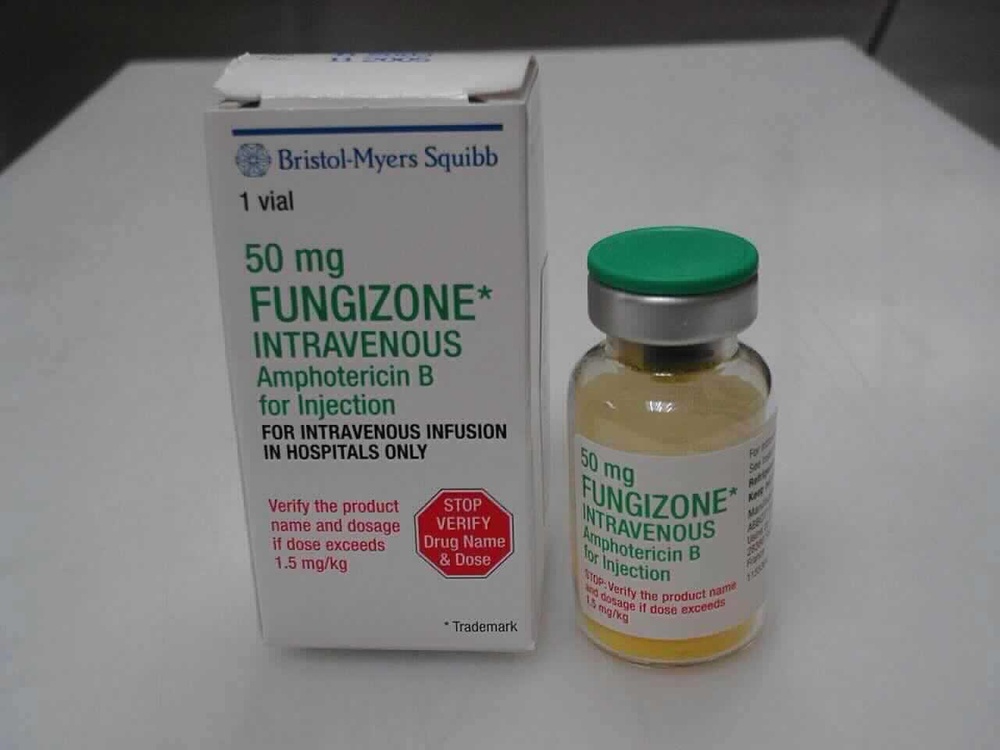
FUNGIZONE 50 mg Powder For Intravenous Infusion Solution

Запит на рецепт онлайн
Лікар розгляне ваш випадок і визначить, чи є рецепт медично доцільним.

Поговоріть з лікарем про ці ліки
Обговоріть симптоми та можливі подальші кроки під час короткої онлайн-консультації.



Інструкція із застосування FUNJITSONE
FUNGIZONE 50 mg powder for solution for infusion
amphotericin B
Pharmacotherapeutic category
Antimycotics for systemic use. Antibiotics.
Therapeutic indications
FUNGIZONE (amphotericin B) finds specific indication in the treatment of disseminated, potentially serious and progressive mycotic infections (it should not be used for non-invasive mycoses), including coccidioidomycosis, cryptococcosis (torulosis), disseminated candidiasis, histoplasmosis, South American leishmaniasis (as a second choice) and North and South American blastomycosis.
Contraindications
The product is contraindicated in subjects with hypersensitivity to the active ingredient or to any of the excipients unless, in the doctor's judgement, the disease to be treated is life-threatening and can only be cured with amphotericin B therapy.
Precautions for use
This may be the only treatment available for some potentially fatal mycotic infections; in any case, the potential benefit must be weighed against the risk of adverse reactions, some of which may be potentially dangerous for the patient. Amphotericin B must be used intravenously only in hospitalised patients or under close clinical supervision, limiting its use to those cases in which a diagnosis of worsening and potentially serious mycotic infection responding to treatment with this antibiotic has been established, preferably by positive culture or histological examination.
Rapid intravenous infusion, less than 1 hour, especially in patients with renal insufficiency, has been associated with hyperkalaemia and arrhythmia and should therefore be avoided.
Leucoencephalopathy following the administration of amphotericin B in patients undergoing total body irradiation has been reported.
Renal function should be monitored frequently during therapy. It would also be advisable to monitor liver function, electrolytes (particularly magnesium and potassium) and blood counts on a regular basis. The results of these tests should guide any dose adjustments.
Cases of neurological events such as arachnoiditis, myelopathy, paresis and paralysis have been associated with the intrathecal route of administration (see section Dosage, mode and time of administration).
If the administration of the drug is suspended for a period longer than 7 days, therapy should be restarted starting with the minimum dose, i.e. 0.25 mg/kg of body weight and gradually increasing it to reach the optimal dosage, as described under the heading "Dosage, mode and time of administration".
Pay attention to preventing an inadvertent overdose of FUNGIZONE, which can cause potentially fatal cardiac or cardiorespiratory arrest. It is important to verify, before administration, that the name and dosage of the medicine are correct (see sections Dosage, mode and time of administration and Overdosage).
Interactions
Inform your doctor or pharmacist if you have recently taken any other medicines, including those available without a prescription.
The following medicines can cause interactions when administered together with amphotericin B:
- Other nephrotoxic products: e.g. cisplatin, pentamidine, aminoglycosides and cyclosporine, may promote an increase in renal toxicity. For this reason, they should be used in association with FUNGIZONE with extreme caution.
- Corticosteroids and corticotropin (ACTH) may increase the hypokalaemia induced by amphotericin B.
- Agents whose effects or toxicity are increased by hypokalaemia: e.g. digitalis glycosides, skeletal muscle relaxants and antiarrhythmics.
- Flucytosine: the combined use with amphotericin B may increase the toxicity of flucytosine, probably by increasing its cellular uptake and/or impairing its renal excretion.
- Leucocyte transfusions: although not observed in all studies, acute pulmonary reactions have been reported in patients who were administered amphotericin B during or immediately after leucocyte transfusions. For this reason, it is advisable to separate these infusions as much as possible and to monitor pulmonary function.
Special warnings
Pregnancy and breastfeeding
Reproductive studies in animals have not shown risks to the fetus due to injectable amphotericin B. Systemic fungal infections have been effectively treated in pregnant women without appreciable effects on the fetus, but the number of reported cases is low. Since animal studies are not always predictive of the response in humans, and given the lack of adequate and well-controlled studies in pregnant women, the use of FUNGIZONE during pregnancy should be reserved for cases of absolute necessity and only if the potential benefits for the mother outweigh the potential risks to the fetus.
It is not known whether amphotericin B is excreted in human milk. Considering the potential toxicity of amphotericin B, it is prudent to advise the patient to discontinue breastfeeding.
Dosage, mode and time of administration
FUNGIZONE (amphotericin B) must be administered by slow fleboclysis slowlywithin a time period of approximately 2 to 6 hours (depending on the dose administered), with the usual precautions observed for intravenous therapy. The recommended concentration for fleboclysis is 0.1 mg/ml (1 mg/10 ml).
Since tolerance to amphotericin B varies from individual to individual, the dosage should be established based on the needs of the individual patient (site of infection, etiological agent, etc.). Treatment should be initiated with a daily dose of 0.25 mg/kg of body weight (in 2-6 hours) which is then gradually increased to reach an optimal dosage. Although not proven to be a reliable method for revealing intolerance, the administration of an initial dose (1 ml in 20 ml of 5% dextrose solution) intravenously over 20-30 minutes should be preferred. Temperature, pulse, breathing and blood pressure should be checked every 30 minutes for 2-4 hours. Patients in good cardiopulmonary condition with severe and rapidly worsening fungal infection, who have tolerated the initial dose without severe reactions, may receive 0.3 mg/kg of amphotericin B intravenously in 2-6 hours. A second smaller dose (e.g. 5-10 mg) is recommended in patients with cardiopulmonary dysfunction or a severe reaction to the test dose.
The dosage can then be increased by 5-10 mg per day up to a final dosage of 0.5-1 mg/kg. The total daily dosage can generally be around 1 mg/kg of body weight (or 1.5 mg/kg on alternate days) with severe infections caused by less susceptible pathogens.
Warning: different parenteral formulations of amphotericin B are available. Verify the name and dosage of the medicine. FUNGIZONE contains NON-liposomal amphotericin B. Follow the dosage instructions above. In no case should a total daily dose of 1.5 mg/kg of body weight be exceeded. An overdose of amphotericin B can produce a potentially fatal cardiac or cardiorespiratory arrest (see sections Precautions for use and Overdosage).
Treatment of deep mycoses can last from 6 to 12 weeks or more.
Candidiasis
In disseminated or deep infections, the usual doses range from 0.4 to 0.6 mg/kg/day for 4 weeks or more. Depending on the severity of the infection, doses up to 1 mg/kg/day may be necessary. Treatment continues until clinical improvement and it may be necessary to administer total doses of 2-4 g in adults. Lower doses (0.3 mg/kg/day) may be used in special circumstances, for example in esophageal candidiasis, resistant to local therapy and in concomitant use with other antifungals.
Cryptococcosis
Treatment of cryptococcosis with FUNGIZONE in non-immunocompromised patients usually requires doses of 0.3 mg/kg/day for approximately 4-6 weeks or until weekly cultures are negative for one month. In immunosuppressed patients and/or with meningitis, amphotericin B may be given in combination with other antifungals for 6 weeks, with dosages that may be increased in severely ill patients or those receiving the drug alone.
In patients with cryptococcal meningitis and AIDS, higher doses (0.7-0.8 mg/kg/day) and for a longer period, up to 12 weeks, may be necessary. In AIDS patients with negative cultures after a cycle of treatment, chronic suppressive therapy, e.g. 1 mg/kg per week, may be considered.
Coccidioidomycosis
In primary coccidioidomycosis requiring treatment, FUNGIZONE should be used at doses of 1 mg/kg/day up to a maximum of 1.5 mg/kg/day, for a cumulative dose of 0.5 to 2.5 g in adults, depending on the severity of the site of infection. In coccidioidal meningitis, systemic or intrathecal administration may be required as described in standard references.
Blastomycosis
In severely ill patients with blastomycosis, FUNGIZONE is recommended at dosages ranging from 0.3 to 1 mg/kg/day up to a total dose of 1.5-2.5 g in adults.
Histoplasmosis
In chronic pulmonary or disseminated histoplasmosis, doses ranging from 0.5 to 1 mg/kg/day up to a total dose of 2-2.5 g in adults are recommended.
Paediatric use
Safety and efficacy in paediatric patients have not been established with adequate and well-controlled studies. Systemic fungal infections have been treated in paediatric patients without any reports of particular adverse effects.
Duration of treatment
As prescribed by the doctor.
Instructions for use and handling
FUNGIZONE (amphotericin B) must be administered by slow fleboclysis slowlywithin a time period of approximately 2 to 6 hours (depending on the dose administered), with the usual precautions observed for intravenous therapy. The recommended concentration for fleboclysis is 0.1 mg/ml (1 mg/10 ml).
Preparation of solutions
Prepare a first concentration of 5 mg of amphotericin B per ml by adding 10 ml of sterile apyrogenic distilled water without bacteriostatic agentsto the dry powder contained in the vial and shaking the vial until a clear colloidal solution is obtained.
To obtain the solution to be used for fleboclysis, with a concentration of 0.1 mg of amphotericin B per ml, the first solution is further diluted with 5% dextrose solution with a pH greater than 4.2. The pH of each container of dextrose solution should be checked before use. Commercial dextrose solutions normally have a pH greater than 4.2; however, if it is lower, 1 or 2 ml of buffer should be added to the dextrose solution before using it to dilute the concentrated amphotericin B solution. The recommended buffer has the following composition: dibasic sodium phosphate (anhydrous) 1.59 g, monobasic sodium phosphate (anhydrous) 0.96 g, sterile apyrogenic distilled water q.s. to 100 ml. Before adding it to the dextrose solution, the buffer must be sterilized by filtration through a filtering material capable of retaining microorganisms or by autoclaving at 121 °C for 30 minutes.
Warning:since no preservative or bacteriostatic agent is present in the antibiotic or in the materials used to prepare it for administration, all operations for preparing the solution for fleboclysis must be carried out with strict asepsis. Use a sterile needle to draw and introduce the diluents into the vial. Do not reconstitute the solution with saline solutions. The use of diluents other than those recommended and the presence of a bacteriostatic agent (e.g. benzyl alcohol) in the diluent can cause precipitation of the antibiotic. Do not use the initial concentration or the fleboclysis solution if there is evidence of precipitation or foreign material in either of them.
A membrane filter in line may be used for the intravenous infusion of amphotericin B; however, the average pore diameter of each pore must not be less than 1.0 micron to ensure the passage of the colloidal solution.
Overdosage
Excessive doses of injectable amphotericin B can cause potentially fatal cardiac and cardiorespiratory arrest.
In case of overdose (even suspected), discontinue therapy, monitor the patient's clinical condition (e.g.: cardio-respiratory, renal and hepatic function, hematological picture, electrolyte balance) and initiate appropriate supportive measures. Amphotericin B is not hemodialyzable. Before restarting therapy with injectable amphotericin B, the patient's condition must be stabilized (including correction of electrolyte imbalance, etc.).
In case of accidental ingestion of an excessive dose of FUNGIZONE, immediately notify your doctor or
go to the nearest hospital.
IF YOU HAVE ANY DOUBTS ABOUT THE USE OF FUNGIZONE, ASK YOUR DOCTOR OR PHARMACIST.
Undesirable effects
Like all medicines, FUNGIZONE can cause undesirable effects, although not everyone
experiences them.
Although some patients are able to tolerate the full intravenous dosage of amphotericin B without difficulty,
in most cases some manifestations of intolerance will occur, particularly at the beginning of therapy.
Acute reactions such as chills, fever, anorexia, nausea, vomiting, headache, myalgia, arthralgia and hypotension are
commonly observed following intravenous administration of amphotericin B.
Tolerability can be improved with the use of acetylsalicylic acid, antipyretics such as paracetamol,
antihistamines or antiemetics.
During treatment with amphotericin B, meperidine (25-50 mg IV) has been used in some patients to
decrease the duration or intensity of chills and fever following amphotericin B therapy.
Intravenous administration of small amounts of adrenal corticosteroids, before or during the infusion of
amphotericin B, can help control febrile reactions. The dosage and duration of use of these
corticosteroids should be kept to a minimum (see Interactions).
Administration of heparin (1000 units per infusion), rotation of the injection site, use of pediatric needles for scalp veins, and alternate-day therapy can reduce the incidence of thrombophlebitis. Extravasation can cause chemical irritation.
Very common undesirable effects (may affect more than 1 in 10 people):
- hypokalaemia
- chills, pyrexia
- increased blood creatinine
Common undesirable effects (may affect up to 1 in 10 people):
- anaemia
- hypomagnesaemia, reduced appetite
- headache
- hypotension
- dyspnoea
- nausea, vomiting, diarrhoea
- abnormal liver function test
- acute renal failure, azotaemia
- pain at injection site (with or without phlebitis or thrombophlebitis)
Uncommon undesirable effects (may affect up to 1 in 100 people):
- agranulocytosis, leucopenia, thrombocytopenia
- peripheral neuropathy
- arrhythmia (including ventricular fibrillation)
- bronchospasm
- upper abdominal pain
- jaundice
- skin rash
- myalgia
- kidney damage
Rare undesirable effects (may affect up to 1 in 1000 people):
- coagulopathy, eosinophilia, leucocytosis
- anaphylactoid/ anaphylactic reaction
- hyperkalaemia
- encephalopathy, convulsion
- blurred vision, diplopia
- hearing loss, tinnitus, vertigo
- cardiac arrest, heart failure
- hypertension, shock
- allergic alveolitis, non-cardiogenic pulmonary oedema
- haemorrhagic gastroenteritis, melena, dyspepsia
- acute hepatic failure
- toxic epidermal necrolysis, Stevens-Johnson syndrome, maculopapular rash, skin exfoliation, pruritus
- arthralgia
- anuria, oliguria, nephrogenic diabetes insipidus, renal tubular acidosis, nephrocalcinosis, hypostenuria
- flushing, malaise, pain
- weight decreased
These adverse reactions generally improve with discontinuation of therapy, however some permanent dysfunctions often develop, especially in patients receiving total amounts of amphotericin B greater than
5 g. Concomitant diuretic therapy may predispose to kidney damage whereas restoration or supplementation of sodium may reduce the incidence of nephrotoxicity.
They generally occur within 15-20 minutes of starting treatment.
See section Precautions for use.
These adverse reactions have been reported during post-marketing pharmacovigilance.
Reporting of undesirable effects
If you experience any undesirable effect, including those not listed in this leaflet, tell your
doctor or pharmacist. Undesirable effects can also be reported directly through the national reporting system at www.agenziafarmaco.gov.it/it/responsabili . Reporting of undesirable effects helps to provide more information on the safety of this medicine.
Shelf life and storage
Shelf life: see the expiry date indicated on the packaging.
The expiry date indicated refers to the product in intact packaging, correctly stored.
Caution: do not use the medicine after the expiry date indicated on the packaging.
Keep the medicine out of the sight and reach of children.
Special precautions for storage of the medicine
Vials of FUNGIZONE in dry powder form must be stored at a temperature between 2 °C
and 8 °C protected from light. The concentrated solution of 5 mg of amphotericin B per ml after reconstitution with 10
ml of sterile distilled water for injectable preparations can be stored, protected from light, at a temperature
not exceeding 25 °C for 24 hours or refrigerated for one week with minimal loss of potency
and clarity; after this time, it must be discarded if not used. Solutions prepared for infusion
(0.1 mg or less of amphotericin B per ml) should be used immediately after preparation and kept protected from light
during administration.
Medicines should not be disposed of via wastewater or household waste. Ask your pharmacist how to
dispose of medicines you no longer use. This will help protect the environment.
Composition
Each vial contains:
Active ingredient: amphotericin B 50 mg.
Excipients: sodium deoxycholate, sodium phosphate dodecahydrate, disodium hydrogen phosphate dihydrate.
Pharmaceutical form and content
Powder for solution for infusion.
FUNGIZONE 50 mg powder for solution for infusion - 1 vial of 10 ml
Marketing Authorisation Holder
CHEPLAPHARM ARZNEIMITTEL GMBH
Ziegelhof 24 - 17489 - Greifswald (Germany)
Manufacturer
FAMAR L’AIGLE, Usine de Saint Remy – rue de l’Isle, Saint-Remy-Sur-Avre - France

Не впевнені, чи підходить вам цей лікарський засіб?
Обговоріть симптоми та можливі варіанти лікування з лікарем онлайн.

Виникли питання під час прийому ліків?
Обговоріть свої симптоми та лікування з лікарем онлайн.
- Країна реєстрації
- Лікарська формаPowder for intravenous infusion solution, 50 MG
- Код АТХJ02AA01
- Діюча речовина
- Потрібен рецептТак
- Виробник
- Ця інформація надана лише для ознайомлення і не є медичною порадою. Рішення щодо лікування завжди приймає лікар.
- Альтернативи до FUNJITSONEЛікарська форма: Powder for intravenous infusion solution, 50 MGДіюча речовина: Амфотерицин BВиробник: GILEAD SCIENCES S.R.L.Потрібен рецептЛікарська форма: Hard capsule, 100 MGДіюча речовина: ФлуконазолВиробник: I.B.N. SAVIO S.R.LПотрібен рецептЛікарська форма: Infusion solution, 2,5 G/250 MLДіюча речовина: flucytosineВиробник: VIATRIS ITALIA S.R.L.Потрібен рецепт
Аналоги FUNJITSONE в інших країнах
Препарати з тією самою діючою речовиною, доступні в інших країнах.
Аналог FUNJITSONE у Польща
Аналог FUNJITSONE у Україна
Аналог FUNJITSONE у Іспанія
Лікарі онлайн щодо FUNJITSONE
Застосування, безпека та можливість призначення рецепта — за результатами медичної оцінки.









Отримайте рецепт на FUNJITSONE онлайн
Заповніть форму за 2 хвилини
Розкажіть про симптоми, історію хвороби та потрібний препарат.
Оберіть лікаря або ми призначимо
Оберіть спеціаліста або ми підберемо найближчого доступного лікаря.
Лікар розглядає ваш випадок
Зазвичай протягом 30 хвилин. Може ставити уточнювальні запитання в чаті.
Отримайте в будь-якій аптеці
Електронний рецепт надсилається на вашу пошту — дійсний по всій Польщі.
Часті запитання
FUNJITSONE потребує рецепта в Італія. Ви можете обговорити з лікарем онлайн, чи підходить цей лікарський засіб для вашої ситуації.
Діюча речовина у FUNJITSONE — Амфотерицин B. Це допомагає визначити препарати з тим самим складом, але під іншими торговими назвами.
FUNJITSONE виробляється компанією CHEPLAPHARM ARZNEIMITTEL GMBH. Назва бренду та упаковка можуть відрізнятися залежно від дистрибʼютора.
Лікарі, зокрема Сімейні лікарі, Психіатри, Дерматологи, Кардіологи, Ендокринологи, Гастроентерологи, Пульмонологи, Нефрологи, Ревматологи, Гематологи, Інфекціоністи, Алергологи, Геріатри, Педіатри, Онкологи, можуть оцінити доцільність застосування FUNJITSONE з урахуванням вашого стану та місцевих правил. Ви можете записатися на онлайн-консультацію, щоб обговорити симптоми та можливі подальші кроки.
Польща має добре розвинену систему охорони здоров'я у великих містах, таких як Варшава, Краків, Вроцлав і Гданськ. Аптеки широко доступні та працюють відповідно до чинного законодавства, забезпечуючи доступ до рецептурних препаратів.
Ви можете придбати FUNJITSONE у Варшаві, Кракові, Вроцлаві або Гданську в будь-якій аптеці за наявності дійсного рецепта.
Щоб отримати рецепт, ви можете скористатися Oladoctor:
Інші препарати з тією самою діючою речовиною (Амфотерицин B) включають AMBISOME LIPOSOMIALE, ALOTSOF, ANKOTIL. Вони можуть відрізнятися торговою назвою або формою випуску, але містять той самий терапевтичний компонент. Перед зміною або початком прийому нового препарату варто проконсультуватися з лікарем.
