



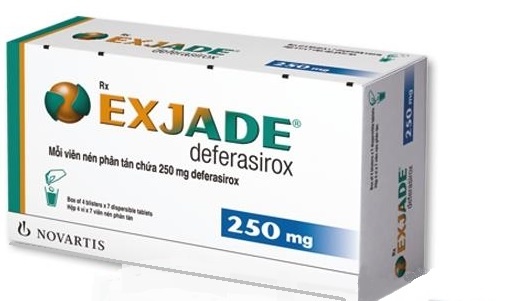
EXJADE 125 mg Dispersible Tablet

Запит на рецепт онлайн
Лікар розгляне ваш випадок і визначить, чи є рецепт медично доцільним.

Поговоріть з лікарем про ці ліки
Обговоріть симптоми та можливі подальші кроки під час короткої онлайн-консультації.



Інструкція із застосування EXJADE
Зміст інструкції
- EXJADE 90 mg film-coated tablets, 180 mg film-coated tablets, 360 mg film-coated tablets
- EXJADE 90 mg granules in sachet, 180 mg granules in sachet, 360 mg granules in sachet
EXJADE 90 mg film-coated tablets, 180 mg film-coated tablets, 360 mg film-coated tablets
deferasirox
Medicinal product subject to additional monitoring. This will allow the rapid identification of
new safety information. You can contribute by reporting any adverse effects
experienced during the use of this medicine. See the end of section 4 for
information on how to report adverse effects.
Read this leaflet carefully before taking this medicine as it contains
important information for you.
- Keep this leaflet. You may need to read it again.
- If you have any questions, ask your doctor or pharmacist.
- This medicine has been prescribed only for you or for your child. Do not give it to other people, even if their symptoms are the same as yours, as it could be harmful.
- If any side effects occur, including those not listed in this leaflet, tell your doctor or pharmacist. See section 4.
Contents of this leaflet
- 1. What EXJADE is and what it is used for
- 2. What you need to know before you take EXJADE
- 3. How to take EXJADE
- 4. Possible side effects
- 5. How to store EXJADE
- 6. Contents of the pack and other information
1. What is EXJADE and what it is used for
What is EXJADE
EXJADE contains an active substance called deferasirox. It is an iron chelator, i.e. a
medicinal product used to remove excess iron from the body (iron overload).
Deferasirox binds to excess iron and removes it, eliminating it mainly with the faeces.
What is EXJADE used for
In patients with various forms of anaemia (for example thalassemia, sickle cell anaemia or
myelodysplastic syndromes (MDS)), repeated blood transfusions may be necessary. These can
however cause an excess of iron in the body. This happens because blood contains iron and
the body does not have a natural way to remove the excess iron introduced with the
blood transfusions. In patients with thalassaemic syndromes who are not undergoing blood
transfusion, iron overload can also develop over time, mainly due to an
increased absorption of iron with the diet in response to a low number of blood cells.
Over time, excess iron can damage important organs such as the liver and heart. Medicines called iron chelatorsare used to eliminate excess iron and reduce the risk that
this may damage some organs.
EXJADE is used for the treatment of iron overload due to frequent blood transfusions in
patients with beta thalassemia major aged 6 years and over.
EXJADE is also used for the treatment of iron overload when deferoxamine therapy is contraindicated or inadequate in patients with beta thalassemia major with iron overload due to infrequent blood transfusions, in patients with other forms of anaemia, and in children
aged between 2 and 5 years.
EXJADE is also used when deferoxamine therapy is contraindicated or inadequate for the
treatment of patients aged 10 years and over who have iron overload associated with
thalassaemic syndromes, but who do not require blood transfusion.
2. What you need to know before taking EXJADE
Do not take EXJADE
- if you are allergic to deferasirox or any of the other ingredients of this medicine (listed in section 6). If this applies to you, tell your doctor before taking EXJADE. If you think you may be allergic, ask your doctor for advice.
- if you have moderate or severe kidney disease.
- if you are currently taking any other iron chelatingmedicine.
EXJADE is not recommended
- if you are in an advanced stage of myelodysplastic syndrome (MDS: decreased production of blood cells by the bone marrow) or have an advanced stage cancer.
Warnings and precautions
Talk to your doctor or pharmacist before taking EXJADE:
- if you have a problem with your kidneys or liver.
- if you have a heart problem due to iron overload.
- if you notice a marked decrease in urine output (a sign of kidney problems).
- if you have a severe skin rash, or difficulty breathing and dizziness or swelling, especially of the face and throat (signs of a severe allergic reaction, see also section 4 “Possible side effects”).
- if you experience a combination of any of the following symptoms: skin rash, reddened skin, blistering on the lips, eyes or in the mouth, peeling skin, high fever, flu-like symptoms, swollen lymph nodes (signs of a severe skin reaction, see also section 4 “Possible side effects”).
- if you experience a combination of drowsiness, pain on the right side of the upper abdomen, yellowing or increased yellowing of the skin or eyes and dark urine (signs of liver problems).
- if you experience difficulty thinking, remembering information or solving problems, if you feel less alert or aware or feel very sleepy with little energy (signs of a high level of ammonia in the blood, which can be associated with liver or kidney problems, see also section 4 “Possible side effects”).
- if you vomit blood and/or have black stools.
- if you experience frequent abdominal pain, especially after eating or taking EXJADE.
- if you experience frequent heartburn.
- if you have low levels of platelets or white blood cells in your blood tests.
- if you have blurred vision.
- if you have diarrhoea or vomiting. If any of these situations apply to you, tell your doctor immediately.
Monitoring of treatment with EXJADE
During treatment you will be regularly checked with blood and urine tests. These will
check the amount of iron in your body (blood ferritinlevel) to see how EXJADE is working.
The tests will also check kidney function (creatinine level in the
blood, presence of protein in the urine) and liver function (transaminase level in the
blood). Your doctor may ask you to have a kidney biopsy if they suspect significant kidney damage. To
determine the amount of iron in the liver, you may also have magnetic resonance imaging
(MRI) scans. Your doctor will evaluate these tests to decide what is the most appropriate dose of
EXJADE for you and will also use these tests to decide when you should stop
taking EXJADE.
As a precaution, your vision and hearing will be checked every year during treatment.
Other medicines and EXJADE
Tell your doctor or pharmacist if you are taking, have recently taken or might take
any other medicines. This includes in particular:
- other iron chelators, which must not be taken with EXJADE,
- antacids (medicines used to treat heartburn) containing aluminium, which must not be taken at the same time of day as EXJADE,
- cyclosporine (used to prevent rejection of a transplanted organ or for other conditions such as rheumatoid arthritis or atopic dermatitis),
- simvastatin (used to lower cholesterol),
- some pain relievers or anti-inflammatory drugs (e.g. aspirin, ibuprofen, corticosteroids),
- oral bisphosphonates (used to treat osteoporosis),
- anticoagulant medicines (used to prevent or treat blood clots),
- hormonal contraceptives (birth control pills),
- bepridil, ergotamine (used for heart problems and migraines),
- repaglinide (used to treat diabetes),
- rifampicin (used to treat tuberculosis),
- phenytoin, phenobarbital, carbamazepine (used to treat epilepsy),
- ritonavir (used to treat HIV infection),
- paclitaxel (used in the treatment of cancer),
- theophylline (used to treat respiratory diseases such as asthma),
- clozapine (used to treat psychiatric disorders such as schizophrenia),
- tizanidine (used as a muscle relaxant),
- cholestyramine (used to lower cholesterol levels in the blood),
- busulfan (used as a treatment before transplant to destroy the original bone marrow before transplant),
- midazolam (used to relieve anxiety and/or sleep disorders).
Additional tests may be needed to monitor the levels in the blood of some of
these medicines.
Elderly (aged 65 years and over)
EXJADE can be used by people aged 65 years and over at the same dose as used in
adults. Elderly patients may experience more side effects (particularly diarrhoea) than
younger patients. They should be carefully monitored by the doctor for side
effects that may require a dose adjustment.
Children and adolescents
EXJADE can be used in children and adolescents receiving regular blood transfusions
aged 2 years and over and in children and adolescents not receiving regular blood transfusions
aged 10 years and over. The doctor will adjust the dose according to the patient’s growth.
EXJADE is not recommended for children under 2 years of age.
Pregnancy and breastfeeding
If you are pregnant, suspect you are pregnant, are planning to become pregnant or are
breastfeeding, ask your doctor for advice before taking this medicine.
EXJADE is not recommended during pregnancy unless it is essential.
If you are currently using a hormonal contraceptive to prevent pregnancy, you should
use an additional or different type of contraception (e.g. a condom), as EXJADE
can reduce the effectiveness of hormonal contraceptives.
Breastfeeding is not recommended during treatment with EXJADE.
Driving and using machines
If you feel dizzy after taking EXJADE, do not drive or use tools or machines
until the dizziness has gone.
EXJADE contains sodium
This medicine contains less than 1 mmol (23 mg) of sodium per film-coated tablet, i.e.
essentially ‘sodium-free’.
3. How to take EXJADE
Treatment with EXJADE will be monitored by a doctor experienced in the treatment of iron overload caused by blood transfusions.
Take this medicine following the doctor's instructions exactly. If you have any doubts, consult your doctor or pharmacist.
How much EXJADE to take
The dose of EXJADE is related to body weight for all patients. The doctor will calculate the dose you need and tell you how many tablets to take each day.
- The usual daily dose of EXJADE film-coated tablets at the beginning of treatment for patients receiving regular blood transfusions is 14 mg per kilogram of body weight. The doctor may recommend a higher or lower initial dose based on the need for personalized treatment.
- The usual daily dose of EXJADE film-coated tablets at the beginning of treatment for patients who are not receiving regular blood transfusions is 7 mg per kilogram of body weight.
- Depending on how you respond to treatment, the doctor may subsequently modify the treatment by increasing or decreasing the dose.
- The maximum recommended daily dose of EXJADE film-coated tablets is:
- 28 mg per kilogram of body weight for patients receiving regular blood transfusions,
- 14 mg per kilogram of body weight for adult patients who are not receiving regular blood transfusions,
- 7 mg per kilogram of body weight for children and adolescents who are not receiving regular blood transfusions.
In some countries, deferasirox may also be available as dispersible tablets, produced by other manufacturers. If you switch from such dispersible tablets to EXJADE film-coated tablets, the dose will change. The doctor will calculate the dose you need and tell you how many film-coated tablets to take each day.
When to take EXJADE
- Take EXJADE once a day, every day, at about the same time each day with some water.
- Take EXJADE film-coated tablets on an empty stomach or with a light meal. Taking EXJADE every day at the same time will also help you remember when to take the tablets.
For patients who cannot swallow the tablets whole, the film-coated tablets of EXJADE can be crushed and administered by sprinkling the entire dose on soft food such as yogurt or applesauce (pureed apple). The food must be consumed immediately and completely. Do not save it for later use.
How long to take EXJADE
Continue to take EXJADE every day for the duration that your doctor has told you.This is a long-term treatment, which may last for months or years. Your condition will be monitored regularly by the doctor to verify that the treatment is effective (see also paragraph 2: “Monitoring treatment with EXJADE”).
If you have questions about how long to take EXJADE, talk to your doctor.
If you take more EXJADE than you should
If you have taken too much EXJADE, or if someone else has accidentally taken your tablets, contact your doctor or hospital for advice immediately. Show the doctor the package of tablets. Urgent medical treatment may be necessary. Effects such as abdominal pain, diarrhea, nausea and vomiting, and kidney or liver problems that may be serious may occur.
If you forget to take EXJADE
If you forget to take a dose, take it as soon as you remember during that day. Take the next dose as scheduled. Do not take a double dose the next day to make up for the missed dose(s).
If you stop taking EXJADE
Do not stop taking EXJADE unless your doctor tells you to. If you stop taking it, the excess iron will no longer be removed from the body (see also above the paragraph “How long to take EXJADE”).
4. Possible side effects
Like all medicines, this medicine can cause side effects, although not everybody gets them.
Most side effects are mild to moderate and usually disappear
after a period of treatment lasting from a few days to a few weeks.
Some side effects can be serious and require immediate medical attention.
These side effects are uncommon (may affect up to 1 in 100 people) or rare
(may affect up to 1 in 1,000 people).
- If you have a severe rash, or difficulty breathing and dizziness or swelling mainly of the face and throat (signs of a severe allergic reaction),
- If you experience a combination of any of the following symptoms: rash, reddened skin, blistering on the lips, eyes or in the mouth, peeling skin, high fever, flu-like symptoms, swollen lymph nodes (signs of severe skin reactions),
- If you notice a marked decrease in urine output (sign of kidney problems),
- If you experience a combination of drowsiness, pain on the right side in the upper abdomen, yellowing or increased yellowing of the skin or eyes and dark urine (signs of liver problems),
- If you experience difficulty thinking, remembering information or solving problems, if you feel less alert or aware or feel very sleepy with little energy (signs of a high level of ammonia in the blood, which can be associated with liver or kidney problems and lead to a change in brain function),
- If you vomit blood and/or have black stools,
- If you experience frequent abdominal pain, especially after eating or taking EXJADE,
- If you experience frequent heartburn,
- If you experience partial loss of vision,
- If you experience severe pain in the upper abdomen (pancreatitis), stop taking this medicine and inform your doctor immediately.
Some side effects may become serious.
These side effects are uncommon.
- If you have blurred or hazy vision,
- If you have a decrease in hearing, inform your doctor as soon as possible.
Other side effects
Very common (may affect more than 1 in 10 people)
- Changes in kidney function tests.
Common (may affect up to 1 in 10 people)
- Gastrointestinal disorders, such as nausea, vomiting, diarrhea, abdominal pain, bloating, constipation, indigestion
- Rash
- Headache
- Changes in liver function tests
- Itching
- Changes in urine tests (protein in the urine) If any of these effects occur severely, inform your doctor.
Uncommon (may affect up to 1 in 100 people)
- Dizziness
- Fever
- Sore throat
- Swelling of the arms or legs
- Changes in skin color
- Anxiety
- Sleep disorders
- Fatigue If any of these effects occur severely, inform your doctor.
Frequency not known(frequency cannot be estimated from the available data).
- A reduction in the number of cells involved in blood clotting (thrombocytopenia), red blood cells (worsening of anemia), white blood cells (neutropenia) or all types of cells in the blood (pancytopenia)
- Hair loss
- Kidney stones
- Low urine production
- Tear in the wall of the stomach or intestine which can be painful and cause nausea
- Severe pain in the upper abdomen (pancreatitis)
- Increased acidity of the blood (metabolic acidosis).
Reporting of side effects
If you get any side effects, talk to your doctor or pharmacist. This includes any side effects not listed in this leaflet. You can also report side effects directly through the national reporting system detailed in Annex V. By reporting side effects you can help provide more information on the safety of this medicine.
5. How to store EXJADE
- Keep this medicine out of the sight and reach of children.
- Do not use this medicine after the expiry date that is stated on the blister after EXP and on the carton after Scad.. The expiry date refers to the last day of that month.
- Do not use the package if it is damaged or shows signs of tampering.
- Do not dispose of any medicine in wastewater or household waste. Ask your pharmacist how to dispose of medicines you no longer use. This will help protect the environment.
6. Package contents and other information
What EXJADE contains
The active ingredient is deferasirox.
Each film-coated tablet of EXJADE 90 mg contains deferasirox 90 mg.
Each film-coated tablet of EXJADE 180 mg contains deferasirox 180 mg.
Each film-coated tablet of EXJADE 360 mg contains deferasirox 360 mg.
The other ingredients are microcrystalline cellulose; crospovidone; povidone; magnesium stearate; colloidal
anhydrous silica and poloxamer. The tablet coating contains: hypromellose; titanium dioxide
(E171); macrogol (4000); talc; aluminium lake containing indigo carmine (E132).
Description of EXJADE and package contents
EXJADE is supplied in the form of film-coated tablets. The film-coated tablets are oval
and biconvex.
- EXJADE 90 mg film-coated tablets are light blue in colour and have “90” imprinted on one side and “NVR” on the other.
- EXJADE 180 mg film-coated tablets are medium blue in colour and have “180” imprinted on one side and “NVR” on the other.
- EXJADE 360 mg film-coated tablets are dark blue in colour and have “360” imprinted on one side and “NVR” on the other.
Each pack contains 30 or 90 film-coated tablets in blisters. Multipacks
contain 300 (10 packs of 30) film-coated tablets.
Not all pack sizes or strengths may be marketed in your country.
Marketing Authorisation Holder
Novartis Europharm Limited
Vista Building
Elm Park, Merrion Road
Dublin 4
Ireland
Manufacturer
Novartis Pharma GmbH
Roonstraße 25
D-90429 Nuremberg
Germany
Novartis Farmacéutica S.A.
Ronda de Santa Maria 158
08210 Barberà del Vallès, Barcelona
Spain
Sandoz S.R.L.
Str. Livezeni nr. 7A
540472 Targu Mures
Romania
For further information on this medicine, contact the local representative of the Marketing Authorisation Holder:
België/Belgique/Belgien
Novartis Pharma N.V.
Tél/Tel: +32 2 246 16 11
Lietuva
SIA Novartis Baltics Lietuvos filialas
Tel: +370 5 269 16 50
България
Novartis Bulgaria EOOD
Тел.: +359 2 489 98 28
Luxembourg/Luxemburg
Novartis Pharma N.V
Tél/Tel: +32 2 246 16 11
Česká republika
Novartis s.r.o.
Tel: +420 225 775 111
Magyarország
Novartis Hungária Kft.
Tel.: +36 1 457 65 00
Danmark
Novartis Healthcare A/S
Tlf: +45 39 16 84 00
Malta
Novartis Pharma Services Inc.
Tel: +356 2122 2872
Deutschland
Novartis Pharma GmbH
Tel: +49 911 273 0
Nederland
Novartis Pharma B.V.
Tel: +31 88 04 52 555
Eesti
SIA Novartis Baltics Eesti filiaal
Tel: +372 66 30 810
Norge
Novartis Norge AS
Tlf: +47 23 05 20 00
Ελλάδα
Novartis (Hellas) A.E.B.E.
Τηλ: +30 210 281 17 12
Österreich
Novartis Pharma GmbH
Tel: +43 1 86 6570
España
Novartis Farmacéutica, S.A.
Tel: +34 93 306 42 00
Polska
Novartis Poland Sp. z o.o.
Tel.: +48 22 375 4888
France
Novartis Pharma S.A.S.
Tél: +33 1 55 47 66 00
Portugal
Novartis Farma - Produtos Farmacêuticos, S.A.
Tel: +351 21 000 8600
Hrvatska
Novartis Hrvatska d.o.o.
Tel. +385 1 6274 220
România
Novartis Pharma Services Romania SRL
Tel: +40 21 31299 01
Ireland
Novartis Ireland Limited
Tel: +353 1 260 12 55
Slovenija
Novartis Pharma Services Inc.
Tel: +386 1 300 75 50
Ísland
Vistor hf.
Sími: +354 535 7000
Slovenská republika
Novartis Slovakia s.r.o.
Tel: +421 2 5542 5439
Italia
Novartis Farma S.p.A.
Tel: +39 02 96 54 1
Suomi/Finland
Novartis Finland Oy
Puh/Tel: +358 (0)10 6133 200
Κύπρος
Novartis Pharma Services Inc.
Τηλ: +357 22 690 690
Sverige
Novartis Sverige AB
Tel: +46 8 732 32 00
Latvija
SIA Novartis Baltics
Tel: +371 67 887 070
United Kingdom (Northern Ireland)
Novartis Ireland Limited
Tel: +44 1276 698370
Other sources of information
More detailed information on this medicine is available on the European Medicines Agency website, http://www.ema.europa.eu.
EXJADE 90 mg granules in sachet, 180 mg granules in sachet, 360 mg granules in sachet
deferasirox
Medicinal product subject to additional monitoring. This will allow the rapid identification of new safety information. You can contribute by reporting any adverse effects encountered during the use of this medicine. See the end of section 4 for information on how to report adverse effects.
Read this leaflet carefully before taking this medicine as it contains important information for you.
- Keep this leaflet. You may need to read it again.
- If you have any questions, ask your doctor or pharmacist.
- This medicine has been prescribed only for you or your child. Do not give it to other people, even if their symptoms are the same as yours, as it could be dangerous.
- If any side effects occur, including those not listed in this leaflet, tell your doctor or pharmacist. See section 4.
Contents of this leaflet
- 1. What EXJADE is and what it is used for
- 2. What you need to know before you take EXJADE
- 3. How to take EXJADE
- 4. Possible side effects
- 5. How to store EXJADE
- 6. Contents of the pack and other information
1. What is EXJADE and what it is used for
What is EXJADE
EXJADE contains an active substance called deferasirox. It is an iron chelator, i.e. a
medicine used to remove excess iron from the body (iron overload).
Deferasirox binds to excess iron and removes it, eliminating it mainly with the faeces.
What is EXJADE used for
In patients with various forms of anaemia (for example thalassemia, sickle cell anaemia or
myelodysplastic syndromes (MDS)), repeated blood transfusions may be necessary. However, these can
cause an excess of iron in the body. This happens because blood contains iron and
the body does not have a natural way to remove the excess iron introduced with the
blood transfusions. In patients with thalassaemic syndromes who are not undergoing blood
transfusion, iron overload can also develop over time, mainly due to an
increased absorption of iron with the diet in response to a low number of blood cells.
Over time, excess iron can damage important organs such as the liver and heart. Medicines called iron chelatorsare used to eliminate excess iron and reduce the risk that
this may damage some organs.
EXJADE is used for the treatment of iron overload due to frequent blood transfusions in
patients with beta thalassemia major aged 6 years and above.
EXJADE is also used for the treatment of iron overload when deferoxamine therapy is contraindicated or inadequate in patients with beta thalassemia major with iron overload due to infrequent blood transfusions, in patients with other forms of anaemia, and in children
aged between 2 and 5 years.
EXJADE is also used when deferoxamine therapy is contraindicated or inadequate for the
treatment of patients aged 10 years and above who have iron overload associated with
thalassaemic syndromes, but who do not require blood transfusion.
2. What you need to know before you take EXJADE
Do not take EXJADE
- if you are allergic to deferasirox or any of the other ingredients of this medicine (listed in section 6). If this applies to you, tell your doctor before taking EXJADE. If you think you may be allergic, ask your doctor for advice.
- if you have moderate or severe kidney disease.
- if you are currently taking any other iron chelatingmedicine.
EXJADE is not recommended
- if you are in an advanced stage of myelodysplastic syndrome (MDS: decreased production of blood cells by the bone marrow) or have an advanced stage cancer.
Warnings and precautions
Talk to your doctor or pharmacist before taking EXJADE:
- if you have a kidney or liver problem.
- if you have a heart problem due to iron overload.
- if you notice a marked decrease in urine output (a sign of kidney problems).
- if you have a severe skin rash, or difficulty breathing and dizziness or swelling, especially of the face and throat (signs of a severe allergic reaction, see also section 4 “Possible side effects”).
- if you experience a combination of any of the following symptoms: skin rash, reddened skin, blistering on the lips, eyes or in the mouth, peeling skin, high fever, flu-like symptoms, swollen lymph nodes (signs of a severe skin reaction, see also section 4 “Possible side effects”).
- if you experience a combination of drowsiness, pain on the right side of the upper abdomen, yellowing or increased yellowing of the skin or eyes, and dark urine (signs of liver problems),
- if you experience difficulty thinking, remembering information or solving problems, if you feel less alert or aware, or feel very sleepy with little energy (signs of a high level of ammonia in the blood, which may be associated with liver or kidney problems, see also section 4 “Possible side effects”).
- if you vomit blood and/or have black stools.
- if you experience frequent abdominal pain, especially after eating or taking EXJADE.
- if you experience frequent heartburn.
- if you have low levels of platelets or white blood cells in your blood tests.
- if you have blurred vision.
- if you have diarrhoea or vomiting. If any of these situations apply to you, tell your doctor immediately.
Monitoring treatment with EXJADE
During treatment, you will have regular blood and urine tests. These will
check the amount of iron in your body (blood ferritinlevel) to check how EXJADE is working.
The tests will also check kidney function (creatinine level in the
blood, protein in the urine) and liver function (transaminase level in the
blood). Your doctor may ask you to have a kidney biopsy if they suspect significant kidney damage. To
determine the amount of iron in the liver, you may also have magnetic resonance imaging (MRI) scans.
Your doctor will evaluate these tests to decide what dose of
EXJADE is most appropriate for you and will also use these tests to decide when you should stop
taking EXJADE.
As a precaution, your vision and hearing will be checked every year during treatment.
Other medicines and EXJADE
Tell your doctor or pharmacist if you are taking, have recently taken or might take
any other medicines. This is particularly important for:
- other iron chelators, which should not be taken with EXJADE,
- antacids (medicines used to treat heartburn) containing aluminium, which should not be taken at the same time of day as EXJADE,
- cyclosporine (used to prevent organ rejection after a transplant or for other conditions such as rheumatoid arthritis or atopic dermatitis),
- simvastatin (used to lower cholesterol),
- some painkillers or anti-inflammatory drugs (e.g. aspirin, ibuprofen, corticosteroids),
- oral bisphosphonates (used to treat osteoporosis),
- anticoagulants (medicines used to prevent or treat blood clots),
- hormonal contraceptives (birth control pills),
- bepridil, ergotamine (used for heart problems and migraines),
- repaglinide (used to treat diabetes),
- rifampicin (used to treat tuberculosis),
- phenytoin, phenobarbital, carbamazepine (used to treat epilepsy),
- ritonavir (used to treat HIV infection),
- paclitaxel (used in the treatment of cancer),
- theophylline (used to treat respiratory diseases such as asthma),
- clozapine (used to treat psychiatric disorders such as schizophrenia),
- tizanidine (used as a muscle relaxant),
- cholestyramine (used to lower cholesterol levels in the blood),
- busulfan (used as treatment prior to transplant to destroy the original bone marrow before the transplant),
- midazolam (used to relieve anxiety and/or sleep disorders).
Additional tests may be needed to monitor the levels in the blood of some of
these medicines.
Elderly (aged 65 years and over)
EXJADE can be used by people aged 65 years and over at the same dose used in
adults. Elderly patients may experience more side effects (particularly diarrhoea) than
younger patients. They should be carefully monitored by their doctor for side
effects that may require a dose adjustment.
Children and adolescents
EXJADE can be used in children and adolescents receiving regular blood transfusions
aged 2 years and over and in children and adolescents not receiving regular blood transfusions
aged 10 years and over. The doctor will adjust the dose according to the patient’s growth.
EXJADE is not recommended for children under 2 years of age.
Pregnancy and breastfeeding
If you are pregnant, suspect you may be pregnant, are planning to become pregnant or are
breastfeeding, ask your doctor for advice before taking this medicine.
EXJADE is not recommended during pregnancy unless it is strictly necessary.
If you are currently using a hormonal contraceptive to prevent pregnancy, you should
use an additional or different type of contraception (e.g. a condom), as EXJADE
may reduce the effectiveness of hormonal contraceptives.
Breastfeeding is not recommended during treatment with EXJADE.
Driving and using machines
If you feel dizzy after taking EXJADE, do not drive or use tools or machines
until the dizziness has worn off.
EXJADE contains sodium
This medicine contains less than 1 mmol (23 mg) of sodium per sachet, that is to say it is essentially ‘sodium-free’.
3. How to take EXJADE
Treatment with EXJADE will be monitored by a doctor experienced in the treatment of iron overload caused by blood transfusions.
Take this medicine following exactly the instructions of your doctor. If you have any doubts, ask your doctor or pharmacist.
How much EXJADE to take
The dose of EXJADE is related to body weight for all patients. The doctor will calculate the dose you need and tell you how many sachets to take each day.
- The usual daily dose of EXJADE granules at the beginning of treatment for patients receiving regular blood transfusions is 14 mg per kilogram of body weight. The doctor may recommend a higher or lower initial dose based on the need for personalized treatment.
- The usual daily dose of EXJADE granules at the beginning of treatment for patients who are not receiving regular blood transfusions is 7 mg per kilogram of body weight.
- Depending on how you respond to treatment, the doctor may subsequently modify the treatment by increasing or decreasing the dose.
- The maximum recommended daily dose of EXJADE granules is:
- 28 mg per kilogram of body weight for patients receiving regular blood transfusions,
- 14 mg per kilogram of body weight for adult patients who are not receiving regular blood transfusions,
- 7 mg per kilogram of body weight for children and adolescents who are not receiving regular blood transfusions.
In some countries, deferasirox may also be available as dispersible tablets, produced by other manufacturers. If you switch from such dispersible tablets to EXJADE granules, the dose will change. The doctor will calculate the dose you need and tell you how many sachets of granules to take each day.
When to take EXJADE
- Take EXJADE once a day, every day, at about the same time each day.
- Take EXJADE granules with or without a light meal. Taking EXJADE every day at the same time will also help you remember when to take the medicine.
EXJADE granules must be administered by sprinkling the entire dose on soft food such as yogurt or applesauce (pureed apples). The food must be consumed immediately and completely. Do not save it for later use.
For how long to take EXJADE
Continue to take EXJADE every day for the duration that your doctor has told you.This is a long-term treatment, which can last for months or years. Your condition will be monitored regularly by the doctor to verify that the treatment is effective (see also paragraph 2:
“Monitoring treatment with EXJADE”).
If you have questions about how long to take EXJADE, talk to your doctor.
If you take more EXJADE than you should
If you have taken too much EXJADE, or if someone else has accidentally taken your granules, contact your doctor or hospital immediately for advice. Show the doctor the package of granules. Urgent medical treatment may be necessary. Effects such as abdominal pain, diarrhea, nausea and vomiting, and kidney or liver problems that may be serious may occur.
If you forget to take EXJADE
If you forget to take a dose, take it as soon as you remember during that day. Take the next dose as scheduled. Do not take a double dose the next day to make up for the forgotten granules.
If you stop taking EXJADE
Do not stop taking EXJADE unless your doctor tells you to. If you stop taking it, the excess iron will no longer be removed from the body (see also above the paragraph “For how long to take EXJADE”).
4. Possible side effects
Like all medicines, this medicine can cause side effects, although not everybody gets them.
Most side effects are mild to moderate and usually disappear
after a period of treatment lasting from a few days to a few weeks.
Some side effects can be serious and require immediate medical attention.
These side effects are uncommon (may affect up to 1 in 100 people) or rare
(may affect up to 1 in 1,000 people).
- If you have a severe rash, or difficulty breathing and dizziness or swelling mainly of the face and throat (signs of a severe allergic reaction),
- If you experience a combination of any of the following symptoms: rash, reddened skin, blisters on the lips, eyes or in the mouth, peeling skin, high fever, flu-like symptoms, swollen lymph nodes (signs of severe skin reactions),
- If you notice a marked decrease in urine output (sign of kidney problems),
- If you experience a combination of drowsiness, pain on the right side in the upper abdomen, yellowing or increased yellowing of the skin or eyes and dark urine (signs of liver problems),
- If you experience difficulty thinking, remembering information or solving problems, if you feel less alert or aware or feel very sleepy with little energy (signs of a high level of ammonia in the blood, which may be associated with liver or kidney problems and lead to a change in brain function),
- If you vomit blood and/or have black stools,
- If you experience frequent abdominal pain, especially after eating or taking EXJADE,
- If you experience frequent heartburn,
- If you experience partial loss of vision,
- If you experience severe pain in the upper abdomen (pancreatitis), stop taking this medicine and inform your doctor immediately.
Some side effects may become serious.
These side effects are uncommon.
- If you have blurred or hazy vision,
- If you have a decrease in hearing, inform your doctor as soon as possible.
Other side effects
Very common (may affect more than 1 in 10 people)
- Changes in kidney function tests.
Common (may affect up to 1 in 10 people)
- Gastrointestinal disorders, such as nausea, vomiting, diarrhea, abdominal pain, bloating, constipation, indigestion
- Rash
- Headache
- Changes in liver function tests
- Itching
- Changes in urine tests (protein in the urine) If any of these effects occur severely, inform your doctor.
Uncommon (may affect up to 1 in 100 people)
- Dizziness
- Fever
- Sore throat
- Swelling of the arms or legs
- Changes in skin color
- Anxiety
- Sleep disorders
- Fatigue If any of these effects occur severely, inform your doctor.
Frequency not known(frequency cannot be estimated from the available data).
- A reduction in the number of cells involved in blood clotting (thrombocytopenia), red blood cells (worsening of anemia), white blood cells (neutropenia) or all types of cells in the blood (pancytopenia)
- Hair loss
- Kidney stones
- Low urine production
- Tear in the wall of the stomach or intestine, which can be painful and cause nausea
- Severe pain in the upper abdomen (pancreatitis)
- Increased acidity of the blood (metabolic acidosis).
Reporting of side effects
If you get any side effects, even those not listed in this leaflet, tell your
doctor or pharmacist. You can also report side effects directly through the national
reporting system detailed in Annex V. By reporting side effects you can help
to provide more information on the safety of this medicine.
5. How to store EXJADE
- Keep this medicine out of the sight and reach of children.
- Do not use this medicine after the expiry date that is stated on the sachet after EXP and on the box after Scad.. The expiry date refers to the last day of that month.
- Do not use the package if it is damaged or shows signs of tampering.
- Do not dispose of any medicine in wastewater or household waste. Ask your pharmacist how to dispose of medicines you no longer use. This will help protect the environment.
6. Contents of the pack and other information
What EXJADE contains
The active ingredient is deferasirox.
- Each sachet of EXJADE 90 mg granules contains deferasirox 90 mg.
- Each sachet of EXJADE 180 mg granules contains deferasirox 180 mg.
- Each sachet of EXJADE 360 mg granules contains deferasirox 360 mg. The other ingredients are microcrystalline cellulose; crospovidone; povidone; magnesium stearate; anhydrous colloidal silica and poloxamer.
Description of the appearance of EXJADE and contents of the pack
EXJADE granules are provided in the form of granules from white to almost white in sachets.
Each pack contains 30 sachets.
Not all dosage strengths may be marketed in your country.
Marketing Authorisation Holder
Novartis Europharm Limited
Vista Building
Elm Park, Merrion Road
Dublin 4
Ireland
Manufacturer
Novartis Pharma GmbH
Roonstraße 25
D-90429 Nuremberg
Germany
For further information on this medicine, contact the local representative of the Marketing Authorisation Holder:
België/Belgique/Belgien
Novartis Pharma N.V.
Tél/Tel: +32 2 246 16 11
Lietuva
SIA Novartis Baltics Lietuvos filialas
Tel: +370 5 269 16 50
България
Novartis Bulgaria EOOD
Тел.: +359 2 489 98 28
Luxembourg/Luxemburg
Novartis Pharma N.V
Tél/Tel: +32 2 246 16 11
Česká republika
Novartis s.r.o.
Tel: +420 225 775 111
Magyarország
Novartis Hungária Kft.
Tel.: +36 1 457 65 00
Danmark
Novartis Healthcare A/S
Tlf: +45 39 16 84 00
Malta
Novartis Pharma Services Inc.
Tel: +356 2122 2872
Deutschland
Novartis Pharma GmbH
Tel: +49 911 273 0
Nederland
Novartis Pharma B.V.
Tel: +31 88 04 52 555
Eesti
SIA Novartis Baltics Eesti filiaal
Tel: +372 66 30 810
Norge
Novartis Norge AS
Tlf: +47 23 05 20 00
Ελλάδα
Novartis (Hellas) A.E.B.E.
Τηλ: +30 210 281 17 12
Österreich
Novartis Pharma GmbH
Tel: +43 1 86 6570
España
Novartis Farmacéutica, S.A.
Tel: +34 93 306 42 00
Polska
Novartis Poland Sp. z o.o.
Tel.: +48 22 375 4888
France
Novartis Pharma S.A.S.
Tél: +33 1 55 47 66 00
Portugal
Novartis Farma - Produtos Farmacêuticos, S.A.
Tel: +351 21 000 8600
Hrvatska
Novartis Hrvatska d.o.o.
Tel. +385 1 6274 220
România
Novartis Pharma Services Romania SRL
Tel: +40 21 31299 01
Ireland
Novartis Ireland Limited
Tel: +353 1 260 12 55
Slovenija
Novartis Pharma Services Inc.
Tel: +386 1 300 75 50
Ísland
Vistor hf.
Sími: +354 535 7000
Slovenská republika
Novartis Slovakia s.r.o.
Tel: +421 2 5542 5439
Italia
Novartis Farma S.p.A.
Tel: +39 02 96 54 1
Suomi/Finland
Novartis Finland Oy
Puh/Tel: +358 (0)10 6133 200
Κύπρος
Novartis Pharma Services Inc.
Τηλ: +357 22 690 690
Sverige
Novartis Sverige AB
Tel: +46 8 732 32 00
Latvija
SIA Novartis Baltics
Tel: +371 67 887 070
United Kingdom (Northern Ireland)
Novartis Ireland Limited
Tel: +44 1276 698370
Other sources of information
More detailed information on this medicine is available on the website of the European Medicines Agency, http://www.ema.europa.eu.

Не впевнені, чи підходить вам цей лікарський засіб?
Обговоріть симптоми та можливі варіанти лікування з лікарем онлайн.

Виникли питання під час прийому ліків?
Обговоріть свої симптоми та лікування з лікарем онлайн.
- Країна реєстрації
- Лікарська формаDispersible tablet, 125 MG
- Код АТХV03AC03
- Діюча речовина
- Потрібен рецептТак
- Виробник
- Ця інформація надана лише для ознайомлення і не є медичною порадою. Рішення щодо лікування завжди приймає лікар.
- Альтернативи до EXJADEЛікарська форма: Film-coated tablet, 90 MGДіюча речовина: ДеферасироксВиробник: Abdi Farma GmbHПотрібен рецептЛікарська форма: Film-coated tablet, 90 MGДіюча речовина: ДеферасироксВиробник: ACCORD HEALTHCARE, S.L.U.Потрібен рецептЛікарська форма: Film-coated tablet, 90 MGДіюча речовина: ДеферасироксВиробник: GLENMARK ARZNEIMITTEL GMBHПотрібен рецепт
Аналоги EXJADE в інших країнах
Препарати з тією самою діючою речовиною, доступні в інших країнах.
Аналог EXJADE у Іспанія
Аналог EXJADE у Польща
Аналог EXJADE у Україна
Лікарі онлайн щодо EXJADE
Застосування, безпека та можливість призначення рецепта — за результатами медичної оцінки.









Отримайте рецепт на EXJADE онлайн
Заповніть форму за 2 хвилини
Розкажіть про симптоми, історію хвороби та потрібний препарат.
Оберіть лікаря або ми призначимо
Оберіть спеціаліста або ми підберемо найближчого доступного лікаря.
Лікар розглядає ваш випадок
Зазвичай протягом 30 хвилин. Може ставити уточнювальні запитання в чаті.
Отримайте в будь-якій аптеці
Електронний рецепт надсилається на вашу пошту — дійсний по всій Польщі.
Часті запитання
EXJADE потребує рецепта в Італія. Ви можете обговорити з лікарем онлайн, чи підходить цей лікарський засіб для вашої ситуації.
Діюча речовина у EXJADE — Деферасирокс. Це допомагає визначити препарати з тим самим складом, але під іншими торговими назвами.
EXJADE виробляється компанією NOVARTIS EUROPHARM LIMITED. Назва бренду та упаковка можуть відрізнятися залежно від дистрибʼютора.
Лікарі, зокрема Сімейні лікарі, Психіатри, Дерматологи, Кардіологи, Ендокринологи, Гастроентерологи, Пульмонологи, Нефрологи, Ревматологи, Гематологи, Інфекціоністи, Алергологи, Геріатри, Педіатри, Онкологи, можуть оцінити доцільність застосування EXJADE з урахуванням вашого стану та місцевих правил. Ви можете записатися на онлайн-консультацію, щоб обговорити симптоми та можливі подальші кроки.
Польща має добре розвинену систему охорони здоров'я у великих містах, таких як Варшава, Краків, Вроцлав і Гданськ. Аптеки широко доступні та працюють відповідно до чинного законодавства, забезпечуючи доступ до рецептурних препаратів.
Ви можете придбати EXJADE у Варшаві, Кракові, Вроцлаві або Гданську в будь-якій аптеці за наявності дійсного рецепта.
Щоб отримати рецепт, ви можете скористатися Oladoctor:
Інші препарати з тією самою діючою речовиною (Деферасирокс) включають DEFERASIROX ABDI, DEFERASIROX AKKORD, DEFERASIROX LENMARK. Вони можуть відрізнятися торговою назвою або формою випуску, але містять той самий терапевтичний компонент. Перед зміною або початком прийому нового препарату варто проконсультуватися з лікарем.
