



VENITAL 50 G/L Инфузионный раствор

Рассмотрение рецепта онлайн
Врач рассмотрит ваш случай и примет решение о назначении рецепта, если это медицински оправдано.

Поговорите с врачом об этом лекарстве
Обсудите симптомы и возможные дальнейшие шаги на онлайн-консультации.



Инструкция по применению VENITAL
Содержание инструкции
VENITAL 50 g/l Solution for infusion
Normal human immunoglobulin (IVIg) for intravenous use
Read this leaflet carefully before using this medicine as it contains important
information for you.
- Keep this leaflet. You may need to read it again.
- If you have any questions, ask your doctor or nurse.
- If any side effects occur, including those not listed in this leaflet, ask your doctor or nurse. See section 4.
Contents of this leaflet:
- 1. What VENITAL is and what it is used for
- 2. What you need to know before using VENITAL
- 3. How to use VENITAL
- 4. Possible side effects
- 5. How to store VENITAL
- 6. Contents of the pack and other information
1. What is VENITAL and what is it used for
VENITAL is a human normal immunoglobulin solution for intravenous use. Immunoglobulins
are human antibodies that are also present in the blood.
VENITAL is used for:
Treatment of adults, children and adolescents (0-18 years) who do not have sufficient antibodies (replacement
therapy) in the following cases:
- 1. Patients with congenital deficiency in antibody production (primary immunodeficiency syndromes).
- 2. Patients with acquired deficiency in antibody production (secondary immunodeficiencies) who suffer from severe or recurrent infections due to various medical conditions (for example, oncological or autoimmune diseases or for the subsequent treatment of these diseases). These patients have been treated with antibiotics which have proven ineffective and have not had a sufficiently positive increase in IgG antibody titers after vaccination (pneumococcal vaccines with polysaccharide and polypeptide antigens) or an IgG level in their blood < 4 g/l.
Treatment of adults, children and adolescents (0-18 years) with certain inflammatory diseases
(immunomodulation) in the following situations:
- 1. Patients who do not have sufficient platelets (Primary Immune Thrombocytopenia, ITP) and who are at high risk of bleeding or before surgery to correct the platelet count.
- 2. Patients with Guillain Barrè syndrome. This is an acute disease, characterized by inflammation of the peripheral nerves, which causes severe muscle weakness, particularly in the legs and upper limbs.
- 3. Patients with Kawasaki disease (in combination with acetylsalicylic acid). This is an acute disease that mainly affects young children, characterized by inflammation of blood vessels throughout the body.
- 4. Patients affected by Chronic Inflammatory Demyelinating Polyradiculoneuropathy (CIDP). This chronic disease is a rare disorder of the peripheral nerves characterized by a gradual increase in weakness of the legs and, to a lesser extent, the arms.
- 5. Patients with Multifocal Motor Neuropathy (MMN). This is a rare condition that affects the motor nerves and is characterized by asymmetrical, slowly progressive limb weakness without loss of sensation.
2. What you need to know before using VENITAL
Do not use VENITAL
If you are allergic (hypersensitive) to human immunoglobulins or to any of the other ingredients of
this medicine (listed in section 6).
If you have antibodies against IgA-type immunoglobulins in your blood, as the administration of
a product containing IgA may cause a severe allergic reaction.
Warnings and precautions
Talk to your doctor or nurse before using VENITAL.
The doctor or another healthcare professional will monitor you closely and observe you carefully during
the entire period of the VENITAL infusion to check for any reactions.
Some adverse reactions may occur more frequently:
- if the infusion rate is too high;
- if you have uncontrolled symptoms of untreated infections (e.g. fever) or symptoms of chronic inflammation;
- if you are receiving normal human immunoglobulins for the first time;
- in rare cases if the type of medicinal product based on normal human immunoglobulins has been changed, or if a long time has passed since the previous infusion.
- In some conditions, immunoglobulins may increase the risk of myocardial infarction,stroke, pulmonary embolism, or deep vein thrombosis as they increase blood viscosity.Therefore, the doctor will pay particular attention in the following circumstances:
- if you are overweight,
- if you are elderly,
- if you suffer from diabetes,
- if you have high blood pressure (hypertension),
- if your blood volume is too low (hypovolemia),
- if you have or have had problems with blood vessels (vascular diseases),
- if you have an increased tendency to blood clotting (inherited or acquired thrombophilic disorders),
- if you suffer from thrombotic episodes,
- if you suffer from diseases that increase blood density (viscosity),
- if you have had a prolonged period of immobility,
- if you have or have had kidney problems or if you are taking medicines that can damage the kidneys (nephrotoxic medicines), as cases of acute renal failure have been reported. In case of kidney damage, the doctor will consider interrupting the treatment.
- You may be allergic (hypersensitive) to immunoglobulins (antibodies) without knowing it.This can happen even if you have already received normal human immunoglobulins in the past and have tolerated previous administrations. This is particularly possible if you do not have enough IgA-type immunoglobulins (IgA deficiency with anti-IgA antibodies). In these rare cases, allergic (hypersensitivity) reactions such as a drop in blood pressure or shock may occur.
In case of an adverse reaction, the doctor will decide whether to reduce the administration rate or to stop
the infusion. In addition, the doctor will decide on the necessary treatment based on the nature and severity
of the undesirable effect.
In case of shock, the doctor must perform the standard treatment for shock. Tell your doctor if you suffer from
any of the conditions described above, the doctor will use particular caution when prescribing and administering
VENITAL.
Viral safety
Medicines prepared from human blood or plasma undergo a number of safety measures to prevent the transmission of infections to patients. These measures include careful
selection of blood or plasma donors to ensure that potentially infected donors are
excluded and testing of each donation and plasma pool to detect the possible presence of viruses. Manufacturers of these medicines also introduce some steps into the processing of blood or plasma
capable of inactivating or removing pathogens. Despite these measures, when administering medicines
prepared from human blood or plasma, the possibility of transmitting an infection cannot be totally
excluded. This also applies to viruses, or other types of infectious agents, emerging or unknown.
The measures taken are considered effective for enveloped viruses such as the human immunodeficiency virus (HIV), the hepatitis B virus (HBV), the hepatitis C virus (HCV) and the non-enveloped hepatitis A virus (HAV). The measures taken have limited value against non-enveloped viruses such as parvovirus B19.
Immunoglobulins have not been associated with hepatitis A or parvovirus B19 infections, this may be
due to the fact that the antibodies against these infections, which are contained in the product, have a protective
capacity.
It is strongly recommended to record the trade name and batch number whenever you receive a
dose of VENITAL, so that you have documentation on the batches used.
Children and adolescents
Mild and transient glucosuria (presence of glucose in the urine) without clinical signs has been observed in
pediatric patients after administration of Ig VENA, which has the same pharmaceutical form and qualitative and quantitative composition
as VENITAL. This event may be related to the maltose contained in Ig VENA, as well
as VENITAL (same pharmaceutical form and qualitative and quantitative composition), since, in the renal
tubules, maltose is hydrolyzed to glucose, which is reabsorbed and excreted in the urine generally only
in small amounts. Glucose reabsorption is an age-dependent mechanism. The transient increase
in maltose in the plasma may exceed the kidney's ability to reabsorb sugar and result in a positive test
for glucose in the urine.
Other medicines and VENITAL
Tell your doctor if you are taking, have recently taken or might take any other medicines.
Normal human immunoglobulins for intravenous use must not be mixed with other medicinal
products, or with other IVIg products.
Live attenuated virus vaccines
The administration of immunoglobulin may alter for a period of at least 6 weeks and up to 3 months
the effectiveness of live attenuated virus vaccines such as those for measles, rubella, mumps and varicella. After
the administration of this product, an interval of three months must elapse before vaccination with
live attenuated virus vaccines. In the case of measles, this weakening of the response may last even
up to a year. Therefore, in patients receiving the measles vaccine, the level of
antibodies must be checked.
Loop diuretics (a group of medicines that increase urine production)
Avoid concomitant use of loop diuretics.
Blood tests
VENITAL may interfere with some blood tests due to the temporary increase in various antibodies
that are passively transferred into your blood after the immunoglobulin infusion; this increase in
antibodies may cause some blood tests to have a result that may not be correct. The passive transmission of antibodies against red blood cell antigens, e.g. A, B, D (determining the blood
group), may interfere with some serological tests for red blood cell antibodies, for example the direct antiglobulin test (DAT, Coombs direct test).
Blood glucose tests
Some blood glucose measurement systems (for example, those based on pyrroloquinoline quinone glucose dehydrogenase (GDH-PQQ) or the colorimetric glucose-oxidase method)
falsely recognize the maltose (100 mg/ml) contained in VENITAL as glucose. This can result
in a reading of falsely elevated blood glucose values during the infusion and for about 15 hours
after the end of the infusion and, consequently, in inadequate insulin administration, causing a life-threatening or even fatal hypoglycemia. In addition, cases of real hypoglycemia
may not be treated if the hypoglycemic state is masked by falsely elevated glucose values. Consequently, during the administration of VENITAL or other parenteral products containing maltose, the
measurement of blood glucose must be done with glucose-specific methods. The instructions for use of the blood glucose measurement system, including those of the test strips, must be carefully checked
to establish whether the system is appropriate for use in patients treated with parenteral products containing
maltose. If there are doubts, contact the manufacturer of the measurement system to determine
the appropriateness of use in conjunction with parenteral products containing maltose.
Children and adolescents
Although specific interaction studies have not been conducted in the pediatric population, differences are not expected
compared to adult patients.
Pregnancy, breastfeeding and fertility
- If you are pregnant, suspect you are pregnant, are planning to become pregnant, or are breastfeeding, ask your doctor for advice before taking this medicine. The doctor will decide whether it is appropriate to use VENITAL during pregnancy and breastfeeding.
- Clinical studies with VENITAL have not been conducted in pregnant women. Human immunoglobulin products for intravenous use have been shown to cross the placenta increasingly during the third trimester. However, medicines containing antibodies have been used for years in pregnant women and have been shown not to be expected to have adverse effects on the course of pregnancy, the fetus and the newborn.
- If you are breastfeeding and are being treated with VENITAL, the antibodies contained in the product may pass into breast milk. Therefore, your baby may be protected from some infections.
- Clinical experience with immunoglobulins suggests that no adverse effects on fertility are expected.
Driving and using machines
The ability to drive vehicles or use machines may be altered by some adverse reactions associated with
VENITAL. Patients who experience adverse reactions during treatment should wait for their
resolution before driving vehicles or using machines.
VENITAL contains maltose and sodium
The product contains 100 mg of maltose per ml.
This medicinal product contains approximately 69 mg of sodium per litre. This should be taken into consideration for patients
who are on a controlled sodium diet.
3. How to use VENITAL
VENITAL can only be used in hospital or in clinics and nursing homes by medical professionals
or other healthcare operators.
The dose and treatment regimen depend on the indication; the doctor will determine the appropriate dose and treatment regimen for You.
At the beginning of the infusion, you will receive VENITAL with a low infusion rate. If you tolerate it, the doctor may
gradually increase the infusion rate.
Use in children and adolescents
The dosage in children and adolescents (0-18 years) is not different from that of adults since the
dosage for each indication is given per body weight and adjusted based on the patient's clinical response.
If you use more VENITAL than you should
If you are given more VENITAL than you should, fluid overload may occur and the blood
may become too thick (hyperviscous); this is particularly manifested in at-risk patients,
especially elderly patients or those with impaired cardiac or renal function.
If you have any doubts about the use of this medicine, please contact your doctor or nurse.
4. Possible side effects
Like all medicines, this medicine can cause side effects, although not everybody gets them.
The side effects reported below can generally occur after treatment with
immunoglobulins:
- chills, headache, dizziness, fever, vomiting, nausea, allergic reactions, arthralgia (joint pain), low blood pressure and moderate lower back pain have been reported occasionally;
- isolated cases of temporary reduction of red blood cells (reversible hemolytic anemia/hemolysis);
- a sudden drop in blood pressure has been reported rarely and, in some isolated cases, hypersensitivity reactions (anaphylactic shock) may occur even when the patient has not shown reactions to previous administrations;
- rare cases of transient skin reactions have been observed;
- very rarely, thromboembolic reactions (blood clot formation) have been observed, which can cause myocardial infarction, stroke, pulmonary vein obstruction (pulmonary embolism) and deep vein thrombosis;
- cases of transient non-infectious meningitis (reversible aseptic meningitis);
- an increase in blood creatinine levels and/or cases of sudden renal failure have been reported;
- cases of acute transfusion-related lung injury (TRALI).
The side effects reported during the administration of Ig VENA, immunoglobulin which has the same
pharmaceutical form and qualitative and quantitative composition as VENITAL, in clinical studies and those reported after
marketing of the medicine are listed below in decreasing order of frequency.
Common (may affect up to 1 in 10 people)
- Back pain
- Nausea
- Generalized weakness, fatigue, fever
- Muscle pain
- Headache, drowsiness
Frequency not known (cannot be estimated from available data)
- Non-infectious meningitis
- Destruction and consequent lack of red blood cells
- Allergic reactions and life-threatening allergic shock
- Confusion
- Stroke, dizziness, involuntary tremor, numbness and tingling of the skin or a limb
- Heart attack, bluish or purplish discoloration of the skin, rapid heartbeat, slow heartbeat, irregular heartbeat
- Blood clots in major veins and blood vessels, low blood pressure, high blood pressure, pallor
- Blood clots in a major artery of the lungs, abnormal fluid volume in the lungs, difficulty breathing with shortness of breath and cough
- Vomiting, diarrhea, abdominal pain
- Rapid swelling of the skin, urticaria, redness and inflammation of the skin, rash, itching, eczema, excessive sweating
- Pain in muscles and joints, back pain, neck pain, musculoskeletal stiffness
- Sudden renal failure
- Inflammation of the vein at the injection site, chills, chest pain or discomfort, facial swelling, feeling unwell
- Increased creatinine levels in the blood
Additional side effects in children and adolescents
The frequency, type and severity of adverse reactions in children are expected to be the same as in
adults.
Mild and transient glycosuria (presence of glucose in the urine) without clinical significance has been
observed in children after administration of Ig VENA, which has the same pharmaceutical form and
qualitative and quantitative composition as VENITAL.
For information on viral safety see section 2 “ Before using VENITAL”.
Reporting of side effects
If you get any side effects, talk to your doctor or nurse. You can also report side effects directly through the system
https://www.aifa.gov.it/content/segnalazioni-reazioni-avverse.
By reporting side effects you can help provide more information on the safety of
this medicine.
5. How to store VENITAL
Keep this medicine out of the sight and reach of children.
Do not use this medicine after the expiry date which is stated on the label and the outer packaging
after “Exp.”. The expiry date refers to the last day of the month.
Store in a refrigerator (2 C - 8 C).
Once the infusion container has been opened, the contents must be used immediately.
Keep the vial in the outer packaging.
Do not freeze.
Do not use this medicine if you notice that the solution is cloudy or contains deposits or shows a change in
color.
Do not dispose of any medicine in wastewater or household waste. Ask your pharmacist how to dispose of
medicines you no longer use. This will help protect the environment.
6. Contents of the pack and other information
What VENITAL contains
The active ingredient of VENITAL is normal human immunoglobulin.
One ml of solution contains 50 mg of normal human immunoglobulin.
The solution contains human proteins in a quantity of 50 g/l, of which at least 95% consists of
immunoglobulin G (IgG).
The IgG immunoglobulin subclasses have the following distribution:
IgG 62.1 %
IgG 34.8 %
IgG 2.5 %
IgG 0.6 %
The maximum content of IgA is 50 micrograms/ml.
Produced from human donor plasma.
The other components are maltose and water for injections.
Description of the appearance of VENITAL and contents of the pack
VENITAL is a solution for infusion, clear or slightly opalescent, colourless or pale yellow.
VENITAL 1 g/20 ml solution for infusion, 20 ml vial
Marketing authorisation holder and manufacturer
Marketing authorisation holder:
Kedrion S.p.A. - Loc. Ai Conti, 55051 Castelvecchio Pascoli, Barga (Lucca) - ITALY.
Manufacturer: Kedrion S.p.A., 55027 Bolognana, Gallicano (Lucca) - ITALY.
The following information is intended exclusively for doctors or healthcare professionals:
Instructions for correct use
- Before administration, bring the product to room or body temperature.
- Before administration, visually inspect the solution for particles or chromatic alterations. Do not use turbid solutions or those with deposits.
- Normal human immunoglobulin (VENITAL) must be infused intravenously at an initial rate of 0.46 - 0.92 ml/kg/h (10 - 20 drops per minute) for 20 - 30 minutes. In case of adverse reaction, it is necessary to reduce the administration rate or stop the infusion. If well tolerated, the administration rate may be gradually increased up to a maximum of 1.85 ml/kg/h (40 drops/minute).
- In patients with PID who tolerate the infusion rate of 0.92 ml/kg/h, the administration rate may be gradually increased to 2 ml/kg/h, 4 ml/kg/h, up to a maximum of 6 ml/kg/h, every 20-30 minutes and only if the patient tolerates the infusion well.
- In general, the dosage and infusion rate must be individually adjusted according to the patient's needs. Depending on body weight, dosage and the onset of adverse reactions, the patient may not reach the maximum infusion rate. In case of adverse reaction, the infusion must be stopped immediately and resumed applying the most appropriate rate for the patient.
Special populations
In paediatric patients (0-18 years) and the elderly (> 64 years), the initial administration rate
should be 0.46 – 0.92 ml/kg/h (10 - 20 drops per minute) for 20-30 minutes. If well tolerated and based on
the patient's clinical condition, the infusion rate may be gradually increased
up to a maximum of 1.85 ml/kg/h (40 drops/minute).
Special precautions
Some serious adverse reactions to the product may be due to the infusion rate.
Potential complications can often be avoided by ensuring:
- that patients are not sensitive to normal human immunoglobulin by administering the product slowly at the beginning (with an infusion rate between 0.46 and 0.92 ml/kg/h);
- that patients are carefully monitored for any symptoms during the infusion period. In particular, patients receiving human normal immunoglobulin for the first time, patients who have changed type of IVIg product and patients for whom a long interval has elapsed since the previous infusion, must be monitored during the first infusion and for the first hour after the first infusion, to identify potential signs of adverse reactions. All other patients must be observed for at least 20 minutes after administration. In all patients, the administration of IVIg requires:
- adequate hydration before the start of IVIg infusion;
- monitoring of urine output;
- monitoring of serum creatinine levels;
- avoiding the concomitant use of loop diuretics. In case of adverse reaction, the administration rate must be reduced or the infusion must be stopped. The necessary treatment depends on the nature and severity of the adverse effect. In case of shock, standard medical treatment for shock must be performed. Infusion reaction Some adverse reactions (e.g. headache, flushing, chills, myalgia, wheezing, tachycardia, back pain, nausea and hypotension) may be related to the infusion rate. The recommended infusion rate must be carefully followed. Patients must be closely monitored and carefully observed for any symptoms during the infusion period.
Adverse reactions may occur more frequently
- in patients receiving normal human immunoglobulin for the first time or, in rare cases, when the human normal immunoglobulin medicinal product is changed or in the case of a long interval from the previous infusion
- in patients with untreated infection or chronic inflammation
Children and adolescents
No specific measures or monitoring are required for the paediatric population.
No difference is expected in the paediatric population (0-18 years).
Thromboembolism
Clinical evidence demonstrates a relationship between the administration of IVIg and thromboembolic events such as myocardial infarction, stroke (including stroke), pulmonary embolism and
deep vein thrombosis, which are presumed to be related to a relative increase in blood viscosity
due to a high influx of immunoglobulin in patients at risk. Caution should be exercised in
prescribing and infusing IVIg in obese patients and in patients with pre-existing risk factors for
thrombotic events (such as advanced age, hypertension, diabetes mellitus and a history of vascular disease or thrombotic episodes, patients with hereditary or acquired thrombophilic disorders, patients immobilized for a prolonged period, patients severely hypovolemic, patients with diseases that increase blood viscosity).
In patients at risk for thromboembolic adverse reactions, IVIg-based products must be
administered at the minimum practicable infusion rate and dose.
Acute renal insufficiency
Cases of acute renal insufficiency have been reported in patients who have received IVIg. In most
cases, risk factors have been identified and include pre-existing renal insufficiency, diabetes
mellitus, hypovolemia, overweight, concomitant administration of nephrotoxic drugs or age over
65 years.
Renal parameters must be assessed before IVIg infusion, in particular in patients considered
potentially at risk of developing acute renal insufficiency, and again at appropriate intervals. In
patients at risk of acute renal insufficiency, IVIg-based products must be administered at the
minimum practicable infusion rate and dose. If changes in renal function occur, discontinuation of treatment with IVIg should be considered.
Although cases of renal dysfunction and acute renal insufficiency have been linked to the use of
many medicinal products based on IVIg containing various excipients such as sucrose, glucose and
maltose, those containing sucrose as a stabilizer represent a very high percentage of the total number.
In at-risk patients, the use of medicinal products based on
IVIg that do not contain these excipients may be considered.
Aseptic meningitis syndrome (AMS)
Aseptic meningitis syndrome can occur in combination with IVIg treatment.
Generally, the syndrome begins after a period ranging from several hours to 2 days after treatment with
IVIg. Studies on cerebrospinal fluid often show positive pleocytosis up to several thousand cells
per mm , especially granulocytes, and high protein levels, up to several hundred mg/dl.
AMS can occur more frequently in association with high doses of IVIg (2 g/kg).
Patients presenting with such signs and symptoms should receive a complete neurological examination, including
studies of the cerebrospinal fluid, to exclude other causes of meningitis.
Discontinuation of IVIg treatment has led to remission of AMS within a few days, without
consequences.
Hemolytic anemia
IVIg-based products may contain blood group-specific antibodies that can act as
hemolysins and induce in vivo coating of red blood cells with immunoglobulins, causing a positive direct antiglobulin reaction (Coombs' test) and, rarely, hemolysis. Hemolytic anemia may develop
following IVIg therapy due to increased sequestration of red blood cells. Patients receiving IVIg
should be monitored for detection of clinical signs and symptoms of hemolysis.
Neutropenia/Leukopenia
A transient decrease in neutrophil count and/or episodes of neutropenia, sometimes severe, have been
reported after treatment with IVIg. This usually occurs within a few hours or days after
administration of IVIg and resolves spontaneously within 7-14 days.
Transfusion-related acute lung injury (TRALI)
A few cases of non-cardiogenic acute pulmonary edema (transfusion-related acute lung injury, TRALI) have been reported
in patients receiving IVIg. TRALI is characterized by severe hypoxia,
dyspnea, tachypnea, cyanosis, fever and hypotension. Symptoms associated with TRALI typically appear
during the transfusion or within 6 hours of the transfusion, usually within 1-2 hours. Therefore, patients
receiving IVIg must be monitored and the infusion with the product must be immediately stopped
if any adverse pulmonary reactions occur. TRALI is a life-threatening condition requiring
immediate admission to the intensive care unit.
This product contains 100 mg per ml of maltose as an excipient. Interference of maltose with blood glucose tests may lead to an overestimation of glucose values and, consequently, to inadequate
administration of insulin, which may cause a life-threatening hypoglycemic state and death of the
patient. In addition, cases of real hypoglycemia may not be treated if the hypoglycemic state is masked
by falsely elevated glucose values. For further details see section “ Blood glucose testing”.
Dosage recommendations
Replacement therapy must be initiated and monitored under the supervision of a physician experienced in the
treatment of immunodeficiency.
Dosage
The dose and dosage regimen depend on the indication. The dose must be individualized for each
patient based on clinical response. Weight-based dosing may require adjustment in
underweight or overweight patients.
The following dosage regimens can be used as a reference.
Replacement therapy in primary immunodeficiency syndromes
The dosage regimen should induce the achievement of a baseline IgG level (measured before the
subsequent infusion) of at least 6 g/L or within the normal reference range for the patient's age.
From the start of therapy, 3 to 6 months are required to reach equilibrium (steady-state levels of
IgG).
The recommended initial dose is 0.4 – 0.8 g/kg in a single administration, followed by at least 0.2 g/kg
administered every 3-4 weeks.
The dose required to achieve a baseline level of 6 g/L is in the range of 0.2 – 0.8 g/kg/month. The interval
between doses varies from 3 to 4 weeks after steady state has been reached. Baseline IgG levels must
be measured and evaluated together with the incidence of infections. It may be necessary to increase the dose and
achieve higher baseline levels to reduce the frequency of bacterial infections.
Secondary immunodeficiencies
The recommended dose is 0.2 – 0.4 g/kg every 3 - 4 weeks.
Baseline IgG levels must be measured and evaluated together with the incidence of infection. The dose must
be adjusted as needed to achieve optimal protection against infections; an increase may be
necessary in patients with persistent infection; a decrease in the dose may be considered when the patient remains free of infection.
Primary immune thrombocytopenia
There are two alternative treatment regimens:
- 0.8 - 1g/kg administered on day 1; this dose may be repeated once within 3 days;
- 0.4 g/kg per day for 2 - 5 days. Treatment may be repeated in case of relapses.
Guillain Barré syndrome
0.4 g/kg/day for 5 days (possible repetition of the dosage in case of relapse).
Kawasaki disease
2.0 g/kg must be administered in a single dose. Patients should receive concomitant treatment
with acetylsalicylic acid.
Chronic inflammatory demyelinating polyradiculoneuropathy (CIDP)
Initial dose: 2 g/kg divided into 2-5 consecutive days.
Maintenance doses:
1 g/kg in 1-2 consecutive days every 3 weeks.
The effect of treatment must be evaluated after each cycle; if no effect of treatment is observed
after 6 months, treatment should be discontinued.
If therapy is effective, its long-term administration is at the physician's discretion based on
the patient's response and maintenance response. Dosage and intervals may need to be
adjusted based on the individual course of the disease.
Multifocal motor neuropathy (MMN)
Initial dose: 2 g/kg administered in 2-5 consecutive days.
Maintenance doses: 1 g/kg every 2-4 weeks or 2 g/kg every 4-8 weeks.
The effect of treatment must be evaluated after each cycle; if no effect of treatment is observed
after 6 months, treatment should be discontinued.
If therapy is effective, its long-term administration is at the physician's discretion based on
the patient's response and maintenance response. Dosage and intervals may need to be adjusted
based on the individual course of the disease.
The recommended doses are summarized in the following table:
| Indication | Dose | Frequency of injections |
| A Replacement therapy | ||
| Primary immunodeficiency syndromes | Initial dose: |
| 0.4 - 0.8 g/kg Maintenance dose: 0.2 - 0.8 g/kg | every 3 – 4 weeks or | |
| Secondary Immunodeficiencies | 0.2 - 0.4 g/kg | c every 3 – 4 weeks |
| Immunomodulation: | ||
| Primary immune thrombocytopenia | 0.8 - 1 g/kg Or 0.4 g/kg/day | a on day 1, possibly m repeating once within 3 days r for 2 – 5 days |
| Guillain Barrè syndrome | 0.4 g/kg/day | a for 5 days |
| Kawasaki disease | F 2 g/kg | in a single dose, in association with acetyl salicylic acid |
| Chronic inflammatory demyelinating polyradiculoneuropathy (CIDP) | l e Initial dose: 2 g/kg d Maintenance dose: a 1 g/kg | in divided doses over 2 – 5 days every 3 weeks in 1 – 2 days |
| Multifocal motor neuropathy (MMN) l a t I | n Initial dose: 2 g/kg a Maintenance dose: i 1 g/kg Or 2 g/kg | in 2-5 consecutive days every 2-4 weeks Or every 4-8 weeks in 2-5 days |
Use in children and adolescents
The dosage in children and adolescents (0-18 years) is not different from that of adults because the
dosage for each indication is given by body weight and adjusted based on the clinical outcome of
the aforementioned conditions.
Hepatic insufficiency
There is no evidence to require a dose adjustment.
Renal insufficiency
No dose adjustment unless clinically justified.
Elderly
No dose adjustment unless clinically justified.
CIDP
Due to the rarity of the disease and, consequently, the small overall number of patients,
experience in the use of intravenous immunoglobulins in children with CIDP is limited; therefore,
only literature data are available. However, published data consistently demonstrate that
treatment with IVIg is equally effective in children and adults, in line with what happens for the
recognized indications for IVIg.
VENITAL 50 g/l Solution for infusion
Normal human immunoglobulin (IVIg) for intravenous use
Read this leaflet carefully before using this medicine as it contains important
information for you.
- Keep this leaflet. You may need to read it again.
- If you have any questions, ask your doctor or nurse.
- If any side effects occur, including those not listed in this leaflet, ask your doctor or nurse. See section 4.
Contents of this leaflet:
- 1. What VENITAL is and what it is used for
- 2. What you need to know before using VENITAL
- 3. How to use VENITAL
- 4. Possible side effects
- 5. How to store VENITAL
- 6. Contents of the pack and other information
1. What is VENITAL and what is it used for
VENITAL is a human normal immunoglobulin solution for intravenous use. Immunoglobulins
are human antibodies that are also present in the blood.
VENITAL is used for:
Treatment of adults, children and adolescents (0-18 years) who do not have sufficient antibodies (replacement therapy) in the following cases:
- 1. Patients with congenital deficiency in antibody production (primary immunodeficiency syndromes).
- 2. Patients with acquired deficiency in antibody production (secondary immunodeficiencies) who suffer from severe or recurrent infections due to various medical conditions (for example, oncological or autoimmune diseases or for the subsequent treatment of these diseases). These patients have been treated with antibiotics which have proven ineffective and have not had a sufficiently positive increase in IgG antibody titers after vaccination (pneumococcal vaccines with polysaccharide and polypeptide antigens) or an IgG level in their blood < 4 g/l.
Treatment of adults, children and adolescents (0-18 years) with certain inflammatory diseases
(immunomodulation) in the following situations:
- 1. Patients who do not have sufficient platelets (Primary Immune Thrombocytopenia, ITP) and who are at high risk of bleeding or before surgical interventions to correct the platelet count.
- 2. Patients with Guillain Barrè syndrome. This is an acute disease, characterized by inflammation of the peripheral nerves, which causes severe muscle weakness, particularly in the legs and upper limbs.
- 3. Patients with Kawasaki disease (in combination with acetylsalicylic acid). This is an acute disease that mainly affects young children, characterized by inflammation of blood vessels throughout the body.
- 4. Patients affected by Chronic Inflammatory Demyelinating Polyradiculoneuropathy (CIDP). This chronic disease is a rare disorder of the peripheral nerves characterized by a gradual increase in weakness of the legs and, to a lesser extent, the arms.
- 5. Patients with Multifocal Motor Neuropathy (MMN). This is a rare condition that affects the motor nerves and is characterized by asymmetrical, slowly progressive limb weakness without loss of sensation.
2. What you need to know before using VENITAL
Do not use VENITAL
If you are allergic (hypersensitive) to human immunoglobulins or to any of the other ingredients of this medicine (listed in section 6).
If you have antibodies directed against IgA-type immunoglobulins in your blood, as the administration of a product containing IgA may cause a severe allergic reaction.
Warnings and precautions
Talk to your doctor or nurse before using VENITAL.
The doctor or another healthcare professional will monitor you closely and observe you carefully during the entire period of the infusion with VENITAL to verify that no reactions occur.
Some adverse reactions may occur more frequently:
- if the infusion rate is too high;
- if you have uncontrolled symptoms of untreated infections (e.g. fever) or symptoms of chronic inflammation;
- if you are receiving normal human immunoglobulins for the first time;
- in rare cases if the type of medicinal product based on normal human immunoglobulins has been changed, or if a long interval has passed since the previous infusion.
- In some conditions, immunoglobulins may increase the risk of myocardial infarction, stroke, pulmonary embolism, or deep vein thrombosis as they increase blood viscosity.Therefore, the doctor will pay particular attention in the following circumstances:
- if you are overweight,
- if you are elderly,
- if you suffer from diabetes,
- if you have high blood pressure (hypertension),
- if the blood volume is too low (hypovolemia),
- if you have or have had problems with blood vessels (vascular diseases),
- if you have an increased tendency to blood clotting (inherited or acquired thrombophilic disorders),
- if you suffer from thrombotic episodes,
- if you suffer from diseases that increase blood density (viscosity),
- if you have had a prolonged period of immobility,
- if you have or have had kidney problems or if you are taking medicines that can damage the kidneys (nephrotoxic medicines), as cases of acute renal failure have been reported. In case of kidney damage, the doctor will consider interrupting the treatment.
- You may be allergic (hypersensitive) to immunoglobulins (antibodies) without knowing it.This can happen even if you have already received normal human immunoglobulins in the past and have tolerated previous administrations. This is particularly likely if you do not have enough IgA-type immunoglobulins (IgA deficiency with anti-IgA antibodies). In these rare cases, allergic (hypersensitivity) reactions such as a drop in blood pressure or shock may occur. If an adverse reaction occurs, the doctor will decide whether to reduce the administration rate or stop the infusion. In addition, the doctor will decide on the necessary treatment based on the nature and severity of the adverse effect.
In case of shock, the doctor must perform the standard treatment for shock. Tell your doctor if you suffer from any of the conditions described above, the doctor will use particular caution when prescribing and administering VENITAL.
Viral safety
Medicines prepared from human blood or plasma undergo a number of safety measures to prevent the transmission of infections to patients. These measures include careful selection of blood or plasma donors to ensure that potentially infected donors are excluded, and testing of each donation and plasma pool to detect the presence of viruses. Manufacturers of these medicines also introduce some steps into the processing of blood or plasma that are capable of inactivating or removing pathogens. Despite these measures, the possibility of transmitting an infection cannot be completely excluded when administering medicines prepared from human blood or plasma. This also applies to viruses, or other types of infectious agents, that are emerging or unknown.
The measures taken are considered effective for enveloped viruses such as the human immunodeficiency virus (HIV), hepatitis B virus (HBV), hepatitis C virus (HCV) and the non-enveloped hepatitis A virus (HAV). The measures taken have limited value against non-enveloped viruses such as parvovirus B19.
Immunoglobulins have not been associated with hepatitis A or parvovirus B19 infections, this may be due to the fact that the antibodies against these infections, which are contained in the product, have a protective capacity.
It is strongly recommended to record the trade name and batch number whenever you receive a dose of VENITAL, so that you have documentation on the batches used.
Children and adolescents
Mild and transient glucosuria (presence of glucose in the urine) without clinical signs has been observed in pediatric patients after administration of Ig VENA, which has the same pharmaceutical form and qualitative and quantitative composition as VENITAL. This event may be related to the maltose contained in Ig VENA, as well as VENITAL (same pharmaceutical form and qualitative and quantitative composition), since, in the renal tubules, maltose is hydrolyzed to glucose, which is reabsorbed and excreted in the urine generally only in small amounts. Glucose reabsorption is an age-dependent mechanism. The transient increase in maltose in the plasma may exceed the kidney's ability to reabsorb sugar and result in a positive glucose test in the urine.
Other medicines and VENITAL
Tell your doctor if you are taking, have recently taken or might take any other medicines.
Normal human immunoglobulins for intravenous use must not be mixed with other medicinal products, or with other IVIg products.
Live attenuated virus vaccines
The administration of immunoglobulin may alter the effectiveness of live attenuated virus vaccines for a period of at least 6 weeks and up to 3 months, such as those for measles, rubella, mumps and varicella. An interval of three months must elapse after the administration of this product before vaccination with live attenuated virus vaccines. In the case of measles, this weakening of the response may last up to a year. Therefore, in patients receiving the measles vaccine, the level of antibodies must be checked.
Loop diuretics (a group of medicines that increase urine production)
Avoid concomitant use of loop diuretics.
Blood tests
VENITAL may interfere with some blood tests due to the temporary increase in various antibodies that are passively transferred into your blood after the immunoglobulin infusion; this increase in antibodies may cause some blood tests to have a result that may be incorrect. The passive transmission of antibodies against red blood cell antigens, e.g. A, B, D (determining the blood group), may interfere with some serological tests for red blood cell antibodies, for example the direct antiglobulin test (DAT, Coombs direct test).
Blood glucose tests
Some blood glucose measurement systems (for example, those based on pyrroloquinoline quinone glucose dehydrogenase (GDH-PQQ) or the colorimetric glucose oxidase method) falsely recognize the maltose (100 mg/ml) contained in VENITAL as glucose. This can result in a reading of falsely elevated blood glucose values during the infusion and for about 15 hours after the end of the infusion, and consequently in inadequate insulin administration, causing a life-threatening or even fatal hypoglycemia. In addition, cases of real hypoglycemia may not be treated if the hypoglycemic state is masked by falsely elevated glucose values. Consequently, during the administration of VENITAL or other parenteral products containing maltose, blood glucose measurement must be performed using glucose-specific methods. The instructions for use of the blood glucose measurement system, including those of the test strips, must be carefully checked to establish whether the system is appropriate for use in patients treated with parenteral products containing maltose. If in doubt, contact the manufacturer of the measurement system to determine its suitability for concomitant use with parenteral products containing maltose.
Children and adolescents
Although specific interaction studies have not been conducted in the pediatric population, differences are not expected compared to adult patients.
Pregnancy, breastfeeding and fertility
- If you are pregnant, suspect you are pregnant, are planning to become pregnant, or are breastfeeding, ask your doctor for advice before taking this medicine. The doctor will decide whether it is appropriate to use VENITAL during pregnancy and breastfeeding.
- Clinical studies with VENITAL have not been conducted in pregnant women. Human immunoglobulin products for intravenous use have been shown to cross the placenta in increasing amounts during the third trimester. However, medicines containing antibodies have been used for years in pregnant women and have been shown not to be expected to have harmful effects on the course of pregnancy, the fetus and the newborn.
- If you are breastfeeding and are being treated with VENITAL, the antibodies contained in the product may pass into breast milk. Therefore, your baby may be protected from some infections.
- Clinical experience with immunoglobulins suggests that no harmful effects on fertility are to be expected.
Driving and using machines
The ability to drive vehicles or use machines may be impaired by some adverse reactions associated with VENITAL. Patients who experience adverse reactions during treatment should wait for their resolution before driving vehicles or using machines.
VENITAL contains maltose and sodium
The product contains 100 mg of maltose per ml.
This medicinal product contains approximately 69 mg of sodium per litre. This should be taken into consideration for patients who are on a controlled sodium diet.
3. How to use VENITAL
VENITAL can only be used in hospital or in clinics and nursing homes by medical professionals
or other healthcare operators.
The dose and treatment regimen depend on the indication; the doctor will determine the appropriate dose and treatment regimen for You.
At the beginning of the infusion, you will receive VENITAL with a low infusion rate. If you tolerate it, the doctor may
gradually increase the infusion rate.
Use in children and adolescents
The dosage in children and adolescents (0-18 years) is not different from that of adults since the
dosage for each indication is given per body weight and adjusted based on the patient's clinical response.
If you use more VENITAL than you should
If you are given more VENITAL than you should, fluid overload may occur and the blood
may become too thick (hyperviscous); this is particularly manifested in at-risk patients,
especially elderly patients or those with impaired cardiac or renal function.
If you have any doubts about the use of this medicine, consult your doctor or nurse.
4. Possible side effects
Like all medicines, this medicine can cause side effects, although not everybody gets them.
The side effects reported below may generally occur after treatment with
immunoglobulins:
- chills, headache, dizziness, fever, vomiting, nausea, allergic reactions, arthralgia (joint pain), low blood pressure and moderate back pain have been reported occasionally;
- isolated cases of temporary reduction of red blood cells (reversible hemolytic anemia/hemolysis);
- a sudden drop in blood pressure has been reported rarely and, in some isolated cases, hypersensitivity reactions (anaphylactic shock) may occur even when the patient has not shown reactions to previous administrations;
- rare cases of transient skin reactions have been observed;
- very rarely, thromboembolic reactions (blood clot formation) have been observed, which may cause myocardial infarction, stroke, pulmonary vein obstruction (pulmonary embolism) and deep vein thrombosis;
- cases of transient non-infectious meningitis (reversible aseptic meningitis);
- an increase in blood creatinine levels and/or cases of sudden renal failure have been reported;
- cases of acute transfusion-related acute lung injury (TRALI).
The side effects reported during the administration of Ig VENA, immunoglobulin which has the same
pharmaceutical form and qualitative and quantitative composition as VENITAL, in clinical studies and those reported after
marketing of the medicine are listed below in decreasing order of frequency.
Common (may affect up to 1 in 10 people)
- Back pain
- Nausea
- Generalised weakness, fatigue, fever
- Muscle pain
- Headache, drowsiness
Frequency not known (cannot be estimated from available data)
- Non-infectious meningitis
- Destruction and consequent lack of red blood cells
- Allergic reactions and life-threatening allergic shock
- Confusion
- Stroke, dizziness, involuntary tremor, numbness and tingling of the skin or a limb
- Heart attack, bluish or purplish discoloration of the skin, rapid heartbeat, slow heartbeat, irregular heartbeat
- Blood clots in major veins and blood vessels, low blood pressure, high blood pressure, pallor
- Blood clots in a major artery of the lungs, abnormal fluid volume in the lungs, difficulty breathing with shortness of breath and cough
- Vomiting, diarrhea, abdominal pain
- Rapid swelling of the skin, urticaria, redness and inflammation of the skin, rash, itching, eczema, excessive sweating
- Pain in muscles and joints, back pain, neck pain, musculoskeletal stiffness
- Sudden renal failure
- Inflammation of the vein at the injection site, chills, chest pain or discomfort, facial swelling, general feeling of discomfort
- Increased creatinine levels in the blood
Additional side effects in children and adolescents
The frequency, type and severity of adverse reactions in children are expected to be the same as in
adults.
Mild and transient glycosuria (presence of glucose in the urine) without clinical significance has been
observed in children after administration of Ig VENA, which has the same pharmaceutical form and
qualitative and quantitative composition as VENITAL.
For information on viral safety see section 2 “ Before using VENITAL”.
Reporting of side effects
If you get any side effects, talk to your doctor or nurse. You can also report side effects directly through the system
https://www.aifa.gov.it/content/segnalazioni-reazioni-avverse.
By reporting side effects you can help provide more information on the safety of
this medicine.
5. How to store VENITAL
Keep this medicine out of the sight and reach of children.
Do not use this medicine after the expiry date which is stated on the label and the outer packaging
after “Exp.”. The expiry date refers to the last day of the month.
Store in a refrigerator (2 C -8 C).
Before use and within the expiry date, the product may be stored at room temperature,
not exceeding 25°C, for a maximum of 6 consecutive months. After this period, the product must be
discarded. In any case, the product can no longer be returned to the refrigerator if stored at room
temperature. Record the date of the start of storage at room temperature on the outer box.
Once the infusion container has been opened, the contents must be used immediately.
Keep the vial in the outer packaging.
Do not freeze.
Do not use this medicine if you notice that the solution is cloudy or contains deposits or shows a change of
color.
Do not dispose of any medicine in the wastewater and household waste. Ask your pharmacist how to eliminate
medicines that you no longer use. This will help protect the environment.
6. Contents of the pack and other information
What VENITAL contains
The active ingredient of VENITAL is normal human immunoglobulin.
One ml of solution contains 50 mg of normal human immunoglobulin.
The solution contains human proteins in an amount of 50 g/l, of which at least 95% consists of
immunoglobulin G (IgG).
The IgG subclasses of immunoglobulins have the following distribution:
IgG 62.1 %
IgG 34.8 %
IgG 2.5 %
IgG 0.6 %
The maximum content of IgA is 50 micrograms/ml.
Produced from human donor plasma.
The other components are maltose and water for injections.
Description of the appearance of VENITAL and contents of the pack
VENITAL is a solution for infusion, clear or slightly opalescent, colourless or pale yellow.
VENITAL 2.5 g/50 ml solution for infusion, 50 ml vial + extendable hanger
VENITAL 5 g/100 ml solution for infusion, 100 ml vial + extendable hanger
VENITAL 10 g/200 ml solution for infusion, 200 ml vial + extendable hanger
Marketing Authorisation Holder and Manufacturer
Marketing Authorisation Holder:
Kedrion S.p.A. - Loc. Ai Conti, 55051 Castelvecchio Pascoli, Barga (Lucca) - ITALY.
Manufacturer: Kedrion S.p.A., 55027 Bolognana, Gallicano (Lucca) - ITALY.
The following information is intended exclusively for doctors or healthcare professionals:
Instructions for correct use
- Before administration, bring the product to room or body temperature.
- Before administration, visually inspect the solution for particles or chromatic alterations. Do not use turbid solutions or those with deposits.
- Normal human immunoglobulin (VENITAL) must be infused intravenously at an initial rate of 0.46 - 0.92 ml/kg/h (10 - 20 drops per minute) for 20 - 30 minutes. In case of adverse reaction, it is necessary to reduce the administration rate or stop the infusion. If well tolerated, the administration rate may be gradually increased up to a maximum of 1.85 ml/kg/h (40 drops/minute).
- In patients with PID who tolerate the infusion rate of 0.92 ml/kg/h, the administration rate may be gradually increased to 2 ml/kg/h, 4 ml/kg/h, up to a maximum of 6 ml/kg/h, every 20-30 minutes and only if the patient tolerates the infusion well.
- In general, the dosage and infusion rate must be individually adjusted according to the patient's needs. Depending on body weight, dosage and the onset of adverse reactions, the patient may not reach the maximum infusion rate. In case of adverse reaction, the infusion must be stopped immediately and resumed applying the most appropriate rate for the patient.
Special populations
In paediatric patients (0-18 years) and the elderly (> 64 years), the initial administration rate
should be 0.46 – 0.92 ml/kg/h (10 - 20 drops per minute) for 20-30 minutes. If well tolerated and based on
the patient's clinical condition, the infusion rate may be gradually increased
up to a maximum of 1.85 ml/kg/h (40 drops/minute).
Instructions for use of the extendable hanger
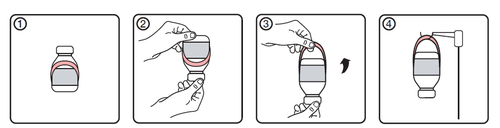
- 1. Initial condition of the vial with the hanger label
- 2. Invert the vial
- 3. Rotate the lower edge of the hanger label upwards, so as to extend it
- 4. Suspend the vial from the support
Particular precautions
Some serious adverse reactions to the product may be due to the infusion rate.
Potential complications can often be avoided by ensuring:
- that patients are not sensitive to normal human immunoglobulin by administering the product slowly at the beginning (with an infusion rate between 0.46 and 0.92 ml/kg/h);
- that patients are carefully monitored for any symptom during the infusion period. In particular, patients receiving human normal immunoglobulin for the first time, patients who have changed type of IVIg product, and patients for whom a long time has passed since the previous infusion, must be monitored during the first infusion and for the first hour after the first infusion, to identify potential signs of adverse reactions. All other patients should be observed for at least 20 minutes after administration. In all patients, the administration of IVIg requires:
- adequate hydration before the start of IVIg infusion;
- monitoring of urine output;
- monitoring of serum creatinine levels;
- avoiding the concomitant use of loop diuretics. In case of adverse reaction, the administration rate must be reduced or the infusion must be stopped. The necessary treatment depends on the nature and severity of the adverse effect. In case of shock, standard medical treatment for shock must be performed.
Infusion reaction
Some adverse reactions (e.g. headache, flushing, chills, myalgia, wheezing,
tachycardia, lower back pain, nausea and hypotension) may be related to the infusion rate. The
recommended infusion rate must be carefully followed. Patients must be closely
monitored and carefully observed for any symptoms during the infusion period.
Adverse reactions may occur more frequently
- in patients receiving normal human immunoglobulin for the first time or, in rare cases, when the human immunoglobulin-based product is changed or in the case of a long interval from the previous infusion
- in patients with untreated infection or chronic inflammation
Children and adolescents
No specific measures or monitoring are required for the paediatric population.
No difference is expected in the paediatric population (0-18 years).
Thromboembolism
Clinical evidence demonstrates a relationship between the administration of IVIg and thromboembolic events such as myocardial infarction, stroke (including stroke), pulmonary embolism and
deep vein thrombosis, which are presumed to be related to a relative increase in blood viscosity
due to a high influx of immunoglobulin in patients at risk. Caution should be exercised in
prescribing and infusing IVIg in obese patients and in patients with pre-existing risk factors for
thrombotic events (such as advanced age, hypertension, diabetes mellitus and a history of vascular disease or thrombotic episodes, patients with hereditary or acquired thrombophilic disorders, patients immobilized for a prolonged period, patients severely hypovolemic, patients with diseases that increase blood viscosity).
In patients at risk for thromboembolic adverse reactions, IVIg-based products must be
administered at the minimum feasible infusion rate and dose.
Acute renal failure
Cases of acute renal failure have been reported in patients who have received IVIg. In most
cases, risk factors have been identified and include pre-existing renal insufficiency, diabetes
mellitus, hypovolemia, overweight, concomitant administration of nephrotoxic drugs or age over
65 years.
Renal parameters must be assessed before IVIg infusion, in particular in patients considered
potentially at risk of developing acute renal failure, and again at appropriate intervals. In
patients at risk of acute renal failure, IVIg-based products must be administered at the
minimum feasible infusion rate and dose.
If changes in renal function occur, discontinuation of treatment with IVIg should be considered.
Although cases of renal dysfunction and acute renal failure have been linked to
the use of many medicinal products based on IVIg containing various excipients such as sucrose, glucose and
maltose, those containing sucrose as a stabilizer represent a very high percentage of the total number
of cases. In at-risk patients, the use of medicinal products based on
IVIg that do not contain these excipients may be considered.
Aseptic meningitis syndrome (AMS)
Aseptic meningitis syndrome can occur in combination with IVIg treatment.
Generally, the syndrome begins after a period ranging from several hours to 2 days after treatment with
IVIg. Studies on cerebrospinal fluid often show positive pleocytosis up to several thousand cells
per mm , especially granulocytes, and high protein levels, up to several hundred mg/dl.
AMS may occur more frequently in association with high doses of IVIg (2 g/kg).
Patients presenting with such signs and symptoms should receive a complete neurological examination, including
studies of the cerebrospinal fluid, to exclude other causes of meningitis.
Discontinuation of IVIg treatment has led to remission of AMS within a few days, without
consequences.
Hemolytic anemia
IVIg-based products may contain blood group-specific antibodies that may act as
hemolysins and induce in vivo coating of red blood cells with immunoglobulins, causing a positive direct antiglobulin reaction (Coombs' test) and, rarely, hemolysis. Hemolytic anemia may develop
following IVIg therapy due to increased red blood cell sequestration. Patients receiving IVIg
should be monitored for detection of clinical signs and symptoms of hemolysis.
Neutropenia/Leukopenia
A transient decrease in neutrophil count and/or episodes of neutropenia, sometimes severe, have been
reported after treatment with IVIg. This usually occurs within a few hours or days after
administration of IVIg and resolves spontaneously within 7-14 days.
Transfusion-related acute lung injury (TRALI)
A few cases of non-cardiogenic acute pulmonary edema (transfusion-related acute lung injury, TRALI) have been reported
in patients receiving IVIg. TRALI is characterized by severe hypoxia,
dyspnea, tachypnea, cyanosis, fever and hypotension. Symptoms associated with TRALI typically appear
during the transfusion or within 6 hours of the transfusion, usually within 1-2 hours. Therefore, patients
receiving IVIg should be monitored and IVIg infusion should be stopped immediately if
any adverse pulmonary reactions occur. TRALI is a life-threatening condition requiring
immediate admission to the intensive care unit.
This product contains 100 mg of maltose per ml as an excipient. Interference of maltose with blood glucose tests may lead to an overestimation of glucose values and, consequently, to inadequate
insulin administration, which may cause a life-threatening state of hypoglycemia and death
of the patient. In addition, cases of real hypoglycemia may not be treated if the hypoglycemic state is masked
by falsely elevated glucose values. For further details see the section “ Blood glucose testing”.
Dosage recommendations
Replacement therapy should be initiated and monitored under the supervision of a physician experienced in the treatment of immunodeficiency.
Dosage
The dose and dosage regimen depend on the indication. The dose should be individualized for each patient based on clinical response. Weight-based dosing may require adjustment in underweight or overweight patients.
The following dosage regimens can be used as a guide.
Replacement therapy in primary immunodeficiency syndromes
The dosage regimen should induce the achievement of a baseline IgG level (measured before the next infusion) of at least 6 g/L or within the normal reference range for the patient's age.
From the start of therapy, 3 to 6 months are required to reach equilibrium (steady-state IgG levels).
The recommended initial dose is 0.4 – 0.8 g/kg in a single administration, followed by at least 0.2 g/kg administered every 3-4 weeks.
The dose required to achieve a baseline level of 6 g/L of IgG is in the order of 0.2 – 0.8 g/kg/month.
The interval between doses varies from 3 to 4 weeks after steady state has been reached. Baseline IgG levels should be measured and evaluated together with the incidence of infections. It may be necessary to increase the dose and achieve higher baseline levels to reduce the frequency of bacterial infections.
Secondary immunodeficiencies
The recommended dose is 0.2 – 0.4 g/kg every 3 - 4 weeks.
Baseline IgG levels should be measured and evaluated together with the incidence of infection. The dose should be adjusted as needed to achieve optimal protection against infections; an increase may be necessary in patients with persistent infection; a decrease in dose may be considered when the patient remains infection-free.
Primary immune thrombocytopenia
There are two alternative treatment regimens:
- 0.8 - 1g/kg administered on day 1; this dose may be repeated once within 3 days;
- 0.4 g/kg per day for 2 - 5 days. Treatment may be repeated in case of relapses.
Guillain Barré syndrome
0.4 g/kg/day for 5 days (possible repetition of the dosage in case of relapse).
Kawasaki disease
2.0 g/kg should be administered as a single dose. Patients should receive concomitant treatment with acetylsalicylic acid.
Chronic inflammatory demyelinating polyradiculoneuropathy (CIDP)
Initial dose: 2 g/kg divided into 2-5 consecutive days.
Maintenance dose:
1 g/kg in 1-2 consecutive days every 3 weeks.
The effect of treatment should be evaluated after each cycle; if no effect of treatment is observed after 6 months, treatment should be discontinued.
If therapy is effective, its long-term administration is at the physician's discretion based on the patient's response and maintenance response. Dosage and intervals may need to be adjusted based on the individual course of the disease.
Multifocal motor neuropathy (MMN)
Initial dose: 2 g/kg administered in 2-5 consecutive days.
Maintenance doses: 1 g/kg every 2-4 weeks or 2 g/kg every 4-8 weeks.
The effect of treatment should be evaluated after each cycle; if no effect of treatment is observed after 6 months, treatment should be discontinued.
If therapy is effective, its long-term administration is at the physician's discretion based on the patient's response and maintenance response. Dosage and intervals may need to be adjusted based on the individual course of the disease.
The recommended doses are summarized in the following table:
| Indication | Dose | Frequency of injections |
| Replacement therapy | ||
| Primary immunodeficiency syndromes | Initial dose: 0.4 - 0.8 g/kg Maintenance dose: 0.2 - 0.8 g/kg | every 3 – 4 weeks |
| Secondary Immunodeficiencies | 0.2 - 0.4 g/kg | every 3 – 4 weeks |
| Immunomodulation: | ||
| Immune thrombocytopenia | 0.8 - 1 g/kg Or 0.4 g/kg/day | day 1, possibly repeating once within 3 days for 2 – 5 days |
| Guillain Barré syndrome | 0.4 g/kg/day | for 5 days |
| Kawasaki disease | 2 g/kg | as a single dose, in association with acetylsalicylic acid |
| Chronic inflammatory demyelinating polyradiculoneuropathy (CIDP) | Initial dose: 2 g/kg Maintenance dose: 1 g/kg | in doses divided into 2 – 5 or days every 3 weeks in 1 – 2 days |
| Multifocal motor neuropathy (MMN) | Initial dose: 2 g/kg Maintenance dose: 1 g/kg Or 2 g/kg | in 2-5 consecutive days every 2-4 weeks or every 4-8 weeks in 2-5 days |
Use in children and adolescents
The dosage in children and adolescents (0-18 years) is not different from that of adults because the dosage for each indication is given by body weight and adjusted based on the clinical outcome of the aforementioned conditions.
Hepatic impairment
There is no evidence to require a dose adjustment.
Renal impairment
No dose adjustment unless clinically justified.
Elderly
No dose adjustment unless clinically justified.
CIDP
Due to the rarity of the disease and, consequently, the small overall number of patients, experience in the use of intravenous immunoglobulins in children with CIDP is limited; therefore, only literature data are available. However, published data consistently demonstrate that treatment with IVIg is equally effective in children and adults, in line with what happens for indications recognized for IVIg.

Не уверены, подходит ли вам это лекарство?
Обсудите симптомы и варианты лечения с врачом онлайн.

Уже начали прием и появились вопросы?
Обсудите свое состояние и дальнейшие шаги с врачом онлайн.
- Страна регистрации
- Форма выпускаInfusion solution, 50 G/L
- Код АТХJ06BA02
- Действующее вещество
- Отпускается по рецептуДа
- Производитель
- Информация на этой странице носит справочный характер и не является медицинской консультацией. Перед началом приема лекарства обязательно проконсультируйтесь с врачом.
- Аналоги VENITALФорма выпуска: Infusion solution, 100 mg/mlДействующее вещество: immunoglobulins, normal human, for intravascular adm.Производитель: TAKEDA MANUFACTURING AUSTRIA AGОтпускается по рецептуФорма выпуска: Infusion solution, 50 MG/MLДействующее вещество: immunoglobulins, normal human, for intravascular adm.Производитель: INSTITUTO GRIFOLS S.A.Отпускается по рецептуФорма выпуска: Powder and solvent for intravenous infusion solution, 50 MG/MLДействующее вещество: immunoglobulins, normal human, for intravascular adm.Производитель: BAXALTA INNOVATIONS GMBHОтпускается по рецепту
Аналоги VENITAL в других странах
Лекарства с тем же действующим веществом, доступные в других странах.
Аналог VENITAL в Испания
Аналог VENITAL в Польша
Аналог VENITAL в Украина
Врачи онлайн по VENITAL
Обсудите применение VENITAL и возможные следующие шаги — по оценке врача.









Получите рецепт на VENITAL онлайн
Заполните форму за 2 минуты
Расскажите о симптомах, истории болезни и нужном препарате.
Выберите врача или мы назначим
Выберите специалиста или мы подберём ближайшего доступного врача.
Врач рассматривает ваш случай
Обычно в течение 30 минут. Может задать уточняющие вопросы в чате.
Получите в любой аптеке
Электронный рецепт отправляется на вашу почту — действителен по всей Польше.
Часто задаваемые вопросы
VENITAL требует рецепта в Италия. Вы можете уточнить у врача онлайн, подходит ли это лекарство для вашей ситуации.
Действующее вещество VENITAL — immunoglobulins, normal human, for intravascular adm.. Эта информация помогает определить лекарства с тем же составом под другими торговыми названиями.
VENITAL производится компанией KEDRION S.P.A.. Упаковка и торговое название могут отличаться в зависимости от дистрибьютора.
Врачи, включая Семейные врачи, Психиатры, Дерматологи, Кардиологи, Эндокринологи, Гастроэнтерологи, Пульмонологи, Нефрологи, Ревматологи, Гематологи, Инфекционисты, Аллергологи, Гериатры, Педиатры, Онкологи, могут оценить целесообразность применения VENITAL с учетом вашей ситуации и местных правил. Вы можете записаться на онлайн-консультацию, чтобы обсудить возможные варианты.
Польша имеет хорошо развитую систему здравоохранения в крупных городах, таких как Варшава, Краков, Вроцлав и Гданьск. Аптеки широко доступны и работают в соответствии с действующим законодательством, обеспечивая доступ к рецептурным препаратам.
Вы можете купить VENITAL в Варшаве, Кракове, Вроцлаве или Гданьске в любой аптеке при наличии действующего рецепта.
Чтобы получить рецепт, вы можете воспользоваться Oladoctor:
Другие лекарства с тем же действующим веществом (immunoglobulins, normal human, for intravascular adm.) включают DEQSIGA, FLEBOGAMMA DIF, GAMMAGARD. Они могут отличаться торговым названием или формой выпуска, но содержат одинаковый терапевтический компонент. Перед изменением лечения рекомендуется проконсультироваться с врачом.
