



PANACEF 250 мг Капсулы

Рассмотрение рецепта онлайн
Врач рассмотрит ваш случай и примет решение о назначении рецепта, если это медицински оправдано.

Поговорите с врачом об этом лекарстве
Обсудите симптомы и возможные дальнейшие шаги на онлайн-консультации.



Инструкция по применению PANAKEF
Содержание инструкции
- PANACEF 375 mg modified-release tablets, 500 mg modified-release tablets, 750 mg modified-release tablets
- PANACEF 500 mg, hard capsules
PANACEF 375 mg modified-release tablets, 500 mg modified-release tablets, 750 mg modified-release tablets
Cefacloro
PHARMACOTHERAPEUTIC CATEGORY
Antibiotic belonging to the cephalosporin class.
THERAPEUTIC INDICATIONS
Treatment of the following infections caused by sensitive germs:
Acute bronchitis and exacerbation of chronic bronchitis
Pharyngitis and Tonsillitis
Uncomplicated lower urinary tract infections
Skin and soft tissue infections
CONTRAINDICATIONS
Panacef modified-release tablets are contraindicated in patients with hypersensitivity to the
active ingredient, to other cephalosporin antibiotics or to any of the excipients.
PRECAUTIONS FOR USE
Before initiating therapy with Panacef modified-release tablets, careful investigation should be carried out
to determine if the patient has had previous hypersensitivity reactions to cephalosporins, penicillins or
other drugs.
There have been patients who have experienced severe reactions (including anaphylaxis) following the
administration of penicillins or cephalosporins including Cefacloro, IgE-mediated reactions that usually
manifest at the cutaneous, gastrointestinal, respiratory and cardiovascular levels.
Symptoms may include: severe and sudden hypotension, acceleration and slowing of the heartbeat,
unusual fatigue or weakness, anxiety, agitation, dizziness, loss of consciousness, difficulty
breathing or swallowing, generalized itching especially on the soles of the feet and palms of the
hands, urticaria with or without angioedema (swollen and itchy skin areas located more fre-
quently on the extremities, external genitalia and face, especially in the region of the eyes and
lips), redness of the skin especially around the ears, cyanosis, profuse sweating,
nausea, vomiting, cramp-like abdominal pains, diarrhea.
If an allergic reaction to Panacef modified-release tablets occurs, discontinue administration of the
drug.
Treatment with broad-spectrum antibiotics, including Panacef modified-release tablets, alters
the normal flora of the colon and determines a numerical increase in clostridia. Various
studies have shown that a toxin produced by Clostridium difficile is the main cause of severe diarrhea associated
with antibiotic therapy, including pseudomembranous colitis. Pseudomembranous colitis has been
reported with the use of broad-spectrum antibiotics (including macrolides, semi-synthetic penicillins and
cephalosporins); therefore, it is important to consider this diagnosis in patients in whom diarrhea occurs
during antibiotic therapy.
Cases of mild colitis usually respond to discontinuation of the drug alone. In cases of
moderate or severe severity, appropriate therapeutic measures must be taken, which should
include performing appropriate bacteriological studies and administering fluids, electrolytes and
proteins.
If colitis does not improve after discontinuation of the drug or if symptoms are not severe, vancomycin
orally is the treatment of choice.
As with other antibiotics, during treatment with Panacef modified-release tablets, the possible emergence of
resistant microorganisms must be considered, which may result in a
superinfection for which appropriate measures must be taken.
Panacef modified-release tablets should be administered with caution to patients with
severely impaired renal function. In such conditions the dosage should be lower than
generally recommended.
INTERACTIONS
The extent of absorption of Panacef modified-release tablets decreases if antacids containing magnesium hydroxide or
aluminum are administered within one hour of taking the antibiotic, while H2-blockers do not alter the rate and extent of absorption of Panacef
modified-release tablets.
Similarly to other beta-lactam antibiotics, the renal excretion of Panacef (and presumably
of Panacef modified-release tablets) is inhibited by the administration of probenecid
(a drug for gout capable of promoting the elimination of uric acid); no other significant interactions with drugs were observed during
clinical studies.
After cefacloro administration, falsely positive results for urinary glucose may be observed with Benedict and Fehling solutions and with the copper sulfate test.
SPECIAL WARNINGS
Pregnancy and breastfeeding
Ask your doctor or pharmacist for advice before taking any medicine.
The tolerability of cefacloro during pregnancy has not been sufficiently proven.
There are no specific and well-controlled studies in pregnant women and, since animal reproduction studies are not always predictive of the response in humans, this drug should be used during pregnancy
only if clearly necessary and under medical supervision.
The use of Panacef modified-release tablets during labor and delivery has not been
studied; therefore, the drug should only be administered if absolutely necessary.
Small amounts of cefacloro have been found in breast milk after the administration of single doses
of 500 mg. The effects of Panacef on the infant are unknown. Caution is recommended
when using the drug during breastfeeding.
Use in children
The efficacy and tolerability of Panacef modified-release tablets in children has not been
well established.
Effects on ability to drive and operate machinery
Panacef modified-release tablets has no effects on the ability to drive and operate
machinery.
DOSAGE, ADMINISTRATION AND DURATION OF TREATMENT
Panacef modified-release tablets are administered orally and can be taken
independently of meals. However, concomitant intake of food increases
the absorption of Panacef modified-release tablets. The tablets must be taken
whole, and therefore not broken, crushed or chewed.
The following dosage regimens are recommended:
- Pharyngitis, tonsillitis and skin and soft tissue infections: 375 mg 2 times a day.
- Uncomplicated lower urinary tract infections: 375 mg 2 times a day.
- Bronchitis: 375 mg 2 times a day. In more severe infections, higher dosages (750 mg 2 times a day) may be necessary. In the treatment of infections caused by S. pyogenes (group A streptococci) therapy with Panacef modified-release tablets should be continued for up to 10 days.
OVERDOSE
Signs and symptoms:may include nausea, vomiting, epigastric discomfort and diarrhea; the severity
of gastrointestinal disturbances and diarrhea is related to the dose taken. If other symptoms are present, it is
likely that these are secondary to a pre-existing underlying condition, an allergic reaction
or another toxic state.
Treatment:in the treatment of overdose, consider the possibility of overdose
due to multiple drugs, drug interactions or unusual pharmacokinetics in the patient.
Ensure adequate ventilation and perfusion of the patient's airways.
Carefully monitor and maintain the patient's vital signs (heart rate and blood pressure) within acceptable limits, blood gas analysis, serum electrolytes, etc.
Intestinal absorption of drugs may be reduced by administering
activated charcoal, which in many cases is more effective than induced vomiting or gastric lavage; therefore, consider activated charcoal as an alternative or addition to gastric emptying.
Repeated administration of activated charcoal can facilitate the elimination of other
drugs that may have been absorbed.
It is necessary to protect the patient's airways when gastric emptying is performed or when using activated charcoal.
It is not known whether forced diuresis, peritoneal dialysis, hemodialysis or hemoperfusion with charcoal
are beneficial to the patient for the treatment of Panacef overdose.
UNDESIRABLE EFFECTS
After oral administration of Panacef modified-release tablets in clinical studies, a
low number of adverse effects (with an incidence rate generally
less than 1%) was observed, most of which were mild and transient.
Gastrointestinal manifestations:diarrhea, nausea, vomiting and dyspepsia (digestive disorder).
Allergic manifestations:skin rash, urticaria and pruritus have been found. In
controlled clinical studies, in 3,272 patients treated with Panacef modified-release tablets, a
reaction similar to serum sickness (0.03%) was found, characterized by the appearance of
erythema multiforme, skin rash and other manifestations affecting the skin accompanied by
arthritis/arthralgia (inflammatory or painful joint disorders), with or
without fever. These manifestations occur more often during or after a treatment cycle with
cefacloro and have been observed more frequently in children than in adults. Signs and
symptoms usually appear a few days after the start of therapy and disappear a few days
after the end of treatment. Antihistamines and corticosteroids promote healing. No serious complications have been observed.
Lymphatic and circulatory system:eosinophilia.
Genitourinary system:vaginal candidiasis and vaginitis.
The following adverse events, whose causal relationship with the drug is however uncertain, have been
observed in patients treated with Panacef modified-release tablets: headache, dizziness,
drowsiness, transient increases in transaminases and alkaline phosphatase, transient
azotemia and creatinineemia, transient thrombocytopenia, leukopenia, lymphocytosis,
neutropenia and abnormalities in urine examination.
In patients treated with cefacloro, the following have sometimes been observed: erythema multiforme, fever, anaphylaxis
(more frequent in patients with a history of allergy to penicillin), Stevens-Johnson syndrome, positive direct Coombs test, genital itching, toxic epidermal necrolysis,
reversible interstitial nephritis, altered liver function including cholestasis, increased
prothrombin time in patients receiving cefacloro and warfarin (antithrombotic drug) concurrently,
reversible hyperactivity, nervousness, insomnia, confusion, increased
muscle tone, aplastic anemia, agranulocytosis and hemolytic anemia.
Treatment with broad-spectrum antibiotics can alter the intestinal bacterial flora, sometimes leading to manifestations of pseudomembranous colitis.
Anaphylactoid reactions may be represented by isolated manifestations, including
angioedema (abnormal retention of fluids in tissues, of allergic origin), asthenia (lack of
strength), edema (both facial and of the limbs), dyspnea (difficulty in breathing), paresthesia
(sensation of tingling), syncope (sudden loss of strength) and vasodilation.
It is important to report any adverse effect to your doctor or pharmacist
Reporting of adverse reactions
If you experience any side effects, including those not listed in this leaflet, tell your doctor or pharmacist. You can also report side effects directly
through the national reporting system at:
http://www.agenziafarmaco.gov.it/content/come-segnalare-una-sospetta-reazione-avversa
By reporting side effects you can help provide more information on
the safety of this medicine.
EXPIRY DATE AND STORAGE
Expiry date: see the expiry date indicated on the packaging.
WARNING: DO NOT USE THE MEDICINE AFTER THE EXPIRY DATE
INDICATED ON THE PACKAGING
The expiry date refers to the product in intact packaging, stored correctly.
Store at a temperature below 30°C.
KEEP THE MEDICINE OUT OF THE SIGHT AND REACH OF CHILDREN
COMPOSITION
Panacef 375 mg modified-release tablets
Each modified-release tablet contains:
Active ingredient:Cefacloro monohydrate equivalent to cefacloro 375 mg
Excipients:Mannitol, hypromellose, hydroxypropylcellulose, acrylic acid copolymer,
stearic acid, magnesium stearate.
Coating:Blue coloring mixture, propylene glycol.
Panacef 500 mg modified-release tablets
Each modified-release tablet contains:
Active ingredient:Cefacloro monohydrate equivalent to cefacloro 500 mg
Excipients:Mannitol, hypromellose, hydroxypropylcellulose, acrylic acid copolymer,
stearic acid, magnesium stearate.
Coating:Blue coloring mixture, propylene glycol.
Panacef 750 mg modified-release tablets
Each modified-release tablet contains:
Active ingredient:Cefacloro monohydrate equivalent to cefacloro 750 mg
Excipients:Mannitol, hypromellose, hydroxypropylcellulose, acrylic acid copolymer,
stearic acid, magnesium stearate.
Coating:Blue coloring mixture, propylene glycol.
PHARMACEUTICAL FORM AND CONTENT
Panacef 375 mg modified-release tablets in a pack of 12
Panacef 500 mg modified-release tablets in a pack of 8
Panacef 750 mg modified-release tablets in a pack of 6
Panacef 750 mg modified-release tablets in a pack of 12
For oral use.
MARKETING AUTHORISATION HOLDER
NEOPHARMED GENTILI S.p.A – Via San Giuseppe Cottolengo 15 – 20143 Milan
MANUFACTURER
ACS Dobfar Spa– Via Laurentina Km 24,730 – Pomezia (Rome)
Drug:
PANACEF 500 mg, hard capsules
PANACEF 250 mg/5 ml, oral suspension granules
Cefacloro
PHARMACOTHERAPEUTIC CATEGORY
Oral antibiotic (cephalosporins).
THERAPEUTIC INDICATIONS
Treatment of the following infections caused by sensitive germs:
- Infections of the respiratory system, such as pneumonia, bronchitis, exacerbations of chronic bronchitis, pharyngitis and tonsillitis.
- Otitis media (bacterial inflammatory processes affecting the middle ear).
- Skin and soft tissue infections.
- Urinary tract infections, including pyelonephritis and cystitis.
- Sinusitis.
- Gonococcal urethritis.
CONTRAINDICATIONS
Panacef is contraindicated in patients with hypersensitivity to the active ingredient, to other cephalosporins or to any
of the excipients.
PRECAUTIONS FOR USE
Before starting therapy with Panacef, it is recommended to investigate previous reactions of
hypersensitivity to cephalosporins and penicillins.
There have been patients who have experienced severe reactions (including anaphylaxis) following the
administration of penicillins or cephalosporins including Cefacloro, IgE-mediated reactions that usually
manifest at the skin, gastrointestinal, respiratory and cardiovascular levels.
Symptoms may include: severe and sudden hypotension, acceleration and slowing of the heartbeat,
unusual fatigue or weakness, anxiety, agitation, dizziness, loss of consciousness, difficulty
breathing or swallowing, generalized itching especially on the soles of the feet and palms of the hands, urticaria with or without angioedema (swollen and itchy skin areas located more fre-
quently on the extremities, external genitalia and face, especially in the region of the eyes and
lips), redness of the skin especially around the ears, cyanosis, profuse sweating, nausea, vomiting, crampiform abdominal pain, diarrhea.
In case of allergic reactions, the administration of the drug must be interrupted and the patient
appropriately treated.
Since during treatment with broad-spectrum antibiotics (including macrolides, semi-synthetic penicillins
and cephalosporins) the occurrence of pseudomembranous colitis is possible, its onset
must be kept in mind during treatment with these drugs.
Panacef should be administered with caution to patients with severely impaired renal function. In these cases,
the dosage should be lower than generally recommended.
Broad-spectrum antibiotics should be administered with caution to subjects who have previously experienced
intestinal disorders, due to the possibility of developing antibiotic-associated colitis.
Prolonged use of Panacef may lead to a proliferation of non-sensitive germs; if a bacterial superinfection occurs during
therapy with Panacef, it must be appropriately treated.
Use in neonates
The efficacy and tolerability of Panacef in neonates less than one month of age are unknown.
INTERACTIONS
Inform your doctor or pharmacist if you have recently taken any other medicines, including those
available over the counter.
There is evidence of partial cross-allergenicity between penicillins and cephalosporins.
After Panacef administration, false positive reactions to urinary glucose may occur
both with Benedict and Fehling solutions and with Clinitest but not with Tes-Tape (urine glucose analysis strip, Lilly).
Positive Coombs tests (sometimes false) have been reported during treatment with cephalosporins.
The renal elimination of cefacloro is inhibited by probenecid (a drug for gout which is able to
promote the elimination of uric acid).
SPECIAL WARNINGS
Patients allergic to starch (not affected by celiac disease) should not take the medicine.
The oral suspension granules and oral drops, suspension contain sucrose, in case of ascertained
intolerance to sugars contact your doctor before taking the medicine.
Panacef does not affect the ability to drive vehicles or operate machinery.
Pregnancy and breastfeeding
Ask your doctor or pharmacist for advice before taking any medicine.
The tolerability of cefacloro during pregnancy has not been sufficiently proven.
In pregnant women, the drug should be used only when absolutely necessary and under direct medical
control.
Small amounts of cefacloro have been found in breast milk after the administration of single doses
of 500 mg. Caution is recommended during breastfeeding.
DOSAGE, ADMINISTRATION AND DURATION OF TREATMENT
Panacef is administered orally and can be taken independently of meals.
Adults:250 mg every 8 hours; higher dosages may be necessary for more severe infections. The maximum
recommended dose is 2 g per day.
For the treatment of acute gonococcal urethritis in both sexes, a single administration of
3 g of cefacloro is recommended, possibly in association with 1 g of probenecid.
Children:20 mg/kg per day in divided doses every 8 hours; for more severe infections (such as otitis media),
a dosage of 40 mg/kg per day is recommended up to a maximum daily dose of 1 g.
In the treatment of infections caused by beta-hemolytic streptococcus, the therapeutic dosage with cefacloro
must be maintained for at least 10 days.
MEASURING CUP AND SYRINGE FOR PANACEF 250 mg/5 ml ORAL SUSPENSION
GRANULES
For example, for a daily dose of 40 mg/Kg
| 500 mg 400 mg 300 mg 200 mg 100 mg | |
(Panacef 250 mg/5 ml oral suspension granules)
Up to 8 kgFrom 8 to 16 KgFrom 16 to 21 KgOver 21 Kg
syringesyringe or
measuring cup
syringe or
measuring cup
measuring cup
Alternative dosing scheme: in otitis media and pharyngitis, the total daily dose
can be administered in divided doses every 12 hours; the amount of reconstituted product must
be taken according to the following scheme:
For example, for a daily dose of 40 mg/Kg
(Panacef 250 mg/5 ml oral suspension granules)
Up to 8 kgFrom 8 to 16 KgFrom 16 to 21 KgOver 21 Kg
measuring cup
Note: the tables refer to the maximum daily dose of 40 mg/Kg; the doses of 20 mg/Kg
syringemeasuring cupmeasuring cup
| 3 times a day (unit dose) | 100 mg (2 ml) | 200 mg (4 ml) | and d 250 mg (5 ml) | 300 mg (6 ml) |
| 2 times a day (unit dose) | a 150 mg (3 ml) | 300 mg (6 ml) | 400 mg (8 ml) | 500 mg (10 ml) |
correspond to half of the values above.
Instructions for preparing the suspension
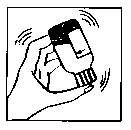
Shake the bottle well before preparation; then add water to the level indicated by the
arrow on the label, cap and shake the suspension well. Add water again, up to the level
indicated by the arrow, and shake well until a uniform suspension is obtained.


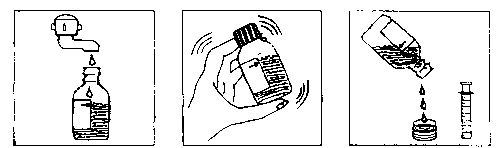
If prepared according to these instructions, 5 ml of suspension contains cefacloro monohydrate equivalent to
250 mg of cefacloro.
Shake well before each administration.
OVERDOSE
Signs and symptoms:may include nausea, vomiting, epigastric discomfort and diarrhea, the severity of which is related to
the dose taken. If other symptoms are present, they are likely secondary to a pre-existing condition, an allergic reaction or another toxic state.
Treatment:always keep in mind the possibility that the overdose is caused by multiple drugs, by
drug interactions or by the particular pharmacokinetics in the patient.
Gastric lavage is not necessary when the patient has not ingested a dose of Panacef 5 times
higher than the recommended dose.
The patient should be carefully monitored, particularly checking the state of the airways ensuring
ventilation and perfusion, vital signs (heart rate and blood pressure), blood gas analysis, serum electrolytes, etc.
Intestinal absorption may be reduced by administering activated charcoal which, in many cases, is more effective
than induced vomiting or gastric lavage; therefore, consider charcoal as an alternative or in
addition to gastric emptying. Repeated administration of activated charcoal may facilitate
elimination of other drugs that may have been taken. Carefully check the patient's airways during
gastric emptying and with the use of charcoal.
It is not known whether forced diuresis, peritoneal dialysis, hemodialysis or hemoperfusion with charcoal are of
benefit to the patient.
UNDESIRABLE EFFECTS
Like all medicines, Panacef can cause side effects, although not everyone gets them.
Adverse reactions considered relatable to treatment with Panacef are as follows:
Allergic manifestations: hypersensitivity reactions (1.5%) including morbilliform rashes (1%); itching, urticaria and positive Coombs test are observed in less than 1 in 200
treated patients.
Generalized reactions called "serum-like diseases" have also been reported, characterized by
the presence of erythema multiforme, skin rash and other manifestations affecting the skin accompanied
by arthritis and/or arthralgia (inflammatory or painful joint disorders), with or without
fever. "Serum-like disease" reactions occur more often during and after a course of treatment
with cefacloro and, more frequently, in children than in adults.
Signs and symptoms appear a few days after the start of therapy and disappear a few days after its
completion. Antihistamines and corticosteroids promote healing. No serious
complications have been observed.
More severe hypersensitivity reactions (such as Stevens-Johnson syndrome, toxic epidermal necrolysis and
anaphylaxis) have been observed rarely.
Gastrointestinal manifestations: can occur in approximately 2.5% of patients, even with the appearance
of diarrhea.
Pseudomembranous colitis may be observed during and after antibiotic treatment. Rarely nausea and vomiting are observed. With some penicillins and other cephalosporins, transient hepatitis and cholestatic jaundice have been observed rarely.
Other manifestations: angioedema (abnormal fluid retention in tissues, of allergic origin),
eosinophilia, genital itching, vaginal candidiasis, vaginitis and, rarely, thrombocytopenia and reversible interstitial nephritis.
Cases of hemolytic anemia have been reported following treatment with cephalosporins.
Effects for which the correlation with treatment is uncertain:
Central nervous system: rarely reversible hyperactivity, restlessness, insomnia, mental confusion,
hypertonia (increased muscle tone), hallucinations, feeling of instability and dizziness, drowsiness.
Digestive system: mild increases in the values of transaminases (SGOT and SGPT) or alkaline phosphatase.
Hematopoietic system: transient lymphocytosis, leukopenia and, rarely, hemolytic anemia, aplastic anemia,
agranulocytosis and reversible neutropenia. Rare reports of increased prothrombin time, with or without clinical consequences (e.g. bleeding), have been reported in patients receiving
cefacloro and sodium warfarin (antithrombotic drug) simultaneously.
Genitourinary system: mild increases in azotemia, creatinine and alterations in urine analysis.
Reporting of side effects
If you experience any side effects, including those not listed in this leaflet, tell your
doctor or pharmacist. You can also report side effects directly through the national reporting system at:
http://www.agenziafarmaco.gov.it/content/come-segnalare-una-sospetta-reazione-avversa
By reporting side effects you can help provide more information on the safety of
this medicine.
EXPIRY DATE AND STORAGE
Expiry date: see the expiry date indicated on the packaging.
Caution: do not use the medicine after the expiry date indicated on the packaging.
The expiry date refers to the product in intact packaging, stored correctly.
Store at a temperature not exceeding 30°C.
Once the oral suspension is prepared, store in the refrigerator (between +2 and +8°C) and use within 14 days.
Keep the medicine out of the sight and reach of children
COMPOSITION
PANACEF 500 mg hard capsules
Each capsule contains:
Active ingredient:
Cefaclor monohydrate equivalent to cefaclor 500 mg
Excipients:
Pregelatinized starch; magnesium stearate; dimethicone 350 q.s.
PANACEF 250 mg/5ml granules for oral suspension
5 ml of suspension contains:
Active ingredient:
Cefaclor monohydrate equivalent to cefaclor 250 mg
Excipients:
Erythrosine E-127 aluminium lake; methylcellulose 15; sodium lauryl sulfate; dimethicone 350 cs; polysaccharide gum; pregelatinized starch; strawberry flavour; sucrose.
PHARMACEUTICAL FORM AND CONTENT
PANACEF 500 mg hard capsules - 8 capsules
PANACEF 250 mg/5 ml granules for oral suspension - 100 ml bottle
MARKETING AUTHORISATION HOLDER
NEOPHARMED GENTILI S.p.A – Via San Giuseppe Cottolengo 15 – 20143 Milan
MANUFACTURER
ACS Dobfar Spa – Pomezia (Rome)
MEDICINE:

Не уверены, подходит ли вам это лекарство?
Обсудите симптомы и варианты лечения с врачом онлайн.

Уже начали прием и появились вопросы?
Обсудите свое состояние и дальнейшие шаги с врачом онлайн.

- Страна регистрации
- Форма выпускаHard capsule, 250 MG
- Код АТХJ01DC04
- Действующее вещество
- Отпускается по рецептуДа
- Производитель
- Информация на этой странице носит справочный характер и не является медицинской консультацией. Перед началом приема лекарства обязательно проконсультируйтесь с врачом.
- Аналоги PANAKEFФорма выпуска: Modified-release tablet, 750 MGДействующее вещество: cefaclorПроизводитель: BIOMED PHARMA S.R.L.Отпускается по рецептуФорма выпуска: Granules for oral suspension, 250 MG/5 MLДействующее вещество: cefaclorОтпускается без рецепта
Аналоги PANAKEF в других странах
Лекарства с тем же действующим веществом, доступные в других странах.
Аналог PANAKEF в Польша
Аналог PANAKEF в Испания
Врачи онлайн по PANAKEF
Обсудите применение PANAKEF и возможные следующие шаги — по оценке врача.









Получите рецепт на PANAKEF онлайн
Заполните форму за 2 минуты
Расскажите о симптомах, истории болезни и нужном препарате.
Выберите врача или мы назначим
Выберите специалиста или мы подберём ближайшего доступного врача.
Врач рассматривает ваш случай
Обычно в течение 30 минут. Может задать уточняющие вопросы в чате.
Получите в любой аптеке
Электронный рецепт отправляется на вашу почту — действителен по всей Польше.
Часто задаваемые вопросы
PANAKEF требует рецепта в Италия. Вы можете уточнить у врача онлайн, подходит ли это лекарство для вашей ситуации.
Действующее вещество PANAKEF — cefaclor. Эта информация помогает определить лекарства с тем же составом под другими торговыми названиями.
PANAKEF производится компанией NEOPHARMED GENTILI S.P.A.. Упаковка и торговое название могут отличаться в зависимости от дистрибьютора.
Врачи, включая Семейные врачи, Психиатры, Дерматологи, Кардиологи, Эндокринологи, Гастроэнтерологи, Пульмонологи, Нефрологи, Ревматологи, Гематологи, Инфекционисты, Аллергологи, Гериатры, Педиатры, Онкологи, могут оценить целесообразность применения PANAKEF с учетом вашей ситуации и местных правил. Вы можете записаться на онлайн-консультацию, чтобы обсудить возможные варианты.
Польша имеет хорошо развитую систему здравоохранения в крупных городах, таких как Варшава, Краков, Вроцлав и Гданьск. Аптеки широко доступны и работают в соответствии с действующим законодательством, обеспечивая доступ к рецептурным препаратам.
Вы можете купить PANAKEF в Варшаве, Кракове, Вроцлаве или Гданьске в любой аптеке при наличии действующего рецепта.
Чтобы получить рецепт, вы можете воспользоваться Oladoctor:
Другие лекарства с тем же действующим веществом (cefaclor) включают KEFAKLOR EG, KLORATSER, KLIAKEF. Они могут отличаться торговым названием или формой выпуска, но содержат одинаковый терапевтический компонент. Перед изменением лечения рекомендуется проконсультироваться с врачом.
