



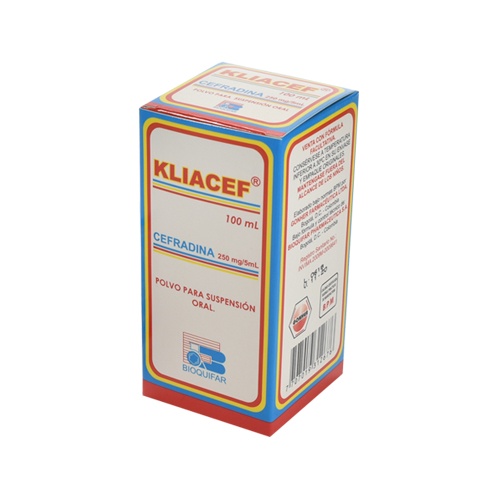
КЛИАКЕФ 250 mg/5 ml Granules for oral suspension

Рассмотрение рецепта онлайн
Врач рассмотрит ваш случай и примет решение о назначении рецепта, если это медицински оправдано.

Поговорите с врачом об этом лекарстве
Обсудите симптомы и возможные дальнейшие шаги на онлайн-консультации.



Инструкция по применению KLIAKEF
Содержание инструкции
KLIACEF 500 mg soluble tablets
Cefacloro
Generic medicine
Read this leaflet carefully before you start to use this medicine as it contains important
information for you.
- Keep this leaflet. You may need to read it again.
- If you have any questions, ask your doctor or pharmacist.
- This medicine has been prescribed for you only. Do not pass it on to others, even if their symptoms are the same as yours, as it could be harmful.
- If you get any side effects, even those not listed in this leaflet, tell your doctor or pharmacist. See section 4.
Contents of this leaflet:
- 1.What KLIACEF is and what it is used for
- 2.What you need to know before you take KLIACEF
- 3.How to take KLIACEF
- 4.Possible side effects
- 5.How to store KLIACEF
- 6.Contents of the pack and other information
1. What KLIACEF is and what it is used for
KLIACEF contains the active substance cefaclor.
Cefaclor is an antibacterial substance belonging to the cephalosporin family. These
antibiotics exert a bactericidal action against pathogenic bacteria that prove sensitive to their
effect. Their bactericidal action consists of preventing the formation of the cell wall of certain
bacterial strains.
KLIACEF is indicated in the treatment of the following infections caused by sensitive strains:
- infections of the respiratory tract (pneumonia, bronchitis, exacerbations of bronchitis, pharyngitis and tonsillitis);
- Middle ear infection (otitis media);
- Skin and soft tissue infections;
- Urinary tract infections (pyelonephritis and cystitis);
- Infections of the paranasal sinuses (sinusitis);
- Infection of the urethra (the channel that allows urine to pass from the bladder to the outside) caused by the bacteria responsible for gonorrhea (venereal disease).
2. What you need to know before taking KLIACEF
Do not take KLIACEF:
- if you are allergic to cefaclor, to other similar substances (cephalosporins), or to any of the other ingredients of this medicine listed in section 6;
- if you are pregnant or if you are breastfeeding (see “Pregnancy and breastfeeding”).
Warnings and precautions
Talk to your doctor or pharmacist before taking KLIACEF:
- if you are allergic to antibiotics of the cephalosporin or penicillin class. There have been patients who have experienced severe reactions (including anaphylaxis) following the administration of penicillins and cephalosporins including KLIACEF, IgE-mediated reactions that usually manifest at the skin, gastrointestinal, respiratory and cardiovascular levels. Symptoms may include: severe and sudden hypotension, acceleration and slowing of the heartbeat, unusual fatigue or weakness, anxiety, agitation, dizziness, loss of consciousness, difficulty breathing or swallowing, generalized itching especially on the soles of the feet and palms of the hands, urticaria with or without angioedema (swollen and itchy skin areas located more frequently on the extremities, external genitalia and face, especially in the region of the eyes and lips), redness of the skin especially around the ears, cyanosis, profuse sweating, nausea, vomiting, cramp-like abdominal pain, diarrhea.
- if you suffer from severe impairment of kidney function. Your doctor will indicate the dose of KLIACEF suitable for your condition;
- if you have suffered or are suffering from intestinal disorders, particularly colitis. Take KLIACEF as prescribed by your doctor.
During treatment with KLIACEF, keep in mind that:
- episodes of diarrhea may occur, as the use of broad-spectrum antibiotics (including macrolides, semisynthetic penicillins and cephalosporins) is often associated with pseudomembranous colitis (antibiotic-associated colitis);
- the medicine must be kept out of the reach of children;
- in case of an allergic reaction due to the use of cefaclor, stop treatment and inform your doctor or go to the nearest hospital;
- long-term use of cefaclor may lead to the development of bacteria resistant to the action of the antibiotic;
- if you develop further infections in addition to the one for which you are using KLIACEF, immediately inform your doctor who will submit you to the most appropriate treatment for your condition;
- if you undergo urine tests using solutions of Benedict and Fehling or with Clinitest®, false results may appear showing a false presence of glucose in the urine. This situation has not been observed with Tes-Tape® (enzymatic test for glycosuria, Lilly).
Other medicines and KLIACEF
Tell your doctor or pharmacist if you are taking, have recently taken or might take any
other medicine, including those available without a prescription.
Tell your doctor if you are taking:
- probenecid (used in the treatment of gout). Concomitant use inhibits the renal elimination of cefaclor.
KLIACEF with food, drinks and alcohol
KLIACEF can be taken independently of meals.
Pregnancy and breastfeeding
If you are pregnant, suspect you are pregnant, are planning a pregnancy, or are breastfeeding
ask your doctor or pharmacist for advice before taking this medicine.
Do not take KLIACEF if you are pregnant or if you are breastfeeding, unless your doctor,
after evaluating you and the potential benefits outweigh the possible risks to you and your baby, does not
consider it strictly necessary.
Driving and using machines
This does not affect your ability to drive vehicles and use machines.
KLIACEF contains sodium
This medicine contains less than 1 mmol (23 mg) of sodium per tablet, i.e. essentially
‘sodium-free’.
3. How to take KLIACEF
Take this medi cine following the doctor's instructions exactly. If you have any doubts, consult your
doctor or pharmacist.
KLIACEF is administered orally and can be taken independently of meals.
Use in adults
The recommended dose is 250 mg every 8 hours in adults.
In more severe infections or those caused by less sensitive germs, higher dosages may be indicated.
The maximum recommended dose is 2 g per day, although doses of 4 g per day have been
administered to normal subjects for 28 days without adverse effects.
For the treatment of acute gonococcal urethritis in both sexes, a single
administration of 3 g of cefaclor, possibly in association with 1 g of Probenecid, is recommended.
Use in children
The recommended daily dose for children is 20 mg/Kg in divided doses every 8 hours. In
more severe infections, in otitis media and those caused by less sensitive germs, a
dosage of 40 mg/Kg per day up to a maximum daily dose of 1 g is recommended.
Dose and alternative method of administration
In otitis media and pharyngitis, the total daily dose can be administered in divided doses
every 12 hours.
For children there is a preferred formulation which is KLIACEF 250mg/5 ml granules for
administration.
Instructions for use
Soluble tablets should be taken after being dissolved in half a glass of water.
If you take more KLIACEF than you should
If you take an excessive dose of KLIACEF, inform your doctor immediately or go to the nearest
hospital. Always carry the package with you so that the medicine can be identified more easily.
If you take an excessive dose of KLIACEF, nausea, vomiting, epigastric discomfort and
diarrhea may occur. The severity of epigastric discomfort and diarrhea is correlated with the dose taken.
If other symptoms are detected, they are likely secondary to the underlying condition, an
allergic reaction or other intoxication.
If you forget to take KLIACEF
Do not ta ke a double dose to make up for a missed dose.
If you stop taking KLIACEF
If you have any doubts about the use of this medi cine, consult your doctor or pharmacist.
Do not interrupt the administration of the medicine without first consulting your doctor. Take
KLIACEF as prescribed by your doctor.
It is important that you complete the course of treatment even if you start to feel better after a few days.
If you stop taking this medicine too soon, the infection may not be
completely cured and the symptoms of the infection may reappear or worsen. You may also
develop antibiotic resistance.
4. Possible side effects
Like all medicines, KLIACEF can cause side effects, although not everybody gets them.
If you experience any of the following side effects, stop taking KLIACEF and contact your doctor immediately or go to the nearest hospital:
- severe skin reaction with peeling and swelling of the skin, skin blisters, mouth, eyes, genitals, frequent skin rashes with inflammation (Stevens-Johnson syndrome and toxic epidermal necrolysis);
- severe allergic reaction with sudden onset (anaphylaxis);
- sudden swelling of one or all of the following parts: hands, feet, lips, tongue, throat, which can cause difficulty breathing and/or itching, rash, due to an allergic reaction (angioedema);
- serious kidney problems (interstitial nephritis).
Other side effects that may occur with the use of KLIACEF
- allergic reactions with rare frequency (affects up to 1 in 1000 people): itching, hives, positive Coombs test;
- erythema multiforme, rash and other manifestations affecting the skin, accompanied by pain and inflammation of the joints (arthritis/arthralgia), with or without fever known as “serum-like” diseases;
- diarrhea, antibiotic-associated colitis (pseudomembranous), nausea, vomiting;
- genital itching, fungal infections of the vagina and vaginitis;
- alteration of the number of blood cells (eosinophilia, thrombocytopenia);
Side effects that may occur with the use of antibiotics of the cephalosporin class:
- liver problems and yellowing of the skin and whites of the eyes (cholestatic jaundice);
- anemia;
For the following side effects, it is not certain that there is a correlation with the use of KLIACEF
- hyperactivity, restlessness, insomnia, mental confusion, increased muscle tone, hallucinations, feeling of instability and dizziness, drowsiness;
- transient changes in blood test values such as:
- slight increases in liver enzyme values (SGOT and SGPT, or alkaline phosphatase (1 in 40));
- alterations in the number of blood cells (transient lymphocytosis, leukopenia and, rarely, hemolytic anemia, aplastic anemia, agranulocytosis and reversible neutropenia of possible clinical significance), increased prothrombin time, with or without clinical bleeding, in patients receiving cefaclor and sodium warfarin concurrently;
- slight increases in azotemia or creatinine or alterations in urine analysis (less than 1 in 500).
Reporting of side effects
If you experience any side effects, including those not listed in this leaflet, tell your
doctor or pharmacist. You can also report side effects directly through the national reporting system at https://www.aifa.gov.it/content/segnalazioni-reazioni-avverse.
By reporting side effects you can help provide more information on the safety of
this medicine.
5. How to store KLIACEF
Keep this medicine out of the sight and reach of children.
Do not use this medicine after the expiry date indicated on the packaging and on the blister after 'Scad'.
The expiry date refers to the last day of that month. This date refers to the product in
intact packaging correctly stored.
This medicine does not require any particular storage conditions.
Do not dispose of any medicine in wastewater or household waste. Ask your pharmacist how to
dispose of medicines you no longer use. This will help protect the environment.
6. Contents of the pack and other information
What KLIACEF contains
The active ingredient is cefaclor.
One tablet contains cefaclor monohydrate equivalent to 500 mg of anhydrous cefaclor.
The other ingredients are: calcium carbonate, sodium carboxymethylamid, sodium carboxymethylcellulose,
sodium stearate, sodium saccharin, strawberry flavour.
Description of the appearance of KLIACEF and contents of the pack
Soluble tablets.
KLIACEF 500 mg soluble tablets are packaged in blisters in a lithographed cardboard box
containing 8 tablets .
Marketing Authorisation Holder and Manufacturer
HOLDER
So.Se.PHARM S.r.l .
Via dei Castelli Romani, 22
00071 Pomezia
Italy
MANUFACTURER
Francia Farmaceutici Industria Farmaco Biologica S.r.l.
Via dei Pestagalli, 7
20138 Milano (MI)
Italy
KLIACEF 250mg/5 ml granules for oral suspension
Cefaclor
Generic medicine
Read this leaflet carefully before using this medicine as it contains important
information for you.
- Keep this leaflet. You may need to read it again.
- If you have any questions, ask your doctor or pharmacist.
- This medicine has been prescribed for you only. Do not pass it on to others, even if they have the same symptoms as you, as it may be harmful.
- If any side effects occur, including any not listed in this leaflet, tell your doctor or pharmacist. See section 4.
Contents of this leaflet:
- 7.What KLIACEF is and what it is used for
- 8.What you need to know before you take KLIACEF
- 9.How to take KLIACEF
- 10.Possible side effects
- 11.How to store KLIACEF
- 12.Contents of the pack and other information
1. What KLIACEF is and what it is used for
KLIACEF contains the active substance cefaclor.
Cefaclor is an antibacterial substance belonging to the cephalosporin family. These
antibiotics exert a bactericidal action against pathogenic bacteria that prove sensitive to their
effect. Their bactericidal action consists of preventing the formation of the cell wall of certain
bacterial strains.
KLIACEF is indicated in the treatment of the following infections caused by sensitive strains:
- infections of the respiratory tract (pneumonia, bronchitis, exacerbations of bronchitis, pharyngitis and tonsillitis);
- Middle ear infection (otitis media);
- Skin and soft tissue infections;
- Urinary tract infections (pyelonephritis and cystitis);
- Infections of the paranasal sinuses (sinusitis);
- Infection of the urethra (the channel that allows urine to pass from the bladder to the outside) caused by the bacteria responsible for gonorrhea (venereal disease).
2. What you need to know before taking KLIACEF
Do not take KLIACEF:
- if you are allergic to cefaclor, to other similar substances (cephalosporins), or to any of the other ingredients of this medicine listed in section 6;
- if you are pregnant or breastfeeding (see “Pregnancy and breastfeeding”).
Warnings and precautions:
Talk to your doctor or pharmacist before taking KLIACEF:
- if you are allergic to antibiotics of the cephalosporin or penicillin class. There have been patients who have experienced severe reactions (including anaphylaxis) following the administration of
penicillins or cephalosporins including KLIACEF, IgE-mediated reactions that usually manifest
at the skin, gastrointestinal, respiratory and cardiovascular level.
Symptoms may include: severe and sudden hypotension, acceleration and slowing of the
heart rate, unusual fatigue or weakness, anxiety, agitation, dizziness, loss of
consciousness, difficulty breathing or swallowing, generalized itching especially
on the soles of the feet and palms of the hands, urticaria with or without angioedema (swollen and itchy skin areas located more frequently on the extremities, external genitalia and face,
especially in the region of the eyes and lips), redness of the skin especially
around the ears, cyanosis, profuse sweating, nausea, vomiting, cramp-like abdominal
pain, diarrhea.
- if you suffer from severe impaired kidney function. Your doctor will indicate the dose of KLIACEF suitable for your condition;
- if you have suffered or are suffering from intestinal disorders, in particular colitis. Take KLIACEF as prescribed by your doctor.
During treatment with KLIACEF, keep in mind that:
- episodes of diarrhea may occur, as the use of broad-spectrum antibiotics (including macrolides, semisynthetic penicillins and cephalosporins) is often associated with pseudomembranous colitis (antibiotic-associated colitis);
- the medicine must be kept out of reach of children;
- in case of an allergic reaction due to the use of cefaclor, stop treatment and inform your doctor or go to the nearest hospital;
- long-term use of cefaclor may lead to the development of bacteria resistant to the action of the antibiotic;
- if you develop further infections in addition to the one for which you are using KLIACEF, inform your doctor immediately who will submit you to the most appropriate treatment for your condition;
- if you undergo urine tests using solutions of Benedict and Fehling or with Clinitest®, false results may be detected showing a false presence of glucose in the urine. This situation has not been observed with Tes-Tape® (enzymatic test for glycosuria, Lilly).
Other medicines and KLIACEF
Tell your doctor or pharmacist if you are taking, have recently taken or might take any
other medicines, including those available without a prescription.
Tell your doctor if you are taking:
- probenecid (used in the treatment of gout). Concomitant use inhibits the renal elimination of cefaclor.
KLIACEF with food, beverages and alcohol
KLIACEF can be taken independently of meals.
Pregnancy and breastfeeding
If you are pregnant, suspect you are pregnant or are planning a pregnancy, or if you are breastfeeding
ask your doctor or pharmacist for advice before taking this medicine.
Do not take KLIACEF if you are pregnant or breastfeeding, unless your doctor,
after evaluating s and the potential benefits outweigh the possible risks to you and your baby, does not
consider it strictly necessary.
Driving and using machines
This does not affect your ability to drive vehicles and use machines.
KLIACEF contains sucrose and sodium.
This medicine contains:
- sucrose. If your doctor has diagnosed you with an intolerance to certain sugars, contact him/her before taking this medicine.
- less than 1 mmol (23 mg) of sodium per ml, i.e. essentially ‘sodium-free’.
3. How to take KLIACEF
Take this medi cine always exactly as your doctor has instructed. If you have any doubts, consult your
doctor or pharmacist.
KLIACEF is administered orally and can be taken independently of meals.
Use in adults
The recommended dose in adults is 250 mg every 8 hours.
In more severe infections or those caused by less sensitive germs, higher dosages may be indicated. The maximum recommended dose is 2 g per day, although doses of 4 g per day have been
administered to normal subjects for 28 days without causing adverse effects.
For the treatment of acute gonococcal urethritis in both sexes, a single
administration of 3 g of cefaclor is recommended, possibly in association with 1 g of Probenecid.
Use in children
The recommended daily dose for children is 20 mg/Kg in divided doses every 8 hours. In
more severe infections, in otitis media and in those caused by less sensitive germs, a
dosage of 40 mg/Kg per day is recommended up to a maximum daily dose of 1 g.
For children, the preferred formulation is KLIACEF 250mg/5 ml granules for oral suspension
whose dosage schedule is reported in the tables below.
Dosage and alternative administration method: in otitis media and pharyngitis, the total daily
dose may be administered in divided doses every 12 hours.
The amount of reconstituted product must be taken according to the following scheme.
NOTE
The tables refer to the maximum daily dose of 40 mg/Kg. Doses of 20 mg/Kg
correspond to half of the values reported above.
| l For example, for a daily dose of 40 mg/Kg (KLIACEF 250 mg/5 ml) | ||||
| a Up to 8 Kg From 8 to 16 Kg From 16 to 21 Kg Over 21 Kg Syringe syringe or measuring spoon syringe or measuring spoon Measuring spoon | ||||
| 3 times a day (unit dose) | t I 100 mg (2 ml) | 200 mg (4 ml) | 250 mg (5 ml) | 300 mg (6 ml) |
| For example, for a daily dose of 40 mg/Kg (KLIACEF 250 mg/5 ml) | ||||
| n Up to 8 Kg From 8 to 16 Kg From 16 to 21 Kg Over 21 Kg Syringe measuring spoon measuring spoon Measuring spoon | ||||
| e 2 times a day (unit dose) | 150 mg (3 ml) | 300 mg (6 ml) | 400 mg (8 ml) | 500 mg (10 ml) |
Instructions for use
Instructions for preparing the suspension
Shake the bottle well before preparation; then add water up to the level indicated on the
bottle, cap and shake the suspension well. Add water again, up to the level indicated
on the bottle and shake well until a uniform suspension is obtained.
If prepared according to these instructions, 5 ml of suspension will contain:
cefaclor monohydrate equivalent to 250 mg of cefaclor.
Shake well before each administration.
If you take more KLIACEF than you should
If you take an excessive dose of KLIACEF, inform your doctor immediately or go to the nearest
hospital. Always carry the package with you so that the medicine can be identified more easily.
If you take an excessive dose of KLIACEF, nausea, vomiting, epigastric discomfort and
diarrhea may occur. The severity of epigastric discomfort and diarrhea is correlated with the dose taken.
If other symptoms are detected, they are likely secondary to the underlying pathology, an
allergic reaction or other intoxication.
If you forget to take KLIACEF
Do not take a double dose to make up for the missed dose.
If you stop taking KLIACEF
If you have any doubts about the use of this medicine, consult your doctor or pharmacist.
Do not interrupt the administration of the medicine without first consulting your doctor. Take
KLIACEF as prescribed by your doctor.
It is important that you complete the treatment cycle even if you start to feel better after a few days.
If you stop taking this medicine too soon, the infection may not be
completely cured and the symptoms of the infection may reappear or worsen. You may also
develop antibiotic resistance.
4. Possible side effects
Like all medicines, KLIACEF can cause side effects, although not everybody gets them.
If you experience any of the following side effects, stop taking KLIACEF and contact your doctor immediately or go to the nearest hospital:
- severe skin reaction with peeling and swelling of the skin, skin blisters, mouth, eyes, genitals frequent skin rashes with inflammation (Stevens-Johnson syndrome and toxic epidermal necrolysis);
- severe allergic reaction with sudden onset (anaphylaxis);
- sudden swelling of one or all of the following parts: hands, feet, lips, tongue, throat which can cause difficulty breathing and/or itching, rash, due to an allergic reaction (angioedema);
- serious kidney problems (interstitial nephritis).
Other side effects that may occur with the use of KLIACEF
- allergic reactions with rare frequency (affects up to 1 in 1000 people): itching, hives, positive Coombs test;
- erythema multiforme, rash and other manifestations affecting the skin, accompanied by pain and inflammation of the joints (arthritis/arthralgia), with or without fever known as “serum-like” diseases;
- diarrhea, antibiotic-associated colitis (pseudomembranous), nausea, vomiting;
- genital itching, fungal infections vaginal and vaginitis;
- alteration of the number of blood cells (eosinophilia, thrombocytopenia);
Side effects that may occur with the use of antibiotics of the cephalosporin class:
- liver problems and yellowing of the skin and whites of the eyes (cholestatic jaundice);
- anemia;
For the following side effects it is not certain that there is a correlation with the use of KLIACEF
- hyperactivity, restlessness, insomnia, mental confusion, increased muscle tone, hallucinations, feeling of instability and staggering, drowsiness.
- transient changes in the values of blood tests such as:
- mild increases in liver enzyme values (SGOT and SGPT, or alkaline phosphatase (1 in 40));
- alterations in the number of blood cells (transient lymphocytosis, leukopenia and, rarely, hemolytic anemia, aplastic anemia, agranulocytosis and reversible neutropenia of possible clinical significance), increased prothrombin time, with or without clinical bleeding, in patients receiving cefaclor and sodium warfarin concurrently;
- mild increases in azotemia or creatinine or changes in urine analysis (less than 1 in 500).
Reporting of side effects
If you experience any side effects, including those not listed in this leaflet, tell your
doctor or pharmacist. You can also report side effects directly through the national reporting system at https://www.aifa.gov.it/content/segnalazioni-reazioni-avverse.
By reporting side effects you can help provide more information on the safety of
this medicine.
5. How to store KLIACEF
Keep this medicine out of the sight and reach of children.
Do not use this medicine after the expiry date indicated on the packaging and on the blister after 'Scad'.
The expiry date refers to the last day of that month. This date applies to the product in
intact packaging correctly stored.
The reconstituted suspension must be stored in a refrigerator (+2°C +8°C) for a period not
exceeding 14 days.
Do not dispose of any medicine in the water supply or household waste. Ask your pharmacist how to
dispose of medicines you no longer use. This will help protect the environment.
6. Contents of the pack and other information
What KLIACEF contains
The active ingredient is cefaclor.
5 ml of suspension contains cefaclor monohydrate equivalent to 250 mg of cefaclor.
The other ingredients are: modified starch, dimethicone 350 q.s., erythrosine E127, methylcellulose, sodium
lauryl sulfate, xanthan gum, sucrose, strawberry flavour.
Description of the appearance of KLIACEF and contents of the pack
Granules for oral suspension.
KLIACEF 250mg /5 ml granules for oral suspensionis packaged in a 100
ml polyethylene bottle, measuring spoon and syringe for dosage, contained in a lithographed cardboard box.
Marketing Authorisation Holder and Manufacturer
HOLDER
So.Se.PHARM S.r.l .
Via dei Castelli Romani, 22
00040 Pomezia
Italy
MANUFACTURER
Via Laurentina Km 24, 730
00071 Pomezia (RM)
Italy

Не уверены, подходит ли вам это лекарство?
Обсудите симптомы и варианты лечения с врачом онлайн.

Уже начали прием и появились вопросы?
Обсудите свое состояние и дальнейшие шаги с врачом онлайн.
- Страна регистрации
- Форма выпускаGranules for oral suspension, 250 MG/5 ML
- Код АТХJ01DC04
- Действующее вещество
- Отпускается по рецептуНет
- Производитель
- Информация на этой странице носит справочный характер и не является медицинской консультацией. Перед началом приема лекарства обязательно проконсультируйтесь с врачом.
- Аналоги KLIAKEFФорма выпуска: Modified-release tablet, 750 MGДействующее вещество: cefaclorПроизводитель: BIOMED PHARMA S.R.L.Отпускается по рецептуФорма выпуска: Granules for oral suspension, 250 MG/5 MLДействующее вещество: cefaclorПроизводитель: S.F. GROUP S.R.L.Отпускается без рецепта
Аналоги KLIAKEF в других странах
Лекарства с тем же действующим веществом, доступные в других странах.
Аналог KLIAKEF в Польша
Аналог KLIAKEF в Испания
Врачи онлайн по KLIAKEF
Обсудите применение KLIAKEF и возможные следующие шаги — по оценке врача.









Получите рецепт на KLIAKEF онлайн
Заполните форму за 2 минуты
Расскажите о симптомах, истории болезни и нужном препарате.
Выберите врача или мы назначим
Выберите специалиста или мы подберём ближайшего доступного врача.
Врач рассматривает ваш случай
Обычно в течение 30 минут. Может задать уточняющие вопросы в чате.
Получите в любой аптеке
Электронный рецепт отправляется на вашу почту — действителен по всей Польше.
Часто задаваемые вопросы
KLIAKEF не требует рецепта в Италия. Вы можете уточнить у врача онлайн, подходит ли это лекарство для вашей ситуации.
Действующее вещество KLIAKEF — cefaclor. Эта информация помогает определить лекарства с тем же составом под другими торговыми названиями.
KLIAKEF производится компанией SO.SE.PHARM S.R.L. SOCIETA' DI SERVIZIO PER L'INDUSTRIA FARMACEUTICA ED AFFINI. Упаковка и торговое название могут отличаться в зависимости от дистрибьютора.
Врачи, включая Семейные врачи, Психиатры, Дерматологи, Кардиологи, Эндокринологи, Гастроэнтерологи, Пульмонологи, Нефрологи, Ревматологи, Гематологи, Инфекционисты, Аллергологи, Гериатры, Педиатры, Онкологи, могут оценить целесообразность применения KLIAKEF с учетом вашей ситуации и местных правил. Вы можете записаться на онлайн-консультацию, чтобы обсудить возможные варианты.
Польша имеет хорошо развитую систему здравоохранения в крупных городах, таких как Варшава, Краков, Вроцлав и Гданьск. Аптеки широко доступны и работают в соответствии с действующим законодательством, обеспечивая доступ к рецептурным препаратам.
Вы можете купить KLIAKEF в Варшаве, Кракове, Вроцлаве или Гданьске в любой аптеке при наличии действующего рецепта.
Чтобы получить рецепт, вы можете воспользоваться Oladoctor:
Другие лекарства с тем же действующим веществом (cefaclor) включают KEFAKLOR EG, KLORATSER, MAKOVAN. Они могут отличаться торговым названием или формой выпуска, но содержат одинаковый терапевтический компонент. Перед изменением лечения рекомендуется проконсультироваться с врачом.
