



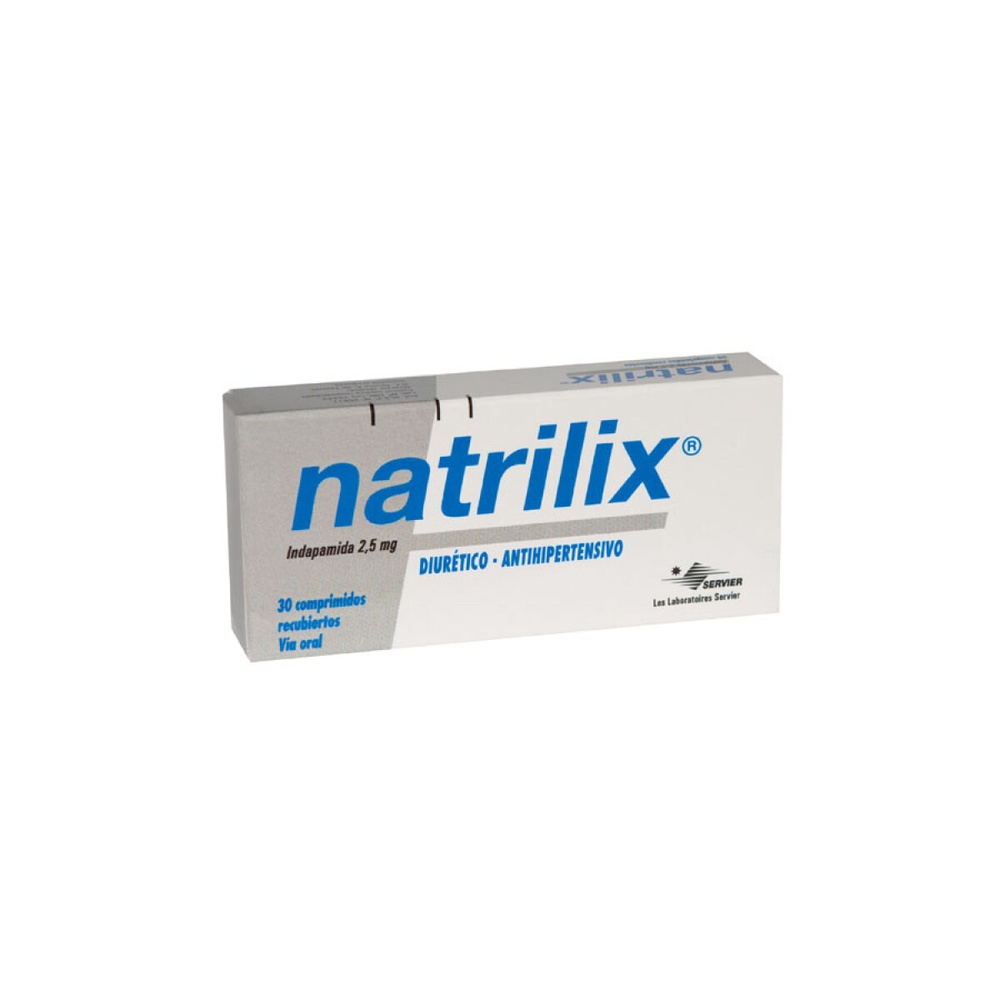
NATRILIX 2.5 мг Фільм-coated таблетки

Рассмотрение рецепта онлайн
Врач рассмотрит ваш случай и примет решение о назначении рецепта, если это медицински оправдано.

Поговорите с врачом об этом лекарстве
Обсудите симптомы и возможные дальнейшие шаги на онлайн-консультации.



Инструкция по применению NATRILIX
Содержание инструкции
- NATRILIX 2,5 mg film-coated tablets
- Natrilix 1,5 mg prolonged-release tablets
- What is Natrilix 1.5 mg prolonged-release tablets and what is it used for
- What you need to know before taking Natrilix 1.5 mg prolonged-release tablets
- How to take Natrilix 1.5 mg prolonged-release tablets
- Possible side effects
- How to store Natrilix 1,5 mg prolonged-release tablets
- Package contents and other information
NATRILIX 2,5 mg film-coated tablets
Indapamide
Read this leaflet carefully before you start taking this medicine as it contains important
information for you.
- Keep this leaflet. You may need to read it again.
- If you have any questions, ask your doctor or pharmacist.
- This medicine has been prescribed for you only. Do not pass it on to others, even if their symptoms are the same as yours, as it could be harmful.
- If you get any side effects, even those not listed in this leaflet, tell your doctor or pharmacist. See section 4.
Contents of this leaflet:
- 1. What Natrilix is and what it is used for
- 2. What you need to know before you take Natrilix
- 3. How to take Natrilix
- 4. Possible side effects
- 5. How to store Natrilix
- 6. Contents of the pack and other information
1. What is Natrilix and what is it used for
Natrilix is a medicine based on indapamide, a substance that belongs to a group of medicines called “thiazide diuretics”, which increase the amount of urine produced by the kidneys. However, indapamide is different from other diuretics because it causes only a slight increase in the amount of urine produced.
Natrilix is used to reduce high blood pressure (essential arterial hypertension).
2. What you need to know before you take Natrilix
Do not take Natrilix:
if you are allergic to indapamide or to any other sulfonamide or to any of the other ingredients of this medicine ( listed in paragraph 6);
if you have a severe kidney disease (insufficient kidney function and absence of urine (anuria));
if you suffer from severe liver problems or a condition called hepatic encephalopathy(brain alterations resulting from the circulation of "toxic" substances related to liver failure);
if you have low levels of potassium in your blood (hypokalaemia);
if you have recently had a stroke (cerebrovascular infarction);
if you have a pheochromocytoma (a tumor of the adrenal glands that causes an increase in blood pressure);
if you suffer from a disease called Conn's syndrome (a disease of the adrenal glands that involves an excessive production of the hormone aldosterone and that causes an increase in blood pressure).
Warnings and precautions
Pay particular attention :
if you have suffered or are suffering from low levels of sodium in your blood (hyponatremia)
if you have suffered or are suffering from low levels of potassium in your blood; low levels of potassium can occur in the elderly, in debilitated patients or in therapy with several drugs (polytherapy), in patients with liver cirrhosis, a liver disease that causes fluid accumulation in the abdominal cavity, in patients with heart disease (coronary disease or heart failure, long QT syndrome), in patients who suffer from heart rhythm disorders (in particular torsades de pointes).
if an increase in calcium levels in your blood is found (calcemia): thiazide diuretics can reduce the elimination of calcium with the urine and cause an increase in calcemia, mild and transient.
Your doctor may have you undergo blood tests to check if you have low levels of sodium or potassium or high levels of calcium in your blood.
In addition, it is advisable to pay attention:
if you suffer from gout or diabetes
if your kidney function is decreased, as Natrilix does not work properly in patients with even slightly altered kidney function.
if you suffer from liver problems as Natrilix may cause the onset of hepatic encephalopathy (see paragraph Do not take Natrilix).
if you experience decreased vision or eye pain. These could be symptoms of fluid accumulation in the vascular layer of the eye (choroidal effusion) or increased pressure in the eye and can occur within hours or weeks of taking Viacorinda. This can lead to permanent vision loss if left untreated. If you have previously had an allergy to penicillin or sulfonamides, you may be at greater risk of developing it,
if you suffer from muscle disorders including muscle pain, sensitivity, weakness or cramps.
Photosensitivity
Cases of photosensitivity reactions (skin reaction to light that determines redness and burning of the skin; it is an abnormal and exaggerated reaction even after brief exposure to sunlight) have been reported with the use of indapamide. If these reactions occur, stop treatment and consult your doctor.
If it is necessary to resume treatment with indapamide, it is recommended to protect areas exposed to the sun or artificial UVA rays.
Children and adolescents
The safety and efficacy of the medicine in children and adolescents under the age of 18 have not been established and therefore its use is not recommended.
Other medicines and Natrilix
Tell your doctor or pharmacist if you are taking, have recently taken or might take any other medicines.
There are medicines that can alter the effect of Natrilix or whose effect can be altered by the medicine, in particular:
- lithium (used to treat depression). Natrilix should not be taken with lithium due to the risk associated with increased lithium levels in the blood;
- medicines used in case of heart rhythm disorders such as quinidine, hydroquinidine, disopyramide, amiodarone, sotalol, ibutilide, dofetilide, bretylium;
- bepridil (used to treat angina pectoris, a disease that causes chest pain);
- other diuretics (amiloride, spironolactone, triamterene);
- medicines used to treat mental disorders such as depression, anxiety or schizophrenia (for example tricyclic antidepressants (e.g. imipramine), antipsychotics, neuroleptics (such as chlorpromazine, cliamemazine, levomepromazine, thioridazine, trifluoperazine, amisulpride, sulpiride, sultopride, tiapride, haloperidol, droperidol);
- antibiotics used to treat bacterial infections (e.g. moxifloxacin, sparfloxacin, erythromycin ev);
- alofantrine (antiparasitic drug for the treatment of gastrointestinal disorders);
- pentamidine (drug that acts against some protozoa);
- antihistamines used to treat allergic reactions, such as hay fever (e.g. mizolastine, astemizole, terfenadine);
- non-steroidal anti-inflammatory drugs (e.g. ibuprofen), including selective COX-2 inhibitors or high doses of salicylic acid;
- angiotensin converting enzyme (ACE) inhibitors used in the treatment of high blood pressure;
- drugs against fungal infections (antimycotics) such as amphotericin B;
- baclofen, a drug used to treat muscle stiffness in diseases such as multiple sclerosis;
- metformin, an antidiabetic drug;
- allopurinol, a drug used in gout;
- cyclosporine and tacrolimus, therapies used in organ rejection prevention;
- corticosteroids (glyco- and mineralcorticoids), used for the treatment of various conditions, including severe asthma and rheumatoid arthritis;
- tetracosactide (used as a diagnostic or employed in the treatment of Crohn's disease);
- stimulant laxatives, which can determine potassium loss (hypokalemia);
- digitalis, which are used in certain heart diseases;
- cisapride, difemanil (used for the treatment of gastrointestinal disorders);
- calcium tablets or other calcium supplements;
- drugs containing iodine used in radiological investigations (iodinated contrast agents);
- methadone (used to treat addiction).
Pregnancy, breastfeeding and fertility
If you are pregnant, suspect or are planning a pregnancy, or if you are breastfeeding, ask your doctor or pharmacist for advice before taking this medicine.
This medicine should not be used during pregnancy.
The use of the drug is not recommended during breastfeeding, as a risk to newborns / children cannot be excluded.
Driving and operating machinery
Natrilix does not affect the degree of alertness but in individual cases different reactions related to the reduction of blood pressure can occur, especially at the beginning of treatment or if another drug for high blood pressure is associated.
For those who play sports
The use of the drug without a therapeutic need constitutes doping and can still determine positivity to anti-doping tests.
Natrilix contains lactose:
If your doctor has diagnosed you with an intolerance to some sugars, contact him before taking this medicine.
Natrilix contains sodium:
Natrilix contains less than 1 mmol (23 mg) of sodium per tablet, i.e. essentially ‘sodium-free’.
3. How to take Natrilix
Take this medicine following exactly the instructions of your doctor. If you have any doubts, consult your
doctor or pharmacist.
The recommended dose is 1 tablet in a single administration, preferably in the morning, to be swallowed
whole with water without chewing.
Elderly:
Elderly patients may be treated with Natrilix only when renal function is normal or slightly
impaired (see section Warnings and precautions). Therefore, before treatment with Natrilix, the values
of kidney function indices (creatinine levels) must be adjusted in relation to age, weight and
sex.
Patients with impaired renal function
If you have kidney problems, consult your doctor, as the normal dose may need to be adjusted. The dose reduction
must be made according to the degree of renal insufficiency.
In case of severe renal insufficiency, treatment is contraindicated (see section Warnings and
precautions).
Patients with impaired hepatic function
If you have liver problems, consult your doctor, as the normal dose may need to be adjusted.
In case of severe renal impairment, treatment is contraindicated (see section Warnings and
precautions).
Children and adolescents
Natrilix is not recommended in children and adolescents due to the lack of safety and
efficacy data.
If you have any doubts about the use of this medicine, ask your doctor or pharmacist.
If you take more Natrilix than you should
In case of accidental ingestion/intake of an excessive dose of Natrilix, immediately inform
your doctor or go to the nearest hospital.
The signs and symptoms in case of accidental ingestion of an excessive dose are: nausea, vomiting, excessive drop
in pressure (hypotension), cramps, dizziness, drowsiness, confusion, need to
urinate frequently and subsequently reduction of urine until disappearance (oliguria and anuria).
If you forget to take Natrilix
Do not take a double dose to make up for a missed dose.
4. Possible side effects
Like all medicines, this medicine can cause side effects, although not everybody gets them.
manifest.
Common (may affect up to 1 in 10 people):
skin rashes
low levels of potassium in the blood.
Uncommon (may affect up to 1 in 100 people):
vomiting, purpura (small red spots on the skin) in people predisposed to allergic reactions, low levels
of sodium in the blood which can lead to dehydration and low blood pressure, impotence
(inability to get or maintain an erection).
Rare (may affect up to 1 in 1,000):
dizziness, fatigue, headache, drowsiness, tingling (paresthesia), nausea, constipation, dry mouth,
muscle cramps, low levels of chlorine in the blood, low levels of magnesium in the blood.
Very rare (may affect up to 1 in 10,000):
blood cell disorders (thrombocytopenia, leukopenia, agranulocytosis, aplastic anemia, hemolytic
anemia);
heart rhythm disorders (arrhythmias);
blood pressure too low (hypotension);
inflammation of the pancreas (pancreatitis);
liver function abnormalities;
angioedema and/or urticaria, severe skin manifestations;
severe allergic skin reactions (toxic epidermal necrolysis);
severe allergic reactions (Stevens-Johnson syndrome);
kidney failure;
increased levels of calcium in the blood (hypercalcemia).
Frequency not known (the frequency cannot be estimated from available data):
transient loss of consciousness (syncope);
mental confusion;
vision disorders (myopia, blurred vision, impaired vision);
severe heart arrhythmia (torsades de pointes, potentially fatal);
low blood pressure when standing up (orthostatic hypotension);
onset of a serious liver disease called hepatic encephalopathy (brain alterations
resulting from the circulation of "toxic" substances related to liver failure (see
paragraph Do not take Natrilix);
inflammatory liver disease (hepatitis);
possible worsening of pre-existing acute disseminated lupus erythematosus (an autoimmune
disease that causes inflammation and damage to joints, tendons and organs, skin redness,
fatigue, loss of appetite, weight gain and joint pain);
rash (transient skin redness);
cases of sensitivity to light reactions (see paragraph Warnings and Precautions);
sudden falls;
acute kidney failure;
long QT syndrome (a potentially fatal heart rhythm disease) (see paragraph Warnings
and Precautions);
increased levels of sugar (glucose) and uric acid in the blood and slight increase in nitrogen in
urine;
high levels of liver enzymes;
excessive loss of chlorides with urine (which may cause mild metabolic alkalosis);
Decreased vision or eye pain due to high pressure (possible signs of fluid accumulation
in the vascular layer of the eye (choroidal effusion) or acute angle-closure glaucoma).
Reporting of side effects
If you get any side effects, talk to your doctor or pharmacist. This includes any possible side effects not
listed in this leaflet. You can also report side effects directly through the national reporting system at
https://www.aifa.gov.it/content/segnalazioni-reazioni-avverse .
By reporting side effects you can help provide more information on the safety of
this medicine.
5. How to store Natrilix
This medicine does not require any particular storage conditions.
Keep the medicine out of the sight and reach of children.
Expiry date: see the expiry date indicated on the packaging.
The expiry date refers to the product in intact packaging, correctly stored.
Do not use this medicine after the expiry date that is reported on the box and blister. The expiry date refers to the last day of that month.
Medicines should not be disposed of via wastewater or household waste. Ask your pharmacist how to dispose of medicines that are no longer needed. This will help protect the environment.
6. Contents of the pack and other information
What Natrilix contains
The active ingredient is indapamide. Each film-coated tablet contains 2.5 mg of indapamide.
The other ingredients are:
corn starch, lactose monohydrate, povidone, magnesium stearate, talc.
Film coating: white beeswax, titanium dioxide, glycerol, sodium lauryl sulfate, hypromellose,
macrogol 6000, magnesium stearate.
Description of the appearance of Natrilix and contents of the pack
Natrilix is presented in a box containing a blister with 30 film-coated tablets for oral use.
Marketing Authorisation Holder
Les Laboratoires Servier
50, rue Carnot
92284 Suresnes cedex
France
Manufacturer
Les Laboratoires Servier Industrie
905, Route de Saran
45520 Gidy - France
or alternatively
SERVIER (Ireland) Industries Ltd.
Gorey Road
Arklow – Ireland
Representative for Italy
Servier Italia S.p.A.
Via Luca Passi, 85
00166 Roma
Natrilix 1,5 mg prolonged-release tablets
indapamide
Read this leaflet carefully before you start taking this medicine as it contains important
information for you.
- Keep this leaflet. You may need to read it again.
- If you have any questions, ask your doctor or pharmacist.
- This medicine has been prescribed for you only. Do not pass it on to others, even if they have the same symptoms as you, as it may be harmful.
- If you get any side effects, even those not listed in this leaflet, tell your doctor or pharmacist. See section 4.
Contents of this leaflet:
- 1. What Natrilix 1,5 mg prolonged-release tablets is and what it is used for
- 2. What you need to know before you take Natrilix 1,5 mg prolonged-release tablets
- 3. How to take Natrilix 1,5 mg prolonged-release tablets
- 4. Possible side effects
- 5. How to store Natrilix 1,5 mg prolonged-release tablets
- 6. Contents of the pack and other information
1. What is Natrilix 1.5 mg prolonged-release tablets and what is it used for
Natrilix 1.5 mg prolonged-release tablets contains indapamide as the active ingredient.
This medicine is indicated to reduce high blood pressure (hypertension) in adults.
Indapamide is a diuretic. Most diuretics increase the amount of urine produced by the kidneys.
However, indapamide is different from other diuretics because it causes only a slight increase in the amount
of urine produced.
Furthermore, indapamide dilates blood vessels to facilitate blood flow. This
contributes to reducing blood pressure.
2. What you need to know before taking Natrilix 1.5 mg prolonged-release tablets
Do not take Natrilix 1.5 mg prolonged-release tablets:
- if you are allergic to indapamide or any other sulfonamide or to any of the other ingredients of this medicine (listed in section 6),
- if you have severe kidney disease,
- if you have severe liver disease or if you suffer from a disease called hepatic encephalopathy (a degenerative brain disease),
- if you have low levels of potassium in your blood.
Warnings and precautions
Talk to your doctor or pharmacist before taking Natrilix 1.5 mg prolonged-release tablets:
- if you have liver problems,
- if you have diabetes,
- if you suffer from gout,
- if you suffer from heart rhythm disorders or have kidney problems
- if you experience decreased vision or eye pain. These could be symptoms of fluid accumulation in the vascular layer of the eye (choroidal effusion) or increased pressure in the eye and can occur within hours or weeks of taking Natrilix. This can lead to permanent vision loss if left untreated. If you have previously had an allergy to penicillin or sulfonamides, you may be at greater risk of developing it,
- if you suffer from muscle disorders including muscle pain, sensitivity, weakness or cramps,
- if you are going to undergo a test to check the function of the parathyroid gland. You should inform your doctor if you have had photosensitivity reactions. Your doctor may have you undergo blood tests to check if you have low levels of sodium or potassium or high levels of calcium in your blood.
If you think you fall into any of the above conditions or have any questions or doubts about how to take
this medicine, consult your doctor or pharmacist.
For those who engage in sports: the use of the drug without a therapeutic need constitutes doping and may
still result in a positive anti-doping test.
Other medicines and Natrilix 1.5 mg prolonged-release tablets
Tell your doctor or pharmacist if you are taking, have recently taken or might take any other
medicines.
You must not take Natrilix RP 1.5 mg prolonged-release tablets with lithium (used for the treatment of
depression) due to the risk of increased lithium levels in the blood.
Make sure to inform your doctor if you are taking the following medicines because special attention may be required:
- medicines used in case of heart rhythm disorders (e.g. quinidine, hydroquinidine, disopyramide, amiodarone, sotalol, ibutilide, dofetilide, digitalis, bretylium),
- medicines used for the treatment of mental disorders such as depression, anxiety, schizophrenia… (e.g. tricyclic antidepressants, antipsychotics, neuroleptics (such as amisulpride, sulpiride, sultopride, tiapride, haloperidol, droperidol)),
- bepridil (used for the treatment of angina pectoris, a condition that causes chest pain),
- cisapride, difemanil (used for the treatment of gastro-intestinal disorders),
- antibiotics used for the treatment of bacterial infections (e.g. sparfloxacin, moxifloxacin, erythromycin by injection),
- vincamine by injection (used in the elderly for the symptomatic treatment of cognitive disorders, including memory loss)
- halofantrine (antimalarial drug for the treatment of some types of malaria),
- pentamidine (drug used for the treatment of some types of pneumonia),
- antihistamines used for the treatment of allergic reactions, such as hay fever (e.g. mizolastine, astemizole, terfenadine),
- non-steroidal anti-inflammatory drugs for the treatment of pain (e.g. ibuprofen) or high-dose acetylsalicylic acid,
- angiotensin converting enzyme (ACE) inhibitors (used for the treatment of hypertension and heart failure),
- amphotericin B by injection (antifungal medicine)
- oral corticosteroids used to treat various conditions including severe asthma and rheumatoid arthritis,
- stimulant laxatives,
- baclofen (for treating muscle stiffness present in diseases such as multiple sclerosis),
- allopurinol (for the treatment of gout),
- potassium-sparing diuretics (e.g. amiloride, spironolactone, triamterene),
- metformin (for the treatment of diabetes),
- iodinated contrast agents (used in X-ray examinations),
- calcium tablets or other calcium supplements,
- cyclosporine, tacrolimus or other medicines that suppress the immune system after organ transplantation, for the treatment of autoimmune or severe rheumatological or dermatological diseases,
- tetracosactide (for treating Crohn's disease),
- methadone (used to treat addiction).
Pregnancy and breastfeeding
If you are pregnant, suspect you may be pregnant or are planning a pregnancy, or if you are breastfeeding
with breast milk, ask your doctor or pharmacist for advice before taking this medicine.
This medicine is not recommended during pregnancy.
If you are planning a pregnancy or if you become pregnant, you should switch to an alternative treatment
as soon as possible. Tell your doctor if you are pregnant or have planned a
pregnancy.
If you are taking this medicine, breastfeeding is not recommended as the active ingredient
is excreted in breast milk.
Driving and using machines
This medicine can cause undesirable effects related to lowering blood pressure such as
dizziness or fatigue (see section 4) These undesirable effects are more likely to occur
at the beginning of treatment and following an increase in the dose. If this happens, you should refrain from driving or from
other activities that require vigilance. In any case, these undesirable effects are unlikely to occur
under good medical control.
Natrilix 1.5 mg prolonged-release tablets contains lactose monohydrate.
If your doctor has diagnosed you with intolerance to some sugars, contact him before taking this
medicine.
3. How to take Natrilix 1.5 mg prolonged-release tablets
Take this medicine following exactly the instructions of your doctor or pharmacist. If you have
any doubts, consult your doctor or pharmacist.
The recommended dose is one tablet a day, preferably in the morning. The tablets can be
taken independently of meals. The tablets must be swallowed whole, with water. Do not crush
or chew them.
Treatment of hypertension is usually for life.
If you take more Natrilix 1.5 mg prolonged-release tabletsthan you should
If you have taken too many tablets, contact your doctor or pharmacist immediately.
At very high doses, NATRILIX 1.5 mg prolonged-release tablets can cause nausea, vomiting, low
blood pressure, cramps, dizziness, drowsiness, confusion and changes in the amount of urine produced
by the kidneys.
If you forget to take Natrilix 1.5 mg prolonged-release tablets
If you have forgotten to take a dose of the medicine, take the next dose at the usual time. Do not
take a double dose to make up for the missed dose.
If you stop taking Natrilix 1.5 mg prolonged-release tablets
Since treatment of hypertension is usually for life, talk to your doctor before
stopping treatment with this medicine.
If you have any doubts about the use of this medicine, ask your doctor or pharmacist.
4. Possible side effects
Like all medicines, this medicine can cause side effects, although not everybody gets them.
If you notice any of the following serious side effects, stop taking the medicine and consult your doctor immediately:
- Angioedema and/or urticaria. Angioedema is characterised by swelling of the skin of the extremities or face, swelling of the lips or tongue, swelling of the mucous membranes of the throat or airways causing shortness of breath or difficulty swallowing. If this happens, contact your doctor immediately (very rare) (may affect up to 1 in 10,000 people)
- Severe skin reactions, including intense skin rash, redness of the skin all over the body, intense itching, blisters, peeling and swelling of the skin, inflammation of the mucous membranes (Stevens-Johnson syndrome) or other allergic reactions (very rare) (may affect up to 1 in 10,000 people)
- Irregular heartbeat that can be life-threatening (frequency not known)
- Inflammation of the pancreas which can cause severe pain in the abdomen and back together with a feeling of severe malaise (very rare) (may affect up to 1 in 10,000 people)
- Brain disease caused by liver disease (hepatic encephalopathy) (frequency not known)
- Inflammation of the liver (hepatitis) (frequency not known)
- Muscle weakness, cramps, soreness or pain and in particular, if at the same time, you do not feel well or have a high fever, this may be caused by abnormal muscle breakdown (frequency not known).
In order of decreasing frequency, side effects may include:
Common (may affect up to 1 in 10 people):
- Red and raised skin rash
- Allergic reactions, predominantly dermatological, in subjects with a predisposition to allergic and asthmatic reactions
- Low levels of potassium in the blood
Uncommon (may affect up to 1 in 100):
- Vomiting
- Small red spots on the skin (Purpura)
- Low levels of sodium in the blood which can lead to dehydration and reduced blood pressure
- Impotence (inability to get or maintain an erection)
Rare (may affect up to 1 in 1,000):
- Feeling of tiredness, headache, tingling (paresthesia), dizziness
- Gastrointestinal disorders (such as nausea, constipation), dry mouth Low levels of chlorine in the blood Low levels of magnesium in the blood
Very rare (may affect up to 1 in 10,000):
- Changes in blood cells, such as thrombocytopenia (reduction in the number of platelets causing easy bruising and nosebleeds), leucopenia (reduction of white blood cells which can cause unexplained fever, sore throat or other flu-like symptoms - if this happens, contact your doctor) and anaemia (reduction of red blood cells)
- Increased levels of calcium in the blood
- Irregular heartbeat, low blood pressure
- Kidney disease
- Abnormal liver function
Frequency not known (the frequency cannot be estimated from available data):
- Fainting
- If you suffer from systemic lupus erythematosus (a type of collagen disease) you may have a worsening
- Cases of photosensitivity reactions (changes in the appearance of the skin) have also been reported after exposure to the sun or artificial UVA rays
- Myopia
- Blurred vision
- Impaired vision
- Decreased vision or eye pain due to high pressure (possible signs of fluid accumulation in the vascular layer of the eye (choroidal effusion) or acute angle-closure glaucoma).
- Changes in your laboratory parameters (blood tests) may occur and your doctor may ask you to undergo control blood tests. Laboratory parameters may change as follows: increased uric acid, a substance that can cause or worsen gout (joint pain, especially in the feet) increased glucose levels in the blood in diabetic patients increased levels of liver enzymes abnormal ECG tracing.
Reporting of side effects
If you get any side effects, talk to your doctor or pharmacist. This includes any possible side effects not listed in this leaflet. You can also report side effects directly through the national reporting system at https://www.aifa.gov.it/content/segnalazioni-reazioni-avverse .
.
By reporting side effects you can help provide more information on the safety of this medicine.
5. How to store Natrilix 1,5 mg prolonged-release tablets
Keep this medicine out of the sight and reach of children.
Do not use this medicine after the expiry date which is stated on the package and on the blister.
The expiry date refers to the last day of that month.
Store at a temperature below 30°C.
Do not dispose of any medicine in waste water or household waste. Ask your pharmacist how to dispose of
medicines you no longer use. This will help protect the environment.
6. Package contents and other information
What Natrilix 1.5 mg prolonged-release tablets contain
The active ingredient is indapamide. Each tablet contains 1.5 mg of indapamide.
The other ingredients are:
tablet: anhydrous colloidal silica (E551), hypromellose (E464), lactose monohydrate, magnesium stearate
(E470B), povidone.
coating (film coating): glycerol (E422), hypromellose (E464), macrogol 6000, magnesium stearate (E470B),
titanium dioxide (E171).
Description of the appearance of Natrilix 1.5 mg prolonged-release tablets and package contents
The medicine is presented as a film-coated, prolonged-release, round tablet of
white colour.
The tablets are available in blisters of 10, 14, 15, 20, 30, 50, 60, 90 or 100 tablets in a
cardboard box. Not all pack sizes may be marketed.
Marketing Authorisation Holder and Manufacturer
Marketing Authorisation Holder
Les Laboratoires Servier
50, rue Carnot
92284 Suresnes cedex
France
Local Representative of the Marketing Authorisation Holder
Servier Italia S.p.A.
Via Luca Passi, 85
00166 Roma
Manufacturers
Les Laboratoires Servier Industrie
905 route de Saran
45520 Gidy
France
and
Servier (Ireland) Industries Ltd
Gorey Road
Co. Wicklow-Arklow
Ireland
and
ANPHARM Przedsiębiorstwo Farmaceutyczne S.A.
Ul. Annopol 6B - 03-236 Warszawa
POLAND
Delpharm Bretigny
Usine du Petit Paris
91220 Bretigny sur Orge
France
This medicinal product is authorised in the Member States of the European Economic Area with the following
names
Austria FLUDEX RETARD 1.5 mg
Belgium FLUDEX 1.5 mg
Cyprus FLUDEX 1.5 mg
Denmark NATRILIX RETARD
Estonia TERTENSIF SR
Finland NATRILIX RETARD 1.5 mg
France FLUDEX 1.5 mg
Germany NATRILIX SR 1.5 mg
Greece FLUDEX 1.5 mg
Hungary PRETANIX
Ireland NATRILIX SR
Italy NATRILIX 1.5 mg prolonged-release
tablets
Latvia TERTENSIF SR
Lithuania TERTENSIF SR
Luxembourg FLUDEX 1.5 mg
Malta NATRILIX SR
Netherlands FLUDEX SR 1.5 mg
Portugal FLUDEX LP
Slovakia TERTENSIF SR
Slovenia TERTENSIF SR
Spain TERTENSIF RETARD
United Kingdom
(Northern Ireland)
NATRILIX SR

Не уверены, подходит ли вам это лекарство?
Обсудите симптомы и варианты лечения с врачом онлайн.

Уже начали прием и появились вопросы?
Обсудите свое состояние и дальнейшие шаги с врачом онлайн.
- Страна регистрации
- Форма выпускаFilm-coated tablet, 2.5 MG
- Код АТХC03BA11
- Действующее вещество
- Отпускается по рецептуДа
- Производитель
- Информация на этой странице носит справочный характер и не является медицинской консультацией. Перед началом приема лекарства обязательно проконсультируйтесь с врачом.
- Аналоги NATRILIXФорма выпуска: Extended-release tablet, 1.5 MGДействующее вещество: ИндапамидПроизводитель: AUROBINDO PHARMA (ITALIA) S.R.L.Отпускается по рецептуФорма выпуска: Coated tablet, 1.5 MGДействующее вещество: ИндапамидПроизводитель: DOC GENERICI SRLОтпускается по рецептуФорма выпуска: Extended-release tablet, 1.5 MGДействующее вещество: ИндапамидПроизводитель: MYLAN S.P.A.Отпускается по рецепту
Аналоги NATRILIX в других странах
Лекарства с тем же действующим веществом, доступные в других странах.
Аналог NATRILIX в Польша
Аналог NATRILIX в Украина
Аналог NATRILIX в Испания
Врачи онлайн по NATRILIX
Обсудите применение NATRILIX и возможные следующие шаги — по оценке врача.
Получите рецепт на NATRILIX онлайн
Заполните форму за 2 минуты
Расскажите о симптомах, истории болезни и нужном препарате.
Выберите врача или мы назначим
Выберите специалиста или мы подберём ближайшего доступного врача.
Врач рассматривает ваш случай
Обычно в течение 30 минут. Может задать уточняющие вопросы в чате.
Получите в любой аптеке
Электронный рецепт отправляется на вашу почту — действителен по всей Польше.
Часто задаваемые вопросы
NATRILIX требует рецепта в Италия. Вы можете уточнить у врача онлайн, подходит ли это лекарство для вашей ситуации.
Действующее вещество NATRILIX — Индапамид. Эта информация помогает определить лекарства с тем же составом под другими торговыми названиями.
NATRILIX производится компанией LES LABORATOIRES SERVIER. Упаковка и торговое название могут отличаться в зависимости от дистрибьютора.
Врачи, включая Семейные врачи, Психиатры, Дерматологи, Кардиологи, Эндокринологи, Гастроэнтерологи, Пульмонологи, Нефрологи, Ревматологи, Гематологи, Инфекционисты, Аллергологи, Гериатры, Педиатры, Онкологи, могут оценить целесообразность применения NATRILIX с учетом вашей ситуации и местных правил. Вы можете записаться на онлайн-консультацию, чтобы обсудить возможные варианты.
Польша имеет хорошо развитую систему здравоохранения в крупных городах, таких как Варшава, Краков, Вроцлав и Гданьск. Аптеки широко доступны и работают в соответствии с действующим законодательством, обеспечивая доступ к рецептурным препаратам.
Вы можете купить NATRILIX в Варшаве, Кракове, Вроцлаве или Гданьске в любой аптеке при наличии действующего рецепта.
Чтобы получить рецепт, вы можете воспользоваться Oladoctor:
Другие лекарства с тем же действующим веществом (Индапамид) включают INDAPAMIDE AUROBINDO, INDAPAMIDE DOK JENERIKI, INDAPAMIDE MYLAN JENERIKS ITALIA. Они могут отличаться торговым названием или формой выпуска, но содержат одинаковый терапевтический компонент. Перед изменением лечения рекомендуется проконсультироваться с врачом.
