



EMINOCS 50 mg /Ml Оральный Раствор

Рассмотрение рецепта онлайн
Врач рассмотрит ваш случай и примет решение о назначении рецепта, если это медицински оправдано.

Поговорите с врачом об этом лекарстве
Обсудите симптомы и возможные дальнейшие шаги на онлайн-консультации.



Инструкция по применению EMINOKS
Содержание инструкции
EMINOCS 50 mg/ml oral solution
diclofenac potassium
Read this leaflet carefully before taking this medicine as it contains
important information for you.
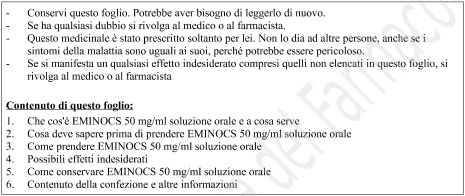
- Keep this leaflet. You may need to read it again.
- If you have any questions, ask your doctor or pharmacist.
- This medicine has been prescribed for you only. Do not pass it on to others, even if their symptoms are the same as yours, as it could be harmful.
- If you get any side effects, even those not listed in this leaflet, tell your doctor or pharmacist. See section 4.
Contents of this leaflet:
- 1. What EMINOCS 50 mg/ml oral solution is and what it is used for
- 2. What you need to know before you take EMINOCS 50 mg/ml oral solution
- 3. How to take EMINOCS 50 mg/ml oral solution
- 4. Possible side effects
- 5. How to store EMINOCS 50 mg/ml oral solution
- 6. Contents of the pack and other information
- 1. What EMINOCS 50 mg/ml oral solution is and what it is used forEMINOCS 50 mg/ml oral solution is an oral solution that contains 50 milligrams of diclofenac potassium per millilitre. Diclofenac potassium belongs to the group of inhibitors of prostaglandin synthesis which possess anti-inflammatory, analgesic (ability to relieve pain) and antipyretic (ability to reduce fever) activity.
EMINOCS 50 mg/ml oral solution is used in the short-term treatment of:
- pain from inflammation following trauma, for example sprains;
- pain from inflammation and swelling following orthopedic surgery (operations involving the musculoskeletal system, in other words the bones, joints, muscles, tendons and ligaments) or dental surgery;
- menstrual pains.
2. What you need to know before taking EMINOCS 50 mg/ml oral solution
Do not take EMINOCS 50 mg/ml oral solution
- if you have an active gastric or intestinal ulcer, bleeding or perforation (blood in the stool or dark stools)
- if you have a history of gastrointestinal bleeding or perforation related to previous treatments with NSAIDs or a history of recurrent peptic ulcer bleeding/ulceration (two or more distinct episodes of demonstrated ulceration or bleeding)
- if you are hypersensitive (allergic) to diclofenac or other chemically related substances, e.g. acetylsalicylic acid and other non-steroidal anti-inflammatory drugs (NSAIDs), or to any of the other components of the medicine
- if you have or have had asthma attacks, chest pain, urticaria or inflammatory reactions to the nasal mucosa immediately after using acetylsalicylic acid or similar medicines
- if you have had cerebral haemorrhage
- if you have or have had an abnormal composition of blood cells (blood dyscrasia)
- if your bone marrowfunction is impaired (bone marrow depression)
- if you have a severe liver disease(hepatic cirrhosis) characterized by irreversible damage to liver tissue
- if you suffer from confirmed heart disease and/or cerebrovascular disease, e.g., have had a heart attack, stroke, mini-stroke (TIA) or blockage of blood vessels leading to the heart or brain, or surgery to eliminate or prevent such blockages
- if you suffer from or have suffered from problems with blood circulation (peripheral arterial disease) if your kidney functionis severely impaired (severe renal failure)
- if you are pregnant: during the third trimester of pregnancy
- if you are under 14 years of age. Consult your doctor or pharmacist if you are in any of the situations described above.
Warnings and precautions
Talk to your doctor before taking EMINOCS 50 mg/ml oral solution:
- if you have previously had serious gastrointestinal problems (e.g. due to gastric or intestinal ulcers)
- if you suffer from recurrent (severe) inflammation of the large intestine accompanied by fever and mucus in the stool, sometimes mixed with pus or blood (ulcerative colitis)
- if you have recently undergone or are about to undergo surgery on the stomach or intestinal tract, as EMINOCS may sometimes worsen wound healing in the intestine following surgery
- if you suffer from recurrent (severe) inflammation of the intestine, accompanied by diarrhoea, abdominal pain, weight loss and occasionally fever (Crohn's disease)
- if you suffer from severe impairment of kidney or liver function
- if you smoke
- if you suffer from diabetes
- if you suffer from angina, blood clots, high blood pressure, increased cholesterol or increased triglycerides
- if you have any blood abnormalities including hepatic porphyria (a type of metabolic disease)
- if you have skin reactions (skin rashes, urticaria, lesions of the mucous membranes) or symptoms of allergy such as itching, swelling of the face, lips and tongue, wheezing/shortness of breath
- if you have pre-existing asthma, seasonal allergic rhinitis, swelling of the nasal mucosa (nasal polyps), chronic obstructive respiratory diseases or chronic respiratory infections (particularly if related to the symptoms of allergic rhinitis)
Consult your doctor if you are or have been in the past in any of the situations described above.
Medicines such as EMINOCS may be associated with a modest increase in the risk of heart attack (“myocardial infarction”) or stroke. This risk is more likely with high doses and following prolonged treatment. Undesirable effects can be minimized by using the lowest effective dose for the shortest duration necessary. Do not exceed the recommended doses or the duration of treatment.
Other medicines and EMINOCS 50 mg/ml oral solution
Always tell your doctor or pharmacist if you are taking or have recently taken other medicines, including those obtained without a prescription.
The following interactions include those observed with diclofenac gastro-resistant tablets and/or other pharmaceutical forms of diclofenac.
Phenytoin: when using phenytoin together with diclofenac, monitoring of plasma phenytoin concentrations is recommended.
Potent CYP2C9 inhibitors: caution is recommended when prescribing diclofenac together with potent CYP2C9 inhibitors (such as sulfinpyrazone and voriconazole); this may lead to a significant increase in peak plasma concentrations and exposure to diclofenac, due to inhibition of its metabolism.
Diclofenac potassium can modify the effects of other medicines and, in turn, the activity of diclofenac potassium can be modified by other medicines.
Diclofenac potassium can increase the effects of the following medicines:
- lithium(a medicine used, among other things, for depression)
- digoxin(a medicine used for certain heart diseases)
- methotrexateand cyclosporine(medicines used, among other things, for some joint diseases and for a skin disease (psoriasis)).
Diclofenac potassium can reduce the activity of diuretics and antihypertensive agents (e.g. beta-blockers, angiotensin-converting enzyme (ACE) inhibitors).
Diclofenac can alter blood glucose levels, with the need to modify the dosage of antidiabetic agents administered during treatment with diclofenac.
Cholestyramine and colestipol can induce a delay or decrease in the absorption of diclofenac: it is recommended to administer diclofenac at least one hour before or 4-6 hours after the administration of colestyramine/colestipol.
If diclofenac potassium is used in conjunction with one of the following medicines, the following adverse effects may occur:
- some types of diuretics(potassium-sparing diuretics): the potassium level in the blood may become too high
- adreno-corticoid hormones(glucocorticoids with anti-inflammatory activity): adverse effects on the gastrointestinal tract may be increased
- other medicines similar to diclofenac(inhibitors of prostaglandin synthesis): there is a greater risk that adverse effects will occur
- some types of medicines that fight bacteria(quinolone antibiotics): in some cases, seizures have been reported
- some types of medicines used to thin the blood(anticoagulants - e.g. warfarin) and medicines like aspirin(antiplatelet agents). Adverse effects on the gastrointestinal tract and bleeding may be increased
- some types of medicines used for depression(SSRIs - selective serotonin reuptake inhibitors). Adverse effects on the gastrointestinal tract and bleeding may be increased.
Pregnancy, breastfeeding and fertility
In general, always ask your doctor or pharmacist for advice before taking any medicine.
During the first six months of pregnancy, EMINOCS 50 mg/ml oral solution should not be used unless your doctor considers the potential benefits to the patient to be greater than the risks to the fetus. EMINOCS 50 mg/ml oral solution should not be used in the last three months of pregnancy. Consult your doctor if you are pregnant or if you wish to become pregnant, during treatment with EMINOCS 50 mg/ml oral solution.
The use of EMINOCS 50 mg/ml oral solution is however, not recommended during breastfeeding. Diclofenac potassium passes into breast milk in very small amounts.
If you have fertility problems, you should consider stopping the medicine.
Ask your doctor or pharmacist for advice before taking any medicine.
Driving and operating machinery
EMINOCS 50 mg/ml oral solution can cause dizziness, fatigue and reduced visual acuity. If you experience these symptoms, you should avoid driving vehicles and operating machinery.
EMINOCS 50 mg/ml oral solution contains:
- approximately 300 mg of alcohol in a 1 ml dose (30% weight/volume of ethanol). This is equivalent to 6 ml of beer or 2.5 ml of wine per dose. This alcohol content should be borne in mind when administering to pregnant or breastfeeding women, or to particularly at-risk groups such as patients with liver disease, epileptics or alcoholics.
- potassium (0.4 mmol per ml). This should be taken into account in the case of patients with impaired kidney function or those following a low-potassium diet.
- allura red (E129). May cause allergic reactions.
3. How to take EMINOCS 50 mg/ml oral solution
Take EMINOCS 50 mg/ml oral solution following the instructions of your doctor exactly. If you have any doubts, always consult your doctor or pharmacist.
The recommended dose is:
Adults and adolescents over 14 years of age
Initial dosage, take 100-150 mg per day (2-3 ml per day).
For mild discomfort, 50-100 mg per day (1-2 ml per day) are generally sufficient.
It is advisable to divide the daily dose into 2-3 administrations.
Do not exceed the maximum dose of 150 mg per day (3 ml).
For menstrual pain, take 50-100 mg per day (1-2 ml) at the appearance of the first symptoms. If
necessary, continue with doses not exceeding 50 mg (1 ml) three times a day for a few days.
If the maximum recommended daily dose of 150 mg (3 ml) proves insufficient for 2 or 3
menstrual periods, during the subsequent menstrual period, you can take a maximum dose of 200 mg (4
ml).
Your doctor will tell you how long you should take EMINOCS 50 mg/ml oral solution. Since
the use of EMINOCS 50 mg/ml oral solution is indicated for disorders that have a limited duration, it is
recommended to take EMINOCS 50 mg/ml oral solution for short periods (about 1 week).
Children under 14 years of age
EMINOCS 50 mg/ml oral solution is not recommended for children under 14 years of age.
Instructions for use
EMINOCS 50 mg/ml oral solution should preferably be taken before meals.
It is possible to measure the prescribed milliliters using the special pipette. Pour into a glass with
water the amount taken and drink immediately. Close the bottle by screwing
the cap fitted with the dosing pipette carefully.
If you take more EMINOCS 50 mg/ml oral solutionthan you should
If you take more EMINOCS 50 mg/ml oral solution than you should, contact your
doctor or pharmacist immediately.
If you forget to take EMINOCS 50 mg/ml oral solution
Do not take a double dose to make up for a missed dose.
If you take EMINOCS 50 mg/ml oral solution twice a day
If the delay is less than 6 hours, you can still take the scheduled dose. If, however, the delay is
more than 6 hours, skip the missed dose. Take the next dose as scheduled.
If you take EMINOCS 50 mg/ml oral solution three times a day
If the delay is less than 3 hours, you can still take the scheduled dose. If, however, the delay is
more than 3 hours, skip the missed dose. Take the next dose as scheduled.
If you have any doubts about the use of EMINOCS 50 mg/ml oral solution, ask your doctor or
pharmacist.
4. Possible side effects
Like all medicines, EMINOCS 50 mg/ml oral solution can cause side effects,
although not everybody gets them.
The following side effects include those reported with short- or long-term use.
Some side effects may be serious.
Stop taking Eminocs and tell your doctor immediately if you notice:
- mild abdominal cramps and tenderness that occur shortly after starting treatment with Eminocs, followed by rectal bleeding or bloody diarrhoea usually within 24 hours of the abdominal pain appearing (frequency not known, cannot be estimated from the available data).
- chest pain, which may be a sign of a potentially serious allergic reaction called Kounis syndrome. Common side effects (may affect more than 1 in 100 people)
- headache, dizziness, vertigo
- nausea, vomiting, diarrhoea, indigestion, abdominal pain, flatulence, loss of appetite
- increased transaminases
- rash Uncommon side effects (may affect less than 1 in 100 people)
- abdominal pain, belching
- swelling of the ankles, feet or toes Rare side effects (may affect less than 1 in 1000 people)
- altered blood test values (increased number of eosinophils, reduced haemoglobin, reduced haematocrit)
- hypersensitivity, anaphylactic and anaphylactoid reactions (including decreased blood pressure and shock)
- drowsiness
- persistent breathing problems (asthma), including shortness of breath
- inflammation of the stomach, bleeding from the stomach, vomiting blood, bloody diarrhoea, dark stools, ulcer of the stomach or intestine (with or without bleeding or perforation)
- inflammation of the liver, jaundice, liver disorders
- urticaria, swelling, cysts Very rare side effects (may affect less than 1 in 10,000 people)
- reduced platelets in the blood, reduced number of white blood cells and red blood cells (including abnormal breakdown of red blood cells and insufficient production of new cells by the bone marrow), reduced number of certain types of white blood cells
- giant urticaria (including facial swelling)
- mental confusion (disorientation), depressed mood (depression), insomnia, nightmares, irritability, altered mental condition
- stinging pains, memory problems, uncontrolled shaking of the body (convulsions), anxiety, tremors, inflammation of the lining of the skull (meninges)
- altered taste
- stroke
- vision disorders, blurred vision, double vision
- tinnitus, worsening of hearing
- palpitations, chest pain, heart failure, myocardial infarction, increased blood pressure, inflammation of blood vessels
- inflammation of the lungs
- inflammation of the large intestine (colitis, including haemorrhagic colitis and exacerbation of ulcerative colitis or Crohn's disease), constipation, inflammation of the oral cavity (including oral ulceration), inflammation of the tongue, oesophageal disorders, intestinal stenosis
- inflammation of the pancreas, death of blood cells, liver disease that progresses rapidly and severely
- blistering rash, skin inflammation, skin redness, multiple skin lesions; Stevens-Johnson syndrome, toxic epidermal necrolysis (Lyell's syndrome), inflammatory skin desquamation, hair loss, skin sensitivity reaction to light sources, alteration of skin colour to violet of allergic type, itching.
- acute renal failure, blood in the urine, protein in the urine, kidney damage, inflammatory process in the kidneys, death of the cells of the renal papillae.
Reporting of side effects
If you get any side effects, even those not listed in this leaflet, tell your
doctor or pharmacist. You can also report side effects directly through the
national reporting system at https://www.aifa.gov.it/content/segnalazioni-reazioni-
avverse.
By reporting side effects you can help provide more information on the safety
of this medicine.
5. How to store EMINOCS 50 mg/ml oral solution
Keep this medicine out of the sight and reach of children.
Store at a temperature below 25°C.
Do not refrigerate or freeze.
Store in the original package.
After the bottle has been opened, the oral solution can be used for 6 months.
Do not use this medicine after the expiry date stated on the packaging after the words “Exp.”.
The expiry date refers to the last day of that month.
Do not dispose of any medicine in wastewater or household waste. Ask your pharmacist how
to eliminate medicines that you no longer use. This will help protect the environment.
6. Contents of the pack and other information
What EMINOCS 50 mg/ml oral solution contains
- The active ingredient is diclofenac potassium. 1 ml contains 50 mg of diclofenac potassium.
- The other ingredients are ethyl alcohol, glycerol, potassium bicarbonate, sucralose, allura red (E129), brilliant blue (E133), purified water.
Description of the appearance of EMINOCS 50mg/ml oral solution and contents of the pack
EMINOCS 50 mg/ml oral solution is supplied in brown glass bottles of 20, 25, 50 or 100 ml.
The bottle is supplied with a glass dropper.
Marketing Authorisation Holder
Dymalife Pharmaceutical S.r.l. – Via Bagnulo, 95 - 80063 - Piano di Sorrento (Napoli)
Manufacturer
Laboratorio Farmacologico Milanese s.r.l.
Via Monterosso, 273
21042 Caronno Pertusella (VA) - Italy
Alfasigma S.p.A.
Via E. Fermi, 1
- 65020 - Alanno (PE), Italy

Не уверены, подходит ли вам это лекарство?
Обсудите симптомы и варианты лечения с врачом онлайн.

Уже начали прием и появились вопросы?
Обсудите свое состояние и дальнейшие шаги с врачом онлайн.
- Страна регистрации
- Форма выпускаOral solution, 50 MG/ML
- Код АТХM01AB05
- Действующее вещество
- Отпускается по рецептуДа
- Производитель
- Информация на этой странице носит справочный характер и не является медицинской консультацией. Перед началом приема лекарства обязательно проконсультируйтесь с врачом.
- Аналоги EMINOKSФорма выпуска: Hard capsule with prolonged release, 75 MGДействующее вещество: ДиклофенакПроизводитель: FARMA GROUP S.R.L.Отпускается по рецептуФорма выпуска: Modified-release hard capsule, 75 MGДействующее вещество: ДиклофенакПроизводитель: MORGANCEUTICAL S.R.L.Отпускается по рецептуФорма выпуска: Tablet, 50 MGДействующее вещество: ДиклофенакПроизводитель: ALFASIGMA S.P.A.Отпускается по рецепту
Аналоги EMINOKS в других странах
Лекарства с тем же действующим веществом, доступные в других странах.
Аналог EMINOKS в Польша
Аналог EMINOKS в Украина
Аналог EMINOKS в Испания
Врачи онлайн по EMINOKS
Обсудите применение EMINOKS и возможные следующие шаги — по оценке врача.









Получите рецепт на EMINOKS онлайн
Заполните форму за 2 минуты
Расскажите о симптомах, истории болезни и нужном препарате.
Выберите врача или мы назначим
Выберите специалиста или мы подберём ближайшего доступного врача.
Врач рассматривает ваш случай
Обычно в течение 30 минут. Может задать уточняющие вопросы в чате.
Получите в любой аптеке
Электронный рецепт отправляется на вашу почту — действителен по всей Польше.
Часто задаваемые вопросы
EMINOKS требует рецепта в Италия. Вы можете уточнить у врача онлайн, подходит ли это лекарство для вашей ситуации.
Действующее вещество EMINOKS — Диклофенак. Эта информация помогает определить лекарства с тем же составом под другими торговыми названиями.
EMINOKS производится компанией DYMALIFE PHARMACEUTICAL S.R.L.. Упаковка и торговое название могут отличаться в зависимости от дистрибьютора.
Врачи, включая Семейные врачи, Психиатры, Дерматологи, Кардиологи, Эндокринологи, Гастроэнтерологи, Пульмонологи, Нефрологи, Ревматологи, Гематологи, Инфекционисты, Аллергологи, Гериатры, Педиатры, Онкологи, могут оценить целесообразность применения EMINOKS с учетом вашей ситуации и местных правил. Вы можете записаться на онлайн-консультацию, чтобы обсудить возможные варианты.
Польша имеет хорошо развитую систему здравоохранения в крупных городах, таких как Варшава, Краков, Вроцлав и Гданьск. Аптеки широко доступны и работают в соответствии с действующим законодательством, обеспечивая доступ к рецептурным препаратам.
Вы можете купить EMINOKS в Варшаве, Кракове, Вроцлаве или Гданьске в любой аптеке при наличии действующего рецепта.
Чтобы получить рецепт, вы можете воспользоваться Oladoctor:
Другие лекарства с тем же действующим веществом (Диклофенак) включают DEALJIK, DEFLAMAT, DIKLOFENAK ALFASIGMA. Они могут отличаться торговым названием или формой выпуска, но содержат одинаковый терапевтический компонент. Перед изменением лечения рекомендуется проконсультироваться с врачом.
