



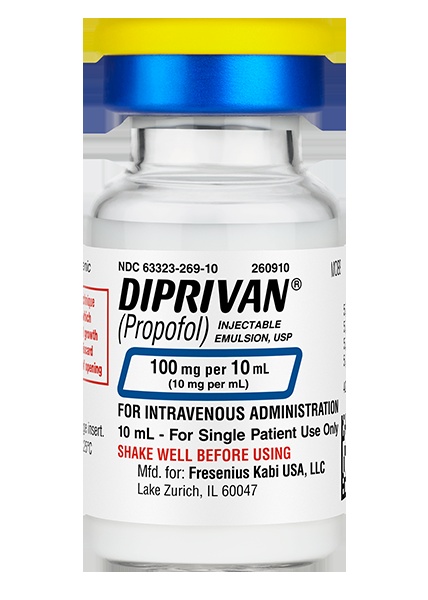
DIPRIVAN 10 мг/мл Инъекционная эмульсия

Рассмотрение рецепта онлайн
Врач рассмотрит ваш случай и примет решение о назначении рецепта, если это медицински оправдано.

Поговорите с врачом об этом лекарстве
Обсудите симптомы и возможные дальнейшие шаги на онлайн-консультации.



Инструкция по применению DIPRIVAN
Содержание инструкции
DIPRIVAN 10 mg/ml injectable emulsion for intravenous use, 10 mg/ml emulsion for infusion, 20 mg/ml emulsion for infusion
propofol
Read this leaflet carefully before you are given this medicine because
it contains important information for you.
- Keep this leaflet. You may need to read it again.
- If you have any questions, ask your doctor or nurse.
- If any side effects occur, including any not listed in this leaflet, tell your doctor or pharmacist. See section 4.
Contents of this leaflet:
- 1. What Diprivan is and what it is used for
- 2. What you need to know before you are given Diprivan
- 3. How Diprivan will be given to you
- 4. Possible side effects
- 5. How to store Diprivan
- 6. Contents of the pack and other information
1. What is Diprivan and what is it used for
Diprivan is a medicine for intravenous use, containing the active ingredient propofol, a medicine
belonging to the group of medicines called “general anesthetics”.
Diprivan is used by the anesthesiologist (the doctor who deals with anesthesia) for:
- inducing and maintaining general anesthesia (state of general numbness of the body with loss of consciousness) during surgical procedures. Diprivan 10 mg/ml is used in adults, adolescents and children over one month of age. Diprivan 20 mg/ml is used in adults, adolescents and children over 3 years of age.
- sedation (physical and mental relaxation) during intensive care in adults and adolescents over 16 years of age, whose breathing is assisted by a machine.
2. What you need to know before you are given Diprivan
You will not be given Diprivan
- if you are allergic to propofol or any of the other ingredients of this medicine (listed in section 6)
- if you are allergic to peanuts or soy (see section “Diprivan contains soybean oil”)
- if the patient is a child or adolescent under 16 years of age for sedation in the Intensive Care Unit.
Warnings and precautions
This medicine is only available in hospital. Therefore, this medicine will be given to you
only under strict control of qualified medical personnel.
In particular, before you are given Diprivan, tell your doctor:
- if you suffer from heart disorders (heart failure) or have a serious heart condition
- if you suffer from lung disorders or have difficulty breathing
- if you suffer from kidney disorders (renal failure)
- if you suffer from liver disorders (hepatic failure)
- if you are in a condition where you have a reduced blood volume (hypovolemia)
- if you are debilitated (a state of physical and mental weakness)
- if you suffer from high pressure inside the skull (increased intracranial pressure)
- if you suffer from low blood pressure
- if you suffer from epilepsy (a disease that manifests with convulsions, the involuntary contraction of some muscles), as it may increase the risk of seizures
- if you suffer from disorders related to fat metabolism or any other condition that requires caution when you are given lipid emulsions (oily preparations). In these cases, the doctor will measure the level of fats in the blood and, if necessary, modify the administration of Diprivan
- if you suffer from mitochondrial diseases, because your conditions may worsen in case of anesthesia, surgery and intensive care unit treatments
- if you are predisposed to develop zinc deficiencies.
Children and adolescents
- Diprivan is not given to children aged 16 years or younger when used for sedation during intensive care.
- Diprivan 10 mg/ml is not recommended in newborns (aged 1 month or less).
- Diprivan 20 mg/ml is not recommended in children aged 3 years or less.
Studies in young animals and preclinical data suggest that repeated or prolonged use of general anesthetics or sedatives in children under 3 years of age or in pregnant women in the third trimester, may
have adverse effects on the development of the child's brain. Parents and caregivers
should discuss with their doctors the benefits, risks, timing and duration of surgery
or the procedure requiring anesthesia or sedation.
In rare cases, following administration of propofol for a prolonged period, a
condition known as Propofol Infusion Syndrome (PIS) may develop. This condition can damage the heart,
muscles, kidneys, cause other serious problems and may lead to death. However, the doctor will keep you under close
control and take the necessary measures to prevent this from happening.
Other medicines and Diprivan
Tell your doctor or pharmacist if you are taking, have recently taken or may take
any other medicines, as several medicines can interact with propofol.
In particular, tell your doctor if you are using:
- rifampicin (antibiotic) because cases of severe lowering of blood pressure have been reported when used together with Diprivan
- dexmedetomidine (used to induce sedation (a very relaxed state of calm, drowsiness or sleep))
- midazolam (used to induce sedation (a very relaxed state of calm, drowsiness or sleep) and reduce anxiety and muscle tension).
Diprivan with alcohol
The use of Diprivan with alcoholic beverages may increase sedation (physical and mental relaxation).
Pregnancy and breastfeeding
If you are pregnant, suspect you are pregnant or are planning a pregnancy, or if you are breastfeeding with breast
milk, ask your doctor or pharmacist for advice before you are given this medicine.
Pregnancy
The safety of Diprivan in pregnant women has not been established, therefore Diprivan should not
be given to you during pregnancy; however, your doctor may give you this
medicine during pregnancy or only if absolutely necessary.
Diprivan passes through the placenta (the barrier that separates maternal blood from fetal blood) and may
cause respiratory depression of the newborn.
Your doctor may give you Diprivan during an induced abortion.
Breastfeeding
Studies show that small amounts of Diprivan pass into breast milk. Therefore, do not
breastfeed your baby within 24 hours of administration of Diprivan.
The milk produced during this time should not be used.
Driving and using machines
After general anesthesia, the ability to drive vehicles and use machines may be impaired for
a certain period of time. This means that until the doctor believes you have fully
recovered your reactive abilities, you should not drive vehicles and use machines after surgery.
The doctor will assess whether you should be accompanied when leaving the hospital.
Diprivan contains sodium
Diprivan 10 mg/ml contains less than 1 mmol (23 mg) of sodium per dose, i.e. essentially “sodium-free”.
Diprivan 20 mg/ml contains less than 1 mmol (23 mg) of sodium per dose, i.e. essentially “sodium-free”.
Diprivan contains soybean oil
Diprivan 10 mg/ml contains soybean oil. If you are allergic to peanuts or soy, do not use this
medicine.
Diprivan 20 mg/ml contains soybean oil. If you are allergic to peanuts or soy, do not use this
medicine.
3. How Diprivan will be administered to you
This medicine is available only in hospital. Therefore, this medicine will be administered to you
only under strict control of qualified medical personnel.
The most suitable dose for you will be established by your anesthesiologist (the doctor who performs the anesthesia) based on your
age, weight and state of health. The doctor will administer the correct dose of Diprivan to
start and maintain anesthesia or to achieve the desired level of sedation, by carefully
assessing your response and vital signs (pulse, blood pressure, etc.).
Use in children and adolescents
The dose will be established by the anesthesiologist based on the child's age and weight.
Diprivan is not administered in children aged 16 years or less, when used for
sedation during intensive care.
Diprivan 10 mg/ml is not recommended in neonates (age less than or equal to one month).
Diprivan 20 mg/ml is not recommended in children aged 3 years or less.
Method of administration
Diprivan 10 mg/ml will be administered to you by repeated injections or intravenous infusion.
Diprivan 20 mg/ml will be administered to you only by intravenous infusion.
In case of sedation in intensive care, the doctor will administer propofol by intravenous infusion.
The onset of sleep occurs within 1-5 minutes after administration.
If you are elderly or debilitated, or have problems with your lungs, heart, kidneys, liver or are in a condition in which you have a
reduced blood volume (hypovolemia), the doctor will reduce the rate of administration of propofol,
when administered by infusion.
If you are receiving intensive care in hospital, 3 days after the administration of propofol, your doctor
will perform tests to assess the level of fats in your blood.
You will be discharged after the doctor has ensured a complete recovery of your psychophysical conditions.
If you are given more Diprivan than you should
It is very unlikely that you will be given a higher dose of Diprivan than you should, as your
doctor will monitor you during treatment.
However, if you are given an excessive dose of Diprivan, the doctor will adopt the appropriate
supportive therapy.
4. Possible side effects
Like all medicines, this medicine can cause side effects, although not everybody gets them.
During the administration of Diprivan, the following seriousside effects may occur, in
which case the doctor will provide immediateappropriate treatment:
- allergic reactions, including severe ones (anaphylaxis), such as:
- swelling of hands, feet, ankles, face, lips, tongue and/or throat (angioedema)
- narrowing of the bronchi causing severe difficulty breathing due to reduced airflow (bronchospasm)
- skin irritation (erythema)
- low blood pressure (hypotension). Allergic reactions may also occur if you are allergic to soybean oil, peanuts and soy (see paragraphs “Diprivan contains soybean oil” and “You will not be given Diprivan”)
- slowing of the heart rate (bradycardia)
- severe heart disease (heart failure), which can lead to death.
The side effects are listed below according to the following frequency:
Very common (may affect more than 1 in 10 people)
- pain at the injection site
Common (may affect up to 1 in 10 people)
During the recovery phase, the following may occur:
- headache
- nausea, vomiting During induction of anesthesia, depending on the dose administered and concurrent use with other medicines, the following may occur:
- lowering of blood pressure
- temporary cessation of breathing
Uncommon (may affect up to 1 in 100 people)
- formation of a blood clot inside a blood vessel (thrombosis)
- inflammation of a vein (phlebitis)
Rare (may affect up to 1 in 1000 people)
- convulsions (involuntary muscle contractions as in epilepsy), even hours or days after administration of propofol
- severe muscle contraction of the head, neck and back (opisthotonos)
Very rare (may affect up to 1 in 10,000 people)
- postoperative unconsciousness
- tissue death (necrosis) at the administration site, following accidental administration of Diprivan outside the blood vessel
- fluid accumulation in the lungs (pulmonary edema)
- inflammation of the pancreas (pancreatitis)
- discoloration of urine following prolonged administration
- sexual disinhibition. This effect can occur during induction of anesthesia and depends on the dose administered and concurrent use with other medicines
- postoperative fever
Not known (frequency cannot be estimated from the available data)
- increased levels of acid in the blood (metabolic acidosis)
- increased levels of potassium in the blood (hyperpotassemia)
- increased levels of fats in the blood (hyperlipidemia)
- euphoric mood
- drug abuse
- drug dependence (mainly by healthcare professionals)
- involuntary movements
- irregular heartbeat, i.e. the number of heartbeats per minute (cardiac arrhythmia)
- severe heart disease (heart failure)
- respiratory depression (which depends on the dose)
- enlargement of the liver (hepatomegaly)
- muscle damage (rhabdomyolysis)
- reduced kidney function (renal insufficiency)
- pain at the administration site
- swelling at the administration site, following accidental administration of Diprivan outside the blood vessel (edema)
- alteration (type Brugada) of the electrocardiogram (a test to assess heart function)
- prolonged and painful erection (priapism)
- hepatitis (inflammation of the liver), acute liver failure whose symptoms may include yellowing of the skin and eyes, itching, dark urine, stomach pain and tenderness of the liver (pain felt under the front of the rib cage on the right side), sometimes with loss of appetite.
Reporting of side effects
If you get any side effects, talk to your doctor. You can also report side effects directly through the national reporting system at https://www.aifa.gov.it/content/segnalazioni-reazioni-avverse .
By reporting side effects you can help provide more information on the safety of
this medicine.
5. How to store Diprivan
Keep this medicine out of sight and reach of children.
The anesthetist and the hospital pharmacist are responsible for the correct storage, use and
distribution of the medicine.
Store at a temperature between +2° and +25 °C. Do not freeze.
Do not use this medicine after the expiry date that is reported on the pack after Exp.
The expiry date refers to the last day of that month.
Do not dispose of any medicine in wastewater or household waste. Ask your pharmacist how
to eliminate medicines that you no longer use. This will help protect the environment.
6. Contents of the pack and other information
What Diprivan contains
Diprivan 10 mg/ml
- the active ingredient is: propofol (1 ml contains 10 mg of propofol)
- the other ingredients are: sodium edetate, sodium hydroxide, refined soybean oil, purified egg phospholipid, glycerol, water for injections.
Diprivan 20 mg/ml
- the active ingredient is: propofol (1 ml contains 20 mg of propofol)
- the other ingredients are: sodium edetate, sodium hydroxide, refined soybean oil, purified egg phospholipid, glycerol, sodium hydroxide, water for injections.
Description of the appearance of Diprivan and contents of the pack
Diprivan 10 mg/ml
Diprivan 10mg/ml is presented as a white emulsion for intravenous use in the following forms:
Diprivan 10 mg/ml injectable emulsion:
- 5 clear and colorless glass vials of 20 ml
Diprivan 10 mg/ml emulsion for infusion:
- 1 clear and colorless glass bottle of 50 ml
- 1 clear and colorless glass syringe pre-filled with 20 ml with 1 connection needle
- 1 clear and colorless glass syringe pre-filled with 50 ml with 1 connection needle
Diprivan 20 mg/ml
Diprivan 20 mg/ml is presented as a white emulsion for intravenous use in the following form:
Diprivan 20 mg/ml emulsion for infusion:
- 1 clear and colorless glass bottle of 50 ml
- 1 clear and colorless glass syringe pre-filled with 10 ml with 1 connection needle
- 1 clear and colorless glass syringe pre-filled with 50 ml with 1 connection needle.
Not all pack sizes may be marketed.
Marketing Authorisation Holder
Aspen Pharma Trading Limited
3016 Lake Drive
Citywest Business Campus
Dublin 24
Ireland
Tel: +39 0687 502 429
Manufacturer
Corden Pharma S.p.A., Viale dell’Industria 3, 20867 Caponago (MB), Italy
---------------------------------------------------------------------------------------------------------------------------------
The following information is intended exclusively for healthcare professionals:
Method of administration:
Diprivan 20 mg/ml must not be diluted with other infusion fluids.
Maintenance of general anesthesia is achieved with:
Diprivan 10 mg/ml by repeated boluses or infusion
Diprivan 20 mg/ml by infusion.
Sedation in intensive care is achieved by infusion of propofol; it is recommended not to exceed
a dose of 4 mg/kg/h.
The elimination of propofol depends on blood flow, therefore concomitant administration of
drugs that reduce blood flow may also reduce the elimination of propofol.
Method of administration of Diprivan 20 mg/ml
The dose of Diprivan 20 mg/ml must be individualized by an experienced anesthesiologist based on body
weight, patient sensitivity and concomitant therapies. Propofol is a short-acting intravenous anesthetic
and has been used in association with spinal and epidural anesthesia.
It is recommended to titrate the dose of propofol based on the patient's response, up to the clinical
evidence of the onset of anesthesia.
The contents of a vial or bottle of Diprivan 20 mg/ml are intended for single use, in a single
patient.
For specific instructions regarding the administration of Diprivan via the computerized infusion system
“Diprifusor” TCI (Target Controlled Infusion) which contains the “Diprifusor” software, see:
“TCI administration method - Administration of Diprivan via the “Diprifusor” TCI system”.
The use of this system is intended exclusively for the induction and maintenance of anesthesia
in adults. The use of the “Diprifusor” TCI system is not recommended for sedation in intensive care or
in children.
Induction of general anesthesia
Adults
For adult patients under 55 years of age, doses between 1.5 and 2.5 mg/kg are required.
In healthy adult patients, an administration rate of 1-2 ml (20 –
40 mg) for ten seconds is required, approximately.
In patients at high risk, belonging to classes 3 and 4 of the ASA (American Society
of Anesthesiologists) classification, the administration rate should be 1 ml (20 mg) every 10 seconds.
Children over 3 years of age
Diprivan 20 mg/ml is not recommended for the induction of general anesthesia in children under 3
years of age.
It is recommended to administer Diprivan 20 mg/ml slowly until clinical evidence of the onset
of anesthesia.
The dose should be proportional to age and/or body weight.
Most children over eight years of age require a dose of approximately 2.5 mg/kg for
the induction of anesthesia. For younger children, the required dose may be higher (2.5 - 4
mg/kg). Given the lack of clinical experience, lower doses are recommended for children at
increased risk (ASA grade III and IV).
The administration of Diprivan via the “Diprifusor” TCI system is not recommended in children
for any indication.
Elderly
In patients over 55 years of age, a lower dose is generally required.
Maintenance
Anesthesia should be maintained by administering Diprivan 20 mg/ml in continuous infusion to prevent
clinical signs of superficial anesthesia.
Infusion in adults: 4 – 12 mg/kg/h.
Infusion in the elderly, dehydrated patients, hypovolemic patients and patients of ASA grades III and IV: 4
mg/kg/h.
Infusion in children over three years of age: the required infusion rate varies
considerably between patients, but rates of 9 – 15 mg/kg/h usually allow for satisfactory anesthesia.
In smaller children the required dose may be higher.
In patients of ASA grades III and IV, lower doses are recommended (see also section 4.4).
The administration of Diprivan 20 mg/ml is not recommended for the maintenance of anesthesia in children
under 3 years of age.
Sedation in ventilated patients in Intensive Care Units
For the sedation of patients in intensive care units, Diprivan 20 mg/ml should be administered
by continuous infusion. The infusion rate depends on the depth of sedation required;
generally, infusion rates between 0.3 and 4.0 mg/kg/h allow to achieve satisfactory levels
of sedation.
Diprivan 20 mg/ml is not indicated for the sedation of patients under 16 years of age in Intensive
Care Units.
It is recommended not to exceed a dose of 4 mg/kg/h.
The administration of Diprivan via the “Diprifusor” TCI system is not recommended during sedation
in intensive care.
There is no data on the optimal target-site concentration for sedation of ventilated ICU patients (see paragraph TCI - Target Controlled Infusion); therefore, such use is not recommended.
Administration by infusion
Diprivan 20 mg/ml must not be injected in bolus but only by infusion.
Diprivan 20 mg/ml can be administered with different infusion techniques. For the maintenance
of anesthesia, it is recommended to infuse Diprivan 20 mg/ml using a volumetric pump or syringe pump, to control the administration rate.
Diprivan 20 mg/ml must not be diluted.
Diprivan 20 mg/ml must not be mixed before administration with other injectable fluids.
However, Diprivan 20 mg/ml can be administered simultaneously, via a “Y” device near the injection site, with the following intravenous infusions:
- 5% Dextrose
- 0.9% Sodium Chloride.
Duration of administration
The duration of administration should not exceed 7 days.
Further information for use of Diprivan 20 mg/ml
Diprivan can be administered, via a “Y” device near the injection site, simultaneously with intravenous infusions of 5% glucose, 0.9% sodium chloride or 4% glucose
with 0.18% sodium chloride.
The glass pre-filled syringe has a lower sliding resistance than disposable plastic syringes
and works more easily. Therefore, if Diprivan is administered manually using a pre-filled syringe without the aid of a pump, the infusion line between the syringe and the patient must not be
left open if unattended.
When using pre-filled syringes, it is important to ensure compatibility with syringe pumps. In particular, the pumps must be designed to prevent uncontrolled infusions and must have an occlusion alarm system "with a pressure not exceeding 1000 mm
Hg". If a programmable pump or equivalent is used to administer the pre-filled syringes of Diprivan, which offers the possibility of choosing between different types of syringes, the B'-
D' 50/60 ml "PLASTIPAK" program must be chosen.
TCI (Target Controlled Infusion) - Administration of Diprivan via the “Diprifusor” TCI system.
Diprivan can be administered with TCI via the “Diprifusor” TCI system which contains the “Diprifusor” TCI software. This system is able to operate only through the electronic recognition of a site of the pre-filled syringes containing Diprivan 10 mg/ml or Diprivan 20 mg/ml. The “Diprifusor”
TCI system is able to automatically adjust the infusion rate to reach the concentration
selected by the operator. The user must be familiar with the operating manual of the infusion pump, with the administration of Diprivan via the TCI system and with the correct use of the syringe identification system, all this information is reported in the user manual of “Diprifusor”
available from AstraZeneca.
The “Diprifusor” TCI system can provide two optimal controlled infusion modes: optimal hematological concentration and optimal concentration at the site-of-action(brain).Previous models provided only the optimal hematological concentration mode.
The administration of Diprivan via the “Diprifusor” TCI system is indicated only in adults for
the induction and maintenance of general anesthesia. It is not recommended for sedation in intensive
care or in children.
To obtain the induction and maintenance of anesthesia in adults, Diprivan can be administered
by means of a computerized infusion system (TCI). This system allows to control
the induction and depth of anesthesia or sedation through the selection and adjustment of
optimal (theoretical) hematological or site-of-action concentrations of propofol. The use of the site-of-action optimal concentration mode allows for a faster induction of sedation or anesthesia
compared to the use of the optimal hematological concentration mode.
If the “Diprifusor” TCI system has been used for anesthesia, it can be continued in the post-
operative period to provide sedation in intensive care, by appropriate selection of the concentration
optimal.
The following is a guide to the optimal concentrations of propofol.
Considering the inter-individual variability of the pharmacokinetics and pharmacodynamics of
propofol, both in premedicated and non-premedicated patients, the optimal concentrations of propofol must be
selected based on the patient's response in order to achieve the necessary depth of anesthesia.
In adult patients under 55 years of age, anesthesia can generally be induced with concentrations
hematicoptimal propofol levels of 4-8 micrograms/ml or with optimal concentrations at the site-
of-actionof 2.5-4 micrograms/ml. In premedicated patients, an initial optimal blood concentration of 4 micrograms/ml or an optimal concentration at the site-of-action of 2.5 micrograms/ml is recommended, and in non-premedicated patients, an initial optimal blood concentration of 6 micrograms/ml or an optimal concentration at the site-of-action of 4 micrograms/ml is recommended. The induction time with optimal blood concentrations is generally 60-120 seconds. Optimal blood concentrations higher than these allow for a more rapid induction of anesthesia but may lead to more pronounced respiratory and hemodynamic depression.
When using optimal site-of-action concentrations, the use of higher optimal concentrations to achieve a more rapid induction of anesthesia is not necessary and is not recommended.
Lower initial concentrations should be used in patients over 55 years of age and in patients of ASA grade 3-4 (the use of the site-of-action mode in patients of ASA grade 4 is not recommended).
For the site-of-action mode, an initial optimal concentration of 0.5-1.0 micrograms/ml should be used. For both optimal concentration modes, the concentrations can then be increased in subsequent increments of 0.5-1.0 micrograms/ml at intervals of one minute to achieve a gradual induction of anesthesia.
Generally, supplemental analgesia is required and the extent of the reduction in optimal concentrations for the maintenance of anesthesia is related to the amount of analgesic administered concurrently. Optimal blood concentrations of propofol of the order of 3-6 micrograms/ml and optimal site-of-action concentrations of 2.5-4 micrograms/ml usually induce and maintain a satisfactory anesthesia. In the absence of additional analgesia, higher optimal site-of-action concentrations of 5-6 micrograms/ml may be necessary to facilitate laryngoscopy or to abolish responses to painful stimuli.
For both optimal concentration modes, upon awakening, the expected concentrations of propofol (hematic or at the site-of-action) are generally of the order of 1.0-2.0 micrograms/ml and depend on the amount of analgesic administered during maintenance. When optimal concentrations are reduced, the “Diprifusor” temporarily stops the infusion to allow the concentrations to decrease and reach a new target more quickly.
Method of administration of Diprivan 10 mg/ml
The dose of Diprivan must be individualized by an experienced anesthesiologist based on the patient's age and/or body weight, sensitivity, and concomitant therapies. Propofol is a short-acting intravenous anesthetic and has been used in association with spinal and epidural anesthesia.
It is recommended to titrate the dose of propofol based on the patient's response, until clinical evidence of the onset of anesthesia is observed.
The contents of a vial or ampoule of Diprivan are intended for single use, in a single patient.
For specific instructions regarding the administration of Diprivan via the computerized infusion system “Diprifusor” TCI (Target Controlled Infusion) which contains the “Diprifusor” software, see: “Method of administration TCI - Administration of Diprivan via the “Diprifusor” TCI system”. The use of this system is intended exclusively for the induction and maintenance of anesthesia in adults. The use of the “Diprifusor” TCI system is not recommended in intensive care sedation or in children.
Induction of general anesthesia
Adults
For adult patients, under 55 years of age, doses between 1.5 and 2.5 mg/kg are required. In healthy adult patients, an administration rate of 2-4 ml (20
- 40 mg) for ten seconds, approximately, is required. In patients at high risk, belonging to classes 3 and 4 of the ASA (American Society of Anesthesiologists) classification, the administration rate should be 2 ml (20 mg) for 10 seconds.
Children over 1 month of age
It is recommended to administer Diprivan slowly until clinical evidence of the onset of anesthesia is observed.
The dose must be proportional to age and/or body weight.
Most children over eight years of age require a dose of approximately 2.5 mg/kg for the induction of anesthesia.
For younger children, especially between 1 month and 3 years, the required dose may be higher (2.5-4 mg/kg). Given the lack of clinical experience, lower doses are recommended for children at increased risk (ASA grade III and IV).
The administration of Diprivan via the “Diprifusor” TCI system is not recommended in children in any indication.
Elderly
In patients over 55 years of age, a lower dose is generally required.
Maintenance
Anesthesia should be maintained by administering Diprivan 10 mg/ml to prevent clinical signs of superficial anesthesia or with repeated boluses in additional doses of 25 mg (2.5 ml) to 50 mg (5.0 ml) or by continuous infusion:
in adults: 4 – 12 mg/kg/h.
in the elderly, dehydrated patients, hypovolemic patients and patients of ASA grades III and IV: 4 mg/kg/h.
in children over 1 month of age: the required administration rate varies considerably between patients, but rates of 9-15 mg/kg/h generally allow for satisfactory anesthesia. In children under one year of age, especially between 1 month and 3 years, the required dose may be higher.
Lower doses are recommended in patients of ASA grades III and IV (see also section 4.4).
Sedation in ventilated patients in Intensive Care Units
For the sedation of patients in Intensive Care Units, Diprivan should be administered by continuous infusion. The infusion rate depends on the desired depth of sedation; generally, infusion rates between 0.3 and 4.0 mg/kg/h allow for satisfactory levels of sedation.
Propofol is not indicated for the sedation of patients under 16 years of age in Intensive Care Units.
It is recommended not to exceed a dose of 4 mg/kg/h.
The administration of Diprivan via the “Diprifusor” TCI system is not recommended during sedation in intensive care.
There is no data on the site-of-action optimal concentration mode for the sedation of ventilated ICU patients (see paragraph TCI - Target Controlled Infusion); therefore, such use is not recommended.
Administration by infusion
Diprivan 10 mg/ml as is or diluted in 5% dextrose solution can be administered by intravenous infusion using various infusion control systems.
When used undiluted in the maintenance of anesthesia, the use of syringe or volumetric pumps is necessary to control the infusion rate.
For the diluted emulsion, the infusion line must include at least a burette, a drip chamber, or a volumetric pump to avoid the risk of accidental and uncontrolled administration of large volumes of Diprivan 10 mg/ml.
The maximum amount of diluted solution to be placed in the burette must be calculated taking into account the risk of an uncontrolled infusion.
Diprivan 10 mg/ml can be administered, via a “Y” device near the injection site, simultaneously with intravenous infusions of 0.9% sodium chloride or 5% dextrose.
Diprivan 10 mg/ml can be premixed with intravenous infusion solutions of 5% dextrose in glass vials or in PVC infusion bags. 1 part of Diprivan 10 mg/ml should be mixed with a maximum of 4 parts of 5% dextrose. In the case of PVC bags, it is recommended that the bag be full and that all the volume removed from the bag to prepare the dilution be replaced by an equal volume of Diprivan 10 mg/ml.
The diluted emulsion should be prepared following appropriate aseptic procedures, immediately before administration and must be used within 6 hours of dilution.
Only in cases of anesthesia induction, Diprivan 10 mg/ml can be premixed, immediately before administration and aseptically, with lidocaine hydrochloride injectable (0.5-1%, without preservatives) in the proportion of 20 parts of Diprivan 10 mg/ml and, up to a maximum, of 1 part of lidocaine hydrochloride injectable (0.5-1%, without preservatives).
Diprivan 10 mg/ml can be premixed with 500 micrograms/ml alfentanil injectable solution in a ratio of 20:1 to 50:1 v/v. The mixtures must be prepared using a sterile technique and must be used within 6 hours of preparation.
Duration of administration
The duration of administration should not exceed 7 days.
Further information for use of Diprivan 10 mg/ml
Diprivan can be administered, via a “Y” device near the injection site, simultaneously with intravenous infusions of 5% glucose, 0.9% sodium chloride or 4% glucose with 0.18% sodium chloride.
The pre-filled glass syringe has a lower sliding resistance than disposable plastic syringes and works more easily. Therefore, if Diprivan is administered manually using a pre-filled syringe without the aid of a pump, the infusion line between the syringe and the patient should not be left open if unattended.
When pre-filled syringes are used, it is important to ensure compatibility with syringe pumps. In particular, the pumps must be designed to prevent the possibility of uncontrolled infusions and must have an occlusion alarm system "with a pressure no greater than 1000 mmHg". If a programmable pump or equivalent is used to administer the pre-filled syringes of Diprivan, which offers the possibility of choosing between different types of syringes, the program B'- D' 50/60 ml "PLASTIPAK" must be chosen.
TCI (Target Controlled Infusion) - Administration of Diprivan via the “Diprifusor” TCI system.
Diprivan can be administered with TCI via the “Diprifusor” TCI system which contains the “Diprifusor” TCI software. This system is able to operate only through the electronic recognition of a site of the pre-filled syringes containing Diprivan 10 mg/ml or Diprivan 20 mg/ml. The “Diprifusor” TCI system is able to automatically regulate the infusion rate to reach the concentration selected by the operator. The user must be familiar with the pump's operating manual, with the administration of Diprivan via the TCI system and with the correct use of the syringe identification system, all this information is reported in the “Diprifusor” user manual available from AstraZeneca.
The “Diprifusor” TCI system can provide two modes of optimal controlled infusion: concentration
Hematologicoptimal levels and optimal concentration at the site-of-action(brain).Previous models provide
only the optimal blood concentration mode.
The administration of Diprivan via the “Diprifusor” TCI system is indicated only in adults for
induction and maintenance of general anesthesia. It is not recommended for intensive care sedation or in children.
To achieve induction and maintenance of anesthesia in adults, Diprivan can be
administered by means of a computerized infusion system (TCI). This system allows for
controlling the induction and depth of anesthesia or sedation through the selection and adjustment of optimal (theoretical) blood concentrations or at the propofol site of action. The use of
the site-of-action optimal concentration mode allows for a faster induction of sedation
or anesthesia compared to the use of the optimal blood concentration mode.
If the “Diprifusor” TCI system has been used for anesthesia, it can be continued in the post-
operative period to provide sedation in intensive care, by appropriate selection of the
optimal concentration.
Below is a guide to the optimal concentrations of propofol.
Considering the inter-individual variability of propofol pharmacokinetics and pharmacodynamics,
in both premedicated and non-premedicated patients, the optimal concentrations of propofol must be
selected based on the patient's response in order to achieve the necessary depth of anesthesia.
In adult patients under the age of 55, anesthesia can generally be induced with
optimal hematologicconcentrations of propofol of the order of 4-8 micrograms/ml or with optimal concentrations at the site-of-actionof 2.5-4 micrograms/ml. In premedicated patients, an
initial optimal blood concentration of 4 micrograms/ml or an optimal site-of-action concentration of 2.5 micrograms/ml is recommended, and in non-premedicated patients, an initial optimal blood
concentration of 6 micrograms/ml or an optimal site-of-action concentration of 4
micrograms/ml is recommended. The induction time with optimal blood concentrations is generally 60-120
seconds. Higher optimal blood concentrations allow for a faster induction
of anesthesia but may lead to more pronounced respiratory and hemodynamic depression.
When using site-of-action optimal concentrations, the use of higher optimal concentrations to
achieve a faster induction of anesthesia is not necessary and is not recommended.
Lower initial concentrations should be used in patients over the age of 55 and in patients
of ASA grade 3-4 (the use of the site-of-action mode in patients of ASA grade 4 is not
recommended). For the site-of-action mode, an initial optimal concentration of 0.5-1.0
micrograms/ml should be used. For both optimal concentration modes, the
concentrations can then be increased in subsequent increments of 0.5-1.0 micrograms/ml at
intervals of one minute to achieve a gradual induction of anesthesia.
Generally, supplemental analgesia is required, and the extent of the reduction in optimal concentrations
for maintaining anesthesia is related to the amount of analgesic administered
concurrently. Optimal blood concentrations of propofol of the order of 3-6 micrograms/ml
and optimal site-of-action concentrations of 2.5-4 micrograms/ml usually induce and maintain
satisfactory anesthesia. In the absence of additional analgesia, higher site-of-action optimal
concentrations of 5-6 micrograms/ml may be necessary to facilitate laryngoscopy or to abolish
responses to painful stimuli.
For both optimal concentration modes, upon awakening the expected concentrations of propofol
(hematologic or at the site of action) are generally of the order of 1.0-2.0 micrograms/ml and depend on
the amount of analgesic administered during maintenance. When the optimal concentrations are
reduced, the “Diprifusor” temporarily stops the infusion to allow concentrations to
decrease and reach a new target more quickly.

Не уверены, подходит ли вам это лекарство?
Обсудите симптомы и варианты лечения с врачом онлайн.

Уже начали прием и появились вопросы?
Обсудите свое состояние и дальнейшие шаги с врачом онлайн.
- Страна регистрации
- Форма выпускаInjectable emulsion, 10 MG/ML
- Код АТХN01AX10
- Действующее вещество
- Отпускается по рецептуДа
- Производитель
- Информация на этой странице носит справочный характер и не является медицинской консультацией. Перед началом приема лекарства обязательно проконсультируйтесь с врачом.
- Аналоги DIPRIVANФорма выпуска: Emulsion for injectable/infusion preparation, 10 mg/mlДействующее вещество: ПропофолПроизводитель: B. BRAUN MELSUNGEN AGОтпускается по рецептуФорма выпуска: Injectable emulsion, 10 MG/MLДействующее вещество: ПропофолПроизводитель: BAXTER HOLDING BVОтпускается по рецептуФорма выпуска: Injectable emulsion, 10 MG/MLДействующее вещество: ПропофолПроизводитель: ISTITUTO BIOCHIMICO ITALIANO GIOVANNI LORENZINI S.P.A.Отпускается по рецепту
Аналоги DIPRIVAN в других странах
Лекарства с тем же действующим веществом, доступные в других странах.
Аналог DIPRIVAN в Испания
Аналог DIPRIVAN в Польша
Аналог DIPRIVAN в Украина
Врачи онлайн по DIPRIVAN
Обсудите применение DIPRIVAN и возможные следующие шаги — по оценке врача.









Получите рецепт на DIPRIVAN онлайн
Заполните форму за 2 минуты
Расскажите о симптомах, истории болезни и нужном препарате.
Выберите врача или мы назначим
Выберите специалиста или мы подберём ближайшего доступного врача.
Врач рассматривает ваш случай
Обычно в течение 30 минут. Может задать уточняющие вопросы в чате.
Получите в любой аптеке
Электронный рецепт отправляется на вашу почту — действителен по всей Польше.
Часто задаваемые вопросы
DIPRIVAN требует рецепта в Италия. Вы можете уточнить у врача онлайн, подходит ли это лекарство для вашей ситуации.
Действующее вещество DIPRIVAN — Пропофол. Эта информация помогает определить лекарства с тем же составом под другими торговыми названиями.
DIPRIVAN производится компанией ASPEN PHARMA TRADING LIMITED. Упаковка и торговое название могут отличаться в зависимости от дистрибьютора.
Врачи, включая Семейные врачи, Психиатры, Дерматологи, Кардиологи, Эндокринологи, Гастроэнтерологи, Пульмонологи, Нефрологи, Ревматологи, Гематологи, Инфекционисты, Аллергологи, Гериатры, Педиатры, Онкологи, могут оценить целесообразность применения DIPRIVAN с учетом вашей ситуации и местных правил. Вы можете записаться на онлайн-консультацию, чтобы обсудить возможные варианты.
Польша имеет хорошо развитую систему здравоохранения в крупных городах, таких как Варшава, Краков, Вроцлав и Гданьск. Аптеки широко доступны и работают в соответствии с действующим законодательством, обеспечивая доступ к рецептурным препаратам.
Вы можете купить DIPRIVAN в Варшаве, Кракове, Вроцлаве или Гданьске в любой аптеке при наличии действующего рецепта.
Чтобы получить рецепт, вы можете воспользоваться Oladoctor:
Другие лекарства с тем же действующим веществом (Пропофол) включают PROPOFOL B.BRAUN, RAPIVA, RIPOL. Они могут отличаться торговым названием или формой выпуска, но содержат одинаковый терапевтический компонент. Перед изменением лечения рекомендуется проконсультироваться с врачом.
