



STRATTERA 10 mg Kapsułki Twarde

Ocena recepty online
Lekarz przeanalizuje Twój przypadek i zdecyduje, czy wystawienie recepty jest medycznie uzasadnione.

Porozmawiaj z lekarzem o tym leku
Omów swoje objawy i opcje leczenia podczas szybkiej konsultacji online.



Jak stosować STRATTERA
Treść ulotki
- Strattera 4 mg/ml oral solution
- Strattera
- STRATTERA
- Strattera 10, 18, 25, 40, 60, 80 e 100 mg hard capsules
Strattera 4 mg/ml oral solution
Atomoxetine
Important information you should know about this medicine
This medicine is used for the treatment of ADHD
- The full name for ADHD is ‘Attention Deficit Hyperactivity Disorder’.
- The medicine helps your brain activity. It can help you improve attention, concentrate and be less impulsive.
- In addition to this medicine you need to receive other types of help for the treatment of ADHD.
Read paragraph 1 for more information.
Before taking this medicine, tell your doctor if:
- you have mental health problems
- you have heart or circulation problems
- you have serious problems with the blood vessels in your brain, such as a stroke.
Read paragraph 2 for more information.
While you are taking this medicine:
- See your doctor regularly. This is because your doctor will want to check how the medicine is working.
- Do not stop taking the medicine without first talking to your doctor.
- If you have been taking it for more than a year, your doctor may stop the medicine to see if you still need it.
- The most common side effects in children and young people are: headache, stomach ache, not having an appetite, nausea or vomiting, drowsiness, increased blood pressure, increased heartbeat (pulse).
- The most common side effects in adults are: nausea, dry mouth, headache, not having an appetite, difficulty sleeping, increased blood pressure, increased heartbeat (pulse).
Read paragraphs 3 and 4 for more information.
Contact your doctor immediately if any of the following occur:
- change in mood and how you feel
- you feel any problems with your heart, for example a fast or unusual heartbeat
Read paragraphs 2 and 4 for more information.
Read this leaflet carefully before taking this medicine, as it contains important
information for you
- Keep this leaflet. You may need to read it again.
- If you have any questions, ask your doctor or pharmacist.
- This medicine has been prescribed for you only. Do not pass it on to others even if their symptoms are the same as yours, as it could be harmful.
- If you get any side effects, even those not listed in this leaflet, tell your doctor or pharmacist. See Section4.
Contents of this leaflet:
- 1. What Strattera is and what it is used for
- 2. What you need to know before you take Strattera
- 3. How to take Strattera
- 4. Possible side effects
- 5. How to store Strattera
- 6. Contents of the pack and other information
1. What Strattera is and what it is used for
What it is used for
Strattera contains atomoxetine and is used for the treatment of attention deficit hyperactivity disorder (ADHD). It is used
- in children over 6 years of age
- in adolescents
- in adults It is used only as part of a comprehensive treatment of the disease that also requires interventions that do not involve the use of medicines, such as psychological and behavioral support therapy.
It should not be used to treat ADHD in children under 6 years of age, as it is not known whether this medicine works or is safe in these people.
In adults, Strattera is used to treat ADHD when symptoms are very bothersome and affect their work or social life and when they have had symptoms of the disease since childhood.
How it works
Strattera increases levels of norepinephrine in the brain. Norepinephrine is a naturally produced chemical that increases attention and reduces impulsivity and hyperactivity in patients with ADHD. This medicine has been prescribed to help control the symptoms of ADHD. This medicine is not a stimulant and therefore is not addictive.
It may take several weeks after starting treatment with this medicine for its symptoms to improve completely.
About ADHD
Children and adolescents with ADHD find it:
- difficult to stay still and
- difficult to concentrate. It is not their fault if they cannot do these things. Many children and adolescents struggle to do these things. However, with ADHD they may have problems with everyday life. Children and adolescents with ADHD may have difficulty learning and doing homework. They struggle to behave well at home, at school or in other places. ADHD does not affect the intelligence of a child or adolescent.
Adults with ADHD find it difficult to do all the things that children find difficult to do; however, this can lead to them having problems with:
- work
- interpersonal relationships
- low self-esteem
- education
2. What you need to know before taking Strattera
DO NOT take Strattera if:
- you are allergic to atomoxetine or any of the other ingredients of this medicine (listed in section 6);
- you have taken a medicine known as a monoamine oxidase inhibitor (MAOI) in the last two weeks, such as phenelzine. An MAOI medicine is sometimes used to treat depression and other mental disorders; if you take Strattera together with an MAOI medicine, serious or life-threatening side effects may occur. You also need to wait at least 14 days after stopping treatment with Strattera before starting to take an MAOI medicine;
- you have a certain eye condition called closed-angle glaucoma (increased pressure in the eye);
- you have serious heart problems that may be affected by an increase in heart rate and/or blood pressure, as this could be an effect of Strattera;
- you have serious problems with blood vessels in the brain such as a stroke, a bulge or weakening of a blood vessel (aneurysm) or a narrowing or blockage of the blood vessels;
- you have a tumor of the adrenal gland (pheochromocytoma).
Do not take Strattera if any of the above conditions apply to you. If you are not sure, talk to your doctor or pharmacist before taking Strattera. This is because Strattera may worsen these problems.
Warnings and precautions
Both adults and children should be informed about the following warnings and precautions. Before taking Strattera, talk to your doctor or pharmacist if you have:
- thoughts of killing yourself or of trying to harm yourself;
- heart problems (including heart defects) or an increased heart rate. Strattera can increase your heart rate (pulse). Sudden death has been reported in patients with heart defects;
- high blood pressure. Strattera can increase blood pressure;
- low blood pressure. Strattera can cause dizziness or fainting in people with low blood pressure;
- problems related to sudden changes in blood pressure or heart rate;
- cardiovascular disease or a previous medical history of stroke;
- liver problems. A lower dose may be needed;
- psychotic symptoms including hallucinations (such as hearing voices or seeing things that are not there), believing things that are not true or being suspicious;
- mania (feeling euphoric or overexcited with unusual behaviour) and agitation;
- aggressiveness;
- unfriendly and angry feelings (hostility);
- a history of epilepsy or seizures for any other reason. Strattera may increase the frequency of seizures;
- moods that are different from normal (mood swings) or feeling very unhappy;
- difficulty controlling yourself, repeated spasms of some part of your body or if you repeat sounds and words. Before starting treatment, contact your doctor or pharmacist if any of the above situations apply to you. This is because Strattera may worsen these problems. Your doctor will want to check how the medicine is working for you.
Checks your doctor will perform before you start taking Strattera
These checks are to help decide if Strattera is the right medicine for you.
Your doctor will measure
- your blood pressure and heart rate (pulse) before and during the time you take Strattera;
- your height and weight if you are a child or adolescent during the time you take Strattera.
Your doctor will talk to you about:
- any other medicines you are taking;
- if there is any family history of sudden unexplained death;
- any other health problems (such as heart problems) that you or your family may have.
It is important that you provide as much information as possible. This will help your doctor decide if Strattera is the right medicine for you. Your doctor may decide that further medical tests are needed before you start taking this medicine.
Other medicines and Strattera
Tell your doctor or pharmacist if you are taking, have recently taken or might take any other medicines, including those you can buy without a prescription. Your doctor will decide if you can take Strattera with these other medicines and in some cases may need to adjust the dose or increase it very slowly.
Do not take Strattera with medicines called MAOIs (monoamine oxidase inhibitors) used for depression. See section 2 “Do not take Strattera”.
If you are taking other medicines, Strattera may affect how they work or cause unwanted side effects. If you are taking any of the following medicines, consult your doctor or pharmacist before taking Strattera:
- medicines that increase blood pressure or that are used to control blood pressure;
- medicines such as antidepressants, for example imipramine, venlafaxine, mirtazapine, fluoxetine and paroxetine;
- some cough and cold remedies that contain medicines that can affect blood pressure. It is important that you check with your pharmacist when taking any of these products;
- some medicines used to treat mental disorders;
- medicines that are known to increase the risk of seizures;
- some medicines because of which Strattera remains in the body longer than normal (such as quinidine and terbinafine);
- salbutamol (a medicine for asthma) which, if taken by mouth or by injection, may make your heart beat faster, but this is not related to a worsening of your asthma.
The medicines listed below may cause an increased risk of abnormal heart rhythm if they are taken with Strattera:
- medicines used to control heart rhythm;
- medicines that change the concentration of salts in the blood;
- medicines for the prevention and treatment of malaria;
- some antibiotic medicines (such as erythromycin and moxifloxacin).
If you are not sure if any of the medicines you are taking are included in the list above, ask your doctor or pharmacist before taking Strattera.
Pregnancy and breastfeeding
It is not known whether this medicine may have effects on the fetus or passes into breast milk.
- This medicine should not be used during pregnancy unless your doctor has told you to.
- You should also avoid taking this medicine during breastfeeding or should stop breastfeeding.
If:
- you are pregnant or breastfeeding, suspect you are pregnant or are planning to become pregnant, or are planning to breastfeed, ask your doctor or pharmacist for advice before taking this medicine.
Driving and using machines:
After taking Strattera you may feel tired, sleepy or dizzy. You should be careful when driving or using machines until you know how Strattera affects you. If you feel tired, sleepy or dizzy, do not drive or use machines.
Important information about the oral solution
This oral solution may irritate the eyes. If the oral solution comes into contact with the eyes, the affected eye should be washed immediately with water and medical assistance should be sought. Hands and any other part of the body that may have come into contact with the oral solution should be washed as soon as possible.
Strattera oral solution contains
This medicine contains 32.97 mg of sorbitol per ml. Sorbitol is a source of fructose. If your doctor has told you that you (or your child) have an intolerance to some sugars, or if you have been diagnosed with hereditary fructose intolerance, a rare genetic illness where a person is unable to break down fructose, talk to your doctor before you (or your child) take this medicine.
This medicine contains 2.64 mg of sodium (the main component of table salt) per ml. This is equivalent to 3.3% of the recommended maximum daily intake of sodium for an adult.
This medicine contains 0.8 mg of sodium benzoate per ml.
3. How to take Strattera
- Take this medicine exactly as your doctor or pharmacist has told you. If you have any doubts, ask your doctor or pharmacist. The usual dosage is one or two times a day (the first dose in the morning and the second in the late afternoon or early evening).
- Children should not take this medicine without the help of an adult.
- If you are taking Strattera once a day and experience drowsiness and nausea, your doctor may change the dosage to twice a day.
- This medicine can be taken independently of meals.
- The oral solution should not be mixed with food or water as this may reduce the amount of medicine taken or make the taste less pleasant.
- Taking the medicine every day at the same time may help you remember to take it.
Strattera oral solution is available in a bottle. This is part of a package that also includes a
dosing device containing a 10 ml oral syringe marked with 1 ml increments and an
adapter that snaps onto the bottle. Read the leaflet on instructions for use that is included
in the package for instructions on how to use the adapter and the dosing syringe.
How much to take
If you are a child or adolescent (6 years or older)
Your doctor will tell you the dose of Strattera you need to take and will calculate the dose based on your body weight.
Normally, they will start by giving you a lower dose before increasing the dose of Strattera that you
need to take based on your body weight.
- Body weight up to 70 kg: an initial total daily dose of 0.5 mg per kg of body weight for at least 7 days. The doctor may then decide to increase it to the usual maintenance dose of 1.2 mg per kg of body weight per day.
- Body weight over 70 kg: an initial total daily dose of 40 mg for at least 7 days. The doctor may then decide to increase it to the usual maintenance dose of 80 mg per day. The maximum daily dose that your doctor may prescribe is 100 mg.
Adults
- Strattera must be started with a total daily dose of 40 mg for at least 7 days. The doctor may then decide to increase it to the usual maintenance dose of 80-100 mg per day. The maximum daily dose that your doctor may prescribe is 100 mg.
If you have liver problems, your doctor may prescribe a lower dose.
If you take more Strattera than you should
Contact your doctor or the nearest hospital emergency room immediately and tell them how much medicine you
have taken. The most commonly reported symptoms in case of overdose are gastrointestinal symptoms,
drowsiness, dizziness, tremor, and abnormal behavior.
If you forget to take Strattera
If you forget to take a dose of Strattera, you should take this dose as soon as possible, but within
24 hours do not take a dose higher than the total daily dose.
Do not take a double dose to make up for forgotten doses.
If you stop taking Strattera
If you stop taking Strattera, you usually do not experience any unwanted effects, but the symptoms of ADHD may
return. You should talk to your doctor before stopping treatment.
Things your doctor will do when you are being treated with the medicine
The doctor will perform some tests
- before starting treatment - to ensure that Strattera is safe and beneficial
- after you have started treatment - these will be performed at least every 6 months, but possibly more often
Tests will also be performed if the dose is changed. These tests will include:
- measuring height and weight in children and young people
- measuring blood pressure and heart rate
- checking for any problems or if side effects have worsened while you are taking Strattera.
Long-term treatment
Strattera should not be taken forever. If you take Strattera for more than a year, your doctor will re-evaluate the
treatment to see if the medicine is still necessary.
If you have any further questions about the use of this medicine, ask your doctor or pharmacist.
4. Possible side effects
Like all medicines, this medicine can cause side effects, although not everyone gets them.
Although some people experience side effects, most find Strattera helpful. Your doctor will discuss these side effects with you.
Some side effects may be serious. If you experience any of the side effects listed below, contact your doctor immediately.
Uncommon(may affect up to 1 in 100 people)
- feeling or having a fast heartbeat, changes in heart rate
- suicidal thoughts or feelings
- aggression
- unfriendly and angry feelings (hostility)
- changes or mood swings
- severe allergic reaction with symptoms of:
- swelling of the face and tongue
- difficulty breathing
- hives (small raised patches of skin with itching)
- convulsions
- psychotic symptoms including hallucinations (such as hearing voices or seeing things that are not there), believing things that are not true or being suspicious.
Children and adolescents under 18 years of age have an increased risk of side effects such as:
- suicidal thoughts or feelings (may affect up to 1 in 100 people) mood changes or swings (may affect up to 1 in 10 people)
Adults have a reduced risk of side effects (may affect up to 1 in 1000 people) such as:
- convulsions
- psychotic symptoms including hallucinations (such as hearing voices or seeing things that are not there), believing things that are not true or being suspicious.
Rarely (may affect up to 1 in 1000 people)
- liver damage You must stop taking Strattera and contact your doctor immediately if you experienceany of the following symptoms:
- dark urine
- yellowing of the skin or eyes
- pain in the abdomen that hurts when you press on the right side of the abdomen just below the ribs
- feeling unwell (nausea) without justification
- fatigue
- itching
- feeling like you have the flu.
The following are other side effects that have been reported. If these worsen, see your doctor or pharmacist.
| i Very common side effects (may affect more than 1 in 10 people) | |
| l CHILDREN and ADOLESCENTS over 6 years | ADULTS |
a
|
|
| Common side effects (may affect up to 1 in 10 people) | |
| CHILDREN and ADOLESCENTS over 6 years | ADULT |
| o
|
| Uncommon side effects (may affect up to 1 in 100 people) | |
| CHILDREN and ADOLESCENTS over 6 years | ADULT |
| o
|
| e Rare side effects (may affect up to 1 in 1000 people) | |
| CHILDREN and ADOLESCENTS over 6 years | d ADULT |
|
|
Effects on growth
Some children have reported reduced growth (in weight and height) when they started taking
Strattera. However, with long-term treatment, children regain the weight and height expected for their
age. The doctor will check your child's weight and height during the treatment period. If your
child is not growing or gaining weight as expected, the doctor may decide to
adjust the child's dose or temporarily stop Strattera.
Reporting of side effects
If you get any side effects, even those not listed in this leaflet, tell your
doctor or pharmacist. You can also report side effects directly through the national reporting system at .https://www.aifa.gov.it/content/segnalazioni-reazioni-avverse.
By reporting side effects you can help provide more information on the safety of
this medicine.
5. How to store Strattera
Keep this medicine out of sight and reach of children.
Do not use this medicine after the expiry date which is stated on the packaging and the bottle after
“Exp.”. The expiry date refers to the last day of that month.
Do not use the oral solution after 45 days from the first opening of the bottle.
This medicine does not require any particular storage conditions.
Do not dispose of any medicine in wastewater or household waste. Ask your pharmacist how to dispose of
medicines you no longer use. This will help protect the environment.
6. Package Contents and Other Information
What Strattera 4 mg/ml contains
- The active ingredient is atomoxetine hydrochloride. Each ml of oral solution contains atomoxetine hydrochloride equivalent to 4 mg of atomoxetine.
- The other ingredients are sodium benzoate, disodium hydrogen phosphate dihydrate, phosphoric acid, liquid sorbitol (crystallizing) E420, xylitol, artificial raspberry flavour, sucralose, sodium hydroxide, purified water.
Description of Strattera and package contents
Oral solution, 4 mg/ml (clear, colourless)
Strattera oral solution is available in a bottle with a child-resistant closure containing 100 ml of
solution. The package also includes a dosing device containing a 10 ml oral syringe
marked with 1 ml increments and an adapter that snaps into the bottle.
Strattera oral solution is available in a package containing one bottle and in a multiple pack of three bottles. Not all pack sizes may be marketed.
Marketing Authorisation Holder and Manufacturer
The Marketing Authorisation Holder is:
Eli Lilly Italia S.p.A., Via Gramsci 731/733, 50019 Sesto Fiorentino (FI)
The manufacturer is:
Patheon France, 40 Boulevard de Champaret,38300 Bourgoin-Jallieu, France.
This medicinal product is authorised in the Member States of the European Economic Area with the following
denominations:
Austria, Denmark, Germany, Hungary, Iceland, Republic of Ireland, Italy, Malta, Norway, Portugal,
Romania, Slovenia, Spain, Sweden and United Kingdom : Strattera.
---------------------------------------------------------------------------------------------------------------------------
Information for children and young people
This information will help you learn the most important things about the medicine called Strattera.
If you don’t like reading, someone like your mum, dad or the person who looks after you can
read it to you and answer any questions.
It may be helpful to read it a little at a time.
Why have I been given this medicine?
This medicine can help children and young people with ADHD.
- ADHD can:
- make you rush around too much
- make it hard to pay attention
- make you act quickly without thinking about what will happen next (impulsivity)
- Get in the way of learning, relationships with friends and how you feel about yourself. It’s not your fault.
While you are taking this medicine
- As well as taking this medicine you will also get other help to deal with ADHD, such as talking to ADHD specialists.
- This medicine should help. But it doesn’t cure ADHD.
- You will need to go to the doctor several times a year for check-ups. This is to make sure the medicine is working and that you are growing and developing well.
- Girls must tell the doctor immediately if they think they might be pregnant. We don’t know how this medicine affects the developing baby. If you are having sex, talk to your doctor about contraception.
Some people cannot take this medicine
You must not take this medicine if:
- you have taken a medicine known as a monoamine oxidase inhibitor (MAOI), such as phenelzine, in the last two weeks
- you have an eye condition called closed-angle glaucoma (increased pressure in the eye)
- you have serious problems with your heart
- you have serious problems with the blood vessels in your brain
- you have a tumour of the adrenal gland
Some people need to talk to their doctor before starting to take this medicine
You must talk to your doctor if:
- you are pregnant or breastfeeding
- you are taking other medicines – your doctor needs to know about all the medicines you are taking
- you have thoughts of harming yourself or others
- you have heart problems that make your heart beat too fast or skip beats even when you are not exercising
- you hear voices or see things that other people don’t see or hear
- you get angry easily How do I take this medicine?
- Ask your mum, dad or the person who looks after you to help you take this medicine.
- The medicine can be taken with or without food. It must not be mixed with food or water.
- If the solution comes into contact with your skin or eyes, get help from an adult.
- Your doctor will tell you how many times a day you need to take this medicine.
- Taking this medicine every day at the same time can help you remember to take it.
- Do not stop taking the medicine without talking to your doctor first.
- The correct amount of the solution will be measured in a syringe and the syringe will be emptied into your mouth. Do not bite the syringe.
Possible side effects
Side effects are unwanted things that can happen when you take a medicine. If you
get any of the following side effects tell an adult you trust about it straight away. They will then
talk to the doctor. The main things that could happen are:
- Your heart beating faster than normal
- Being very depressed and unhappy or wanting to hurt yourself
- Feeling aggressive
- Feeling unhappy or having your mood change (mood swings)
- Showing signs of an allergic reaction such as a skin rash, itching or hives, swelling of the face, lips, tongue or other parts of the body, shortness of breath, wheezing or difficulty breathing
- Convulsions
- Seeing, feeling or hearing things that other people don’t see, feel or hear
- Liver damage: pain in the tummy that hurts when you press on it (tenderness) on the right side just under the ribs
Because the medicine can make you sleepy, it’s important not to do outdoor sports, such as riding a horse
or bicycle, swimming or climbing trees. You could hurt yourself and others.
If you feel unwell in any way while taking the medicine, tell
an adult you trust immediately.
Other things to remember
- Make sure you keep the medicine in a safe place so that no one else can take it, especially younger brothers or sisters.
- The medicine is only for you – don’t let anyone else take it. It can help you, but it could be harmful to others.
- If you forget to take the medicine, don’t take a double dose the next time. Just take one dose at the next regular time.
- If you take too much medicine, tell your mum, dad or the person who looks after you immediately.
- It’s important not to take too much medicine or you will get sick.
- Do not stop taking the medicine until your doctor says it is okay.
Who should I ask if there is something I don’t understand?
Your mum, dad, the person who looks after you, your doctor, the nurse or the pharmacist will be able to
help you.
Strattera
atomoxetina
oral solution
Instructions for Use
Detailed Guide for Using STRATTERA
WHEN USING STRATTERA, read and carefully follow the instructions step by step.
WARNING:The adapter constitutes a CHOKING HAZARD – small parts. Do not
insert the syringe into the adapter until the adapter is fully inserted into the bottle. It must
be fully inserted into the bottle for safe use. Use only under adult supervision.
COMPONENT GUIDE
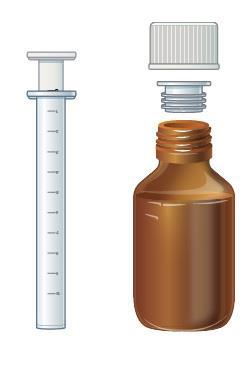
IMPORTANT
DOnot give the medicine to the child without your help.
DOnot use the medicine if it is expired. (Check the expiration date on the label.)
DOnot use the medicine 45 days after the first opening of the bottle. See the Disposalsection for
what to do with the medicine you do not use.
DOnot wash the oral dosing syringe with soap or detergent. DOnot put the syringe in the dishwasher. If
you do, the syringe may not work properly. See points N to P for cleaning instructions.
Do not mix STRATTERA oral solution with food or water as this may alter the taste or
prevent the entire dose from being taken.
STRATTERA causes eye irritation. Avoid contact with eyes.If the medicine gets into the eyes,
immediately flush your eyes with water and contact a doctor. Wash your hands and surfaces that may
have come into contact with the medicine as soon as possible.
STEP 1 INITIAL BOTTLE PREPARATION
Only before the first use, press the adapter all the way down
into the bottle opening. Do not insert the syringe into the adapter until
the adapter is fully inserted into the bottle.
DOnot rotate the adapter.
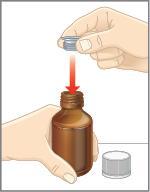
WARNING:The adapter constitutes a CHOKING HAZARD
– small parts. It must be inserted
fully into the bottle for safe use.
STEP 2 GET READY
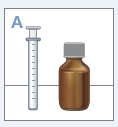
Prepare what you will need:
- Medicine bottle
- Oral dosing syringe
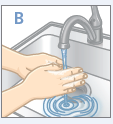
Wash your hands with water and soap.
Write the child’s dose here:
________ ml
Make sure you use the exact dose prescribed by the child’s doctor.
If the child’s dose is10 ml OR LESS, you will use the syringe 1 time.
If the child’s dose isMORE THAN 10 mlbut NOT more than 20 ml, you will use the same syringe 2 times.
If the child’s dose isMORE THAN 20 ml, you will use the same syringe 3 times.
STEP 3 PREPARE THE DOSE
Press the cap down while turning it counterclockwise.
Remove the cap from the bottle.
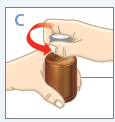
Push the plunger all the way to the end of the syringe.
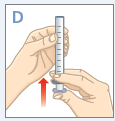
Insert the end of the syringe into the opening of the adapter.
Make sure the end of the syringe is completely inside
the adapter.
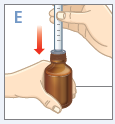
Turn the bottle and syringe upside down.
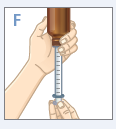
Hold the bottle and syringe with 1 hand. With the other hand, pull the
plunger down to draw the correct amount of medicine
into the syringe.
Check that the correct dose is in the syringe.
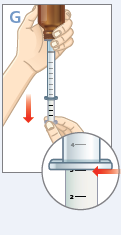
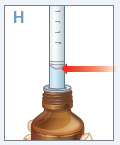
Turn the bottle upright and place it on a flat surface.
Check if there is air in the syringe. If there is, return the medicine to
the bottle and repeat steps D to H. The presence of air can lead to
an incorrect dosage.
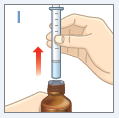
Remove the syringe from the bottle.
DOnot touch the plunger.
STEP 4 GIVE THE MEDICINE
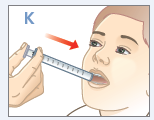
Place the end of the syringe in a corner of the child’s mouth.
Tell the child not to bite the syringe.
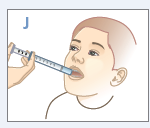
Push the plunger down until ALL the medicine is
in the child’s mouth.
DOnot spray the medicine into the back of the throat. Make sure
the child swallows all the medicine.
If the child’s dose isMORE THAN 10 ml, repeat steps D to K,
to give the child the next part of the dose. Use the same
syringe. See the dosage tableon the other side of this leaflet.
Make sure you use the exact dose prescribed by the child’s
doctor.

SIDE 1
STEP 5 PUT EVERYTHING AWAY
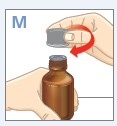
Screw the cap onto the bottle securely.
DOnot remove the adapter. The cap fits onto it.
Fill a cup with clean water.
DOnot wash the oral dosing syringe with soap or detergent.
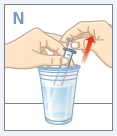
DOnot remove the plunger from the oral dosing syringe. Place
the end of the syringe in the water. Pull the plunger up to fill the
syringe with water.
Push the plunger down and spray the water into the cup or the
sink.
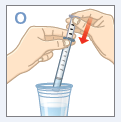
Shake excess water from the syringe.
Dry the syringe with a paper towel.
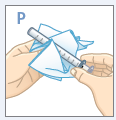
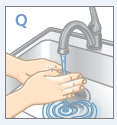
Wash your hands and the child’s hands with water and soap.
DOnot touch your eyes after handling STRATTERA.
STRATTERA may irritate your eyes.
See the other side of this leaflet for frequently asked questions, the dosage tableand other important
information.
SIDE 2
DOSAGE TABLE FOR DOSES GREATER THAN 10 ml
Use this table to understand how to administer the child’s dose. Find the correct dose in the
first column. Talk to your doctor or pharmacist about how to give the child the correct dose.
Put this
amount of
Put this
amount of
Put this
If this is theamount of
dose of
child
STRATTERA
in the syringe the

Nie jesteś pewien, czy ten lek jest odpowiedni dla ciebie?
Omów swoje objawy i leczenie z lekarzem online.
STRATTERA
in the syringe the
STRATTERA
in the syringe the
first timesecond timethird time
11 ml10 ml1 ml0
12 ml10 ml2 ml0
13 ml10 ml3 ml0
14 ml10 ml4 ml0
15 ml10 ml5 ml0
16 ml10 ml6 ml0
17 ml10 ml7 ml0
18 ml10 ml8 ml0
19 ml10 ml9 ml0
20 ml10 ml10 ml0
21 ml10 ml10 ml1 ml
22 ml10 ml10 ml2 ml
23 ml10 ml10 ml3 ml
24 ml10 ml10 ml4 ml
25 ml10 ml10 ml5 ml
Frequently asked questions
- Q. What should I do if there is air in the syringe for oral dosing?
- A. DO NOTadminister the medicine to the child. The presence of air may lead to an incorrect dosage. Return the medicine to the bottle and repeat steps D to H.
- Q. What should I do if there is too much medicine in the syringe?
- A. Keep the tip of the syringe in the bottle. Keep the bottle in an upright position. Push the plunger down until the correct dose is in the syringe.
- Q. What should I do if there is not enough medicine in the syringe?
- A. Keep the tip of the syringe in the bottle. Hold the bottle upside down. Pull the plunger down until the correct dose is in the syringe.
- Q. What should I do if the medicine gets in my eyes or the child's eyes?
- A. Immediately flush your eyes with water and contact a doctor. Wash your hands and surfaces that may have come into contact with the medicine as soon as possible.
- Q. How do I travel with this medicine?
- A. Make sure you have enough STRATTERA for the entire trip. Store the medicine in a safe place, in an upright position at room temperature.
- Q. Can I mix STRATTERA with food or water before giving it to the child?
- A.STRATTERA oral solution should not be mixed with food and water. This may alter the taste of Strattera oral solution or prevent the child from taking the entire dose. You can give the child a glass of water after they have taken the entire dose of medicine.
Storage
This medicine does not require any particular storage conditions.
Keep the bottle out of the reach and sight of children.
Disposal
Medicines should not be disposed of via drains or household waste. Ask your pharmacist how
to dispose of medicines you no longer use. This will help protect the environment.
Strattera 10, 18, 25, 40, 60, 80 e 100 mg hard capsules
Atomoxetine
Important information you should know about the medicine
This medicine is used for the treatment of ADHD
- The full name of ADHD is ‘Attention Deficit Hyperactivity Disorder’.
- The medicine helps your brain activity. It can help you improve attention, concentrate and be less impulsive.
- In addition to this medicine, you also need to receive other types of help for the treatment of ADHD.
Read paragraph 1 for more information.
Before taking this medicine, tell your doctor if:
- you have mental health problems
- you have heart or circulatory problems
- you have serious problems with the blood vessels in the brain, such as a stroke.
Read paragraph 2 for more information.
While you are taking this medicine:
- See your doctor regularly. This is because the doctor will want to check how the medicine is working.
- Do not stop taking the medicine without first talking to your doctor.
- If you have been taking it for more than a year, the doctor may stop the medicine to see if you still need it.
- The most common side effects in children and young people are: headache, stomach pain, not feeling hungry, nausea or vomiting, drowsiness, increased blood pressure, increased heartbeat (pulse).
- The most common side effects in adults are: nausea, dry mouth, headache, not feeling hungry, difficulty sleeping, increased blood pressure, increased heartbeat (pulse).
Read paragraphs 3 and 4 for more information.
Contact your doctor immediately if any of the following occurs:
- change in mood and how you feel
- you feel any heart problems, for example a fast or unusual heartbeat
Read paragraphs 2 and 4 for more information.
Read this leaflet carefully before taking this medicine, as it contains
important information for you
- Keep this leaflet. You may need to read it again.
- If you have any questions, ask your doctor or pharmacist.
- This medicine has been prescribed only for you. Do not give it to other people even if their symptoms are the same as yours, as it could be dangerous.
- If any side effects occur, including those not listed in this leaflet, tell your doctor or pharmacist.
Contents of this leaflet:
- 1. What is Strattera and what it is used for
- 2. What you need to know before you take Strattera
- 3. How to take Strattera
- 4. Possible side effects
- 5. How to store Strattera
- 6. Contents of the pack and other information
- 1. What is Strattera and what it is used for
What it is used for
Strattera contains atomoxetine and is used for the treatment of attention deficit
hyperactivity disorder (ADHD). It is used
- in children over 6 years of age
- in young people
- in adults It is only used as part of a comprehensive treatment of the illness that also requires interventions that do not involve the use of medicines, such as psychological and behavioral support therapy.
It should not be used as a treatment for ADHD in children under 6 years of age, as it is
not known whether this medicine works or is safe in these people.
In adults, Strattera is used for the treatment of ADHD when the symptoms are very bothersome and
affect your work or social life and when you have had the symptoms of the illness since
childhood.
How it works
Strattera increases the levels of noradrenaline in the brain. Noradrenaline is a chemical
substance produced naturally that increases attention and reduces impulsivity and hyperactivity in patients
with ADHD. This medicine has been prescribed to help control the symptoms of ADHD.
This medicine is not a stimulant and therefore is not addictive.
It may take several weeks after starting treatment with this medicine
for your symptoms to improve completely.
About ADHD
Children and young people with ADHD find it difficult:
- to stay still and
- to concentrate. It is not their fault if they cannot do these things. Many children and young people try to do these things. However, with ADHD they may have problems with everyday life. Children and young people with ADHD may have difficulty learning and doing homework. They struggle to behave well at home, at school or in other places. ADHD does not affect the intelligence of a child or young person.
Adults with ADHD find it difficult to do all the things that children find difficult to do;
however, this can lead to problems with:
- work
- interpersonal relationships
- low self-esteem
- education
2. What you need to know before taking Strattera
DO NOT take Strattera if:
- you are allergic to atomoxetine or any of the other ingredients of this medicine (listed in section 6);
- you have taken a medicine known as a monoamine oxidase inhibitor (MAOI) in the last two weeks, such as phenelzine. An MAOI medicine is sometimes used to treat depression and other mental disorders; if you take Strattera together with an MAOI medicine, serious or life-threatening side effects may occur. You also need to wait at least 14 days after stopping treatment with Strattera before starting to take an MAOI medicine;
- you have an eye disease called closed-angle glaucoma (increased pressure in the eye);
- you have serious heart problems that may be affected by an increase in heart rate and/or blood pressure, as this may be an effect of Strattera;
- you have serious problems with blood vessels in the brain such as a stroke, a swelling or weakening of a part of a blood vessel (aneurysm) or a narrowing or blockage of the blood vessels;
- you have a tumor of the adrenal gland (pheochromocytoma).
Do not take Strattera if any of the above conditions apply to you. If you are not sure, ask your doctor or pharmacist before taking Strattera. This is because Strattera may worsen these problems.
Warnings and precautions
Both adults and children should be informed about the following warnings and precautions. Before taking Strattera, talk to your doctor or pharmacist if you have:
- thoughts of suicide or of trying to harm yourself;
- heart problems (including heart defects) or an increased heart rate. Strattera can increase your heart rate (pulse). Sudden death has been reported in patients with heart defects;
- high blood pressure. Strattera can increase blood pressure;
- low blood pressure. Strattera can cause dizziness or fainting in people with low blood pressure;
- problems related to sudden changes in blood pressure or heart rate;
- cardiovascular disease or a previous medical history of stroke;
- liver problems. A lower dose may be needed;
- psychotic symptoms including hallucinations (such as hearing voices or seeing things that are not there), believing things that are not true or being suspicious;
- mania (feeling euphoric or overexcited with unusual behavior) and agitation;
- aggressiveness;
- unfriendly and angry feelings (hostility);
- a history of epilepsy or seizures for any other reason. Strattera may increase the frequency of seizures;
- moods that are different from normal (mood swings) or feeling very unhappy;
- difficulty controlling yourself, repeated spasms of some part of the body or if you repeat sounds and words.
Contact your doctor or pharmacist before starting treatment if any of the situations above apply to you. This is because Strattera may worsen these problems. Your doctor will want to check how the medicine is affecting you.
Checks your doctor will perform before you start taking Strattera
These checks are to help decide if Strattera is the right medicine for you.
Your doctor will measure
- your blood pressure and heart rate (pulse) before and during the time you take Strattera;
- your height and weight if you are a child or adolescent during the time you take Strattera.
Your doctor will talk to you about:
- any other medicines you are taking;
- if there is a family history of sudden unexplained death;
- any other health problems (such as heart problems) that you or your family may have.
It is important that you provide as much information as possible. This will help your doctor decide if Strattera is the right medicine for you. Your doctor may decide that further medical tests are needed before you start taking this medicine.
Other medicines and Strattera
Tell your doctor or pharmacist if you are taking, have recently taken or might take any other medicines, including those available without a prescription. Your doctor will decide if you can take Strattera with these other medicines and in some cases may need to adjust the dose or increase it very slowly.
Do not take Strattera with medicines called MAOIs (monoamine oxidase inhibitors) used for depression. See section 2 “Do not take Strattera”.
If you are taking other medicines, Strattera may affect their proper functioning or cause unwanted effects. If you are taking any of the following medicines, consult your doctor or pharmacist before taking Strattera:
- medicines that increase blood pressure or that are used to control blood pressure;
- medicines such as antidepressants, for example imipramine, venlafaxine, mirtazapine, fluoxetine and paroxetine;
- some cough and cold remedies that contain medicines that can affect blood pressure. It is important that you check with the pharmacist when taking any of these products;
- some medicines used to treat mental disorders;
- medicines that are known to increase the risk of seizures;
- some medicines because of which Strattera remains in the body longer than normal (such as quinidine and terbinafine);
- salbutamol (a medicine for asthma) which, when taken by mouth or by injection, can make your heart beat faster, but this is not related to a worsening of asthma.
The medicines listed below may cause an increased risk of abnormal heart rhythm if they are taken with Strattera:
- medicines used to control heart rhythm;
- medicines that change the concentration of salts in the blood;
- medicines for the prevention and treatment of malaria;
- some antibiotic medicines (such as erythromycin and moxifloxacin).
If you are not sure whether any of the medicines you are taking are included in the list above, ask your doctor or pharmacist before taking Strattera.
Pregnancy and breastfeeding
It is not known whether this medicine may have effects on the fetus or whether it passes into breast milk.
- This medicine should not be used during pregnancy unless your doctor has advised you to do so.
- You should also avoid taking this medicine during breastfeeding or should stop breastfeeding.
If:
- you are pregnant or breastfeeding
- you suspect you are pregnant or are planning a pregnancy
- you intend to breastfeed, ask your doctor or pharmacist for advice before taking this medicine.
Driving and using machines:
After taking Strattera you may feel tired, sleepy or dizzy. You should be careful when driving vehicles or using machines until you know how Strattera affects you. If you feel tired, sleepy or dizzy, do not drive vehicles or use machines.
Important information about the contents of the capsules
Do not open the Strattera capsules because the contents of the capsule may irritate your eyes. If the contents of the capsules come into contact with your eyes, the affected eye should be washed immediately with water and medical assistance should be sought. Your hands and any other part of the body that may have come into contact with the contents of the capsules should be washed as soon as possible.
3. How to take Strattera
- Take this medicine following exactly the instructions of your doctor or pharmacist. If you have any doubts, ask your doctor or pharmacist. The usual dosage is one or two times a day (the first dose in the morning and the second in the late afternoon or early evening).
- Children should not take this medicine without the help of an adult.
- If you are taking Strattera once a day and experience drowsiness and nausea, your doctor may change the dosage to twice a day.
- The capsules must be swallowed whole, regardless of meals.
- The capsules must not be opened and the internal contents of the capsules must not be removed and taken in any other way.
- Taking the medicine every day at the same time can help you remember to take it.
How much to take
If you are a child or adolescent (6 years or older)
Your doctor will tell you the dose of Strattera you need to take and will calculate the dose based on your weight
body weight. They will normally start you on a lower dose before increasing the dose of
Strattera you need to take based on your body weight.
- Body weight up to 70 kg: an initial total daily dose of 0.5 mg per kg of body weight for at least 7 days. The doctor may then decide to increase it to the usual maintenance dose of 1.2 mg per kg of body weight per day.
- Body weight over 70 kg: an initial total daily dose of 40 mg for at least 7 days. The doctor may then decide to increase it to the usual maintenance dose of 80 mg per day. The maximum daily dose that your doctor may prescribe is 100 mg.
Adults
- Strattera must be started with a total daily dose of 40 mg for at least 7 days. The doctor may then decide to increase it to the usual maintenance dose of 80-100 mg per day. The maximum daily dose that your doctor may prescribe is 100 mg.
If you have liver problems, your doctor may prescribe a lower dose.
If you take more Strattera than you should
Contact your doctor or the nearest hospital emergency room immediately and tell them how many
capsules you have taken. The most commonly reported symptoms in case of overdose are gastrointestinal
symptoms, drowsiness, dizziness, tremor and abnormal behavior.
If you forget to take Strattera
If you forget to take a dose of Strattera, you should take this dose as soon as possible, but
within 24 hours you should not take a dose higher than the total daily dose.
Do not take a double dose to make up for forgotten doses.
If you stop taking Strattera
If you stop taking Strattera, no undesirable effects usually occur, but
the symptoms of ADHD may return. You should talk to your doctor before stopping
treatment.
Things your doctor will do when you are being treated with the medicine
The doctor will perform some tests
- before starting treatment - to ensure that Strattera is safe and beneficial
- after you have started treatment - will be performed at least every 6 months, but possibly more often
Tests will also be performed if the dose is changed. These tests will include:
- measuring height and weight in children and young people
- measuring blood pressure and heart rate
- checking for any problems or if side effects have worsened while you are taking Strattera.
Long-term treatment
Strattera should not be taken forever. If you take Strattera for more than a year, your doctor
will re-evaluate the treatment to see if the medicine is still necessary.
If you have any further questions about the use of this medicine, ask your doctor or pharmacist.
4. Possible side effects
Like all medicines, this medicine can cause side effects, although not everyone gets them. Although some people experience side effects, most people find Strattera helpful. Your doctor will discuss these side effects with you. Some side effects may be serious. If you experience any of the side effects listed below, contact a doctor immediately.
Not common(may affect up to 1 in 100 people)
- feeling or having a fast heartbeat, changes in heart rhythm
- thoughts or feelings of suicide
- aggression
- unfriendly and angry feelings (hostility)
- changes or mood swings
- severe allergic reaction with symptoms of:
- swelling of the face and tongue
- difficulty breathing
- hives (small raised patches of skin with itching)
- convulsions
- psychotic symptoms including hallucinations (such as hearing voices or seeing things that are not there), believing things that are not true, or being suspicious.
Children and young people under 18 years of age have an increased risk of side effects such as:
- thoughts or feelings of suicide (may affect up to 1 in 100 people)
- changes or mood swings (may affect up to 1 in 10 people).
Adults have a reduced risk of side effects (may affect up to 1 in 1000 people) such as:
- convulsions
- psychotic symptoms including hallucinations (such as hearing voices or seeing things that are not there), believing things that are not true, or being suspicious.
Rarely (may affect up to 1 in 1000 people)
- liver damage
You must stop taking Strattera and contact your doctor immediately if you experience any of the following symptoms:
- dark urine
- yellowing of the skin or eyes
- pain in the abdomen that hurts when you press on the right side of the abdomen just below the ribs
- feeling unwell (nausea) without justification
- fatigue
- itching
- feeling like you have the flu.
The following are other side effects that have been reported. If these worsen, see your doctor or pharmacist.
| n Very common side effects (may affect more than 1 in 10 people) | |
| CHILDREN and YOUNG PEOPLE over 6 years | ADULTS |
|
|
| Common side effects (may affect up to 1 in 10 people) | |
| CHILDREN and YOUNG PEOPLE over 6 years | ADULTS |
|
|
| Uncommon side effects (may affect up to 1 in 100 people) | |
| CHILDREN and YOUNG PEOPLE over 6 years | c ADULTS |
| a
|
| n Rare side effects (may affect up to 1 in 1000 people) | |
| CHILDREN and YOUNG PEOPLE over 6 years | ADULTI |
a
|
|
Effects on growth
Some children have reported reduced growth (in weight and height) when they started taking Strattera. However, with long-term treatment, children regain the weight and height expected for their age. The doctor will check your child's weight and height during the treatment period. If your child is not growing or gaining weight as expected, the doctor may decide to change the child's dose or temporarily stop Strattera.
Reporting side effects
If you experience any side effect, including those not listed in this leaflet, tell your doctor or pharmacist.
You can also report side effects directly through the national reporting system at www.agenziafarmaco.gov.it/it/responsabili .
By reporting side effects you can help provide more information on the safety of this medicine.
5. How to store Strattera
Keep this medicine out of the sight and reach of children.
Do not use this medicine after the expiry date which is stated on the packaging and blister
after “Exp.”. The expiry date refers to the last day of that month.
This medicine does not require any particular storage conditions.
Do not dispose of any medicine in waste water or household waste. Ask your pharmacist how
to dispose of medicines you no longer use. This will help protect the environment.
6. Package Contents and Other Information
What Strattera 10, 18, 25, 40, 60, 80 and 100 mg hard capsules contain
- The active ingredient is atomoxetine hydrochloride. Each hard capsule contains atomoxetine hydrochloride equivalent to 10 mg, 18 mg, 25 mg, 40 mg, 60, 80 and 100 mg of atomoxetine.
- The other ingredients are pregelatinized starch and dimethicone.
- The capsule shell contains sodium lauryl sulfate and gelatin. The colorings of the capsule shell are: Yellow iron oxide E172 (18 mg, 60 mg, 80 mg and 100 mg) Titanium dioxide E171 (10 mg, 18 mg, 25 mg, 40 mg, 60 mg, 80 mg and 100 mg) FD&C Blue 2 (indigo carmine) E132 (25 mg, 40 mg and 60 mg) Red iron oxide E172 (80 mg and 100 mg) Edible black ink (containing shellac and black iron oxide E172).
Description of the appearance of Strattera and package contents
10 mg hard capsules (white in color, with the inscription Lilly 3227/10 mg, approximately 15.5-16.1 mm long)
18 mg hard capsules (golden/white in color, with the inscription Lilly 3238/18 mg, approximately 15.5-
16.1 mm long)
25 mg hard capsules (blue/white in color, with the inscription Lilly 3228/25 mg, approximately 15.5-
16.1 mm long)
40 mg hard capsules (blue in color, with the inscription Lilly 3229/40 mg, approximately 15.5-16.1 mm long)
60 mg hard capsules (blue/golden in color, with the inscription Lilly 3239/60 mg, approximately 17.5-
18.1 mm long)
80 mg hard capsules (brown/white in color, with the inscription Lilly 3250/80 mg, approximately 17.5-
18.1 mm long)
100 mg hard capsules (brown in color, with the inscription Lilly 3251/100 mg, approximately 19.2-
19.8 mm long)
Strattera capsules are available in packs of 7, 14, 28 or 56 capsules. Not all pack sizes may be marketed.
Marketing Authorisation Holder and Manufacturer
The Marketing Authorisation Holder is:
Eli Lilly Italia S.p.A., Via Gramsci 731/733, 50019 Sesto Fiorentino (FI)
The manufacturer is:
Lilly S.A., Avda. de la Industria 30, 28108 Alcobendas, Madrid. Spain
This medicinal product is authorised in the Member States of the European Economic Area with the
following designations:
Austria, Belgium, Croatia, Cyprus, Czech Republic, Denmark, Estonia, Finland, Germany, Greece,
Hungary, Iceland, Ireland, Italy, Latvia, Liechtenstein, Lithuania, Luxembourg, Malta,
Netherlands, Norway, Poland, Portugal, Romania, Slovakia, Slovenia, Spain, Sweden and United
Kingdom: Strattera.
<----------------------------------------------------------------------------------------------------------->
Information for children and young people
This information will help you learn the most important things about the medicine called
Strattera.
If you don’t like reading, someone like your mum, dad or the person who cares for
you can read it to you and answer any questions.
It may be helpful to read it a little bit at a time.
Why have I been given this medicine?
This medicine can help children and young people with ADHD.
- ADHD can:
- make you rush around too much
- make it hard to pay attention
- make you act quickly without thinking about what will happen next (impulsivity)
- Get in the way of learning, relationships with friends and how you feel about yourself. It’s not your fault.
While you are taking this medicine
- As well as taking this medicine you will also get other help to cope with ADHD, such as talking to ADHD specialists.
- This medicine should help. But it doesn’t cure ADHD.
- You will need to go to the doctor several times a year for check-ups. This is to make sure the medicine is working and that you are growing and developing well.
- Girls must tell the doctor immediately if they think they might be pregnant. We don’t know how this medicine works on the unborn baby. If you are having sex, talk to your doctor about contraception.
Some people cannot take this medicine
You must not take this medicine if:
- you have taken a medicine known as a monoamine oxidase inhibitor (MAOI), such as phenelzine, in the last two weeks
- you have an eye condition called closed-angle glaucoma (increased pressure in the eye)
- you have serious problems with your heart
- you have serious problems with the blood vessels in your brain
- you have a tumor of the adrenal gland
Some people need to talk to their doctor before starting to take this
medicine
You must talk to your doctor if:
- you are pregnant or breastfeeding
- you are taking other medicines - your doctor needs to know about all the medicines you are taking
- you have thoughts of harming yourself or others
- you have heart problems that make your heart beat too fast or skip beats even though you are not exercising
- you hear voices or see things that other people don’t see or hear
- you get angry easily
How do I take this medicine (capsules)?
- Swallow this medicine with water, regardless of meals.
- The capsules must not be opened. If the capsules break and the contents inside the capsules come into contact with your skin or eyes, get help from an adult.
- Your doctor will tell you how many times a day you need to take this medicine.
- Taking this medicine every day at the same time can help you remember to take it.
- Do not stop taking the medicine without talking to your doctor first.
Possible side effects
Side effects are unwanted things that can happen when you take a medicine.
If you get any of the following side effects, tell an adult you trust immediately. They will then talk to the doctor. The main things that could happen are:
- Your heart beating faster than normal
- Being very depressed and unhappy or wanting to harm yourself
- Feeling aggressive
- Feeling unhappy or having your mood change (mood swings)
- Showing signs of an allergic reaction such as a skin rash, itching or hives, swelling of the face, lips, tongue or other parts of the body, shortness of breath, wheezing or difficulty breathing
- Convulsions
- Seeing, feeling or hearing things that other people don’t see, feel or hear
- Liver damage: pain in the stomach that hurts when pressed (tenderness) on the right side just below the ribs
Because the medicine can make you sleepy, it is important not to do outdoor sports, such as
riding a horse or bicycle, swimming or climbing trees. You could hurt yourself and
others.
If you feel unwell in any way while taking the medicine, tell
an adult you trust immediately.
Other things to remember
- Make sure you keep the medicine in a safe place so that no one else takes it, especially younger brothers or sisters.
- The medicine is only for you - do not let anyone else take it. It can help you, but it could be harmful to others.
- If you forget to take the medicine, do not take two capsules the next time. Just take one capsule at the next regular time.
- If you take too much medicine, tell your mum, dad or the person who cares for you immediately.
- It is important not to take too much medicine or you will get sick.
- Do not stop taking the medicine until your doctor says it is okay.
Who should I ask if there is something I don’t understand?
Your mum, dad, the person who cares for you, your doctor, the nurse or the pharmacist
will be able to help.

Zacząłeś przyjmować lek i masz pytania?
Omów swoje objawy i leczenie z lekarzem online.

- Kraj rejestracji
- Postać farmaceutycznaHard capsule, 10 MG
- Kod ATCN06BA09
- Substancja czynna
- Wymaga receptyTak
- Producent
- Te treści mają charakter wyłącznie informacyjny i nie zastępują konsultacji lekarskiej.
- Zamienniki STRATTERAPostać farmaceutyczna: Coated tablet, 5 MGSubstancja czynna: dexamfetamineProducent: MEDICE ARZNEIMITTEL PUETTER GMBH & CO.KGWymaga receptyPostać farmaceutyczna: Modified-release hard capsule, 10 MGSubstancja czynna: methylphenidateWymaga receptyPostać farmaceutyczna: Modified-release hard capsule, 5 MGSubstancja czynna: methylphenidateProducent: MEDICE ARZNEIMITTEL PUETTER GMBH & CO.KGWymaga recepty
Odpowiedniki STRATTERA w innych krajach
Leki z tą samą substancją czynną dostępne w innych krajach.
Odpowiednik STRATTERA w Hiszpania
Odpowiednik STRATTERA w Polska
Odpowiednik STRATTERA w Ukraina
Lekarze online w sprawie STRATTERA
Omów stosowanie STRATTERA, bezpieczeństwo i ocenę zasadności recepty zgodnie z obowiązującymi przepisami.









Uzyskaj receptę na STRATTERA online
Wypełnij 2-minutowy formularz
Opisz swoje objawy, historię choroby i lek, o który prosisz.
Wybierz lekarza lub pozwól nam przydzielić
Wybierz specjalistę lub dopasujemy Cię do najbliższego dostępnego lekarza.
Lekarz analizuje Twój przypadek
Zazwyczaj w ciągu 30 minut. Może zadawać dodatkowe pytania przez czat.
Odbierz w dowolnej aptece
Recepta elektroniczna wysłana na Twój e-mail — ważna w całej Polsce.
Często zadawane pytania
STRATTERA wymaga recepty w Włochy. Możesz skonsultować się z lekarzem online, aby sprawdzić, czy ten lek może być odpowiedni w Twojej sytuacji.
Substancją czynną w STRATTERA jest atomoxetine. Informacja ta pomaga rozpoznać leki o tym samym składzie, ale pod różnymi nazwami handlowymi.
STRATTERA jest produkowany przez ELI LILLY ITALIA S.P.A.. Nazwy handlowe i opakowania mogą się różnić w zależności od dystrybutora.
Lekarze, tacy jak Lekarze rodzinni, Psychiatrzy, Dermatolodzy, Kardiolodzy, Endokrynolodzy, Gastroenterolodzy, Pulmonolodzy, Nefrolodzy, Reumatolodzy, Hematolodzy, Zakaźnicy, Alergolodzy, Geriatrzy, Pediatrzy, Onkolodzy, mogą ocenić, czy stosowanie STRATTERA jest odpowiednie w Twoim przypadku, w zależności od sytuacji klinicznej i lokalnych przepisów. Możesz umówić konsultację online, aby omówić objawy i możliwe dalsze kroki.
Polska posiada dobrze rozwiniętą infrastrukturę ochrony zdrowia w dużych miastach, takich jak Warszawa, Kraków, Wrocław i Gdańsk. Apteki są łatwo dostępne i działają zgodnie z obowiązującymi przepisami, zapewniając dostęp do leków na receptę.
Możesz kupić STRATTERA w Warszawie, Krakowie, Wrocławiu lub Gdańsku w każdej aptece, posiadając ważną receptę.
Aby uzyskać receptę, możesz skorzystać z Oladoctor:
Inne leki zawierające tę samą substancję czynną (atomoxetine) to m.in. AMFEXA, EQUASYM, MEDIKINET. Mogą one różnić się nazwą handlową lub postacią, ale zawierają ten sam składnik terapeutyczny. Przed zmianą lub rozpoczęciem nowego leku skonsultuj się z lekarzem.
