



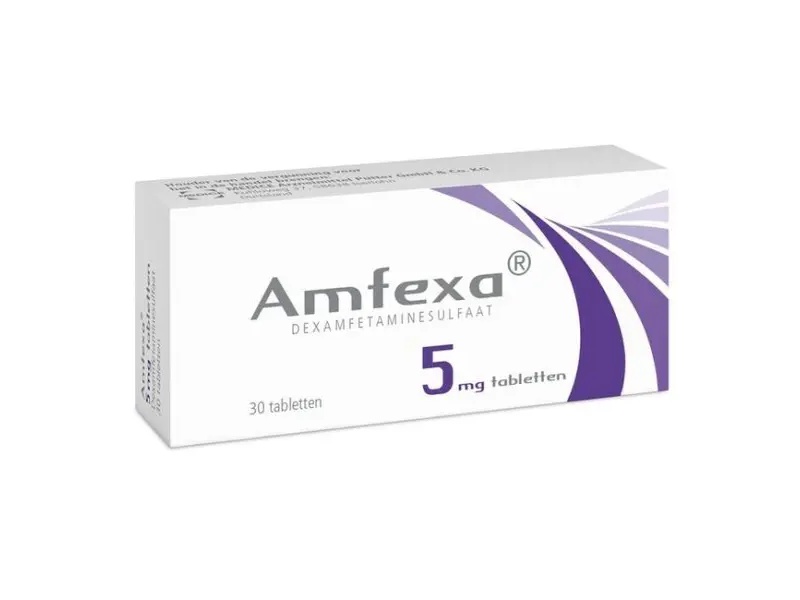
AMFEXA 5 mg Tabletka Powlekana

Ocena recepty online
Lekarz przeanalizuje Twój przypadek i zdecyduje, czy wystawienie recepty jest medycznie uzasadnione.

Porozmawiaj z lekarzem o tym leku
Omów swoje objawy i opcje leczenia podczas szybkiej konsultacji online.



Jak stosować AMFEXA
Treść ulotki
Amfexa 5 mg tablets, 10 mg tablets, 20 mg tablets
desamfetamine sulfate
Read this leaflet carefully before your child starts taking this medicine as it contains important information for you.
- Keep this leaflet. You may need to read it again.
- If you have any questions, ask your doctor or pharmacist.
- This medicine has been prescribed only for your child. Do not give it to other people, even if their symptoms are the same, as it could be dangerous.
- If your child experiences any side effects, including those not listed in this leaflet, tell your doctor or pharmacist. See section 4.
Contents of this leaflet:
- 1. What Amfexa is and what it is used for
- 2. What you need to know before your child takes Amfexa
- 3. How to take Amfexa
- 4. Possible side effects
- 5. How to store Amfexa
- 6. Contents of the pack and other information
1. What is AMFEXA and what is it used for
What is Amfexa
Amfexa tablets contain the active ingredient desamphetamine sulfate.
Amfexa is a psychostimulant. This improves the activity of certain parts of the brain. This medicine
can help to improve attention span, concentration and reduce impulsive behaviour.
What is it used for
Amfexa is used for the treatment of attention deficit hyperactivity disorder (ADHD).
- It is used in children and adolescents aged between 6 and 17 years.
- It is not indicated in all children with ADHD.
- It is used only when another medicine called methylphenidate has not been sufficiently effective.
- It must be used as part of a therapeutic program which generally includes psychological, educational and social interventions.
Treatment with Amfexa must be started and used only under the supervision of a specialist in beha-
vioural disorders of childhood or adolescence.
Contact your doctor if you do not notice any improvement or if you notice a worsening of symptoms in your child after
one month. The doctor may decide that different treatment is necessary.
2. WHAT YOU NEED TO KNOW BEFORE YOUR CHILD TAKES AMFEXA
Do not use Amfexa if your child:
- is allergic (hypersensitive) to desamphetamine or other amphetamine compounds or to any of the other ingredients of Amfexa (listed in section 6)
- has a problem with the thyroid
- has high pressure in the eyes (glaucoma)
- has a tumor of the adrenal gland (pheochromocytoma)
- has an eating problem, is not hungry or does not want to eat (e.g. anorexia nervosa)
- has very high blood pressure or narrowing of the blood vessels, which can cause pain in the arms and legs
- has advanced arteriosclerosis
- has had heart problems in the past, such as heart attack, irregular heartbeat, chest pain and discomfort, heart failure, heart disease or was born with a heart problem
- has had a problem with the blood vessels in the brain, such as stroke, swelling and weakening of a part of a blood vessel (aneurysm), narrowing or blockage of blood vessels, or inflammation of the blood vessels (vasculitis)
- has mental health problems such as:
- a psychopathic or borderline personality disorder
- altered thoughts or visions or schizophrenia
- signs of a severe mood disorder such as: suicidal thoughts or severe depression or mania or mood swings (from manic to depressed, so-called bipolar disorder)
- is taking or has taken in the last 14 days an antidepressant (known as a monoamine oxidase inhibitor) - see section “Other medicines and Amfexa”
- has abused alcohol, prescription drugs or street drugs
- has Tourette's syndrome or other motor or verbal tics
- has repeated and uncontrollable contractions of any part of the body or repeats sounds and words
- has porphyria.
Do not use this medicine if any of the above conditions apply to your child. If you have any doubts, consult your
doctor or pharmacist before using Amfexa because the medicine may worsen these problems.
Warnings and precautions
Consult your doctor or pharmacist before using Amfexa if your child:
- has a blood or liver disease or kidney problems
- has an unstable personality
- has had seizures (convulsions, epilepsy) or abnormal brain scans (EEG) in the past
- is female and has started to have her period (see section “Pregnancy and breastfeeding”)
- has high blood pressure
- has a heart problem not mentioned in the “Do not use Amfexa if your child” section
- has a mental health problem not mentioned in the “Do not use Amfexa if your child” section. This may include mood swings in general, unusual aggressiveness, hallucinations, delusions, paranoia, agitation and anxiety, feelings of guilt or depression.
Before starting treatment, tell your doctor or pharmacist if any of these situations apply to your
child. This is because the medicine may worsen these problems. The doctor will want to monitor the effect of the
medicine on your child.
Checks your doctor will perform before using Amfexa
These checks are to decide if this medicine is suitable for your child. The doctor will ask you
about:
- any other medicines your child is taking
- if there are any cases of sudden unexplained death in your family
- any other medical problems (e.g. heart problems) that affect you or your family
- how your child feels, for example if they feel in a good or bad mood, if they have had strange thoughts or if they have experienced these feelings before
- if you have a family history of “tics” (repeated and uncontrollable contractions of any part of the body or repetition of sounds and words)
- any mental health or behavioral problems that you or other family members have had.
The doctor will assess whether your child is at risk of having mood swings (from manic to depressed, the so-called
“bipolar disorder”). They will review your child's mental health history and check if anyone in your
family has a history of suicide, bipolar disorder or depression.
It is important that you provide as much information as possible. This will help the doctor decide if Amfexa is the
right medicine for your child. The doctor may decide that further medical examinations are necessary before
your child starts taking this medicine.
Effect on weight/growth
Amfexa may cause a reduction in weight in some children and adolescents.
- A failure to gain weight may occur.
- The doctor will carefully monitor your child's height and weight and their diet.
- If your child is not growing as they should, the doctor may interrupt the treatment with Amfexa for a short period. In case of surgeryTell the doctor if your child needs to undergo surgery. Amfexa should not be taken on the day of surgery if a certain type of anesthetic is used. This is because a sudden increase in blood pressure may occur during the operation. Drug testsThis medicine may give a positive result in tests to detect drug use. For athletes: the use of the drug without therapeutic need constitutes doping and may still result in a positive doping test. Drug/laboratory test interactionsThis medicine may interfere with the results of laboratory tests. Children and adolescentsAmfexa is not indicated for the treatment of ADHD in children under 6 years of age and adults. It is not known if it is safe or if it may be beneficial for these people.
Other medicines and Amfexa
Tell your doctor or pharmacist if your child is taking, has recently taken or might take any other
medicines, including over-the-counter medicines.
Monoamine oxidase inhibitors
Your child must not use this medicine if they are taking a medicine called a “monoamine oxidase inhibitor” (MAOI) used for depression or if they have taken an MAOI in the last 14 days.
Taking an MAOI with desamphetamine can cause a sudden increase in blood pressure.
If your child is taking other medicines, this medicine may affect their effectiveness or may cause
side effects. If your child is taking any of the following medicines, consult your doctor or
pharmacist before they use Amfexa:
- other medicines for depression, e.g. tricyclic antidepressants and selective serotonin reuptake inhibitors
- medicines for severe mental health problems, e.g. phenothiazines and haloperidol
- medicines for epilepsy, e.g. anticonvulsants such as phenobarbital, phenytoin, primidone and ethosuccimide
- medicines that help with alcohol withdrawal, e.g. disulfiram
- medicines used to lower or raise blood pressure, e.g. guanethidine, clonidine, reserpine or alpha-methyltyrosine, or beta-blockers such as propranolol
- some cough and cold remedies containing medicines that can affect blood pressure It is important to consult your pharmacist before buying any of these products
- medicines that thin the blood to prevent blood clots, e.g. coumarin anticoagulants
- any medicine containing glutamic acid, HCl, ascorbic acid, ammonium chloride, sodium phosphate acid, sodium bicarbonate, acetazolamide, thiazides
- any of the following medicines: beta-blockers, antihistamines, lithium, norepinephrine, morphine and meperidine.
If you have any doubts about whether the medicines your child is taking are among those listed above,
ask your doctor or pharmacist for advice before letting them use this medicine.
Amfexa with alcohol
You should not consume alcohol while taking this medicine. Remember that some foods and some
medicines contain alcohol.
Pregnancy and breastfeeding
Available data on the use of Amfexa in the first three months of pregnancy do not indicate an increased risk
of birth defects in the baby, but there may be an increased risk of pre-eclampsia (a condition that usually occurs after 20 weeks of pregnancy, characterized by high blood pressure and protein in the urine) and preterm birth. Newborns exposed to amphetamine during pregnancy
may experience withdrawal symptoms (changes in behavior, including excessive crying, mood instability or irritability, hyperactivity and pronounced fatigue).
If your daughter is pregnant, suspects she may be pregnant, or is breastfeeding, ask your doctor or
pharmacist for advice before using this medicine.
- The doctor will talk to her about contraception.
- If your daughter is pregnant, she may need to stop taking the medicine.
- This medicine may pass into human breast milk. Therefore, the doctor will decide whether your daughter should stop breastfeeding or taking this medicine.
Driving and using machines
Your child may experience dizziness, focusing problems or blurred vision while taking
this medicine. If so, it may be dangerous to perform activities such as driving, using machines, riding a bicycle or horseback riding or climbing trees.
Amfexa contains isomalt (E953)
If your doctor has diagnosed your child with an intolerance to certain sugars, contact them before letting
them take this medicine.
3. HOW TO TAKE AMFEXA
How much Amfexa to take
Use this medicine following exactly the instructions of your doctor. If you have any doubts, ask your doc-
tor or pharmacist.
The normally recommended dose is between 5 and 20 mg.
- Your doctor will usually start treatment at a low dose with a 5 mg tablet. The dose will be gradually in-
creased by one 5 mg tablet at weekly intervals, as needed. - The maximum daily dose is 20 mg (in rare cases 40 mg may be necessary).
- The doctor will decide whether to administer Amfexa once or twice a day based on the course of symp-
toms at different times of the day.
How to take Amfexa
The medicine is for oral use.
Your child should take Amfexa tablets with a glass of water, preferably during or
immediately after meals. Amfexa tablets should be taken at the same time in relation to meals. In ge-
neral, the last dose should not be administered too late after lunch to avoid sleep disturbances.
The tablets have a score line and can be divided if necessary. The score line
serves to facilitate breaking the tablet in case you have difficulty swallowing it whole and not to
divide it into equal doses. To divide the tablet, place it on a hard surface with the smooth,
cross-hatched side facing down, then gently press with your index finger in the center of the side facing
up. The tablet will divide into four parts.
If you do not notice any improvement in your child, inform your doctor, who may decide that a
different treatment is necessary.
Prolonged treatment
The doctor will decide the duration of treatment. If your child takes this medicine for more than a year, the
doctor should interrupt the treatment for a short period, for example during school holidays.
This will help to understand if the medicine is still necessary.
Incorrect use of Amfexa
If Amfexa is not used correctly, it can cause abnormal behavior. This can also
mean that your child starts to become dependent on the medicine. Inform your doctor if your child has ever
abused or been dependent on alcohol, prescription drugs or street drugs.
This medicine is only for your child. Do not give it to other people, even if their symptoms are similar.
If your child takes more Amfexa than they should
Call a doctor or ambulance immediately, telling them how much Amfexa has been taken. Show the doctor the
The signs of overdose may include: excitement, hallucinations, seizures leading to coma,
irregular and rapid heartbeat and reduced breathing.
If your child forgets to take Amfexa
Do not give a double dose to make up for a missed dose. If your child forgets a dose,
wait until the time of the next dose.
If your child stops taking Amfexa
If your child suddenly stops taking this medicine, they may experience extreme fatigue,
depression, mood disorders, agitation, sleep disturbances, increased appetite or involun-
tary movements. The doctor may want to gradually reduce the amount of medicine taken each
day before stopping it completely. Talk to your doctor before stopping Amfexa.
If you have any doubts about the use of this medicine, ask your doctor or pharmacist.
4. POSSIBLE SIDE EFFECTS
Like all medicines, this medicine can cause side effects, although not everybody gets them.
Your doctor will tell you about these side effects.
Stop using Amfexa and immediately contact a doctor or go to the emergency room if you
experience the following symptoms:
- hallucinations, psychosis/psychotic reactions, suicidal behavior (very rare: may affect up to 1 in 10,000 people)
- severe allergic reactions causing swelling of the face, tongue or throat; difficulty swallowing; hives and difficulty breathing (angioedema/anaphylaxis) (Not known: frequency cannot be estimated from the available data)
- abnormal muscle breakdown with symptoms such as muscle pain, muscle cramps or muscle weakness (rhabdomyolysis) unexplained (Not known: frequency cannot be estimated from the available data)
Other side effects
Very common: may affect more than 1 in 10 people
- decreased appetite, reduced weight gain and weight loss during prolonged use in children
- difficulty sleeping
- nervousness
Common: may affect up to 1 in 10 people
- irregular or increased heartbeat, more noticeable heartbeat
- abdominal pain and/or cramps, nausea, vomiting, dry mouth These effects usually occur at the beginning of treatment and may be reduced by taking the medicine with meals.
- changes in blood pressure and heart rate (usually increases)
- joint pain
- feeling dizzy or “lightheaded”, jerky or involuntary movements, headache, hyperactivity
- abnormal behavior, aggressiveness, excitement, anorexia, anxiety, depression, irritability
Rare: may affect up to 1 in 1,000 people
- angina pectoris
- difficulty with visual acuity and focusing, blurred vision, dilated pupils
- reduced growth in height during prolonged use in children
- fatigue
- skin rash, hives
Very rare: may affect up to 1 in 10,000 people
- decreased red blood cells, which can cause pale skin and weakness or shortness of breath, changes in the number of blood cells (leukopenia, thrombocytopenia, thrombocytopenic purpura)
- cardiac arrest
- Tourette's syndrome
- abnormal liver function, ranging from increased liver enzymes to hepatic coma
- muscle cramps
- convulsions, involuntary movements (choreoathetotic movements), bleeding inside the skull (intracranial hemorrhage)
- suicide, tics, worsening of pre-existing tics
- red, itchy skin lesions (erythema multiforme) or scaly skin patches (exfoliative dermatitis), recurrent skin rashes that occur in the same place each time the medicine is taken (fixed drug eruption)
- inflammation and/or blockage of blood vessels in the spinal cord and brain (cerebral vasculitis).
Not known: frequency cannot be estimated from the available data
- heart muscle disease (cardiomyopathy), heart attack, sudden death
- inflammation of parts of the large intestine when there is reduced blood supply (ischemic colitis), diarrhea
- chest pain, increased body temperature, allergic reactions
- disturbance of the acid-base balance of the body (acidosis)
- difficulty controlling movements (ataxia), dizziness, abnormal or altered sense of taste, difficulty concentrating, hyperreflexia, stroke, tremor
- confusion, dependence, dysphoria, emotional instability, euphoria, impaired performance on cognitive tests, decreased libido, nightmares, obsessive-compulsive behavior, panic states, paranoia, restlessness
- kidney damage
- impotence
- sweating, hair loss
- circulatory failure
- numbness, tingling and color change (from white to blue, then red) of the fingers and toes when cold (Raynaud's phenomenon)
Reporting of side effects
If your child gets any side effects, talk to your doctor or pharmacist. You can also report side effects directly through the
national reporting system https://www.aifa.gov.it/content/segnalazioni-reazioni-avverse. Reporting side effects can help provide more information on the safety of this
medicine.
5. HOW TO STORE AMFEXA
Keep this medicine out of the sight and reach of children.
Do not use this medicine after the expiry date which is stated on the blister and the package after EXP.
The expiry date refers to the last day of that month.
Do not store at a temperature above 25°C.
Store in the original packaging to protect the medicine from moisture.
Return any unused tablets to the pharmacist.
Do not dispose of any medicine in wastewater or household waste. Ask your pharmacist how to elimi-
nate medicines that you no longer use. This will help protect the environment.
6. PACKAGE CONTENTS AND OTHER INFORMATION
What Amfexa contains:
- The active ingredient is desamphetamine sulfate
- Amfexa 5 mg:One tablet contains 5 mg of desamphetamine sulfate Amfexa 10 mg:One tablet contains 10 mg of desamphetamine sulfate Amfexa 20 mg:One tablet contains 20 mg of desamphetamine sulfate
- The other excipients are: isomalt (E953), see paragraph 2 magnesium stearate crospovidone in 5 mg tablets yellow iron oxide (E 172) in 10 mg tablets red iron oxide (E 172) in 20 mg tablets
Description of the appearance of Amfexa and content of the pack:
Amfexa 5 mg tablets
White, round tablets, clover-shaped, with a cross-shaped notch on the upper side and a cross-shaped notch with an «S» imprinted on each quarter of the lower side.
The notch on the tablet is designed to facilitate breaking it to make swallowing easier and not to divide it into equal doses.
Packs: 20, 28, 30, 40, 50, 56 98 or 100 tablets
Boxes containing tablets packaged in PVC/PE/PVdC blisters on aluminum foil.
Amfexa 10 mg tablets
Yellow, round tablets, clover-shaped with a cross-shaped notch on the upper side and a cross-shaped notch with an «M» imprinted on each quarter of the lower side.
The notch on the tablet is designed to facilitate breaking it to make swallowing easier and not to divide it into equal doses.
Packs: 20, 28, 30, 40, 48, 50 or 56 tablets
Boxes containing tablets packaged in PVC/PVdC blisters on aluminum foil.
Amfexa 20 mg tablets
Reddish, round tablets, clover-shaped with a cross-shaped notch on the upper side and a cross-shaped notch with an «L» imprinted on each quarter of the lower side.
The notch on the tablet is designed to facilitate breaking it to make swallowing easier and not to divide it into equal doses.
Packs: 20, 28, 30, 40 or 56 tablets
Boxes containing tablets packaged in PVC/PVdC blisters on aluminum foil.
Not all pack sizes may be marketed.
Marketing Authorisation Holder and Manufacturer
MEDICE Arzneimittel Pütter GmbH & Co. KG
Kuhloweg 37
58638 Iserlohn
Germany
This medicinal product is authorised in the Member States of the European Economic Area and in the United
Kingdom (Northern Ireland) under the following denominations:
Austria: Philla 5 mg/10 mg/20 mg
Belgium: Attentin 5 mg/10 mg/20 mg
Denmark: Attentin 5 mg/10 mg/20 mg
Estonia: Tentin 5 mg/10 mg/20 mg
Finland: Attentin 5 mg/10 mg/20 mg
France: Tentin 5 mg/10 mg/20 mg
Iceland: Attentin 5 mg/10 mg/20 mg
Italy: Amfexa 5 mg/10 mg/20 mg
Luxembourg: Attentin 5 mg/10 mg/20 mg
Norway: Attentin 5 mg/10 mg/20 mg
Poland: Tentin 5 mg/10 mg/20 mg
Portugal: Tentin 5 mg/10 mg/20 mg
Spain: Tentin 5 mg/10 mg/20 mg
Sweden: Attentin 5 mg/10 mg/20 mg
United Kingdom
(Northern Ireland): Amfexa 5 mg/10 mg/20 mg tablets

Nie jesteś pewien, czy ten lek jest odpowiedni dla ciebie?
Omów swoje objawy i leczenie z lekarzem online.

Zacząłeś przyjmować lek i masz pytania?
Omów swoje objawy i leczenie z lekarzem online.
- Kraj rejestracji
- Postać farmaceutycznaCoated tablet, 5 MG
- Kod ATCN06BA02
- Substancja czynna
- Wymaga receptyTak
- Producent
- Te treści mają charakter wyłącznie informacyjny i nie zastępują konsultacji lekarskiej.
- Zamienniki AMFEXAPostać farmaceutyczna: Modified-release hard capsule, 10 MGSubstancja czynna: methylphenidateWymaga receptyPostać farmaceutyczna: Modified-release hard capsule, 5 MGSubstancja czynna: methylphenidateProducent: MEDICE ARZNEIMITTEL PUETTER GMBH & CO.KGWymaga receptyPostać farmaceutyczna: Coated tablet, 100 MGSubstancja czynna: modafinilProducent: TEVA ITALIA S.R.L.Wymaga recepty
Odpowiedniki AMFEXA w innych krajach
Leki z tą samą substancją czynną dostępne w innych krajach.
Odpowiednik AMFEXA w Hiszpania
Odpowiednik AMFEXA w Polska
Lekarze online w sprawie AMFEXA
Omów stosowanie AMFEXA, bezpieczeństwo i ocenę zasadności recepty zgodnie z obowiązującymi przepisami.








Uzyskaj receptę na AMFEXA online
Wypełnij 2-minutowy formularz
Opisz swoje objawy, historię choroby i lek, o który prosisz.
Wybierz lekarza lub pozwól nam przydzielić
Wybierz specjalistę lub dopasujemy Cię do najbliższego dostępnego lekarza.
Lekarz analizuje Twój przypadek
Zazwyczaj w ciągu 30 minut. Może zadawać dodatkowe pytania przez czat.
Odbierz w dowolnej aptece
Recepta elektroniczna wysłana na Twój e-mail — ważna w całej Polsce.
Często zadawane pytania
AMFEXA wymaga recepty w Włochy. Możesz skonsultować się z lekarzem online, aby sprawdzić, czy ten lek może być odpowiedni w Twojej sytuacji.
Substancją czynną w AMFEXA jest dexamfetamine. Informacja ta pomaga rozpoznać leki o tym samym składzie, ale pod różnymi nazwami handlowymi.
AMFEXA jest produkowany przez MEDICE ARZNEIMITTEL PUETTER GMBH & CO.KG. Nazwy handlowe i opakowania mogą się różnić w zależności od dystrybutora.
Lekarze, tacy jak Lekarze rodzinni, Psychiatrzy, Dermatolodzy, Kardiolodzy, Endokrynolodzy, Gastroenterolodzy, Pulmonolodzy, Nefrolodzy, Reumatolodzy, Hematolodzy, Zakaźnicy, Alergolodzy, Geriatrzy, Pediatrzy, Onkolodzy, mogą ocenić, czy stosowanie AMFEXA jest odpowiednie w Twoim przypadku, w zależności od sytuacji klinicznej i lokalnych przepisów. Możesz umówić konsultację online, aby omówić objawy i możliwe dalsze kroki.
Polska posiada dobrze rozwiniętą infrastrukturę ochrony zdrowia w dużych miastach, takich jak Warszawa, Kraków, Wrocław i Gdańsk. Apteki są łatwo dostępne i działają zgodnie z obowiązującymi przepisami, zapewniając dostęp do leków na receptę.
Możesz kupić AMFEXA w Warszawie, Krakowie, Wrocławiu lub Gdańsku w każdej aptece, posiadając ważną receptę.
Aby uzyskać receptę, możesz skorzystać z Oladoctor:
Inne leki zawierające tę samą substancję czynną (dexamfetamine) to m.in. EQUASYM, MEDIKINET, PROVIJIL. Mogą one różnić się nazwą handlową lub postacią, ale zawierają ten sam składnik terapeutyczny. Przed zmianą lub rozpoczęciem nowego leku skonsultuj się z lekarzem.
