



OXICODONE 40 mg Extended-Release Tablet

Запит на рецепт онлайн
Лікар розгляне ваш випадок і визначить, чи є рецепт медично доцільним.

Поговоріть з лікарем про ці ліки
Обговоріть симптоми та можливі подальші кроки під час короткої онлайн-консультації.



Інструкція із застосування OXIKODONE SANDOTS
Зміст інструкції
Oxicodone Sandoz 40 mg prolonged-release tablets, 60 mg prolonged-release tablets, 80 mg prolonged-release tablets
Generic medicine
Read this leaflet carefully before you start using this medicine as it contains important information for you
- Keep this leaflet. You may need to read it again.
- If you have any questions, ask your doctor or pharmacist.
- This medicine has been prescribed for you only. Do not pass it on to others, even if they have the same symptoms as you, as it may be harmful.
- If you get any side effects, even those not listed in this leaflet, tell your doctor or pharmacist. See section 4.
Contents of this leaflet:
- 1. What Oxicodone Sandoz is and what it is used for
- 2. What you need to know before you take Oxicodone Sandoz
- 3. How to take Oxicodone Sandoz
- 4. Possible side effects
- 5. How to store Oxicodone Sandoz
- 6. Contents of the pack and other information
1. What is Oxicodone Sandoz and what is it used for
Oxicodone Sandoz contains the active ingredient oxycodone hydrochloride which is a potent centrally acting pain reliever
of the opioid family.
Oxicodone Sandoz is used in adults and adolescents over 12 years of age to treat
severe pain that can only be adequately managed with opioid analgesics.
2. What you need to know before you take Oxicodone Sandoz
Do not take Oxicodone Sandoz if:
- you are allergic to the active ingredient or to any of the other ingredients of this medicine (listed in section 6)
- you have breathing problems such as severe respiratory depression
- severe chronic obstructive pulmonary disease, or acute severe bronchial asthma. Symptoms that may include shortness of breath, cough or slower or weaker breathing than expected
- high levels of carbon dioxide in the blood
- you have a heart problem after a long-lasting lung disease (cor pulmonale)
- you suffer from intestinal paralysis (paralytic ileus). Signs may be that your stomach empties more slowly than it should (delayed gastric emptying) or you have severe abdominal pain.
Warnings and precautions
Talk to your doctor or pharmacist before taking Oxicodone Sandoz if
- you are elderly or debilitated
- you suffer from severe impairment of pulmonary function,
- you have liver or kidney problems
- you suffer from thyroid disorders with dryness, feeling cold and swelling of the skin affecting the face and limbs (myxoedema)
- you suffer from impaired thyroid function
- if you suffer from adrenal insufficiency which can cause symptoms including weakness, weight loss, dizziness, feeling or state of unwellness (e.g. Addison's disease)
- enlarged prostate gland causing difficulty in passing urine (in men)
- you suffer from alcoholism or are in alcohol withdrawal
- you have previously suffered from withdrawal symptoms such as agitation, anxiety, tremors or sweating after stopping alcohol or drugs
- you have or have ever had opioid dependence
- you have a mental disorder as a result of intoxication, for example with alcohol (toxic psychosis)
- you have inflammation of the pancreas causing severe pain in the abdomen and back
- you have disorders of the gallbladder or bile duct
- you have an obstructive or inflammatory bowel disease
- you have a head injury, severe headache or feel unwell, this may indicate increased intracranial pressure
- you have low blood pressure
- you have low blood volume (hypovolemia); this can occur with severe bleeding, severe burns, excessive sweating, severe diarrhea or vomiting.
- you have seizures or have a tendency to seizures/convulsions
- you are taking a type of medication known as monoamine oxidase inhibitors (MAOIs) for the treatment of depression or Parkinson's disease, or have taken them in the last two weeks
- you are having or have recently had abdominal surgery.
If any of these conditions apply to you now or have in the past, tell your doctor.
Oxicodone Sandoz can cause dependence. When it is used for a very long time, tolerance to its
effects may develop and increasingly higher doses may then be needed to maintain pain control.
Chronic use of Oxicodone Sandoz can lead to physical dependence and abrupt
discontinuation may result in a withdrawal syndrome (see section 3 “If you stop taking
Oxicodone Sandoz”). Withdrawal symptoms may include yawning, pupil dilation
of the eye, abnormal or excessive tearing, runny nose, tremor or agitation, increased
sweating, anxiety, restlessness, convulsions, insomnia and muscle pain.
An increased sensitivity to pain (hyperalgesia) that does not respond to further dose increases
of oxycodone may occur, especially at high doses. A reduction in the dose of oxycodone or a switch
to another opioid may be necessary.
When the medicine is used as directed in patients with chronic pain, the
risk of developing physical or psychological dependence is significantly reduced and must be assessed
against the potential benefits. Consult your doctor about this.
Prolonged-release tablets must be used with particular caution in patients
with a history (or who currently suffer) of alcohol and drug abuse.
In case of abusive injection (intravenous injection), the excipients of the tablet can cause
destruction (necrosis) of the local tissue, alterations of the lung tissue (pulmonary granulomas) or other
serious and potentially fatal events.
You may see residues of the tablet in your stool. Do not worry, as the active ingredient
oxycodone hydrochloride has been released before while the tablet passed through the gastrointestinal
system and began to be effective in your body.
Athletes must be aware that this medicine can cause a positive result in
"anti-doping" tests.
The use of Oxicodone Sandoz as a doping agent can be dangerous to health.
For those who engage in sports: the use of the drug without therapeutic need constitutes
doping and may still result in a positive anti-doping test.
Children
Oxicodone Sandoz prolonged-release tablets have not been studied in children under 12
years of age. Therefore, safety and efficacy have not been demonstrated and the use of Oxicodone
Sandoz in children under 12 years of age is not recommended.
Other medicines and Oxicodone Sandoz
Tell your doctor or pharmacist if you are taking, have recently taken or might
take any other medicines.
The concomitant use of Oxicodone Sandoz and medicines that affect how the
brain works (e.g. sedatives such as benzodiazepines or derivatives, see below) increases the
risk of drowsiness, breathing difficulties (respiratory depression), coma and death.
For this reason, concomitant use should only be considered when other treatment options are not
possible. However, if your doctor prescribes Oxicodone Sandoz together with sedatives, the dose and
duration of concomitant treatment must be limited by the doctor. Tell your doctor about all
sedatives you are taking and carefully follow your doctor's dosage recommendations. It may be helpful
to inform friends or family members that you are aware of the signs and
symptoms mentioned above. Contact your doctor if you experience these symptoms.
Medicines that affect brain function include:
- other potent painkillers (opioids)
- sleeping pills and tranquillisers (sedative medicines such as benzodiazepines)
- medicines used to treat depression, such as paroxetine
- medicines used to treat allergies, motion sickness or nausea (antihistamines or antiemetics)
- medicines used to treat psychiatric or mental disorders (antipsychotics)
- medicines used to treat Parkinson's disease.
The risk of side effects increases with the intake of antidepressants (such as citalopram,
duloxetine, escitalopram, fluoxetine, fluvoxamine, paroxetine, sertraline, venlafaxine). These
medicines can interact with oxycodone and you may experience symptoms such as involuntary and
rhythmic muscle contractions, including the muscles that control eye movements,
agitation, excessive sweating, tremor, exaggerated reflexes, increased muscle tension and
body temperature above 38°C. Contact your doctor if you experience these symptoms.
Further interactions can occur with:
- some medicines that prevent blood clotting or help to thin the blood (known as coumarin anticoagulants, for example warfarin or phenprocoumon); Oxicodone Sandoz can affect their effects
- Muscle relaxants
- some antibiotics (e.g. clarithromycin, erythromycin, telithromycin or rifampicin)
- some medicines that treat fungal infections (e.g. ketoconazole, voriconazole, itraconazole or posaconazole)
- some medicines for the treatment of HIV (e.g. boceprevir, ritonavir, indinavir, nelfinavir or saquinavir)
- cimetidine, a medicine for treating heartburn
- carbamazepine (a medicine for the treatment of seizures or convulsions / attacks and some pain conditions
- phenytoin, a medicine for the treatment of epilepsy
- St John's wort, a medicine for treating depression
- quinidine (a medicine for the treatment of a fast heartbeat)
- monoamine oxidase inhibitors, or if you have taken this type of medicine in the last two weeks (see section 2 ‘Warnings and precautions’).
Oxicodone Sandoz with food, drinks and alcohol
Drinking alcohol during treatment with Oxicodone Sandoz may increase drowsiness
or increase the risk of serious side effects such as shallow breathing, with the
risk of respiratory arrest, and loss of consciousness. It is recommended not to consume
alcohol while being treated with Oxicodone Sandoz.
Drinking grapefruit juice during treatment with Oxicodone Sandoz may increase the risk
of side effects. You should avoid drinking grapefruit juice while being treated with
Oxicodone Sandoz.
Pregnancy and breastfeeding
If you are pregnant, suspect you are pregnant or are planning a pregnancy, ask your doctor or
pharmacist for advice before taking this medicine.
- Pregnancy You should not take Oxicodone Sandoz during pregnancy. Limited data are available on the use of oxycodone in pregnant patients. Oxycodone crosses the placenta into the baby's bloodstream. Prolonged use of oxycodone during pregnancy can cause withdrawal symptoms in the newborn. The use of oxycodone during labour can cause breathing problems (respiratory depression) in the newborn.
- Breastfeeding
You should not take Oxicodone Sandoz while breastfeeding, as the active ingredient
oxycodone can pass into breast milk and cause drowsiness (sedation) or breathing problems
(respiratory depression) in the infant.
Driving and using machines
Oxicodone Sandoz can impair your ability to drive or operate machinery.
No general restrictions on driving apply during stable treatment; the doctor
makes this decision based on the individual situation. Please discuss with your doctor whether, and
under what conditions you can drive.
Oxicodone Sandoz contains lactose.
If you have been diagnosed with intolerance to some sugars, consult your doctor before taking
this medicinal product.
3. How to take Oxicodone Sandoz
Take this medicine always exactly as your doctor or pharmacist has told you.
If you have doubts, consult your doctor or pharmacist.
For dose adjustment, other strengths of this medicine are available.
The recommended dose is as follows
Adults and adolescents (from 12 years of age)
The usual starting dose is 10 mg of oxycodone hydrochloride at intervals of 12 hours. Your doctor will
prescribe the dose needed to treat your pain.
Subsequent determination of the daily dose, division into single doses, and any
dose adjustment during treatment are carried out by the attending physician and
depend on the previous dose.
Patients who have previously taken opioids may start treatment with
higher dosages, taking into account their experience with opioid-based treatment.
Some patients receiving Oxicodone Sandoz extended-release tablets according to a
fixed dosage regimen may need fast-acting pain relievers as "rescue medication"
to control severe episodic pain. Oxicodone Sandoz extended-release
tablets are not indicated for the treatment of severe episodic pain.
For the treatment of non-cancer pain, a daily dose of
40 mg of oxycodone hydrochloride is generally sufficient, although higher doses may be necessary. Patients
with cancer pain usually require daily doses of 80 to 120 mg of oxycodone
hydrochloride, which in some individual cases may be increased up to 400 mg.
Treatment should be monitored periodically with regard to pain relief and
other effects, in order to achieve the best possible pain therapy, to be able to treat
any adverse effects promptly and to decide whether to continue or discontinue
treatment.
Patients with renal and/or hepatic impairment
The doctor may prescribe a lower starting dose.
Other patients at risk
If you have low body weight or metabolize medicines very slowly, your doctor may
prescribe a lower starting dose.
Method of administration
For oral use only.
Swallow the extended-release tablets whole, with an adequate amount of liquid (½
glass of water), with or without food, in the morning and evening, always at the same
time (for example at 8 am and 8 pm).
The extended-release tablets must not be divided, broken, crushed or chewed,
as this causes rapid release of oxycodone due to damage to the
extended-release properties. The administration of chewed, broken or crushed tablets
causes a rapid release and absorption of a potentially fatal dose of the active ingredient
oxycodone (see the paragraph If you take more Oxicodone Sandoz than you should).
Oxicodone Sandoz is for oral use only. In the case of illicit injection (intravenous injection), the
excipients can lead to destruction (necrosis) of local tissue, changes in lung tissue (lung granulomas) or other serious, potentially fatal events.
The doctor will adjust the dose according to the intensity of the pain and your response to
treatment. Take the number of extended-release tablets prescribed by your doctor twice a day.
If you take more Oxicodone Sandoz than you should
If you have taken an amount of Oxicodone Sandoz greater than that prescribed, inform
your doctor or local poison control center immediately.
Signs of an overdose may be:
- pinpoint pupils
- slower or weaker breathing (respiratory depression)
- drowsiness progressing to loss of consciousness
- decreased muscle tone
- slowed heartbeat
- low blood pressure
In the most severe cases, loss of consciousness (coma), fluid retention in the lungs, and
circulatory collapse, which may be fatal, can occur.
Never engage in activities that require a high degree of concentration, such as driving.
If you forget to take Oxicodone Sandoz
If you take a dose of Oxicodone Sandoz less than that prescribed or completely forget
to take a dose, the pain relief will be insufficient accordingly,
or will cease altogether.
If you forget to take a dose, follow the instructions below:
- If the next dose is scheduled after 8 hours or later: take the forgotten dose immediately and continue with the normal dosing schedule.
- If the next dose is scheduled within less than 8 hours: take the forgotten dose and wait another 8 hours before taking the next dose. Try to return to the normal dosing schedule. Do not take more than one dose within an 8-hour period. Do not take a double dose to make up for a missed dose.
If you stop taking Oxicodone Sandoz
Do not stop treatment without first consulting your doctor.
If you no longer need therapy with Oxicodone Sandoz, it may be advisable to gradually reduce
the dose to prevent withdrawal symptoms.
If you have any questions about the use of this medicine, ask your doctor or pharmacist.
4. Possible side effects
Like all medicines, this medicine can cause side effects, although not everyone will experience them.
The most common side effects are nausea (especially at the beginning of therapy) and constipation.
Constipation can be counteracted with preventive measures (such as drinking plenty of fluids, a diet
rich in fiber). If you experience nausea or vomiting, your doctor may prescribe medication.
Significant side effects or signs to which you should pay attention and measures to take
if you are affected:
Stop taking Oxicodone Sandoz and contact a doctor immediately or go to the
nearest emergency room if you experience any of the following symptoms:
sudden wheezing, difficulty breathing, swelling of the eyelids, face or lips,
skin rash or itching, especially those covering the whole body. These may be
signs of a serious allergic reaction.
Slower or shallower breathing (respiratory depression). This is the most serious side effect
of an overdose of strong pain relievers such as oxycodone and occurs especially in
elderly and debilitated patients.
POSSIBLE SIDE EFFECTS
Very common(may affect more than 1 in 10 people)
- drowsiness, sleepiness, dizziness, headache
- constipation, feeling sick (nausea), vomiting
- itchy skin.
Common(may affect up to 1 in 10 people)
- anxiety, depression, decreased activity, restlessness, increased activity, nervousness, difficulty sleeping, abnormal thoughts, confusion, tremor
- loss of energy, feeling weak, fatigue
- shortness of breath, wheezing
- dry mouth, hiccups, indigestion, stomach pain, diarrhea,
- decreased appetite up to loss of appetite
- skin rash, increased sweating,
- painful urination, urgent need to urinate
Uncommon(may affect up to 1 in 100 people)
- a condition in which you breathe more slowly and weakly than expected (respiratory depression)
- allergic reactions
- lack of water in the body (dehydration)
- agitation, emotional instability, a feeling of extreme happiness
- hallucinations, derealization
- vision disorders, reduced pupil size
- impaired hearing, a sensation of dizziness or “spinning” (vertigo)
- altered taste.
- increased muscle tension, involuntary muscle contractions, seizures (convulsions),
- tingling or numbness, reduced sensitivity to pain or touch,
- problems with coordination or maintaining balance
- memory loss, impaired concentration, speech disorders
- fainting
- increased heart rate, feeling your heart beat (in the context of withdrawal syndrome)
- dilation of blood vessels, causing very low blood pressure,
- cough, changes in voice,
- mouth ulcers, sore gums,
- flatulence, difficulty swallowing, belching,
- intestinal obstruction (ileus)
- decreased sexual desire, impotence, low levels of sex hormones in the blood called hypogonadism (seen in blood tests)
- injuries due to accidents
- general feeling of discomfort, pain (e.g. chest pain),
- swelling of the hands, ankles or feet (edema),
- migraine,
- drug habituation
- dry skin,
- thirst
- difficulty urinating
- chills
- physical dependence including withdrawal syndrome (see section 3 “if you stop taking Oxicodone Sandoz”)
- increased liver enzymes (seen in blood tests)
Rare(may affect up to 1 in 1000 people)
- low blood pressure, dizziness, fainting due to the sudden drop in blood pressure when getting up
- bleeding gums, increased appetite, dark tarry stools, dental changes
- blisters on the skin and mucous membranes (“cold sores” or herpes), hives
- changes in body weight (loss or gain).
Frequency not known(frequency cannot be estimated from available data)
- absence of menstrual bleeding
- severe allergic reaction causing difficulty breathing or dizziness
- aggression
- increased sensitivity to pain (hyperalgesia)
- dental caries
- biliary colic (causing stomach pain), congestion of the bile ducts
- Withdrawal symptoms in newborns
- Becoming habituated or dependent on these tablets
- Cramps of smooth muscles
- Depression of the cough reflex
Reporting of side effects
If you experience any side effects, including those not listed in this leaflet, please
tell your doctor or pharmacist. You can also report side effects directly
through the national reporting system at:
http://www.agenziafarmaco.gov.it/content/come-segnalare-una-sospetta-reazione-avversa
By reporting side effects you can help provide more information on the
safety of this medicine.
5. How to store Oxicodone Sandoz
Keep this medicine out of the sight and reach of children.
Do not use this medicine after the expiry date, which is reported on the blister/bottle and on the
packaging, after the wording Exp. The expiry date refers to the last day of that month.
This medicine does not require any special storage conditions.
Period of validity after first opening:
Bottle: 6 months.
Do not dispose of any medicine in wastewater or household waste. Ask your pharmacist
how to dispose of medicines you no longer use. This will help protect the environment.
6. Package contents and other information
What Oxicodone Sandoz contains
The active ingredient is oxycodone hydrochloride.
Each prolonged-release tablet contains 40 mg of oxycodone hydrochloride equivalent to 35.9
mg of oxycodone.
Each prolonged-release tablet contains 60 mg of oxycodone hydrochloride equivalent to 53.9
mg of oxycodone.
Each prolonged-release tablet contains 80 mg of oxycodone hydrochloride equivalent to 71.8
mg of oxycodone.
The other ingredients are as follows:
Core: hydrogenated castor oil, copovidone, behenoyl-macrogol glycerides, lactose monohydrate,
magnesium stearate, corn starch, anhydrous colloidal silicon dioxide, medium-chain triglycerides.
Coating: microcrystalline cellulose, hypromellose, stearic acid, titanium dioxide (E 171)
40 mg prolonged-release tablets: yellow iron oxide (E 172);
60 mg prolonged-release tablets: red iron oxide (E 172);
80 mg prolonged-release tablets: black iron oxide (E 172), hydrated aluminum oxide,
indigotine (E 132), quinoline yellow (E 104).
Description of the appearance of Oxicodone Sandoz and package contents
40 mg prolonged-release tablets:
prolonged-release tablets coated with a film, round, yellow, biconvex; diameter: 6.8-7.4
mm.
60 mg prolonged-release tablets:
prolonged-release tablets coated with a film, round, red, biconvex; diameter: 8.8-9.4
mm.
80 mg prolonged-release tablets:
prolonged-release tablets coated with a film, round, green, biconvex; diameter: 9.8-10.4
mm.
The prolonged-release tablets are packaged in child-resistant aluminum blisters in
PVC/PE/PVDC consisting of an opaque white laminated PVC/PE/PVDC sheet and an aluminum sheet or in HDPE bottles closed with a child-resistant cap in polypropylene (PP) or
HDPE, with or without a polyethylene (PE) desiccant capsule containing silica gel as
a desiccant.
Packages:
Blisters: 10, 20, 28, 30, 40, 50, 56, 60, 100 and 112 prolonged-release tablets
Bottles: 50 and 100 prolonged-release tablets.
Not all pack sizes may be marketed.
Marketing authorization holder
Sandoz SpA, L.go U. Boccioni 1, 21040 Origgio (VA)
Manufacturers
LEK PHARMACEUTICALS D.D., Verovskova 57, 1526, LJUBLJANA, SLOVENIA
SALUTAS PHARMA GMBH, Otto-von-Guericke-Allee 1, 39179, BARLEBEN, GERMANY
This medicinal product is authorised in the Member States of the European Economic Area with the
following denominations:
Germany:Oxycon 40 mg Retardtabletten
Oxycon 60 mg Retardtabletten
Oxycon 80 mg Retardtabletten
Italy:Oxicodone Sandoz prolonged-release tablets
Luxembourg:Oxycodon Sandoz 40 mg prolonged-release tablets
Oxycodon Sandoz 60 mg prolonged-release tablets
Oxycodon Sandoz 80 mg prolonged-release tablets
Poland:XANCODAL
Romania:OXICODONĂ SANDOZ 40 mg prolonged-release tablets
OXICODONĂ SANDOZ 60 mg prolonged-release tablets
OXICODONĂ SANDOZ 80 mg prolonged-release tablets

Не впевнені, чи підходить вам цей лікарський засіб?
Обговоріть симптоми та можливі варіанти лікування з лікарем онлайн.

Виникли питання під час прийому ліків?
Обговоріть свої симптоми та лікування з лікарем онлайн.
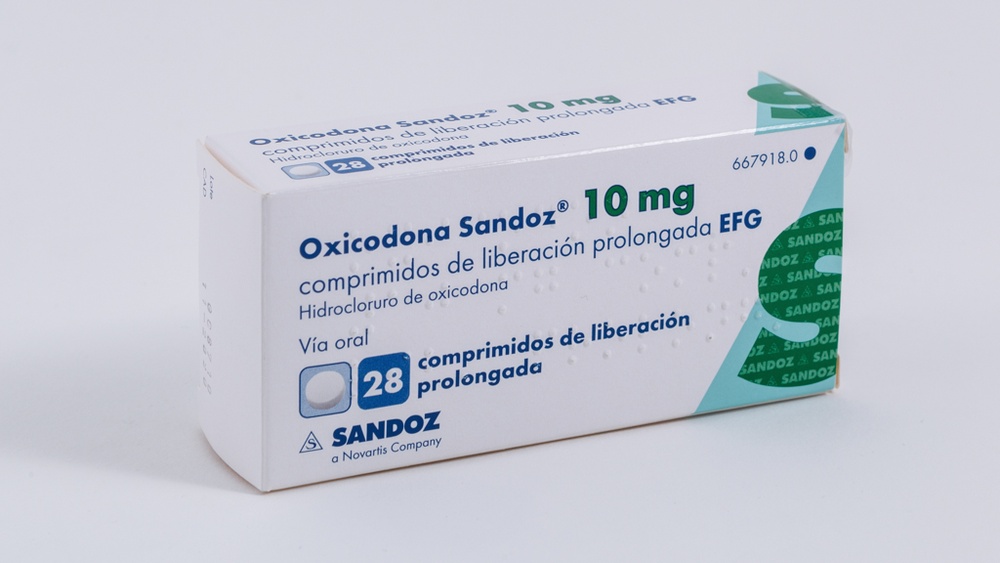
- Країна реєстрації
- Лікарська формаExtended-release tablet, 40 MG
- Код АТХN02AA05
- Діюча речовина
- Потрібен рецептТак
- Виробник
- Ця інформація надана лише для ознайомлення і не є медичною порадою. Рішення щодо лікування завжди приймає лікар.
- Альтернативи до OXIKODONE SANDOTSЛікарська форма: Extended-release tablet, 5 MGДіюча речовина: oxycodoneВиробник: AUROBINDO PHARMA (ITALIA) S.R.L.Потрібен рецептЛікарська форма: Injectable or infusion solution, 10 MG/MLДіюча речовина: oxycodoneПотрібен рецептЛікарська форма: Extended-release tablet, 5 MGДіюча речовина: oxycodoneВиробник: ACCORD HEALTHCARE, S.L.U.Потрібен рецепт
Аналоги OXIKODONE SANDOTS в інших країнах
Препарати з тією самою діючою речовиною, доступні в інших країнах.
Аналог OXIKODONE SANDOTS у Польща
Аналог OXIKODONE SANDOTS у Україна
Аналог OXIKODONE SANDOTS у Іспанія
Лікарі онлайн щодо OXIKODONE SANDOTS
Застосування, безпека та можливість призначення рецепта — за результатами медичної оцінки.









Отримайте рецепт на OXIKODONE SANDOTS онлайн
Заповніть форму за 2 хвилини
Розкажіть про симптоми, історію хвороби та потрібний препарат.
Оберіть лікаря або ми призначимо
Оберіть спеціаліста або ми підберемо найближчого доступного лікаря.
Лікар розглядає ваш випадок
Зазвичай протягом 30 хвилин. Може ставити уточнювальні запитання в чаті.
Отримайте в будь-якій аптеці
Електронний рецепт надсилається на вашу пошту — дійсний по всій Польщі.
Часті запитання
OXIKODONE SANDOTS потребує рецепта в Італія. Ви можете обговорити з лікарем онлайн, чи підходить цей лікарський засіб для вашої ситуації.
Діюча речовина у OXIKODONE SANDOTS — oxycodone. Це допомагає визначити препарати з тим самим складом, але під іншими торговими назвами.
OXIKODONE SANDOTS виробляється компанією SANDOZ S.P.A.. Назва бренду та упаковка можуть відрізнятися залежно від дистрибʼютора.
Лікарі, зокрема Сімейні лікарі, Психіатри, Дерматологи, Кардіологи, Ендокринологи, Гастроентерологи, Пульмонологи, Нефрологи, Ревматологи, Гематологи, Інфекціоністи, Алергологи, Геріатри, Педіатри, Онкологи, можуть оцінити доцільність застосування OXIKODONE SANDOTS з урахуванням вашого стану та місцевих правил. Ви можете записатися на онлайн-консультацію, щоб обговорити симптоми та можливі подальші кроки.
Польща має добре розвинену систему охорони здоров'я у великих містах, таких як Варшава, Краків, Вроцлав і Гданськ. Аптеки широко доступні та працюють відповідно до чинного законодавства, забезпечуючи доступ до рецептурних препаратів.
Ви можете придбати OXIKODONE SANDOTS у Варшаві, Кракові, Вроцлаві або Гданську в будь-якій аптеці за наявності дійсного рецепта.
Щоб отримати рецепт, ви можете скористатися Oladoctor:
Інші препарати з тією самою діючою речовиною (oxycodone) включають OSSIKODONE AUROBINDO, OSSIKODONE MOLTENI, OXIKODONE AKKORD. Вони можуть відрізнятися торговою назвою або формою випуску, але містять той самий терапевтичний компонент. Перед зміною або початком прийому нового препарату варто проконсультуватися з лікарем.
