



NINOXAN 50%+50% Ингаляционный газ

Рассмотрение рецепта онлайн
Врач рассмотрит ваш случай и примет решение о назначении рецепта, если это медицински оправдано.

Поговорите с врачом об этом лекарстве
Обсудите симптомы и возможные дальнейшие шаги на онлайн-консультации.



Инструкция по применению NINOXAN
Содержание инструкции
NINOXAN 50%/50%, MEDICINAL GAS, TABLET
nitrous oxide/oxygen
Read this leaflet carefully before you start to use this medicine as it contains important
information for you.
Keep this leaflet. You may need to read it again.
If you have any questions, ask your doctor or pharmacist.
This medicine has been prescribed for you only. Do not pass it on to others. It may be harmful to people
even if their symptoms are the same as yours.
If you get any side effects, talk to your doctor or pharmacist. This includes any possible side effects not
listed in this leaflet. See section 4.
Contents of this leaflet:
- 1.What Ninoxan is and what it is used for
- 2.What you need to know before you use Ninoxan
- 3.How to use Ninoxan
- 4.Possible side effects
- 5.How to store Ninoxan
- 6.Contents of the pack and other information
1. What is Ninoxan and what is it used for
Ninoxan contains a ready-to-use 50% mixture of nitrous oxide (“laughing gas” medicinal, N O) and
50% oxygen (medicinal oxygen, O ). It must be used by breathing the gas mixture.
Effects of Ninoxan:
Nitrous oxide constitutes 50% of the gas mixture. Nitrous oxide has an analgesic effect,
reduces the sensation of pain and increases the pain threshold. Nitrous oxide also has a
relaxing and slightly calming effect. These effects are due to the action of nitrous oxide on
neurotransmitters.
The oxygen concentration of 50%, about twice that contained in ambient air, ensures
a safe concentration in the inspired mixture.
Use of Ninoxan
Ninoxan should be used when rapid-acting and rapid-resolution analgesic effects are desired, when the pain to be treated is of mild to moderate intensity and of limited duration.
Ninoxan produces an analgesic effect after a few breaths and the pain-relieving effect disappears a few minutes after
use is stopped.
Children
Ninoxan can be used in children over 1 month of age.
2. What you need to know before using Ninoxan
Do not use Ninoxan:
Before using Ninoxan, you should inform your doctor if you have any of the following symptoms/conditions:
- Gas collections or gas bubbles:if, following an illness, or for any other reason, you suspect the presence of air in the pleural cavity outside the lungs, or gas bubbles in the blood or other organs (for example, if you have been diving with scuba equipment, you may have gas bubbles in the blood, decompression sickness); or if you have been treated with a gas injection into the eye (for example, a retinal detachment, or similar). These gas bubbles can expand and cause damage.
- Heart conditions:if you suffer from heart failure or severely impaired heart function, as the slightly relaxing effect of nitrous oxide on the heart muscle can further damage heart function.
- After cardiopulmonary bypasswith a heart-lung machine or coronary bypasswithout a heart-lung machine.
- Injuries to the central nervous system:if you have increased intracranial pressure, for example, following a tumor or bleeding in the brain. Nitrous oxide can further increase intracranial pressure with a potential risk of damage.
- Vitamin deficiencies:if you have diagnosed but untreated vitamin B12 or folic acid deficiency, the use of nitrous oxide may worsen the symptoms caused by vitamin B12 and folic acid deficiency.
- Intestinal dilation (ileus):if you suffer from severe abdominal pain or other symptoms that may indicate ileus, as Ninoxan may further increase intestinal dilation.
- If you have a facial traumathe use of the mask may determine difficulties or risks.
- Reduced level of consciousnessor reduced ability to cooperate and follow instructions due to the risk of further sedation from nitrous oxide which may affect natural protective reflexes.
Warnings and precautions
Consult your doctor or nurse before receiving Ninoxan if
- you are abusing or have abused drugs/medicines as there is a greater risk of developing nitrous oxide dependence if you take it repeatedly. The doctor will decide if treatment with Ninoxan is possible in your case.
Inform your doctor if you have any of the following symptoms:
- Ear discomfort:for example, ear inflammation, as Ninoxan may increase pressure in the middle ear.
- Vitamin deficiencies:if you are at risk of having a vitamin B12 or folic acid deficiency, for example, if you have reduced intake or absorption of vitamin B12 or folic acid, or a disease
genetic that affects the metabolism of these vitamins or if you are immunocompromised. The use of nitrous oxide may worsen the symptoms caused by vitamin B12 and folic acid deficiency.
Your doctor will decide if it is appropriate to use Ninoxan.
Repeated or long-term use of nitrous oxide may increase the risk of vitamin B12 deficiency
which can cause damage to the bone marrow or nervous system. The doctor may prescribe blood tests
before and after treatment to assess the consequences of possible vitamin B12 deficiency.
Children
Ninoxan should not be used in children under 1 month of age.
Your doctor will decide when it is appropriate to use Ninoxan.
Other medicines and Ninoxan
Inform your doctor or healthcare professional if you are taking, have recently taken or might take any
other medicine.
If you are taking other drugs that act on the brain or its functions, for example, benzodiazepines
(tranquilizers) or morphine-like drugs, you must inform your doctor. Ninoxan may increase the effects
of these medicines. The use of Ninoxan together with other sedatives or drugs that act on the central nervous
system increases the risk of side effects.
You should also inform your doctor if you are taking medicines containing methotrexate (for example,
to treat rheumatoid arthritis), bleomycin (cancer treatment), nitrofurantoin and other antibiotics
(treatment of infections) or amiodarone (to treat heart disease). Ninoxan increases the side effects
of these drugs.
Pregnancy and breastfeeding
If you are pregnant or breastfeeding, if you think you may be pregnant or are planning to become pregnant, please
consult your doctor or healthcare professional for advice before using this medicine.
Pregnancy
Ninoxan can be used during pregnancy if your doctor considers it clinically necessary. It can also be
used during labor.
When Ninoxan is used near delivery, the baby should be monitored for possible adverse effects.
Breastfeeding
Ninoxan can be used during breastfeeding, however it should not be used while
breastfeeding is taking place.
Driving and operating machinery
Ninoxan has a sedative effect, and can affect the functions of the mind and body. For safety reasons,
you should therefore avoid driving, using machinery or performing complex tasks until you have
fully recovered. Check with healthcare personnel that you have fully recovered the functions of
the mind and body.
3. How to use Ninoxan
Ninoxan must always be administered under control and in the presence of healthcare professionals who are
familiar with this type of medication and equipment. Throughout the entire period of Ninoxan use, the
patient and the delivery of the medication must be monitored to ensure that it is administered safely. After
completing the treatment, the patient must be checked by competent personnel, able to assess their complete
recovery.
Always use Ninoxan exactly as your doctor has instructed, who must explain how to use Ninoxan, how it
works and what effects result from its use. Check with your doctor if you are not sure.
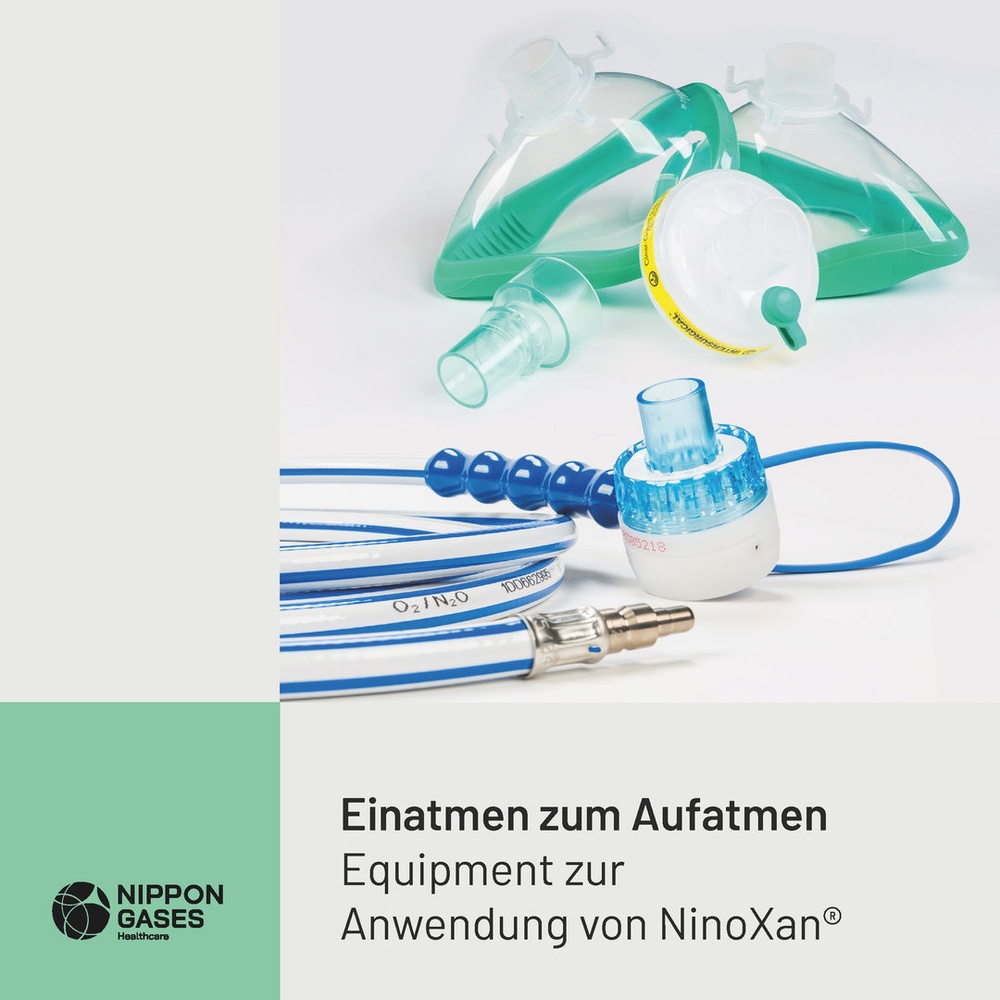
Ninoxan is usually inhaled through a mask connected to a special valve, which allows complete control of the
gas flow, thanks to your own breathing. The valve only opens during inhalation. Ninoxan can also be
administered through a so-called nasal mask.
Regardless of which mask you use, you should breathe regularly, with normal breaths into the mask. Ideally, you
should hold the mask yourself.
You should start using Ninoxan shortly before the need for pain relief arises and continue during the painful
process. The effect of Ninoxan ends a few minutes after stopping inhalation.
After stopping the use of Ninoxan, you should rest and recover until you feel mentally recovered.
Safety precautions:
- Smoking and open flames are prohibited in areas where Ninoxan treatment is taking place.
- Ninoxan is intended for medicinal use only.
Use in children
Ninoxan should not be used in children under 1 month of age.
If you use more Ninoxan than you should
It is unlikely that you will receive too much gas, as the gas is inhaled and controlled by your breaths and the gas
mixture is fixed (with 50% nitrous oxide and 50% oxygen).
If you breathe faster than normal, receiving more nitrous oxide than you would with normal breathing, you may
feel very tired and disconnected from your surroundings. In this case, you should promptly inform healthcare
professionals and stop breathing Ninoxan.
If you have any doubts about using this medicine, ask your doctor or healthcare professional.
4. Possible side effects
Like all medicines, Ninoxan can cause side effects, although not everybody gets them.
The following side effects have been described:
Common(may affect up to 1 in 10 people):
- Dizziness, vertigo (a sensation of spinning or “whirling”), feeling faint.
- Mild headache.
- Euphoria.
- Nausea and vomiting. Uncommon(may affect up to 1 in 100 people):
- Extreme fatigue.
- Middle ear disorder, if Ninoxan is used for a prolonged period.
- Abdominal bloating, because Ninoxan slowly increases the volume of gas in the intestine. Very rare(may affect up to 1 in 10,000 people):
- Effects on nerve function, numbness and weakness, usually in the legs. Not known(frequency cannot be estimated based on available data):
- Effects on the bone marrow, which can cause anemia. Low levels of white blood cells.
- Psychiatric effects, including psychosis, confusion and anxiety.
- Headache.
- Respiratory depression.
- Generalized seizures.
- Dependence.
- Effects on nerve function, sensations of numbness and weakness, usually in the legs.
Reporting of side effects
If you get any side effects, even those not listed in this leaflet, tell your
doctor.
You can also report side effects directly through the website
https://www.aifa.gov.it/content/segnalazioni-reazioni-avverse.
By reporting side effects you can help provide more information on the safety of
this medicine.
5. How to store Ninoxan
Keep this medicine out of the reach of children.
Do not use this medicine after the expiry date which is reported on the gas cylinder after EXP. The
expiry date refers to the last day of the month.
Do not store at a temperature below -5°C.
The mixture is unstable below -5°C. If suspected that Ninoxan has been stored at temperatures below -
5°C, the cylinders must be stored in a horizontal position at a temperature above 10°C for
at least 48 hours before use.
When used in emergency service vehicles, the cylinders must be protected from the cold and
firmly secured, inside and outside the vehicles.
Keep the cylinder in a storage area reserved for medical gases.
Different types of gases must be kept separate from each other. Full and empty gas cylinders must be
stored separately.
Do not smoke. Do not expose to strong heat.
Vapors may cause drowsiness and dizziness.
Keep away from combustible materials.
In case of fire, move to a safe place.
Keep the cylinder clean, dry and free of oil and grease.
Keep in a vertical position.
Ensure that the cylinder does not tip over or leak.
Store and transport with the valves closed.
6. Contents of the pack and other information
What Ninoxan contains:
- The active substances are: Nitrous oxide 50% = medicinal nitrous oxide gas (chemical formula: N O) and Oxygen 50% = medicinal oxygen (chemical formula: O )
- Ninoxan does not contain any other type of ingredient.
Description of the appearance of Ninoxan and contents of the pack
Ninoxan is a colourless, odourless gas, available in a steel or aluminium cylinder with a valve to
control the flow of gas.
The cylinders are identified through specific colours (white body with blue and white ogive, with two
horizontal bands, the blue one being the lower one).
Packs:
Aluminium cylinder with integrated reducing valve or normal PRV valve:
- 2-litre cylinder filled to 170 bar provides 0.56 m3 of gas at atmospheric pressure and at 15°C.
- 5-litre cylinder filled to 170 bar provides 1.4 m of gas at atmospheric pressure and at 15°C.
- 10-litre cylinder filled to 170 bar provides 2.8 m of gas at atmospheric pressure and at 15°C.
Steel cylinder with integrated reducing valve or normal PRV valve:
- 5-litre cylinder filled to 170 bar provides 1.4 m of gas at atmospheric pressure and at 15°C.
- 10-litre cylinder filled to 170 bar provides 2.8 m of gas at atmospheric pressure and at 15°C.
Steel cylinder with normal PRV valve:
- 50-litre cylinder filled to 170 bar provides 14 m of gas at atmospheric pressure and at 15°C.
Not all packs are marketed.
Marketing Authorisation Holder and Manufacturer:
NIPPON GASES PHARMA srl
Via Benigno Crespi, 19
Milan, Italy
Manufacturer:
Nippon Gases España, S.L.U
Calle Embajadores 474,28053 Madrid
Spain
This leaflet was last updated in
----------------------------------------------------------------------------------------------------------------------------------
The following information is intended exclusively for healthcare professionals:
Safety instructions
Special precautions must be taken when working with nitrous oxide. Nitrous oxide
must be administered according to national guidelines.
Repeated administration or exposure to nitrous oxide can cause dependence. Caution should be
exercised by healthcare workers with professional exposure to nitrous oxide.
Ninoxan must be used only in well-ventilated areas and where special equipment is present to
remove excess gas. By using a suction system and ensuring good ventilation, high atmospheric
concentrations of nitrous oxide in the ambient air are avoided.
High concentrations of nitrous oxide in the ambient air can cause adverse health effects on
personnel or other people near the place of administration. National occupational exposure limit values are
established for the concentration of nitrous oxide in the ambient air. These must not be
exceeded, in order to ensure that personnel are not exposed to risks. The so-called "threshold limit values
TLV" of occupational exposure to chemicals are often expressed as TWA ( time weighted
average), which indicates the average exposure value over a working day, and STEL ( short-term
exposure Limit), which indicates the short-term exposure limit.
Ninoxan is an unstable mixture below -5°C. Lower temperatures can cause temporary
liquefaction of nitrous oxide, which would lead to an irregular mixture, with too much oxygen
at the beginning of administration (mixture with lower analgesic effect) and too much nitrous oxide at the
end (hypoxic mixture) of inhalation.
If it is suspected that Ninoxan has been stored at temperatures below -5°C, the cylinders must be
stored horizontally at a temperature above 10°C for at least 48 hours before use. It is
recommended to shake the cylinder by turning it completely over at least three times to ensure its
homogeneity before use.
Keep the cylinder in a storage area reserved for medicinal gases. Different types of gases must be
separated from each other. Full and empty gas cylinders must be stored separately.
When used in vehicles for emergency services, the cylinders must be protected from the cold and
securely fastened, both inside and outside the vehicles.
Other instructions:
- Keep away from flammable materials. Do not smoke.
- Open the valve slowly and carefully.
- Never use oil or grease, even if the cylinder valve is difficult to open or if the regulator is difficult to connect. Do not force the valve, use only connection devices and seals compatible with the specific gas mixture and oxidizing gases. Do not use a tool to connect the pressure/flow regulator that is intended to be connected manually, to avoid damaging the joint.
- Close the cylinder valve in case of fire, or when not in use. Store and transport cylinders always with the valves closed, even when empty.
- When the cylinder is in use, it must be fixed to a suitable support. Keep the containers in an upright position, however the cylinders must be stored horizontally when there is suspicion they have been stored at temperatures below -5°C.
- The gas cylinder must be replaced when the pressure in the cylinder has dropped to a point where the valve indicator is within the yellow field.
- When a small amount of gas is left in the cylinder, the valve must be closed. It is important that a small amount of pressure is left in the cylinder to prevent the entry of contaminants. Keep full and empty cylinders separate.
- After use, the valve must be closed by hand. Depressurize the regulator or connection.
- For more details, read the Summary of Product Characteristics (SmPC) or contact the supplier.

Не уверены, подходит ли вам это лекарство?
Обсудите симптомы и варианты лечения с врачом онлайн.

Уже начали прием и появились вопросы?
Обсудите свое состояние и дальнейшие шаги с врачом онлайн.
- Страна регистрации
- Форма выпускаInhalation gas, 50%+50%
- Код АТХN01AX13
- Действующее вещество
- Отпускается по рецептуДа
- Производитель
- Информация на этой странице носит справочный характер и не является медицинской консультацией. Перед началом приема лекарства обязательно проконсультируйтесь с врачом.
- Аналоги NINOXANФорма выпуска: Inhalation gas, 3.75 KGДействующее вещество: Закись азотаПроизводитель: FARMA GAS - MEDICAL AND TECHNICAL GASES SRLОтпускается по рецептуФорма выпуска: Inhalation gas, 3.75 KGДействующее вещество: Закись азотаПроизводитель: AIR LIQUIDE SANTE (INTERNATIONAL)Отпускается по рецептуФорма выпуска: Inhalation gas, 3.8 KGДействующее вещество: Закись азотаПроизводитель: LINDE MEDICALE SRLОтпускается по рецепту
Аналоги NINOXAN в других странах
Лекарства с тем же действующим веществом, доступные в других странах.
Аналог NINOXAN в Испания
Аналог NINOXAN в Польша
Аналог NINOXAN в Украина
Врачи онлайн по NINOXAN
Обсудите применение NINOXAN и возможные следующие шаги — по оценке врача.









Получите рецепт на NINOXAN онлайн
Заполните форму за 2 минуты
Расскажите о симптомах, истории болезни и нужном препарате.
Выберите врача или мы назначим
Выберите специалиста или мы подберём ближайшего доступного врача.
Врач рассматривает ваш случай
Обычно в течение 30 минут. Может задать уточняющие вопросы в чате.
Получите в любой аптеке
Электронный рецепт отправляется на вашу почту — действителен по всей Польше.
Часто задаваемые вопросы
NINOXAN требует рецепта в Италия. Вы можете уточнить у врача онлайн, подходит ли это лекарство для вашей ситуации.
Действующее вещество NINOXAN — Закись азота. Эта информация помогает определить лекарства с тем же составом под другими торговыми названиями.
NINOXAN производится компанией NIPPON GASES PHARMA S.R.L.. Упаковка и торговое название могут отличаться в зависимости от дистрибьютора.
Врачи, включая Семейные врачи, Психиатры, Дерматологи, Кардиологи, Эндокринологи, Гастроэнтерологи, Пульмонологи, Нефрологи, Ревматологи, Гематологи, Инфекционисты, Аллергологи, Гериатры, Педиатры, Онкологи, могут оценить целесообразность применения NINOXAN с учетом вашей ситуации и местных правил. Вы можете записаться на онлайн-консультацию, чтобы обсудить возможные варианты.
Польша имеет хорошо развитую систему здравоохранения в крупных городах, таких как Варшава, Краков, Вроцлав и Гданьск. Аптеки широко доступны и работают в соответствии с действующим законодательством, обеспечивая доступ к рецептурным препаратам.
Вы можете купить NINOXAN в Варшаве, Кракове, Вроцлаве или Гданьске в любой аптеке при наличии действующего рецепта.
Чтобы получить рецепт, вы можете воспользоваться Oladoctor:
Другие лекарства с тем же действующим веществом (Закись азота) включают ALFAPROT, ATSOTO PROTOSSIDO AIR LIQUIDE SANITA', ATSOTO PROTOSSIDO LINDE MEDIKALE. Они могут отличаться торговым названием или формой выпуска, но содержат одинаковый терапевтический компонент. Перед изменением лечения рекомендуется проконсультироваться с врачом.
