



NICORETTEICY 2 mg Pastylka

Ocena recepty online
Lekarz przeanalizuje Twój przypadek i zdecyduje, czy wystawienie recepty jest medycznie uzasadnione.

Porozmawiaj z lekarzem o tym leku
Omów swoje objawy i opcje leczenia podczas szybkiej konsultacji online.



Jak stosować NIKORETTEIKY
Treść ulotki
Nicoretteicy 2 mg, pastilles
Nicotine
Important information for you.
Always take this medicine exactly as described in this leaflet or as your doctor or
pharmacist has told you.
- Keep this leaflet. You may need to read it again.
- If you want more information or advice, ask your pharmacist.
- If any side effects occur, including those not listed in this leaflet, tell your doctor or pharmacist. See section 4.
- See your doctor if you still have difficulty quitting smoking after 6 months without the help of Nicoretteicy.
Contents of this leaflet:
- 1. What Nicoretteicy pastilles is and what it is used for
- 2. What you need to know before you take Nicoretteicy pastilles
- 3. How to use Nicoretteicy pastilles
- 4. Possible side effects
- 5. How to store Nicoretteicy pastilles
- 6. Contents of the pack and other information
1. What Nicoretteicy lozenges are and what they are used for
This medicine is used to relieve withdrawal symptoms and reduce the craving for nicotine that is felt when trying to quit smoking. The treatment is intended for adult smokers aged 18 years and over.
Nicoretteicy 2 mg lozenges are suitable for smokers who have a low dependence on nicotine, for example, those who smoke their first cigarette of the day more than 30 minutes after waking up or who smoke 20 cigarettes or less a day.
This medicine relieves the symptoms of nicotine withdrawal, including cravings, when you quit smoking. When the body suddenly stops receiving nicotine from tobacco, you begin to experience a series of unpleasant sensations called withdrawal symptoms, such as irritability, anger or depression, anxiety, restlessness, poor concentration, increased appetite or weight gain, urge to smoke (craving), nighttime awakenings or sleep disturbances. The nicotine contained in Nicoretteicy helps to prevent or reduce these unpleasant sensations and to contain the urge to smoke.
To improve the chances of help to quit smoking, it is advisable to seek advice and help from competent professionals.
2. What you need to know before taking Nicoretteicy lozenges
Do not use Nicoretteicy lozenges:
- if you are allergicto nicotine or any of the other ingredients of this medicine (listed in section 6).
- if you are under 18 years of age.
- if you do not smoke.
Warnings and precautions
Talk to your doctor before taking this medicine if you suffer from the conditions listed below. You may
still be able to take Nicoretteicy lozenges, but you need to consult your doctor first
if you have:
- recently had a heart attackor a stroke
- chest pain(unstable angina) or angina at rest
- a heart conditionthat affects heart rate or rhythm (arrhythmia)
- high blood pressurethat is not controlled by medication
- a weakened heart functionor circulation problems
- had allergic reactionsin the past including swelling of the lips, face and throat (angioedema) or itchy skin rashes (urticaria). Nicotine replacement therapy can sometimes trigger this type of reaction
- liver impairmentfrom moderate to severe
- severe kidney disease
- diabetes
- an overactive thyroid gland
- adrenal gland tumor(pheochromocytoma)
- gastric or duodenal ulcer
- esophagitis
- a history of epilepsyor convulsions
The lozenges may pose a choking hazard. Use with caution if you have problems
swallowing solids or liquids or if you cough frequently during or after swallowing.
Children and adolescents
Do not give this medicine to children and adolescents.
Other medicines and Nicoretteicy lozenges
Tell your doctor or pharmacist if you are taking, have recently taken or might take any
other medicines. This is particularly important if you are taking medicines that contain:
- theophylline, for treating asthma;
- tacrine,for Alzheimer's disease;
- clozapine, for schizophrenia;
- ropinirole, used to treat Parkinson's disease.
Nicoretteicy lozenges with food and drink
Do not eat or drink at the same time as taking the lozenges. Drinks that create an
acidic environment in the mouth, such as coffee, fruit juices and soft drinks, may reduce nicotine absorption.
To achieve optimal nicotine absorption, these drinks should be avoided for 15 minutes
before taking the lozenge.
Pregnancy and breastfeeding
It is very important to stop smoking during pregnancy, as this can lead to poor growth of your
baby. This can also lead to premature birth or stillbirth. It is best if you can
stop smoking without using medicines containing nicotine. If you cannot, Nicoretteicy lozenges
should only be used under medical advice.
As nicotine passes into breast milk and can have effects on the baby, this medicine may be
used during breastfeeding only under medical advice. If your doctor recommends
taking Nicoretteicy, the lozenge should be taken immediately after breastfeeding and not during the two hours before breastfeeding.
Driving and using machines
No effects on the ability to drive or operate machines have been observed.
Nicoretteicy contains less than 1 mmol (23 mg) of sodium per lozenge, i.e. it is essentially
‘sodium-free’.
3. How to use Nicoretteicy lozenges
How to use the container
[Plastic bottle]
[Paper container]
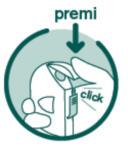
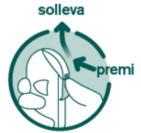
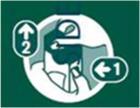
To open:
- 1- Gently press the tab labeled "press here"
- 2- At the same time, firmly lift the top of the box. To close: press on the top of the box.
How to use the medicine
Subjects under 18 years of agecannot take this medicine.
or as your pharmacist has told you. If you have any doubts, consult your doctor or pharmacist.
This medicine is intended for oromucosal use. The medicine should be placed in the mouth, in such a way
as to allow dissolution and release of nicotine for absorption, through the oral mucosa, into the body.
In any case, you should take the medicine by placing only one lozenge in your mouth and moving it, from time to
time, from one side of the mouth to the other until it has completely dissolved. Usually less than
20 minutes are required. Do not chew the lozenge or swallow it whole. Do not take more than 15 lozenges per day. If
you feel the need to use this medicine for more than 6 months in total, consult your doctor for
advice.
The goal is to stop smoking immediately and take the lozenges to relieve the urge to smoke.
Adults 18 years and over
- Start by taking 8 to 12 lozenges per day. When you feel the urge to smoke, put a lozenge in your mouth and let it dissolve.
- Use the lozenges in this way for a maximum of 6 weeks, then reduce the number of lozenges taken per day.
- When you get to taking 1 or 2 lozenges per day, stop taking them. After stopping taking them, you may sometimes feel the urge for a cigarette. In this case, you can take a lozenge.
Do not exceed the indicated dose. Follow the instructions carefully and do not use more than 15 lozenges in a day
(24 hours).
Do not eat or drink at the same time as the lozenge (see Nicoretteicy lozenges with food and
drinks).
Urge to start smoking again
If:
- you are afraid of starting to smoke again
- you are having difficulty stopping taking the lozenges completely, consult a healthcare professional. If you start smoking again, you may be advised on how to get the best results from further nicotine replacement therapy (NRT).
If you use more Nicoretteicy lozenges than you should
If you smoke while taking this medicine, you may experience a nicotine overdose.
If a child takes Nicoretteicy, or if you have taken more Nicoretteicy than you should, contact your doctor
or go immediatelyto the nearest hospital. Nicotine doses that are tolerated by adult smokers
during treatment can produce serious poisoning symptoms in childrenwith outcomes that are also fatal.
The symptoms of an overdose are: feeling unwell (nausea), vomiting, excessive salivation, stomach pain, diarrhea, sweating, headache, dizziness, hearing disturbances and obvious weakness. At high doses
these symptoms may be followed by a drop in blood pressure, weak or irregular pulse, breathing problems, prostration, circulatory collapse and convulsions.
If you have any doubts about using this medicine, consult your doctor or pharmacist.
4. Possible side effects
Like all medicines, this medicine can cause side effects, although not everyone will experience them.
Effects related to quitting smoking (nicotine withdrawal)
Some of the side effects you may experience when quitting smoking may be withdrawal symptoms
due to reduced nicotine intake.
These effects include:
- irritability, aggression, impatience or frustration
- feeling anxious, restless or having difficulty concentrating
- nighttime awakenings or sleep disturbances
- increased appetite or body weight
- feeling depressed
- urge to smoke (craving)
- decreased heart rate
- bleeding gums or mouth ulcers
- dizziness or lightheadedness
- cough, sore throat, nasal congestion or runny nose
- constipation
If you experience any serious side effect, stop taking Nicoretteicy pastilles and seek immediate medical attention, as it may be a serious allergic reaction (the frequency
is very rare: it may affect up to 1 in 10,000 people):
- urticaria (a skin condition characterized by itching or red spots)
- swelling of the face, tongue or throat
- difficulty breathing
- difficulty swallowing
Most side effects occur during the initial phase of taking the medication. In the first few
days of treatment, irritation of the mouth and throat may occur, however most subjects adapt
to these effects with prolonged use.
Other side effects that may occur:
Very common side effects (may affect more than 1 in 10 people)
- cough
- headache
- hiccups
- nausea (feeling unwell)
- irritation of throat, mouth or tongue
Common side effects (may affect up to 1 in 10 people)
- local effects such as burning sensation, inflammation of the mouth, altered taste
- dry mouth or increased salivation
- feeling of indigestion
- abdominal pain or discomfort
- vomiting, flatulence, diarrhea
- heartburn
- fatigue
- dizziness
- hypersensitivity (allergy)
- irritability and feeling anxious
Uncommon side effects (may affect up to 1 in 100 people)
- feeling of nasal congestion, sneezing
- wheezing (bronchospasm) or feeling that breathing is more difficult than usual (dyspnea), tightness in the throat
- skin flushing (redness), itching, increased sweating
- oral effects such as itching in the mouth, inflammation of the tongue, mouth ulcers, shedding of the oral mucosa, changes in voice sound, pain in the mouth and throat, belching
- palpitations (unusual awareness of heartbeat) or fast heartbeat, hypertension
- rash and/or tingling (itching, hives) or redness of the skin
- depression, feeling nervous, abnormal dreams
- chest pain and discomfort
- weakness, feeling unwell
Rare side effects (may affect up to 1 in 1000 people)
- difficulty swallowing, decreased sensitivity of the mouth
- fast and irregular heartbeat, which can be treated with appropriate medications
- retching
Side effects of unknown frequency (frequency cannot be estimated on the basis of available clinical
data)
- blurred vision, increased tear production (lacrimation)
- dry throat, stomach discomfort, lip pain
- skin redness
- convulsions
Reporting of side effects
If you get any side effects, even those not listed in this leaflet, tell your
doctor or pharmacist. You can also report side effects directly through the national reporting system at www.aifa.gov.it/content/segnalazioni-reazioni-avverse .
By reporting side effects you can help provide more information on the safety of
this medicine.
5. How to store Nicoretteicy lozenges
- Keep this medicine out of the sight and reach of children.
- Do not use this medicine after the expiry date that is reported on the container and the outer packaging after {SCAD}. The expiry date refers to the last day of the month.
- For the polypropylene container: store in the original container protected from humidity.
- For the paper container: Store the lozenges in the original container protected from humidity. Use within 3 months of removing the wrapper.
- Do not reuse the container for any reason as there may be some lozenge dust present, which may deposit to form a thin coating on the objects inside.
- Dispose of the container responsibly. Do not dispose of any medicine in wastewater or household waste. Ask your pharmacist how to eliminate medicines that you no longer use. This will help protect the environment.
6. Contents of the pack and other information
What Nicoretteicy lozenges contain
The active ingredientis nicotine (in the form of nicotine resin). Each lozenge contains 2 mg of nicotine.
The other ingredientsare:
Lozenges core:mannitol (E421), xanthan gum, Winterfresh RDE4-149 Spray Dried (gum
arabic (E414), peppermint, menthol and eucalyptus flavourings), anhydrous sodium carbonate (E500)(i),
sucralose (E955), potassium acesulfame (E950), magnesium stearate (E470b)
Coating:hypromellose (E464), Winterfresh RDE4-149 (peppermint, menthol and eucalyptus flavourings),
titanium dioxide (E171), sucralose (E955), Sepifilm Gloss (Hypromellose (E464), microcrystalline cellulose
(E460), potassium aluminium silicate (E555), Titanium dioxide (E171)) potassium acesulfame (E950),
polysorbate 80 (E433).
Description of the appearance of Nicoretteicy lozenges and contents of the pack
Ovale lozenge, of a colour from white to off-white with an “n” imprinted on one side and “2” on the other.
The dimensions of a lozenge are approximately 14 x 9 x 7 mm.
Pack sizes:
Each plastic bottle contains 20 lozenges. Packs may contain one or four bottles.
Each cardboard box contains 40 lozenges. Packs may contain one or two boxes.
Not all pack sizes are commercially available.
Marketing Authorisation Holder and Manufacturer
McNeil AB Norrbroplatsen 2, SE 251 – 09 Helsingborg SWEDEN
Representative for Italy: Johnson & Johnson S.p.A.
This medicinal product is authorised in the Member States of the EEA under the following name:
Italy Nicoretteicy
Spain Nicorette Supermint
Nicoretteicy 4 mg, lozenges
Nicotine
important information for you.
Take this medicine always as exactly described in this leaflet or as the doctor or the pharmacist
told you to do.
- Keep this leaflet. You may need to read it again.
- If you want more information or advice, ask your pharmacist.
- If any side effects occur, including effects not listed in this leaflet, tell your doctor or pharmacist. See section 4.
- See your doctor if you still have difficulty quitting smoking without the help of Nicoretteicy after 6 months.
Contents of this leaflet:
- 1. What is Nicoretteicy lozenges and what it is used for
- 2. What you need to know before you take Nicoretteicy lozenges
- 3. How to use Nicoretteicy lozenges
- 4. Possible side effects
- 5. How to store Nicoretteicy lozenges
- 6. Contents of the pack and other information
1. What Nicoretteicy lozenges are and what they are used for
This medicine is used to relieve withdrawal symptoms and reduce the craving for nicotine that is felt when trying to quit smoking. The treatment is intended for adult smokers aged 18 and over.
Nicoretteicy 4 mg lozenges are suitable for smokers who have a high dependence on nicotine, for example, those who smoke their first cigarette of the day within 30 minutes of waking up or who smoke more than
20 cigarettes a day.
This medicine relieves nicotine withdrawal symptoms, including cravings, when you quit
smoking. When the body suddenly stops receiving nicotine from tobacco, you begin to experience a
series of unpleasant sensations called withdrawal symptoms, such as irritability, anger or depression, anxiety,
restlessness, poor concentration, increased appetite or weight gain, urge to smoke ( craving),
night awakenings or sleep disturbances. The nicotine contained in Nicoretteicy helps to prevent or reduce these
unpleasant sensations and to contain the urge to smoke.
To improve the chances of help to quit smoking, it is advisable to seek advice and help from
qualified professionals.
2. What you need to know before taking Nicoretteicy lozenges
Do not use Nicoretteicy lozenges:
- if you are allergicto nicotine or to any of the other ingredients of this medicine (listed in section 6).
- if you are under 18 years of age.
- if you do not smoke.
Warnings and precautions
Talk to your doctor before taking this medicine if you suffer from the conditions listed below.
You may still be able to take Nicoretteicy lozenges, but you need to consult your doctor first if you have:
- recently had a heart attackor a stroke
- chest pain(unstable angina) or angina at rest
- a heart conditionaffecting heart rate or rhythm (arrhythmia)
- high blood pressurethat is not controlled by medication
- a weakened heart functionor circulation problems
- had allergic reactionsin the past including swelling of the lips, face and throat (angioedema) or itchy skin rashes (urticaria). Nicotine replacement therapy can sometimes trigger this type of reaction
- liver impairmentfrom moderate to severe
- severe kidney disease
- diabetes
- an overactive thyroid gland
- a tumour of the adrenal glands(pheochromocytoma)
- gastric or duodenal ulcer
- oesophagitis
- a history of epilepsyor convulsions
The lozenges may present a choking hazard. Use with caution if you have problems
swallowing solids or liquids or if you cough frequently during or after swallowing.
Children and adolescents
Do not give this medicine to children and adolescents.
Other medicines and Nicoretteicy lozenges
Tell your doctor or pharmacist if you are taking, have recently taken or might take any
other medicines. This is particularly important if you are taking medicines that contain:
- theophylline, for treating asthma;
- tacrine,for Alzheimer's disease;
- clozapine, for schizophrenia;
- ropinirole, used to treat Parkinson's disease.
Nicoretteicy lozenges with food and drink
Do not eat or drink at the same time as taking the lozenges. Drinks that create an
acidic environment in the mouth, such as coffee, fruit juices and soft drinks, may reduce nicotine absorption.
To achieve optimal nicotine absorption, these drinks should be avoided for 15 minutes
before taking the lozenge.
Pregnancy and breastfeeding
It is very important to stop smoking during pregnancy, as this can lead to poor growth of your
baby. This can also lead to premature birth or stillbirth. It is best if you can stop smoking without the use of medicines containing nicotine. If you cannot, Nicoretteicy lozenges
should only be used under medical advice.
As nicotine passes into breast milk and can have effects on the baby, this medicine can
only be used during breastfeeding under medical advice. If your doctor advises you to
take Nicoretteicy, the lozenge should be taken immediately after breastfeeding and not during the two hours before breastfeeding.
Driving and using machines
No effects on the ability to drive or operate machinery have been observed.
Nicoretteicy contains less than 1 mmol (23 mg) of sodium per lozenge, that is to say it is essentially ‘sodium-free’.
3. How to use Nicoretteicy lozenges
Container usage instructions
[Plastic bottle]
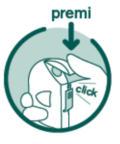
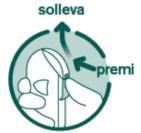
[Paper container]
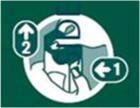
To open:
- 1- Gently press the tab labeled "press here"
- 2- At the same time, firmly lift the top of the box
To close: press on the top of the box.
Medicinal product usage instructions
Individuals under 18 years of agemust not take this medicine.
or as your pharmacist has told you to do. If you have any doubts, consult your doctor or pharmacist.
This medicine is for oromucosal use. The medicine should be placed in the mouth, in such a way
as to allow it to dissolve and release nicotine for absorption, through the oral mucosa, into the body.
In any case, you should take the medicine by placing only one lozenge in your mouth and moving it, from time to
time, from one side of the mouth to the other until it has completely dissolved. Usually it takes
less than 20 minutes. Do not chew the lozenge or swallow it whole. Do not take more than 15 lozenges per day. If
you feel the need to use this medicine for more than 6 months in total, consult your doctor for
advice.
The goal is to stop smoking immediately and take the lozenges to relieve the urge to smoke.
Adults 18 years and over
- Start by taking 8 to 12 lozenges per day. When you feel the urge to smoke, put a lozenge in your mouth and let it dissolve.
- Use the lozenges in this way for a maximum of 6 weeks, then reduce the number of lozenges taken per day.
- When you get to taking 1 or 2 lozenges per day, stop taking them. After stopping, you may sometimes feel the urge for a cigarette. In this case, you can take a lozenge.
Do not exceed the indicated dose. Follow the instructions carefully and do not use more than 15 lozenges in a day
(24 hours).
Do not eat or drink at the same time as the lozenge (see Nicoretteicy lozenges with food and
drinks).
Urge to start smoking again
If:
- you are afraid of starting to smoke again
- you are having difficulty stopping taking the lozenges completely, consult a healthcare professional. If you start smoking again, you may be advised on how to get the best results from further nicotine replacement therapy (NRT).
If you use more Nicoretteicy lozenges than you should
If you smoke at the same time as taking this medicine, you may experience a nicotine overdose.
If a child takes Nicoretteicy, or if you have taken more Nicoretteicy than you should, contact your doctor
or go to the nearest hospital immediately. Nicotine doses that are tolerated by adult smokers
during treatment can produce serious poisoning symptoms in childrenwith potentially fataloutcomes.
Symptoms of overdose are: feeling unwell (nausea), vomiting, excessive salivation, stomach pain, diarrhea, sweating, headache, dizziness, hearing disturbances and obvious weakness. At higher doses
these symptoms may be followed by a drop in blood pressure, weak or irregular pulse, breathing problems, prostration, circulatory collapse and convulsions.
If you have any doubts about using this medicine, contact your doctor or pharmacist.
4. Possible side effects
Like all medicines, this medicine can cause side effects, although not everybody gets them.
manifest.
Effects related to quitting smoking (nicotine withdrawal)
Some of the side effects you may experience when quitting smoking may be withdrawal symptoms
due to reduced nicotine intake.
These effects include:
- irritability, aggression, impatience or frustration
- feeling anxious, restless or having difficulty concentrating
- nighttime awakenings or sleep disturbances
- increased appetite or body weight
- feeling depressed
- urge to smoke ( craving)
- decreased heart rate
- bleeding gums or mouth ulcers
- dizziness or lightheadedness
- cough, sore throat, nasal congestion or runny nose
- constipation
If you experience any serious side effect, stop taking Nicoretteicy lozenges and
seek immediate medical attention, as it may be a serious allergic reaction (the frequency
is very rare: it may affect up to 1 in 10,000 people):
- urticaria (a skin condition characterized by itching or redness)
- swelling of the face, tongue or throat
- difficulty breathing
- difficulty swallowing
Most side effects occur during the initial phase of taking the medication. In the first few
days of treatment, irritation of the mouth and throat may occur, however most subjects adapt
to these effects with prolonged use.
Other side effects that may occur:
Very common side effects(may affect more than 1 in 10 people)
- cough
- headache
- hiccups
- nausea (feeling unwell)
- irritation of throat, mouth and tongue
Common side effects(may affect up to 1 in 10 people)
- local effects such as burning sensation, inflammation of the mouth, altered taste
- dry mouth or increased salivation
- feeling of indigestion
- abdominal pain or discomfort
- vomiting, flatulence, diarrhoea
- heartburn
- fatigue
- dizziness
- hypersensitivity (allergy)
- irritability and anxiety
Uncommon side effects(may affect up to 1 in 100 people)
- feeling of nasal congestion, sneezing
- wheezing (bronchospasm) or feeling that breathing is more difficult than usual (dyspnea), tightness in the throat
- skin redness (flushing), itching, increased sweating
- oral effects such as itching of the mouth, inflammation of the tongue, mouth ulcers, exfoliation of the oral mucosa, changes in voice sound, pain in the mouth and throat, belching
- palpitations (unusual awareness of heartbeat) or fast heartbeat, high blood pressure
- rash and/or tingling (itching, urticaria) or redness of the skin
- depression, feeling nervous, abnormal dreams
- chest pain and discomfort
- weakness, feeling unwell
Rare side effects(may affect up to 1 in 1,000 people)
- difficulty swallowing, decreased sensitivity of the mouth
- fast and irregular heartbeat, which can be treated with appropriate medicines
- vomiting reflex
- convulsions
Side effects with frequency not known(the frequency cannot be estimated on the basis of the clinical data
available)
- blurred vision, increased tear production (lacrimation)
- dry throat, stomach discomfort, lip pain
Reporting of side effects
If you get any side effects, talk to your doctor or pharmacist. You can also report side effects directly
through the national reporting system at www.aifa.gov.it/content/segnalazioni-reazioni-avverse.
By reporting side effects you can help provide more information on the safety of
this medicine.
5. How to store Nicoretteicy lozenges
- Keep this medicine out of the sight and reach of children.
- Do not use this medicine after the expiry date stated on the container and the outer packaging after {SCAD}. The expiry date refers to the last day of the month.
- For the polypropylene container: store in the original container, protected from moisture.
- For the paper container: Store the lozenges in the original container, protected from moisture. Use within 3 months of removing the wrapper.
- Do not reuse the container for any purpose, as some lozenge dust may be present, which can deposit to form a thin coating on the objects inside.
- Dispose of the container responsibly. Do not dispose of any medicine in wastewater or household waste. Ask your pharmacist how to eliminate medicines that you no longer use. This will help protect the environment.
6. Contents of the pack and other information
What Nicoretteicy lozenges contain
The active substanceis nicotine (in the form of nicotine resinate). Each lozenge contains 4 mg of nicotine.
The other ingredientsare:
Lozenges core:mannitol (E421), xanthan gum, Winterfresh RDE4-149 Spray Dried (gum
arabic (E414), peppermint, menthol and eucalyptus flavourings), anhydrous sodium carbonate (E500)(i),
sucralose (E955), potassium acesulfame (E950), magnesium stearate (E470b)
Coating:hypromellose (E464), Winterfresh RDE4-149 (peppermint, menthol and eucalyptus flavourings)
titanium dioxide (E171), sucralose (E955), Sepifilm Gloss (Hypromellose (E464), microcrystalline cellulose
(E460), potassium aluminium silicate (E555), Titanium dioxide (E171)) potassium acesulfame (E950) and
polysorbate 80 (E433).
Description of the appearance of Nicoretteicy lozenges and contents of the pack
Ovale lozenge, from white to off-white in colour with an “n” imprinted on one side and “4” on the other.
The dimensions of a lozenge are approximately 14 x 9 x 7 mm.
Pack sizes:
Each plastic bottle contains 20 lozenges. Packs may contain one or four bottles.
Each cardboard box contains 40 lozenges. Packs may contain one or two boxes.
Not all pack sizes are available on the market.
Marketing Authorisation Holder and Manufacturer
McNeil AB Norrbroplatsen 2, SE 251 – 09 Helsingborg SWEDEN
Representative for Italy: Johnson & Johnson S.p.A.
This medicinal product is authorised in the Member States of the EEA under the following name:
Italy Nicoretteicy
Spain Nicorette Supermint

Nie jesteś pewien, czy ten lek jest odpowiedni dla ciebie?
Omów swoje objawy i leczenie z lekarzem online.

Zacząłeś przyjmować lek i masz pytania?
Omów swoje objawy i leczenie z lekarzem online.

- Kraj rejestracji
- Postać farmaceutycznaLozenge, 2 MG
- Kod ATCN07BA01
- Substancja czynna
- Wymaga receptyNie
- Producent
- Te treści mają charakter wyłącznie informacyjny i nie zastępują konsultacji lekarskiej.
- Zamienniki NIKORETTEIKYPostać farmaceutyczna: Transdermal patch, 7 mg/24 hoursSubstancja czynna: nicotineProducent: PERRIGO ITALIA S.R.L.Bez recepty
Odpowiedniki NIKORETTEIKY w innych krajach
Leki z tą samą substancją czynną dostępne w innych krajach.
Odpowiednik NIKORETTEIKY w Hiszpania
Odpowiednik NIKORETTEIKY w Polska
Odpowiednik NIKORETTEIKY w Ukraina
Lekarze online w sprawie NIKORETTEIKY
Omów stosowanie NIKORETTEIKY, bezpieczeństwo i ocenę zasadności recepty zgodnie z obowiązującymi przepisami.









Uzyskaj receptę na NIKORETTEIKY online
Wypełnij 2-minutowy formularz
Opisz swoje objawy, historię choroby i lek, o który prosisz.
Wybierz lekarza lub pozwól nam przydzielić
Wybierz specjalistę lub dopasujemy Cię do najbliższego dostępnego lekarza.
Lekarz analizuje Twój przypadek
Zazwyczaj w ciągu 30 minut. Może zadawać dodatkowe pytania przez czat.
Odbierz w dowolnej aptece
Recepta elektroniczna wysłana na Twój e-mail — ważna w całej Polsce.
Często zadawane pytania
NIKORETTEIKY nie wymaga recepty w Włochy. Możesz skonsultować się z lekarzem online, aby sprawdzić, czy ten lek może być odpowiedni w Twojej sytuacji.
Substancją czynną w NIKORETTEIKY jest nicotine. Informacja ta pomaga rozpoznać leki o tym samym składzie, ale pod różnymi nazwami handlowymi.
NIKORETTEIKY jest produkowany przez MCNEIL AB. Nazwy handlowe i opakowania mogą się różnić w zależności od dystrybutora.
Lekarze, tacy jak Lekarze rodzinni, Psychiatrzy, Dermatolodzy, Kardiolodzy, Endokrynolodzy, Gastroenterolodzy, Pulmonolodzy, Nefrolodzy, Reumatolodzy, Hematolodzy, Zakaźnicy, Alergolodzy, Geriatrzy, Pediatrzy, Onkolodzy, mogą ocenić, czy stosowanie NIKORETTEIKY jest odpowiednie w Twoim przypadku, w zależności od sytuacji klinicznej i lokalnych przepisów. Możesz umówić konsultację online, aby omówić objawy i możliwe dalsze kroki.
Polska posiada dobrze rozwiniętą infrastrukturę ochrony zdrowia w dużych miastach, takich jak Warszawa, Kraków, Wrocław i Gdańsk. Apteki są łatwo dostępne i działają zgodnie z obowiązującymi przepisami, zapewniając dostęp do leków na receptę.
Możesz kupić NIKORETTEIKY w Warszawie, Krakowie, Wrocławiu lub Gdańsku w każdej aptece, posiadając ważną receptę.
Aby uzyskać receptę, możesz skorzystać z Oladoctor:
Inne leki zawierające tę samą substancję czynną (nicotine) to m.in. NIKORETTE, NIKORETTEQUIKK, NIQUITIN. Mogą one różnić się nazwą handlową lub postacią, ale zawierają ten sam składnik terapeutyczny. Przed zmianą lub rozpoczęciem nowego leku skonsultuj się z lekarzem.
