



NETEKA 0.05 mg/1 ml Roztwór do infuzji

Ocena recepty online
Lekarz przeanalizuje Twój przypadek i zdecyduje, czy wystawienie recepty jest medycznie uzasadnione.

Porozmawiaj z lekarzem o tym leku
Omów swoje objawy i opcje leczenia podczas szybkiej konsultacji online.



Jak stosować NETEKA
Treść ulotki
- NETEKA 10 mg/20 ml solution for infusion
- NETEKA 0.05 mg/1 ml injectable solution
- NETEKA 10 mg/5 ml solution for infusion, 40 mg/20 ml solution for infusion
NETEKA 10 mg/20 ml solution for infusion
Baclofen
Generic medicine
Read this leaflet carefully before using this medicine as it contains
important information for you.
- Keep this leaflet. You may need to read it again.
- If you have any questions, ask your doctor or nurse.
- This medicine has been prescribed for you only. Do not pass it on to others, even if their symptoms are the same as yours, as it could be harmful.
- If you get any side effects, even those not listed in this leaflet, tell your doctor or pharmacist. See section 4.
Contents of this leaflet:
- 1. What NETEKA is and what it is used for
- 2. What you need to know before you use NETEKA
- 3. How to use NETEKA
- 4. Possible side effects
- 5. How to store NETEKA
- 6. Contents of the pack and other information
1. What NETEKA is and what it is used for
NETEKA belongs to a group of medicines called muscle relaxants. NETEKA is administered directly into the cerebrospinal fluid via an injection into the vertebral canal (intrathecal injection) and serves to relieve severe muscle stiffness (spasticity).
NETEKA is used to treat severe and persistent muscle tension (spasticity) that occurs in various diseases, such as:
- lesions or diseases of the brain or spinal cord
- multiple sclerosis, a progressive nervous disease that affects the brain and spinal cord, with physical and mental symptoms
NETEKA is used in adults and children aged 4 years and over. It is used when other medicines taken orally, including baclofen, have not worked or have caused unacceptable side effects.
2. What you need to know before using NETEKA
Do not use NETEKA
- if you are allergic to baclofen or any of the other ingredients of this medicine (listed in section 6)
- in case of epilepsy refractory to therapy
- for routes of administration other than injection into the spinal canal
Warnings and precautions
Consult your doctor or pharmacist before using NETEKA:
- if you are having other injections into the spine
- if you suffer from infections
- if you have had a head injury in the last year
- if you have experienced a crisis caused by a condition called autonomic dysreflexia, a reaction of the nervous system to excessive stimulation that causes a severe and sudden increase in blood pressure (your doctor can provide you with explanations about what this is)
- if you have had a stroke
- if you suffer from epilepsy
- if you have a stomach ulcer or other digestive problems
- if you suffer from any mental illness
- if you are undergoing therapy for high blood pressure
- if you have Parkinson's disease
- if you suffer from liver, kidney, heart or respiratory problems
- if you have diabetes
- if you have difficulty urinating. If the answer to any of the above is YES, tell your doctor or nurse because NETEKA may not be the right medicine for you.
- In the event that you need to undergo any type of surgical operation, make sure that the doctor is aware of the treatment with NETEKA.
- The presence of a tube for a PEG increases the incidence of infections in children.
- If you have reduced circulation of the fluid contained in the brain and spinal cord caused by an obstruction of the passage, due to, for example, inflammation or lesions.
- If you believe that NETEKA is not working as usual, contact your doctor immediately. It is important to verify that there are no problems with the pump.
- Treatment with NETEKA must not be stopped abruptly, due to the risk of withdrawal symptoms. Make sure not to miss hospital visits where the pump reservoir is refilled.
- During treatment with NETEKA, your doctor may subject you to check-up visits.
Informthe doctorimmediately if you experience any of these symptoms during treatment with NETEKA:
- Ifyou experience painin your back, shoulders, neck and buttocks (a type of vertebral deformity called scoliosis) during treatment.
- Some patients treated with Baclofen have thought about harming themselves or committing suicide or have attempted suicide. Most of these patients also suffered from depression, alcohol abuse and/or had a history of previous suicide attempts. If you are thinking ofharming yourself or committing suicide, contact your doctor immediately or go to hospital.Also, ask a relative or close friend to inform you if they are concerned about any changes in your behavior and ask them to read this leaflet.
Children and adolescents
NETEKA is not recommended in children under 4 years of age .Children must have sufficient body weight to apply the implantable pump for chronic infusion. Clinical data on the safety and efficacy of NETEKA use in children under 4 years of age are very limited.
Patients over 65 years of age
In studies, elderly patients treated with NETEKA did not have specific problems. However, experience with the oral administration of NETEKA shows that in this group of patients it is more likely that adverse effects occur. Elderly patients should therefore be carefully monitored for the occurrence of adverse effects.
Other medicines and NETEKA
Tell your doctor or pharmacist if you are taking, have recently taken or may take any other medicine.
Some medications may interfere with treatment. Inform your doctor or nurse about any intake of:
- other medicines for the treatment of spasticity
- medicines for the treatment of depression
- medicines for high blood pressure
- medicines for Parkinson's disease
- strong painkillers, such as morphine
- medicines that slow down the functioning of the central nervous system, such as sleeping pills
- medicines for general anesthesia, such as fentanyl and propofol
NETEKA with alcohol
Avoid consuming alcohol during treatment with NETEKA because this may determine an undesirable or unpredictable intensification of the effects of the medicine.
Pregnancy and breastfeeding
If you are pregnant, suspect you are pregnant or are planning a pregnancy, or if you are breastfeeding, ask your doctor or pharmacist for advice before taking this medicine.
Pregnancy
There is limited experience regarding the use of intrathecal baclofen during pregnancy.
The use of oral baclofen during pregnancy is not recommended unless absolutely necessary, due to cases of malformations (of the central nervous system, bone anomalies, omphalocele (abdominal wall malformation)) reported in children of mothers who have received this treatment. If oral baclofen is used until delivery, a withdrawal syndrome may occur in the newborn. The newborn may experience convulsions and other symptoms associated with the abrupt cessation of treatment immediately after delivery (see
If you stop taking NETEKA). This syndrome may manifest with a delay of a few days after birth. If you take this medicine during pregnancy, you must be monitored and treated accordingly.
NETEKA should not be used during pregnancy unless the doctor deems it necessary and the expected benefit for the mother outweighs the potential risk to the child.
Breastfeeding
NETEKA passes into breast milk, but in such small amounts that the baby will probably not experience any adverse effects. Ask your doctor for advice before using NETEKA during breastfeeding.
Driving and using machines
During treatment with NETEKA, some patients may experience drowsiness and/or dizziness or have eye problems. In this case, do not drive vehicles or do anything that requires attention (such as using tools and machinery) until these symptoms disappear.
NETEKA contains sodium
This medicine contains 70 mg of sodium (the main component of table salt) in each vial.
This is equivalent to 3.5% of the recommended maximum daily intake of sodium with the diet for an adult.
3. How to use NETEKA
NETEKA is administered by intrathecal injection. This means that the medication is
injected directly into the cerebrospinal fluid. The necessary dose varies from subject to subject depending
on the conditions, and the doctor will decide the necessary dose after examining the patient's response to the
drug.
The doctor will first determine if the drug is suitable for you by administering single doses of NETEKA. Generally, this test is performed through a lumbar puncture or intrathecal (spinal) catheter so that it provokes a response. During this period, the
patient's cardiac and pulmonary functions are carefully monitored. If your symptoms improve,
a special pump for the continuous release of the medication will be implanted in your chest wall
or abdomen. The doctor will provide you with all the necessary information for using the pump in order
to have the correct dosage. Make sure you fully understand all the explanations.
The final dosage of NETEKA depends on each person's response to the medication. You will start with
a low dose that will be gradually increased over a few days, under the supervision of the
doctor, until the correct dose for you is reached. If the initial dose is too high or if it is
increased too quickly, you may experience undesirable effects.
It is extremely important that you keep your appointments with the doctor for pump refills.
To avoid unpleasant side effects that can also be serious and life-threatening, it is
important that the pump never runs completely empty. The pump must always be refilled
by a doctor or nurse and you must make sure not to miss the appropriate appointments.
The effectiveness of intrathecal baclofen has been demonstrated in clinical studies conducted with the use of a
pump system for the release of baclofen directly into the cerebrospinal fluid (infusion system).
The pump, UE certified, is implanted under the skin, usually in the abdominal wall. The pump
contains and releases, through the catheter, the right amount of medication directly into the
spinal fluid.
During long-term treatments, some patients notice a decrease in the effectiveness of
NETEKA. You may need occasional interruptions to therapy. Your doctor can
advise you on this.
NETEKA is not suitable for the treatment of all children. The doctor will decide on this.
If treatment with NETEKA is stopped
It is very important that you and those who care for you know how to recognize the signs of
NETEKA withdrawal. These signs may appear suddenly or gradually, for
example because the pump or the release system is not working correctly.
The signs of withdrawal are:
- increased spasticity, excessive muscle tone
- difficulty in muscle movements
- increased heart rate or heartbeat
- itching, tingling, burning or numbness (paresthesia) in hands or feet
- palpitations
- anxiety
- elevated body temperature
- low blood pressure
- altered mental status, such as agitation, confusion, hallucinations, abnormal thoughts and behaviors, seizures
If you experience any of these signs, inform your doctor immediately.These signs
may be followed by more serious side effects if you are not treated immediately.
If you use more NETEKA than you should
It is very important that you or whoever cares for you can recognize the signs or symptoms of
overdose. These can occur if the pump is not working correctly, and you should
immediately contact your doctor.
The symptoms of overdose are:
Unusual muscle weakness (poor muscle tone)
Sleepiness
Feeling dizzy-fainting
Excessive salivation
Nausea or vomiting
Difficulty breathing
Seizures
Loss of consciousness
Rapid heartbeat (tachycardia)
Ringing in the ears (tinnitus)
For further information on the use of this product, consult your doctor or
pharmacist.
4. Possible side effects
Like all medicines, NETEKA can cause side effects, although not everybody gets them.
The following side effects have been reported:
Very common: may affect more than 1 in 10 people
Fatigue, drowsiness or weakness
Decreased muscle tone (muscle hypotonia).
Common: may affect up to 1 in 10 people
Lethargy (lack of energy)
Headache, feeling of dizziness-fainting
Pain, fever or chills
Convulsions
Tremor in the hands or feet
Vision problems
Difficulty speaking, insomnia
Difficulty breathing, pneumonia
Feeling of confusion, anxiety, agitation or depression
Low blood pressure (fainting)
Nausea/vomiting, constipation and diarrhea
Loss or decrease of appetite, dry mouth or excessive salivation
Rash and itching, swelling of the face, hands and feet
Incontinence or urinary problems
Cramps
Sexual dysfunction in men
Sedation.
Uncommon: may affect up to 1 in 100 people
Feeling abnormally cold
Memory loss
Euphoric mood and hallucinations, suicidal mania
Difficulty swallowing, loss of taste, dehydration
Lack of muscle control or coordination of voluntary movements (ataxia)
Increased blood pressure
Slowed heartbeat
Deep vein thrombosis
Hot flashes, pallor, excessive sweating
Hair loss
Suicide attempt
Paranoia
Rapid involuntary eye movement (nystagmus)
Intestinal obstruction (ileus).
Rare: may affect up to 1 in 1000 people
Withdrawal symptoms potentially life-threatening.
Other side effects (frequency not known)
State of general discomfort or dissatisfaction (dysphoria)
Unusual decrease in breathing rate
Increased lateral curvature of the spine (scoliosis)
Impotence
Allergic reaction (hypersensitivity).
Problems with the pump and delivery system have been reported, such as infections,
inflammation of the membranes lining the brain and spinal cord (meningitis),
inflammation near the tip of the delivery tube.
Reporting of side effects
If you get any side effects, talk to your doctor or pharmacist.
You can also report side effects directly through the national reporting system at
https://www.aifa.gov.it/content/segnalazioni-reazioni-avverse.
By reporting side effects you can help provide more information on the safety
of this medicine.
5. How to store NETEKA
Keep NETEKA out of sight and reach of children.
Do not use NETEKA after the expiry date which is reported on the outer packaging and on the vial. The expiry
date refers to the last day of the month indicated.
Do not refrigerate and do not freeze.
Store the product in the original packaging, protected from light.
From a microbiological point of view, unless the opening and dilution method precludes
the risk of microbial contamination, the product must be used immediately after
opening. If not used immediately, the storage times and conditions awaiting
use are the sole responsibility of the user.
Do not use NETEKA if the solution is not clear and free of particles.
Since the use of the drug is limited to the hospital setting, its disposal is carried out
directly by the facility. These measures help to protect the environment.
6. Package contents and other information
What NETEKA contains
- The active ingredient is Baclofen
NETEKA 10 mg/20ml
1 vial with 20 ml of solution contains 10 mg of baclofen
1 ml of solution for infusion contains 0.5 mg of baclofen
- The other ingredients are sodium chloride (3.5 mg/ml of sodium) and water for injectable preparations.
Description of the appearance of NETEKA and contents of the pack
Solution for infusion
Clear and colorless solution in vials
NETEKA 10 mg/20 ml
20 ml glass vials (Type I glass) with a red circular marking and with a
score-break opening system. Box of 1 vial containing 20 ml of solution.
NETEKA 10 mg/20 ml
20 ml glass vials (Type I glass) with a red circular marking and with a
score-break opening system, packaged in sterile plastic blisters. Box of 1 vial
containing 20 ml of solution.
Not all pack sizes may be marketed.
Marketing authorization holder and manufacturer
Marketing authorization holder:
Nordic Group BV
Siriusdreef 41, 2132 WT Hoofddorp,
Netherlands
Manufacturers:
Sirton Pharmaceuticals SpA
Piazza XX Settembre, 2
22079 Villa Guardia (CO)
Italy
Laboratoire Aguettant
1, rue Alexander Fleming
69007 Lyon
France
Sintetica GmbH
Albersloher Weg 11
48155 Münster
Germany
This medicinal product is authorized in the Member States of the European Economic Area and in the
United Kingdom (Northern Ireland) under the following denominations:
| Germany | Baclofen Sintetica Intrathekal 0.5 mg/ml Infusionslösung |
| n Austria | Baclofen Sintetica 0.5 mg/ml Intrathekal Infusionslösung |
| e France | Baclofene Aguettant 0.5 mg/ml, solution pour perfusion pour voie intrathécale en ampoule |
| g Belgium | Baclofen Aguettant Intrathecal 10mg/20ml, solution pour perfusion / oplossing voor infusie / Infusionslösung |
| Italy | NETEKA 10 mg/20ml |
| A United Kingdom (Northern Ireland) | Baclofen Aguettant 0.5 mg/ml, solution for infusion |
| Czech Republic |
| Estonia Hungary Norway Poland Sweden | o Baclofen Sintetica c |
| Denmark | Baclofen Sintetica, 0.5 mg/ml Infusionsvæske, opløsning |
| Greece | a Baclofen Sintetica, 0.5 mg/ml διάλυμα για έγχυση |
| Finland | Baclofen Sintetica, 0.5 mg/ml Infuusioneste, liuos |
| Croatia | Baklofen Sintetica Intratekalni 0.5 mg/ml otopina za infuziju |
| Iceland | m Baclofen Sintetica í mænuvökva, 0.5 mg/ml Innrennslislyf, lausnin |
| Lithuania | Baclofen Sintetica 0.5 mg/ml infuzinis tirpalas |
| Latvia | r Baclofen Sintetica, 0.5 mg/ml šķīdums infūzijām |
| Netherlands | Baclofen Sintetica Intrathecaal, 0.5 mg/ml Oplossing voor infusie |
| Slovenia | a Baklofen Sintetica 0.5 mg/ml raztopina za infundiranje |
| Slovakia | Baclofen Sintetica 0.5 mg/ml infúzny roztok |
NETEKA 0.05 mg/1 ml injectable solution
Baclofen
Generic medicine
Read this leaflet carefully before using this medicine as it contains
important information for you.
- Keep this leaflet. You may need to read it again.
- If you have any questions, ask your doctor or nurse.
- This medicine has been prescribed for you only. Do not pass it on to others, even if their symptoms are the same as yours, as it could be harmful.
- If you get any side effects, even those not listed in this leaflet, tell your doctor or pharmacist. See section 4.
Contents of this leaflet:
- 1. What NETEKA is and what it is used for
- 2. What you need to know before you use NETEKA
- 3. How to use NETEKA
- 4. Possible side effects
- 5. How to store NETEKA
- 6. Contents of the pack and other information
1. What NETEKA is and what it is used for
NETEKA belongs to a group of medicines called muscle relaxants. NETEKA is administered
directly into the cerebrospinal fluid via an injection into the vertebral canal (intrathecal
injection) and serves to relieve severe muscle stiffness (spasticity).
NETEKA is used to treat severe and persistent muscle tension (spasticity) that occurs
in various diseases, such as:
- lesions or diseases of the brain or spinal cord
- multiple sclerosis, a progressive nervous disease affecting the brain and spinal cord, with physical and mental symptoms
NETEKA is used in adults and children aged 4 years and over. It is used
when other medicines taken orally, including baclofen, have not worked or have
caused unacceptable side effects.
2. What you need to know before using NETEKA
Do not use NETEKA
- if you are allergic to baclofen or any of the other ingredients of this medicine (listed in section 6)
- in case of epilepsy refractory to therapy
- for routes of administration other than injection into the spinal canal
Warnings and precautions
Talk to your doctor or pharmacist before using NETEKA:
- if you are having other injections into the spine
- if you suffer from infections
- if you have had a head injury in the last year
- if you have experienced a crisis caused by a condition called autonomic dysreflexia, a reaction of the nervous system to overstimulation that causes a severe and sudden increase in blood pressure (your doctor can explain this to you)
- if you have had a stroke
- if you suffer from epilepsy
- if you have a stomach ulcer or other digestive problems
- if you suffer from any mental illness
- if you are undergoing therapy for high blood pressure
- if you have Parkinson's disease
- if you suffer from liver, kidney, heart or respiratory problems
- if you have diabetes
- if you have difficulty urinating. If the answer to any of the above is YES, tell your doctor or nurse because NETEKA may not be the right medicine for you.
- In the event that you need to undergo any type of surgery, make sure your doctor is aware of the treatment with NETEKA.
- The presence of a PEG tube increases the incidence of infections in children.
- If you have reduced circulation of the fluid contained in the brain and spinal cord caused by an obstruction of the passage, due to inflammation or injury, for example.
- If you think that NETEKA is not working as usual, contact your doctor immediately. It is important to verify that there are no problems with the pump.
- Treatment with NETEKA must not be stopped abruptly, due to the risk of withdrawal symptoms. Make sure not to miss hospital visits where the pump reservoir is refilled.
- During treatment with NETEKA, your doctor may subject you to check-up visits.
Informyour doctorimmediately if you experience any of these symptoms during treatment with NETEKA:
- Ifyou experience painin your back, shoulders, neck and buttocks (a type of vertebral deformity called scoliosis) during treatment.
- Some patients treated with Baclofen have thought about harming themselves or committing suicide or have attempted suicide. Most of these patients also suffered from depression, alcohol abuse and/or had a history of previous suicide attempts. If you are thinking aboutharming yourself or committing suicide, contact your doctor immediately or go to hospital.Also, ask a relative or close friend to inform you if they are concerned about any changes in your behavior and ask them to read this leaflet.
Children and adolescents
NETEKA is not recommended in children under 4 years of age. Children must have sufficient body weight to apply the implantable pump for chronic infusion. Clinical data on the safety and efficacy of NETEKA use in children under 4 years of age are very limited.
Patients over 65 years of age
In studies, elderly patients treated with NETEKA did not have specific problems. However, experience with oral NETEKA administration shows that in this group of patients it is more likely that adverse effects occur. Elderly patients should therefore be carefully monitored for the occurrence of adverse effects.
Other medicines and NETEKA
Tell your doctor or pharmacist if you are taking, have recently taken or might take any other medicines.
Some medicines may interfere with treatment. Inform your doctor or nurse about any intake of:
- other medicines for the treatment of spasticity
- medicines for the treatment of depression
- medicines for high blood pressure
- medicines for Parkinson's disease
- strong painkillers, such as morphine
- medicines that slow down the functioning of the central nervous system, such as sleeping pills
- Medicines for general anesthesia, such as fentanyl and propofol
NETEKA with alcohol
Avoid consuming alcohol during treatment with NETEKA because this may determine an undesirable or unpredictable variation in the effects of the medicine.
Pregnancy and breastfeeding
If you are pregnant, suspect you are pregnant, are planning a pregnancy or are breastfeeding with breast milk, ask your doctor or pharmacist for advice before taking this medicine.
Pregnancy
There is limited experience regarding the use of intrathecal baclofen during pregnancy.
The use of oral baclofen during pregnancy is not recommended unless absolutely necessary, due to cases of malformations (of the central nervous system, bone anomalies, omphalocele (abdominal wall malformation)) reported in children of mothers who have received this treatment. If oral baclofen is used until delivery, withdrawal syndrome may occur in the newborn. The newborn may experience seizures and other symptoms associated with the abrupt cessation of treatment immediately after delivery (see
If you stop taking NETEKA). This syndrome may manifest with a delay of a few days after birth. If you take this medicine during pregnancy, you must be monitored and treated accordingly.
NETEKA should not be used in pregnancy unless the doctor deems it necessary and the expected benefit for the mother outweighs the potential risk to the child.
Breastfeeding
NETEKA passes into breast milk, but in such small amounts that the baby is unlikely to experience any adverse effects. Ask your doctor for advice before using NETEKA during breastfeeding.
Driving and operating machinery
During treatment with NETEKA, some patients may experience drowsiness and/or dizziness or have eye problems. In this case, do not drive vehicles or do anything that requires attention (such as using tools and machinery) until these symptoms disappear.
NETEKA contains sodium
This medicine contains less than 1 mmol (23 mg) of sodium per ml, i.e. essentially ‘sodium-free’.
3. How to use NETEKA
NETEKA is administered by intrathecal injection. This means that the medication is
injected directly into the cerebrospinal fluid. The necessary dose varies from subject to subject depending
on the conditions, and the doctor will decide the necessary dose after examining the patient's response to the
drug.
The doctor will first determine if the drug is suitable for you by administering single doses of NETEKA. Generally, this test is performed through a lumbar puncture or
intrathecal (spinal) catheter so that it provokes a response. During this period, the
patient's cardiac and pulmonary functions are carefully monitored. If your symptoms
improve, a special pump for the continuous release of the medication will be implanted in your
chest or abdominal wall. The doctor will provide you with all the necessary information for using
the pump in order to have the correct dosage. Make sure you fully understand all the
explanations.
The final dosage of NETEKA depends on each person's response to the medication. You will start with
a low dosage that will be gradually increased over a few days, under the supervision of the
doctor, until the correct dose for you is reached. If the initial dose is too high or if it is
increased too quickly, you may experience undesirable effects.
It is extremely important that you keep your appointments with the doctor for pump refilling.
To avoid unpleasant side effects that may also be serious and life-threatening, it is
important that the pump never runs completely empty. The pump must always be refilled
by a doctor or nurse and you must make sure not to miss the appropriate appointments.
The effectiveness of intrathecal baclofen has been demonstrated in clinical studies using a
pump system for the release of baclofen directly into the cerebrospinal fluid (infusion system).
The pump, EU certified, is implanted under the skin, usually in the abdominal wall. The pump
contains and releases, through the catheter, the right amount of medication directly into the
spinal fluid.
During long-term treatments, some patients notice a decrease in the effectiveness of
NETEKA. You may need occasional interruptions to therapy. Your doctor can
advise you on this.
To open the NETEKA packaging, hold the packaging with both hands and rotate the ends
in opposite directions until it opens.
If NETEKA treatment is stopped
It is very important that you and those who care for you know how to recognize the signs of
NETEKA withdrawal. These signs may appear suddenly or gradually, for
example because the pump or release system is not working correctly.
The signs of withdrawal are:
- increased spasticity, excessive muscle tone
- difficulty in muscle movements
- increased heart rate or heartbeat
- itching, tingling, burning or numbness (paresthesia) in hands or feet
- palpitations
- anxiety
- elevated body temperature
- low blood pressure
- altered mental status, such as agitation, confusion, hallucinations, abnormal thoughts and behaviors, seizures
If you experience any of these signs, inform your doctor immediately.These signs
may be followed by more serious side effects if you are not treated immediately.
If you use more NETEKA than you should
It is very important that you or whoever cares for you can recognize the signs or symptoms of
overdose. These may occur if the pump is not working correctly, and you should
immediately contact your doctor.
The symptoms of overdose are:
Unusual muscle weakness (poor muscle tone)
Sleepiness
Feeling dizzy-fainting
Excessive salivation
Nausea or vomiting
Difficulty breathing
Seizures
Loss of consciousness
Rapid heartbeat (tachycardia)
Ringing in the ears (tinnitus).
For further information on the use of this product, consult your doctor or
pharmacist.
4. Possible side effects
Like all medicines, NETEKA can cause side effects, although not everybody gets them.
The following side effects have been reported:
Very common: may affect more than 1 in 10 people
Fatigue, drowsiness or weakness
Decreased muscle tone (muscle hypotonia).
Common: may affect up to 1 in 10 people
Lethargy (lack of energy)
Headache, feeling of dizziness-fainting
Pain, fever or chills
Convulsions
Tremor in the hands or feet
Vision problems
Difficulty speaking, insomnia
Difficulty breathing, pneumonia
Feeling confused, anxious, agitated or depressed
Low blood pressure (fainting)
Nausea/vomiting, constipation and diarrhoea
Loss or decrease in appetite, dry mouth or excessive salivation
Rash and itching, swelling of the face, hands and feet
Incontinence or urinary problems
Cramps
Sexual dysfunction in men
Sedation.
Uncommon: may affect up to 1 in 100 people
Feeling abnormally cold
Memory loss
Euphoric mood and hallucinations, suicidal mania
Difficulty swallowing, loss of taste, dehydration
Lack of muscle control or coordination of voluntary movements (ataxia)
Increased blood pressure
Slowed heartbeat
Deep vein thrombosis
Hot flushes, paleness, excessive sweating
Hair loss
Suicide attempt
Paranoia
Rapid involuntary eye movement (nystagmus)
Intestinal obstruction (ileus).
Rare: may affect up to 1 in 1,000 people
Withdrawal symptoms potentially life-threatening.
Other side effects (frequency not known)
State of general discomfort or dissatisfaction (dysphoria)
Abnormally decreased breathing rate
Increased lateral curvature of the spine (scoliosis)
Impotence
Allergic reaction (hypersensitivity).
Problems with the pump and delivery system have been reported, such as infections,
inflammation of the membranes lining the brain and spinal cord (meningitis),
inflammation near the tip of the delivery tube.
Reporting of side effects
If you get any side effects, talk to your doctor or pharmacist.
You can also report side effects directly through the national reporting system at
https://www.aifa.gov.it/content/segnalazioni-reazioni-avverse.
By reporting side effects you can help provide more information on the safety
of this medicine.
5. How to store NETEKA
Keep NETEKA out of sight and reach of children.
Do not use NETEKA after the expiry date which is stated on the outer packaging and on the vial. The expiry
date refers to the last day of the month indicated.
Do not refrigerate and do not freeze.
Store the product in the original packaging, protected from light.
From a microbiological point of view, unless the opening and dilution method precludes
the risk of microbial contamination, the product must be used immediately after
opening. If not used immediately, the storage times and conditions awaiting
use are the sole responsibility of the user.
Do not use NETEKA if the solution is not clear and free from particles.
Since the use of the drug is limited to the hospital setting, its disposal is carried out
directly by the facility. These measures help to protect the environment.
6. Package contents and other information
What NETEKA contains
- The active ingredient is Baclofen
NETEKA 0.05 mg/1 ml
1 vial with 1 ml of solution contains 0.05 mg of baclofen
1 ml of injectable solution contains 0.05 mg of baclofen
- The other ingredients are sodium chloride (3.5 mg/ml of sodium) and water for injections.
Description of the appearance of NETEKA and contents of the pack
Injectable solution
Clear and colorless solution in vials
NETEKA 0.05 mg/1 ml
2 ml colorless glass vials (Type I glass) with a circular blue marking and with a
score-break opening system. Box of 5 and 10 vials containing 1 ml of solution.
Not all pack sizes may be marketed.
Marketing authorization holder and manufacturer
Marketing authorization holder:
Nordic Group BV
Siriusdreef 41, 2132 WT Hoofddorp,
Netherlands
Manufacturers:
Sirton Pharmaceuticals SpA
Piazza XX Settembre, 2
22079 Villa Guardia (CO)
Italy
Laboratoire Aguettant
1, rue Alexander Fleming
69007 Lyon
France
Sintetica GmbH
Albersloher Weg 11
48155 Münster
Germany
This medicinal product is authorized in the Member States of the European Economic Area and in the
United Kingdom (Northern Ireland) with the following denominations:
| Germany | Baclofen Sintetica Intrathekal 0.05 mg/ml Injektionslösung |
| n Austria | Baclofen Sintetica 0.05 mg/ml Intrathekal Injektionslösung |
| France | Baclofene Aguettant 0.05mg/ml, solution injectable pour voie intrathécale en ampoule |
| e Beļgium | Baclofen Aguettant Intrathecal 0.05mg/1ml, solution injectable / oplossing voor injectie / Injektionslösung |
| g Italy | NETEKA 0.05mg/1ml |
| A United Kingdom (Irlanda del Nord) | Baclofen Aguettant 0.05 mg/ml, solution for injection |
| Czech Republic Estonia |
| Hungary Norway Poland Sweden | o Baclofen Sintetica |
| Denmark | c Baclofen Sintetica, 0.05 mg/ml Injektionsvæske, opløsning |
| Greece | Baclofen Sintetica, 0.05 mg/ml ενέσιμο διάλυμα |
| Finland | a Baclofen Sintetica, 0.05 mg/ml Injektioneste, liuos |
| Croatia | Baklofen Sintetica Intratekalni 0.05 mg/ml otopina za injekciju |
| Iceland | Baclofen Sintetica í mænuvökva, 0.05 mg/ml Innspýting, lausnin |
| Lithuania | m Baclofen Sintetica 50 mikrogramų/ml injekcinis tirpalas |
| Latvia | Baclofen Sintetica, 0.05 mg/ml šķīdums injekcijām |
| Netherlands | r Baclofen Sintetica Intrathecaal, 0.05 mg/ml Oplossing voor injectie |
| Slovenia | Baklofen Sintetica 0.05 mg/ml raztopina za injiciranje |
| Slovakia | a Baclofen Sintetica 0.05 mg/ml injekčný roztok |

Nie jesteś pewien, czy ten lek jest odpowiedni dla ciebie?
Omów swoje objawy i leczenie z lekarzem online.
NETEKA 10 mg/5 ml solution for infusion, 40 mg/20 ml solution for infusion
Baclofen
Generic medicine
Read this leaflet carefully before you start using this medicine as it contains
important information for you.
- Keep this leaflet. You may need to read it again.
- If you have any questions, ask your doctor or nurse.
- This medicine has been prescribed for you only. Do not pass it on to others, even if their symptoms are the same as yours, as it could be harmful.
- If you get any side effects, even those not listed in this leaflet, tell your doctor or pharmacist. See section 4.
Contents of this leaflet:
- 1. What NETEKA is and what it is used for
- 2. What you need to know before you use NETEKA
- 3. How to use NETEKA
- 4. Possible side effects
- 5. How to store NETEKA
- 6. Contents of the pack and other information
1. What NETEKA is and what it is used for
NETEKA belongs to a group of medicines called muscle relaxants. NETEKA is administered
directly into the cerebrospinal fluid via an injection into the spinal canal (intrathecal injection) and serves to relieve severe muscle stiffness (spasticity).
NETEKA is used to treat severe and persistent muscle tension (spasticity) that occurs
in various diseases, such as:
- lesions or diseases of the brain or spinal cord
- multiple sclerosis, a progressive nervous disease that affects the brain and spinal cord, with physical and mental symptoms
NETEKA is used in adults and children aged 4 years and over. It is used
when other medicines taken orally, including baclofen, have not worked or have
caused unacceptable side effects.
2. What you need to know before using NETEKA
Do not use NETEKA
- if you are allergic to baclofen or any of the other ingredients of this medicine (listed in section 6)
- in case of epilepsy refractory to therapy
- for routes of administration other than injection into the spinal canal
Warnings and precautions
Talk to your doctor or pharmacist before using NETEKA:
- if you are having other injections into the spine
- if you suffer from infections
- if you have had a head injury in the last year
- if you have had a crisis caused by a condition called autonomic dysreflexia, a reaction of the nervous system to excessive stimulation that causes a severe and sudden increase in blood pressure (your doctor can provide you with explanations about what this is)
- if you have had a stroke
- if you suffer from epilepsy
- if you have a stomach ulcer or other digestive problems
- if you suffer from any mental illness
- if you are undergoing therapy for high blood pressure
- if you have Parkinson's disease
- if you suffer from liver, kidney, heart or respiratory problems
- if you have diabetes
- if you have difficulty urinating. If the answer to any of the above is YES, tell your doctor or nurse because NETEKA may not be the right medicine for you.
- In the event that you need to undergo any type of surgery, make sure your doctor is aware of the treatment with NETEKA.
- The presence of a tube for a PEG increases the incidence of infections in children.
- If you have reduced circulation of the fluid contained in the brain and spinal cord caused by an obstruction of the passage, due to, for example, inflammation or injury.
- If you think that NETEKA is not working as usual, contact your doctor immediately. It is important to verify that there are no problems with the pump.
- Treatment with NETEKA must not be stopped abruptly, due to the risk of withdrawal symptoms. Make sure you do not miss hospital visits where the pump reservoir is refilled.
- During treatment with NETEKA, your doctor may subject you to check-up visits.
Tell your doctor immediatelyif you experience any of these symptoms during treatment with NETEKA:
- If you experience painin your back, shoulders, neck and buttocks (a type of vertebral deformity called scoliosis) during treatment.
- Some patients treated with Baclofen have thought about harming themselves or committing suicide or have attempted suicide. Most of these patients also suffered from depression, alcohol abuse and/or had a history of previous suicide attempts. If you are thinking about harming yourself or committing suicide, contact your doctor immediately or go to hospital.Also, ask a relative or close friend to inform you if they are concerned about any changes in your behavior and ask them to read this leaflet.
Children and adolescents
NETEKA is not recommended in children under 4 years of age. Children must have sufficient body weight to apply the implantable pump for chronic infusion. Clinical data on the safety and efficacy of NETEKA use in children under 4 years of age are very limited.
Patients over 65 years of age
In studies, elderly patients treated with NETEKA did not have specific problems. However, experience with the oral administration of NETEKA shows that in this group of patients it is more likely that adverse effects occur. Elderly patients should therefore be carefully monitored for the occurrence of adverse effects.
Other medicines and NETEKA
Tell your doctor or pharmacist if you are taking, have recently taken or may take any other medicines.
Some medicines may interfere with treatment. Inform your doctor or nurse about any intake of:
- other medicines for the treatment of spasticity
- medicines for the treatment of depression
- medicines for high blood pressure
- medicines for Parkinson's disease
- strong painkillers, such as morphine
- medicines that slow down the functioning of the central nervous system, such as sleeping pills
- medicines for general anesthesia, such as fentanyl and propofol
NETEKA with alcohol
Avoid consuming alcohol during treatment with NETEKA because this may cause an undesirable or unpredictable intensification of the effects of the medicine.
Pregnancy and breastfeeding
If you are pregnant, suspect you are pregnant, are planning a pregnancy or are breastfeeding, ask your doctor or pharmacist for advice before taking this medicine.
Pregnancy
There is limited experience regarding the use of intrathecal baclofen during pregnancy.
The use of oral baclofen during pregnancy is not recommended unless absolutely necessary, due to cases of malformations (of the central nervous system, bone anomalies, omphalocele (abdominal wall malformation)) reported in children of mothers who have received this treatment. If oral baclofen is used until delivery, a withdrawal syndrome may occur in the newborn. The newborn may experience convulsions and other symptoms associated with the sudden cessation of treatment immediately after delivery (see If you stop taking NETEKA). This syndrome may manifest with a delay of a few days after birth. If you take this medicine during pregnancy, you should be monitored and treated accordingly.
NETEKA should not be used during pregnancy unless the doctor considers it necessary and the expected benefit for the mother outweighs the potential risk to the child.
Breastfeeding
NETEKA passes into breast milk, but in such small quantities that the baby will probably not suffer any adverse effects. Ask your doctor for advice before using NETEKA during breastfeeding.
Driving and operating machinery
During treatment with NETEKA, some patients may experience drowsiness and/or dizziness or have eye problems. In this case, do not drive vehicles or do anything that requires attention (such as using tools and machinery) until these symptoms disappear.
NETEKA contains sodium
NETEKA 10 mg/5 ml
This medicine contains less than 1 mmol (23 mg) of sodium per ml, i.e. essentially ‘sodium-free’.
NETEKA 40mg/20 ml
This medicine contains 70 mg of sodium (the main component of table salt) in each vial.
This is equivalent to 3.5% of the recommended daily sodium intake with the diet for an adult.
3. How to use NETEKA
NETEKA is administered by intrathecal injection. This means that the medication is
injected directly into the cerebrospinal fluid. The necessary dose varies from subject to subject depending
on the conditions, and the doctor will decide the necessary dose after examining the patient's response to the
drug.
The doctor will first determine if the drug is suitable for you by administering single doses of NETEKA. Generally, this test is performed through a lumbar puncture or intrathecal (spinal) catheter so that it provokes a response. During this time, the patient's cardiac and pulmonary functions are carefully monitored. If your symptoms improve,
a special pump for the continuous release of the medication will be implanted in your chest wall
or abdomen. The doctor will provide you with all the necessary information for using the pump in order
to have the correct dosage. Make sure you fully understand all the explanations.
The final dosage of NETEKA depends on each person's response to the medication. You will start with
a low dosage that will be gradually increased over a few days, under the supervision of the
doctor, until the correct dose for you is reached. If the initial dose is too high or if it is
increased too rapidly, you may experience undesirable effects.
It is extremely important that you keep your appointments with the doctor for pump refills.
To avoid unpleasant side effects that may also be serious and life-threatening, it is
important that the pump never runs completely empty. The pump must always be refilled
by a doctor or nurse and you must make sure not to miss the appropriate appointments.
The effectiveness of intrathecal baclofen has been demonstrated in clinical studies conducted using a
pump system for the release of baclofen directly into the cerebrospinal fluid (infusion system).
The pump, EU certified, is implanted under the skin, generally in the abdominal wall. The pump
contains and releases, through the catheter, the right amount of medication directly into the
spinal fluid.
During long-term treatments, some patients notice a decrease in the effectiveness of
NETEKA. You may need occasional interruptions to therapy. Your doctor can
advise you on this.
NETEKA 10 ml/5 mg:
To open the NETEKA package, hold the package with both hands and rotate the ends
in opposite directions until it opens.
If NETEKA treatment is stopped
It is very important that you and those who care for you know how to recognize the signs of
NETEKA withdrawal. These signs may appear suddenly or gradually, for example because the pump or release system is not working correctly.
The signs of withdrawal are:
- increased spasticity, excessive muscle tone
- difficulty in muscle movements
- increased heart rate or heartbeat
- itching, tingling, burning sensation or numbness (paresthesia) in hands or feet
- palpitations
- anxiety
- elevated body temperature
- low blood pressure
- altered mental status, such as agitation, confusion, hallucinations, abnormal thoughts and behaviors, seizures
If you experience any of these signs, inform your doctor immediately.These signs
may be followed by more serious side effects if you are not treated immediately.
If you use more NETEKA than you should
It is very important that you or those who care for you can recognize the signs or symptoms of
overdose. These can occur if the pump is not working correctly, and you should
immediately contact your doctor.
The symptoms of overdose are:
Unusual muscle weakness (poor muscle tone)
Drowsiness
Feeling of dizziness-fainting
Excessive salivation
Nausea or vomiting
Difficulty breathing
Seizures
Loss of consciousness
Rapid heartbeat (tachycardia)
Ringing in the ears (tinnitus)
For further information on the use of this product, consult your doctor or
pharmacist.
4. Possible side effects
Like all medicines, NETEKA can cause side effects, although not everybody gets them.
The side effects reported are listed below.
Very common: may affect more than 1 in 10 people
Fatigue, drowsiness or weakness
Decreased muscle tone (muscle hypotonia).
Common: may affect up to 1 in 10 people
Lethargy (lack of energy)
Headache, feeling of dizziness-fainting
Pain, fever or chills
Convulsions
Tremor in the hands or feet
Vision problems
Difficulty speaking, insomnia
Difficulty breathing, pneumonia
Feeling confused, anxious, agitated or depressed
Low blood pressure (fainting)
Nausea/vomiting, constipation and diarrhoea
Loss or decrease in appetite, dry mouth or excessive salivation
Rash and itching, swelling of the face, hands and feet
Incontinence or urinary problems
Cramps
Sexual dysfunction in men
Sedation.
Uncommon: may affect up to 1 in 100 people
Feeling abnormally cold
Memory loss
Euphoric mood and hallucinations, suicidal mania
Difficulty swallowing, loss of taste, dehydration
Lack of muscle control or coordination of voluntary movements (ataxia)
Increased blood pressure
Slowed heartbeat
Deep vein thrombosis
Hot flushes, paleness, excessive sweating
Hair loss
Suicide attempt
Paranoia
Rapid involuntary eye movement (nystagmus)
Intestinal obstruction (ileus).
Rare: may affect up to 1 in 1,000 people
Withdrawal symptoms potentially life-threatening.
Other side effects (frequency not known)
State of general discomfort or dissatisfaction (dysphoria)
Unusual decrease in breathing rate
Increased lateral curvature of the spine (scoliosis)
Impotence
Allergic reaction (hypersensitivity).
Problems with the pump and delivery system have been reported, such as infections,
inflammation of the membranes lining the brain and spinal cord (meningitis) or
inflammation near the tip of the delivery tube.
Reporting of side effects
If you get any side effects, talk to your doctor or pharmacist.
You can also report side effects directly through the national reporting system at
https://www.aifa.gov.it/content/segnalazioni-reazioni-avverse.
By reporting side effects you can help provide more information on the safety
of this medicine.
5. How to store NETEKA
Keep NETEKA out of sight and reach of children.
Do not use NETEKA after the expiry date which is stated on the outer packaging and on the vial. The expiry
date refers to the last day of the month indicated.
Do not refrigerate or freeze.
Store the product in the original packaging, protected from light.
From a microbiological point of view, unless the opening and dilution method precludes
the risk of microbial contamination, the product must be used immediately after
opening. If not used immediately, the storage times and conditions awaiting
use are the sole responsibility of the user.
Do not use NETEKA if the solution is not clear and free from particles.
Since the use of the drug is limited to the hospital setting, its disposal is carried out
directly by the facility. These measures help to protect the environment.
6. Package contents and other information
What NETEKA contains
- The active ingredient is Baclofen
NETEKA 10 mg/5 ml
1 vial with 5 ml of solution contains 10 mg of baclofen
1 ml of solution for infusion contains 2.0 mg of baclofen
NETEKA 40 mg/20 ml
1 vial with 20 ml of solution contains 40 mg of baclofen
1 ml of solution for infusion contains 2.0 mg of baclofen.
- The other ingredients are sodium chloride (3.5 mg/ml of sodium) and water for injections.
Description of the appearance of NETEKA and contents of the pack
Solution for infusion
Clear and colourless solution in vials
NETEKA 10 mg/5 ml
5 ml glass vials (Type I glass) with a circular purple marking and a score-break opening system. Box of 1, 5 and 10 vials containing 5 ml of solution.
NETEKA 10 mg/5 ml
5 ml glass vials (Type I glass) with a circular purple marking and a score-break opening system, packaged in sterile plastic blisters. Box of 5 and 10 vials containing 5
ml of solution
NETEKA 40 mg/20 ml
20 ml glass vials (Type I glass) with a circular green marking and a score-break opening system. Box of 1 vial containing 20 ml of solution.
NETEKA 40 mg/20 ml
20 ml glass vials (Type I glass) with a circular green marking and a score-break opening system, packaged in sterile plastic blisters. Box of 1 single vial containing
20 ml of solution
Not all pack sizes may be marketed
Marketing authorisation holder and manufacturer
Marketing authorisation holder:
Nordic Group BV
Siriusdreef 41, 2132 WT Hoofddorp,
Netherlands
Manufacturers:
Sirton Pharmaceuticals SpA
Piazza XX Settembre, 2
22079 Villa Guardia (CO)
Italy
Laboratoire Aguettant
1, rue Alexander Fleming
69007 Lyon
France
Sintetica GmbH
Albersloher Weg 11
48155 Münster
Germany
This medicinal product is authorised in the Member States of the European Economic Area and in the
United Kingdom (Northern Ireland) under the following denominations:
| Germany | Baclofen Sintetica Intrathekal 2 mg/ml Infusionslösung |
| Austria | Baclofen Sintetica 2 mg/ml Intrathekal Infusionslösung |
| France | Baclofene Aguettant 2 mg/ml, solution pour perfusion pour voie intrathécale en ampoule |
| Belgium | Baclofen Aguettant Intrathecal 10 mg/5 ml, solution pour perfusion / oplossing voor infusie / Infusionslösung Baclofen Aguettant Intrathecal 40 mg/20 ml, solution pour perfusion / oplossing voor infusie / Infusionslösung |
| Italy | NETEKA 10 mg/5 ml NETEKA 40 mg/20 ml |
| United Kingdom (Northern Ireland) | Baclofen Aguettant 2 mg/ml, solution for infusion |
| Czech Republic Estonia Hungary Norway Poland Sweden | Baclofen Sintetica |
| Denmark | Baclofen Sintetica, 2 mg/ml Infusionsvæske, opløsning |
| Greece | Baclofen Sintetica, 2 mg/ml διάλυμα για έγχυση |
| Finland | Baclofen Sintetica, 2 mg/ml Infuusioneste, liuos |
| Croatia | Baklofen Sintetica Intratekalni 2 mg/ml otopina za infuziju |
| Iceland | Baclofen Sintetica í mænuvökva, 2 mg/ml Innrennslislyf, lausnin |
| Lithuania | Baclofen Sintetica 2 mg/ml infuzinis tirpalas |
| Latvia | Baclofen Sintetica, 2 mg/ml šķīdums infūzijām |
| Netherlands | Baclofen Sintetica Intrathecaal, 2 mg/ml Oplossing voor infusie |
| Slovenia | Baklofen Sintetica 2 mg/ml raztopina za infundiranje |
| Slovakia | Baclofen Sintetica 2 mg/ml infúzny roztok |

Zacząłeś przyjmować lek i masz pytania?
Omów swoje objawy i leczenie z lekarzem online.
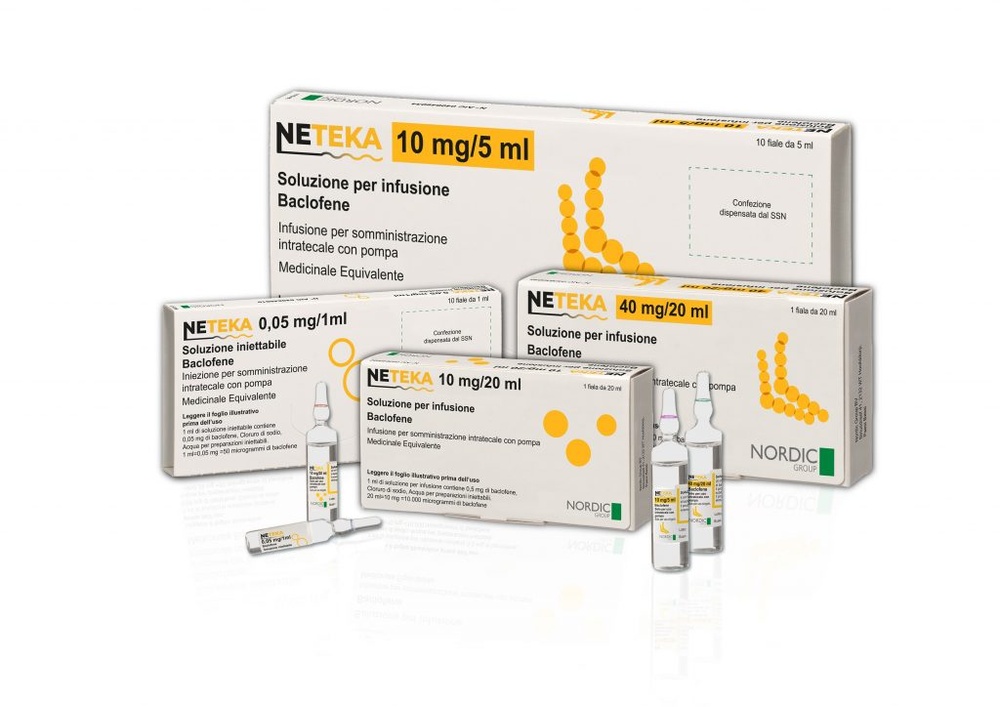
- Kraj rejestracji
- Postać farmaceutycznaInfusion solution, 0.05MG/1ML
- Kod ATCM03BX01
- Substancja czynna
- Wymaga receptyTak
- Producent
- Te treści mają charakter wyłącznie informacyjny i nie zastępują konsultacji lekarskiej.
- Zamienniki NETEKAPostać farmaceutyczna: Injectable solution, 10 MG/20 MLSubstancja czynna: baclofenWymaga receptyPostać farmaceutyczna: Coated tablet, 25 MGSubstancja czynna: baclofenProducent: DOC GENERICI SRLWymaga receptyPostać farmaceutyczna: Tablet, 10 MGSubstancja czynna: baclofenProducent: MYLAN S.P.A.Wymaga recepty
Odpowiedniki NETEKA w innych krajach
Leki z tą samą substancją czynną dostępne w innych krajach.
Odpowiednik NETEKA w Polska
Odpowiednik NETEKA w Ukraina
Odpowiednik NETEKA w Hiszpania
Lekarze online w sprawie NETEKA
Omów stosowanie NETEKA, bezpieczeństwo i ocenę zasadności recepty zgodnie z obowiązującymi przepisami.









Uzyskaj receptę na NETEKA online
Wypełnij 2-minutowy formularz
Opisz swoje objawy, historię choroby i lek, o który prosisz.
Wybierz lekarza lub pozwól nam przydzielić
Wybierz specjalistę lub dopasujemy Cię do najbliższego dostępnego lekarza.
Lekarz analizuje Twój przypadek
Zazwyczaj w ciągu 30 minut. Może zadawać dodatkowe pytania przez czat.
Odbierz w dowolnej aptece
Recepta elektroniczna wysłana na Twój e-mail — ważna w całej Polsce.
Często zadawane pytania
NETEKA wymaga recepty w Włochy. Możesz skonsultować się z lekarzem online, aby sprawdzić, czy ten lek może być odpowiedni w Twojej sytuacji.
Substancją czynną w NETEKA jest baclofen. Informacja ta pomaga rozpoznać leki o tym samym składzie, ale pod różnymi nazwami handlowymi.
NETEKA jest produkowany przez NORDIC GROUP BV. Nazwy handlowe i opakowania mogą się różnić w zależności od dystrybutora.
Lekarze, tacy jak Lekarze rodzinni, Psychiatrzy, Dermatolodzy, Kardiolodzy, Endokrynolodzy, Gastroenterolodzy, Pulmonolodzy, Nefrolodzy, Reumatolodzy, Hematolodzy, Zakaźnicy, Alergolodzy, Geriatrzy, Pediatrzy, Onkolodzy, mogą ocenić, czy stosowanie NETEKA jest odpowiednie w Twoim przypadku, w zależności od sytuacji klinicznej i lokalnych przepisów. Możesz umówić konsultację online, aby omówić objawy i możliwe dalsze kroki.
Polska posiada dobrze rozwiniętą infrastrukturę ochrony zdrowia w dużych miastach, takich jak Warszawa, Kraków, Wrocław i Gdańsk. Apteki są łatwo dostępne i działają zgodnie z obowiązującymi przepisami, zapewniając dostęp do leków na receptę.
Możesz kupić NETEKA w Warszawie, Krakowie, Wrocławiu lub Gdańsku w każdej aptece, posiadając ważną receptę.
Aby uzyskać receptę, możesz skorzystać z Oladoctor:
Inne leki zawierające tę samą substancję czynną (baclofen) to m.in. BAKLOFENE BIOINDUSTRIA L.I.M., BAKLOFENE DOK, BAKLOFENE MYLAN JENERIKS. Mogą one różnić się nazwą handlową lub postacią, ale zawierają ten sam składnik terapeutyczny. Przed zmianą lub rozpoczęciem nowego leku skonsultuj się z lekarzem.
