



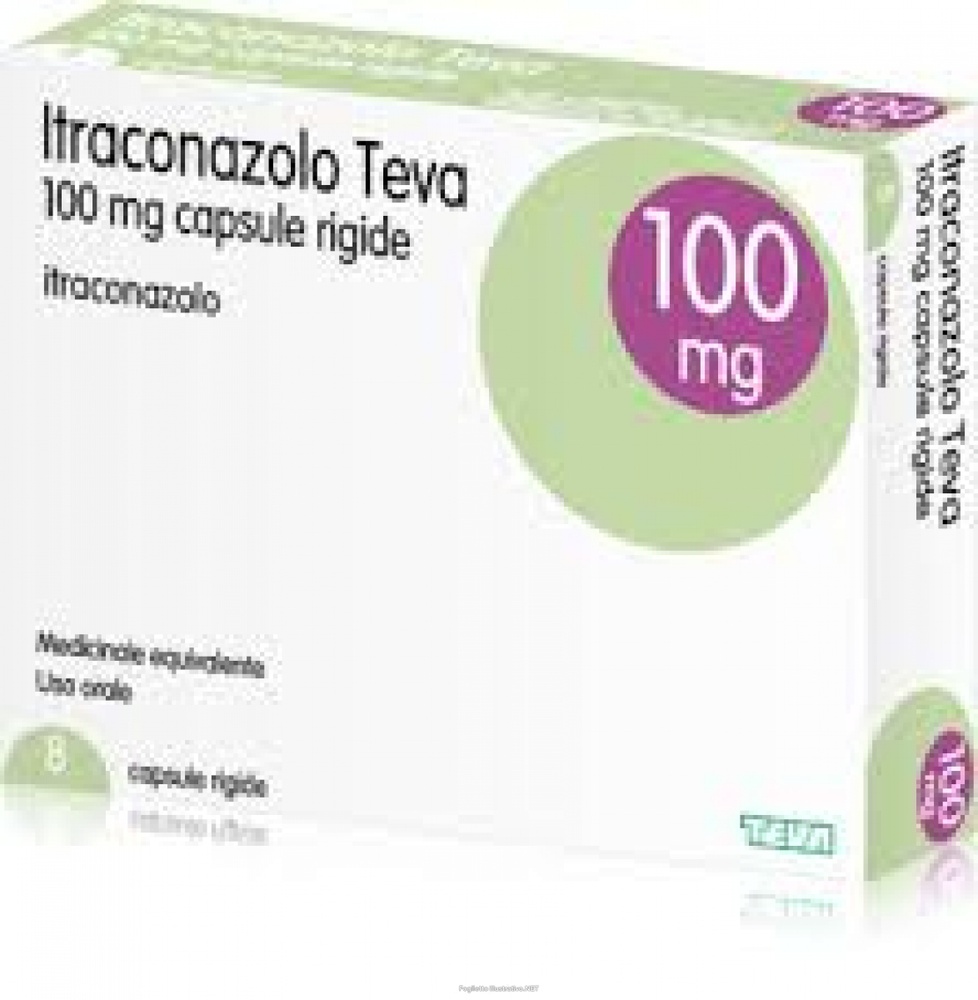
ITRACONAZOLO 100 mg Kapsułka Twarda

Ocena recepty online
Lekarz przeanalizuje Twój przypadek i zdecyduje, czy wystawienie recepty jest medycznie uzasadnione.

Porozmawiaj z lekarzem o tym leku
Omów swoje objawy i opcje leczenia podczas szybkiej konsultacji online.



Jak stosować ITRAKONATSOLO TEVA
Treść ulotki
Itraconazole Teva 100 mg hard capsules
Generic medicine
Read this leaflet carefully before you start taking this medicine as it contains important
information for you.
- Keep this leaflet. You may need to read it again.
- If you have any questions, ask your doctor or pharmacist.
- This medicine has been prescribed for you only. Do not pass it on to others, even if their symptoms are the same as yours, as it may be harmful.
- If you get any side effects, even those not listed in this leaflet, tell your doctor or pharmacist. See section 4.
Contents of this leaflet
- 1. What Itraconazole Teva is and what it is used for
- 2. What you need to know before you take Itraconazole Teva
- 3. How to take Itraconazole Teva
- 4. Possible side effects
- 5. How to store Itraconazole Teva
- 6. Contents of the pack and other information
1. What Itraconazole Teva is and what it is used for
Itraconazole Teva contains itraconazole, a substance with antifungal properties, which works by inhibiting the
growth of fungi and yeasts (organisms capable of causing disease).
Itraconazole Teva is therefore used in the treatment of superficial infections at the level of:
- vulvovaginal (candidiasis);
- oral cavity (candidiasis);
- skin (pityriasis versicolor, dermatophytosis);
- cornea (fungal keratitis);
- nails (onychomycosis due to dermatophytes and yeasts). In addition, Itraconazole Teva is used in the treatment of some general infections of the body (systemic)
- aspergillosis (infection caused by Aspergillus);
- candidiasis (infection caused by Candida);
- cryptococcosis (infection caused by Cryptococcus) including cryptococcal meningitis (inflammation of the meninges): in immunocompromised patients with cryptococcosis and in all patients with central nervous system cryptococcosis, Itraconazole Teva is indicated only when first-line treatment is considered inappropriate or has proven ineffective;
- histoplasmosis (infection caused by Histoplasma);
- paracoccidioidomycosis (infection caused by Paracoccidioides Brasiliensis);
- blastomycosis (infection caused by Blastomyces Dermatitidis);
- sporotrichosis including lymphocutaneous and cutaneous sporotrichosis (infection caused by Sporothrix);
- other rare systemic mycoses). Consult your doctor if you do not feel better or if you feel worse.
2. What you need to know before taking Itraconazolo Teva
Do not take Itraconazolo Teva
- if you are allergic to the active ingredient or to any of the other ingredients of this medicine (listed in section 6);
- if you suffer from or have suffered from heart problems such as ventricular dysfunction, for example if you have congestive heart failure, unless your doctor considers it strictly necessary to treat serious or potentially life-threatening infections;
- if you are pregnant or suspect you may be pregnant, unless your doctor considers it strictly necessary to treat potentially life-threatening infections;
- if you are being treated with other medicines; see section “Other medicines and Itraconazolo Teva” for a list of medicines that should not be taken together with Itraconazolo Teva.
Warnings and precautions
Talk to your doctor or pharmacist before taking Itraconazolo Teva.
Decreased gastric acidity reduces the absorption of Itraconazolo Teva and consequently its
therapeutic action.
Therefore, if you are being treated with antacidsthat neutralize stomach acidity (for example aluminium hydroxide) you must take them at least two hours after taking this medicine.
For the same reason, if you are a patient with a digestive system disorder, characterized by
the absence of hydrochloric acid in gastric juice (achlorhydria), if you are being treated with antisecretory drugs or have
other conditions that reduce stomach acidity (such as in some cases of AIDS) it is recommended to take
Itraconazolo Teva with an acidic, non-diet beverage containing cola (see section 3 “How to take
Itraconazolo Teva”).
Pay particular attention and ask your doctor for advice before taking Itraconazolo Teva if:
- you have a history of heart problems (congestive heart failure, valvular disease and heart ischemia);
- you suffer from a chronic lung disease (chronic obstructive pulmonary disease);
- you tend to accumulate excess fluid with consequent swelling especially in the hands, feet or around the eyes (edematous disorders);
- you have or have had problems with your liver, e.g. your liver function is impaired (hepatic insufficiency, cirrhosis), your liver enzyme levels are elevated, you have already experienced symptoms of liver toxicity during treatment with other medicines;
- your kidney function is impaired (renal insufficiency);
- for various reasons (reduced number of white blood cells, AIDS, organ transplant) as your immune defenses are reduced;
- you suffer from cystic fibrosis (a genetic disease);
- you were already being treated with the medicines listed in the section “Other medicines and Itraconazolo Teva”;
- in the past you have had an allergic reaction following treatment with another antifungal medicine;
- you are an elderly person; generally itraconazole should not be used in elderly patients.
In addition, you must pay particular attention, stop treatment and immediately inform your doctorif
you should experience (see also section 4 “Possible side effects”):
- difficulty breathing (shortness of breath), unexpected weight gain, swelling of the legs or abdomen, unusual fatigue or if you start to wake up at night because these may be symptoms of impaired heart function (congestive heart failure);
- loss of appetite, nausea, vomiting, fatigue, abdominal pain and dark urine, because these may be symptoms of impaired liver function (hepatitis);
- tingling, numbness or weakness in the hands or feet, other nerve problems in the arms or legs, blurred or double vision, ringing in the ears, loss of bladder control because these may be symptoms of impaired nervous system function (neuropathy);
- hearing loss. Laboratory tests
It is possible that, depending on your previous health status, taking itraconazole and based on your
response to the medicine, your doctor may prescribe some checks and blood tests to check the function
of your heart, liver and kidneys.
In the treatment of mild and limited skin infections (e.g. pityriasis versicolor, dermatophytosis), your doctor may advise you to use a topical product before starting a
treatment with oral administration.
Children
Itraconazolo Teva should only be given in cases of real need and if the pediatrician considers it strictly
necessary.
Other medicines and Itraconazolo Teva
Tell your doctor or pharmacist if you are taking, have recently taken or might take any
other medicine.
Taking some medicines at the same time as itraconazole may be harmful or may
change the activity of this active ingredient.
Do not take the following medicines during treatment with Itraconazolo Teva or within 2 weeks
of stopping treatment with Itraconazolo Teva:
- medicines for the treatment of allergies: terfenadine, astemizole, mizolastine;
- medicines for the treatment of heart, blood or circulation problems:
- angina (oppressive chest pain) : bepridil, ivabradine,ranolazine;
- high blood pressure: aliskiren, eplerenone, lercanidipine, nisoldipine;
- irregular heartbeat: dronedarone, quinidine, disopyramide, dofetilide;
- blood clots: dabigatran, ticagrelor;
- high cholesterol: lomitapide, simvastatin, lovastatin;
- pulmonary hypertension: sildenafil;
- medicines for the treatment of stomach problems and constipation:
- stomach disorders: cisapride;
- nausea and vomiting : domperidone;
- constipation caused by taking opioid pain relievers: naloxegol;
- medicines for the treatment of headache, sleep problems or mental health:
- migraine (headache): dihydroergotamine, ergotamine (ergot alkaloids);
- insomnia or sedation: midazolam (oral route), triazolam;
- schizophrenia, bipolar disorders or other mental health problems lurasidone, pimozide,sertindole, quetiapine;
- medicines for the treatment of urinary problems:
- ;
- urinary incontinence: darifenacin, fesoterodine (when used in patients with moderate or severe kidney or liver problems) , solifenacin (when used in patients with severe kidney or moderate or severe liver problems;
- medicines for the treatment of erectile and ejaculatory problems:
- erectile dysfunction: avanafil;
- premature ejaculation: dapoxetine;
- erectile dysfunction when used in men over 75 years of age: vardenafil;
- other medicines containing:
- colchicinefor gout (joint inflammation that causes pain and swelling), when used in patients with kidney or liver problems;
- ergometrine (ergonovine), methylergometrine (methylergonovine),ergot alkaloids used after childbirth;
- eliglustatfor Gaucher's disease, when used in patients who cannot break down certain drugs in the body;
- alofantrinefor malaria;
- irinotecanfor cancer;
- isavuconazolefor fungal infections;
- ombitasvir, paritaprevir, ritonavir with or without dasabuvirfor hepatitis C.
Note: do not take any of the medicines listed above for 2 weeks after your last treatment with
Itraconazolo Teva.
The use of some medicines is not recommended with Itraconazolo Teva. Your doctor will decide whether you should not take some medicines at the same time as Itraconazolo Teva or within 2 weeks
of stopping Itraconazolo Teva.
Examples of these medicines are:
- medicines for the treatment of heart, blood or circulation problems:
- blood clots: apixaban, rivaroxaban or vorapaxar;
- high cholesterol: atorvastatin;
- high blood pressure: felodipine;
- pulmonary hypertension: riociguat, tadalafil;
- medicines for the treatment of epilepsy, headache or mental health problems:
- epilepsy: carbamazepine, phenytoin, phenobarbital;
- migraine (headache): eletriptan;
- mental health problems, e.g. depression: St John's wort( Hypericum perforatum);
- medicines for the treatment of urinary problems:
- urinary incontinence in men due to benign prostatic hyperplasia: tamsulosin;
- bladder irritation: tolterodine;
- medicines for the treatment of cancer: axitinib, bosutinib, cabazitaxel, cabozantinib, ceritinib,cobimetinib, crizotinib, dabrafenib, dasatinib, docetaxel, ibrutinib, lapatinib, nilotinib, olaparib,pazopanib, regorafenib, sunitinib, trabectedin, trastuzumab, emtansine or vinca alkaloids (e.g.vinflunine, vinorelbine);
- medicines for the treatment of tuberculosis: rifampicin, rifabutin, isoniazid, bedaquiline;
- medicines for the treatment of HIV/AIDS or hepatitis:
- HIV/AIDS: efavirenz, nevirapine;
- HIV or hepatitis: elbasvir/grazoprevir, simeprevir, tenofovir alafenamide fumarate (TAF),tenofovir disoproxil fumarate (TDF);
- medicines used after organ transplantation: everolimus, rapamycin (also known as sirolimus),temsirolimus;
- medicines for the treatment of benign prostatic hyperplasia: alfuzosin, silodosin;
- medicines for the treatment of lung problems or allergies:
- inflammation, asthma and allergies: ciclesonide;
- allergies: ebastine;
- asthma or chronic obstructive pulmonary disease - COPD: salmeterol;
- medicines for the treatment of erectile and ejaculatory problems:
- erectile dysfunction and benign prostatic hyperplasia: tadalafil;
- erectile dysfunction: vardenafil(when used in men aged 75 years or less);
- other medicines containing:
- colchicinefor gout (joint inflammation that causes pain and swelling);
- fentanylfor pain;
- lumacaftor/ivacaftorfor cystic fibrosis.
Note: do not take any of the medicines listed above for 2 weeks after your last
treatment with Itraconazolo Teva.
This is not an exhaustive list, so tell your doctor if you are taking or planning to take
any of these medicines or any other medicine.
When you take Itraconazole Teva with certain medicines, caution is necessary.You may
be more likely to experience undesirable effects or the dose of
Itraconazole Teva or the other medicine may need to be adjusted.
Examples of these medicines are:
- medicines for the treatment of infections:
- bacterial infections: ciprofloxacin, clarithromycin, erythromycin;
- tuberculosis: delamanid;
- malaria: artemeter-lumefantrine, quinine;
- trematodes and tapeworm: praziquantel;
- medicines for the treatment of stomach problems or diarrhea:
- nausea and vomiting during oncological treatment: aprepitant, netupitant;
- diarrhea: loperamide;
- stomach acidity: antacids such asaluminum, calcium, magnesium or sodium bicarbonate;H receptor antagonists such as cimetidine, ranitidine;proton pump inhibitors such aslansoprazole, omeprazole, rabeprazole;
- medicines for the treatment of heart, blood or circulation problems:
- pulmonary hypertension: bosentan;
- high blood pressure: calcium channel blockers such as verapamil and dihydropyridines, e.g.amlodipine, isradipine, nifedipine, nimodipine, diltiazem;
- circulatory problems: cilostazol;
- blood clots: coumarins such as warfarin;
- atrial fibrillation: digoxin;
- pulmonary hypertension or angina: nadolol;
- medicines for the treatment of lung problems, allergies or inflammatory conditions:
- allergies: bilastine, rupatadine;
- asthma, allergies or inflammatory conditions: methylprednisolone, dexamethasone (orally or byinjection);
- asthma and allergies: budesonide, fluticasone;
- medicines for the treatment of urinary problems:
- bladder irritation: fesoterodine, imidafenacin, oxybutynin, solifenacin;
- medicines used after organ transplantation: cyclosporine, tacrolimus;
- medicines for the treatment of HIV/AIDS or hepatitis:
- HIV/AIDS: cobicistat, elvitegravir boosted with ritonavir, maraviroc, ritonavir, darunavir boosted with ritonavir, fosamprenavir boosted with ritonavir, indinavir, saquinavir);
- hepatitis: glecaprevir/pibrentasvir;
- medicines for the treatment of tumors: bortezomib, brentuximab, vedotin, busulfan, erlotinib,gefitinib, idelalisib, imatinib, nintedanib, panobinostat, ponatinib, ruxolitinib or sonidegib);
- medicines for the treatment of sleep and mental health problems:
- anxiety and insomnia: alprazolam, brotizolam, buspirone or midazolam (intravenously);
- insomnia: zopiclone;
- depression and anxiety: reboxetine, venlafaxine;
- schizophrenia, bipolar disorder or other mental health problems: aripiprazole, cariprazine,haloperidol,risperidone);
- Alzheimer's disease: galantamine;
- hyperactivity and attention deficit problems: guanfacine;
- medicines for the treatment of pain:
- pain: alfentanil, buprenorphine (intravenously and sublingually), oxycodone, sufentanil;
- joint inflammation and pain: meloxicam;
- medicines for the treatment of benign prostatic hyperplasia: dutasteride;
- medicines for the treatment of erectile and ejaculation problems:
- erectile dysfunction: sildenafil;
- other medicines containing:
- repaglinide, saxagliptinfor diabetes;
- cinacalcetfor the treatment of hyperparathyroidism (increased activity) of the parathyroid gland ;
- alitretinoin (orally)for the treatment of eczema (pruritic and non-contagious inflammatory skin reaction);
- cabergolinefor Parkinson's disease;
- cannabis-based products, including medicinal ones, such as those for nausea and vomiting or for muscle spasms in patients with multiple sclerosis;
- dienogest or ulipristal, contraceptive medicines;
- eliglustatfor Gaucher's disease, when used in patients who cannot break down certain drugs in the body;
- ivacaftorfor cystic fibrosis;
- methadonefor the treatment of drug addiction.
This is not a complete list, so tell your doctor if you are taking or planning to take
any of these medicines or any other medicine.
The absorption of itraconazole into the body occurs in the presence of sufficient acidity at the
gastric level. For this reason, medicines that neutralize gastric acidity (antacids) must
be taken at least 1 hour before taking itraconazole or must not be taken for at least 2
hours after taking itraconazole.
For the same reason, if you are using medicines that inhibit the production of acid in the stomach,
it is advisable to take Itraconazole Teva with a cola-containing beverage.
Pregnancy, breastfeeding and fertility
If you are pregnant, suspect you are pregnant or are planning a pregnancy, or if you are breastfeeding,
ask your doctor or pharmacist for advice before taking this medicine.
Pregnancy
Itraconazole Teva should not be used during pregnancy unless your doctor considers it
strictly necessary to treat potentially life-threatening infections.
Breastfeeding
Since a small amount of itraconazole passes into breast milk, avoid breastfeeding during
treatment with Itraconazole Teva, unless your doctor assesses the potential risk in relation to
the expected benefit.
Fertility
If you are a woman of childbearing potential and could become pregnant, talk to your doctor. During treatment
with this medicine, you should take adequate contraceptive measures to be sure you do not become pregnant
and continue to use highly effective contraceptive measures until the next menstrual cycle after the end of treatment with Itraconazole Teva.
Driving and operating machinery
When driving vehicles and operating machinery, the possibility that
itraconazole may cause dizziness, visual disturbances and hearing loss (see section “Possible
side effects”) must be taken into consideration. In this case, refrain from driving and operating machinery.
Itraconazole Teva contains sucrose (sugar spheres)
If your doctor has diagnosed you with intolerance to certain sugars, contact him before taking this
medicine.
3. How to take Itraconazole Teva
Take this medicine following exactly the instructions of your doctor or pharmacist. If you have
any doubts, consult your doctor or pharmacist.
Method of administration
Take the medicine immediately after one of the main meals.
The capsule should not be opened and must be swallowed whole.
Dosage for the treatment of superficial fungal infections
Vulvovaginal infections (vulvovaginal candidiasis):
The recommended dose is 2 capsules of 100 mg, once a day for 3 days, or 2 capsules of
100 mg, twice a day for 1 day depending on the type of fungal infection.
Oral infections (oral candidiasis)
The recommended dose is 1 capsule of 100 mg, once a day for 15 days.
Skin infections (pityriasis versicolor, dermatophytoses)
The recommended dose is 2 capsules of 100 mg, once a day for 7 days.
For the treatment of infections of particularly keratinized areas of the palms of the hands and feet,
the recommended dose is 2 capsules of 100 mg, twice a day, for 7 days.
Corneal infections (fungal keratitis)
The recommended dose is 2 capsules of 100 mg, once a day for 21 days.
Nail infections (onychomycosis)
The recommended dose for a treatment cycle is 2 capsules of 100 mg, twice a day for 1 week.
Two treatment cycles should be performed for infections of the fingernails and 3 cycles for those of the
feet. A suspension of 3 weeks is necessary between treatment cycles.
Your nails will regrow 6 - 9 months after the end of treatment.
If, for various reasons, you find that your immune defenses are reduced, your doctor may
prescribe a double dose compared to that suggested for the type of infection to be treated, because in
this case the effectiveness of the drug may be diminished. The doctor will evaluate the most appropriate dose for your
condition.
The results of therapy are usually achieved 2 - 4 weeks after the end of treatment.
Dosage for the treatment of systemic infections
Aspergillosis
The recommended dose is 2 capsules of 100 mg, once a day, for 2 - 5 months.
If the infection is widespread and particularly severe, the doctor may decide to double the dose; you must
therefore take 2 capsules of 100 mg, twice a day, for 2 - 5 months.
Candidiasis
The recommended dose is 1 - 2 capsules of 100 mg, once a day, for a period that can range from 3
weeks to 7 months.
If the infection is widespread and particularly severe, the doctor may decide to double the dose; you must
therefore take 2 capsules of 100 mg, twice a day for 2 - 5 months.
Non-meningeal cryptococcosis
The recommended dose is 2 capsules of 100 mg, once a day, for a period that can range from 2 months to
1 year. You should also follow a maintenance treatment that involves taking 2 capsules of
100 mg per day.
Cryptococcal meningitis
The recommended dose is 2 capsules of 100 mg twice a day, for a period that can range from 2 months to
1 year. You should also follow a maintenance treatment that involves taking 2 capsules of
100 mg per day.
Histoplasmosis
The recommended dose is 2 capsules of 100 mg once a day, or 2 capsules of 100 mg, twice a day, for 8 months depending on the type of infection.
Lymphocutaneous and cutaneous sporotrichosis
The recommended dose is 1 - 2 capsules of 100 mg, once a day (for localized lesions) or 2 capsules
of 100 mg twice a day (for extensive lesions) for 3 - 6 months.
Paracoccidioidomycosis
The recommended dose is 1 capsule of 100 mg, once a day for 6 months.
Chromomycosis
The recommended dose is 1 - 2 capsules of 100 mg, once a day for 6 months.
Blastomycosis
The recommended dose is 1 capsule of 100 mg, once a day or 2 capsules of 100 mg, twice a day for 6 months.
Use in children
The use of Itraconazole Teva in children is not recommended unless the pediatrician deems it strictly
necessary.
If you take more Itraconazole Teva than you should
If you take a dose of Itraconazole Teva higher than that prescribed, immediately inform your doctor or go to
the nearest hospital.
In case of overdose, you may experience the undesirable effects described in paragraph 4.
If you forget to take Itraconazole Teva
Do not take a double dose to make up for a missed dose.
If you stop taking Itraconazole Teva
Ask your doctor for advice if you intend to stop treatment.
If you have any doubts about the use of this medicine, consult your doctor or pharmacist.
4. Possible side effects
Like all medicines, this medicine can cause side effects, although not everybody gets them.
Stop treatment and tell your doctor immediatelyif you experience any of the following symptoms:
- skin rashes and itching, difficulty breathing (bronchospasm) or swallowing, swelling of the face, hands and feet, eyes, lips and/or tongue (angioedema). These may be signs of serious allergic reactions (anaphylactic shock);
- shortness of breath, unexpected weight gain, swelling of the legs or abdomen, unusual fatigue or waking up at night, as these could be symptoms of impaired heart function (congestive heart failure);
- loss of appetite, nausea, vomiting, fatigue, abdominal pain and dark urine, as these could be symptoms of impaired liver function (hepatitis);
- tingling, numbness or weakness in the hands or feet, other nerve problems in the arms or legs, blurred or double vision, ringing in the ears, loss of bladder control, as these could be symptoms of impaired nervous system function (neuropathy);
- hearing loss.
The side effects may include the following:
Common side effects (may affect up to 1 in 10 people):
- headache;
- abdominal pain;
- nausea;
Uncommon side effects (may affect up to 1 in 100 people):
- sinusitis (inflammation of the nasal mucous membranes);
- upper respiratory tract infection;
- rhinitis (nasal congestion);
- allergy (hypersensitivity)*;
- dysgeusia (altered taste);
- paresthesia (altered sensation in the limbs or other parts of the body);
- confusion;
- diarrhea;
- vomiting;
- constipation;
- dyspepsia (indigestion);
- flatulence (presence of gas in the stomach or intestines);
- abnormal liver function;
- hyperbilirubinemia (increased bilirubin in the blood which can cause jaundice);
- urticaria;
- skin rash;
- itching;
- alopecia (hair loss);
- edema (swelling);
- menstrual disorder.
Rare side effects (may affect up to 1 in 1,000 people):
- leukopenia (decreased white blood cells);
- serum sickness (allergy-like reaction);
- anaphylactic reaction (severe allergic reaction);
- hypertriglyceridemia (high concentration of triglycerides in the blood);
- tremor;
- hypoesthesia (reduced sensation and response to a certain stimulus);
- visual disturbances, including diplopia (double vision) and blurred vision;
- transient or permanent hearing loss*;
- tinnitus (sound generated in the ear);
- congestive heart failure (heart problems)*;
- dyspnea (difficulty breathing);
- pancreatitis (inflammation of the pancreas);
- severe hepatotoxicity (harmful effect on the liver), including some cases of acute fatal liver failure*;
- Stevens-Johnson syndrome/toxic epidermal necrolysis (SJS/TEN) (severe skin and/or mucous membrane reaction induced by the drug);
- acute generalized exanthematous pustulosis (AGEP) (Sudden rash that manifests with the presence of pustules);
- erythema multiforme (inflammation of blood vessels causing an allergic reaction);
- exfoliative dermatitis (severe and widespread skin irritation causing scaling of the skin);
- leucocytoclastic vasculitis (inflammation of small blood vessels);
- photosensitivity (abnormal and excessive reactivity of the skin to solar or artificial radiation);
- swelling of the face, hands and feet, eyes, lips and/or tongue (angioedema);
- pollakiuria (frequent urination of small amounts of urine);
- erectile dysfunction;
- fever;
- increased blood creatine phosphokinase (an enzyme present in the blood); *see section “Warnings and precautions”.
Very rare side effects (may affect up to 1 in 10,000 people):
- anaphylactoid reaction.
Side effects with unknown frequency (frequency cannot be estimated on the basis of available data):
- decreased number of certain types of white blood cells in the blood (granulocytopenia);
- decreased number of platelets in the blood (thrombocytopenia);
- increased blood sugar (hyperglycemia);
- increased or decreased potassium in the blood (hyperkalemia, hypokalemia);
- decreased magnesium in the blood (hypomagnesemia);
- peripheral neuropathy* (peripheral nervous system disorder);
- dizziness;
- drowsiness;
- heart failure, left ventricular failure, tachycardia;
- hypertension, hypotension (changes in blood pressure);
- pulmonary edema;
- voice disorder (dysphonia);
- cough;
- chest pain;
- gastrointestinal disorders;
- liver failure*, hepatitis, yellowish discoloration of the skin (jaundice);
- erythematous skin rash;
- increased sweating (hyperhidrosis);
- muscle pain (myalgia), joint pain (arthralgia);
- renal failure;
- urinary incontinence;
- pain;
- fatigue;
- chills;
- increased levels of certain liver enzymes (alanine aminotransferase, aspartate aminotransferase);
- increased levels of certain blood enzymes (alkaline phosphatase, lactic dehydrogenase, gamma-glutamyltransferase);
- increased levels of urea in the blood;
- abnormal urine analysis.
Additional side effects in children
Based on safety data from clinical studies, the most commonly reported side effects in pediatric patients are:
- headache;
- vomiting;
- abdominal pain;
- diarrhea;
- abnormal liver function;
- hypotension (low blood pressure);
- nausea;
- urticaria.
In general, the side effects reported in pediatric patients are similar to those observed in adults, but the frequency is higher in pediatric patients. Some cases of cardiac arrest have also been reported.
Reporting of side effects
If you get any side effects, even those not listed in this leaflet, tell your doctor or pharmacist. You can also report side effects directly through the national reporting system at www.aifa.gov.it/content/segnalazioni-reazioni-avverse.
By reporting side effects you can help provide more information on the safety of this medicine.
5. How to store Itraconazolo Teva
Keep this medicine out of the sight and reach of children.
Do not store at a temperature above 30°C.
Do not use this medicine after the expiry date which is stated on the pack after “Exp.”. The expiry date refers to the last day of that month.
Do not dispose of any medicine in waste water or household waste. Ask your pharmacist how to dispose of medicines you no longer use. This will help protect the environment.
6. Contents of the pack and other information
What Itraconazolo Teva contains
- The active ingredient is itraconazole. Each hard capsule contains 100 mg of itraconazole.
- The other ingredients are: inside the capsule:sugar spheres, hypromellose and poloxamers. capsule shell:gelatin, titanium dioxide (E171), quinoline yellow (E104) and indigotine (E132).
Description of the appearance of Itraconazolo Teva and contents of the pack
Itraconazolo Teva is presented in a cardboard box containing 8 hard capsules in blisters.
Marketing Authorisation Holder and Manufacturer
Marketing Authorisation Holder
Teva Italia S.r.l. - Piazzale Luigi Cadorna, 4 - 20123 Milano
Manufacturer
Laboratorios Liconsa S.A. Av.da Miralcampo 7 - Poligono Industrial Miralcampo - 19200 Azuqueca de Henares -
Guadalajara (Spain)

Nie jesteś pewien, czy ten lek jest odpowiedni dla ciebie?
Omów swoje objawy i leczenie z lekarzem online.

Zacząłeś przyjmować lek i masz pytania?
Omów swoje objawy i leczenie z lekarzem online.
- Kraj rejestracji
- Postać farmaceutycznaHard capsule, 100 MG
- Kod ATCJ02AC02
- Substancja czynna
- Wymaga receptyTak
- Producent
- Te treści mają charakter wyłącznie informacyjny i nie zastępują konsultacji lekarskiej.
- Zamienniki ITRAKONATSOLO TEVAPostać farmaceutyczna: Hard capsule, 100 MGSubstancja czynna: itraconazoleProducent: DOC GENERICI SRLWymaga receptyPostać farmaceutyczna: Hard capsule, 100 MGSubstancja czynna: itraconazoleProducent: MYLAN S.P.A.Wymaga receptyPostać farmaceutyczna: Hard capsule, 100 MGSubstancja czynna: itraconazoleProducent: SANDOZ S.P.A.Wymaga recepty
Odpowiedniki ITRAKONATSOLO TEVA w innych krajach
Leki z tą samą substancją czynną dostępne w innych krajach.
Odpowiednik ITRAKONATSOLO TEVA w Polska
Odpowiednik ITRAKONATSOLO TEVA w Ukraina
Odpowiednik ITRAKONATSOLO TEVA w Hiszpania
Lekarze online w sprawie ITRAKONATSOLO TEVA
Omów stosowanie ITRAKONATSOLO TEVA, bezpieczeństwo i ocenę zasadności recepty zgodnie z obowiązującymi przepisami.









Uzyskaj receptę na ITRAKONATSOLO TEVA online
Wypełnij 2-minutowy formularz
Opisz swoje objawy, historię choroby i lek, o który prosisz.
Wybierz lekarza lub pozwól nam przydzielić
Wybierz specjalistę lub dopasujemy Cię do najbliższego dostępnego lekarza.
Lekarz analizuje Twój przypadek
Zazwyczaj w ciągu 30 minut. Może zadawać dodatkowe pytania przez czat.
Odbierz w dowolnej aptece
Recepta elektroniczna wysłana na Twój e-mail — ważna w całej Polsce.
Często zadawane pytania
ITRAKONATSOLO TEVA wymaga recepty w Włochy. Możesz skonsultować się z lekarzem online, aby sprawdzić, czy ten lek może być odpowiedni w Twojej sytuacji.
Substancją czynną w ITRAKONATSOLO TEVA jest itraconazole. Informacja ta pomaga rozpoznać leki o tym samym składzie, ale pod różnymi nazwami handlowymi.
ITRAKONATSOLO TEVA jest produkowany przez TEVA ITALIA S.R.L.. Nazwy handlowe i opakowania mogą się różnić w zależności od dystrybutora.
Lekarze, tacy jak Lekarze rodzinni, Psychiatrzy, Dermatolodzy, Kardiolodzy, Endokrynolodzy, Gastroenterolodzy, Pulmonolodzy, Nefrolodzy, Reumatolodzy, Hematolodzy, Zakaźnicy, Alergolodzy, Geriatrzy, Pediatrzy, Onkolodzy, mogą ocenić, czy stosowanie ITRAKONATSOLO TEVA jest odpowiednie w Twoim przypadku, w zależności od sytuacji klinicznej i lokalnych przepisów. Możesz umówić konsultację online, aby omówić objawy i możliwe dalsze kroki.
Polska posiada dobrze rozwiniętą infrastrukturę ochrony zdrowia w dużych miastach, takich jak Warszawa, Kraków, Wrocław i Gdańsk. Apteki są łatwo dostępne i działają zgodnie z obowiązującymi przepisami, zapewniając dostęp do leków na receptę.
Możesz kupić ITRAKONATSOLO TEVA w Warszawie, Krakowie, Wrocławiu lub Gdańsku w każdej aptece, posiadając ważną receptę.
Aby uzyskać receptę, możesz skorzystać z Oladoctor:
Inne leki zawierające tę samą substancję czynną (itraconazole) to m.in. ITRAKONATSOLO DOK JENERIKI, ITRAKONATSOLO MYLAN JENERIKS, ITRAKONATSOLO SANDOTS. Mogą one różnić się nazwą handlową lub postacią, ale zawierają ten sam składnik terapeutyczny. Przed zmianą lub rozpoczęciem nowego leku skonsultuj się z lekarzem.
