



FUZEON 90 mg /Ml Proszek I Rozpuszczalnik Do Roztworu Do Wstrzykiwań

Ocena recepty online
Lekarz przeanalizuje Twój przypadek i zdecyduje, czy wystawienie recepty jest medycznie uzasadnione.

Porozmawiaj z lekarzem o tym leku
Omów swoje objawy i opcje leczenia podczas szybkiej konsultacji online.



Jak stosować FUTSEON
Treść ulotki
Fuzeon 90 mg/ml powder and solvent for injectable solution
Enfuvirtide
Read this leaflet carefully before you start using this medicine as it contains important
information for you.
- Keep this leaflet. You may need to read it again.
- If you have any questions, ask your doctor, pharmacist or nurse.
- This medicine has been prescribed for you only. Do not pass it on to others, even if their symptoms are the same as yours, as it could be harmful.
- If you get any side effects, even those not listed in this leaflet, tell your doctor, pharmacist or nurse. See section 4.
Contents of this leaflet
- 1. What Fuzeon is and what it is used for
- 2. What you need to know before you use Fuzeon
- 3. How to use Fuzeon
- 4. Possible side effects
- 5. How to store Fuzeon
- 6. Contents of the pack and other information
7. Detailed guide on how to inject Fuzeon
1. What Fuzeon is and what it is used for
What Fuzeon is
Fuzeon contains the active substance enfuvirtide and belongs to a group of medicines called
“antiretrovirals”.
What Fuzeon is used for
Fuzeon is used for the treatment of human immunodeficiency virus (HIV) in combination with
other antiretroviral medicines in patients with HIV infection.
- Your doctor has prescribed Fuzeon to help you control your HIV infection.
- Fuzeon does not cure HIV infection.
How Fuzeon works
HIV attacks cells in the body called CD4 cells or T lymphocytes. In order for the virus to
multiply, it must come into contact with these cells and enter them. Fuzeon helps to
prevent this process.
2. What you need to know before using Fuzeon
Do not use Fuzeon
- if you are allergic to enfuvirtide or any of the other ingredients of this medicine (listed in section 6). If you are unsure, ask your doctor, pharmacist or nurse before using Fuzeon.
Warnings and precautions
Talk to your doctor, pharmacist or nurse before using Fuzeon:
- if you have previously suffered from any type of lung problems,
- if you have previously suffered from any type of kidney problems,
- if you suffer from chronic hepatitis B or C or another liver disease; using this medicine increases the likelihood of developing serious liver problems.
Signs of previous infections
In some patients with advanced HIV infection (AIDS) and a history of opportunistic infections,
signs and symptoms of inflammation from previous infections may appear shortly after starting anti-HIV treatment. These symptoms are believed to be due to the recovery of the body’s immune system. This improvement allows the body to fight infections that may have been present without clear symptoms. If you notice any symptoms of infection, tell your doctor immediately.
Signs of autoimmune disorders
In addition to opportunistic infections, autoimmune disorders (a condition that occurs when the immune system attacks healthy tissue in the body) may also occur after you have started taking medicines to treat HIV infection. Autoimmune disorders can occur many months after starting treatment. If you notice any symptoms of infection or other symptoms such as muscle weakness, initial weakness in the hands and feet that rises towards the trunk of the body, palpitations, tremor or hyperactivity, tell your doctor immediately to request the necessary treatment.
Patients with liver disease
Patients with chronic hepatitis B or C undergoing anti-HIV therapy are at increased risk of developing serious liver problems. If you have previously suffered from a liver disease, consult your doctor.
Bone disease (osteonecrosis)
Some patients taking combination anti-HIV medicines may develop a bone disease called osteonecrosis, in which a lack of blood flow leads to the death of bone tissue (bone tissue death caused by a lack of blood flow to the bone).
- Signs of osteonecrosis are joint stiffness, discomfort and pain (especially in the hips, knees and shoulders) and difficulty moving. See your doctor if you notice any of these signs.
- Risk factors for developing this disease include: duration of taking anti-HIV medicines, taking corticosteroids, amount of alcohol consumed, immune system function and being overweight.
Other medicines and Fuzeon
Tell your doctor, pharmacist or nurse if you are taking, have recently taken or might take any other medicines, including those available without a prescription and herbal remedies. It has been shown that Fuzeon does not interact with other anti-HIV medicines you are taking or with rifampicin (an antibiotic).
Fuzeon with food and drink
You can use Fuzeon with or without food. However, you should follow the instructions provided in the package leaflets of other medicines you are taking.
Pregnancy and breastfeeding
- If you are pregnant, suspect you may be pregnant or are planning to become pregnant, ask your doctor for advice before taking this medicine. Do not use Fuzeon unless your doctor specifically tells you to.
- Breastfeeding is not recommended for HIV-positive women as HIV infection can be transmitted to the baby through breast milk. If you are breastfeeding or planning to breastfeed, you should talk to your doctor as soon as possible.
Driving and using machines
The effect of Fuzeon on the ability to drive vehicles or use tools or machinery has not been studied. If you experience dizziness while using Fuzeon, do not drive or use tools or machinery.
Fuzeon contains sodium
Fuzeon contains less than 1 mmol of sodium (23 mg) per dose, that is to say essentially ‘sodium-free’.
3. How to use Fuzeon
Always use this medicine exactly as your doctor or pharmacist has told you. Ask your
doctor or pharmacist if you have any doubts.
How to prepare and inject Fuzeon
Fuzeon must be administered by an injection just below the skin, that is
by a “subcutaneous” injection. In section 7 you will find instructions on how to prepare Fuzeon and how
to inject the medicine yourself.
How much Fuzeon to use
- For adults and adolescents (aged 16 years and over), the recommended dose is 90 mg twice a day.
- The dose is administered as a 1 ml injection just below the skin.
- It is best to use Fuzeon at the same time each day.
- Try to arrange the administration of doses at convenient times for you, for example first thing in the morning and early evening.
See further instructions on how to use Fuzeon at the end of this leaflet (see section 7).
You will find instructions on how to prepare Fuzeon and how to inject the medicine yourself.
If you use more Fuzeon than you should
If you use more Fuzeon than you should, contact a doctor or go immediately to hospital,
taking the medicine packaging with you.
If you forget to use Fuzeon
- If you forget to take a dose, take it as soon as you remember. However, if less than 6 hours remain until the next scheduled dose, skip the missed dose.
- Do not take a double dose to make up for a missed dose.
If you stop taking Fuzeon
- Continue to use the medicine until your doctor tells you to stop treatment. Any interruption, even temporary, of treatment may increase the chances that the HIV virus in your blood becomes resistant to Fuzeon more quickly than would occur if you were taking the medicine regularly and without interruptions to treatment.
- The HIV virus in your blood may become resistant to Fuzeon. In this case, the levels of virus in the blood may start to increase. This is when your doctor may decide to stop therapy with Fuzeon. Your doctor will need to discuss this with you if it should occur.
If you have any further questions on the use of this medicine, ask your doctor, pharmacist or
nurse.
4. Possible side effects
Like all medicines, this medicine can cause side effects, although not everybody gets them.
If you notice any of the following side effects, stop treatment with Fuzeon and
consult a doctor immediately; you may need urgent medical attention.
- Allergic reaction (hypersensitivity) - the signs can include: skin rash, high temperature or chills, nausea or vomiting, sweating or trembling. This side effect is rare (affects less than 1 in 1,000 people). These signs do not necessarily mean that you are allergic to the medicine.
Tell your doctor if you experience side effects at the injection site
The most common side effects (affect more than 1 in 10 people) are problems
at the place in the body where the injection is given. You are likely to experience one or more of the
following reactions from mild to moderate:
- redness
- swelling
- itching
- bruising
- hardened skin or hard bumps
- pain, soreness or tenderness. These reactions may appear during the first week of treatment and usually do not last more than 7 days. After this time, the reactions generally do not worsen. If you experience any of these reactions, do not stop using Fuzeon, but ask your doctor if you have any concerns.
Reactions may worsen when injections are repeated in the same place on the body.
They may also worsen when the injection is given deeper than
necessary (for example, into the muscle). Rarely, you may also develop an infection
at a site used for a single injection. To reduce the risk of infection, it is important to follow
the instructions in section 7.
Fuzeon can cause a build-up of a type of protein, called amyloid, under the skin at the injection
site, which can be felt as lumps under the skin. Contact your doctor if this happens.
Other possible side effects
Very common(affects more than 1 in 10 people)
- diarrhoea
- nausea
- weight loss
- pain and numbness in hands, feet or legs.
Common(affects less than 1 in 10 people)
- pneumonia
- ear infection
- enlargement of the glands (lymph nodes)
- eye inflammation (conjunctivitis)
- flu or flu-like symptoms
- sinusitis
- nasal congestion
- anorexia
- heartburn
- pancreatitis
- loss of appetite
- diabetes
- nightmares
- dizziness
- tremor
- anxiety or irritability
- inability to concentrate
- decreased sensitivity
- acne
- skin redness
- eczema
- dry skin
- warts
- muscle pain
- kidney stones
- fatigue
- blood in urine
- changes observed in blood tests (increased blood lipids).
Reporting of side effects
If you get any side effects, talk to your doctor, pharmacist or nurse. You can also report side effects directly
through the national reporting system listed in Annex V. By reporting side effects you can help provide more
information on the safety of this medicine.
5. How to store Fuzeon
Keep this medicine out of sight and reach of children.
Do not use this medicine after the expiry date which is reported on the label of the vials of
Fuzeon or of water for injectable preparations after “Exp.”. The expiry date refers to the last
day of the month.
Keep the vial in the outer packaging to protect it from light.
Once the solution has been prepared for injection, it must be used immediately. If
not used immediately, it must be stored in a refrigerator (2°C - 8 ° C) and used within 24
hours.
Do not use this medicine if you notice any particles in the powder or in the solution after adding
the water for injectable preparations. Also, do not use the water for injectable preparations if you see
any particles in the vial or if the water is cloudy.
Do not dispose of any medicine in the drain or household waste. Ask your pharmacist how to
dispose of medicines you no longer use. This will help protect the environment.
6. Contents of the pack and other information
What Fuzeon contains
- The active substance is enfuvirtide. Each vial contains 108 mg of enfuvirtide. After reconstitution with the provided solvent, 1 ml of reconstituted solution contains 90 mg of enfuvirtide.
- The excipients are:
Powder
Anhydrous sodium carbonate
Mannitol
Sodium hydroxide
Hydrochloric acid
Solvent
Water for injections
See section 2 “Fuzeon contains sodium”
Description of the appearance of Fuzeon and contents of the pack
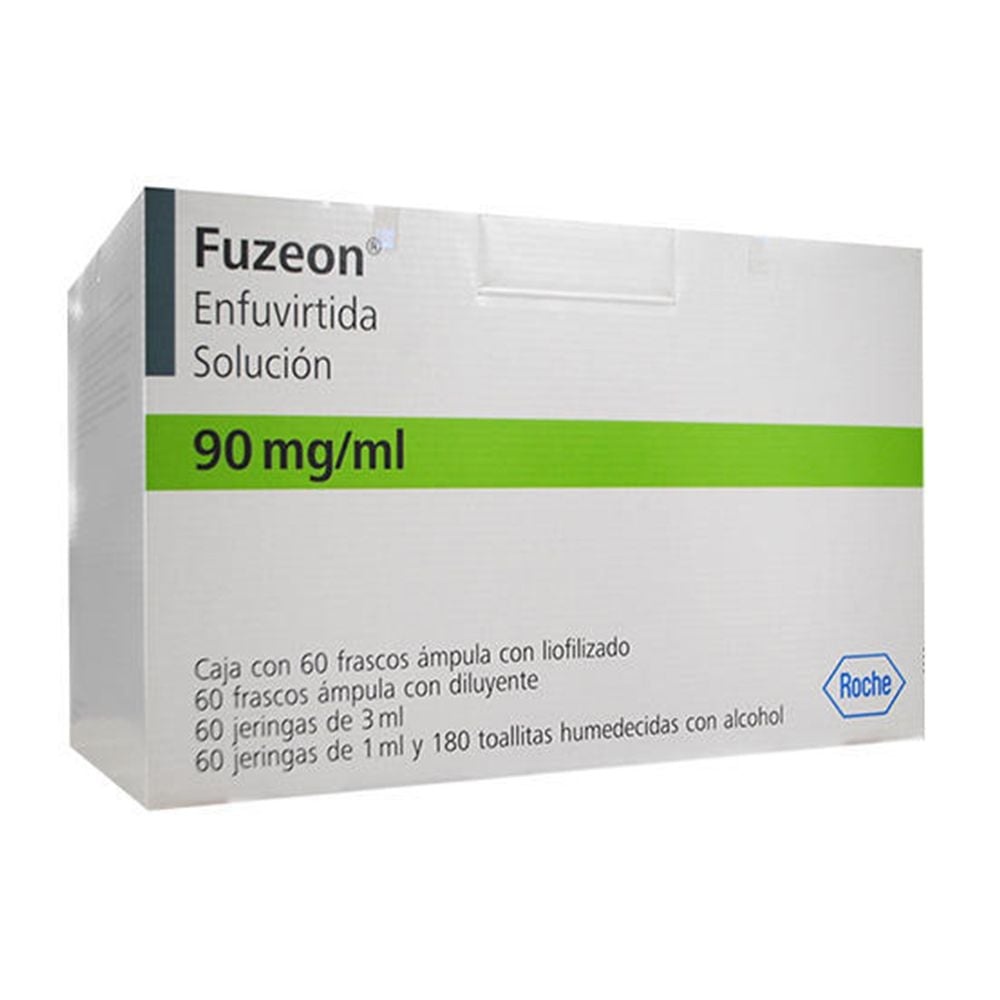
Fuzeon powder and solvent for injection solution is supplied in a pack containing:
60 vials of Fuzeon
60 vials of water for injections which is used to reconstitute the Fuzeon powder
60 syringes of 3 ml
60 syringes of 1 ml
180 alcohol-soaked wipes.
This pack provides everything you need to prepare and administer Fuzeon injections for
30 days.
Marketing Authorisation Holder
Roche Registration GmbH
Emil-Barell-Strasse 1
79639 Grenzach-Wyhlen
Germany
The manufacturer responsible for batch release is
Roche Pharma AG
Emil-Barell-Str. 1
D-79639 Grenzach-Wyhlen
Germany
For further information on Fuzeon, contact the local representative of the marketing authorisation
holder:
België/Belgique/Belgien
N.V. Roche S.A.
Tél/Tel: +32 (0) 2 525 82 11
Lietuva
UAB “Roche Lietuva”
Tel: +370 5 2546799
България
Рош България ЕООД
Тел: +359 2 474 5444
Luxembourg/Luxemburg
(Voir/siehe Belgique/Belgien)
Magyarország
Roche (Magyarország) Kft.
Tel: +36 - 1 279 4500
Danmark
Roche Pharmaceuticals A/S
Tlf: +45 - 36 39 99 99
Česká republika
Roche s. r. o.
Tel: +420 - 2 20382111
Malta
(See Ireland)
Deutschland
Roche Pharma AG
Tel: +49 (0) 7624 140
Nederland
Roche Nederland B.V.
Tel: +31 (0) 348 438050
Eesti
Roche Eesti OÜ
Tel: + 372 6 177 380
Norge
Roche Norge AS
Tlf: +47 - 22 78 90 00
Ελλάδα
Roche (Hellas) A.E.
Τηλ: +30 210 61 66 100
Österreich
Roche Austria GmbH
Tel: +43 (0) 1 27739
España
Roche Farma S.A.
Tel: +34 - 91 324 81 00
Polska
Roche Polska Sp.z o.o.
Tel: +48 - 22 345 18 88
France
Roche
Tél: +33 (0) 1 47 61 40 00
Portugal
Roche Farmacêutica Química, Lda
Tel: +351 - 21 425 70 00
Hrvatska
Roche d.o.o.
Tel: + 385 1 47 22 333
România
Roche România S.R.L.
Tel: +40 21 206 47 01
Ireland
Roche Products (Ireland) Ltd.
Tel: +353 (0) 1 469 0700
Slovenija
Roche farmacevtska družba d.o.o.
Tel: +386 - 1 360 26 00
Ísland
Roche Pharmaceuticals A/S
c/o Icepharma hf
Sími: +354 540 8000
Slovenská republika
Roche Slovensko, s.r.o.
Tel: +421 - 2 52638201
Italia
Roche S.p.A.
Tel: +39 - 039 2471
Suomi/Finland
Roche Oy
Puh/Tel: +358 (0) 10 554 500
Kύπρος
Γ.Α.Σταμάτης & Σια Λτδ.
Τηλ: +357 - 22 76 62 76
Sverige
Roche AB
Tel: +46 (0) 8 726 1200
Latvija
Roche Latvija SIA
Tel: +371 - 6 7039831
United Kingdom (Northern Ireland)
Roche Products (Ireland) Ltd.
Tel: +44 (0) 1707 366000
Other sources of information
More detailed information on this medicine is available on the website of the European
Medicines Agency: http://www.ema.europa.eu
This leaflet is available in all languages of the European Union/European Economic Area on the
website of the European Medicines Agency.
7. DETAILED GUIDE ON HOW TO INJECT FUZEON
Always use this medicine exactly as your doctor or pharmacist has instructed. If you are unsure, consult your doctor, pharmacist or nurse.
What to do if you are left-handed
The images in this leaflet show right-handed people. If you are left-handed, do what feels most natural to you. You will probably find it more comfortable:
- holding the syringe in your left hand and
- holding the vial between your thumb and index finger of your right hand.
When to ask for help from another person
Initially, it may be difficult to practice the injection in certain areas, such as the upper arm. If you need help, ask your partner, a friend or a family member. If you wish, you can ask someone to come with you to the injection preparation session held by the doctor or nurse.
Your syringes
The syringes supplied with this medicine have a coloured needle protection device. This device is attached to the needle and covers it after use to reduce the risk of accidentally pricking another person with the needle. Although the syringes are equipped with this safety system, it is important to dispose of used syringes appropriately. Follow the instructions given to you by your doctor, pharmacist or nurse.
Safety tips
- Wash your hands thoroughly. This will reduce the risk of bacterial infections.
- Once your hands are washed, do not touch anything except the medicine and the supplied material.
- When handling the syringe, do not touch the needle.
- Do not touch the tops of the vials after disinfecting them with alcohol wipes.
- Do not use material that has already been opened. Make sure that none of the items in the kit have been opened before use.
- Do not use, or ever share, used needles with other people.
- Never use a syringe with a bent or damaged needle.
- Never mix the medicine with tap water.
- Never inject the medicine with other injectable medicines.
- Inject Fuzeon exclusively under the skin (“subcutaneously”).
- Do not inject Fuzeon into a vein (“intravenously”) or into muscles (“intramuscularly”).
- Dispose of all used material by placing it in the appropriate container with a lid, even if the vials still contain unused amounts of medicine or injectable preparation water, as these are single-use vials. Ask your doctor, pharmacist or nurse if you have any questions regarding the safe disposal of this material.
Below is a basic, step-by-step guide to injecting the medicine.
Step A: How to start
- 1. Collect the following material:
- A vial of Fuzeon (glass container with white powder inside)
- A vial of water for injectable preparations (glass container with clear, colourless liquid inside)
- A 3 ml syringe (larger syringe) with a 25 mm needle
- A 1 ml syringe (smaller syringe) with a 13 mm needle
- Three alcohol wipes
- A special container with a lid for the safe disposal of waste material.
- 2. Open the packaging of the syringes and remove the caps from the vials.
- Dispose of the packaging and vial caps by placing them in the appropriate container with a lid.
- Place the syringes and vials on a clean surface.
- 3. Wash your hands thoroughly.
- After washing your hands, do not touch anything except the material needed for the injection and the site where the injection will be given.
- 4. Clean the tops of the vials.
- Rub the top of each vial with a clean wipe soaked in alcohol. Allow the tops to air dry.
- Be careful not to touch the rubber tops after cleaning them. If you touch them, make sure to clean them again.
Step B: How to mix Fuzeon
Draw up the water for injectable preparations
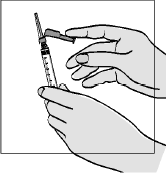
- 1. Take the large 3 ml syringe. Using your index finger, push the coloured needle protection device backwards, away from the needle.
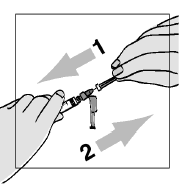
- 2. To make sure the needle is securely attached to the syringe:
- hold the plastic closure cap under the needle protection device
- tighten the needle and cap by gently rotating them clockwise. Do not apply too much force as the needle may loosen.
- 3. To remove the clear plastic closure cap:
- push towards the syringe and then pull off the closure cap.
- 4. Draw up 1.1 ml of air.
- 5. Insert the syringe needle into the rubber top of the vial containing the water for injectable preparations and press the plunger. This will inject the air.
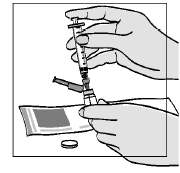
- 6. Gently turn the vial upside down. Make sure the needle tip is always below the surface of the water for injectable preparations to prevent air bubbles from entering the syringe.
- 7. Slowly pull back the plunger until the water reaches the 1.1 ml mark. Be careful, because the vial contains more liquid than necessary (2 ml); you only need to draw 1.1 ml to prepare the injection correctly.
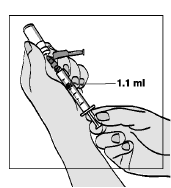
- 8. Gently tap the syringe to bring any air bubbles to the surface.
- If too much air enters the syringe, gently press the plunger to push any air back into the vial.
- Then draw the water again.
- Make sure you have 1.1 ml of water for injectable preparations in the syringe.
- This step can be repeated until the correct amount of water for injectable preparations is in the syringe.
- 9. Remove the needle from the vial. Be careful not to touch the needle with your fingers, or with anything else.
- 10. Dispose of the vial and water for injectable preparations by placing them in the appropriate container with a lid. The vial is for single use.
Injecting the water for injectable preparations into the Fuzeon powder
- 1. Gently tap the Fuzeon vial to loosen the powder.
- 2. Hold the body of the water-filled syringe and insert the needle into the rubber top of the Fuzeon vial at a slight angle.
- 3. Slowly push the syringe plunger.
- Let the water flow slowly down the inside of the vial.
- Be careful not to inject the water forcefully into the powder, as this may cause foaming.
- If this happens, it may take longer for the powder to dissolve completely.
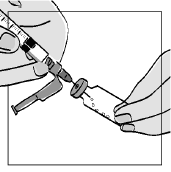
- 4. After all the water for injectable preparations has been added to the Fuzeon vial, remove the syringe from the vial.
- 5. Hold the syringe body with one hand and gently press the coloured needle protection device onto a flat surface until it covers the needle.
- You will hear a click. Do not use your free hand to press the device onto the needle.
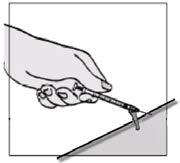
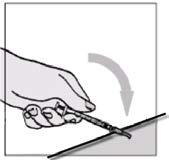
- 6. Dispose of the syringe in the appropriate container with a lid.
Mixing the water for injectable preparations with the Fuzeon powder
- 1. Gently tap the vial with your fingertip until the powder begins to dissolve. Never shake or turn the vial over to mix - this would create too much foam.
- 2. When the powder begins to dissolve, set the vial aside to allow the powder to dissolve completely.
- The powder may take up to 45 minutes to dissolve into solution.
- The vial can also be gently rotated between your hands after adding water for injectable preparations until the powder is completely dissolved.
- This may reduce the time it takes for the powder to dissolve.
- 3. After the powder has completely dissolved
- Allow any bubbles that may have formed to settle.
- If there are still bubbles, gently tap the side of the vial to help them settle.
- 4. It is important to examine the liquid for any particles (debris).
- If you notice any particles in the liquid, do not use it.
- Dispose of the vial by placing it in the appropriate container with a lid or return it to the pharmacy. Then, start over with a new vial of Fuzeon powder.
- 5. If you accidentally touch the rubber cap, make sure to clean it again with a new alcohol wipe.
- 6. Once the dose is mixed with the water for injectable preparations, it must be used immediately. If not, store it in the refrigerator and use it within 24 hours.
- Allow the liquid to return to room temperature before using it.
- 7. If you are preparing both daily doses at once, make sure to use new syringes, new water for injectable preparations and a new vial of Fuzeon for each dose.
Step C: Preparing the injection
Drawing up Fuzeon into the 1 ml syringe
- 1. Rub the top of the Fuzeon vial again with a new alcohol wipe.
- 2. Take the small 1 ml syringe. Using your index finger, push the coloured needle protection device backwards, away from the needle.
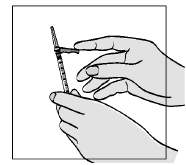
- 3. To make sure the needle is securely attached to the syringe:
- hold the plastic closure cap under the needle protection device
- tighten the needle and cap by gently rotating and pressing them towards the syringe.
- 4. To remove the clear plastic closure cap:
- push towards the syringe and then pull off the closure cap.
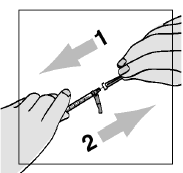
- 5. Draw up 1 ml of air.
- Be careful not to pull the plunger out too quickly, it may go past the 1 ml mark or slip out of the syringe.
- 6. Insert the syringe needle into the rubber top of the Fuzeon vial and press the plunger. This will inject the air.
- 7. Gently turn the vial upside down.
Make sure the needle tip is always below the surface of the solution to prevent air bubbles from entering the syringe.
- 8. Slowly pull back the plunger until the solution reaches the 1.0 ml mark.
- Be careful not to pull the plunger out too quickly, it may go past the 1 ml mark or slip out of the syringe.
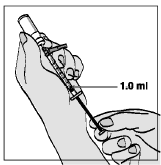
- 9. Gently tap the syringe to bring any air bubbles to the surface.
- If too much air enters the syringe, gently press the plunger to push any air back into the vial.
- Draw the liquid again.
- Make sure you have 1.0 ml of liquid in the syringe (or the amount prescribed by your doctor, if different).
- This step can be repeated until the correct amount of solution is in the syringe.
- 10. Remove the syringe from the vial.
Step D: Injecting Fuzeon
Tip:your doctor or nurse may suggest different injection techniques that are more suitable for you.
Where to administer the injection
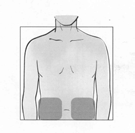
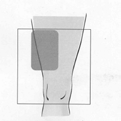
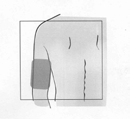
- Fuzeon must be administered by injecting 1 ml just below the skin, i.e. by “subcutaneous” injection.
- The injection can be administered in the upper arm, upper thigh, or abdomen.
- Choose an area different from the one used for the last injection.
- Do not administer the injection where there is a reaction to a previous dose. Check the areas where you may have developed a reaction by pressing on the skin to check for any hard bumps.
- Do not administer the injection in areas that may be irritated by your belt or clothing.
- Do not administer the injection near moles, scars, bruises, or the navel.
Cleaning the injection site
Clean the injection area with an alcohol swab, moving in a
circular motion starting from the center and moving outwards. Allow to air dry completely.
Inserting the needle and injecting
- 1. Pinch as much skin as possible between your fingers without hurting yourself.
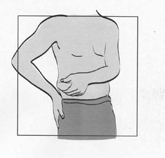
- 2. Insert the needle into the skin at a 45-degree angle.
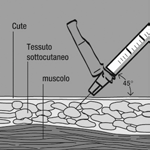
- 3. When the needle is in:
- release the skin
- with your free hand, hold the body of the syringe; this will allow the syringe to remain stable and prevent it from moving.
- 4. With the thumb of your other hand, press the plunger to inject the liquid.
- After the dose has been completely injected, withdraw the needle from the skin.
After removing the needle
- 1. Hold the body of the syringe with one hand
- then gently press the colored protective device onto a flat surfaceuntil it covers the needle.
- you will hear a click. Do not use your free hand to press the protective device onto the needle.
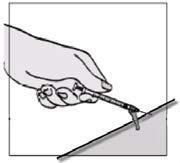
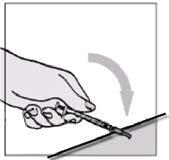
- 2. Dispose of the syringe by placing it in a suitable container with a lid.
- 3. If there is blood at the injection site, cover the skin with an adhesive bandage.
Step E: Disposal of used materials
- Dispose of all used materials by immediately placing them in a suitable container with a lid, even if the vials still contain unused amounts of medication or injectable preparation water, as these are single-use vials.
- Keep the lid of this container tightly closed and store it out of the reach of children.
- Ask your doctor, pharmacist or nurse for the best way to dispose of the container.
- If you have any doubts or questions about the safe disposal of this material, please contact your doctor, pharmacist or nurse.

Nie jesteś pewien, czy ten lek jest odpowiedni dla ciebie?
Omów swoje objawy i leczenie z lekarzem online.

Zacząłeś przyjmować lek i masz pytania?
Omów swoje objawy i leczenie z lekarzem online.
- Kraj rejestracji
- Postać farmaceutycznaPowder and solvent for injectable solution, 90MG/ML
- Kod ATCJ05AX07
- Substancja czynna
- Wymaga receptyTak
- Producent
- Te treści mają charakter wyłącznie informacyjny i nie zastępują konsultacji lekarskiej.
- Zamienniki FUTSEONPostać farmaceutyczna: Film-coated tablet, 150 MGSubstancja czynna: maravirocProducent: VIIV HEALTHCARE BVWymaga receptyPostać farmaceutyczna: Powder for injectable solution, 2 MGSubstancja czynna: bulevirtideProducent: GILEAD SCIENCES IRELAND UCWymaga receptyPostać farmaceutyczna: Film-coated tablet, 200 mgSubstancja czynna: maribavirWymaga recepty
Odpowiedniki FUTSEON w innych krajach
Leki z tą samą substancją czynną dostępne w innych krajach.
Odpowiednik FUTSEON w Hiszpania
Odpowiednik FUTSEON w Ukraina
Lekarze online w sprawie FUTSEON
Omów stosowanie FUTSEON, bezpieczeństwo i ocenę zasadności recepty zgodnie z obowiązującymi przepisami.









Uzyskaj receptę na FUTSEON online
Wypełnij 2-minutowy formularz
Opisz swoje objawy, historię choroby i lek, o który prosisz.
Wybierz lekarza lub pozwól nam przydzielić
Wybierz specjalistę lub dopasujemy Cię do najbliższego dostępnego lekarza.
Lekarz analizuje Twój przypadek
Zazwyczaj w ciągu 30 minut. Może zadawać dodatkowe pytania przez czat.
Odbierz w dowolnej aptece
Recepta elektroniczna wysłana na Twój e-mail — ważna w całej Polsce.
Często zadawane pytania
FUTSEON wymaga recepty w Włochy. Możesz skonsultować się z lekarzem online, aby sprawdzić, czy ten lek może być odpowiedni w Twojej sytuacji.
Substancją czynną w FUTSEON jest enfuvirtide. Informacja ta pomaga rozpoznać leki o tym samym składzie, ale pod różnymi nazwami handlowymi.
FUTSEON jest produkowany przez ROCHE REGISTRATION GMBH. Nazwy handlowe i opakowania mogą się różnić w zależności od dystrybutora.
Lekarze, tacy jak Lekarze rodzinni, Psychiatrzy, Dermatolodzy, Kardiolodzy, Endokrynolodzy, Gastroenterolodzy, Pulmonolodzy, Nefrolodzy, Reumatolodzy, Hematolodzy, Zakaźnicy, Alergolodzy, Geriatrzy, Pediatrzy, Onkolodzy, mogą ocenić, czy stosowanie FUTSEON jest odpowiednie w Twoim przypadku, w zależności od sytuacji klinicznej i lokalnych przepisów. Możesz umówić konsultację online, aby omówić objawy i możliwe dalsze kroki.
Polska posiada dobrze rozwiniętą infrastrukturę ochrony zdrowia w dużych miastach, takich jak Warszawa, Kraków, Wrocław i Gdańsk. Apteki są łatwo dostępne i działają zgodnie z obowiązującymi przepisami, zapewniając dostęp do leków na receptę.
Możesz kupić FUTSEON w Warszawie, Krakowie, Wrocławiu lub Gdańsku w każdej aptece, posiadając ważną receptę.
Aby uzyskać receptę, możesz skorzystać z Oladoctor:
Inne leki zawierające tę samą substancję czynną (enfuvirtide) to m.in. KELSENTRI, EPKLUDEX, LIVTENKITY. Mogą one różnić się nazwą handlową lub postacią, ale zawierają ten sam składnik terapeutyczny. Przed zmianą lub rozpoczęciem nowego leku skonsultuj się z lekarzem.
