



COPAXONE 20 mg /Ml Injectable Solution In Pre-Filled Syringe

Запит на рецепт онлайн
Лікар розгляне ваш випадок і визначить, чи є рецепт медично доцільним.

Поговоріть з лікарем про ці ліки
Обговоріть симптоми та можливі подальші кроки під час короткої онлайн-консультації.



Інструкція із застосування KOPAXONE
Зміст інструкції
- Copaxone 20 mg/ml injectable solution in pre-filled syringe
- Copaxone 40 mg/ml injectable solution in pre-filled syringe
Copaxone 20 mg/ml injectable solution in pre-filled syringe
glatiramer acetate
Read this leaflet carefully before you start to use this medicine as it contains important
information for you.
- Keep this leaflet. You may need to read it again.
- If you have any questions, ask your doctor or pharmacist.
- This medicine has been prescribed for you only. Do not pass it on to others, even if their symptoms are the same as yours, as it could be harmful.
- If you get any side effects, even those not listed in this leaflet, tell your doctor or pharmacist. See section 4.
Contents of this leaflet:
- 1. What Copaxone is and what it is used for
- 2. What you need to know before you use Copaxone
- 3. How to use Copaxone
- 4. Possible side effects
- 5. How to store Copaxone
- 6. Contents of the pack and other information
1. What is Copaxone and what it is used for
Copaxone is a medicine used for the treatment of relapsing forms of multiple sclerosis (MS).
It modifies the way your immune system works and is classified as an immunomodulating agent.
It is believed that the symptoms of MS are caused by a defect in the body's immune system, which produces outbreaks of inflammation in the brain and spinal cord.
Copaxone is used to reduce the number of times you experience MS attacks (relapses). It has not been shown to help if you have a form of MS that does not, or almost does not, have relapses.
Copaxone may not have any effect on the duration of an MS attack or the intensity of pain during an attack.
It is used to treat patients who are able to walk without assistance.
Copaxone can also be used in patients who have first manifested symptoms indicating a high risk of developing MS. Before you take this medicine, your doctor will exclude any other reason that may explain these symptoms.
2. What you need to know before using Copaxone
Do not use Copaxone
- if you are allergic to glatiramer acetate or any of the other ingredients of this medicine (listed in section 6).
Warnings and precautions
Talk to your doctor or pharmacist before using Copaxone if you have any kidney or
heart problems as you may need regular tests and check-ups.
Ask your doctor or pharmacist before using Copaxone if you have or have had liver problems
(including those due to alcohol consumption).
Children
Copaxone should not be used in children under 12 years of age.
Elderly
Copaxone has not been specifically studied in the elderly. Ask your doctor for advice.
Other medicines and Copaxone
Tell your doctor or pharmacist if you are taking, have recently taken or might take
any other medicines.
Pregnancy and breastfeeding
If you are pregnant, suspect you are pregnant or are planning a pregnancy, talk to your doctor
for advice and an assessment of treatment with Copaxone during pregnancy.
Copaxone can be used during pregnancy under the advice of your doctor.
Limited human data have not shown any adverse effects of Copaxone on breastfed infants/babies. Copaxone can be used during breastfeeding.
Driving and using machines
The influence of Copaxone on the ability to drive and use machines is unknown.
3. How to use Copaxone
Use this medicine following the instructions of your doctor exactly. If you have any doubts, consult your
doctor or pharmacist.
The recommended daily dose in adults and adolescents 12 years or older is one prefilled syringe (20 mg of glatiramer acetate), administered under the skin (subcutaneously).
It is very important to inject Copaxone correctly:
- Only into the tissue under the skin (subcutaneous use) (see “Instructions for Use”).
- At the dose indicated by your doctor. Use only the dose prescribed by your doctor.
- Never use the same syringe more than once. Unused product or any waste must be disposed of.
- Do not mix or administer the contents of Copaxone prefilled syringes with any other product.
- Do not use the solution if it contains particles. Use a new syringe.
The first time you use Copaxone, you will be given complete instructions and will be monitored by a doctor
or healthcare professional. They will be with you while you give yourself the injection and for the next 30 minutes,
to make sure you have no problems.
Instructions for Use
Read these instructions carefully before using Copaxone.
Before the injection, make sure you have everything you need:
- A blister pack with a prefilled syringe of Copaxone
- A container for disposing of used needles and syringes.
- For each injection, take only one blister pack with a prefilled syringe from the package. Store all remaining syringes in the box.
- If the syringe has been stored in the refrigerator, keep the blister pack containing the syringe out of the refrigerator for at least 20 minutes before giving yourself the injection so that it warms up to room temperature.
Wash your hands carefully with water and soap.
If you want to use an injection device to give the injection, the CSYNC device can be
used with Copaxone. The CSYNC device is approved only for use with COPAXONE and has not
been tested with other products. Refer to the instructions for use provided with the
CSYNC injection device.
Choose the injection site within the areas, using the diagrams.
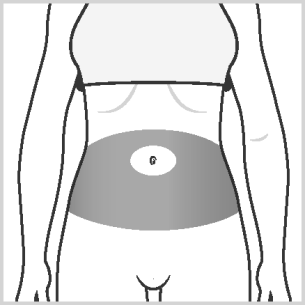
There are seven possible injection areas on your body:
Area 1:Stomach area (abdomen) around the navel. Leave at least 5 cm between
the navel and the injection area,
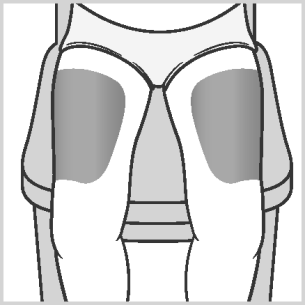
Area 2 and 3:Thighs (above the knees),
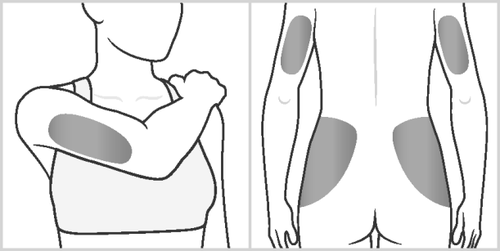
Area 4, 5, 6 and 7:Back of the arms and upper hips (below the waist).
Within each injection area, there are several injection sites. Choose a different injection site each
day. This reduces the possibility of any irritation or pain at the injection site. Rotate the injection areas
and also rotate the injection sites within the same area. Do not use the same site every
time.
Note:do not inject into an area that is sore or discolored or in places where you feel hard lumps or nodules.
It is recommended to keep a diagram with the planned rotation of the injection sites and to
record it in a diary. There are some areas of the body where it may be difficult to give yourself
an injection (such as the back of the arm). If you want to use these areas,
you may need help.
How to give yourself the injection:
- Remove the syringe from its protective blister pack by removing the blister cover.
- Remove the cap from the needle, do notremove the cap with your mouth or teeth .
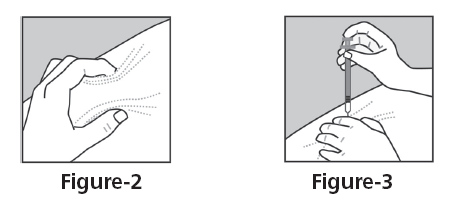
- Gently pinch the skin with the thumb and index finger of your free hand (Figure 1).
- Push the needle into the skin as shown in Figure 2.
- Inject the medicine by pushing the plunger down smoothly until the syringe is empty.
- Withdraw the syringe and needle straight out.
- Dispose of the syringe in a secure disposal container. Do not put the syringe in household waste, but carefully place it in a puncture-proof container as recommended by
your doctor or nurse.
Figure 1Figure 2
If you think that the effect of Copaxone is too strong or too weak, consult your doctor.
If you use more Copaxone than you should
Inform your doctor immediately.
If you forget to use Copaxone
Take it as soon as you remember ,but do not take a double dose to make up for the missed dose. Take the next dose 24 hours later.
If you stop using Copaxone
Do not stop using Copaxone without consulting your doctor.
If you have any doubts about using this medicine, ask your doctor or pharmacist.
4. Possible side effects
Like all medicines, this medicine can cause side effects, although not everyone gets them.
Allergic reactions (hypersensitivity)
Rarely you may develop a severe allergic reaction to this medicine.
Stop using Copaxone and immediately contact your doctor or go to the nearest hospital emergency roomif you notice any of these side effects:
- skin rash (red spots or hives)
- swelling of the eyelids, face or lips
- sudden shortness of breath
- convulsions (seizures)
- fainting
Other reactions following injection (immediate reaction after injection)
It is not common, but some people may experience one or more of the following symptoms within minutes of injecting Copaxone. These usually do not cause problems and generally disappear within 30 minutes.
However, if the following symptoms last more than 30 minutes, immediately contact your doctor or go to the nearest hospital emergency room:
- flushing (redness) of the chest or face (vasodilation)
- shortness of breath (dyspnea)
- chest pain
- heartbeat that is pounding and fast (palpitations, tachycardia)
Liver problems
Rarely, liver problems or worsening of liver problems, including liver failure (requiring liver transplantation in some cases), may occur with Copaxone. Contact your doctor immediately if you experience symptoms such as:
- nausea
- loss of appetite
- dark urine and pale stools
- yellowing of the skin or the white of the eye
- easier bruising than usual
The following side effects have been reported with Copaxone:
Very common: may affect more than 1 in 10 people
- infections, flu
- anxiety, depression
- headache
- feeling unwell (nausea)
- skin rashes
- joint or back pain
- feeling weak, skin reactions at the injection site, including redness of the skin, pain, blistering, itching, swelling of the tissues, inflammation and hypersensitivity (these reactions at the injection site are not unusual and usually decrease over time), unspecified pain
Common: may affect up to 1 in 10 people
- respiratory tract infections, gastroenteritis, herpes, ear inflammation, runny nose, dental abscess, vaginal thrush
- non-cancerous skin growth (non-malignant skin neoplasm), tissue growth (neoplasm)
- swollen lymph nodes
- allergic reactions
- loss of appetite, weight gain
- nervousness
- altered taste, increased muscle tone, migraine, speech problems, fainting, tremor
- double vision, eye problems
- ear problems
- cough, hay fever
- anal or rectal disorders, constipation, tooth decay, indigestion, difficulty swallowing, fecal incontinence, vomiting
- abnormal liver function tests
- bruising, excessive sweating, itching, skin changes, hives
- neck pain
- urgent need to empty the bladder, frequent need to urinate, inability to empty the bladder properly
- chills, facial swelling, loss of tissue under the skin at the injection site, local reactions, peripheral edema caused by fluid retention, fever
Uncommon: may affect up to 1 in 100 people
- abscess, skin and soft tissue infections, boils, shingles, kidney inflammation
- skin cancer
- increased white blood cell count, decreased white blood cell count, enlarged spleen, decreased platelet count, change in white blood cell shape
- enlarged thyroid, hyperactive thyroid
- low tolerance to alcohol, gout, increased fat levels in the blood, increased sodium in the blood, decreased serum ferritin
- abnormal dreams, confusion, euphoric mood, seeing, hearing, smelling, tasting or perceiving things that are not there (hallucinations), aggression, strangely elevated mood, personality disorders, suicide attempt
- hand numbness and pain (carpal tunnel syndrome), mental disorders, seizures
(seizures), difficulty with writing and reading, muscle disorders, difficulty moving, involuntary muscle contractions, nerve inflammation, abnormal neuromuscular connection leading to abnormal muscle function, rapid involuntary eye movements, paralysis, foot drop (peroneal nerve paralysis), state of unconsciousness (stupor), visual disturbances
- cataract, eye corneal injury, dry eye, eye bleeding, drooping upper eyelid, pupil dilation, weakening of the optic nerve leading to vision problems
- extrasystoles, slow heartbeat, episodic fast heartbeat
- varicose veins
- periodic pauses in breathing, nosebleeds, abnormally fast or deep breathing (hyperventilation), sensation of throat tightening, lung problems, inability to breathe due to throat narrowing (feeling of suffocation)
- inflammation of the intestine, colon polyps, inflammation of the small intestine, belching, ulcer in the esophagus, gum inflammation, rectal bleeding, enlarged salivary glands
- gallstones, enlarged liver
- swelling of the skin and soft tissues, contact dermatitis, painful and reddened skin thickenings, skin thickenings
- swelling, inflammation and pain of the joints (arthritis or osteoarthritis), inflammation and pain of the fluid cushion lining the joints (present in some joints), flank pain, decreased muscle mass
- blood in the urine, kidney stones, urinary tract disorders, urine abnormality
- swollen breast, difficulty having an erection, downward or outward displacement of pelvic organs (pelvic prolapse), prolonged erection, prostate disorders, abnormal pap test (cervical smear abnormality), testicular disorders, vaginal bleeding, vaginal disorders
- cysts, hangover-like effects, low body temperature (hypothermia), nonspecific inflammation, tissue destruction at the injection site, problems with mucous membranes
- disorders after vaccination
Reporting of side effects
If you get any side effects, even those not listed in this leaflet, tell your doctor or pharmacist.
You can also report side effects directly through the national reporting system at www.aifa.gov.it/content/segnalazioni-reazioni-avverse.
By reporting side effects you can help provide more information on the safety of this medicine.
5. How to store Copaxone
Keep this medicine out of the sight and reach of children.
Do not use this medicine after the expiry date which is stated on the label and on the pack
(Exp.). The expiry date refers to the last day of that month.
Store in a refrigerator (2°C - 8°C).
Prefilled syringes of Copaxone may be kept out of the refrigerator for one month at a
temperature between 15°C and 25°C. This can be done only once. After one month, the
prefilled syringes of Copaxone that have not been used and are still in their original
packaging must be placed in a refrigerator.
Do not freeze.
Keep the prefilled syringes in the outer packaging to protect the medicine from light.
Discard any syringe that contains particles.
Do not dispose of any medicine in wastewater or household waste. Ask your pharmacist how to
dispose of medicines you no longer use. This will help protect the environment.
6. Package contents and other information
What Copaxone contains
- The active ingredient is glatiramer acetate. 1 ml of solution for injection (the content of a pre-filled syringe) contains 20 mg of glatiramer acetate, equivalent to 18 mg of glatiramer.
- The other ingredients are mannitol and water for injections.
Description of Copaxone and package contents
Copaxone injectable solution in a pre-filled syringe is a clear solution, free of visible particles.
Each pre-filled syringe is packaged separately in a PVC blister.
Copaxone is available in packs containing 7, 28 or 30 pre-filled syringes of 1 ml of solution
for injection or in a multiple pack of 90 pre-filled syringes comprising 3 packs,
each containing 30 pre-filled syringes of 1 ml of solution for injection.
Not all pack sizes may be marketed.
Marketing authorisation holder and manufacturer
Marketing Authorisation Holder
Teva GmbH
Graf-Arco-Str. 3,
89079 Ulm, Germany
Manufacturer
Teva Pharmaceuticals Europe B.V.
Swensweg 5
2031 GA Haarlem (Netherlands)
or
Norton Healthcare Limited T/A IVAX Pharmaceuticals UK (Teva Runcorn)
Aston Lane North, Whitehouse Vale Industrial Estate
Runcorn, Cheshire, WA7 3FA (United Kingdom)
or
Actavis Group PTC ehf.
Dalshraun 1
220, Hafnarfjörður -Iceland
or
Merckle GmbH
Graf-Arco-Str. 3
89079 Ulm - Germany
This medicinal product is authorised in the Member States of the European Economic Area with the
name COPAXONE 20 mg/ml:
Austria, Belgium, Croatia, Czech Republic, Cyprus, Denmark, Estonia, Finland, France, Germany,
Greece, Hungary, Ireland, Iceland, Italy, Latvia, Lithuania, Luxembourg, Norway, Poland,
Portugal, Romania, Spain, Sweden, Slovakia, Slovenia, Netherlands, United Kingdom (Northern
Ireland).
Detailed and up-to-date information on this product is available at the following address:
www.tevaitalia.it/iniziative/yourteva-app/copaxone.pdf
Copaxone 40 mg/ml injectable solution in pre-filled syringe
glatiramer acetate
Read this leaflet carefully before you start to use this medicine as it contains important
information for you.
- Keep this leaflet. You may need to read it again.
- If you have any questions, ask your doctor or pharmacist.
- This medicine has been prescribed for you only. Do not pass it on to others, even if their symptoms are the same as yours, as it could be harmful.
- If you get any side effects, even those not listed in this leaflet, tell your doctor or pharmacist. See section 4.
Contents of this leaflet:
- 1. What Copaxone is and what it is used for
- 2. What you need to know before you use Copaxone
- 3. How to use Copaxone
- 4. Possible side effects
- 5. How to store Copaxone
- 6. Contents of the pack and other information
1. What is Copaxone and what is it used for
Copaxone is a medicine used for the treatment of relapsing forms of multiple sclerosis (MS).
It modifies the way your body's immune system works and is classified as an immunomodulating
agent. It is believed that the symptoms of MS are caused by a defect in the body's immune
system, which produces outbreaks of inflammation in the brain and spinal cord.
Copaxone is used to reduce the number of times you experience MS attacks (relapses). It has not
been shown to help if you have a form of MS that does not have, or almost no,
relapses. Copaxone may not have any effect on the duration of an MS attack or how sick you feel during an attack.
2. What you need to know before using Copaxone
Do not use Copaxone
- if you are allergic to glatiramer acetate or any of the other ingredients of this medicine (listed in section 6).
Warnings and precautions
Talk to your doctor or pharmacist before using Copaxone if you have any kidney or
heart problems as you may need regular tests and check-ups.
Ask your doctor or pharmacist before using Copaxone if you have or have had liver problems
(including those due to alcohol consumption).
Children
Copaxone should not be used in children under 18 years of age.
Elderly
Copaxone has not been specifically studied in the elderly. Ask your doctor for advice.
Other medicines and Copaxone
Tell your doctor or pharmacist if you are taking, have recently taken or might take
any other medicines.
Pregnancy and breastfeeding
If you are pregnant, suspect you are pregnant or are planning to become pregnant, talk to your doctor
for advice and an assessment of treatment with Copaxone during pregnancy.
Copaxone may be used during pregnancy on your doctor’s advice.
Limited human data have not shown any adverse effects of Copaxone on breastfed infants/babies. Copaxone may be used during breastfeeding.
Driving and using machines
The influence of Copaxone on the ability to drive and use machines is unknown.
3. How to use Copaxone
Use this medicine following the doctor's instructions exactly. If you have any doubts, consult your
doctor or pharmacist.
The recommended dose in adults is one pre-filled syringe (40 mg of glatiramer acetate),
administered under the skin (subcutaneously) three times a week, at intervals of at least 48 hours, for
example on Monday, Wednesday and Friday. It is recommended to administer the medicine on the same
days each week.
It is very important to inject Copaxone correctly:
- Only into the tissue under the skin (subcutaneous use) (see “Instructions for Use”).
- At the dose indicated by the doctor. Use only the dose prescribed by the doctor.
- Never use the same syringe more than once. Unused product or any waste must be disposed of.
- Do not mix or administer the contents of Copaxone pre-filled syringes with any other product.
- Do not use the solution if it contains particles. Use a new syringe.
The first time you use Copaxone, you will be given complete instructions and will be monitored by a doctor
or healthcare professional. They will be with you while you give yourself the injection and for the 30 minutes
afterwards, to make sure you have no problems.
Instructions for Use
Read these instructions carefully before using Copaxone.
Before the injection, make sure you have everything you need:
- A blister pack with a pre-filled syringe of Copaxone.
- A container for disposing of needles and used syringes.
- For each injection, take only one blister pack with a pre-filled syringe from the package. Store the remaining syringes in the box.
- If the syringe has been stored in the refrigerator, take the blister pack containing the syringe out for at least 20 minutes before giving yourself the injection to warm it to room temperature.
Wash your hands thoroughly with water and soap.
If you want to use an injection device to give the injection, the CSYNC device can be
used with Copaxone. The CSYNC device is only approved for use with COPAXONE and has not
been tested with other products. Refer to the instructions for use provided with the
CSYNC injection device.
Choose the injection site within the areas, using the diagrams.
There are seven possible injection areas on your body:
Area 1:Stomach (abdomen) area around the navel. Leave at least 5 cm between the navel and the
injection area,
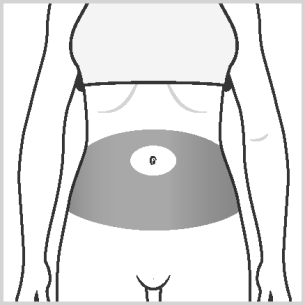
Area 2 and 3:Thighs (above the knees),
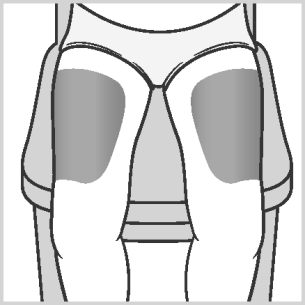
Area 4, 5, 6 and 7:Back of the arms and upper hips (below the waist).
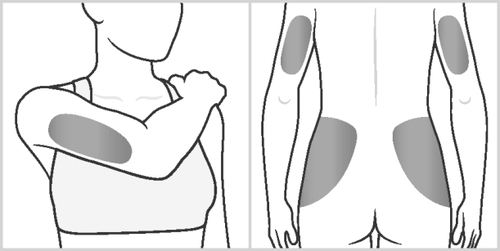
Within each injection area there are several injection sites. Choose a different injection site for each
injection. This reduces the possibility of any irritation or pain at the injection site. Rotate the
injection areas and also rotate the injection sites within the same area. Do not use the same site
every time.
Note:do not inject into an area that is sore or discolored or in places where you feel hard lumps or nodules.
It is recommended to keep a schedule with the planned rotation of the injection sites and to
write it down in a diary. There are some areas of the body where it may be difficult to give yourself
an injection (such as the back of the arm). If you want to use these areas, you may need help.
How to give yourself the injection:
- Remove the syringe from its protective blister pack by removing the blister cover.
- Remove the cap from the needle, do notremove the cap with your mouth or teeth .
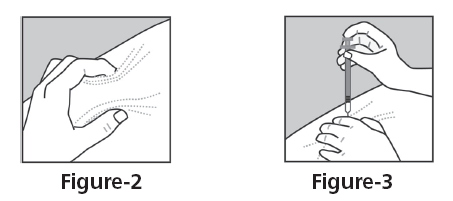
- Gently pinch the skin with the thumb and index finger of your free hand (Figure 1).
- Push the needle into the skin as shown in Figure 2.
- Inject the medicine by pushing the plunger down smoothly until the syringe is empty.
- Withdraw the syringe and needle straight out.
- Dispose of the syringe in a secure disposal container. Do not put the syringe in household waste, but carefully place it in a puncture-proof container as recommended by
your doctor or nurse.
Figure 1Figure 2
If you think that the effect of Copaxone is too strong or too weak, consult your doctor.
If you use more Copaxone than you should
Tell your doctor immediately.
If you forget to use Copaxone
Use it as soon as you remember or have the opportunity to do so, then skip the next day. Do not take a
double dose to make up for a missed dose. If possible, return to your normal schedule the following week.
If you stop using Copaxone
Do not stop using Copaxone without consulting your doctor.
If you have any doubts about using this medicine, ask your doctor or pharmacist.
4. Possible side effects
Like all medicines, this medicine can cause side effects, although not everyone will experience them.
Allergic reactions (hypersensitivity)
You may develop a severe allergic reaction to this medicine, but such an event is uncommon.
Stop using Copaxone and immediately contact your doctor or go to the nearest hospital emergency roomif you notice any of these side effects:
- skin rash (red spots or hives)
- swelling of the eyelids, face or lips
- sudden shortness of breath
- convulsions (seizures)
- fainting
Other reactions following injection (immediate reaction after injection)
Some people may experience one or more of the following symptoms within minutes of injecting
Copaxone. These usually do not cause problems and generally disappear within 30 minutes.
However, if the following symptoms last more than 30 minutes, immediately contact your doctor or
go to the nearest hospital emergency room:
- flushing (redness) to the chest or face (vasodilation)
- shortness of breath (dyspnea)
- chest pain
- heartbeat pounding and rapid (palpitations, tachycardia)
Liver problems
Rarely, liver problems or worsening of liver problems, including liver failure (requiring liver
transplant in some cases), can occur with Copaxone. Contact your doctor immediately if you
experience symptoms such as:
- nausea
- loss of appetite
- dark urine and pale stools
- yellowing of the skin or the white of the eye
- easier bleeding than usual
In general, the side effects reported by patients who used Copaxone 40 mg/ml three
times a week have also been reported by patients who used Copaxone 20 mg/ml
(see the following list).
Very common: may affect more than 1 in 10 people
- infections, flu
- anxiety, depression
- headache
- feeling unwell (nausea)
- skin rashes
- joint or back pain
- feeling weak, skin reactions at the injection site, including skin redness, pain, blistering, itching, swelling of tissues, inflammation and hypersensitivity (these reactions at the injection site are not unusual and usually decrease over time), nonspecific pain
Common: may affect up to 1 in 10 people
- respiratory tract infections, gastroenteritis, herpes, ear inflammation, runny nose, dental abscess, vaginal yeast infection
- non-cancerous skin growth (non-malignant skin neoplasm), tissue growth (neoplasm)
- swollen lymph nodes
- allergic reactions
- loss of appetite, weight gain
- nervousness
- altered taste, increased muscle tone, migraine, speech problems, fainting, tremor
- double vision, eye problems
- ear problems
- cough, hay fever
- anal or rectal disorders, constipation, tooth decay, indigestion, difficulty swallowing, fecal incontinence, vomiting
- abnormal liver function tests
- bruising, excessive sweating, itching, skin changes, hives
- neck pain
- urgent need to empty the bladder, frequent urination, inability to empty the bladder properly
- chills, facial swelling, loss of tissue under the skin at the injection site, local reactions, peripheral edema caused by fluid accumulation, fever
Uncommon: may affect up to 1 in 100 people
- abscess, skin and soft tissue infections, boils, shingles, kidney inflammation
- skin cancer
- increased white blood cell count, decreased white blood cell count, enlarged spleen, decreased platelet count, change in white blood cell shape
- enlarged thyroid, hyperactive thyroid
- low tolerance to alcohol, gout, increased fat levels in the blood, increased sodium in the blood, decreased serum ferritin
- abnormal dreams, confusion, euphoric mood, seeing, hearing, smelling, tasting or perceiving things that are not there (hallucinations), aggression, strangely elevated mood, personality disorders, suicide attempt
- hand numbness and pain (carpal tunnel syndrome), mental disorders, seizures, difficulty with writing and reading, muscle disorders, difficulty moving, involuntary muscle contractions, nerve inflammation, abnormal neuro-muscular connection leading to abnormal muscle function, rapid involuntary eye movements, paralysis, foot drop (peroneal nerve paralysis), state of unconsciousness (stupor), blurred vision
- cataract, corneal eye injury, dry eye, eye bleeding, upper eyelid drooping, pupil dilation, weakening of the optic nerve leading to vision problems
- extrasystoles, slow heartbeat, episodic fast heartbeat
- varicose veins
- periodic cessation of breathing, nosebleeds, rapid or deep abnormal breathing (hyperventilation), sensation of throat tightening, lung problems, inability to breathe due to throat narrowing (feeling of suffocation)
- intestinal inflammation, colon polyps, small intestine inflammation, belching, esophageal ulcer, gum inflammation, rectal bleeding, swollen salivary glands
- gallstones, enlarged liver
- skin and soft tissue swelling, contact dermatitis, painful and reddened skin thickenings, skin thickenings
- swelling, inflammation and pain of the joints (arthritis or osteoarthritis), inflammation and pain of the fluid cushion lining the joints (present in some joints), flank pain, decreased muscle mass
- blood in urine, kidney stones, urinary tract disorders, urine abnormality
- breast enlargement, difficulty having an erection, descent of organs in the pelvic area (pelvic prolapse), prolonged erection, prostate disorders, abnormal Pap smear (cervical smear abnormality), testicular disorders, vaginal bleeding, vaginal disorders
- cysts, hangover-like effects, low body temperature (hypothermia), nonspecific inflammation, tissue destruction at the injection site, mucous membrane problems
- vaccination-related disorders
Reporting of side effects
If you get any side effects, even those not listed in this leaflet, tell your
doctor or pharmacist. You can also report side effects directly through the national reporting system at
www.aifa.gov.it/content/segnalazioni-reazioni-avverse.
By reporting side effects you can help provide more information on the safety of
this medicine.
5. How to store Copaxone
Keep this medicine out of the sight and reach of children.
Do not use this medicine after the expiry date which is stated on the label and on the package
(Exp.). The expiry date refers to the last day of that month.
Store in a refrigerator (2°C - 8°C).
Prefilled syringes of Copaxone may be kept out of the refrigerator for one month at a
temperature between 15°C and 25°C. This can be done only once. After one month, the
prefilled syringes of Copaxone that have not been used and are still in their original
packaging must be put in the refrigerator.
Do not freeze.
Keep the prefilled syringes in the outer packaging to protect the medicine from light.
Discard any syringe that contains particles.
Do not dispose of any medicine in wastewater or household waste. Ask your pharmacist how
to dispose of medicines you no longer use. This will help protect the environment.
6. Package contents and other information
What Copaxone contains
- The active ingredient is glatiramer acetate. 1 ml of solution for injection (the content of a pre-filled syringe) contains 40 mg of glatiramer acetate, equivalent to 36 mg of glatiramer.
- The other ingredients are mannitol and water for injections.
Description of Copaxone and package contents
Copaxone injectable solution in a pre-filled syringe is a clear solution, free of visible particles.
Each pre-filled syringe is packaged separately in a PVC blister.
Copaxone is available in packs containing 3, 12 or 36 pre-filled syringes of 1 ml solution
for injection or in a multiple pack of 36 pre-filled syringes containing 3 packs, each
of 12 pre-filled syringes of 1 ml solution for injection.
Not all pack sizes may be marketed.
Marketing Authorisation Holder and Manufacturer
Marketing Authorisation Holder
Teva GmbH
Graf-Arco-Str. 3,
89079 Ulm, Germany
Manufacturer
Teva Pharmaceuticals Europe B.V.
Swensweg 5
2031 GA Haarlem (Netherlands)
or
Norton Healthcare Limited T/A IVAX Pharmaceuticals UK (Teva Runcorn)
Aston Lane North, Whitehouse Vale Industrial Estate
Runcorn, Cheshire, WA7 3FA (United Kingdom)
or
Actavis Group PTC ehf.
Dalshraun 1
220, Hafnarfjörður - Iceland
or
Merckle GmbH
Graf-Arco-Str. 3
89079 Ulm - Germany
This medicinal product is authorised in the Member States of the European Economic Area with the
name COPAXONE 40 mg/ml:
Austria, Belgium, Croatia, Czech Republic, Cyprus, Denmark, Estonia, Finland, France, Germany,
Greece, Hungary, Ireland, Iceland, Italy, Latvia, Lithuania, Luxembourg, Norway, Poland,
Portugal, Romania, Spain, Sweden, Slovakia, Slovenia, Netherlands, United Kingdom (Northern
Ireland).
Detailed and up-to-date information on this product is available at the following address:
www.tevaitalia.it/iniziative/yourteva-app/copaxone.pdf

Не впевнені, чи підходить вам цей лікарський засіб?
Обговоріть симптоми та можливі варіанти лікування з лікарем онлайн.

Виникли питання під час прийому ліків?
Обговоріть свої симптоми та лікування з лікарем онлайн.
- Країна реєстрації
- Лікарська формаInjectable solution in pre-filled syringe, 20 mg/ml
- Код АТХL03AX13
- Діюча речовина
- Потрібен рецептТак
- Виробник
- Ця інформація надана лише для ознайомлення і не є медичною порадою. Рішення щодо лікування завжди приймає лікар.
- Альтернативи до KOPAXONEЛікарська форма: Injectable solution, 20 MG/MLДіюча речовина: Глатирамер ацетатВиробник: MYLAN S.P.A.Потрібен рецептЛікарська форма: Injectable solution, 40 MG/MLДіюча речовина: Глатирамер ацетатВиробник: MYLAN S.P.A.Потрібен рецептЛікарська форма: Granules, 800 MGДіюча речовина: pidotimodВиробник: POLICHEM S.R.L.Потрібен рецепт
Аналоги KOPAXONE в інших країнах
Препарати з тією самою діючою речовиною, доступні в інших країнах.
Аналог KOPAXONE у Польща
Аналог KOPAXONE у Україна
Аналог KOPAXONE у Іспанія
Лікарі онлайн щодо KOPAXONE
Застосування, безпека та можливість призначення рецепта — за результатами медичної оцінки.









Отримайте рецепт на KOPAXONE онлайн
Заповніть форму за 2 хвилини
Розкажіть про симптоми, історію хвороби та потрібний препарат.
Оберіть лікаря або ми призначимо
Оберіть спеціаліста або ми підберемо найближчого доступного лікаря.
Лікар розглядає ваш випадок
Зазвичай протягом 30 хвилин. Може ставити уточнювальні запитання в чаті.
Отримайте в будь-якій аптеці
Електронний рецепт надсилається на вашу пошту — дійсний по всій Польщі.
Часті запитання
KOPAXONE потребує рецепта в Італія. Ви можете обговорити з лікарем онлайн, чи підходить цей лікарський засіб для вашої ситуації.
Діюча речовина у KOPAXONE — Глатирамер ацетат. Це допомагає визначити препарати з тим самим складом, але під іншими торговими назвами.
KOPAXONE виробляється компанією TEVA GMBH. Назва бренду та упаковка можуть відрізнятися залежно від дистрибʼютора.
Лікарі, зокрема Сімейні лікарі, Психіатри, Дерматологи, Кардіологи, Ендокринологи, Гастроентерологи, Пульмонологи, Нефрологи, Ревматологи, Гематологи, Інфекціоністи, Алергологи, Геріатри, Педіатри, Онкологи, можуть оцінити доцільність застосування KOPAXONE з урахуванням вашого стану та місцевих правил. Ви можете записатися на онлайн-консультацію, щоб обговорити симптоми та можливі подальші кроки.
Польща має добре розвинену систему охорони здоров'я у великих містах, таких як Варшава, Краків, Вроцлав і Гданськ. Аптеки широко доступні та працюють відповідно до чинного законодавства, забезпечуючи доступ до рецептурних препаратів.
Ви можете придбати KOPAXONE у Варшаві, Кракові, Вроцлаві або Гданську в будь-якій аптеці за наявності дійсного рецепта.
Щоб отримати рецепт, ви можете скористатися Oladoctor:
Інші препарати з тією самою діючою речовиною (Глатирамер ацетат) включають KOPEMYL, KOPEMYLTRI, AXIL. Вони можуть відрізнятися торговою назвою або формою випуску, але містять той самий терапевтичний компонент. Перед зміною або початком прийому нового препарату варто проконсультуватися з лікарем.
