



TAMIFLU 75 mg Hard Capsules

Запит на рецепт онлайн
Лікар розгляне ваш випадок і визначить, чи є рецепт медично доцільним.

Поговоріть з лікарем про ці ліки
Обговоріть симптоми та можливі подальші кроки під час короткої онлайн-консультації.



Інструкція із застосування TAMIFLU
Зміст інструкції
- Tamiflu 30 mg hard capsules
- Tamiflu 45 mg hard capsules
- Tamiflu 75 mg hard capsules
- Tamiflu 6 mg/mL powder for oral suspension
Tamiflu 30 mg hard capsules
oseltamivir
Read this leaflet carefully before you start taking this medicine as it contains important information for you.
- Keep this leaflet. You may need to read it again.
- If you have any questions, ask your doctor or pharmacist.
- This medicine has been prescribed for you only. Do not pass it on to others. It may be harmful for people other than you, even if their symptoms are the same.
- If you get any side effects, even those not listed in this leaflet, tell your doctor or pharmacist. See section 4.
Contents of this leaflet:
1. What Tamiflu is and what it is used for
2. What you need to know before you take Tamiflu
3. How to take Tamiflu
4. Possible side effects
5. How to store Tamiflu
6. Contents of the pack and other information
1. What Tamiflu is and what it is used for
- Tamiflu is used in adults, adolescents, children and infants (including full-term newborns) for the treatment of influenza (flu). It can be used when you have flu symptoms and the influenza virus is circulating in the community.
- Tamiflu can also be prescribed to adults, adolescents, children and infants over 1 year of age, on a case-by-case basis, to prevent influenza (flu), for example if you have been in contact with someone who has the flu.
- Tamiflu can be prescribed to adults, adolescents, children and infants (including full-term newborns) as preventive treatmentin exceptional circumstances, for example if there is a global influenza epidemic (influenza pandemic) and the seasonal influenza vaccine does not provide sufficient protection.
Tamiflu contains oseltamivir, which belongs to a group of medicines called neuraminidase inhibitors.
These medicines prevent the spread of the influenza virus in the body and thus help to relieve or prevent the symptoms of infection caused by the influenza virus.
Influenza is an infection caused by a virus. Symptoms of influenza often include sudden fever (over 37.8°C), cough, runny or stuffy nose, headache, muscle aches and
extreme fatigue. These symptoms can also be caused by other infections. True influenza infection occurs only during annual epidemics when the influenza virus spreads
in the local community. Outside the epidemic period, flu-like symptoms are generally caused
by a different type of illness.
2. What you need to know before taking Tamiflu
Do not takeTamiflu
- if you are allergic( hypersensitive) to oseltamivir or any of the excipients of Tamiflu listed in section 6. Consult your doctorif this applies to you. Do not take Tamiflu.
Warnings and precautions
Before taking Tamiflu, make sure your prescribing doctor knows
- if you are allergic to other medicines
- if you have any kidney disease. In this case, a dose adjustment may be necessary
- if you have a serious health condition, which may require immediate hospitalization
- if your immune systemis not functioning
- if you have heart or chronic respiratory diseases.
During treatment with Tamiflu, immediately inform your doctor
- if you have noticed changes in behaviour and mood (neuropsychiatric events), especially in children and adolescents. These may be symptoms of rare but serious side effects.
Tamiflu is not an influenza vaccine
Tamiflu is not a vaccine: it treats the infection or prevents the spread of the influenza virus. A vaccine
provides antibodies against the virus. Tamiflu does not alter the effectiveness of an influenza vaccine, and
your doctor may prescribe both.
Other medicines and Tamiflu
Tell your doctor or pharmacist if you are taking or have recently taken any other
medicines, including those available without a prescription.
The following medicines are particularly important:
- chlorpropamide (used to treat diabetes)
- methotrexate (used to treat, for example, rheumatoid arthritis)
- phenylbutazone (used to treat pain and inflammation)
- probenecid (used to treat gout).
Pregnancy and breastfeeding
Tell your doctor if you are pregnant, if you think you may be pregnant or if you are trying to become
pregnant, so that the doctor can decide if Tamiflu is suitable for you.
The effects on breastfed children are unknown. If you are breastfeeding, inform your doctor, so
that he/she can decide if Tamiflu is suitable for you.
Ask your doctor or pharmacist for advice before taking this medicine.
Driving and using machines
Tamiflu does not affect your ability to drive vehicles or use machines.
Information on some of the excipients of Tamiflu
This medicine contains less than 1mmol of sodium (23 mg) per capsule, i.e. essentially ‘sodium-free’.
3. How to take Tamiflu
Take this medicine exactly as your doctor has told you. If you have any doubts, ask your
doctor or pharmacist.
Take Tamiflu as soon as possible, ideally within two days of the start of flu symptoms.
Recommended doses
For the treatment of influenza, take two doses a day. It is usually convenient to take one dose
in the morning and one in the evening. It is important that you complete the entire 5-day cycle, even if you start
to feel better quickly.
In patients with a weakened immune system, treatment will continue for 10 days.
For the prevention of influenza or after contact with an infected person,take one dose a
day for 10 days. The best thing is to take this dose in the morning with breakfast.
In specific situations, such as widespread influenza or for patients with a weakened immune system, the
treatment will continue for a maximum of 6 or 12 weeks.
The recommended dose depends on the patient's body weight.You must use the amount of capsules or
oral suspension prescribed by your doctor.
Adults and adolescents starting from 13 years
*In patients with a weakened immune system, treatment lasts 10 days.
**75 mg can be formed from one 30 mg capsule plus one 45 mg capsule.
Children from 1 to 12 years
| Body weight | Treatment of influenza: dose for 5 days | and d Treatment of influenza (immunocompromised patients): dose for 10 days* | Prevention of influenza: dose for 10 days |
| 40 kg or more | a 75 mg** twice a day | 75 mg** twice a day | 75 mg** once a day |
| Body weight | i Treatment l of influenza: a dose for 5 days | Treatment of influenza (immunocompromised patients): dose for 10 days* | Prevention of influenza: dose for 10 days |
| t 30 mg twice a day | 30 mg twice a day | 30 mg once a day |
| More than 15 kg and up to 23 kg | I 45 mg twice a day | 45 mg twice a day | 45 mg once a day |
| More than 23 kg and up to 40 kg | a 60 mg twice a day | 60 mg twice a day | 60 mg once a day |
| i More than 40 kg | 75 mg** twice a day | 75 mg** twice a day | 75 mg** once a day |
*In children with a weakened immune system, treatment lasts 10 days.
**75 mg can be formed from one 30 mg capsule plus one 45 mg capsule.
Infants under 1 year of age (0 - 12 months)
The administration of Tamiflu to infants under 1 year of age for the prevention of influenza in
case of an influenza pandemic must be based on the doctor's judgment after considering the
ratio between the potential benefit and the potential risks for the child.
*In infants with a weakened immune system, treatment lasts 10 days.
**mg per kg = mg per kilogram of the child's body weight. For example:
if a 6-month-old child weighs 8 kg the dose is
8 kg x 3 mg per kg = 24 mg
How to administer
Swallow the capsules whole with water. Do not break or chew the capsules.
Tamiflu can be taken with or without food, although taking it with food may reduce the possibility
of feeling unwell (nausea or vomiting).
People who have difficulty swallowing capsulescan use the liquid preparation,
Tamiflu oral suspension. If you need Tamiflu oral suspension but it is not available in
the pharmacy, it is possible to prepare the Tamiflu solution from the capsules. For instructions,
seethe page Preparing Tamiflu in liquid form at home.
If you take more Tamiflu than you should
Stop taking Tamiflu and consult your doctor or pharmacist immediately.
In most cases of overdose, people have not reported any adverse effects.
When adverse effects have been reported, they were similar to those observed
with normal doses as indicated in paragraph 4.
Cases of overdose have been reported more frequently when Tamiflu was administered to
children compared to adults and adolescents. Be careful when preparing the Tamiflu solution
for children and when administering Tamiflu capsules or Tamiflu suspension to children.
If you forget to take Tamiflu
Do not take a double dose to make up for the missed capsule.
If you stop taking Tamiflu
There are no adverse effects when Tamiflu administration is stopped. If Tamiflu
is stopped before the time your doctor told you, the symptoms of influenza may return.
Always complete the therapy prescribed by your doctor.
If you have any doubts about the use of this medicine, ask your doctor or pharmacist.
4. Possible side effects
Like all medicines, this medicine can cause side effects, although not everybody gets them.
Many of the side effects listed below can also be caused by the flu.
| Body weight | Flu treatment: dose for 5 days | Flu treatment (immunocompromised patients): dose for 10 days* | Flu prevention: or dose for 10 days |
| from 3 kg to 10+kg | 3 mg per kg of body weight** twice a day | 3 mg per kg of body weight** twice a day | 3 mg per kg of body weight** once a day |
The following serious side effects have been reported rarely since oseltamivir has been
marketed:
- Anaphylactic or anaphylactoid reactions: severe allergic reactions with swelling of the face and skin, itchy rash, low blood pressure and difficulty breathing;
- Liver disorders (fulminant hepatitis, liver function disorders and jaundice): yellowing of the skin and the white of the eye, change in stool color, changes in behavior;
- Angioedema: sudden onset of severe swelling of the skin, especially around the head and neck, including the eyes and tongue, with difficulty breathing
- Stevens-Johnson syndrome and toxic epidermal necrolysis: complicated allergic reaction, which can lead to death, which manifests with severe skin and mucous membrane inflammation initially accompanied by fever, sore throat, feeling tired, rash and subsequent blisters, skin peeling with large areas of dermal-epidermal detachment, possible difficulty breathing and low blood pressure;
- Gastrointestinal bleeding: prolonged bleeding from the large intestine or vomiting of blood;
- Neuro-psychiatric disorders, as described below.
If you notice any of these symptoms, seek medical help immediately.
The most frequently reported side effects (very common and common) with Tamiflu are
feeling unwell or sick (nausea, vomiting), stomach pain, stomach upset, headache and pain. These side effects appear for the most part after the first dose of
the medicine and generally disappear with continued treatment. The frequency of these effects
is reduced if the medicine is taken with food.
Rare but serious effects: consult a doctor immediately
( may affect up to 1 in 1,000 people)
During treatment with Tamiflu, rare events have been reported including
- convulsions and delirium including altered level of consciousness
- confusion, abnormal behavior
- delirium, hallucinations, agitation, anxiety, nightmares These events have been reported mainly in children and adolescents and often occurred suddenly and resolved quickly. A few cases have deteriorated into self-harm (urge to harm oneself) which in some cases led to death. Such neuropsychiatric events have also been reported in patients with influenza who had not taken Tamiflu.
- Patients, especially children and adolescents, should be carefully monitored for the behavioral changes described above. If you notice any of these symptoms, especially in younger patients, contact a doctor immediately.
Adults and adolescents aged 13 years and over
Very common side effects:
(may affect more than 1 in 10 people)
- Headache
- Nausea.
Common side effects
(may affect up to 1 in 10 people)
- Bronchitis
- Cold sores
- Cough
- Dizziness
- Fever
- Pain
- Limb pain
- Runny nose
- Sleep disturbances
- Sore throat
- Stomach pain
- Fatigue
- Feeling of fullness in the upper abdomen
- Upper respiratory tract infections (inflammation of the nose, throat and nasal cavities)
- Stomach discomfort
- Vomiting.
Uncommon side effects
(may affect up to 1 in 100 people)
- Allergic reactions
- Altered level of consciousness
- Convulsions
- Abnormal heart rhythm
- Liver function abnormalities of mild to severe severity
- Skin reactions (skin inflammation, red and itchy rash, skin peeling).
Rare side effects:
(may affect up to 1 in 1,000 people)
- Thrombocytopenia (low platelet count)
- Visual disturbances.
Children aged 1 to 12 years
Very common side effects
(may affect more than 1 in 10 people)
- Cough
- Nasal congestion
- Vomiting.
Common side effects
(may affect up to 1 in 10 people)
- Conjunctivitis (red and secreting or painful eyes)
- Ear inflammation and other ear disorders
- Headache
- Nausea
- Runny nose
- Stomach pain
- Feeling of fullness in the upper abdomen
- Stomach discomfort.
Uncommon side effects
(may affect up to 1 in 100 people)
- Skin inflammation
- Tympanic membrane disorders.
Infants under 1 year of age
The side effects reported in infants from 0 to 12 months of age are mostly similar to the side
effects reported for older children (1 year and older). Diarrhea and
diaper rash have also been reported.
If any of these side effects worsen, or if you notice any effect
- if you or the child gets sick often,or
- if the symptoms of the flu worsen or if the fever persistsinform the doctor as soon as possible.
Reporting of side effects
If you get any side effects, talk to your doctor or pharmacist. This includes any side effects not listed
in this leaflet. You can also report side effects directly through the national reporting system reported in
Appendix V. By reporting side effects you can help provide
more information on the safety of this medicine.
5. How to store Tamiflu
Keep out of sight and reach of children.
Do not use this medicine after the expiry date which is stated on the package and blister after
Scad/EXP. The expiry date refers to the last day of the month.
Do not store at a temperature above 25°C.
Do not dispose of any medicine in wastewater or household waste. Ask your pharmacist how to
dispose of medicines you no longer use. This will help protect the environment.
6. Content of the pack and other information
What Tamiflu contains
- Each hard capsule contains the equivalent of 30 mg of oseltamivir.
- The excipients are: capsule content: pregelatinized starch, talc, povidone, sodium croscarmellose and sodium stearyl fumarate capsule shell: gelatin, yellow iron oxide (E172), red iron oxide (E172) and titanium dioxide (E171) ink of the printing: shellac (E904), titanium dioxide (E171) and FD and C Blue 2 (indigotine E132).
Description of the appearance of Tamiflu and contents of the pack
The 30 mg hard capsule consists of an opaque light yellow body with the inscription
“ROCHE” and an opaque light yellow cap with the inscription “30 mg”. The inscriptions are in
blue.
The 30 mg Tamiflu hard capsules are available in blisters in packs of 10.
Marketing Authorisation Holder and Manufacturer
Roche Registration GmbH
Emil-Barell-Strasse 1
79639 Grenzach-Wyhlen
Germany
Roche Pharma AG
Emil-Barell-Str. 1,
D-79639 Grenzach-Wyhlen
Germany
For further information on this medicinal product, contact the local representative of the marketing
authorisation holder:
België/Belgique/Belgien
N.V. Roche S.A.
Tél/Tel: +32 (0) 2 525 82 11
Lietuva
UAB “Roche Lietuva”
Tel: +370 5 2546799
България
Рош България ЕООД
Тел: +359 2 818 44 44
Luxembourg/Luxemburg
(Voir/siehe Belgique/Belgien)
Česká republika
Roche s. r. o.
Tel: +420 - 2 20382111
Magyarország
Roche (Magyarország) Kft.
Tel: +36 - 23 446 800
Danmark
Roche a/s
Tlf: +45 - 36 39 99 99
Malta
(See Ireland)
Deutschland
Roche Pharma AG
Tel: +49 (0) 7624 140
Nederland
Roche Nederland B.V.
Tel: +31 (0) 348 438050
Eesti
Roche Eesti OÜ
Tel: + 372 - 6 177 380
Norge
Roche Norge AS
Tlf: +47 - 22 78 90 00
Ελλάδα
Roche (Hellas) A.E.
Τηλ: +30 210 61 66 100
Österreich
Roche Austria GmbH
Tel: +43 (0) 1 27739
España
Roche Farma S.A.
Tel: +34 - 91 324 81 00
Polska
Roche Polska Sp.z o.o.
Tel: +48 - 22 345 18 88
France
Roche
Tél: +33 (0) 1 47 61 40 00
Portugal
Roche Farmacêutica Química, Lda
Tel: +351 - 21 425 70 00
Hrvatska
Roche d.o.o
Tel: +385 1 4722 333
România
Roche România S.R.L.
Tel: +40 21 206 47 01
Ireland
Roche Products (Ireland) Ltd.
Tel: +353 (0) 1 469 0700
Slovenija
Roche farmacevtska družba d.o.o.
Tel: +386 - 1 360 26 00
Ísland
Roche a/s
c/o Icepharma hf
Sími: +354 540 8000
Slovenská republika
Roche Slovensko, s.r.o.
Tel: +421 - 2 52638201
Italia
Roche S.p.A.
Tel: +39 - 039 2471
Suomi/Finland
Roche Oy
Puh/Tel: +358 (0) 10 554 500
Kύπρος
Γ.Α.Σταμάτης & Σια Λτδ.
Τηλ: +357 - 22 76 62 76
Sverige
Roche AB
Tel: +46 (0) 8 726 1200
Latvija
Roche Latvija SIA
Tel: +371 - 6 7039831
United Kingdom
Roche Products Ltd.
Tel: +44 (0) 1707 366000
More detailed information on this medicinal product is available on the website of the European
Medicines Agency: http://www.ema.europa.eu/ .
---------------------------------------------------------------------------------------------------------------------------
Information for the user
For people who have difficulty swallowing capsules, including very young children, a liquid
preparation, Tamiflu oral suspension, is available.
If you need the liquid preparation, but it is not available, you can use an oral suspension
prepared by a pharmacy from Tamiflu capsules (see Information addressed to healthcare professionals).
The pharmacy-prepared liquid formulation is the preferred option.
If the pharmacy-prepared formulation is also unavailable, you can prepare Tamiflu in liquid form at
home from these capsules.
The dose is the same for the treatment and prevention of influenza. The difference is in the frequency of
administration.
Preparing Tamiflu in liquid form at home
- If you have the correct capsules, for the dose needed (a 30 mg or 60 mg dose), open the capsule and mix its contents with a teaspoon (or less) of a suitable sugary food. This procedure is usually suitable for children over 1 year of age. See the top of the instructions.
- If you need a lower dose, preparing Tamiflu in liquid form from the capsules requires additional steps. This procedure is suitable for younger children and infants who usually need a Tamiflu dose of less than 30 mg. See the bottom of theinstructions.
Children from 1 to 12 years
To prepare a 30 mg or 60 mg dose,
you will need:
- One or two 30 mg Tamiflu capsules
- Sharp scissors
- A small bowl
- Teaspoon (5 mL)
- Water
- A sweet foodto mask the bitter taste of the powder. For example: chocolate or cherry syrup and dessert toppings, such as caramel or caramel sauce. Or you can make sugar water by mixing a teaspoon (5 mL) of water with three-quarters (3/4) of a teaspoon of sugar.
Step 1: Check that the dose is correct
To determine the correct amount of medicine to use, find the patient's weight in the left column.
Find the number of capsules to administer to the patient for each dose in the right column. The
amount is the same for both the treatment and prevention of influenza.
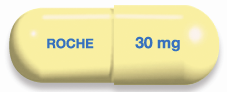
30 mg dose
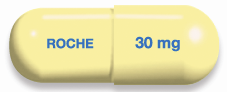
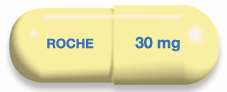
60 mg dose
You must use 30 mg capsules only for 30 mg and 60 mg doses. Do not try to prepare a 45 mg or 75 mg dose using the contents of 30 mg capsules. Instead, use capsules of the
appropriate dosage.
Step 2: Pour all the powder into a bowl
Hold the 30 mg capsulevertically over a bowl and carefully cut the rounded end with scissors.
Pour all the powder into the bowl.
Open a second capsule for a 60 mg dose. Pour all the powder into the bowl.
Be careful with the powder, as it can irritate the skin and eyes.
| Weight | Tamiflu dose | l Number of capsules |
| Up to 15 kg | 30 mg | 1 capsule |
| More than 15 kg and up to 23 kg | 45 mg | e Do not use 30 mg capsules |
| More than 23 kg and up to 40 kg | 60 mg | d 2 capsules |
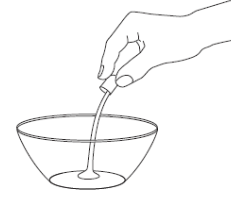
Step 3: Sweeten the powder and administer it to the patient
Add a small amount - no more than a teaspoon (5 mL) - of sugary food to the
powder in the bowl.
This masks the bitter taste of Tamiflu powder.
Mix the mixture well.
Administerimmediately to the patient all the contentsof the bowl.
If some of the mixtureremains in the bowl, rinse the bowl with a small amount
of water and give all the contents to the patient to drink.
Repeat this procedure each time you administer the medicine.
Children under 1 year of age
To prepare a single smaller dose, you will need:
- One 30 mg Tamiflu capsule
- Sharp scissors
- Two small bowls(use a different pair of bowls for each child)
- A large oral dispenserfor measuring water - a container with a capacity of 5 or 10 mL
- A small oral dispenserthat allows measurement of 0.1 mL, to give the dose
- Teaspoon (5 mL)
- Water
- Sweet foodsto mask the bitter taste of Tamiflu. For example: chocolate or cherry syrup and dessert toppings, such as caramel or caramel sauce. Or you can make sugar water by mixing a teaspoon (5 mL) of water with three-quarters (3/4) of a teaspoon of sugar.
Step 1: Pour all the powder into a bowl
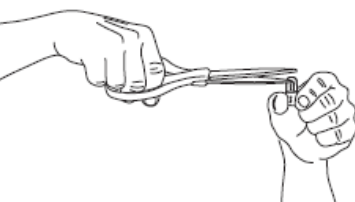
Hold a 30 mg capsulevertically over one of the bowls and carefully cut
the rounded end with scissors. Be careful with the powder: it can irritate the skin and eyes.
Pour all the powder into the bowl, regardless of the dose you are preparing.
The amount is the same whether you are treating or preventing influenza.
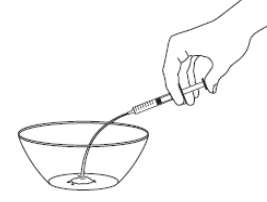
Step 2: Add water to dilute the medicine
Use the larger dispenser
to take 5 mL of
water.
Add the water to the
powder in the bowl.
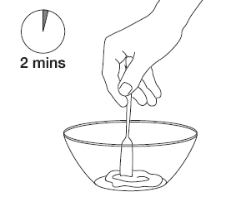
Mix the compound
with a teaspoon
(5 mL) for about 2 minutes.
Do not worry if not all the powder dissolves. The powder that does not dissolve consists only of
excipients.
Step 3: Choose the correct amount based on the child's weight
Find the weight on the left side of the table.
The right column of the table shows the amount of liquid suspension to be drawn
with an oral syringe.
Infants under 1 year of age (including full-term newborns)
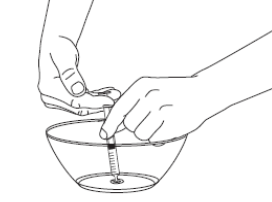
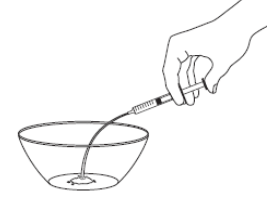
Step 4: Draw the liquid suspension
Make sure you have the right size dispenser (oral syringe).
Draw the correct amount of liquid suspension from the first bowl.
Pull up carefully, avoiding air bubbles.
Gently pour the correct dose into the second bowl.
| Child's weight (closest) | Amount of liquid suspension to draw |
| 3 kg | 1.5 mL |
| 3.5 kg | 1.8 mL |
| 4 kg | 2.0 mL |
| 4.5 kg | 2.3 mL |
| 5 kg | 2.5 mL |
| 5.5 kg | 2.8 mL |
| 6 kg | 3.0 mL |
| 6.5 kg | F 3.3 mL |
| 7 kg | 3.5 mL |
| 7.5 kg | 3.8 mL |
| 8 kg | l 4.0 mL |
| 8.5 kg | e 4.3 mL |
| 9 kg | 4.5 mL |
| 9.5 kg | d 4.8 mL |
| 10 kg or more | 5.0 mL |
Step 5: Sweeten and administer to the child
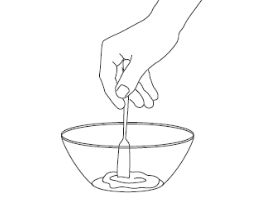
Add a small amount - no more than a teaspoon - of the sugary food into the
second bowl.
This masks the bitter taste of the Tamiflu liquid suspension.
Mix the sugary food and Tamiflu liquid form well.
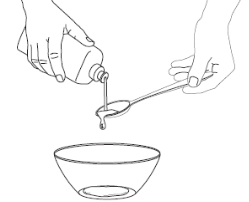
Administerimmediately to the child all the contentsof the second bowl (sugary food with
the Tamiflu liquid mixture).
If any residue remains in the second bowl,rinse the bowl with a small amount
of water and give all the contents to the child to drink. For children who are unable to drink from
the bowl, use a spoon or bottle to administer the remaining liquid mixture
to the child.
Give the child something to drink.
Discard any unused liquid remaining in the first bowl.
Repeat this operation each time you administer the medicine.
---------------------------------------------------------------------------------------------------------------------------
Information intended exclusively for healthcare professionals
Patients unable to swallow capsules:
Tamiflu for oral suspension (6 mg/mL) ready for use represents the preferred formulation for
paediatric and adult patients who have difficulty swallowing capsules or where lower doses are
required. If Tamiflu oral suspension powder is not available, the pharmacist can
prepare a suspension (6 mg/mL) from Tamiflu capsules. If even the suspension
prepared by the pharmacy is not available, patients can use the capsules to prepare the
suspension at home.
Oral dosing devices(oral syringes) of appropriate volume and graduated must be provided for both
the administration of the suspension prepared by the pharmacy and for the procedures relating to preparation
at home. In both cases, the correct volume should preferably be marked on the dosing devices. For home preparation, separate dosing devices should be provided for drawing up the
correct volume of water and for measuring the mixture of Tamiflu and water. To measure 5.0 mL of water
5 mL or 10 mL dosing devices should be used.
The appropriate size of the dosing device for drawing up the correct volume of Tamiflu suspension (6
mg/mL) are shown below.
Infants under 1 year of age (including full-term newborns):
| Tamiflu dose | a Quantity of Tamiflu suspension | d Size of dosing device to use (with 0.1 mL graduation) |
| 9 mg | 1.5 mL | 2.0 mL (or 3.0 mL) |
| 10 mg | n 1.7 mL | 2.0 mL (or 3.0 mL) |
| 11.25 mg | 1.9 mL | 2.0 mL (or 3.0 mL) |
| 12.5 mg | a 2.1 mL | 3.0 mL |
| 13.75 mg | i 2.3 mL | 3.0 mL |
| 15 mg | l 2.5 mL | 3.0 mL |
| 16.25 mg | 2.7 mL | 3.0 mL |
| 18 mg | a 3.0 mL | 3.0 mL (or 5.0 mL) |
| 19.5 mg | 3.3 mL | 5.0 mL |
| 21 mg | t 3.5 mL | 5.0 mL |
| 22.5 mg | I 3.8 mL | 5.0 mL |
| 24 mg | 4.0 mL | 5.0 mL |
| 25.5 mg | a 4.3 mL | 5.0 mL |
| 27 mg | 4.5 mL | 5.0 mL |
| 28.5 mg | i 4.8 mL | 5.0 mL |
| 30 mg | 5.0 mL | 5.0 mL |
Tamiflu 45 mg hard capsules
oseltamivir
Read this leaflet carefully before you start taking this medicine as it contains important information for you.
- Keep this leaflet. You may need to read it again.
- If you have any questions, ask your doctor or pharmacist.
- This medicine has been prescribed for you only. Do not pass it on to others. It may be harmful to other people, even if their symptoms are the same as yours.
- If you get any side effects, talk to your doctor or pharmacist. See section 4.
Contents of this leaflet:
1. What Tamiflu is and what it is used for
2. What you need to know before you take Tamiflu
3. How to take Tamiflu
4. Possible side effects
5. How to store Tamiflu
6. Contents of the pack and other information
1. What Tamiflu is and what it is used for
- Tamiflu is used in adults, adolescents, children and infants (including full-term newborns) for the treatment of influenza (flu). It can be used when you have flu symptoms and the influenza virus is circulating in the community.
- Tamiflu can also be prescribed to adults, adolescents, children and infants over 1 year of age, on a case-by-case basis, to prevent influenza,for example if you have been in contact with someone who has the flu.
- Tamiflu can be prescribed to adults, adolescents, children and infants (including full-term newborns) as preventive treatmentin exceptional circumstances, for example if there is a global influenza epidemic (influenza pandemic) and the seasonal influenza vaccine fails to provide sufficient protection.
Tamiflu contains oseltamivir,which belongs to a group of medicines called neuraminidase inhibitors. These medicines prevent the spread of the influenza virus in the body and thus help to relieve or prevent the symptoms of infection caused by the influenza virus.
Influenza is an infection caused by a virus. Symptoms of influenza often include a sudden fever (over 37.8°C), cough, runny or stuffy nose, headache, muscle aches and extreme fatigue. These symptoms can also be caused by other infections. True influenza infection only occurs during annual epidemics when the influenza virus spreads in the local community. Outside the epidemic period, flu-like symptoms are generally caused by a different type of illness.
2. What you need to know before taking Tamiflu
Do not takeTamiflu
- if you are allergic( hypersensitive) to oseltamivir or any of the excipients of Tamiflu listed in section 6. Consult your doctorif this applies to you. Do not take Tamiflu.
Warnings and precautions:
Before taking Tamiflu, make sure your prescribing doctor knows
- if you are allergic to other medicines
- if you have any kidney disease. In this case, a dose adjustment may be necessary
- if you have a serious health condition, which may require immediate hospitalization
- if your immune systemis not functioning
- if you have heart or chronic respiratory diseases.
During treatment with Tamiflu, tell your doctor immediately
- if you have noticed changes in behavior and mood ( neuropsychiatric events), especially in children and adolescents. These may be symptoms of rare but serious side effects.
Tamiflu is not an influenza vaccine
Tamiflu is not a vaccine: it treats the infection or prevents the spread of the influenza virus. A vaccine
provides antibodies against the virus. Tamiflu does not alter the effectiveness of an influenza vaccine and the
doctor may prescribe both.
Other medicines and Tamiflu
Tell your doctor or pharmacist if you are taking or have recently taken any other
medicines, including those available without a prescription. The following medicines are particularly
important:
- chlorpropamide (used to treat diabetes)
- methotrexate (used to treat, for example, rheumatoid arthritis)
- phenylbutazone (used to treat pain and inflammation)
- probenecid (used to treat gout)
Pregnancy and breastfeeding
Tell your doctor if you are pregnant, if you think you may be pregnant, or if you are trying to become pregnant, so that the
doctor can decide if Tamiflu is suitable for you.
The effects on breastfed infants are unknown. If you are breastfeeding, tell your doctor so that
they can decide if Tamiflu is suitable for you.
Ask your doctor or pharmacist for advice before taking this medicine.
Driving and operating machinery
Tamiflu does not affect your ability to drive vehicles or operate machinery.
Information on some of the excipients of Tamiflu
This medicine contains less than 1mmol of sodium (23 mg) per capsule, i.e. essentially ‘sodium-free’.
3. How to take Tamiflu
Take this medicine following exactly the instructions of your doctor. If you have any doubts, consult your
doctor or pharmacist.
Take Tamiflu as soon as possible, ideally within two days of the onset of flu symptoms.
Recommended doses
For the treatment of influenza, take two doses a day. It is usually practical to take one dose
in the morning and one in the evening. It is important that you complete the entire 5-day cycle, even if you begin
to feel better quickly.
In patients with a weakened immune system, treatment will continue for 10 days.
For the prevention of influenza or after contact with an infected person,take one dose a
day for 10 days. The best thing is to take this dose in the morning with breakfast.
In particular situations, such as widespread influenza or for patients with a weakened immune system, the
treatment will continue for a maximum of 6 or 12 weeks.
The recommended dose depends on the patient's body weight.You must use the amount of capsules or
oral suspension prescribed by your doctor.
Adults and adolescents starting from 13 years
| Body weight | Treatment of influenza: dose for 5 days | Treatment of influenza (patients with immunocompromised): dose for 10 days* | Prevention of influenza: dose for 10 days |
| 40 kg or more | a 75 mg** twice a day | 75 mg** twice a day | 75 mg** once a day |
*In patients with a weakened immune system, treatment lasts 10 days.
**75 mg can be formed by a 30 mg capsule plus a 45 mg capsule.
Children from 1 to 12 years
| Body weight | t Treatment I of influenza: dose for 5 days | Treatment of influenza (patients immunocompromised): dose for 10 days* | Prevention of influenza: dose for 10 days |
| 30 mg twice a day | 30 mg twice a day | 30 mg once a day |
| More than 15 kg and up to 23 kg | a 45 mg twice a day | 45 mg twice a day | 45 mg once a day |
| More than 23 kg and up to 40 kg | i z 60 mg twice a day | 60 mg twice a day | 60 mg once a day |
| More than 40 kg | n 75 mg** twice a day | 75 mg** twice a day | 75 mg** once a day |
*In children with a weakened immune system, treatment lasts 10 days.
**75 mg can be formed by a 30 mg capsule plus a 45 mg capsule.
Infants under 1 year of age (0 - 12 months)
The administration of Tamiflu to infants under 1 year of age for the prevention of influenza in
case of an influenza pandemic must be based on the doctor's judgment after considering the
ratio between the potential benefit and the potential risks for the child.
*In infants with a weakened immune system, treatment lasts 10 days.
**mg per kg = mg per each kilogram of the child's body weight. For example:
If a 6-month-old baby weighs 8 kg, the dose is
8 kg x 3 mg per kg = 24 mg
Method of administration
Swallow the capsules whole with water. Do not break or chew the capsules.
Tamiflu can be taken with or without food, although taking it with food may reduce the possibility
of feeling or being unwell (nausea or vomiting).
People who have difficulty swallowing the capsulescan use the liquid preparation,
Tamiflu oral suspension. If you need Tamiflu oral suspension but it is not available in
pharmacy, it is possible to prepare the Tamiflu solution from the capsules. For instructions,
seePreparing Tamiflu in liquid form at home,at the end of the page.
If you take more Tamiflu than you should
Stop taking Tamiflu and consult your doctor or pharmacist immediately.
In most cases of overdose, people have not reported any adverse effects.
When adverse effects have been reported, they were similar to those observed
with normal doses as indicated in paragraph 4.
Cases of overdose have been reported more frequently when Tamiflu was administered to
children compared to adults and adolescents. Be careful when preparing the Tamiflu solution
for children and when administering Tamiflu capsules or Tamiflu suspension to children.
If you forget to take Tamiflu
Do not take a double dose to make up for the missed capsule.
If you stop taking Tamiflu
There are no adverse effects when the administration of Tamiflu is stopped. However, if
Tamiflu is stopped before you have been told by your doctor, the symptoms
of influenza may reappear. Always complete the therapy prescribed by your doctor.
If you have any doubts about the use of this medicine, consult your doctor or pharmacist.
4. Possible side effects
Like all medicines, this medicine can cause side effects, although not everybody gets them.
Many of the side effects listed below can also be caused by the flu.
| Body weight | Flu treatment: dose for 5 days | Flu treatment (immunocompromised patients): dose for 10 days* | Flu prevention: or dose for 10 days |
| 3 kg – 10+ kg | 3 mg per kg of body weight** twice a day | 3 mg per kg of body weight** twice a day | c 3 mg per kg** once a day |
The following serious side effects have been reported rarely since oseltamivir has been
marketed:
- Anaphylactic or anaphylactoid reactions: severe allergic reactions with swelling of the face and skin, itchy rash, low blood pressure and difficulty breathing;
- Liver disorders (fulminant hepatitis, liver function disorders and jaundice): yellowing of the skin and the white of the eye, change in stool color, changes in behavior;
- Angioedema: sudden onset of severe swelling of the skin, especially around the head and neck, including the eyes and tongue, with difficulty breathing;
- Stevens-Johnson syndrome and toxic epidermal necrolysis: a complicated allergic reaction that can be fatal, manifesting with severe skin and mucous membrane inflammation initially accompanied by fever, sore throat, feeling tired, rash and subsequent blisters, skin peeling with large areas of dermo-epidermal detachment, possible difficulty breathing and low blood pressure;
- Gastrointestinal bleeding: prolonged bleeding from the large intestine or expulsion of blood from the mouth;
- Neuro-psychiatric disorders, as described below.
If you notice any of these symptoms, seek medical attention immediately.
The most frequently reported side effects (very common and common) with Tamiflu are
feeling unwell or sick (nausea, vomiting), stomach pain, stomach upset, headache and pain. These side effects usually appear after the first dose of the
medicine and generally disappear with continued treatment. The frequency of these effects
is reduced if the medicine is taken with food.
Rare but serious effects: consult a doctor immediately
( may affect up to 1 in 1,000 people)
During treatment with Tamiflu, rare events have been reported including
- convulsions and delirium including altered level of consciousness
- confusion, abnormal behavior
- delirium, hallucinations, agitation, anxiety, nightmares These events have been reported mainly in children and adolescents and often occurred suddenly and resolved quickly. A few cases have progressed to self-harm (an urge to harm oneself), which in some cases has led to death. Such neuropsychiatric events have also been reported in patients with flu who have not taken Tamiflu.
- Patients, especially children and adolescents, should be carefully monitored for the behavioral changes described above.
If you notice any of these symptoms, especially in younger patients, contact your
doctor immediately.
Adults and adolescents aged 13 years and over
Very common side effects
(may affect more than 1 in 10 people)
- Headache
- Nausea.
Common side effects
(may affect up to 1 in 10 people)
- Bronchitis
- Cold sores
- Cough
- Dizziness
- Fever
- Pain
- Limb pain
- Runny nose
- Sleep disorders
- Sore throat
- Stomach pain
- Fatigue
- Feeling of fullness in the upper abdomen
- Upper respiratory tract infections (inflammation of the nose, throat and nasal cavities)
- Stomach discomfort
- Vomiting.
Uncommon side effects
(may affect up to 1 in 100 people)
- Allergic reactions
- Altered level of consciousness
- Convulsions
- Abnormal heart rhythm
- Liver function abnormalities of mild to severe severity
- Skin reactions (skin inflammation, red and itchy rash, skin peeling).
Rare side effects
(may affect up to 1 in 1,000 people)
- Thrombocytopenia (low platelet count)
- Visual disturbances.
Children aged 1 to 12 years
Very common side effects
(may affect more than 1 in 10 people)
- Cough
- Nasal congestion
- Vomiting.
Common side effects
(may affect up to 1 in 10 people)
- Conjunctivitis (red eyes and secretion or eye pain)
- Ear inflammation and other ear disorders
- Headache
- Nausea
- Runny nose
- Stomach pain
- Feeling of fullness in the upper abdomen
- Stomach discomfort.
Uncommon side effects
(may affect up to 1 in 100 people)
- Skin inflammation
- Tympanic membrane disorders.
Infants under 1 year of age
The side effects reported in children from 0 to 12 months of age are mostly similar to the side
effects reported for older children (1 year and older). Diarrhea and
diaper rash have also been reported.
If any of these side effects worsen, or if you notice any other effect
- if you or the child gets frequent infections,or
- if the symptoms of the flu worsen or if the fever persistsinform your doctor as soon as possible.
Reporting of side effects
If you get any side effects, talk to your doctor or pharmacist. This includes any side effects not listed
in this leaflet. You can also report side effects directly through the national reporting system reported in
Appendix V. By reporting side effects you can help provide more information on the safety of this medicine.
5. How to store Tamiflu
Keep out of the sight and reach of children.
Do not use this medicine after the expiry date which is stated on the package and blister after
Expiry/EXP. The expiry date refers to the last day of the month.
Do not store at a temperature above 25°C.
Do not dispose of any medicine in waste water or household waste. Ask your pharmacist how to
dispose of medicines you no longer use. This will help protect the environment.
6. Content of the pack and other information
What Tamiflu contains
- Each hard capsule contains the equivalent of 45 mg of oseltamivir.
- The excipients are: capsule content: pregelatinized starch, talc, povidone, sodium croscarmellose and sodium stearyl fumarate capsule shell: gelatin, black iron oxide (E172) and titanium dioxide (E171) printing ink: shellac (E904), titanium dioxide (E171) and FD and C Blue 2 (indigotine E132).
Description of the appearance of Tamiflu and contents of the pack
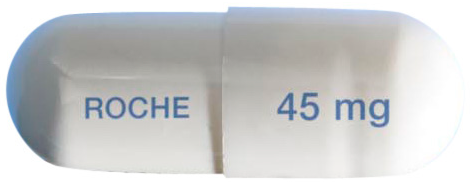
The 45 mg hard capsule consists of an opaque grey body with the inscription “ROCHE” and
an opaque grey cap with the inscription “45 mg”. The inscriptions are in blue.
Tamiflu 45 mg hard capsules are available in blisters in packs of 10.
Marketing authorisation holder and manufacturer
Roche Registration GmbH
Emil-Barell-Strasse 1
79639 Grenzach-Wyhlen
Germany
Roche Pharma AG
Emil-Barell-Str. 1,
D-79639 Grenzach-Wyhlen
Germany
For further information on this medicine, contact the local representative of the marketing
authorisation holder
België/Belgique/Belgien
N.V. Roche S.A.
Tél/Tel: +32 (0) 2 525 82 11
Lietuva
UAB “Roche Lietuva”
Tel: +370 5 2546799
България
Рош България ЕООД
Тел: +359 2 818 44 44
Luxembourg/Luxemburg
(Voir/siehe Belgique/Belgien)
Česká republika
Roche s. r. o.
Tel: +420 - 2 20382111
Magyarország
Roche (Magyarország) Kft.
Tel: +36 - 23 446 800
Danmark
Roche a/s
Tlf: +45 - 36 39 99 99
Malta
(See Ireland)
Deutschland
Roche Pharma AG
Tel: +49 (0) 7624 140
Nederland
Roche Nederland B.V.
Tel: +31 (0) 348 438050
Eesti
Roche Eesti OÜ
Tel: + 372 - 6 177 380
Norge
Roche Norge AS
Tlf: +47 - 22 78 90 00
Ελλάδα
Roche (Hellas) A.E.
Τηλ: +30 210 61 66 100
Österreich
Roche Austria GmbH
Tel: +43 (0) 1 27739
España
Roche Farma S.A.
Tel: +34 - 91 324 81 00
Polska
Roche Polska Sp.z o.o.
Tel: +48 - 22 345 18 88
France
Roche
Tél: +33 (0) 1 47 61 40 00
Portugal
Roche Farmacêutica Química, Lda
Tel: +351 - 21 425 70 00
Hrvatska
Roche d.o.o
Tel: +385 1 4722 333
România
Roche România S.R.L.
Tel: +40 21 206 47 01
Ireland
Roche Products (Ireland) Ltd.
Tel: +353 (0) 1 469 0700
Slovenija
Roche farmacevtska družba d.o.o.
Tel: +386 - 1 360 26 00
Ísland
Roche a/s
c/o Icepharma hf
Sími: +354 540 8000
Slovenská republika
Roche Slovensko, s.r.o.
Tel: +421 - 2 52638201
Italia
Roche S.p.A.
Tel: +39 - 039 2471
Suomi/Finland
Roche Oy
Puh/Tel: +358 (0) 10 554 500
Kύπρος
Γ.Α.Σταμάτης & Σια Λτδ.
Τηλ: +357 - 22 76 62 76
Sverige
Roche AB
Tel: +46 (0) 8 726 1200
Latvija
Roche Latvija SIA
Tel: +371 - 6 7039831
United Kingdom
Roche Products Ltd.
Tel: +44 (0) 1707 366000
More detailed information on this medicine is available on the website of the European Medicines Agency: http://www.ema.europa.eu/ .
---------------------------------------------------------------------------------------------------------------------------
Information for the user
For people who have difficulty swallowing capsules, including very young children, a liquid preparation, Tamiflu oral suspension, is available.
If you need the liquid preparation, but it is not available, you can use an oral suspension
prepared by a pharmacy from Tamiflu capsules (see Information for healthcare professionals).
The pharmacy-prepared liquid preparation is the preferred option.
If the pharmacy-prepared formulation is also unavailable, you can prepare Tamiflu in liquid form at
home from these capsules.
The dose is the same for the treatment and prevention of influenza. The difference is in the frequency of
administration.
Preparing Tamiflu in liquid form at home
- If you have the correct capsulesfor the required dosage (a 45 mg dose), open the capsule and mix its contents with a teaspoonful (or less) of a suitable sugary food. This procedure is usually suitable for children over 1 year of age. See thetop of the instructions.
- If you need a lower dose, preparing Tamiflu in liquid form from the capsules requires additional steps. This procedure is suitable for younger children, of lower weight and infants, who usually need a Tamiflu dose of less than 45 mg. See the bottom of theinstructions.
Children from 1 to 12 years
To prepare a 45 mg dose, you will need:
- One 45 mg Tamiflu capsule
- Sharp scissors
- A small bowl
- Teaspoon (5 mL)
- Water
- A sweet foodto mask the bitter taste of the powder. For example: chocolate or cherry syrup and dessert toppings, such as caramel or caramel sauce. Or you can make sugar water by mixing a teaspoonful (5 mL) of water with three-quarters (3/4) of a teaspoonful of sugar.
Step 1: Check that the dose is correct
To determine the correct amount of medicine to use, find the patient's weight in the left-hand column
of the table.
Find the number of capsules to give the patient per dose in the right-hand column. The
amount is the same for both the treatment and prevention of influenza.
45 mg dose
You should only use 45 mg capsules for 45 mg doses. Do not try to prepare a 30
mg, 60 mg or 75 mg dose using the contents of 45 mg capsules. Instead, use the capsules of the
appropriate dosage.
Step 2: Pour all the powder into a bowl
Hold the 45 mg capsuleupright over a bowl and carefully cut off the
rounded end with scissors.
Pour all the powder into the bowl.
Be careful with the powder, as it can irritate the skin and eyes.
| Weight | Tamiflu dose | a Number of capsules |
| Up to 15 kg | 30 mg | Do not use 45 mg capsules |
| More than 15 kg and up to 23 kg | 45 mg | F 1 capsule |
| More than 23 kg and up to 40 kg | 60 mg | Do not use 45 mg capsules |
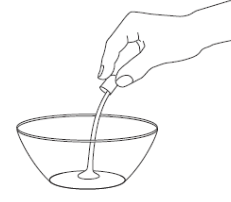
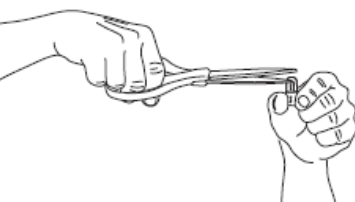
Step 3: Sweeten the powder and administer it to the patient
Add a small amount - no more than a teaspoonful (5 mL) - of sugary food to
the powder in the bowl.
This masks the bitter taste of Tamiflu powder.
Mix the mixture well.
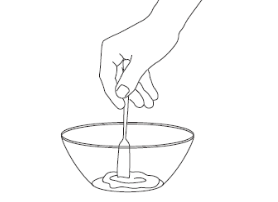
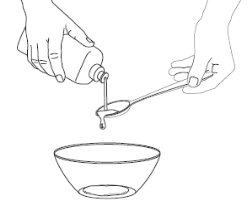
Immediately administerall the contentsof the bowl to the patient.
If some of the mixture remainsin the bowl, rinse the bowl with a small amount
of water and give all the contents to drink to the patient.
Repeat this procedure each time you administer the medicine.
Children under 1 year of age
To prepare a single smaller dose, you will need:
- One 45 mg Tamiflu capsule
- Sharp scissors
- Two small bowls(use a different pair of bowls for each child)
- A large oral dispenserfor measuring water - a container with a capacity of 5 or 10 mL
- A small oral dispenserthat allows measurement from 0.1 mL, to give the dose (oral syringe).
- Teaspoon (5 mL)
- Water
- A sweet foodto mask the bitter taste of Tamiflu. For example: chocolate or cherry syrup and dessert toppings, such as caramel or caramel sauce. Or you can make sugar water by mixing a teaspoonful (5 mL) of water with three-quarters (3/4) of a teaspoonful of sugar.
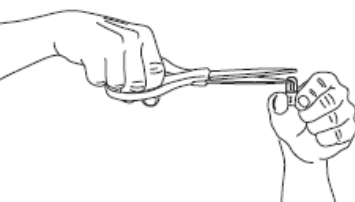
Step 1: Pour all the powder into a bowl
Hold a 45 mg capsuleupright over one of the bowls and carefully cut
the rounded end with scissors. Be careful with the powder: it can irritate the skin and
eyes.
Pour all the powder into the bowl, regardless of the dose you are preparing.
The amount is the same whether you are treating or preventing influenza.
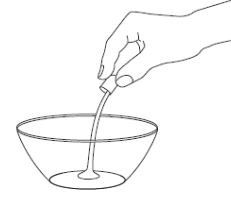
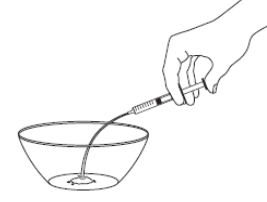
Step 2: Add water to dilute the medicine
Use the larger dispenser
to take 7.5 mL of
water.
Add the water to the
powder in the bowl.
Mix the compound
with a teaspoon (5 mL)
for about 2 minutes.
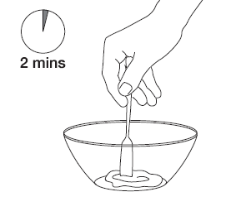
Do not worry if not all the powder dissolves. The powder that does not dissolve consists only of
excipients.
Step 3: Choose the correct amount based on the child's weight
Find the weight on the left side of the table.
The right-hand column of the table shows the amount of liquid suspension to be drawn
with an oral syringe.
| Child's weight (closest) | Amount of liquid suspension to draw |
| 3 kg | 1.5 mL |
| 3.5 kg | 1.8 mL |
| 4 kg | 2.0 mL |
| 4.5 kg | 2.3 mL |
| 5 kg | 2.5 mL |
| 5.5 kg | 2.8 mL |
| 6 kg | 3.0 mL |
| 6.5 kg | F 3.3 mL |
| 7 kg | 3.5 mL |
| 7.5 kg | 3.8 mL |
| 8 kg | l 4.0 mL |
| 8.5 kg | e 4.3 mL |
| 9 kg | 4.5 mL |
| 9.5 kg | d 4.8 mL |
| 10 kg or more | 5.0 mL |
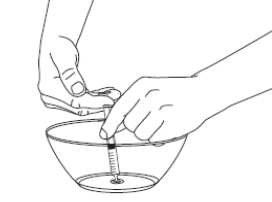
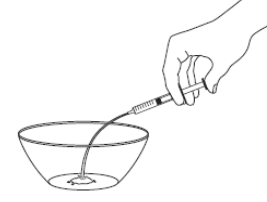
Step 4: Sweeten and administer it to the child
Add a small amount - no more than a teaspoonful - of the sugary food into the
second bowl.
This masks the bitter taste of the Tamiflu liquid suspension.
Mix the sugary food and Tamiflu liquid form well.
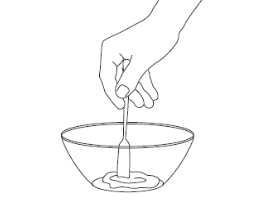
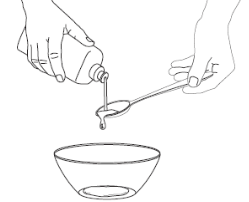
Immediately administerall the contentsof the second bowl (the liquid mixture of
Tamiflu with the added sugary food) to the child.
If some residue remains in the second bowl, rinse the bowl with a small amount
of water and give all the contents to drink to the child. For children who are unable to drink from the
bowl, use a spoon or bottle to administer the remaining liquid mixture
to the child.
Give the child something to drink.
Discard any unused liquid remaining in the first bowl.
Repeat this operation each time you administer the medicine.
Information intended exclusively for healthcare professionals
Patients unable to swallow capsules:
Tamiflu oral suspension (6 mg/mL) ready for use is the preferred formulation for
paediatric and adult patients who have difficulty swallowing capsules or where lower doses
are required. If Tamiflu oral suspension powder is not available, the pharmacist may
prepare a suspension (6 mg/mL) from Tamiflu capsules. If even the suspension
prepared in the pharmacy is not available, patients may use the capsules to prepare the
suspension at home.
Oral dosers(oral syringes) of appropriate volume and graduated must be provided for both
the administration of the suspension prepared in the pharmacy and for the procedures relating to
home preparation. In both cases, the correct volume should preferably be marked on the dosers.
For home preparation, separate dosers must be provided for drawing up the
correct volume of water and for measuring the mixture of Tamiflu and water. To measure 5.0 mL of water
5 mL or 10 mL dosers should be used.
The appropriate size of the doser for aspirating the correct volume of Tamiflu suspension (6
mg/mL) is shown below.
Infants under 1 year of age (including full-term newborns):
| Tamiflu dose | Quantity of Tamiflu suspension | a n d Size of the doser to be used (with graduation from 0.1 mL) |
| 9 mg | 1.5 mL | 2.0 mL (or 3.0 mL) |
| 10 mg | a 1.7 mL | 2.0 mL (or 3.0 mL) |
| 11.25 mg | 1.9 mL | 2.0 mL (or 3.0 mL) |
| 12.5 mg | n 2.1 mL | 3.0 mL |
| 13.75 mg | 2.3 mL | 3.0 mL |
| 15 mg | a 2.5 mL | 3.0 mL |
| 16.25 mg | i 2.7 mL | 3.0 mL |
| 18 mg | l 3.0 mL | 3.0 mL (or 5.0 mL) |
| 19.5 mg | 3.3 mL | 5.0 mL |
| 21 mg | a 3.5 mL | 5.0 mL |
| 22.5 mg | t 3.8 mL | 5.0 mL |
| 24 mg | 4.0 mL | 5.0 mL |
| 25.5 mg | I 4.3 mL | 5.0 mL |
| 27 mg | 4.5 mL | 5.0 mL |
| 28.5 mg | a 4.8 mL | 5.0 mL |
| 30 mg | 5.0 mL | 5.0 mL |

Не впевнені, чи підходить вам цей лікарський засіб?
Обговоріть симптоми та можливі варіанти лікування з лікарем онлайн.
Tamiflu 75 mg hard capsules
oseltamivir
Read this leaflet carefully before you start taking this medicine as it contains important information for you.
- Keep this leaflet. You may need to read it again.
- If you have any questions, ask your doctor or pharmacist.
- This medicine has been prescribed for you only. Do not pass it on to others. It may be harmful for people other than you, even if their symptoms are the same.
- If you get any side effects, even those not listed in this leaflet, tell your doctor or pharmacist. See section 4.
Contents of this leaflet:
1. What Tamiflu is and what it is used for
2. What you need to know before you take Tamiflu
3. How to take Tamiflu
4. Possible side effects
5. How to store Tamiflu
6. Contents of the pack and other information
1. What Tamiflu is and what it is used for
- Tamiflu is used in adults, adolescents, children and infants (including full term newborns) for the treatment of influenza (flu). It can be used when you have flu symptoms and the influenza virus is circulating in the community.
- Tamiflu can also be prescribed to adults, adolescents, children and infants over 1 year of age, on a case-by-case basis, to prevent influenza (flu), for example if you have been in contact with someone who has the flu.
- Tamiflu can be prescribed to adults, adolescents, children and infants (including full term newborns) as preventive treatmentin exceptional circumstances, for example when there is a global influenza epidemic (influenza pandemic) and when the seasonal influenza vaccine does not provide sufficient protection.
Tamiflu contains oseltamivir, which belongs to a group of medicines called neuraminidase inhibitors.
These medicines prevent the spread of the influenza virus in the body and thus help to relieve or prevent the symptoms of infection caused by the influenza virus. The flu is an infection caused by a virus. Symptoms of the flu often include a sudden fever (higher than 37.8°C), cough, runny or stuffy nose, headache, muscle aches and extreme fatigue. These symptoms can also be caused by other infections. True influenza infection only occurs during annual epidemics when the influenza virus spreads in the local community. Outside the epidemic period, flu-like symptoms are generally caused by a different type of illness.
2. What you need to know before taking Tamiflu
Do not takeTamiflu:
- if you are allergic( hypersensitive) to oseltamivir or any of the excipients of Tamiflu listed in section 6. Consult your doctorif this applies to you. Do not take Tamiflu.
Warnings and precautions
Before taking Tamiflu, make sure your prescribing doctor knows
- if you are allergic to other medicines
- if you have any kidney disease. In this case, a dose adjustment may be necessary
- if you have a serious health condition, which may require immediate hospitalization
- if your immune systemis not functioning
- if you have heart or chronic respiratory diseases.
During treatment with Tamiflu, immediately inform your doctor
- if you have noticed changes in behavior and mood (neuropsychiatric events), especially in children and adolescents. These may be symptoms of rare but serious side effects.
Tamiflu is not an influenza vaccine
Tamiflu is not a vaccine: it treats the infection, or prevents the spread of the influenza virus. A vaccine
provides antibodies against the virus. Tamiflu does not alter the effectiveness of an influenza vaccine, and
your doctor may prescribe both.
Other medicines and Tamiflu
Tell your doctor or pharmacist if you are taking or have recently taken any other
medicines, including those available without a prescription. The following medicines are particularly
important:
- chlorpropamide (used to treat diabetes)
- methotrexate (used to treat, for example, rheumatoid arthritis)
- phenylbutazone (used to treat pain and inflammation)
- probenecid (used to treat gout)
Pregnancy and breastfeeding
Tell your doctor if you are pregnant, if you think you may be pregnant, or if you are trying to become
pregnant, so that the doctor can decide if Tamiflu is suitable for you.
The effects on breastfed infants are unknown. If you are breastfeeding, inform your doctor, so
that they can decide if Tamiflu is suitable for you.
Ask your doctor or pharmacist for advice before taking this medicine.
Driving and using machines
Tamiflu does not affect your ability to drive vehicles or use machines.
Information on some of the excipients of Tamiflu
This medicine contains less than 1 mmol of sodium (23 mg) per capsule, i.e. essentially ‘sodium-free’.
3. How to take Tamiflu
Take this medicine exactly as your doctor has told you. If you have any doubts, ask your
doctor or pharmacist.
Take Tamiflu as soon as possible, ideally within two days of the start of flu symptoms.
Recommended doses
For the treatment of influenza, take two doses a day. It is usually convenient to take one dose
in the morning and one in the evening. It is important that you complete the entire 5-day cycle, even if you begin
to feel better quickly.
In patients with a weakened immune system, treatment will continue for 10 days.
For the prevention of influenza or after contact with an infected person,take one dose a
day for 10 days. The best time to take this dose is in the morning with breakfast.
In specific situations, such as widespread influenza or for patients with a weakened immune system, the
treatment will continue for a maximum of 6 or 12 weeks.
The recommended dose depends on the patient's body weight.You must use the amount of capsules or
oral suspension prescribed by your doctor.
Adults and adolescents starting from 13 years
*In patients with a weakened immune system, treatment lasts 10 days.
**75 mg can be made up of one 30 mg capsule plus one 45 mg capsule.
Children from 1 to 12 years
| Body weight | Treatment of influenza: dose for 5 days | and d Treatment of influenza (immunocompromised patients): dose for 10 days* | Prevention of influenza: dose for 10 days |
| 40 kg or more | 75 mg** twice a day | a 75 mg** twice a day | 75 mg** once a day |
| Body weight | i Treatment l of influenza: a dose for 5 days | Treatment of influenza (immunocompromised patients): dose for 10 days* | Prevention of influenza: dose for 10 days |
| 10 kg - 15 kg | 30 mg twice a day | 30 mg twice a day | 30 mg once a day |
| More than 15 kg and up to 23 kg | t I 45 mg twice a day | 45 mg twice a day | 45 mg once a day |
| More than 23 kg and up to 40 kg | 60 mg twice a day | 60 mg twice a day | 60 mg once a day |
| More than 40 kg | a 75 mg** twice a i day | 75 mg** twice a day | 75 mg** once a day |
*In children with a weakened immune system, treatment lasts 10 days.
**75 mg can be made up of one 30 mg capsule plus one 45 mg capsule.
Infants under 1 year of age (0 - 12 months)
The administration of Tamiflu to infants under 1 year of age for the prevention of influenza in
case of an influenza pandemic should be based on the doctor's judgment after considering the
ratio between the potential benefit and the potential risks for the child.
*In infants with a weakened immune system, treatment lasts 10 days.
**mg/kg = mg per kilogram of the child's body weight. For example:
if a 6-month-old baby weighs 8 kg the dose is:
8 kg x 3 mg per kg = 24 mg
Method of administration
Swallow the capsules whole with water. Do not break or chew the capsules.
Tamiflu can be taken with or without food, although taking it with food may reduce the possibility
of feeling sick or unwell (nausea or vomiting).
People who have difficulty swallowing capsulescan use the liquid preparation,
Tamiflu oral suspension. If you need Tamiflu oral suspension but it is not available in
the pharmacy, it is possible to prepare Tamiflu in liquid form from the capsules. For instructions,
seethe page Preparing Tamiflu in liquid form at home.
If you take more Tamiflu than you should
Stop taking Tamiflu and consult your doctor or pharmacist immediately.
In most cases of overdose, people have not reported any adverse effects.
When adverse effects have been reported, they were similar to those observed
with normal doses as indicated in paragraph 4.
Cases of overdose have been reported more frequently when Tamiflu was administered to
children compared to adults and adolescents. Be careful when preparing the Tamiflu solution
for children and when administering Tamiflu capsules or Tamiflu suspension to children.
If you forget to take Tamiflu
Do not take a double dose to make up for the missed capsule.
If you stop taking Tamiflu
There are no adverse effects when the administration of Tamiflu is stopped. However, if
Tamiflu is stopped before the time your doctor told you, the symptoms
of influenza may return. Always complete the therapy prescribed by your doctor.
If you have any doubts about using this medicine, ask your doctor or pharmacist.
4. Possible side effects
Like all medicines, this medicine can cause side effects, although not everybody gets them.
Many of the side effects listed below can also be caused by the flu.
| Body weight | Influenza treatment: dose for 5 days | Influenza treatment (immunocompromised patients): dose for 10 days* | Influenza prevention: or dose for 10 days |
| 3 kg- 10+ kg | 3 mg per kg of body weight** twice a day | 3 mg per kg of body weight** twice a day | c 3 mg per kg** once a day |
The following serious side effects have been reported rarely since oseltamivir has been
marketed:
- Anaphylactic or anaphylactoid reactions: severe allergic reactions with swelling of the face and skin, itchy rash, low blood pressure and difficulty breathing;
- Liver disorders (fulminant hepatitis, liver function disorders and jaundice): yellowing of the skin and the white of the eye, change in stool color, changes in behavior;
- Angioedema: sudden onset of severe swelling of the skin, especially around the head and neck, including the eyes and tongue, with difficulty breathing;
- Stevens-Johnson syndrome and toxic epidermal necrolysis: a complicated allergic reaction that can be fatal, manifesting with severe skin and internal mucous membrane inflammation initially accompanied by fever, sore throat, feeling tired, rash and subsequent blisters, skin peeling with large areas of dermal-epidermal detachment, possible difficulty breathing and low blood pressure;
- Gastrointestinal bleeding: prolonged bleeding from the large intestine or expulsion of blood from the mouth;
- Neuro-psychiatric disorders, as described below.
If you notice any of the following symptoms, seek immediate medical help.
The most frequently reported side effects (very common and common) with Tamiflu are
feeling unwell or sick (nausea, vomiting), stomach pain, stomach discomfort, headache and pain. These side effects usually occur after the first dose of the
medicine and generally disappear with continued treatment. The frequency of these effects
is reduced if the medicine is taken with food.
Rare but serious effects: consult a doctor immediately
( can affect up to 1 in 1,000 people)
During treatment with Tamiflu, rare events have been reported including
- convulsions and delirium including altered level of consciousness
- confusion, abnormal behavior
- delirium, hallucinations, agitation, anxiety, nightmares These events have been reported mainly in pediatric and adolescent patients and often occurred suddenly and resolved quickly. A few cases have progressed to self-harm (urge to harm oneself) which in some cases led to death. Such neuropsychiatric events have also been reported in patients with influenza who had not taken Tamiflu.
- Patients, especially children and adolescents, should be carefully monitored for the behavioral changes described above. If you notice any of these symptoms,especially in younger patients, contactyour doctor immediately.
Adults and adolescents starting from 13 years of age
Very common side effects
(can affect more than 1 in 10 people)
- Headache
- Nausea.
Common side effects
(can affect up to 1 in 10 people)
- Bronchitis
- Cold sores
- Cough
- Dizziness
- Fever
- Pain
- Pain in the limbs
- Runny nose
- Sleep disorders
- Sore throat
- Stomach pain
- Fatigue
- Feeling of fullness in the upper abdomen
- Upper respiratory tract infections (inflammation of the nose, throat and nasal cavities)
- Stomach discomfort
- Vomiting.
Uncommon side effects
(can affect up to 1 in 100 people)
- Allergic reactions
- Altered level of consciousness
- Convulsions
- Abnormal heart rhythm
- Liver function abnormalities ranging from mild to severe
- Skin reactions (skin inflammation, red and itchy rash, skin peeling).
Rare side effects
(can affect up to 1 in 1,000 people)
- Thrombocytopenia (low platelet count)
- Visual disturbances.
Children aged between 1 and 12 years
Very common side effects
(can affect more than 1 in 10 people)
- Cough
- Nasal congestion
- Vomiting.
Common side effects
(can affect up to 1 in 10 people)
- Conjunctivitis (red eyes and secretion or eye pain)
- Ear inflammation and other ear disorders
- Headache
- Nausea
- Runny nose
- Stomach pain
- Feeling of fullness in the upper abdomen
- Stomach discomfort.
Uncommon side effects
(can affect up to 1 in 100 people)
- Skin inflammation
- Tympanic membrane disorders.
Infants under 1 year of age
The side effects reported in children from 0 to 12 months of age are mostly similar to the side
effects reported for older children (1 year and older). Diarrhea and
diaper rash have also been reported.
If any of these side effects worsen, or if you notice any other effect
- if you or the child gets frequent infections,or
- if the symptoms of the flu worsen or if the fever persistsinform the doctor as soon as possible.
Reporting of side effects
If you get any side effects, talk to your doctor or pharmacist. This includes any side effects not listed in this leaflet. You can also report side effects directly through the national reporting system reported in Annex V . By reporting side effects you can help provide
more information on the safety of this medicine.
5. How to store Tamiflu
Keep out of sight and reach of children.
Do not use this medicine after the expiry date which is stated on the package and blister after
Scad/EXP. The expiry date refers to the last day of the month.
Do not store at a temperature above 25°C.
Do not dispose of any medicine in waste water or household waste. Ask your pharmacist how
to dispose of medicines you no longer use. This will help protect the environment.
6. Content of the pack and other information
What Tamiflu contains
- Each hard capsule contains the equivalent of 75 mg of oseltamivir.
- The excipients are: capsule content: pregelatinized starch, talc, povidone, sodium croscarmellose and sodium stearyl fumarate capsule shell: gelatin, yellow iron oxide (E172), red iron oxide (E172), black iron oxide (E172) and titanium dioxide (E171) printing ink: shellac (E904), titanium dioxide (E171) and FD and C Blue 2 (indigotine E132).
Description of the appearance of Tamiflu and contents of the pack
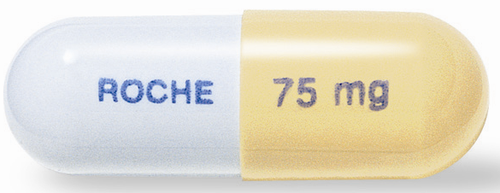
The 75 mg hard capsule consists of an opaque grey body with the inscription “ROCHE” and
an opaque light yellow cap with the inscription “75 mg”. The inscriptions are in blue.
Tamiflu 75 mg hard capsules are available in blisters in packs of 10.
Marketing authorisation holder and manufacturer
Roche Registration GmbH
Emil-Barell-Strasse 1
79639 Grenzach-Wyhlen
Germany
Roche Pharma AG
Emil-Barell-Str. 1,
D-79639 Grenzach-Wyhlen
Germany
For further information on this medicinal product, contact the local representative of the marketing
authorisation holder:
België/Belgique/Belgien
N.V. Roche S.A.
Tél/Tel: +32 (0) 2 525 82 11
Lietuva
UAB “Roche Lietuva”
Tel: +370 5 2546799
България
Рош България ЕООД
Тел: +359 2 818 44 44
Luxembourg/Luxemburg
(Voir/siehe Belgique/Belgien)
Česká republika
Roche s. r. o.
Tel: +420 - 2 20382111
Magyarország
Roche (Magyarország) Kft.
Tel: +36 - 23 446 800
Danmark
Roche a/s
Tlf: +45 - 36 39 99 99
Malta
(See Ireland)
Nederland
Roche Nederland B.V.
Tel: +31 (0) 348 438050
Eesti
Roche Eesti OÜ
Tel: + 372 - 6 177 380
Deutschland
Roche Pharma AG
Tel: +49 (0) 7624 140
Norge
Roche Norge AS
Tlf: +47 - 22 78 90 00
Ελλάδα
Roche (Hellas) A.E.
Τηλ: +30 210 61 66 100
Österreich
Roche Austria GmbH
Tel: +43 (0) 1 27739
España
Roche Farma S.A.
Tel: +34 - 91 324 81 00
Polska
Roche Polska Sp.z o.o.
Tel: +48 - 22 345 18 88
France
Roche
Tél: +33 (0) 1 47 61 40 00
Portugal
Roche Farmacêutica Química, Lda
Tel: +351 - 21 425 70 00
Hrvatska
Roche d.o.o
Tel: +385 1 4722 333
România
Roche România S.R.L.
Tel: +40 21 206 47 01
Ireland
Roche Products (Ireland) Ltd.
Tel: +353 (0) 1 469 0700
Slovenija
Roche farmacevtska družba d.o.o.
Tel: +386 - 1 360 26 00
Ísland
Roche a/s
c/o Icepharma hf
Sími: +354 540 8000
Slovenská republika
Roche Slovensko, s.r.o.
Tel: +421 - 2 52638201
Italia
Roche S.p.A.
Tel: +39 - 039 2471
Suomi/Finland
Roche Oy
Puh/Tel: +358 (0) 10 554 500
Kύπρος
Γ.Α.Σταμάτης & Σια Λτδ.
Τηλ: +357 - 22 76 62 76
Sverige
Roche AB
Tel: +46 (0) 8 726 1200
Latvija
Roche Latvija SIA
Tel: +371 - 6 7039831
United Kingdom
Roche Products Ltd.
Tel: +44 (0) 1707 366000
More detailed information on this medicinal product is available on the website of the European
Medicines Agency: http://www.ema.europa.eu/ .
---------------------------------------------------------------------------------------------------------------------------
Information for the user
For people who have difficulty swallowing capsules,including very young children, a liquid
preparation, Tamiflu oral suspension, is available.
If you need the liquid preparation, but it is not available, an oral suspension prepared by a
pharmacy from Tamiflu capsules can be used (see Information addressed to healthcare
professionals). The pharmacy-prepared liquid preparation is the preferred option.
If the pharmacy-prepared formulation is also unavailable, you can prepare Tamiflu in liquid form
at home from the capsules.
The dose is the same for the treatment and prevention of influenza. The difference is in the
frequency of administration.
Preparing Tamiflu in liquid form at home
- If you have the correct capsulesfor the required dosage (a 75 mg dose), open the capsule and mix its contents with a teaspoon (or less) of a suitable sugary food. This procedure is usually suitable for children over 1 year of age. See the top of the instructions.
- If you need a lower dose,preparing Tamiflu in liquid form from the capsules requires additional steps. This procedure is suitable for younger children and infants who usually need a Tamiflu dose of less than 30 mg. See the bottom of the instructions.
Adults and adolescents from 13 years of age and children weighing 40 kg or more
To prepare a 75 mg dose, you will need:
- One 75 mg Tamiflu capsule
- Sharp scissors
- A small bowl
- Teaspoon (5 mL)
- Water
- A sweet foodto mask the bitter taste of the powder. For example: chocolate or cherry syrup and dessert toppings, such as caramel or caramel sauce. Alternatively, you can make sugar water by mixing a teaspoon (5 mL) of water with three-quarters (3/4) of a teaspoon of sugar.
Step 1: Check that the dose is correct
To determine the correct amount of medicine to use, find the patient's weight in the
left-hand column of the table.
Look for the number of capsules to administer to the patient for a single
dose in the right-hand column. The amount is the same for both treating and preventing influenza.
75 mg dose
You should only use 75 mg capsules for 75 mg doses. Do not try to prepare a 75 mg dose using the contents of 30 mg or 45 mg capsules.
Not suitable for children weighing less than 40 kg.
A lower dose than 75 mg must be prepared for children weighing less than 40 kg.
See below.
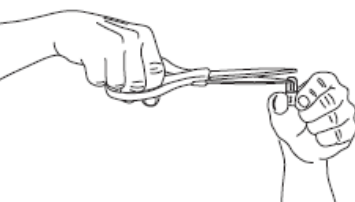
Step 2: Pour all the powder into a bowl
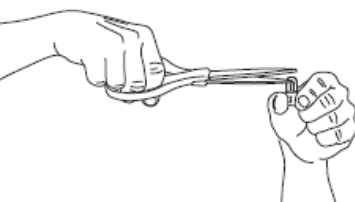
Hold a 75 mg capsulevertically over a bowl and carefully cut off the rounded end with scissors.
Pour all the powder into the bowl.
Be careful with the powder, as it can irritate the skin and eyes.
| Weight | Tamiflu dose | a Number of capsules |
| 40 kg and over | 75 mg | 1 capsule |
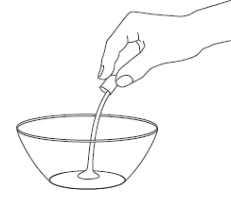
Step 3: Sweeten the powder and administer it to the patient
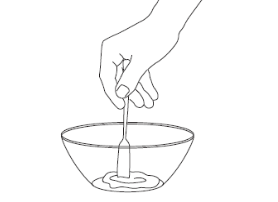
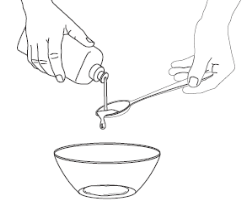
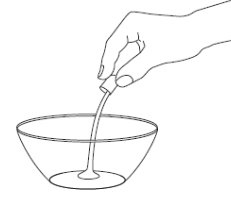
Add a small amount - no more than a teaspoon (5 mL) - of the sugary food to the powder in the bowl.
This masks the bitter taste of Tamiflu powder.
Mix the mixture well.
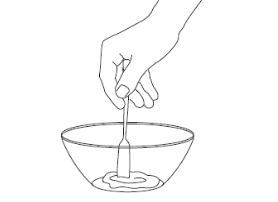
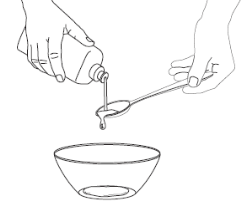
Givethe patient all thecontents of the bowlimmediately.
If some of the mixture remains in the bowl, rinse the bowl with a small
amount of water and give the patient all the contents to drink.
Repeat this procedure each time you need to administer the medicine.
Infants under 1 year of age and children with a body weight of less than 40 kg
To prepare a single smaller dose, you will need:
- One 75 mg Tamiflu capsule
- Sharp scissors
- Two small bowls
- A large oral measuring deviceto measure water - a container with a capacity of 5 or 10 mL
- A small oral measuring devicethat allows measurement of 0.1 mL, to administer the dose (oral syringe)
- Teaspoon (5 mL)
- Water
- Sweet foodsto mask the bitter taste of Tamiflu. For example: chocolate or cherry syrup and dessert toppings, such as caramel or caramel sauce. Alternatively, you can make sugar water by mixing a teaspoon (5 mL) of water with three-quarters (3/4) of a teaspoon of sugar.
Step 1: Pour all the powder into a bowl
Hold a 75 mg capsulevertically over one of the bowls and carefully cut
off the rounded end with scissors. Be careful with the powder: it can irritate the skin and
eyes.
Pour all the powder into the bowl, regardless of the dose you are preparing. The amount is the
same whether you are treating or preventing influenza.
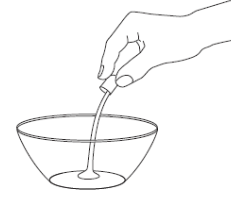
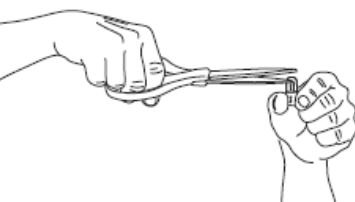
Step 2: Add water to dilute the medicine
Use the larger measuring device
to draw 12.5 mL of
water.
Add the water to the
powder in the bowl.
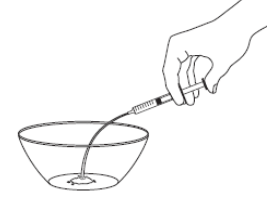
Stir the compound
with a teaspoon
(5 mL) for about 2 minutes.
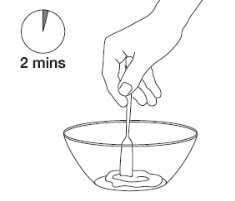
Do not worry if not all the powder dissolves. The powder that does not dissolve consists
only of excipients.
Step 3: Choose the correct amount according to the child's weight
Find the weight on the left side of the table.
The right-hand column of the table shows the amount of liquid suspension to be
drawn up with a syringe.
Infants under 1 year of age (including full-term newborns)
Children 1 year of age or older and weighing less than 40 kg
Step 4: Draw up the liquid suspension
Make sure you have the right size measuring device (oral syringe).
Draw up the correct amount of liquid suspension from the first bowl. Pull up carefully
avoiding air bubbles.
Gently pour the correct dose into the second bowl.
| Child's weight (closest) | Amount of liquid suspension to draw up |
| 3 kg | 1.5 mL |
| 3.5 kg | 1.8 mL |
| 4 kg | 2.0 mL |
| 4.5 kg | 2.3 mL |
| 5 kg | 2.5 mL |
| 5.5 kg | a 2.8 mL |
| 6 kg | 3.0 mL |
| 6.5 kg | F 3.3 mL |
| 7 kg | 3.5 mL |
| 7.5 kg | 3.8 mL |
| 8 kg | l 4.0 mL |
| 8.5 kg | e 4.3 mL |
| 9 kg | 4.5 mL |
| 9.5 kg | d 4.8 mL |
| 10 kg or more | 5.0 mL |
| Child's weight (closest) | n Amount of liquid suspension to draw up |
| Up to 15 kg | a 5.0 mL |
| 15 to 23 kg | 7.5 mL |
| 23 to 40 kg | i 10.0 mL |
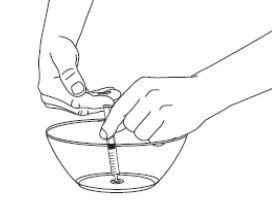
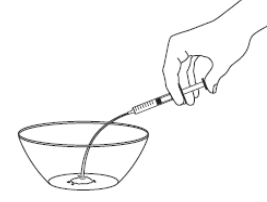
Step 5: Sweeten and administer to the child
Add a small amount – no more than a teaspoon – of the sugary food to the
second bowl.
This masks the bitter taste of the Tamiflu liquid suspension.
Mix the sugary food and Tamiflu liquid form well.
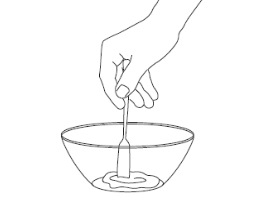
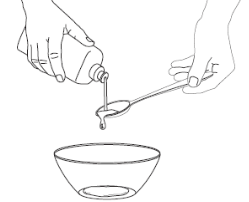
Givethe child the entire contentsof the second bowl (the liquid mixture
of Tamiflu with the added sugary food) immediately.
If any residue remains in the second bowl, rinse the bowl with a small
amount of water and give the child all the contents to drink. For children who cannot drink
from the bowl, use a spoon or bottle to administer the remaining liquid mixture to the child.
Give the child something to drink.
Discard any unused liquid residue remaining in the first bowl.
Repeat this procedure each time you need to administer the medicine.
Information intended exclusively for healthcare professionals
Patients unable to swallow capsules:
Tamiflu for oral suspension (6 mg/mL) ready for use represents the preferred formulation for
paediatric and adult patients who have difficulty swallowing capsules or where lower doses
are needed. If Tamiflu oral suspension powder is not available, the pharmacist may
prepare a suspension (6 mg/mL) from Tamiflu capsules. If even the suspension
prepared in the pharmacy is not available, patients may use the capsules to prepare the
suspension at home.
Oral dispensers(oral syringes) of appropriate volume and graduated must be provided for both
the administration of the suspension prepared in the pharmacy and for the procedures relating to
home preparation. In both cases, the correct volume should preferably be marked on the dispensers. For home preparation, separate dispensers should be provided for drawing up the
correct volume of water and for measuring the mixture of Tamiflu and water. To measure 12.5 mL of water
10 mL dispensers should be used.
See below the appropriate size of the dispenser to be used to draw up the correct volume of
the 6 mg/mL Tamiflu oral suspension.
Infants under 1 year of age (including full-term newborns):
| Tamiflu Dose | Quantity of Tamiflu suspension | and d Size of the dispenser to be used (with graduation from 0.1 mL) |
| 9 mg | 1.5 mL | 2.0 mL (or 3.0 mL) |
| 10 mg | a 1.7 mL | 2.0 mL (or 3.0 mL) |
| 11.25 mg | 1.9 mL | 2.0 mL (or 3.0 mL) |
| 12.5 mg | n 2.1 mL | 3.0 mL |
| 13.75 mg | 2.3 mL | 3.0 mL |
| 15 mg | a 2.5 mL | 3.0 mL |
| 16.25 mg | i 2.7 mL | 3.0 mL |
| 18 mg | l 3.0 mL | 3.0 mL (or 5.0 mL) |
| 19.5 mg | 3.3 mL | 5.0 mL |
| 21 mg | a 3.5 mL | 5.0 mL |
| 22.5 mg | t 3.8 mL | 5.0 mL |
| 24 mg | 4.0 mL | 5.0 mL |
| 25.5 mg | I 4.3 mL | 5.0 mL |
| 27 mg | 4.5 mL | 5.0 mL |
| 28.5 mg | a 4.8 mL | 5.0 mL |
| 30 mg | 5.0 mL | 5.0 mL |
Children over 1 year of age and with a body weight of less than 40 kg
| n Tamiflu Dose | Quantity of Tamiflu suspension | Size of the dispenser to be used (with graduation from 0.1 mL) |
| 30 mg | 5.0 mL | 5.0 mL (or 10.0 mL) |
| e 45 mg | 7.5 mL | 10.0 mL |
| 60 mg | 10.0 mL | 10.0 mL |
Tamiflu 6 mg/mL powder for oral suspension
oseltamivir
Read this leaflet carefully before taking this medicine as it contains
important information for you.
- Keep this leaflet. You may need to read it again.
- If you have any questions, ask your doctor or pharmacist.
- This medicine has been prescribed for you only. Never give it to others. Even if they have the same symptoms as you, this medicine may be harmful to others.
- If you get any side effects, even those not listed in this leaflet, tell your doctor or pharmacist. See section 4.
Contents of this leaflet:
1. What Tamiflu is and what it is used for
2. What you need to know before you take Tamiflu
3. How to take Tamiflu
4. Possible side effects
5. How to store Tamiflu
6. Contents of the pack and other information
1. What Tamiflu is and what it is used for
- Tamiflu is used in adults, adolescents, children and infants (including full term newborns) for the treatment of influenza. It can be used when you experience flu-like symptoms and the influenza virus is circulating in the community.
- Tamiflu can also be prescribed to adults, adolescents, children and infants over 1 year of age, on a case-by-case basis, to preventinfluenza, for example if you have been in contact with someone who has the flu.
- Tamiflu can be prescribed to adults, adolescents, children and infants (including full term newborns) as preventive treatmentin exceptional circumstances, for example when there is a global influenza epidemic (influenza pandemic) and when the seasonal influenza vaccine fails to provide sufficient protection.
Tamiflu contains oseltamivir, which belongs to a group of medicines called neuraminidase inhibitors.
These medicines prevent the spread of the influenza virus in the body and thus
help to relieve or prevent the symptoms of infection caused by the influenza virus.
Influenza is an infection caused by a virus. Symptoms of influenza often include sudden fever (over 37.8°C), cough, runny or stuffy nose, headache, muscle aches and
extreme fatigue. These symptoms can also be caused by other infections. True influenza infection only occurs during annual epidemics when the influenza virus spreads
in the local community. Outside the epidemic period, flu-like symptoms are generally caused by a different type of illness.
2. What you need to know before taking Tamiflu
Do not takeTamiflu
- if you are allergic( hypersensitive) to oseltamivir or any of the excipients of Tamiflu listed in section 6. Consult your doctorif this applies to you. Do not take Tamiflu.
Warnings and precautions
Before taking Tamiflu, make sure your prescribing doctor knows
- if you are allergic to other medicines
- if you have any kidney disease. In this case, a dose adjustment may be necessary
- if you have a serious health condition, which may require immediate hospitalization
- if your immune systemis not functioning
- if you have heart or chronic respiratory diseases.
During treatment with Tamiflu, tell your doctor immediately:
- if you have noticed changes in behavior and mood (neuropsychiatric events), especially in children and adolescents. These may be symptoms of rare but serious side effects.
Tamiflu is not an influenza vaccine
Tamiflu is not a vaccine: it treats the infection, or prevents the spread of the influenza virus. A vaccine
provides antibodies against the virus. Tamiflu does not alter the effectiveness of an influenza vaccine, and
your doctor may prescribe both.
Other medicines and Tamiflu
Tell your doctor or pharmacist if you are taking or have recently taken any other
medicines, including those available without a prescription. The following medicines are particularly
important:
- chlorpropamide (used to treat diabetes)
- methotrexate (used to treat, for example, rheumatoid arthritis)
- phenylbutazone (used to treat pain and inflammation)
- probenecid (used to treat gout).
Pregnancy and breastfeeding
Tell your doctor if you are pregnant, if you think you may be pregnant, or if you are trying to become
pregnant, so that the doctor can decide if Tamiflu is suitable for you.
The effects on breastfed infants are unknown. If you are breastfeeding, tell your doctor, so
that they can decide if Tamiflu is suitable for you.
Ask your doctor or pharmacist for advice before taking this medicine.
Driving and using machines
Tamiflu does not affect your ability to drive vehicles or use machines.
Important information about some of the excipients of Tamiflu
Tamiflu contains sorbitol.
Sorbitol is a source of fructose. If your doctor has told you that you are intolerant to some sugars, or
if you have a diagnosis of hereditary fructose intolerance (HFI), a rare genetic condition in which
patients cannot metabolize fructose, talk to your doctor before you take this
medicine.
Sorbitol may cause gastrointestinal discomfort and a mild laxative effect.
5 mL of oseltamivir suspension contains 0.9 g of sorbitol.
7.5 mL of oseltamivir suspension contains 1.3 g of sorbitol.
10 mL of oseltamivir suspension contains 1.7 g of sorbitol.
12.5 mL of oseltamivir suspension contains 2.1 g of sorbitol.
Tamiflu contains sodium benzoate
Sodium benzoate (E211) can increase jaundice (yellowing of the skin and eyes) in newborns (up
to 4 weeks of age).
5 mL of oseltamivir suspension contains 2.5 mg of sodium benzoate.
7.5 mL of oseltamivir suspension contains 3.75 mg of sodium benzoate.
10 mL of oseltamivir suspension contains 5.0 mg of sodium benzoate.
12.5 mL of oseltamivir suspension contains 6.25 mg of sodium benzoate.
This medicine contains less than 1 mmol of sodium (23 mg) per single dose (based on a maximum
dose of 75 mg), i.e. essentially ‘sodium-free’.
3. How to take Tamiflu
Take this medicine following exactly the instructions of your doctor. If you have doubts, consult your
doctor or pharmacist.
Always use the oral dispenser (syringe) that is provided in the package and that is graduated to indicate
the dose in milliliters (mL).
Take Tamiflu as soon as possible, preferably within two days of the onset of flu symptoms.
Recommended doses
For the treatment of influenza, take two doses a day. It is usually convenient to take one dose
in the morning and one in the evening. It is important that you complete the entire 5-day cycle, even if you start
to feel better quickly.
In patients with a weakened immune system, treatment will continue for 10 days.
For the prevention of influenza or after contact with an infected person,take one dose a day
for 10 days. The best thing is to take this dose in the morning with breakfast.
In particular situations, such as widespread influenza or for patients with a weakened immune system, the
treatment will continue for a maximum of 6 or 12 weeks.
The recommended dose depends on the patient's body weight.You must take the amount of
Tamiflu that your doctor has prescribed for you. People who have difficulty swallowing the capsules can
use Tamiflu oral suspension. See the instructions on the following page for preparing and
administering a dose.
Adults and adolescents starting from 13 years of age
*In patients with a weakened immune system, treatment lasts 10 days.
**12.5mL consists of a 5mL dose plus a 7.5mL dose.
| and Body weight g | Influenza treatment: dose for 5 days | Influenza treatment (immunocompromised patients): dose for 10 days* | Influenza prevention: dose for 10 days |
| 40 kg or more | 12.5 mL** twice a day | 12.5 mL** twice a day | 12.5 mL** once a day |
Children from 1 to 12 years of age
| Body weight | Influenza treatment: dose for 5 days | Influenza treatment (immunocompromised patients): dose for 10 days* | Prevention or influenza: dose for 10 days |
| 10 kg - 15 kg | 5.0 mL twice a day | 5.0 mL twice a day | c 5.0 mL once a day |
| More than 15 kg and up to 23 kg | 7.5 mL twice a day | 7.5 mL twice a day | m 7.5 mL once a day |
| More than 23 kg and up to 40 kg | 10.0 mL twice a day | r 10.0 mL twice a day | 10.0 mL once a day |
| More than 40 kg | 12.5 mL** twice a day | a F 12.5 mL** twice a day | 12.5 mL** once a day |
*In children with a weakened immune system, treatment lasts 10 days.
**12.5mL consists of a 5mL dose plus a 7.5mL dose.
Infants under 1 year of age (from 0 to 12 months)
The administration of Tamiflu in infants under 1 year of age for the prevention of influenza in
case of an influenza pandemic must be based on the doctor's judgment after considering the
potential benefit and any possible risks to the child. An oral dispenser (syringe) of 3 mL (graduated in a scale of 0.1 mL) must be used for the administration to children under 1 year of age who require from 1 to 3 mL of Tamiflu oral suspension.
| Body weight | Influenza treatment: dose for 5 days | n Influenza treatment (immunocompromised patients): dose for 10 days* | Influenza prevention: dose for 10 days | Size of the dispenser to use |
| 3 kg | 1.5 mL twice a day | i 1.5 mL twice a day | 1.5 mL once a day | 3 mL |
| 3.5 kg | 1.8 mL twice a day | l a 1.8 mL twice a day | 1.8 mL once a day | 3 mL |
| 4 kg | 2.0 mL twice a day | t 2.0 mL twice a day | 2.0 mL once a day | 3 mL |
| 4.5 kg | I 2.3 mL twice a day | 2.3 mL twice a day | 2.3 mL once a day | 3 mL |
| 5 kg | a 2.5 mL twice a day | 2.5 mL twice a day | 2.5 mL once a day | 3 mL |
| 5.5 kg | i 2.8 mL twice a day | 2.8 mL twice a day | 2.8 mL once a day | 3 mL |
| 6 kg | z 3.0 mL twice a day | 3.0 mL twice a day | 3.0 mL once a day | 3 mL |
| > 6 - 7 kg | n 3.5 mL twice a day | 3.5 mL twice a day | 3.5 mL once a day | 10 mL |
| > 7 - 8 kg | e 4.0 mL twice a day | 4.0 mL twice a day | 4.0 mL once a day | 10 mL |
| g > 8 - 9 kg | 4.5 mL twice a day | 4.5 mL twice a day | 4.5 mL once a day | 10 mL |
| A > 9 - 10 kg | 5.0 mL twice a day | 5.0 mL twice a day | 5.0 mL once a day | 10 mL |
*In patients with a weakened immune system, treatment lasts 10 days.
If you take more Tamiflu than you should
Stop taking Tamiflu and consult your doctor or pharmacist immediately.
In most cases of overdose, people have not reported any adverse effects
observed. When adverse effects have been reported, they were similar to those observed
with normal doses as indicated in paragraph 4.
Cases of overdose have been reported more frequently when Tamiflu was administered to
children compared to adults and adolescents. Be careful when preparing the Tamiflu solution
for children and when administering Tamiflu capsules or Tamiflu suspension to children.
If you forget to take Tamiflu
Do not take a double dose to make up for the missed dose.
If you stop taking Tamiflu
There are no adverse effects when the administration of Tamiflu is stopped. However, if
Tamiflu is stopped before your doctor told you, the symptoms of
influenza may return. Always complete the therapy prescribed by your doctor.
If you have any doubts about the use of this medicine, ask your doctor or pharmacist.
4. Possible side effects
Like all medicines, this medicine can cause side effects, although not everyone will experience them.
Many of the side effects listed below can also be caused by the flu.
The following serious side effects have been reported rarely since oseltamivir has been
marketed:
- Anaphylactic or anaphylactoid reactions: severe allergic reactions with swelling of the face and skin, itchy rash, low blood pressure, and difficulty breathing;
- Liver disorders (fulminant hepatitis, liver function disorders and jaundice): yellowing of the skin and the white of the eye, change in stool color, changes in behavior;
- Angioedema: sudden onset of severe swelling of the skin, especially around the head and neck, including the eyes and tongue, with difficulty breathing;
- Stevens-Johnson syndrome and toxic epidermal necrolysis: a complicated allergic reaction, which can be fatal, manifesting with severe skin and mucous membrane inflammation initially accompanied by fever, sore throat, feeling tired, rash, and subsequent blisters, skin peeling with large areas of dermal-epidermal detachment, possible difficulty breathing, and low blood pressure;
- Gastrointestinal bleeding: prolonged bleeding from the large intestine or expulsion of blood from the mouth;
- Neuro-psychiatric disorders, as described below.
If you notice any of these symptoms, seek immediate medical help.
The most frequently reported side effects (very common and common) with Tamiflu are
feeling unwell or sick (nausea, vomiting), stomach pain, digestive problems, headache, and pain. These side effects mostly appear after the first dose of
the medicine and generally disappear with continued treatment. The frequency of these effects
is reduced if the medicine is taken with food.
Rare but serious effects: consult a doctor immediately
( may affect up to 1 in 1,000 patients)
During treatment with Tamiflu, rare events have been reported including
- seizures and delirium including altered level of consciousness
- confusion, abnormal behavior
- delirium, hallucinations, agitation, anxiety, nightmares.
These events have been reported mainly in children and adolescents and often occurred suddenly and resolved quickly. A few cases have progressed to
self-harm (urge to hurt oneself) which in some cases has led to death. Such neuropsychiatric events have also been reported in patients with the flu who have not taken Tamiflu.
- Patients, especially children and adolescents, should be closely monitored for the behavioral changes described above. If you notice any of these symptoms, especially in younger patients, seek immediate medical attention.
Adults and adolescents aged 13 years and over
Very common side effects
(may affect more than 1 in 10 people)
- Headache
- Nausea.
Common side effects
(may affect up to 1 in 10 people)
- Bronchitis
- Cold sores
- Cough
- Dizziness
- Fever
- Pain
- Limb pain
- Runny nose
- Sleep disorders
- Sore throat
- Stomach pain
- Fatigue
- Feeling of fullness in the upper abdomen
- Upper respiratory tract infections (inflammation of the nose, throat, and nasal cavities)
- Digestive problems
- Vomiting.
Uncommon side effects
(may affect up to 1 in 100 people)
- Allergic reactions
- Altered level of consciousness
- Seizures
- Abnormal heart rhythm
- Liver function abnormalities of mild to severe severity
- Skin reactions (skin inflammation, red and itchy rash, skin peeling).
Rare side effects
(may affect up to 1 in 1,000 people)
- Thrombocytopenia (low platelet count)
- Visual disturbances.
Children aged 1 to 12 years
Very common side effects
(may affect more than 1 in 10 people)
- Cough
- Nasal congestion
- Vomiting.
Common side effects
(may affect up to 1 in 10 people)
- Conjunctivitis (red eyes and secretion or eye pain)
- Ear inflammation and other ear disorders
- Headache
- Nausea
- Runny nose
- Stomach pain
- Feeling of fullness in the upper abdomen
- Digestive problems.
Uncommon side effects
(may affect up to 1 in 100 people)
- Skin inflammation
- Tympanic membrane disorders.
Infants under 1 year of age
The side effects reported in infants from 0 to 12 months of age are mostly similar to the side effects
reported for older children (1 year and older). Diarrhea and
diaper rash have also been reported.
If any of these side effects worsen, or if you notice the appearance of any other effect
- if you or the child gets sick frequently,or
- if the symptoms of the flu worsen or if the fever persists
inform your doctor as soon as possible.
Reporting of side effects
If you get any side effects, talk to your doctor or pharmacist. This includes any side effects not listed in this leaflet. You can also report side effects directly through the national reporting system detailed in Annex V . By reporting side effects you can help provide
more information on the safety of this medicine.
5. How to store Tamiflu
Keep out of sight and reach of children.
Do not use this medicine after the expiry date which is stated on the package and bottle after
Exp. The expiry date refers to the last day of the month.
Powder: store at a temperature below 30°C.
After reconstitution, store at a temperature below 25°C for 10 days.
Do not dispose of any medicine in wastewater or household waste. Ask your pharmacist how to
dispose of medicines you no longer use. This will help protect the environment.
6. Contents of the pack and other information
What Tamiflu contains
- The active substance is oseltamivir (6 mg/mL of oseltamivir after reconstitution).
- The excipients are sorbitol (E420), sodium citrate dihydrate (E331[a]), xanthan gum (E415), sodium benzoate (E211), sodium saccharin (E954), titanium dioxide (E171) and tutti frutti flavour (includes maltodextrins [corn], propylene glycol, gum arabic E414 and natural-identical flavouring substances [mainly consisting of banana, pineapple and peach flavour]).
Description of the appearance of Tamiflu and contents of the pack
Powder for oral suspension
The powder is a granular or a granular to block-like substance of colour ranging from white to light yellow.
Tamiflu 6 mg/mL powder for oral suspension is available in a bottle containing 13 g of powder to be
mixed with 55 mL of water.
The pack also contains 1 plastic graduated measuring cup (55 mL), 1 plastic bottle adapter (to help pour the medicine into the dosing device) and 1 plastic oral dosing syringe of 3 mL and 1
plastic oral dosing syringe of 10 mL (to administer the correct amount of medicine orally). On the
oral dosing syringe there are markings in millilitres (mL) of medicine (see the figures in the Instructions
for the user).
For details on how to prepare the oral suspension and how to measure and take the medicine,
read the Instructions for the userat the end of this leaflet.
Marketing Authorisation Holder and Manufacturer
Roche Registration GmbH
Emil-Barell-Strasse 1
79639 Grenzach-Wyhlen
Germany
Roche Pharma AG
Emil-Barell-Str. 1,
D-79639 Grenzach-Wyhlen
Germany
For further information on this medicine, contact the local representative of the Marketing Authorisation Holder:
België/Belgique/Belgien
N.V. Roche S.A.
Tél/Tel: +32 (0) 2 525 82 11
Lietuva
UAB “Roche Lietuva”
Tel: +370 5 2546799
България
Рош България ЕООД
Тел: +359 2 818 44 44
Luxembourg/Luxemburg
(Voir/siehe Belgique/Belgien)
Česká republika
Roche s. r. o.
Tel: +420 - 2 20382111
Magyarország
Roche (Magyarország) Kft.
Tel: +36 - 23 446 800
Danmark
Roche a/s
Tlf: +45 - 36 39 99 99
Malta
(See Ireland)
Deutschland
Roche Pharma AG
Tel: +49 (0) 7624 140
Nederland
Roche Nederland B.V.
Tel: +31 (0) 348 438050
Eesti
Roche Eesti OÜ
Tel: + 372 - 6 177 380
Norge
Roche Norge AS
Tlf: +47 - 22 78 90 00
Ελλάδα
Roche (Hellas) A.E.
Τηλ: +30 210 61 66 100
Österreich
Roche Austria GmbH
Tel: +43 (0) 1 27739
España
Roche Farma S.A.
Tel: +34 - 91 324 81 00
Polska
Roche Polska Sp.z o.o.
Tel: +48 - 22 345 18 88
France
Roche
Tél: +33 (0) 1 47 61 40 00
Portugal
Roche Farmacêutica Química, Lda
Tel: +351 - 21 425 70 00
Hrvatska
Roche d.o.o
Tel: +385 1 4722 333
România
Roche România S.R.L.
Tel: +40 21 206 47 01
Ireland
Roche Products (Ireland) Ltd.
Tel: +353 (0) 1 469 0700
Slovenija
Roche farmacevtska družba d.o.o.
Tel: +386 - 1 360 26 00
Ísland
Roche a/s
c/o Icepharma hf
Sími: +354 540 8000
Slovenská republika
Roche Slovensko, s.r.o.
Tel: +421 - 2 52638201
Italia
Roche S.p.A.
Tel: +39 - 039 2471
Suomi/Finland
Roche Oy
Puh/Tel: +358 (0) 10 554 500
Kύπρος
Γ.Α.Σταμάτης & Σια Λτδ.
Τηλ: +357 - 22 76 62 76
Sverige
Roche AB
Tel: +46 (0) 8 726 1200
Latvija
Roche Latvija SIA
Tel: +371 - 6 7039831
United Kingdom
Roche Products Ltd.
Tel: +44 (0) 1707 366000
Further details on this medicine are available on the website of the European Medicines Agency: http://www.ema.europa.eu/ .
Instructions for the user
There are two stages in preparing Tamiflu oral suspension.
Stage 1: Prepare a new bottle of medicine
Your pharmacist may have prepared the medicine for you when you collected your prescription. If
this has not happened, you can easily prepare it yourself. Read the first part of the
instructions. You only need to prepare the bottle once,at the start of treatment .
Stage 2: Measure and administer the correct dose
Shake the suspension well, take the recommended dose and place it in the dosing device (syringe). Read
the second part of the instructions. You will need to repeat this stage each time you need a
dose.
Stage 1: Prepare a new bottle of medicine
You will need:
- Bottle containing Tamiflu powder (supplied in the medicine pack)
- Bottle cap (supplied in the medicine pack)
- A plastic graduated measuring cup (supplied in the medicine pack)
- Plastic bottle adapter (supplied in the medicine pack)
- Water.
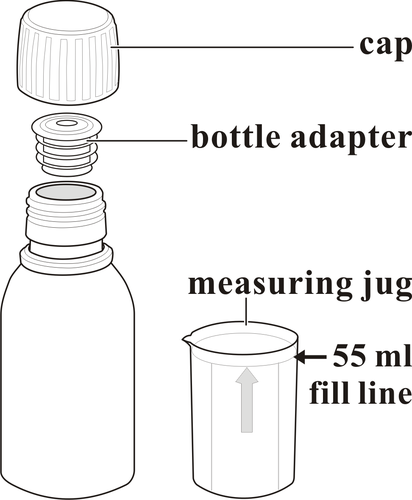
Cup – cap
Bottle adapter – bottle adapter
Measuring jug – graduated measuring cup
Fill line – filling line
- Tap the bottle to loosen the powderGently tap the closed bottle several times to loosen the powder.
- Using the measuring cup measure 55 mL of water:The measuring cup provided in the pack has a mark showing the exact amount. Fill it with water up to the indicated level.
- Add the water, close and shakePour all the water from the measuring cup into the bottle onto the powder. Always use 55 mL of water, whatever the dose you need. Put the cap on the bottle. Shake the bottle well for 15 seconds.
- Press on the adapterOpen the bottle and press the adapter into the neck of the bottle.
- Close the bottle againScrew the cap firmly onto the bottle, now including the adapter. This will ensure that the adapter fits into the bottle in the correct position.
You now have a ready-to-use bottle of Tamiflu oral suspension from which to measure a dose. You do not need to
repeat the preparation unless you start a new bottle.
Stage 2: Measure and administer the correct dose
You will need
- A prepared bottle of Tamiflu oral suspension
- Depending on the dose needed, you will need the 3 mL oral dosing syringe(orange plunger, 0.1 mL graduation) or the 10 mL oral dosing syringe(transparent plunger, 0.5 mL graduation) supplied in the pack.
- For doses between 1.0 mL and 3.0 mL, use the 3 mL oral dosing syringe. For doses greater than 3 mL, use the 10 mL oral dosing syringe. Always use the oral dosing syringe supplied with the medicine to measure the correct dose.
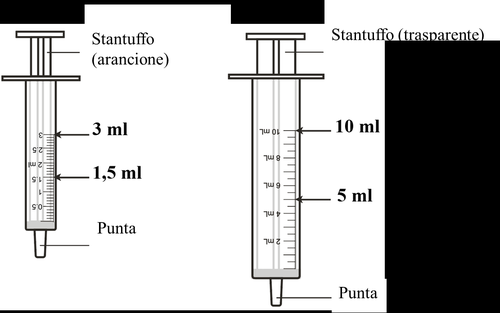
- Shake the bottleMake sure the cap is on tightly, and then shake the bottle of Tamiflu oral suspension. Shake well before use.
- Prepare the oral dosing syringeDepending on the dose needed, use the 3 mL oral dosing syringe (orange plunger) or the 10 mL oral dosing syringe (transparent plunger) supplied in the pack. Pushthe plunger all the way to the tip of the dispenser.
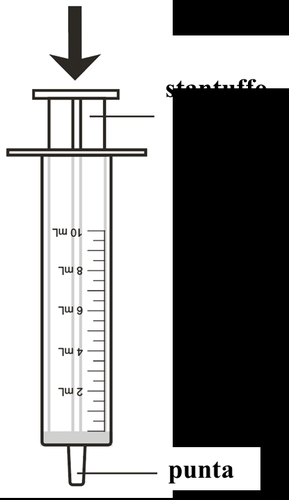
- Fill the dosing syringe with the correct doseUnscrew the cap from the bottle. Insert the tip of the dosing syringe into the bottle adapter. Turn everything upside down(bottle and dosing syringe together).
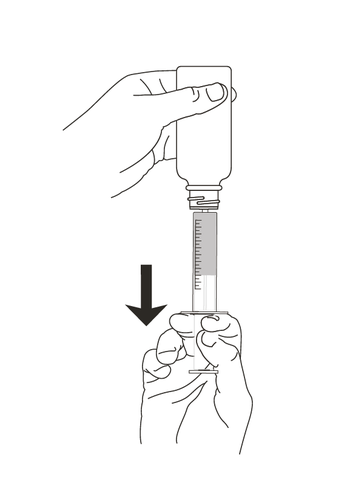
Slowly draw the medicine up with the plunger of the dosing syringe.
Stop at the mark indicating the dose you need.
Turn everything upright.
Remove the dosing syringe from the bottle.
- Administer the medicine into the mouthAdminister the suspension directly into the mouth by pushing the plunger of the dispenser (syringe). Make sure the medicine is swallowed. You can drink or eat something after taking the medicine.
- Close the bottle and store it safelyPut the cap on the bottle. Keep the medicine out of the sight and reach of children.
Store the medicine at a temperature below 25°C for a maximum of 10 days. See
section 5 How to store Tamiflu.
Disassemble the dosing syringe into two parts immediately after administration, and rinse both
under running water.

Виникли питання під час прийому ліків?
Обговоріть свої симптоми та лікування з лікарем онлайн.
- Країна реєстрації
- Лікарська формаHard capsule, 75 MG
- Код АТХJ05AH02
- Діюча речовина
- Потрібен рецептТак
- Виробник
- Ця інформація надана лише для ознайомлення і не є медичною порадою. Рішення щодо лікування завжди приймає лікар.
- Альтернативи до TAMIFLUЛікарська форма: Hard capsule, 30 MGДіюча речовина: озельтамивирВиробник: ACTAVIS GROUP PTC EHFПотрібен рецептЛікарська форма: Infusion solution, 10 MG/MLДіюча речовина: ЗанамивирВиробник: GLAXOSMITHKLINE TRADING SERVICES LIMITEDПотрібен рецептЛікарська форма: Inhalation powder, 5 MG/ALVEOLOДіюча речовина: ЗанамивирВиробник: GLAXOSMITHKLINE S.P.A.Потрібен рецепт
Аналоги TAMIFLU в інших країнах
Препарати з тією самою діючою речовиною, доступні в інших країнах.
Аналог TAMIFLU у Іспанія
Аналог TAMIFLU у Польща
Аналог TAMIFLU у Україна
Лікарі онлайн щодо TAMIFLU
Застосування, безпека та можливість призначення рецепта — за результатами медичної оцінки.









Отримайте рецепт на TAMIFLU онлайн
Заповніть форму за 2 хвилини
Розкажіть про симптоми, історію хвороби та потрібний препарат.
Оберіть лікаря або ми призначимо
Оберіть спеціаліста або ми підберемо найближчого доступного лікаря.
Лікар розглядає ваш випадок
Зазвичай протягом 30 хвилин. Може ставити уточнювальні запитання в чаті.
Отримайте в будь-якій аптеці
Електронний рецепт надсилається на вашу пошту — дійсний по всій Польщі.
Часті запитання
TAMIFLU потребує рецепта в Італія. Ви можете обговорити з лікарем онлайн, чи підходить цей лікарський засіб для вашої ситуації.
Діюча речовина у TAMIFLU — озельтамивир. Це допомагає визначити препарати з тим самим складом, але під іншими торговими назвами.
TAMIFLU виробляється компанією ROCHE REGISTRATION GMBH. Назва бренду та упаковка можуть відрізнятися залежно від дистрибʼютора.
Лікарі, зокрема Сімейні лікарі, Психіатри, Дерматологи, Кардіологи, Ендокринологи, Гастроентерологи, Пульмонологи, Нефрологи, Ревматологи, Гематологи, Інфекціоністи, Алергологи, Геріатри, Педіатри, Онкологи, можуть оцінити доцільність застосування TAMIFLU з урахуванням вашого стану та місцевих правил. Ви можете записатися на онлайн-консультацію, щоб обговорити симптоми та можливі подальші кроки.
Польща має добре розвинену систему охорони здоров'я у великих містах, таких як Варшава, Краків, Вроцлав і Гданськ. Аптеки широко доступні та працюють відповідно до чинного законодавства, забезпечуючи доступ до рецептурних препаратів.
Ви можете придбати TAMIFLU у Варшаві, Кракові, Вроцлаві або Гданську в будь-якій аптеці за наявності дійсного рецепта.
Щоб отримати рецепт, ви можете скористатися Oladoctor:
Інші препарати з тією самою діючою речовиною (озельтамивир) включають EBILFUMIN, DEKTOVA, RELENTSA. Вони можуть відрізнятися торговою назвою або формою випуску, але містять той самий терапевтичний компонент. Перед зміною або початком прийому нового препарату варто проконсультуватися з лікарем.
