



SUPRACEF 100 mg /5 Ml Granules

Запит на рецепт онлайн
Лікар розгляне ваш випадок і визначить, чи є рецепт медично доцільним.

Поговоріть з лікарем про ці ліки
Обговоріть симптоми та можливі подальші кроки під час короткої онлайн-консультації.



Інструкція із застосування SUPRAKEF
Зміст інструкції
- SUPRACEF 100mg/5ml granules for oral suspension
- SUPRACEF 400mg coated tablets, 400mg dispersible tablets
SUPRACEF 100mg/5ml granules for oral suspension
Cefixime
Read this leaflet carefully before using this medicine as it contains important information for you.
- Keep this leaflet. You may need to read it again.
- If you have any questions, ask your doctor or pharmacist.
- This medicine has been prescribed for you only. Do not pass it on to others, even if their symptoms are the same as yours, as it could be harmful.
- If you get any side effects, even those not listed in this leaflet, tell your doctor or pharmacist. See section 4.
Contents of this leaflet:
- 1. What SUPRACEF is and what it is used for
- 2. What you need to know before you use SUPRACEF
- 3. How to use SUPRACEF
- 4. Possible side effects
- 5. How to store SUPRACEF
- 6. Contents of the pack and other information
1. What is SUPRACEF and what is it used for
SUPRACEF contains cefixime, an antibiotic used to treat infections caused by bacteria.
SUPRACEF is indicated in children over 6 months of age ,in the treatment of:
- throat infections (pharyngitis, tonsillitis);
- ear infections (otitis media);
- infections of the bronchi and lungs (bronchitis, pneumonia);
- kidney and urinary tract infections.
2. What you need to know before you use SUPRACEF
Do not use SUPRACEF
- if you are allergic to cefixime, or to any of the other ingredients of this medicine (listed in section 6)
- if you are allergic to penicillins and cephalosporins (antibiotics).
Warnings and precautions
Talk to your doctor or pharmacist before using SUPRACEF.
In particular, tell your doctor if:
- you have previously experienced allergic reactions to cephalosporins, penicillins or other medicines;
- during treatment with SUPRACEF, any allergic-type reaction occurs, you should also stop treatment;
- you have kidney problems, even if not severe (severe renal insufficiency), or are undergoing a blood purification procedure (hemodialysis or peritoneal dialysis)
- you suffer from or have suffered from stomach or intestinal diseases, especially colitis;
- you experience severe skin reactions; in these cases you should also stop treatment;
- you have previously had a decrease in red blood cells due to damage to blood cells (hemolytic anemia). Prolonged use of SUPRACEF may cause the development of germs that are not susceptible and in particular an alteration of the normal intestinal flora.
Other medicines and SUPRACEF
Tell your doctor or pharmacist if you are taking, have recently taken or might take
any other medicine.
In particular, tell your doctor if you are taking:
- anticoagulants (medicines that delay blood clotting) such as warfarin;
- medicines that reduce intestinal motility;
- nifedipine, (a medicine used to lower blood pressure);
- oral contraceptives (birth control pill). Laboratory tests and SUPRACEFSUPRACEF may alter the results of some blood and urine tests.
Fertility, pregnancy and breastfeeding
Pregnancy
During the first three months of pregnancy, it is recommended to avoid the administration of SUPRACEF.
Breastfeeding
No data are available on the passage of SUPRACEF into breast milk.
Driving and operating machinery
This medicine does not affect the ability to drive vehicles or operate machinery.
SUPRACEF contains sucrose
If your doctor has diagnosed you with intolerance to certain sugars, contact him before using this
medicine.
SUPRACEF containsless than 1 mmol (23 mg) of sodium per dose, i.e. essentially ‘sodium-free’.
3. How to use SUPRACEF
Use this medicine following the instructions of your doctor or pharmacist exactly. If you have
any doubts, consult your doctor or pharmacist.
The recommended dose in children over 6 months of age is 8 mg/Kg/day once a day.
The SUPRACEF package contains a measuring cup (for older children) and a syringe
(for younger children) to allow for correct dosing of the medicine. The following
scheme facilitates the calculation of the dose to be administered according to the child's body weight.
Safety and efficacy have not been established in children under 6 months of age.
Method of administration:
SUPRACEF can be taken with or without food.
Duration of treatment
Most infections can be treated in 7 days of therapy. However, in more
severe cases, SUPRACEF can also be used for 14 consecutive days.
Instructions for opening the bottle
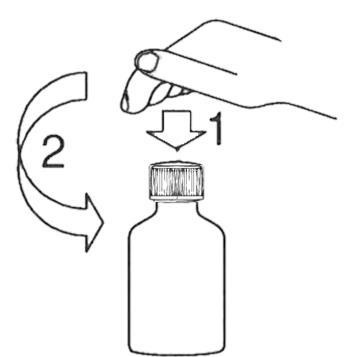
- Open the bottle by pressing firmly on the cap and rotating it counterclockwise at the same time.
| Weight (kg) | Daily dose (mg) | Daily dose (ml) |
| 10 | 80 | 4 |
| 12,5 | 100 | 5 |
| 15 | 120 | 6 |
| 17,5 | 140 | 7 |
| 20 | 160 | 8 |
| 22,5 | 180 | 9 |
| 25 | 200 | 10 |
| 27,5 | 220 | 11 |
| 30 | 240 | 12 |
Instructions for preparing the suspension
- Before adding water to reconstitute the granules, turn the bottle upside down and shake it. This operation facilitates reconstitution in case the powder has compacted at the bottom of the bottle.
- Completely fill the measuring cup with water.
- Add all the water inside the bottle, close the cap tightly, turn upside down and shake for a few seconds.
- Let it rest for 1-2 minutes.
- Add water up to the level indicated by the arrow.
- Shake the suspension well until the granules are completely dispersed.
- Let it rest for 1-2 minutes.
- If the suspension level is below the indicated arrow, add more water to bring the level up to the indicated arrow.
- Shake vigorously again until a homogeneous suspension is obtained.
- The suspension thus prepared can be stored at room temperature for up to 14 days.
- Shake vigorously before each use.
- Patients with severe kidney problems:In case of creatinine clearance values < 20 ml/min, in ambulatory peritoneal dialysis or in hemodialysis), the doctor will adjust the dose.
If you use more SUPRACEF than you should
In case of accidental use of high doses of the medicine, contact your doctor or go to
the nearest hospital.
If you forget to use SUPRACEF
Do not use a double dose to make up for the missed dose.
If you stop using SUPRACEF
Do not stop using SUPRACEF without consulting your doctor, even if you feel better. It is
important to complete the entire treatment prescribed by your doctor.
If you have any doubts about the use of this medicine, consult your doctor or pharmacist.
4. Possible side effects
Like all medicines, this medicine can cause side effects, although not everyone will experience them.
If the following side effects occur during treatment with SUPRACEF, contact
immediatelyyour doctor who will INTERRUPTthe treatment and institute appropriate therapies and/or
precautionary measures:
- severe allergic reactions (reaction similar to serum sickness and anaphylaxis), swelling of the face (facial edema), swelling of the skin or mucous membranes (angioedema), difficulty breathing (dyspnea);
- severe skin and mucous membrane reactions, including blister formation (erythema multiforme, Stevens-Johnson syndrome, toxic epidermal necrolysis, drug reaction with eosinophilia and systemic symptoms),
- severe antibiotic-associated diarrhea (pseudomembranous colitis). The following side effects may also occur during treatment:
- bacterial resistance,
- inflammation of the tongue (glossitis)
- nausea
- vomiting
- heartburn (gastric pyrosis)
- abdominal pain
- diarrhea
- indigestion (dyspepsia)
- passage of intestinal gas (flatulence)
- joint pain (arthralgia)
- drug-induced fever
- alteration of some blood tests (transient increase in transaminases, alkaline phosphatase, total bilirubin, blood urea nitrogen and creatinine)
- reduction in the number of white blood cells (leukopenia, neutropenia, granulocytopenia),
- reduction in the number of platelets (thrombocytopenia),
- increase in the number of white blood cells (eosinophilia, agranulocytosis),
- impaired blood coagulation,
- decrease in the number of red blood cells due to damage to blood cells (hemolytic anemia)
- impaired kidney function (acute renal failure and tubulointerstitial nephritis)
- yellowing of the skin and whites of the eyes (jaundice)
- inflammation of the liver (hepatitis)
- urticaria
- skin rash (rash)
- itching
- genital itching
- dizziness
- headache
- fever
- loss of appetite (anorexia)
- vaginal infection caused by a fungus (Candida vaginitis). Reporting of side effectsIf you experience any side effects, including those not listed in this leaflet, tell your doctor. You can also report side effects directly through the national reporting system at https://www.aifa.gov.it/content/segnalazioni-reazioni-avverse By reporting side effects you can help provide more information on the safety of this medicine.
5. How to store SUPRACEF
Keep this medicine out of the sight and reach of children.
Store at a temperature not exceeding 30°C.
The suspension after reconstitution must be stored at a temperature not exceeding 25°C. The
suspension must be used within 14 days. Do not store in a refrigerator.
Do not use this medicine after the expiry date which is stated on the pack after Expiry. The
expiry date refers to the last day of that month.
Do not dispose of any medicine in wastewater or household waste. Ask your pharmacist how to
dispose of medicines you no longer use. This will help protect the environment.
6. Contents of the pack and other information
What SUPRACEF contains
- The active ingredient is: cefixime (20 mg/ml)
- The other ingredients are: sucrose(see paragraph “SUPRACEF contains sucrose”), xanthan gum, sodium benzoate, strawberry flavour FA 15757 and strawberry flavour PV4284.
Description of the appearance of SUPRACEF and contents of the pack
Granules for oral suspension 100 mg/5ml, in a 100 ml glass bottle. The bottle is equipped with
a child-resistant closure.
The pack contains a measuring spoon and a dosing syringe.
MARKETING AUTHORISATION HOLDER
LUSOFARMACO
Istituto Luso Farmaco d’Italia S.p.A.
Milanofiori – Strada 6 – Edificio L – Rozzano (MI)
MANUFACTURER
- A. Menarini Manufacturing Logistics and Services s.r.l., manufacturing plant via di Scandicci 37, Florence. ACS Dobfar S.p.A., manufacturing plant Via Laurentina Km 24,730 – Pomezia (Rome)
SUPRACEF 400mg coated tablets, 400mg dispersible tablets
Cefixime
Read this leaflet carefully before taking this medicine, as it contains important information for you.
- Keep this leaflet. You may need to read it again.
- If you have any questions, ask your doctor or pharmacist.
- This medicine has been prescribed for you only. Do not pass it on to others, even if their symptoms are the same as yours, as it could be harmful.
- If you experience any side effects, including those not listed in this leaflet, tell your doctor or pharmacist. See section 4.
Contents of this leaflet:
- 1. What SUPRACEF is and what it is used for
- 2. What you need to know before you take SUPRACEF
- 3. How to take SUPRACEF
- 4. Possible side effects
- 5. How to store SUPRACEF
- 6. Contents of the pack and other information
1. What is SUPRACEF and what is it used for
SUPRACEF contains cefixime, an antibiotic used to treat infections caused by bacteria.
SUPRACEF is indicated in adults for the treatment of:
- infections of the throat (pharyngitis, tonsillitis);
- ear infections (otitis media);
- infections of the bronchi and lungs (bronchitis, pneumonia);
- infections of the kidneys and urinary tract.
2. What you need to know before you take SUPRACEF
Do not take SUPRACEF
- if you are allergic to cefixime, or to any of the other ingredients of this medicine (listed in section 6);
- if you are allergic to penicillins and cephalosporins (antibiotics).
Warnings and precautions
Talk to your doctor or pharmacist before taking SUPRACEF.
In particular, tell your doctor if:
- you have previously experienced allergic reactions to cephalosporins, penicillins or other medicines;
- during treatment with SUPRACEF, any allergic-type reaction occurs, you should also stop treatment;
- you have kidney problems, not only if severe (severe renal insufficiency), or are undergoing a blood purification procedure (hemodialysis or peritoneal dialysis);
- you suffer from or have suffered from stomach or intestinal diseases, especially colitis;
- you experience severe skin reactions; in these cases you should also stop treatment;
- you have previously had a decrease in red blood cells due to damage to blood cells (hemolytic anemia). Prolonged use of SUPRACEF may cause the development of germs that are not susceptible and in particular an alteration of the normal intestinal flora.
Other medicines and SUPRACEF
Tell your doctor or pharmacist if you are taking, have recently taken or might take
any other medicine.
In particular, tell your doctor if you are taking:
- anticoagulants (medicines that delay blood clotting) such as warfarin;
- medicines that reduce intestinal motility;
- nifedipine, - a medicine used to lower blood pressure;
- oral contraceptives (birth control pill). Laboratory tests and SUPRACEFSUPRACEF may alter the results of some blood and urine tests.
Fertility, pregnancy and breastfeeding
If you are pregnant, suspect you are pregnant, are planning to become pregnant or are breastfeeding
with breast milk, ask your doctor or pharmacist for advice before taking this medicine.
The doctor will prescribe SUPRACEF only if absolutely necessary.
Pregnancy
During the first three months of pregnancy, it is recommended to avoid the administration of SUPRACEF.
Breastfeeding
There is no data on the passage of SUPRACEF into breast milk.
Driving and using machines
This medicine does not affect the ability to drive vehicles or operate machinery.
SUPRACEF dispersible tablets contains the colourant sunset yellow FCF (E110).
It may cause allergic reactions.
SUPRACEF 400 mg coated tablets contains less than 1 mmol (23 mg) of sodium per dose, which is
essentially ‘sodium-free’.
3. How to take SUPRACEF
Take this medicine following exactly the instructions of your doctor or pharmacist. If you have any doubts, ask your doctor or pharmacist.
The recommended dose in adults is: one tablet (400 mg) once a day.
The score line on the dispersible tablet is to aid in breaking it to facilitate dispersion of the tablet and not to divide it into equal doses.
Method of administration:
SUPRACEF can be taken either near or far from meals.
The coated tablet of SUPRACEF must be swallowed whole.
The dispersible tablet of SUPRACEF should be dissolved in a glass of water. Mix well until completely dissolved and drink immediately.
Duration of treatment
Most infections can be treated in 7 days of therapy. However, in more severe cases, SUPRACEF can also be used for 14 consecutive days.
Patients with severe kidney problems:
If creatinine clearance values are < 20 ml/min, in ambulatory peritoneal dialysis or in hemodialysis, the recommended dosage is 200 mg once a day.
If you take more SUPRACEF than you should
If you accidentally take a high amount of medicine, contact your doctor or go to the nearest hospital.
If you forget to take SUPRACEF
Do not take a double dose to make up for a missed dose.
If you stop taking SUPRACEF
Do not stop taking the tablets without consulting your doctor, even if you feel better. It is important to complete the entire treatment that your doctor has prescribed.
If you have any further questions on the use of this medicine, ask your doctor or pharmacist.
4. Possible side effects
Like all medicines, this medicine can cause side effects, although not everyone will experience them.
If you experience the following side effects during treatment with SUPRACEF, contact
immediatelyyour doctor who will STOPthe treatment and initiate appropriate therapies and/or
precautionary measures:
- severe allergic reactions (reaction similar to serum sickness and anaphylaxis), swelling of the face (facial edema), swelling of the skin or mucous membranes (angioedema), difficulty breathing (dyspnea);
- severe skin and mucous membrane reactions, including blister formation (erythema multiforme, Stevens-Johnson syndrome, toxic epidermal necrolysis, drug reaction with eosinophilia and systemic symptoms),
- severe diarrhea caused by antibiotics (pseudomembranous colitis). The following side effects may also occur during treatment:
- bacterial resistance,
- inflammation of the tongue (glossitis)
- nausea
- vomiting
- heartburn (gastric pyrosis)
- abdominal pain
- diarrhea
- indigestion (dyspepsia)
- emission of intestinal gases (flatulence)
- joint pain (arthralgia)
- drug-induced fever
- alteration of some blood tests (transient increase in transaminases, alkaline phosphatase, total bilirubin, blood urea nitrogen and creatinine)
- reduction in the number of white blood cells (leukopenia, neutropenia, granulocytopenia),
- reduction in the number of platelets (thrombocytopenia),
- increase in the number of white blood cells (eosinophilia, agranulocytosis),
- impaired blood coagulation,
- decrease in the number of red blood cells due to damage to blood cells (hemolytic anemia)
- impaired kidney function (acute renal failure and tubulointerstitial nephritis)
- yellowing of the skin and whites of the eyes (jaundice)
- inflammation of the liver (hepatitis)
- urticaria
- skin rash
- itching
- genital itching
- dizziness
- headache
- fever
- loss of appetite (anorexia)
- vaginal infection caused by a fungus (Candida vaginitis) Reporting of side effects
If you experience any side effects, including those not listed in this leaflet, please inform
your doctor. You can also report side effects directly through the national reporting system at the website
https://www.aifa.gov.it/content/segnalazioni-reazioni-avverse
By reporting side effects you can help provide more information on the safety of
this medicine.
5. How to store SUPRACEF
Keep this medicine out of sight and reach of children.
Store at a temperature not exceeding 30°C.
Do not take this medicine after the expiry date which is stated on the pack after Expiry.
The expiry date refers to the last day of that month.
Do not dispose of any medicine in waste water or household waste. Ask your pharmacist how
to dispose of medicines you no longer use. This will help protect the environment.
6. Contents of the pack and other information
What SUPRACEF contains
SUPRACEF 400 mg
- The active ingredient is: cefixime (400 mg per tablet)
- The other ingredients are: microcrystalline cellulose, pregelatinized starch, dibasic calcium phosphate dihydrate, magnesium stearate, hypromellose, sodium lauryl sulfate, titanium dioxide (E171), liquid paraffin. SUPRACEF 400 mg
- The active ingredient is: cefixime (400 mg per tablet)
- The other ingredients are: microcrystalline cellulose, hydroxypropylcellulose, anhydrous colloidal silica, povidone, strawberry aroma FA 15757, strawberry aroma PV 4284, magnesium stearate, calcium saccharin, sunset yellow FCF (E110) (see paragraph “SUPRACEF dispersible tablets contains sunset yellow FCF (E110)”)
Description of the appearance of SUPRACEF and contents of the pack
SUPRACEF 400 mg coated tablets
Coated tablets in blisters of 5 tablets of 400 mg
SUPRACEF 400 mg dispersible tablets
Dispersible tablets in blisters of 5 or 7 tablets of 400 mg
Not all pack sizes may be marketed.
MARKETING AUTHORISATION HOLDER
LUSOFARMACO
Istituto Luso Farmaco d’Italia S.p.A.
Milanofiori – Strada 6 – Edificio L – Rozzano (MI)
MANUFACTURER
- A. Menarini Manufacturing Logistics and Services s.r.l., production site via di Scandicci 37, Florence. ACS Dobfar S.p.A., production site Via Laurentina Km 24,730 – Pomezia (Rome)

Не впевнені, чи підходить вам цей лікарський засіб?
Обговоріть симптоми та можливі варіанти лікування з лікарем онлайн.

Виникли питання під час прийому ліків?
Обговоріть свої симптоми та лікування з лікарем онлайн.

- Країна реєстрації
- Лікарська формаGranules, 100 MG/5 ML
- Код АТХJ01DD08
- Діюча речовина
- Потрібен рецептНі
- Виробник
- Ця інформація надана лише для ознайомлення і не є медичною порадою. Рішення щодо лікування завжди приймає лікар.
- Альтернативи до SUPRAKEFЛікарська форма: Film-coated tablet, 400 MGДіюча речовина: цефиксимВиробник: AUROBINDO PHARMA (ITALIA) S.R.L.Потрібен рецептЛікарська форма: Film-coated tablet, 400 MGДіюча речовина: цефиксимВиробник: DOC GENERICI SRLПотрібен рецептЛікарська форма: Film-coated tablet, 400 MGДіюча речовина: цефиксимВиробник: MYLAN S.P.A.Потрібен рецепт
Аналоги SUPRAKEF в інших країнах
Препарати з тією самою діючою речовиною, доступні в інших країнах.
Аналог SUPRAKEF у Іспанія
Аналог SUPRAKEF у Польща
Аналог SUPRAKEF у Україна
Лікарі онлайн щодо SUPRAKEF
Застосування, безпека та можливість призначення рецепта — за результатами медичної оцінки.









Отримайте рецепт на SUPRAKEF онлайн
Заповніть форму за 2 хвилини
Розкажіть про симптоми, історію хвороби та потрібний препарат.
Оберіть лікаря або ми призначимо
Оберіть спеціаліста або ми підберемо найближчого доступного лікаря.
Лікар розглядає ваш випадок
Зазвичай протягом 30 хвилин. Може ставити уточнювальні запитання в чаті.
Отримайте в будь-якій аптеці
Електронний рецепт надсилається на вашу пошту — дійсний по всій Польщі.
Часті запитання
SUPRAKEF не потребує рецепта в Італія. Ви можете обговорити з лікарем онлайн, чи підходить цей лікарський засіб для вашої ситуації.
Діюча речовина у SUPRAKEF — цефиксим. Це допомагає визначити препарати з тим самим складом, але під іншими торговими назвами.
SUPRAKEF виробляється компанією ISTITUTO LUSO FARMACO D'ITALIA S.P.A.. Назва бренду та упаковка можуть відрізнятися залежно від дистрибʼютора.
Лікарі, зокрема Сімейні лікарі, Психіатри, Дерматологи, Кардіологи, Ендокринологи, Гастроентерологи, Пульмонологи, Нефрологи, Ревматологи, Гематологи, Інфекціоністи, Алергологи, Геріатри, Педіатри, Онкологи, можуть оцінити доцільність застосування SUPRAKEF з урахуванням вашого стану та місцевих правил. Ви можете записатися на онлайн-консультацію, щоб обговорити симптоми та можливі подальші кроки.
Польща має добре розвинену систему охорони здоров'я у великих містах, таких як Варшава, Краків, Вроцлав і Гданськ. Аптеки широко доступні та працюють відповідно до чинного законодавства, забезпечуючи доступ до рецептурних препаратів.
Ви можете придбати SUPRAKEF у Варшаві, Кракові, Вроцлаві або Гданську в будь-якій аптеці за наявності дійсного рецепта.
Щоб отримати рецепт, ви можете скористатися Oladoctor:
Інші препарати з тією самою діючою речовиною (цефиксим) включають KEFIXIMA AUROBINDO, KEFIXIMA DOK JENERIKI, KEFIXIMA MYLAN. Вони можуть відрізнятися торговою назвою або формою випуску, але містять той самий терапевтичний компонент. Перед зміною або початком прийому нового препарату варто проконсультуватися з лікарем.
