



PREGABALIN 25 mg Hard Capsules

Запит на рецепт онлайн
Лікар розгляне ваш випадок і визначить, чи є рецепт медично доцільним.

Поговоріть з лікарем про ці ліки
Обговоріть симптоми та можливі подальші кроки під час короткої онлайн-консультації.



Інструкція із застосування PREGABALIN AKKORD
Зміст інструкції
Pregabalin Accord 25 mg hard capsules, 50 mg hard capsules, 75 mg hard capsules, 100 mg hard capsules, 150 mg hard capsules, 200 mg hard capsules, 225 mg hard capsules
Pregabalin Accord300 mg hard capsules
pregabalin
Read this leaflet carefully before taking this medicine because it contains
important information for you.
- Keep this leaflet. You may need to read it again.
- If you have any questions, ask your doctor or pharmacist.
- This medicine has been prescribed for you only. Do not pass it on to others, even if their symptoms are the same as yours, as it could be harmful.
- If you get any side effects, even those not listed in this leaflet, tell your doctor or pharmacist. See section 4.
Contents of this leaflet
- 1. What Pregabalin Accord is and what it is used for
- 2. What you need to know before you take Pregabalin Accord
- 3. How to take Pregabalin Accord
- 4. Possible side effects
- 5. How to store Pregabalin Accord
- 6. Contents of the pack and other information
1. What is Pregabalin Accord and what it is used for
Pregabalin Accord belongs to a group of medicines used to treat epilepsy, neuropathic pain and Generalized Anxiety Disorder (GAD) in adults.
Peripheral and central neuropathic pain
This medicine is used to treat chronic pain caused by damage to the nervous system. Several diseases can cause peripheral neuropathic pain, such as diabetes or herpes zoster. Pain sensations can be described as heat, burning, throbbing, pulsating, stabbing, sharp, cramping, suffering, tingling, numbness ,
stinging pains. Peripheral and central neuropathic pain may also be associated with mood changes, sleep disturbances and fatigue (tiredness) and can have an impact on physical and social activity and on overall quality of life.
Epilepsy
This medicine is used to treat certain forms of epilepsy in adults (partial seizures with or without secondary generalization). Your doctor will prescribe Pregabalin Accord to help you in the treatment of epilepsy when the treatment you are already undergoing does not control the situation.
You will need to take Pregabalin Accord in addition to the treatment you are already undergoing. Pregabalin Accord
is not used alone, but must always be associated with other antiepileptic treatments.
Generalized Anxiety Disorder
This medicine is used for the treatment of Generalized Anxiety Disorder (GAD). The symptoms of Generalized Anxiety Disorder are characterized by excessive and prolonged anxiety and worry that are difficult to control. Generalized Anxiety Disorder can also cause
restlessness or a feeling of tension or being on edge, easy fatigue
(tiredness), difficulty concentrating or memory lapses, irritability, muscle tension or
sleep disturbances. These conditions are different from the stress and tensions of everyday life.
2. What you need to know before taking Pregabalin Accord
Do not take Pregabalin Accord
if you are allergic to pregabalin or any of the other ingredients of this medicine (listed in
section 6).
Warnings and precautions
Talk to your doctor or pharmacist before taking Pregabalin Accord.
- In some patients being treated with this medicine, symptoms indicative of allergic reactions have been reported. These symptoms include swelling of the face, lips, tongue and throat, as well as a widespread skin rash. If you experience any of these reactions, contact your doctor immediately.
- This medicine has been associated with dizziness and drowsiness which may increase the risk of accidental injuries (falls) in the elderly. Therefore, you should be careful until you are familiar with the effects that the medicine may have.
- This medicine can cause blurred or loss of vision or other changes in vision, many of which are transient. If you experience any changes in vision, contact your doctor immediately.
- In some patients with diabetes who gain weight during treatment with pregabalin, it may be necessary to adjust the medicines for diabetes.
- Some undesirable effects, such as drowsiness, may be more common because patients with spinal cord injury may be treated with other medicines to treat, for example, pain or spasticity, which have undesirable effects similar to those of pregabalin and the severity of these effects may increase when these medicines are taken together.
- There have been reports of heart failure in some patients treated with this medicine; these patients were mostly elderly with cardiovascular disease. If you have a history of cardiovascular disease before starting treatment with thismedicine you must inform your doctor.
- There have been reports of kidney failure in some patients treated with this medicine. If you notice a decrease in urination during treatment with this medicine, inform your doctor because stopping the use of this medicine this condition may improve.
- Some patients taking antiepileptic medicines such as Pregabalin Accord have experienced thoughts of self-harm or suicide or have exhibited suicidal behaviour. If at any time you should have such thoughts, contact your doctor immediately.
- When Pregabalin Accord is used together with other medicines that can cause constipation (such as some types of pain medicines) gastrointestinal problems (e.g. constipation, blocked or paralyzed bowel) may occur. Tell your doctor if you experience constipation, especially if you are prone to this problem.
- Before taking this medicine, tell your doctor if you have a history of alcohol, prescription drug or illegal substance abuse, as this may involve a greater risk of dependence on Pregabalin Accord.
- Cases of seizures have been reported when taking this medicine or immediately after stopping it. If you experience seizures, contact your doctor immediately.
- Cases of reduced brain function (encephalopathy) have occurred in some patients taking this medicine when they have other conditions. Tell your doctor if you have a history of other serious medical conditions, including liver or kidney disease.
- Cases of difficulty breathing have occurred. If you suffer from nervous system diseases, respiratory diseases, kidney impairment or if you are over 65 years of age, your doctor may prescribe a different dosing regimen. Tell your doctor if you have difficulty breathing or shallow breathing.
Severe skin rashes, including Stevens-Johnson syndrome and toxic epidermal necrolysis have
been reported in association with treatment with pregabalin. Stop using pregabalin and
contact your doctor immediately if you experience any of the symptoms related to these severe
skin reactions, described in section 4.
Dependence
Some people may become dependent on Pregabalin Accord (i.e. feel the need to
continue taking the medicine). They may experience withdrawal effects when they stop
using Pregabalin Accord (see section 3, "How to take Pregabalin Accord" and "If you stop
taking Pregabalin Accord"). If you are concerned about the possibility of developing a dependence on
Pregabalin Accord, talk to your doctor.
If you notice any of the following signs while taking Pregabalin Accord, you may have
developed a dependence on the medicine:
- You feel the need to take the medicine for longer than recommended by your doctor
- You feel the need to take a higher dose than recommended
- You are using the medicine for reasons other than those for which it was prescribed
- You have made repeated and unsuccessful attempts to stop or control the use of the medicine
- When you stop taking the medicine, you do not feel well and feel better when you start taking it again. If you notice any of these signs, talk to your doctor to discuss the best treatment plan for you, including when it is appropriate to stop taking it and how to do so safely.
Children and adolescents
The safety and efficacy of pregabalin in children and adolescents (under 18 years of age) have not
been established and therefore pregabalin should not be used in this age group.
Other medicines and Pregabalin Accord
Tell your doctor or pharmacist if you are taking, have recently taken or might take
any other medicine.
Pregabalin Accord and other medicines can influence each other (interaction). When
Pregabalin Accord is taken together with other medicines that have sedative effects (including
opioids) Pregabalin Accord can enhance these effects and may cause respiratory failure.
The intensity of dizziness, drowsiness and reduced concentration may increase if
Pregabalin Accord is taken together with other medicines containing:
Oxycodone – (used as a painkiller)
Lorazepam – (used for the treatment of anxiety)
Alcohol
This medicine can be taken at the same time as oral contraceptives.
Pregabalin Accord with food, drinks and alcohol
This medicine can be taken with or without food.
It is advisable not to drink alcohol during treatment with Pregabalin Accord.
Pregnancy and breastfeeding
This medicine should not be taken during pregnancy or breastfeeding, unless your doctor has told you
otherwise. The use of pregabalin during the first 3 months
of pregnancy can cause birth defects in the unborn child that require medical care. In one
study that examined data from women in Nordic countries who had taken pregabalin during the first 3
months of pregnancy, 6 children out of 100 presented with such birth defects, compared to 4
children out of 100 born to women not treated with pregabalin in the study. Facial anomalies (oro-facial
clefts), eyes, nervous system (including the brain), kidneys and
genitals have been reported.
Women of childbearing potential should use an effective method of contraception. If you are
pregnant, suspect you are pregnant, or are planning to become pregnant, or are breastfeeding, ask
your doctor or pharmacist for advice before taking this medicine.
Driving and using machines
This medicine can cause dizziness, drowsiness and reduced concentration. You should not
drive, operate complex machinery or engage in potentially dangerous activities until
you have ascertained whether this medicine alters your ability to perform these activities.
Pregabalin Accord contains sodium
This medicine contains less than 1mmol of sodium per hard capsule, which means it is practically
sodium-free.
3. How to take Pregabalin Accord
Take this medicine following the instructions of your doctor exactly. If you have any doubts, consult your
doctor or pharmacist. Do not take a quantity of medicine higher than that prescribed.
The doctor will establish the appropriate dose for you.
This medicine is for oral use only.
Peripheral and central neuropathic pain, epilepsy or Generalised Anxiety Disorder:
- Take the number of capsules prescribed by your doctor.
- The appropriate dose for you and for your condition generally varies between 150 mg and 600 mg per day.
- Your doctor will tell you to take this medicine two or three times a day. If you take the medicine twice a day, take Pregabalin Accord once in the morning and once in the evening, always at approximately the same time. If you take the medicine three times a day, take Pregabalin
Accord once in the morning, once in the afternoon and once in the evening, always at approximately the same
time.
If you feel that the effect of this medicine is too strong or too weak, talk to your
doctor or pharmacist.
If you are elderly (over 65 years of age), you should take this medicine normally unless
you have kidney problems.
The doctor may prescribe a different dosage and/or a different dose if you have kidney problems.
Swallow the capsule whole with water.
Continue to take this medicine until your doctor tells you to stop the
treatment.
If you take more Pregabalin Accord than you should
Contact your doctor immediately or go immediately to the nearest hospital. Bring with you the
package of capsules of this medicine. You may feel sleepy, confused, agitated and restless,
because you have taken more medicine than you should have. Seizures and loss of consciousness (coma) have also been reported.
It is important to take the capsules of this medicine regularly every day at the same time. If
you forget to take a dose, take it as soon as you remember if you have not
already taken the next dose. In this case, take the next dose as scheduled. Do not
take a double dose to make up for forgotten doses.
If you stop taking Pregabalin Accord
Do not suddenly stop treatment with this medicine. If you wish to stop
taking the medicine, talk to your doctor first. The doctor will tell you how to do it. The interruption of
treatment must occur gradually, over at least one week.
You should know that after stopping treatment with Pregabalin Accord in the short and long term
some undesirable side effects may occur, so-called withdrawal effects. These
include sleep disorders, headache, nausea, anxiety, diarrhoea, flu-like symptoms, seizures,
nervousness, depression, thoughts of self-harm or suicide, pain, sweating and dizziness.
These effects may occur more frequently or severely if you have taken this medicine
for a longer period of time. If you experience withdrawal effects, you should contact your doctor.
If you have any doubts about the use of this medicine, ask your doctor or pharmacist.
4. Possible side effects
Like all medicines, this medicine can cause side effects, although not everyone gets them.
Very common: may affect more than 1 in 10 people:
- Dizziness, drowsiness, headache.
Common: may affect up to 1 in 10 people:
- Increased appetite.
- Feeling of excitement, confusion, disorientation, decreased sexual interest, irritability.
- Difficulty with attention, clumsiness, impaired memory, memory loss, tremor, difficulty speaking, tingling sensation, numbness, sedation, lethargy, insomnia, fatigue feeling strange.
- Blurred vision, double vision.
- Vertigo, balance disorders, falls.
- Dry mouth, constipation, vomiting, flatulence, diarrhea, nausea and abdominal bloating.
- Difficulty with erection.
- Swelling of the body, including hands and feet.
- Feeling of drunkenness, abnormalities in gait.
- Weight gain.
- Muscle cramps, joint pain, back pain, pain in the limbs.
- Sore throat.
Uncommon: may affect up to 1 in 100 people:
- Loss of appetite, weight loss, low blood sugar levels, high blood sugar levels
- Altered self-perception, restlessness, depression, agitation, mood swings, difficulty finding words, hallucinations, altered dreams, panic attacks, apathy, aggression, euphoric mood, mental impairment, difficulty with ideation, increased sexual interest, including inability to reach orgasm, delayed ejaculation
- Changes in vision, abnormalities in eye movement, changes in vision including tunnel vision, flashes of light, jerky movements, reduced reflexes, increased activity, dizziness when standing up, skin sensitivity, loss of taste, burning sensation, tremor during movement, reduced consciousness, loss of consciousness, fainting, increased sensitivity to noises, feeling unwell
- Dry eyes, eye swelling, eye pain, eye weakness, tearing of the eyes, eye irritation
- Irregular heartbeat, increased heart rate, low blood pressure, high blood pressure, changes in heartbeat, heart failure,
- Vasomotor disorders (flushing), hot flashes
- Difficulty breathing, dry nose, nasal congestion,
- Increased saliva production, heartburn, loss of sensation around the mouth
- Sweating, rash, chills, fever Muscle contractions, joint swelling, muscle stiffness, pain including muscle pain, neck pain
- Breast pain
- Difficulty or pain when urinating, incontinence
- Weakness, thirst, feeling of tightness in the chest Changes in blood test results and liver function tests (increased blood creatine phosphokinase, increased alanine aminotransferase, increased aspartate aminotransferase, reduced platelet count, neutropenia, increased creatinine, reduced potassium.
- Hypersensitivity, facial swelling, itching, hives, runny nose, nasal bleeding, cough, snoring,
- Painful menstrual cycles
- Cold hands and feet
Rare: may affect up to 1 in 1,000 people:
- Alteration of smell, sensation of flickering of the visual field, altered depth perception, visual brilliance, loss of vision
- Dilated pupils, strabismus,
- Cold sweats, feeling of constriction in the throat, swelling of the tongue
- Inflammation of the pancreas
- Difficulty swallowing
- Slowed or reduced body movement
- Difficulty writing appropriately
- Increased fluid in the abdomen
- Presence of fluid in the lungs.
- Convulsions.
- Changes in the electrocardiogram (ECG) corresponding to heart rhythm disorders.
- Muscle damage.
- Breast secretions, abnormal breast growth, breast growth in men
- Interrupted menstrual cycles
- Kidney failure, reduced urine volume, urinary retention,
- Reduced white blood cell count
- Inappropriate behavior suicidal behavior, suicidal thoughts.
- Allergic reactions that may include difficulty breathing, eye inflammation (keratitis), and a severe skin reaction characterized by reddish, non-elevated patches on the trunk, shaped like targets or circles, often with central blisters, skin peeling, ulcers of the mouth, throat, nose, genitals and eyes. These severe skin rashes may be preceded by fever and flu-like symptoms (Stevens-Johnson syndrome, toxic epidermal necrolysis).
- Jaundice (yellowing of the skin and eyes)
- Parkinsonism, i.e. symptoms similar to Parkinson's disease such as tremor, bradykinesia (decreased ability to move), and rigidity (muscle stiffness).
Very rare: may affect up to 1 in 10,000 people:
- Liver failure.
- Hepatitis (inflammation of the liver).
Not known: frequency cannot be estimated based on available data
- Becoming dependent on Pregabalin Accord (“drug dependence”).
After stopping short- or long-term treatment with pregabalin, you should know that
you may experience some side effects, so-called discontinuation effects (see "If
you stop taking Pregabalin Accord").
If you experience swelling of the face or tongue or if the skin becomes red and blisters begin to form or if skin peeling occurs, you should contact your doctor immediately.
Some side effects, such as drowsiness, may be more common because patients with
spinal cord injury may be treated with other medicines to treat, for example,
pain or spasticity, which have side effects similar to those of Pregabalin and the severity of
these effects may increase when these medicines are taken together.
The following adverse reaction has been reported in the post-marketing phase of the medicine:
difficulty breathing, shallow breathing.
Reporting of side effects
If you get any side effects, even those not listed in this leaflet, tell your
doctor or pharmacist. You can also report side effects directly through the
national reporting system reported in Annex V. By reporting side effects you can
help provide more information on the safety of this medicine.
5. How to store Pregabalin Accord
Keep this medicine out of sight and reach of children.
Do not use this medicine after the expiry date which is stated on the pack or the bottle. The expiry date
refers to the last day of that month.
This medicine does not require any special storage conditions.
After first opening, the HDPE bottle should be used within 30 days (30 bottle) and 100
days (200 bottle).
Do not dispose of any medicine in wastewater or household waste. Ask your pharmacist how
to dispose of medicines you no longer use. This will help protect the environment.
6. Contents of the pack and other information
What Pregabalin Accord contains
The active ingredient is pregabalin. Each hard capsule contains 25 mg, 50 mg, 75 mg, 100 mg, 150 mg,
200 mg, 225 mg and 300 mg of pregabalin.
The excipients are: pregelatinized starch, talc (E553b), gelatin, titanium dioxide (E171), sodium
lauryl sulfate, black ink (contains shellac, propylene glycol, black iron oxide (E172)) and
potassium hydroxide).
The 75 mg, 100 mg, 200 mg, 225 mg and 300 mg capsules also contain red iron oxide
(E172).
Pregabalin Accord 25/ 50/ 75/ 100/ 150/ 200/ 225/ 300 mg hard capsules are available in
blisters (PVC/aluminium) containing 14, 21, 56, 60, 84, 90, 100 or 112 hard capsules. In addition
| Description of the appearance of Pregabalin Accord and contents of the pack | |
| 25 mg Capsules | a Opaque/ white, hard gelatin capsules, size “4” imprinted with “PG” i on the cap and “25” on the body. Each capsule is approximately 14.4 mm long. |
| 50 mg Capsules | l a Opaque/ white, hard gelatin capsules, size “3” imprinted with “PG” on the cap and “50” on the body. Each capsule is approximately 15.8 mm long. |
| 75 mg Capsules | t Opaque/ white, hard gelatin capsules, size “4” imprinted with “PG” I on the cap and “75” on the body. Each capsule is approximately 14.4 mm long. |
| 100 mg Capsules | a Opaque/ white, hard gelatin capsules, size “3” imprinted with “PG” on the cap and “100” on the body. Each capsule is approximately 15.8 mm long. |
| 150 mg Capsules | i z Opaque/ white, hard gelatin capsules, size “2” imprinted with “PG” on the cap and “150” on the body. Each capsule is approximately 17.8 mm long. |
| n 200 mg Capsules e | Opaque/ white, hard gelatin capsules, size “1” imprinted with “PG” on the cap and “200” on the body. Each capsule is approximately 19.3 mm long. |
| g 225 mg Capsules | Opaque/ white, hard gelatin capsules, size “1” imprinted with “PG” on the cap and “225” on the body. Each capsule is approximately 19.3 mm long. |
| A 300 mg Capsules | Opaque/ white, hard gelatin capsules, size “0” imprinted with “PG” on the cap and “300” on the body. Each capsule is approximately 21.4 mm long. |
Pregabalin Accord 75mg hard capsules are also available in PVC/aluminium blisters containing
70 hard capsules.
Pregabalin Accord 25/ 50/ 75/ 100/ 150/ 200/ 225/ 300 mg hard capsules are available in 100
x 1 hard capsules in unit dose divisible PVC/aluminium blisters.
Pregabalin Accord 25/ 50/ 75/ 100/ 150/ 200/ 225/ 300 mg hard capsules are available in
HDPE bottles containing 30 or 200 hard capsules.
Not all pack sizes may be marketed.
Marketing Authorisation Holder
Accord Healthcare S.L.U.
World Trade Center, Moll de Barcelona, s/n,
Edifici Est 6ª planta,
08039 Barcelona,
Spain
Manufacturer
Accord Healthcare B.V.,
Winthontlaan 200,
3526 KV Utrecht,
Netherlands
Accord Healthcare Polska Sp.z o.o.,
ul. Lutomierska 50,95-200 Pabianice, Poland
Accord Healthcare Single Member S.A.
64th Km National Road Athens,
Lamia, 32009,
Greece
Other sources of information
More detailed information on this medicine is available on the website of the European Medicines
Agency: http://www.ema.europa.eu.

Не впевнені, чи підходить вам цей лікарський засіб?
Обговоріть симптоми та можливі варіанти лікування з лікарем онлайн.

Виникли питання під час прийому ліків?
Обговоріть свої симптоми та лікування з лікарем онлайн.
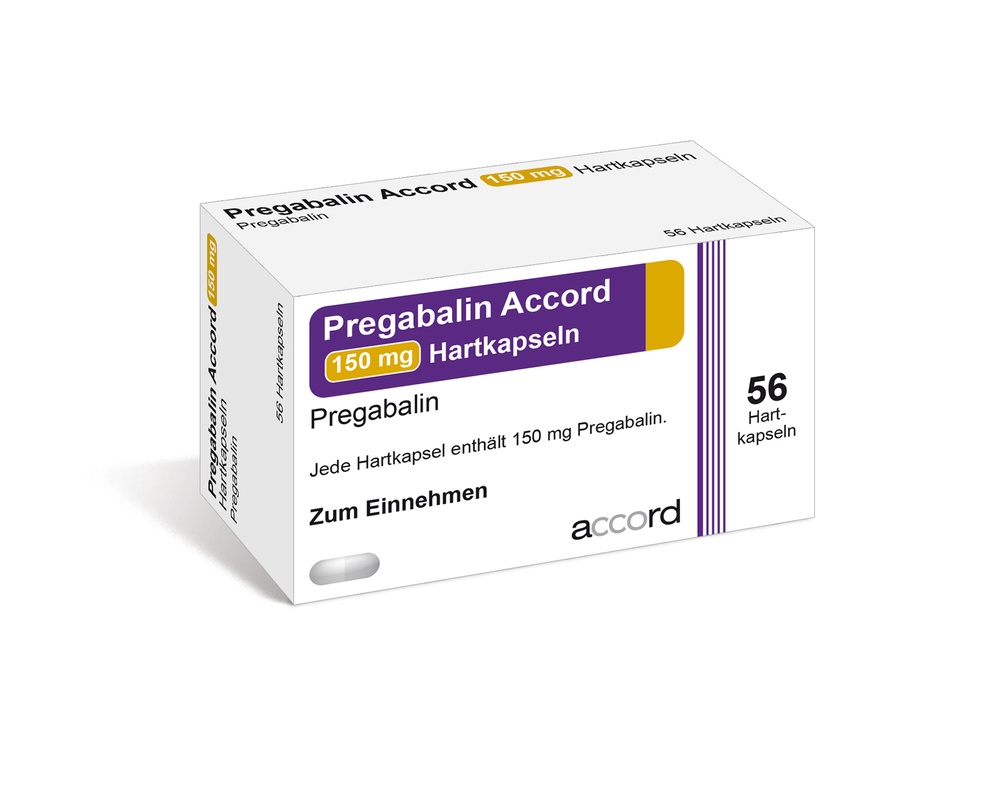
- Країна реєстрації
- Лікарська формаHard capsule, 25 MG
- Код АТХN02BF02
- Діюча речовина
- Потрібен рецептТак
- Виробник
- Ця інформація надана лише для ознайомлення і не є медичною порадою. Рішення щодо лікування завжди приймає лікар.
- Альтернативи до PREGABALIN AKKORDЛікарська форма: Hard capsule, 25 MGДіюча речовина: ПрегабалинВиробник: NEURAXPHARM ITALY S.P.A.Потрібен рецептЛікарська форма: Hard capsule, 25 MGДіюча речовина: ПрегабалинВиробник: ECUPHARMA S.R.L.Потрібен рецептЛікарська форма: Hard capsule, <25 mgДіюча речовина: ПрегабалинВиробник: GENETIC S.P.A.Потрібен рецепт
Аналоги PREGABALIN AKKORD в інших країнах
Препарати з тією самою діючою речовиною, доступні в інших країнах.
Аналог PREGABALIN AKKORD у Іспанія
Аналог PREGABALIN AKKORD у Польща
Аналог PREGABALIN AKKORD у Україна
Лікарі онлайн щодо PREGABALIN AKKORD
Застосування, безпека та можливість призначення рецепта — за результатами медичної оцінки.









Отримайте рецепт на PREGABALIN AKKORD онлайн
Заповніть форму за 2 хвилини
Розкажіть про симптоми, історію хвороби та потрібний препарат.
Оберіть лікаря або ми призначимо
Оберіть спеціаліста або ми підберемо найближчого доступного лікаря.
Лікар розглядає ваш випадок
Зазвичай протягом 30 хвилин. Може ставити уточнювальні запитання в чаті.
Отримайте в будь-якій аптеці
Електронний рецепт надсилається на вашу пошту — дійсний по всій Польщі.
Часті запитання
PREGABALIN AKKORD потребує рецепта в Італія. Ви можете обговорити з лікарем онлайн, чи підходить цей лікарський засіб для вашої ситуації.
Діюча речовина у PREGABALIN AKKORD — Прегабалин. Це допомагає визначити препарати з тим самим складом, але під іншими торговими назвами.
PREGABALIN AKKORD виробляється компанією ACCORD HEALTHCARE, S.L.U.. Назва бренду та упаковка можуть відрізнятися залежно від дистрибʼютора.
Лікарі, зокрема Сімейні лікарі, Психіатри, Дерматологи, Кардіологи, Ендокринологи, Гастроентерологи, Пульмонологи, Нефрологи, Ревматологи, Гематологи, Інфекціоністи, Алергологи, Геріатри, Педіатри, Онкологи, можуть оцінити доцільність застосування PREGABALIN AKKORD з урахуванням вашого стану та місцевих правил. Ви можете записатися на онлайн-консультацію, щоб обговорити симптоми та можливі подальші кроки.
Польща має добре розвинену систему охорони здоров'я у великих містах, таких як Варшава, Краків, Вроцлав і Гданськ. Аптеки широко доступні та працюють відповідно до чинного законодавства, забезпечуючи доступ до рецептурних препаратів.
Ви можете придбати PREGABALIN AKKORD у Варшаві, Кракові, Вроцлаві або Гданську в будь-якій аптеці за наявності дійсного рецепта.
Щоб отримати рецепт, ви можете скористатися Oladoctor:
Інші препарати з тією самою діючою речовиною (Прегабалин) включають AKLATON, EKUBALIN, GAVIRIA. Вони можуть відрізнятися торговою назвою або формою випуску, але містять той самий терапевтичний компонент. Перед зміною або початком прийому нового препарату варто проконсультуватися з лікарем.
