



PLENVU 115,96 G Powder and solvent for oral solution

Запит на рецепт онлайн
Лікар розгляне ваш випадок і визначить, чи є рецепт медично доцільним.

Поговоріть з лікарем про ці ліки
Обговоріть симптоми та можливі подальші кроки під час короткої онлайн-консультації.



Інструкція із застосування PLENVU
Зміст інструкції
- What is Plenvu and what is it used for
- What you need to know before you take Plenvu
- How to take Plenvu
- Possible side effects
- How to store Plenvu
- Package Contents and Other Information
PLENVU, powder for oral solution
Macrogol 3350, sodium ascorbate, anhydrous sodium sulfate, ascorbic acid,
sodium chloride and potassium chloride
Read this leaflet carefully before you start to take this medicine because it contains
important information for you.
- Keep this leaflet. You may need to read it again.
- If you have any questions, ask your doctor, pharmacist or nurse.
- This medicine has been prescribed for you only. Do not pass it on to others, even if their symptoms are the same as yours, as it could be harmful.
- If you get any side effects, even those not listed in this leaflet, tell your doctor, pharmacist or nurse. See section 4.
Contents of this leaflet:
- 1. What Plenvu is and what it is used for
- 2. What you need to know before you take Plenvu
- 3. How to take Plenvu
- 4. Possible side effects
- 5. How to store Plenvu
- 6. Contents of the pack and other information
1. What is Plenvu and what is it used for
Plenvu contains the active substances macrogol 3350, sodium ascorbate, sodium sulfate anhydrous, ascorbic acid, sodium chloride and potassium chloride.
Plenvu is a laxative.
Plenvu is indicated in adults aged 18 years and over in preparation for clinical examinations that require a clean bowel.
Plenvu cleanses the intestine by causing diarrhoea.
2. What you need to know before you take Plenvu
Do not take Plenvu:
- if you are allergic (hypersensitive) to the active substances or to any of the other ingredients of this medicine (listed in section 6)
- if you have a bowel obstruction (intestinal obstruction)
- if you have a hole in the wall of the stomach or intestine (intestinal perforation)
- if you have intestinal paralysis (ileus)
- if you experience problems with emptying the stomach of food and liquids (e.g. gastroparesis, gastric retention)
- if you suffer from phenylketonuria. This is an inherited inability of the body to use a particular amino acid. Plenvu contains a source of phenylalanine.
- if your body is unable to produce a sufficient amount of glucose-6-phosphate dehydrogenase
- if you have a severely dilated intestine (toxic megacolon)
Warnings and precautions
Talk to your doctor, pharmacist or nurse before taking Plenvu if you are in any of the following situations:
- have heart problems and/or heart rhythm problems
- have kidney problems and/or dehydration
- suffer from heart failure, severe kidney problems or are taking medicines for high blood pressure
- have problems with the stomach or intestines, including bowel inflammation
- have difficulty swallowing (see also Plenvu with food and drink)
- have a high or low level of salts in the blood (e.g. sodium, potassium)
- have other medical conditions (e.g. seizures)
- suffer from epilepsy or have a history of convulsions
Do not administer Plenvu without medical supervision to patients in an altered state of consciousness.
If you are in poor general health or have a serious medical condition, you should be particularly aware of the possible side effects listed in section 4. If in doubt, talk to your doctor, pharmacist or nurse.
If you experience sudden abdominal pain or rectal bleeding while taking Plenvu for bowel preparation, seek medical attention immediately.
If you experience vomiting (of blood) followed by sudden chest, neck or abdominal pain, difficulty swallowing or breathing during the intake of Plenvu, stop taking the medicine and contact your doctor immediately.
Children and adolescents
The use of Plenvu is not recommended in children under 18 years of age.
Other medicines and Plenvu
Tell your doctor, pharmacist or nurse if you are taking, have recently taken or might take any other medicines (including oral contraceptives).
Medicines taken by mouth may be eliminated through the gastrointestinal tract and may not be absorbed correctly if taken one hour before, during and one hour after taking Plenvu.
If you are taking oral contraceptives, additional forms of contraception (e.g. barrier method) may be necessary to avoid pregnancy.
Plenvu with food and drink
The day before the clinical examination you can have a light breakfast followed by a light meal.
For the split dosage schedule over two days, OR for the single-day dosage schedule the day before, you must complete the meal at least 3 hours before starting to take Plenvu, after which you can only consume clear liquids.
For the single-day dosage schedule, in the morning, you can have broth and/or plain yogurt for dinner (to be finished around 8 pm). After finishing dinner the evening before the clinical examination, you can only consume clear liquids.
Note: for information on dosage schedules, refer to section 3.
Do not have breakfast on the morning of the clinical examination.
Continue to drink clear liquids before, during and after taking Plenvu to prevent fluid loss (dehydration). It is important to drink the prescribed amount of extra clear liquids.
Examples of clear liquids are water, broth, herbal tea, black tea or coffee (without milk), diluted soft drinks/syrups and clear fruit juices (without pulp).
Important:
- Do not drink alcohol, milk, anything red or purple in colour (e.g. blackcurrant juice) or any other beverage containing pulp.
- Do not eat during the intake of Plenvu and until the clinical examination is finished.
The intake of all liquids must be completed at least:
- two hours before the start of the clinical examination, when performed under general anesthesia, or
- one hour before the start of the clinical examination, without general anesthesia.
If you need to thicken liquids to be able to swallow them without problems, Plenvu may counteract the effect of the thickener.
Pregnancy, breastfeeding and fertility
There are no data on the use of Plenvu during pregnancy or breastfeeding, therefore its use is not recommended. It should only be used if deemed essential by the doctor.
If you are pregnant, suspect you may be pregnant, are planning a pregnancy, or are breastfeeding, ask your doctor, pharmacist or nurse for advice before taking Plenvu.
Driving and operating machinery
Plenvu does not impair the ability to drive vehicles or operate machinery.
Plenvu contains sodium, potassium and a source of phenylalanine
This medicine contains 458.5 mmol (10.5 g) of sodium per treatment cycle. This should be taken into consideration in people who are on a low sodium diet.
This medicine contains 29.4 mmol (1.1 g) of potassium per treatment cycle. This should be taken into consideration in people with reduced kidney function or who are on a low potassium diet.
Plenvu contains a source of phenylalanine which may be harmful to people with phenylketonuria. It also contains ascorbate, which may be harmful to people with glucose-6-phosphate dehydrogenase deficiency.

Не впевнені, чи підходить вам цей лікарський засіб?
Обговоріть симптоми та можливі варіанти лікування з лікарем онлайн.
3. How to take Plenvu
Take this medicine following the instructions of your doctor exactly. If you have doubts,
consult your doctor, pharmacist or nurse.
Before taking Plenvu, read the following instructions carefully. You should know:
- When to take Plenvu
- How to prepare Plenvu
- How to drink Plenvu
- What to expect to happen
When to take Plenvu
Treatment with Plenvu must be completed before the clinical examination.
The treatment cycle can be taken in divided doses as described below:
Divided dosage schedule over two days
Dose 1 taken the evening before the clinical examination and Dose 2 the morning of the day of the examination
clinical examination approximately 12 hours after the start of the first dose, or
Single-day dosage schedule, in the morning
Dose 1 and Dose 2 taken the morning of the day of the clinical examination; the second dose must be
taken at least 2 hours after the start of the first dose, or
Single-day dosage schedule, the day before
Dose 1 and Dose 2 taken the evening of the day before the clinical examination; the second dose must be
taken at least 2 hours after the start of the first dose.
Your doctor will tell you which dosage schedule to follow.DO NOT add any other
ingredients to the doses.
Do not eat while taking Plenvu and until the clinical examination is finished.
For information regarding meal times before taking Plenvu, refer to
paragraph 2.
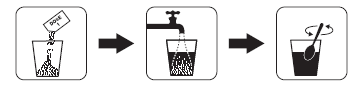
How to prepare Plenvu Dose 1
- 1. Open the box and remove Dose 1 sachet.
- 2. Pour the contents of Dose 1 into a graduated container that can hold 500 ml of liquid.
- 3. Add water up to 500 ml and mix until all the powder is dissolved. This operation may take up to approximately 8 minutes.
How to drink Dose 1 of Plenvu
Drink Dose 1 of 500 ml and 500 ml of clear liquids within 60 minutes. It is possible to alternate
taking the reconstituted solution with clear liquids. Try to drink a glass every
- 10 - 15 minutes. Clear liquids include water, broth, diluted syrups/clear fruit juice (without pulp), tea or coffee without milk.

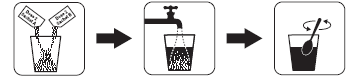
How to prepare Dose 2 of Plenvu
- 1. When you are ready to take Dose 2, pour the contents of Sachet A and Sachet B of Dose 2 into a graduated container that can hold 500 ml of liquid.
- 2. Add water up to 500 ml and mix until all the powder is dissolved. This operation may take up to approximately 8 minutes.
How to drink Dose 2 of Plenvu
According to the times prescribed by the recommended dosage schedule, prepare and drink Dose 2
of 500 ml and 500 ml of clear liquids within 60 minutes.
It is possible to alternate taking the reconstituted solution with clear liquids.

You can drink other clear liquids during bowel preparation, e.g.: before, during and
after taking Plenvu, but you must stop drinking 1-2 hours before the clinical examination. Drinking
clear liquids will help prevent fluid loss (dehydration).
What to expect to happen
When you start drinking the Plenvu solution, it is important to be near a bathroom. At a
certain point, you will begin to feel liquid movements in your intestine. This is perfectly normal
and indicates that the Plenvu solution is working. You may feel bloating in the gastric area
before your first bowel movement.
If you follow these instructions, the intestine will be clean and this will promote the execution and success
of the examination. You should have enough time, after the bowel movements have
calmed down, to go to the clinic/hospital.
If you take more laxatives than you should
If you take Plenvu before or after taking other laxative products, you may experience excessive diarrhea,
which can cause dehydration. Take plenty of clear fluids. If you are worried
contact your doctor or go immediately to the nearest emergency room.
If you forget to take Plenvu
- If you forget to take Plenvu as prescribed, take the dose as soon as you remember you haven't taken it and ask your doctor, pharmacist or nurse for advice before the clinical examination.
- It is important that you have enough time to complete the bowel preparation with Plenvu to ensure that your intestine is completely clean at least 2 hours before the clinical examination.
If you have any doubts about the use of this medicine, consult your doctor, pharmacist or
nurse.
4. Possible side effects
Like all medicines, Plenvu can cause side effects, although not everybody gets them.
It is normal to have diarrhoea when taking Plenvu.
If you do not experience bowel movements within 6 hours of taking Plenvu, stop
taking it and contact your doctor immediately.
If you experience any of the following side effects stoptaking Plenvu and contact
your doctor immediately, as they could be symptoms of a serious allergic reaction:
- Excessive fatigue
- Palpitations
- Skin rash or itching
- Shortness of breath
- Swelling of the face, ankles or other parts of the body
Stop taking Plenvu and contact your doctor immediately if you have any of the following
side effects:
- Convulsion
Contact your doctor immediately if you experience any of these symptoms while taking
Plenvu, as they may indicate excessive loss of body fluids (dehydration):
- Dizziness
- Headache
- Less frequent urination than usual
- Vomiting
Also, contact your doctor immediately if you experience severe pain in the stomach area (abdomen).
Serious heart rhythm problems (i.e. you may feel your heart beating strongly, palpating or beating irregularly, often for a few seconds or even a few minutes) can rarely occur
with the use of laxatives for bowel preparation, especially in patients who have
heart disease or electrolyte imbalances. Contact your doctor if the symptoms persist.
Common side effects (may affect up to 1 in 10 people):
- Dehydration
- Nausea (feeling unwell)
- Vomiting
Uncommon side effects (may affect up to 1 in 100 people):
- Abdominal bloating and pain
- Aches and pains
- Allergic reaction
- Chills
- Fatigue
- Headache or migraine
- Hot flushes
- Increased blood glucose level in diabetic patients
- Increased heart rate
- Palpitations
- Anal pain
- Drowsiness
- Temporary increase in blood pressure
- Temporary increase in liver enzymes
- Thirst
- Electrolyte imbalances
- Weakness
Side effects with unknown frequency (frequency cannot be estimated from available data)
- Oesophageal rupture caused by vomiting
Reporting of side effects
If you get any side effects, even those not listed in this leaflet, tell your doctor, pharmacist or nurse.
You can also report side effects directly through the national reporting system at
https://www.aifa.gov.it/content/segnalazioni-reazioni-avverse. By reporting side effects you can help
provide more information on the safety of this medicine.

Виникли питання під час прийому ліків?
Обговоріть свої симптоми та лікування з лікарем онлайн.
5. How to store Plenvu
Keep this medicine out of the sight and reach of children.
Do not use this medicine after the expiry date which is stated on the sachets and on the pack
after “Exp.”. The expiry date refers to the last day of that month.
Please note that the expiry dates of the individual sachets and of the pack may be
different.
Before opening do not store at a temperature above 25°C .
Keep the prepared solution at a temperature below 25°C and drink within 24 hours. The solutions
may be stored in a refrigerator. The solutions must be kept covered.
Do not dispose of any medicine in wastewater or household waste. Ask your pharmacist
how to dispose of medicines you no longer use. This will help protect the environment.
6. Package Contents and Other Information
What Plenvu contains
The Dose 1 sachetcontains the following active ingredients:
Macrogol 3350 100 g
Anhydrous sodium sulfate 9 g
Sodium chloride 2 g
Potassium chloride 1 g
When the first dose is made up to 500 ml of solution, the concentration of electrolytes
is as follows:
Sodium 160.9 mmol/500 ml
Sulfate
Chloride
Potassium
63.4 mmol/500 ml
47.6 mmol/500 ml
13.3 mmol/500 ml
Dose 1 also contains 0.79 g of sucralose (E955).
The Dose 2 (Sachets A and B)contains the following active ingredients:
Sachet A:
Macrogol 3350 40 g
Sodium chloride 3.2 g
Potassium chloride 1.2 g
Sachet B:
Sodium ascorbate 48.11 g
Ascorbic acid 7.54 g
When the second dose (Sachets A and B) is made up to 500 ml of solution, the
electrolyte concentration is as follows:
Sodium 297.6 mmol/500 ml
Ascorbate
Chloride
285.7 mmol/500 ml
70.9 mmol/500 ml
Potassium 16.1 mmol/500 ml
Excipients with known effects
Dose 2 (Sachet A) also contains 0.88 g of aspartame (E951).
The other components are:
mango flavour containing glycerol (E422), flavouring preparations, gum arabic (E414),
maltodextrin (E1400) and natural flavouring substances; fruit juice flavour containing
flavouring preparations, gum arabic (E414), maltodextrin (E1400) and flavouring
substances. For further information, see paragraph 2.
Description of the appearance of Plenvu and package contents
This pack contains three sachets: Dose 1, Dose 2 Sachet A and Dose 2 Sachet B.
Plenvu powder for oral solution is available in packs containing 1 treatment and in
packs containing 40, 80, 160 and 320 treatments.
Not all pack sizes may be marketed.
Marketing Authorisation Holder:
Norgine Italia S.r.l., Piazza Gae Aulenti, 1 Torre B, 20154 Milan, Italy
Manufacturer responsible for batch release:
Norgine B.V., Antonio Vivaldistraat 150, 1083 HP Amsterdam, Netherlands
or
Norgine Pharma, 29 rue Ethe Virton, Dreux 28100 France
This medicinal product is authorised in the Member States of the European Economic Area and
in the United Kingdom (Northern Ireland) under the following denominations:
Belgium, Bulgaria, Czech Republic, Croatia, Denmark, Finland, France, Germany,
Hungary, Iceland, Ireland, Italy, Luxembourg, Norway, Poland, Portugal, Romania,
Slovakia, Slovenia, Sweden, United Kingdom (Northern Ireland): PLENVU
Austria, Netherlands, Spain: PLEINVUE
available in Italian, 中文 , español, română, اللغة العربية.
This leaflet was last updated on.


- Країна реєстрації
- Лікарська формаPowder and solvent for oral solution, 115,96 G
- Код АТХA06AD65
- Діюча речовина
- Потрібен рецептТак
- Виробник
- Ця інформація надана лише для ознайомлення і не є медичною порадою. Рішення щодо лікування завжди приймає лікар.
- Альтернативи до PLENVUЛікарська форма: Oral solution powder, 6.9 GДіюча речовина: macrogol, combinationsВиробник: ITALFARMACO S.P.A.Рецепт не потрібенДіюча речовина: macrogol, combinationsВиробник: ALFASIGMA S.P.A.Потрібен рецептЛікарська форма: Oral solution powder, 17,5 GДіюча речовина: macrogol, combinationsВиробник: ALFASIGMA S.P.A.Потрібен рецепт
Аналоги PLENVU в інших країнах
Препарати з тією самою діючою речовиною, доступні в інших країнах.
Аналог PLENVU у Іспанія
Аналог PLENVU у Польща
Аналог PLENVU у Україна
Лікарі онлайн щодо PLENVU
Застосування, безпека та можливість призначення рецепта — за результатами медичної оцінки.









Отримайте рецепт на PLENVU онлайн
Заповніть форму за 2 хвилини
Розкажіть про симптоми, історію хвороби та потрібний препарат.
Оберіть лікаря або ми призначимо
Оберіть спеціаліста або ми підберемо найближчого доступного лікаря.
Лікар розглядає ваш випадок
Зазвичай протягом 30 хвилин. Може ставити уточнювальні запитання в чаті.
Отримайте в будь-якій аптеці
Електронний рецепт надсилається на вашу пошту — дійсний по всій Польщі.
Часті запитання
PLENVU потребує рецепта в Італія. Ви можете обговорити з лікарем онлайн, чи підходить цей лікарський засіб для вашої ситуації.
Діюча речовина у PLENVU — macrogol, combinations. Це допомагає визначити препарати з тим самим складом, але під іншими торговими назвами.
PLENVU виробляється компанією NORGINE ITALIA S.R.L.. Назва бренду та упаковка можуть відрізнятися залежно від дистрибʼютора.
Лікарі, зокрема Сімейні лікарі, Психіатри, Дерматологи, Кардіологи, Ендокринологи, Гастроентерологи, Пульмонологи, Нефрологи, Ревматологи, Гематологи, Інфекціоністи, Алергологи, Геріатри, Педіатри, Онкологи, можуть оцінити доцільність застосування PLENVU з урахуванням вашого стану та місцевих правил. Ви можете записатися на онлайн-консультацію, щоб обговорити симптоми та можливі подальші кроки.
Польща має добре розвинену систему охорони здоров'я у великих містах, таких як Варшава, Краків, Вроцлав і Гданськ. Аптеки широко доступні та працюють відповідно до чинного законодавства, забезпечуючи доступ до рецептурних препаратів.
Ви можете придбати PLENVU у Варшаві, Кракові, Вроцлаві або Гданську в будь-якій аптеці за наявності дійсного рецепта.
Щоб отримати рецепт, ви можете скористатися Oladoctor:
Інші препарати з тією самою діючою речовиною (macrogol, combinations) включають BENLAXID, KLENSIA, KOLIREI. Вони можуть відрізнятися торговою назвою або формою випуску, але містять той самий терапевтичний компонент. Перед зміною або початком прийому нового препарату варто проконсультуватися з лікарем.
