



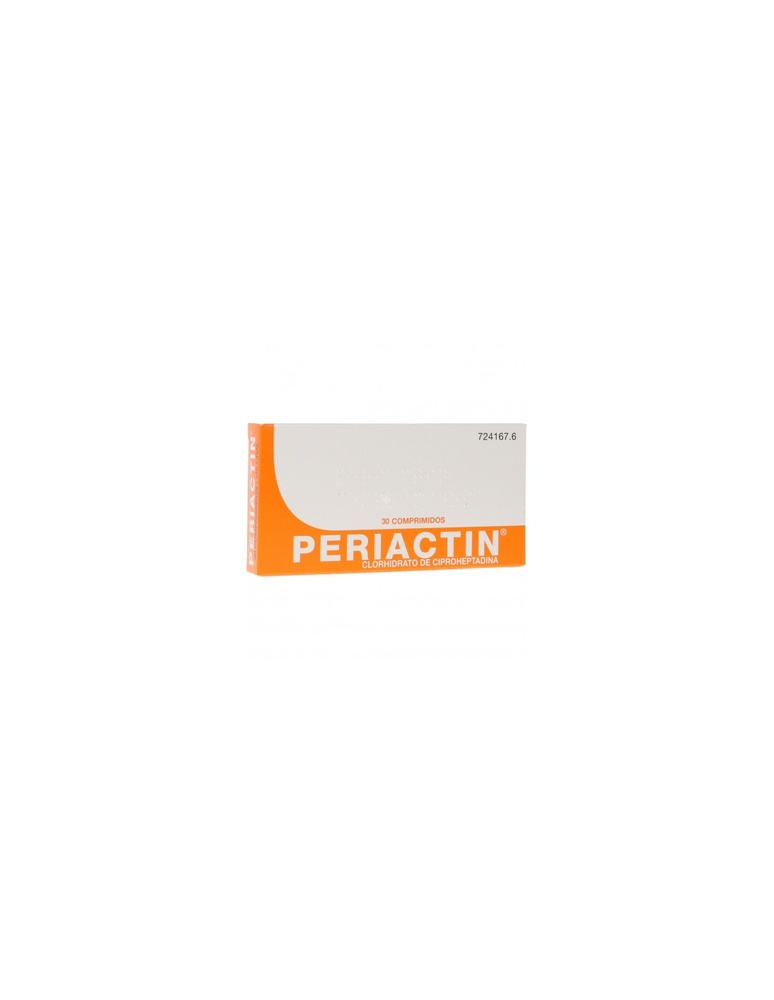
PERIACTIN 4 mg Tablet

Запит на рецепт онлайн
Лікар розгляне ваш випадок і визначить, чи є рецепт медично доцільним.

Поговоріть з лікарем про ці ліки
Обговоріть симптоми та можливі подальші кроки під час короткої онлайн-консультації.



Інструкція із застосування PERIAKTIN
Зміст інструкції
Periactin 4 mg tablets, 0.4 mg/ml syrup
cyproheptadine hydrochloride anhydrous
Read this leaflet carefully before you start to take this medicine as it contains important
information for you.
- Keep this leaflet. You may need to read it again.
- If you have any questions, ask your doctor or pharmacist.
- This medicine has been prescribed for you only. Do not pass it on to others, even if their symptoms are the same as yours, as it could be harmful.
- If you get any side effects, even those not listed in this leaflet, tell your doctor or pharmacist. See section 4.
Contents of this leaflet:
- 1. What Periactin is and what it is used for
- 2. What you need to know before you take Periactin
- 3. How to take Periactin
- 4. Possible side effects
- 5. How to store Periactin
- 6. Contents of the pack and other information
1. What Periactin is and what it is used for
Periactin contains the active substance cyproheptadine, which belongs to the class of antihistamine drugs.
Periactin is used for the treatment of allergic diseases and pruritic dermatitis.
Periactin is indicated for:
- the treatment of acute and chronic symptoms of: o allergic reactions to seasonal pollen (pollenosis) (rhinitis, conjunctivitis) o urticaria o itching
- the treatment of vasomotor rhinitis, characterized by chronic congestion of the blood vessels of the nasal mucosa, sneezing and watery nasal secretions
- the treatment of skin diseases due to allergic reactions such as: o skin inflammations (dermatitis) including neurodermatitis and localized neurodermatitis o eczema o eczematoid dermatitis o excessive reactivity of the skin to mechanical stimuli (dermographism) o insect bites
- the adjuvant treatment of general reactions caused by serums or medicines
- the adjuvant treatment of mild and uncomplicated angioedema
2. What you need to know before taking Periactin
Do not use Periactin
- if you are allergic to cyproheptadine, other antihistamines or any of the other ingredients of this medicine (listed in section 6)
- to treat an acute asthma attack
- in newborns and premature infants (up to 2 years of age)
- during breastfeeding
- if you are an elderly patient
- if you are a debilitated patient
- if you are using monoamine oxidase inhibitors (MAOIs)
- if you have an eye condition called glaucoma
- if you have a narrowing at the level of the area of passage between the stomach and duodenum called the pylorus (pyloroduodenal stenosis)
- if you have prostatic hypertrophy
- if you have an obstruction of the lower part of the bladder (vesical neck obstruction)
- if you have a stomach or duodenal ulcer associated with a narrowing of the digestive tract (stenosing peptic ulcer)
- if you suffer from porphyria, porphyrias are a group of rare and mostly hereditary diseases, due to an alteration of the activity of one of the enzymes that synthesize an element in the blood.
Warnings and precautions
Talk to your doctor or pharmacist before taking Periactin.
Tell your doctor before taking Periactin:
- if you have diseases affecting the lower airways including bronchial asthma, because Periactin may not be suitable for you
- if you have had asthma
- if you have had heart and/or blood vessel problems
- if you have had high blood pressure
- if you have had hyperthyroidism (a condition in which your thyroid works too much)
- if you have had high pressure inside the eye
- if you are using other medicines (see section “Other medicines and Periactin”), including: o medicines used to induce sleep (hypnotics) o medicines that relax (sedatives, tranquillizers) o medicines to reduce anxiety (anxiolytics) o if you drink alcohol It is important to know that:
- rarely, prolonged treatment with antihistamines, including Periactin, can cause blood disorders (hematologic dyscrasia)
- the use of antihistamines, including Periactin, can mask the early signs of ear toxicity of certain medicines used to treat infections (antibiotics).
Children and adolescents
- Periactin should not be used in children under two years of age because safety and efficacy have not been established (see section “Do not use Periactin” and section 3 “How to use Periactin”).
- Antihistamines can decrease the ability to pay attention. However, in particular, in very young children, they can occasionally cause excitement.
- The doctor will pay particular attention in determining the dosage in children and adolescents because they are more sensitive to antihistamines.
Other medicines and Periactin
Tell your doctor or pharmacist if you are taking, have recently taken or might take any other
medicine.
You must not use Periactin together with:
- medicines that are monoamine oxidase inhibitors (MAOIs) (see section “Do not use Periactin”).
Tell your doctor before taking Periactin if you are taking or have to take:
o medicines used to induce sleep (hypnotics)
o medicines that relax (sedatives, tranquillizers)
o medicines to reduce anxiety (anxiolytics)
(see section “Warnings and precautions”).
Periactin with food and alcohol
Taking Periactin after meals may reduce the occurrence of stomach problems (stomach pain,
nausea, vomiting).
Do not drink alcohol with Periactin because its effects may be increased.
Interference with diagnostic tests
Therapy with Periactin must be interrupted before performing pituitary function tests that use
the response of growth hormone (GH) to insulin-induced hypoglycemia.
Periactin can cause a false-positive result for tricyclic antidepressants in urine or serum.
Pregnancy and breastfeeding
If you are pregnant, suspect you may be pregnant, are planning to become pregnant, or are breastfeeding
ask your doctor or pharmacist for advice before taking this medicine.
Pregnancy
Periactin should be used during pregnancy only if absolutely necessary and under direct
medical supervision.
In particular, the use of antihistamines during the third trimester of pregnancy can cause
undesirable effects in premature and newborn babies because they are more sensitive to these medicines.
Breastfeeding
Periactin should not be used during breastfeeding (see section “Do not use Periactin”).
It is not known whether Periactin is excreted in human milk and, due to the risk of serious adverse reactions in
breastfed infants, a decision must be made whether to discontinue breastfeeding or stop
the drug, taking into account the relevance of the therapy for the mother.
Driving and using machines
Periactin can decrease the ability to pay attention, therefore you should not drive vehicles or use machines that
require particular attention.
Periactin tablets contains lactose
If you have been diagnosed with intolerance to certain sugars, contact your doctor before taking this
medicine.
Periactin syrup contains sucrose, ethyl alcohol and glycerol
If you have been diagnosed with intolerance to certain sugars, contact your doctor before taking this
medicine.
This medicine contains 5 g of sucrose per 20 ml. To be taken into consideration in people affected by
diabetes mellitus.
This medicine contains 5 vol % ethanol (alcohol), e.g. up to 1.616 mg per dose, equivalent to 96 ml of
beer, 40 ml of wine per dose. It may be harmful to alcoholics. To be taken into consideration in
pregnant or breastfeeding women, children and high-risk groups such as people affected by
liver or epilepsy diseases.
This medicine contains glycerol, may cause headache, stomach upset and diarrhea.
For athletes
Periactin syrup contains ethyl alcohol, the use of medicines containing ethyl alcohol may result in
positive doping tests in relation to the alcohol concentration limits indicated by some sports federations.
3. How to take Periactin
Take this medicine following exactly the instructions of your doctor or pharmacist. If you have
doubts, consult your doctor or pharmacist.
Periactin is available in tablets and syrup.
The effect of a single dose lasts approximately 4-6 hours, therefore it is advisable to divide the daily dose into three
separate administrations in order to obtain constant relief from symptoms.
Use in adults
The dose ranges from 4 to 20 mg per day. For most patients, 12 to 16 mg per day are required. In
exceptional cases, up to 32 mg per day may be necessary to produce adequate relief.
The recommended initial dose is 4 mg (1 tablet or 10 ml of syrup) 3 times a day. Subsequently, the
doctor will establish the most suitable dose based on weight and response to treatment.
The maximum dose is 32 mg per day.
Use in children and adolescents
Children under 2 years of age
Periactin should not be used in children under two years of age because safety and efficacy have not
been established (see sections “Do not use Periactin” and “Children and adolescents”).
Children from 2 to 6 years
The recommended initial dose is 2 mg (½ tablet or 5 ml of syrup) 2 or 3 times a day. Subsequently, the
doctor will establish the most suitable dose based on weight and response to treatment.
If a further daily dose is necessary, it should be administered preferably before
nighttime rest.
The recommended maximum dose is 12 mg per day.
Children and adolescents from 7 to 14 years
The recommended dose is 4 mg (1 tablet or 10 ml of syrup) 3 times a day. Subsequently, the doctor
will establish the most suitable dose based on weight and response to treatment.
If a further daily dose is necessary, it should be administered preferably before
nighttime rest.
The maximum dose is 16 mg per day.
How to take the syrup
- Use the graduated measuring device provided in the package to take the syrup.
- Do not use spoons or teaspoons to avoid dosage errors.
If you take more Periactin than you should
In case of accidental ingestion of an excessive dose of Periactin, immediately inform your doctor or
go to the nearest hospital.
Ingestion of an excessive dose of antihistamines, including Periactin, can cause:
- depression or stimulation of the central nervous system up to convulsions and death, especially in infants and children.
- signs and symptoms similar to atropine, e.g. dry mouth, fixed and dilated pupils, congestion, etc.
- gastrointestinal symptoms.
If you forget to take Periactin
Do not take a double dose to make up for a missed dose.
If you stop taking Periactin
If you have any doubts about the use of this medicine, consult your doctor or pharmacist.
4. Possible side effects
Like all medicines, this medicine can cause side effects, although not everybody gets them.
Adverse reactions are reported by organ system and frequency and are divided into:
Very common (≥1/10); Common (≥1/100, <1/10); Uncommon (≥1/1,000, <1/100); Rare (≥1/10,000,
<1/1,000); Very rare (<1/10,000); Not known (frequency cannot be estimated from available data).
The most frequently occurring side effect is drowsiness. Many patients who initially
complain of drowsiness overcome this inconvenience after the first three or four days of continuous
administration.
The most common side effects associated with the use of antihistamines are:
Blood and lymphatic system disorders
Hemolytic anemia, leukopenia, agranulocytosis, thrombocytopenia
Immune system disorders
Allergic edema, anaphylactic shock
Metabolism and nutrition disorders
Reduced appetite, increased appetite
Psychiatric disorders
Confusional state, restlessness (agitation), excitement, nervousness, irritability, insomnia, euphoric mood,
conversion disorder, hallucinations, hysteria
Nervous system disorders
Sedation, drowsiness (often transient), dizziness, difficulty with motor coordination, tremor,
paresthesia, neuritis, convulsions, headache, syncope
Eye disorders
Diplopia, blurred vision
Ear and labyrinth disorders
Acute labyrinthitis, vertigo, tinnitus
Cardiac disorders
Palpitations, tachycardia, extrasystoles
Vascular disorders
Hypotension
Respiratory, thoracic and mediastinal disorders
Dryness of nose and throat, thickening of bronchial secretions, feeling of chest tightness and wheezing
respiratory, nasal congestion, sneezing
Gastrointestinal disorders
Dry mouth, epigastric pain, anorexia, nausea, vomiting, diarrhea, constipation
Hepatobiliary disorders
Hypertransaminasemia, jaundice
Skin and subcutaneous tissue disorders
Allergic dermatitis (allergic rash manifestations), hyperhidrosis, urticaria, photosensitivity
Renal and urinary disorders
Polyuria, dysuria (difficulty urinating), urinary retention
Reproductive system and breast disorders
Irregular menstruation (anticipated)
Systemic disorders and administration site conditions
Asthenia, fatigue, chills
Laboratory tests
Weight gain
The appearance of side effects may require an adjustment of the dose of Periactin and, in the most
serious cases, discontinuation of treatment.
Reporting of side effects
If you get any side effects, even those not listed in this leaflet, tell your
doctor or pharmacist. You can also report side effects directly through the national reporting system at the address http://www.agenziafarmaco.gov.it/it/responsabili.
By reporting side effects you can help provide more information on the safety of
this medicine.
5. How to store Periactin
Periactin tablets
This medicine does not require any special storage conditions.
Periactin syrup
Do not store at a temperature below +10°C.
Keep this medicine out of sight and reach of children.
Do not use this medicine after the expiry date which is stated on the packaging after “Exp.”. The expiry date
refers to the last day of that month.
Do not dispose of any medicine in wastewater or household waste. Ask your pharmacist how to dispose of
medicines you no longer use. This will help protect the environment.
6. Contents of the pack and other information
What Periactin contains
Periactin tablets
- The active ingredient is cyproheptadine. Each tablet contains 4.34 mg of cyproheptadine hydrochloride hydrate equivalent to 4.00 mg of cyproheptadine hydrochloride anhydrous.
- The other ingredients are lactose, calcium phosphate, potato starch, magnesium stearate.
Periactin syrup
- The active ingredient is cyproheptadine. 100 ml of syrup contain 43.34 mg of cyproheptadine hydrochloride hydrate equivalent to 40.00 mg of cyproheptadine hydrochloride anhydrous.
- The other ingredients are sucrose, glycerol, ethyl alcohol, sodium benzoate, sodium saccharinate, all fruit flavour, mint flavour, purified water.
Description of the appearance of Periactin and contents of the pack
Periactin tablets
Each pack contains 30 tablets of 4 mg.
Periactin syrup
Each pack contains 1 bottle of 150 ml of syrup.
Marketing Authorisation Holder
Alfasigma S.p.A. - Viale Sarca, n. 223 - 20126 Milano (MI)
Manufacturer
Alfasigma S.p.A.Via Pontina km 30,400 - 00071 Pomezia (RM)

Не впевнені, чи підходить вам цей лікарський засіб?
Обговоріть симптоми та можливі варіанти лікування з лікарем онлайн.

Виникли питання під час прийому ліків?
Обговоріть свої симптоми та лікування з лікарем онлайн.
- Країна реєстрації
- Лікарська формаTablet, 4 MG
- Код АТХR06AX02
- Діюча речовина
- Потрібен рецептТак
- Виробник
- Ця інформація надана лише для ознайомлення і не є медичною порадою. Рішення щодо лікування завжди приймає лікар.
- Альтернативи до PERIAKTINЛікарська форма: Film-coated tablet, 5 MGДіюча речовина: ДеслоратадинВиробник: N.V. ORGANONПотрібен рецептЛікарська форма: Coated tablet, 20 MGДіюча речовина: БиластинВиробник: AUROBINDO PHARMA (ITALIA) S.R.L.Потрібен рецептЛікарська форма: Film-coated tablet, 5 MGДіюча речовина: ДеслоратадинВиробник: S.F. GROUP S.R.L.Потрібен рецепт
Аналоги PERIAKTIN в інших країнах
Препарати з тією самою діючою речовиною, доступні в інших країнах.
Аналог PERIAKTIN у Польща
Аналог PERIAKTIN у Україна
Аналог PERIAKTIN у Іспанія
Лікарі онлайн щодо PERIAKTIN
Застосування, безпека та можливість призначення рецепта — за результатами медичної оцінки.









Отримайте рецепт на PERIAKTIN онлайн
Заповніть форму за 2 хвилини
Розкажіть про симптоми, історію хвороби та потрібний препарат.
Оберіть лікаря або ми призначимо
Оберіть спеціаліста або ми підберемо найближчого доступного лікаря.
Лікар розглядає ваш випадок
Зазвичай протягом 30 хвилин. Може ставити уточнювальні запитання в чаті.
Отримайте в будь-якій аптеці
Електронний рецепт надсилається на вашу пошту — дійсний по всій Польщі.
Часті запитання
PERIAKTIN потребує рецепта в Італія. Ви можете обговорити з лікарем онлайн, чи підходить цей лікарський засіб для вашої ситуації.
Діюча речовина у PERIAKTIN — cyproheptadine. Це допомагає визначити препарати з тим самим складом, але під іншими торговими назвами.
PERIAKTIN виробляється компанією ALFASIGMA S.P.A.. Назва бренду та упаковка можуть відрізнятися залежно від дистрибʼютора.
Лікарі, зокрема Сімейні лікарі, Психіатри, Дерматологи, Кардіологи, Ендокринологи, Гастроентерологи, Пульмонологи, Нефрологи, Ревматологи, Гематологи, Інфекціоністи, Алергологи, Геріатри, Педіатри, Онкологи, можуть оцінити доцільність застосування PERIAKTIN з урахуванням вашого стану та місцевих правил. Ви можете записатися на онлайн-консультацію, щоб обговорити симптоми та можливі подальші кроки.
Польща має добре розвинену систему охорони здоров'я у великих містах, таких як Варшава, Краків, Вроцлав і Гданськ. Аптеки широко доступні та працюють відповідно до чинного законодавства, забезпечуючи доступ до рецептурних препаратів.
Ви можете придбати PERIAKTIN у Варшаві, Кракові, Вроцлаві або Гданську в будь-якій аптеці за наявності дійсного рецепта.
Щоб отримати рецепт, ви можете скористатися Oladoctor:
Інші препарати з тією самою діючою речовиною (cyproheptadine) включають AERIUS, ALYNE, AREMAS. Вони можуть відрізнятися торговою назвою або формою випуску, але містять той самий терапевтичний компонент. Перед зміною або початком прийому нового препарату варто проконсультуватися з лікарем.
