



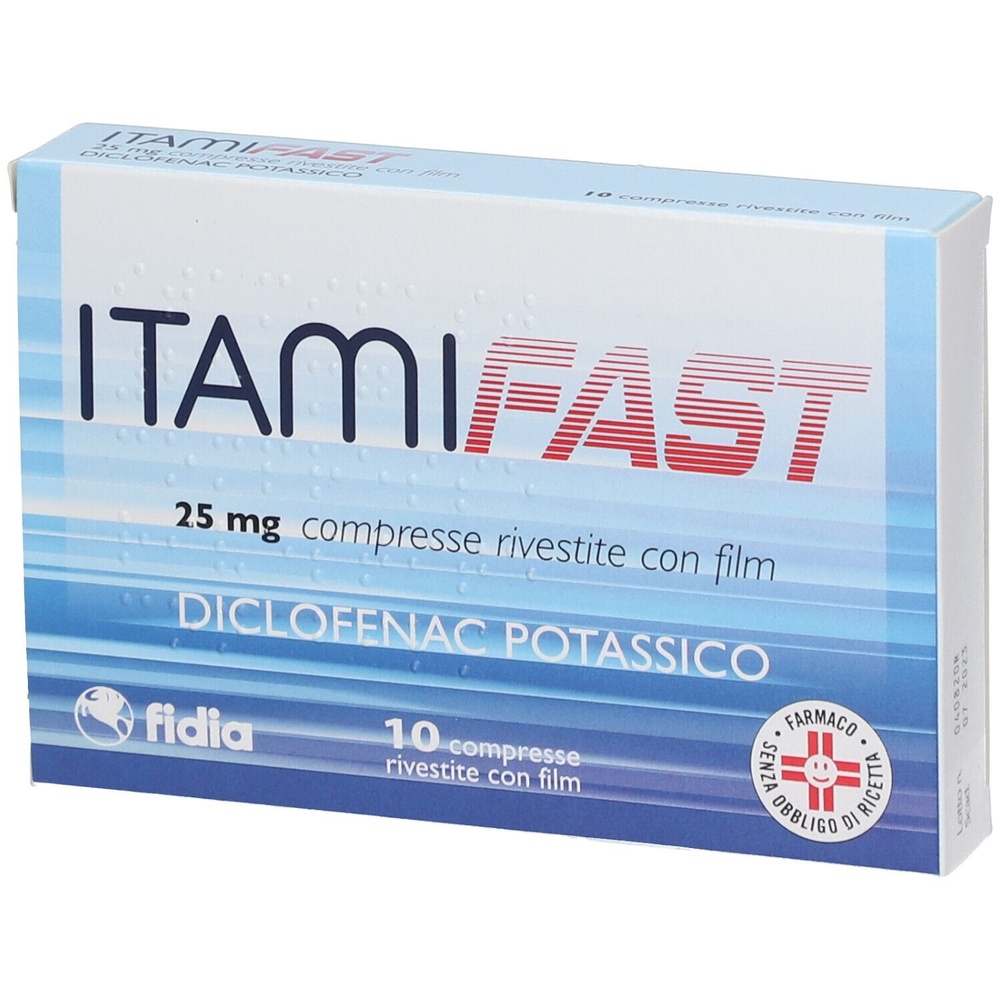
ITAMIFAST 25 mg Film-Coated Tablets

Запит на рецепт онлайн
Лікар розгляне ваш випадок і визначить, чи є рецепт медично доцільним.

Поговоріть з лікарем про ці ліки
Обговоріть симптоми та можливі подальші кроки під час короткої онлайн-консультації.



Інструкція із застосування ITAMIFAST
Зміст інструкції
Itamifast 25 mg film-coated tablets
Diclofenac potassium
Read this leaflet carefully before taking this medicine as it contains important information for you.
Always take this medicine exactly as described in this leaflet or as your doctor or pharmacist has told you.
- Keep this leaflet. You may need to read it again.
- If you would like more information or advice, ask your pharmacist.
- If any side effects occur, including those not listed in this leaflet, tell your doctor or pharmacist. (see section 4)
- See a doctor if you do not feel better or if your symptoms worsen after 3 days.
Contents of this leaflet:
- 1. What Itamifast is and what it is used for
- 2. What you need to know before you take Itamifast
- 3. How to take Itamifast
- 4. Possible side effects
- 5. How to store Itamifast
- 6. Further information
1. What Itamifast is and what it is used for
Itamifast relieves pain and reduces inflammation. Itamifast belongs to a group of medicines
called NSAIDs (non-steroidal anti-inflammatory drugs/rheumatic medicines).
Itamifast is used for the treatment of mild to moderate pain, such as headache, toothache,
muscle and joint pain, back pain and menstrual cramps.
In adolescents Itamifast is used for the short-term treatment of pain related to
infections with inflammation of the ear, nose or throat, acute postoperative pain after
minor surgery.
See your doctor if you do not feel better or if you feel worse after 3 days of treatment.
2. What you need to know before taking Itamifast
Do not take Itamifast
- if you are allergic (hypersensitive) to diclofenac or to any of the other ingredients of this medicine (listed in section 6)
- if you have previously had an allergic reaction such as asthma, chest pain, sneezing or skin rash when you took painkillers containing acetylsalicylic acid or other medicines for pain/inflammation that belong to the group of NSAIDs
- if you have a severe liver disease
- if you have an increased tendency to bleed
- if you have porphyria (metabolic disease)
- if you have or have had a stomach or duodenal ulcer in relation to treatment with diclofenac or similar preparations
- if you have a severe kidney disease
- during the last 3 months of pregnancy
- if you suffer from confirmed heart disease and/or cerebral vasculopathy, e.g., have had a heart attack, a stroke, a mini-stroke (TIA) or an obstruction of blood vessels leading to the heart or brain or surgery to eliminate or prevent such obstructions
- if you suffer from or have suffered from problems with blood circulation (peripheral arterial disease) Itamifast should not be given to children under 14 years of age
Before taking diclofenac make sure your doctor is aware:
- If you smoke
- If you suffer from diabetes
- If you suffer from angina, blood clots, high blood pressure, increased cholesterol or increased triglycerides. Undesirable effects can be minimized by using the lowest effective dose for the shortest duration necessary.
Warnings and precautions
Talk to your doctor or pharmacist before taking Itamifast.
The goal should always be to take the lowest possible dose for the shortest possible treatment period to reduce the risk of side effects. Doses higher than those
recommended may involve serious risks.
Ask your doctor for advice before treatment if you have or have had any of the following
diseases:
- gastrointestinal or duodenal ulcer
- inflammation of the intestine (ulcerative colitis and Crohn's disease)
- liver disease
- heart or kidney disease
- inflammation of the nasal mucous membranes, asthma, chronic obstructive pulmonary disease, chronic airway infection or other allergic reactions such as urticaria or angioedema (local swelling that appears periodically)
- systemic lupus erythematosus (connective tissue disease)
- blood disorders or diseases that cause an increased tendency to bleed
- high blood pressure.
It is advisable to avoid using this medicine during chickenpox.
Elderly people should be informed of the greater risk of age-related side effects.
In adolescents with pain associated with infection with inflammation of the ears, nose or throat, the
underlying pathology must be treated with an antibiotic, as required by therapeutic needs. Fever
without inflammation is not an indication.
NSAIDs, including Itamifast, can rarely cause gastric ulcer which can occur at any
time during treatment with or without warning. If you experience stomach or intestinal pain,
especially if you are elderly, contact your doctor.
Like other anti-inflammatory drugs, Itamifast can mask the signs or symptoms of infection.
Itamifast can, in rare cases, have effects on blood cells in such a way as to weaken your
immune system. If you get an infection with symptoms such as fever and severe weakness, or fever with
local infection such as sore throat/mouth or urinary tract problems, you should contact
your doctor immediately for blood tests to rule out a deficiency of white blood cells (agranulocytosis). It is important that you inform your doctor of the medicine you are taking.
Stop treatment with Itamifast and contact your doctor immediately if you develop swelling of the face, the
tongue and/or throat, and/or difficulty breathing or hives together with difficulty breathing.
Very rarely, severe skin reactions have been reported in association with the use of NSAIDs. If
you get any skin rash or mucosal damage, stop using Itamifast and contact a
doctor.
Taking Itamifast (as in the case of all medicines that inhibit cyclooxygenase and
prostaglandin synthesis) may make it more difficult to conceive. Ask your doctor if you are
planning a pregnancy or if you are having trouble getting pregnant. The effect is temporary
and ceases when you stop taking this type of medicine.
Medicines such as Itamifast may be associated with a small increased risk of heart attack (“myocardial infarction”) or stroke. Any risk is more likely with high doses and with
prolonged treatment. Do not exceed the recommended dose or duration of treatment.
If you have heart problems, have had a stroke in the past or think you may be at risk of these
conditions (e.g. if you have high blood pressure, diabetes or high cholesterol or are a
smoker) you should discuss your treatment with your doctor or pharmacist.
Tell your doctor if you have recently undergone or are about to undergo surgery
on the stomach or intestinal tract before receiving/taking/using Itamifast, as
Itamifast can sometimes worsen wound healing in the intestine following surgery.
Other medicines and Itamifast
Tell your doctor or pharmacist if you are taking, have recently taken or might take
any other medicines.
Itamifast can influence or be influenced by other medicines containing the following active ingredients:
- medicines against blood clotting (e.g. warfarin, ticlopidine, acetylsalicylic acid, heparin)
- medicines for the treatment of diabetes, except insulin
- lithium or SSRIs (used for various forms of depression)
- digoxin (used for heart problems)
- tacrolimus (used during transplants and for eczema)
- cyclosporine (used during transplants, for severe psoriasis and for rheumatism)
- some medicines for high blood pressure (beta-blockers, angiotensin II receptor antagonists and ACE inhibitors)
- diuretics (agents that stimulate urine production and used against high blood pressure)
- quinolone antibiotics (used to treat urinary tract infections)
- corticosteroids (used for the treatment of inflammatory diseases)
- cholestyramine and colestipol (used for the treatment of high levels of fats in the blood)
- rifampicin (an antibiotic used for tuberculosis)
- carbamazepine (used for epilepsy)
- St John's wort (used for depression)
- phenytoin (used for epilepsy)
- methotrexate (used for psoriasis, rheumatism and some tumors).
Never take different types of pain relievers at the same time without your doctor's prescription.
Itamifast with food and drink
The tablets should be swallowed whole with fluids. To obtain the best effect they should not
be taken with a meal or immediately after a meal.
Pregnancy and breastfeeding
Itamifast should not be used during the last three months of pregnancy. Itamifast should be avoided
by women who are trying to become pregnant or who are pregnant. Treatment with Itamifast
during any stage of pregnancy can only take place on the prescription of a doctor.
The medicine passes into breast milk with the risk of effects on the baby. Therefore, Itamifast should not
be used during breastfeeding. Ask your doctor for advice before taking any medicine
during breastfeeding.
Driving and operating machinery
In some people Itamifast can cause side effects such as visual disturbances, dizziness and
drowsiness.
Itamifast contains sodium.This medicine contains less than 1 mmol (23 mg) of sodium per dose, which is
essentially ‘sodium-free’.
3. How to take itamifast
The dose has been prescribed personally for you by a doctor. The dose and duration of treatment
will depend on the painful condition.
Take this medicine following exactly as stated in this leaflet or the instructions of your
doctor or pharmacist. If you have any doubts, consult your doctor or pharmacist.
Acute pain conditions, such as headache, toothache, muscle and joint pain or menstrual
pain:
Usual dose in adults and adolescents over 14 years of age: 25 mg to be taken every 8 hours
as needed. Do not take more than 75mg within 24 hours, which corresponds to 3 tablets of
25 mg, within 24 hours. Do not exceed the established dose.
The tablets must be swallowed whole with some liquid. To obtain the best effect, they should not
be taken with a meal.
If you have any doubts, consult your doctor or pharmacist. If you think that the effect of Itamifast is too strong or
too weak, contact your doctor.
If you take more Itamifastthan you should
If you have taken more Itamifast than you should, or if a child has taken Itamifast accidentally, contact
your doctor or go to hospital for advice on the risks or measures to be taken.
4. Possible side effects
Like all medicines, this medicine can cause side effects, although not everybody gets them.
You may experience gastrointestinal problems at the beginning of treatment. These side effects usually disappear within a few days.
Common side effects (occur in more than 1 in 100 patients): abdominal pain, nausea,
vomiting, diarrhea, digestive problems, decreased appetite, flatulence, headache, dizziness,
skin rash and increased liver values.
Uncommon side effects (occur in less than 1 in 100 patients): convulsions in the trachea.
Rare side effects (occur in less than 1 in 1000 patients): fatigue, body swelling due to fluid retention, hypersensitivity reactions (urticaria, allergic reaction with a drop in blood pressure), stomach ulcer, stomach bleeding (vomiting mixed with blood, blood in the stool, hemorrhagic diarrhea), problems with the large intestine (constipation, inflammation of the intestine), worsening of Crohn's disease and ulcerative colitis, inflammation of the tongue, mouth or esophagus, inflammation of the pancreas, impotence (in this case the association is uncertain), asthma (including difficulty breathing), impaired liver function (inflammation of the liver, jaundice).
Very rare side effects (occur in less than 1 in 10,000 patients): effects on vision (blurred vision, double vision) and hearing (reduced hearing, tinnitus), difficulty sleeping, nightmares, irritability, anxiety, depression, memory disorders, confusion, disturbed sense of reality, changes in taste, effects on the heart and blood vessels (such as chest pain, tachycardia, high blood pressure, heart failure, heart attack, inflammation of the blood vessels), effects on blood composition (reduced number of platelets which can lead to small bleeding of the skin and mucous membranes, reduced number of white blood cells (agranulocytosis), which can weaken the immune response, rupture of red blood cells (anemia)), eczema, itching, redness of the skin, severe allergic reactions including Stevens-Johnson syndrome (inflammation of the mucous membranes and skin with pustules and fever) and Lyell's syndrome (similar to Stevens-Johnson syndrome but with the addition of sudden peeling), hair loss, sensitivity to light, effects on the kidneys (e.g. reduction or blockage of urine production or blood in the urine), inflammation of the membranes of the brain or lungs without a bacterial cause, stroke, angioedema (e.g. swelling of the face, rash, difficulty breathing).
Exceptionally, severe skin infections in case of chickenpox.
Medicines like Itamifast may be associated with a small increase in the risk of heart attack (“myocardial infarction”) or stroke.
Some side effects can be serious.
Stop treatment with ITAMIFAST and immediately tell your doctor if you experience:
- Mild cramps and abdominal tension shortly after starting treatment with ITAMIFAST, followed by rectal bleeding or hemorrhagic diarrhea usually within 24 hours of the onset of abdominal pain (frequency not known, cannot be defined based on available data).
- Chest pain, which may be a sign of a potentially serious allergic reaction called Kounis syndrome.
Reporting of side effects
If you get any side effects, talk to your doctor or pharmacist. You can also report side effects directly through the national reporting system at
https://www.aifa.gov.it/content/segnalazioni-reazioni-avverse. Reporting side effects helps to provide more information on the safety of this medicine.
5. How to store Itamifast
Keep this medicine out of the sight and reach of children.
Do not use this medicine after the expiry date which is stated on the packaging after EXP. The
expiry date refers to the last day of the month.
Do not dispose of any medicine in waste water or household waste. Ask your pharmacist how to
dispose of medicines you no longer use. This will help protect the environment.
6. Contents of the pack and other information
What Itamifast contains
- The active ingredient is diclofenac potassium. Each tablet contains 25 mg of diclofenac potassium.
- The excipients are: potassium hydrogen carbonate, mannitol, sodium lauryl sulfate, macrogol, crospovidone, magnesium stearate, hypromellose.
Description of the appearance of Itamifast and contents of the pack
The tablets are white, round and biconvex.
Blister pack (25 mg) containing 10 or 20 tablets.
Not all pack sizes may be marketed.
Marketing Authorisation Holder
Fidia Farmaceutici S.p.A.
Via Ponte della Fabbrica 3/A
35031 Abano terme - PD
Italy
Manufacturer responsible for batch release
Laboratorio Farmacologico Milanese S.R.L.
Via Monterosso, 273
21042 Caronno Pertusella (VA)
Italy
Product APR Applied Pharma Research SA under license to Fidia Farmaceutici S.p.A.
Itamifast 50 mg film-coated tablets
Diclofenac potassium
Read this leaflet carefully before taking this medicine as it contains important information for you.
- Keep this leaflet. You may need to read it again.
- If you have any questions, ask your doctor or pharmacist.
- This medicine has been prescribed for you only. Do not pass it on to others, even if they have the same symptoms as you, as it may be harmful.
- If you get any side effects, even those not listed in this leaflet, tell your doctor or pharmacist (see section 4)
Contents of this leaflet:
- 1. What Itamifast is and what it is used for
- 2. What you need to know before you take Itamifast
- 3. How to take Itamifast
- 4. Possible side effects
- 5. How to store Itamifast
- 6. Further information
1. What is Itamifast and what is it used for
Itamifast relieves pain and reduces inflammation. Itamifast belongs to a group of medicines
called NSAIDs (non-steroidal anti-inflammatory drugs/antirheumatic drugs).
Itamifast is used for the treatment of mild to moderate pain, such as headache, toothache,
muscle and joint pain, back pain and menstrual cramps.
In children and adolescents Itamifast is used for the short-term treatment of pain
related to infections with inflammation of the ear, nose or throat, acute
postoperative pain after minor surgery.
2. What you need to know before taking Itamifast
Do not take Itamifast
- if you are allergic (hypersensitive) to diclofenac or any of the other ingredients of this medicine (listed in section 6)
- if you have previously had an allergic reaction such as asthma, chest pain, sneezing or skin rash when taking painkillers containing acetylsalicylic acid or other medicines for pain/inflammation that belong to the group of NSAIDs
- if you have a severe liver disease
- if you have an increased tendency to bleed
- if you have porphyria (a metabolic disease)
- if you have or have had a stomach or duodenal ulcer in relation to treatment with diclofenac or similar preparations
- if you have a severe kidney disease
- during the last 3 months of pregnancy.
- if you suffer from confirmed heart disease and/or cerebral vasculopathy, e.g., have had a heart attack, stroke, mini-stroke (TIA) or blockage of blood vessels leading to the heart or brain or surgery to remove or prevent such blockages
- if you suffer from or have suffered from problems with blood circulation (peripheral arterial disease)
Before taking diclofenac, make sure your doctor is aware
- If you smoke
- If you suffer from diabetes
- If you suffer from angina, blood clots, high blood pressure, high cholesterol or high triglycerides
Adverse effects can be minimized by using the lowest effective dose for the shortest duration necessary.
Warnings and precautions Talk to your doctor or pharmacist before taking Itamifast.
The goal should always be to take the lowest possible dose over the shortest period of
treatment to reduce the risk of side effects. Higher doses than those
recommended may entail serious risks.
Ask your doctor for advice before treatment if you have or have had any of the following
diseases:
- gastrointestinal or duodenal ulcer
- inflammation of the intestine (ulcerative colitis and Crohn's disease)
- liver disease
- heart or kidney disease
- inflammation of the nasal mucosa, asthma, chronic obstructive pulmonary disease, chronic airway infection or other allergic reactions such as urticaria or angioedema (local swelling that appears periodically)
- systemic lupus erythematosus (connective tissue disease)
- blood disorders or diseases that cause an increased tendency to bleed
- high blood pressure.
It is advisable to avoid using this medicine during chickenpox.
Elderly people should be informed of the increased risk of age-related side effects.
In children and adolescents with pain associated with infection with inflammation of the ears, nose
or throat, the underlying pathology must be treated with an antibiotic, as necessary.
Fever without inflammation is not an indication.
NSAIDs, including Itamifast, can rarely cause gastric ulceration that can occur at any
time during treatment with or without warning. If you experience stomach or intestinal pain,
especially if you are elderly, contact your doctor.
Like other anti-inflammatory drugs, Itamifast can mask the signs or symptoms of infection.
Itamifast can, in rare cases, have effects on blood cells in such a way as to weaken your immune
system. If you develop an infection with symptoms such as fever and severe weakness, or fever with
local infection such as sore throat/mouth or urinary tract problems, you should contact
your doctor immediately for blood tests to rule out a deficiency of white blood cells (agranulocytosis). It is important that you inform your doctor of the medicine you are taking.
Stop treatment with Itamifast and contact your doctor immediately if you develop swelling of the face, the
tongue and/or throat, and/or difficulty breathing or urticaria together with difficulty breathing.
Very rarely, severe skin reactions have been reported in association with the use of NSAIDs. If
you develop any rash or mucosal damage, stop using Itamifast and contact a
doctor.
Taking Itamifast (as in the case of all medicines that inhibit cyclooxygenase and
prostaglandin synthesis) may make it more difficult to conceive. Ask your doctor for advice if you are
planning a pregnancy or are having difficulty getting pregnant. The effect is temporary
and ceases when you stop taking these medicines.
Medicines such as Itamifast may be associated with a small increased risk of heart attack (“myocardial infarction”) or stroke. Any risk is more likely with high doses and with
prolonged treatment. Do not exceed the recommended dose or duration of treatment.
If you have heart problems, have had a stroke in the past, or think you may be at risk of these
conditions (e.g. if you have high blood pressure, diabetes or high cholesterol or are a
smoker) you should discuss your treatment with your doctor or pharmacist.
Tell your doctor if you have recently undergone or are about to undergo surgery
on the stomach or intestinal tract before receiving/taking/using Itamifast, as
Itamifast may sometimes worsen wound healing in the intestine following surgery.
Other medicines and Itamifast
Tell your doctor or pharmacist if you are taking, have recently taken or might take
any other medicines, including those available without a prescription.
Itamifast can influence or be influenced by other medicines containing the following active ingredients:
- medicines against blood clotting (e.g. warfarin, ticlopidine, acetylsalicylic acid, heparin)
- medicines for the treatment of diabetes, except insulin
- lithium or SSRIs (used for various forms of depression)
- digoxin (used for heart problems)
- tacrolimus (used during transplants and for eczema)
- cyclosporine (used during transplants, for severe psoriasis and for rheumatism)
- some medicines for high blood pressure (beta-blockers, angiotensin II receptor antagonists and ACE inhibitors)
- diuretics (agents that stimulate urine production and used against high blood pressure)
- quinolone antibiotics (used to treat urinary tract infections)
- corticosteroids (used for the treatment of inflammatory diseases)
- cholestyramine and colestipol (used for the treatment of high levels of fats in the blood)
- rifampicin (an antibiotic used for tuberculosis)
- carbamazepine (used for epilepsy)
- St John's wort (used for depression)
- phenytoin (used for epilepsy)
- methotrexate (used for psoriasis, rheumatism and some cancers).
Never take different types of pain relievers at the same time without your doctor's prescription.
Itamifast with food and drink
The tablets should be swallowed whole with fluids. To obtain the best effect, they should not
be taken with or immediately after a meal.
Pregnancy and breastfeeding
Itamifast should not be used during the last three months of pregnancy. Itamifast should be avoided
by women who are trying to become pregnant or are pregnant. Treatment with Itamifast
during any stage of pregnancy can only take place on a doctor's prescription.
The medicine passes into breast milk with the risk of effects on the infant. Therefore, Itamifast should not
be used during breastfeeding. Ask your doctor for advice before taking any medicine
during breastfeeding.
Driving and using machines
In some people Itamifast may cause side effects such as visual disturbances, dizziness and
drowsiness.
Itamifast contains sodium.This medicine contains less than 1 mmol (23 mg) of sodium per dose, which is
essentially ‘sodium-free’.
3. How to take itamifast
The dose has been prescribed personally for you by a doctor. The dose and duration of treatment
will depend on the painful condition.
Always take this medicine exactly as your doctor or pharmacist has instructed.
Acute pain conditions, such as headache, toothache, muscle and joint pain, or
menstrual pain:
Usual dose in adults and adolescents over 16 years of age: 50 mg to be taken every 4-6 hours
as needed. Do not take more than 150 mg within 24 hours, which corresponds to 3 tablets
of 50 mg, within 24 hours. Do not exceed the established dose.
Children (over 9 years)
Painful conditions in children and adolescents with infections with inflammation of the ear, nose
and throat and after minor surgery.
Usual dose in children aged 9-11 years (over 35 kg): 1 tablet of 25 mg 3 times a day
evenly distributed over 24 hours. Do not exceed the established dose.
Usual dose in children aged 12-16 years: 1 tablet of 25 mg 3-4 times a day evenly
distributed over 24 hours. Do not exceed the established dose.
The tablets must be swallowed whole with some liquid. To obtain the best effect, they should not
be taken with a meal.
If you have any doubts, consult your doctor or pharmacist. If you think that the effect of Itamifast is too strong or
too weak, contact your doctor.
If you take more Itamifastthan you should
If you have taken more Itamifast than you should, or if a child has accidentally taken Itamifast, contact
your doctor or go to hospital for advice on the risks or measures to be taken.
4. Possible side effects
Like all medicines, this medicine can cause side effects, although not everybody gets them.
You may experience gastrointestinal problems at the beginning of treatment. These side effects usually disappear within a few days.
Common side effects (may affect more than 1 in 100 people): abdominal pain, nausea,
vomiting, diarrhoea, digestive problems, decreased appetite, flatulence, headache, dizziness,
skin rash and increased liver values.
Uncommon side effects (may affect up to 1 in 100 people): convulsions in the trachea.
Rare side effects (may affect up to 1 in 1,000 people): fatigue, swelling of the body
following fluid retention, hypersensitivity reactions (urticaria, allergic reaction with a drop
in blood pressure), stomach ulcer, stomach bleeding (vomiting mixed with blood,
blood in the stool, haemorrhagic diarrhoea), problems with the large intestine (constipation, inflammation
of the intestine), worsening of Crohn's disease and ulcerative colitis, inflammation of the tongue,
mouth or oesophagus, inflammation of the pancreas, impotence (in this case the association is
uncertain), asthma (including difficulty breathing), disorders of liver function (liver inflammation,
jaundice).
Very rare side effects (may affect up to 1 in 10,000 people): effects on vision
(blurred vision, double vision) and hearing (hearing loss, tinnitus), difficulty sleeping,
nightmares, irritability, anxiety, depression, memory disorders, confusion, disturbed sense of reality,
changes in taste, effects on the heart and blood vessels (such as chest pain, tachycardia,
high blood pressure, heart failure, heart attack, inflammation of the blood
vessels), effects on blood composition (reduced number of platelets which can lead to minor
bleeding of the skin and mucous membranes, reduced number of white blood cells (agranulocytosis), which can
weaken the immune response, rupture of red blood cells (anaemia), eczema, itching, redness
of the skin, severe allergic reactions including Stevens-Johnson syndrome (inflammation of the
mucous membranes and skin with pustules and fever) and Lyell's syndrome (similar to Stevens-Johnson
syndrome but with the addition of sudden peeling), hair loss, sensitivity to light,
effects on the kidneys (e.g. reduction or blockage of urine production or blood in the urine),
inflammation of the membranes of the brain or lungs without bacterial cause, stroke, angioedema
(e.g. swelling of the face, skin rash, difficulty breathing).
Exceptionally, severe skin infections in case of chickenpox.
Medicines such as Itamifast may be associated with a small increase in the risk of a heart attack (“myocardial infarction”) or stroke.
Some side effects can be serious.
Stop treatment with ITAMIFAST and tell your doctor immediately if you experience:
- Mild cramps and abdominal tension shortly after starting treatment with ITAMIFAST, followed by rectal bleeding or haemorrhagic diarrhoea usually within 24 hours of the onset of abdominal pain (frequency not known, cannot be defined based on available data).
- Chest pain, which may be a sign of a potentially serious allergic reaction called Kounis syndrome.
Reporting of side effects
If you get any side effects, talk to your doctor or pharmacist. You can also report side effects
directly through the national reporting system at
https://www.aifa.gov.it/content/segnalazioni-reazioni-avverse. Reporting side effects helps to provide more information on the safety of this medicine.
5. How to store itamifast
Keep Itamifast out of sight and reach of children.
Do not use this medicine after the expiry date which is stated on the pack after EXP. The
expiry date refers to the last day of the month.
Do not dispose of any medicine in wastewater or household waste. Ask your pharmacist how to
dispose of medicines you no longer use. This will help protect the environment.
6. Contents of the pack and other information What itamifast contains
- The active ingredient is diclofenac potassium. Each tablet contains 50 mg of diclofenac potassium.
- The excipients are: potassium hydrogen carbonate, mannitol, sodium lauryl sulfate, macrogol, crospovidone, magnesium stearate, hypromellose.
Description of the appearance of itamifast and contents of the pack
The tablets are white, round and biconvex.
Blister pack (50 mg) containing 20 and 30 tablets.
Not all pack sizes may be marketed.
Marketing Authorisation Holder
Fidia Farmaceutici S.p.A.
Via Ponte della Fabbrica 3/A
35031 Abano terme - PD
Italy
Manufacturer responsible for batch release
Laboratorio Farmacologico Milanese S.R.L.
Via Monterosso, 273
21042 Caronno Pertusella (VA)
Italy
Product APR Applied Pharma Research SA under license to Fidia Farmaceutici S.p.A.

Не впевнені, чи підходить вам цей лікарський засіб?
Обговоріть симптоми та можливі варіанти лікування з лікарем онлайн.

Виникли питання під час прийому ліків?
Обговоріть свої симптоми та лікування з лікарем онлайн.
- Країна реєстрації
- Лікарська формаFilm-coated tablet, 25 MG
- Код АТХM01AB05
- Діюча речовина
- Потрібен рецептНі
- Виробник
- Ця інформація надана лише для ознайомлення і не є медичною порадою. Рішення щодо лікування завжди приймає лікар.
- Альтернативи до ITAMIFASTЛікарська форма: Hard capsule with prolonged release, 75 MGДіюча речовина: ДиклофенакВиробник: FARMA GROUP S.R.L.Потрібен рецептЛікарська форма: Modified-release hard capsule, 75 MGДіюча речовина: ДиклофенакВиробник: MORGANCEUTICAL S.R.L.Потрібен рецептЛікарська форма: Tablet, 50 MGДіюча речовина: ДиклофенакВиробник: ALFASIGMA S.P.A.Потрібен рецепт
Аналоги ITAMIFAST в інших країнах
Препарати з тією самою діючою речовиною, доступні в інших країнах.
Аналог ITAMIFAST у Польща
Аналог ITAMIFAST у Україна
Аналог ITAMIFAST у Іспанія
Лікарі онлайн щодо ITAMIFAST
Застосування, безпека та можливість призначення рецепта — за результатами медичної оцінки.









Отримайте рецепт на ITAMIFAST онлайн
Заповніть форму за 2 хвилини
Розкажіть про симптоми, історію хвороби та потрібний препарат.
Оберіть лікаря або ми призначимо
Оберіть спеціаліста або ми підберемо найближчого доступного лікаря.
Лікар розглядає ваш випадок
Зазвичай протягом 30 хвилин. Може ставити уточнювальні запитання в чаті.
Отримайте в будь-якій аптеці
Електронний рецепт надсилається на вашу пошту — дійсний по всій Польщі.
Часті запитання
ITAMIFAST не потребує рецепта в Італія. Ви можете обговорити з лікарем онлайн, чи підходить цей лікарський засіб для вашої ситуації.
Діюча речовина у ITAMIFAST — Диклофенак. Це допомагає визначити препарати з тим самим складом, але під іншими торговими назвами.
ITAMIFAST виробляється компанією FIDIA FARMACEUTICI S.P.A.. Назва бренду та упаковка можуть відрізнятися залежно від дистрибʼютора.
Лікарі, зокрема Сімейні лікарі, Психіатри, Дерматологи, Кардіологи, Ендокринологи, Гастроентерологи, Пульмонологи, Нефрологи, Ревматологи, Гематологи, Інфекціоністи, Алергологи, Геріатри, Педіатри, Онкологи, можуть оцінити доцільність застосування ITAMIFAST з урахуванням вашого стану та місцевих правил. Ви можете записатися на онлайн-консультацію, щоб обговорити симптоми та можливі подальші кроки.
Польща має добре розвинену систему охорони здоров'я у великих містах, таких як Варшава, Краків, Вроцлав і Гданськ. Аптеки широко доступні та працюють відповідно до чинного законодавства, забезпечуючи доступ до рецептурних препаратів.
Ви можете придбати ITAMIFAST у Варшаві, Кракові, Вроцлаві або Гданську в будь-якій аптеці за наявності дійсного рецепта.
Щоб отримати рецепт, ви можете скористатися Oladoctor:
Інші препарати з тією самою діючою речовиною (Диклофенак) включають DEALJIK, DEFLAMAT, DIKLOFENAK ALFASIGMA. Вони можуть відрізнятися торговою назвою або формою випуску, але містять той самий терапевтичний компонент. Перед зміною або початком прийому нового препарату варто проконсультуватися з лікарем.
