



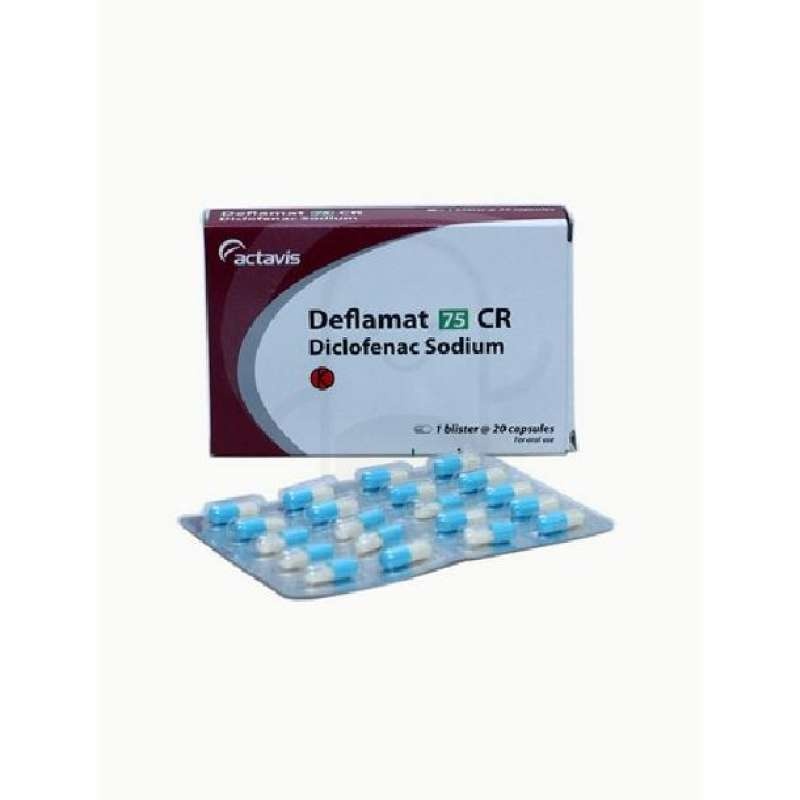
DEFLAMAT 75 mg Modified-Release Hard Capsule

Запит на рецепт онлайн
Лікар розгляне ваш випадок і визначить, чи є рецепт медично доцільним.

Поговоріть з лікарем про ці ліки
Обговоріть симптоми та можливі подальші кроки під час короткої онлайн-консультації.



Інструкція із застосування DEFLAMAT
Зміст інструкції
DEFLAMAT
75 mg modified-release hard capsules
100 mg hard capsulesmodified-release
Diclofenac sodium
Read this leaflet carefully before taking this medicine as it contains
important information for you.
- Keep this leaflet. You may need to read it again.
- If you have any questions, ask your doctor or pharmacist.
- This medicine has been prescribed for you only. Do not pass it on to others, even if they have the same symptoms as you, as it may be harmful.
- If you get any side effects, even those not listed in this leaflet, tell your doctor or pharmacist. See section 4.
Contents of this leaflet:
- 1. What Deflamat is and what it is used for
- 2. What you need to know before you take Deflamat
- 3. How to take Deflamat
- 4. Possible side effects
- 5. How to store Deflamat
- 6. Contents of the pack and other information
1. What is Deflamat and what is it used for?
Deflamat contains the active ingredient diclofenac sodium, belonging to a group of medicines known
as Non-Steroidal Anti-Inflammatory Drugs (NSAIDs).
Deflamat is indicated in adultsfor the treatment:
- of inflammatory and degenerative diseases affecting muscles, bones and joints (rheumatic diseases):
- chronic inflammatory diseases of the joints of immune origin (rheumatoid arthritis, ankylosing spondylitis)
- chronic disease characterized by progressive joint damage (osteoarthritis)
- acute and chronic diseases characterized by pain and inflammation affecting the tissues surrounding the joints such as tendons and ligaments (extra-articular rheumatism)
- of pain due to inflammation of extra-rheumatic origin (i.e. not affecting muscles, bones and joints) or after a trauma
- of menstrual pain (primary dysmenorrhea).
See your doctor if you do not feel better or if you feel worse.
2. What you need to know before taking Deflamat
Do not take Deflamat
- if you are allergic or think you may be allergic to diclofenac sodium, to aspirin, to ibuprofen, to any other NSAID, or to any of the other ingredients of this medicine (listed in section 6). Signs of a hypersensitivity reaction include swelling of the face and mouth
(angioedema), breathing problems, chest pain, runny nose, skin rash or any
other allergic-type reaction
- if you have previously experienced bleeding (hemorrhage) or perforation of the stomach or intestine following treatments with other NSAIDs (see section “Other medicines and Deflamat”)
- if you have previously suffered from frequent bleeding and/or lesions to the inner walls of the stomach and intestine (peptic ulcer), (two or more distinct episodes of demonstrated ulceration or bleeding)
- if you have an ulcer, bleeding or perforation of the stomach or intestine
- if you suffer from severe impairment of liver function (severe hepatic insufficiency) or have previously suffered from liver diseases (see section “Warnings and precautions”)
- if you suffer from severe impairment of kidney function (severe renal insufficiency) (see section “Warnings and precautions”) if you suffer from confirmed heart disease and/or cerebrovascular disease, e.g. have had a heart attack, a stroke, a mini-stroke (TIA) or blockage of blood vessels leading to the heart or brain or surgery to eliminate or prevent such blockages
- if you suffer from or have suffered from problems with blood circulation (peripheral arteriopathy)
- if you are in the last 3 months of pregnancy
- if you are breastfeeding (see “Pregnancy, breastfeeding and fertility”)
- if you suffer from severe stomach or intestinal disorders (gastrointestinal disturbances)
- if you are undergoing intensive treatment with medicines to increase urine excretion (intensive diuretic therapy) (see section “Other medicines and Deflamat”)
- if you have ongoing bleeding or suffer from diseases that predispose you to developing bleeding
- if you suffer from blood problems related to the production of blood cells (blood disorders)
- if after treatments with acetylsalicylic acid or other NSAIDs you have experienced asthma attacks, skin redness accompanied by itching (urticaria), or irritation of the nose (acute rhinitis). Donotgive Deflamat to children and adolescents under 14 years of age.
Warnings and precautions
Talk to your doctor or pharmacist before taking Deflamat.
Before taking diclofenac, make sure your doctor is aware:
- if you smoke
- if you have diabetes
- if you suffer from angina, blood clots, high blood pressure, high cholesterol or high triglycerides.
In particular, the doctor in the following cases:
- if you have any infectionin progress, as diclofenac, like other similar anti-inflammatory drugs, can mask the signs and symptoms of any ongoing infections
- if you have previously suffered from ulcers, especially if complicated by bleedingor perforation(less than two distinct episodes of demonstrated ulceration or bleeding), as this increases the risk of you having bleeding, ulceration or perforation of the stomach and intestine, especially with the use of high doses. Therefore, the doctor will start treatment with the lowest available dose (see section “How to take Deflamat”) and may prescribe other medicines to protect the stomach and intestine (misoprostol or proton pump inhibitors)
- if you have previously suffered from toxicity to the stomach and/or intestine. In this case, inform your doctor if you experience any abdominal discomfort, especially in the early stages of therapy
- if you are being treated with medicinesthat can increase the risk of ulceration or bleeding (see “Other medicines and Deflamat”)
- if you suffer from severe chronic diseases of the stomach and intestine (ulcerative colitis, Crohn’s disease) as these conditions may worsen (see section “Possible side effects”)
- if you suffer from impaired liver function (hepatic insufficiency). The doctor will keep you under close surveillance as this condition may worsen. In case of prolonged treatments, the doctor will, as a precaution, subject you to regular checks to assess liver function and/or the possible occurrence of liver diseases
- if you suffer from a rare liver disease called “hepatic porphyria”, as the use of Deflamat may trigger an attack
- if you suffer from impaired kidney function (renal insufficiency), as the use of Deflamat may lead to a tendency to retain fluids in the body (fluid retention) and swelling (edema)
- if you suffer from or have previously suffered from high blood pressure (arterial hypertension), as the use of Deflamat may cause fluid retention and edema. Therefore, the doctor will keep you under control
- if you are being treated with medicines to increase urine excretion (diuretics) or with medicines that significantly affect kidney function (see section “Other medicines and Deflamat”)
- if you have recently undergone or are about to undergo surgery on the stomach or intestinal tract before receiving/taking/using Deflamat, as Deflamat may sometimes worsen wound healing in the intestine following surgery
- if for any reason you have or are about to undergo a substantial removal of blood and/or fluids from the body, for example before or after major surgery. In such cases, as a precaution, the doctor will check kidney function
- if you suffer from reduced blood flow to the kidneys (renal hypoperfusion)
- if you suffer from impaired heart function (heart failure)
- if you suffer from or have previously suffered from blood clots (thromboembolic phenomena)
- if you suffer from blood coagulation disorders, as the use of Deflamat may cause blockage of platelet aggregation with an anticoagulant effect. In this case, the doctor will keep you under control with appropriate tests
- if you suffer from or are predisposed to asthma attacks, as you are more likely to have lung diseases and/or infections, swelling of the face (angioedema) or urticaria. You may also experience a worsening of asthma, breathing difficulties (bronchospasm) and possibly loss of consciousness (shock) and other allergic phenomena
- if you suffer from nasal irritation (rhinitis) seasonal allergic and/or swelling of the nasal mucosa (e.g. nasal polyps), as you are more likely to have lung diseases and/or infections, swelling of the face or urticaria
- if you are allergicto any substance, as you are at greater risk of experiencing side effects such as skin reactions, itching or urticaria.
Medicines like Deflamat may be associated with a small increased risk
of heart attack (myocardial infarction) or stroke. Any risk is more likely with high doses or
prolonged treatment.
If you are elderly and/or underweight
If you are elderly and/or underweight, take Deflamat with caution as you are at greater risk of experiencing side
effects of NSAIDs, especially bleeding and gastrointestinal perforations that can lead
to death, especially with high doses.
Therefore, the doctor will start treatment with Deflamat with the lowest available dose (see
section “How to take Deflamat”) and may prescribe other medicines to protect the
stomach and intestine (misoprostol or proton pump inhibitors).
If you are elderly and/or underweight, informyour doctor if you experience any abdominal discomfort, especially
in the early stages of therapy.
If you are elderly and/or underweight, the doctor will monitor you to assess kidney function.
Children and adolescents
Donot give Deflamat to children under 14 years of age.
In adolescents aged 14 to 18 years, Deflamat is not recommended.
Other medicines and Deflamat
Tell your doctor or pharmacist if you are taking, have recently taken or might take
any other medicines.
In particular, tell your doctor if you are taking the following medicines.
Medicines to avoid:
- other Non-Steroidal Anti-Inflammatory Drugs(NSAIDs, to reduce inflammation and pain), including “selective COX-2 inhibitors” (which is a class of NSAIDs), due to the possible increased risk of side effects to the stomach and/or intestine. Medicines to be used with caution:
- medicines to make the blood more fluid (anticoagulantssuch as warfarinand antiplatelet agentssuch as aspirin) due to the risk of bleeding
- medicines to treat depression(selective serotonin reuptake inhibitors) due to the risk of bleeding
- medicine to treat certain mental health problems (lithium), as it may increase the level of lithium in the blood. The doctor will check the levels of lithium in the blood
- medicine to treat heart problems (digoxin), as it may increase the level of digoxin in the blood. The doctor will check the levels of digoxin in the blood
- diuretics and medicines to treat high blood pressure(e.g. beta-blockers, “angiotensin converting enzyme inhibitors”, potassium-sparing drugs) as it decreases the antihypertensive effect of these medicines. The doctor, especially if you are elderly, will carefully monitor blood pressure, kidney function and potassium levels in the blood according to his/her judgement
- medicines to treat diabetes (antidiabetics), as it may have alterations in blood sugar levels (hypoglycemia, hyperglycemia). The doctor will therefore monitor blood sugar levels and, if necessary, adjust the dose of the antidiabetic you are taking
- medicine for the treatment of certain cancers (methotrexate), as it may increase the side effects of methotrexate
- medicine used to reduce the activity of the immune system, for example after an organ transplant (cyclosporine), as it may increase the side effects of cyclosporine on the kidneys. The doctor will reduce the dose of diclofenac to avoid the occurrence of these effects
- medicines to treat infections (quinolone antibacterials), as you may experience seizures
- medicine used to treat epilepsy (phenytoin). The doctor will check the levels of phenytoin in the blood
- medicines to lower cholesterol in the blood (cholestyramineand colestipol). In this case, the doctor will tell you to take diclofenac at least one hour before or 4-6 hours after the administration of cholestyramine/colestipol
- medicines such as sulfinpyrazone(used in post-infarction treatment) and voriconazole(used for fungal infections), as it may have an increased effect of diclofenac.
Pregnancy, breastfeeding and fertility
If you are pregnant, suspect you may be pregnant or are planning to become pregnant, or if you are
breastfeeding, ask your doctor or pharmacist for advice before taking this medicine.
Pregnancy
The use of Deflamat is not recommended in women who are planning to become pregnant and
during the first 6 monthsof pregnancy, unless in cases of actual necessity. In this case, the dose and
duration of treatment prescribed by the doctor will be kept as low as possible.
Do not useDeflamat after the first 6 monthsof pregnancy (see section “Do not take Deflamat”)
because it can cause serious harm to the mother and the baby.
Breastfeeding
Do not useDeflamat if you are breastfeeding (see section “Do not take Deflamat”).
Fertility
The administration of Deflamat should be stopped if you have fertility problems or if you need
to undergo investigations on fertility.
Driving and using machines
Deflamat may impair the ability to drive and operate machinery, especially if
taken with alcohol. Do not drivevehicles and use machines if during treatment with Deflamat
you experience visual disturbances, dizziness, vertigo, drowsiness or other central nervous system
disorders.
Deflamat contains sodium
This medicine contains less than 1 mmol (23mg) of sodium per capsule, i.e. essentially ‘sodium-free’.
3. How to take Deflamat
Take this medicine following exactly the instructions of your doctor or pharmacist. If you
have any doubts, consult your doctor or pharmacist.
Adults
- The recommended dose is one 75 mg capsule or one 100 mg capsule once a day, according to the doctor's judgement.
- If necessary, the doctor may increase the daily dose up to 150 mg, administering one 75 mg capsule twice a day, or as a single dose in the presence of particularly severe disorders, especially in the morning.
Swallow the capsule without chewing, with sufficient liquid.
If you are elderly and/or underweight
If you are elderly and/or underweight, you may have an increased frequency of side effects
(especially bleeding and perforations of the stomach and intestines), therefore the doctor will carefully
assess the dose you need to take and the possible reduction of the doses indicated above. If
necessary, the doctor will start treatment with the lowest available dose.
Duration of treatment
The duration of treatment varies depending on the case.
Your doctor will tell you how long to use Deflamat.
If you take more Deflamat than you should
If you take an excessive dose of Deflamat, you may experience symptoms such as vomiting, bleeding and
stomach and intestinal disorders, diarrhea, dizziness, ringing in the ears (tinnitus) or
convulsions. In severe cases, you may experience a sudden reduction in kidney function
(acute renal failure), liver damage, reduced blood pressure (hypotension) and
blockage/reduction of respiratory activity (respiratory depression).
In case of taking an excessive dose, contact your doctor or the nearest
hospital immediately.
If you forget to take Deflamat
Do not take a double dose to make up for a missed capsule.
If you stop taking Deflamat
If you have any doubts about the use of this medicine, consult your doctor or pharmacist.
4. Possible side effects
Like all medicines, this medicine can cause side effects, although not everybody gets them.
Stop treatment with Deflamat and tell your doctor immediately if you notice:
- severe stomach and intestinal disorders(rare, may affect up to 1 in 1,000 people)
- presence of lesions on the inner walls of the stomach and intestine (ulceration)
- bleeding from the walls of the stomach or intestine (gastrointestinal hemorrhage)
- perforation. These effects can also lead to death, and are particularly likely to occur if you are elderly
- disorders or worsening of liver functionwhich manifests, for example, with:
- yellowing of the skin and whites of the eyes (jaundice) (rare, may affect up to 1 in 1,000 people)
- severe skin or mucous membrane reactions(very rare, may affect up to 1 in
- 10,000) including:
- lesions of the mucous membranes, superficial skin inflammation, characterized by swelling of the skin and blistering lesions (exfoliative dermatitis)
- severe skin lesions characterized by erythema, blistering lesions with areas of skin detachment (Stevens-Johnson syndrome and Toxic Epidermal Necrolysis). These effects can also lead to death. The onset of these reactions occurs in most cases within the first month of treatment
- allergic reactionsand anaphylactic shock, a severe allergic reaction with rapid onset and including blood pressure that is too low (hypotension) and loss of consciousness (shock)
- chest pain, which may be a sign of a potentially serious allergic reaction called Kounis syndrome.
- Mild abdominal cramps and tenderness that occur shortly after starting treatment with Deflamat, followed by rectal bleeding or bloody diarrhea usually within 24 hours of the onset of abdominal pain (frequency not known, cannot be estimated from available data).
In addition, the following side effects may occur with the following frequency:
Common (may affect up to 1 in 10 people)
- headache, dizziness
- vertigo
- nausea, vomiting, diarrhea
- discomfort and/or persistent or recurrent pain in the upper abdomen (dyspepsia, abdominal pain)
- formation of gas in the intestine (flatulence)
- decreased appetite with weight loss (anorexia)
- increased levels of certain values indicating liver function (transaminases)
- skin rash.
Rare (may affect up to 1 in 1,000 people)
- drowsiness
- asthma, including difficulty breathing (dyspnea)
- inflammation of the stomach (gastritis)
- emission of blood from the mouth originating from the stomach or intestine (hematemesis)
- diarrhea with the presence of blood
- dark stools due to the presence of blood (melena)
- inflammation of the liver (hepatitis)
- liver disorders
- redness of the skin accompanied by itching (urticaria)
- swelling (edema) due to fluid accumulation in the body (fluid retention).
Very rare (may affect up to 1 in 10,000):
- reduction in the number of platelets in the blood (thrombocytopenia),
- reduction in the number of white blood cells in the blood (leukopenia/agranulocytosis)
- reduction of hemoglobin in the blood, a substance that carries oxygen in the blood (anemia, hemolytic and aplastic anemia)
- swelling of hands, feet, ankles, face, lips, tongue and/or throat (angioedema)
- disorientation
- depression
- insomnia, nightmares
- irritability, psychotic reactions
- sensation of numbness and tingling in legs, arms or other parts of the body (paresthesias)
- memory disorders
- convulsions, anxiety, tremors
- inflammation of the area near the brain (aseptic meningitis)
- alterations in taste
- disorders affecting blood flow to the brain (cerebrovascular accidents) including stroke
- visual disturbances, blurred vision, double vision (diplopia)
- ringing in the ears (tinnitus), worsening of hearing
- palpitations
- chest pain
- condition in which the heart fails to provide blood in an adequate quantity to the body (heart failure)
- heart attack (myocardial infarction)
- high blood pressure (hypertension)
- inflammation of blood vessels (vasculitis)
- lung infection (pneumonia)
- inflammation of the colon, the last part of the intestine (colitis) which can lead to blood loss (hemorrhagic colitis)
- worsening of chronic inflammatory bowel diseases (Crohn's disease, ulcerative colitis)
- constipation
- inflammation of the mouth (stomatitis), with possible formation of lesions (ulcerative stomatitis)
- inflammation of the tongue (glossitis)
- esophageal disorders
- intestinal narrowing
- inflammation of the pancreas (pancreatitis)
- sudden inflammation of the liver (fulminant hepatitis)
- destruction of liver cells (hepatic necrosis)
- reduced liver function (hepatic insufficiency)
- blistering eruptions
- skin irritations (eczema, erythema)
- skin irritation characterized by the appearance of bright red, ring-shaped lesions (erythema multiforme)
- hair loss
- photosensitivity reaction
- appearance of patches on the skin of various sizes and reddish (purpura), also of allergic nature (allergic purpura)
- itching
- sudden decrease in kidney function (acute renal failure)
- presence of blood in the urine (hematuria)
- presence of protein in the urine (proteinuria)
- kidney disease involving loss of protein with urine (nephrotic syndrome)
- inflammation of the kidneys (interstitial nephritis)
- disease involving destruction of kidney cells (renal papillary necrosis).
Reporting of side effects
If you get any side effects, even those not listed in this leaflet, tell your
doctor or pharmacist. You can also report side effects directly through the national
reporting system at https://www.aifa.gov.it/content/segnalazioni-reazioni-avverse
By reporting side effects you can help provide more information on the safety of
this medicine.
5. How to store Deflamat
Keep this medicine out of the sight and reach of children.
Do not store at a temperature above 25°C.
Keep the blister in the outer packaging, to protect the medicine from light.
Do not use this medicine after the expiry date that is reported on the package after Exp. The expiry
date refers to the last day of that month.
Do not dispose of any medicine in wastewater or household waste. Ask your pharmacist how
to eliminate medicines that you no longer use. This will help protect the environment.
6. Contents of the pack and other information
What Deflamat contains
Deflamat 75 mg modified-release hard capsules
- The active ingredient is: diclofenac sodium. Each capsule contains 75 mg of diclofenac sodium equivalent to 69.60 mg of diclofenac.
- The other ingredients are: microcrystalline cellulose, povidone, colloidal anhydrous silica, methacrylic acid - ethyl acrylate copolymer (1:1), propylene glycol, ammonium methacrylate copolymer (type A), ammonium methacrylate copolymer (type B), triethyl citrate, talc, indigotine (E 132), titanium dioxide (E 171), purified water, gelatin.
Deflamat 100 mg modified-release hard capsules
- The active ingredient is: diclofenac sodium. Each capsule contains 100 mg of diclofenac sodium equivalent to 92.80 mg of diclofenac.
- The other ingredients are: microcrystalline cellulose, povidone, colloidal anhydrous silica, methacrylic acid - ethyl acrylate copolymer (1:1), propylene glycol, ammonium methacrylate copolymer (type A), ammonium methacrylate copolymer (type B), triethyl citrate, talc, indigotine (E 132), titanium dioxide (E 171), purified water, gelatin.
Description of the appearance of Deflamat and contents of the pack
Deflamat is presented in 75 mg or 100 mg hard capsules, packaged in blisters in a carton containing 20
capsules.
Marketing Authorisation Holder and Manufacturer:
Marketing Authorisation Holder
MORGANCEUTICAL S.r.l.,
Viale Varese 39
22100 Como,
Italy
Manufacturer
Swiss Caps GmbH,
Grassingerstrasse 9
Bad Aibling
Germany
DEFLAMAT
25 mg/ml injectable solution
Diclofenac sodium
Read this leaflet carefully before using this medicine as it contains important information for you.
- Keep this leaflet. You may need to read it again.
- If you have any questions, ask your doctor or pharmacist.
- This medicine has been prescribed for you only. Do not pass it on to others, even if they have the same symptoms as you, as it may be harmful.
- If you get any side effects, even those not listed in this leaflet, tell your doctor or pharmacist. See section 4.
Contents of this leaflet:
- 1. What Deflamat is and what it is used for
- 2. What you need to know before you use Deflamat
- 3. How to use Deflamat
- 4. Possible side effects
- 5. How to store Deflamat
- 6. Contents of the pack and other information
1. What is Deflamat and what is it used for
Deflamat contains the active ingredient diclofenac sodium, belonging to a group of medicines known
as Non-Steroidal Anti-Inflammatory Drugs (NSAIDs).
Deflamat is indicated in adultsfor the treatment:
- of acute pain that occurs during inflammatory diseases of muscles, bones and joints
- of acute pain in case of contractions of the smooth musculature (for example of the stomach and the intestine).
See your doctor if you do not feel better or if you feel worse.
2. What you need to know before using Deflamat
Do not use Deflamat
- if you are allergic or think you may be allergic to diclofenac sodium, to aspirin, to ibuprofen, to any other NSAID, or to any of the other ingredients of this medicine (listed in section 6). Signs of a hypersensitivity reaction include swelling of the face and mouth (angioedema), breathing problems, chest pain, runny nose, skin rash or any other allergic-type reaction
- if you have previously experienced bleeding (hemorrhage) or perforation of the stomach or intestine following treatments with other NSAIDs (see section “Other medicines and Deflamat”)
- if you have previously suffered from frequent bleeding and/or lesions to the inner walls of the stomach and intestine (peptic ulcer), (two or more distinct episodes of demonstrated ulceration or bleeding).
- if you have an ulcer, bleeding or perforation of the stomach or intestine
- if you suffer from severe impairment of liver function (severe hepatic insufficiency) or have previously suffered from liver diseases (see section “Warnings and precautions”)
- if you suffer from severe impairment of kidney function (severe renal insufficiency) (see section “Warnings and precautions”);
- if you suffer from confirmed heart disease and/or cerebrovascular disease, e.g. have had a heart attack, a stroke, a mini-stroke (TIA) or an obstruction of blood vessels leading to the heart or brain or surgery to eliminate or prevent such obstructions;
- if you suffer from or have suffered from problems with blood circulation (peripheral arteriopathy)
- if you are in the last 3 months of pregnancy
- if you are breastfeeding (see “Pregnancy, breastfeeding and fertility”)
- if you suffer from severe disorders of the stomach or intestine (gastrointestinal disorders)
- if you are undergoing intensive treatment with medicines to increase urine excretion (intensive diuretic therapy) (see section “Other medicines and Deflamat ”)
- if you have ongoing bleeding or suffer from diseases that predispose you to developing bleeding
- if you suffer from blood problems related to the production of blood cells (blood dyscrasias)
- if after treatments with acetylsalicylic acid or other NSAIDs you have experienced asthma attacks, skin redness accompanied by itching (urticaria), or nasal irritation (acute rhinitis).
Do notgiveDeflamat to children and adolescents under 14 years of age.
Warnings and precautions
Consult your doctor or pharmacist before using Deflamat.
Deflamat injectable solution is not a simple painkiller and use requires strict medical control. Injections must be performed according to strict hygienic rules (see section 3 “How to use Deflamat”).
Before taking diclofenac, make sure your doctor is aware:
- if you smoke
- if you have diabetes
- if you suffer from angina, blood clots, high blood pressure, elevated cholesterol or elevated triglycerides.
In particular, inform your doctor in the following cases:
- if you have any infectionin progress, as diclofenac, like other similar anti-inflammatory drugs, can mask the signs and symptoms of any ongoing infections
- if you have previously suffered from ulcers, especially if complicated by bleedingor perforation(less than two distinct episodes of demonstrated ulceration or bleeding), as this increases the risk of you having bleeding, ulceration or perforation of the stomach and intestine, especially with the use of high doses. Therefore, your doctor will start treatment with the lowest available dose (see section “How to use Deflamat”) and may prescribe other medicines to protect your stomach and intestine (misoprostol or proton pump inhibitors)
- if you have previously suffered from toxicity to the stomach and/or intestine. In this case, inform your doctor if you experience any abdominal discomfort, especially in the early stages of therapy
- if you are being treated with medicinesthat can increase the risk of ulceration or bleeding (see “Other medicines and Deflamat ”)
- if you suffer from severe chronic diseases of the stomach and intestine (ulcerative colitis, Crohn’s disease) as these conditions may worsen (see section “Possible side effects”)
- if you suffer from impaired liver function (hepatic insufficiency). Your doctor will keep you under close surveillance as this condition may worsen. In case of prolonged treatments, your doctor will, as a precaution, subject you to regular checks to assess liver function and/or the possible appearance of liver diseases
- if you suffer from a rare liver disease called “hepatic porphyria”, as the use of Deflamat can trigger an attack
- if you suffer from impaired kidney function (renal insufficiency), as the use of Deflamat can lead to a tendency to retain fluids in the body (fluid retention) and swelling (edema)
- if you suffer from or have previously suffered from high blood pressure (arterial hypertension), as the use of Deflamat can cause fluid retention and edema. Therefore your doctor will keep you under control
- if you are being treated with medicines to increase urine excretion (diuretics) or with medicines that significantly affect kidney function (see section “Other medicines and Deflamat”)
- if you have recently undergone or are about to undergo surgery on the stomach or intestinal tract before receiving/taking/using Deflamat, as Deflamat can sometimes worsen wound healing in the intestine following surgery.
- if for any reason you have or are about to undergo a substantial removal of blood and/or fluids from the body, for example before or after major surgery. In such cases, as a precaution, your doctor will check kidney function
- if you suffer from reduced blood flow to the kidneys (renal hypoperfusion)
- if you suffer from impaired heart function (heart failure)
- if you suffer from or have previously suffered from blood clots (thromboembolic phenomena)
- if you suffer from blood coagulation disorders, as the use of Deflamat can cause blockage of platelet aggregation with anticoagulant effect. In this case your doctor will keep you under control with appropriate tests
- if you suffer from or are prone to asthma attacks, as you are more likely to have lung diseases and/or infections, swelling of the face (angioedema) or urticaria. You may also experience a worsening of asthma, breathing crises (bronchospasm) and possibly loss of consciousness (shock) and other allergic phenomena
- if you suffer from nasal irritation (rhinitis) seasonal allergic and/or swelling of the nasal mucosa (e.g. nasal polyps), as you are more likely to have lung diseases and/or infections, swelling of the face or urticaria
- if you are allergicto any substance, as you are at greater risk of experiencing side effects such as skin reactions, itching or urticaria.
Medicines like Deflamat may be associated with a small increase in the risk
of heart attack (myocardial infarction) or stroke. Any risk is more likely with high doses
or prolonged treatment.
Switching from Deflamat injectable solution therapy to oral therapy with Deflamat capsules
After the first two days of therapy with Deflamat by intramuscular route, your doctor, if appropriate, will start you on oral therapy with Deflamat capsules, as oral therapy has fewer serious side effects (see section “How to use Deflamat”).
If you are elderly and/or underweight
If you are elderly and/or underweight, use Deflamat with caution as you are at greater risk of experiencing side effects
to NSAIDs, especially bleeding and gastrointestinal perforations that can also lead to death,
especially with high doses.
Therefore, your doctor will start treatment with Deflamat with the lowest available dose (see
section “How to use Deflamat”) and may prescribe other medicines to protect your
stomach and intestine (misoprostol or proton pump inhibitors).
If you are elderly and/or underweight, informyour doctor if you experience any abdominal discomfort, especially
in the early stages of therapy.
If you are elderly and/or underweight, your doctor will keep you under control to assess kidney function.
Use in children and adolescents
Donot give Deflamat to children under 14 years of age.
In adolescents from 14 to 18 years of age, Deflamat injectable solution is not recommended.
Other medicines and Deflamat
Inform your doctor or pharmacist if you are taking, have recently taken or may take any other
medicines.
In particular, inform your doctor if you are taking the following medicines:
Medicines to avoid:
- other Non-Steroidal Anti-Inflammatory Drugs(NSAIDs, to reduce inflammation and pain), including “selective COX-2 inhibitors” (which is a class of NSAIDs), due to the possible increased risk of side effects to the stomach and/or intestine Medicines to be used with caution:
- medicines to make the blood more fluid (anticoagulantssuch as warfarinand antiplatelet agentssuch as aspirin) due to the risk of bleeding
- medicines to treat depression(selective serotonin reuptake inhibitors) due to the risk of bleeding
- medicine to treat certain mental health problems (lithium), as it may increase the level of lithium in the blood. The doctor will check the levels of lithium in the blood
- medicine to treat heart problems (digoxin), as it may increase the level of digoxin in the blood. The doctor will check the levels of digoxin in the blood
- diuretics and medicines to treat high blood pressure(e.g. beta-blockers, “angiotensin converting enzyme inhibitors”, potassium-sparing drugs) as it decreases the antihypertensive effect of these medicines. The doctor, especially if you are elderly, will carefully monitor blood pressure, kidney function and potassium levels in the blood according to his/her judgement
- medicines to treat diabetes (antidiabetics), as it may have alterations in blood sugar levels (hypoglycemia, hyperglycemia). The doctor will therefore monitor blood sugar levels and, if necessary, adjust the dose of the antidiabetic you are taking
- medicine for the treatment of some cancers (methotrexate), as it may increase the side effects of methotrexate
- medicine used to reduce the activity of the immune system, for example after an organ transplant (cyclosporine), as it may increase the side effects of cyclosporine on the kidneys. The doctor will reduce the dose of diclofenac to avoid the occurrence of these effects
- medicines to treat infections (quinolone antibacterials), as you may experience seizures
- medicine used to treat epilepsy (phenytoin). The doctor will check the levels of phenytoin in the blood
- medicines to lower cholesterol in the blood (cholestyramineand colestipol). In this case, your doctor will tell you to take diclofenac at least one hour before or 4-6 hours after taking cholestyramine/colestipol
- medicines such as sulfinpyrazone(used in post-infarction treatment) and voriconazole(used for fungal infections), as it may have an increased effect of diclofenac.
Pregnancy, breastfeeding and fertility
If you are pregnant, suspect you may be pregnant or are planning to become pregnant, or if you are breastfeeding
with breast milk, ask your doctor or pharmacist for advice before using this medicine.
Pregnancy
The use of Deflamat is not recommended in women who intend to become pregnant and
during the first 6 monthsof pregnancy, unless in cases of actual necessity. In this case, the dose and
duration of treatment prescribed by the doctor will be kept as low as possible.
Do not useDeflamat after the first 6 monthsof pregnancy (see section “Do not use Deflamat”)
because it can cause serious harm to the mother and the baby.
Breastfeeding
Do not useDeflamat if you are breastfeeding (see section “Do not use Deflamat”).
Fertility
The administration of Deflamat should be stopped if you have fertility problems or if you need
to undergo fertility investigations.
Driving and using machines
Deflamat may impair your ability to drive vehicles and use machines, especially if
taken with alcohol. Do not drivevehicles and use machines if during treatment with Deflamat
you experience visual disturbances, dizziness, vertigo, drowsiness or other central nervous system
disorders.
Deflamat contains sodium
This medicine contains less than 1 mmol (23 mg) of sodiumper vial, i.e. it is practically ‘sodium-free’.
Deflamat contains benzyl alcohol
This medicine contains 105 mg of benzyl alcohol per 3 ml.
Benzyl alcohol may cause allergic reactions.
Ask your doctor or pharmacist for advice if you are pregnant or breastfeeding and if you have a liver or
kidney condition. This is because large amounts of benzyl alcohol can accumulate in the body and
cause undesirable effects (such as metabolic acidosis).
3. How to use Deflamat
Use this medicine following the instructions of your doctor or pharmacist exactly. If you have any doubts, consult your doctor or pharmacist.
Adults
- The recommended dose is one vial per day to be administered through an injection into the upper-outer part of one of the two buttocks. In severe cases (e.g. colic) your doctor may prescribe a second vial to be administered after a few hours, changing the injection site (one injection in each buttock). The doctor may also associate Deflamat capsules with the injection therapy up to a maximum daily dose of 150 mg. Injections must be performed according to strict hygiene rules; ask your doctor or pharmacist for advice. The injection must be performed very slowly and deeply, using a sufficiently long needle, and first aspirating to avoid an injection into a blood vessel. The solution, in addition to being injected very slowly, should be brought to temperature by the warmth of the hand. Donot mix Deflamat with other products or medicines.
Duration of treatment
The duration of treatment varies depending on the case. Your doctor will tell you how long to use Deflamat.
After the first two days of therapy, it is advisable to switch to the use of non-parenteral preparations.
If you are elderly and/or underweight
If you are elderly and/or underweight, you may have an increased frequency of side effects
(especially bleeding and perforation of the stomach and intestines), therefore the doctor will carefully evaluate
the dose you need to take and the possible reduction of the doses indicated above. If
necessary, the doctor will start treatment with the lowest available dose.
If you use more Deflamat than you should
If you use an excessive dose of Deflamat, you may experience symptoms such as vomiting, bleeding and
stomach and intestinal disorders, diarrhea, dizziness, ringing in the ears (tinnitus) or
convulsions. In severe cases, you may experience a sudden reduction in kidney function
(acute renal failure), liver damage, reduced blood pressure (hypotension) and
blockage/reduction of respiratory activity (respiratory depression).
In case of overdose, contact your doctor or the nearest
hospital immediately.
If you forget to use Deflamat
Do not use a double dose to make up for a missed dose.
If you stop using Deflamat
If you have any doubts about the use of this medicine, consult your doctor or pharmacist.
4. Possible side effects
Like all medicines, this medicine can cause side effects, although not everybody gets them.
Side effects can be minimised by using the lowest effective dose for the shortest duration necessary.
Stop treatment with Deflamat and immediately inform your doctor if you notice:
- severe stomach and intestinal disorders(rare, may affect up to 1 in 1,000 people)
- presence of lesions on the inner walls of the stomach and intestine (ulceration)
- bleeding of the walls of the stomach or intestine (gastrointestinal bleeding)
- perforation. These effects can also lead to death, and are particularly likely to occur if you are elderly
- disorders or worsening of liver functionwhich manifests, for example, with:
- yellowing of the skin and whites of the eyes (jaundice) (rare, may affect up to 1 in 1,000 people)
- severe skin or mucous membrane reactions(very rare, may affect up to 1 in
- 10,000) which include:
- lesions of the mucous membranes, superficial skin inflammation, characterised by swelling of the skin and blister-like lesions (exfoliative dermatitis)
- severe skin lesions characterised by erythema, blistering lesions with areas of skin detachment (Stevens-Johnson syndrome and Toxic Epidermal Necrolysis). These effects can also lead to death. The onset of these reactions occurs in most cases within the first month of treatment
- allergic reactionsand anaphylactic shock, a severe allergic reaction with rapid onset and including very low blood pressure (hypotension) and loss of consciousness (shock)
- chest pain, which may be a sign of a potentially serious allergic reaction called Kounis syndrome.
- mild abdominal cramps and tenderness that occur shortly after starting treatment with Deflamat, followed by rectal bleeding or bloody diarrhoea usually within 24 hours of the onset of abdominal pain (frequency not known, cannot be estimated from available data).
In addition, the following side effects may occur according to the following frequency:
Common (may affect up to 1 in 10 people)
- headache, dizziness
- vertigo
- nausea, vomiting, diarrhoea
- discomfort and/or persistent or recurrent pain in the upper abdomen (dyspepsia, abdominal pain)
- formation of gas in the intestine (flatulence)
- decreased appetite with weight loss (anorexia)
- reactions, pain, hardening at the injection site.
- increase in certain values indicating liver function (transaminases)
- skin rash
Rare (may affect up to 1 in 1,000 people)
- drowsiness
- asthma, including difficulty breathing (dyspnoea)
- inflammation of the stomach (gastritis)
- emission of blood from the mouth originating from the stomach or intestine (haematemesis)
- diarrhoea with the presence of blood
- dark stools due to the presence of blood (melena)
- inflammation of the liver (hepatitis)
- liver disorders
- redness of the skin accompanied by itching (urticaria)
- swelling (oedema) due to fluid accumulation in the body (fluid retention)
Very rare (may affect up to 1 in 10,000):
- reduction in the number of platelets in the blood (thrombocytopenia),
- reduction in the number of white blood cells in the blood (leucopenia/agranulocytosis)
- reduction in haemoglobin in the blood, a substance that carries oxygen in the blood (anaemia, haemolytic and aplastic anaemia)
- swelling of hands, feet, ankles, face, lips, tongue and/or throat (angioedema)
- disorientation
- depression
- insomnia, nightmares
- irritability, psychotic reactions
- sensation of numbness and tingling in legs, arms or other parts of the body (paresthesia)
- memory disorders
- convulsions, anxiety, tremors
- inflammation of the area near the brain (aseptic meningitis)
- alterations in taste
- disorders affecting blood flow to the brain (cerebrovascular accidents) including stroke.
- visual disturbances, blurred vision, double vision (diplopia)
- ringing in the ears (tinnitus), worsening of hearing
- palpitations
- chest pain
- condition in which the heart cannot supply blood in adequate quantity to the body (heart failure)
- heart attack (myocardial infarction).
- high blood pressure (hypertension)
- inflammation of blood vessels (vasculitis)
- lung infection (pneumonia)
- inflammation of the colon, the last part of the intestine (colitis) which can lead to bleeding (haemorrhagic colitis)
- worsening of chronic inflammatory bowel diseases (Crohn's disease, ulcerative colitis)
- constipation
- inflammation of the mouth (stomatitis), with possible formation of lesions (ulcerative stomatitis)
- inflammation of the tongue (glossitis)
- oesophageal disorders
- intestinal narrowing
- inflammation of the pancreas (pancreatitis)
- sudden inflammation of the liver (fulminant hepatitis)
- destruction of liver cells (hepatic necrosis)
- reduced liver function (hepatic insufficiency)
- blistering eruptions
- skin irritation (eczema, erythema)
- skin irritation characterised by the appearance of bright red, ring-shaped lesions (erythema multiforme)
- hair loss
- photosensitivity reaction
- appearance of patches on the skin of various sizes and reddish (purpura), also of an allergic nature (allergic purpura)
- itching
- sudden decrease in kidney function (acute renal failure)
- presence of blood in the urine (haematuria)
- presence of protein in the urine (proteinuria)
- kidney disease involving loss of protein with the urine (nephrotic syndrome)
- inflammation of the kidneys (interstitial nephritis)
- disease involving destruction of kidney cells (renal papillary necrosis)
- pus formation (abscess) at the injection site.
Not known (frequency cannot be estimated based on available data):
- Tissue damage at the injection site.
Reporting of side effects
If you get any side effects, even those not listed in this leaflet, tell your
doctor or pharmacist. You can also report side effects directly through the national
reporting system at https://www.aifa.gov.it/content/segnalazioni-reazioni-avverse
By reporting side effects you can help provide more information on the safety of
this medicine.
5. How to store Deflamat
Keep this medicine out of the sight and reach of children.
Do not store at a temperature above 25°C.
Keep the blister pack containing the vials in the outer packaging, to protect the medicine from
light.
Do not use this medicine after the expiry date which is stated on the pack after Exp. The expiry date
refers to the last day of that month.
Do not dispose of any medicine in waste water or household waste. Ask your pharmacist how to
dispose of medicines you no longer use. This will help protect the environment.
6. Contents of the pack and other information
What Deflamat contains
- The active ingredient is: diclofenac sodium. Each vial contains 75 mg of diclofenac sodium equivalent to 69.60 mg of diclofenac).
- The other ingredients are: benzyl alcohol 35 mg/ml, propylene glycol, acetylcysteine, mannitol, sodium hydroxide, water for injections.
Description of the appearance of Deflamat and contents of the pack
Deflamat is presented as an injectable solution for intramuscular use, contained in glass vials of 3 ml in
packs of 5 vials of 25 mg/ml. The vials are placed in blister packs.
Marketing Authorisation Holder and Manufacturer:
Marketing Authorisation Holder
MORGANCEUTICAL S.r.l.,
Viale Varese 39
22100 Como
Manufacturer
Haupt Pharma Wülfing GmbH,
Bethelner Landstrasse 18
Gronau
Germany

Не впевнені, чи підходить вам цей лікарський засіб?
Обговоріть симптоми та можливі варіанти лікування з лікарем онлайн.

Виникли питання під час прийому ліків?
Обговоріть свої симптоми та лікування з лікарем онлайн.
- Країна реєстрації
- Лікарська формаModified-release hard capsule, 75 MG
- Код АТХM01AB05
- Діюча речовина
- Потрібен рецептТак
- Виробник
- Ця інформація надана лише для ознайомлення і не є медичною порадою. Рішення щодо лікування завжди приймає лікар.
- Альтернативи до DEFLAMATЛікарська форма: Hard capsule with prolonged release, 75 MGДіюча речовина: ДиклофенакВиробник: FARMA GROUP S.R.L.Потрібен рецептЛікарська форма: Tablet, 50 MGДіюча речовина: ДиклофенакВиробник: ALFASIGMA S.P.A.Потрібен рецептЛікарська форма: Injectable solution, 75MG/3MLДіюча речовина: ДиклофенакВиробник: ALMUS S.R.L.Потрібен рецепт
Аналоги DEFLAMAT в інших країнах
Препарати з тією самою діючою речовиною, доступні в інших країнах.
Аналог DEFLAMAT у Польща
Аналог DEFLAMAT у Україна
Аналог DEFLAMAT у Іспанія
Лікарі онлайн щодо DEFLAMAT
Застосування, безпека та можливість призначення рецепта — за результатами медичної оцінки.









Отримайте рецепт на DEFLAMAT онлайн
Заповніть форму за 2 хвилини
Розкажіть про симптоми, історію хвороби та потрібний препарат.
Оберіть лікаря або ми призначимо
Оберіть спеціаліста або ми підберемо найближчого доступного лікаря.
Лікар розглядає ваш випадок
Зазвичай протягом 30 хвилин. Може ставити уточнювальні запитання в чаті.
Отримайте в будь-якій аптеці
Електронний рецепт надсилається на вашу пошту — дійсний по всій Польщі.
Часті запитання
DEFLAMAT потребує рецепта в Італія. Ви можете обговорити з лікарем онлайн, чи підходить цей лікарський засіб для вашої ситуації.
Діюча речовина у DEFLAMAT — Диклофенак. Це допомагає визначити препарати з тим самим складом, але під іншими торговими назвами.
DEFLAMAT виробляється компанією MORGANCEUTICAL S.R.L.. Назва бренду та упаковка можуть відрізнятися залежно від дистрибʼютора.
Лікарі, зокрема Сімейні лікарі, Психіатри, Дерматологи, Кардіологи, Ендокринологи, Гастроентерологи, Пульмонологи, Нефрологи, Ревматологи, Гематологи, Інфекціоністи, Алергологи, Геріатри, Педіатри, Онкологи, можуть оцінити доцільність застосування DEFLAMAT з урахуванням вашого стану та місцевих правил. Ви можете записатися на онлайн-консультацію, щоб обговорити симптоми та можливі подальші кроки.
Польща має добре розвинену систему охорони здоров'я у великих містах, таких як Варшава, Краків, Вроцлав і Гданськ. Аптеки широко доступні та працюють відповідно до чинного законодавства, забезпечуючи доступ до рецептурних препаратів.
Ви можете придбати DEFLAMAT у Варшаві, Кракові, Вроцлаві або Гданську в будь-якій аптеці за наявності дійсного рецепта.
Щоб отримати рецепт, ви можете скористатися Oladoctor:
Інші препарати з тією самою діючою речовиною (Диклофенак) включають DEALJIK, DIKLOFENAK ALFASIGMA, DIKLOFENAK ALMUS. Вони можуть відрізнятися торговою назвою або формою випуску, але містять той самий терапевтичний компонент. Перед зміною або початком прийому нового препарату варто проконсультуватися з лікарем.
