



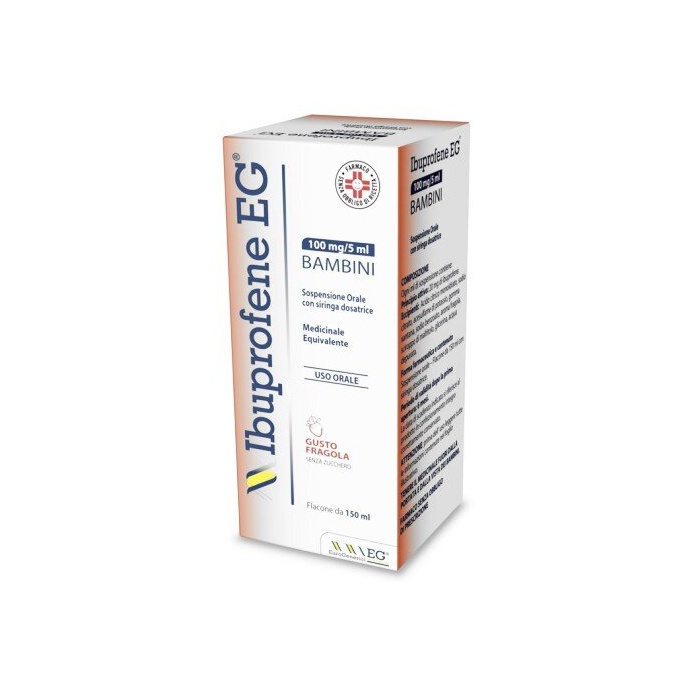
IBUPROFENE 100 mg /5 Ml Oral Suspension

Запит на рецепт онлайн
Лікар розгляне ваш випадок і визначить, чи є рецепт медично доцільним.

Поговоріть з лікарем про ці ліки
Обговоріть симптоми та можливі подальші кроки під час короткої онлайн-консультації.



Інструкція із застосування IBUPROFENE EG
Зміст інструкції
IBUPROFENE EG Children 100 mg/5 ml oral suspension strawberry flavour sugar-free, orange sugar-free
Ibuprofen
Generic medicine
Read this leaflet carefully before giving this medicine to your child as it contains
important information for you.
Always give this medicine to your child exactly as described in this leaflet, or as your
doctor or pharmacist has told you to do.
- Keep this leaflet. You may need to read it again.
- If you want more information or advice, ask your pharmacist.
- If any side effects occur, including those not listed in this leaflet, tell your doctor or pharmacist. See section 4.
- Talk to your doctor if you do not see any improvement or if your symptoms get worse after:
- 24 hours (in infants aged between 3 and 5 months);
- 3 days (in infants and children over 6 months of age and in adolescents).
Contents of this leaflet:
- 1. What is IBUPROFENE EG and what it is used for
- 2. What you need to know before giving IBUPROFENE EG to your child
- 3. How to give IBUPROFENE EG to your child
- 4. Possible side effects
- 5. How to store IBUPROFENE EG
- 6. Contents of the pack and other information
1. What is Ibuprofene EG and what is it used for
Ibuprofene EG contains ibuprofen which belongs to a group of medicines called non-steroidal anti-inflammatory drugs (NSAIDs) whose action allows to reduce pain, fever and inflammation.
Ibuprofene EG is indicated in children from 3 months to 12 years for the symptomatic treatment of fever, including post-vaccination fever, and mild to moderate pain (such as headache, toothache, sore throat, earache).
2. What you need to know before giving Ibuprofene EG to your child
Do not give Ibuprofene EG to the child
- If they are allergic to the active ingredient (ibuprofen) or to any of the other ingredients of this medicine (listed in section 6).
- If they have experienced or have had in the past allergic reactions such as wheezing, rhinitis (runny nose), swelling of the face, lips and throat (angioedema) or hives, especially if associated with nasal polyps and asthma, after taking other analgesics, other antipyretics, acetylsalicylic acid and other non-steroidal anti-inflammatory drugs (NSAIDs).
- If they suffer from a severe kidney or liver disease (renal or hepatic insufficiency).
- If they suffer from serious heart problems (severe heart failure).
- If they suffer or have suffered from bleeding of the stomach and/or intestines (gastrointestinal hemorrhage) or perforation following previous treatments based on NSAIDs.
- If they suffer or have suffered from gastric/duodenal ulcers (peptic ulcers) or ongoing or recurrent bleeding (at least two distinct episodes of demonstrated ulceration or bleeding).
- If they are taking other non-steroidal anti-inflammatory drugs (NSAIDs, including selective COX-2 inhibitors) (see section Other medicines and Ibuprofene EG).
- If they have any disease that increases the risk of bleeding.
- In case of unexplained blood disorders.
- If they are in a severe state of dehydration, for example, they have had severe episodes of vomiting, diarrhea or drink very little.
- If they are under 3 months of age or weigh less than 5.6 kg. Do not take Ibuprofene EGin the last trimester of pregnancy (see Pregnancy and breastfeeding).
Warnings and precautions - Pay particular attention with Ibuprofene EG
Consult your doctor or pharmacist before using Ibuprofene EG if the child:
- suffers or has suffered from allergy to medicines used to treat fever, pain and inflammation (non-steroidal anti-inflammatory drugs) and if they suffer from difficulty breathing (asthma), seasonal allergies (hay fever), nasal polyps, if they have serious respiratory problems or in the chest, e.g. chronic obstructive pulmonary disease, swelling of the face, lips and throat (angioedema);
- is taking other medicines used for the treatment of pain, to lower fever and/or to cure inflammation (non-steroidal anti-inflammatory drugs, NSAIDs including COX inhibitors -
- 2) (see section Other medicines and Ibuprofene EG);
- has suffered from stomach and intestinal disorders (history of ulcer), especially if complicated by bleeding or perforation, as this may increase gastrointestinal bleeding and perforations. In these cases, the doctor will advise you to start treatment with the lowest available dose and possibly the concomitant use of medicines that protect the stomach (misoprostol or proton pump inhibitors). This should also be considered if you are taking low doses of aspirin or other medicines that may increase the risk of stomach and intestinal diseases (see section Other medicines and Ibuprofene EG). During treatment with all NSAIDs, at any time, with or without warning symptoms or a previous history of serious gastrointestinal events, bleeding, ulceration and perforation of the stomach or intestines may occur, which may be fatal. Therefore, inform the doctor of any unusual gastrointestinal symptom (especially gastrointestinal bleeding) particularly in the early stages of treatment. If bleeding or gastrointestinal ulceration occurs, stop treatment with Ibuprofene EG and contact your doctor;
- suffers or has suffered from an inflammatory bowel disease (ulcerative colitis, Crohn's disease) as these diseases may worsen (see section Possible side effects);
- is taking medicines that may increase the risk of ulcer or bleeding, such as medicines used to treat inflammation and some diseases of the immune system (oral corticosteroids), anticoagulants such as warfarin, medicines that may
have an antiplatelet effect such as aspirin, medicines to treat depression (selective serotonin reuptake inhibitors) (see section Other medicines and Ibuprofene EG);
The use of Ibuprofene EG requires adequate precautions, especially if the child:
- suffers or has suffered from asthma because breathing difficulties may worsen;
- suffers from blood clotting problems or hypertension;
- suffers from kidney, heart, liver diseases if they take medicines that increase urine production (diuretics), or if they have undergone major surgery with consequent fluid loss, as in these cases your doctor may advise you to perform periodic blood and urine tests on the child;
- has undergone major surgery;
- suffers from some congenital diseases that affect blood formation (for example, acute intermittent porphyria); is dehydrated (for example due to fever, vomiting or diarrhea), in this case rehydrate them before and during treatment to avoid the risk of impaired kidney function.
During prolonged treatments, with Ibuprofene EG, you must pay particular attention and
immediately warn the doctor if the following appear:
- signs or symptoms of ulcerations or bleeding of the stomach and intestines (for example, black and foul-smelling stools, vomiting with blood);
- signs or symptoms of liver damage (for example, hepatitis and jaundice);
- signs or symptoms of kidney damage (for example, increased urine production, blood in the urine);
- visual disturbances (blurred or reduced vision, areas of complete or partial blindness, altered color perception);
- symptoms such as frequent or daily headaches despite regular use of headache medicines, as these may be caused by overuse of these medicines;
- symptoms such as headache, disorientation, nausea, vomiting, stiff neck and fever as these may be symptoms due to aseptic meningitis (more frequent if the child suffers from systemic lupus erythematosus or other collagen diseases).
Signs of an allergic reaction to this medicine, including
breathing problems, swelling of the face and neck (angioedema) and chest pain have been reported with ibuprofen. Stop Ibuprofene EG immediately and contact your doctor or emergency health service immediately if you notice any of these signs.
Skin reactions
Serious skin reactions including exfoliative dermatitis, erythema multiforme, Stevens-Johnson syndrome, toxic epidermal necrolysis, drug reaction with eosinophilia and systemic symptoms (DRESS), acute generalized exanthematous pustulosis (AGEP) have been reported in association with treatment with ibuprofen. Stop using Ibuprofene EG and contact your doctor immediately
if you notice any of the symptoms related to these serious skin reactions described in paragraph
- 4.
Infections
Ibuprofene EG can mask the symptoms of infections such as fever and pain. It is therefore possible that
Ibuprofene EG may delay adequate treatment of the infection, which may
increase the risk of complications. This has been observed in pneumonia caused by bacteria and
skin infections related to chickenpox. If you take this medicine while you have
an infection and the symptoms of the infection persist or worsen, consult your doctor immediately.
Children and adolescents
In dehydrated children and adolescents there is a risk of impaired kidney function.
Other medicines and Ibuprofene EG
Tell your doctor or pharmacist if your child is taking, has recently taken or
may take any other medicines, including those available without a prescription.
Ibuprofene EG can influence or be influenced by other medicines, in particular inform
the doctor if the child is taking:
- other medicines used for the treatment of pain, to lower fever and/or to cure inflammation (non-steroidal anti-inflammatory drugs, NSAIDs including COX-2 inhibitors or acetylsalicylic acid). In this case, such associations should be avoided as they increase the risk of possible side effects;
- medicines used to treat inflammation and some diseases of the immune system (corticosteroids);
- antibacterials: possible increase in the risk of seizures caused by antibiotic drugs known as quinolones;
- medicines that have an anticoagulant effect (i.e. substances that thin the blood preventing the formation of clots, e.g. acetylsalicylic acid, warfarin, ticlopidine);
- medicines used to treat depression such as selective serotonin reuptake inhibitors;
- a medicine used to treat seizures (phenytoin);
- antidiabetic medicines to treat high blood sugar levels (sulfonylureas);
- a medicine to treat viral infections (ritonavir);
- medicines that modulate the immune response (tacrolimus and cyclosporine);
- a medicine used in the treatment of cancer and rheumatism (methotrexate);
- a medicine used for mental illnesses (lithium);
- a medicine for termination of pregnancy (mifepristone): do not take NSAIDs in the 8-12 days following taking mifepristone;
- a medicine to treat gout (probenecid and sulfinpyrazone);
- medicines that lower blood pressure (ACE inhibitors such as captopril, beta-blockers such as atenolol, angiotensin II antagonists such as losartan) and diuretics;
- potassium-sparing diuretics;
- CYP2C9 inhibitors (e.g. voriconazole, fluconazole) as the concomitant administration of ibuprofen and CYP2C9 inhibitors may slow down the elimination of ibuprofen (a CYP2C9 substrate) resulting in an increased exposure to ibuprofen;
- medicines used to treat heart disease (cardiac glycosides such as digoxin);
- zidovudine (a medicine for the treatment of HIV/AIDS).
Ibuprofene EG with food and drink
The medicine can be taken both with and without meals.
Possible side effects on the stomach, if present, can be reduced by taking
the medicine on a full stomach.
Pregnancy and breastfeeding
If you are pregnant, suspect you are pregnant or are planning a pregnancy, or if you are breastfeeding
ask your doctor or pharmacist before taking this medicine.
Pregnancy
It is unlikely that subjects under 12 years of age will become pregnant or breastfeed.
In this eventuality, do not take this medicine during the last 3 months of pregnancy because
it can cause problems for your baby and during childbirth. Avoid using this medicine
during the first 6 months of pregnancy, unless prescribed by your doctor.
This medicine can cause problems with the baby's kidneys and heart. In addition, it may affect
your and the baby's tendency to bleed and delay or prolong labor more than expected. You should not take ibuprofen in the first 6 months of pregnancy unless absolutely
necessary and under the advice of a doctor. If treatment is needed in this period or
during attempts to conceive, the minimum dose should be used for the shortest possible time. If taken for more than a few days from the 20th week of pregnancy, ibuprofen can
cause kidney problems in the fetus which can lead to low levels of amniotic fluid surrounding
the baby (oligohydramnios) or narrowing of a blood vessel (ductus arteriosus) in the baby's heart. If treatment is needed for more than a few days, the doctor may
recommend additional monitoring.
Breastfeeding
This medicine passes in small amounts into breast milk. It can be used during
breastfeeding if taken at the recommended doses and for short periods of time.
Fertility
The medicine belongs to a group of drugs (NSAIDs) that can impair fertility
in women. This effect is reversible upon discontinuation of the drug.
Ibuprofene EG contains maltitol
If you have been diagnosed with an intolerance to certain sugars, consult your doctor before taking
this medicine.
Ibuprofene EG contains sodium
This medicine contains 4.51 mg of sodium (the main component of table salt) per each
2.5 ml dose of suspension. This is equivalent to 0.23% of the maximum recommended daily
intake with the diet of an adult.
Ibuprofene EG does not contain sugar and is therefore suitable for patients who need to
control their sugar and calorie intake.
This medicine contains potassium, less than 1 mmol (39 mg) per each 2.5 ml dose, i.e.
essentially ‘potassium-free’.
3. How to give Ibuprofene EG to the child
Give this medicine to the child always following exactly what is reported in this
package leaflet or the instructions of the doctor or pharmacist. If you have doubts, consult the doctor or pharmacist.
The recommended daily dose is based on the weight and age of the child.
The lowest effective dose should be used for the shortest period necessary to relieve the
symptoms. If you have an infection, consult your doctor immediately if the symptoms (for example
fever and pain) persist or worsen (see paragraph 2).
To reduce possible side effects, the minimum effective dose should be used for the shortest
time necessary to control the symptoms (see paragraph 4).
Use in children between 3 and 6 months of age
- In childrenbetween 3 and 6 monthsof age, limit administration to those weighing more than 5.6 kg.
- The daily dose for oral administration to infants and childrenbetween 3 months and 12 yearscan be administered using the dosing syringe provided with the product.
The daily dose of 20-30 mg/kg of body weight, divided into 3 times a day at intervals of 6-8
hours, can be administered based on the following scheme (calculate the dose to be administered
based on the weight shown in the table and the age of the child).
The graduated scale on the syringe highlights the markings for the different dosages; in
particular, the 2.5 ml mark corresponding to 50 mg of ibuprofen and the 5 ml mark
corresponding to 100 mg of ibuprofen.
| Body weight | a Indicative age | Single dose in ml | Maximum number of administrations/day |
| From 5.6 kg | i
| 2.5 ml | 3 in 24 hours |
| From 7 kg | z
| 2.5 ml | |
| From 10 kg |
| 5 ml | |
| From 15 kg | n
| 7.5 ml (5 ml + 2.5 ml) | |
| e From 20 kg |
| 10 ml | |
| From 28 to 43 kg |
| 15 ml |
If the child suffers from stomach problems, administer Ibuprofene EG preferably during
meals.
In the case of post-vaccination fever, refer to the recommended daily dosage in the
scheme above.
Ibuprofene EG should be administered for short-term treatments.
The lowest effective dose should be used for the shortest period necessary to relieve the
symptoms. If you have an infection, consult your doctor immediately if the symptoms (for
example fever and pain) persist or worsen (see paragraph 2).
Consult your doctor if you do not notice any improvement or if you notice a worsening of the symptoms after:
- 24 hours in infants between 3 and 5 months of age;
- 3 days in infants and children over 6 months of age and in adolescents.
Instructions for using the dosing syringe:
- 1- Unscrew the cap by pushing it down and turning it to the left.
- 2- Insert the tip of the syringe fully into the hole in the stopper.
- 3- Shake well.
- 4- Turn the bottle upside down, then, holding the syringe firmly, gently pull the plunger down, drawing the suspension into the syringe up to the mark corresponding to the desired dose.
- 5- Put the bottle back in a vertical position and remove the syringe by gently rotating it.
- 6- Insert the tip of the syringe into the child's mouth, and apply slight pressure to the plunger to dispense the suspension. After use, screw the cap back on to close the bottle and wash the syringe with warm water. Let it dry, keeping it out of the sight and reach of children.
If you take more Ibuprofene EG than you should
If you have taken more Ibuprofene EG than you should or if your child has taken this medicine
by mistake, always contact a doctor or the nearest hospital to get an opinion on the
risk and advice on the actions to be taken.
Symptoms of overdose may include: nausea, stomach pain, vomiting (possibly with
traces of blood), deep sleep with reduced response to normal stimuli
(lethargy), headache, ringing in the ears, confusion and uncontrolled eye movements. At
high doses, drowsiness, chest pain, palpitations, loss of consciousness, have been reported
convulsions (especially in children), weakness and dizziness, blood in the urine, low levels of
potassium in the blood, feeling cold to the body and breathing problems.
The symptoms of an overdose may appear within 4-6 hours of taking ibuprofen.
Rarely it may present: uncontrolled eye movements (nystagmus), increased acids in the
blood (metabolic acidosis), lowering of body temperature (hypothermia), effects on
the kidney, bleeding from the stomach and intestines, deep loss of consciousness
(coma), temporary interruption of breathing (apnea), diarrhea, reduction of the activity of the nervous system (depression of the Central Nervous System) and of the respiratory system (depression of the
respiratory system).
In addition, it may also manifest: disorientation, state of excitement, fainting, lowering of
blood pressure (hypotension), decrease or increase in heartbeats (bradycardia
or tachycardia).
If you take significantly high doses of ibuprofen, you may experience serious damage to the
kidneys and liver.
If you forget to take Ibuprofene EG
Do not take a double dose to make up for the missed dose.
If you have any doubts about using this medicine, ask your doctor or pharmacist.
4. Possible side effects
Like all medicines, this medicine can cause side effects, although not everyone will experience them.
If the child experiences any of the following side effects, STOP treatment with
Ibuprofene EG and consult a doctor:
- chest pain, which may be a sign of a potentially serious allergic reaction called Kounis syndrome;
- non-raised, reddish, target-shaped or circular spots on the trunk, often with central blisters, skin peeling, mouth, throat, nose, genital and eye ulcers. These severe skin rashes may be preceded by fever and flu-like symptoms [exfoliative dermatitis, erythema multiforme, Stevens-Johnson syndrome, toxic epidermal necrolysis];
- widespread rash, high body temperature and swollen lymph nodes (DRESS syndrome);
- widespread, red and scaly rash, with bumps under the skin and blisters, accompanied by fever. The symptoms usually appear at the beginning of treatment (acute generalized exanthematous pustulosis);
- allergic reactions, even serious ones, which may include: hives, itching, purpura, swelling of the face, mouth and throat (angioedema), difficulty breathing (bronchospasm or dyspnea), altered heartbeat (tachycardia), low blood pressure (hypotension), anaphylaxis, shock and worsening of asthma;
- aseptic meningitis with symptoms such as disorientation, headache, nausea, vomiting, stiff neck and fever (more frequent if the child suffers from systemic lupus erythematosus or other connective tissue diseases).
Further side effects include:
Uncommon (may affect up to 1 in 100 people):
- headache, dizziness, drowsiness and convulsions;
- stomach pain, nausea and difficulty digesting (dyspepsia);
- skin rashes;
- visual disturbances.
Rare (may affect up to 1 in 1,000 people):
- cystitis, rhinitis;
- depression, insomnia, difficulty concentrating, unstable mood, hearing disorders;
- cerebrovascular haemorrhage;
- dry eyes;
- perception of your heartbeat (palpitations);
- diarrhoea, flatulence, dry mouth, constipation and vomiting;
- hair loss (alopecia), the skin becomes sensitive to light;
- serious kidney diseases including tubular necrosis, glomerulonephritis, appearance of blood in the urine and increased urine production;
- decreased levels of hematocrit.
Very rare (may affect up to 1 in 10,000 people):
- reduction in the number of blood cells (anemia, leucopenia, thrombocytopenia, eosinophilia, pancytopenia, agranulocytosis) - the first signs are: fever, sore throat, superficial mouth ulcers, flu-like symptoms, severe fatigue, nosebleeds and haemorrhages;
- signs or symptoms of ulcers or bleeding in the stomach and intestines, black and foul-smelling stools, vomiting blood;
- lesions with bleeding of the mouth, heartburn (gastritis);
- simultaneous disease of the kidneys and liver (hepatorenal syndrome), death of some liver cells (hepatic necrosis), liver disease (liver failure, hepatic dysfunction, hepatitis, jaundice);
- serious kidney diseases (acute renal failure, papillary necrosis) particularly following long-term treatments, associated with an increased concentration of urea in the blood and swelling (edema);
- decrease in hemoglobin levels in the blood;
- heart attack (myocardial infarction);
- severe skin and soft tissue infections during varicella infection;
- worsening of inflammation related to infections (e.g. necrotizing fasciitis) associated with the use of some non-steroidal anti-inflammatory drugs (NSAIDs). If you experience or worsen signs of an infection, you should immediately contact your doctor to assess whether infectious/antibiotic therapy is necessary.
Not known (frequency cannot be estimated from the available data):
- irritability;
- fluid retention and decreased appetite;
- perception of abnormal noises such as ringing, buzzing or hissing (tinnitus);
- serious heart disease (heart failure) and swelling (edema);
- increased blood pressure (hypertension) and reduced blood flow to the body (shock);
- respiratory disorders including asthma, laryngeal obstruction, labored breathing (bronchospasm), temporary cessation of breathing (apnea) and difficulty breathing (dyspnea);
- worsening of inflammatory bowel diseases (colitis and Crohn's disease), inflammation of the pancreas (pancreatitis), inflammation of the duodenum (duodenitis), inflammation of the esophagus (esophagitis);
- it is possible that a serious skin reaction known as DRESS syndrome may occur. The symptoms of DRESS include: rash, fever, swollen lymph nodes and increased eosinophils (a type of white blood cells);
- a widespread, red and scaly rash, with the formation of pustules under the skin and blisters located mainly on the skin folds, trunk and upper limbs accompanied by fever at the beginning of treatment (acute generalized exanthematous pustulosis). Stop using Ibuprofene EG if you develop these symptoms and contact your doctor immediately. See also paragraph 2.
The use of ibuprofen, especially at high doses (2400 mg/day), may be associated with a modest
increased risk of heart attack (myocardial infarction) or stroke.
Reporting of side effects
If you experience any side effects, including those not listed in this leaflet, tell your
doctor or pharmacist. You can also report side effects directly through
the national reporting system at https://www.aifa.gov.it/content/segnalazioni-
reazioni-avverse . By reporting side effects you can help provide more
information on the safety of this medicine.
5. How to store Ibuprofene EG
Keep this medicine out of the sight and reach of children.
Do not use this medicine after the expiry date which is stated on the label after “Scad”. The
expiry date refers to the last day of that month.
The product must be used within 6 months of first opening.
Do not dispose of any medicine in wastewater or household waste. Ask your pharmacist how to
dispose of medicines you no longer use. This will help protect the environment.
6. Contents of the pack and other information
What Ibuprofene EG contains
Ibuprofene EG Children 100 mg/5 ml oral suspension strawberry flavour sugar-free
- The active ingredient is ibuprofen. Each ml of oral suspension contains 20 mg of ibuprofen.
- The other ingredients are: citric acid monohydrate, sodium citrate, acesulfame potassium, xanthan gum, sodium benzoate, strawberry flavour, maltitolsyrup, glycerol, purified water.
Ibuprofene EG Children 100 mg/5 ml oral suspension orange flavour sugar-free
- The active ingredient is ibuprofen. Each ml of oral suspension contains 20 mg of ibuprofen.
- The other ingredients are: citric acid monohydrate, sodium citrate, acesulfame potassium, xanthan gum, sodium benzoate, orange flavour, maltitolsyrup, glycerol, purified water.
Description of the appearance of Ibuprofene EG and contents of the pack
The pack contains the oral suspension in a 150 ml amber-coloured bottle with a child-resistant closure and a 5 ml dosing syringe.
Marketing Authorisation Holder
EG S.p.A. Via Pavia, 6 – 20136 Milano
Manufacturer
Special Product’s Line S.p.A., Via Fratta Rotonda Vado Largo, 1 - 03012 Anagni (FR) (Italy)

Не впевнені, чи підходить вам цей лікарський засіб?
Обговоріть симптоми та можливі варіанти лікування з лікарем онлайн.

Виникли питання під час прийому ліків?
Обговоріть свої симптоми та лікування з лікарем онлайн.
- Країна реєстрації
- Лікарська формаOral suspension, 100 MG/5 ML
- Код АТХM01AE01
- Діюча речовина
- Потрібен рецептНі
- Виробник
- Ця інформація надана лише для ознайомлення і не є медичною порадою. Рішення щодо лікування завжди приймає лікар.
- Альтернативи до IBUPROFENE EGЛікарська форма: Film-coated tablet, 200 MGДіюча речовина: ИбупрофенВиробник: AURORA LICENSING SRLРецепт не потрібенЛікарська форма: Oral suspension, 20 MG/MLДіюча речовина: ИбупрофенВиробник: DICOFARM S.P.A.Рецепт не потрібенЛікарська форма: Coated tablet, 200 MGДіюча речовина: ИбупрофенРецепт не потрібен
Аналоги IBUPROFENE EG в інших країнах
Препарати з тією самою діючою речовиною, доступні в інших країнах.
Аналог IBUPROFENE EG у Іспанія
Аналог IBUPROFENE EG у Польща
Аналог IBUPROFENE EG у Україна
Лікарі онлайн щодо IBUPROFENE EG
Застосування, безпека та можливість призначення рецепта — за результатами медичної оцінки.









Отримайте рецепт на IBUPROFENE EG онлайн
Заповніть форму за 2 хвилини
Розкажіть про симптоми, історію хвороби та потрібний препарат.
Оберіть лікаря або ми призначимо
Оберіть спеціаліста або ми підберемо найближчого доступного лікаря.
Лікар розглядає ваш випадок
Зазвичай протягом 30 хвилин. Може ставити уточнювальні запитання в чаті.
Отримайте в будь-якій аптеці
Електронний рецепт надсилається на вашу пошту — дійсний по всій Польщі.
Часті запитання
IBUPROFENE EG не потребує рецепта в Італія. Ви можете обговорити з лікарем онлайн, чи підходить цей лікарський засіб для вашої ситуації.
Діюча речовина у IBUPROFENE EG — Ибупрофен. Це допомагає визначити препарати з тим самим складом, але під іншими торговими назвами.
IBUPROFENE EG виробляється компанією EG S.P.A.. Назва бренду та упаковка можуть відрізнятися залежно від дистрибʼютора.
Лікарі, зокрема Сімейні лікарі, Психіатри, Дерматологи, Кардіологи, Ендокринологи, Гастроентерологи, Пульмонологи, Нефрологи, Ревматологи, Гематологи, Інфекціоністи, Алергологи, Геріатри, Педіатри, Онкологи, можуть оцінити доцільність застосування IBUPROFENE EG з урахуванням вашого стану та місцевих правил. Ви можете записатися на онлайн-консультацію, щоб обговорити симптоми та можливі подальші кроки.
Польща має добре розвинену систему охорони здоров'я у великих містах, таких як Варшава, Краків, Вроцлав і Гданськ. Аптеки широко доступні та працюють відповідно до чинного законодавства, забезпечуючи доступ до рецептурних препаратів.
Ви можете придбати IBUPROFENE EG у Варшаві, Кракові, Вроцлаві або Гданську в будь-якій аптеці за наявності дійсного рецепта.
Щоб отримати рецепт, ви можете скористатися Oladoctor:
Інші препарати з тією самою діючою речовиною (Ибупрофен) включають ABIDOL, ALJIDRIN, ALGOFEN. Вони можуть відрізнятися торговою назвою або формою випуску, але містять той самий терапевтичний компонент. Перед зміною або початком прийому нового препарату варто проконсультуватися з лікарем.
