



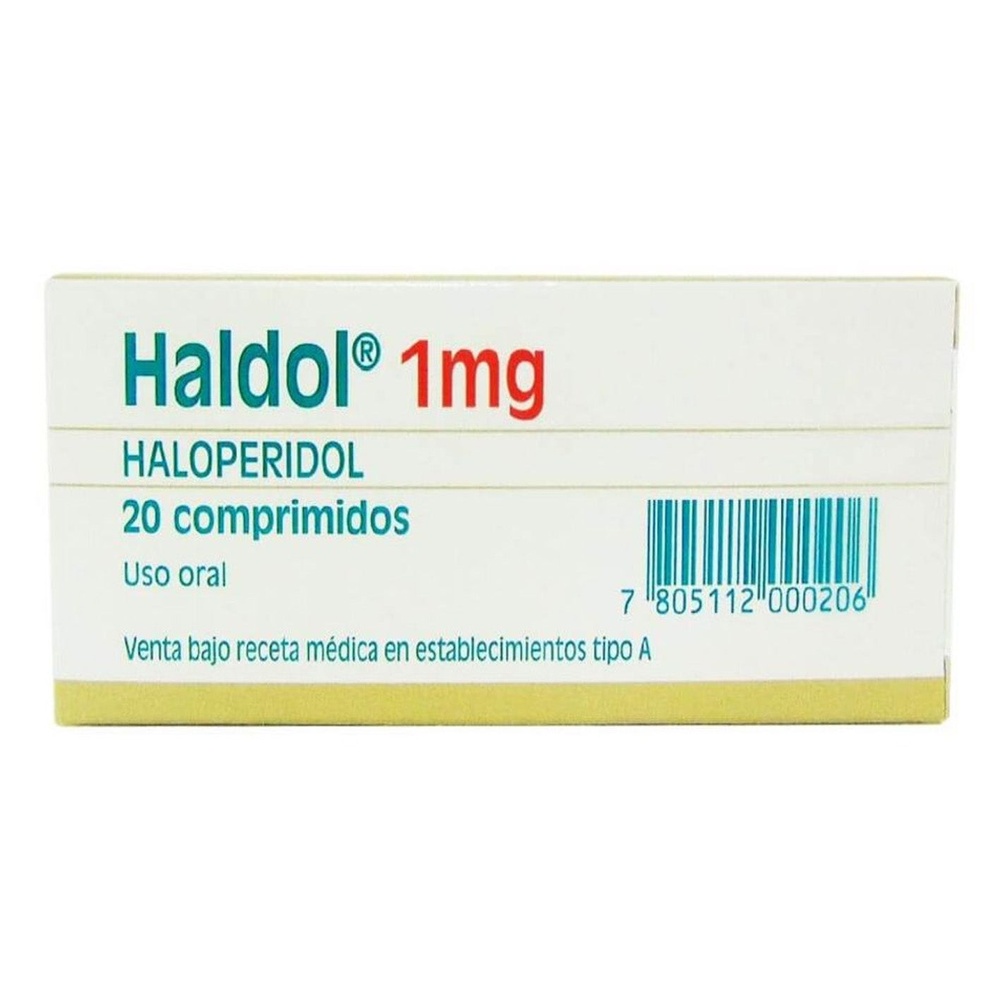
HALDOL 1 mg Tablet

Запит на рецепт онлайн
Лікар розгляне ваш випадок і визначить, чи є рецепт медично доцільним.

Поговоріть з лікарем про ці ліки
Обговоріть симптоми та можливі подальші кроки під час короткої онлайн-консультації.



Інструкція із застосування ALDOL
Зміст інструкції
Haldol 2 mg/ml oral solution
aloperidol
Read this leaflet carefully before using this medicine as it contains important information for you.
- Keep this leaflet. You may need to read it again.
- If you have any questions, ask your doctor or pharmacist.
- This medicine has been prescribed for you only. Do not pass it on to others, even if their symptoms are the same as yours, as it could be harmful.
- If you get any side effects, even those not listed in this leaflet, tell your doctor or pharmacist. See section 4. Contents of this leaflet
- 1. What Haldol is and what it is used for
- 2. What you need to know before you take Haldol
- 3. How to take Haldol
- 4. Possible side effects
- 5. How to store Haldol
- 6. Contents of the pack and other information
1. What is Haldol and what is it used for
The name of the medicine is Haldol.
Haldol contains the active substance haloperidol. This belongs to a group of medicines called
“antipsychotics”.
Haldol is used in adults, adolescents and children for illnesses that affect the way they
think, feel and behave. These include mental health problems (such as schizophrenia and
bipolar disorder) and behavioral disorders.
These illnesses can cause:
- - feeling confused (delusions)
- - seeing, hearing or perceiving smells of things that are not there (hallucinations)
- - believing things that are not true (delusions)
- - feeling unusually suspicious (paranoia)
- - feeling very excited, agitated, enthusiastic, impulsive or hyperactive
- - feeling very aggressive, hostile or violent.
In adolescents and children, Haldol is used to treat schizophrenia in patients aged 13 to 17 years
and to treat behavioral disorders in patients aged 6 to 17 years.
Haldol is also used:
- in adults, adolescents and children aged 10 to 17 years and in adults, for movements or sounds that they cannot control (tics), for example in severe Tourette's syndrome
- in adults to help control movements in Huntington's disease. Haldol is sometimes used when other medicines or treatments have not worked or have caused unacceptable side effects.
2. What you need to know before you take Haldol
Do not take Haldol:
- - if you are allergic to haloperidol or any of the other ingredients of this medicine (listed in section 6)
- - if you are less aware of things around you or your reactions become unusually slow after drinking alcohol or after taking other medicines
- - if you have Parkinson's disease
- - if you suffer from a type of dementia called “dementia with Lewy bodies”
- - if you have progressive supranuclear palsy (PSP)
- - if you have a heart condition called “prolonged QT interval”, or any other problem with your heart rhythm that shows up as an abnormal tracing on an ECG (electrocardiogram)
- - if you suffer from heart failure or have recently had a heart attack
- - if you have a low level of potassium in your blood, which has not been treated
- - if you are taking any of the medicines listed under ”Other medicines and Haldol - Do not use Haldol if you are taking certain medicines for”. The medicine must not be used if you experience any of the following conditions. If you have doubts, ask your doctor or pharmacist before taking Haldol.
Warnings and precautions
Serious side effects
Haldol can cause heart problems, problems with controlling your body or the movement of your limbs, and a
serious side effect called “neuroleptic malignant syndrome”. It can also cause serious allergic reactions and blood clots. You need to be aware of the serious side effects while using
Haldol because urgent medical treatment may be needed. See “Read carefully about serious side effects” in section 4.
Elderly and people with dementia
A slight increase in events of death and stroke has been reported in elderly people with dementia who are taking
antipsychotic medicines. Talk to your doctor or pharmacist before using Haldol if you are elderly, especially
if you suffer from dementia.
Talk to your doctor or pharmacist if you have:
- a slow heartbeat, heart disease or someone in your family has suddenly died of heart problems
- low blood pressure, or you feel dizzy when you stand up or sit down
- a low level of potassium or magnesium (or another “electrolyte”) in your blood. Your doctor will decide how to treat it
- ever had a bleed in the brain, or your doctor has told you that you are more likely than other people to have a stroke
- epilepsy or have ever had seizures (convulsions)
- problems with your kidneys, liver or thyroid
- a high level of the hormone “prolactin” in your blood, or a cancer that can be caused by high levels of prolactin (such as breast cancer)
- a history of blood clots, or someone else in your family has a history of blood clots
- depression, or if you have bipolar disorder and start to feel depressed. You may need to be monitored more closely, and the amount of Haldol you take may need to be adjusted.
If you are not sure whether any of the above conditions apply to you, ask your doctor or pharmacist
before taking Haldol.
Medical checks
Your doctor may prescribe an electrocardiogram (ECG) before or during treatment with Haldol.
The ECG measures the electrical activity of your heart.
Blood tests
Your doctor may decide to check the levels of potassium or magnesium (or another “electrolyte”) in
your blood before or during treatment with Haldol.
Children under 6 years of age
Haldol should not be used in children under 6 years of age. This is because it has not been adequately studied
in this age group.
Other medicines and Haldol
Tell your doctor or pharmacist if you are taking, have recently taken or might take any
other medicines.
Do not use Haldol if you are taking certain medicines for
- problems with your heartbeat (such as amiodarone, dofetilide, disopyramide, dronedarone, ibutilide, quinidine and sotalol)
- depression (such as citalopram and escitalopram)
- psychoses (such as fluphenazine, levomepromazine, perphenazine, pimozide, prochlorperazine, promazine, sertindole, thioridazine, trifluoperazine, triflupromazine and ziprasidone)
- bacterial infections (such as azithromycin, clarithromycin, erythromycin, levofloxacin, moxifloxacin and telithromycin)
- fungal infections (such as pentamidine)
- malaria (such as halofantrine)
- nausea and vomiting (such as dolasetron)
- cancer (such as toremifene and vandetanib). Also tell your doctor if you are taking bepridil (for chest pain or to lower blood pressure) or methadone (a painkiller or for the treatment of drug addiction). These medicines can increase the risk of heart problems, so tell your doctor if you are taking any of these medicines and do not take Haldol (see “Do not take Haldol if”).
Special monitoring may be needed if you are using lithium and Haldol at the same time.
Tell your doctor immediately and stop taking both medicines if:
- you have a fever that you cannot explain or movements that you cannot control
- you are confused, disoriented, have a headache, problems with balance and drowsiness. These are signs of a serious condition.
Some medicines can affect how Haldol works or you may have
heart problems or similar
Tell your doctor if you are taking:
- alprazolam or buspirone (for anxiety)
- duloxetine, fluoxetine, fluvoxamine, nefazodone, paroxetine, sertraline, St John's Wort (Hypericum perforatum) or venlafaxine (for depression)
- bupropion (for depression or to help you stop smoking)
- carbamazepine, phenobarbital or phenytoin (for epilepsy)
- rifampicin (for bacterial infections)
- itraconazole, posaconazole or voriconazole (for fungal infections)
- ketoconazole tablets (for the treatment of Cushing's syndrome)
- indinavir, ritonavir or saquinavir (for the human immunodeficiency virus or HIV)
- chlorpromazine and promethazine (for nausea and vomiting)
- verapamil (for high blood pressure or heart problems). Also tell your doctor if you are taking other medicines to lower your blood pressure, such as diuretics (water tablets).
Your doctor may change the dose of Haldol if you are taking any of these medicines.
Haldol can affect how the following types of medicines work
Tell your doctor if you are taking medicines for:
- calming down or for sleeping (tranquillizers)
- pain (strong painkillers)
- depression (“tricyclic antidepressants”)
- lowering blood pressure (such as guanethidine and methyldopa)
- severe allergic reactions (adrenaline)
- attention deficit hyperactivity disorder (ADHD) or narcolepsy (known as "stimulants")
- Parkinson's disease (such as levodopa)
- thinning your blood (phenindione). Tell your doctor before taking Haldol if you are taking any of these medicines.
Haldol and alcohol
Drinking alcohol while taking Haldol may make you feel sleepy and less alert. This
means you need to be careful about how much alcohol you drink. Discuss with your doctor
about alcohol use while taking Haldol and tell your doctor about the amount of alcohol you drink.
Pregnancy, breastfeeding and fertility
Pregnancy- if you are pregnant, suspect you are pregnant or are planning to become pregnant, ask your
doctor for advice. Your doctor may advise you not to use Haldol during pregnancy.
The following problems may occur in newborns of mothers who use Haldol in the last 3 months of
pregnancy (the last trimester):
- muscle tremors, weakness or stiffness
- being sleepy or agitated
- breathing or feeding problems. The exact frequency of these problems is unknown. If Haldol has been used during pregnancy and the baby develops any of these side effects, contact your doctor.
Breastfeeding- tell your doctor if you are breastfeeding or are planning to breastfeed. This
because small amounts of the medicine can pass into breast milk and to the baby. Your doctor will
explain the risks and benefits of breastfeeding while taking Haldol.
Fertility- Haldol can increase the levels of a hormone called “prolactin”, which can affect
fertility in both men and women. Ask your doctor if you have any questions about this.
Driving and using machines
Haldol can affect your ability to drive and use tools and machines. Side effects, such as
drowsiness, may affect your attention, particularly if you are taking it for the first time
or after an increase in the dose. This medicine can impair your ability to drive. Do not drive or use
tools or machines until you have discussed this with your doctor.
Haldol oral solution contains methyl-parahydroxybenzoate
Methyl-parahydroxybenzoate can cause allergic reactions (including delayed reactions).
The oral drops of HALDOL contain para-hydroxybenzoates. They can cause allergic reactions (including
delayed reactions).
3. How to take Haldol
Always take this medicine exactly as your doctor or pharmacist has told you. Check with your
doctor or pharmacist if you are not sure.
How much medicine to take
Your doctor will tell you how many tablets to take and for how long. Your doctor will also tell you whether to take
Haldol one or more times a day. It may take some time before you feel the full effect of the
medicine. Usually your doctor will give you a low dose to start with, and then adjust the dose that is right for you.
It is very important to take the correct amount.
The dose of aloperidol will depend on:
- your age
- what you are being treated for
- if you have problems with your kidneys or liver
- other medicines you are taking
Adults
- The dose will normally be between 0.5 and 10 mg per day.
- - Your doctor may change it to find the dose that is right for you.
- The maximum dose that adults should take depends on the condition being treated and ranges from 5 to 20 mg per day.
Elderly
- Elderly people will normally start with 0.5 mg per day or with half the lowest adult dose.
- The amount of Haldol to be taken will be adjusted until your doctor finds the dose that is right for you.
- The maximum dose that elderly people should take is 5 mg per day, unless your doctor decides that a higher dose is needed.
Children and adolescents from 6 to 17 years of age
- - The dose will normally be between 0.5 mg and 3 mg per day
- - Adolescents up to 17 years of age treated for schizophrenia or behavioral disorders may require a higher dose, up to 5 mg per day. Taking Haldol
- - Haldol is for oral use.
- - You can mix Haldol drops in a little water before taking it, but do not mix it with other liquids. Dropper container:
- Remove the cap from the bottle by pushing it down while turning it counterclockwise.
- Turn the bottle upside down over a spoon.
- Gently press on the sides of the bottle and count the number of drops you need to take.
- Drink the solution immediately.
- Close the bottle.
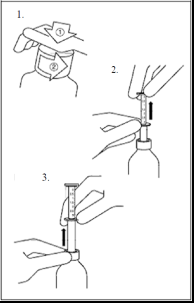
Bottle with oral syringe
You must take the solution using the oral syringe.
- - Place the bottle on a flat surface.
- - Remove the cap from the bottle by pressing it down then rotating it counterclockwise (figure 1).
- - One end of the syringe is equipped with a plunger. Insert the opposite end into the bottle. Holding the lower ring resting on the syringe, pull the upper ring upwards. Continue until the mark corresponding to the number of milliliters (ml) or milligrams (mg) is just visible (figure 2).
- - Holding the lower ring, completely remove the syringe from the bottle (figure 3).
- - Empty the contents of the syringe into a spoon or cup. Do this by sliding the upper ring down while continuing to hold the lower ring.
- - Drink the solution immediately.
- - Close the bottle then rinse the syringe with water.
If you take more Haldol than you should
If you take more Haldol than you have been told or if someone else has taken Haldol, consult your doctor or
go to the emergency room of the nearest hospital.
If you forget to take Haldol
- - If you forget to take a dose, take the next dose as usual. Then continue to take the medicine as your doctor has told you.
- - Do not take a double dose.
If you stop taking Haldol
Unless your doctor tells you otherwise, you should stop Haldol gradually. Suddenly stopping treatment can cause effects such as:
- - nausea and vomiting
- - sleep disturbances. Always follow your doctor's instructions carefully.
If you have any questions about using this medicine, ask your doctor or pharmacist.
4. Possible side effects
Like all medicines, this medicine can cause side effects, although not everyone will experience them.
manifest.
Read carefully about serious side effects
Inform your doctor if you notice or suspect any of the following serious side effects. Urgent medical treatment may be needed.
Heart problems
- Abnormal heart rhythm - this stops the heart from working normally and can cause loss of consciousness.
- Excessively fast heartbeat
- Extra heartbeats. Heart problems are uncommon in people who use Haldol (may affect up to 1 in 100 people). Sudden deaths have occurred in patients taking this medicine, but the exact frequency of these deaths is unknown. Cardiac arrest (the heart stops beating) has also occurred in people taking antipsychotic medicines.
A serious problem called “neuroleptic malignant syndrome”.This causes high fever,
severe muscle rigidity, confusion and loss of consciousness. It is rare in people using Haldol
(may affect up to 1 in 1,000).
Problems with controlling body or limb movements (extrapyramidal disorders), such as:
- movements of the mouth, tongue, jaw and sometimes the limbs (tardive dyskinesia)
- feeling restless or difficulty staying still, increased body movements
- slow or reduced body movements, spasms or twisting movements
- muscle tremors or stiffness, walking with dragging feet
- being unable to move
- lack of a normal facial expression that sometimes appears as a mask. These are very common in people who use Haldol (may affect more than 1 in 10). If you experience any of these effects, you may be given an additional medicine. Serious allergic reactionwhich may include:
- swelling of the face, lips, mouth, tongue or throat
- difficulty swallowing or breathing
- skin rashes (urticaria). An allergic reaction is uncommon in people who use Haldol (may affect up to 1 in 100).
Blood clots in the veins, usually in the legs(deep vein thrombosis or DVT). These
have been reported in people taking antipsychotic medicines. Signs of a DVT in the leg
include swelling, pain and redness in the leg, but the clot can move to the lungs
causing chest pain and difficulty breathing. Blood clots can be very serious,
therefore inform your doctor immediately if you notice any of these problems.
Inform your doctor immediately if you notice any of the above serious side effects.
Other side effects
Inform your doctor if you notice or suspect any of the following side effects.
Very common(may affect more than 1 in 10 people)
- Feeling agitated
- Difficulty sleeping
- Headache. Common(may affect up to 1 in 10 people)
- Serious mental health problem, such as believing things that are not true (manias) or seeing, hearing or smelling things that are not there (hallucinations)
- Depression
- Abnormal muscle tension
- Feeling dizzy, even when getting up or sitting down
- Drowsiness
- Upward movement of the eyes or rapid eye movements that you cannot control
- Vision problems, such as blurred vision.
- Low blood pressure
- Nausea, vomiting
- Constipation
- Dry mouth or increased salivation
- Skin rash
- Being unable to urinate or completely empty the bladder
- Difficulty getting and maintaining an erection (impotence)
- Weight gain or loss
- Changes that appear in liver blood tests.
Uncommon(may affect up to 1 in 100 people)
- Effects on blood cells - low number of all types of blood cells, including serious decreases in white blood cells and low number of “platelets” (cells that help blood clotting)
- Feeling confused
- Loss of sexual desire or decreased sexual desire
- Seizures (convulsions)
- Stiff muscles and joints
- Muscle spasms, spasms or contractions that you cannot control, including a spasm in the neck causing the head to twist to one side
- Problems walking
- Being short of breath
- Inflammation of the liver or a liver problem causing yellowing of the skin or eyes (jaundice)
- Increased sensitivity to sunlight
- Itching
- Excessive sweating
- Changes in the menstrual cycle (periods), such as no period, or long, heavy, painful periods
- Unexpected production of milk from the breast
- Breast pain or discomfort
- High body temperature
- Swelling caused by fluid buildup in the body.
Rare(may affect up to 1 in 1,000 people)
- High level of the hormone “prolactin” in the blood
- Narrowing of the airways in the lungs, causing difficulty breathing
- Difficulty or being unable to open the mouth
- Problems having sexual intercourse.
The following side effects have also been reported, but their exact frequency is unknown
- High level of the “antidiuretic hormone” in the blood (syndrome of inappropriate antidiuretic hormone secretion)
- Low blood sugar level
- Swelling around the larynx, or brief spasm of the vocal cords that can cause difficulty speaking or breathing
- Sudden liver failure
- Decreased flow of bile into the bile duct
- Exfoliation or flaking of the skin
- Inflammation of small blood vessels, leading to a rash with small red or purple bumps
- Muscle tissue breakdown (rhabdomyolysis)
- Persistent and painful erection of the penis
- Enlargement of the breasts in men
- Low body temperature.
Reporting of side effects
If you get any side effect, even if not listed in this leaflet, tell your
doctor or pharmacist. You can also report side effects directly through the national reporting system at
http://www.agenziafarmaco.gov.it/content/come-segnalare-una-
sospetta-reazione-avversa.
By reporting side effects you can help provide more information on the safety of
this medicine.
5. How to store Haldol
Keep this medicine out of the sight and reach of children.
Do not use this medicine after the expiry date which is stated on the blister or the carton after Exp. The
expiry date refers to the last day of that month. Once the bottle is opened, use it within 3
months.
This medicine does not require any particular storage conditions.
Do not dispose of any medicine in wastewater or household waste. Ask your pharmacist how to
dispose of medicines you no longer use. This will help protect the environment.
6. Package contents and other information
What Haldol contains
Dropper container:
The active ingredient is haloperidol. Each drop of oral solution contains 0.1 mg of haloperidol (each ml
contains 2 mg of haloperidol).
The other ingredients are: methyl parahydroxybenzoate (E218), lactic acid and purified water.
Bottle with oral syringe:
The active ingredient is haloperidol. Each drop of oral solution contains 2 mg of haloperidol.
The other ingredients are: methyl parahydroxybenzoate (E218), lactic acid and purified water.
Description of the appearance of Haldol and contents of the pack
Dropper container:
Haldol is a clear, colorless solution. It is supplied in a dropper container, equipped with a
child-resistant, tamper-evident cap, containing 15 or 30 ml of solution.
Not all pack sizes may be marketed
Bottle with oral syringe:
Haldol is a clear, colorless solution. It is supplied in an amber glass bottle, with a
child-resistant, tamper-evident cap, and contains 100 ml of solution. The pack contains
an oral syringe with calibration in millimeters, milligrams or both.
Marketing Authorisation Holder
Essential Pharma Limited,
Vision Exchange Building
Triq it-Territorjals, Zone 1,
Central Business District,
Birkirkara, CBD 1070,
Malta
Manufacturer Baixo, 2730-055 Barcarena, Portugal.> This medicinal product is authorised in the Member States of the European Union with the following names: Bottle with oral syringe: Conversion table for HALDOL oral solution (2 mg/ml) aloperidol Read this leaflet carefully before using this medicine as it contains important information for you. The name of the medicine is Haldol. Haldol is also used in adults: Haldol can be used alone or with other medicines, and it is sometimes used when other medicines or treatments Do not use Haldol: Warnings and precautions Elderly people and people with dementia Talk to your doctor if you have: You may need to be monitored more closely, and the amount of Haldol you receive may need to be changed. Medical checks Blood tests Children and adolescents Other medicines and Haldol Do not use Haldol if you are taking certain medicines for: Special monitoring may be needed if you use lithium and Haldol at the same time. Some medicines can affect how Haldol works or create heart problems or similar Also tell your doctor if you are taking other medicines to lower your blood pressure, such as Haldol can affect how the following types of medicines work: Haldol and alcohol Pregnancy, breastfeeding and fertility Breastfeeding- tell your doctor if you are breastfeeding or are planning to breastfeed. Fertility- Haldol can increase the levels of a hormone called ‘prolactin’, which can affect Driving and using machines How much medicine you will receive Adults Elderly How Haldol will be given If you forget a dose or receive too much Haldol If you stop using Haldol If you have any questions about using this medicine, ask your doctor, pharmacist or nurse. Like all medicines, this medicine can cause side effects, although not everyone gets them. Read carefully about serious side effects Heart problems A serious problem called “malignant neuroleptic syndrome”.This causes high fever, Problems with controlling body or limb movements (extrapyramidal disorders), such as: Other side effects Very common(may affect more than 1 in 10 people) Common(may affect up to 1 in 10 people) Uncommon(may affect up to 1 in 100 people) Rare(may affect up to 1 in 1,000 people) The following side effects have also been reported, but their exact frequency is unknown Reporting side effects Keep this medicine out of the sight and reach of children. What Haldol contains Description of the appearance of Haldol and contents of the pack Marketing Authorisation Holder Manufacturer This medicinal product is authorised in the Member States of the European Union with the following names: More detailed information on this medicine is available on the website of the European
Janssen Pharmaceutica NV, Turnhoutseweg, 30 B-2340 Beerse, (Belgium)
More detailed information on this medicine is available on the website of the European
Medicines Agency, http://www.ema.europa.eu/
<------------------------------------------------------------------------------------------------------------------------>
The following information is intended for healthcare professionals only.
Dropper container.
Haldol oral solution in a dropper container is intended to be used for doses up to 2 mg of
haloperidol (equivalent to 20 drops).
The number of drops needed to achieve a given dose using Haldol oral solution is
presented below.
Conversion table for Haldol oral solution (2 mg/ml)
mg of haloperidolNumber of drops of Haldol
(dropper container)
0.1 mg 1 drop
0.2 mg 2 drops
0.3 mg 3 drops
0.4 mg 4 drops
0.5 mg 5 drops
1 mg 10 drops
2 mg 20 dropsAustria, Belgium, Cyprus, France, Italy, Luxembourg, Netherlands, Portugal, Sweden, United Kingdom: l Haldol Denmark, Finland: e Serenase Germany: Haldol-Janssen Greece: d Aloperidin
HALDOL oral solution supplied in a bottle with oral syringe is intended to be used in
single doses of 0.5 mg of haloperidol and above (equivalent to 0.25 ml and above).
The amount (ml) required to achieve a given dose using HALDOL oral solution is presented
below.
mg of haloperidolml of HALDOL
(bottle with oral syringe
for oral use)
0.5 mg 0.25 ml
1 mg 0.5 ml
2 mg 1 ml
5 mg 2.5 mlHaldol 5 mg/ml injectable solution
1. What is Haldol and what is it used for
Haldol contains the active substance haloperidol. This belongs to a group of medicines called
“antipsychotics”.
Haldol is used in adults for illnesses that affect the way you think, feel and behave. These
include mental health problems (such as schizophrenia and bipolar disorder) and behavioural
disorders.
These illnesses can make you:
have not worked, have caused unacceptable side effects or cannot be taken by
mouth.2. What you need to know before receiving Haldol
Serious side effects
Haldol can cause heart problems, problems with controlling your body or the movement of your limbs, and a
serious side effect called “neuroleptic malignant syndrome”. It can also cause severe allergic reactions and blood clots. You need to be aware of the serious side effects while using
Haldol because urgent medical treatment may be needed. See “Read carefully about serious side effects” in section 4.
A slight increase in deaths and strokes has been reported in elderly people with dementia who are taking
antipsychotic medicines. Talk to your doctor before using Haldol if you are elderly, especially if you suffer from
dementia.
If you are not sure whether any of the above conditions apply to you, ask your doctor or nurse
before you are given Haldol.
Your doctor may prescribe an electrocardiogram (ECG) before or during treatment with Haldol.
The ECG measures the electrical activity of your heart.
Your doctor may decide to check the levels of potassium or magnesium (or another “electrolyte”) in
your blood before or during treatment with Haldol
Haldol should not be used in children and adolescents under 18 years of age. This is because it has not
been studied in these age groups.
Tell your doctor, pharmacist or nurse if you are taking, have recently taken or might
take any other medicines.
Tell your doctor immediately and stop taking both medicines if:
Tell your doctor if you are taking:
diuretics (medicines to help you urinate).
Your doctor may need to change the dose of Haldol if you are taking any of these medicines.
Tell your doctor if you are taking medicines for:
Drinking alcohol while you are taking Haldol may make you feel sleepy and less alert. This means
you need to be careful about how much alcohol you drink. Discuss with your doctor about alcohol use
while taking Haldol and tell your doctor about the amount of alcohol you drink.
Pregnancy- If you are pregnant, suspect you are pregnant or are planning to become pregnant, ask
for advice from your doctor. Your doctor may advise you not to use Haldol during pregnancy.
The following problems can occur in newborn babies of mothers who use Haldol in the last 3 months of
pregnancy (the last trimester):
This is because small amounts of the medicine can pass into breast milk and to the baby. Your doctor
will assess the risks and benefits of breastfeeding while using Haldol.
fertility in both men and women. Ask your doctor if you have any questions about this.
Haldol can affect your ability to drive and use tools or machines. Side effects, such as
drowsiness, can affect your attention, especially when you use it for the first time or after
a high dose. This medicine can alter your ability to drive. Do not drive or use tools or
machines until you have discussed this with your doctor.3. How to use Haldol
The doctor will decide how much Haldol is needed and for how long. It may take some time
before you feel the full effect of the medicine. Usually the doctor will give you a low dose to start, and
then adjust the dose that is right for you. The dose of aloperidol will depend on:
Haldol will be given to you by a doctor or nurse. It is for intramuscular use and will be
given by an injection into a muscle.
A doctor or nurse will give you the medicine, so it is unlikely that you will forget a
dose or receive too much. If you are worried, tell the doctor or nurse.
Unless the doctor decides otherwise, Haldol will be stopped gradually. Suddenly stopping
treatment can cause effects such as:4. Possible side effects
manifest.
Tell your doctor or nurse if you notice or suspect any of the following serious side effects. You may
need urgent medical treatment.
severe muscle rigidity, confusion and loss of consciousness. It is rare in people using Haldol
(may affect up to 1 in 1,000).
Tell your doctor if you notice or suspect any of the following side effects.
If you get any side effects, even those not listed in this leaflet, tell your
doctor, pharmacist or nurse. You can also report side effects directly through
the national reporting system at www.agenziafarmaco.gov.it/it/responsabili.
By reporting side effects you can help provide more information on the safety of
this medicine.5. How to store Haldol
Haldol must not be used after the expiry date which is stated on the label and the carton after
Scad >. The expiry date refers to the last day of that month.
Store in the original package to protect the medicine from light.6. Contents of the pack and other information
The active ingredient is haloperidol. Each ml of injectable solution contains 5 mg of haloperidol. The other
ingredients are lactic acid and water for injections.
Haldol is a clear and colourless solution without visible particles. It is supplied in a glass vial
amber colour containing 1 ml of solution in packs of 1, 5, 30 (3 packs of 10) or
50 (10 packs of 5) vials.
Not all pack sizes may be marketed.
Essential Pharma Limited,
Vision Exchange Building
Triq it-Territorjals, Zone 1,
Central Business District,
Birkirkara, CBD 1070,
Malta
GlaxoSmithKline Manufacturing S.p.A. Strada Provinciale Asolana N. 90 (loc. San Polo)
43056 Torrile (PR)
Italy.
Janssen Pharmaceutica NV,
Turnhoutseweg 30,
2340 Beerse,
Belgiumg Austria, Belgium, Cyprus, France, Ireland, Italy, A Luxembourg, Netherlands, Norway, Sweden, United Kingdom: Haldol Denmark, Finland: Serenase Germany: Haldol-Janssen Greece: Aloperidin
Medicines Agency, http://www.ema.europa.eu/

Не впевнені, чи підходить вам цей лікарський засіб?
Обговоріть симптоми та можливі варіанти лікування з лікарем онлайн.
Haldol 1 mg tablets, 5 mg tablets
haloperidol
Read this leaflet carefully before taking this medicine as it contains important information for you.
- Keep this leaflet. You may need to read it again.
- If you have any questions, ask your doctor or pharmacist.
- This medicine has been prescribed for you only. Do not pass it on to others, even if they have the same symptoms as you, as it may be harmful.
- If you get any side effects, even those not listed in this leaflet, tell your doctor or pharmacist. See section 4. Contents of this leaflet
- 1. What Haldol is and what it is used for
- 2. What you need to know before you take Haldol
- 3. How to take Haldol
- 4. Possible side effects
- 5. How to store Haldol
- 6. Contents of the pack and other information
1. What is Haldol and what is it used for
The name of the medicine is Haldol.
Haldol contains the active substance haloperidol. This belongs to a group of medicines called
“antipsychotics”.
Haldol is used in adults, adolescents and children for illnesses that affect the way they
think, feel and behave. These include mental health problems (such as schizophrenia and
bipolar disorder) and behavioral disorders.
These illnesses can cause:
- feeling confused (delusions)
- seeing, hearing or smelling things that are not there (hallucinations)
- believing things that are not true (delusions)
- feeling unusually suspicious (paranoia)
- feeling very excited, agitated, enthusiastic, impulsive or hyperactive
- feeling very aggressive, hostile or violent.
In adolescents and children, Haldol is used to treat schizophrenia in patients aged 13 to 17 years
and to treat behavioral disorders in patients aged 6 to 17 years.
Haldol is also used:
- in adolescents and children aged 10 to 17 years and in adults, for movements or sounds that you cannot control (tics), for example in severe Tourette's syndrome
- in adults to help control movements in Huntington's disease.
Haldol is sometimes used when other medicines or treatments have not worked or have caused unacceptable
side effects.
2. Cosa deve sapere prima di prendere Haldol
Non prenda Haldol
- se è allergico all’aloperidolo o ad uno qualsiasi degli altri componenti di questo medicinale (elencati al paragrafo 6)
- se è meno consapevole di cose intorno a lei o le sue reazioni diventano insolitamente lente
- se ha il morbo di Parkinson
- se soffre di un tipo di demenza chiamata “demenza a corpi di Lewy”
- se ha paralisi sopranucleare progressiva (PSP)
- se ha una condizione del cuore chiamata “intervallo QT prolungato”, o qualsiasi altro problema con il ritmo cardiaco che si manifesta come un tracciato anomalo su un ECG (elettrocardiogramma)
- se soffre di insufficienza cardiaca o recentemente ha avuto un attacco di cuore
- se ha un basso livello di potassio nel sangue, che non è stato trattato
- se assume uno dei farmaci elencati sotto “Altri medicinali e Haldol - Non usi Haldol se sta prendendo farmaci per” Non prenda il farmaco se manifesta una delle seguenti condizioni. Se ha dubbi, consulti il medico o il farmacista prima di prendere Haldol.
Avvertenze e precauzioni
Effetti indesiderati gravi
Haldol può causare problemi al cuore, problemi di controllo del corpo o dei movimenti degli arti e un
effetto collaterale grave chiamato “sindrome neurolettica maligna”. Può anche causare gravi reazioni
allergiche e coaguli di sangue. È necessario essere consapevoli dei gravi effetti collaterali durante l’uso di
Haldol perché potrebbe essere necessario un trattamento medico urgente. Vedere “Legga attentamente gli
effetti collaterali gravi” nel paragrafo 4.
Anziani e persone con demenza
E’ stato riportato un lieve aumento di eventi di morte e ictus in anziani con demenza che assumono
farmaci antipsicotici. Si rivolga al medico o al farmacista prima di usare Haldol se è anziano, soprattutto
se soffre di demenza.
Si rivolga al medico o al farmacista se ha:
- un battito lento del cuore, malattie cardiache o qualcuno nella famiglia è morto improvvisamente per problemi cardiaci
- pressione sanguigna bassa, o si sente confuso quando si alza o si siede
- un basso livello di potassio o di magnesio (o di un altro “elettrolita”) nel sangue. Il medico deciderà come trattarlo
- mai avuto un sanguinamento nel cervello, o il medico le ha detto che ha maggiori probabilità rispetto ad altre persone di avere un ictus
- epilessia o ha mai avuto crisi (convulsioni)
- problemi ai reni, al fegato o alla tiroide
- un elevato livello dell’ormone “prolattina” nel sangue, o un cancro che può essere causato da alti livelli di prolattina (come il cancro al seno)
- storia di coaguli di sangue, o qualcun altro nella famiglia ha una storia di coaguli di sangue
- depressione o disturbo bipolare e inizia a sentirsi depresso.
Potrebbe essere necessario essere monitorati più attentamente, e modificare la quantità di Haldol che
assume.
Se non è sicuro che una delle condizioni sopra descritte sia valida per lei, consulti il medico o il farmacista
prima di assumente Haldol.
Controlli medici
Il medico può prescriverle un elettrocardiogramma (ECG) prima o durante il trattamento con Haldol.
L’ECG misura l’attività elettrica del cuore.
Analisi del sangue
Il medico può decidere di controllare i livelli di potassio o di magnesio (o di un altro “elettrolita”) nel
sangue prima o durante il trattamento con Haldol.
Bambini al di sotto dei 6 anni di età
Haldol non deve essere usato nei bambini al di sotto dei 6 anni di età. Questo perché non è stato
adeguatamente studiato in questo gruppo di età.
Altri medicinali e Haldol
Informi il medico o il farmacista se sta assumendo, ha recentemente assunto o potrebbe assumere qualsiasi
altro medicinale.
Non usi Haldol se sta prendendo alcuni farmaci per:
- problemi con il battito cardiaco (come ad esempio amiodarone, dofetilide, disopiramide, dronedarone, ibutilide, chinidina e sotalolo)
- la depressione (come ad esempio il citalopram e l’escitalopram)
- le psicosi (come ad esempio flufenazina, levomepromazina, perfenazina, pimozide, proclorperazina, promazina, sertindolo, tiorizadina, trifluoperazina, triflupromazina e ziprasidone)
- le infezioni batteriche (come ad esempio azitromicina, claritromicina, eritromicina, levofloxacina, moxifloxacina e telitromicina)
- le infezioni fungine (come ad esempio pentamidina)
- la malaria (come ad esempio alofantrina)
- la nausea e il vomito (come ad esempio dolasetron)
- il cancro (come ad esempio toremifene e vandetanib). Inoltre informi il medico se sta assumendo bepridil (per il dolore toracico o per abbassare la pressione del sangue) o metadone (un antidolorifico o per il trattamento della tossicodipendenza). Questi farmaci possono aumentare i rischi di problemi al cuore, perciò informi il medico se sta assumendo uno qualsiasi di questi medicinali e non prenda Haldol (vedere “Non prenda Haldol se”).
Può essere necessario un monitoraggio speciale se si prende il litio e Haldol allo stesso tempo.
Informi il medico immediatamente e interrompa l’assunzione di entrambi i farmaci se:
- ha febbre che non sa spiegare o movimenti che non può controllare
- è confuso, disorientato, ha mal di testa, problemi di equilibrio e sonnolenza. Questi sono segni di una condizione grave.
Alcuni medicinali possono influenzare il modo in cui Haldol funziona o possono provare
disturbi cardiaci o simili
Informi il medico se sta assumendo:
- alprazolam o buspirone (per l’ansia)
- duloxetina, fluoxetina, fluvoxamina, nefazodone, paroxetina, sertralina, Erba di San Giovanni (Hypericum perforatum) o venlafaxina (per la depressione)
- bupropione (per la depressione o per aiutare a smettere di fumare)
- carbamazepina, fenobarbital o fenitoina (per l’epilessia)
- rifampicina (per le infezioni batteriche)
- itraconazolo, posaconazolo o voriconazolo (per le infezioni fungine)
- ketoconazolo compresse (per il trattamento della sindrome di Cushing)
- indinavir, ritonavir o saquinavir (per il virus dell’immunodeficienza umana o HIV)
- clorpromazina o prometazina (per la nausea e il vomito)
- verapamil (per la pressione arteriosa o per problemi al cuore). Inoltre informi il medico se sta assumendo altri farmaci per abbassare la pressione sanguigna, come ad esempio medicinali per urinare (diuretici).
Il medico può modificare la dose di Haldol se sta assumendo uno di questi medicinali.
Haldol può influenzare il modo in cui le seguenti tipologie di medicinali agiscono
Informi il medico se sta assumendo farmaci per:
- calmarsi o per dormire (tranquillanti)
- il dolore (forti antidolorifici)
- la depressione (“antidepressivi triciclici”)
- la riduzione della pressione arteriosa (come guanetidina e metildopa)
- gravi reazioni allergiche (adrenalina)
- il disturbo da deficit di attenzione e iperattività (ADHD) o la narcolessia (noti come “stimolanti”)
- la malattia di Parkinson (come levodopa)
- fluidificare il sangue (fenindione). Informi il medico prima di prendere Haldol se sta assumendo uno di questi medicinali.
Haldol e alcol
Bere alcol mentre si sta prendendo Haldol, potrebbe farla sentire assonnato e meno vigile. Questo significa
che deve fare attenzione alla quantità di alcol che beve. Discuta con il medico a proposito dell’uso di alcol
mentre si prende Haldol e informi il medico sulla quantità di alcol che beve.
Gravidanza, allattamento e fertilità
Gravidanza- se è in corso una gravidanza, se sospetta o sta pianificando una gravidanza, chieda consiglio
al medico. Il medico può consigliarle di non prendere Haldol durante la gravidanza.
I seguenti problemi possono verificarsi in neonati di madri che prendono Haldol negli ultimi 3 mesi di
gravidanza (l’ultimo trimestre):
- tremori muscolari, debolezza o rigidità muscolare
- essere assonnato o agitato
- problemi di respirazione o di alimentazione. La frequenza esatta di questi problemi è sconosciuta. Se è stato preso Haldol durante la gravidanza e il bambino sviluppa uno qualsiasi di questi effetti collaterali, si rivolga al proprio medico. Allattamento- informi il medico se sta allattando al seno o se sta pianificando di allattare al seno. Questo perché piccole quantità di farmaco possono passare nel latte materno e al bambino. Il suo medico la informerà sui rischi e sui benefici dell’allattamento al seno mentre sta prendendo Haldol.
Fertilità- Haldol può aumentare i livelli di un ormone chiamato “prolattina”, che possono influenzare la
fertilità in uomini e donne. Informi il medico se ha qualsiasi domanda in merito.
Guida di veicoli e utilizzo di macchinari
Haldol può influenzare la sua capacità di guidare e usare attrezzi e macchinari. Effetti collaterali, come
sonnolenza, potrebbero influenzare la sua attenzione, in particolare se lo sta assumendo per la prima volta
o dopo una dose elevata. Non guidare o usare strumenti o macchinari, senza discutere prima di questo con
il medico.
Compresse da 1 mg:
Le compresse di Haldol da 1 mg contengono lattosio e saccarosio
Se il medico ha diagnosticato una intolleranza ad alcuni zuccheri, lo contatti prima di prendere questo
medicinale.
Compresse da 5 mg:
Le compresse di Haldol da 5 mg contengono lattosio
Se il medico ha diagnosticato una intolleranza ad alcuni zuccheri, lo contatti prima di prendere questo
medicinale.
Haldol 5 mg compresse contiene sodio
Questo medicinale contiene meno di 1mmol (23 mg) di sodio ogni 4 compresse (che equivalgono alla
massima dose giornaliera di HALDOL), cioè è essenzialmente “senza sodio”.
3. How to take Haldol
Always take this medicine exactly as your doctor or pharmacist has told you. Check with your
doctor or pharmacist if you are not sure.
How much medicine to take
Your doctor will tell you how many tablets to take and for how long. Your doctor will also tell you whether to take
Haldol one or more times a day. It may take some time before you feel the full effect of the
medicine. Usually your doctor will give you a low dose to start with, and then adjust the dose that is right for you.
It is very important to take the correct amount.
The dose of haloperidol will depend on:
- your age
- what you are being treated for
- if you have kidney or liver problems
- other medicines you are taking
Adults
- The dose will normally be between 0.5 and 10 mg per day.
- Your doctor may change it to find the dose that is right for you.
- The maximum dose that adults should take depends on the condition being treated and ranges from 5 to 20 mg per day. Elderly
- Elderly people will normally start with 0.5 mg per day or with half the lowest adult dose.
- The number of tablets to take will be adjusted until your doctor finds the dose that is right for you.
- The maximum dose that elderly people should take is 5 mg per day, unless your doctor decides that a higher dose is needed.
Children and adolescents from 6 to 17 years of age
- The dose will normally be between 0.5 mg and 3 mg per day.
- Adolescents up to 17 years of age treated for schizophrenia or behavioral disorders may receive a higher dose, up to 5 mg per day. Taking Haldol
- Haldol is for oral use.
- Swallow the tablets with a little water.
If you take more Haldol than you should
If you take more Haldol than you have been told or if someone else has taken Haldol, consult your doctor or
go to the emergency room of the nearest hospital.
If you forget to take Haldol
- If you forget to take a dose, take the next dose as usual. Then continue to take the medicine as your doctor has told you.
- Do not take a double dose.
If you stop taking Haldol
Unless your doctor decides otherwise, you should stop Haldol gradually. Sudden interruption of treatment may cause effects such as:
- nausea and vomiting
- sleep disturbances. Always follow your doctor’s instructions carefully.
If you have any questions about the use of this medicine, ask your doctor or pharmacist.
4. Possible side effects
Like all medicines, this medicine can cause side effects, although not everyone gets them.
Read carefully about serious side effects
Tell your doctor if you notice or suspect any of the following serious side effects. Urgent medical treatment may be needed.
Heart problems
- Abnormal heart rhythm - this stops the heart working normally and can cause loss of consciousness.
- Heartbeat excessively fast.
- Extra heartbeats. Heart problems are uncommon in people taking Haldol (may affect up to 1 in 100 people). Sudden deaths have occurred in patients taking this medicine, but the exact frequency of these deaths is unknown. Cardiac arrest (the heart stops beating) has also occurred in people taking antipsychotic medicines. A serious problem called “neuroleptic malignant syndrome”.This causes high fever, severe muscle stiffness, confusion and loss of consciousness. It is rare in people taking Haldol (may affect up to 1 in 1,000).
Problems with controlling body movements or limbs (extrapyramidal disorders), such as:
- movements of the mouth, tongue, jaw and sometimes the limbs (tardive dyskinesia)
- feeling restless or difficulty staying still, increased body movements
- slow or reduced body movements, spasms or twisting movements
- muscle tremors or stiffness, walking with dragging feet
- being unable to move
- lack of a normal facial expression which sometimes appears as a mask. These are very common in people taking Haldol (may affect more than 1 in 10). If you experience any of these effects, you may be given an additional medicine. Serious allergic reactionwhich can include:
- swelling of the face, lips, mouth, tongue or throat
- difficulty swallowing or breathing
- skin rashes (urticaria). An allergic reaction is uncommon in people taking Haldol (may affect up to 1 in 100).
Blood clots in the veins, usually in the legs(deep vein thrombosis or DVT). These
have been reported in people taking antipsychotic medicines. Signs of a DVT in the leg
include swelling, pain and redness in the leg, but the clot can move to the lungs
causing chest pain and difficulty breathing. Blood clots can be very serious,
therefore tell your doctor immediately if you notice any of these problems.
Tell your doctor immediately if you notice any of the above serious side effects.
Other side effects
Tell your doctor if you notice or suspect any of the following side effects.
Very common(may affect more than 1 in 10 people)
- Feeling agitated
- Difficulty sleeping
- Headache.
Common(may affect up to 1 in 10 people)
- Serious mental health problem, such as believing things that are not true (delusions) or seeing, hearing, or perceiving smells of things that are not there (hallucinations)
- Depression
- Abnormal muscle tension
- Feeling dizzy, even when getting up or sitting down
- Drowsiness
- Eyes moving upwards or rapid eye movements that you cannot control
- Problems with vision, such as blurred vision
- Low blood pressure
- Nausea, vomiting
- Constipation
- Dry mouth or increased salivation
- Skin rash
- Being unable to urinate or empty your bladder completely
- Difficulty getting or maintaining an erection (impotence)
- Weight gain or loss
- Changes that appear in liver blood tests.
Uncommon(may affect up to 1 in 100 people)
- Effects on blood cells - low number of all types of blood cells, including serious decreases in white blood cells and low number of platelets (cells that help blood to clot)
- Feeling confused
- Loss of sexual desire or decreased sexual desire
- Seizures (convulsions)
- Stiff muscles and joints
- Muscle spasms, jerks or contractions that you cannot control, including a spasm in the neck causing the head to twist to one side
- Problems with walking
- Being short of breath
- Inflammation of the liver or a liver problem causing yellowing of the skin or eyes (jaundice)
- Increased sensitivity of the skin to sunlight
- Itching
- Excessive sweating
- Changes in the menstrual cycle (periods), such as no period, or long, heavy, painful periods
- Unexpected production of milk from the breast
- Breast pain or discomfort
- High body temperature
- Swelling caused by fluid build-up in the body. Rare(may affect up to 1 in 1,000)
- High level of the hormone “prolactin” in the blood
- Narrowing of the airways in the lungs, causing difficulty breathing
- Difficulty or being unable to open your mouth
- Problems having sexual intercourse.
The following side effects have also been reported, but their exact frequency is unknown
- High level of the “antidiuretic hormone” in the blood (syndrome of inappropriate antidiuretic hormone secretion)
- Low blood sugar
- Swelling around the voice box, or brief spasm of the vocal cords which can cause difficulty speaking or breathing
- Sudden liver failure
- Decreased flow of bile in the bile duct
- Peeling or flaking of the skin
- Inflammation of small blood vessels, leading to a skin rash with small red or purple bumps
- Breakdown of muscle tissue (rhabdomyolysis)
- Persistent and painful erection of the penis
- Enlargement of the breasts in men
- Low body temperature
Reporting of side effects
If you get any side effect, talk to your doctor, pharmacist or nurse. This includes any side effects not listed in this leaflet. You can also report side effects directly through
the national reporting system at http://www.agenziafarmaco.gov.it/content/come-segnalare-
una-sospetta-reazione-avversa . By reporting side effects you can help provide more
information on the safety of this medicine.
5. How to store Haldol
Keep this medicine out of sight and reach of children.
Do not use this medicine after the expiry date which is stated on the blister or the carton
The expiry date refers to the last day of that month.
This medicine does not require any particular storage conditions.
Store at a temperature not exceeding 25°C. Do not dispose of any medicine in wastewater or household waste. Ask your pharmacist how to dispose of medicines you no longer use. This will help to
protect the environment.
6. Contents of the pack and other information
What Haldol contains
1 mg tablets:
The active ingredient is haloperidol. Each tablet contains 1 mg of haloperidol.
The other ingredients are: lactose monohydrate, corn starch, sucrose, talc and hydrogenated cottonseed oil.
5 mg tablets:
The active ingredient is haloperidol. Each tablet contains 5 mg of haloperidol.
The other ingredients are: lactose monohydrate, corn starch, talc, hydrogenated cottonseed oil and
sodium indigotine disulfonate (E132).
Description of the appearance of Haldol and contents of the pack
1 mg tablets:
Haldol 1 mg tablets are white and round with a cross engraved on one side and “JANSSEN”
on the other. The tablets are available in blisters containing 20, 30, 40, 50, 60, 100, 400 or 500 tablets
and in bottles containing 500 tablets.
5 mg tablets:
Haldol 5 mg tablets are blue and round with a cross engraved on one side and “JANSSEN” on the other. The
tablets are available in blisters containing 20, 25, 30, 50, 60, 100, 150, 250 or 300 tablets.
Not all pack sizes may be marketed.
Marketing authorisation holder
Essential Pharma Limited,
Vision Exchange Building
Triq it-Territorjals, Zone 1,
Central Business District,
Birkirkara, CBD 1070,
Malta
Manufacturer
Lusomedicamenta Sociedade Técnica Farmacêutica, S.A., Estrada Consiglieri Pedroso, 69 – B Queluz de
Baixo, 2730-055 Barcarena, Portugal
This medicinal product is authorised in the Member States of the European Union with the following names:
More detailed information on this medicine is available on the website of the European
Medicines Agency, http://www.ema.europa.eu/
| a Austria, Belgium, Cyprus, France, Ireland, Italy, i Luxembourg, Malta, Netherlands, Norway, Portugal, Romania, Sweden: | Haldol |
| z Denmark, Finland: | Serenase |
| Germany: | Haldol-Janssen |
| n Greece: | Aloperidin |

Виникли питання під час прийому ліків?
Обговоріть свої симптоми та лікування з лікарем онлайн.
- Країна реєстрації
- Лікарська формаTablet, 1 MG
- Код АТХN05AD01
- Діюча речовина
- Потрібен рецептТак
- Виробник
- Ця інформація надана лише для ознайомлення і не є медичною порадою. Рішення щодо лікування завжди приймає лікар.
- Альтернативи до ALDOLЛікарська форма: Injectable solution, 2 MG/MLДіюча речовина: галоперидолаПотрібен рецептЛікарська форма: Oral drops, solution, 2 MG/MLДіюча речовина: галоперидолаВиробник: TOWA PHARMACEUTICAL S.P.A.Потрібен рецептЛікарська форма: Injectable solution, 50 MG/MLДіюча речовина: галоперидолаВиробник: ESSENTIAL PHARMA LTDПотрібен рецепт
Аналоги ALDOL в інших країнах
Препарати з тією самою діючою речовиною, доступні в інших країнах.
Аналог ALDOL у Польща
Аналог ALDOL у Україна
Аналог ALDOL у Іспанія
Лікарі онлайн щодо ALDOL
Застосування, безпека та можливість призначення рецепта — за результатами медичної оцінки.







Отримайте рецепт на ALDOL онлайн
Заповніть форму за 2 хвилини
Розкажіть про симптоми, історію хвороби та потрібний препарат.
Оберіть лікаря або ми призначимо
Оберіть спеціаліста або ми підберемо найближчого доступного лікаря.
Лікар розглядає ваш випадок
Зазвичай протягом 30 хвилин. Може ставити уточнювальні запитання в чаті.
Отримайте в будь-якій аптеці
Електронний рецепт надсилається на вашу пошту — дійсний по всій Польщі.
Часті запитання
ALDOL потребує рецепта в Італія. Ви можете обговорити з лікарем онлайн, чи підходить цей лікарський засіб для вашої ситуації.
Діюча речовина у ALDOL — галоперидола. Це допомагає визначити препарати з тим самим складом, але під іншими торговими назвами.
ALDOL виробляється компанією ESSENTIAL PHARMA LTD. Назва бренду та упаковка можуть відрізнятися залежно від дистрибʼютора.
Лікарі, зокрема Сімейні лікарі, Психіатри, Дерматологи, Кардіологи, Ендокринологи, Гастроентерологи, Пульмонологи, Нефрологи, Ревматологи, Гематологи, Інфекціоністи, Алергологи, Геріатри, Педіатри, Онкологи, можуть оцінити доцільність застосування ALDOL з урахуванням вашого стану та місцевих правил. Ви можете записатися на онлайн-консультацію, щоб обговорити симптоми та можливі подальші кроки.
Польща має добре розвинену систему охорони здоров'я у великих містах, таких як Варшава, Краків, Вроцлав і Гданськ. Аптеки широко доступні та працюють відповідно до чинного законодавства, забезпечуючи доступ до рецептурних препаратів.
Ви можете придбати ALDOL у Варшаві, Кракові, Вроцлаві або Гданську в будь-якій аптеці за наявності дійсного рецепта.
Щоб отримати рецепт, ви можете скористатися Oladoctor:
Інші препарати з тією самою діючою речовиною (галоперидола) включають ALOPERIDOLO GALENIKA SENESE, ALOPERIDOLO PENSA, ALDOL DEKANOAS. Вони можуть відрізнятися торговою назвою або формою випуску, але містять той самий терапевтичний компонент. Перед зміною або початком прийому нового препарату варто проконсультуватися з лікарем.
