



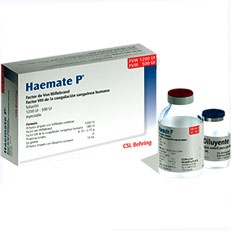
HAEMATE 1000 IU/15 ML Powder and solvent for injectable solution

Запит на рецепт онлайн
Лікар розгляне ваш випадок і визначить, чи є рецепт медично доцільним.

Поговоріть з лікарем про ці ліки
Обговоріть симптоми та можливі подальші кроки під час короткої онлайн-консультації.



Інструкція із застосування AEMATE P
Зміст інструкції
HAEMATE P 500 IU / 1200 IU
powder and solvent for solution for injection or infusion
HAEMATE P 1000 IU / 2400 IU
powder and solvent for solution for injection or infusion
Human coagulation Factor VIII
Human von Willebrand Factor
Read this leaflet carefully before you use this medicine as it contains important information for you.
- Keep this leaflet. You may need to read it again.
- If you have any questions, ask your doctor, pharmacist or nurse.
- This medicine has been prescribed for you only. Do not pass it on to others, even if their symptoms are the same as yours, as it could be harmful.
- If you get any side effects, even those not listed in this leaflet, tell your doctor, pharmacist or nurse. See section 4.
Contents of this leaflet:
- 1. What HAEMATE P is and what it is used for
- 2. What you need to know before you receive HAEMATE P
- 3. How to use HAEMATE P
- 4. Possible side effects
- 5. How to store HAEMATE P
- 6. Contents of the pack and other information
1. What is HAEMATE P and what it is used for
HAEMATE P belongs to a group of medicines called haemostatics or antihaemorrhagics used to
stop bleeding. This medicine contains as active ingredients human coagulation factor VIII and human von Willebrand factor obtained from the liquid part of the blood (plasma). These two factors
are involved in the blood coagulation process.
HAEMATE P is indicated for the prevention and treatment of bleeding due to:
- congenital deficiency of factor VIII in the blood (haemophilia A), acquired deficiency of this factor or production of substances that hinder the action of factor VIII (anti-factor VIII antibodies or inhibitors);
- reduced levels of von Willebrand factor in the blood (von Willebrand disease), following surgical interventions when treatment with desmopressin alone is not effective or is contraindicated.
Haemate P contains both FVIII and VWF. If you have haemophilia A, your doctor will prescribe Haemate P specifying
the number of units of FVIII you need. If you have von Willebrand disease, your doctor will
prescribe Haemate P specifying the number of units of VWF you need.
2. What you need to know before using HAEMATE P
Do not use HAEMATE P
- if you are allergic to human coagulation factor VIII, human von Willebrand factor or any of the other ingredients of this medicine (listed in section 6).
Warnings and precautions
Traceability
It is strongly recommended that, whenever Haemate P is administered, the name and
batch number of the medicine are recorded in order to track the batch used.
Consult your doctor, pharmacist or nurse before using HAEMATE P.
The formation of inhibitors (antibodies) is a known complication that can occur during treatment with
all factor VIII-based medicines. Inhibitors, especially at high levels, prevent the treatment from
working correctly and you or your child will be closely monitored to check for the development of
these inhibitors. If Haemate P does not control bleeding in you or your child, inform your doctor
immediately.
In addition, during treatment with HAEMATE P, your doctor will perform regular checks to verify whether
your body has produced substances that hinder the action of von Willebrand factor (neutralizing antibodies
or inhibitors), especially if you suffer from a severe form of von Willebrand factor deficiency
(von Willebrand disease Type 3).
In both cases and if you have high levels of these inhibitory substances, treatment with HAEMATE P
may not be effective and alternative therapies are necessary.
If you suffer from von Willebrand factor deficiency (von Willebrand disease), this medicine can
cause blood clots to form in the veins (thrombotic episodes, pulmonary embolism), especially if:
- you are undergoing or have recently undergone surgery (perioperative period, particularly in the absence of thromboprophylaxis);
- you got up too soon after being confined to bed (early mobilization);
- you are obese;
- you have been given high doses of this medicine;
- you suffer from cancer;
- there is an excessive increase in factor VIII levels in the blood, especially if you use this medicine for a long time. Your doctor will closely monitor you to promptly assess the appearance of the first signs due to the formation of blood clots in the veins (See section “Possible side effects”).
As with other medicines obtained from the liquid part of the blood (plasma-derived) administered by
intravenous injection, allergic reactions (hypersensitivity) may occur, which manifest
with the following symptoms:
- skin irritation (urticaria) that can spread throughout the body (generalized urticaria);
- a feeling of tightness in the chest (thoracic);
- difficulty breathing (dyspnea);
- lowering of blood pressure (hypotension);
- severe allergic reaction (anaphylaxis);
- shock. If you experience these symptoms, stop treatment immediately and consult your doctor who will adopt appropriate therapy.
If you are aware of having heart conditions or being at risk of heart conditions, inform your doctor
or pharmacist.
If you have a central venous access device (CVAD), your doctor should consider the
risk of CVAD-related complications, including: local infections, bacteria in the blood (bacteremia) and
the formation of blood clots in the blood vessel (thrombosis) where the catheter is inserted.
Viral safety
Certain safety measures are adopted for medicines derived from blood or human plasma to
prevent the transmission of infections to the patient. The safety measures include:
- careful selection of donors;
- analysis of each donation and the plasma pool (a collection of multiple donations) to check for the presence of viruses/infections;
- inclusion of blood and plasma processing processes capable of inactivating or removing viruses.
Despite these measures, in the case of administration of medicines derived from blood or human plasma,
the risk of transmission of infections can never be completely excluded.
This also applies to viruses or other types of infectious agents, emerging or unknown.
The measures taken are considered effective against enveloped viruses, such as the human immunodeficiency virus (HIV), the hepatitis B virus (HBV) and the hepatitis C virus (HCV), and against
some non-enveloped viruses such as the hepatitis A virus (HAV). These measures are, however, of limited effectiveness
against parvovirus B19, which can cause serious infections especially if you are pregnant, if you have
problems with the immune system (immunodeficient patients) or if you have any type of anemia (for
example sickle cell anemia or hemolytic anemia).
If you are regularly or repeatedly administered medicines obtained from the liquid part of the
blood (plasma), your doctor may recommend appropriate vaccination against hepatitis A and B.
Children and adolescents
The warnings and precautions indicated apply to both adults and children.
Other medicines and HAEMATE P
Tell your doctor, pharmacist or nurse if you are taking, have recently taken or might take any
other medicines.
No interactions between HAEMATE P and other medicines are known.
Pregnancy, breastfeeding and fertility
If you are pregnant, suspect you are pregnant, are planning to become pregnant or are breastfeeding
ask your doctor, pharmacist or nurse for advice before using this medicine.
Reproduction studies in animals have not been conducted with HAEMATE P.
Due to the rarity of hemophilia A in women, there is no experience regarding the use of Factor VIII during pregnancy and breastfeeding.
There are no clinical studies concerning replacement therapy with VWF during pregnancy or
breastfeeding.
Therefore, FVIII and VWF should be used during pregnancy and breastfeeding only when absolutely
necessary and under the direct control of the doctor.
Driving and operating machinery
No effects on the ability to drive and operate machinery have been observed.
HAEMATE P contains sodium
Haemate P 500 I.U. / 1200 I.U. contains 35 mg of sodium (the main component of table salt)
per vial, equivalent to 1.8% of the recommended maximum daily intake of sodium for
an adult.
Haemate P 1000 I.U. / 2400 I.U. contains 70 mg of sodium (the main component of table salt)
per vial, equivalent to 3.5% of the recommended maximum daily intake of sodium for
an adult.
3. How to use HAEMATE P
Use this medicine following the instructions of your doctor or pharmacist exactly. If you have any doubts
consult your doctor, pharmacist or nurse.
Treatment with this medicine must be carried out under the strict supervision of a specialist doctor
in the treatment of haemophilia.
The doctor will determine the appropriate dose for you and the duration of treatment based on the levels of factor VIII and von
Willebrand factor in the blood, the site and extent of the bleeding and based on your health conditions.
After administration of the medicine, the doctor will monitor you to check for any
occurrence of allergic reactions (See section “Warnings and precautions”).
If you use this medicine for a long time, there may be an excessive increase in factor VIII levels
(See section “Warnings and precautions”). Therefore, after 24-48 hours of treatment, the doctor will assess
the need to reduce the dose or increase the time interval between administrations.
Use in children
For the treatment of haemophilia A, no data are available on the use of the medicine in children.
For the treatment of von Willebrand disease, the dose will be determined by the doctor based on body weight
following the same guidelines for use in adults.
If you use more HAEMATE P than you should
The consequences of excessive use of the product are unknown.
If you think you have been given an excessive amount of this medicine, inform your doctor immediately
or go to the nearest hospital.
However, if you have taken more HAEMATE P than you should, inform your doctor or pharmacist immediately.
You should know that if you are given high doses of this medicine, blood clots may form in the veins (thrombotic risk).
4. Possible side effects
Like all medicines, this medicine can cause side effects, although not everyone will experience them.
For children not previously treated with medicines based on factor VIII, the formation of inhibitor antibodies
(see section 2) may be very common (more than 1 patient in 10); however, in patients who have
received previous treatment with factor VIII (more than 150 days of treatment) the risk is uncommon
(less than 1 patient in 100). If this happens, the medicine, or your child's medicine, may stop working
correctly and you or your child may experience persistent bleeding. If this happens, you should contact your
doctor immediately.
The following side effects may also occur:
Very rare(may affect up to 1 in 10,000 people):
- production of substances that hinder the action of von Willebrand factor, especially if you suffer from a severe form of von Willebrand disease (Type 3). In this case, you should be carefully monitored to verify the formation of these inhibitors;
- fever;
- allergic reactions (hypersensitivity) including:
- swelling of the face, lips, mouth, tongue or throat due to fluid accumulation, which can cause difficulty swallowing and breathing (angioedema);
- a burning and stinging sensation at the injection site;
- chills;
- increased blood flow to the face and neck with a feeling of warmth (flush);
- skin irritation (urticaria) even widespread throughout the body (generalized urticaria);
- headache (cephalalgia);
- low blood pressure (hypotension);
- lethargy, feeling tired;
- nausea;
- increased heart rate (tachycardia);
- a feeling of tightness in the chest (thoracic);
- tingling;
- vomiting;
- difficulty breathing (dyspnea);
- severe allergic reaction (severe anaphylaxis) including shock in isolated cases;
- formation of blood clots (thrombosis) in the veins (deep vein thrombosis) or in organs such as the lungs (pulmonary embolism), especially if you have known risk factors or if you suffer from von Willebrand disease and receive products based on FVIII complex containing VWF, showing high plasma levels of FVIII:C (See section “Warnings and precautions”).
Frequency not known(the frequency cannot be estimated based on available data):
- increased blood volume in circulation (hypervolemia). In this case, the doctor will monitor you closely to observe the first symptoms of this increase, especially if you are given high or frequently repeated doses, because your body has produced substances that neutralize the effect of the medicine (so-called inhibitors) and if you are to undergo or have undergone surgery;
- destruction of red blood cells (hemolysis), especially if your blood group is A, B or AB. In this case, the doctor will check your blood tests;
- transmission of viruses and other microorganisms that can cause diseases (pathogens) (See section “Warnings and precautions”).
Reporting of side effects
If you experience any side effects, including those not listed in this leaflet, please inform your
doctor or pharmacist.
You can also report side effects directly through the national reporting system
at: www.aifa.gov.it/content/segnalazioni-reazioni-avverse.
By reporting side effects you can help provide more information on the safety of this
medicine.
5. How to store HAEMATE P
Keep this medicine out of the sight and reach of children.
Do not use this medicine after the expiry date which is stated on the packaging after “Exp.”. The expiry date
refers to the last day of that month.
Store at a temperature not exceeding 25°C and in the original packaging to protect the medicine from
light.
Do not freeze. If the reconstituted solution is not administered immediately, it must be used
within 3 hours.
Do not dispose of any medicine in waste water or household waste. Ask your pharmacist how to dispose of
medicines you no longer use. This will help protect the environment.
6. Contents of the pack and other information
What HAEMATE P contains
HAEMATE P 500 IU / 1200 IU powder and solvent for solution for injection or infusion
- The active ingredients are factor VIII (FVIII:C) from human plasma and von Willebrand factor (VWF:RCo).
- One vial of powder contains 500 IU of factor VIII and 1200 IU of von Willebrand factor. After reconstitution with 10 ml of water for injections, HAEMATE P 500 contains: o approximately 50 IU per ml (500 IU/10 ml) of factor VIII; o approximately 120 IU per ml (1200 IU/10 ml) of von Willebrand factor.
- The other ingredients are: o vial of powder: human albumin, aminoacetic acid, sodium chloride, sodium citrate, sodium hydroxide or hydrochloric acid (in small quantities for pH adjustment); o vial of solvent: water for injections.
HAEMATE P 1000 IU / 2400 IU powder and solvent for solution for injection or infusion
- The active ingredients are factor VIII (FVIII:C) from human plasma and von Willebrand factor (VWF:RCo). One vial of powder contains 1000 IU of factor VIII and 2400 IU of von Willebrand factor. After reconstitution with 15 ml of water for injections HAEMATE P 1000 contains: o approximately 66.6 IU per ml (1000 IU/15 ml) of factor VIII; o approximately 160 IU per ml (2400 IU/15 ml) of von Willebrand factor.
- The other ingredients are: o vial of powder: human albumin, aminoacetic acid, sodium chloride, sodium citrate, sodium hydroxide or hydrochloric acid (in small quantities for pH adjustment); o vial of solvent: water for injections.
Description of HAEMATE P and contents of the pack
Haemate P is presented as a white or pale yellow powder or as a friable solid and is supplied
with a vial of water for injections as a solvent.
After filtration/withdrawal, the solution of the reconstituted product must be clear or slightly opalescent,
and must not contain visible particles or color changes.
HAEMATE P 500 IU / 1200 IU powder and solvent for solution for injection or infusion
Pack containing: 1 Vial of powder, 1 Vial of water for injections 10 ml, 1
Transfer system with 20/20 filter - Mix2Vial, Administration set (inner box): 1 Disposable syringe
10 ml without needle, 1 Infusion set, 2 Alcohol-soaked swabs, 1 non-sterile plaster.
HAEMATE P 1000 IU / 2400 IU powder and solvent for solution for injection or infusion
Pack containing: 1 Vial of powder, 1 Vial of water for injections 15 ml, 1
Transfer system with 20/20 filter - Mix2Vial, Administration set (inner box): 1 Disposable syringe
20 ml without needle, 1 Infusion set, 2 Alcohol-soaked swabs, 1 non-sterile plaster.
Marketing Authorisation Holder and Manufacturer
CSL Behring GmbH – Emil-von-Behring-Str. 76 – D-35041 Marburg – Germany
Representative for Italy
CSL Behring S.p.A. – Viale del Ghisallo, 20 - 20151 Milano – Italy
-----------------------------------------------------------------------------------------------------------------------------------
The following information is intended exclusively for physicians or healthcare professionals
Special warnings and precautions for use
Hemophilia A
The formation of neutralizing antibodies (inhibitors) to factor VIII is a known complication in
the treatment of patients with hemophilia A. These inhibitors are generally IgG immunoglobulins directed
against the procoagulant activity of factor VIII and are quantified in Bethesda Units (BU) per ml of plasma
by means of the modified assay. The risk of developing inhibitors is related to the severity of the disease and
the duration of exposure to factor VIII, being higher within the first 20 days of exposure. Rarely inhibitors may develop after the first 100 days of exposure.
Cases of recurrence of inhibitor (low titer) have been observed following switching from a
FVIII-based product to another, in patients previously treated with more than 100 days of exposure
and with a previous history of inhibitor development. It is therefore recommended to carefully monitor all
patients for the reappearance of inhibitors after any switch from one product to another.
The clinical relevance of inhibitor development will depend on the inhibitor titer: inhibitors with low titers
present temporarily or that remain constantly at low titers will have less impact on the risk of
insufficient clinical response compared to high-titer inhibitors.
In general, all patients treated with factor VIII coagulation products should be
carefully monitored for the development of inhibitors by appropriate clinical observations and laboratory tests. If the expected plasma levels of factor VIII activity are not obtained, or if bleeding is not
controlled with an adequate dose, a test should be performed to determine if factor VIII inhibitors are present. In patients with high inhibitor levels, factor VIII therapy may not
be effective and other therapeutic options should be considered. The management of these
patients should be entrusted to physicians experienced in the treatment of hemophilia and with factor VIII inhibitors.
Von Willebrand disease
There is a risk of thrombotic events, including pulmonary embolism, particularly in patients
in whom clinical or laboratory risk factors are known (e.g., in the perioperative period, especially
in the absence of thromboprophylaxis, or early mobilization, in cases of obesity, overdose of HAEMATE
P, cancer). Therefore, at-risk patients should be monitored for the onset of early signs
of thrombosis. If appropriate, a regimen for the prevention of venous thromboembolism should be initiated,
in accordance with current recommendations.
When using products containing factor VIII and VWF, the treating physician must be aware that a
prolonged treatment may determine an excessive increase in the level of FVIII:C. Patients receiving
products containing FVIII:C and VWF:RCo should be carefully monitored to avoid excessive
increase in plasma levels of FVIII:C, with consequent increase in the risk of thrombotic events.
Patients with von Willebrand disease, especially Type 3, may develop neutralizing antibodies
to VWF (inhibitors). If the expected levels of VWF:RCo activity in plasma are not reached or if the dose
administered is unable to effectively control bleeding, an appropriate test should be performed in order to ascertain the possible presence of VWF inhibitors. In patients with a high inhibitor titer
therapy may prove ineffective and other therapeutic options should be considered.
Dosage
Hemophilia A
Treatment monitoring
During treatment, appropriate determination of factor VIII levels is recommended to identify
the dose to be administered and the frequency with which to repeat infusions. Individual patients may present
variability in their response to factor VIII, achieving different levels of in vivo recovery and manifesting
different half-lives. Dosages based on body weight may require adjustment in underweight
or overweight patients. In particular, in cases of major surgery, precise
monitoring of replacement therapy through control of coagulation parameters (plasma activity
of factor VIII) is essential.
Patients must be monitored for the development of factor VIII inhibitors. See also paragraph 2.
The dosage and duration of replacement therapy depend on the severity of the factor VIII deficiency, the
location and extent of the hemorrhage, as well as the patient's clinical condition.
It is important to calculate the dose using the number of IU of FVIII:C specified.
The number of factor VIII units to be administered is expressed in International Units (IU), with
reference to the current WHO standard for concentrated factor VIII products.
Factor VIII activity in plasma is expressed as a percentage (relative to normal human plasma) or
preferably in IU (in accordance with the International Standard for Factor VIII in plasma).
One International Unit of factor VIII activity is equivalent to the amount of factor VIII in 1 ml of
normal human plasma.
The calculation of the necessary dose of factor VIII is based on the empirical data that 1 IU of factor VIII per kg of
body weight increases the activity of factor VIII in plasma by approximately 2% of normal activity (2 IU/dl). The
necessary dose is determined using the following formula:
Required Units = body weight [kg] x desired increase in Factor VIII [% or IU/dl] x 0.5.
The dose and frequency of administration must always be based on the clinical efficacy obtained in
individual cases.
In the case of the following hemorrhagic episodes, the activity of Factor VIII must not fall below the level of
plasma activity indicated (as a percentage of normal or in IU/dl). The following table can be used as
a reference for dosage in the case of hemorrhagic events or surgical interventions:
| Severity of hemorrhage / Type of surgical intervention | n Required level of Factor VIII (% or IU/dl) | Frequency of doses (hours) / Duration of therapy (days) |
| a Hemorrhage | ||
| Early joint hemorrhage, intramuscular hemorrhages or oral cavity hemorrhages. | i
| Repeat infusion every 12-24 hours for at least 1 day until resolution of the hemorrhagic episode or cicatrization, as indicated by resolution of the pain. |
| More extensive joint hemorrhages, intramuscular hemorrhages or hematomas. | t I
| Repeat infusion every 12-24 hours for 3-4 days or more until resolution of pain and acute disability. |
| a Life-threatening hemorrhages. |
| Repeat infusion every 8-24 hours, until resolution of the event. |
| i Surgery | ||
| z Minor surgery, including dental extractions. |
| Every 24 hours, for at least 1 day, until healing is achieved. |
| e Major surgery g A |
| Repeat infusion every 8-24 hours until adequate cicatrization is achieved; then continue therapy for at least 7 days to maintain a Factor VIII activity between 30-60% (IU/dl). |
For the long-term prophylaxis of bleeding in patients with severe hemophilia A, the usual doses are 20
to 40 IU of Factor VIII per kg of body weight at intervals of 2-3 days. In some cases, especially in
younger patients, shorter intervals or higher doses may be necessary.
If the expected plasma levels of factor VIII activity are not achieved or if the bleeding is not controlled
with an adequate dose, patients should be monitored for the possible appearance of a factor VIII inhibitor.
In patients with high levels of inhibitor, therapy with factor VIII may prove ineffective, and other therapeutic measures should be considered. In these cases, treatment should also be carried out under the responsibility of physicians experienced in the treatment of hemophilia.
Pediatric population
No clinical data are available in children.
von Willebrand Disease
It is important to calculate the dose using the number of IU of VWF:RCo specified.
Administration of 1 IU/kg of VWF:RCo typically results in an increase in circulating VWF:RCo levels of 0.02 IU/ml (2%).
Levels of VWF:RCo > 0.6 IU/ml (60%) and FVIII:C > 0.4 IU/ml (40%) must be achieved.
Normally, for achieving hemostasis, administration of 40-80 IU/kg of von Willebrand Factor (VWF:RCo) and 20-40 IU of FVIII:C/kg of body weight is recommended.
Administration of an initial dose of 80 IU/kg of von Willebrand Factor may be necessary
especially for patients with Type 3 von Willebrand disease: in this case, in fact, maintaining
adequate levels may require the use of higher doses compared to other types of von Willebrand disease.
Prevention of bleeding events in case of surgery or severe traumatic episode: to
prevent excessive bleeding during or after surgery, administration should
occur 1-2 hours before the intervention itself.
Appropriate doses should then be subsequently administered every 12-24 hours.
The dose to be administered and the duration of treatment depend on the individual clinical situation, the type
and severity of the hemorrhage and the levels of VWF:RCo and FVIII:C.
When using preparations containing Factor VIII and von Willebrand Factor, the physician must take into account
that prolonged treatment may determine an excessive increase in the level of FVIII:C. To avoid an
excessive increase in FVIII:C, after 24-48 hours of treatment, the opportunity to reduce
the dose and/or increase the time interval between administrations or use VWF-based products with
a low level of FVIII should be considered.
Pediatric population
In children, the dose is related to body weight and, in general, the same guidelines indicated for
adults are followed. The frequency of administrations must always lead to the clinical efficacy of the individual case.
Instructions for use, handling and disposal
Unused product and waste derived from this medicine must be disposed of in accordance with
local legal requirements.
General instructions:
The solution should appear clear or slightly opalescent. After filtration/withdrawal (see
below) the reconstituted product should be visually inspected before administration to check
for the absence of particles or discoloration. Even if the instructions below are followed carefully, it is not
uncommon for some flocculi or particles to remain. The Mix2Vial filter, included in the package, will remove
such particles. Do not use turbid solutions or those containing flocculi or particles after filtration.
Filtration does not affect the final dosage calculation.
Reconstitution and withdrawal must be performed under aseptic conditions.
Reconstitution:
Bring the solvent to room temperature. Make sure to remove the flip-off caps from the vials and that the stoppers
have been disinfected with an antiseptic solution and wait for it to dry before opening the
Mix2Vial package.
1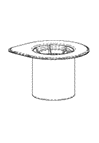 | m
|
2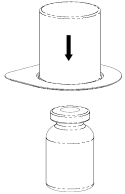 | F
|
3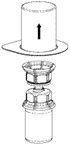 | d
|
| t 4 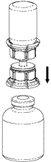 | a
|
| I a i z 5 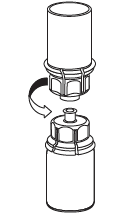 |
|
| n e g 6 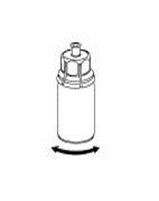 |
|
7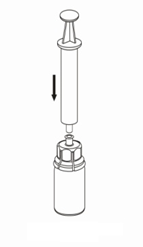 |
|
Withdrawal and administration:
8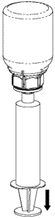 | F
|
9 |
|
For the injection of HAEMATE P, it is recommended to use disposable plastic syringes, as the glass surfaces of the syringes tend to jam with this type of solution.
Route of administration
Before administration, the reconstituted preparation must be brought to room temperature or
body temperature. Inject slowly intravenously, at a rate comfortable for the patient. Make
sure that no blood enters the syringe containing the product. Once the product is transferred
into the syringe, it must be used immediately.
If the administration of higher doses of factor VIII is necessary, it can be done
by infusion, transferring the reconstituted product into an appropriate infusion system.
The rate of injection or infusion should not exceed 4 ml/minute. Monitor the patient
for the appearance of any immediate reaction. If any reaction related to
the administration of HAEMATE occurs, reduce the infusion rate or stop the administration
according to the patient's clinical condition.
Undesirable effects
All patients should be carefully monitored to observe the onset of the first
signs of hypervolemia.
In addition, patients with blood groups A, B and AB should be monitored to ascertain the presence of
any signs of intravascular hemolysis and/or a decrease in hematocrit.
Patients receiving products containing FVIII:C and VWF:RCo must be carefully monitored
to avoid an excessive increase in plasma levels of FVIII:C, with a consequent increase in the risk of thrombotic events, including
pulmonary embolism.
Contraindications
This medicinal product must not be mixed with other drugs, solvents and diluents, except for
those listed in the list of excipients.
Expiration Date
3 years at 25°C
After reconstitution, the product has demonstrated chemical-physical stability for 3 hours at room temperature
(maximum +25°C).
From a microbiological point of view and considering that HAEMATE P does not contain preservatives, the reconstituted
product must be used immediately. If not administered immediately, the in-use storage time and
conditions before subsequent use are the responsibility of the user. In any case, the
3-hour storage time at room temperature must not be exceeded.
Once the product has been drawn into a syringe, it must be used immediately.
For further information, consult the Summary of Product Characteristics.

Не впевнені, чи підходить вам цей лікарський засіб?
Обговоріть симптоми та можливі варіанти лікування з лікарем онлайн.

Виникли питання під час прийому ліків?
Обговоріть свої симптоми та лікування з лікарем онлайн.
- Країна реєстрації
- Лікарська формаPowder and solvent for injectable solution, 1000 IU/15 ML
- Код АТХB02BD06
- Діюча речовина
- Потрібен рецептТак
- Виробник
- Ця інформація надана лише для ознайомлення і не є медичною порадою. Рішення щодо лікування завжди приймає лікар.
- Альтернативи до AEMATE PЛікарська форма: Powder and solvent for intravenous infusion solution, 250 U I+ 300 UI/5 MLДіюча речовина: Von Willebrand factor and coagulation factor VIII in combinationВиробник: GRIFOLS ITALIA S.P.A.Потрібен рецептЛікарська форма: Powder and solvent for injectable solution, 250 IU + 300 IU/10 MLДіюча речовина: Von Willebrand factor and coagulation factor VIII in combinationВиробник: INSTITUTO GRIFOLS S.A.Потрібен рецептЛікарська форма: Powder and solvent for injectable solution, 50 IU/MLДіюча речовина: Von Willebrand factor and coagulation factor VIII in combinationВиробник: OCTAPHARMA ITALY S.P.A.Потрібен рецепт
Аналоги AEMATE P в інших країнах
Препарати з тією самою діючою речовиною, доступні в інших країнах.
Аналог AEMATE P у Польща
Аналог AEMATE P у Україна
Аналог AEMATE P у Іспанія
Лікарі онлайн щодо AEMATE P
Застосування, безпека та можливість призначення рецепта — за результатами медичної оцінки.









Отримайте рецепт на AEMATE P онлайн
Заповніть форму за 2 хвилини
Розкажіть про симптоми, історію хвороби та потрібний препарат.
Оберіть лікаря або ми призначимо
Оберіть спеціаліста або ми підберемо найближчого доступного лікаря.
Лікар розглядає ваш випадок
Зазвичай протягом 30 хвилин. Може ставити уточнювальні запитання в чаті.
Отримайте в будь-якій аптеці
Електронний рецепт надсилається на вашу пошту — дійсний по всій Польщі.
Часті запитання
AEMATE P потребує рецепта в Італія. Ви можете обговорити з лікарем онлайн, чи підходить цей лікарський засіб для вашої ситуації.
Діюча речовина у AEMATE P — Von Willebrand factor and coagulation factor VIII in combination. Це допомагає визначити препарати з тим самим складом, але під іншими торговими назвами.
AEMATE P виробляється компанією CSL BEHRING GMBH. Назва бренду та упаковка можуть відрізнятися залежно від дистрибʼютора.
Лікарі, зокрема Сімейні лікарі, Психіатри, Дерматологи, Кардіологи, Ендокринологи, Гастроентерологи, Пульмонологи, Нефрологи, Ревматологи, Гематологи, Інфекціоністи, Алергологи, Геріатри, Педіатри, Онкологи, можуть оцінити доцільність застосування AEMATE P з урахуванням вашого стану та місцевих правил. Ви можете записатися на онлайн-консультацію, щоб обговорити симптоми та можливі подальші кроки.
Польща має добре розвинену систему охорони здоров'я у великих містах, таких як Варшава, Краків, Вроцлав і Гданськ. Аптеки широко доступні та працюють відповідно до чинного законодавства, забезпечуючи доступ до рецептурних препаратів.
Ви можете придбати AEMATE P у Варшаві, Кракові, Вроцлаві або Гданську в будь-якій аптеці за наявності дійсного рецепта.
Щоб отримати рецепт, ви можете скористатися Oladoctor:
Інші препарати з тією самою діючою речовиною (Von Willebrand factor and coagulation factor VIII in combination) включають ALPANATE, FANDI, OKTANATE. Вони можуть відрізнятися торговою назвою або формою випуску, але містять той самий терапевтичний компонент. Перед зміною або початком прийому нового препарату варто проконсультуватися з лікарем.
