



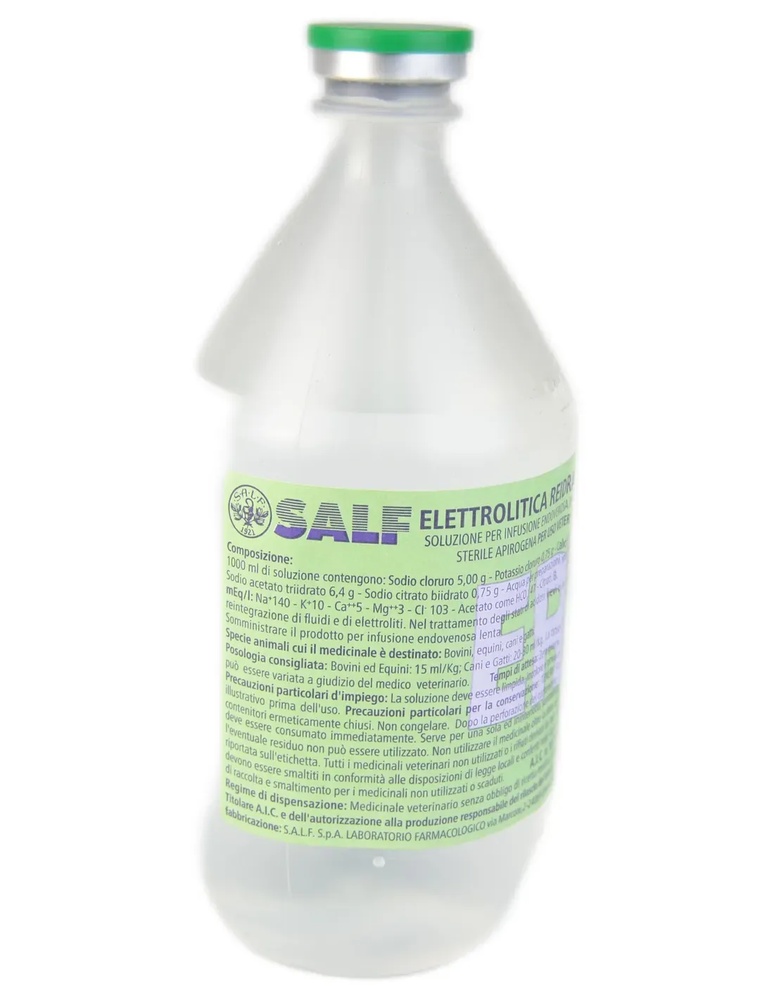
ELETTROLITICA 50 ML Infusion solution

Запит на рецепт онлайн
Лікар розгляне ваш випадок і визначить, чи є рецепт медично доцільним.

Поговоріть з лікарем про ці ліки
Обговоріть симптоми та можливі подальші кроки під час короткої онлайн-консультації.



Інструкція із застосування ELETTROLITIKA BILANKIATA DI MANTENIMENTO KON LUKOSIO BIOINDUSTRIA L.I.M.
Зміст інструкції
- ELECTROLYTIC BALANCED MAINTENANCE SOLUTION WITH GLUCOSE Bioindustria L.I.M.
- ELECTROLYTIC BALANCED MAINTENANCE SOLUTION WITH GLUCOSE Bioindustria L.I.M.
- What is ELETTROLITICA BILANCIATA DI MANTENIMENTO CON GLUCOSIO
- What you need to know before using ELETTROLITICA BILANCIATA DI MANTENIMENTO CON
- How to use ELETTROLITICA BILANCIATA DI MANTENIMENTO CON GLUCOSIO
- Possible side effects
- How to store ELETTROLITICA BILANCIATA DI MANTENIMENTO CON GLUCOSIO
- Package contents and other information
ELECTROLYTIC BALANCED MAINTENANCE SOLUTION WITH GLUCOSE Bioindustria L.I.M.
infusion solution I
ELECTROLYTIC BALANCED MAINTENANCE SOLUTION WITH GLUCOSE Bioindustria L.I.M.
infusion solution II
Sodium chloride, potassium acetate, magnesium acetate tetrahydrate, glucose monohydrate
Equivalent medicinal product
Read this leaflet carefully before using this medicine as it contains important
information for you.
- Keep this leaflet. You may need to read it again.
- If you have any questions, ask your doctor, pharmacist or nurse.
- This medicine has been prescribed for you only. Do not pass it on to others, even if they have the same symptoms as you, as it may be harmful.
- If any side effects occur, including those not listed in this leaflet, tell your doctor, pharmacist or nurse. See section 4.
Contents of this leaflet:
- 1. What is ELECTROLYTIC BALANCED MAINTENANCE SOLUTION WITH GLUCOSE Bioindustria L.I.M. and what it is used for
- 2. What you need to know before using ELECTROLYTIC BALANCED MAINTENANCE SOLUTION WITH GLUCOSE Bioindustria L.I.M.
- 3. How to use ELECTROLYTIC BALANCED MAINTENANCE SOLUTION WITH GLUCOSE Bioindustria L.I.M.
- 4. Possible side effects
- 5. How to store ELECTROLYTIC BALANCED MAINTENANCE SOLUTION WITH GLUCOSE Bioindustria L.I.M.
- 6. Contents of the pack and other information
1. What is ELETTROLITICA BILANCIATA DI MANTENIMENTO CON GLUCOSIO
Bioindustria L.I.M. and its uses
ELETTROLITICA BILANCIATA DI MANTENIMENTO CON GLUCOSIO Bioindustria L.I.M. is a
solution for infusion to be injected directly into a vein (intravenous infusion) and contains a
combination of active ingredients: sodium chloride, potassium acetate, magnesium acetate tetrahydrate, glucose
monohydrate.
This medicine is indicated to provide the body with water and mineral salts in those situations where it is
necessary to ensure a caloric intake for the body and for the treatment of mild or moderate states of
metabolic acidosis, a condition in which there is an increase in blood acidity.
2. What you need to know before using ELETTROLITICA BILANCIATA DI MANTENIMENTO CON
GLUCOSIO Bioindustria L.I.M.
Do not use ELETTROLITICA BILANCIATA DI MANTENIMENTO CON GLUCOSIO Bioindustria
L.I.M.
- if you are allergic to the active ingredients or to any of the other components of this medicine (listed in section 6);
- if you have high levels of potassium in your blood (hyperkalemia) or decreased ability to eliminate potassium (potassium retention);
- if you have severe liver problems (severe hepatic insufficiency) which determine the inability to metabolize the acetate ion;
- if you have severe kidney problems (severe renal insufficiency);
- if you have problems with urination (oliguric renal insufficiency, anuria);
- if you have severe heart problems (severe myocardial disease);
- if you have an increase in blood pH (metabolic and respiratory alkalosis);
- if you have problems breathing (respiratory rate less than 16 breaths per minute);
- if you have circulatory problems due to an increased tendency of the blood to coagulate (hypercoagulability);
- if you are taking cardiac glycosides, medicines used to treat heart problems;
- if you experience bleeding in the spinal cord or in brain tissue (spinal or intracranial hemorrhage);
- if you suffer from mental problems characterized by hallucinations, tremors, sweating (delirium tremens), especially if you are dehydrated;
- if you have low levels of fluids in the body (dehydration);
- if the patient is in a coma;
- if you suffer from a disease of the adrenal glands (Addison's disease) and are not following therapy to treat it;
- if you experience painful and short-lived muscle cramps (heat cramps). If you have simultaneously undergone blood transfusions, the medicine should not be administered through the same infusion catheter with whole blood due to the possible risk of red blood cell aggregation (pseudoagglutination).
Warnings and precautions
Consult your doctor, pharmacist or nurse before you are given ELETTROLITICA
BILANCIATA DI MANTENIMENTO CON GLUCOSIO Bioindustria L.I.M.
Due to the presence of sodium, this medicine should be administered to you with caution in the following cases:
- if you have heart problems (congestive heart failure, cardiac insufficiency) or kidney problems (severe renal insufficiency, reduced renal function);
- if you have fluid buildup (edema with salt retention) either in the lungs (pulmonary edema), or associated with swelling of the legs and ankles (peripheral edema);
- if you are taking medicines for the heart (cardiotropic drugs) or anti-inflammatory medicines (corticosteroids) or hormonal medicines (corticotrophins);
- if you have high blood pressure (hypertension);
- if you suffer from a condition called pre-eclampsia, characterized by high blood pressure, swelling due to fluid buildup, and the presence of protein in the urine, or other conditions caused by sodium buildup.
Due to the presence of potassium, this medicine should be administered to you with caution in the following cases:
- if you have kidney problems (renal insufficiency), because potassium retention may worsen;
- if you have heart problems (heart failure) and/or are taking other medicines for the heart (digitalis);
- if you have a disease of the adrenal glands (adrenal insufficiency);
- if you have liver problems (hepatic insufficiency);
- if a family member suffers from a disorder characterized by sudden muscle weakness (periodic familial paralysis);
- if you suffer from a disease characterized by muscle stiffness (congenital myotonia);
- if you have recently undergone surgery (early postoperative phases).
Due to the presence of magnesium, the medicine should be administered to you with caution in the following cases:
- if you have kidney problems (renal insufficiency);
- if you have heart problems (heart failure) and are taking other medicines for the heart (digitalis);
- if you have a muscle disease (myasthenia gravis);
- if you are being treated with drugs that depress the central nervous system and drugs used to block muscles during surgery (neuromuscular blocking agents). The concentration of magnesium in the blood should be monitored frequently, so that it does not increase too much.
Due to the presence of acetate, the medicine should be administered to you with caution if you have an increase in
pH (metabolic and respiratory alkalosis) or levels of acetate in the blood, or insufficient utilization of
this ion, as in the case of people with liver problems (mild or moderate hepatic insufficiency).
Due to the presence of glucose, the medicine should be administered to you with caution if you suffer from diabetes
mellitus or glucose intolerance and if you are taking anti-inflammatory corticosteroids (corticosteroids or
corticotropin).
During treatment, the doctor will check your blood and urine glucose levels and, if necessary,
administer insulin to reduce the risk of increased glucose levels in the blood (hyperglycemia) and
in the urine (glycosuria). During prolonged use of glucose solutions, fluid buildup (fluid overload, congestion) and mineral salt deficiency in the blood (electrolytes) may occur.
Consult your doctor, pharmacist or nurse before you are given ELETTROLITICA
BILANCIATA DI MANTENIMENTO CON GLUCOSIO Bioindustria L.I.M. if you are in any of the
following conditions that can cause high levels of vasopressin, a hormone that regulates the fluids in your body:
- you have an acute illness
- you have pain
- you have undergone surgery
- you have infections, burns
- you have brain diseases
- you have liver, heart and kidney diseases
- you are taking certain medicines (see also Other medicines and ELETTROLITICABILANCIATA DI MANTENIMENTO CON GLUCOSIO Bioindustria L.I.M).
This may increase the risk of low sodium levels in the blood (hyponatremia) and may lead to headache,
nausea, seizures, lethargy, vomiting, cerebral edema. Cerebral edema increases the risk of dangerous
brain damage. People with a higher risk of cerebral edema are:
- children
- women (especially of childbearing age)
- people with altered fluid levels in the brain (e.g. due to meningitis, bleeding in the skull or brain contusion).
During treatment with this medicine, the doctor will periodically check heart function by means of serial electrocardiograms and the concentration of mineral salts in the blood (plasma osmolarity), in particular sodium as sodium deficiency (hyponatremia), glucose (glycemia), fluids and blood acid-base balance may develop. In addition, your blood pressure and osteotendinous reflexes will be monitored to monitor any paralysis of the respiratory muscles.
Children
This medicine should be administered with caution in children, especially in newborns and
children with low body weight, because glucose levels in the blood may increase
(hyperglycemia). In addition, in children with low body weight, rapid or excessive intravenous infusion may
cause an increase in the concentration of mineral salts in the blood (serum osmolarity) and bleeding in the
brain due to rupture of blood vessels (intracerebral hemorrhage).
Other medicines and ELETTROLITICA BILANCIATA DI MANTENIMENTO CON GLUCOSIO
Bioindustria L.I.M.
Tell your doctor or nurse if you are taking, have recently taken or might take any other
medicines.
This medicine should be administered with cautionif you are taking:
- medicines used to lower blood pressure such as potassium-sparing diuretics, ACE inhibitors or other medicines, because they can lead to increased potassium in the blood (hyperkalemia) and decreased ability to eliminate potassium (potassium retention), especially if you have kidney problems (renal dysfunction);
- anti-inflammatory steroids (corticosteroids) that can cause sodium and water retention, resulting in fluid buildup (edema) and increased pressure (hypertension). Corticosteroids and corticotropin are also associated with decreased glucose tolerance with possible manifestation of latent diabetes mellitus;
- medicines that cause an increase in the effect of the antidiuretic hormone (vasopressin) e.g.: chlorpropamide, clofibrate, carbamazepine, oxcarbazepine, vincristine, selective serotonin reuptake inhibitors, 3,4-methylenedioxymethamphetamine, ifosfamide, antipsychotics, narcotics, NSAIDs, cyclophosphamide, desmopressin, oxytocin, vasopressin, terlipressin, diuretics in general because they can increase the risk of decreased sodium concentration in the plasma (hyponatremia)
Due to the presence of magnesium, be particularly careful if you are using the following medicines:
- drugs that depress the central nervous system (barbiturates, narcotics, hypnotics or systemic anesthetics), because magnesium enhances the depressive effect on the central nervous system;
- medicines used for heart problems (cardiac glycosides, digoxin and digitoxin), because altered cardiac conduction may occur which may evolve into arrhythmia;
- medicines used to block muscles during surgery (competitive and depolarizing neuromuscular blocking agents), such as rocuronium, because their effect may be potentiated by magnesium chloride;
- aminoglycoside antibiotics, used against bacterial infections, because their effect on neuromuscular blockade may be additive to that of magnesium;
- eltrombopag, a medicine used to treat low platelet counts, because its concentration in the blood may decrease;
- rocuronium, because magnesium can increase the risk of toxicity from rocuronium.
- labetalol, a medicine used to treat heart rhythm disturbances (arrhythmias), because administration with magnesium can cause a decrease in heart rate (bradycardia) and a decrease in the volume of blood pumped by the heart (cardiac output);
- medicines used to treat high blood pressure (isradipine, felodipine, nicardipine and nifedipine), because concomitant use with magnesium can cause a sharp drop in pressure (hypotension).
Pregnancy and breastfeeding
If you are pregnant, suspect you may be pregnant or are planning to become pregnant, or if you are breastfeeding, ask your doctor for advice before you are given this medicine.
This medicine should not be used during pregnancy and breastfeeding unless absolutely necessary.
Due to the presence of magnesium, this medicine should not be administered 2 hours before delivery. If
magnesium chloride is administered (especially for more than 24 hours before delivery), newborns may
show signs of magnesium toxicity, including neuromuscular and respiratory depression.
If you are pregnant, this medicine should be administered with particular caution during
labor due to the risk of hyponatremia, especially if administered in association with
a medicine that induces labor (oxytocin).
Driving and operating machinery
The medicine does not impair the ability to drive vehicles or operate machinery.
3. How to use ELETTROLITICA BILANCIATA DI MANTENIMENTO CON GLUCOSIO
Bioindustria L.I.M.
This medicine will be prepared by a doctor, pharmacist or nurse and will not be mixed with, or administered simultaneously with, other incompatible medicines.
This medicine must be administered via a very slow infusion directly into a vein
(intravenous infusion), by a specialist doctor, as potassium intoxication may occur, which can lead to death due to loss of heart function (cardiac depression), irregular heartbeat (arrhythmias) up to cardiac arrest (see the paragraph “How to use ELETTROLITICA
BILANCIATA DI MANTENIMENTO CON GLUCOSIO Bioindustria L.I.M.”). It must not be injected
through other routes of administration (intramuscular, subcutaneous or into perivascular tissues).
The dose will be adjusted based on age, weight, mineral salt levels in the blood and your state of
health.
After administration of the medicine, remain lying down for a short period of time.
Infusions that are too rapid can cause local pain and the infusion rate must be adjusted based on
your needs.
Administration must be stopped if you experience pain or redness at the injection site, as this
may be caused by leakage of the medicine from the vein (drug extravasation).
Use in children
In children, the safety and efficacy of the medicine have not been determined.
The dosage and rate of administration of glucose must be chosen based on the age, weight and
health condition of the patient. Particular caution is required in newborns and underweight children (see the
paragraph “Children”).
Preparation of the medicine:the solution must be used immediately after opening the container. The
administration must be single and uninterrupted and any remaining solution cannot be used.
The solution must be shaken well before administration. The medicine must not be used
if the solution is not clear, colorless or slightly straw-yellow in color or if it contains
particles.
Healthcare personnel performing the infusion will adopt all usual precautions to maintain
sterility before and during intravenous infusion.
If you use more ELETTROLITICA BILANCIATA DI MANTENIMENTO CON GLUCOSIO Bioindustria
L.I.M. than you should
Since this medicine will be administered by a doctor or specialized personnel, it is unlikely that
you will be injected with an excessive dose. However, if you think that you have been administered an excessive dose of
ELETTROLITICA BILANCIATA DI MANTENIMENTO CON GLUCOSIO Bioindustria L.I.M., inform
immediately your doctor or another healthcare professional.
Following the administration of an excessive dose of this medicine, the following may occur:
- increased levels of potassium in the blood (hyperkalaemia), which can lead to death due to heart damage (cardiac depression, arrhythmias or arrest);
- increased levels of sodium (hypernatraemia) and blood volume (hypervolaemia). If sodium levels in the blood increase too much, a loss of fluids from internal organs (dehydration) may occur, particularly from the brain, and accumulation of fluids that can affect the cerebral, pulmonary and peripheral circulation, leading to fluid accumulation around the lung (pulmonary oedema) or swelling in the legs and ankles (peripheral oedema).
In case of administration of high doses of magnesium, the following symptoms of
intoxication may occur: flushing, sweating, reduction of blood pressure (hypotension), paralysis of some
muscles such as the respiratory muscles (flaccid paralysis), reduction of body temperature (hypothermia), severe
drop in blood pressure (circulatory collapse), decreased heart function
(cardiac depression) and the central nervous system which can evolve into a blockage of the respiratory muscles
(respiratory paralysis).
Magnesium intoxication manifests with a sudden increase in blood pressure, difficulty
breathing (respiratory paralysis) and disappearance of the extension response of the leg after a
percussion stimulus (patellar reflex).
In case of prolonged administration of glucose, accumulation of intracellular fluids (hyperhydration) and solute overload may occur.
In case of overdose, administration of the medicine must be immediately stopped and a corrective therapy will be instituted to reduce glucose and excess salt levels in the blood and restore, if
necessary, the acid-base balance.
If you have any doubts about the use of this medicine, ask your doctor, pharmacist or nurse.
4. Possible side effects
Like all medicines, this medicine can cause side effects, although not everyone will experience them.
The following side effects may occur:
Not known(frequency cannot be estimated from available data):
- allergic reactions and urticaria;
- stomach and intestinal disorders (gastrointestinal), nausea, vomiting, diarrhea, abdominal pain, constipation, intestinal disorders (delayed intestinal transit and paralytic ileus);
- thirst, reduced salivation, metallic taste, chalky taste;
- nerve and muscle disorders (neuromuscular disorders), muscle stiffness, altered sensitivity of the limbs (paresthesia), paralysis of some muscles such as the respiratory muscles (flaccid paralysis), weakness;
- mental confusion, headache, dizziness, restlessness, irritability;
- convulsions, coma, death;
- bleeding in the head (cerebral hemorrhage);
- brain damage caused by poor blood circulation to the tissues that compose it (cerebral ischemia);
- drowsiness, confused states, mental disorders, cerebral edema;
- irregular heartbeat (arrhythmias), increased heart rate (tachycardia), decreased heart rate (bradycardia), conduction disturbances, disappearance of the P wave, widening of the QRS complex on the electrocardiogram, fainting associated with loss of consciousness (syncope), ventricular fibrillation, cardiac arrest;
- reduction or increase in blood pressure (hypotension, hypertension), swelling of the legs and ankles (peripheral edema), vasodilation, hot flashes, sweating and shock;
- increased levels of sodium (hypernatremia), potassium (hyperkalemia) and chlorine (hyperchloremia) in the blood;
- increased blood volume (hypervolemia);
- increased concentration of substances in the blood (hyperosmolarity);
- reduced levels of calcium in the blood (hypocalcemia);
- increased pH of the blood (alkalosis);
- breathing problems (dyspnea, respiratory arrest);
- accumulation of fluid in the lungs (pulmonary edema) and air around the membrane that surrounds the lung (pneumothorax);
- reduced tear production;
- kidney problems (renal failure) and excessive urine production (polyuria);
- muscle weakness;
- increased metabolic rate, increased blood glucose levels (hyperglycemia), decreased blood glucose levels (hypoglycemia), increased insulin levels, increased adrenaline levels;
- decreased sodium (hyponatremia)**;
- fever, infection at the infusion site, pain or local reaction, redness, skin irritation (rash), venous irritation, formation of blood clots in the veins (venous thrombosis);
- inflammation of the veins (venous phlebitis) extending from the infusion site;
- leakage of the injected solution from the vein (extravasation);
- tissue damage and death (tissue necrosis);
- inflammation due to pus accumulation (abscesses).
**acquired in hospital that can cause irreversible brain damage and death, due to the development of
acute hyponatremic encephalopathy
Reporting of side effects
If you experience any side effects, including those not listed in this leaflet, please inform your
doctor or pharmacist. You can also report side effects directly through the national reporting system at
www.agenziafarmaco.gov.it/content/come-segnalare-una-
sospetta-reazione-avversa . By reporting side effects you can help provide more
information on the safety of this medicine.
5.How to store ELETTROLITICA BILANCIATA DI MANTENIMENTO CON GLUCOSIO
Bioindustria L.I.M.
Keep this medicine out of the reach and sight of children.
Do not use this medicine after the expiry date which is stated on the packaging after “EXP.”.
The expiry date refers to the last day of that month.
Store in the original packaging and in a tightly closed container. Do not refrigerate or freeze.
Do not dispose of any medicine in wastewater or household waste. Ask your pharmacist how to eliminate
medicines that you no longer use. This will help protect the environment.
6. Package contents and other information
What contains ELETTROLITICA BILANCIATA DI MANTENIMENTO CON GLUCOSIO
Bioindustria L.I.M.
Solution for infusion I
- The active ingredients are: sodium chloride, potassium acetate, magnesium acetate tetrahydrate, glucose monohydrate. 1000 ml of solution contain 2.34 g of sodium chloride, 0.98 g of potassium acetate, 0.32 g of magnesium acetate tetrahydrate, 55 g of glucose monohydrate (corresponding to 50 g of glucose). Each liter of solution contains 40 mEq of sodium, 10 mEq of potassium, 3 mEq of magnesium, 40 mEq of chloride, 13 mEq of acetate and 278 mmol of glucose. pH: 5.0 - 7.0.
- The other components are: hydrochloric acid, water for injections.
Solution for infusion II
- The active ingredients are: sodium chloride, potassium acetate, magnesium acetate tetrahydrate, glucose monohydrate. 1000 ml of solution contain 2.34 g of sodium chloride, 1.28 g of potassium acetate, 0.32 g of magnesium acetate tetrahydrate, 55 g of glucose monohydrate (corresponding to 50 g of glucose). Each liter of solution contains 40 mEq of sodium, 13 mEq of potassium, 3 mEq of magnesium, 40 mEq of chloride, 16 mEq of acetate and 278 mmol of glucose. pH: 5.0 - 7.0.
- The other components are: hydrochloric acid, water for injections.
Description of the appearance of ELETTROLITICA BILANCIATA DI MANTENIMENTO CON
GLUCOSIO Bioindustria L.I.M. and contents of the package
Glass bottle of 50 ml, 100 ml, 250 ml, 500 ml of solution for infusion.
Package containing 50 ml of solution in a 100 ml bottle.
Package containing 100 ml of solution in a 250 ml bottle.
Package containing 250 ml of solution in a 500 ml bottle.
Marketing Authorisation Holder and Manufacturer
Bioindustria Laboratorio Italiano Medicinali S.p.A.
Via De Ambrosiis, 2 – 15067 Novi Ligure (AL)
-----------------------------------------------------------------------------------------------------------------------------------
The following information is intended exclusively for doctors or healthcare professionals
Incompatibilities
If used to dilute drugs, consult the pharmacist if available before introducing the additive drugs; however, consider the characteristics of the products to be introduced; employ aseptic techniques.
Due to the presence of glucose, the medicine is incompatible with:
- cyanocobalamin;
- kanamycin sulfate;
- novobiocin sodium;
- warfarin sodium; Furthermore, there are conflicting opinions regarding the compatibility of glucose with hydroxyethyl starch (hetastarch). Ampicillin and amoxicillin are stable in glucose solutions only for a short period. Due to the presence of magnesium, the medicine is incompatible with solutions containing alcohol (at high concentrations), heavy metals, carbonates and bicarbonates, sodium hydrocortisone, succinates, phosphates, polymyxin B sulfate, procaine hydrochloride, calcium salicylate, clindamycin phosphate, tartrates, as precipitates may form. Potential incompatibility is often influenced by the modification of the concentration of the reagents and the pH of the solutions.
Dosage
Generally, the infusion rate is approximately 500 ml of solution per hour. The medicine must be administered only with intact renal function and at a rate not exceeding 10 mEq of potassium/hour and 0.4 – 0.8 g of glucose per kilogram of body weight per hour must be administered.
It may be necessary to monitor electrolyte balance, serum glucose, serum sodium and other electrolytes before and during administration, particularly in patients with increased non-osmotic vasopressin release (syndrome of inappropriate antidiuretic hormone secretion, SIADH) and in patients undergoing concomitant therapy with vasopressin agonists, due to the risk of hyponatremia. Monitoring of serum sodium is particularly important for physiologically hypotonic solutions.
Depending on the tonicity of the solution, the volume and frequency of infusion and the underlying clinical conditions of the patient, as well as the ability to metabolize glucose, intravenous administration of glucose can cause electrolyte disturbances and especially hypo- or hyperosmotic hyponatremia
Overdose treatment
Immediately stop the infusion and initiate corrective therapy for hyperglycemia and to reduce plasma levels of ions that are in excess and restore, if necessary, acid-base balance (see paragraph 4.4).
The patient should be kept under observation to assess the appearance of any signs and symptoms related to the administered drug, ensuring the patient receives appropriate symptomatic and supportive measures as needed. In case of high natremia, loop diuretics may be used.
In case of hyperkalemia, glucose (with or without insulin) or sodium bicarbonate can be administered by intravenous infusion.
In case of magnesium intoxication manifesting with respiratory paralysis, artificial respiration is necessary. To counteract the effects of hypermagnesemia, calcium should be administered intravenously (10-20 ml of a 5% solution). The administration of 0.5-1 mg of physostigmine subcutaneously may be helpful.
Elevated plasma levels of electrolytes may require dialysis.
In case of excessive administration of glucose, the patient's clinical condition should be reassessed and appropriate corrective measures should be taken.
For further information, see the Summary of Product Characteristics.

Не впевнені, чи підходить вам цей лікарський засіб?
Обговоріть симптоми та можливі варіанти лікування з лікарем онлайн.

Виникли питання під час прийому ліків?
Обговоріть свої симптоми та лікування з лікарем онлайн.
- Країна реєстрації
- Лікарська формаInfusion solution, 50 ML
- Код АТХB05BB02
- Діюча речовина
- Потрібен рецептТак
- Виробник
- Ця інформація надана лише для ознайомлення і не є медичною порадою. Рішення щодо лікування завжди приймає лікар.
- Альтернативи до ELETTROLITIKA BILANKIATA DI MANTENIMENTO KON LUKOSIO BIOINDUSTRIA L.I.M.Лікарська форма: Infusion solution, 50 MLДіюча речовина: electrolytes with carbohydratesВиробник: BAXTER S.P.A.Потрібен рецептЛікарська форма: Infusion solution, 50 MLДіюча речовина: electrolytes with carbohydratesВиробник: MONICO S.P.A.Потрібен рецептЛікарська форма: Infusion solution, 500 MLДіюча речовина: electrolytes with carbohydratesВиробник: S.A.L.F. SPA LABORATORIO FARMACOLOGICOПотрібен рецепт
Аналоги ELETTROLITIKA BILANKIATA DI MANTENIMENTO KON LUKOSIO BIOINDUSTRIA L.I.M. в інших країнах
Препарати з тією самою діючою речовиною, доступні в інших країнах.
Аналог ELETTROLITIKA BILANKIATA DI MANTENIMENTO KON LUKOSIO BIOINDUSTRIA L.I.M. у Польща
Аналог ELETTROLITIKA BILANKIATA DI MANTENIMENTO KON LUKOSIO BIOINDUSTRIA L.I.M. у Україна
Аналог ELETTROLITIKA BILANKIATA DI MANTENIMENTO KON LUKOSIO BIOINDUSTRIA L.I.M. у Іспанія
Лікарі онлайн щодо ELETTROLITIKA BILANKIATA DI MANTENIMENTO KON LUKOSIO BIOINDUSTRIA L.I.M.
Застосування, безпека та можливість призначення рецепта — за результатами медичної оцінки.









Отримайте рецепт на ELETTROLITIKA BILANKIATA DI MANTENIMENTO KON LUKOSIO BIOINDUSTRIA L.I.M. онлайн
Заповніть форму за 2 хвилини
Розкажіть про симптоми, історію хвороби та потрібний препарат.
Оберіть лікаря або ми призначимо
Оберіть спеціаліста або ми підберемо найближчого доступного лікаря.
Лікар розглядає ваш випадок
Зазвичай протягом 30 хвилин. Може ставити уточнювальні запитання в чаті.
Отримайте в будь-якій аптеці
Електронний рецепт надсилається на вашу пошту — дійсний по всій Польщі.
Часті запитання
ELETTROLITIKA BILANKIATA DI MANTENIMENTO KON LUKOSIO BIOINDUSTRIA L.I.M. потребує рецепта в Італія. Ви можете обговорити з лікарем онлайн, чи підходить цей лікарський засіб для вашої ситуації.
Діюча речовина у ELETTROLITIKA BILANKIATA DI MANTENIMENTO KON LUKOSIO BIOINDUSTRIA L.I.M. — electrolytes with carbohydrates. Це допомагає визначити препарати з тим самим складом, але під іншими торговими назвами.
ELETTROLITIKA BILANKIATA DI MANTENIMENTO KON LUKOSIO BIOINDUSTRIA L.I.M. виробляється компанією BIOINDUSTRIA LABORATORIO ITALIANO MEDICINALI S.P.A.. Назва бренду та упаковка можуть відрізнятися залежно від дистрибʼютора.
Лікарі, зокрема Сімейні лікарі, Психіатри, Дерматологи, Кардіологи, Ендокринологи, Гастроентерологи, Пульмонологи, Нефрологи, Ревматологи, Гематологи, Інфекціоністи, Алергологи, Геріатри, Педіатри, Онкологи, можуть оцінити доцільність застосування ELETTROLITIKA BILANKIATA DI MANTENIMENTO KON LUKOSIO BIOINDUSTRIA L.I.M. з урахуванням вашого стану та місцевих правил. Ви можете записатися на онлайн-консультацію, щоб обговорити симптоми та можливі подальші кроки.
Польща має добре розвинену систему охорони здоров'я у великих містах, таких як Варшава, Краків, Вроцлав і Гданськ. Аптеки широко доступні та працюють відповідно до чинного законодавства, забезпечуючи доступ до рецептурних препаратів.
Ви можете придбати ELETTROLITIKA BILANKIATA DI MANTENIMENTO KON LUKOSIO BIOINDUSTRIA L.I.M. у Варшаві, Кракові, Вроцлаві або Гданську в будь-якій аптеці за наявності дійсного рецепта.
Щоб отримати рецепт, ви можете скористатися Oladoctor:
Інші препарати з тією самою діючою речовиною (electrolytes with carbohydrates) включають ELETTROLITIKA BILANKIATA DI MANTENIMENTO KON LUKOSIO BAXTER, ELETTROLITIKA BILANKIATA DI MANTENIMENTO KON LUKOSIO MONIKO, ELETTROLITIKA BILANKIATA DI MANTENIMENTO KON LUKOSIO S.A.L.F.. Вони можуть відрізнятися торговою назвою або формою випуску, але містять той самий терапевтичний компонент. Перед зміною або початком прийому нового препарату варто проконсультуватися з лікарем.
