



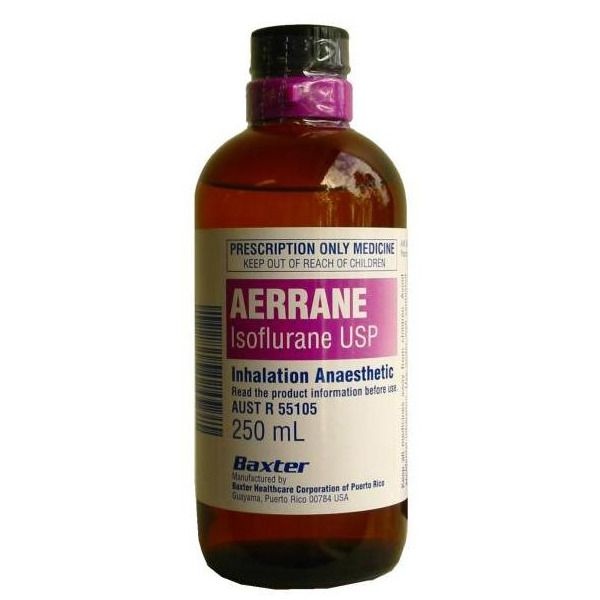
AERRANE 100 ML Inhalation solution

Запит на рецепт онлайн
Лікар розгляне ваш випадок і визначить, чи є рецепт медично доцільним.

Поговоріть з лікарем про ці ліки
Обговоріть симптоми та можливі подальші кроки під час короткої онлайн-консультації.



Інструкція із застосування AERRANE
Зміст інструкції
AERRANE Liquid for Inhalation
Isoflurane
Read this leaflet carefully before you are given this medicine as it contains important information for you.
- Keep this leaflet. You may need to read it again.
- If you have any questions, ask your doctor or pharmacist.
- If you get any side effects, even if not listed in this leaflet, tell your doctor or pharmacist. See section 4.
Contents of this leaflet:
- 1. What AERRANE is and what it is used for
- 2. What you need to know before you are given AERRANE
- 3. How AERRANE will be given to you
- 4. Possible side effects
- 5. How to store AERRANE
- 6. Contents of the pack and other information
1. What is AERRANE and what is it used for
AERRANE is a medicine containing the active substance isoflurane, a medicine belonging to the
group of medicines called “general anaesthetics”.
AERRANE is used by the anaesthetist to:
- induce and maintain general anaesthesia (a state of unconsciousness or sleep) during surgical procedures.
2. What you need to know before you are given AERRANE
AERRANE will not be given to you
- if you are allergic to isoflurane or to other anaesthetics similar to AERRANE (listed in section 6)
- if you or someone in your family has experienced malignant hyperthermia (see section 4 “Possible undesirable effects”)
- during obstetric procedures
- if you have had a liver disease after an anaesthetic: liver dysfunction, yellowing of the skin, fever, increased white blood cells (leucocytosis or eosinophilia).
Warnings and precautions
This medicine is only available in hospital. Therefore, this medicine will only be given to you
under strict control of qualified medical personnel.
In particular, before you are given AERRANE, tell your doctor:
- if you suffer from heart disorders (QT prolongation associated with torsades de pointes)
- if you suffer from known inherited diseases such as “mitochondrial disorders”
- if you have suffered from liver disorders (liver disorders, cirrhosis and viral hepatitis). The doctor may decide not to give you AERRANE and choose another type of anaesthesia.
- if you suffer from disorders of the arteries that carry blood to the heart (coronary arteries)
- if you suffer from a disease that affects the muscles and causes weakness, fatigue and can lead to paralysis (myasthenia gravis)
- if you are in a condition where you have a reduced blood volume (hypovolaemia)
- if you suffer from low blood pressure (hypotension)
- if you are debilitated
- if you suffer from respiratory diseases
- if you suffer from high pressure inside the skull
- if you suffer from a severe muscle disease (Duchenne muscular dystrophy)
The doctor must proceed with particular caution if you had previously been given an
inhalational anaesthetic medicine, especially if it happened several times within a short period of time
(repeated use).
AERRANE can cause the appearance of a condition called malignant hyperthermia (rapid and
significant increase in body temperature, muscle rigidity, tachycardia, tachypnea, cyanosis,
arrhythmia and fluctuations in blood pressure). In this case, the doctor will subject you to adequate supportive therapy.
AERRANE can cause a slight decrease in intellectual functions for 2-4 days after
anaesthesia. Small changes in mood and symptoms may persist for up to 6 days after
administration. Take this into account when resuming normal daily activities, including driving or
operating machinery (see section Driving and using machines).
Children and adolescents
AERRANE will be administered with caution in children under 2 years of age. The use of
AERRANE is not recommended in newborns and infants to induce anaesthesia due to the occurrence of
coughing, shortness of breath, desaturation, increased secretions and laryngospasm.
Other medicines and AERRANE
Tell your doctor or pharmacist if you are taking, have recently taken or might take
any other medicines.
In particular, tell your doctor if you are taking any of the following medicines:
Contraindicated associations
- Non-selective monoamine oxidase inhibitors, medicines to treat depression. Stop treatment 15 days before surgery.
- Beta-sympathomimetics (e.g. isoprenaline) and alpha - beta sympathomimetics (e.g. epinephrine or adrenaline and norepinephrine or noradrenaline), medicines that act on a part of the nervous system Associations to be used with caution
- Beta-blockers, medicines to treat heart disease
- Isoniazid, a medicine used to treat tuberculosis. Treatment with isoniazid should be stopped 7 days before surgery and resumed no earlier than 15 days after surgery.
- Indirect sympathomimetics (amphetamines and derivatives; psychostimulants; anorectics; ephedrine and derivatives). medicines that act on a part of the nervous system
- Muscle relaxants, medicines that produce muscle relaxation
- Opioids, medicines with a strong analgesic action and used during anaesthesia
- Benzodiazepines and other sedative agents, medicines that cause relaxation
- Calcium antagonists, medicines to treat high blood pressure
- Adrenaline for subcutaneous or gingival injections, a medicine to prolong local anaesthesia
Laboratory tests
Following the administration of AERRANE, your laboratory tests may be
altered. Inform the doctor/laboratory technician who administered AERRANE before
undergoing blood tests (it may cause an alteration in potassium, glucose, creatinine, urea, cholesterol and alkaline phosphatase levels).
AERRANE with alcohol
Do not consume alcohol for 24 hours after the administration of AERRANE.
Pregnancy and breastfeeding
If you are pregnant, suspect you are pregnant or are planning a pregnancy, or if you are breastfeeding with
breast milk, ask your doctor or pharmacist for advice before you are given this
medicine.
Pregnancy
The doctor may give you this medicine during pregnancy only if absolutely
necessary.
The use of AERRANE is indicated for caesarean section while an increase in
blood loss has been observed during scraping.
Breastfeeding
It is not known whether AERRANE passes into breast milk. Therefore, breastfeeding should not
resume for at least 12 hours after the end of the anaesthesia.
Driving and using machines
Following an anaesthetic with AERRANE, do not drive or operate other machinery for at least 24
hours after the operation. You must be accompanied home. Changes in behaviour and
intellectual functions may persist for up to 6 days after administration. This must be taken into
account when resuming normal daily activities, including driving or operating heavy machinery
.
3. How AERRANE will be administered to you
This medicine is available only in hospital. Therefore, this medicine will be administered to you
only under strict control of qualified medical personnel.
The most suitable dose for you will be established by the anesthesiologist based on your age, your weight and your health
condition. The doctor will administer the correct dose of AERRANE to initiate and maintain anesthesia
or to achieve the desired level of sedation, through careful assessment of your response and vital signs
(pulse, blood pressure, etc.). The doctor will also administer other medicines that
induce sleep to avoid the onset of cough or laryngospasm.
Use in the elderly
Normally, lower concentrations of AERRANE are required to maintain anesthesia
in the elderly.
Use in children and adolescents
The use of AERRANE is not recommended in newborns and children to induce anesthesia due to
the occurrence of cough, shortness of breath, desaturation, increased secretions and laryngospasm.
The dose will be established by the anesthesiologist based on the child's age, weight and health status.
Your child will be carefully monitored during the administration of AERRANE and the doctor
will assess the possible administration of other medicines to counteract the possible reduction in breathing
and heart rate.
Method of administration
AERRANE will be administered to you by inhalation using specific vaporizers.
If you are given more AERRANE than you should
It is very unlikely that you will be given a higher dose of AERRANE than necessary,
as your doctor will monitor you during treatment.
However, if you are given an excessive dose of AERRANE, the doctor will adopt the appropriate
supportive therapy.
4. Possible side effects
Like all medicines, this medicine can cause side effects, although not everybody gets them.
During the administration of AERRANE, malignant hyperthermia may occur, a seriousundesirable effect whose symptoms include:
o muscle rigidity,
o increased heart rate (tachycardia),
o increased breathing rate (tachypnea),
o skin turning blue due to lack of oxygen (cyanosis),
o irregular heartbeat (arrhythmia),
o blood pressure fluctuations,
o severe oxygen deficiency (acute hypoxia),
o very high fever.
In this case, the doctor will immediately discontinueadministration and provide appropriate treatment.
The side effects are listed below according to the following frequency:
Not known (frequency cannot be estimated from available data)
- carboxyhemoglobinemia (hemoglobin bound to carbon monoxide)
- hypersensitivity, allergic reactions, including severe ones
- elevated potassium levels in the blood (hyperkalemia)
- increased blood sugar levels
- agitation, delirium, altered mood
- convulsions (involuntary contraction of some muscles as in epilepsy)
- reduction of mental faculties (mental impairment)
- irregular heartbeat (arrhythmia, torsade de pointes)
- decreased heart rate (bradycardia), cardiac arrest, changes in the electrocardiogram (ECG), examination to check the state of the heart's electrical system (QT prolongation)
- increased heart rate (tachycardia), low blood pressure (hypotension)
- bleeding (hemorrhage)
- narrowing of the bronchi causing severe breathing difficulties due to reduced airflow (bronchospasm), difficulty breathing (dyspnea), wheezing
- reduction of respiratory activity (respiratory depression),
- larynx spasm, the organ where the voice originates, which causes severe breathing difficulties due to reduced airflow (laryngospasm)
- intestinal obstruction (ileus)
- vomiting, nausea
- liver diseases (hepatic necrosis, hepatocellular damage)
- increased bilirubin, detectable by blood tests
- swollen face
- contact dermatitis, skin rash,
- increased creatinine, detectable by blood tests
- decreased urea, detectable by blood tests
- chest pain
- chills
- increased white blood cells
- increased liver enzymes, detectable by blood tests
- increased fluorides, detectable by blood tests
- abnormal brain electrical activity measurement (electroencephalogram)
- decreased cholesterol, detectable by blood tests
- decreased alkaline phosphatase, detectable by blood tests
- increased creatine kinase, detectable by blood tests
- presence of myoglobin in the urine, which becomes dark red in color (myoglobinuria)
- severe muscle damage (rhabdomyolysis)
- increased potassium levels in the blood, which can cause heart rhythm disturbances and death, especially if you suffer from a severe muscle disease (Duchenne muscular dystrophy)
Additional side effects in children
- increased potassium levels in the blood, which can cause heart rhythm disturbances and death
- increased production of saliva and mucus which can lead to spasm of the larynx, which causes severe breathing difficulties due to reduced airflow (laryngospasm)
Reporting of side effects
If you get any side effects, even those not listed in this leaflet, tell your doctor. You can also report side effects directly through the national reporting system at www.agenziafarmaco.gov.it/it/responsabili . By reporting side effects you can help provide more information on the safety of this medicine.
5. How to store AERRANE
Keep this medicine out of the sight and reach of children.
This medicine does not require any particular storage temperature.
The anesthesiologist and the hospital pharmacist are responsible for the correct storage, use and
distribution of the medicine.
This medicine should not be used after the expiry date which is reported on the packaging after Scad.
The expiry date refers to the last day of that month.
Do not dispose of any medicine in wastewater or household waste. Ask your pharmacist how to
dispose of medicines you no longer use. This will help protect the environment.
6. Contents of the pack and other information
What AERRANE contains
- the active substance is isoflurane
Description of the appearance of AERRANE and contents of the pack
AERRANE is presented as a liquid for inhalation.
It is available in packs of:
- 1 and 6 bottles of 100 ml
- 1 and 6 bottles of 250 ml Not all pack sizes may be marketed.
Marketing Authorisation Holder
Baxter S.p.A. - Roma Piazzale dell’Industria 20, 00144-Roma
Manufacturer
Baxter S.A. Lessines (Belgium)
Baxter Manufacturing Sp. z.o.o. Lublin (Poland)
------------------------------------------------------------------------------------------------------------------------
The following information is intended exclusively for doctors or healthcare professionals:
PRECAUTIONS FOR USE
AERRANE must be administered in an adequate environment equipped for anesthesia only by
specialized personnel, who have competence with the pharmacology of the medicinal product and qualified by
training and experience in treating anesthetized patients. Because the degree of depth of anesthesia
induced by AERRANE can change easily and rapidly, it is necessary that its
administration takes place using a vaporizer specifically designed and calibrated for
isoflurane, which delivers a predictable flow rate with reasonable accuracy or with techniques
during which the inspired or expired concentrations can be monitored. Vaporizers
specifically calibrated for isoflurane must be used in such a way that the concentration
of anesthetic delivered can be accurately controlled.
Reports have been received of QT prolongation associated with torsades de pointes (in
exceptional, fatal cases). Caution should be exercised when administering general anesthesia, including
isoflurane, to patients with mitochondrial disorders.
Hypotension and respiratory depression can provide indications of the degree of anesthesia
achieved and increase according to the depth of anesthesia.
Isoflurane can cause respiratory depression which may be increased by premedication with
narcotics or other agents that cause respiratory depression (see section “Dosage, method and duration of
administration”). Isoflurane is a potent inhalational anesthetic whose effect is enhanced by
pre-narcosis or the concomitant use of drugs that depress breathing.
Breathing must be carefully monitored and assisted or controlled ventilation employed when necessary.
Reports indicate that isoflurane can cause liver damage ranging from mild transient elevations in
liver enzymes to fatal hepatic necrosis in very rare cases. Previous exposure to halogenated hydrocarbon
anesthetics has been reported to increase the potential for liver damage, especially if the interval is less than 3 months. The onset of such reactions may indicate
hypersensitivity to halogenated anesthetics.
Isoflurane is relatively little metabolized in humans; in the post-operative phase only 0.17%
of the administered isoflurane is transformed into urinary metabolites. Generally, the peak plasma concentration of inorganic fluoride, reached 4 hours after anesthesia, is on average less than
5µmol/l with restoration of normal levels within 24 hours. No signs of renal insufficiency have been reported after administration of isoflurane.
Experience with isoflurane in repeated anesthesias is considered insufficient to establish
recommendations regarding this. As with all halogenated anesthetics, caution should be exercised when
performing repeated anesthesias within a short period of time.
Controlled ventilation is recommended in patients undergoing neurosurgical procedures. It is
possible to prevent or avoid an increase in intracranial pressure by hyperventilating
the patient before or during anesthesia.
Ventilation should be monitored in patients undergoing neurosurgical procedures.
All commonly used muscle relaxants are markedly potentiated by isoflurane, with a deeper effect with non-depolarizing agents.
As with all halogenated inhalational anesthetics, when used in a closed circuit, it is recommended to
check the presence of a fresh or well-humidified absorbent (e.g. soda lime), as occasional cases of carbon monoxide formation within the circuit have been reported with
consequent carboxyhemoglobinemia in the patient, due to the interaction between the halogenated agent and the dried absorbent.
INTERACTIONS
The concomitant administration of Isoflurane and the following medications requires rigorous
monitoring of the patient's clinical and biological conditions.
Contraindicated associations
Non-selective monoamine oxidase inhibitors: risk of crisis and hemodynamic instability during
surgery or medical procedures. Treatment must be discontinued 15 days before
surgery.
Beta-sympathomimetics such as isoprenaline and alpha - beta sympathomimetics such as epinephrine or
adrenaline; and norepinephrine or noradrenaline should be used with caution during narcosis
with isoflurane, due to a potential risk of severe ventricular arrhythmia caused by tachycardia.
Associations to be used with caution
BETABLOCKERS: the concomitant use of beta-blockers can intensify the cardiovascular effects
of inhalational anesthetics, including hypotension and negative inotropic effects. Risk of blocking
the cardiovascular compensatory mechanism as a consequence of the intensification of
negative inotropic effects. It is possible to suppress the action of beta-blockers during surgery
using beta-sympathomimetic agents.
In general, it is not necessary to interrupt treatment with beta-blockers, but a sudden reduction in dosage should be avoided.
Cardiovascular compensatory reactions may be compromised by beta-blockers.
ISONIAZID: risk of potentiating hepatotoxicity and increased formation of toxic metabolites of isoniazid.
Treatment with isoniazid should be discontinued 7 days before surgery and not resumed before
15 days after surgery.
INDIRECT SYMPATHOMIMETICS (amphetamines and derivatives; stimulants; anorectics;
ephedrine and derivatives): risk of perioperative hypertension. In the case of already
planned surgeries, treatment should be discontinued several days before the operation.
In most cases where pharmacological treatment is deemed essential, do not discontinue treatment before general anesthesia, but the anesthesiologist must be informed about
the ongoing treatment.
MUSCLE RELAXANTS: risk of potentiation of the action of depolarizing relaxants and, in particular,
of non-depolarizing relaxants. All muscle relaxants are markedly potentiated by isoflurane,
with a deeper effect with non-depolarizing agents. It is therefore recommended to reduce the dose administered of these substances by one-third or one-half. Compared to conventional anesthetics, with
the use of isoflurane, the disappearance of the myoneural effect is slower. Neostigmine acts on
non-depolarizing relaxants, but has no effect on the relaxing action of isoflurane.
OPIOIDS, benzodiazepines and other sedative agents: the depressive effect of isoflurane on breathing
is potentiated by the use of such substances. Particular attention should be paid when
administering these substances concurrently with isoflurane.
CALCIUM ANTAGONISTS: isoflurane can cause marked hypotension in patients treated with
calcium antagonists, particularly with dihydropyridine derivatives. Caution should be exercised when
calcium antagonists are used in conjunction with inhalational agents due to the risk of further negative inotropic effect.
ADRENALINE for subcutaneous or gingival injections: risk of severe ventricular arrhythmia
as a consequence of an increased heart rate, although myocardial sensitivity
to adrenaline is lower with the use of isoflurane than in the case of halothane. Doses of adrenaline
greater than 5 mcg/kg, when administered submucosally, can produce multiple ventricular arrhythmias.
In adults, therefore, the dose should be limited, for example, to 0.1 mg of adrenaline administered in
10 minutes or 0.3 mg in 1 hour.
The MAC (Minimum Alveolar Concentration) is reduced with the concomitant administration of
nitrous oxide in adults.
SPECIAL WARNINGS
Ventilation should be monitored in patients undergoing neurosurgical procedures.
AERRANE, like other halogenated anesthetics, can increase cerebral blood flow with a
transient increase in cerebrospinal fluid pressure. In most cases, the pressure increase can be prevented with hyperventilation.
In most cases, the pressure increase is completely reversible with hyperventilation.
In selected animal models, Isoflurane can cause coronary vasodilation at the arteriole level;
the drug may have the same action in humans. Isoflurane, like other
vasodilators of coronary arterioles, is able to divert blood flow from ischemic areas to normally perfused areas (coronary steal).
Clinical studies aimed at evaluating parameters such as myocardial ischemia, infarction and death have not
established that the arteriole dilation characteristic of Isoflurane is associated with coronary steal or
myocardial ischemia in patients with coronary disease.
Since AERRANE has an irritating effect on the mucous membrane, induction of anesthesia with the mask
would be difficult.
During induction of anesthesia, saliva flow and tracheobronchial secretion may
increase and cause laryngospasm, especially in children.
Caution should be exercised when AERRANE is used in young children (under 2 years of age) due to
the limited experience with this patient group.
An increase in blood loss has been found in patients undergoing induced abortion
comparable to what happens following anesthesia with other inhalational agents.
AERRANE relaxes the uterine musculature and the lowest possible concentrations of AERRANE should be used in obstetric procedures. There is no data regarding the use of AERRANE in obstetric procedures other than cesarean section.
Malignant hyperthermia.
In predisposed subjects, AERRANE can trigger a hypermetabolic state of the musculoskeletal system that leads to a high oxygen demand and therefore a clinical syndrome known
as malignant hyperthermia. The syndrome presents with non-specific symptoms such as muscle rigidity,
tachycardia, tachypnea, cyanosis, arrhythmia and blood pressure fluctuations. (It should also be noted that many of these
non-specific symptoms can appear with light anesthesia, acute hypoxia, etc.). A generalized increase
of metabolism can lead to elevated body temperatures (which can increase
rapidly at the beginning or end, but are usually not the first symptom of increased
metabolism) and an increased use of the carbon dioxide absorption system (hot container). The partial pressure of
oxygen and pH may decrease, and hyperkalemia may occur
and a base deficit. Fatal outcomes of malignant hyperthermia with isoflurane have been reported. Treatment involves stopping the triggering agents (e.g. AERRANE),
intravenous administration of dantrolene sodium and the application of supportive therapy. This
therapy includes great efforts to restore body temperature to normal levels, respiratory and circulatory support as indicated, and the management of the alteration of the acid-base balance of
electrolytes. (See the instructions for intravenous dantrolene sodium for further information
on managing the patient). Renal damage may occur subsequently.
Perioperative hyperkalemia
The use of inhalational anesthetic agents has been associated with rare increases in serum potassium levels that
have caused cardiac arrhythmias and death in pediatric patients during the post-operative period. The
patients with latent or manifest neuromuscular damage, in particular with Duchenne muscular dystrophy, appear to be the most vulnerable. The concomitant use of succinylcholine has been associated with
many, but not all, of these cases. These patients also had high increases in serum creatine kinase levels and, in some cases, changes in urine consistent with
myoglobinuria. Despite the similarity of the ways in which malignant hyperthermia presents, none
of these patients showed signs or symptoms of muscle rigidity or hypermetabolic state. Early and aggressive intervention is recommended to treat hyperkalemia and resistant arrhythmias, and
subsequent evaluation of latent neuromuscular damage.
Following anesthesia with AERRANE the patient should not drive cars or operate other
machinery for at least 24 hours after the operation. They must be accompanied home and should not consume
alcohol. Changes in behavior and intellectual functions may persist for up to 6 days after
administration. This must be taken into account when patients resume normal daily activities, including driving or operating heavy machinery.
It has been reported that if AERRANE interacts with barium hydroxide or lime filter not
perfectly hydrated, carbon monoxide is formed. Inhalation of carbon monoxide determines, in exposed patients, high levels of carboxyhemoglobin; the latter is toxic even at low concentrations and not easily detectable with common monitoring systems, such as pulse oximetry.
Whenever a patient undergoing closed-circuit anesthesia with the product develops
hypoxia that is not correctable with common therapeutic means, direct measurement of
carboxyhemoglobin is advisable. Every precaution should also be taken to avoid
dehydration of the lime filter.
Isolated cases of increased carboxyhemoglobin have been reported with the use of halogenated
inhalation agents with a –CF H functional group (for example desflurane, enflurane and isoflurane). Clinically
significant concentrations of carbon monoxide are not produced in the presence of
normally hydrated adsorbents. Attention should be paid to following the manufacturer's instructions for
carbon dioxide adsorbents.
Rare cases of extreme heat, smoke and/or spontaneous ignition in the anesthesia machine have been
reported during the administration of general anesthesia with drugs in this class when used
together with dried carbon dioxide adsorbents, especially those containing potassium hydroxide (for example Baralyme). When a physician suspects that the carbon dioxide adsorbent
is dry, it must be replaced before administering isoflurane. The color indicator of
many carbon dioxide adsorbents does not necessarily change as a result of drying.
Therefore, the absence of a significant color change should not be taken as a guarantee
of adequate hydration. Carbon dioxide adsorbents should be replaced periodically
regardless of the state of the color indicator.
DOSE, METHOD AND DURATION OF ADMINISTRATION
In order to be able to accurately control the exact concentration of isoflurane, it is
necessary to use vaporizers specifically calibrated for isoflurane.
General anesthesia
MAC (Minimum Alveolar Concentration) values vary considerably depending on
age, concomitant medications and other factors. Values in humans (at 1 atm) are approximately:
| ADULTS | l | |
| AGE (years) 26 ± 4 44 ± 7 64 ± 5 | a O2-100%
| O2+N2O (70%)
|
| a PEDIATRIC POPULATION |
Premedication
The drugs used for premedication must be chosen for each patient, taking into account
the respiratory depressant effect of isoflurane. The use of anticholinergic drugs is a type of
choice, but may be advisable for inhalation induction in pediatric patients.
Induction of anesthesia
It is recommended to use an initial concentration of 0.5%. Generally, concentrations of
isoflurane of 1.5% - 3.0% produce surgical anesthesia in 7 - 10 minutes.
A short-acting barbiturate at a hypnotic dosage or other intravenous induction agents such as propofol, etomidate or diazepam are usually administered to avoid the onset of cough or
laryngospasm, phenomena that may occur if anesthesia is induced with AERRANE or with
combinations of AERRANE and oxygen or AERRANE and oxygen-nitrous oxide mixture.
Induction of anesthesia in children
Aerrane is not recommended as an inhalation induction agent in children due to the occurrence of
cough, shortness of breath, desaturation, increased secretions and laryngospasm .
Maintenance of anesthesia
Adequate levels of surgical anesthesia are supported by concentrations of 1.0% - 2.5% of
AERRANE when administered together with nitrous oxide and oxygen. An additional 0.5% – 1.0%
of isoflurane may be required when administration is performed with pure oxygen. If
further relaxation is required, supplemental doses of muscle relaxants may be used.
Blood pressure levels during maintenance tend to be inversely correlated
with alveolar concentrations of isoflurane in the absence of other complicating factors. Excessive
decreases in blood pressure may be due to the depth of anesthesia and, in these cases,
must be corrected by reducing the inspired isoflurane concentration.
Recovery
To achieve rapid recovery, the concentration of AERRANE must be reduced to 0.5%
at the end of the operation or to 0% during the wound closure phase.
In case of discontinuation of the anesthetic agents, the patient's airways must be ventilated several times with 100% oxygen until full recovery
is achieved.
If the carrier gas is a 50%:50% mixture of oxygen and nitrous oxide, the volume of the minimum
alveolar concentration of isoflurane is approximately 0.65%.
Elderly
| AGE (years) Premature infants < 32 weeks of gestation Premature infants 32-37 weeks of gestation 0-1 month 1-6 months 6-12 months 1-5 years 6-10 years 10-15 years | O2-100%
| O2+N2O (60%) m ---- r a ---- F ---- ---- ---- ---- l
|
As with other agents, lower concentrations of isoflurane are normally required to
maintain anesthesia in surgery in elderly patients. See the MAC values above.
Sedation
Sedation can be maintained with 0.1% - 1.0% of isoflurane in the air/oxygen mixture. This
dose must be titrated to the individual patient's requirements.
PHARMACOLOGICAL AND PHARMACOKINETIC PROPERTIES
Isoflurane is an inhalational anesthetic belonging to the family of halogenated anesthetics.
Induction of anesthesia and recovery from anesthesia occur rapidly.
Isoflurane is slightly irritating and has an ether-like odor, so it may delay the speed of induction
of anesthesia.
The rapid reduction of pharyngeal and laryngeal reflexes facilitates tracheal intubation.
AERRANE is metabolized to a minimal extent compared to other halogenated anesthetics. 95% of isoflurane
is eliminated through exhaled air; 0.2% is metabolized to trifluoroacetic acid.
In patients undergoing anesthesia, the plasma level of inorganic fluoride is between 3 and 4
µmol/l.
In patients anesthetized with isoflurane, the average plasma concentration of inorganic fluorides is usually less than 5 µmol/l and for about 4 hours after anesthesia; with the restoration of normal levels in 24
hours. In a normal subject this does not cause alterations in renal function.
OVERDOSAGE
In case of overdose, discontinue the anesthetic, ensure airway patency and, as appropriate, initiate assisted or controlled ventilation with pure oxygen.
Hypotension and respiratory depression have been observed. Careful monitoring of
blood pressure and breathing is recommended. Supportive measures may be necessary to
correct hypotension and respiratory depression caused by excessively deep levels of anesthesia.
For further information, consult the Summary of Product Characteristics.

Не впевнені, чи підходить вам цей лікарський засіб?
Обговоріть симптоми та можливі варіанти лікування з лікарем онлайн.

Виникли питання під час прийому ліків?
Обговоріть свої симптоми та лікування з лікарем онлайн.
- Країна реєстрації
- Лікарська формаInhalation solution, 100 ML
- Код АТХN01AB06
- Діюча речовина
- Потрібен рецептНі
- Виробник
- Ця інформація надана лише для ознайомлення і не є медичною порадою. Рішення щодо лікування завжди приймає лікар.
- Альтернативи до AERRANEЛікарська форма: Inhalation solution, 100%Діюча речовина: ИзофлуранВиробник: SEDANA MEDICAL ABПотрібен рецептЛікарська форма: Inhalation solution, 250 MLДіюча речовина: СевофлуранВиробник: BAXTER S.P.A.Потрібен рецептЛікарська форма: Oral suspension, 100% V/VДіюча речовина: СевофлуранВиробник: PIRAMAL CRITICAL CARE B.V.Рецепт не потрібен
Аналоги AERRANE в інших країнах
Препарати з тією самою діючою речовиною, доступні в інших країнах.
Аналог AERRANE у Польща
Аналог AERRANE у Іспанія
Лікарі онлайн щодо AERRANE
Застосування, безпека та можливість призначення рецепта — за результатами медичної оцінки.









Отримайте рецепт на AERRANE онлайн
Заповніть форму за 2 хвилини
Розкажіть про симптоми, історію хвороби та потрібний препарат.
Оберіть лікаря або ми призначимо
Оберіть спеціаліста або ми підберемо найближчого доступного лікаря.
Лікар розглядає ваш випадок
Зазвичай протягом 30 хвилин. Може ставити уточнювальні запитання в чаті.
Отримайте в будь-якій аптеці
Електронний рецепт надсилається на вашу пошту — дійсний по всій Польщі.
Часті запитання
AERRANE не потребує рецепта в Італія. Ви можете обговорити з лікарем онлайн, чи підходить цей лікарський засіб для вашої ситуації.
Діюча речовина у AERRANE — Изофлуран. Це допомагає визначити препарати з тим самим складом, але під іншими торговими назвами.
AERRANE виробляється компанією BAXTER S.P.A.. Назва бренду та упаковка можуть відрізнятися залежно від дистрибʼютора.
Лікарі, зокрема Сімейні лікарі, Психіатри, Дерматологи, Кардіологи, Ендокринологи, Гастроентерологи, Пульмонологи, Нефрологи, Ревматологи, Гематологи, Інфекціоністи, Алергологи, Геріатри, Педіатри, Онкологи, можуть оцінити доцільність застосування AERRANE з урахуванням вашого стану та місцевих правил. Ви можете записатися на онлайн-консультацію, щоб обговорити симптоми та можливі подальші кроки.
Польща має добре розвинену систему охорони здоров'я у великих містах, таких як Варшава, Краків, Вроцлав і Гданськ. Аптеки широко доступні та працюють відповідно до чинного законодавства, забезпечуючи доступ до рецептурних препаратів.
Ви можете придбати AERRANE у Варшаві, Кракові, Вроцлаві або Гданську в будь-якій аптеці за наявності дійсного рецепта.
Щоб отримати рецепт, ви можете скористатися Oladoctor:
Інші препарати з тією самою діючою речовиною (Изофлуран) включають SEDAKONDA, SEVOFLURANE BAXTER, SEVOFLURANE PIRAMAL. Вони можуть відрізнятися торговою назвою або формою випуску, але містять той самий терапевтичний компонент. Перед зміною або початком прийому нового препарату варто проконсультуватися з лікарем.
